Building The Revolution
I went to the Royal Academy to see the exhibition on Soviet Art and Architecture entitled Building the Revolution – Soviet Art and Architecture 1915-1935.
It was fascinating and sad in equal measure.
The former because some of the buildings were spectacular and ground-breaking. It was all rather sad to see the state of decay that some of them are now reduced to.
But then some of our best buildings from the era have suffered a similar fate. Although, it is from just after World War II, I once went over Cliff Key Power Station in Ipswich. That was a real pleasure and it was a pity that it couldn’t have been transformed for a modern purpose. But then those power stations, were built to last thirty years and often the foundations weren’t of the best. Just look at the state of the iconic Battersea Power Station today.
In the Courtyard of te Royal Academy, there was this tower.
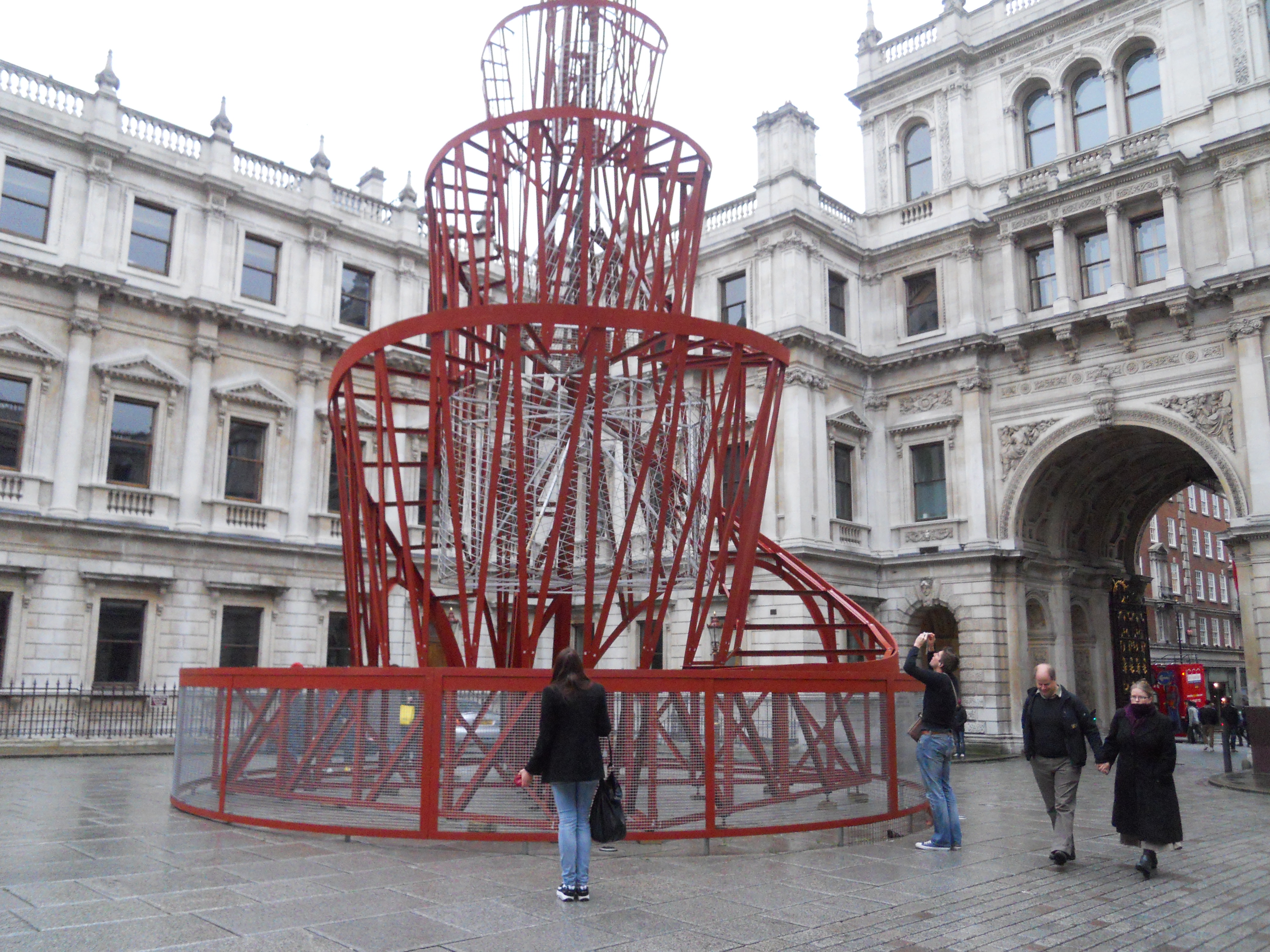
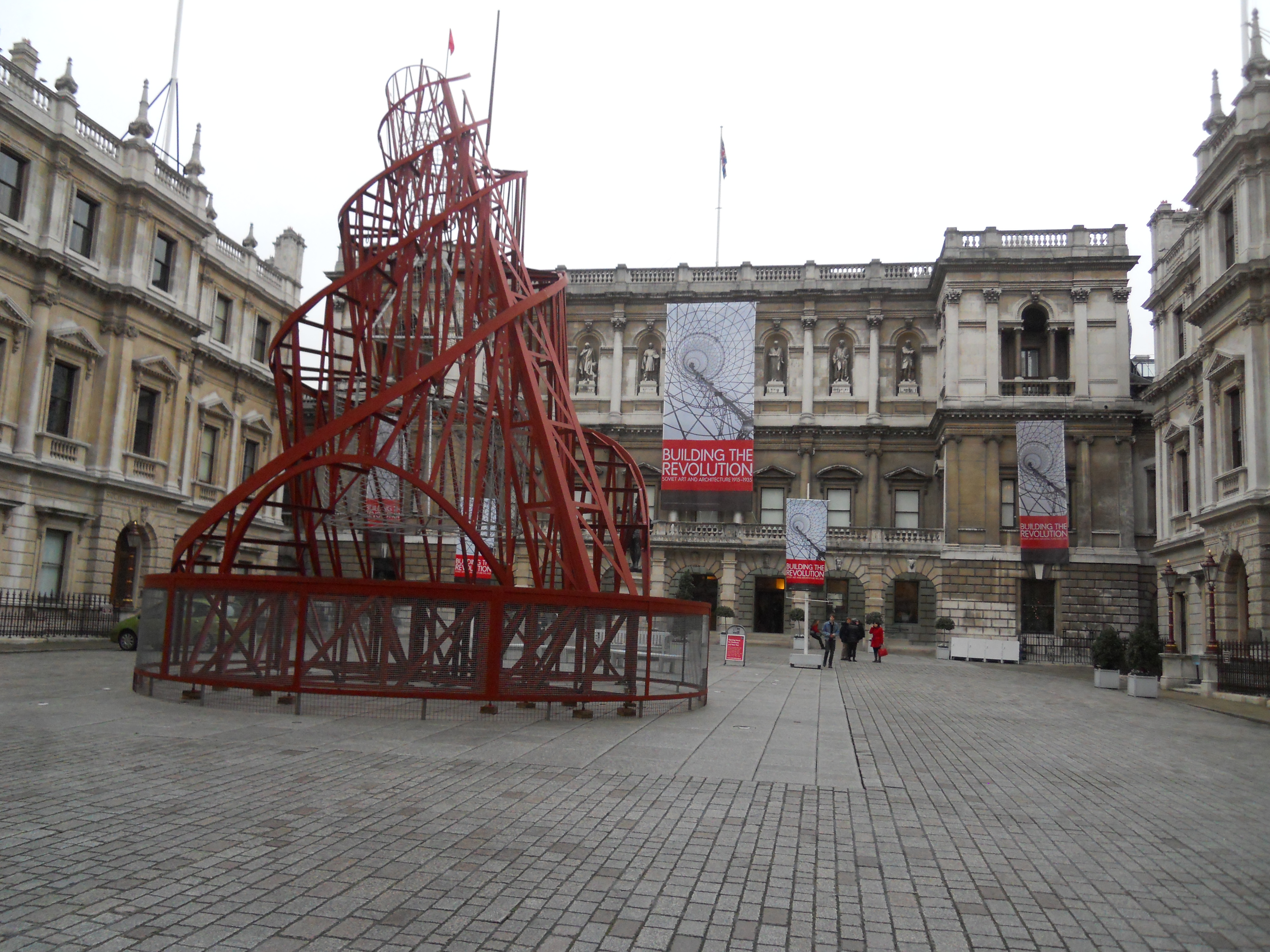
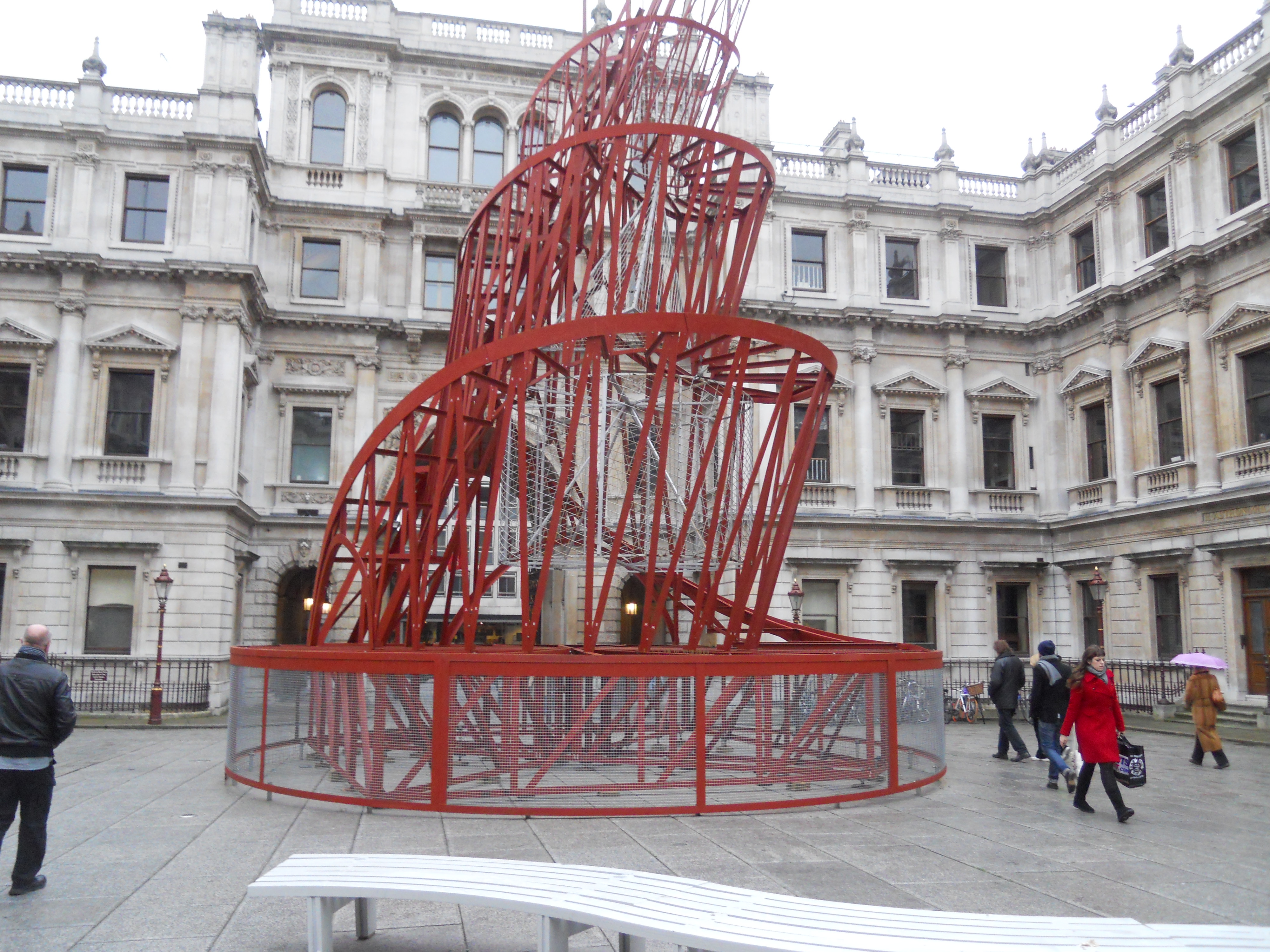
It is a modern reconstruction of Tatlin’s Tower; a giant tower that was never built.
King’s Boulevard
These pictures show the new King’s Boulevard which leads from King’s Cross station to the Central St. Martins College of Art and Design.
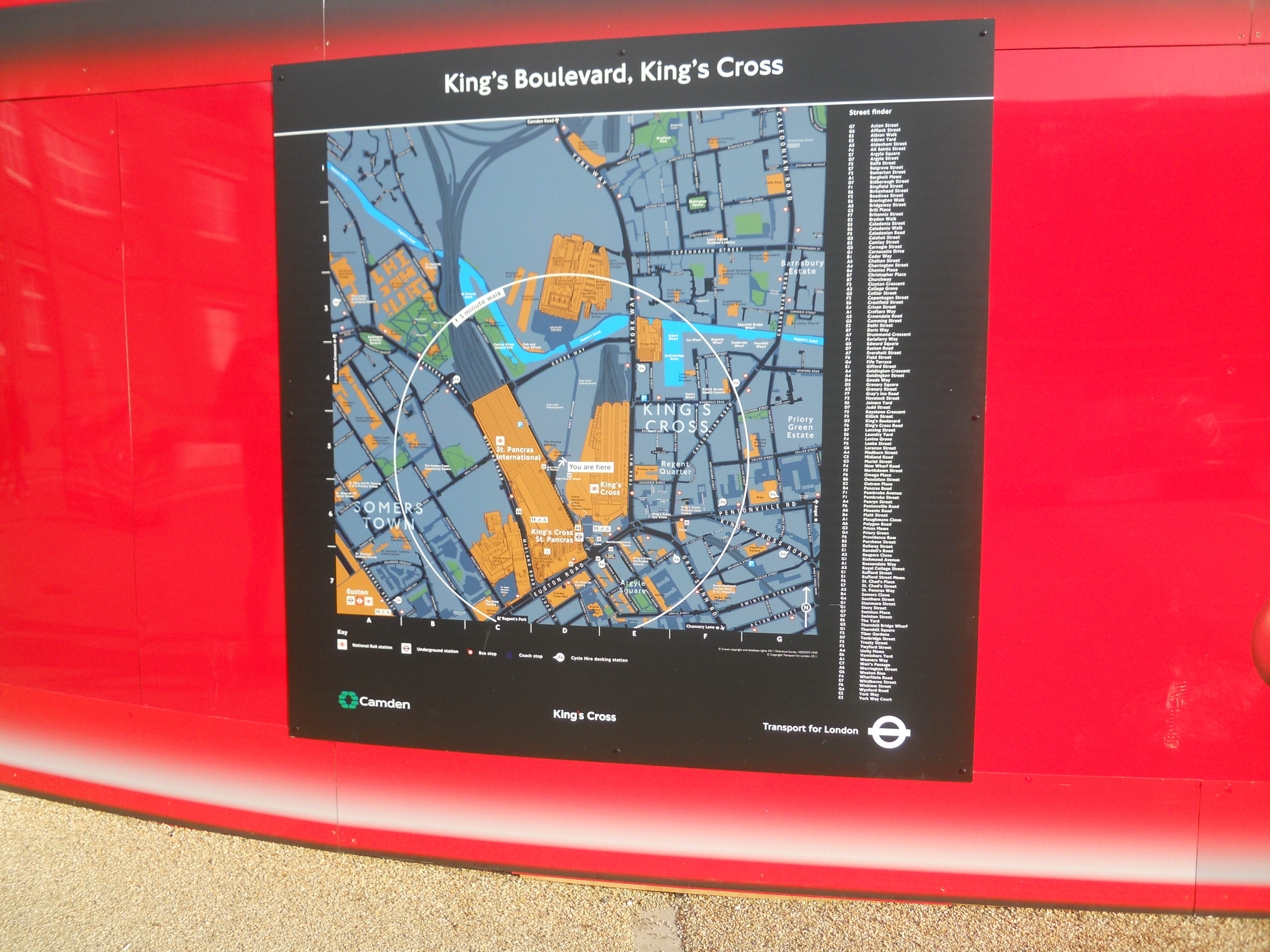
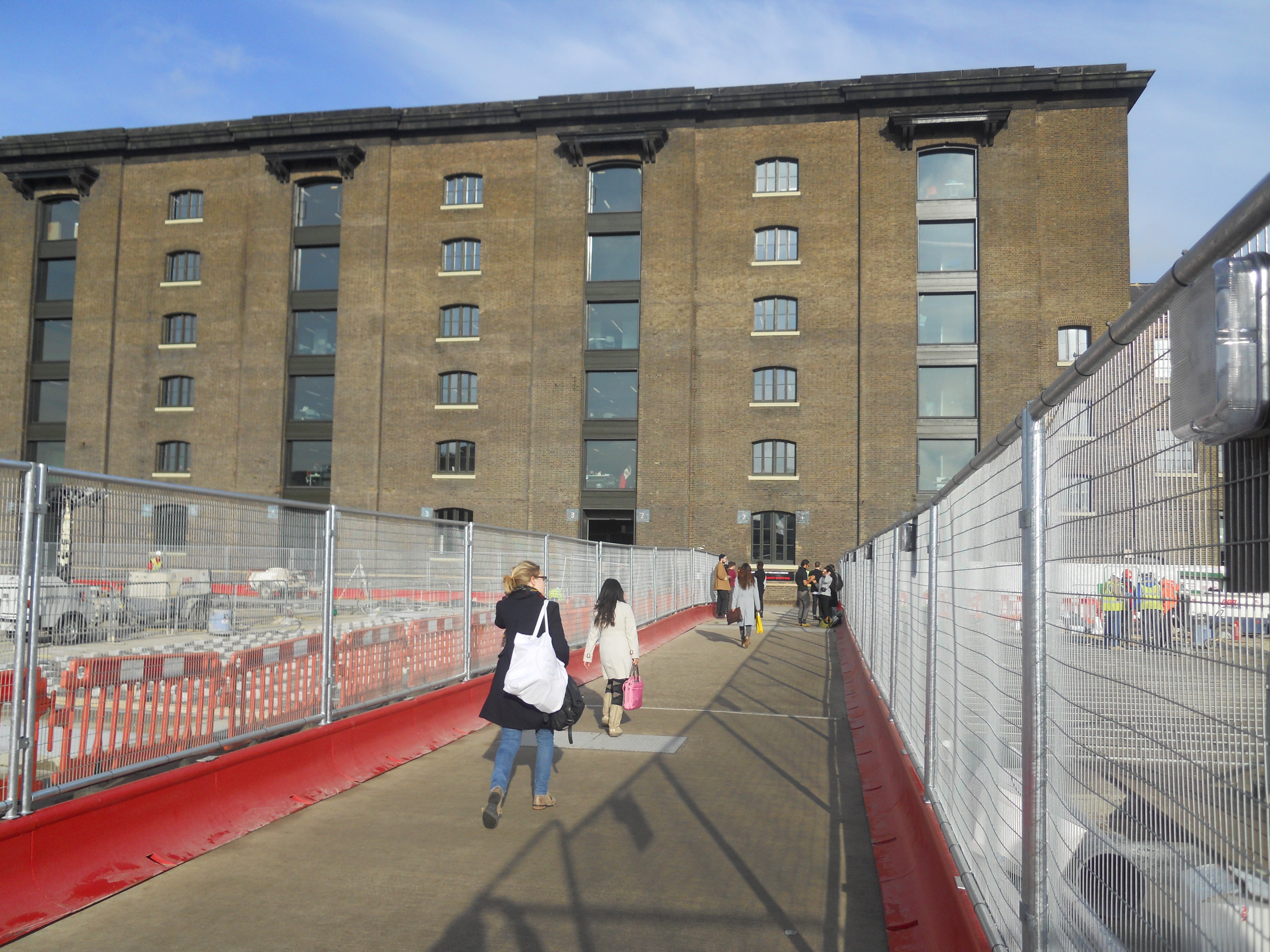
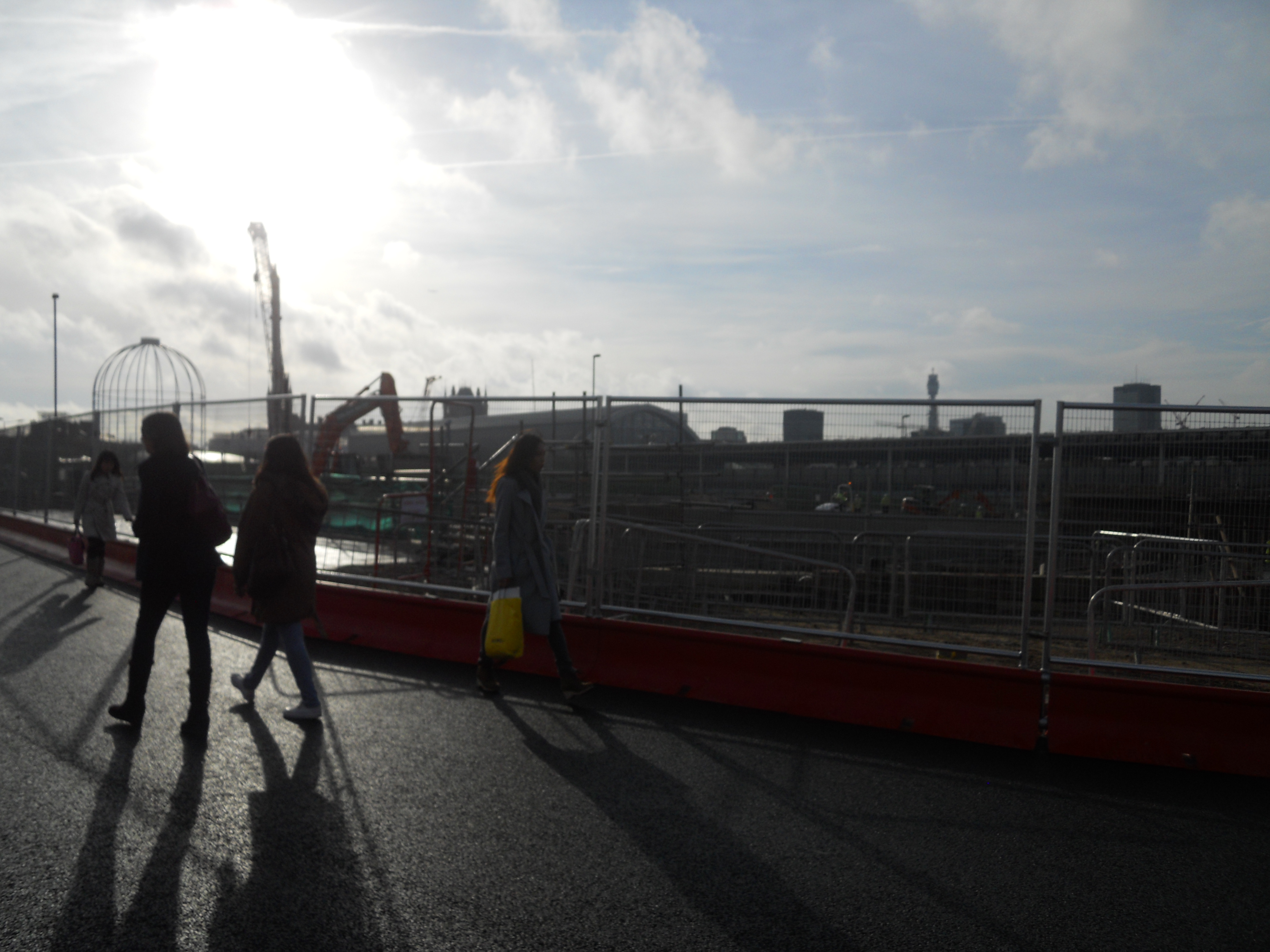
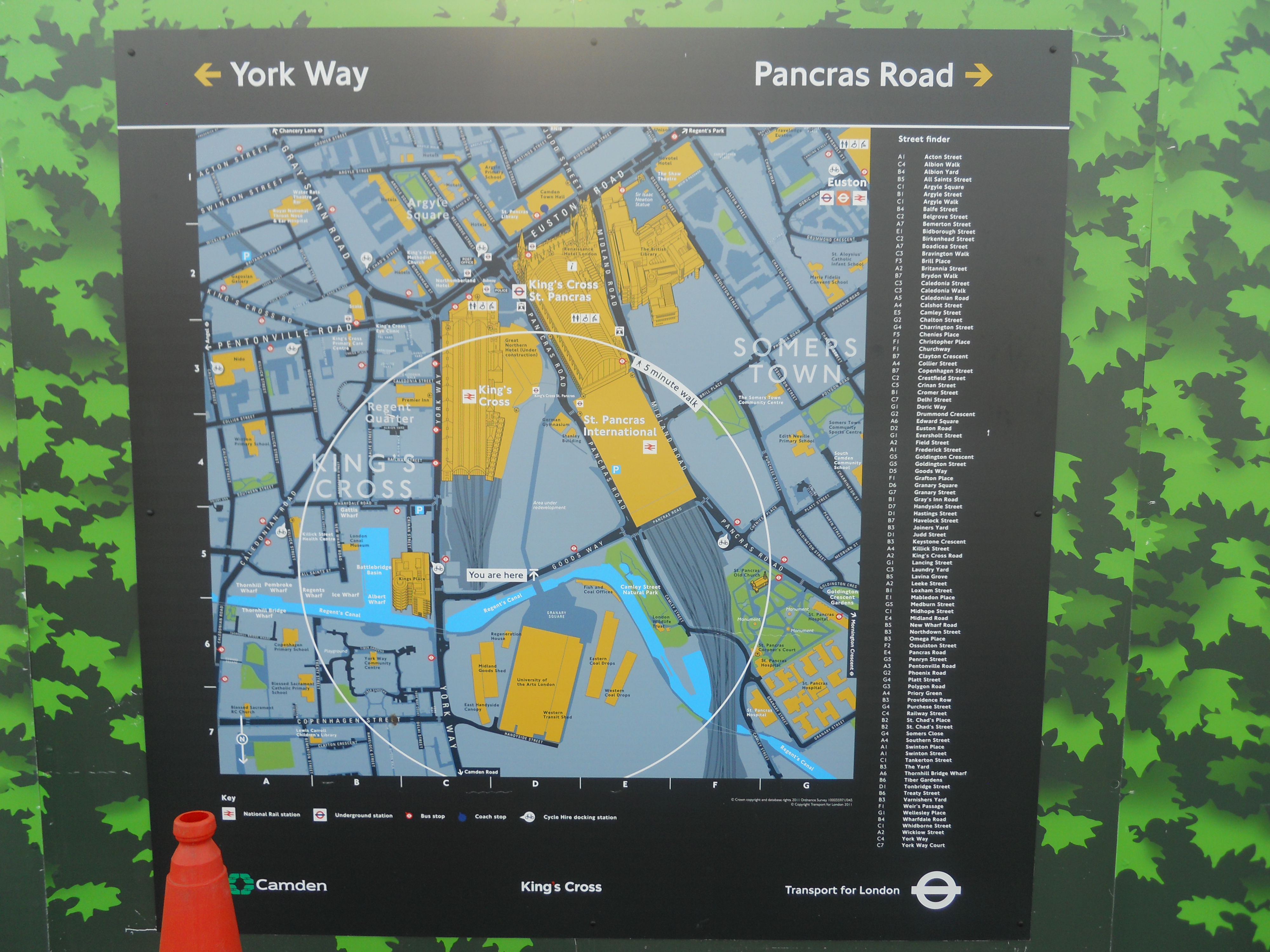
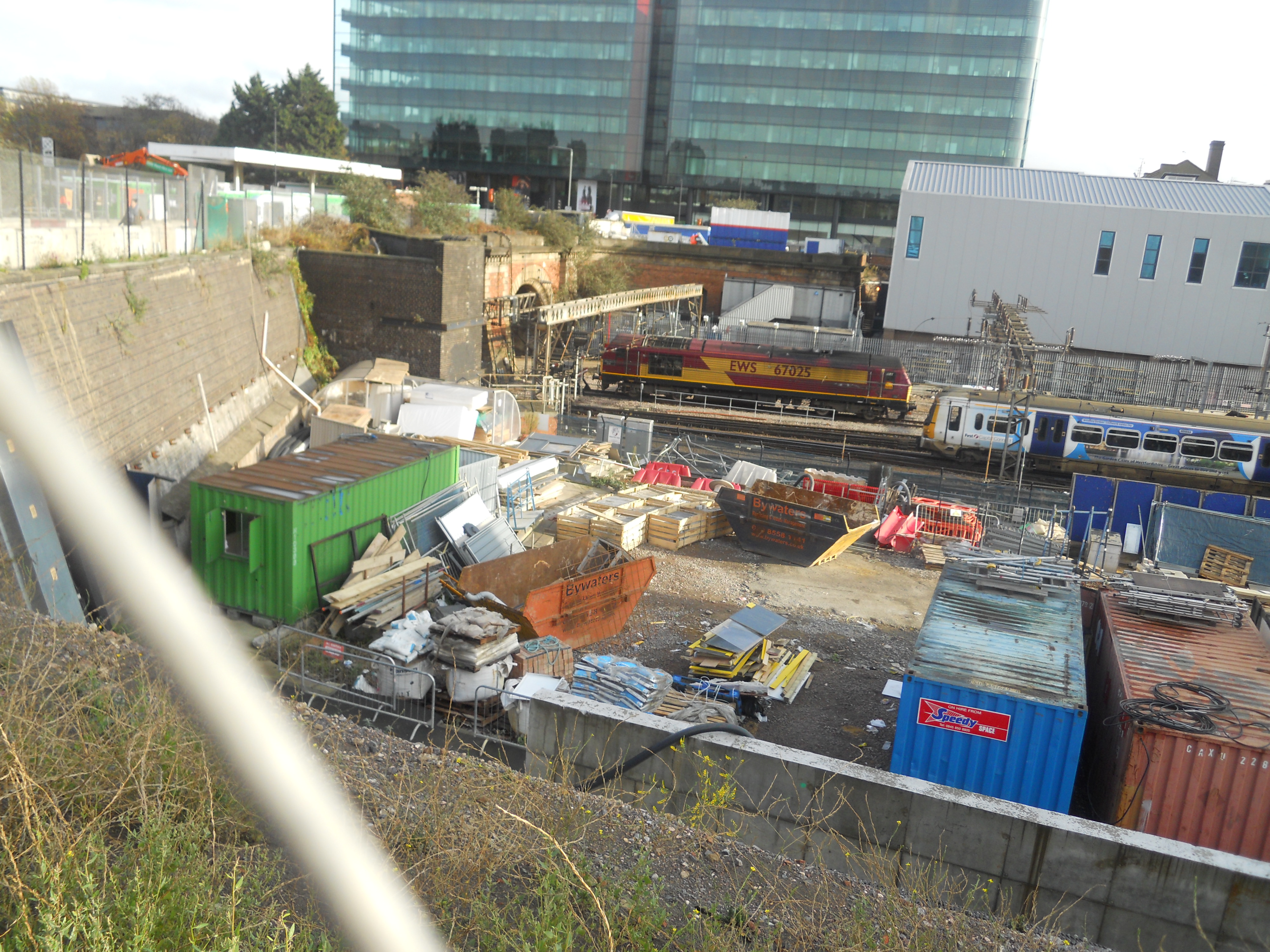
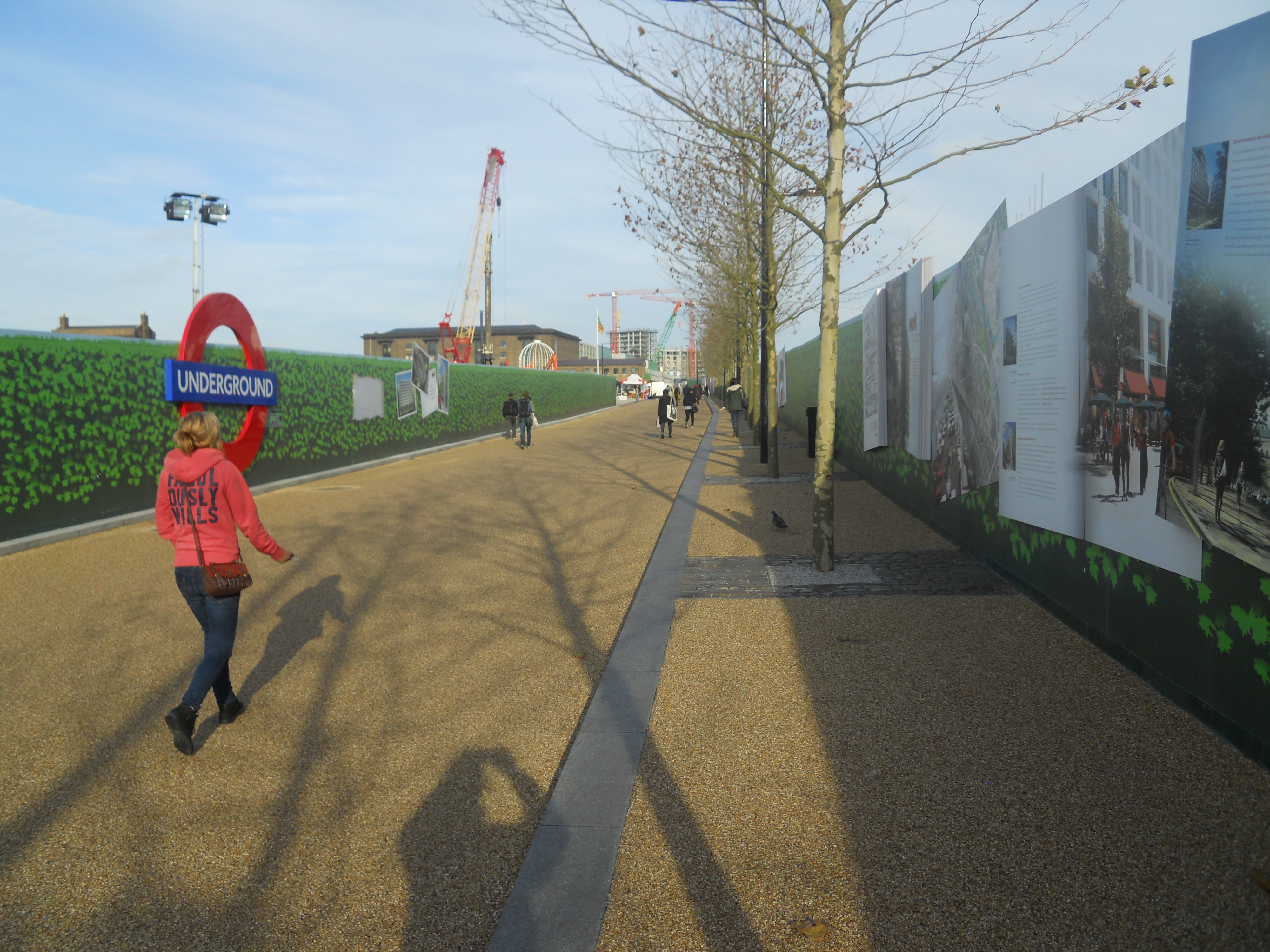
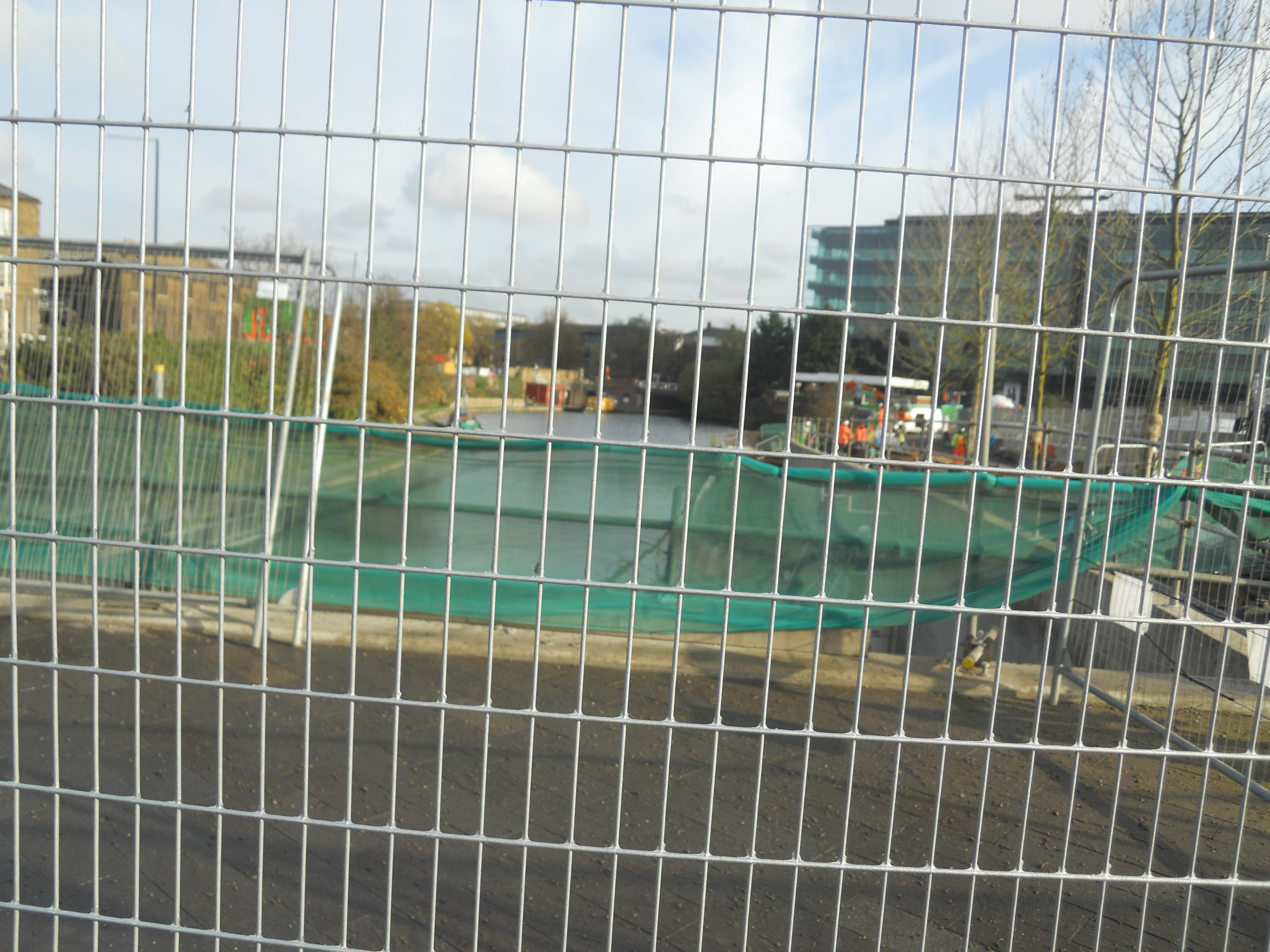
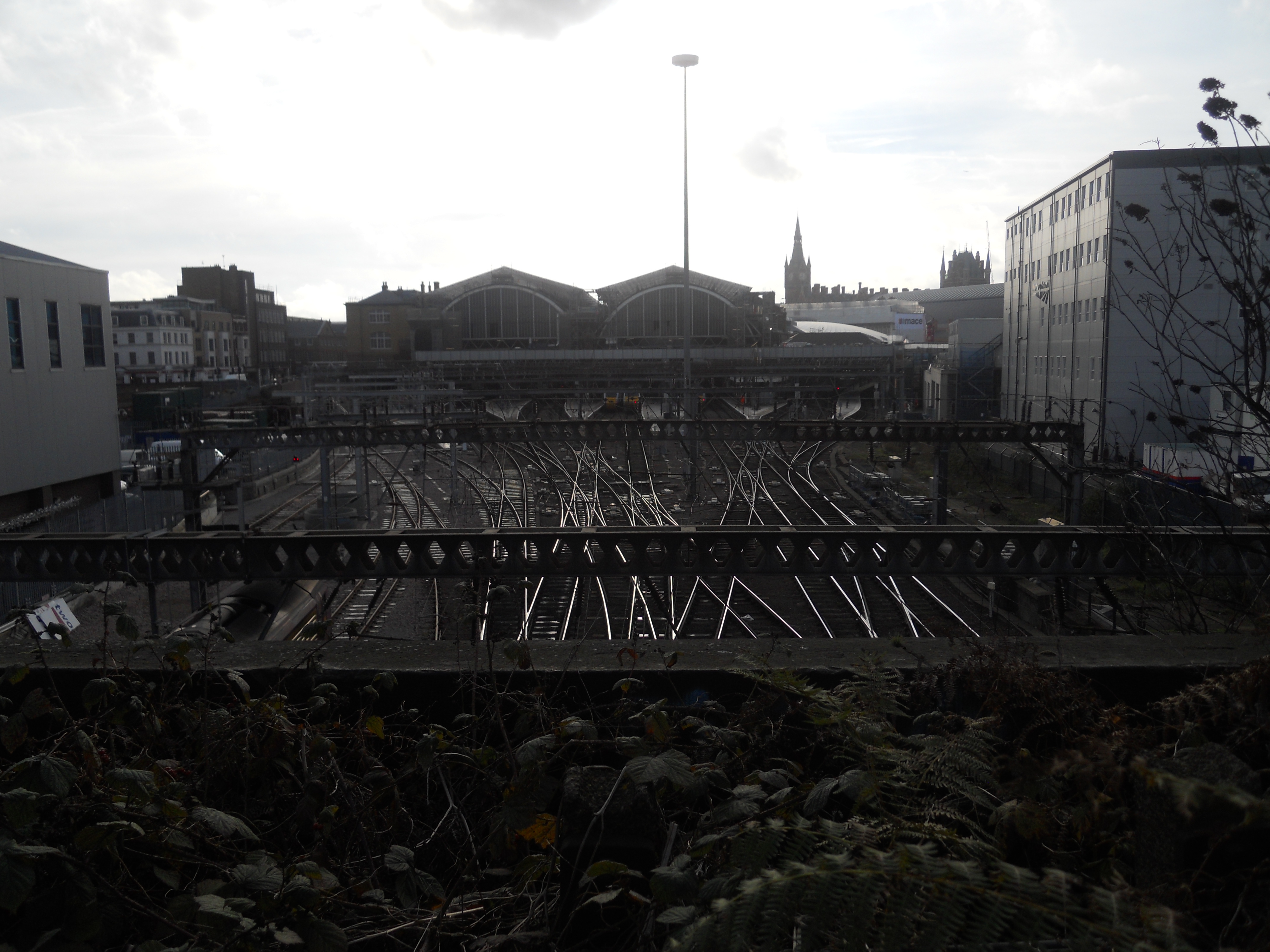
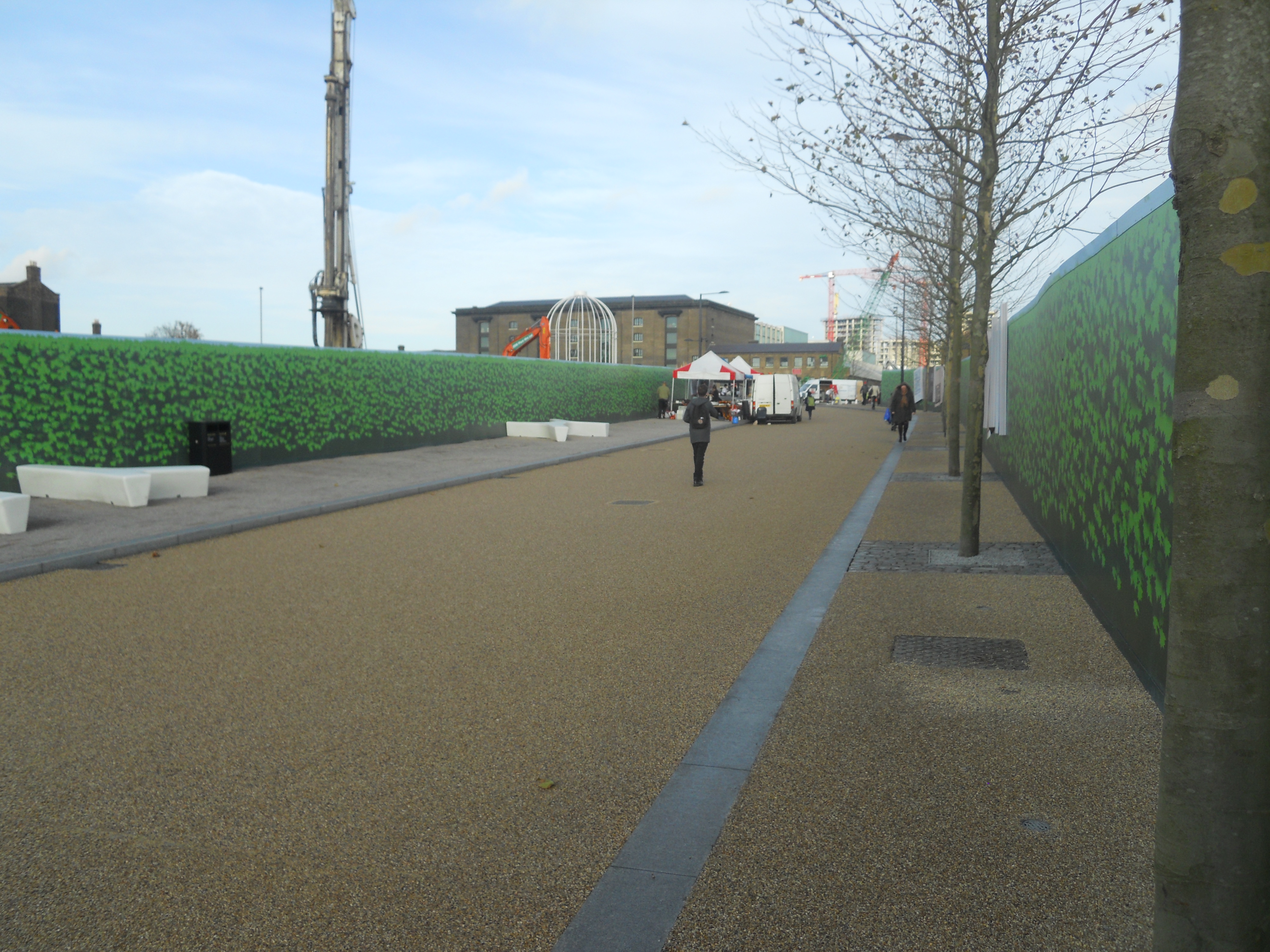
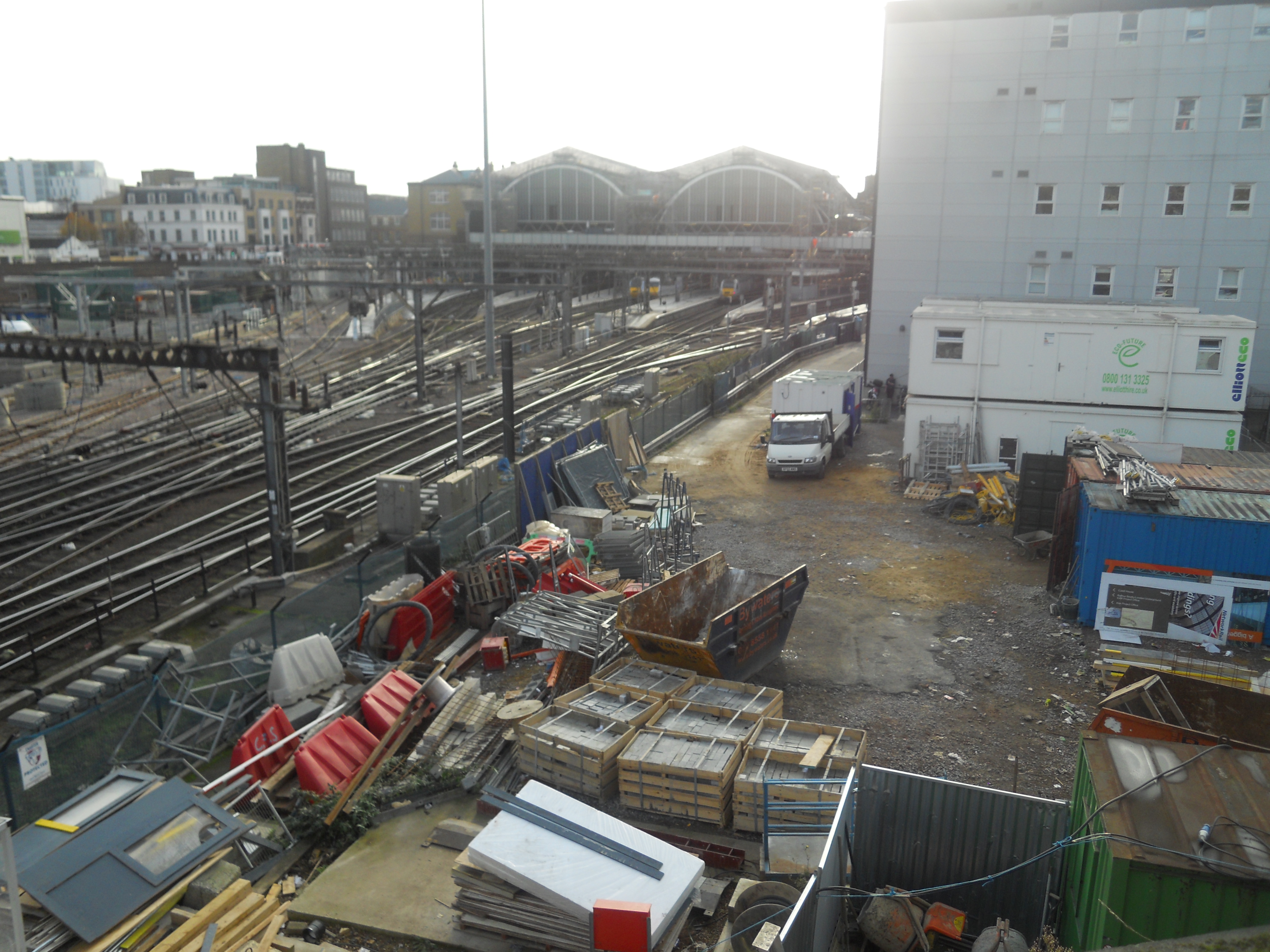
It is the first part of the development at Kings Cross Central to be completed. Note the maps, which set a whole new standard.
Birmingham Moor Street Station
Of all the stations, I have visited on my trip, Birmingham Moor Street is one of the best. It is not a modern steel and glass c reation, but a well-refurbished station with a 1930s theme. Just look at these seats.
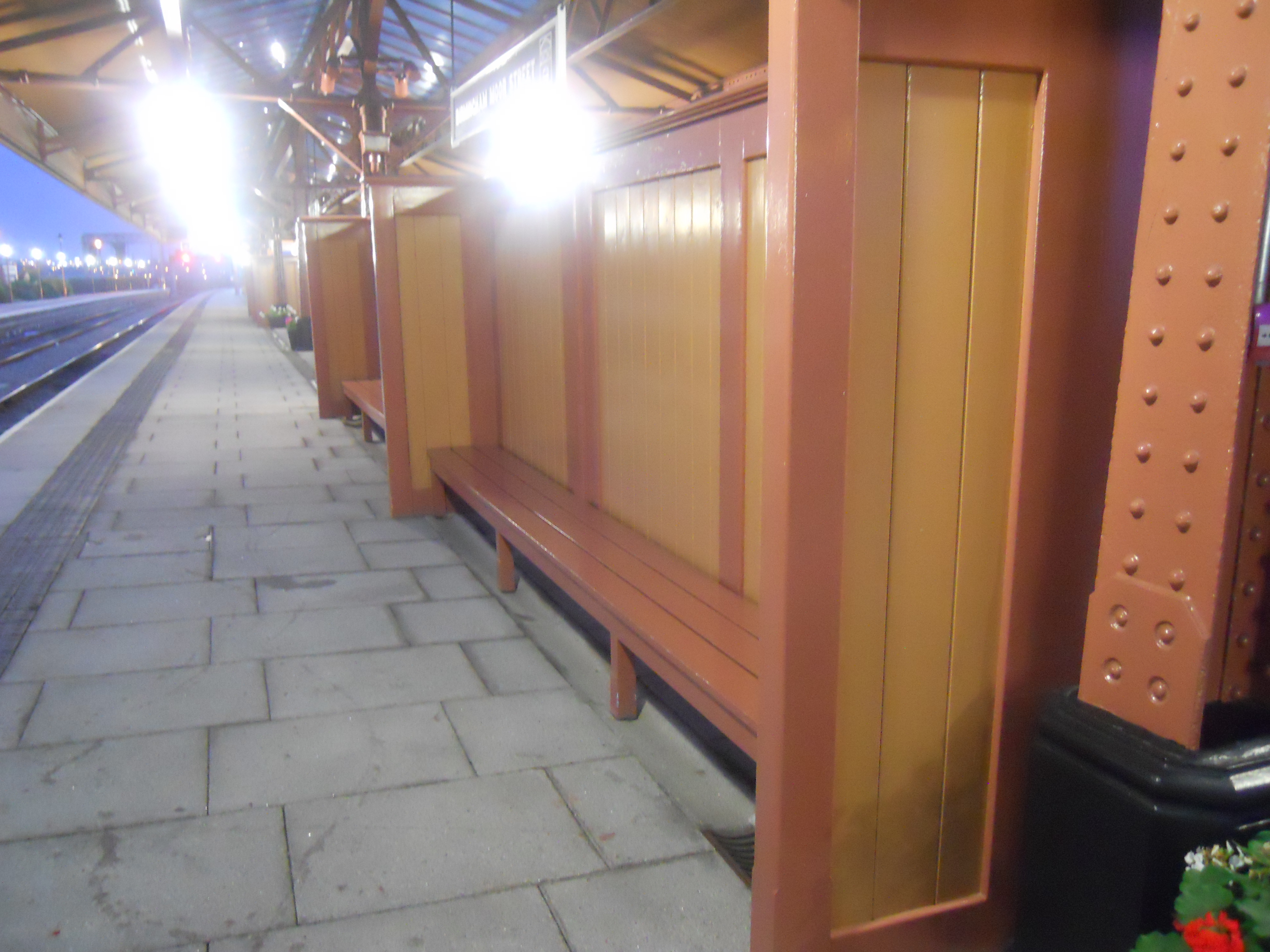
Seats At Moor Street Station
It is also home to the cosmetically-restored 2-8-0 steam engine, GWR 2885.
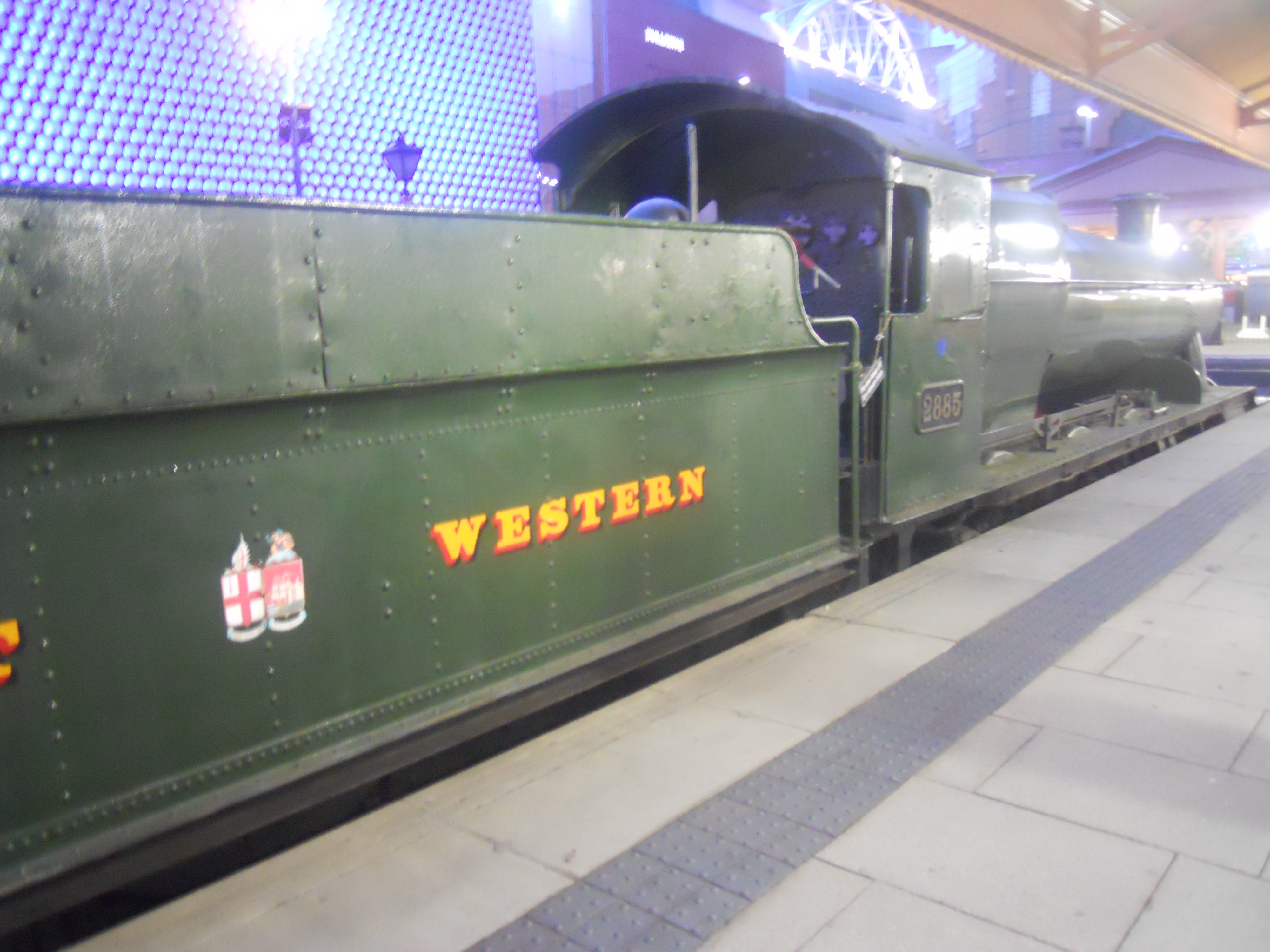
GWR 2885 at Moor Street Station
More of these engines should be displayed at stations, just like Locomotion No.1 used to be at Darlington. The story of that is described here.
It has been a very good restoration of a station, which has won awards according to Wikipedia.
Refurbished in 1930s style, the station has reproduction lamps, clock, seating, and signage. The renovation won the Railway Heritage Trust award for 2004 and The Birmingham Civic Society’s Renaissance Award for 2005.
I doubt the Dyson hand-dryers in the Gents are original though.
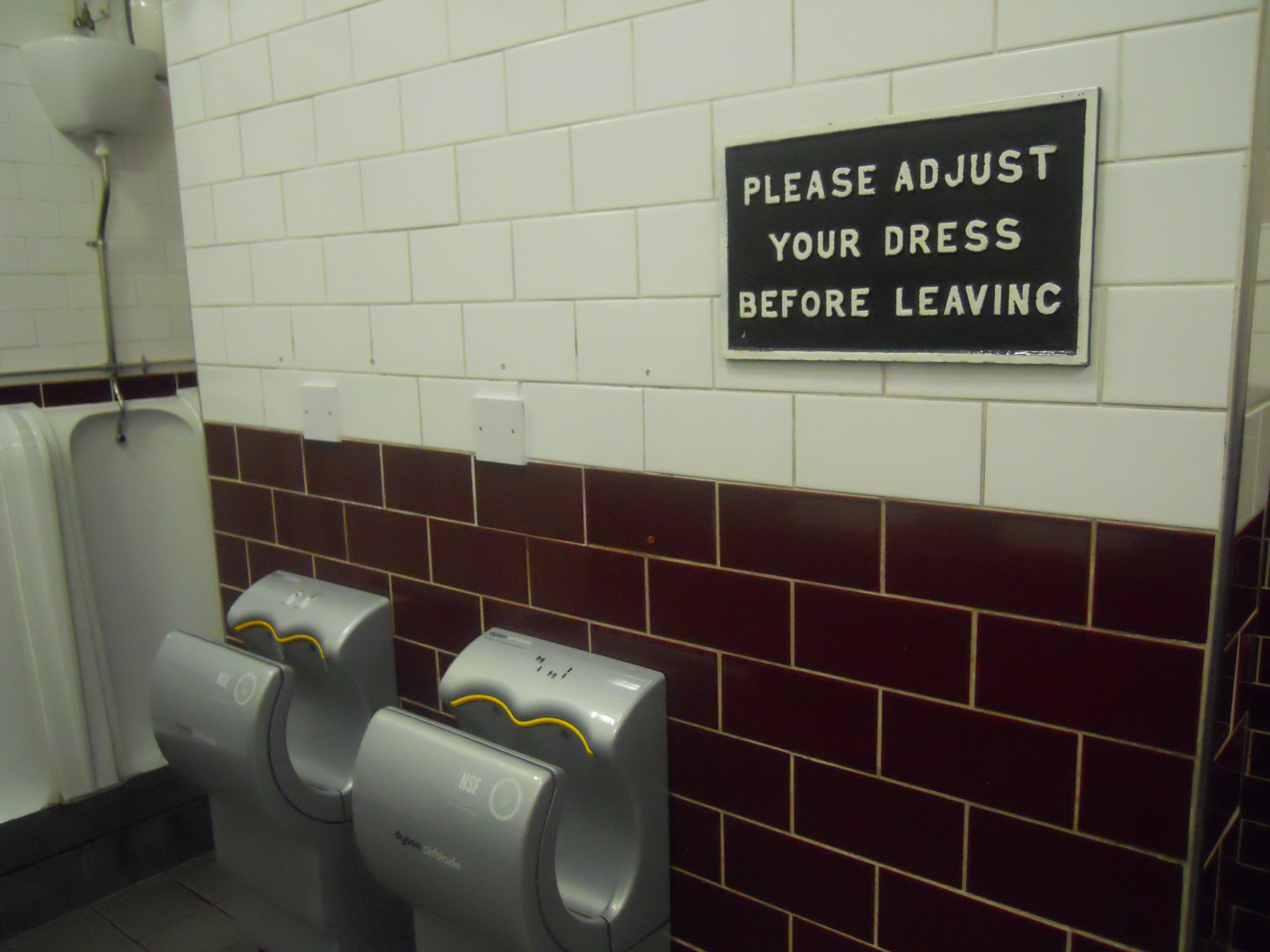
Please Adjust Your Dress
The sign may well be original though.
I’ve Now Got a Buy-to-Let by the Winner of the Carbuncle Cup.
I own a buy-to-let flat close to MediaCityUK. I suspect that I can now advertise it as close to the winner of the Carbuncle Cup, which is the award for the ugliest building of the year.
I have a feeling that we’ll see the BBC gradually relocate back to London to save money anyway.
Who’d want to live in Manchester? Not even Manchester United supporters, as they seem to live in Surrey!
Why Does Regeneration Create So Many Ugly Buildings?
his question was asked in the BBC web site and this article is what Owen Hatherley said.
The last paragraphs are about Leicester.
This is the site of the Leicester Science Park, where new things should be able to occur. A sign says “starting on site summer 2010”. There is no sign of it a year later.
What there is, is a new housing development. Little detached boxes in cul-de-sacs, designed for two purposes – maximising car parking and maximising profit. Each house has a little neo-Georgian porch, what the developers call a “gob-on”.
What you notice is the emptiness. Not just the huge empty wastes outside, but the empty-headedness of a society that has abandoned all hope that it could create something better than this bloody mess.
I think he’s thinking on the right lines.
For a start my new lifestyle proves that you can live without a car. But you do need a house with lots of clean space to work, socialise and relax.
C and I also brought up three kids in a tower block. Good ones certainly work and my middle son looks back on that flat in the Barbican with its superb views and lots of space with affection. My late younger son liked it so much, that when he first setup home it was in the block next door.
Too many though the Barbican is ugly. But not to the many who’ve lived there!
Flooding in East Yorkshire
I’ve just been watching the flash floods in East Yorkshire and there is more here on the BBC web site.
It looked like a modern housing estate was flooded. Was it built on a flood plain as many are? If so surely, the stupid council, who gave planning permission, should pay for the damage. And what about the architect, who created beautiful brick car parking spaces that just prevent the water soaking into the ground and just channel it into the houses.
These little boxes should never be built without a proper flood assessment. After this, they’re probably uninsureable anyway.
In the same report on the web, it says that a Tesco in York had to close because the roof started to leak. If it had been a green roof with perhaps grass on it, the problem might not have happened. If Adnams can do it in silly Suffolk, surely everyone can. Here are the reasons for a green roof from the design brief.
To reduce the visual impact of the building.
To reduce heat transfer into the building and to regulate the buildings core temperature.
To reduce water run-off and burden on drainage.
That all seems logical to me.
The roof incidentally was built by Sky Garden Greenroofs. I wonder how many Tescos and other supermarkets have green roofs? I think in the UK, one Co-op does.
The Architecture of London Zoo
London Zoo has a large collection of the capital’s finest buildings. There is a list here on their web site.
Many were designed by Decimus Burton in the nineteenth century and it a testament to his good design, that some of the original buildings like the Giraffe House, have been able to be brought up to modern welfare standards.
But some like the penguin pool designed in the 1930s by Berthold Lubetkin are never going to be suitable for animals again.
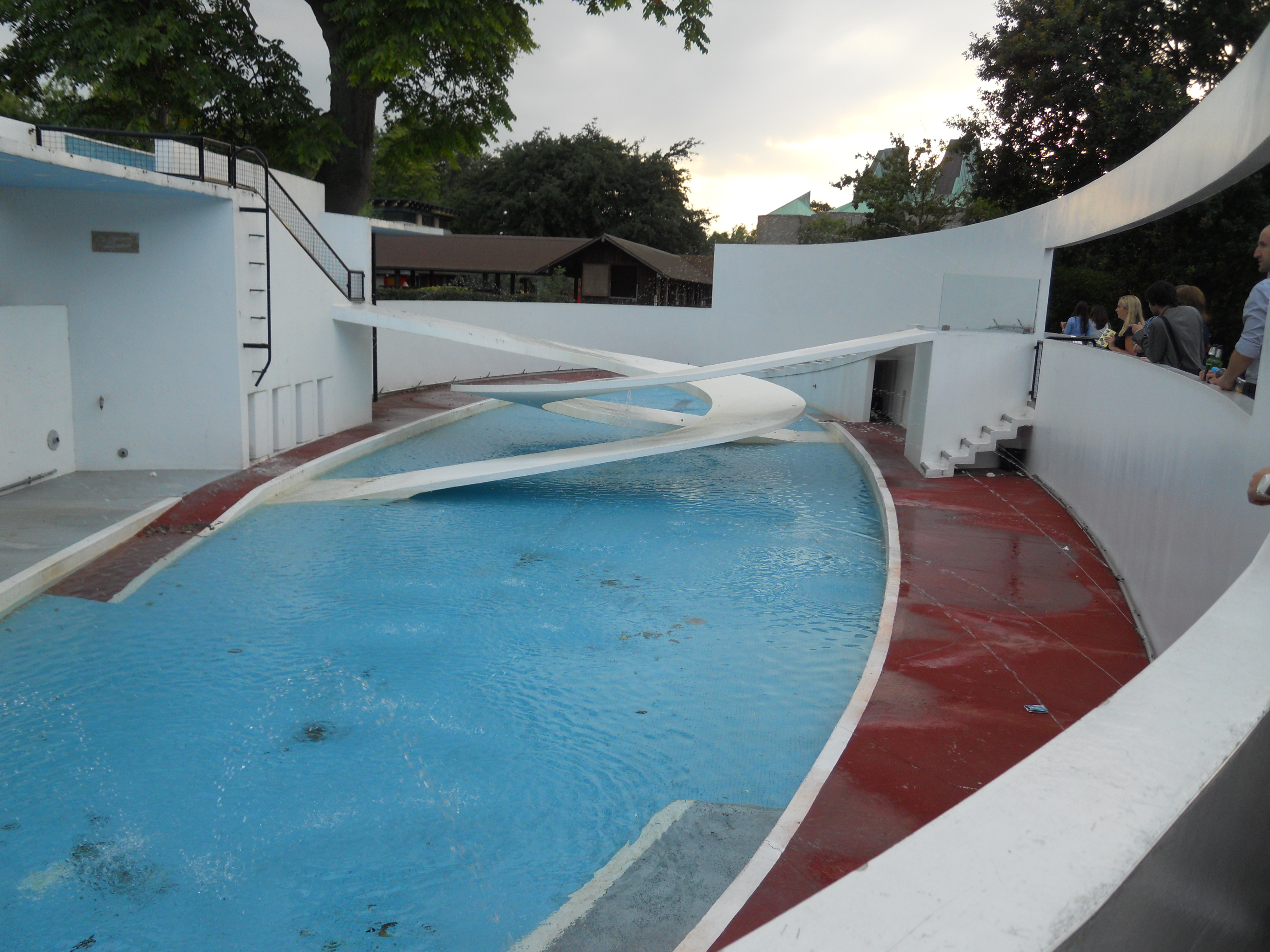
Penguin Pool, London Zoo
I would think it is a big problem for the Zoo as it takes up valuable space and because it is a Grade One Listed building, it can’t be knocked down or substantially modified. Someone said to me last night, that they can’t even modify the words Penguin Pool on the side.
As a child I always thought that the penguin pool was rather stark and that the only thing that gave it life was the penguins, who seemed rather lost in the place.
It’s all such a pity really.
I think if the penguin pool were a house designed by Lubetkin, one of two things would have happened; someone would have spent a fortune and made it into a very nice house or it would have just decayed to a pile of broken concrete.
All credit to the London Zoo for preserving it, but I suspect sometimes they wish a stray bomb from the Second World War had destroyed it. The Zoo asctually suffered quite a bit of damage, as this report tells. I like this piece, which was taken from The Times of the 15th November, 1940.
The Zoo in fact is a microcosm of London. Hitler’s bombs cause a certain amount of damage to it, and a considerable amount of inconvenience; but they have not destroyed the morale or the routine of its inhabitants, animal or human, and it continues to function with a very respectable degree of efficiency.
It may have been blatant propaganda to keep up Londoners morale, but perhaps it does explain why many Londoners look on their zoo with affection.
The Snowdon Aviary
The Snowdon aviary is one of the Zoo’s historic buildings.
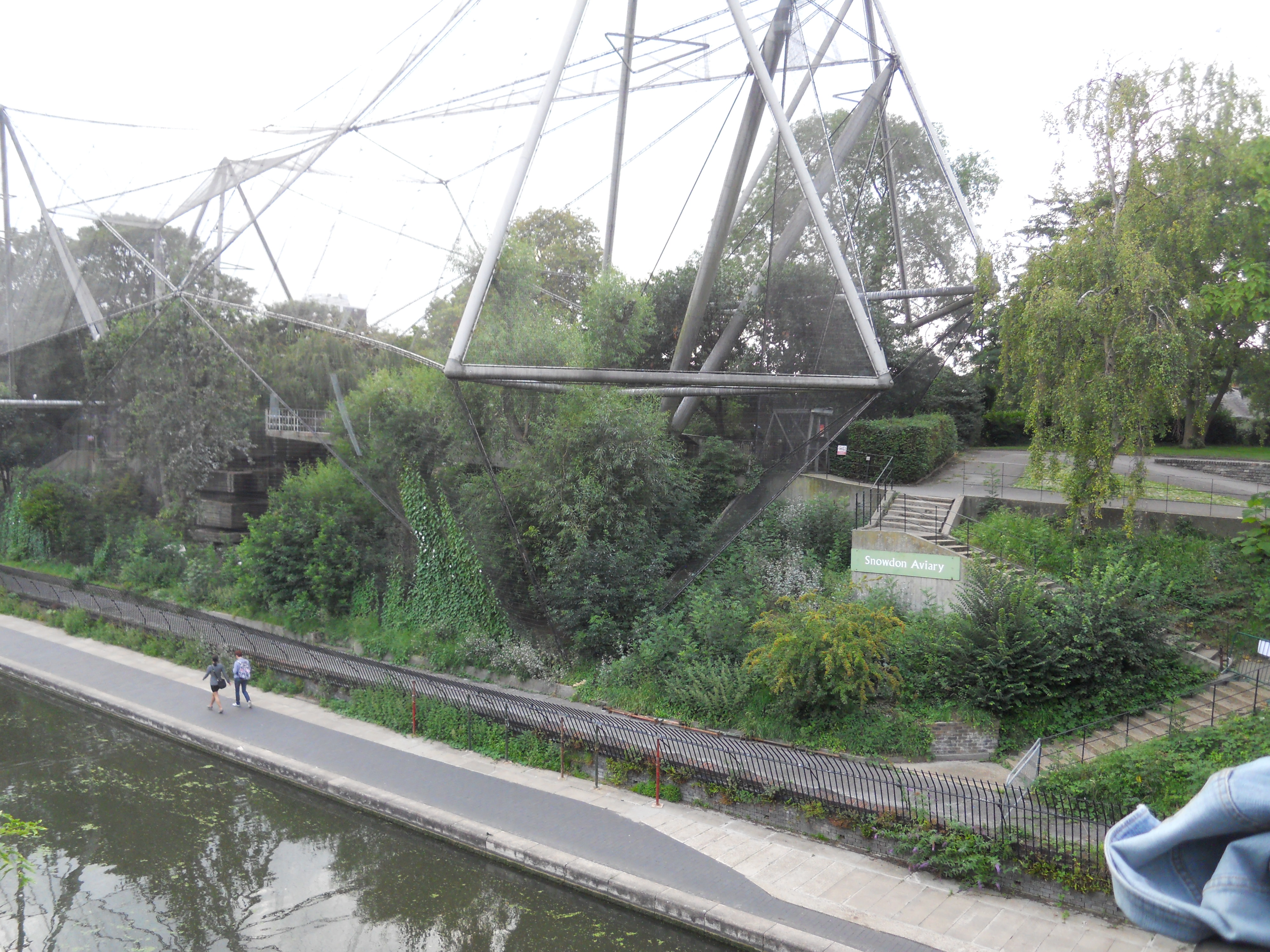
The Snowdon Aviary, London Zoo
When we used to live in St. John’s Wood and would walk up to the top of Primrose Hill, it dominated the view, just like some of the tall modern buildings do now.
The Snowdon Aviary is in my view, still one of London’s most impressive modern buildings. Interestingly, the structural engineer, who did the detailed design, Frank Newby, was a proposer of temporary buildings that could adapt with time. This web site says this about his work.
In the 1960s, Cedric Price had advocated buildings that could adapt and change according to circumstance; buildings that need not be permanent. It’s ironic, then, that one of the small number of his schemes that was realised should form part of the proud heritage of design and engineering dating back nearly two centuries that belongs to the Royal Zoological Society.
So the aviary was probably designed for a limited life. but then the Millennium Dome was to. The Dome has of course changed according to circumstance from a crap NuLabor vanity project into a world-class entertainment venue.
Both structures show that if you want to make something last, you take good design, add quality materials, build it well and then make sure it is looked after by an organisation that values it, like in the aviary’s case the Zoological Society of London does.
The Engineering and Architecture of CrossRail
My previous post about CrossRail may give the impression, that I’m rather against the project.
I’m not, as I believe it will really open up London to residents, commuters and tourists. The only problem is it won’t be fully open until 2018 or so.
Railways should always go through a major city, rather than have expensive stations on the ends of two radial lines. It’s cheaper in terms of capital cost and ensures that the expensive trains work harder. Thameslink does this on a North-South basis and CrossRail will do it on an East-West basis, with an major interchange between the two lines at Farringdon station.
Modern Railways this month has a major section on the CrossRail project. It is a fascinating read, which describes how the railway is being threaded from one side of the London to the other and the designs of the various stations on the route.
The biggest conclusion I get after reading the report, is that this a project that although built to a tight budget, will be something of which London will be proud and will be something that can grow and grow as the City demands more transport links. From the pictures in the article it would appear that the visible face of the railway will be impressive and not like the rather utilitarian Victoria line. On the other hand a lot of the design is more on the side of the practical and well-thought, rather than the spectacular, such as seen on some parts of the Jubilee line.
I also feel that particular attention is being paid to the management of the whole project and this has allowed the cost to be reduced by a billion pounds or so, by taking slightly longer. Hopefully, this will also enable the project to be built on time, but these days, we are getting a much better record at completing large projects on time, so I wouldn’t be suprised if the engineers adjusted the project to increase the certainty of an on-time completion.
But that is good project management!
With my history in the field of project management, CrossRail seems to be a project, I’d have enjoyed getting my teeth into.
A Walk From Bromley-By-Bow
In some ways London can be confusing to the visitor in that it does tend to reuse place names. For instance tonight I wanted a walk and as there had been reports of a new bridge over the River Lee at Bow, I thought I’d try and find it. So I went not to Bromley but to Bromley-by-Bow station, which is on the District and Metropolitan lines. This is also the destination of the 488 bus, which starts running from Dalston Junction station tomorrow, so I wanted to see if it was worth a visit.
Initial impressions were not good, as I took a rather grim underpass to the other side of a dual carriageway leading to the Blackwall Tunnel and then passed a typical Tescos.
Has any of their supermarkets, ever won an award for atchitecture? This one certainly didn’t deserve one, unless it was for the demolishing the worst building in East London.
My walk had to get better.
 The Anonymous Widower