Northern Trains Plans Framework Contract For 450 Multiple-Units
The title of this post, is the same as that of this article on Railway Gazette.
This is the first paragraph.
Northern Trains has invited expressions of interest in a framework contract covering the supply of up to 450 multiple-units to replace ‘significant quantities of its ageing fleet’.
These are other details.
- Firm orders would be placed in phases.
- The initial order would be for ‘multi-mode’ multiple-units.
- Battery-electric or electric-only trains would be included in subsequent orders.
- Trains would have a minimum design life of 35 years from acceptance.
- The ability for the multi-mode units to be converted to electric or battery-electric power as part of an ‘in-life decarbonisation’ programme.
These four paragraphs outline the framework agreement between Northern Trains, the train manufacturer and the owners, who will finance the trains.
The framework agreement would run for eight years, with Northern able to order rolling stock in multiple phases.
Each phase would include a train manufacturing and supply agreement and a technical support and spares supply agreement.
The supplier would provide tools and spare parts, and there would be options for the supply of mock-ups and a cab simulator. Northern is to run a separate procurement for an owning party which would purchase each fleet and lease it to the operator.
The owner would be party to each manufacturing and supply agreement, and there may be different owning parties for each order phase.
This is a well-thought out proposal, that would be worth around a billion pounds to the train manufacturer.
It would probably be based around a family of trains like Alstom’s Aventra, CAF’s Civity or Stadler’s FLIRT.
For a series of orders of such a value, I think we will see some excellent proposals.
The deal will transform rail travel in the North.
I have some thoughts.
Which Trains Will Be Replaced?
Northern Trains fleet includes these ageing trains.
- Class 150/0 diesel trains – 6 x three-car – 18 cars
- Class 150/1 diesel trains – 46 x two-car – 92 cars
- Class 150/2 diesel trains – 26 x two-car – 52 cars
- Class 155 diesel trains – 7 x two-car – 14 cars
- Class 156 diesel trains – 65 x two-car – 130 cars
- Class 158/0 diesel trains – 45 x two-car – 90 cars
- Class 158/9 diesel trains – 8 x three-car – 24 cars
- Class 319 electric trains – 12 x four-car – 48 cars
- Class 323 electric trains – 34 x three-car – 102 cars
- Class 333 electric trains – 16 x four-car – 64 cars
- Class 769 bi-mode trains – 8 x four-car – 32 cars
Note.
- These total to 273 trains and 661 cars.
- If the 16 Class 170 trains, which are of three-cars, were also to be replaced. that would bring the total trains to be replaced to 289 trains and 709 cars.
I would expect the difference between 273-289 current trains and 450 trains in the article, is explained by new services and increased services on certain routes.
Which Trains Could Be Retained?
Northern Trains fleet includes these new trains.
- Class 195 diesel trains – 25 x two-cars – 50 cars
- Class 195 diesel trains – 33 x three-cars – 99 cars
- Class 331 electric trains – 31 x three-cars – 93 cars
- Class 331 electric trains – 12 x four-cars – 48 cars
Note.
- These trains were all built by CAF in the last five years.
- These total to 101 trains and 290 cars.
But if they have an expected life of 35 years, the diesels will have to be converted to zero-carbon trains.
Will The CAF Trains Be Retained?
Consider.
- If all the ageing trains and those not built by CAF were to be replaced then that would be 289 trains and 709 cars.
- If the nearly-new CAF trains were also to be replaced that would be 390 trains and 999 cars.
- Add in a few more trains for expanded services and you’re got the figure of 450 trains given in this article.
- If the CAF trains were to be replaced, then Northern Trains would have an homogenous fleet of new trains from one manufacturer, with all the advantages in operation and maintenance.
On the other hand, I haven’t read any bad criticism of these CAF trains, so I will assume that there is no pressing reason to replace them.
And of course Northern Trains could have an homogenous fleet of new CAF trains.
This is said in the article.
The supplier would provide tools and spare parts, and there would be options for the supply of mock-ups and a cab simulator.
As this is specifically mentioned, do Northern lack a simulator for driver training?
What About The Manchester Bee Network And Other Local Networks?
Will these networks want to take control of their local trains?
If there is an homogenous fleet of new trains from one manufacturer, then surely, it would be easier to give control of some routes to the local transport interests.
Training and driver rostering could be retained in what was left of Northern Trains.
Tram-Trains
Tram trains would be an added complication, but as the South Wales Metro is showing, tram-trains are an interesting way of expanding a network.
Adding Rose Hill Marple And Manchester Piccadilly To The Bee Network
This article on the Railway Gazette has a list of the lines, that will be transferred between Northern Rail and the Bee Network.
Included in the list is this line.
Rose Hill Marple And Manchester Piccadilly
I think this route would be the following.
- The Eastern terminus would be Rose Hill Marple.
- The Western terminus would be Manchester Piccadilly.
- Intermediate stations would be Romiley. Woodley, Hyde Central, Hyde North, Guide Bridge, Fairfield and Gorton.
- The route is partially-electrified with 25 KVAC overhead between Hyde North and Manchester Piccadilly.
- Most of the route has a range of operating speeds, up to 90 mph.
- The distance is 13.3 miles
- Trains take 34 minutes
- Trains are often two-car Class 156 trains.
The route is the same as the current Northern Trains service.
This is my thought.
Trains
This route is a classic for battery-electric trains, as only 6.8 miles at the Marple end is not electrified.
Merseyrail’s Class 777 trains or something similar would surely do nicely.
There would be no need for charging at the Marple end.
Adding Glossop/Hadfield And Manchester Piccadilly To The Bee Network
This article on the Railway Gazette has a list of the lines, that will be transferred between Northern Rail and the Bee Network.
Included in the list is this line.
Glossop/Hadfield And Manchester Piccadilly
I think this route would be the following.
- The Eastern termini would be Glossop and Hadfield.
- The Western terminus would be Manchester Piccadilly.
- Intermediate stations would be Dinting, Broadbottom, Hattersley, Godley, Newton for Hyde, Flowery Field, Guide Bridge and Ashburys.
- The route is fully electrified with 25 KVAC overhead.
- Most of the route has a range of operating speeds. up to 75 mph.
- The distance is 14.8 miles
- Trains take 41 minutes
- Trains are often three-car Class 323 trains.
The route is the same as the current Northern Trains service.
This is my thought.
Trains
The Class 323 trains could be easily replaced with a 25 KVAC overhead version of Merseyrail’s Class 777 trains.
Adding Buxton And Manchester Piccadilly To The Bee Network
This article on the Railway Gazette has a list of the lines, that will be transferred between Northern Rail and the Bee Network.
Included in the list is this line.
Buxton And Manchester Piccadilly
I think this route would be the following.
- The Southern terminus would be Buxton.
- The Northern terminus would be Manchester Piccadilly.
- Intermediate stations would be Dove Holes, Chapel-en-le-Frith, Whaley Bridge, Furness Vale, New Mills Newtown, Disley, Middlewood, Hazel Grove, Woodsmoor, Davenport, Stockport, Heaton Chapel and Levenshulme.
- he route is fully electrified with 25 KVAC overhead between Hazel Grove and Manchester Piccadilly.
- Most of the route has a range of operating speeds. up to 90 mph.
- The distance is 19 miles
- Trains take 62 minutes
- Trains are often two-car Class 150 trains working as a pair.
- The Buxton Line is one of the stiffest routes on the UK rail network.
The route is the same as the current Northern Trains service.
This is my thought.
Trains
I think there are three choices.
- Electrify the line fully and use 100 mph electric trains like Class 331 trains.
- Use 100 mph battery-electric trains, with large enough batteries to climb to Buxton.
- Use 100 mph hydrogen-electric trains, with enough power on hydrogen to climb to Buxton.
Note.
- The current diesel trains could be used until a zero-carbon solution is delivered.
- 100 mph trains would be needed because of the 90 mph section around Stockport.
- The stiffness of the line makes the choice difficult.
- Regenerative braking would allow trains to coast down the hill.
- Battery-electric trains would not need charging at Buxton.
I’m sure that the deal that will be setting up the Bee Network, would have a plan for the Buxton Line.
Adding Alderley Edge And Manchester Piccadilly To The Bee Network
This article on the Railway Gazette has a list of the lines, that will be transferred between Northern Rail and the Bee Network.
Included in the list is this line.
Alderley Edge And Manchester Piccadilly
I think this route would be the following.
- The Southern terminus would be Alderley Edge.
- The Northern terminus would be Manchester Piccadilly.
- Intermediate stations would be Wilmslow, Handforth, Cheadle Hulme, Stockport, Heaton Chapel and Levenshulme.
- The route is fully electrified with 25 KVAC overhead.
- Most of the route has a range of operating speeds. up to 110 mph.
- The distance is 13.6 miles
- Trains take 29 minutes
- Trains are often three-car Class 331 trains.
The route is the same as the current Northern Trains service.
This is my thought.
Trains
As the route is fully-electrified, electric trains are needed.
Any 110 mph trains would probably be ideal, to keep out of the way of the expresses.
Adding Southport And Stalybridge Via Atherton To The Bee Network
This article on the Railway Gazette has a list of the lines, that will be transferred between Northern Rail and the Bee Network.
Included in the list is this line.
Southport And Stalybridge Via Atherton.
I think this route could be the following.
- The Eastern terminal would be Stalybridge.
- The Northern terminal would be Southport.
- Intermediate stations would be Meols Cop, Bescar Lane, New Lane, Burscough Bridge, Parbold, Appley Bridge, Gathurst, Wigan Wallgate, Hindley, Daisy Hill, Hag Fold, Atherton, Walkden, Swinton, Salford Crescent, Salford Central, Manchester Victoria and Ashton-under-Lyne
- The route is partly electrified with 25 KVAC overhead.
- Mich of the route has a 75 mph operating speed.
Currently, this service runs hourly, by a slightly different route to that proposed.
This is my thought.
Battery-Electric Trains
Consider.
- The route could be ideal for battery-electric trains.
- Central Manchester and Stalybridge will soon be electrified.
- A charging station could be added at Southport station.
Merseyrail’s Class 777 trains or something similar would surely do nicely.
Adding Wigan And Manchester Victoria To The Bee Network
This article on the Railway Gazette has a list of the lines, that will be transferred between Northern Rail and the Bee Network.
Included in the list is this line.
Wigan and Manchester Victoria via the West Coast Main Line and a proposed station at Golborne, which could open from 2025.
I think this route could be the following.
- The Eastern terminal would be Manchester Victoria
- The Northern terminal would be Wigan North Western, as it is on the West Coast Main Line.
- Intermediate stations would be Golborne, Patricoff, Eccles and Salford Central.
- The route is fully electrified with 25 KVAC overhead.
- Most of the route has a 90 mph operating speed.
There is no comparable route in the current timetable.
These are a few thoughts.
Golborne Station
In Beeching Reversal – Reopening Golborne Railway Station, I discussed the reopening of Golborne station.
I didn’t think it would be likely, as it was a cramped site in the middle of a village, as this Google Map shows.
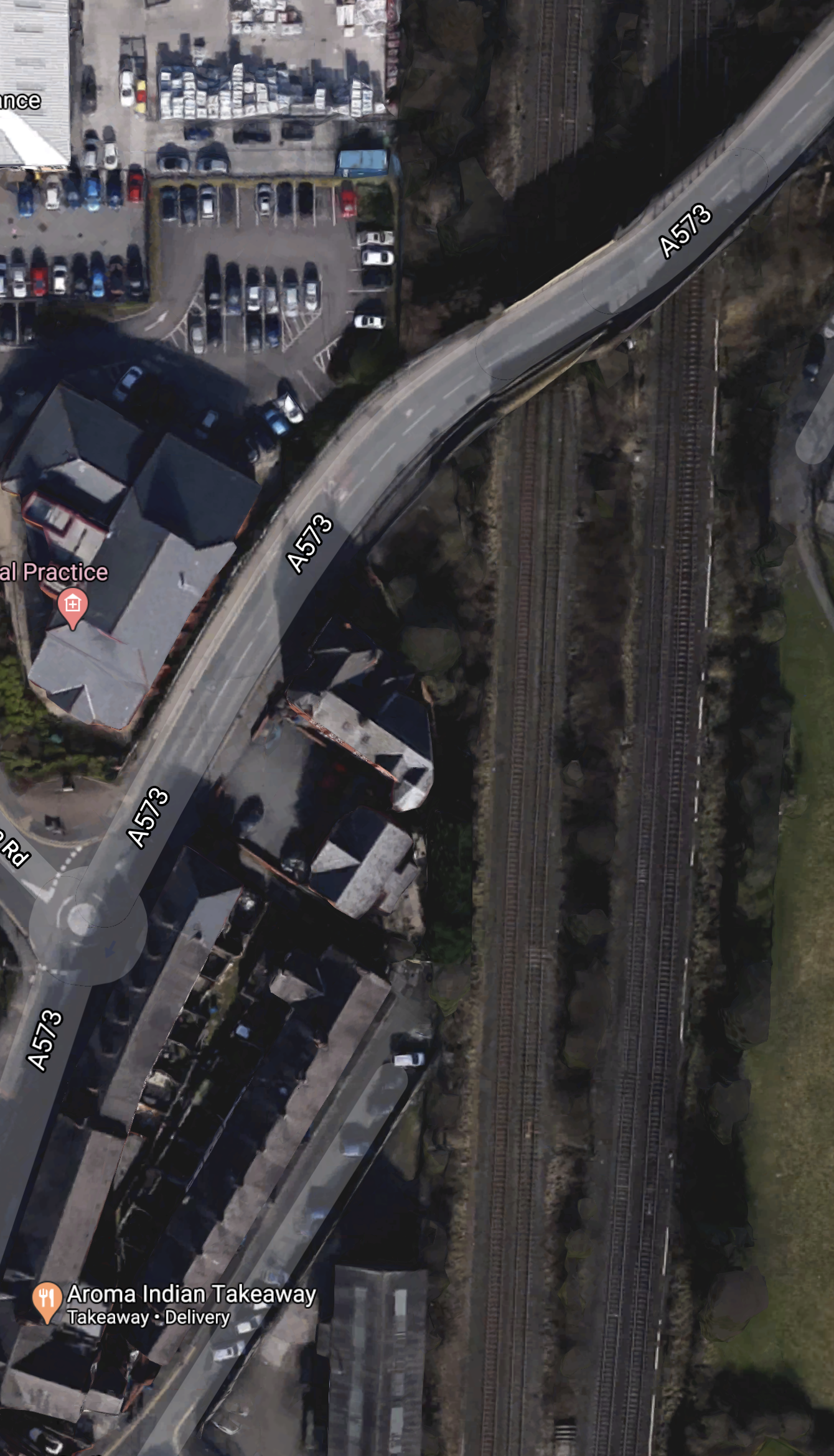
But I didn’t notice the four tracks through the site.
As the line through here, will have to be rebuilt for High Speed Two to raise the operating speed from the current 90 mph to as high as 140 mph. perhaps a high class architect could find a way to build a station at the site on the slow lines?
Improvements To Wigan North Western Station
In Wigan North Western Station Set For Platform Extension Work, I talked about work to make Wigan North Western station ready for High Speed Two.
I concluded, by saying this.
It certainly looks like Wigan North Western station is being updated to have a comprehensive network of local electric services to give a large number of stations, good access to current West Coast Main Line and future High Speed Two services.
I also added this picture of Wigan North Western station.
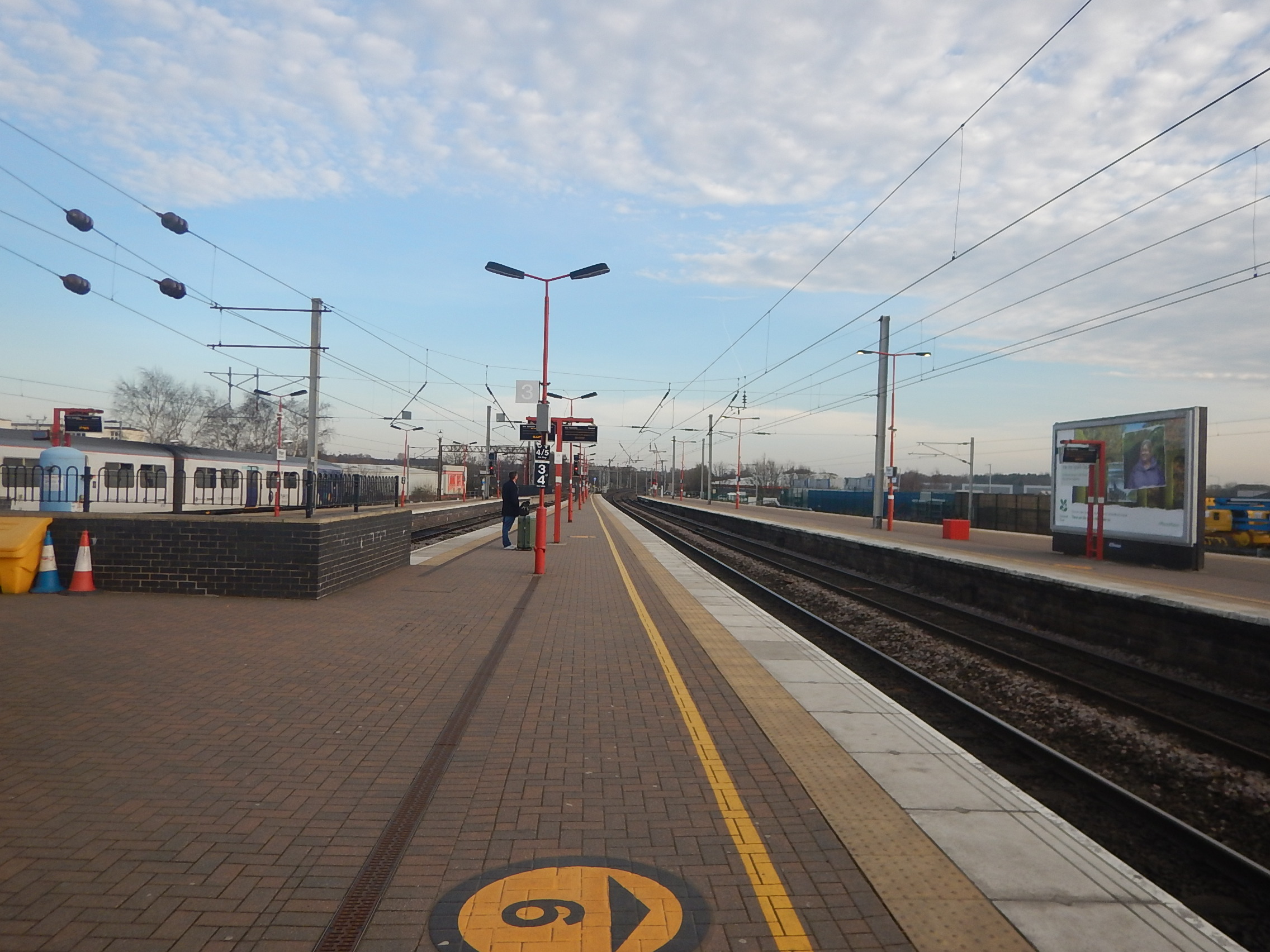
Wigan North Western station can’t be far off being able to accept pairs of High Speed Two Classic Compatible trains, that will be 400 metres long.
The Wigan North Western and Manchester Victoria service will add Golborne, Patricoff, Eccles, Salford Central and Manchester Victoria to the list.
Connecting To Scottish Services
The Internet gives these times from Wigan North Western.
- London Euston – 1 hour and 55 minutes – Current
- London Euston – 1 hour and 34 minutes – High Speed Two
- Glasgow Central – 2 hours and 35 minutes – Current
- Glasgow Central – 2 hours and 06 minutes – High Speed Two
It looks to me, that there is an awful lot of trackwork to be done to the West Coast Main Line between Wigan North Western and Glasgow Central.
But on the other hand, changing at Wigan North Western will be a reasonably fast alternative, if whilst building High Speed Two to Manchester, the current route is closed.
Manchester Buzzing To Put Rail Into Its Bee Network
The title of this post, is the same as that of this article on the Railway Gazette.
These two paragraphs introduce the article.
Locally branded stations and integrated ticketing are among the improvements to Greater Manchester’s local rail services envisaged from 2025 under a landmark devolution deal.
The deal agreed with the government on March 15 brings GM Mayor Andy Burnham and local council leaders significant additional powers in several policy areas, including transport. The single funding settlement is similar to those in place covering Scotland and Wales, but this and a similar deal for the West Midlands is the first time such a flexible grant has been granted to English regions.
Included in the deal are the following.
A London-Style Network
It is described in this paragraph.
Greater Manchester has set itself a target of rolling out so-called ‘London style’ transport across modes by 2030. While Transport for Greater Manchester already directly manages the Metrolink light rail network, buses are now being brought under tighter regulation through a franchising model, and TfGM aspires to introduce integrated smart ticketing across the city-region. Today, while paper travelcards can be bought covering buses, Metrolink trams and trains, these are poorly marketed and often more expensive than the fares offered by individual bus operators; there is also no ability for daily or weekly price capping to be introduced.
I hope that Manchester follows London’s rules.
- One card and any bank or credit card gives full access to buses, trains and trams.
- Daily, weekly and monthly caps.
- Freedom Pass or equivalent for those that need them.
- Comprehensive transport mapping.
- Visitor-oriented travel information offices in major stations.
I feel very strongly about the last two, as measures like these encourage visitors to return.
Trials of the ticketing should start by the end of the year.
The Bee Network
This is outlined in this sentence.
Together, the local transport network is to be branded ‘the Bee Network’, reflecting an enduring emblem of the area’s industrial heritage.
I like the name.
- The bee is one of the symbols of the city according to this Wikipedia entry.
- Bees are on the coat of arms of the City of Manchester.
- Bee symbols are used by Manchester and local businesses.
But perhaps most importantly, the bees were a symbol of recovery of the city after the May 2017 Manchester Arena bombing.
The Addition Of Twenty Percent Of the Local Rail Network
This is outlined in this sentence.
Under the agreement announced on March 15, around 20% of local rail services, currently operated by Northern Trains and managed under contract with the Department for Transport, will be brought into the Bee Network.
These rail services are to be added.
- Wigan – Manchester Victoria via the West Coast Main Line and a proposed station at Golborne, which could open from 2025.
- Stalybridge – Southport via Atherton
- Glossop – Hadfield – Manchester Piccadilly
- Rose Hill Marple – Manchester Piccadilly
- Buxton – Manchester Piccadilly
- Alderley Edge – Manchester Piccadilly
I shall discuss each route in detail separately.
New Trains?
Consider.
- The Wigan and Alderley Edge routes are shared with 125 mph trains.
- The diesel trains on the Buxton and Rose Hill Marple routes will need to be replaced.
- The Buxton route is a very stiff climb.
- Do the Class 323 trains to Glossop and Hadfield need to be replaced?
- The Buxton, Southport and Rose Hill Marple routes are not fully-electrified.
I would have two separate fleets.
A small number of 110 mph electric trains for the Wigan and Alderley Edge routes. Class 350, 360, 379 and 386 trains would be possibilities.
An appropriate number of electric for the other routes. Some would have a battery capability to handle the partially-electrified routes. Merseyrail’s Class 777 could be ideal.
Note.
I am fairly certain, that the Class 777 trains can run as tram-trains, which would be useful for Manchester.
A rough calculation indicates that the ideal battery sizes for Southport and Buxton, could be similar.
The battery for the Rose Hill Marple route would be smaller.
There could be advantages if Merseyrail and Manchester had similar high quality trains.
Integration Of The Various Modes Of Transport
This is outlined in this paragraph.
Meanwhile, the Greater Manchester Combined Authority is to establish a North West Regional Business Unit and GM Rail Board to improve local scrutiny of rail service performance and shape the integration with other modes in the Bee Network.
This is critical to the successful development of the Bee Network.
Conclusion
It’s now up to Manchester to first make it work and then develop it for the benefit of the people and businesses of the City, and not forgetting the visitors.
Integration Of The Various Modes Of Transport
This is outlined in this paragraph.
Meanwhile, the Greater Manchester Combined Authority is to establish a North West Regional Business Unit and GM Rail Board to improve local scrutiny of rail service performance and shape the integration with other modes in the Bee Network.
This is critical to the successful development of the Bee Network.
 The Anonymous Widower