Roaming Around East Anglia – Reedham Station
If you have to travel between Lowestoft and Great Yarmouth stations by train, you have to change at Reedham station. Or you should be able to!
These pictures show the station.
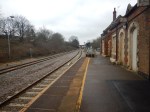
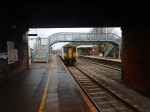
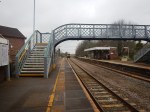
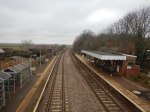
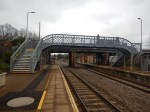
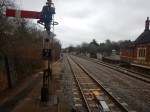
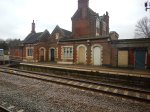
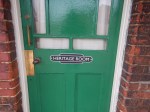
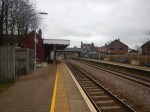
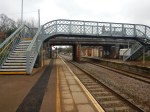
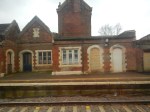
You can’t do the direct journey between East Anglia’s two largest Eastern towns at present, as Network Rail have got their special Project Management knickers on. You know the ones with a twist!
So passengers between Lowestoft and Great Yarmouth have three options.
- Take an hour and a half jurney via Norwich.
- Take a bus, which probably visits half of the villages in the local area.
- Drive.
Hopefully, the Reedham to Great Yarmouth service will be restored sometime in the near (?) future.
This will allow two ways to travel by rail between Lowestoft and Great Yarmouth.
Changing Trains At Reedham Station
Theoretically, this should work, especially, if trains were timetabled so that passengers waited perhaps a couple of minutes on what I suspect in winter can be a very pleasant station.
Look at the footbridge. Do Greater Anglia really expect elderly travellers or those with bikes, buggies and baggage to use the Victorian footbridge?
I suspect Greater Anglia don’t see this as a feasible way of attracting more passengers out of their cars and from the buses.
But Network Rail haven’t got the millions of pounds needed to bring the station into the Twentieth Century!
A Shuttle Train Reversing At Reedham
It would be possible for a train to shuttle between Lowestoft and Great Yarmouth, which could reverse in Reedham station.
In Norfolk Rail Line To Remain Closed As £68m Upgrade Project Overruns, I asked if the new Class 755 trains had a fast reverse procedure, as Greater Anglia’s services are full of stations, where a train must arrive and leave a few minutes later.
I wrote the following.
A simple system could be as follows.
- On arrival in a station, the driver would put the train into a standby mode, when it was safely stopped.
- The driver would then walk through the train to the second cab.
- Whilst the driver is changing ends, the conductor is opening and closing the train doors and supervising the loading and unloading of passengers.
- On arrival in the second cab, the driver would wake up the train and check everything.
- After the doors are closed and having received the all clear from the conductor and a green light from the signals, the driver would proceed.
At all times, the driver and conductor, would have emergency remote controls to immobilise the train, if something is not what it should be.
Modern automation is certainly able to design a very safe system, that would save time at every reverse.
The stop ar Reedham station would become an almost normal stop and I would expect that a train could reverse in about two or three minutes.
Use Only One Platform At Reedham
Could this be the most affordable solution?
- The track layout at Reedham station would be modified, so that all trains would use the Norwich-bound Platform 1.
- Platform 1 is improved with a quality waiting room and a coffee kiosk, to make a short wait between trains more pleasant.
If there were two trains per hour on both the Lowestoft and Great Yarmouth routes, I’m sure that with the new signalling and good driving, a single-platform at Reedham station would work.
Trains from Norwich could call at XX00, XX15, XX30 and XX45, with trains to Norwich calling at XX07, XX22, XX37 and XX52.
If trains stopped in the right order, then there would be a maximum wait of eight minutes in a comfortable waiting room at Reedham station.
Even with only one train per hour between Norwich and Yarmouth via Reedham, I’m certain an acceptable timetable could be devised.
Greater Anglia’s Class 755 trains
Greater Anglia have ordered thirty-eight Class 755 trains, which have a total of 138 cars.
These will replace twenty-six assorted trains, which have a total of 55 cars.
This is a increase of 46% in the number of trains and 150% in the number of cars.
Greater Anglia didn’t increase the fleet so that could sit in sidings, so I think we can expect some new services and higher frequencies.
Conclusion
I’m certain that a sensible hourly service between Lowestoft and Great Yarmouth stations can be devised.
DfT Keen To Encourage Rail Travel For Football Fans
The title of this post is the same as that of an article in Issue 873 of Rail Magazine.
I was moved to send this letter to the magazine.
Was this title on page 17 of Issue 873 serious or an ironic joke?
I am a seventy-one-year-old Ipswich fan and Season Ticket holder, who lives in London, within walking distance of Liverpool Street station on a fine day.
Over the last six or seven years, I have been unable to see Home matches as often, as I would like, as on perhaps half of weekend match days, there have been no trains running on the Great Eastern Main Line, due to the constant maintenance. Or is it a complete rebuilding for 140 mph trains?
To be fair, I have occasionally used the replacement buses, but the problem is that they make the journey well over an hour longer. So on a match day, there is no time left for anything else!
I had to watch the two Ipswich-Norwich matches on television, as on both these Sundays to get to the match by mid-day was impossible and probably needed an overnight stay!
I accumulated my very adequate pension pot, by writing software to schedule resources on complicated projects. Surely, Network Rail, Greater Anglia, the Premier League and the EFL can agree a plan that is better than the current shambles.
Greater Anglia surely have the means to improve the situation arriving in their depots.
Pairs of four-car Class 755 trains could run reduced services via Cambridge.
- If the line is blockaded between Ipswich and London, then a direct service could be run between Norwich and London via Ipswich and Cambridge.
- If the line is blockaded between Ipswich and Norwich, then a direct service could be run between Norwich and London via Cambridge.
Although, this has nothing to do with football, pairs of Class 755 trains would also be useful for running a service between Peterborough and London, when the Southern section of the East Coast Main Line is closed.
I shall add a few extra notes to this on-line version of the letter.
Class 755 Trains
Points about Class 755 trains.
- They are 100 mph trains on both electric and diesel, and probably have similar performance to the current Class 90 locomotive/Mark 3 coaches that run between Liverpool Street and Norwich.,
- Capacity of a pair of Class 755 trains is 458 seats, as against the 514 seats of the current stock.
- The interior will be suitable for services between London and Norwich.
- The trains and their crews will probably be certified for all of Greater Anglia’s Network.
- A single train is eighty metres long and a pair would be 160 metres.
- The trains should fit all important main-line stations on the Greater Anglia Network.
I also suspect that these trains could run into Kings Cross station, either using the East Coast Main Line or the Hertford Loop Line.
They are blockade-busters par excellence.
East West Rail Makes ‘Powerful Case’ For Direct Services From Ipswich And Norwich To Oxford
The title of this post is the same as that of this article on Rail Technology Magazine.
This is the first two paragraphs.
A direct rail link between Ipswich, Norwich and Oxford could unlock £17.5bn for the East Anglia community, according to a case for investment from the East West Rail Consortium (EWRC).
A new report publishing by the consortium outlines the benefits of new East West rail services, including the creation of 120,000 jobs and connecting high-value economies with fast rail links.
This report on the East-West Rail web site is entitled Eastern Section Prospectus and gives full details of their proposals.
Proposed Train Services
The East West Rail Consortium (EWRC) is proposing three phases of train services.
Initial Service Pattern
An hourly direct EWRC service to/from Ipswich, with a good connection at Cambridge to/from Norwich.
The current Ipswich to Cambridge service will be extended from Cambridge to Oxford and Reading.
Intermediate stations between Cambridge and Reading would include.
- Cambridge South for Addenbrookes Hospital
- Sandy
- Bedford
- Milton Keynes
- Bletchley
- Bicester
- Oxford
- Didcot Parkway
Selective journey times would include.
- Ipswich to Bedford – 1 hour 26 minutes
- Ipswich to Milton Keynes – 1 hour 55 minutes
- Ipswich to Oxford – 2 hours 19 minutes
- Ipswich to Reading- 2 hours 43 minutes
At Cambridge, there would be a same- or cross-platform interchange with Greater Anglia’s forthcoming service between Norwich and Stansted Airport, which will replace the current service between Norwich and Cambridge before the end of 2020, when new Class 755 trains will have entered service.
Selective journey times would include.
- Norwich to Bedford – 1 hour 22 minutes
- Norwich to Milton Keynes – 1 hour 51 minutes
- Norwich to Oxford – 2 hours 15 minutes
- Norwich to Reading- 2 hours 40 minutes
There would be a change of train at Cambridge station.
The report says this about infrastructure improvements.
Improved journey times could be provided by undertaking incremental linespeed enhancements between Cambridge and Ipswich/Norwich.
It doesn’t look like there will be too much disruption to train services, whilst the improvements are undertaken.
Interim Service Pattern
An hourly direct EWRC service to/from Norwich will be added to the Ipswich-Cambridge-Oxford-Reading service.
This will obviously mean that there will be two trains per hour (tph) between Cambridge and Oxford/Reading.,
But it will also mean.
- Two tph between Norwich and Bedford/Milton Keynes/Oxford/Reading.
- Two tph between Ipswich and Bedford/Milton Keynes/Oxford/Reading.
One of the Ipswich/Norwich trains will be direct and one will require a change at Cambridge.
I would expect that good connections would be arranged at Norwich, so that Cromer, Great Yarmouth, Lowestoft,and Sheringham had good coinnections to EWR.
Currently, East Anglia has two services to the Midlands/North
- Liverpool and Norwich- 1 tph
- Birmingham and Stansted Airport – 1 tph
These will be changed to the following.
- Liverpool and Norwich
- Birmingham and Stansted Airport
- Liverpool and Stansted Airport
- Birmingham and Norwich
All services would have a frequency of one train every two hours.
There would also be a cross-platform interchange at Peterborough between the two services, thus giving an hourly services on all four routes.
As Greater Anglia are planning to run an hourly Colchester to Peterborough service via Manningtree, Ipswich and Bury St. Edmunds, effectively this gives all these places an hourly service to Liverpool and Birmingham with a change at Peterborough.
The report recommends these infrastructure improvements.
- Additional platform capacity at Cambridge.
- Double-tracking of Trowse Swing Bridge.
- Signalling upgrades between Norwich and Brundall
- Signalling upgrades between between Ely and and Ely North Junction to reduce headways.
- Additional platform capacity at Norwich.
- Improved journey times and improved connections to/from Sheringham.
As with the initial service pattern, the infrastructure works with the exception of the double-tracking of Trowse Swing Bridge don’t seem to be major undertakings.
Long-Term Service Pattern
The long-term service pattern would be as follows.
- The hourly Reading/Oxford service to Ipswich would be extended to Manningtree.
- The hourly Reading/Oxford service to Norwich would be extended to Great Yarmouth.
There must be a good reason for not extending the Ipswich service to Colchester, as the Peterborough and Ipswich service will be extended to this terminal in 2020.
The report says this about infrastructure improvements.
A package of infrastructure enhancements across the region, building on those delivered for the interim phase.
It looks like nothing major will be undertaken.
Smaller Projects
The report details a series of smaller projects, that will be undertaken East of Cambridge. Many of these would be done even if East West Rail were not.
Chippenham Station
The report recommends building a new station at Chippenham Junction, which is to the East of Newmarket, close to the junction of the A11 and the A14 . The station is referred to in the report as A14 Parkway station.
This Google Map shows the location of the proposed station.
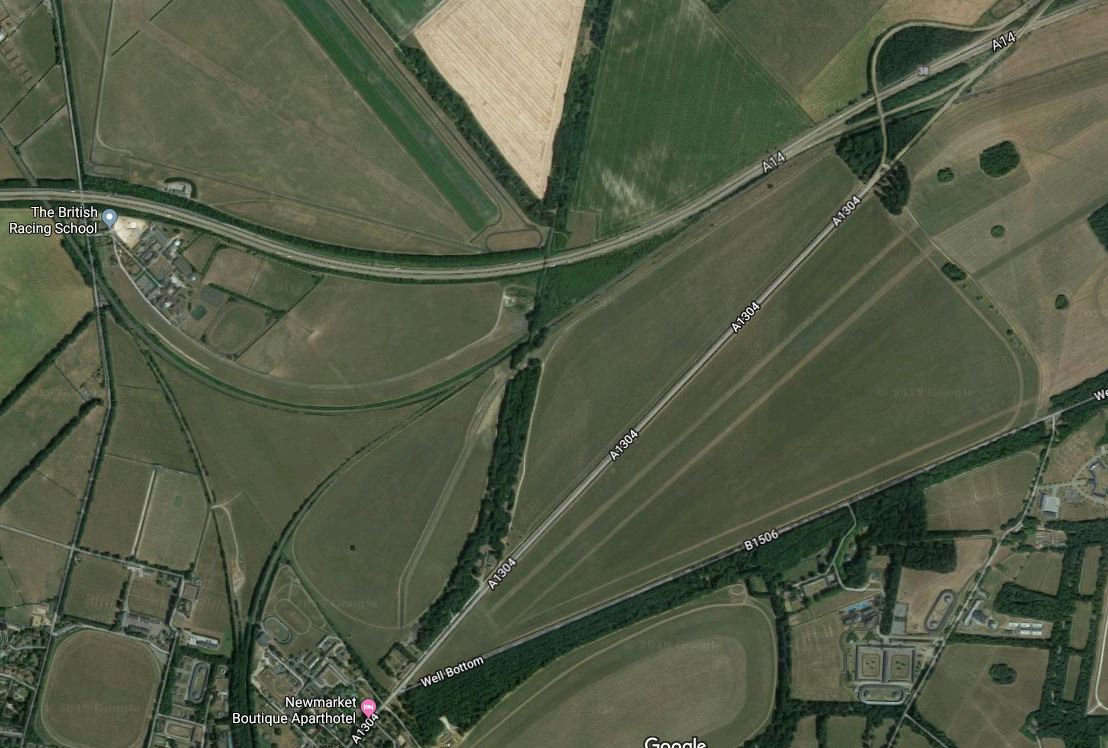
Note.
- The A14 going across the top of the map.
- The junction between the A14 and the A11 in the top-right corner.
- The triangular Chippenham Junction, pointing North to Ely, South to Newmarket and East to Bury St. Edmunds and Ipswich.
Having lived in that area for nearly thirty years, I believe that this is a much-needed station.
- Stations in the area, with the exception of Cambridge North are short of car parking.
- There would be two tph to/from Bury St. Edunds and Ipswich.
- There would be one tph to Cambridge, Cambridge North, Cambridge South , Ely and Peterborough.
I suspect that there could be shuttle trains to provide extra services to Cambridge and Ely.
A shuttle train could run between A14 Parkway, Cambridge South, Ely and back to A14 Parkway, calling at all intermediate stations.
Double-Tracking
The report says that some single-track sections may need to be converted to double-track.
The major section of double-tracking would be between Coldhams Lane and Chippenham Junctions on the Cambridge Branch of the Ipswich-Ely Line.
A new chord would be built at Colhams Lane Junction, so that trains could run between Ely and Bury St. Edmunds via Newmarket.
This Google Map shows the area.
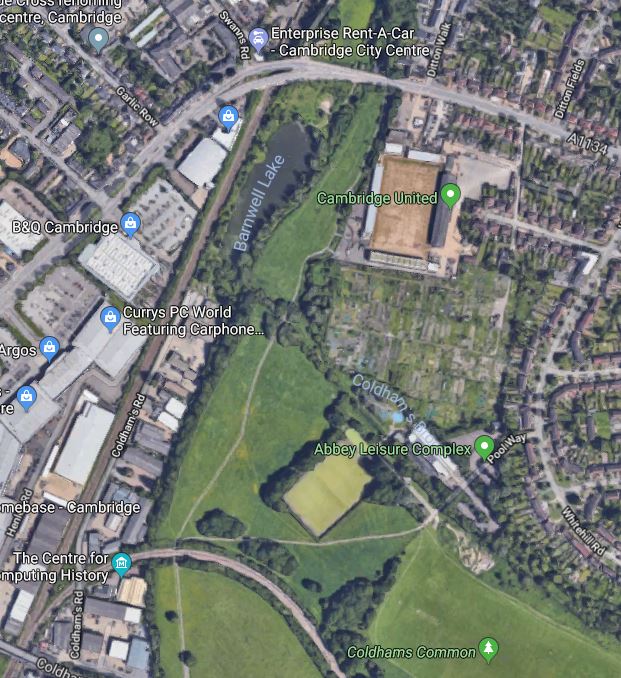
Note.
- The Cambridge to Norwich line running North South at the left of the map.
- The curve of the Cambridge Branch of the Ipswich-Ely Line at the bottom of the map.
- The extensive open space of Coldhams Common.
I have a feeling that building the chord will be a difficult planning process.
Electrification
The report says that there could be some additional electrification.
Ely North Junction
The report recommends that this junction is grade separated.
Ely North Station
The report recommends building a new Ely North station, which would be about one-and-a-half miles from Ely station.
Existing Stations
The report says this about existing stations.
Expansion of Cambridge, Norwich, Reedham, Kings Lynn and Manningtree
stations with remodelling of the station throat layouts.
I don’t think any modifications will be that difficult.
Felixstowe Tram-Train
This was said in the report.
Introduction of a tram-train service on the Felixstowe branch, with doubling between Derby Road and Felixstowe and street running through
Ipswich.
I was rather surprised. But why not?
The tram-train could even go down to the sea-front.
I explore this more in Could There Be A Tram-Train Between Ipswich And Felixstowe?.
Haughley Junction
Thr report recommends that this junction is grade separated.
This is one the most important projects to improve rail services in East Anglia.
Linespeed Increases To 100 mph
Greater Anglia’s fleet of Class 745, Class 755 and Class 720 trains are all 100 mph trains and the Great Eastern Main Line is a 100 mph route, all the way from London to Norwich.
It would seem that to improve services, that where possible linespeeds are increased to 100 mph.
- The Breckland Line between Ely and Norwich, currently has a linespeed of around 75-90 mph and is double-track and fairly straight across flat countryside.
- The Ipswich-Ely Line between Ely and Ipswich, has a linespeed of up to 75 mph, and is mainly double-track and fairly straight across flat countryside.
- The Cambridge Branch of the Ipswich-Ely Line is mainly single track and would probably be more difficult to upgrade.
Knowing the lines and East Anglia well, I suspect that these lines could be substantially given a linespeed of 100 mph.
Stansted Airport Station – Additional Platform
Stansted Airport station needs more capacity and may require the doubling of the tunnel under the runway.
Warren Hill Tunnel
The report recommends that Warren Hill Tunnel at Newmarket is doubled and that from Coldham Lane Junction to Chippenham Junction is also doubled.
This Google Map shows the Western portal of the tunnel.
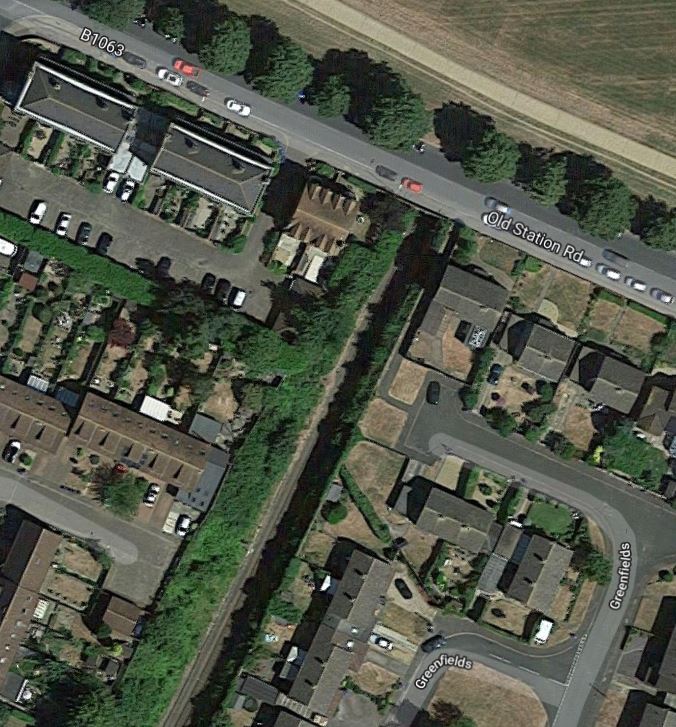
Note.
- The road across the top is Old Station Road.
- The dark shadow at right angles to the road is the cutting leading to the tunnel.
- There seems to be plenty of space to widen the cutting.
And this Google Map shows the Eastern portal of the tunnel.
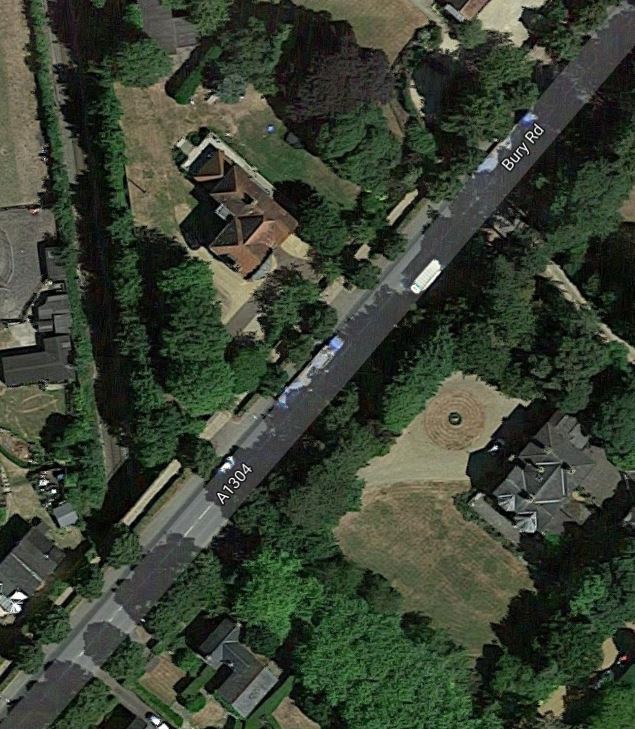
Note.
- The road is the Bury Road.
- The cutting leading to the tunnel portal is in the top left of the picture.
- The actual portal appears to be under the Bury Road.
This page on the Newmarket Local History web site, gives details about railways in Newmarket. The site says that the tunnel is exactly a kilometre in length and built on a curve.
I can see that doing these tunnel works will not be without opposition from the Racing Industry at Newmarket.
I shall talk about this more later.
The Freight Locomotive Of The Future
Before discussing freight, I will describe the freight locomotive of the future.
Rail Operations Group have just ordered ten Class 93 locomotives from Stadler.
- These are a tri-mode locomotive able to use electric, diesel or battery power.
- They will probably be able to haul the heaviest freight train at 100 mph, using electric power.
- They will be slower under diesel power, but they can use battery power for extra grunt.
- They will also find applications in hauling 100 mph passenger trains on partially electrified lines.
Other manufacturers will follow Stadler in developing similar hybrid locomotives, which will haul larger freight trains faster and with less pollution, than the current generation of locomotives.
Freight
Part of the EWRC’s freight plan is to make it easier to get the massive number of freight trains between Felixstowe and the Midlands and the North.
This is an extract from the report.
Note that doubling of Warren Hill Tunnel at Newmarket and redoubling between Coldham Lane Junction and Chippenham Junction is included in the infrastructure requirements.
It is assumed that most freight would operate via Newmarket, with a new north chord at Coldham Lane Junction, rather than pursuing further doubling of the route via Soham.
I indicated , these points earlier.
- ,Building a chord across Coldhams Common will not go down well with the residents of Cambridge.
- The plans for a double-track railway through Newmarket will not go down well with the Racing Industry.
I would also suspect that the logistics of building a second tunnel at Warren Hill, could be a nightmare, given the twenty-four hour nature of horse-racing.
So why have EWRC decided to route most freight trains through Newmarket?
Currently, freight trains going to/from Felixstowe use one of four routes.
- They go via London and cross the city on the crowded North London or Gospel Oak to Barking Lines.
- They go to Peterborough and take a cross-country route to Nuneaton, which is slow and has a notorious level crossing in the centre of Oakham.
- They go to Peterborough and take a diversion route through Lincoln.
- They go to Peterborough and up the East Coast Main Line, which is increasingly crowded.
None of these are perfect routes for freight trains.
Looking into the future, by the late 2020s, the following will have happened.
- An increasing number of freight trains will be running to/from Felixstowe.
- High Speed Two will have opened, which will release paths for freight trains on the electrified West Coast Main Line.
- Hybrid Electric/diesel/battery freight locomotives will be commonplace and hauling most long-distance inter-modal freight trains.
- The East West Rail Link will have opened between the West Coast Main Line and Cambridge.
It appears to me, that there could be a plan to create extra routes for freight trains to/from Felixstowe, using the East West Rail Link.
- Services between Felixstowe and West Coast Main Line destinations like Birmingham, Carlisle, Glasgow, Liverpool and Manchester, will use the East West Rail Link between the West Coast Main Line and Cambridge.
- Services between Felixstowe and Midland Main Line destinations like Derby, Nottingham and Sheffield, will use the East West Rail Link between the Midland Main Line and Cambridge.
- Services between Felixstowe and South Western and Western destinations like Bristol, Southampton and Wales, will use the East West Rail Link between the Great Western Main Line and Cambridge.
Services between Felixstowe and East Coast Main Line destinations like Doncaster, Edinburgh, Leeds and Newcastle will still use the traditional route via Ely and Peterborough.
It seems to me, that as many as two freight trains in every hour in both directions will need to take the route between Felixstowe and the East West Rail Link through Bury St. Edmunds, Newmarket, Cambridge and Cambridge South stations.
This number of freight trains would make it essential, that there is a double-track railway from Chippenham Junction to Cambridge.
The Coldhams Chord also seems to be an important part of the plans of the EWRC.
This is to allow freight trains between Peterborough and Felixstowe to use the upgraded double-track route through Newmarket.
Once on the electrified Fen Line at Coldhams Junction, freight trains with a hybrid locomotive could use the electrification to Ely.
At Ely, the trains would then be able to take the Peterborough-Ely Line to continue on their way.
These points should be noted.
- Currently freight trains between Felixstowe and Peterborough, have to cross the double-track Fen Line at Ely and it could be that operationally it would be easier, if they used the route via Coldhams Lane junction.
- The level crossing at Ely station is being sorted.
- The Fen Line between Cambridge and Ely is an electrified double-track and except at Waterbeach station, it would probably be relatively easy to add additional tracks.
- Cambridge North station appears to have a double-track by-pass line for freight trains.
- For some years, I’ve believed that the thirty miles of the Peterborough-Ely Line should be improved and electrified, as this would give a valuable electrified diversion route, if the East Coast Main Line were to be closed South of Peterborough.
So if a freight train were to be hauled by a hybrid locomotive, it would surely be able to use electrification between Peterborough and Coldhams Lane Junction.
The distance between Coldhams Lane Junction and Haughley Junction, where the electrification from Ipswich ends is forty miles. The terrain is also very undemanding.
I would be very surprised if in a few years, a powerful hybrid locomotive couldn’t haul the heaviest freight train on this route.
Conclusion
The East West Rail Link will have far reaching consequences for Norfolk, Suffolk and North Essex.
- Most towns and cities with perhaps a population of upwards of 30,000 will have a two trains per hour service to Cambridge, Bedford, Milton Keynes, Oxford and Reading.
- Some services will be direct, but many will involve a same- or cross-platform change at a station like Cambridge, Ipswich or Norwich.
- East Anglia will have much better hourly connections to Birmingham, Liverpool, Manchester, Nottingham and Sheffield.
- There will be much improved capacity for freight trains to/from Felixstowe.
I feel very positive about what has been said.
Norfolk Rail Line To Remain Closed As £68m Upgrade Project Overruns
The title of this post is the same as that of this article on the BBC.
This is the first three paragraphs.
A major railway upgrade project has been delayed, meaning a Norfolk branch line will go longer without a service.
Network Rail is spending £68m to replace Victorian signalling equipment with a computer-based system between Norwich, Great Yarmouth and Lowestoft .
The project was due to be complete by 31 March, but the deadline will now be pushed back to allow for more testing.
As only Berney Arms station will be without a service, this probably isn’t a major disaster for the thousand passengers, who use the station in a year, but the story does have a very familiar ring.
Network Rail + Signalling = Overrun
Either they’ve found a very serious problem or the planning wasn’t the best!
The Possible Reinstatement Of The Reedham Chord
There used to be a direct Yarmouth to Lowestoft Line, but now it is possible to use the Wherry Lines, with a reverse at Reedham station.
Network Rail are talking about reinstating the Reedham Chord to create a more direct route between East Anglia’s largest North-Eastern towns. This is said about the Reedham Chord in Direct Yarmouth Services in the Wikipedia entry for Lowestoft station.
In January 2015, a Network Rail study proposed the reintroduction of direct services between Lowestoft and Yarmouth by reinstating a spur at Reedham. Services could once again travel between two East Coast towns, with an estimated journey time of 33 minutes, via a reconstructed 34-chain (680 m) north-to-south arm of the former triangular junction at Reedham, which had been removed in c. 1880. The plans also involve relocating Reedham station nearer the junction, an idea which attracted criticism.
This is a Google Map of the Reedham area.
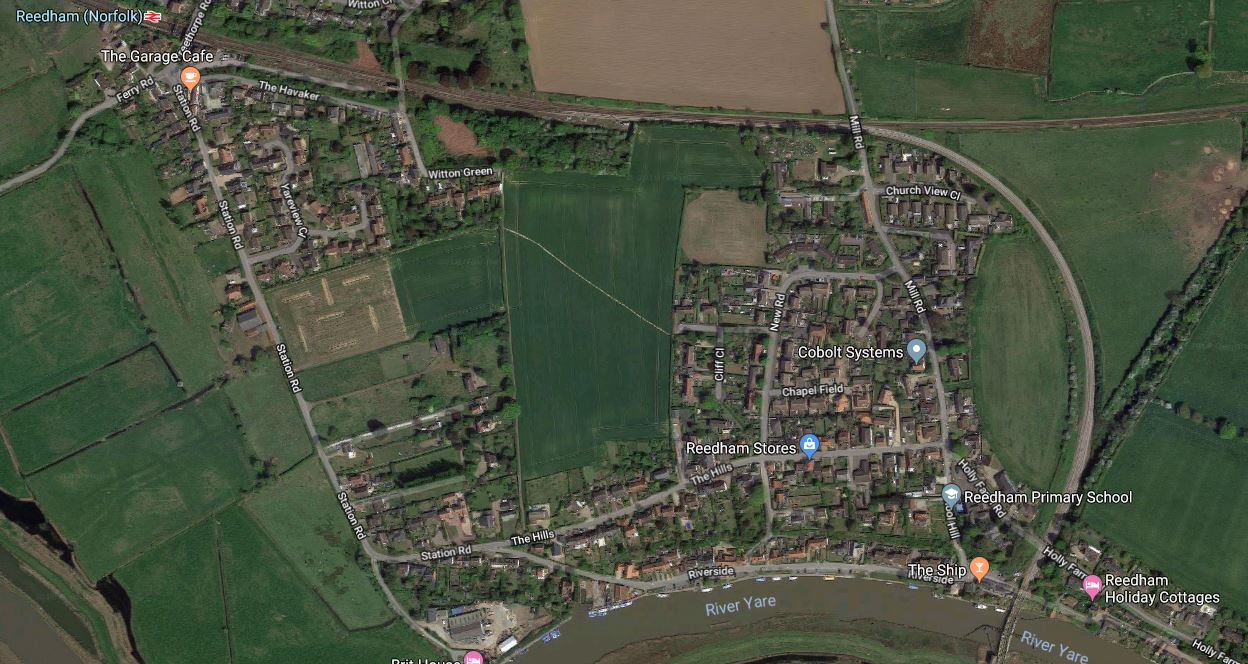
Note.
- Reedham station is in the North-West corner of the map.
- The single-track line to Yarmouth and the double-track line to Lowestoft, run together to form a triple-track railway to the East of Reedham station.
- There are a large number of cross-overs in the triple-track section to the East of Reedham station, so that trains can easily go between either platform at Reedham and Yarmouth or Lowestoft.
- The line to Yarmouth goes straight away to the East.
- The line to Lowestoft curves South to cross the River Yare.
- The Reedham to Lowestoft tracks appear to have been relaid, as far as the bridge.
Will the new track layout and signalling, allow trains between Lowestoft and Yarmouth to perform a fast reverse in either platform at Reedham station?
This approach has advantages over the reinstallation of the Reedham Chord.
- Reedham station won’t need to be relocated.
- All trains between Lowestoft and Yarmouth will stop at Reedham station.
- There would be no need to build the Reedham Chord.
I also suspect, that not building the Reedham Chord is the more affordable option.
Do Class 755 Trains Have a Fast Reverse Procedure?
Greater Anglia have a number of routes, that will be run by new Class 755 trains, where the trains will need to be reversed at either end.
- Cambridge and Ipswich
- Colchester and Peterborough
- Colchester Town and Sudbury
- Ipswich and Felixstowe
- Ipswich and Lowestoft
- Norwich and Lowestoft
- Norwich and Sheringham
- Norwich and Stansted Airport
- Norwich and Yarmoiuth
When Stadler designed the Class 755 trains for Greater Anglia, did they propose simple automation, so that trains could be reversed in the minimum time at these numerous terminals?
A simple system could be as follows.
- On arrival in a station, the driver would put the train into a standby mode, when it was safely stopped.
- The driver would then walk through the train to the second cab.
- Whilst the driver is changing ends, the conductor is opening and closing the train doors and supervising the loading and unloading of passengers.
- On arrival in the second cab, the driver would wake up the train and check everything.
- After the doors are closed and having received the all clear from the conductor and a green light from the signals, the driver would proceed.
At all times, the driver and conductor, would have emergency remote controls to immobilise the train, if something is not what it should be.
Modern automation is certainly able to design a very safe system, that would save time at every reverse.
What I have described here, is much less ambitious than the system I described in Crossrail Trains Will Have Auto-Reverse.
This auto-reverse system will be used at Paddington on Crossrail, by the Class 345 trains, to allow the driver to change ends on a two-hundred metre long train, whilst it is reversing to return to the East.
Testing The Signalling With The New Class 755 Trains
Obviously, adequate testing must be done with all trains that will use the new signalling on the Wherry Lines between Norwich, Lowestoft and Yarmouth.
This article on the BBC is entitled ScotRail Class 385 Fishbowl Windscreen Safety Concern.
This is the first three paragraphs.
Aslef has warned that modifications must be made to ScotRail’s new Class 385 electric trains – or its drivers will refuse to work them.
The train drivers’ union is concerned that the curved windscreen is causing reflections of other signals at night.
Drivers identified the problem on a recent evening test run between Glasgow Central and Paisley Gilmour Street.
Testing of the ~Norfolk signalling will cover a myriad of possible problems, against the whole route and all possible trains.
But there is one problem, that is probably delaying the project.
The Class 755 trains have not been certified yet! So starting of the testing can’t be started.
Conclusion
This delay is more complicated, than initial reports suggest.
On the other hand, I wouldn’t be surprised if Network Rail have produced a track and signalling solution, that will allow a direct service between Lowestoft and Yarmouth, with a reverse at Reedham.
Typical timings appear to be.
- Between Reedham and Yarmouth – 14-16 minutes
- Between Reedham and Lowestoft – 24-26 minutes
Given that the Class 755 trains have the following characteristics.
- They are 100 mph trains.
- They are optimised for fast stops.
I wouldn’t be surprised to see a sub-forty minute time between Lowestoft and Yarmouth.
Using the current times between Ipswich and Lowestoft and Norwich and Yarmouth, it also looks like a sub-three hour scenic route is possible between Ipswich and Norwich.
Introduction Of New Trains To East Anglia Will Be Like Moving ‘From Mid-Table To Champions League’ Says Greater Anglia Boss
The title of this post is the same as that of this article on the East Anglian Daily Times.
It is a rare detailed article on how new trains are introduced to a network.
This is a quote from Jamie Burles of Greater Anglia in the article.
On some lines there will be a huge quality uplift – going from a 40-year old single carriage diesel train to a minimum three-carriage state-of-the-art bi-mode train with air conditioning, plug sockets and broadband wi-fi.
East Anglia is being subjected to one of most radical rail upgrades in the history of railways in the UK.
Testing Of New Greater Anglia Trains Underway
The title of this post is the same as that of this article on Rail Magazine.
This is the first paragraph.
The first Stadler bi-mode unit for Greater Anglia made its main line debut in the early hours of December 15, when it ran between Diss and Trowse Junction (near Norwich).
I looked on Real Time Trains and found that the train did five trips between Diss and Trowse Junction. After the last trip, the train went back to Crown Point Depot.
It does seem that Greater Anglia have a plan to do the testing.
Nervous Operators Force Network Rail To Defer King’s Cross Plan
The title of this post is the same as that of this article on Rail Magazine.
King’s Cross station has to be closed for three months, so that tracks, electrification and signalling can be replaced and modernised for about 1.5 miles from the buffer stops at the station.
The original dates of the closure were to have been between December 2019 and March 2020, but now it looks like it could be delayed by up to a year.
The article on the web site, is a shortened version of the article in the magazine, where this is said.
Closure dates have yet to be announced, and NR is still developing a passenger handling strategy which could include long-distance services at Finsbury Park or some services terminating at Peterborough. Some trains could even be rerouted into London Liverpool Street.
I wonder, if Network Rail’s planners are cursing that the around thirty miles between Peterborough and Ely is not electrified.
If it were electrified, it would allow electric trains as well as diesel and bi-mode trains to access Liverpool Street station via the West Anglia Main Line.
What Benefits Would There Be From Electrifying Peterborough To Ely?
I can imagine Oxford-educated civil servants in the Department of Transport and The Treasury dismissing calls for more electrification in the backwater of East Anglia, after the successful electrification to Norwich in the 1980s.
But now Cambridge is powering ahead and East Anglia is on the rise, with the massive Port of Felixstowe needing large numbers of freight trains to other parts of mainland UK.
This East Anglian success gives reasons for the electrification of the Peterborough-Ely Line.
Direct Electric Trains Between Peterborough And Cambridge
I have met Cambridge thinkers, who believe that Peterborough is the ideal place for businesses, who need to expand from Cambridge.
Peterborough has the space that Cambridge lacks.
But the transport links between the two cities are abysmal.
- The A14 is only a two-lane dual-carriageway, although a motorway-standard section is being added around Huntingdon.
- Peterborough station has been improved in recent years.
- The direct train service is an hourly three-car diesel service between Birmingham and Stansted Airport, which doesn’t stop at the increasingly-important Cambridge North station.
The road will get better, but the rail service needs improvement.
- There needs to be at least two direct trains per hour (tph) between Cambridge and Peterborough.
- They would stop at Cambridge North, Waterbeach, Ely and March.
- End-to-end timing would be under an hour.
- Greater Anglia will have the four-car bi-mode Class 755 trains, which would be ideal for the route from next year.
If the Peterborough- Ely Line was electrified, Greater Anglia could use five-car Class 720 trains.
An Electric Diversion Route For The East Coast Main Line
The works at Kings Cross station, and the possible proposal to run some trains into Liverpool Street station, show that an electric diversion route would be useful, when there are closures or problems on the East Coast Main Line.
In the case of the Kings Cross closure, if Peterborough were to be used as the terminal for some trains from the North, then I suspect some high-capacity Class 800 trains could shuttle passengers to Liverpool Street.
If the date of the Kings Cross closure is 2020, then certain things may help.
- Crossrail will be running.
- Extra trains will be running from Finsbury Park to Moorgate.
- Hull Trains will be running bi-mode Class 802 trains.
- There could be more capacity on the West Anglia Main Line.
- There could be more capacity and some longer platforms at Liverpool Street.
What would really help, is the proposed four-tracking of the West Anglia Main Line.
The latter could prove extremely useful, when Network Rail decide to bite the bullet and four-track the Digswell Viaduct.
Extending Greater Anglia’s Network
Greater Anglia have bought new bi-mode Class 755 trains.
This would appear to be more than enough to covering the current services, as they are replacing twenty-six trains with a total of fifty-eight coaches with thirty-eight trains with a total of one hundred and thirty-eight coaches.
That is 46 % more trains and 137 % more coaches.
The new trains are also genuine 100 mph trains on both electricity and diesel.
Obviously, Greater Anglia will be running extra services, but with the explosive growth around Cambridge, coupled with the new Cambridge North station, I feel they will be running extra services on the Peterborough to Cambridge route and perhaps further.
The new Werrington Grade Separation will make a difference.
- It will open in a couple of years.
- Trains between Peterborough and Lincoln won’t block the East Coast Main Line.
- The Leicester route could also be improved.
So services to and from Lincoln and Leicester would probably be easier to run from Cambridge and Stansted Airport.
CrossCountry run a service between Birmingham New Street and Stansted Airport stations.
- The service stops at Coleshill Parlway, Nuneaton, Leicester, Melton Mowbray, Oakham, Stamford, Peterborough, March, Ely and.Cambridge and Audley End stations.
- The service doesn’t stop at Cambridge North station.
- The service is run by an inadequate Class 170 train, which sometimes is only two coaches and totally full.
- Trains take just over three hours ten minutes for the journey.
Will Greater Anglia take over this route? Or possibly run a second train as far as Leicester?
Their Class 755 trains with better performance and specification would offer the following.
- Electric running between Ely and Stansted Airport stations.
- Greater passenger capacity.
- wi-fi, plugs and USB sockets.
- A three hour journey both ways.
- The extra performance would probably allow an extra important stop at Cambridge North station.
The new trains would certainly offer what passengers want.
CrossCountry run an extra train between Birmingham New Street and Leicester, so perhaps at the Western end, the Greater Anglia service need only go as far as Leicester.
At the Stansted end of the route, there will be an hourly train between Stansted Airport and Norwich, so there could be scope for perhaps cutting one the services back to Cambridge.
Obviously, time-tabling would sort it out to the benefit of the train operators and passengers, but I can envisage a set of services like this.
- Norwich and Stansted Airport – Greater Anglia – 1 tph
- Birmingham New Street and Stansted Airport – CrossCountry – 1 tph
- Leicester and Cambridge – Greater Anglia – 1 tph
- Colchester and Peterborough – 1 tph
- Norwich and Nottingham (Currently Liverpool Lime Street) – 1 tph
Adding these up you get.
- Stansted Airport and Cambridge – 2 tph – As now!
- Stansted Airport and Cambridge North – 2 tph – New service!
- Cambridge and Ely – 4 tph – At least!
- Ely and Peterborough – 4 tph – At least!
- Cambridge and Peterborough – 2 tph – Up from 1 tph
- Stansted Airport and Peterbough – 1 tph – As now!
- Cambridge and Leicester – 2 tph = Up from 1 tph.
This pattern or something like it would be much better for all.
If the Ely-Peterborough section of the were to be electrified then it would enable the following.
- A reduced journey time for electric or bi-mode trains.
- If required Greater Anglia could run an extra electric service using Class 720 trains between Stansted Airport and Peterbough.
I said earlier that the Werrington Grade Separation will make it easier to run services between Peterborough and Lincoln.
So why not add an hourly service between Cambridge and Lincoln?
I can envisage, when the West Anglia Main Line is four-tracked at the southern end, that there might be enough capacity for a Liverpool Street to Lincoln service via Cambridge, Cambridge North, Ely, Peterborough, Spalding and Sleaford.
But whatever happens Greater Anglia’s choice of bi-mode Class 755 trains, seems to give them the flexibility to match services to passengers needs.
Electro-Diesel and Battery-Electric Freight Locomotives
The Class 88 locomotive is an electro-diesel freight locomotive, that can use either power from overhead electrification or an pnboard diesel engine.
I believe that locomotives like this will become more common and that eventually, we’ll see a battery-electric heavy freight locomotive.
I wrote about the latter in Thoughts On A Battery/Electric Replacement For A Class 66 Locomotive.
The Peterborough-Ely Line will see increasing numbers of trains hauled by these powerful electric locomotives, with either diesel or battery power to propel them over the gaps in the electrification.
Electrifying the line would speed these hybrid trains through and increase the capacity of the route.
Conclusion
Network Rail have annoyed the train operators with their planning and timing of the upgrade at Kings Cross station.
It looks to me, that the part of the problem, is that there is no viable electrified secondary route to London.
Bi-mode trains can use the Peterborough-Ely Line to go to Liverpool Street via Cambridge.
This line is one of those routes that sits in a sea of electrification, which carries a lot of traffic, that would bring several benefits if it were to be electrified.
- Direct electric trains between Cambridge and Peterborough, would greatly improve the spasmodic service between the two cities, with large economic benefits to the county.
- An electric diversion route would be created from Peterborough to Liverpool Street via Ely and Cambridge.
- It would allow Greater Anglia to develop routes West of Cambridge to places like Lincoln and Leicester using their future fleet of Class 755 trains.
- It would also make it easier for battery-electric freight locomotives to cover the busy freight route between Felixstowe and Peterborough.
I also feel that it wouldn’t be the most difficult route to electrify.
The Fens are flat.
There is no history of mining.
The track is fairly straight and simple.
I suspect that it could become a high-quality 90-100 mph, electrified line.
With
Are Greater Anglia Buying So Many Class 755 Trains, So They Can Run A Better Service During Constant Works On The Great Eastern?
Yet again, they were rebuilding the Great Eastern Main Line, so I didn’t get to football at Ipswich yesterday.
It’s not that I mind the buses, but it means two things.
- I have to leave so early, that I can’t do my weekly shop before I go.
- I also get back so late that I will miss Strictly on the television.
There is also the problem, that Ipswich is one of the worst places to find a gluten-free meal, unless you go to Pizza Express.
I often have my lunch before I travel or take it on the train from Leon or M & S.
For some time now, I’ve suspected that Greater Anglia have ordered a lot more Class 755 trains, than they need, based on a train-for-train replacement basis
It now becomes obvious why!
At weekends, they will link four-car trains together and run four trains per hour on the following routes.
- Norwich to Cambridge
- Ipswich to Cambridge
One train in four will continue to and from London after Cambridge.
On the other hand, it could be a plot by Norwich fans in Greater Anglia’s headquarters in Norwich to annoy Ipswich fans!
Where Will Greater Anglia Deploy The First Class 745 Trains?
This article on Railway Gazette is entitled ‘Gorgeous Beast’ Will Change Perception Of Rail Travel.
This is unusual language, when you’re talking about modern diesel and electric trains, especially when it comes from the CEO of a financial company investing in trains, as a safe long-term investment for money like pension funds.
But if the Class 755 trains cause Mark Swindell to use such language, they must have something about them.
Perhaps, it’s the fact that they follow the layout of the legendary and much-loved by some, Class 442 train, which also had a power-car in the middle. It is informative to compare the Class 442 train with a four-car Class 755/4 train.
- The 442’s power-car is electric, whilst the 755/4’s is diesel/electric and can be diesel/electric/battery.
- The 442 has seats for 346 in two classes, whilst the 755/4 has 229 in a single class.
- The 442 has 1200 kW of power, whilst the 755/4 has 2600 kW on electric power and 1920 kW on diesel-electric power
- Both are 100 mph trains, although the 442 holds the World Record for a third-rail train at 108 mph.
I am drawn to the following conclusions about the Class 755 train.
Passenger Comfort
Passengers will have plenty of space, in addition to the customer comforts, which appear to be of a high standard.
Some passengers might miss First Class, but will the extra space compensate.
Power
The power figures quoted in the Railway Gazette show the following.
- In electric mode, the train will have more than double of the power of the 442.
- In diesel-electric mode, the train has sixty percent more power, than the 442.
This will mean that the train should have superb acceleration.
Top Speed
With all this power, the planned operating speed of 100 mph will be determined more by the track, signalling and other trains, rather than any limitations of the trains.
There are three improvements in Network Rail’s Improvement Pipeline, that will allow faster running by Class 755 trains.
- Trowse Swingbridge
- Haughley Junction doubling
- Ely Area service improvements
The improvement will help these services by Class 755 trains.
- Norwich to Stansted Airport via Ely, Cambridge North and Cambridge.
- Peterborough to Colchester via Ely, Bury St. Edmunds and Ipswich
- Cambridge to Ipswich
I could also see the operating speed on the Breckland Line raised.
Routes
How will the routes be affected by trains with a better performance?
Norwich To Stansted
Currently, the two legs take.
- Norwich to Cambridge – 1:24
- Cambridge to Stansted – 0:39
Which adds up to a convenient 2:03.
With the faster trains and eight stops, it looks like this route could be done several minutes under two hours, with a round trip of four hours, which would need four trains for a one train per hour (tph)service.
Ipswich to Cambridge
Currently, this route takes 1:16 with eight stops.
This is not very convenient and the time savings needed to get the route under an hour will not be easy.
Colchester to Peterborough
Currently, the two legs take.
- Colchester to Ipswich – 0:19
- Ipswich to Peterborough – 1.41
Which adds up to a convenient 2:00.
With the faster trains, it looks like this route could be done several minutes under two hours, with a round trip of four hours, which would need four trains for a one tph service.
Ipswich to Lowestoft
Currently, this route takes 1:26 with nine stops.
With the faster trains, it looks like this route could be done several minutes under one-and-a-half hours, with a round trip of three hours, which would need three trains for a one tph service.
It also looks like up to three trains per day will run from London to Lowestoft.
So Which Route Will Get The New Trains First?
Greater Anglia will obviously deploy them, where there is the greatest need for extra capacity or there is the greatest return to be made!
I think, we’ll see them on the Lowestoft route or between Cambride and Norwich first.
They’ll certainly be worth waiting for, if Mark Swindell is right.
Will Greater Anglia Fit Batteries To Their Class 755 Trains?
Greater Anglia have ordered the following Class 755 trains.
- 14 x three-car trains with two diesel engines in the power-pack
- 24 x four-car trains with four diesel engines in the power-pack
The power-pack would appear to have four slots, each of which could take.
- A V8 16-litre Deutz diesel that can produce 478 kW and weighs 1.3 tonnes.
- A battery of about 120 kWh, which would probably weigh about 1.2 tonnes.
I estimated the battery size , by using typical battery energy densities for a battery of similar weight to the diesel engine.
The KeolisAmey Wales Tri-Mode Flirts
The Tri-Mode Flirts ordered by KeolisAmey Wales can use either electric, diesel or battery power.
From the pictures it appears that these trains have the same basic structure as the Class 755 trains.
In the July 2018 Edition of Modern Railways, there is an article entitled KeolisAmey Wins Welsh Franchise.
This is said about the Stadler Tri-Mode Flirts on the South Wales Metro.
The units will be able to run for 40 miles between charging, thanks to their three large batteries.
So does this mean that these Flirts have just one Deutz diesel engine of 478 kW and three batteries in the four slots of the power-pack?
These trains will run between Penarth and Rhymney stations.
- I estimate about half the route will be electrified.
- Penarth to the electrification at Cardiff is under ten miles.
- The trains will work on battery power from Ystrad Mynach to Rhymney, which is ten miles up the hill.
- Coming down from Rhymney, Newton’s friend will give assistance.
This seems a challenging task, but it must be possible, even after an important rugby match in Cardiff.
I think it is true to say, that these Tri-Mode Flirts are no wimps.
Greater Anglia’s Flirts And Batteries
Four-Car Flirts
The four-car Class 755 trains don’t have a spare slot, as they have four engines.
I also suspect the four-car trains will tend to serve the longer routes or those with more passengers.
- Colchester and Peterborough
- Stansted Airport and Norwich
- Ipswich and Cambridge
- Lowestoft and London via Ipswich
- Norwich and Lowestoft
- Norwich and Great Yarmouth
Consider.
- These routes are partially-electrified.
- These routes don’t have challenging terrain.
- Except for Lowestoft and Great Yarmouth, all end stations are electrified.
- A short length of electrification could be installed at Lowestoft and Great Yarmouth stations.
I wonder if one of the diesel engines were to be replaced with a battery, by capturing and reusing the regenerative braking energy, this could improve the economics of running the services.
In Tri-Mode Stadler Flirts, I estimated the following.
- A four-car Tri-Mode Flirt will weigh around 150 tonnes.
- I will assume 250 passengers at 90 Kg. each with all their baggage, which gives a weight of 22.5 tonnes.
- This gives a total rain weight of 172.5 tonnes.
- The train is running at 100 mph.
This gives a kinetic energy of 48 kWh.
This would mean that a single 120 kWh battery could easily handle the regenerative braking and use the energy for the following purposes.
- Hotel power, which includes the power to run passenger and train systems.
- Traction power on sections, where low noise is important.
- Traction power, if there is overhead electrification failure.
- Short movements in depots and sidings.
I think that once Stadler have got their Tri-Mode Flirts working, that replacing one diesel with a battery in four-car Class 755 trains may be a sensible decision.
Lowestoft And London Via Ipswich
When the Class 755 trains are running services, there will be four direct trains per day from Lowestoft to London via Ipswich.
I will assume the following.
- There will also be four trains in both directions.
- An hourly service operates between Lowestoft and Ipswich
- Lowestoft to Ipswich will take the current 90 minutes.
- Greater Anglia will meet their promise of Ipswich to London in 60 minutes.
- The first train currently leaves Lowestoft just after five in the morning.
- The last train currently arrives at Lowestoft just before midnight.
For one train to do four round trips between five in the morning and midnight would need a round trip of around four hours and thirty minutes, which would mean that a time of around seventy minutes is needed between Ipswich and Lowestoft.
That is extraordinarily challenging.
But I think that could be Greater Anglia’s ultimate aim.
- There must be savings of a minute or two at each of the nine stations between Ipswich and Lowestoft.
- Some trains could be limited stop.
- The current maximum speed on the East Suffolk Line is just 55 mph and could probably be increased in places.
- The 100 mph Class 755 trains are quicker and probably accelerate and stop faster, than the current 75 mph Class 150 trains.
- Trains turn at Liverpool Street in under five minutes.
If it can be done, then the four trains per day between Lowestoft and London can be run with just one train.
Would batteries help the achievement of this aim?
They might do! But they would certainly improve the electrical efficiency and cut the amount of running of the diesel engines.
Three-Car Flirts
The three-car Class 755 trains have two spare slots, as they have two engines.
I would expect that the three-car trains would be used on the shorter routes and those with less passengers.
- Colchester Town and Sudbury
- Ipswich and Felixstowe
- Norwich and Sheringham via Cromer
To my mind the first two routes stand out for battery operation.
Ipswich and Felixstowe
Consider the following about the service between Ipswich and Felixstowe stations.
- The Felixstowe Branch is just over twelve miles long.
- There is one train per hour (tph) each way.
- It takes the current trains abut 26-29 minutes to do the journey.
- Currently, one train can provide the service.
In The New Trimley Freight Loop And Trimley Station, I talk about how a 1.4 km loop is being built to allow more freight trains to use the branch.
I also feel that there could be a second path in each hour for passenger trains, which would help reliability
But it also might make it possible to run a two tph service with two trains.
I also think, that if it was felt worthwhile, that this route could be run on battery power, charging at Ipswich and possibly with a short length of electrification in Felixstowe.
The advantages would be
- Diesel-free running.
- Less noise.
- The environmentally friendly trains may attract new passengers.
As with the trains on the South Wales Metro, they’d probably have one diesel engine and three large batteries.
Knowing the bicycle-friendly contours of the centre of Ipswich and Felixstowe as I do, the trains would probably need adequate capacity for bikes.
Colchester Town And Sudbury
I am sure that this new route between Colchester Town and Sudbury stations has been designed for a battery train.
Consider.
- A direct run between Colchester Town and Sudbury would probably take 45 minutes.
- Over half the route would be electrified.
- The Gainsborough Line is just eleven miles long.
- A silent battery train would be ideal for the rural route.
A Class 755 train could leave the Great Eastern Main Line at Marks Tey with full batteries, go both ways on the branch and then return to Colchester Town using the electrification.
Norwich And Sheringham Via Cromer
At thirty miles, the Bittern Line is probably too long for running totally on batteries.
But one battery handling regenerative braking would make the train more environmentally friendly.
Conclusion
Batteries would make the Class 755 trains more economical and environmentally-friendly to run, but with the exception of the Felixstowe and Sudbury branches, I suspect that the routes are too long for pure battery power.
I do believe that Greater Anglia knew about Stadler’s concept for fitting batteries on Class 755 trains before they ordered the trains.
As this opens up possibilities for the future and the ability to be more environmentally-friendly and fiscally efficient, I suspect it was a factor in their decision to buy the trains.
.
 The Anonymous Widower