Crossrail To Heathrow, Reading And Southend
Crossrail To Heathrow
In the Wikipedia entry for Crossrail, there is a section called Extensions.
This is said under a sub-section called Heathrow Express.
The RUS also proposes integrating Heathrow Express services from Heathrow Terminal 5 into Crossrail to relieve the GWML and reduce the need for passengers to change at Paddington.
Note RUS refers to Network Rail’s Route Utilisation Study of 2011 and GWML is the Great Western Main Line.
Currently, Heathrow Express takes fifteen minutes to go between Paddington and Heathrow Central stations, with Heathrow Connect taking thirty-two minutes with five stops.
The journey time calculator on the Crossrail site, says the trains will take twenty-three minutes with six stops. But as I said in Are Crossrail And Bombardier Having Us On?, Crossrail’s journey time estimates aren’t very good to say the least.
I think until the Crossrail trains reach Heathrow next May 2018, any speculation I make of the time they take between Paddington and Heathrow Central will be very wide of the mark.
However, this can be said of Heathrow Express and Crossrail to Heathrow.
- As the RUS says Heathrow Express services use four paths per hour on the GWML in both directions and these paths would be released for other services if Heathrow Express used the dedicated Crossrail tracks.
- Most Heathrow Express passengers will not be going to Paddington or the surrounding area of the station.
- When fully developed Crossrail will connect Canary Wharf, the City of London, the West End and the Queen Elizabeth Olympic Park, to name just four important destinations, directly to Heathrow Airport.
- If Crossrail works as it says on the box, every travel guide and expert, will recommend you use your contactless bank card to travel on this wonderful new airport train.
- I would suspect, that given Heathrow’s expansion plans, that the Heathrow branch of Crossrail has a capacity in excess of ten trains per hour (tph).
- The accommodation and comfort level in Crossrail’s Class 345 trains is high and well suited for an airport service.
I think that Heathrow Express will be increasingly deserted by passengers, in favour of the cheaper and more convenient Crossrail.
So could the two services be integrated together?
In theory, Heathrow Express could use the Crossrail tracks to Paddington, but there would be problems.
- Heathrow Express trains would have to leave the Crossrail tracks to get into Paddington.
- Would Crossrail want non-stop trains speeding through suburban stations like Southall, with their high suicide rates?
So then why not create a Heathrow Express, that used the Crossrail tracks and stopped at say Old Oak Common (for HS2), Paddington, Bond Street, Farringdon (for Thameslink), Liverpool Street and Canary Wharf?
- Heathrow Express would have to buy new trains compatible with the platform-edge doors in Crossrail’s tunnels.
- Where would the trains be turned back? Perhaps a turnback facility could be built at Liverpool Street at a cost of several hundred million pounds!
- It would still speed through suburban stations.
- Trains moving at different speeds would reduce the capacity of Crossrail.
- As Crossrail and Heathrow Express will use the same platforms at stations, how do you stop people without expensive special tickets using Heathrow Express?
Heathrow will continue to argue to keep Heathrow Express, but in practice in the future, it will be as outdated a concept as trains pulled by steam engines.
So one of two things will happen.
- Heathrow Express will continue as now, using two valuable platforms at Paddington and the four equally valuable paths per hour on the GWML.
- It will be discontinued.
I believe that in some date in the future, only three rail services will serve Heathrow.
- London Underground’s Piccadilly Line.
- A Crossrail service to London and the East.
- A Crossrail service to Reading and the West, which would rejoin the slow tracks of the GWML to the East of Langley station.
The two Crossrail services would probably be run back-to-back, so that fewer trains were turned back at Heathrow.
The two Crossrail branches to Heathrow and Reading would merge easily to the West of Hayes and Harlington station and there would be no complications caused by Heathrow Express trains crossing to and from the fast lines.
Crossrail To Reading
Just over a month ago, Transport for London (TfL) ordered four extra Crossrail trains and announced extra services to Heathrow and Reading. I discussed this in Crossrail Expands Before It Opens
I said this.
Four new Class 345 trains are being ordered, which will mean that in the Off Peak the following will happen.
- Trains between Whitechapel and Paddington will increase from 16 tph to 20.
- Trains between Paddington and Shenfield will increase by two tph
- Trains between Paddington and Abbey Wood will increase by two tph
- Trains between Paddington and Reading will double from two tph to four.
- Trains between Paddington and Maidenhead will increase from four tph to six
- From December 2019, six tph will call at Heathrow Terminal 5.
I also found this quote in the article on Global Rail News, that was the source for the increased services.
The increased service frequency will be achieved, in part, by replacing five Great Western Railway services with Elizabeth line trains.
So could we be seeing a degree of co-operation between TfL, Crossrail and Great Western Railway, whereby the following services are provided?
- Slow stopping services are run by Crossrail on the two slow lines.
- Fast and semi-fast services are run by Great Western Railway on the two fast lines.
This would be operationally simple and might even create extra paths into London for more long-distance services.
The problem are the local stopping trains to Oxford (2 tph) and Bedwyn (1 tph). Will they run on the slow or fast lines between Paddington and Reading?
Consider the service to Bedwyn.
- A five-car Class 800 train could run the service.
- Small modifications at Bedwyn would probably be needed to allow the Class 800 train to use the turnback.
- The train would run using electricity until the wires ran out near Newbury and then diesel.
- The service could run semi-fast or non-stop between Paddington and Reading.
- Nine-car Crossrail Class 345 trains would probably need a lot of platform lengthening, in addition to the electrification to be used to Bedwyn.
And the stopping service to Oxford.
- A five-car Class 800 train could run the service.
- A planned new bay platform at Oxford station would handle the service.
- The train would run using electricity until the wires ran out near Didcot and then diesel.
- The service could run semi-fast or non-stop between Paddington and Reading.
- Niine-car Crossrail Class 345 trains would probably need some platform lengthening, in addition to the electrification, to be used to Oxford.
If the two services are considered together, they could join and split at Reading to save paths on the fast lines.
I think that on balance to use a pair of Class 800 trains would be better than to extend Crossrail past Reading.
Consider.
- A second service to Bedwyn could be easily added.
- A large number of long-distance trains call at Reading station.
- Reading has been designed for easy interchange between fast and slow services.
- Crossrail will be providing at least four tph between Paddington and Reading that stop at all stations.
- Reading has services into Waterloo.
I’m certain that the train companies can find a very efficient solution.
I can see a situation, where Great Western Railway aren’t going to need many Class 387 trains in the Thames Valley.
Crossrail To Oxford
This may seem a bit over the top, but analysis might show, that the best way to create more capacity between Reading and Oxford, might be to extend two Reading Crossrail services each hour to Oxford, when the electrification to Oxford is complete.
Crossrail To Southend
Just as it appears there is co-operation between Crossrail, Great Western Railway and TfL, could similar co-operation between Crossrail, Greater Anglia and TfL, result in improved services on the Shenfield to Southend Line? I wrote about this in Crossrail Tests Its Trains In Southend.
The Long Distance Class 345 Train
Adding Oxford and/or Southend to Crossrail services, may need a sub-class of Class 345 train to be created, due to the length of the journey. Toilets would be the obvious addition.
Are Crossrail And Bombardier Having Us On?
A rail journalist sent me this sentence in an e-mail.
Everyone who’s been on a 345 tells me it takes half its time at stations waiting for the timetable to catch up.
So it would appear that they are saving time at each stop.
Liverpool Street To Shenfield
Currently, this twelve stop journey takes 43 minutes in a 75 mph Class 315 train.
It is also scheduled at 45 minutes in the 10:35 service, which is run by a Class 345 train.
The journey time calculator for Crossrail gives 41 minutes.
This works out at a saving of just ten seconds a stop.
Paddington To Reading
Currently, this nine stop journey takes 60 minutes in a 90 mph Class 165 train.
Crossrail will call at five more stations
The journey time calculator for Crossrail gives 49 minutes.
This works out at a saving of forty-seven seconds a stop.
Reading To Shenfield
Currently, the fastest this journey can be done is 103 minutes with two changes and the Underground between Paddington and Liverpool Street.
The journey time calculator on Crossrail gives 102 minutes.
Liverpool Street To Paddington
Currently, this journey rakes 21 minutes on the Circle Line,
The journey time calculator on Crossrail gives 10 minutes.
Conclusion
These figures don’t make sense.
- More time is predicted to be saved on the Reading branch.
- The current trains are faster on the Reading branch.
- I would assume that the current Class 345 train to Shenfield is timed at 45 minutes for scheduling reasons or in case something goes wrong.
- The Shenfield to Liverpool Street times seem to be based on the current timetable with a minute taken off.
- The Reading to Shenfield times can’t be right.
I do wonder if the figures in the journey time calculator on the Crossrail web site are the best estimate that could be made, when the web site was created.
Now, that an Aventra is running, they are not very good estimates.
Mile End Park Ventilation Shaft – 15th August 2017
These pictures show Crossrail’s Mile End Park Ventilation Shaft.
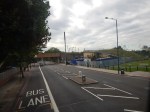
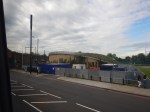
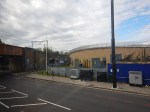

It’s got to be finished, so that trains can run to Shenfield in May 2019.
Crossrail Around Custom House Station – 15th August 2017
I took these pictures of Crossrail, as I rode between Prince Regent and Canning Town stations on the Docklands Light Railway.


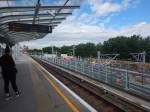


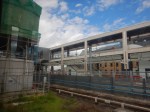
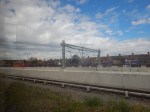

Custom House station is scheduled to reopen in late December 2017.
Action Stations On Crossrail Howler
The title of this post, is the same as that on Robert Lea’s Business Commentary in The Times today.
This is the first paragraph.
Study the route map of the Elizabeth Line – Crossrail as currently s – and gaze in wonder at one of the biggest cock-ups in recent transport infrastructure history.
He then details how Old Oak Common station is not on the map, with its connection to HS2 and the London Overground.
But he does indicate, that as HS2 won’t arrive until 2026, that there is plenty of time to get it right.
He then says.
The real howler is the missing Crossrail station at London City airport.
He finds it amazing that despite Crossrail running under the London City airport, there is no station to connect the City of London and Canary Wharf for that matter to the airport that bears its name.
I tend to agree.
He then says this.
Word is, feasibility plans to retrofit a Crossrail station are afoot with perhaps a delay to operations on the Woolwich branch to accommodate it. You’d think City airport will get this through; the new mayor likes the airport, the airport is prepared to fund construction of the station and, oh yes, the new chairman of City airport is Sir Terry Morgan, chairman of Crossrail.
He predicts a happy ending.
In Crossrail In Docklands, I had a section about Silvertown station, which has been safeguarded in the Crossrail plans and construction.
This Google Map shows the London City Airport and the Southern exit of Crossrail’s Connaught Tunnel.
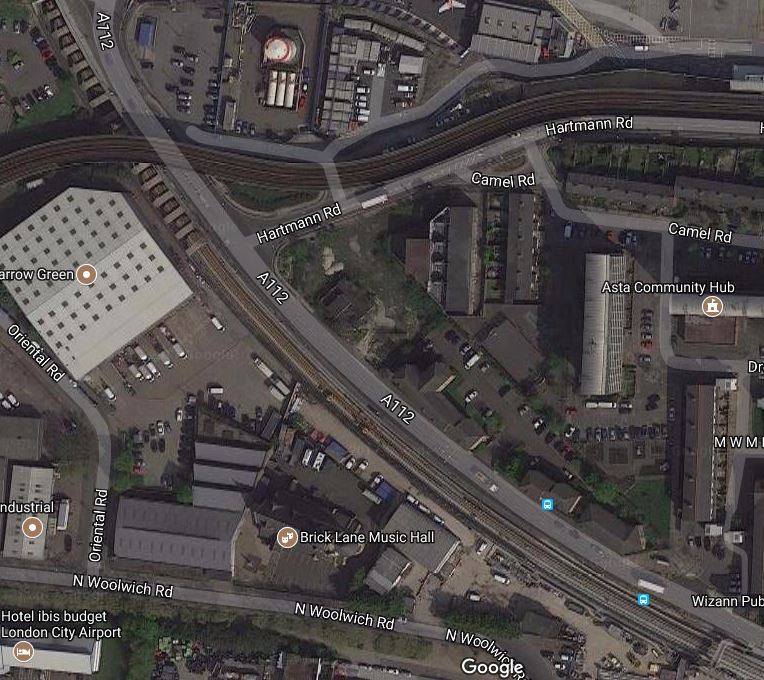
Note.
- The airport is just to the top of this map.
- Crossrail runs diagonally across the map, with the Docklands Light Railway crossing from East to West.
- Silvertown station will be somewhere on this section of Crossrail.
- In the South-Eastern corner of the map, there is a footbridge over Crossrail.
These pictures were taken of the bridge and the Crossrail tracks underneath.
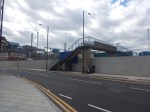

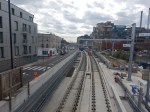


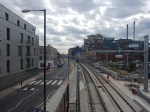


Note.
- There certainly seems to be a fair amount of space to the side of the London-bound track.
- It might be a bit tight to build a platform on the Abbey Wood-bound track.
- The track is all slab-track.
- Building the station further towards Abbey Wood might be easier.
It shouldn’t be the most difficult construction job to build a station and link it to the London City Airport.
Crossrail Tests Its Trains In Southend
The title of this post is the same as that of this article in the Southend Echo.
This is the first paragraph.
Crossrail trains are being tested from Southend to London – raising hopes that in future they could run to and from the town on a regular basis.
As the title of the article indicates, it could be that Bombardier and Crossrail are seeing how a Class 345 train performs on the route, prior to the delivery of Greater Anglia’s similar Class 720 trains, which are another train in Bombardier’s Aventra family.
Southend Victoria Station
Southend Victoria station could be a destination for Crossrail in the future, but consider these facts.
- Southend Victoria station is 41.5 miles from London Liverpool Street station and the fastest services take about an hour.
- Southend Victoria has a frequency of three trains per hour (tph) to London Liverpool Street.
- Southend Victoria station has four terminal platforms and is a short walk to the Town Centre.
- Reading station is 36 miles from London Paddington station and the fastest services take just over half-an-hour.
- Fast-growing Southend Airport with its station is on the Shenfield to Southend Line and the Airport would surely welcome a direct link to Central London and Heathrow.
- The three tph on the Shenfield to Southend Line doesn’t have a good interchange with the one train every forty minute service on the Crouch Valley Line.
If there is a major problem, it is that Greater Anglia is losing passengers to c2c with its station at Southend Central.
Between 2013/14 and 2015/16 Southend Victoria has lost 2.79 million passengers, whereas in the same period Southend Central has gained 1.14 million.
From what I have seen Greater Anglia intend to speed up the Liverpool Street to Norwich services to ninety minutes and run at a frequency of 3 tph. They are also going to add a fourth train that goes to Ipswich. So again, the three tph service to Southend, isn’t the best fit to services on the Great Eastern Main Line for passengers travelling between say Southend and the County Town of Chelmsford.
There are probably not too many reasons for Crossrail to be extended to Southend for its own sake, but if Greater Anglia and Crossrail decide that an integrated service is to be provided between Shenfield and Southend, then everything is up for discussion.
Fast Trains Between London And Southend Victoria
The current Southend to London trains stop seven times to the East of Shenfield.
They would probably need to stop at Southend Airport and perhaps two of the busiest stations, but cutting out five stations would probably bring the journey time down to fifty minutes, which would attract passengers and make it easier for Greater Anglia to run the service, as trains could do the round trip in comfortably under two hours.
Running three tph, as now, would need just six trains and running a desirable four tph would need eight trains.
I’d be very interested to see what time a one of the new Stadler Class 745 trains, could achieve on the route, with just four stops at Stratford, Shenfield, Billericay and Southend Airport.
Slow Crossrail Trains Between Shenfield And Southend Victoria
Paired with the fast trains could be a number of extended Crossrail services.
Based on Crossrail’s projected timings between Liverpool Street and Shenfield of 41 minutes and the current 35 minutes between Shenfield and Southend, a timing of 76 minutes is estimated.
- Crossrail’s trains could save as much as two minutes at each of the seven stops, East of Shenfield.
- The Shenfield to Southend Line has an 80 mph speed limit, which I suspect could be improved.
So could we see Slow Crossrail trains achieving the times that Fast Greater Anglia trains do now?
I think the answer is yes and it shows how trains have improved in the last few decades.
How Many Trains Could Use The Shenfield To Southend Line?
The capacity must be quite high, as the only complication is the totally independent Crouch Valley Line.
Southend Victoria station has four platforms, so the station could probably handle sixteen tph, which is more than enough.
I feel that it would be possible to run four Fast expresses and four Slow Crossrail trains in an hour.
Whether that would be an acceptable timetable is another matter.
Interchange With The Crouch Valley Line
The Crouch Valley Line’s one train every forty minutes must be a nightmare for Greater Anglia and passengers alike, and I suspect that Greater Anglia have a cunning plan to run a two tph service on the line.
It appears that the track layout can achieve this, with the two trains passing at North Fambridge station. But as they don’t run two tph on this branch there must be other limitations.
Foremost of these could be the three tph service on the Shenfield to Southend Line.
So sorting out the Shenfield to Southend Line might improve the service on the Crouch Valley Line.
Conclusion
I have come to these conclusions about services between Liverpool Street and Southend Victoria stations..
- A Fast Greater Anglia express service could probably achieve a sub-fifty minute time.
- A Slow Crossrail service, could probably do the trip in an hour.
- Better interchange with Crouch Valley Line and Great Easstern Main Line services would be achieved.
- Four Fast and four Slow services in each hour is possible.
My choice for the Liverpool Street to Southend Victoria service would be as follows.
- Four tph – Crossrail Class 345 trains – Stopping at all stations.
- Four tph – Greater Anglia Class 745 trains – Stopping at Southend Airport, Billericay, Shenfield and Stratford.
Or the simple option of just running the four Crossrail trains.
Crossrail to Southend, isn’t a ridiculous aspiration.
Your Class 345 Train Has Arrived
I took this picture at Stratford today.

Note the extra information on both screens.
Class 345 Trains And Regenerative Braking
Bombardier don’t seem to talk much about regenerative braking on Class 345 trains.
In the Wikipedia entry for the train, there is a section called Background And Specifications. This is the first paragraph.
In 2008, the UK government’s rolling stock plan stated a requirement for around 600 carriages for Crossrail, expected to be similar in design to the Thameslink rolling stock, to meet the design improvement requirements of the 2007 ‘Rail Technical Strategy’ (RTS), including in-cab signalling/communication including satellite and ERTMS level 3 technologies, regenerative braking, low cost of operation and high reliability, with low weight and high acceleration.
Perhaps Bombardier aren’t letting on how they achieve efficient braking of the trains.
One thing I proved today, was that the trains have no give away electric fires on the roof, where braking energy is traditionally dissipated.
This bad picture was taken through safety netting at Forest Gate station.
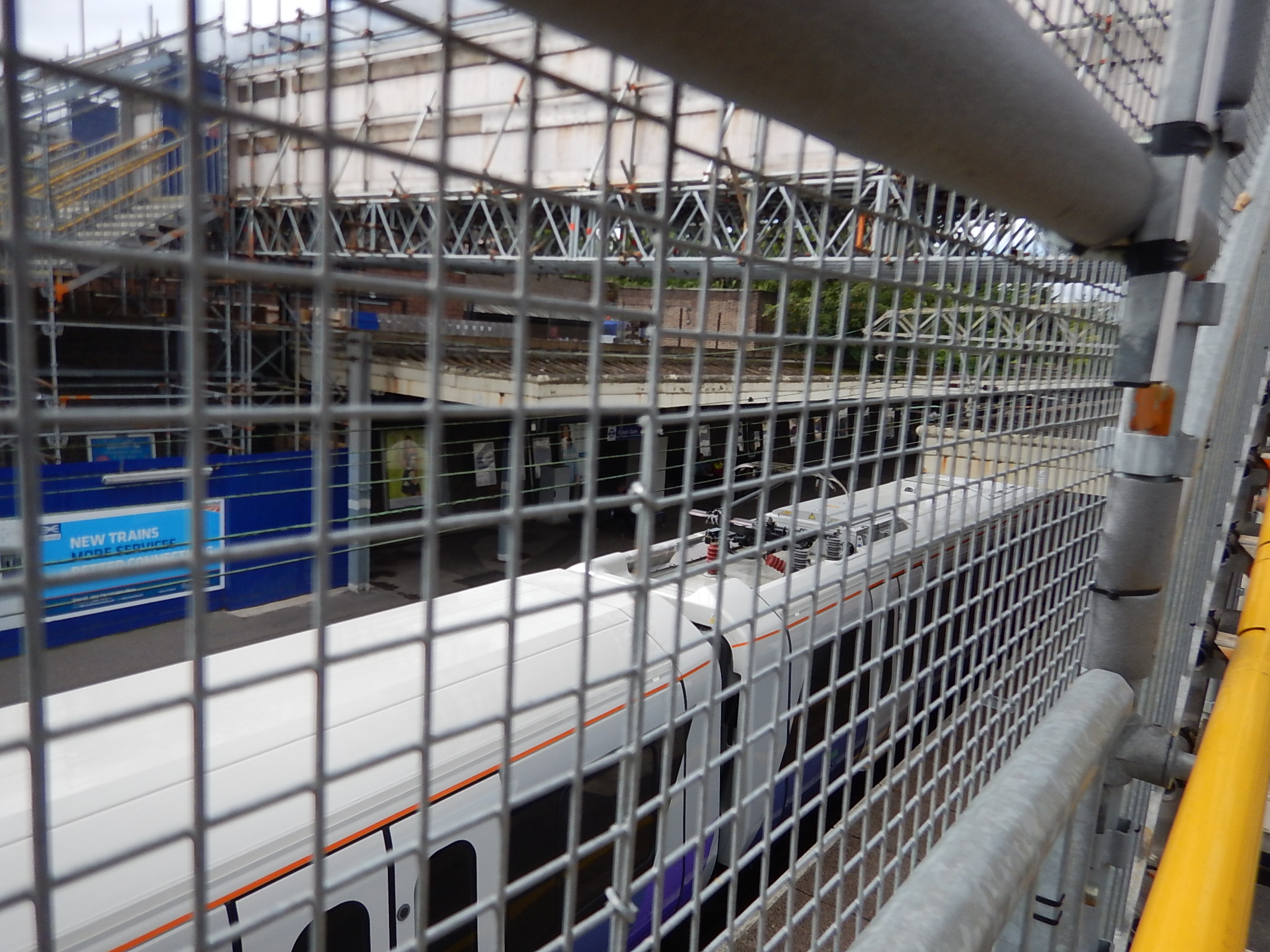
The roof is mainly-smooth with just grills for the air-conditioning and ventilation.
There certainly wasn’t any electric fires on the roof!
So does the braking energy get stored on the train for reuse?
An Exciting New Aventra
The title of this post is the title of an article in Rail Engineer.
It is actually dated the 31st of January 2014, so you might think it is out of date.
But surely, with the first Aventras appearing in service, now is the time to revisit.
I found the article this morning by accident and it is a fascinating read, Especially when you consider the article was written before the train had received any orders. Bombardier had actually just missed out on the Thameslink order, which resulted in the Class 700 trains.
A Blank Sheet Of Paper
The loss of the Thameslink order allowed Bombardier to start from scratch.
This paragraph indicates one of their start points.
And then we looked at it and thought we’ve also got depot engineers from Strathclyde to Surrey, all over the place, all looking after these trains in the field. How are they performing? Is there something we can do better there?
As the article says Aventra was reborn after Thameslink!
They also talked extensively to possible customers.
Suppliers
Suppliers were invited on board and given space with the design team in a new Design Office in Derby.
This paragraph described how everyone worked together.
We basically started from scratch, and in a completely different way. It isn’t engineering-led any more. It’s a joint collaboration of our depot people, our manufacturing guys, procurement and engineering.
I would describe it as a project-led structure similar to one that ICI used to use in the 1960s.
I wrote my first scheduling program to allocate the office space needed.
A Modular Approach For The Future
Each Electrostar had been different to the previous, but this sums up the Aventra philosophy.
Aventra will be a single modular product, capable of being easily modified for different applications but in each case referring back to the core design. So whether the actual class will be a 90mph metro train or a 125mph main-line express, it will have the same systems and components as its basis. In fact, Jon thinks that the distinctions are becoming blurred anyway.
They had looked forward ten years.
Away From The Wires
Aventra will be an electric train, but what happens, when the wires run out?
This was their solution.
So plans were made for an Aventra that could run away from the wires, using batteries or other forms of energy storage. “We call it an independently powered EMU, but it’s effectively an EMU that you could put the pantograph down and it will run on the energy storage to a point say 50 miles away. There it can recharge by putting the pantograph back up briefly in a terminus before it comes back.
I rode the prototype in public service in January 2015!
I was totally convinced that Bombardier’s battery trains have not even the smallest touch of Mickey Mouse!
Although the experience was magical!
Bombardier’s Iron Bird
Bombardier have borrowed the Iron Bird concept from the plane-makers.
This is an extract.
A leaf has been taken out of the aircraft designers’ handbook. They use something termed an Iron Bird – basically an aeroplane without wings – to test new systems.
Bombardier’s Iron Bird is a train without bogies. However, it does contain control systems, wiring looms and other bits of kit and it is being assembled at Derby.
I think that this shows, that they are not against borrowing other concepts from other industries.
The Most Affordable Train
The article describes how the train was designed to give the best whole life cost.
This sentence sums up the philosophy.
It’s actually about a 50/50 split between the whole life cost and the first capital cost. That makes it a bit more difficult because we’ve got be competitive on the first practical cost, but additionally we have to offer a really high availability, strong reliability, combined with much better energy consumption and less track damage.
As someone, who used to own a finance company, that leased trucks and other expensive equipment, the product described is the sort of product that leasing companies love. If the train is economical to run, if the first train operating company goes bust, you’ll still have an asset that other train operating companies will fight over.
Trains are also a predictable long-term investment, as well-built efficient trains have a thirty or forty year lifetime.
In my view the big winner of a train like this is the manufacturer, as they’ll get happy owners, train operating companies and passengers, which must lead to repeat orders.
Conclusion
I’ve never ridden a more well-designed, comfortable, smooth and quiet suburban electric train, than the Class 345 train in trial service on the Shenfield Metro, anywhere in the UK or Europe.
Is Highbury And Islington Station To Get An Upgrade?
This article on IanVisits is entitled New Entrance Planned For Highbury and Islington Station.
If this happens, it will be good news for me, as Highbury and Islington station is my nearest Underground station.
But it is a cramped, very busy station with extremely poor access. According to Wikipedia, it is the fifteenth busiest station in the UK and in terms of passenger numbers, handles more in a year, than Manchester Piccadilly, Edinburgh Waverley, Glasgow Queen Street and Liverpool Lime Street.
A lot of these high passenger numbers are due to the unrivalled carrying capacity and success of the Victoria Line and the recently-rebuilt North London Line.
Proximity to Arsenal’s Emirates Stadium has also added thousands of passengers.
The future will draw even more passengers to the station.
For the last two years, passengers like me, have tended to avoid the station, as contractors have been rebuilding the road bridge in front of the station.
But this will finish soon and Islington Council and Transport for London have grand plans to create a very pedestrian-friendly environment outside the station.
And then there’s Crossrail and the Northern City Line!
Crossrail doesn’t connect to the Victoria Line, but thanks to the Northern City Line, Highbury and Islington station has a good connection to Crossrail.
The Northern City Line is also getting new Class 717 trains and increased frequencies between Moorgate and Hertfordshire.
It all adds up to more pressure for something to be done at Highbury and Islington station.
This map from carto.metro.free.fr shows the lines at Hoghbury and Islington station.
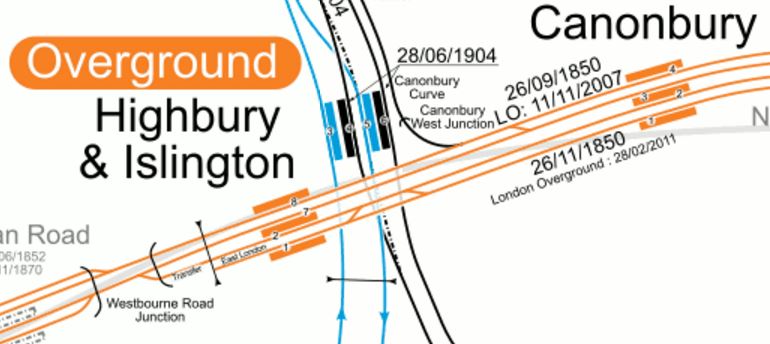
Note how the Northern City and Victoria Lines have cross-platform access, courtesy of some clever platform swapping, when the Victoria Line was built.
Two developments will give alternative routes that might take the pressure off the station.
The doubling in capacity of the Gospel Oak to Barking Line from early next year, will help.
Crossrail will benefit the station, in that a lot of passengers wanting to go between Eastern parts of London and the West End, currently use the Overground and the Victoria Line. Some of these passengers will use Crossrail to go direct.
But something needs to be done.
The four Overground platforms have full step-free access, but the deep-level Victoria Line and the Northern City Line both rely on just two crowded escalators.
If you look at the layout of the four deep-level platforms, they lie together and because the two Northern City Line platforms were dug as a pair in the first few years of the last century, I suspect that all platforms are roughly the same level.
As the lift shafts from the old Northern City Line station are still intact, although full of equipment, I feel that the plan of using this abandoned station to create another entrance to the deep-level platforms will be possible.
- A new ticket office can be provided in a quality building.
- It will need escalators, as well as lifts.
- It should be possible to connect directly to the four platforms, with perhaps a wide passenger tunnel under Holloway Road.
- This tunnel could also have lifts on the other side of the road to the Overground.
It is one of those smaller intricate projects, that can be really good value.
 The Anonymous Widower