Siemens And South West Trains Unviel The Class 707 Train
In The Aventra Car Length Puzzle, I talked about the flexibility of Bombardier’s new Aventra trains. The first of these; Crossrail’s Class 345 trains, will hit the tracks in May 2017, when according to the September 2016 Edition of Modern Railways, they will enter service between Liverpool Street and Shenfield.
A month or so earlier,if all goes to plan, South West Trains will start running their new Class 707 trains, which are being built by Siemens in Germany.
This train is described in the following article in the same edition of Modern Railways.
The original in-service date of the Class 707 trains was July 2017, so having lost a bit of credibility with the late entry into service of the closely-related Class 700 trains, are Siemens trying to beat Bombardier’s Aventra into service?
Obviously, there a lot of new trains that will be ordered in the next few years and all tricks will be employed.
Reading, the article about the Class 707 trains, three things stand out thoughtful design, flexibility and future proofing.
- Although, the trains will be third-rail only, the first two trains will be fitted with pantographs during testing, to prove that the concept works. This means the trains could be passed to another operator in the future.
- No toilets are fitted, but all the wiring and plumbing is there, so they can be fitted later.
- Siemens have gone for 2+1 seating rather than longitudinal bench seating as on the Class 378 trains, because of the feet-sticking-out problem.
- The trains fature wide open gangways.
- The trains have air-conditioning.
- Unlike the Class 700 trains, the trains have wi-fi.
- The trains are full of electronics and are information-rich for passengers and drivers.
A lot of what I have said here, also applies to Bombardier’s Aventra.
This is said about the operation of Class 707 trains in Wikipedia.
The Class 707 units are intended primarily for services between London Waterloo and Windsor & Eton Riverside, allowing the Class 458 trains used on those services to be cascaded back to operations to Reading, which will then allow the Class 450s to move elsewhere. The intention is to run these services, as well as others via Staines, and some mainline services to Basingstoke, as ten-car trains with pairs of Class 707s.
So the lack of an end gangway will mean that the trains can’t run as a true ten-car train.
Of the other variants of these trains; Class 700 trains are fixed formations of eight and ten cars, that won’t be working as pairs and the Class 717 trains for Great Northern will have end gangways because of the tunnels they run through.
So I wonder why, South West Trains didn’t go for five-cars with end-gangways or ten-car trains.
Interestingly, Abellio’s order of new Aventra trains for East Anglia includes a mix of five and ten car trains. Will the five-car trains be able to work as pairs and will they be gangwayed? Nothing has been announced yet!
I think the theme running through both train designs, is the customer gets the trains that best fit their method of working.
Details Of The New London Bridge Station
These are a selection of pictures showing design details of the new London Bridge station.
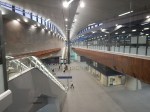
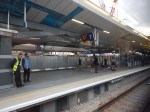

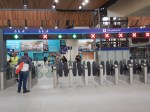
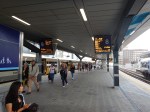

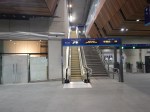
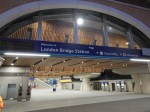
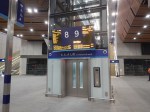
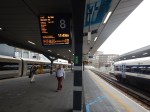
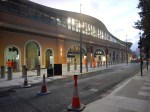
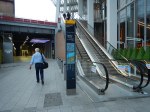
One thing that is noticeable, is that the station is very information rich. Are Network Rail trying to get passengers through the station with the minimum of questions asked to staff?
I will probably add some more pictures.
The Aventra Car Length Puzzle
I think that Bombardier have a very flexible nature to how long a car can be in the new Aventra. This flexible length, could be enabled in part, by the way the trains are built, which I believe used aluminium exclusions and a lot of specialist weldimg. I wouldn’t be surprised that if you wanted a 40 metre long car, then Bombardier would be able to build it.
They now have three orders for the train and they can be summarised as follows.
The information has been gleaned from Wikipedia, Modern Railways and other sources.
Crossrail Class 345 Trains
The Class 345 trains for Crossrail have the following characteristics.
- 9 cars – Wiki
- articulated trains
- 200 metres long – Wiki
- Around 23 metres long cars – MR
- 3 pairs of doors per car – MR
Seating will be a mixture of Metro-style and some groups of four.
This article in Rail Technology Magazine says a lot about the design of the trains. This is said about seating.
“The layout of the seats is also different per different carriage, so where people will crowd there’s more space, and at the end of the trains, where people might not be crowding on, there’s more seats. So a lot of thought has gone into the ergonomics of this train.
“But generally, the average journey on this train will be 15 minutes – so what people want is to be safe, comfortable, and air conditioned, but they really want to get on. Capacity is one of the big drivers – but 450 seats if a really good ratio.”
So perhaps the old Tube rule will apply – If you want a seat go to the front or back of a train.
Dividing nine-cars into a 200 m. long train, gives a car-length of 22.22 m, which is probably good enough for around 23 metres.
But if you assume that the two driving cars are identical and the trailer-cars between them are 23 metres long, you get two 19.5 metre driving cars at either end. Given that the train is articulated and there is a need for a Crash-worthiness crumple zone at both ends of the train, it could be that so that the middle trailer cars are identical as they are in the Class 378 train, that the end driving cars are slightly shorter, which could be structurally stronger.
If the two driving cars are 20 metres, then you get a trailer car length of 22.85 metres.
Could it be too that all different facilities like wheelchair spaces and transverse seating are in the driving car?
I also have this feeling, if I remember correctly, that if you can cantilever a heavy weight forward in the nose, that this helps dissipate the kinetic energy in a crash. It’s why car engines are often placed as far forward as the design will allow.
This statement can be found a couple of times on the Internet including in this article on Railway Gazette.
There will be a mixture of ‘metro-style’ and bay seating, with four wheelchair spaces and a number of multi-use spaces with tip-up seating to accommodate prams or luggage.
Only a detailed look inside a finished train will find out what they are really like.
London Overground Class 710 Trains
The Class 710 trains for London Overground have the following characteristics.
- 4 cars – Wiki
- articulated trains (?)
- Around 20 metres long cars – MR – Similar to Class 378 trains
- 2 pairs of doors per car – MR
Seating will depend on where the trains are deployed and will be Metro or traditional, although the September 2016 edition of Modern Railways says its all longitudinal. Passengers won’t like that between Liverpool Street and Cheshunt.
Abellio East Anglia Trains
These trains haven’t been allocated a class yet and this is the best description from this article in Rail Magazine describes the trains.
The Bombardier units will be based on the Class 345 Aventras being delivered for Crossrail, but with the focus on seating capacity rather than standing space. The trains will come in two versions: ten-car and 240 metres long; and five-car and 110 metres long. All will be electric.
Note, if these train and car lengths are correct, the cars are longer than for the Class 360 trains and a ten-car Aventra is as long as a twelve-car Class 360 train.
I think it would be reasonable to assume, that the driving and trailer cars for both length of trains are identical, as this would give the operator various advantages.
- Having only one type of driving car must ease driver training and rostering.
- Servicing will surely be easier to organise.
- If say a route needed a six-car train, then an extra car could be easily added.
Three different ways of calculating the car lengths can be used.
Method 1 – If d is the length of the driving car and t is the length of the trailer car, you get two simultaneous equations.
2d+8d = 240
2d+3t = 110
These give a trailer car length of 26 metres and a driving car length of 16 metres.
I don’t think that sixteen metres is too feasible, even if Bombardier could build one.
Method 2 – The driving cars are 20 metres long.
This car length would be a compromise driving car length that would work with both Class 345 and Class 710 trains, to give identical driving cars across all trains.
The length of a trailer car will be as follows.
- 10-car – 25 metres.
- 5-car – 23.3 metres.
What is intriguing is that if 25 metre trailer cars were used in a five-car train, this would give a train length of 115 metres. So two five-car train running as a pair, would fit any platform able to take a ten-car train.
Method 3 – The trailer cars are a fixed length.
- 20 metre trailer cars would give 40 and 25 metre driving cars for 10-car and 5-car trains respectively.
- 23 metre trailer cars would give 28 and 20 metre driving cars for 10-car and 5-car trains respectively.
- 24 metre trailer cars would give 24 and 19 metre driving cars for 10-car and 5-car trains respectively.
- 26 metre trailer cars would give 16 and 16 metre driving cars for 10-car and 5-car trains respectively.
I suspect there’s a compromise in there somewhere, that will allow both types of car to be all of the same length.
I suspect that it could be 20 metre driving cars and 25 metre training cars, as indicated by Method 2.
Consider.
- Both train layouts, allow two five-car trains to fit a ten-car platform and if they can, work as a pair.
- As with the Crossrail trains, I wonder if the driving cars will have all the specials like disabled toilets, wheelchair and bicycle spaces and First Class seating.
- You could even have different versions of the driving cars. First Class, bicycle, accessible toilet etc.
- Perhaps only one First Class seating area is needed per train.
- Would all routes need bicycle spaces?
- If the trailer cars were longer, then this would mean there could be a more relaxed interior with more space for tables.
Again as with the Crossrail trains, only a detailed look inside a real train, will show the car lengths and the interiors.
Conclusion
It all leads me to the conclusion that Bombardier have a very flexible design.
- Pictures show the driver’s cab to be generously-sized.
- Pictures show that the driver’s cab might be cantilevered outwards from the train, which would increase crash-worthiness.
- I’m tending to believe that driving-cars will all be the same for the driver, but the space behind the cab will be used for special parts of the train like disabled toilets, bicycle spaces and First Class seating. The latter is traditionally placed at one end of many EMUs, anyway.
- Trailer cars might be of a flexible length between 20 and 26 metres long.
- Saying you could only have one length of trailer and dtiving cars would be so Henry Ford
- The number of doors in each car can be two or three pairs.
Bombardier have attempted to allow the customer to procure a train to their precise needs.
But overall, I’m still puzzled.
A Glimpse Of London’s Future
London will soon be getting Crossrail, but Leipzig already has a cross-city underground railway called the Leipzig City Tunnel, which is the centrepiece of the S-Bahn Mitteldeutschland.
These are a collection of pictures taken of the various stations in the tunnel and on the surface sections of the lines.

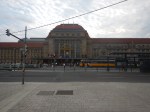
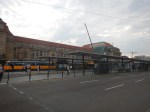
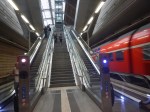
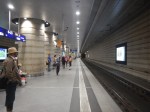


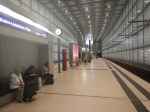
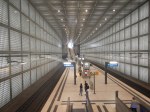
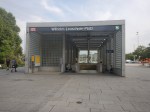


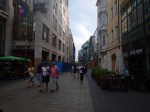
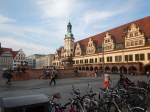
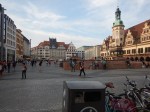
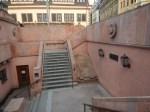



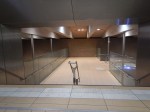
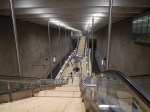

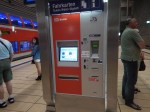

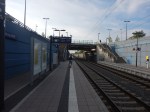

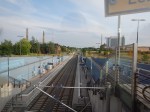
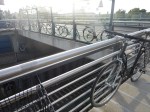
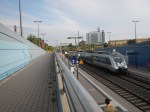
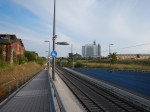

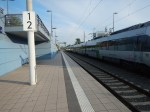

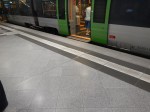
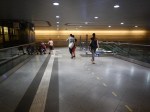
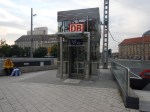
Unlike Crossrail, which is considered one line with two branches at both ends, there are several railways through the tunnel.
Wikiedia has a section on the Operating Schedule.
This is said.
It was planned that each hour and in each direction, there were up to ten S-Bahn, two regional trains and one express (as of July 2007)
There would appear to be seven S-Bahn routes, with intervals of between 30 and 120 minutes. As Crossrail, Thameslink and the East London Line in London, are all planned to or could handle twenty-four trains an hour, it does seem the Germans do things differently.
Note the following.
- The Seaside Park Hotel, where I stayed was about 200 metres from the trains.
- The line certainly has some spectacular stations.
- Central stations in the tunnel appear to be island platforms.
- Ticket machines were on the platforms, where they are really needed.
- Bicycles were everywhere underground.
- There are no platform-edge doors.
- Leipzig Markt Station was of an older era on the surface.
- There tended to be two escalators and steps to descend to and ascend from the trains. That is usually, the design-on-the-cheap problem.
- The one surface station I visited, Liepzig MDR, wasn’t step-free.
- The frequency through the Leipzig ity Tunnel, is low compared to the sixteen trains per hour through the East London Line and very low compared to that proposed for Crossrail and Thameslink.
I have a feeling that because it was designed a few years before Crossrail and uses older, refurbished rolling-stock, that certain features of the line are not as good as others.
Looking at the three systems; Leipzig, Crossrail and Thameslink, I feel that to get the most out of an expensive tunnel, you must do the following.
- Use trains designed specially for the tunnel.
- Design the trains for fast entry and exit.
- Make access between surface and platforms fast and with a large capacity.
- Use double-ended stations to ease passenger journeys.
- Have a large selection of routes through the tunnel, to get a maximum return for the tunnel. It may be that Crossrail needs more destinations.
- Use island platforms if possible.
- Make all stations step-free.
I think too that after seeing Leipzig, there are implications for London.
Bicycles
One problem for London, shown up by the Leipzig system, is what to do with bicycles on the train. These seem to be allowed at all times in Leipzig, but this page on the Thameslink web site, says that we do things differently.
More Destinations
As I indicated earlier, I think, that to maximise return on the massive investment of the tunnel, that Crossrail needs more routes and destinations, as Leipzig and Thameslink have.
As things stand, Crossrail intends to run a service like this according to Wikipedia.
The Elizabeth line will run a familiar London Underground all-stops service in the core section, but the western section will have non-stopping stations – like the Metropolitan line. The Eastern section has extra peak hour services that will either not enter the core section or that will be non-stopping at some stations. Similar to the Bakerloo line’s outer sections, the Elizabeth line will share platforms and rails with other services outside the tunnelled sections. About two-thirds of all Elizabeth line westbound trains will loop back after Paddington, about one third of peak-hour Elizabeth line trains to/from the north-east section will start/end at Liverpool Street main line platforms bypassing Whitechapel.
So it looks like if 24 trains per hour go through the centre tunnel, that sixteen of them will turn-back at Paddington.
That looks like a waste of resources to me.
Suggestions have been for services in the West to go.
- Up the West Coast Main Line to Watford, Tring and Milton Keynes.
- Along the Chiltern Line to West Ruislip and High Wycombe.
I wouldn’t be surprised if a couple of trains an hour went to Oxford.
The East is more problematic, as the only suitable extension is probably Southend, unless the Great Eastern Main Line is four-tracked, which would be very unlikely.
Kent is more fruitful territory, as an extension to Gravesend has been safeguarded. But surely Ebbsfleet with its Continental links would be better.
The Long Distance Crossrail Train
The Class 345 trains that will be used on Crossrail are Bombardier Aventras. According to serious reports, these trains could have the following features if needed.
- 200 kph capability.
- Metro, commuter or long-distance interior.
- 750 VDC, 25 KVAC or battery power.
- The ability to fit the platform-edge doors in Central London.
So you might reserve a few paths through Central London for long distance trains, if passenger statistics showed it would be profitable.
Imagine being able to get a train from Cardiff to Ebbsfleet for the Continent or from Birmingham to Southend.
Obviously services would only be provided if there was seen to be a demand.
But Crossrail’s and Bombardier’s engineers have designed the tools, so that many East-West journeys are possible.
Vivarail D-Trains Are Being Sent To Coventry
In A Video About The Vivarail D-Train, I said this.
I am sceptical about the Vivarail D-Train, but I do admire companies and organisations that think out of the box.
So after this report on Global Rail News, which is entitled Recycled Tube trains to re-enter passenger service this year, I am beginning to think that the Vivarail D-Train or the Class 230 train, might prove that engineering is the science of the possible. This is said.
Vivarail’s D-Train has its first customer and will enter passenger service between Coventry and Nuneaton later this year.
A Class 230 prototype, which started life as a London Underground D-Stock unit, is to be leased by the West Midlands Combined Authority (WMCA) for London Midland for an initial 12-month period.
The three-car train will act as a demonstrator, gathering feedback from passengers to inform the production of future trains.
I suppose there’s no better way to shut up the critics of a vehicle or transport system, than allow them to ride in it!
I don’t believe that the straight-talking inhabitants of the West Midlands will hold their tongue, if the train has shortcomings.
Edinburgh Tram’s Elaborate Catenary
When I’m in Edinburgh, I always think that the overhead wires for the trams are over-elaborate and intrusive.

The picture was taken as I arrived. Compare that picture, with this one in the centre of Birmingham.
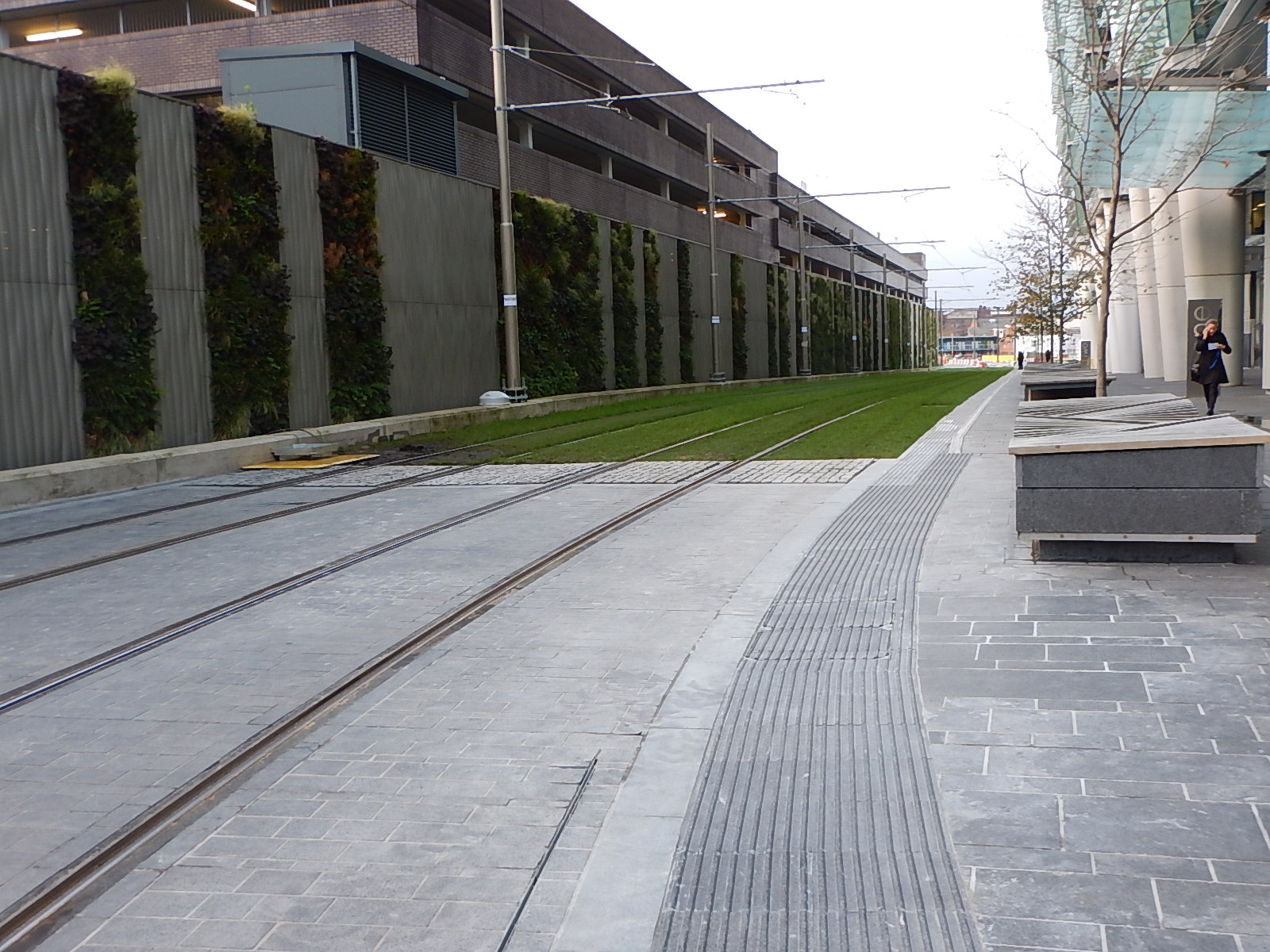
The Birmingham design is a lot simpler and as the trams are both from the same builder, you can’t say that the Midland Metro is designed to easier rules. This system could surely have been used on Princes Street, where I took this picture.
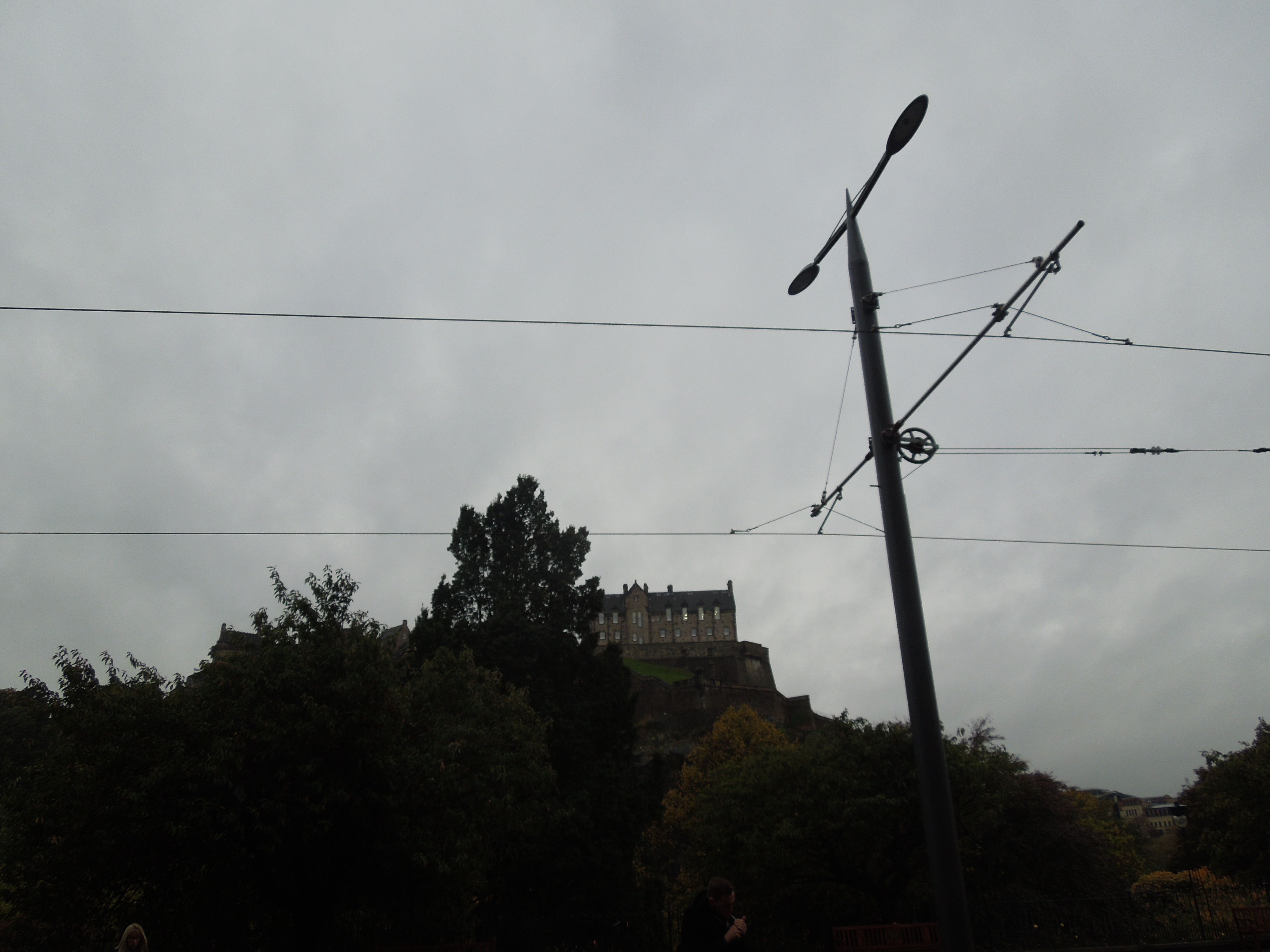
There is no excuse for bad design.
The Midland Metro is also showing the way for its extension, by using battery power through the historic centre.
The Class 365 Trains Are Looking Dated
I travelled to Peterborough on a Class 365 train.


The interior wasn’t in anyway bad condition, but it certainly shows how design has moved on in the last twenty years.
These are pictures of Thameslink’s Class 387 trains, which are a couple of years old.


Design moves on and gets better.
A Small Cooking Spoon I Can Hang Up
There are two types,. of designers in the world; those like Kenneth Grange, who will never accept second best and then their are all the others.
I strive for perfection and only accept second best, when the best is impossible.
These pictures show my quest for a small cooking spoon that I can hang above my cooker. Where else is there to put the tools, you use to actually cook the food as opposed to prepare it.




My mother had a small wooden spoon, that was always used to stir beans or in a small milk saucepan.
I have been looking for one for myself for about ten years now and I’ve never found one, quite small enough.
I did find the red spoon, shown in the first picture, in John Lewis and I use it a lot. A small one like it, in blue, would be ideal, as it fits the IKEA hooks above my cooker.
So I decided to make it possible to hang the smallest wooden spoon, I’ve got alongside.
I just drilled a hole in it, with my trusty pocket drill and attached a cable clip.
It seems to work.
The Steventon Bridge Problem On The Great Western Railway Electrification
Roger Ford in an article in the April 2016 Edition of Modern Railways, which is entitled GWEP Target Dates And Costs, discusses some of the problems of the electrification.
In one section he talks about the problems caused by the Grade II Listed Steventon Bridge.
This is a picture I took of the bridge from an InterCity 125
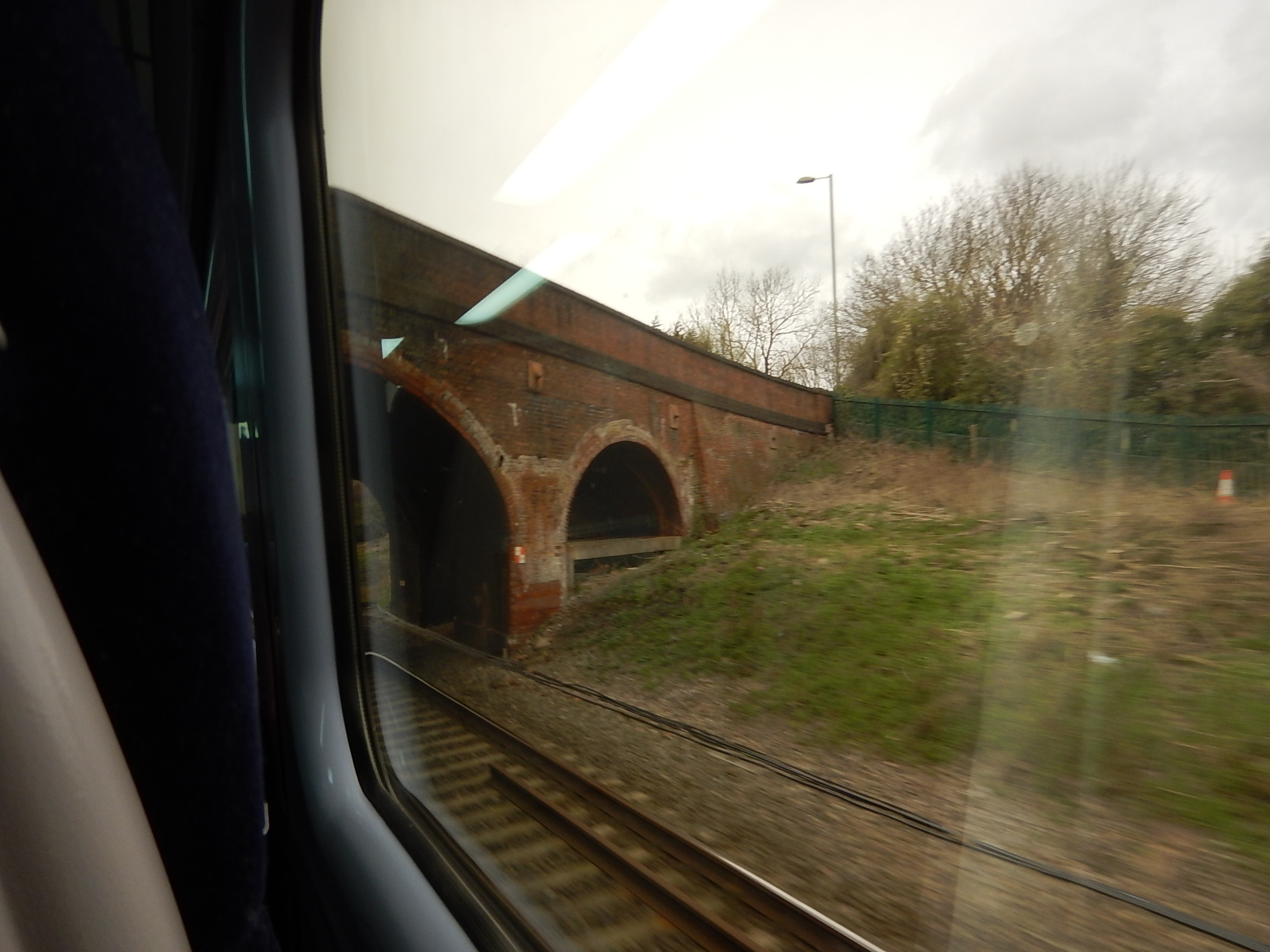
Steventon Bridge
Not the best, but it shows the design of the bridge.
This Google Map shows the Great Western Main Line, as it passes just to the south of the village of Steventon in Oxfordshire.
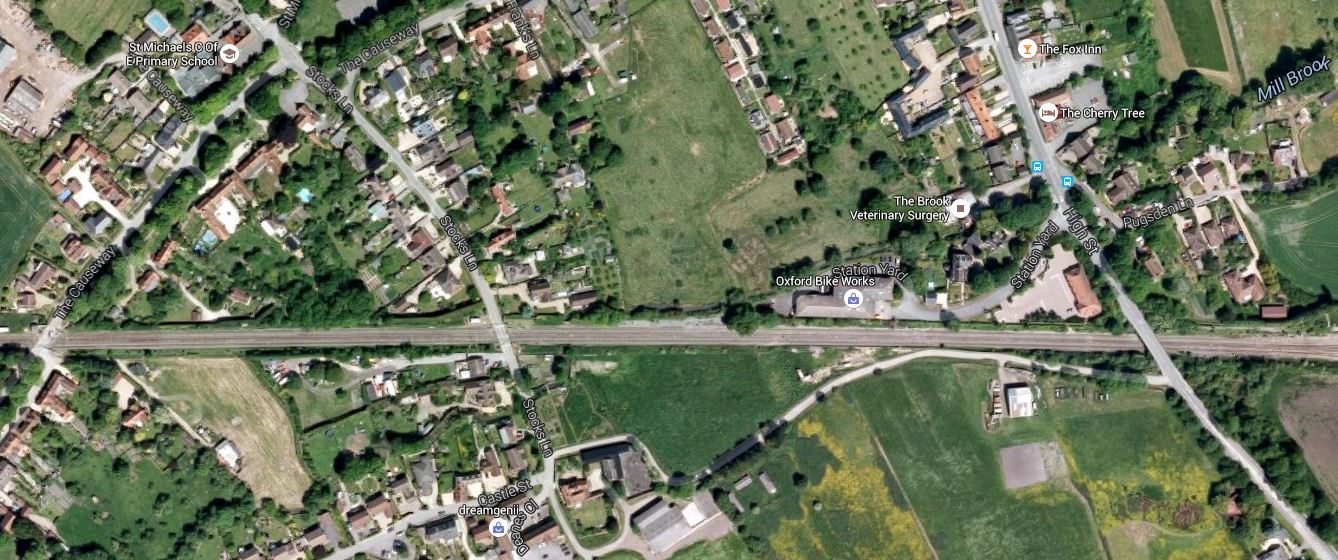
GWML Through Steventon
The bridge is on the Easternmost crossing of the railway, with the other two crossings being level crossings.
Roger explains the problem, which is about putting the overhead electric wires under the bridge.
The overhead wires have to be at maximum height over the level crossings and this means to get the wires under the bridge, they have to dip sharply. This means that excessive wear is caused to the contact wire.
It would appear from the article, that Network Rail are still searching for an acceptable solution.
At least it would appear that one of the level crossings is going to be closed, which could ease matters a shade.
But will the locals put up a fight as Mark Whitby has at the Ordsall Curve?
This article in the Oxford Mail is entitled Demolition of Steventon rail bridge on hold after MP intervention.
Some of the comments are priceless!
My view has a touch of the Philistine about it!
We have thousands of bridges like this and we don’t need to keep them all!
So perhaps we should save the best, but some that would cost too much to keep, should be replaced with modern bridges.
In the case of the Steventon Bridge, if the level crossings didn’t exist, it would appear that the tracks could be lowered under the bridge to give the required headroom.
As level crossings are one of the major causes of death on the railways, we shouldn’t stop until all are eliminated.
It would appear from this document, that one of the level crossings is going to be closed and a height limit of five metres placed on the other.
I think that the ultimate solution for this sort of problem will be technical.
In one of their documents about the use of batteries on trains, Network Rail or Bombardier talk about batteries being used to assist trains over deliberate gaps in overhead wires or third rail.
Third rail generally is not a problem and in the UK, it regularly changes sides and allows the momentum of the train to bridge any gap.
What is needed is a pantograph system, that can be raised to and lowered from the overhead wire with the train at full speed. I don’t know whether this is possible, but I suspect that every other country in the world would just demolish the bridge. I did find some research on the subject on the RSSB web site, which states that SNCF raise pantographs at 225 mph, Deutsche Bahn at 185 mph and Eurostar at 170 mph.
So it is possible!
As a trained Control Engineer, who spent a lot of time in the 1960s simulating dynamic systems, I believe that a system could be designed to lower and raise the pantograph before and after the difficult section.
I suspect that one of the problems here, is that the Class 800 trains that will work this line, were designed in Japan. But this section in Wikipedia about level crossings in Japan, would seem to indicate that the Japanese have a serious problem with level crossings.
The Shape Of Stations To Come
Oakwood, Southgate or Arnos Grove it isn’t but this image from Transport for London is the new Nine Elms station on the Northern Line Extension.
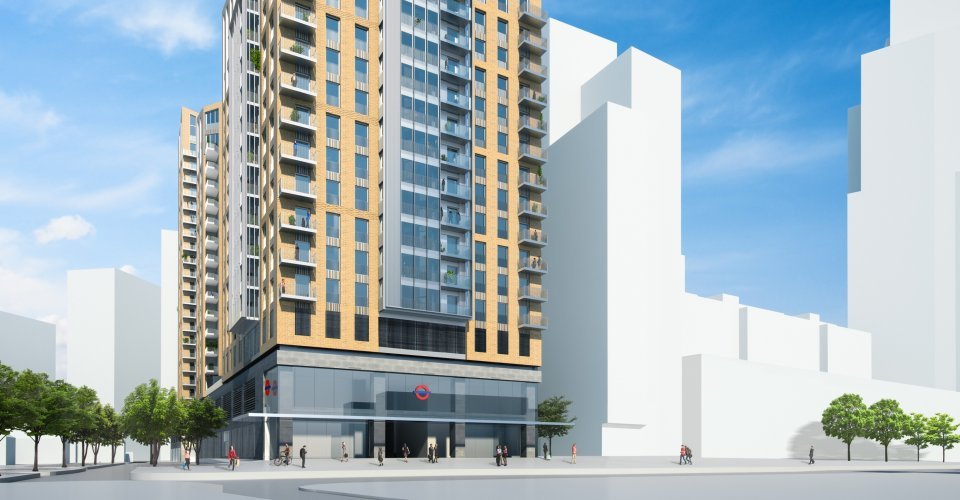
Nine Elms Station
But is it so different to Clapham South station?
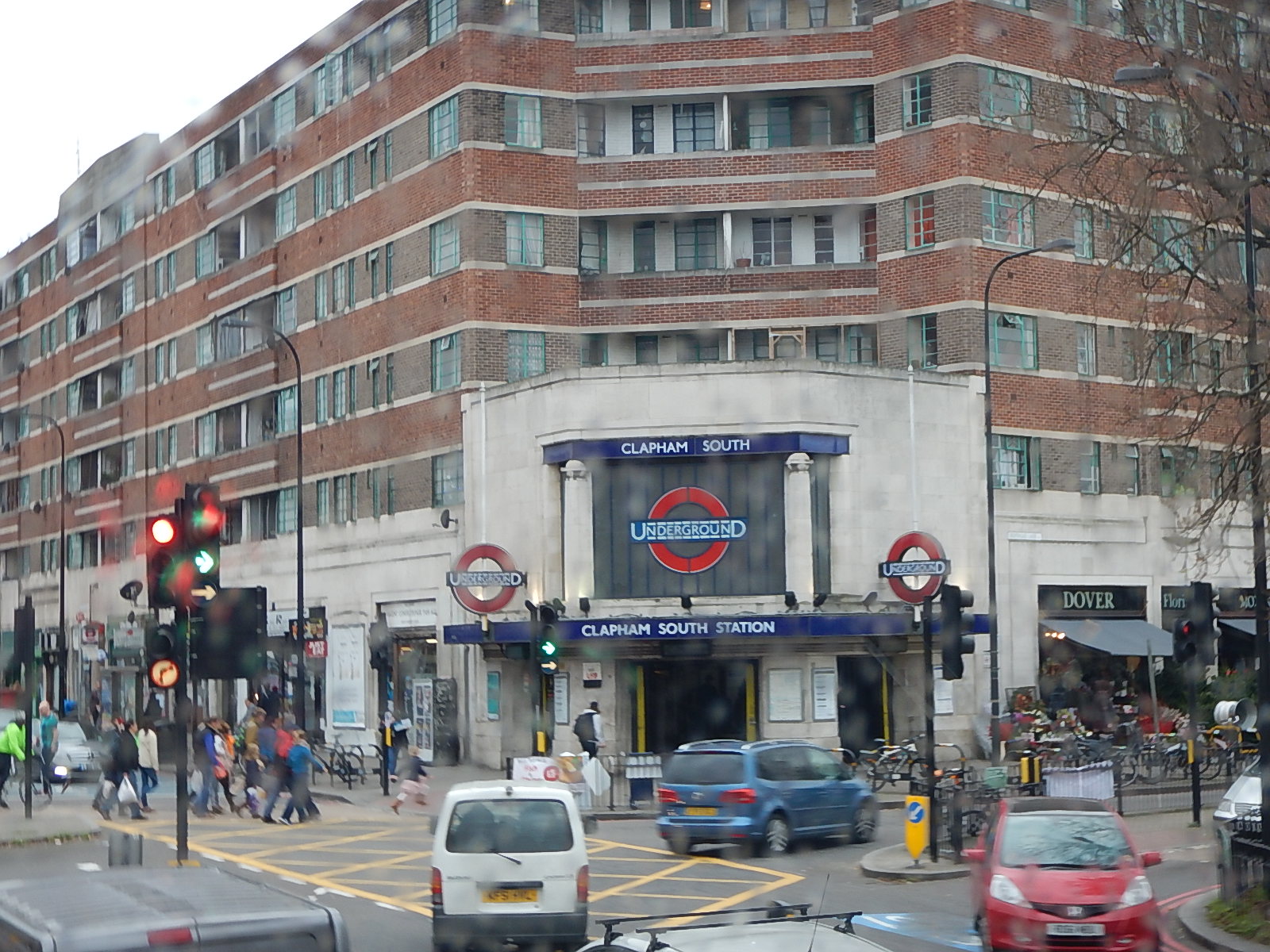
Clapham South Station
Except that the architecture is from a different era and the over-site development is higher.
We will be seeing a lot more stations like Nine Elms.
Some have already seen that type of development or developments are in progress.
- Angel
- Archway
- Baker Street
- Canary Wharf – Crossrail
- Elephant and Castle
- St. James’s Park
- Wembley Central
There should be more.
I think we’ll see different types of station design. Some with developments and others without.
The Station With Appropriate Towers On Top
These will be interpretations of the Nine Elms or Clapham South principles.
There certainly should be more stations with housing, offices, schools, universities or hospitals on the top.
A property developer told me, that he was developing schemes for housing on or close to stations in London, with little or no car parking. They are popular, sell like hot cakes and are very profitable.
The Station Under A Landscaped Area With Clusters Of Towers Around
This design is emerging and I suspect that the definitive prototype could be built at Old Street station. This is a visualisation from Transport for London.
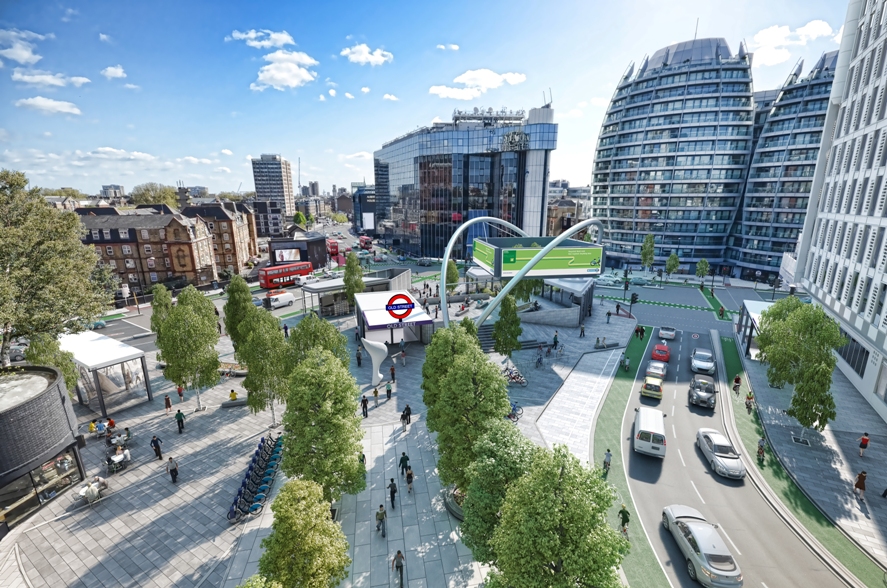
The Future Old Street Station
I suspect we’ll see similar approaches at Elephant and Castle, Highbury and Islington and other stations on a roundabout, square or park.
I like this approach for various reasons.
- The design improves the passenger experience.
- It is very cycling- and walking-friendly.
- TfL seem to have taxi-ranks in their thinking.
- It gives the opportunity to make the train-bus interface an easy one.
- Cafes and kiosks are easily incorporated.
- As development around the station is spread around, it is probably easier to bring together and finance, than a tower-on-top solution.
- It doesn’t require much modification or demolition of existing buildings.
But there are disadvantages.
- Badly done, it can be a nightmare on a wet or windy day.
- The approach can also have negative effects on other road users.
Although there doesn’t seem to be too many complaints about the half-finished scheme at the Elephant, which will enable the new station, in the media.
My taxi-driver was complaining about Highbury Corner last night, but then that scheme hasn’t even started and the extensive works to replace the bridge and sewers are ongoing.
The Roofed Station
We have a tradition in this country of giving rail stations spectacular roofs.
Surely the latest and one of the best is the new roof over Manchester Victoria station, which I wrote about in Victoria Gets A Posh Umbrella. Here’s one of my pictures.

If you think it was all amazing expensive read this article from the Manchester Evening News entitled Stunning pictures show latest progress of £44m Victoria Station refurbishment.
Good design is often much more affordable than crap design.
Imagine electric trains, trams and possibly electric buses and taxis under an umbrella, with developments all around. Someone will and it will be the most spectacular and passenger-friendly station in the world.
The Innovative Solution
I don’t discount totally innovative solutions like the new Blackfriars station, although that station is more of a spectacular architectural set-piece, than a practical station.
- I’ve had complaints from staff, saying it is a cold and draughty place to work at times.
- Changing between Southbound Thameslink services and the bay platforms is not easy.
- There should be a walking route across the Thames incorporated in the station.
- I’ve never seen a train in the bay platforms.
But to be fair, I think that the Blackfriars station, we see now, is not the one that was envisaged by Thameslink. Original plans called for all Sutton Loop services to terminate at Blackfriars. But this was overturned, by those knowledgeable enthusiasts for good design, the elected members of the House of Commons.
Conclusion
Innovate and go forward, rather than cast the past in stone.
 The Anonymous Widower