Are LNER Going To Take On The Airlines?
Nine years ago, I wrote Edinburgh – Plane Or Train?, after a trip to Scotland, where I took easyJet up and came back in First Class by train.
- Both trips were about five hours door-to-door.
- The flight was about six quid more,
- But I got free food and drink on the train.
- Security on the plane was a pain.
- I had to take my passport for identification at Stansted.
I haven’t flown internally in Great Britain since, although, I have flown to Belfast.
For shorter flights the market is going towards rail, as these posts seem to suggest.
- 2.7M Tonnes Of Co2 Could Be Saved Per Year If UK Domestic Flights Went Electric
- Air Travellers To Be Hit By Carbon Charge On All Tickets
- Climate Change ‘May Curb Growth In UK Flying’
- France Bans Short-Haul Flights To Cut Carbon Emissions
- KLM Replaces Plane With High Speed Train
- Lumo Carbon Data Shows Its Trains Are 22 Times Greener Than Flying
- Next Time I’ll Go By Train
- Ryanair One Of Europe’s Top Polluters, EU Data Suggests
- Stop Taking Internal Flights And Go Green, Says Lib Dem Contender Davey
The climate seems to be turning against flying short-haul.
This is a paragraph, in this press release from LNER, which is entitled First Tri-Mode Long Distance Trains For The East Coast Main Line.
This new fleet of trains will keep LNER on track to reduce its emissions by 67 per cent by 2035 and be net zero by 2045. LNER has already reduced carbon emissions by 50 per cent compared with 2018/19. Per mile, LNER trains produce 15 times less carbon emissions than a domestic flight.
Are LNER building a number of climate-based sticks, with which to beat the airlines on the routes, where they compete?
These are my thoughts on the various routes, where LNER compete with airlines.
Newcastle
Newcastle is an interesting one.
- Newcastle station is in the city centre and is on the Tyne and Wear Metro.
- London King’s Cross is one of London’s major Underground hubs.
- There are lots of buses and local trains within walking distance of both stations.
- There are three trains every two hours and an additional eight trains per day (tpd) between the two London King’s Cross and Newcastle stations.
- Lumo also run five tpd on the route.
- There are generally no security delays at rail stations.
- London King’s Cross is laid out to maximise passenger flows. If it gets busy, everybody just walks out into King’s Cross Square.
- I’ve never had a problem at Newcastle station with overcrowding.
Perhaps, if you live near one of the airports, flying is more convenient.
LNER’s weapons against the airlines between London King’s Cross and Newcastle will be convenience and journey times.
Convenience is all about the location of the stations, their excellent local transport networks and good walking routes around the station.
Journey times will only get better, as the magic of digital in-cab signalling, allows the Azumas, the new CAF tri-mode long distance trains and the few remaining InterCity 225s to show what they were designed to do.
Dalton-on-Tees, where the first phase of the digitally signalling will end, is 39.8 miles South of Newcastle, so once the Newcastle train is passes Dalton-on-Tees on the East Coast Main Line, it will be a digital-signalled electrified railway all the way to Woolmer Green.
- Dalton-on-Tees is 39.8 miles South of Newcastle
- Woolmer Green is 244.8 miles South of Newcastle.
- Dalton-on-Tees and Woolmer Green is 205 miles.
- Newcastle and Dalton-on-Tees takes 37 minutes.
- Woolmer Green and King’s Cross takes 18 minutes
- Trains take typically an average three hours and nine minutes between London and Newcastle.
- A typical train time by LNER between Dalton-on-Tees and Woolmer Green is two hours and 14 minutes.
- This is an average speed of 91.8 mph between Dalton-on-Tees and Woolmer Green.
- Between London King’s Cross and Newcastle is fully-electrified.
I can build a table of timings and savings at various average speeds.
- 120 mph – 103 minutes – two hours and 38 minutes – 31 minutes
- 125 mph – 98 minutes – two hours and 33 minutes – 36 minutes
- 130 mph – 95 minutes – two hours and 30 minutes – 39 minutes
- 135 mph – 91 minutes – two hours and 26 minutes – 43 minutes
- 140 mph – 88 minutes – two hours and 23 minutes – 46 minutes
Note.
- The first field is the average speed between Dalton-on-Tees and Woolmer Green.
- The second field is the time between Dalton-on-Tees and Woolmer Green.
- The third field is the time between London and Newcastle.
- The fourth field is the saving over current timings.
- The London and Newcastle time is calculated by adding the times for the three sections together.
I have regularly timed trains at a very constant 125 mph, so with digital signalling, I suspect an average of 130 mph is possible.
This would mean, times of a few minutes under two hours and thirty minutes could be possible between London and Newcastle.
Edinburgh
Edinburgh builds on the improvements South of Newcastle.
Edinburgh station Waverley is a well-connected station.
- There are lots of buses, local trains and the Edinburgh Tram within walking distance of Edinburgh Waverley station.
- There are three trains every two hours and an additional seven tpd between the London King’s Cross and Edinburgh Waverley stations.
- Lumo also run five tpd on the route.
- Trains take typically an average four hours and thirty minutes between London and Edinburgh Waverley.
- Any savings because of the digital in-cab signalling between London and Newcastle can be applied to London and Edinburgh Waverley services.
As my calculations showed that averaging 130 mph between Dalton-on-Tees and Woolmer Green could save 39 minutes on journey times, I am fairly sure than a sub-four hour journey time will be possible between London and Edinburgh Waverley.
It should also be noted that that the power supply has been improved between Newcastle and Edinburgh Waverley.
- The distance between Newcastle and Edinburgh Waverley is 124.2 miles
- Newcastle and Edinburgh Waverley takes around one hour and 30 minutes.
- This is an average speed of 82.8 mph between Newcastle and Edinburgh Waverley.
- Between London King’s Cross and Edinburgh Waverley is fully-electrified.
As the record time for between London King’s Cross and Edinburgh Waverley was set by an InterCity225 train in 1993 at three hours and twenty-nine minutes, I suspect that with more digital signalling and some track improvements, that there are more journey time improvements to be squeezed out.
I certainly believe that a time of three hours and fifty minutes between London and Edinburgh Waverley will be regularly achieved. This is a journey time saving of around forty minutes.
Dundee
Dundee has an airport and a station on the East Coast Main Line.
Trains between London King’s Cross and Dundee take around five hours and 45 minutes.
LNER run three trains per day to and from London King’s Cross and one tpd to and from Leeds.
CrossCountry also run services.
Loganair has two flights per day to Heathrow.
Aberdeen
Aberdeen builds on the improvements South of Edinburgh.
The four direct tpd between London and Aberdeen take around seven hours and ten minutes.
This should come down to around six hours and thirty minutes with the journey time savings between London King’s Cross and Edinburgh Waverley.
Will this tempt travellers from the airlines?
Battery-Electric Trains To Dundee And Aberdeen
One thing that will help, is that Edinburgh and Aberdeen is to be partially electrified.
InPiling Work To Get Underway To Electrify Line To Fife, I included this Network Rail map of the electrification.
This map has been downloaded from the Network Rail web site.
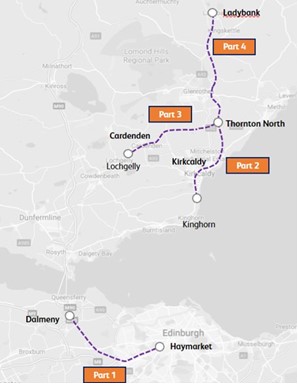
The electrification is split into four phases.
- Haymarket and Dalmeny – 25 km
- Kirkcaldy and Thornton North – 25 km.
- Lochgelly and Thornton North – 20 km.
- Thornton North and Ladybank – 34 km.
Note.
- The last three phases of electrification connect to Thornton North.
- The new rail link to Leven will also be electrified. and connected to Thornton North.
- The Forth Bridge is not to be electrified.
As Ladybank station is just 91.4 miles from Aberdeen, I suspect LNER will use Hitachi Intercity Battery Hybrid Trains to serve Aberdeen.
If these trains haven’t got the range, then I suspect LNER’s new CAF Tri-Mode Trains could handle the route.
Inverness
Inverness has a problem.
Zero-carbon trains will be unlikely to get to the city without full electrification of the Highland Main Line.
- Dunblane is the nearest electrified station to Inverness, but it is 146.2 miles away over a route with lots of steep climbs.
- I doubt that a battery-electric train could handle that route.
One solution would be for LNER to run the new CAF Tri-Mode Trains to Inverness using HVO or biodiesel.
Glasgow
Glasgow is the only other Scottish city with an airport and good rail connections to the South.
I am sure that Avanti West Coast will target airline passengers, if LNER prove it is a successful policy.
Other Factors
These are other factors, that will come into a traveller’s choice.
First Class
Some travellers like a bit more comfort and service.
Ability To Work
Some travellers like to work on a train.
You Don’t Get Tables On a Plane
I like to open a paper or magazine flat, which is difficult on a plane.
Views Tend To Be Better On a Train
Providing you get a window!
Parking Tends To Be Better At An Airport
But it may be more expensive!
Security Is Less Hassle On A Train
At the moment!
You Don’t Need To Prove Your Identity On A Train
Not in the UK! Yet!
Conclusion
It looks like LNER can offer the airlines to four of our major Northern cities serious zero-carbon competition.
North From Thornton Junction
This Google Map shows how all the railways connect at Thornton junction.
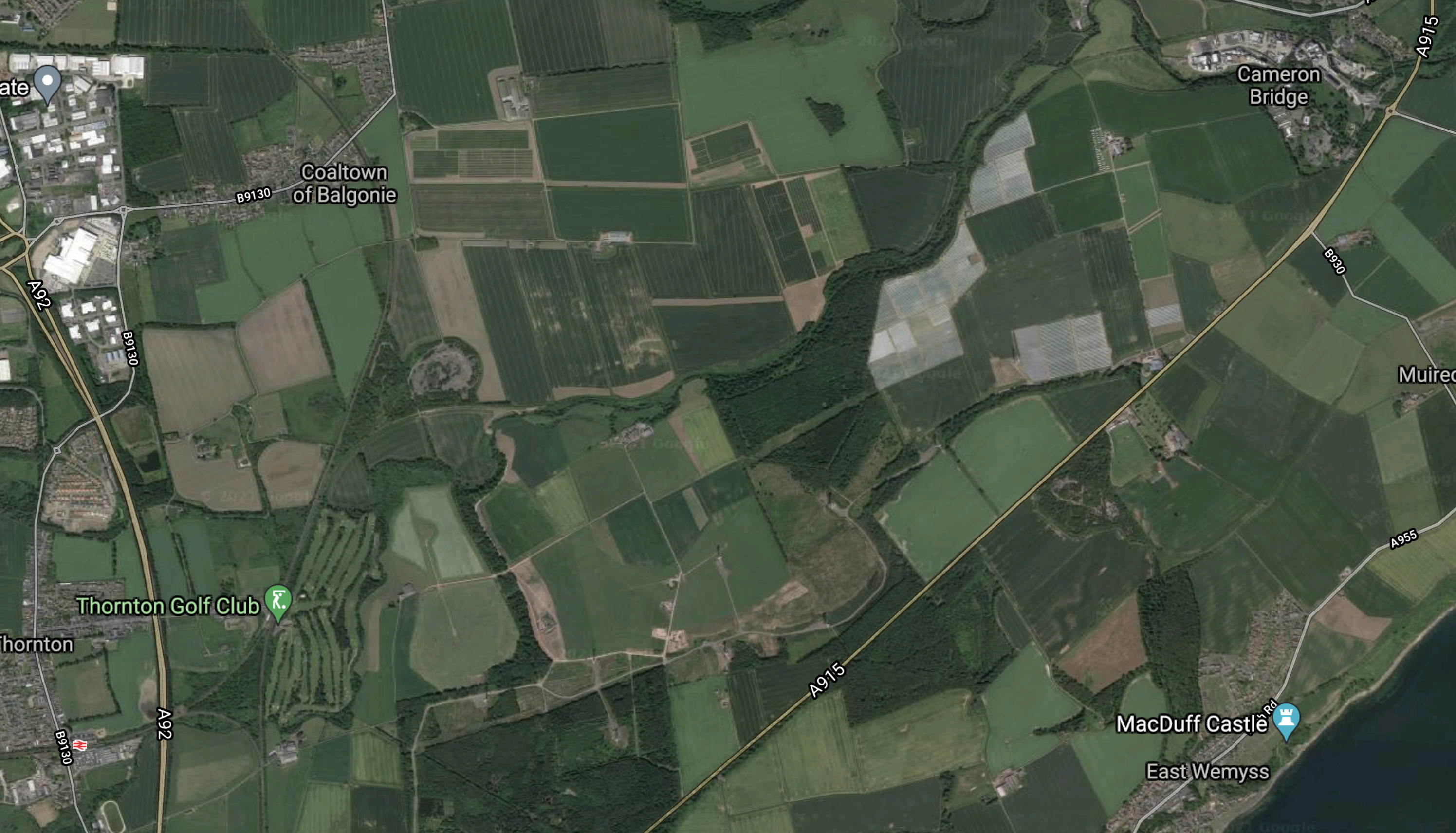
Note.
- The village of Cameron Bridge is in the North-East corner of the map.
- The A 915 running diagonally across the map and to the East of the village of Cameron Bridge.
- In The New Cameron Bridge Station On The Levenmouth Rail Link, I showed how Cameron Bridge station was positioned to the East of the A915 and the village.
- The Levenmouth Rail Link would appear to pass to the South of the village, according to a Network Rail map in the related post.
Thornton junction is a large triangular junction in the South-West corner of the map.
- Thornton North junction is close to Thornton Golf Club, which is shown by the green marker.
- Glenrothes with Thornton station is at the Eastern point of Thornton junction.
- Trains going West from Glenrothes with Thornton station go through Dunfermline and over the Forth bridge to Edinburgh.
- Thornton South junction is South of Thornton Golf Club and leads South through Kirkcaldy station and over the Forth bridge to Edinburgh.
This second Google Map shows the main Edinburgh and Dundee rail line between Thornton Golf Club (Thornton North junction) and Markinch station, which is the next station to the North.
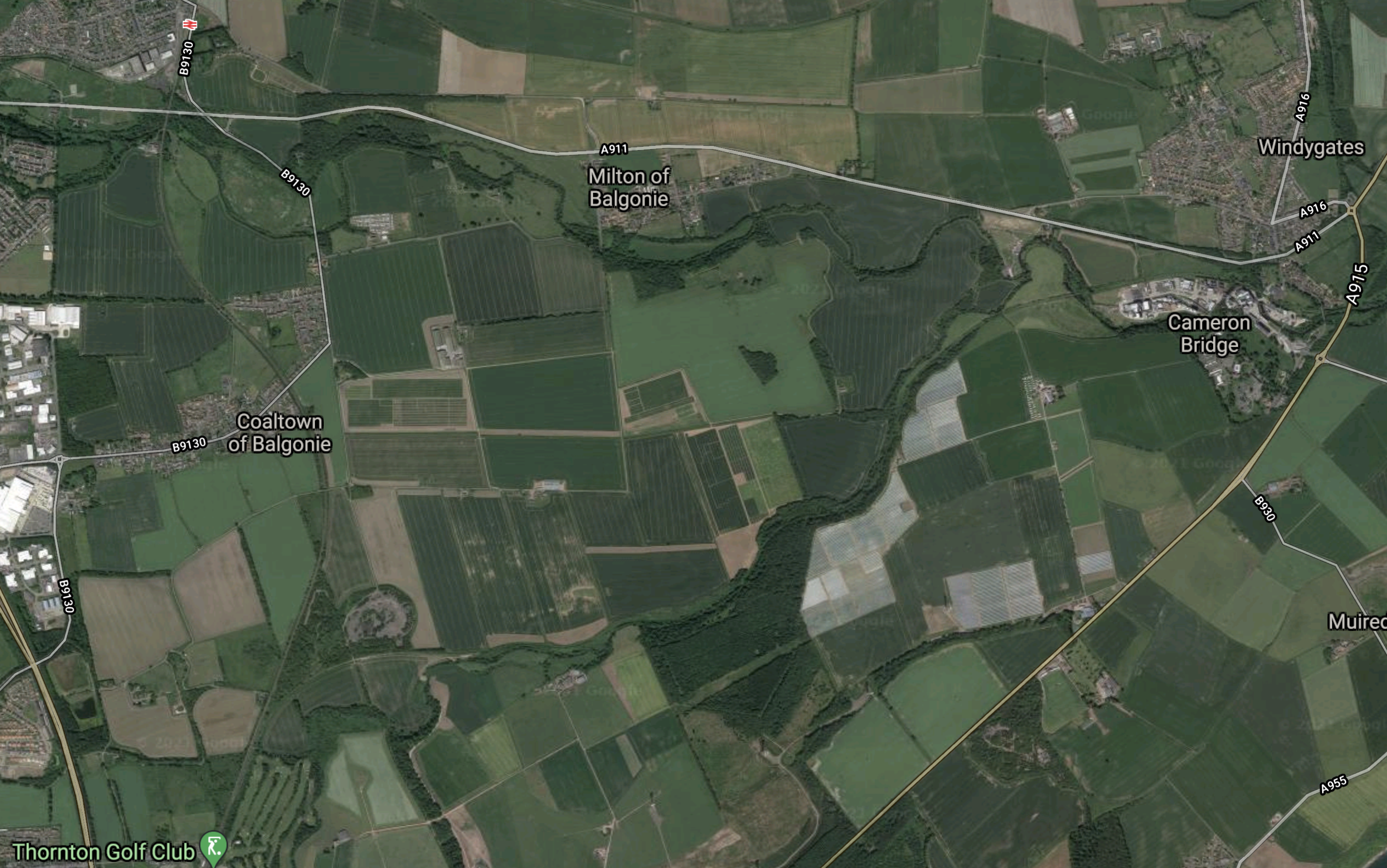
Note.
- The village of Cameron Bridge in the East of the map.
- Markinch station is in the North-West corner of the map.
- Thornton Golf Club (Thornton North junction) is in the South-West corner of the map.
Looking at various maps, Thornton Junction appears very complicated.
- The North-South leg of the junction is at least double-track.
- The North-East leg of the junction appears to be single-track.
- The South-East leg of the junction appears to be single-track.
- The former Levenmouth Rail Link appeared to join the main line at a single-track junction to the North of Thornton North junction
- There is lots of space.
.I’m sure Network Rail can come up with an efficient track layout, that will enable the following.
- Trains can go between Glenrothes with Thornton and Kirkcaldy stations in both directions, as they do now.
- Trains can go between Glenrothes with Thornton and Levenmouth Rail Link in both directions.
- Trains can go between Kirkcaldy station and Levenmouth Rail Link in both directions.
This would enable the service provision, that was specified in Service Provision On The Levenmouth Rail Link.
What Will Be Electrified At Thornton Junction?
This page on the Network Rail web site, says this about the trains that will run the service on the Levenmouth Rail Link.
And while the line will be electrified with overhead wires, services will be operated initially by battery electric units in order to reduce the number of diesels operating on the network as early as possible.
I wouldn’t be surprised to see full electrification between Glenrothes with Thornton and Leven stations, to make sure that the battery-electric trains had full batteries for the run South to Edinburgh.
- The other two legs of Thornton junction would also be fully electrified to give all passing trains a good charge.
- The distance between Kirkcaldy and Markinch stations is 7.3 miles and trains take about ten minutes. I suspect most of this section of the Edinburgh and Dundee line will be electrified. There looks to be about six overbridges that might need raising, but I suspect it would be nothing too terrible, with about the same degree of engineering difficulty as electrifying the Gospel Oak to Barking Line in London.
- I feel with good engineering and guile, enough electrification can be added to the route through Kirkcaldy to get the trains to the South.
- West of Glenrothes with Thornton station, the track looks to be good territory for electrification and enough wires can be added, so that by Cardenden station, there is enough power in the batteries to get the trains to the South.
I have a feeling that by intelligently using the two routes via Kirkcaldy and Dunfermline, Network Rail can increase the frequency of trains over the Forth Bridge.
- This probably partly explains, why trains to Leven go alternatively via Kirkcaldy and Dunfermline.
- 100 mph battery-electric trains help too with their sparkling acceleration.
- Who’d have thought, that at the age of one hundred and thirty, the Forth Bridge will be at the heart of an electrified local train network?
And the only new electrification is based on Thornton junction, over twenty miles to the North.
Electrification Between The Forth Bridge And Edinburgh
Without doubt, the electrification to the South of the Firth of Forth must reach as far North as possible.
Dalmeny station is the most Northerly station South of the bridge and I feel that this could be a practical place for the electrification to end.
Distances from Dalmeny to stations further North include.
- Leuchars – 41.4 miles
- Leven – via Dunfermline – 28.2 miles
- Leven – via Kirkcaldy – 27.3 miles
- Dundee – 48.8 miles
- Perth – 47.4 miles
All these destinations would be within range of Hitachi Regional Battery Trains, which are described in this Hitachi infographic.

Note that the range on battery power alone is 90 km or 56 miles.
Given that the battery-electric trains would be able to grab a battery charge as they passed through Thornton junction, I am fairly certain that Hitachi Regional Battery Trains could reach Leuchars, Dundee or Perth.
An Electric Service Between Edinburgh And Dundee
Dundee is a new station and I doubt, that it was rebuilt without provision for full electrification.
It has two through platforms for Aberdeen and Edinburgh services.
There are also two South-facing bay platforms for regional services from the South.
This picture shows the two bay platforms with an Edinburgh-bound train to the left.
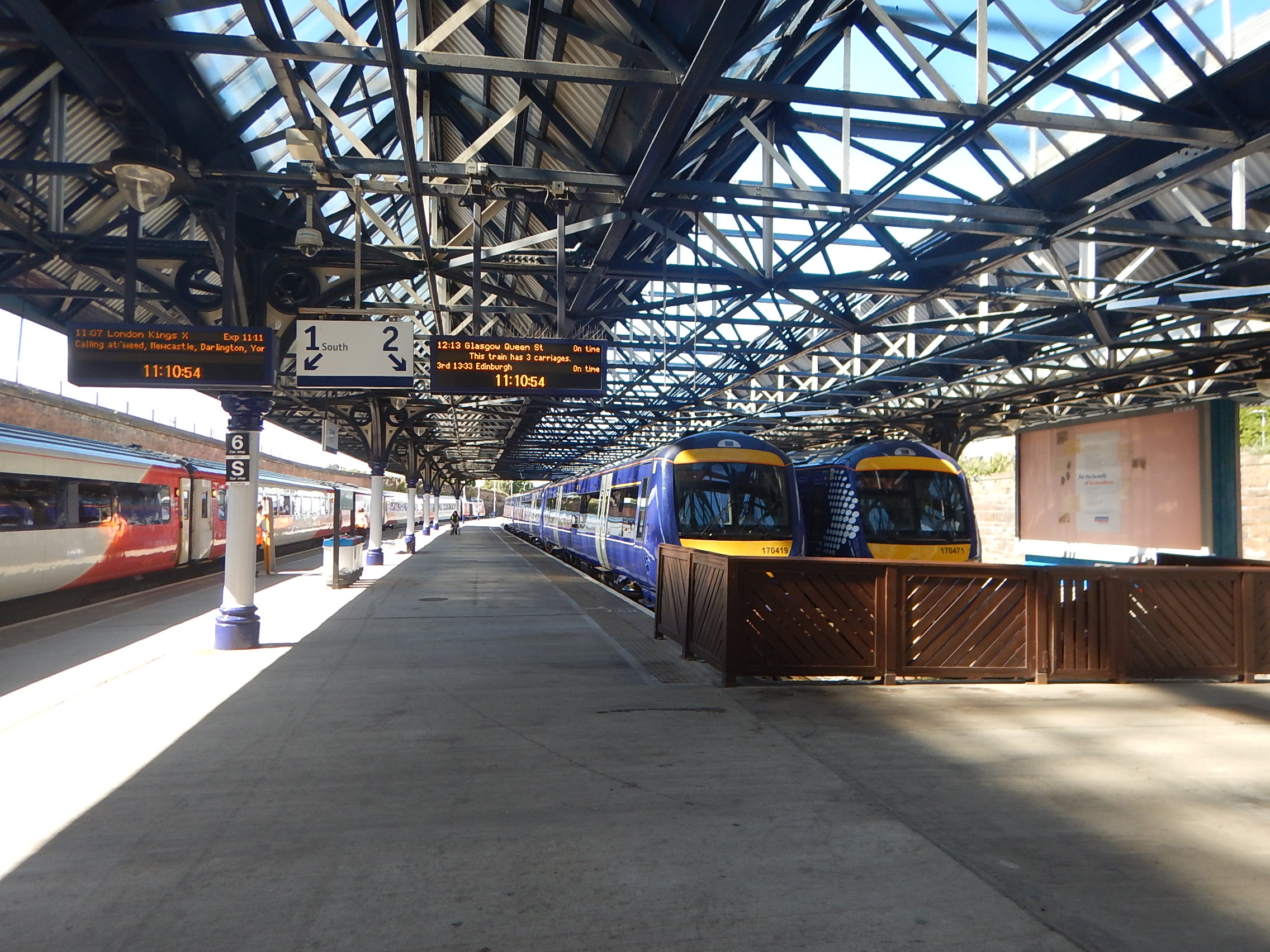
Note.
- In the picture the two Class 170 diesel trains will be going to Edinburgh or Glasgow.
- Scotrail’s plans include an hourly train to both of Edinburgh and Glasgow.
If these two bay platforms were electrified with 25 KVAC overhead wires, these battery-electric services will be possible.
- Edinburgh and Dundee via Haymarket, Kirkcaldy, Thornton junction and intermediate stations.
- Glasgow Queen Street and Dundee via Stirling, Dunblane, Perth, Gleneagles and intermediate stations.
I suspect other routes battery-electric will be possible.
An Electric Service Between Dundee And Aberdeen
The distance between Dundee and Aberdeen stations is 72 miles.
In Solving The Electrification Conundrum, I described techniques being developed by Hitachi Rail and Hitachi ABB Power Grids to electrify routes like Dundee and Aberdeen.
With Hitachi looking to give battery-electric trains a range of over forty miles, it could be just two hops between Dundee and Aberdeen.
I suspect Montrose could be the charging point, as it is forty miles South of Aberdeen.
Conclusion
It appears that the proposed electrification of Levenmouth Rail Link creates an electrification island at Thornton junction, that enables battery-electric trains to reach Dundee.
Coupled with plans to electrify between Stirling and Perth, this means that both Perth and Dundee will be connected to Scotland’s electrified rail network.
I suspect it is also possible to easily extend battery-electric trains all the way to Aberdeen, with only short sections of carefully positioned overhead wires.
Related Posts
The New Leven Station On The Levenmouth Rail Link
The New Cameron Bridge Station On The Levenmouth Rail Link
Service Provision On The Levenmouth Rail Link
An Inter7City Class 43 Locomotive At Dundee Station
This Inter7City Class 43 locomotive was waiting at Dundee station, when I protographed it.

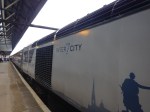
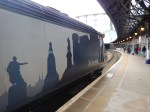
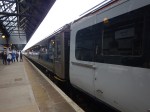

I suspect it was a training run.
A Visit To The V & A At Dundee
I took these pictures on a visit to the V & A At Dundee.
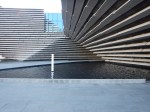










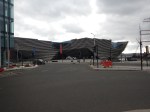
It should be noted that I was taking a lazy journey between Glasgow and Edinburgh, so I went via Dundee, where the new museum and other attractions are very close to the station.
Dundee Station
Dundee station has recently been rebuilt and it is now a mixture of old and new.
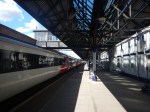
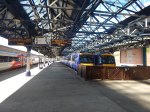




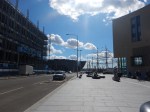

The old part are the platforms, which are below street level, and are now connected to the surface by lifts and escalators.
The surface buildings are new and bring back an old Victorian idea; the station hotel. But this is not a massive five star edifice, but an affordable Sleeperz hotel.
There’s a lot to like about the station.
- The platform layout of two long platforms with two bay platforms in between, must be ideal for operators.
- The lift and escalators to the surface.
- The snack bar between the platforms.
- The convenient hotel.
- The short walks to the attractions, which will soon be joined by a branch of the V & A.
- It was designed by local architects; Nicoll Russell Studios.
And all for a total cost of £23million.
I hope we see more stations like this one.
 The Anonymous Widower