Surprising Electrification At Oxenholme
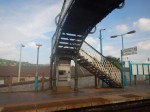
I took these pictures of the Windermere platform, which is numbered 3, at Oxenholme station on the 7th May 2018.

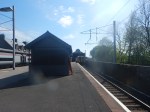
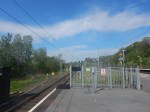

Note the overhead wires for electric trains.
This picture is from an earlier post dated the 1st May 2015.
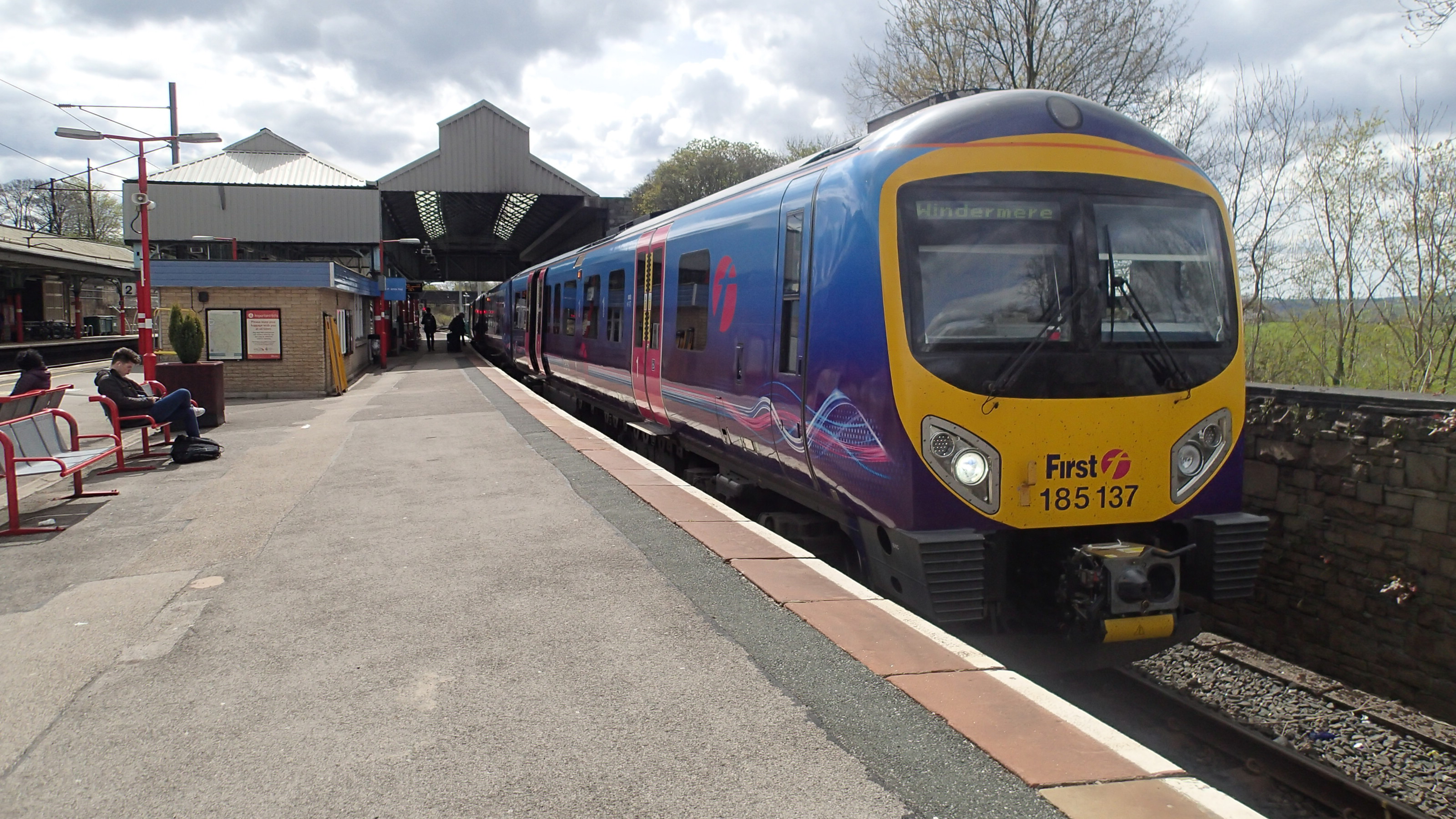
There are no overhead wires in the picture.
In the Electrification Proposal section of the Wikipedia entry for the Windermere Branch Line, this is said.
On 20 July 2017, it was announced that electrification of the Windermere branch was cancelled. As an alternative, Northern plan to utilise Class 769 multiple units on the route; these are Class 319 electric multiple units converted to function as bi-mode units, capable of operating under electric power between Manchester and Oxenholme, and under diesel power on the Windermere branch.
Did Grayling’s announcement come too late to stop these wires being erected?
This Google Map shows the station.
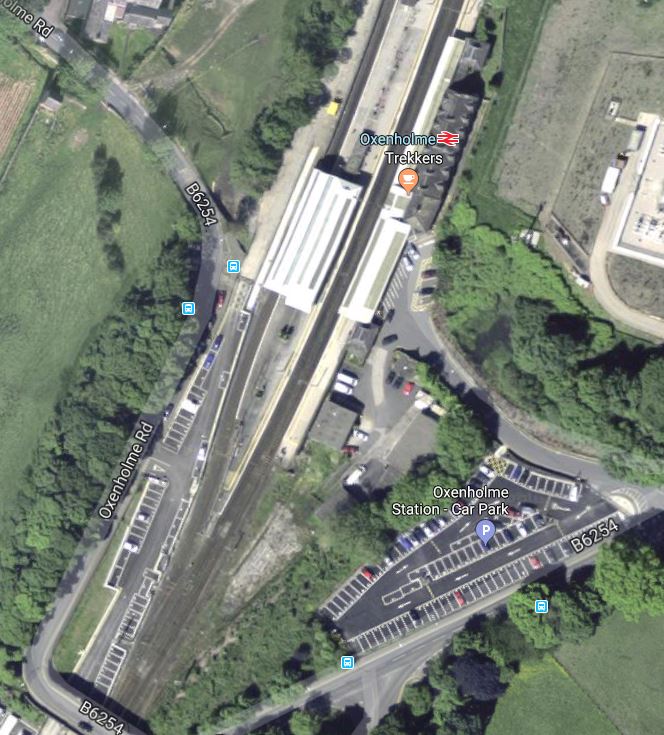
Note how Platform 3 is accessible from the South. North of the station, Platform 3 only leads to the Windermere Branch Line.
Bi-Mode Trains
The short length of additional electrification would be ideal for a bi-mode train, like the Class 769 train, which will be working the line in the near future.
Going towards Windermere, the train would arrive in Platform 3 having used electrical power at speeds of up to 100 mph from Manchester Airport. The pantograph would be lowered and the train would move on to Windermere using diesel power.
Coming from Windermere, the train would change from diesel to electric power in Platform 3.
It is a very conservative method of changing power source, to do it in a station, as if anything goes wrong, the passengers are only stranded in a station, rather than in the middle of nowhere.
In their previous incarnation as dual-voltage Class 319 trains, the voltage changeover was always done in Farringdon station.
Battery Trains
The Windermere Branch Line is ten miles long, so out and back from Oxhenholme should be well within range of a battery electric multiple unit, if not now, in a couple of years time.
A battery electric multiple unit, perhaps developed from Bombardier’s Class 379-based BEMU demonstrator, would be ideal for the Windermere to Manchester Airport service.
- The Class 379 trains were built in 2010-2011, for the Stansted Airport service.
- They will be released by Greater Anglia in 2019.
- They are 100 mph trains.
And then there’s the Class 230 train!
These trains would do a good job running an hourly shuttle between Oxenholme and Windermere, but they could be unsuitable for long-term use.
- The capacity would be too low.
- They are too slow to run on the West Coast Main Line.
- Running a service between Windermere and Manchester Airport might be too far.
But undoubtedly, a well-designed battery train would be able to work the Windermere Branch Line.
- Services between Windermere and Manchester Airport would charge batteries on the electrified lines.
- Batteries could be topped up as required in Oxenholm station.
- There would be no need to electrify the Windermere Branch Line.
Wordsworth would have written a poem about battery trains gliding quietly through the Lake District.
Conclusion
Network Rail have future-proofed the electrification at Oxenholm station in a very professional way.
The Third Track Between Northumberland Park And Lea Bridge Stations – 12th June 2018
The third track between Northumberland Park and Lea Bridge stations is substantially complete, as these pictures show.
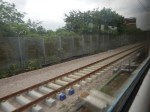
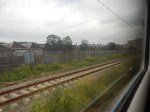
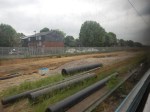
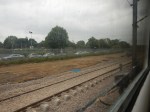
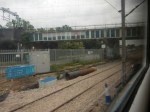
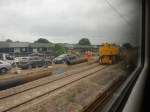
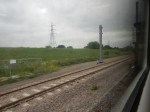
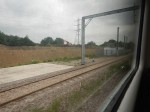
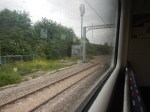
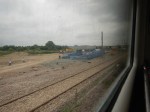
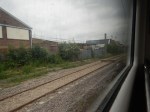
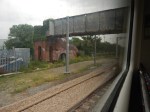
Now that the track is laid, it becomes apparent, that with a bit of a squeeze, a fourth track could be laid.
Electrification Progress
Progress also seems to be being made with the overhead gantries.
Yet again, there seems to be better performance in electrification, where it is carried out on a new or totally rebuilt line.
This may be only a single track, but it is all new, with no buried Victorian unknowns.
Raising The Bridges
Steel footbridges, that are so numerous in South Wales, are notable by their rarity and where they do exist, they were raised or built to a safe height, when the West Anglia Main Line was electrified in 1969.
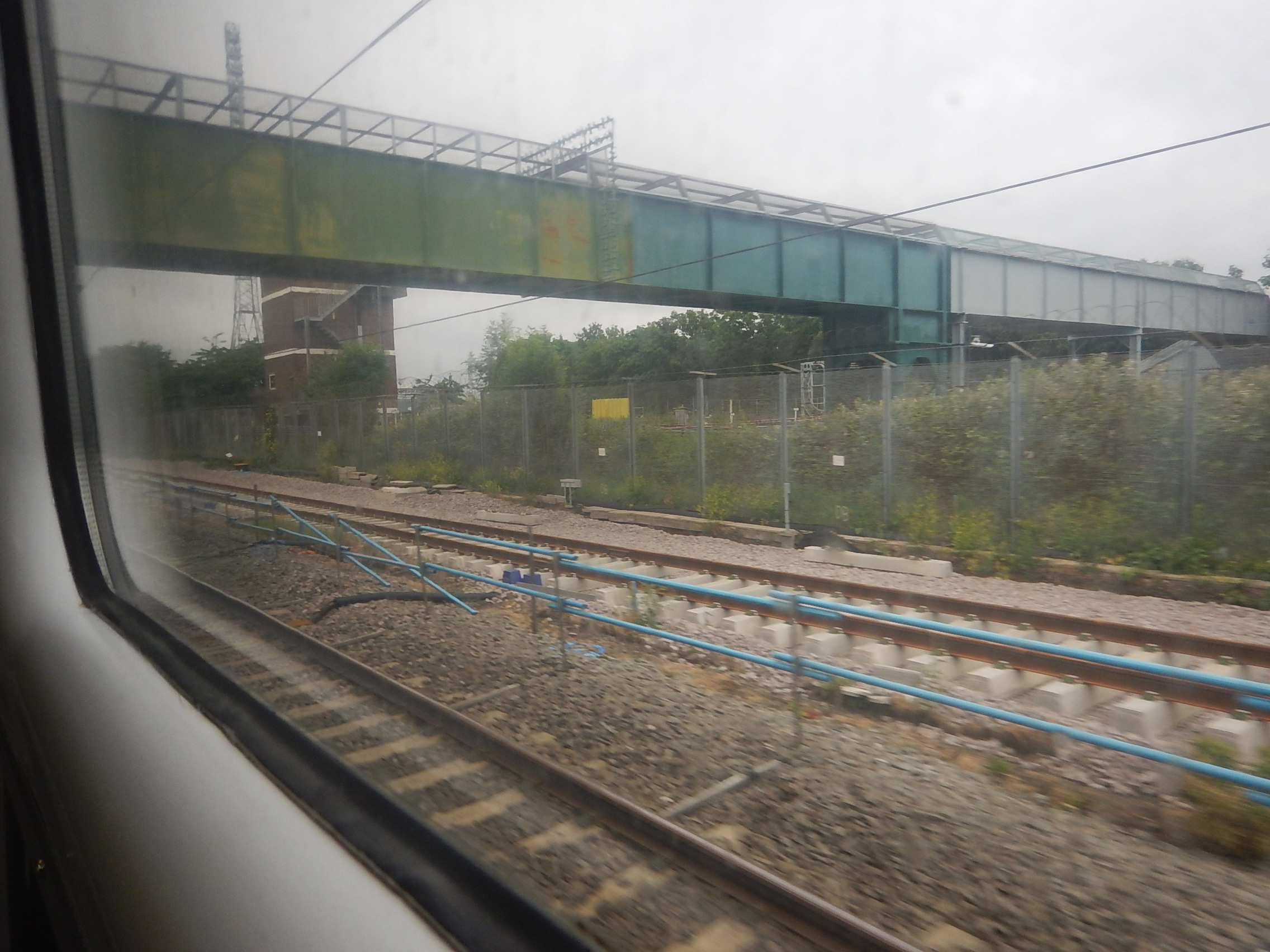
This bridge spans both the West Anglia Main Line and the Victoria Line‘s Northumberland Park Depot.
I walked across it in March 2017 and there are some pictures in From Tottenham Hale To Northumberland Park.
The only bridge that could be a problem, is the road bridge at Tottenham Hale station.
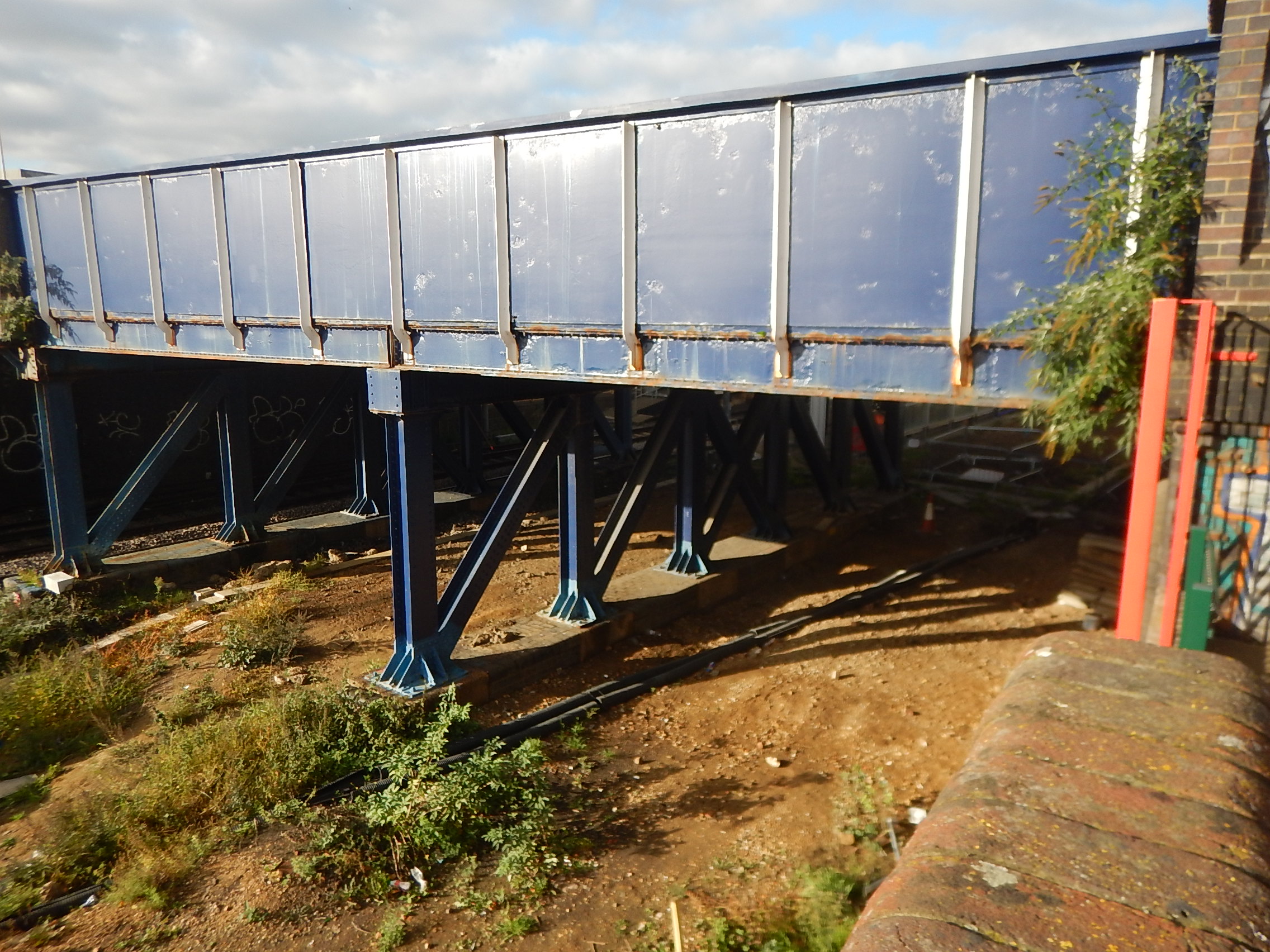
It might be possible to squeeze one electrified track underneath.
I suspect methods that will be used on the South Wales Metro, that I wrote about in How Can Discontinuous Electrification Be Handled?, could be used to electrify this section.
At some point, this bridge looks like it will have to be rebuilt.
Caerphilly Station
Caerphilly station is an important one on the South Wales Metro.
The current service is a four trains per hour (tph) service to Cardiff Queen Street and Cardiff Central stations. Some trains travel through to Penarth station
In 2023, the service will be upgraded.
- Two tph between Barry Island and Rhymney stations via Cardiff Central.
- Two tph between Bridgend and Rhymney stations via Cardiff Central and Rhoose Airport
- Two tph between Penarth and Caerphilly stations via Cardiff Central.
In 2023, the service will be three minutes quicker to and from Cardiff.
In addition, note the following about Caerphilly station.
- The station is on the Rhymney Line, which will be worked by Tri-Mode Stadler Flirts.
- The station lies just to the North of the Caerphilly Tunnel, which is not being electrified and trains are expected to transit using battery power.
- The station has a bay platform.
- The station appears to be a hub for buses.
This Google Map shows the station.
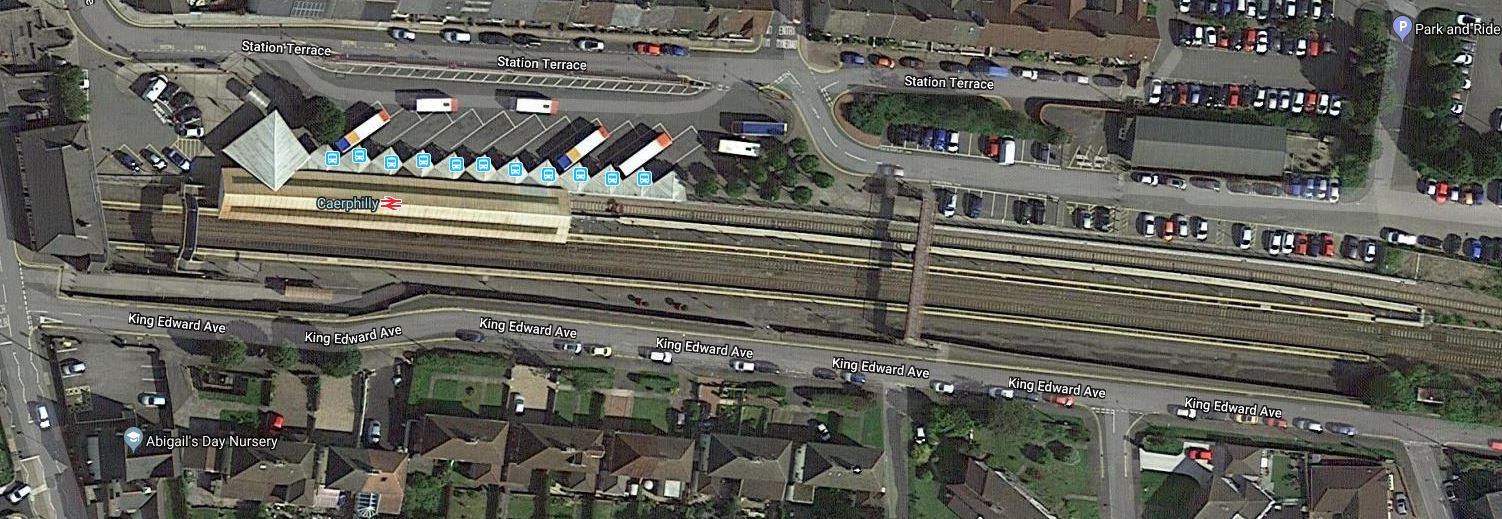
Note.
- The long bay platform on the North side of the station. It may be long enough to accommodate two of the Tri-Mode Stradler Flirts, which are 65/80 metres long. This means that the bay platform could be very valuable for service recovery.
- The station serves as a Park-and-Ride.
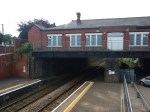
- Three structures cross the track, which from the left are the old station buildings, the station footbridge and a footbridge independent from the station.
- Looking at the track layout on the Eastern approach to the station, the cross-overs are within fifty metres of the platform end.
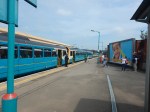
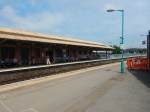
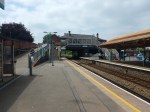
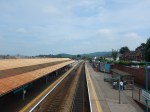
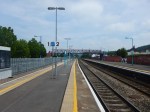
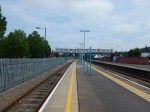
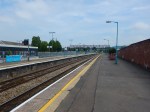
These pictures show the station.
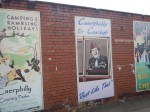
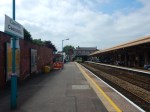
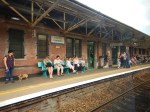
These are my thoughts on various issues.
Electrification Under The Bridges And The Old Buildings
I think there would be serious issues with standards for electrification at this station.
The three structures will have to be handled in the way I described in How Can Discontinuous Electrification Be Handled?
The Old Station Building
The old station building is integral with a road bridge and would be a costly and very disruptive operation to replace.
So if the structure will safely last a hundred years or so and the wires can be squeezed underneath using discontinuous methods, everybody wins.
The Easternmost Footbridge
The Easternmost bridge at the far end of the platforms looks to be a fairly recent structure and is independent of the station, as it just gives pedestrians a route across the railway. It might even have been built, when the bay platform was built a few years ago.
The Station Footbridge
So that leaves the elderly footbridge, which probably dates from 1871, when the station was moved to its present position.
It is the main way that passengers cross the line and given that Caerphilly station has nearly a million passengers a year, it would be classed by disabled activists as a disgrace.
A few stations up the line, lifts were added to the footbridge at Ystrad Mynach station, in conjunction with other works. Wikipedia says this.
In 2014, the station underwent a £1.6 million refurbishment with new ticket machines, waiting areas and ticket office, with disabled toilet being installed in addition to major work carried out on the footbridge with lifts being installed to improve accessibility.
Surely some of the money saved on electrification could be spent on improving access?
Electrification Between The Structures
25 KVAC wires have to be several metres away from any staff and passengers.
The Northbound Platform 3 is wide and if the overhead wire can be suspended high enough, I suspect that the latest regulations can be met.
The Southbound Platform 2 is narrower and the platform has a low roof, which might mean electrification is trickier.
But if as I suspect, battery power and gravity will be used to power the trains on the downhill track, then there could be a case for leaving the downhill track without wires.
That could save half the costs on some sections of the route.
Electrification Of The Crossover
On a railway with full electrification all crossovers must be electrified..
But on the Rhymney Line, all the trains will be Swiss all-purpose trains, that can work on all power sources, probably including cuckoo-clock motors.
So imagine a Tri-Mode Stadler Flirt arriving from Penarth, which will be turning back in the bay platform at Caerphilly.
- It would use the electrification between the unelectrified Caerphilly Tunnel to just before the crossover to come up the hill and probably add some charge to the batteries, that have been depleted in the run through the mile-long tunnel.
- \\\the train would probably rate at a signal just before the crossover, until told to proceed by the signalling system.
- The pantograph will be dropped and the train switched to battery or diesel power.
- When giving the green by the signal, the train would move into the bay platform.
All done efficiently and safely without any electrification, which would not be installed on the crossover or in the bay platform.
Train Failure In The Caerphilly Tunnel
There will have to be a plan for handling train failures in the tunnel. I suspect that as Switzerland has lots of railways in the mountains, some with extensive tunnels, that the Swiss have pretty good methods for dealing with failures.
One Train Rescues Another
Trains are generally designed, so that a second train can rescue a failed train of the same class or even a similar type. This makes good sense, as a train operator generally has several trains of the same type and their Thunderbird locomotive may be working miles away.
I’m sure that the Tri-Mode Stadler Flirts will have this capability.
Rescuing A Train Going Downhill
If a train should fail in the Caerphilly tunnel on the downhill track, a second train would probably couple up and shepherd the train slowly down the hill to the depot at Canton.
Rescuing A Train Going Uphill
If a train should fail in the Caerphilly tunnel on the downhill track, a second train would probably couple up and push the stricken train into the bay platform at Caerphilly station.
Conclusion
The more I look at the South Wales Metro, it has been designed in an holistic manner with routes, tracks, electrification, stations and trains all designed to work together.
KeolisAmey’s Plans For The Rhymney Line
This document on the KeolisAmey web site details their plans for the new Wales and Borders Franchise.
The Rhymney Line has the following characteristics.
- It runs between Cardiff Queen Street and Rhymney stations.
- Most of the line is double-track, with a short length of single-track from Tir-Phil station.
- There is the Coryton branch line to Coryton station.
- From Cardiff to Bargoed station, there are four trains per hour (tph)
- North of Bargoed, an hourly service generally operates.
- \from Cardiff to Coryton station, there are two tph.
- Some services, run through Cardiff to Penarth or Barry Island stations.
- Services take sixty-one minutes between Rhymney and Cardiff.
- Services take eighteen minutes between Coryton and Cardiff.
What improvements will be made to the Rhymney Line?
New Trains
From 2019, cascaded Class 170 trains will run services on the line.
In 2023, these trains will replaced by new Tri-Mode Stadler Flirts.
Current plans, don’t envisage any of the Stadler Citylink Metro Vehicles working the line. But I don’t see any reason why they can’t, if say Transport for Wales wanted to run a service from Cardiff Bay to Coryton or any other station.
It could be that their batteries don’t have enough capacity for the Caerphilly Tunnel.
New Stations
The KeolisAmey document, states that a new station will be built at Crwys Road.
I’ve also read somewhere that there may be a station on the Coryton Line to serve a major new hospital.
Improved Services
In 2023, the following services will be in place.
- From Cardiff to Rhymney station, there will be four tph.
- From Cardiff to Coryton station, there will be two tph.
- Services will take forty-eight minutes between Rhymney and Cardiff.
- Services will take twenty minutes between Coryton and Cardiff.
The Coryton service is slower because of the proposed new station.
Electrification
The line will be electrified using 25 KVAC.
- There is a short tunnel at Bargoed station.
- There is a mile-long tunnel at Caerphilly.
- There were quite a few footbridges across the tracks.
- The margins on either side of the track seem adequate on much of the route.
It looks to me, that electrification of the Rhymney Line cshuld be possible, provided the design is good.
The Tri-Mode Stadler Flirts will have batteries, which will have these purposes.
- Provide traction power for the trains, where there is no electrification.
- Capture the energy generated by the traction motors under braking.
- Ensure that power is always available for the train’s control, driver and passenger systems.
On the Rhymney Line, battery power will also be used to provide traction power in the mile-long Caerphilly Tunnel.
I have been told that although the tunnel will not be electrified, there will be an overhead rail for the pantograph in the tunnel, which will not be electrified.
This means that the pantograph doesn’t have to be raised and lowered, as the train goes up and down the hill, as there is a continuous overhead rail and line for the pantograph to use all the way.
I believe that when the train is coming down the hill, that gravity and the onboard battery will give sufficient power to bring the train safely down the hill.
So is there any point in electrifying the downhill path?
- The two terminals on the line; Rhymney and Coryton stations, are single platform stations on single-track lines, which will surely be electrified.
- If necessary batteries could be topped up before on the single track sections, before joining the double-rack line to Cardiff.
- There is very little if any freight or engineering trains on the line. But these will be diesel-hauled.
- After the modernisation, all the passenger trains will be the new electric trains with batteries and/or diesel engines.
- Diesel trains and locomotives could continue to work the lines as required.
I don’t think there is any operational reason for the downhill path to be electrified.
It would reduce costs in both construction and maintenance.
How Can Discontinuous Electrification Be Handled?
On the proposed South Wales Metro, it is proposed to use discontinuous electrification to avoid rebuilding a lot of bridges and other structures.
This document on the KeolisAmey web site details their plans for the new Wales and Borders Franchise.
The document states this about the electrification.
Discontinuous overhead line electrification to 25 KVAC with permanently earthed sections around restricted structures, saving 55 interventions e.g. rebuilding bridges/no need for wire in Caerphilly tunnel.
So how are these interventions avoided?
The Karlsruhe Solution
On the Karlsruhe Stadbahn, similar Citylink vehicles to those proposed for Cardiff need to work on both the main line 15 KVAC used in Germany and the 750 VDC used by Karlsruhe trams.
To isolate the two voltages, a ceramic rod is placed in the catenary. The vehicle’s pantograph just rides across the voltage boundary and the vehicle’s electrical system uses whatever voltage is present.
Bridges On The South Wales Metro
These pictures show some of the types of bridges on the Cardiff Valleys Lines.

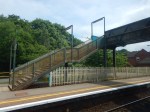
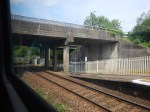


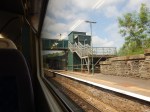
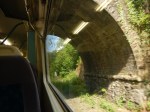
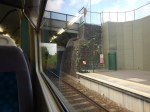



They are a real assortment.
- Some station footbridges from the Victorian era with nice castings and decoration, but no much-needed step-free access.
- Some quality brick and stone arch bridges.
- British Rail-era steel bridges, with no architectural merit
- Some modern road bridges in steel and concrete.
I also saw sizeable pipelines over the railway, which would need to be raised.
The greatest number were simple steel bridges like the one at Caerphilly station, designed to get pedestrians and cyclists, who were not using the railway, from one side of the tracks to the other.
I suspect the simplest way would be to erect two standard gantries at a safe distance of a few metres either side of the structure.
Between the two gantries would be an conductor, like this one. that I photographed in the Berlin Hauphtbahnhof.

It would be earthed, so that it offered no danger to life. There could even be extra supports under the bridge.
At each end, it would be connected to the 25 KVAC using a ceramic rod or other insulating device.
The vehicle’s pantograph would then ride from one side of the bridge to the other on its own track without being lowered.
Anything electrified at 25 KVAC would be kept at a very safe distance from the bridge.
In the earthed section, when the vehicle would be receiving no power, the vehicle would automatically switch to battery power. There would be no driver action required, except to monitor it was all working as it should.
As on the South Wales Metro, it appears that all vehicles using the lines proposed to be electrified will have their own onboard batteries, there shouldn’t be any problem.
In some ways, this discontinuous operation is a bit like using your laptop connected to the mains. When say the cleaner pulls out the plug to put in the vacuum cleaner, your laptop switches automatically to the battery.
The Caerphilly Tunnel
The Caerphilly tunnel is over a mile long. This picture shows the tunnel entrance.

It would probably be possible to electrify using a rail in the roof, but why bother if the trains running through the tunnel could go from one end to the other on their own battery power?
Trains could lower the pantograph before entry and then raise it again, when under the electrification at the other end.
This could be performed automatically using a GPS-based system.
I have also had an e-mail, which said this.
As I understand Caerphilly will have a natural bar in it but be much closer to the train roof than would be allowed with a live one.
Now there’s an idea!
A composite or earthed metal rail would be fixed to the roof of the tunnel, so that the pantograph could run smoothly from one electrified section on one side of the tunnel to the electrification on the other side, using battery power all the way.
Cost Savings
In Novel Solution Cuts Cardiff Bridge Wiring Cost, I talked about another method applied in South Wales to avoid rebuilding a bridge.
At this bridge, traditional electrification methods were used, but the need to demolish the bridge was avoided by using advanced insulation and protection measures.
This was my final statement.
Network Rail reckon that the solution will save about £10 million on this bridge alone, as it avoids the need for an expensive rebuild of the bridge.
The savings on this bridge will be higher as it is a large bridge over several tracks, but even saving a million on each bridge in the South Wales Metro is £55 million, which will probably be enough to build much of the infrastructure to extend to The Flourish, which would appear to not need expensive viaducts or electrification.
Should Downhill Tracks Be Left Without Electrification?
I think this may be possible on the South Wales Metro, as vehicles coming down the hills could use gravity and small amounts of battery power.
Regenerative braking would also be continuously charging the batteries.
It would certainly be simpler, than having to constantly swap between overhead and battery power on the descent, where the electrification was discontinuous.
As the lines are going to have a more intensive service, there will be additions of a second track in places to allow trains to pass.
Any electrification that could be removed from the project would be beneficial in terms of building and operational costs.
Other Routes
This post has used the South Wales Metro as an example, but I don’t see any reason, why the discontinous method and that used on the Cardiff Bridge can’t be applied to other bridges and structures over the lines on other routes in the country.
I suspect, that if they’d been used on the Gospel Oak to Barking Line, electric trains would have been running months ago!
Conclusion
Look what you get with thinking, when you have a Bonfire of the Boxes!
A Reconnaissance To Market Harborough
This morning, I took trains between St. Pancras and Market Harborough stations, and then came back with a pit-stop at Wellingborough station.
These were my observations.
Electrification Between Bedford And Kettering/Corby
The electrification seems to be progressing, as these pictures show.

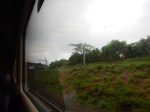
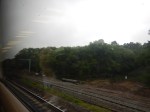
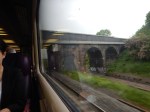
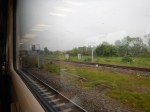

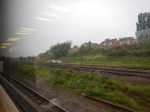

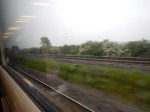
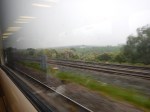




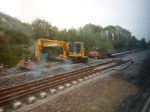

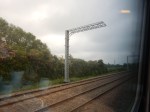
Note.
- Quite a few orange-capped piles have been installed.
- The gantries are going up.
- Extra tracks are being added.
One difference between this electrification project and others I have seen lately in the UK, is the aura of tidiness.
Electrifying From Glendon Junction To Market Harborough Station
One of the objectives of my reconnaissance was to see how much work needed to be done to the bridges between Glendon Junction and Market Harborough station, so that the overhead lines could be installed.
I counted nine bridges over the tracks and all seemed to offer sufficient clearance for freight trains and overhead wires.
It appeared that some bridges had been rebuilt and I suspect that Network Rail have completed their gauge clearance on this section of the Midland Main Line.
Line Speed From St. Pancras To Market Harborough
I chose to ride North in an InterCity 125, as having ridden in the cab of one of these iconic trains, I know a bit more about their capabilities.
What surprised me was how much of the journey was spent running at a speed in excess of 120 mph. There was one section where we were limited to about 90 mph, but I got the impression that Network Rail and their predecessors have created a high quality high speed line.
I would think it would be highly unlikely that by the time new bi-mode trains come into service in a few years time, that much of the route will be able to handle 125 mph running.
The train was almost at this speed between Glendon Junction and Market Harborough, so when the track through the station is straightened, it looks to me that journey times will be reduced.
Market Harborough Station
The station is a typical smaller main line station.
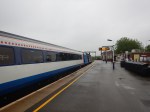

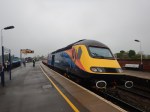
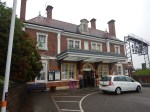


Note.
- Access to the London-bound platform is not step-free.
- Shelters are rather basic.
- The lines through the station will be straightened soon, to increase line speed.
Overall, it is a station with a good building, that should be improved.
Surely, if the tracks are being remodelled, then the foundations for electrification gantries should be installed.
Wellingborough Station
On the way back, I stopped off at Wellingborough station.
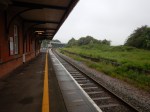
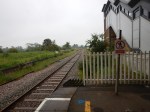
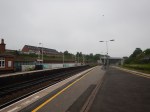
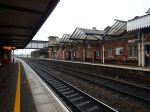

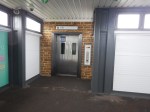
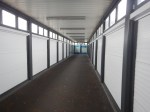
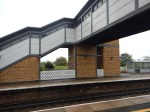
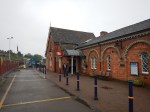
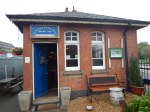
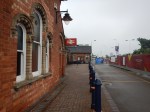
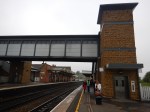
Note.
- Wellingborough station is being improved.
- All trains seem to stop at the two main platform 1 and 2.
- The bay platform 3 seems to have been rebuilt as a through platform to serve the new track being created through the station.
- There is rather a nice real ale and cider bar on the entrance side of the station.
- The station has a footbridge with lifts, which is better designed than many.
All of the improvements are to support the new housing being built around the station.
This Google Map shows the area around the station.
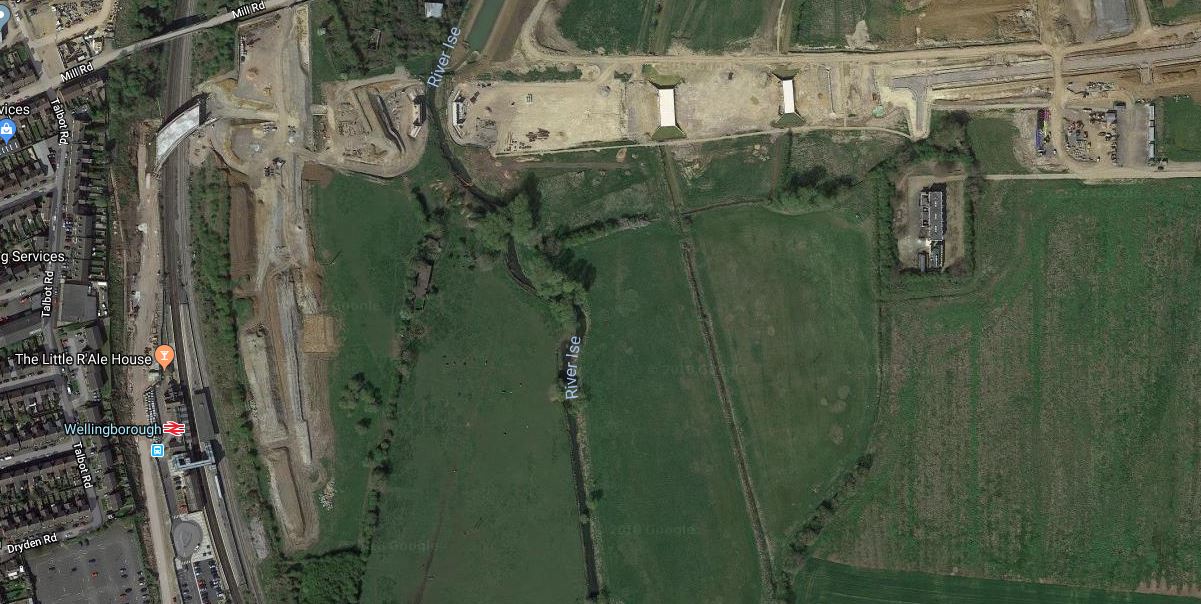
Note the new road crossing the railway to the North of the station.
It certainly looks like the upgraded station will be needed.
Views Of Drivers
I travelled back to London, with a group of drivers.
Two specific points emerged.
Electrification at Leicester could be difficult, as there are sewers under the track, which might mean the whole station and bridges would need to be substantially rebuilt.
South of Bedford, the Thameslink’s new Class 700 trains get in the way as they are too slow at 100 mph.
It is interesting to note the following.
- Class 387 trains working the East Coast Main Line and Great Western Main Line are 110 mph trains.
- Class 350 trains working the West Coast Main Line are 110 mph trains.
Are the Class 700 trains reducing the capcity of the Midland Main Line?
Novel Solution Cuts Cardiff Bridge Wiring Cost
The title of this post is the same as an article in the May 2018 Edition of Modern Railways.
This is the first paragraph.
Network Rail has applied an insulating coating to the underside of a bridge in Cardiff to protect against flashover from the future Overhead Line Equipment (OLE). It also intends to fit surge arresters at the bridge to prevent any sudden spikes in voltage overcoming the protection provided by the coating.
Network Rail reckon that the solution will save about £10million on this bridge alone, as it avoids the need for an expensive rebuild of the bridge.
Could wider applications of solutions like this, reduce the cost of electrification?
MML Wires Could Reach Market Harborough
The title of this post is the same as that of an article in the June 2018 Edition of Modern Railways.
It appears that Network Rail have a problem.
- Electrification of the Midland Main Line (MML) is to run as far as Kettering and Corby stations.
- The power feed is to be located at Braybrooke, which is just South of Market Harborough station.
So Network Rail are now looking for a twelve mile long extension lead.
A Network Rail spokesman, says they are looking at various options, including an underground cable or extending the Overhead Line Equipment.
Extending The Electrification To Market Harborough
There must be a scenario, where extending the electrification as far as Market Harborough, is a feasible and cost-effective engineering solution.
Consider, the MML between Market Harborough station and Glendon Junction, where the Corby Branch Line joins.
- The distance is less than twelve miles.
- There are no stations, which can be a pain to electrify.
- The track through Market Harborough station is being re-aligned, so the station should be easy to electrify.
- Glendon Junction is the only junction.
- The electrification will reach as far as Glendon Junction from St. Pancras.
- The route is is a double-track railway, which appears to be over fairly level terrain.
- There appears to be wide margins on either side of the railway.
- There are about half-a-dozen bridges over the railway, some of which could have been fairly recently built or rebuilt.
I doubt, it would be one of the most difficult of electrification projects.
I also suspect, that after their electrification fiascoes of the last few years, Network Rail might have learned enough to do this at an affordable cost.
For example, if the bridges are a problem, they might be able to use the technique I described in Novel Solution Cuts Cardiff Bridge Wiring Cost.
East Midlands Trains Services To And From London
If you look at the current long distance service of East Midlands Trains, there are the following four services between St. Pancras and Derby, Nottingham and Sheffield stations.
- Nottingham (stopping) – Stops at Luton Airport Parkway, Bedford, Wellingborough, Kettering, Market Harborough, Leicester, Loughborough and Beeston.
- Sheffield (semi-fast) – Stops at Leicester, Loughborough, East Midlands Parkway, Long Eaton, Derby and Chesterfield
- Nottingham (fast) – Stops at Market Harborough, Leicester and East Midlands Parkway
- Sheffield (fast) – Stops at Leicester, Derby and Chesterfield.
Note.
- Market Harborough, Leicester, Loughborough, East Midlands Psrkway, Derby, Nottingham, Chesterfield and Sheffield stations, all get at least two trains per hour (tph) to and from London.
- Include the Corby service and Bedford, Wellingborough and Kettering have two tph to and from London.
- All trains stop at Leicester station, which gives the city four tph to and from London.
- Market Harborough to Leicester is only sixteen miles.
Bi-Mode Trains
From 2021, it is expected that these services will be run by 125 mph bi-mode trains.
So how will electrification help these bi-mode trains?
Class 802 Trains
Suppose the services were to be run by a Class 802 train, which can do at least 125 mph using electric power.
An article on Christian Wolmar’s web site, is entitled Bombardier’s Survival Was The Right Kind Of Politics.
This is said.
The Hitachi bi-mode trains can only go 110 mph when using diesel.
The article was written a year ago, so this figure may be higher now!
So a Hitachi bi-mode will be able to go to the end of the electrification at either Glendon Junction or Market Harborough, as fast as the track allows and then at 110 mph on diesel.
Currently, services between St. Pancras and London take around seventy to eighty minutes.
What difference would the planned electrification to Glendon Junction make to this time?
Consider.
- Electrification to Glendon Junction or Market Harborough station could save more time, through faster running.
- Electrification to Market Harborough would mean only sixteen miles to Leicester would be on diesel.
- Electrification at Market Harborough station would cut time for those services stopping at the station.
- Track improvement could allow more 125 mph running using electric power.
- Modern in-cab digital signalling might allow sections of even faster running under electric power.
- Modern trains should save time at stations.
I’m certain that the right combination of improvements to track, stations and trains, will mean all services between St. Pancras and Leicester would be around an hour with Class 802 trains.
Bombardier’s Proposed 125 mph Aventra Bi-Mode
Bmbardier have announced a 125 mph bi-mode Aventra, which I wrote about in Bombardier Bi-Mode Aventra To Feature Battery Power.
I said this about the train.
- Development has already started.
- Battery power could be used for Last-Mile applications.
- The bi-mode would have a maximum speed of 125 mph under both electric and diesel power.
- Bombardier’s spokesman said that the ambience will be better, than other bi-modes.
This train with its faster speed on diesel would certainly achieve a time between St. Pancras and Leicester of under an hour.
I also think that this time will be achieved, whether or not, the wires are extended to Market Harborough.
Improving The Track
Many politicians, union leaders and environmentalists, see electrification as the main answer to better train services.
But before you can electrify a route, the track must be in a state, so that trains can run at a high speed, with long gentle curves and as few junctions as possible.
In the Wikipedia entry for Market Harborough station, there is a section called Future. This is said.
Market Harborough station is located on a large curve on the Midland Main Line, as a result of this line speeds through the station have always been relatively slow, at around 60 mph (100 km/h). The track layout is set to change significantly over the next couple of years as Network Rail engineers set about straightening the line, as part of their overall plan to increase overall line speeds.
How many other sections between Glendon Junction and Leicester could benefit from this type of improvement?
Should Market Harborough To Leicester Be Electrified?
As Market Harborough and Leicester stations are only about sixteen miles apart, surely it would be sensible to electrify this section, if Glendon Junction to Market Harborough is electrified?
I have flown my helicopter from Market Harborough to Leicester and the whole route has the following characteristics.
- Double-track
- Fairly level
- Wide margins.
- Market Harborough is the only station.
- There are junctions South of Leicester.
It would be fairly easy to electrify, but for one thing.
Although, there are only half-a-dozen bridges South of Market Harborough, it would appear there to be up to twenty bridges on the Northern section, some of which look like they would need serious work to get the wires underneath.
I have a feeling that electrifying between Market Harborough and Leicester would cause massive disruption to road traffic, if some bridges needed to be demolished and rebuilt.
A bi-mode travelling at upwards of 110 mph would probably achieve the same times on this section, without the disruption of installing the electrification.
Could Discontinuous Electrification Be Used Between Market Harborough And Leicester?
This is an additional section, that has been added after the announcement of March 5th 2019, that stated that the Midland Main Line would be electrified as far as Market Harborough.
Discontinuous electrification is to be used on the South Wales Metro and the difficult section, South of Leicester, which has lots of road bridges, might be a section, where the technique could be used to advantage.
Conclusion
I think that electrification between Glendon Junction and Market Harborough station will happen.
- The section wouldn’t be the most difficult to electrify.
- As there needs to be an electrical connection between Market Harborough and Glendon Junction, electrification of that section of the railway, might be a cost-effective solution to provide the connection.
- Electrification of Market Harborough station would cut the time to make a call at the station.
- It would offer enough time reduction on the Midland Main Line, that to give Leicester a four tph service to and from St. Pancras, with a journey time of under an hour, using existing train designs.
However, electrifying from Market Harborough to Leicester would be more difficult and I can’t see it offering any substantial benefits over a modern bi-mode train.
Catenary Masts Erected On Alloa Branch
The title of this post is the same as that of an article in Issue 851 of Rail Magazine.
Alloa is one of the many Scottish towns and cities, that I only know through the results of Alloa Athletic FC, at around 17:00 on a Saturday afternoon.
Alloa station has a chequered history with growth through the Victorian era and total closure in October 1968.
The station was demolished to make way for a leisure centre.
But then in 2008, the line to Stirling station was reopened and a new station was built.
Wikipedia says this about the reopening.
Passenger use of the new railway station has greatly exceeded forecasts and since re-opening the service has been improved by increasing evening and Sunday frequencies from two-hourly to hourly and by adding the peak hour service to Edinburgh in 2009. In its first year the station was used by 400,000 passengers, against a forecast of 155,000.
Now the branch to Alloa is getting the ultimate upgrade – It is being electrified.
This could provide a lot of useful data on the financial returns of electrification.
Use Of Battery Trains
When I first saw a map of this line which clings to the North shore of the Forth of Firth, I was surprised that Strling to Alloa should be electrified.
It is only eight miles and if it is a level coastal railway, it could surely be handled by battery-powered trains.
So why electrify now, rather than wait for Hitachi to bring their technology to the UK and save costs?
But digging deeper, there are two large industrial sites further to the East.
- The closed Longgannet power station, which sits on a massive site.
- The large Rosyth Docks, which seems to have plans to create businesses, employment and housing.
The railway from Alloa extends to Dunfermline Town station on the Fife Circle Line and could play a part in the development of both sites.
An electrified line to Alloa, leaves all options open.
The Wikipedia entry for the Stirling–Alloa–Kincardine Rail Link says more.
This is the first paragraph.
The Stirling–Alloa–Kincardine rail link was a project to re-open 21 kilometres (13 mi) of railway line between Stirling, Alloa and Kincardine in Scotland. The route opened to rail traffic in March 2008.
The rail link effectively had two purposes.
- To allow passenger trains to run as far as Alloa station.
- To allow coal trains to run to Longannet power station, without using the Forth Bridge.
The Wikipedia entry says this under Future Expansion.
The retention of the coastal route offers the possibility of providing passenger services to Dunfermline via Clackmannan, Kincardine, Culross, Valleyfield and Cairneyhill. The former direct main line from Alloa to Dunfermline (which was not proposed for closure by Dr. Beeching) is now partly obstructed by developments on the site of the old Dunfermline Upper station. There would appear to be no prospect of access to the existing Dunfermline Town (formerly Dunfermline Lower) station by this route, unless a new stretch of line were built west of Dunfermline. However, the coastal Kincardine line does give direct access to Dunfermline Town.
There has been some discussion of the possibility of providing a service to Rosyth Ferry Terminal.
The Scottish Government have a lot of options to provide the best rail system for the current rail travellers and future developments in the area.
Discontinuous Electrification For Valley Lines?
The title of this post, is the same as that of an article in the May 2018 Edition of Modern Railways.
The Valley Lines in question are the Cardiff Valley Lines, that fan out from Cardiff Central and Cardiff Queen Street stations in various directions.
- Some of the lines into the valleys are quite steep.
- The lines in the Cardiff area seem to be typical coastal lines and fairly flat.
- The lines are a mixture of single and double track.
- There are various plans to extend some of the branches.
According to the article, it would appear that the current diesel system would be replaced with a system, with these characteristics.
- Light rail vehicles
- Discontinuous electrification
- Use of stored energy.
- Street running is expected to be in the specification for the vehicles to be used, to allow extension in the Cardiff Bay area and perhaps other places.
The proposal would save costs against full electrification and heavy rail.
My observations follow.
Batteries
Batteries will be an integral part of the design of the new rail vehicles.
Powering The Trains
The article states that battery power will be used to power the trains on sections that are difficult to electrify, like the mile-long Caerphilly Tunnel.
Battery power could also be used on level and downhill sections of track up to a few miles, but I suspect on steep uphill sections, electrification will be needed.
Handling Regenerative Braking
I believe that regenerative braking will be employed on the rail vehicles and the energy generated will be stored in the batteries.
The main advantage of this is that it simplifies the power supply to the electrification, as it only has to handle power going to the train.
This less complex electrical system, saves construction costs.
Recovering The Train’s Potential Energy
A train travelling from Cardiff to one of the terminal stations at the heads of the valleys, will need to acquire an amount of potential energy, based on the train’s mass and the height involved. This will be provided by the train’s traction system powered by the electrification and the energy in the batteries.
Coming down the hill, the regenerative braking will control the speed of the train and store any energy generated in the batteries.
This will save on the cost of energy to operate the system.
Charging The Batteries
The batteries will be charged from both the overhead electrification and the regenerative braking.
Extensive simulations of the route on computers would be able to calculate the following, for a wide range of scenarios.
- The size of the batteries.
- The power of the traction motors.
- Where the electrification needs to be installed.
- The maximum power output of the electrification system.
These calculations could also lead to an energy-saving operating philosophy, that could be programmed into the train’s computer system.
I suspect the worst case scenario, would be a train full of the heaviest Welshmen after an important rugby match at the Millennium Stadium.
Electrification
My thoughts on how various sections of track would be electrified follow.
Tracks With A Significant Uphill Gradient
These would need to be electrified, as I doubt battery power on the steepest gradients, would be enough to take a fully-loaded train to the top of the hill.
Electrification would be lighter-weight 750 VDC overhead wires.
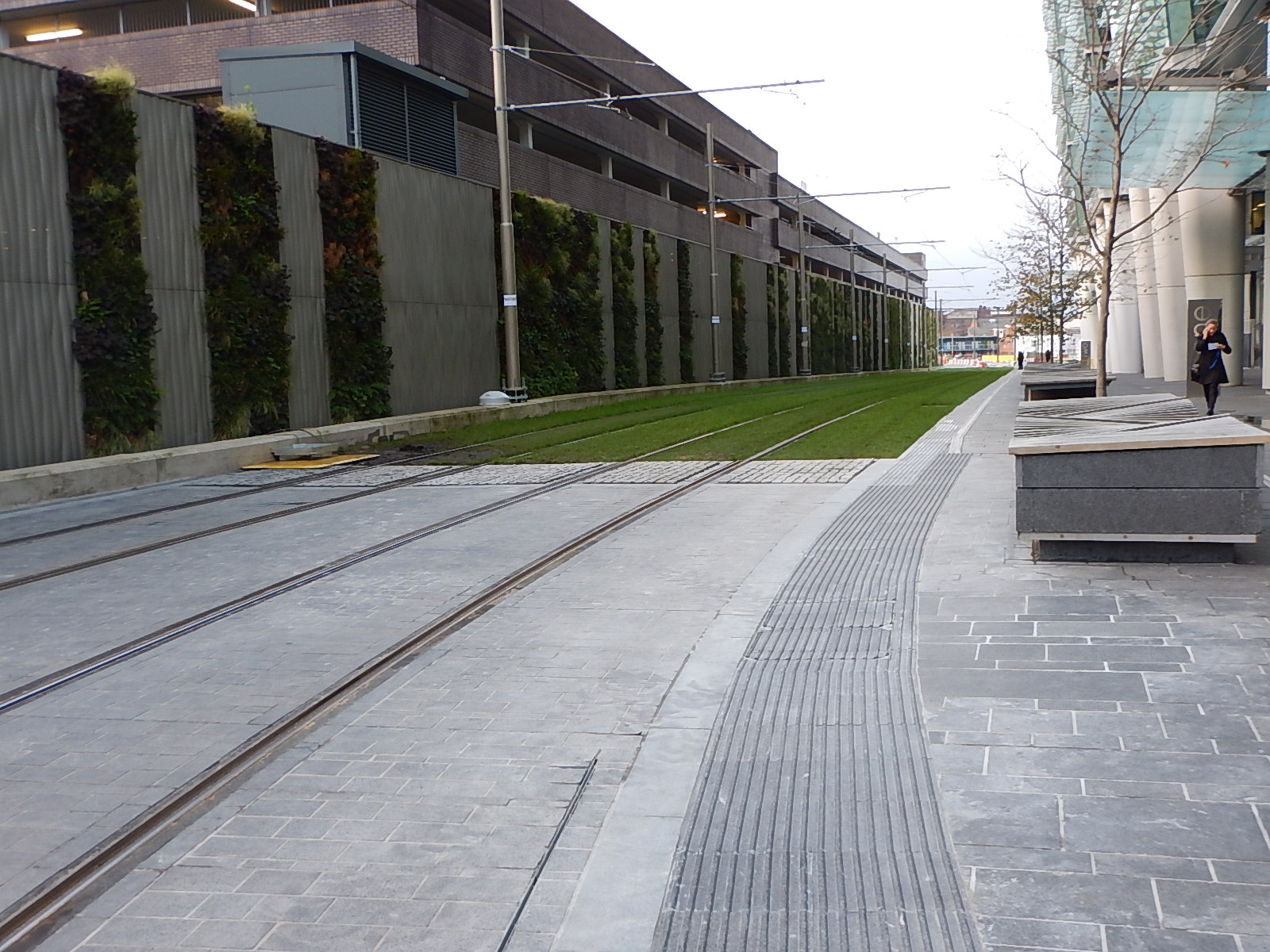
The picture shows some of the overhead wires in Birmingham, that are used by the Midland Metro’s Urbos 3 trams.
Tracks With A Downhill Gradient
These would not need to be electrified, as Newton’s friend gravity would do most of the work.
However, as batteries will be fitted, these can have three important functions on downhill stretches of track.
- Give the tram a nudge if needed.
- Restart the train after a stop at a station.
- Store any energy created by regenerative braking.
Note that we could have the unusual situation on a double-track section of line, where the uphill track was electrified and the downhill track was left without electrification.
Level Tracks
These would not need to be electrified, as battery power would be used to propel the train.
Selected Stations
Some stations could need to be electrified to ensure that the service was reliable. These might include terminal stations or those with tricky gradients on either side.
Tracks With 25 KVAC Electrification
Some of the tracks used by the trains on the Cardiff Valley Lines should be electrified with 25 KVAC, by the end of December 2018.
Class 399 tram-trains, that are used in Sheffield can use either 750 VDC and 25 KVAC overhead electrification.
it would probably be a good idea, if the new vehicles on the Cardiff Valley Lines could also use both voltages.
Automatic Pantographs
The pantographs on the vehicles would be raised and lowered automatically to access the electrification. This could even be GPS-controlled and able to be carried out at line speed.
Tram-Trains?
I very much feel, that tram-trains could be used to advantage.
- Some of the Valley Lines are also used by freight trains, so couldn’t be converted to trams-only.
- Tram-trains like the Class 399 tram-train, under test in Sheffield can work on both 750 VDC and 25 KVAC overhead wires.
- Tram-trains can use conventional railway signalling.
- Tram-trains could work on the South Wales Main Line to Newport.
- Modern tram-trains like the Class 399 tram-train have performance, that is about the same as a Class 142 train, which is a Pacer, that works the Cardiff Valley Lines, in large numbers.
- Tram-trains could run on the streets as trams, as they do in Sheffield.
Several manufacturers make tram-trains, which I believe could be suitablefor the Cardiff Valley Lines.
Stadler’s Class 399 Tram-Trains
Nothing is said about the vehicles, that would be used, but I think they need the following characteristics.
- Ability to climb the steepest section of the routes using 750 VDC overhead electrification.
- Ability to store energy.
- Regenerative braking to charge the batteries coming down the hills into Cardiff.
- A similar capacity to a Class 150 train, which is around 150 seats.
- It would be a bonus if they could use 25 KVAC overhead electrification, which will be available on part of some of the routes.
- Ability to raise and lower the pantograph quickly and automatically.
- Ability to run on the National Rail network.
- Ability to run on the street.
This specification is virtually the same as a Class 399 tram-train with the following additions.
- More seats and possibly an extra car.
- Batteries.
Class 399 tram-trains are a UK version of the Stadler Citylink tram-train. The German version is used in Karlsruhe to climb into the hills surrounding the city, on routes that are as challenging as the Cardiff Valley Lines.
So I have no worries about a version of the Class 399 train handling the Cardiff Valley Lines.
I certainly believe after my experience in Karlsruhe, and looking at other Citylink variants, that Stadler can come up with a tram-train for Cardiff based on the Class 399 tram-train.
And Then There’s CAF!
CAF have provided the Urbos 3 trams for Edinburgh Trams and the Midland Metro.
These are modern trams, that will be doing the following in a few years in the Midlands.
- Running on stored energy in the centre of Birmingham and to Wolverhampton station.
- Sharing the South Staffordshire Line with heavy freight on a new route to Merry Hill Shopping Centre.
This sounds like a tram-train with stored energy.
Wikipedia also lists a version of the Urbos family, called an Urbos TT, which is described like this.
The Urbos TT series is built with tram-train technology, connecting existing heavy rail infrastructure directly to urban tramway systems.
This document on the CAF web site, gives more details of Urbos variants, including the Urbos TT.
Looking at the modular nature of the design, you could have a custom-built tram-train tailored to the rail network.
But surely, the major factor with CAF, is that they have recently opened a factory at Newport.
If CAF get the order for the Cardiff Valley Lines, they could do a substantial part of the train building in a factory connected directly to the lines.
Converting The Valley Lines
I think that there are advantages and cost savings to be had, by good design in this area.
Could The Rail Vehicles Be Designed To Fit The Existing Platforms?
The first thing to do would be to design, build and fully test the rail vehicles.
Could the tram-trains be built, so that they fitted all the existing platforms?
- Class 150 trains are 2.82 metres wide.
- Urbos 3 trams on the Midland Metro are 2.65 wide.
If the tram-trains could run without platform modifications, this would be a big cost saving and still allow diesel units to use the lines, at the same time.
Testing The Trains
If the tram-trains were being given a 25 KVAC capability, they could even be tested on the quadruple-track the South Wales Main Line after the line is electrified through Newport.
Electrifying The Lines
It could be that the only sections of the valley lines that will need electrification, are the steep lines into the hills, as all other sections could use stored power or the 25 KVAC, where it exists.
- It would probably be possible to put up the simpler 750 VDC overhead lines during weekend and perhaps longer possessions.
- The electrification could be designed so that it doesn’t interfere with existing services.
- The lines would be converted one at a time.
- ,Note that tram-trains could share track and platform with the current diesel trains working the lines.
If CAF were to get the order surely the Ebbw Valley Line, which could be connected easily to the factory would be the first to be converted.
Conclusion
Obviously, the devil will be in the detail, but it does look like a viable plan will emerge.
I think that if CAF get the order, that they could be big winners.
The Cardiff Valley Lines could demonstrate the following.
- Running on main lines with 25 KVAC electrification.
- Running on 750 VDC electrification.
- Running on batteries.
- Running on lines with steep hills.
- Street running.
- Sharing tracks with freight trains and other passenger services.
- The tram-trains could also connect to Cardiff Airport.
It is a world-class demonstration and test track for innovative tram-trains, designed to cope with challenging rail networks.
With a factory close by at Newport, the selling of the tram-trains to other operators would be a salesman’s dream.
I think there’s more to CAF coming to Newport, than was apparent, when the deal for the factory was signed.
 The Anonymous Widower