The Paddington Fiasco
Everybody is looking for a scapegoat for the problems at Paddington station, that is reported in this article on the BBC, which is entitled Paddington Station: Passengers Face Major Disruption.
Tony Miles of Modern Railways was on BBC Breakfast this morning and he explained what happened.
The Class 802 train was accumulating the 2,000 miles it needs before it can be accepted by Great Western Railway.
The trains are designed to be able to change from diesel to electric power and vice-versa at line speed.
This train was raising the pantograph to access the pverhead wires on a section of British Rail-era overhead wires at Ealing.
The pantograph is thought to have bounced and the overhead wires have broken and become entangled in the pantograph.
Modern electrification with its heavyweight gantries has each line wired separately, but according to Tony Miles, the British Rail lightweight system, means if one comes down, they all fail.
I should add, that several times in the last ten years on the East Coast Main and Great Eastern Main Lines, I have been on trains that have been stranded by failed overhead wires.
In addition, over the last few years, it has been a nightmare travelling to Ipswich, as Network Rail have been renewing the overhead wires to a modern standard.
There are still many miles of this sub-standard British Rail-era overhead wiring all over the country.
It should all be replaced with new modern systems.
There is a problem though with the new modern electrification systems. They are ugly and many believe they are totally out-of-place in the countryside.
There is also the problem caused by the disruption, when the old systems are removed.
Conclusion
This sub-standard overhead electrification should have been removed years ago.
Prototype Overhead Line Structure Revealed
The title of this post is the same as that of this article on Global Rail News.
This is the first paragraph.
A prototype overhead line structure (OLS) designed to be quick to install, easy to maintain and more attractive to look at has been unveiled by its creators, Mott MacDonald and Moxon Architects.
Searching the Internet, I found this press release about the structure, which is entitled Moxon and Mott MacDonald unveil prototype for innovative Integrated Overhead Line Structure.
This picture is from the press release.
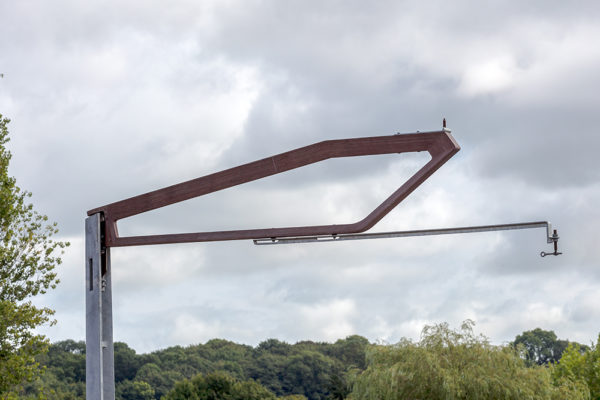
Various advantages are claimed.
- Reduced visual impact.
- Complete interoperability with existing overhead systems.
- Reduced number of components.
- Ease of installation.
- No additional engineer training.
- Reduced maintenance costs.
I like the concept, but is it too radical for Network Rail to give its blessing?
Perhaps the most radical feature is the use of laminated wood in the structure.
Conclusion
This is a very good design, but I doubt we’ll see it installed on UK railways.
Colne To Skipton Rail Line Re-Opening Campaign Moves Forwards
The title of this post, is the same as that of this article in the Lancashire Telegraph.
This is the first paragraph.
A meeting at the House of Commons hosted by Pendle MP Andrew Stephenson and his Labour counterpart for Keighley John Grogan convened senior officials from the Department of Transport (DfT), Transport for the North (TfN), Network Rail and commercial companies with an interest in East-West rail links.
Like many at the meeting, I feel very strongly that this link should be built.
There are obviously local reasons, like better passenger services between the conurbations of Blackburn/Accrington/Burnley and Leeds/Bradford, but there is something far more important.
Extra Train Paths Across The Pennines
Currently, trains take about twenty minutes between Rose Grove and Colne stations, over the mainly single track line.
I think it would be possible for experts to design a railway between Rose grove and Skipton stations via Colne, that would offer paths for three trains per hour (tph) across the Pennines in both directions. It might even be possible to accommodate four tph, using a combination of passing loops and digital signalling.
It should be noted that currently, the traffic through Accrington on the Calder Valley Line, which is to the West of Rose Grove station is around three tph in both directions. As the route is double-track, with modern trains and modern signalling, surely a higher frequency can be achieved.
These extra paths would be invaluable during the upgrading of the main TransPennine routes from Leeds to Manchester via Huddersfield.
I have some questions about the link.
Should The Link Be Double-Track?
Given that it will probably be difficult to put a double track on the Bank Top Viaduct over Burnley, I feel that to get the needed extra capacity, where it is possible to squeeze in a double-track, this should be done.
Should The Link Be Electrified?
Operationally, this would probably be preferable, but there are reasons why it could be difficult.
- There are a lot of quality stone bridges over all routes in the area.
- The heritage lobby might object to gantries marching across the Pennines.
- Network Rail’s abysmal performance on installing electrification.
It would also be sensible to electrify between Preston and Rose Grove stations, which would add substantially to the cost.
Passenger services wouldn’t be too much of a problem, as I am fairly certain that hydrogen-powered or battery trains could be used. The four-car Class 321 Hydrogen would probably by ideal.
Freight trains are probably better under electric power, rather than the awful Class 66 locomotives. Especially, if freight trains were run in the middle of the night.
I think the budget will decide on electrification.
Conclusion
I feel it is imperative, that to reduce the chaos of the TransPennine upgrade, work should start on the creation of the Skipton to Colne Link immediately.
Is This The Solution To A Charging Station For Battery Trains?
This page on the Opbrid web site has a main title of Automatic High Power Charging for Buses, Trucks, and Trains.
It also has a subtitle of Furrer+Frey Opbrid Charging Stations for Battery Trains.
Furrer + Frey are a Swiss railway engineering company, that design and build railway electrification systems.
The web page gives this introduction.
Since 2009, Furrer+Frey has developed a multi-modal ultra high power charging station for battery-powered vehicles that is already radically changing the way traction power is delivered to road and rail vehicles. In particular, the Furrer+Frey Railbaar system targets existing low traffic diesel traction routes as well as new light rail and tram projects. The technology applies to battery powered trams and trains (Railbaar), buses (Busbaar) and trucks (Trukbaar) with a design rooted in proven Swiss electric rail technology already successfully deployed by Furrer+Frey across Europe and the world.
The web page has an interesting image for a Swiss company.
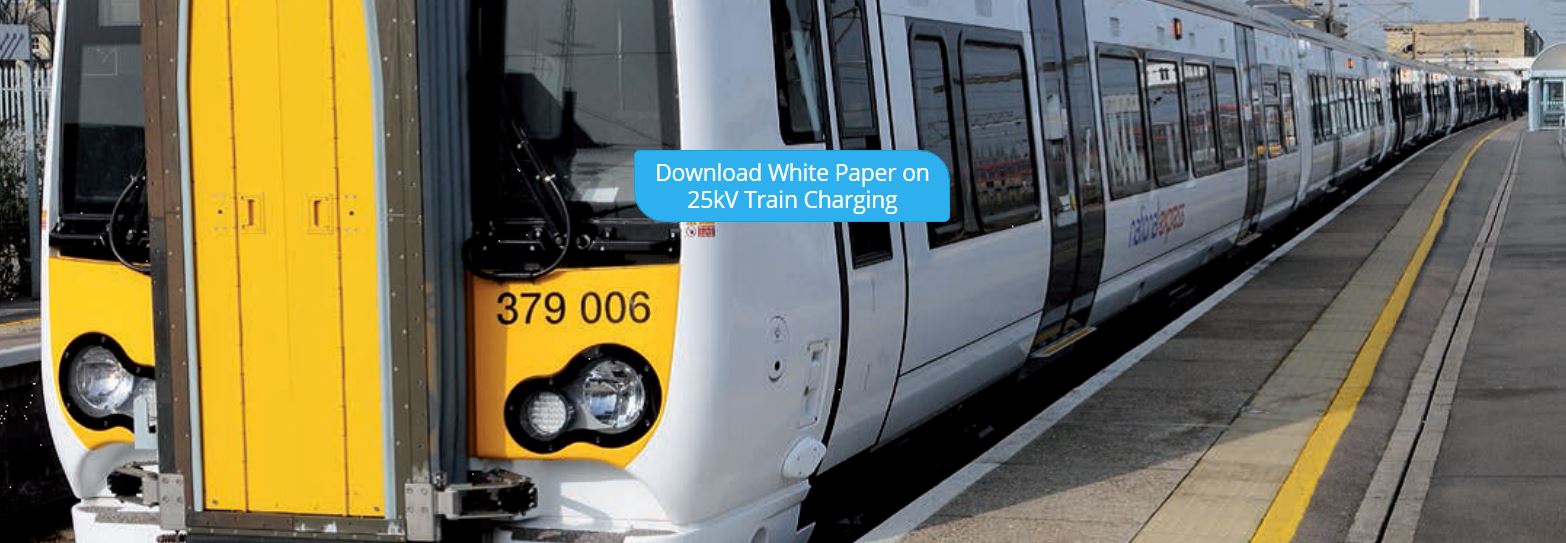
Shown is a Class 379 train, at a station, which I’m pretty sure is Cambridge.
Liverpool Street to Cambridge is a fully-electrified route, so why would a charging station be needed on this service?
I can’t think of a reason.
So I suspect, it’s just that to illustrate the web page, they needed to use a train that had the capability of running under battery power, which the Class 379 did in the BEMU trial of 2015.
It could also be that Furrer + Frey are working with Bombardier and it’s a Bombardier library picture.
But then Furrer + Frey probably work with all the major train manufacturers.
And as Bombardier have just released a new battery train, that I wrote about in Bombardier Introduces Talent 3 Battery-Operated Train, it would be logical that the two companies are working together, as battery trains will surely need charging in stations to develop longer routes.
Note the blue box in the middle of the picture. It says.
Download White Paper On 25 Kv Train Charging
If you download the white paper, you will find a very comprehensive and detailed description of how battery trains could be charged in stations. This is the introductory paragraph.
Battery-powered trains are rapidly becoming the vehicle of choice for the replacement of diesel
trains on non-electrified rail lines. Often there is not enough traffic on these lines to justify the expense of erecting overhead line equipment (OLE) along the track. In many cases, the train runs under OLE for part of its route where the battery train can charge via its pantograph. However, sometimes additional charging is required. While it is possible to erect additional kilometers of OLE for charging, it is more cost effective to charge the train via pantograph while stopped at a station using a very short length of overhead conductor rail and a 25 kV power supply.
I will now try to explain the solution.
The white paper gives this physical description of the solution.
The physical structure of the charging station is quite simple.
It consists of a short length of overhead conductor rail, approximately 20 m to 200 m in length. This length depends on the type, length, and number of battery trains that will be charging at one time. The conductor rail is supported by normal trackside posts and high voltage insulators. Insulated cables lead from the power supply to the conductor rail, with the return path from the running
rails. Furrer+Frey makes 25 kV and 15 kV overhead conductor rail systems that are ideal for this
purpose.
The design seems to use readily available components.
What Is Overhead Conductor Rail?
This picture, that I took on the Thameslink platforms at St. Pancras station, shows the overhead conductor rail, used to power the trains.
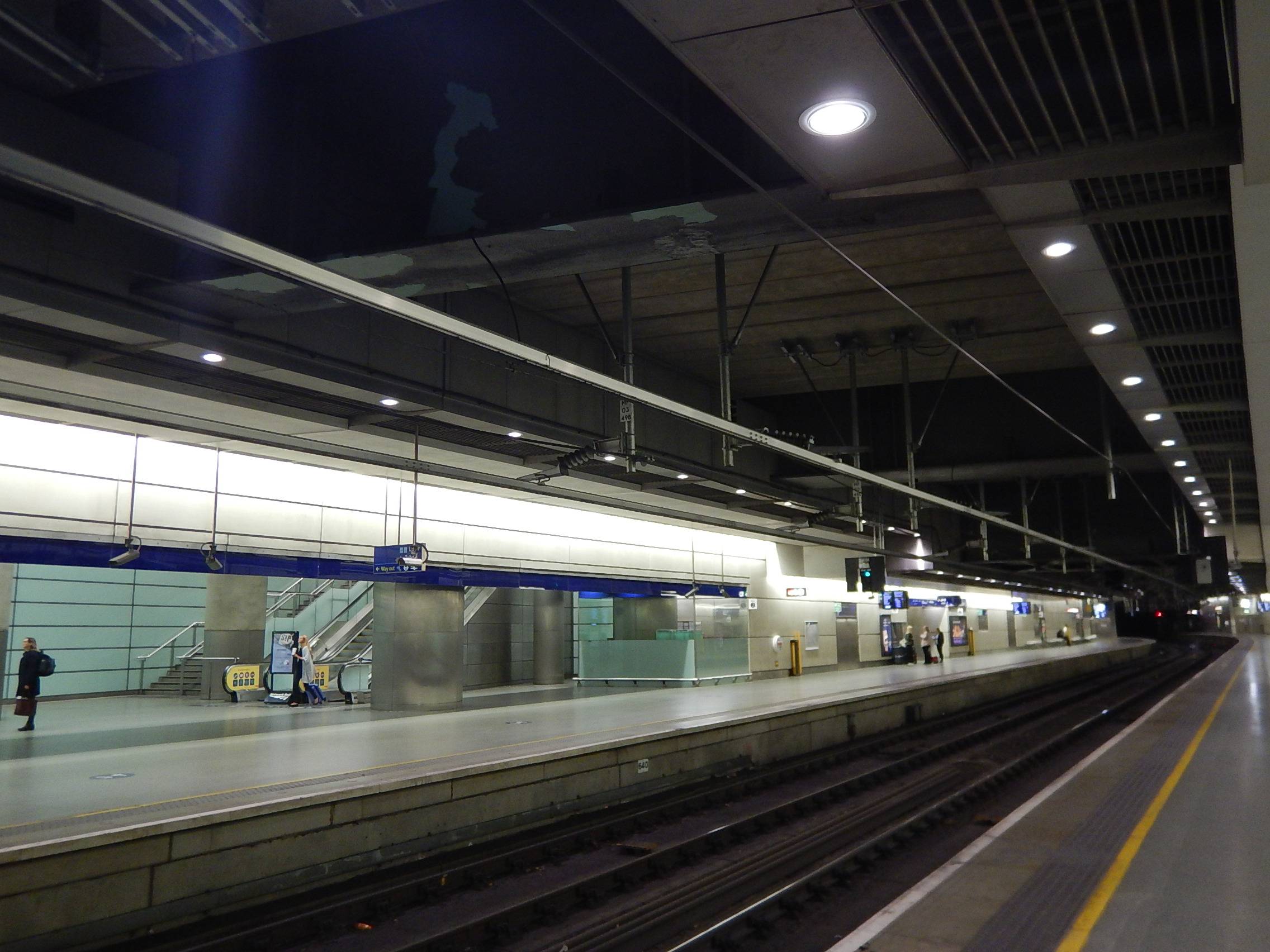
St. Pancras is one of the best places to see overhead conductor rail in London, although overhead conductor rail will be used by Crossrail in the tunnels.
How Would Overhead Conductor Rail Be Used To Charge A Train’s Batteries?
A short length of such a rail, would be mounted above the track in the station, so that it could be accessed by the train’s pantograph.
The rail would be positioned so that it was exactly over the train track, at the height required by the train.
What Voltage Would Be Used?
The normal overhead voltage in the UK, is 25 KVAC. There is no reason to believe that any other voltage would be used.
The overhead conductor rail/pantograph combination has a lot of advantages and benefits.
The Overhead Conductor Rail Is Standard
The overhead conductor rail is a standard Furrer + Frey product and it can be supported in any of the appropriate ways the company has used around the world.
This picture shows conductor rail fixed to the wall in Berlin HBf station.

Or it could be fixed to gantries like these at Gospel Oak station, which carry normal overhead wiring.
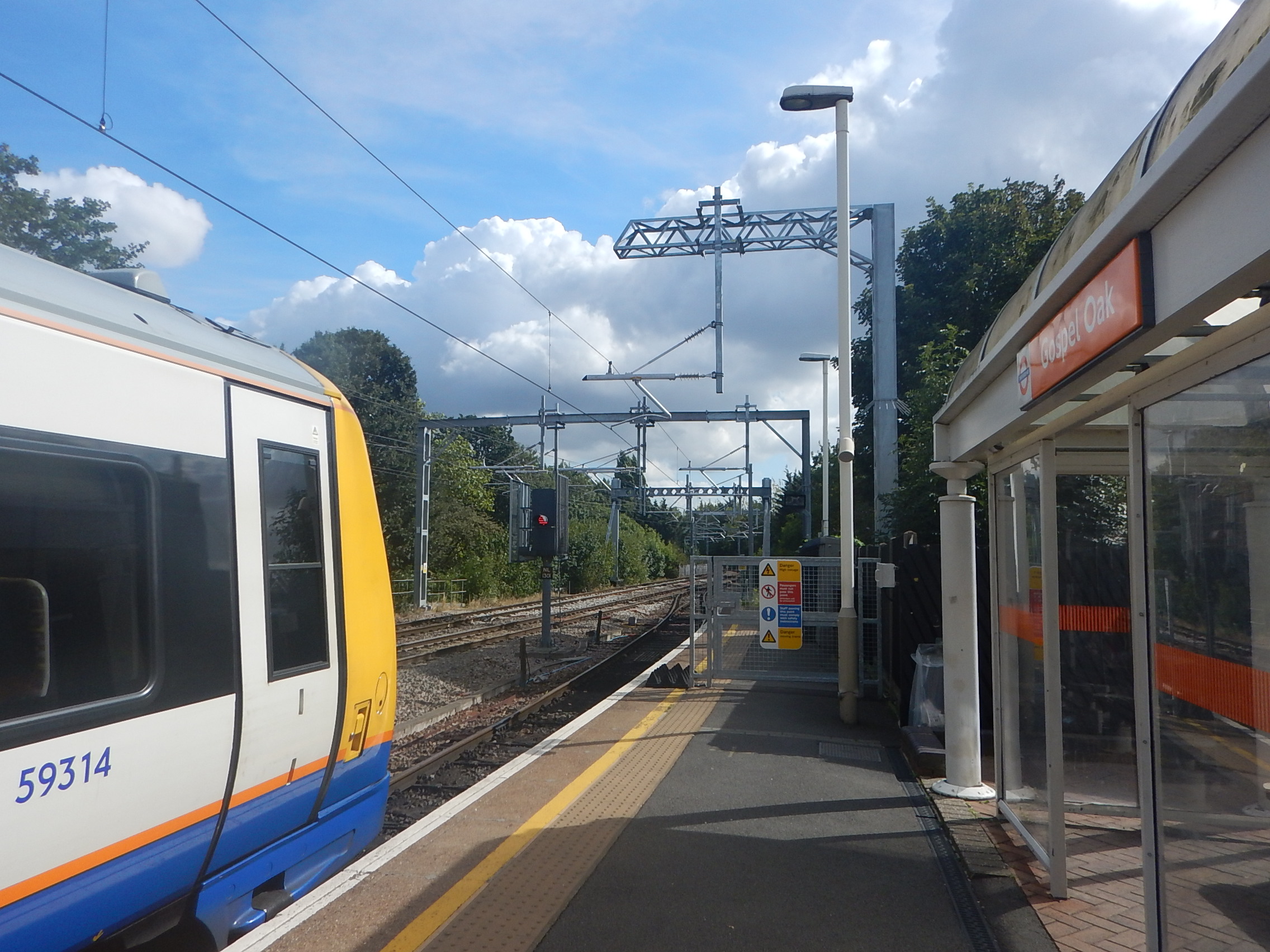
Note that gantries come in all shapes and sizes.
The Overhead Conductor Rail Can Be Any Convenient Length
There is probably a minimum length, as although drivers can stop the trains very precisely, a few extra metres will give a margin of error.
But there is no reason why at a through platform on a line served by battery trains, couldn’t have an overhead rail, that was as long as the platform.
The Train Pantograph Is Standard
The pantograph on the train, that collects the current from the overhead conductor rail can be an almost standard unit, as it will be doing the same job as it does on electrified sections of the route.
The white paper goes into this in detail.
As in the UK, our overhead line voltage is 25 Kv, the train can receive 1 MW with a current of 40 A, which is probably low enough to be below the limit of the conductor rail/pantograph combination. This would allow around 80 kWh to be transferred to the train in a five minute charge.
Could Trains Use Two Pantographs To Charge Batteries?
The white paper says that the system could handle more than one train, if the overhead conductor rail was long enough.
Bombardier’s Class 345 trains are effectively two half-trains, which each have their own pantograph.
So could a train use both pantographs to charge the batteries?
A Sophisticated Pantograph Control System Could Be Used
The train would probably have a sophisticated control system to automatically raise and lower the pantograph, so as to maximise the charge, whilst the train was in the station.
The System Should Be Safe
The overhead conductor rail would be no closer to passengers and staff, than overhead wires and conductor rail are at any other station platform in the UK.
I also suspect, that the power to the overhead conductor rail would only be switched on, if a train was being charged.
Standard Solutions Could Be Developed
One application of battery trains is to use them on a branch without electrification from an electrified line to a simple station in a town, housing or commercial development or airport..
The terminal stations would be very simple and surprisingly similar.
- One platform.
- An overhead conductor rail on gantries, a wall or some other simple support.
- A power supply for the overhead conductor rail.
A station building,, shelters and information displays could be added to the solution or designed specifically for the location.
Solutions for a wide range of countries would only differ in a few areas.
- The height of the platform.
- The gauge of the track.
- The overhead conductor rail voltage.
But I do believe that in this example of a standard system, there will be surprising commonality across the world.
As the white paper identifies, there is at least one tricky problem.
The High Voltage Power Supply
Providing high-quality, reliable high-voltage supplies may not always be that easy in some areas, so innovative electrical solutions will certainly be needed.
One solution suggested in the white paper involves using energy storage and then creating the 25 KVAC to power the overhead conductor rail.
I like this solution, as there are many applications, where these forms of independent power supplies are needed to power industrial premises, villages and equipment like flood pumps, often in remote locations. They could also incorporate a wind turbine or solar panels.
Someone will develop these systems and providing 15 or25 KVAC will be just another application.
Conclusion
I will add the conclusion from the white paper, as it says it all.
Battery trains are now available to replace diesel
trains on existing non-electrified tracks. They can
be charged using AC 25 kV 50 Hz or AC 15 kV 16,7
Hz either while running under catenary or when at
a standstill at a station using a short length of
overhead conductor rail and an appropriate power
supply. Standstill charging avoids the need to
build long stretches of catenary along a track
thereby saving money, and allowing the electrification
of track previously thought to be uneconomic
to electrify. Battery trains also enable the
use of renewable energy sources. Moving towards
green energy sources reduces harmful emissions
and noise which positively impacts climate change
and improves health
I am sure, we’ll see a lot of uses of this simple and efficient method of charging battery trains.
What Are Greater Anglia Going To Do With A Problem Like The Crouch Valley Line?
This post is effectively a series of sub-posts describing the problems of the Crouch Valley Line.
Platform 1 At Wickford Station
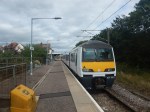
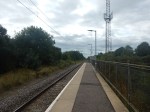
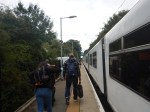
These pictures show Platform 1 at Wickford station, where services on the Crouch Valley Line terminate.
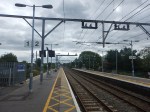

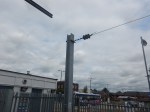
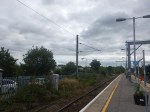
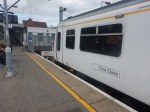
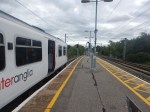
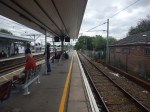

The train in the platform is a four-car Class 321 train, which is almost exactly eighty metres long.
After Greater Anglia has renewed the fleet, the shortest electric train they will have will be a five-car Class 720 train, which is over one hundred and twenty metres long.
I don’t think one of these shiny new trains will fit into the current platform.
Electrification
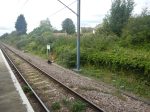
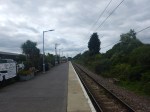
These pictures show the electrification at Burnham-on-Crouch station.
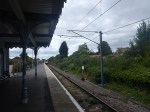
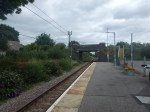
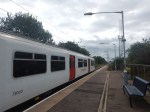
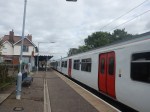
And these show Southminster station.
The overhead electrification on the Shenfield to Southend Line is being renewed and this section is supposedly finished. But it does look very similar to pictures I took in 2016, that are posted in Wickford Station. As the 25 KVAC overhead electrification was installed in 1979, when the line was converted from 6.25 KVAC, I do wonder about the age of some of the gantries.
On the trip, where I took these pictures staff were still complaining about the unreliability of the wires, as they have done before.
There doesn’t appear to have been any work done on the Crouch Valley Line, although the conductor did say that the route was being closed at times for work in the near future.
I do question, whether the overhead wires on the Crouch Valley Line are of a sufficient high and modern standard to be both reliable and easy and affordable to maintain.
Can the electrification handle regenerative braking?
The Timetable
The timetable East of Shenfield is as follows.
- Three trains per hour (tph) between Liverpool Street and Southend Victoria stations.
- A train every forty minutes between Wickford and Southminster stations.
- There are also some direct services between Southminster and Liverpool Street in the Peak.
Every time, I go use the line it seems, I always have a long wait at Wickford station.
Current services take thirty minutes between the two end stations with generous turnround times of about ten minutes at each end of the route.
Two trains are needed for the service, which are single-manned with a conductor checking and selling tickets appearing to float between the trains.
A New Nuclear Power Station At Bradwell
There is a possibility of building.of a new nuclear power station at Bradwell.
This Google Map shows the area.
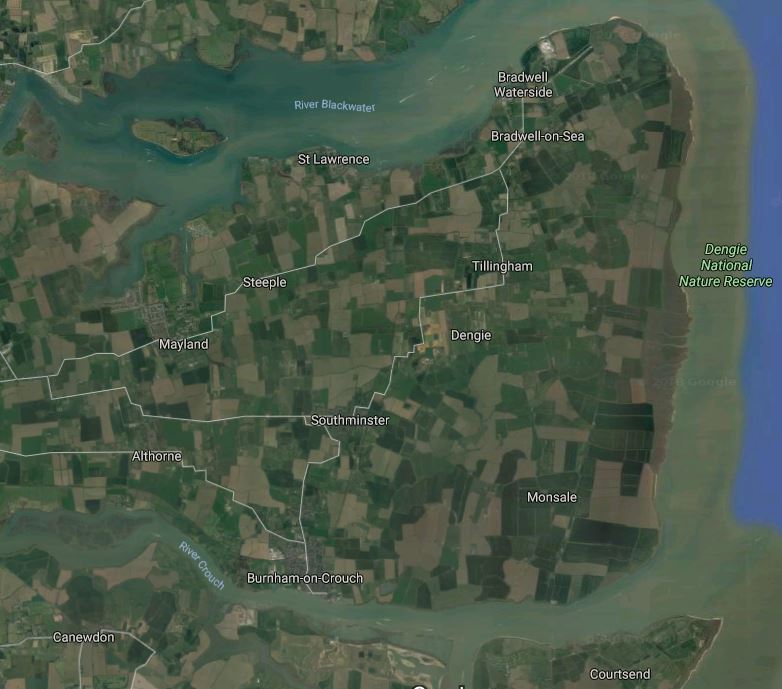
Note.
- Burnham-on-Crouch is the large village on the North Bank of the River Crouch.
- Southminster is a couple of miles to the North of Burnham on Crouch.
- Bradwell is in the North-East corner of the map alongside the River Blackwater.
- You can just see the World War 2 airfield, which was the site of the original Bradwell nuclear power station.
If a new power station is built at Bradwell, I doubt that it will require rail freight access at Southminster, as did the original station.
Transport technology has moved on and heavy goods will surely be taken in and out by barge from the River Blackwater.
But a new station or more likely ; a cluster of small modular reactors will require transport for staff, contractors and visitors.
Although, on balance, with the growth of renewable energy, I don’t think that many more nuclear power stations will be built.
A Battery Storage Power Station At Bradwell
I also wouldn’t rule out the use of Bradwell for a battery storage power station for the electricity generated by wind farms like Gunfleet in the Northern section of the Thames Estuary.
The number and size of these wind farms will certainly increase in the coming years.
Battery storage power stations are ideal partners for wind farms, as they help turn the intermittent wind power into a constant flow of electricity.
Currently, the largest battery storage power station is a 300 MWh facility that was built in 2016, at Buzen in Japan.
Energy storage technology is moving on fast and I would not be surprised to see 2000 MWh units by the mid-2020s.
Bradwell could be an ideal place to put a battery storage power station.
Passenger Numbers
Passenger numbers on the line over the last few years seem to have been fairly level although there appears to have been a drop in the last year or so. But this drop has happened in lots of places!
Various factors will effect the passenger numbers on the Crouch Valley Line in the future.
- New housing along the route.
- A large energy-based development at Bradwell will atract passengers.
- New trains will attract passengers.
- Will the Internet and new working practices affect passenger numbers?
- A two tph clock-face service will attract passengers.
- Faster and more frequent services between Liverpool Street and Wickford will make the line easier to access.
There is also the possibility of more visitors and tourists to the area. The RSPB have spent a lot of money developing Wallasea Wetlands, which is opposite Burnham-on-Crouch.
In future years, how many people will reach Wallasea, by ferry from Burnham-on-Crouch?
Adding up all these factors, I come to two conclusions.
Predicting the number of passengers will be difficult..
There will always be passengers who need this rail service.
It looks to me that Greater Anglia will have to plan for all eventualities from very low numbers of passengers to a substantial increase.
New Trains
Shenfield-Southend services and those on the Crouch Valley Line will be run using new Class 720 trains.
Bettween Liverpool Street And Southend Victoria
Currently, this service on the route is as follows.
Trains have a frequency of three tph.
- Each train takes an hour for the journey.
- All trains stop at the seven stations between Shenfield and Southend Victotria, Shenfield and Stratford.
- One train in three has an extra stop at Romford.
The new trains have a faster acceleration of 1 metre per second², as opposed to the current trains which can only manage 0.55 metre per second².
This property and their modern design, probably means that the new trains, can do a complete round trip between Liverpool Street and Southend Victoria stations in under two hours.
- The journey time between the two stations will be around fifty minutes.
- A three tph frequency will need a fleet of six trains.
- A four tph frequency will need a fleet of eight trains.
This service will be faster than the fastest services between Fenchurch Street and Southend Central stations.
I can certainly see a time, when the frequency between Liverpool Street and Southend Victoria stations is increased to four tph.
Passenger numbers are rising strongly at Southend Victoria station.
Southend Airport have big expansion plans and would welcome a better rail service, to and from their very convenient station.
At present times to their London termini from various airports are as follows.
- Gatwick Airport – 31 minutes (Express)
- Luton Airport – 28 minutes
- Southend Airport – 53 minutes
- Stansted Airport – 46 minutes
I think that Southend Airport times with the new trains could be about 43 minutes or less, which because of the closeness of the station to the terminal building could allow Southend Airport to claim faster times to Liverpool Street than Stansted Airport.
If the service does go to four tph, there will be a massive increase in capacity.
There will be 1145 seats in the new trains, as opposed to 927 in the current Class 321 trains.
With four tph. this would mean an increase in capacity of 40%.
I don’t think anybody in Southend will be complaining.
Between Wickford And Southminster
As I said earlier, the new longer Class 720 trains will have difficulty running the current service, as they don’t fit into Platform 1 at Wickford station.
Working the same timetable the new trains with their 544 seats will offer a 76% increase in train capacity.
Trains take thirty minutes with five intermediate stations.
Given the better acceleration and modern nature of the new trains, I wonder, if they will be able to do a round trip in an hour.
If they can do this, then it would be possible to run a two tph service on the route.
But it will be a tough ask!
That still leaves the problem of turning back the trains at Wickford.
Currently, trains between Liverpool Street and Southend Victoria going in opposite directions, pass at Wickford station.
If this could be arranged with four tph, then there would be up to fifteen minute windows, where no train was passing through Wickford station.
Suppose the Liverpool Street and Southend services passes through at XX:00, XX:15. XX:30 and XX:45.
Would it be possible for the Southminster trains to leave Wickford at XX:10 and XX:40 and arrive back at XX:05 and XX:35, thus giving five minutes for the driver to get to the other end.
As I said, it would be a tough ask!
But I suspect there is a plan to get two tph between Wickford and Southminster.
- The track could be improved.
- Some level crossings could be closed.
- Operating speed could be faster.
- Better step-free access could probably be arranged at the intermediate stations.
- A step-free bridge could be built at Wickford.
If two tph can be achieved, then this would increase capacity on the route by 134 %.
The Passing Loop At North Fambridge Station
This Google Map shows the station and passing loop at North Fambridge station.

Measuring from the map, I estimate the following.
- The length of the platforms are 160 metres.
- The length of the passing loop is in around 400 metres.
I also suspect that to save money was the line was singled in the 1960s, British Rail made the passing loop as short as possible to cut costs.
The current loop can handle eight-car Class 321 trains, so it can certainly handle a five-car Class 720 trains.
I do wonder if the passing loop were to be lengthened, this would ease operation on the line.
There might even be a length, that enable a two tph service with the current four-car Class 321 trains.
Thoughts On Speed Limits
The speed limit on the line is 60 mph between Battlesbridge and North Fambridge stations and 50 mph at both ends of the line.
Summarising sections of the line, their length and speed limits give.
- Wickford and Battlesbridge – 2 miles 38 chains = 4356 yards = 3983 metres – 50 mph
- Battlesbridge and North Fambridge – – 5 miles 67 chains = 10274 yards = 9395 metres – 60 mph
- North Fambridge and Southminster – 8 miles 15 chains = 14410 yards = 13177 metres – 50 mph
This gives totals of 17160 metres with a 50 mph limit and 9395 metres with a 60 mph limit.
- At 50 mph, the train would cover the 17160 metres in 12.8 minutes
- At 60 mph, the train would cover the 17160 metres in 10.7 minutes
- At 75 mph, the train would cover the 17160 metres in 8.5 minutes
Increasing the speed limit to 60 mph would save two minutes.
Network Rail must have all the figures and costs, but this could be a cost-effective way to save a couple of minutes.
But it does seem if the operating speed of the line were to be increased, time saving could be achieved, that would make a two tph timetable a reality.,
Could Electrification Be Removed From The Crouch Valley Line?
If the track is going to be improved with respect to line speed, level crossings and passing loops, then there will have to be changes to the layout of the overhead electrification.
Most of the serious changes that could be carried out, would be to the East of North Fambridge station.
Would it be sensible if the Class 720 trains have a battery capability, to remove the electrification to the East of North Fambridge station?
- 13.2 km. of single-track would have the electrification removed.
- Some of this electrification will need replacing soon.
- Trains could swap between power sources in North Fambridge station.
- The batteries would be charged between Wickford and North Fambridge stations.
- Only 16 miles in each round trip would be on batteries.
Removing some electrification would cut the cost of any works.
Conclusion
I’m sure Greater Anglia have a solution and it’s probably better than my rambling.
Bombardier’s 125 Mph Electric Train With Batteries
In Bombardier Bi-Mode Aventra To Feature Battery Power, I said this.
The title of this post is the same as this article in Rail Magazine.
A few points from the article.
- Development has already started.
- Battery power could be used for Last-Mile applications.
- The bi-mode would have a maximum speed of 125 mph under both electric and diesel power.
- The trains will be built at Derby.
- Bombardier’s spokesman said that the ambience will be better, than other bi-modes.
- Export of trains is a possibility.
Bombardier’s spokesman also said, that they have offered the train to three new franchises. East Midlands, West Coast Partnership and CrossCountry.
It has struck me, that for some applications, that the diesel engines are superfluous.
In the July 2018 Edition of Modern Railways, in an article entitled Bi-Mode Aventra Details Revealed.
In a report of an interview with Bombardier’s Des McKeon, this is said.
Conversion to pure electric operation is also a key design feature, with the ability to remove the diesel engines and fuel tanks at a later date.
So why not swap the diesel engines and add an equal weight of extra batteries?
Batteries would have the following uses.
Handling Energy Generated By Regenerative Braking
Batteries would certainly be handling the regenerative braking.
This would give efficiency savings in the use of electricity.
The total battery power of the train, would have to be large enough to handle all the electricity generated by the regenerative braking.
In the Mathematics Of A Bi-Mode Aventra With Batteries, I calculated the kinetic energy of the train.
I’ll repeat the calculation and assume the following for a pure electric train.
- The train is five cars, with say four motored cars.
- The empty train weighs close to 180 tonnes.
- There are 430 passengers, with an average weight of 90 Kg each, with baggage, bikes and buggies.
- This gives a total train weight of 218.7 tonnes.
- The train is travelling at 200 kph or 125 mph.
These figures mean that the kinetic energy of the train is 94.8 kWh. This was calculated using Omni’s Kinetic Energy Calculator.
My preferred battery arrangement would be to put a battery in each motored car of the train, to reduce electrical loses and distribute the weight. Let’s assume four of the five cars have a New Routemaster-sized battery of 55 kWh.
So the total onboard storage of the train could easily be around 200 kWh, which should be more than enough to accommodate the energy generated , when braking from full speed..
Traction And Hotel Power
Battery power would also be available to move the train and provide hotel power, when there is no electrification.
In an article in the October 2017 Edition of Modern Railways, which is entitled Celling England By The Pound, Ian Walmsley says this in relation to trains running on the Uckfield Branch, which is not very challenging.
A modern EMU needs between 3 and 5 kWh per vehicle mile for this sort of service.
As the Aventra is probably one of the most modern of electric multiple units, I suspect that an Aventra will be at the lower end of this range.
An Intelligent Computer
The train’s well-programmed computer would do the following.
- Choose whether to use electrification or battery power to power the train.
- Decide when the battery could be charged, when electrification power was being used.
- Arrange, that when a train stopped at a station without electrification, the batteries were as full as possible.
- Manage power load, by shutting off or switching equipment to a low energy mode, when the train was running on batteries.
- Raise and lower the pantograph as required.
The computer could take account of factors such as.
- Passenger load and total weight.
- Route and train’s position.
- Weather.
- Future signals.
The computer would only be doing a similar job that is done by those in the flight control systems of aircraft.
Although, trains run in less dimensions and don’t need to be steered.
How Far Would This Train Go On Batteries?
This is question of the same nature as how long is a piece of string?
It depends on the following.
- The severity of the route.
- The size of the batteries.
- The load on the train.
- The number of stops.
- Any delays from slow-moving trains.
- The timetable to be used.
I would expect that train manufacturers and operating companies will have a sophisticated mathematical model of the train and the route, that can be run through various scenarios.
With modern computers you could do a Monte-Carlo simulation, trying out millions of combinations, which would give a very accurate value for the battery size to have a near hundred percent chance of being able to run the route to the timetable.
After all if you ran out of power with a battery train, you stop and the train has to be rescued.
Suppose you were going to run your 125 mph Electric Train With Batteries from Kings Cross to Middlesbrough.
- You would need a battery range of about fifty miles, to go between Northallerton and Middlesbrough stations and come back.
- You would also need to have enough power to provide hotel power in Middlesbrough station, whilst the train was turning back.
Certain things could be arranged so that the service runs smoothly.
- The train must leave the East Coast Main Line with a fully-charged battery.
- The train must leave the East Coast Main Line as fast as possible.
- The train should have a minimum dwell time at all the intermediate stops.
- The train could be driven very precisely to minimise energy use.
Some form of charging system could also be provided at Middlesbrough. Although it could be difficult as there are only two platforms and trains seem to turn round in a very short time of six minutes
Electrification could also be extended for two hundred metres or so, at Northallerton junction to ensure points 1 and 2 were met.
Effectively, trains would be catapulted at maximum energy towards Middlesbrough.
Points 3 and 4 require good signalling, a good Driver Advisory System and above all good driving and operation.
What Other Routes Could Use 125 mph Electric Trains With Batteries?
Use your imagination!
Braintree Freeport Station
These pictures show Braintree Freeport station on the Braintree Branch.
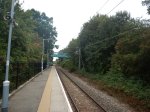
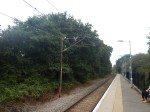
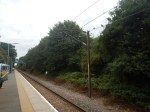
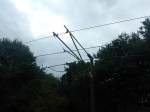
Note.
- There is one platform that can accommodate an eight-car formation of two Class 321 trains, so it must be at least 160 metres long.
- The platform is used in both directions.
- Like much of the electrification on the Great Eastern Main Line and its branches, it is not in the first flush of youth and some parts had evidence of repair.
- The station information could be better, but that is a problem on a lot of Greater Anglia’s smaller stations.
- The route to the Braintree Freeport Shopping Centre is about four hundred metres and not too taxing.
I suspect that a bit more TLC would improve this station.
But will the electrification on the Braintree Branch be replaced in the near future?
The New Class 720 Trains
I went to Braintree Freeport station in an eight-car formation of two Class 321 trains, which weren’t by any means full.
In Comparing Greater Anglia’s Old And New Electric Multiple Units, I said this.
Given that the Class 720 is a modern train, designed with passengers, staff and operators in mind, I can’t see any problems with replacing the current eight-car trains with a five-car Class 720 train
I also suspect that if required, an extra car could be added to make six-car trains with a length of 146 metres, that would be shorter than an eight-car Class 321 train. .
If a single Class 720 train isn’t enough capacity for the Braintree Branch, then by adding a passing loop at Cressing station, the frequency of trains on the branch can be doubled, which could attract more passengers to the route.
Could the Braintree Branch Have The Electrification Removed?
This may seem like a retrograde step, but consider the following.
- I’m fairly certain, that the Class 720 trains, which are Aventras have been designed to use batteries to handle regenerative braking and the trains have a useful range on battery power.
- The Braintree Branch is only six miles long.
- The electrification will have to be replaced or upgraded in the next few years.
- Building the loop at Cressing station without electrification would be a cost saving.
- There are no other services on the branch, except the occasional diesel-hauled engineering train.
- The batteries would be charged between Liverpool Street and Witham stations.
I would be very surprised, if removing the electrification and using battery power is not being considered.
Conclusion
New Class 720 trains with a battery capability and the addition of a passing loop at Cressing station would improve the Braintree Branch line.
Cost Studies Could See Electrification Comeback
This post was updated on the 1st May 2021.
The title of this post is the same as that of an article by Roger Ford in the September 2018 Edition of Modern Railways
There are now two studies into the cost of railway electrification.
- The Department of Transport has commissioned Professor Andrew McNaughton.
- The Railway Industry Association have launched an Electrification Cost Challenge.
Both arudies expected to be completed in October.
The article gives some examples of electrification costs per single track kilometre (stkm).
- A sustained rolling program – £1million/stkm
- Great Western Main Line – £3million/stkm
- Northern England – Below £2million/stkm.
- Cumbernauld-Springburn – £1.2million/stkm
- East Coast Main Line – £500,000/stkm (At current prices)
The article finishes with these words.
£1million/stkm would be a feasible target.
That the Department for Transport has commissioned the independent review suggests electrification could still be on the agenda.
Roger is very much a respected commentator and his conclusions are more likely to be spot on, than wide of the mark.
Does Running Electric Trains On A Route Count As Electrification?
I ask this question deliberately, as over the last few years several schemes have been proposed to electrify perhaps two miles of line to a new development or city or town centre.
The Midland Metro is being extended to Wolverhampton station by building a tram line, that will be run using battery power on the existing trams.
Another example of this type of line is the extension of the Gospel Oak to Barking Line to Barking Riverside. After reading all the documentation, I have found that electric trains are mentioned several times, but electrification is not. As Bombardier Aventras probably can run on battery power, does this mean that the extension will be built without wires?
May 2021 Update – It now looks like the route is being fully electrified.
There are also some electrified branch lines, where the overhead electrification is unadulterated crap, that was erected over fifty years ago and has been got at by the steel moths.
Could we see the electrification on these branches removed to save on replacement and maintenance costs and the trains replaced by battery trains charged on the electrified main lines?
Recent Developments
I think various developments of recent years will help in the containing of electrification costs.
Batteries On Trains
It is my belief that batteries on trains could revolutionise the approach to electrification.
In my view, batteries are the only way to handle regenerative braking, which cuts energy costs.
This means, that if no trains using a route, return their braking energy through the electrification, then costs are saved by using simpler transformers.
Adequate battery capacity also gives other advantages.
- Bombardier are fitting remote wake-up to Aventras. I wrote about this in Do Bombardier Aventras Have Remote Wake-Up?
- Depots and sidings can be built with only limited electrification.
- Hitachi use batteries charged by regenerative braking to provide hotel power for Class 800 trains.
- Batteries are a simple way of moving trains in a Last Mile application on perhaps a short branch line.
- Battery power can be used to rescue a train, when the electrification fails.
Reports exist of Alstom, Bombardier, CAF, Hitachi, Siemens and Stadler using or researching the use of batteries in trains.
May 2021 Update – All Merseyrail’s Class 777 trains and East Coast Trains’ Class 803 trains will have small batteries for all purposes except traction.
Hydrogen Power
I am becoming more enthusiastic about hydrogen power, which is primarily being developed by Alstom.
- The UK could produce a lot of hydrogen easily from electrolysis of either brine to produce chlorine or water to produce hydrogen and oxygen.
- Wind power would be a convenient way to provide the electricity needed.
- Alstom are starting a project at Widnes to convert redundant Class 321 trains to hydrogen power.
A hydrogen powered Class 321 train would appear to be a powerful concept.
- The trains will still be able to run on electrification.
- The trains are pollution-free.
- The trains make extensive use of batteries.
- Alstom quote ranges of several hundred kilometres.
- It would appear that the trains will still be capable of 100 mph after conversion.
- Class 321 trains can be updated with quality interiors.
I believe these trains could find a solid market extending electrified routes.
Porterbrook’s Class 769 Trains
The Class 769 trains have been a long time coming, but companies have ordered 35 of these bi-mode upgrades of Class 319 trains.
- They will be capable of 100 mph on electricity
- They will be capable of 90 mph-plus on diesel
- They will be able to use 25 KVAC overhead or 750 VDC third rail electrification.
- They have been designed with a powerful hill-climbing capability.
Looking at the orders, some need the hill-climbing capability and GWR’s proposal to use the trains on the dual-voltage Reading-Gatwick route is a sensible one.
Bombardier’s 125 mph Bi-Mode Aventra With Batteries
I think that this train and others like it will be the future for many rail routes in the UK and around the world.
I will use the Midland Main Line as an example of the use of this type of train.
In a few years time, this important route will have the following characteristics.
- A high proportion of 125 mph running.
- Electrification between St. Pancras and Kettering/Corby
- Possibly, electrification between Sheffield and Clay Cross courtesy of High Speed Two.
Full electrification would be difficult as part of the route is through a World Heritage Site.
But Bombardier’s train would swap power source intelligently as it powered its way along at 125 mph.
May 2021 Update –Hitachi got the order and their Class 810 trains appear to be capable of being converted into Hitachi Intercity Tri-Mode Battery Trains, which are described in this Hitachi infographic.

Note the claim of fuel and carbon saving of at least twenty percent.
Stadler’s Electric/Diesel/Battery Hybrid Train
This version of Greater Anglia’s Class 755 train, has been ordered for the South Wales Metro.
It can run on the following power sources.
- 25 KVAC overhead electrification.
- Onboard diesel generators.
- Batteries
An intelligent control system will select the best power source.

With a central power pack between passenger cars, the design of this train is slightly quirky.
- It is a 100 mph train with lots of acceleration.
- I’m sure it could be equipped for 750 VDC electrification.
- The power pack can be configured for different operators and types of routes.
- Stadler are quite happy to sell small fleets of trains into niche markets.
- It is a member of the successful Flirt family of trains, which are selling all over the world.
I wouldn’t be surprised to see more of these trains sold to the UK.
Hitachi’s Class 800 Trains and Class 802 Trains
Hitachi’s Class 800 trains are already running on the Great Western Railway.
- They have an operating speed of 125 mph on both electricity and diesel.
- TransPennine Express have ordered nineteen Class 802 trains.
- Hull Trains have ordered five Class 802 trains.
I have gone from London to Swansea and back in a day in Class 800 trains and they the new trains seem to be performing well.
They will get even better, as electrification is extended to Cardiff.
May 2021 Update –Hitachi are developing battery-electric and tri-mode versions of these trains.
100/125 mph Bi-Mode Trains
In the previous sub-sections I have talked about four new bi-mode trains, that can run using electrification and under their own power.
- Class 321 Hydrogen
- Porterbrook’s Class 769 Train
- High Speed Bi-Mode Aventra
- Tri-Mode Stadler Flirt
- Hitachi’s Class 800 Trains and Class 802 Trains
The designs are different, but they have common features.
- An operating speed of at least 100 mph on electrified lines.
- 90 mph-plus operating speed, when independently powered.
- An out-and-back range of at least 200 miles away from electrification.
- Proven designs from large families of trains.
Only one new route for these trains has been fully disclosed and that is Greater Anglia’s new Liverpool Street-Lowestoft service.
- There will be three round trips a day between Lowestoft and London, using Class 755 trains.
- North of Ipswich, diesel power will be used.
- South of Ipswich, electric power will be used and trains will join the 100 mph queues to and from London.
- Extra trains North of Ipswich, will use additional Class 755 trains, shuttling up and down the East Suffolk Line.
As the Class 755 trains and the express Class 745 trains on London-Ipswich-Norwich services will share the same team of drivers, it is an efficient use of bi-mode trains to extend an electric network.
Several of the proposed electrification schemes in the UK in addition to allowing electric trains, will also open up new routes for bi-mode and tri-mode trains.
- Stirling to Perth electrification would allow bi-mode trains to run between Glasgow and Aberdeen via Dundee.
- Leeds to York electrification would improve TransPennine bi-mode performance and allow electric trains access to Neville Hill TMD from the East Coast Main Line.
- Sheffield to Clay Closs electrification for High Speed Two would also improve bi-mode performance on the Midland Main Line.
I think it should be born in mind, that the rolling out of the Class 800 trains all over the GWR, seems to have generated few bad reports, after a few initial problems.
In Thoughts On The Introduction Of Class 800 Trains On The Great Western Railway, I came to this conclusion.
There’s nothing much wrong operationally or passenger-wise with the Class 800 trains, that will not be put right by minor adjustments in the next couple of years.
So perhaps extending an electric network with quality bi-mode trains works well.
Used creatively bi-mode trains will increase the return on the money invested in electrification.
Tram-Trains
I first saw tram-trains in Kassel in 2015 and I wrote about them in The Trams And Tram-Trains Of Kassel.
We are now embracing this technology in a trial in Sheffield using new Class 399 tram-trains.
I believe that, the UK is fertile territory for this technology.
- KeolisAmey Wales haven’t waited for the results of the Sheffield trial and have already ordered thirty-six tram-trains with batteries for the South Wales Metro.
- It also looks as if the West Midlands are planning to use the technology on an extension of the Midland Metro to Brierley Hill.
- Glasgow are investigating a tram-train route to Glasgow Airport.
Although Network Rail and the Department for Transport seem to be only lukewarm on the technology, it does appear that local interests are much more enthusiastic.
In my view, the South Wales Metro is going to be a game changer, as it uses existing tracks, virtually standard tram-trains, electric/diesel/battery trains and a modicum of street running to transform a city’s transport system.
Intelligent Pantographs
I have read that the electro-diesel Class 88 locomotive can change between electric and diesel modes at line speed.
As a Control Engineer, I don’t believe it would be an impossible problem for a train powered by a mixture of 25 KVAC overhead electrification and diesel, battery, hydrogen or some other fuel to raise and lower a pantograph efficiently, to take advantage of any overhead wires that exist.
The raising and lowering could even be GPS controlled and totally automatic, with the driver just monitoring.
Ingenious Electrification Techniques
In Novel Solution Cuts Cardiff Bridge Wiring Cost, I wrote about how two simple techniques; an insulating coating and surge arresters, saved about ten million pounds, by avoiding a bridge reconstruction.
How much can be saved on electrification schemes by using simple and proven techniques like these?
Better Surveying And Site Information
A lot of the UK’s railways are like long Victorian buildings.
If you’ve ever tried to renovate a cottage that was built around the middle of the nineteenth century, you will understand the following.
- It is unlikely you will have any accurate plans.
- Some of the construction will be very good, but other parts will be downright shoddy.
- You have no idea of the quality of the foundations.
- If the building is Listed you’ll have a whole new level of bureaucracy to deal with.
Now scale your problems up to say a ten mile stretch of rail line, that needs to be electrified.
Instead of dealing with a cottage-sized plot, you may now be dealing with the following.
- A double track railway with four train per hour (tph) in both directions.
- A site that is several miles long.
- Access to the work-site could be difficult.
So just surveying what has to be done and making sure you have details on any unforeseen underground structures like sewers, gas and water mains and old mine workings, can be a major undertaking.
Reading local newspaper reports on the Gospel Oak to Barking electrification, you get the impression the following happened.
- Various overhead gantries were built to the wrong size.
- A sewer was found, that had been missed by surveyors.
- It was wrongly thought that the bridge at Crouch Hill station had sufficient clearance for the electrification. So much more work had to be done.
At least there weren’t any mine workings in East London, but as you can imagine these are a major problem in areas in the North.
Surely, nearly twenty years into the 21st century, we can avoid problems like these.
Discontinuous Electrification
Low bridges and and other structures crossing the tracks, can be a big and expensive problem, when it comes to electrifying railway lines.
In the proposed electrification of the lines for the South Wales Metro, look at these statistics.
- A total of 172 km. of track will be electrified.
- Fifty-six structures were identified as needing to be raised.
The cost savings of eliminating some of this bridge raising would not be small.
In the July 2018 Edition of Modern Railways, there is an article entitled KeolisAmey Wins Welsh Franchise.
This is said about the electrification on the South Wales Metro.
KeolisAmey has opted to use continuous overhead line equipment but discontinuous power on the Core Valley Lnes (CVL), meaning isolated OLE will be installed under bridges. On reaching a permanently earthed section, trains will automatically switch from 25 KVAC overhead to on-board battery supply, but the pantograph will remain in contact with the overhead cable, ready to collect power after the section. The company believes this method of reducing costly and disruptive engineering works could revive the business cases of cancelled electrification schemes. Hopes of having money left over for other schemes rest partly on this choice of technology.
In the final design, KeolisAmey have been able to use this discontinuous power solution at all but one of the fifty-six structures.
These structures will be checked and refurbished as required, but they would be unlikely to need lengthy closures, which would disrupt traffic, cyclists and walkers.
Each structure would need a bespoke structure to create a rail or wire on which the pantograph, would ride from one side of the structure to the other. But installing these would be a task of a much smaller magnitude.
There must be a lot of scope for both cost and time savings.
I think in the future, when it comes to electrifying existing lines, I think we’ll increasing see, this type of discontinuous electrification used to avoid rebuilding a structurally-sound bridge or structure.
I also think, that experience will give engineers a more extensive library of solutions.
Hopefully, costs could be driven downwards, instead of spiralling upwards!
Complimentary Design Of Trains And New Electrified Routes
In recent years two major electric rail projects have been planned, which have gone much further than the old philosophy of just putting up wires and a adding fleet of new trains.
I believe that the Crossrail Class 345 trains and the tunnel under London were designed to be complimentary to each other to improve operation and safety and cut operating costs.
But the interesting project is the South Wales Metro, where discontinuous electrification and battery power have been used to design, what should be a world-class metro at an affordable cost.
Too many electrification schemes have been designed by dull people, who don’t appreciate the developments that are happening.
Conclusion On Recent Developments
UK railways are doing better on electrification than many think.
Possible Developments
These are ideas I’ve seen talked about or are my own speculation.
Intelligent Discontinuous Third Rail Electrification
New third rail electrification is not installed much these days, due to perceived safety problems.
I have seen it proposed by respected commentators, that third rail electrification could play a part in the charging of train batteries.
Discontinuous third-rail electrification is already used extensively, at places like level crossings and where a safe route is needed for staff to cross the line.
But it is done in a crude manner, where the contact shoes on the train run up and down the sloping ends of the third rail.
As a time-expired Control Engineer, I’m fairly sure that a much better, safer system can be designed.
On the South Wales Metro, where discontinuous overhead electrification is to be used, battery power will be used to bridge the gaps.
Supposing trains on a third-rail electrified route, were fitted with batteries that gave the train a range of say two kilometres. This would give sufficient range to recover a train, where the power failed to a safe evacuation point.
The range on battery power would mean that there could be substantial gaps between sections of electrification, which would be sized to maximise safety, operational efficiency and minimise energy use.
Each section of electrification would only be switched on, when a train was present.
Train drivers could also have an emergency system to cut the power in a particular section, if they saw anything untoward, such as graffiti artists on the line.
Third Rail Electrification In Stations
I have seen it proposed by respected commentators, that third rail electrification could play a part in the charging of train batteries.
When you consider that trains often spend fifteen or twenty minutes at a terminal station, it could make it easier to run electric or bi-mode trains with batteries on branch lines.
The rail would normally be switched off and would only be switched on, when a train was above and connected to the rail.
As a time-expired Control Engineer, I’m fairly sure that a safe system can be designed.
Third Rail Electrification On Viaducts
To some overhead electrification gantries on top of a high viaduct are an unnecessary eyesore.

So why not use third-rail electrification, on top of viaducts like these?
Trains would need to be able to swap efficiently and reliably between modes.
Gravity-Assisted Electrification
For a country with no really high mountains, we have quite a few railways, that have the following characteristics.
- Heavily-used commuter routes.
- Double-track
- A height difference of perhaps two hundred metres.
These are a few examples.
- Cardiff Queen Street to Aberdare, Merthyr Tydfil, Rhymney and Treherbert
- Exeter to Barnstaple
- Glasgow Central to East Kilbride
- Manchester to Buxton
All are in areas, where putting up overhead gantries may be challenging and opposed by some campaigners.
As an example consider the Manchester to Buxton route.
- The height difference is 220 metres.
- One of Northern’s Class 319 trains weighs 140.3 tonnes.
- These trains have a capacity of around 320 passengers.
- If each passenger weighs 90 Kg with baggage, bikes and buggies, this gives a train weight of 167.3 tonnes.
These figures mean that just over 100 kWh of electricity would be needed to raise the train to Buxton.
Coming down the hill, a full train would convert the height and weight into kinetic energy, which would need to be absorbed by the brakes. Only small amounts of new energy would need to be applied to nudge the train onto the hill towards Manchester.
The brakes on trains working these routes must take a severe hammering.
Supposing, we take a modern train with these characteristics.
- Four cars.
- Electric traction.
- 200 kWh of battery capacity to handle regenerative braking.
Such a train would not be a difficult design and I suspect that Bombardier may already have designed an Aventra with these characteristics.
Only the uphill line would be electrified and operation would be as follows.
- Climbing to Buxton, the train would use power from the electrification.
- On the climb, the train could also use some battery power for efficiency reasons.
- The train would arrive at Buxton with enough power left in the batteries to provide hotel power in the stop at Buxton and nudge the train down the hill.
- On the descent, regenerative braking would be used to slow the train, with the energy created being stored in the batteries.
- On the level run to Manchester, battery power could be used, rather than electrification power to increase efficiency.
How efficient would that be, with respect to the use of electricity?
I would also investigate the use of intelligent third-rail electrification, to minimise visual impact and the need to raise any bridges or structures over the line.
Gravity is free and reliable, so why not use it?
We don’t know the full
Conclusion On Possible Developments
Without taking great risks, there are lots of ideas out there that will help to electrify routes in an affordable manner.
Conclusion
I very much feel we’ll be seeing more electrification in the next few years.
Alloa Station
Alloa station is ready for new electric services.


Currently, there is only an hourly service, which is just not enough for a town of 20,000 residents.
Note too, that there is a double-track through the station, although it looks like the second track is not electrified.
But it does appear that the gantries have been built so, that the second track could be electrified, so that electric trains could be run through the station to reopened stations to the East.
A Railway That Needs Electric Trains But Doesn’t Need Full Electrification
This article on Rail Magazine is entitled ScotRail Targets Further Electrification Schemes.
This is the first paragraph.
The five years from 2019 could feature more wiring in Scotland, with ScotRail Alliance Managing Director Alex Hynes telling RAIL: “I’d love to see more electrification – Stirling to Perth, East Kilbride and the Edinburgh South Suburban.”
In this post, I will look at electrification of the Busby Railway to East Kilbride station.
- The station is 11.5 miles from Glasgow Central station.
- The station has an altitude of 504 feet.
- It is a single platform station.
- The route to Glasgow is double-track, except for the last section from Busby station, which is single track, with a passing loop at Hairmyres station.
- A two trains per hour (tph) service is provided between Glasgow Central and East Kilbride using two two-car diesel Class 156 trains.
This picture shows East Kilbride station.
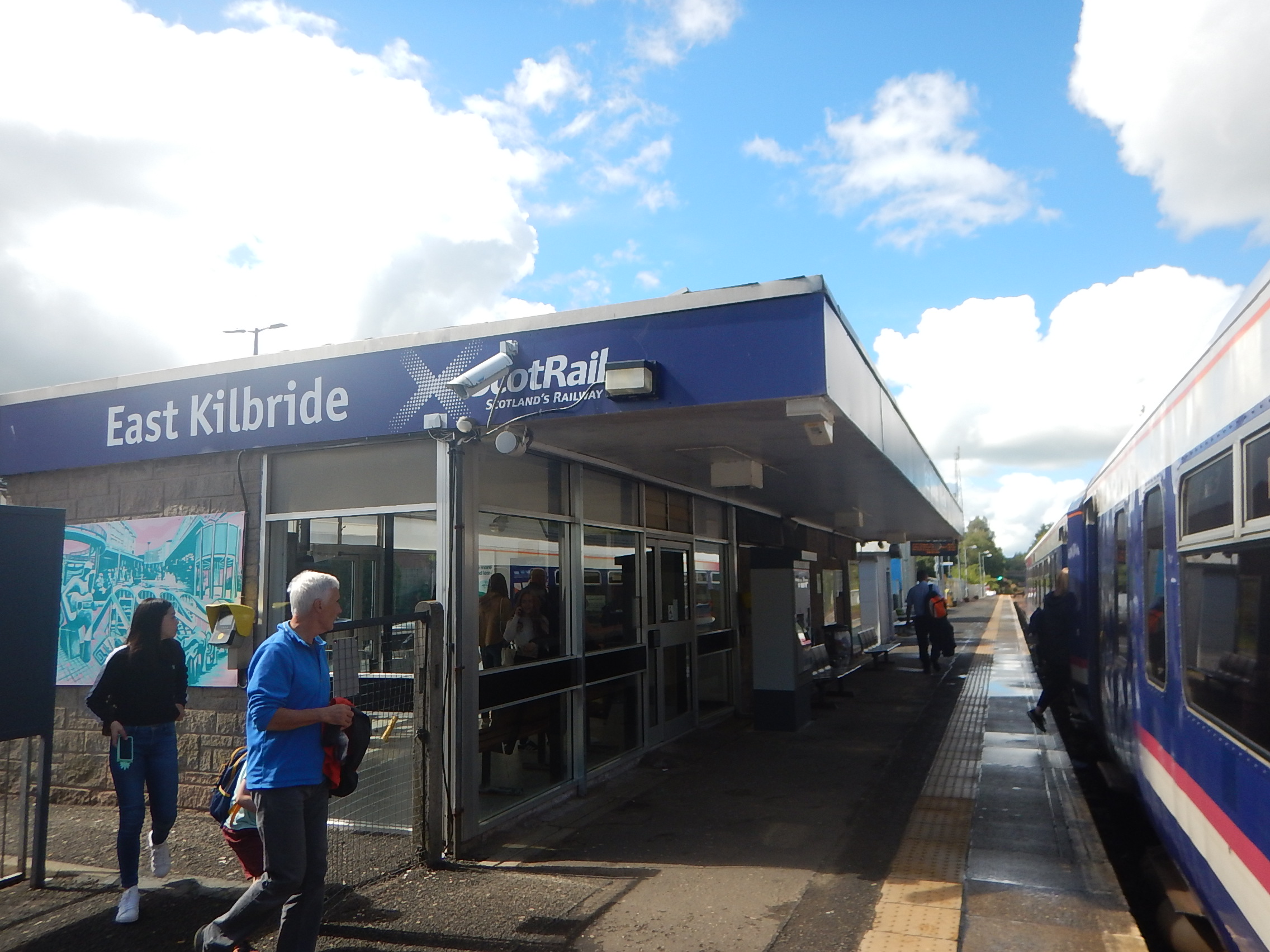
Nothing complicated at this station and it comfortably handles two tph.
In the UK, there are several stations where four tph are handled using a single platform.
- Chester, Kirkby and Ormskirk on Merseyrail.
- Clapham Junction, Dalston Junction, Highbury & Islington, New Cross and West Croydon on the London Overground.
Transport for Wales also intend to run four tph to several single-platform stations including Rhymney, which is high in the valleys.
I suspect that with modern signalling and driver aids, Glasgow’s drivers would be capable of running four tph between Glasgow Central and East Kilbride stations.
Judging by my trip on the route, there is certainly a need for more capacity, as if every seat is taken at two in the afternoon, two-car trains running at a frequency of two tph is just not enough.
So surely running new four-car electric trains to the current timetable, would be the standard solution for this route?
But!
Look at these pictures of the route..




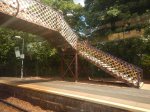
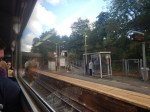
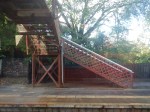
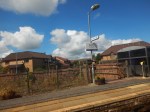
It wouldn’t be a nightmare to electrify, but because of the stone bridges and the steel footbridges, it would be expensive and very disruptive.
The following should also be noted.
- The railway has never gone further than East Kilbride station.
- There is no freight on the line, except for that needed for maintenance.
I am very much drawn to the conclusion, that to electrify the whole route would use money that would probably be better spent on improving step-free access at some of the stations.
Electric Trains To East Kilbride Without Full Electrification
Before I detail the solutions, I shall look at the energy required to raise a train from Glasgow to East Kilbride station.
Consider.
- A four-car electric train like a Class 321 train weighs 138 tonnes.
- This train has 309 seats, so could probably accommodate 400 passengers.
- Assuming each weighs 90 kg with buggies, baggage, bicycles and bagpipes, this gives a train fully-loaded train weight of 174 tonnes.
Using Omni’s Potential Energy Calculator, it would take 73 kWh of energy to raise the train to the 504 feet altitude of East Kilbride station.
It should also be noted that Glasgow Central station and the approaches to the station are fully electrified almost as far as Crossmyloof station.
What solutions are available to have as-new electric trains running between Glasgow Central and East Kilbride station?
The Rhymney Line Solution
The Rhymney Line runs between Cardiff Central and Rhymney stations.
In the design of the new South Wales Metro, the highest section of this line between Ystrad Mynach and Rhymney stations will be run on battery power.
- This section is about eleven miles long.
- It is a mixture of single and double-track.
- The height difference is 410 feet.
This is very similar in severity to the Busby Railway.
Transport for Wales are proposing to use Tri-Mode Stadler Flirt trains on this route.
These trains would be able to handle the East Kilbride route without any modification to the track or electrification.
It would just mean.
- Trains identical to those on the South Wales Metro.
- Building and delivering the trains.
- Training the drivers and other staff.
There would be other advantages.
- Stadler trains seem to be one of the best for step-free access, with automatic gap fillers between platform and train.
- They are 100 mph trains.
- They are ready for modern signalling.
- They can change mode at line speed.
These trains which will be Class 755 trains in Abellio Greater Anglia service, have a central power-pack, that can incorporate diesel or battery power to supplement power from the electrification.
Good engineering design would probably mean.
- The four slots in the power pack, can be fitted with a diesel engine, battery or perhaps even a hydrogen fuel cell to give a power profile tailored to the route.
- The battery would weigh a similar amount to the Deutz diesel engine, which would give a battery capacity of perhaps 100-120 kWh.
- There is an intelligent computer system controlling the power and braking systems.
- The trains come in various lengths from three-cars upwards.
This is a summary of the Stadler multi-mode trains ordered for the UK.
- Abellio Greater Anglia – Electric/Diesel – 14 x three-cars – Two Deutz diesel engines
- Abellio Greater Anglia – Electric/Diesel – 24 x four-cars – Four Deutz diesel engines
- Trains for Wales – Electric/Diesel – 11 x four-cars – Four (?) Deutz diesel engines
- Trains for Wales – Electric/Diesel/Batteries – 7 x three-cars – One Deutz diesel engine and three batteries (?)
- Trains for Wales – Electric/Diesel/Batteries – 17 x four-cars – One Deutz diesel engine and three batteries
I’m sure Abellio Greater Anglia won’t leave Abellio ScotRail, short of operational information.
In addition, they might be ideal for other routes in the Glasgow area.
- The Glasgow South Western Line to Kilmarknock, Dumfries and Carlisle.
- The Ayrshire Coast Line to Ayr and Stranraer.
- The West Highland Line to Oban and Mallaig.
They would use the electrification, when close to Glasgow.
I can’t see any reason, why another version of the Tri-Mode Stadler Flirt won’t be able to run services between Glasgow Central and East Kilbride stations.
The Battery Solution
Transport for Wales intend to run their Tri-Mode Stadler Flirts on battery from Ystrad Mynach to Rhymney. I can’t see any reason why a well-designed battery train can’t do the similar climb to East Kilbride station.
Of the major train manufacturers, only Stadler seem to have declared their hand with the Rhymney Line proposal.
- Bombardier have run prototypes in the UK and Germany, but are very protective with solid information.
- CAF have run battery trams and will introduce them to the UK in the next year or so.
- Hitachi use batteries in their trains and have run battery trains in Japan.
Also, consider that between Glasgow Central and Pollokshields East stations is electrified and extending this electrification to say Busby Junction. where the Busby Railway leaves the Glasgow South Western Line, would have the following benefits.
- The distance to run on batteries would be reduced by about three miles.
- There would be more electrification to ensure that train batteries were full before the climb to East Kilbride.
- If bi-mode trains were to run to Kilmarnock, Dumfries and Carlisle, they would have more electrified line to use.
This short section of electrification would certainly improve the mathematics of running battery trains to East Kilbride.
As Busby Junction to Kilmarnock is around twenty miles, it might even make it possible to run battery trains between Glasgow Central and Kilmarnock stations.
I have no doubts that, a battery train can be built to handle services between Glasgow Central and East Kilbride.
The Hydrogen Solution
I tend to think of trains powered by a hydrogen fuel cell, as battery trains with an environmentally-friendly onboard power source.
The Busby Line route is ideal for battery trains, especially, if there is a few miles of new electrification at the Glasgow Central end of the route.
Alstom’s proposed hydrogen-powered Class 321 train, could also be ideal for this route.
Four-car trains with a decent interior, would certainly solve the overcrowding on the route.
In A Class 321 Renatus, a comment was put, that says that the hydrogen-powered Class 321 trains will share the Renatus interior.
I’d suspected that would be the case, as why would the train’s owners; Eversholt Rail Group, design two different interiors for the same purpose?
The train would be able to leave Glasgow Central station with a full battery and with the help of electricity from the hydogen fuel cell, it would be able to climb to East Kilbride.
Coming down, the train would be partly powered by the battery, but mainly by gravity. Energy generated by the regenerative braking would be stored in the battery.
Alstom will be building a mathematical model of the train and its performance on various routes, so they will know the energy flows, when the train is working.
I said earlier that the following routes would be ideal for Stadler’s bi-mode trains.
- The Glasgow South Western Line to Kilmarknock, Dumfries and Carlisle.
- The Ayrshire Coast Line to Ayr and Stranraer.
- The West Highland Line to Oban and Mallaig.
I feel the same logic applies to Alstom’s hydrogen trains.
Conclusion
All three solutions, I outlined in this post, could be possible.
The solutions have several things in common.
- All will be fully tested elsewhere on the UK rail network.
- None need any electrification between Busby Junction and East Kilbride.
- All would benefit from a few extra miles of electrification between Busby Junction and Glasgow Central station.
- All solutions are backed by respected train building companies.
I think there will be a very keen contest to see who supplies the trains for this and other related routes from Glasgow.

