Electrification At Paddington Station
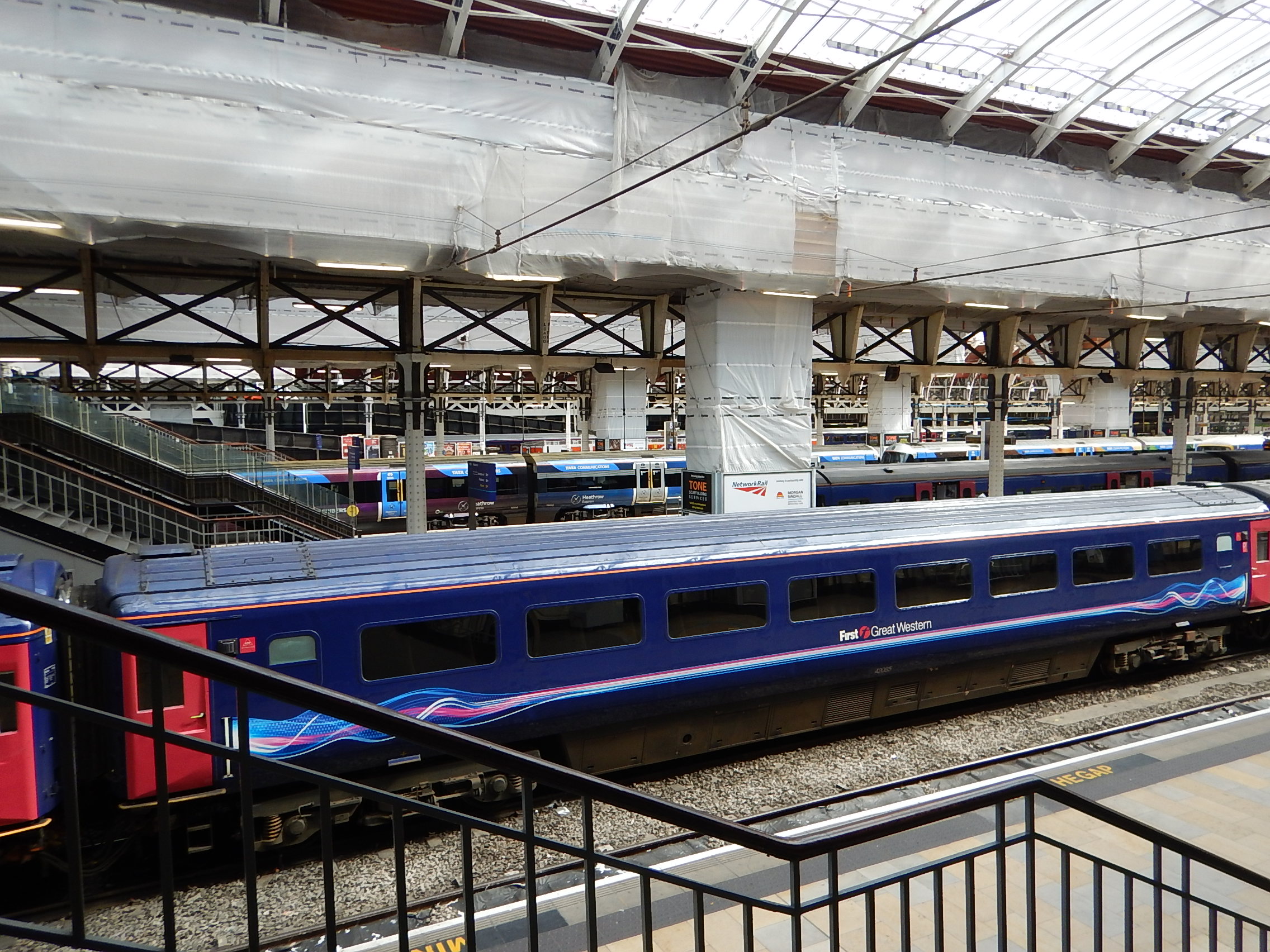
I took this picture looking across the lines at Paddington station.
Electrification At Paddington
The nearest platform, which is number one, is not electrified yet. note the bar across the tracks which is used to support the wires.
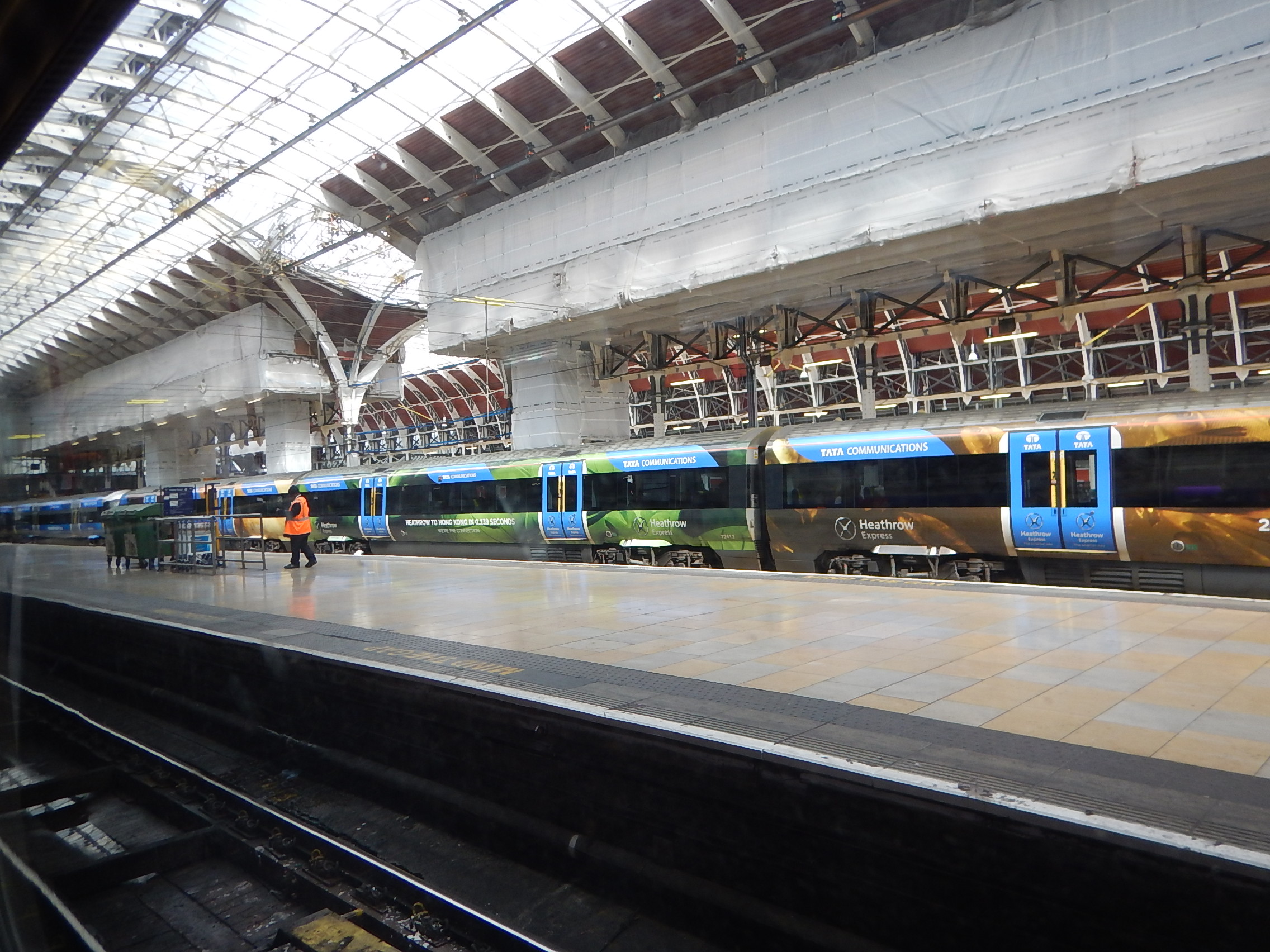
This picture shows wires installed over platforms four and five.
Electrification At Paddington
Note where the support is yellow, that you can just see a slim vertical support for the overhead wire.
It certainly seems to be more of a sympathetic design than the gantries I discussed in Aesthetic Problems With Overhead Wires On The Great Western
Hanwell Station – 28th March 2016
I took these pictures as I went over the Hanwell Viaduct and Through Hanwell station.
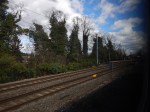
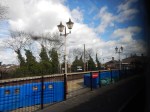
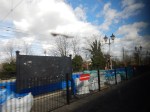
All seems to be getting ready for electric services to start in May
Southall Station – 28th March 2016
I took these pictures today at Southall station.
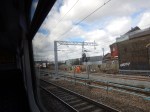
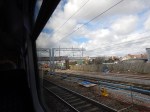


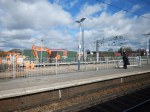
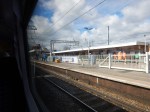


It looks like as at Hayes and Harlington station, some of the catenary has been replaced or updated.
West Ealing Station – 28th March 2016
I took these pictures as I passed through West Ealing station.
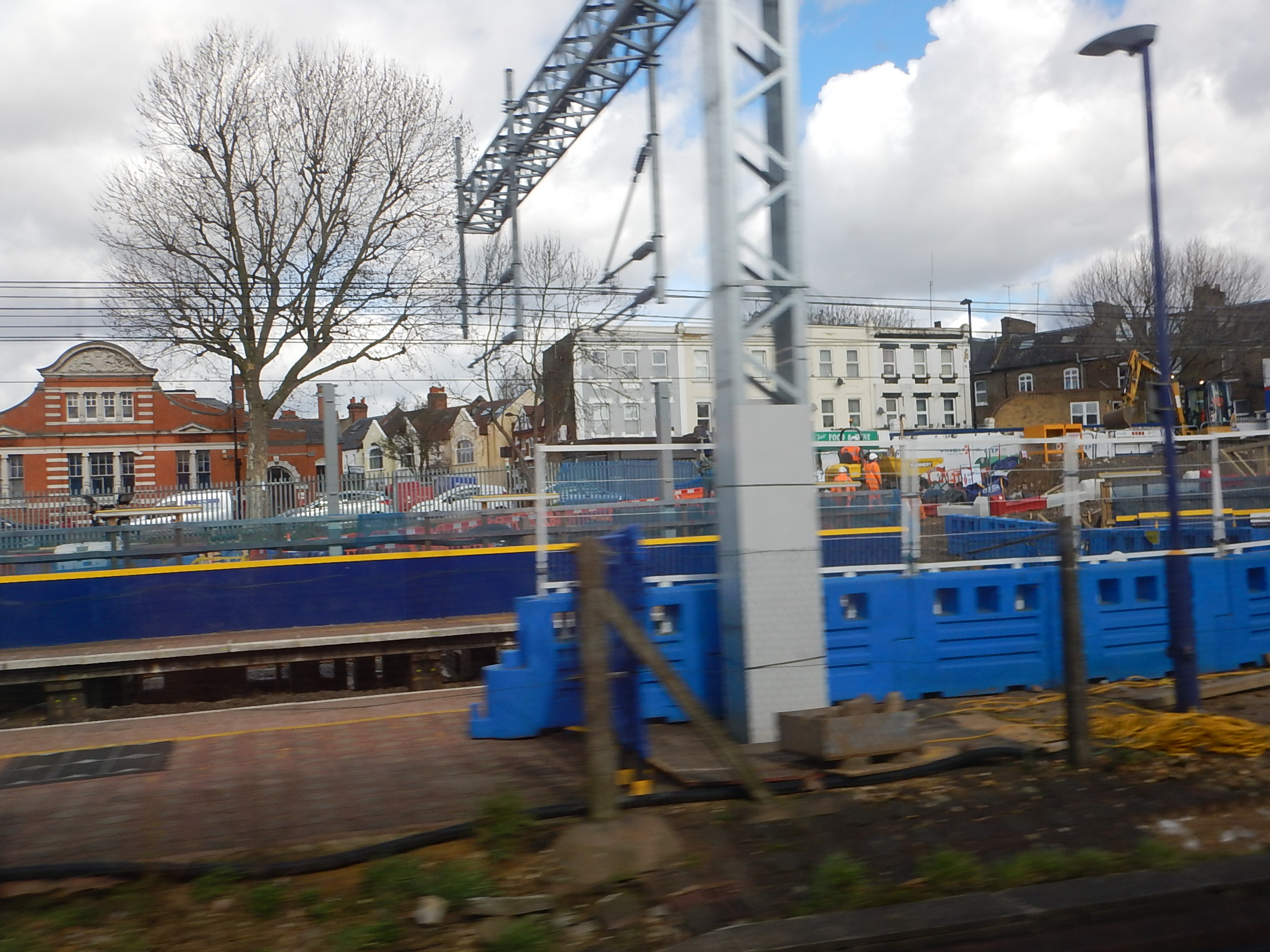

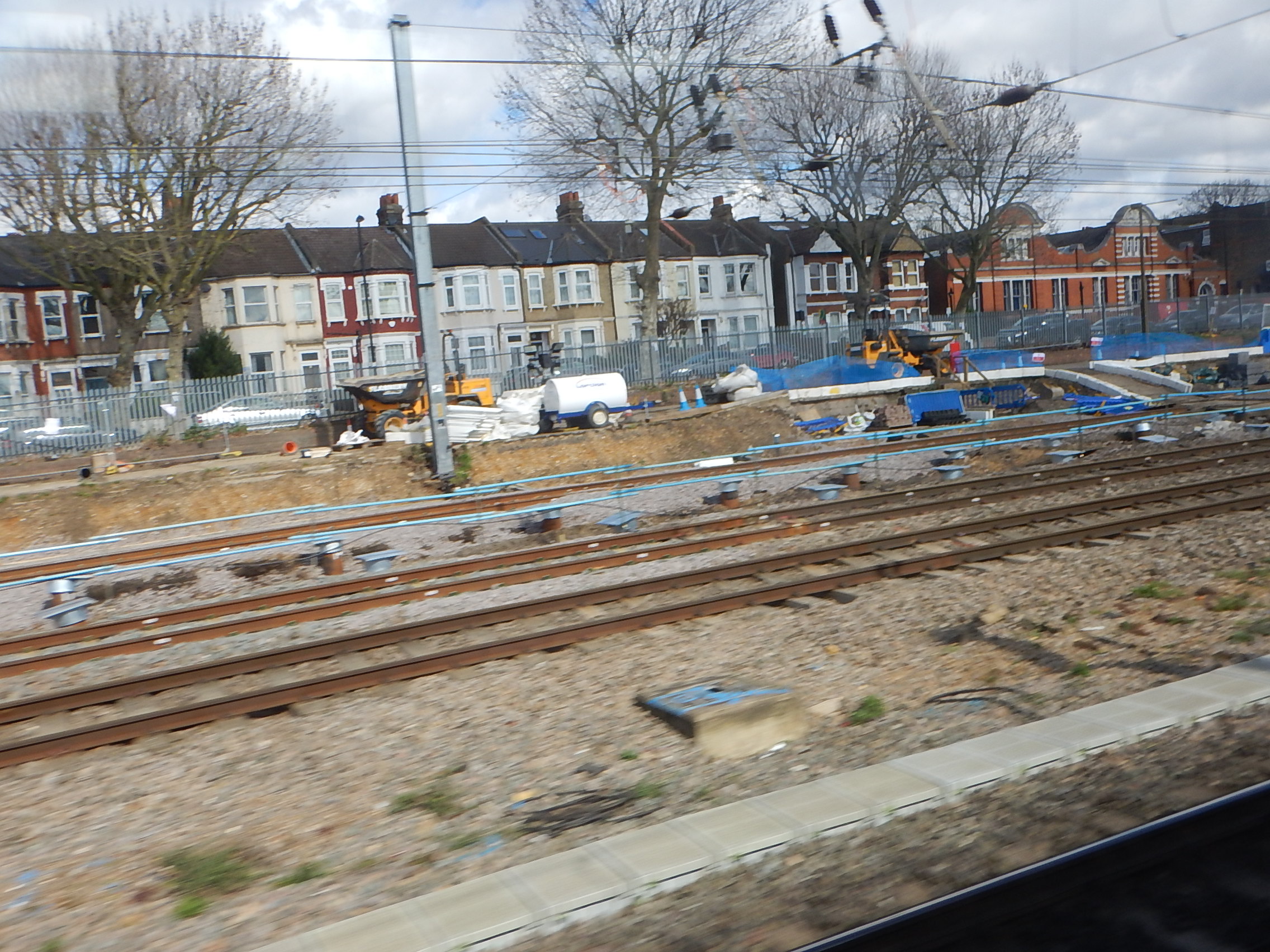
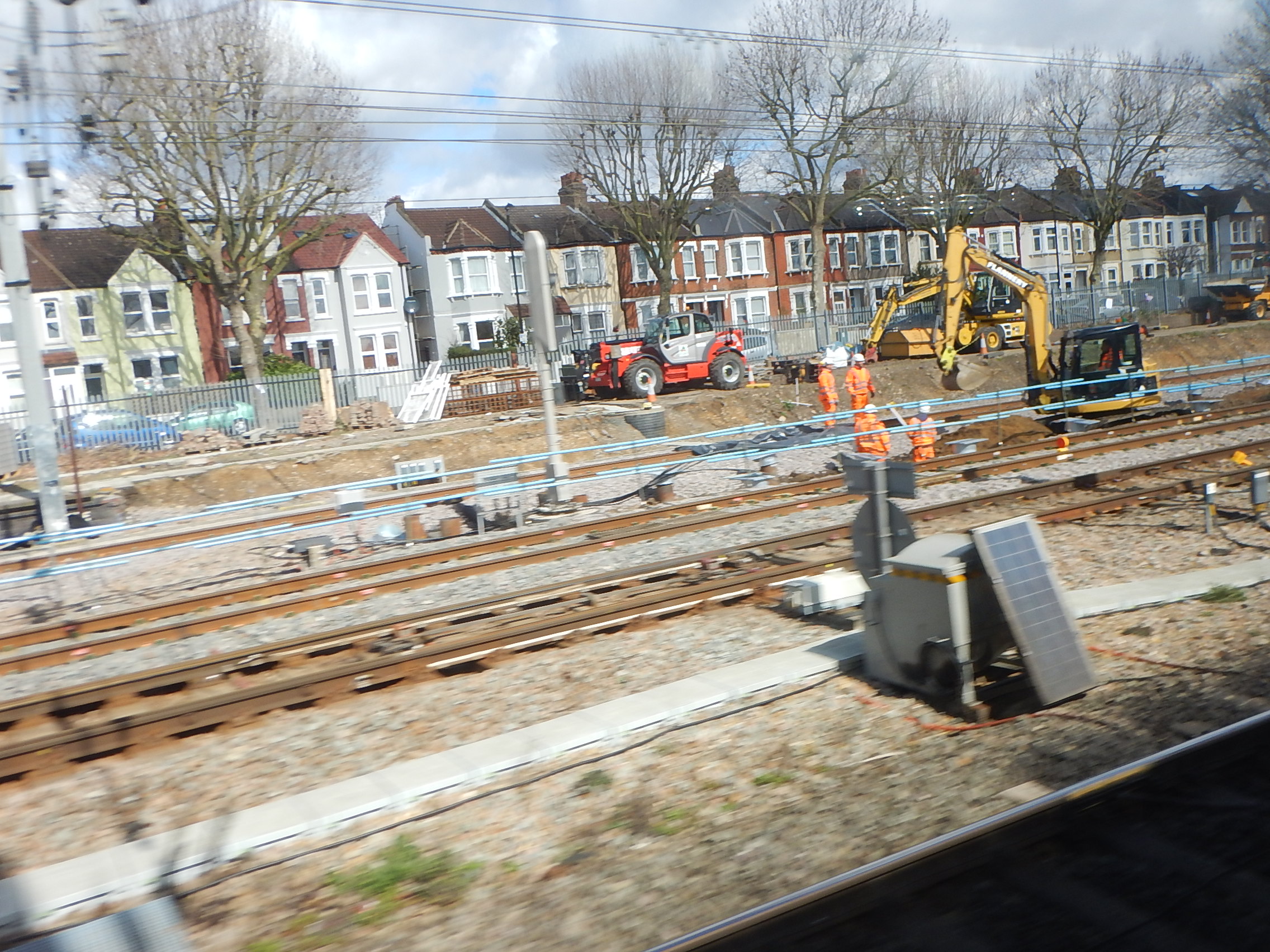
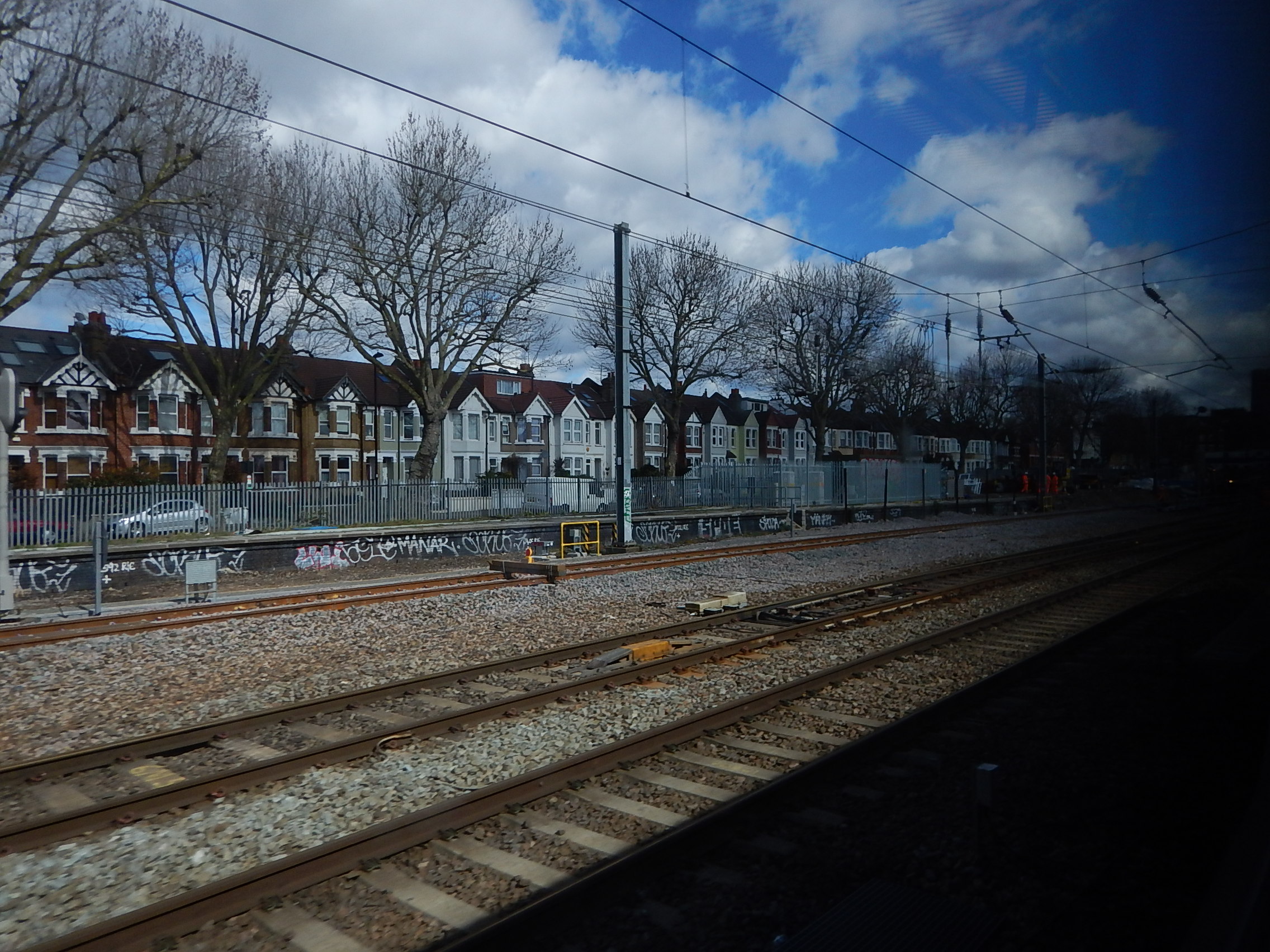
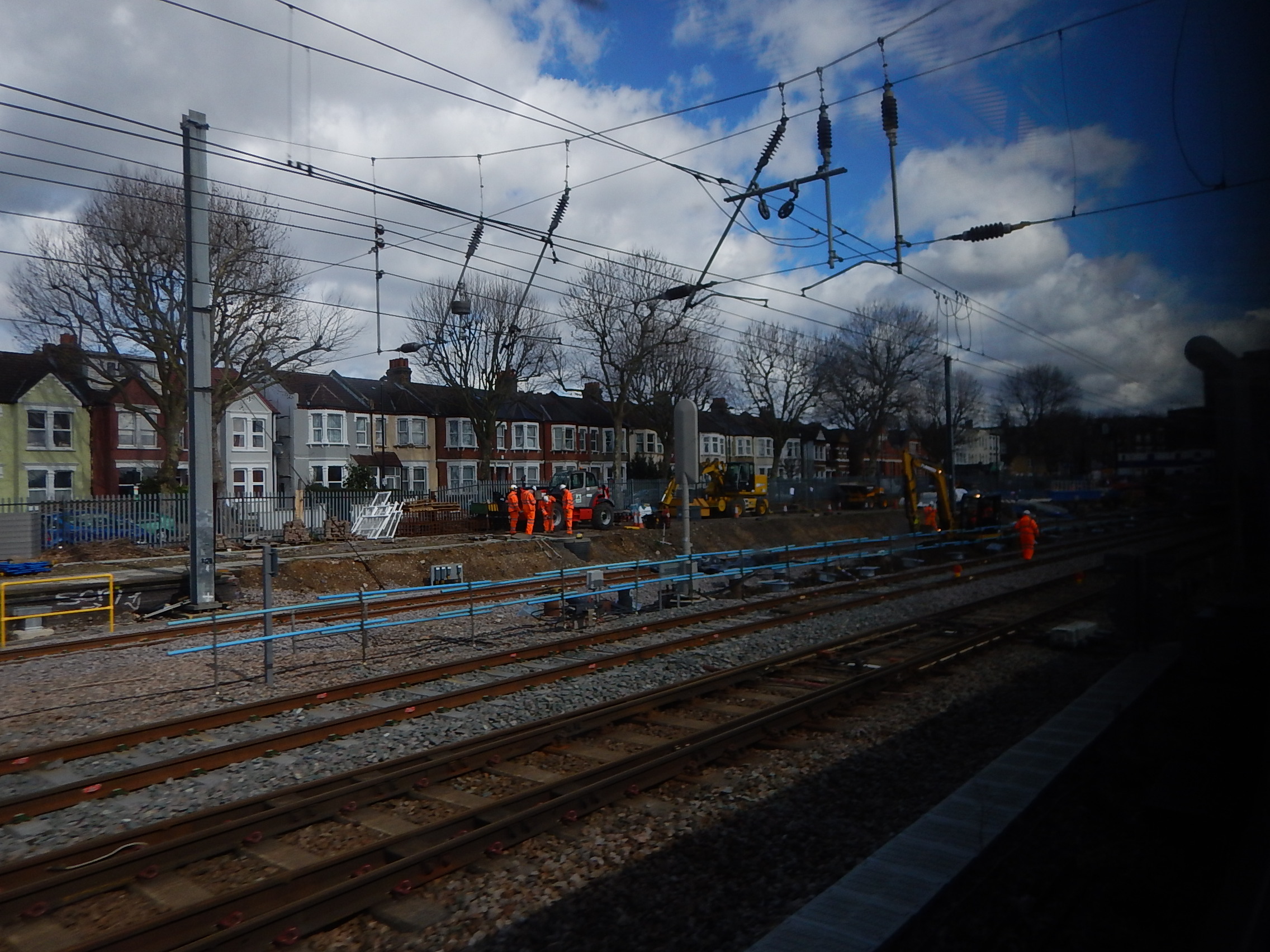
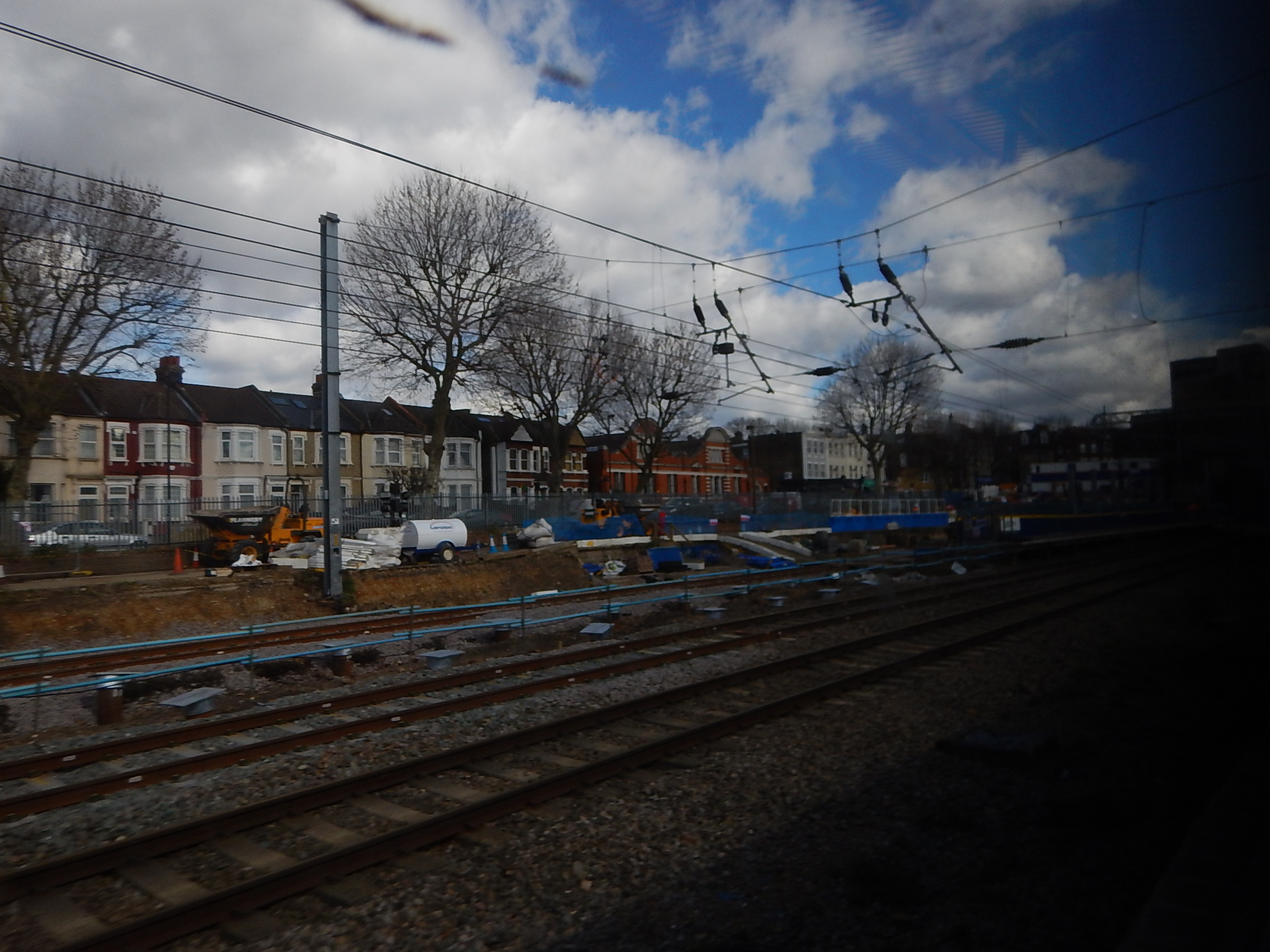
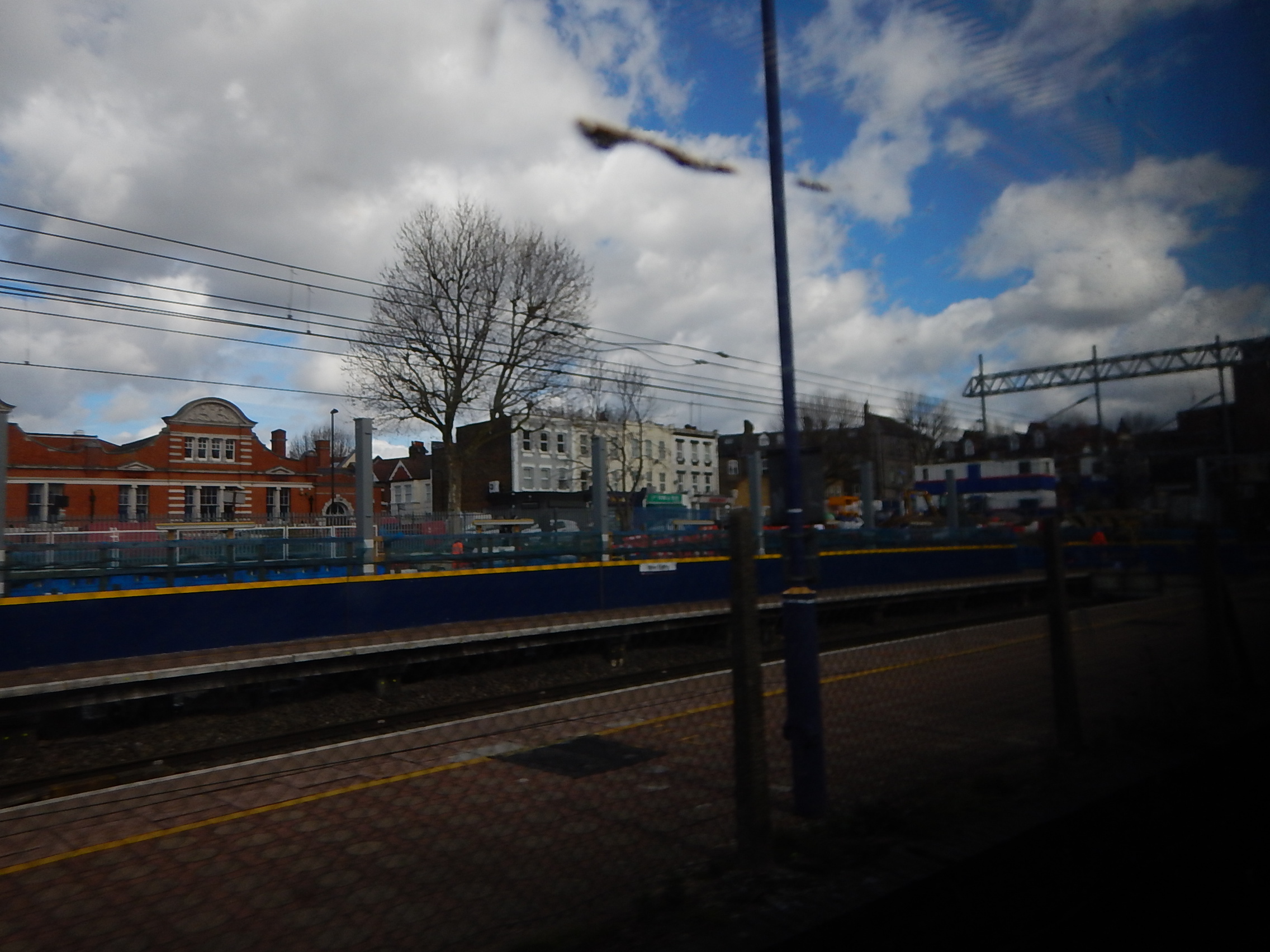
The only definite conclusion I made, was that I will have to visit to be able to make any conclusions about how the Greenford Branch will be run after it loses its direct connection to Paddington.
Wikipedia says this about how Crossrail will affect services on the Branch, in a Future section.
In 2017 Crossrail is due to begin using two of the four tracks of the Great Western Main Line and the Greenford service will terminate at West Ealing, rather than continue to Paddington, to obviate interference with Crossrail, and to create track capacity for increased services to Heathrow. In compensation the branch line service will increase from two to four trains per hour.
When this will happen, I can only guess that it will be at the same time, as electric services start between Paddington to Hayes and Harlington.
At present the trip between West Ealing and Greenford takes just seven minutes, so if one train was to work the branch, there would be no problem doing the four seven minute legs required for two trips per hour, but four trips with eight legs might be a bit tighter, especially if something delayed the train like say a party of thirty schoolchildren or a group of three or four in wheelchairs with their carers wanting to go shopping.
Given too,that a good service for passengers would probably need.
- Similar frequencies of the Paddington to Hayes and Halington service and the Greenford Branch line.
- The Greenford Branch train would probably arrive at West Ealing a few minutes before a train to Paddington.
- The train from Paddington would probably arrive at West Ealing a few minutes before the Greenford train left.
In my view good connections are essential, as a lot of people will not be pleased to have lost their direct service to Paddington.
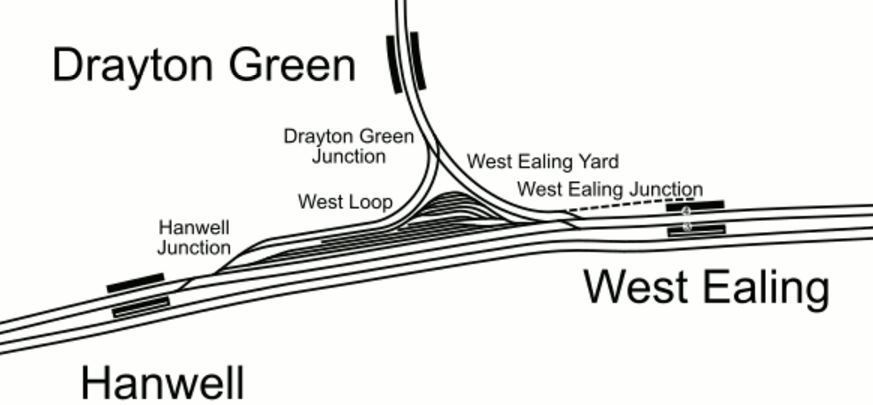
This map from carto.metro.free.fr shows the layout of the lines at West Ealing.
Lines At Wes tEaling
Note how there is a connection to the West.
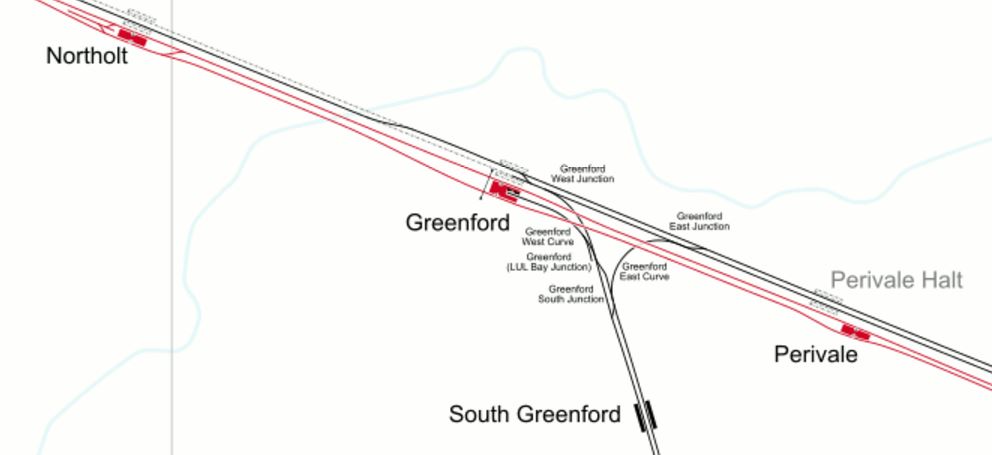
This second map from carto.metro.free.fr shows the layout of the lines at Greenford.
Lines At Greenford
Given that to the West of Greenford, the lines connect to Chiltern, you just wonder if someone has a plan to improve connectivity in North West London.
But the branch does have some negative factors, that mitigate against development.
- There would appear to be no suitable Southern terminal to the West of the branch.
- Three of the stations on the branch can only handle two-car trains.
- The branch is not electrified.
- The terminus at Greenford is a bay platform, squeezed in between two Underground tracks.
A lot will depend on the trains and the operators of the Greenford Branch, as to what happens.
At present, the branch is run by GWR, but there has been talk about the branch coming under control of London Overground.
GWR would probably run the line as they do now, with a two-car diesel Class 165 train.
Would London Overground run the line with a IPEMU version of their new Class 710 train, as Aventras can be fitted with on-board energy storage?
The Steventon Bridge Problem On The Great Western Railway Electrification
Roger Ford in an article in the April 2016 Edition of Modern Railways, which is entitled GWEP Target Dates And Costs, discusses some of the problems of the electrification.
In one section he talks about the problems caused by the Grade II Listed Steventon Bridge.
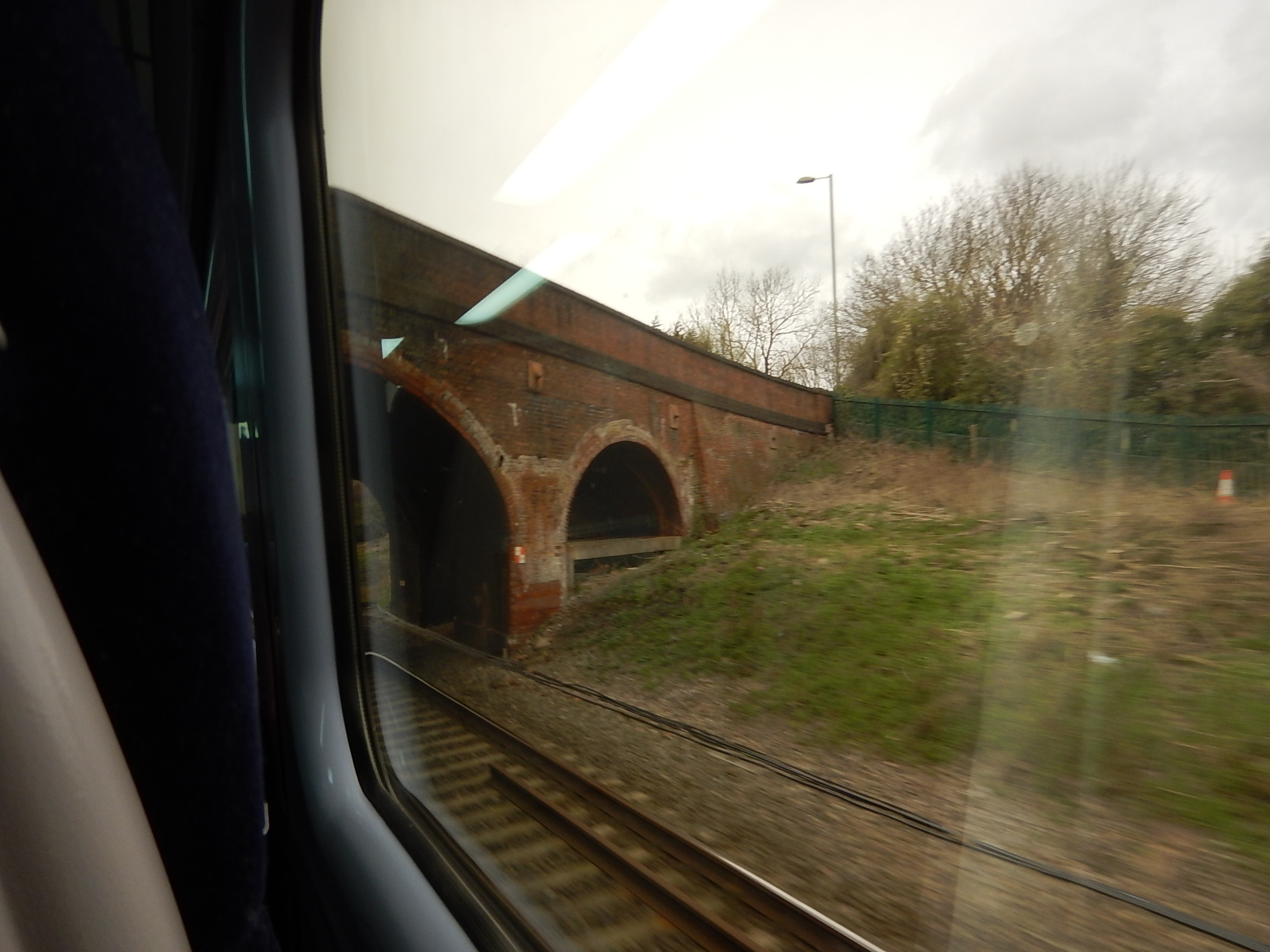
This is a picture I took of the bridge from an InterCity 125
Steventon Bridge
Not the best, but it shows the design of the bridge.
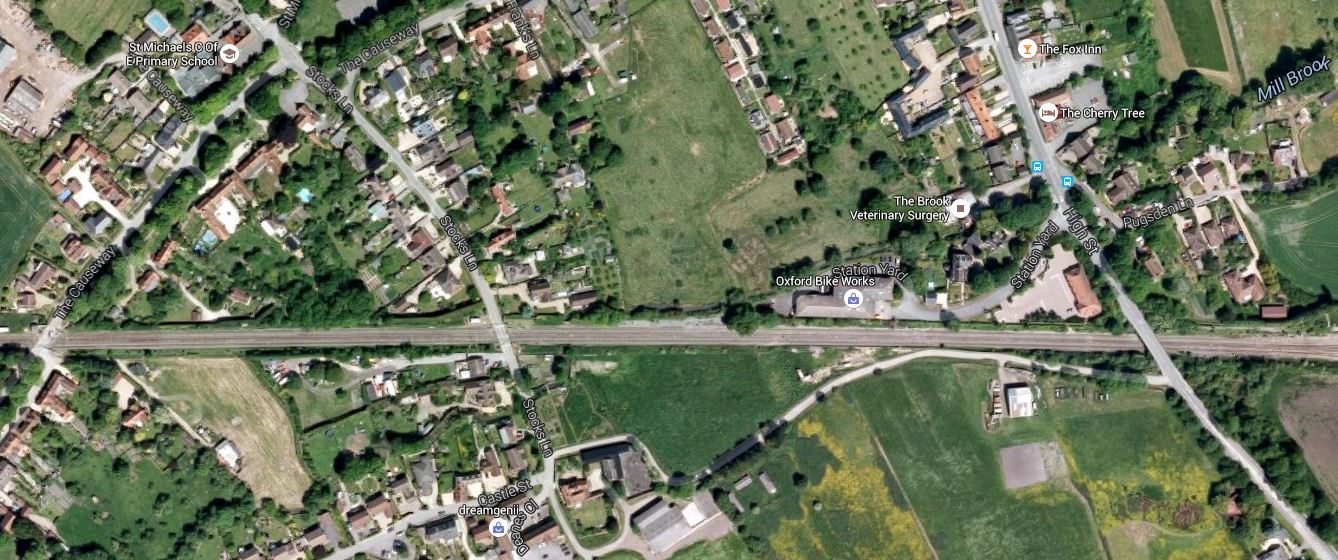
This Google Map shows the Great Western Main Line, as it passes just to the south of the village of Steventon in Oxfordshire.
GWML Through Steventon
The bridge is on the Easternmost crossing of the railway, with the other two crossings being level crossings.
Roger explains the problem, which is about putting the overhead electric wires under the bridge.
The overhead wires have to be at maximum height over the level crossings and this means to get the wires under the bridge, they have to dip sharply. This means that excessive wear is caused to the contact wire.
It would appear from the article, that Network Rail are still searching for an acceptable solution.
At least it would appear that one of the level crossings is going to be closed, which could ease matters a shade.
But will the locals put up a fight as Mark Whitby has at the Ordsall Curve?
This article in the Oxford Mail is entitled Demolition of Steventon rail bridge on hold after MP intervention.
Some of the comments are priceless!
My view has a touch of the Philistine about it!
We have thousands of bridges like this and we don’t need to keep them all!
So perhaps we should save the best, but some that would cost too much to keep, should be replaced with modern bridges.
In the case of the Steventon Bridge, if the level crossings didn’t exist, it would appear that the tracks could be lowered under the bridge to give the required headroom.
As level crossings are one of the major causes of death on the railways, we shouldn’t stop until all are eliminated.
It would appear from this document, that one of the level crossings is going to be closed and a height limit of five metres placed on the other.
I think that the ultimate solution for this sort of problem will be technical.
In one of their documents about the use of batteries on trains, Network Rail or Bombardier talk about batteries being used to assist trains over deliberate gaps in overhead wires or third rail.
Third rail generally is not a problem and in the UK, it regularly changes sides and allows the momentum of the train to bridge any gap.
What is needed is a pantograph system, that can be raised to and lowered from the overhead wire with the train at full speed. I don’t know whether this is possible, but I suspect that every other country in the world would just demolish the bridge. I did find some research on the subject on the RSSB web site, which states that SNCF raise pantographs at 225 mph, Deutsche Bahn at 185 mph and Eurostar at 170 mph.
So it is possible!
As a trained Control Engineer, who spent a lot of time in the 1960s simulating dynamic systems, I believe that a system could be designed to lower and raise the pantograph before and after the difficult section.
I suspect that one of the problems here, is that the Class 800 trains that will work this line, were designed in Japan. But this section in Wikipedia about level crossings in Japan, would seem to indicate that the Japanese have a serious problem with level crossings.
Are The TOCs Arguing Over The Class 387 Trains?
The April 2015 Edition of Modern Railways has an article entitled Operators Vying For Class 387s.
Before discussing the article, I’ll describe the trains involved.
Class 387 Trains
At present there are twenty-nine new four-car Class 387 trains running Thameslink services for Govia Thameslink Railway (GTR).
- These are dual-voltage 175 kph (110 mph) versions of Electrostars.
- They can run on probably most of the electrified routes in the UK.
- They are about to be replaced by brand-new Siemens Class 700 trains, as these are delivered.
- They are closely related to the Class 379 trains, which were used for the IPEMU prototype in early 2015.
As they become available, they are supposed to go to the Great Western Railway (GWR).
But GWR only have the working electrification from Paddington to Hayes and Harlington station on which to run the trains. As I showed in Hayes and Harlington Station – 28th February 2016, work is progressing at the station and an extended bay platform is being created.
The finish of platform works at the station, will mean a service can be started between Paddington and Hayes and Harlington.
- It will replace the main-line portion of the service between Paddington and Greenford, which is soon to be discontinued.
- It can be used by GWR for driver training.
- Class 387 trains working in GWR livery will be good publicity.
But I can’t see this service needing more than a couple of Class 387 trains.
This picture shows the colour scheme of a Class 387 train, currently working on Thameslink.

The colour of those doors looks suspiciously like GWR green to me! So perhaps the transfer of operator would not require anything more than downloading new software for the passenger information screens and changing the adverts and notices.
In addition to the current twenty-nine trains on Thameslink, Bombardier have three further orders for Class 387 trains.
- Twenty-seven four-car Class 387/2 trains are being delivered for Gatwick Express.
- Eight four-car trains for GWR.
- Twenty four-car trains have been ordered by Porterbrook.
Bombardier are reported to be on the verge of finishing the Gatwick Express order and starting manufacture of more Class 387/1 trains.
Class 442 Trains
The Class 442 trains, which are being replaced on Gatwick Express by Class 387/2 trains are not the most loved trains in the UK’s train fleet.
It is very likely that despite being the fastest third-rail trains in the world, that they will go to the scrapyard as they are replaced.
The only reason some might be retained on Gatwick Express, is so that some Class 387/2 trains could work Thameslink to release a few of the Class 387 trains for other operators.
Class 700 Trains
The Class 700 trains, being built in Germany by Siemens, are replacing the last Class 319 trains and the new Class 387 trains on Thameslink.
So introduction of these trains is important to release Class 387 trains for other operators.
But these trains are only due to be introduced on the 16th April 2016 and there are inevitable questions.
- What is the introduction into service schedule?
- As with all new trains or car, bus or truck for that matter, will there be any teething problems?
- Will they replace the Class 319 or 387 trains first?
- Will the passengers like them?
The last question is the most important and expect lots of moaning about the lack of free wi-fi!
Class 360 Trains
The Class 360 trains, used on Heathrow Connect, have a peripheral role in the argument, as c2c were trying to sublease two of these trains to sort out their capacity problems.
But the well-documented problems of Heathrow Express, have probably meant that these trains are no longer available.
Summarising The Article
The first paragraph of the Modern Railways article entitled Operators Vying For Class 387s, says that several operators are vying for the Class 387/1 trains currently working on Thameslink.
To summarise.
- c2c, who are big Electrostar operators, are still looking for trains after failing to procure Class 360 trains.
- GWR is anxious to get 387s to start driver training.
- GTR wants to retain them, as there is problems with the new Class 700 trains.
- GWR have apparently suggested that GTR retain the Class 442 trains and use the new Class 387/2 Gatwick Expresses on Thameslink.
- GWR wants to start services to Maindenhead earlier than thought.
It looks like there’s a serious argument going on.
The final paragraph offers a solution.
It could be that the quest to find additional short term capacity at c2c may be solved by early delivery of the next batch of 387s, construction of which is to begin shortly at Bombardier’s Derby factory.
Perhaps, building some of Porterbrook’s trains before those destined for GWR, where they have nowhere to run, could happen!
Bombardier are probably being a bit bullish, as after all one of the reasons for the problems would appear to be the new Class 700 trains from Siemens.
Adding An IPEMU Capabilty To Class 387 Trains
Could it also be, that until this argument is settled, we will not be seeing any Class 387 trains converted into IPEMUs?
I believe that a proportion of trains with on-board energy storage could help some of our electrification problems.
Bombardier have stated that all their new Aventra trains will be wired to accept on-board energy storage if the operator desires it be added. This article in Global Rail News gives full details.
In the meantime, the only train that is available that can be given an IPEMU capability is the Class 387 train.
Electric Services To Maidenhead And Reading
The article says this about electrification to Maidenhead.
Whilst the completion date for wiring to Maidenhead is shown in the re-plan of Network Rail’s Enhancements Programme by Sir Peter Hendy as being June 2017, Modern Railways understands that work is ahead of the new schedule and this section may be completed by the end of 2016.
As electrification to Reading is Crossrail’s problem, this might help too, as different structures are being used.
In Rumours Of Battery Trains, I discussed an article in the September 2015 Edition of Modern Railways entitled Class 387s Could Be Battery Powered, which said that GWR’s eight additional Class 387 trains could be battery powered. This was said in Modern Railways.
Delivery as IPEMUs would allow EMUs to make use of as much wiring as is available (and batteries beyond) while electrification pushes ahead under the delayed scheme, and in the longer term would allow units to run on sections not yet authorised for electrification, such as Newbury to Bedwyn. The use of IPEMUs might also hasten the cascade of Class 16x units to the west of the franchise.
But thinking about electrification to Maidenhead in a practical manner, would a train operator want Maidenhead as the terminus of a new electric service.
Remember that the Class 387 trains are required to increase capacity and bring a whole new level of electric traction and modern comfort to services from Paddington to Bedwyn, Newbury, Oxford, Reading and other places in the Thames Valley, so having to change from your old diesel train to a new electric one at Maidenhead is something that will bring out the worst out of passengers.
If you look at train times between Maidenhead and Paddington, some services take up to thirty-six minutes, but the fastest scheduled journey I can find is probably by an InterCity 125 in nineteen. So you can understand, why GWR would like 110 mph Class 387 trains on the route. They could probably do the journey in a few minutes over twenty.
With Chiltern starting an Oxford to Marylebone in December 2016, GWR are probably preparing to lose a lot of their Oxford business. I know which service I’d choose.
But the Class 387 IPEMU would offer a viable alternative.
- Hayes and Harlington station is fully electrified to Paddington and is just under eleven miles from Paddington.
- Reading station is not electrified and is thirty-six miles from Paddington.
- A Class 387 IPEMU has a range of upwards of fifty miles on batteries.
The Class 387 IPEMU would seem to have been designed to handle Paddington to Reading. But I suspect that electric services will not be offered until the wires reach Maidenhead.
So when will GWR be offering an electric local service between Paddington and Reading?
- Trains would use overhead power to the end of the wires and batteries beyond.
- Enough Class 387 trains will have to be converted to IPEMUs
- Enough platforms at Paddington would have be able to accept electric trains.
Could this be why GWR appear to be so keen to take deliveries of Class 387 trains?
From Reading diesel shuttles would work the lines to Bedwyn and Oxford.
So how does this fit in with Modern Railways assertion, that electrification to Maidenhead will be complete before the end of the year?
If GWR take the IPEMU route to provide services between Paddington and Reading, it just means that the train will be less reliant on the batteries, as Maidenhead to Reading is only twelve miles.
To go to anywhere past Reading is probably difficult, as suitable places like Bedwyn, Didcot and Newbury are more than twenty-five miles from Maidenhead, which probably means the range is too much for an IPEMU, as it has to go both ways on battery power.
On the other hand, every extra mile of usable electrification would extend the reach from Paddington.
But there are three places, where Class 387 IPEMUs could operate without major additional electrification; the three branch lines.
- Henley is 11.5 miles from Maidenhead.
- Marlow is 5 miles from Maidenhead.
- Windsor is 2.5 miles from Slough.
There would probably need to be some short lengths of electrification where the branches join the main line, signalling upgrades and platform lengthening. But not electrifying the branches and using IPEMUs would probably be welcomed by Network Rail, as it would sidestep any legal challenges to the electrification on aesthetic and heritage grounds.
In the peaks there are direct services between Bourne End station on the Marlow Branch and London, which seem to take fifty-four minutes. I suspect that a Class 387 IPEMU could do the journey about twenty minutes faster, with electrification between Paddington and Maindenhead.
Onward To Oxford
Electrification to Maidenhead would not give advantages in providing electric services from Reading to Bedwyn, Newbury and Oxford. It’s just too far for a train powered by batteries.
Commercial common sense, would indicate that with Chiltern scheduled to serve Oxford station in December 2016, if there was one destination, where new electric trains must go, it is Oxford.
And by the end of 2016!
It sounds like an impossible dream!
Roger Ford in an article in the April 2016 Edition of Modern Railways, which is entitled GWEP Target Dates And Costs, says this about testing the Class 800 trains.
GWEP’s 16-mile ‘test track’is between Reading and Didcot; It was originally due to have been energised in September last year.
Energisation for test running is now scheduled for September this year.
He also indicated, and I can confirm it, that substantial amounts of the overhead structures have been installed. So I think we can assume that by September, the test track will probably be working.
As an aside here, I wonder if the test track will electrify and use one of the west-facing bay platforms at Reading station.
If we assume that the test track provides a fully-functioning electrified route between Reading and Didcot, it could surely be used by Class 387 IPEMUs to get to Didcot.
- They would use overhead electrification from Paddington to Maidenhead or the end of the wires.
- They would go to Reading on battery power.
- Reading to Didcot would be using the overhead wires put up for the test track.
- Batteries would be charged on both electrified sections.
Oxford is less than twenty miles from Didcot, so reaching Oxford with an electric service is possible before December 2016.
Onward To Bedwyn
Bedwyn is forty-two miles from Maidenhead and thirty from Reading, so it would appear to be another impossible dream, even if there was electrification all the way to Maidenhead from Paddington.
I do think that unless the Great Western Main Line is electrified to Maidenhead, that getting Class 387 IPEMUs to Bedwyn is impossible.
But there are three possibilities to get to Bedwyn from Paddington, if Maidenhead is electrified.
- A bigger battery to give a longer range.
- As the train stops at Reading, it could stop in an electrified platform and charge the battery.
- Electrifying the junction and a short length of the Reading to Taunton Line, perhaps as far as Reading West station.
I’m sure Bombardier, Network Rail and GWR are working on a solution.
It should also be noted that there are two west facing bay platforms used for services to Basingstoke, Bedwyn and Newbury. These could be electrified and Bedwyn could be served by a shuttle.
Onward To Basingstoke
Another possibility would be to use the Class 387 IPEMUs to provide a service along the Reading to Basingstoke Line, which is currently run using diesel multiple units.
It could be charged at Reading by electrifying the two west-facing bay platforms or even at Basingstoke using third-rail electrification in the bay platform.
Conclusion
I believe that all the Thames Valley services out of Paddington could be run by a fleet of Class 387 trains, some or all of which would be IPEMUs, It would be necessary to do the following.
- Electrify between Airport Junction and Maidenhead.
- Allow the use of the test track between Reading and Didcot by Class 387 services travelling past Didcot.
- Electrify selected platforms at Reading station.
The new trains would provide an increase in capacity, faster services and possibly extra routes.
I also believe that it would be possible to serve Oxford using Class 387 IPEMUs by the end of the year. This might persuade passengers not to desert to Chiltern.
Does this all explain GWR’s reluctance to lose the Class 387 trains, that have been earmarked for transfer from Thameslink?
But with other train companies looking jealously at the GWR’s Class 387 trains, it’s no wonder there’s an argument.
Changing Trains At Slough
Yesterday I changed trains at Slough station and took these pictures.
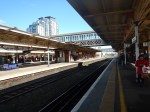

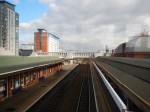
Two pictures were taken a few weeks ago and are added to make the gallery more complete.
The new pictures were taken from Platform 2, which when the electrification is complete and Crossrail has opened, will be the platform serving fast trains to the West.
This Google Map shows the layout of the station.
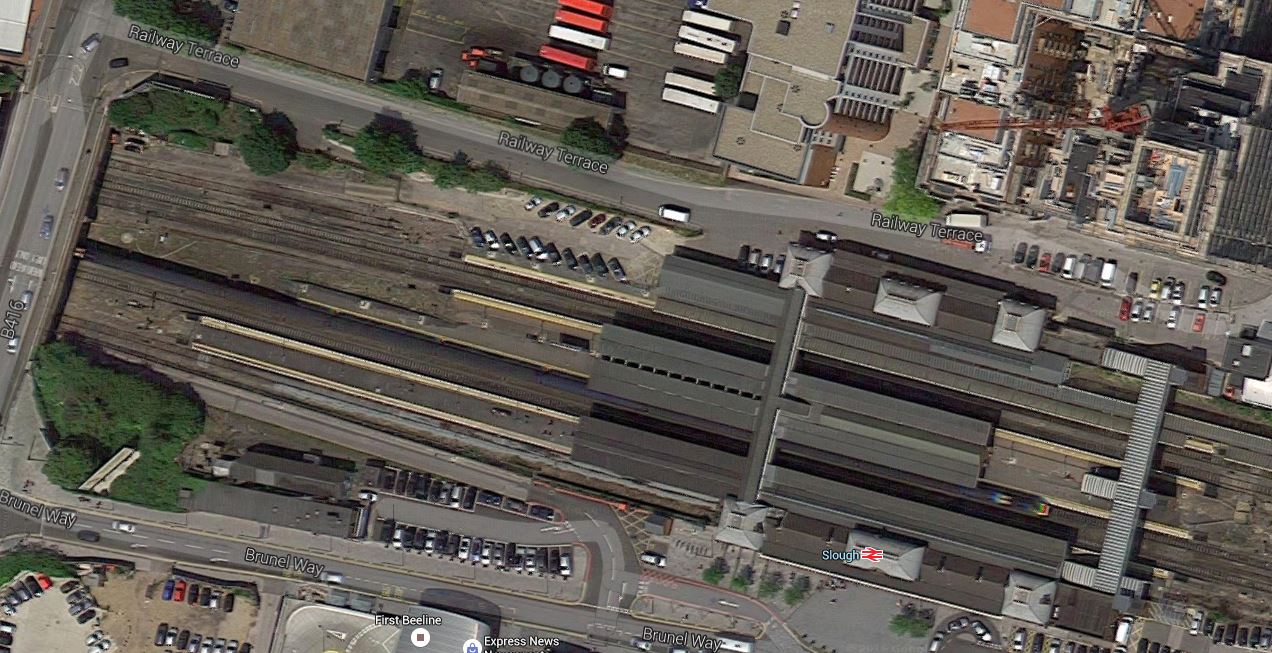
Slough Station
If you look at the left (West) end of the station, you’ll see the extended platform that in addition being Platform 2, also serves the bay platform 1 for Windsor Branch Line services. I took the pictures from this platform.
Platforms 3 and 4 form a long island platform in the middle of the station, with Platform 5 on the far side.
When Crossrail opens, platforms 4 and 5 will be for that service and platforms 2 ans 3 will serve the main lines.
I am puzzling about how the wires will be passed through the station.
Note the following from my pictures and the Google Map.
- The station is Grade II Listed, with lots of period details.
- A lot of the canopies over the platform are good Victorian examples.
- The station has two footbridges; a restored old one and a new modern one.
- The modern one has probably been built to double as a gantry for the overhead wires, but has the old one been strengthened.
- There is a solitary electrification mast on the island platform and this is paired with one on the far side of Platform 1.
- There is evidence that double foundations are being built for a very large gantry at the far western end of the platforms.
I think that over the next couple of months or so, a lot of clues to Network Rail’s electrification design, will become visible at Slough.
Electrifying Didcot Parkway
I took these pictures as I went through Didcot Parkway station this morning.


They seem to be using T-shaped central masts as they did at West Ham and I wrote about in Central Masts At West Ham.
This Google Map shows the station.

Didcot Parkway Station
If you read the Wikipedia entry for the station, you may come to a similar conclusion to myself – In a decade or so’s time, the pattern of services at the station will be very different.
Wikipedia says this about use of the West Curve that allows trains to go between Oxford and Swindon.
There are at present no scheduled passenger services which use the West Curve to avoid the station on direct services from Oxford to Swindon.
But once the East West Rail Link is built, will we see services from Swindon, Bristol and the West using the West Curve to go to Oxford, Milton Keynes and the East?
Aesthetic Problems With Overhead Wires On The Great Western
The April 2016 Edition of Modern Railways has an article entitled Thames Valley Wires Retrofit Planned. This is said.
A retrofit of overhead electrification on the section of the Great Western main line between Reading and Didcot is on the cards following complaints about the visual impact of the current design.
This are some pictures of the overhead gantries.
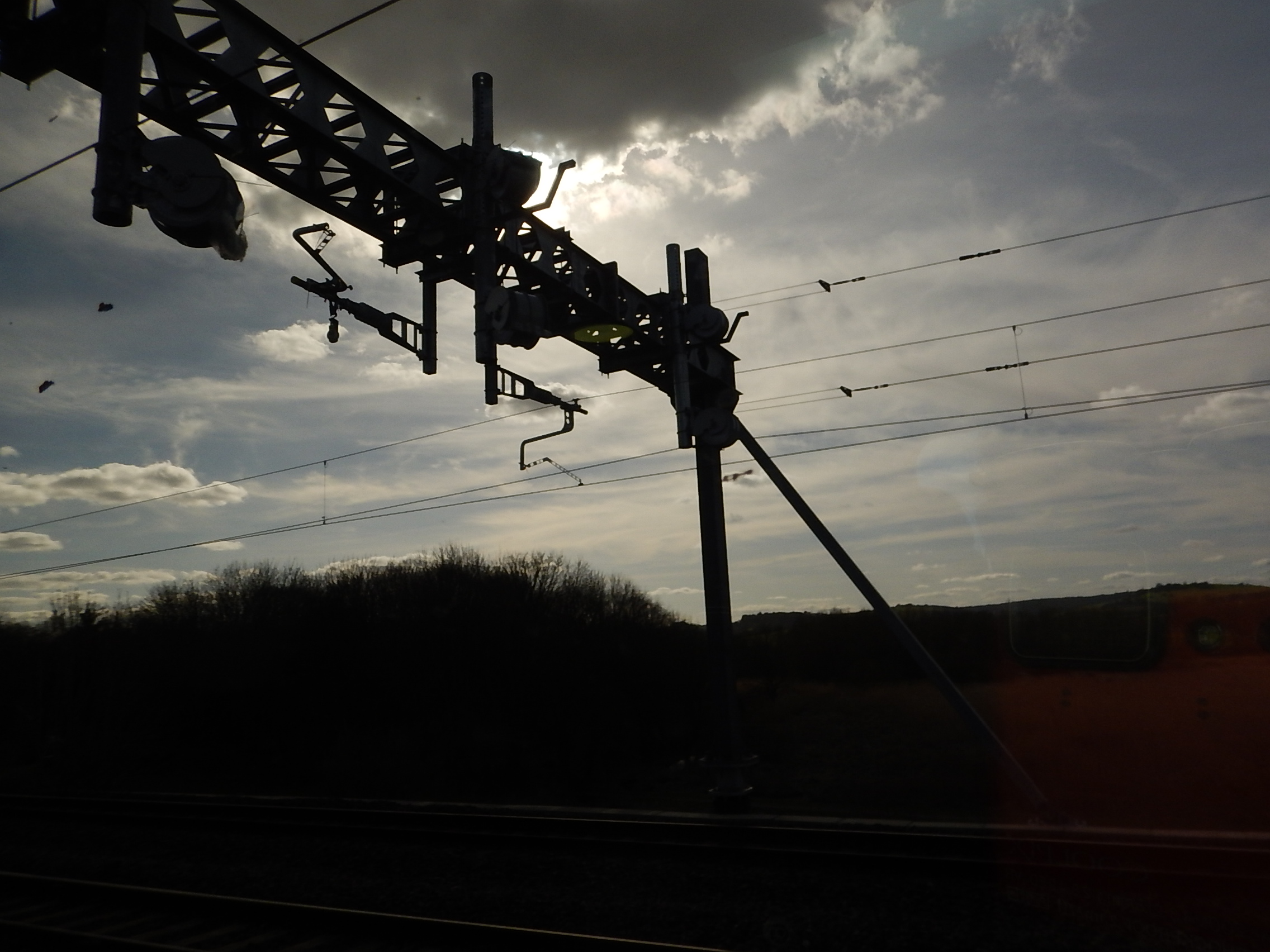


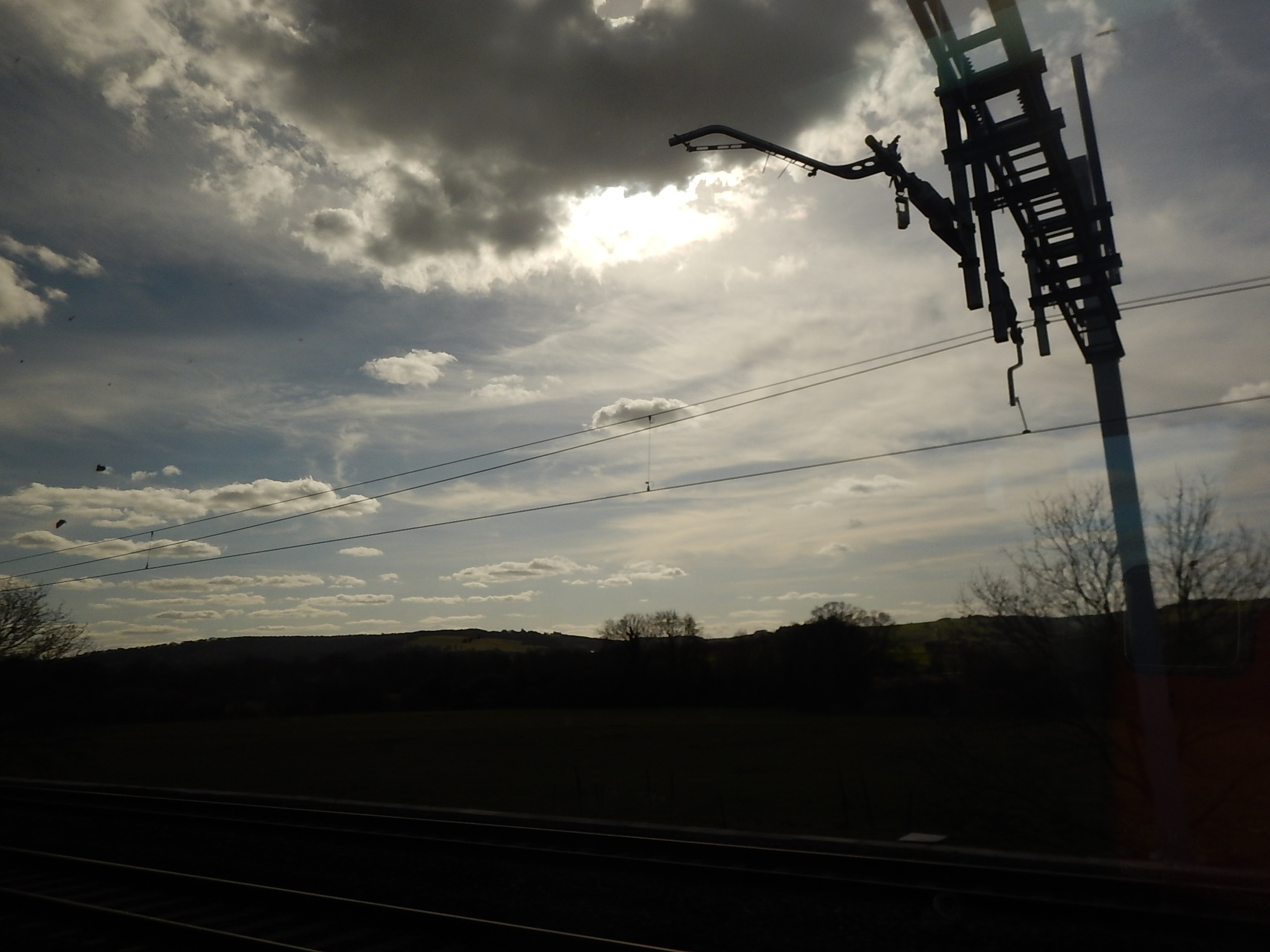
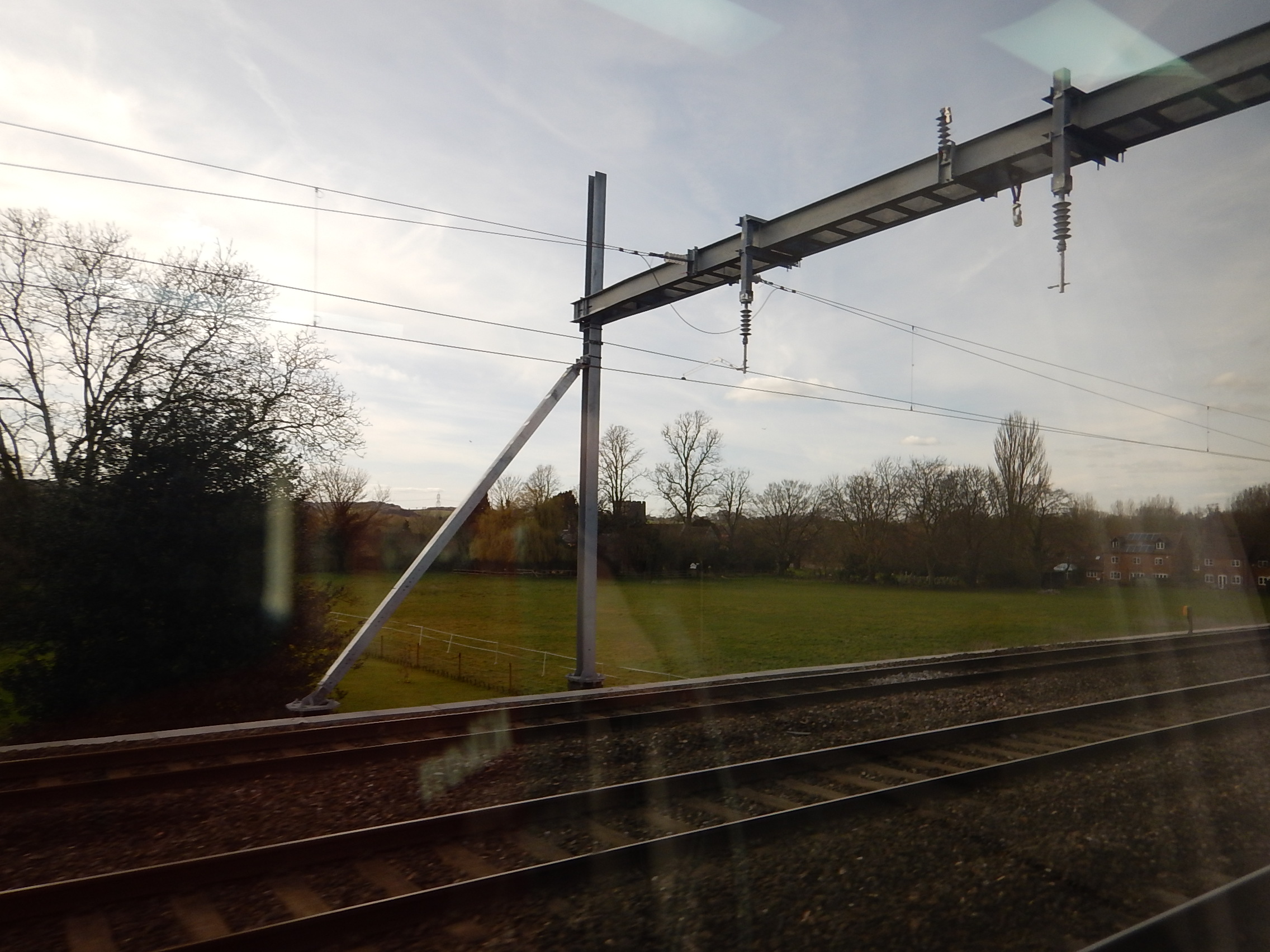
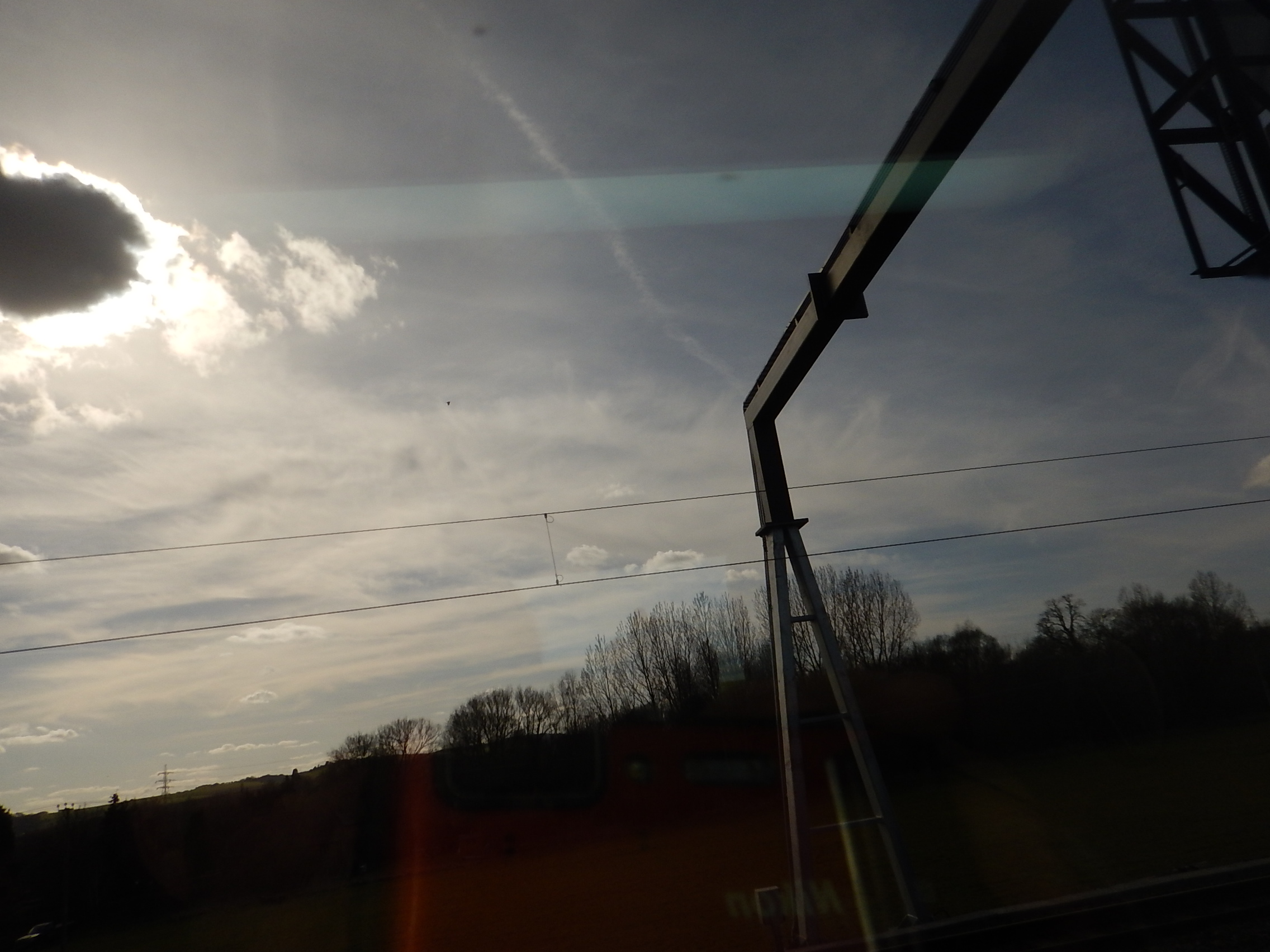
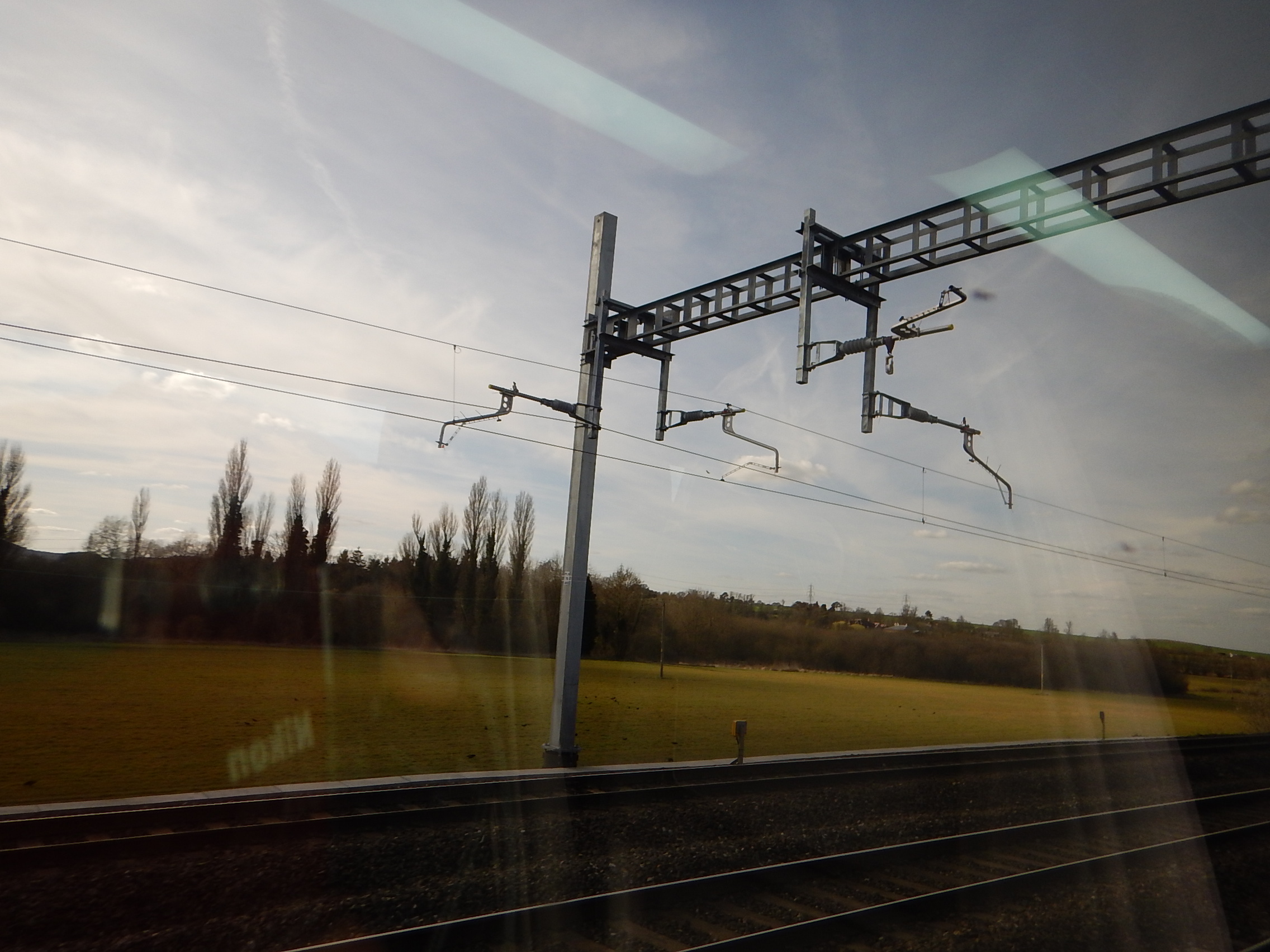
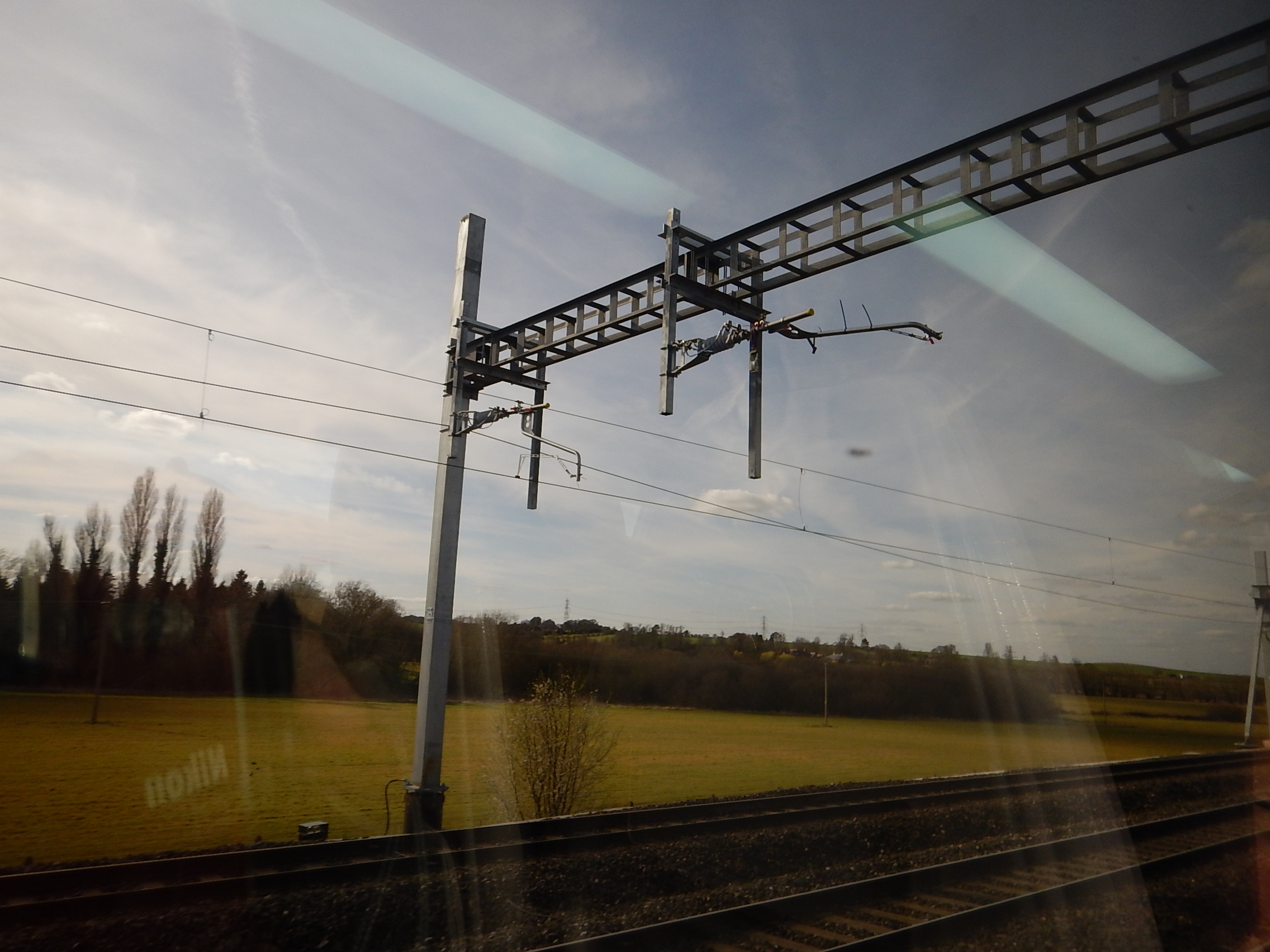
In my view, the design of the overhead gantries may well be better from a structural and reliability point of view, but it isn’t going to win plaudits for looking good.
Network Rail will have to do better!
Electrification Of The Felixstowe Branch And Other Lines In East Anglia
I’m using the Felixstowe branch as an example, as I used to live near Felixstowe station and I know the area well. I’ll make these assumptions.
- In this rail forum, the cost of electrification was given in 2010 as £100,000 per single track kilometre.
- The passenger line from Ipswich to Felixstowe is about 16 miles with only 6 miles being double-track. So that is effectively 22 miles or 35.4 kilometres of track.
- The Port of Felixstowe is exclusively served by diesel locomotives of various noisy and environmentally-non-friendly types, although sometimes these are changed for an electric Class 90 locomotive at Ipswich. So we can probably leave the Port out of the calculations, especially as they don’t seem to keen on electrification.
- Of the four stations on the line a couple would need to have lengthened platforms for a four-car train.
- The passenger service is roughly hourly and can be run by a single train.
- As the line has a W10 loading gauge, all of the bridges would probably be big enough to accept overhead electrification.
So we get a very rough electrification cost that will be £3.5million at 2010 prices to enable electric trains to go to Felixstowe station. You would have to add any platform costs.
At present the service is run by one inadequate single car Class 153 train.
This train pulls into a bay platform without electrification at Ipswich, which is certainly long enough to take one four car Class 387 train and could probably be lengthened to take an eight-car or two separate trains.
It would probably be necessary to electrify enough of the platform and the route to the branch , so that an IPEMU could be fully charged before it left Ipswich station for Felixstowe. As all of this electrification would be linked to the current electrification on the Great Eastern Main Line, it wouldn’t be an unaffordable cost.
I don’t know the cost of leasing a four-car Class 387 train, but I have read here that forty-five Class 710 Aventra trains, will cost £260million or about six million each. This cost is probably inclusive of servicing, financing and other costs.
This calculation is obviously only very rough, but it does show the advantages of electrifying a branch line using IPEMUs rather than traditional electrification.
- If the line has sufficient gauge clearance for the IPEMU, there are no bridge reconstruction or track lowering costs.
- Only sufficient electrification to charge the train is needed.
- Where the branch is linked to an electrified main line, connection costs of the minimal electrification are minimised.
- Platforms will need to be lengthened as necessary.
From this rudimentary analysis, it would appear that the cost of electrifying a branch line is roughly the same as the capital cost of a new IPEMU.
Looking at the two approaches for the Felixstowe branch for passenger trains only, we get something like.
- Traditional electrification would cost about £3.5million plus the cost of the train, which would probably be an old EMU ready for the scrapyard at a million or so.
- A new IPEMU would cost £6million and there would probably be a cost of under a million to upgrade the line.
But the IPEMU approach would give you other advantages.
- The train company would be running a modern train only a few years old at most.
- New trains attract passengers.
- The train could also run on main lines to create new routes and services.
The only losers in the IPEMU approach are the construction companies, putting up the wires and rebuilding bridges.
Passengers, train companies, local residents and the environment would all gain.
I’ll also look at some of the other branch lines in East Anglia.
The Gainsborough Line
The Gainsborough Line from Marks Tey to Sudbury is just over nineteen kilometres long, so it could easily be within the capability of an IPEMU, which charged on the main line at Marks Tey station.
This line shows the advantages of the IPEMU approach.
- The line goes over the Chappel Viaduct, which is Grade II Listed and one of the largest brick structures in England. Overhead wires could be a problem with both the engineers installing them and the heritage lobby.
- This branch could be extended towards Cambridge and surely to extend a branch without electrification would be easier.
- Passenger numbers might show that some trains should perhaps go to or from Colchester and/or Ipswich. IPEMUs are fast enough to mix it on the main line, with its 100 mph speed.
- The stations on this line are very basic and an IPEMU wouldn’t require any lectrification works.
But the reason, I’d use IPEMUs on this branch, is that a higher capacity line with trains to Marks Tey and perhaps Colchester, would probably take traffic off the congested roads to Sudbury.
The East Suffolk Line
It is my belief that the East Suffolk Line from Ipswich to Lowestoft ,will be electrified using IPEMUs.
- The new franchise has stated that the operator will run direct services between Liverpool Street and Lowestoft. Will the operator want to run this using diesel trains?
- A chord is possibly to be built at Reedham to allow direct Lowestoft to Yarmouth trains.
IPEMUs are not necessary as diesel trains could be used, but four car trains would create much needed capacity between Yarmouth, Lowestoft and Ipswich.
The line is fifty miles or just under eighty kilometres long, so charging would be needed at Lowestoft and/or Yarmouth.
I think the Reedham Chord is integral to Network Rail’s plans for the line and the related Whery Lines, as it is only mentioned in this document on their web site, which is entitled Improving Connectivity.
An Ipswich-Manningtree-Colchester Metro
I think that due to the flexibility of the IPEMU and its ability to run on the main line, could lead to something like an Ipswich-Manningtree-Colchester Metro.
There would certainly be advantages in terms of train and platform utilisation, if branch lines were able to run services in a back-to-back manner passing along the main line.
There could be a core route on the main line perhaps serving.
- Marks Tey
- Colchester
- Ardleigh -possible reopening
- Manningtree
- Bentley – possible reopening
- Ipswich
Services would start and finish on the various branch lines.
- Sudbury on the Gainsborough Line
- Harwich on the Mayflower Line
- Colchester Town
- Clacton-on-Sea and Walton-on-the-Naze on the Sunshine Coast Line.
- Felixstowe on the Felixstowe Branch.
Obviously, if such a system were to be created, the design would depend on how passengers used the system and where new developments happen.
The Wherry Lines
The Wherry Lines reach east from Norwich to Lowestoft and Yarmouth. None of the lines are very long, but they suffer from a shortage of suitable rolling stock and especially trains that could go between London and Yarmouth in the summer.
IPEMUs would solve the rolling stock problem and could serve these routes.
- Liverpool Street to Yarmouth via Ipswich and Norwich
- Liverpool Street to Yarmouth via Cambridge, Cambridge North, Ely and Norwich
- Norwich to Yarmouth and back to Norwich
- Norwich to Lowestoft and back to Norwich
- Norwich to Lowestoft via Yarmouth and Reedham and back to Norwich.
Services could also link to the East Suffolk Line for Ipswich to give a second route between Ipswich and Norwich.
The Bittern Line
The Bittern Line reaches North from Norwich to Cromer and Sheringham and like the other Norfolk branch lines at thirty miles it is well within the range of an IPEMU.
Rackheath Eco-Town lies close to Salhouse station and plans for the town envisage a new station and a frequent service to Norwich.
There has been talk of tram-trains, but IPEMUs could also be used.
I think the biggest problem at the moment is getting the town built.
The Main Lines Without Electrification
The following lines are not electrified.
- The Breckland Line between Cambridge and Norwich.
- The Ely to Peterborough Line
- The Ipswich to Ely Line
All of these lines could have electrified services provided by IPEMUs.
The Network Rail document; Improving Connectivity, also mentions changes at Newmarket.
Currently, there are two services between Ipswich and the West.
- Cambridge to Ipswich
- Ipswich to Ely and Peterborough
They provide a rather uneven hourly service across Suffolk.
Network Rail are proposing an island platform at Newmarket. The Cambridge to Ipswich service will be as now, but it will have cross-platform interchange with a new Newmarket to Peterborough via Ely service at the updated station.
This will mean that there will be an increased frequency on the line and passengers from Ipswich wanting to go West will be able to get any train and change if necessary at Newmarket.
Could the platform used by the Newmarket to Peterborough service at Newmarket have facilities to charge IPEMUs?
I wrote about an update Newmarket station and other topics in Better East-West Train Services Across Suffolk.
New Stations
In this analysis Cambridge North station, which serves the Cambridge Science Park, keeps cropping up. According to Wikipedia, this is the proposed service pattern.
5tph to Cambridge, with 2tph continuing to London King’s Cross; 1tph continuing to London Liverpool Street and 1tph continuing to Stansted Airport. 4tph to Ely, with 1tph continuing to King’s Lynn, 1tph continuing to Birmingham New Street and 1tph continuing to Norwich.
It may be all right if you’re going to Cambridge, London or Norwich, but what about those who want to go to Bury St. Edmunds or Ipswich.
Is this just another manifestation of the prejudice, that Suffolk is full of yokels and idiots?
Look at the rail maps of East Anglia and there are disused stations and places that appear to need one all over the four eastern counties.
I think just as Yorkshire and Devon have developed a penchant for building new stations, I think we’ll see a few built in the area.
Remember that IPEMUs with their regenerative braking and large doors are stop-start specials, that can call at a station, discharge and load passengers, and be on their way, much quicker than the current diesel multiple units.
Long Distance Services
There are still two services starting and finishing in East Anglia, that travel across the country.
- Norwich to Liverpool
- Birmingham to Stansted Airport
Both could be run using IPEMUs.
I do wonder if it would be better to improve services between Cambridge, Cambridge North, Ely, Ipswich, Norwich, Peterborough and Stansted Airport and link up with these cross-country services at Cambridge, Ely and Peterborough.
When the new franchise is awarded in June 2016, thins will probably be clearer.
Conclusion
Remember that Abellio Greater Anglia were very much part of the testing and demonstration of the IPEMU technology last year, so I suspect that they would like to rid the franchise of diesel trains, as most in East Anglia aren’t the best.
The requirements for the new franchise include.
Improve the quality of trains running on East Anglia’s network, providing a modern service with state of the art trains – extra points will be awarded to bidders who include plans to trial new technologies in rolling stock.
Abellio’s and other studies have probably shown, that electrification of passenger trains in East Anglia can be completed using IPEMUs.
So be prepared to see a new franchise awarded, that promises to eliminate diesel trains from East Anglia.
I think this analysis also shows how when in an area, there is a fair amount of electrification, IPEMUs can successfully fill in all the missing links.
Other areas where IPEMUs could do the same thing now or after the current electrification programs are completed include.
- Birmingham
- Bristol
- Glasgow
- Merseyside and the North West
- Newcastle and Middlesborough
- South Wales
- Sussex
I already feel, that one new line; the Barking Riverside Extension of the Gospel Oak to Barking Line has been designed without electrification.
 The Anonymous Widower