Who Needs Outside Investors?
The Sunday Times has two articles today about very successful companies that have become that way and financially secure, without any external finance.
I’ve known about the first, Martin Baker for many years and in some ways it’s surprising that they haven’t sold out, as anno domini catch up with us all.
The other is a Cambridge company called Real VNC, who provide software for virtual network connections. They have just won the MacRobert Award as is reported here.
I like the quote from Andy Harter, one of the founders of the company.
We need to persuade young people that engineering means the people who built the Olympic Park and the internet, and that it is a great choice of career.
I’ve spend a life in engineering and would thoroughly agree. I’ve even applied engineering principles to banking and finance. Bankers have needed me more, than I’ve needed them!
On the other hand when I needed a good banker, I found an excellent one in my friend David, who came to me because of the quality of my work on an internal project he started in the bank. How many bankers these days would recognise a good engineer or scientist? Only after he’s sold his or her company, I suspect!
Zopa Tweaks The Alogorithm
I am a Control Engineer by training, so I’m supposed to be able to make systems perform in a safe and stable manner. As an example, when your train comes into the station and stops precisely in the right place, or an airliner lands itself automatically, a Control Engineer will have been responsible for working out the principles of how that is done. I have said before that Zopa is in fact a stable system, but now they have tweaked the algorithm to speed up the lending process without losing any of the stability. It’s all described here in their blog.
The most important way to lend money faster is to create a bigger demand. Zopa asks lenders to spread the word to those with good credit ratings, who might want to borrow money for sensible purposes.
But of course, you won’t get a bigger demand unless you have more money in the pot to borrow! So the whole process should spiral and feed in on itself.
The one thing that needs to be maintained to the highest possible level, is the checking of borrowers to make sure, they’re credit worthy.
But even this process should get better, as Zopa learns more about good borrowers and this feeds back into the system.
The whole system is a classic feedback control system, that has the ability to mutate and change itself by learning from its history.
Does your very average bank, like the Royal Bank of UK Taxpayers behave like this? Of course it doesn’t, as those at the top cast a strategy in stone and it gets slavishly followed to the letter. Unfortunately, it has no capacity to learn and change in a Darwinian manner.
But more importantly, it can’t respond easily to increased demand and a changed marketplace. Royal Bank of UK Taxpayers also has constraints placed on it, as regards to parameters like working capital.
Zopa just needs to balance their lending to the amount that is deposited by lenders, or as I prefer savers. If I look at my figures for Zopa over the last year or so, these figures have been moving towards balance.
Now with their Safeguard system enabled, the loop has been closed!
The Death Of A Brave Man
This story from the BBC, tells the story of Masao Yoshida and his fight to get the nuclear reactors at Fukushima under control after the tsunami and his recent death from an unrelated cancer.
It is worth reading, as it shows how people will make a sacrifice for the greater good.
Engineering Pornography At York
I went to the National Railway Museum today to see the Mallard 75 event or the Great Gathering as it is named by some.
Here are some pictures.

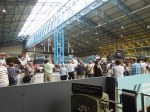





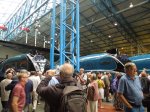




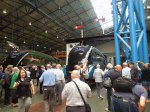

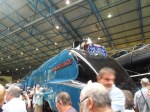


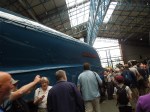


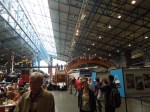
Sadly only three of the six iconic A4 Pacifics designed by Sir Nigel Gresley are still capable of steaming.
The Trains Are Learning From Formula One
This is message on a BBC report today, but it’s a rather shallow one, as it ignores the way engineers have designed systems for years. They are saying for instance, that trains now report their fault and they’ve learned this from Formula One. But trains have effectively had extensive computerised reporting systems for years. A classic example is the 1995 Stock trains on the Northern Line of the Underground, which were designed with such a system. How good it is, I don’t know!
A lot of improvements in any system, are down to attention to detail and that is probably what Formula One does in spades. But that is just good design! I was on a heavily loaded commuter train yesterday, and the station stops, were very quick, partly because, the train accelerated and stopped quickly, the passenger handholds were all in the right place, the doors were wide and the self-loading cargo, knew how to get on and off quickly.
I suspect this has little to do with Formula One, but some of the parts of the train, may well have been manufactured using advanced techniques developed for motor-racing.
German Pipe Fittings
On my trip back from Stockholm, between Osnabruck and Cologne, I sat next to a German electrical engineer.
He astounded me at one point, by saying that German pipe fittings on industrial plants were in Imperial units.
I have been unable to check on the Internet, but I assume it is true and is probably down to American influence.
Would You Trust Italian Engineering?
The British Grand Prix was a bit of a farce today, as several drivers suffered tyre failures as the BBC reports.
Now Italians may be good at some things like food, parties and calendars, but it does seem that their engineering companies aren’t up to their past high standards at the moment. After all, I did report on the quality of products from AnsaldoBreda here.
I suspect that just as they have with their economy and their politics, there is a lot of rethinking to do.
Famous Cambridge Stunt Recreated
The BBC web site gives a few details here about how Cambridge students put an Austin Seven van on the roof of Senate House in 1958.
The story is actually on the web, but in their archives the BBC should have a recording of Tonight, where the whole stunt was explained to Cliff Michelmore. But then the BBC used to habitually reuse videotapes, so I suppose it’s gone.
100,000 Downloads And Still Counting
The 3D-printable gun has now been downloaded over a hundred thousand times according to this report on the BBC. Here’s part of the report.
Californian senator Leland Yee said he wanted a law passed to stop the manufacture of 3D-printed guns.
“I plan to introduce legislation that will ensure public safety and stop the manufacturing of guns that are invisible to metal detectors and that can be easily made without a background check,” he said in a statement.
According to Defense Distributed, most of the 100,000 downloads have been in the US, followed by Spain, Brazil, Germany and the UK.
The blueprint has also been uploaded to file-sharing site the Pirate Bay, where it has become the most popular file in the site’s 3D-printing category.
Calls to make such a gun illegal and stop the downloading, will fall on deaf ears. After all to create an illegal gun factory, all you need is a few thousand pounds or dollars to buy a quality 3D printer. Many aspire to have a weapon for personal protection or to settle scores with rivals or neighbours.
This gun is still crude and what worries me is not this gun, but the follow on designs, that will be possible as 3D printing gets more affordable and a lot better.
How long will it be before a crime is committed using a gun, that has been downloaded from the Internet and printed?
The Jubilee Line Bites London Again!
According to this article in the Evening Standard, the Jubilee line is being shut by the wrong kind of water.
The Jubilee line is to be shut for more than 30 days over the next two years in central London because acidic water is eating into the cast iron linings of the tunnel walls.
Services will be halted in both directions between Finchley Road and Waterloo for major repairs costing £40 million.
Why has the Jubilee line got it in for London, as when a line goes berserk, it is often that line, which was opened for the Millennium? When I use the line, there seems to be a higher chance of trouble compared to the other lines.
It would appear that the problem is in the first section of the Jubilee line that was built in the 1970s. The tunnels seem to use iron linings and it is interesting that Crossrail is manufacturing all of its linings out of concrete.
I do wonder what other problems will turn up on London’s most troublesome Underground line!
At least on the BBC News tonight, they showed how the repair techniques were being tested in the old Charing Cross platforms, which were last used for Skyfall. So hopefully, they’ll find a way to cut the closure of the line to a minimum.

