We Need A Bertrand Russell Solution To The Problem Of Expansion Of Airports In The South East?
I don’t know where I got the quote from, but I once heard that Betrand Russell had said.
Necessity may be the mother of invention, but pressure is the father of genius.
What we need to do, is accept that Heathrow will eventually get that third runway, but that we’re going to delay it as long as possible.
In the meantime we apply restrictions on Heathrow, so that it becomes a much better neighbour. The report recommends these restrictions, if a third runway is built.
- No night flights between 11:30 pm. and 06:00 am.
- No fourth runway ever.
- A restrictive noise envelope around the airport with a noise levy to insulate homes and schools.
- An independent noise authority to regulate flight paths.
- Possibly adding a congestion charge for cars around the airport to o cut pollution levels.
- Any additional capacity doesn’t breach European Union air quality limits.
I would go further.
- It wouldn’t be a possibility of a congestion charge, but one would be applied all along the western side of the M25 and on any road near the airport, so that roads could be improved to take non-airport traffic away from the airport.
- Even more restricted short term parking at the Airport.
- I would make night flights more restrictive, but I would relax it somewhat for aircraft that met very much quieter noise standards.
I would also legislate to impose these conditions by December 2019. I have chosen this date, as that is when the full Crossrail network is scheduled to open to Heathrow.
But no sticks work without carrots to get idiots to do what you want, so how about.
- Crossrail is currently planning to run 4 trains per hour to Heathrow, but not to Terminal 5. Crossrail should be upgraded to call at all terminals and provision should be made to increase the frequency if necessary.
- Development of Old Oak Common station, with direct services using Crossrail from Heathrow to the Midlands and the North.
- Accelerated development of alternative rail routes into Heathrow from the South and West.
- Extend Crossrail from Abbey Wood to Ebbsfleet International, so that passengers have one-change access to Eurostar.
- A free return ticket to anywhere on Crossrail for all passengers.
If we got the balance right, I suspect that it would accelerate innovation on the part of airlines to provide new and more efficient services for passengers.
We also mustn’t underestimate the effect that Crossrail will have on improving the efficiency of Heathrow and possibly in the reduction of vehicular traffic and air pollution in the region of the airport.
Crossrail though will have a very big negative effect on Gatwick, as why if you had the choice would you use the airport, given that Heathrow will have the better links to Central London.
July 1, 2015 Posted by AnonW | Transport/Travel | Crossrail, Flying, Heathrow Airport, Third Runway At Heathrow Airport | Leave a comment
Out Run To Krakow
These images tell the story of my trip out and arrival in Krakow.


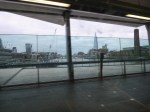





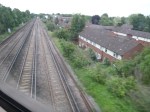








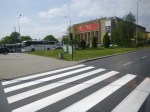









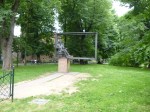

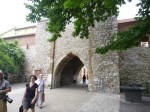
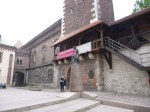





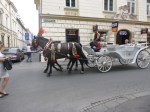

Rarely, in all my years of travelling, have I arrived in a foreign city, where it has been so obvious as to how to get to the city and then to walk to your hotel.
Admittedly, I was using the maps on my my phone to get vague directions, but usually, there was a street name or map to guide me, as I walked from the bus station to the Saski Hotel.
If I printed a Google Map before I left home, I wouldn’t have even needed to use my phone.
And at the Airport, Information told me where to go in perfect English.
Many take a taxi from Krakow Airport to the City Centre, but it’s so easy to get a bus from outside the terminal and then either walk or get a tram from the main bus station.
June 10, 2015 Posted by AnonW | Transport/Travel | Flying, Gatwick Airport, Home Run From Krakow, Krakow, Map | Leave a comment
The Nut Behind The Steering Wheel
This used to be an answer to a very old joke, which asked what is the most dangerous part of a car.
After the plane crash a few days ago in France, never was a truer thing spoken in jest.
I am someone who has done a lot of flying, both as a passenger and in command for more than a thousand hours in light aircraft,
In my time, I’ve done a lot of reading about the causes of air accidents. Some are predictable and others have such long odds no-one ever thought they would happen.
The only thing we must do is be ever vigilant and update our procedures so that the risk is reduced even more.
As to this Germanwings crash, the rule of two on the flight deck at all times, that is mandatory in the US and used by Ryanair and others in Europe should be brought in.
March 27, 2015 Posted by AnonW | Transport/Travel | Flying, Germany | 3 Comments
A Pocket Dog
I saw this little puppy on a 56 bus.

A Pocket Dog
Her name was Bella and I think she was a Cavalier cross poodle.
She didn’t seem to mind being on a bus.
But then one of my bassets didn’t mind flying in my aircraft. She just wedged herself between the seats and went to sleep.
December 17, 2014 Posted by AnonW | Transport/Travel | Buses, Dogs, Flying | 5 Comments
Who Needs Guns And Bombs When There Are Crap Programmers About?
Last nights problems with the UK Air Traffic Control, are an illustration, that increasingly our complex world, is prone to the problem of bad software or systems. It only needs just one bug or failure, accidental or deliberate, to cause all sorts of chaos.
I have always held the view, that those that design and manage technology like banking systems, on-shore oil fields, should live in the community.
The banks have off-shored much of their programming in recent years and I believe it is a factor in the service they provide. It has happened recently some banks have had cashpoint failures. Suppose you were a programmer doing that work for the Bank of Mattress and like many, after a stressful week, you perhaps had a drink with mates in the local on a Friday night. Imagine the conversation, if your bank had had a serious failure in the previous week. So to not lose face, you make sure you and your team do a good job. But if the system is programmed in say Bangalore or San Francisco, the offenders escape the sanction of their friends.
But it’s not just computer systems.
Look at the problems with extracting oil and gas in the UK. We have had the odd disaster like the very serious Piper Alpha, but I can’t find a serious oil spill in the UK onshore in recent years.
You could say that there isn’t much oil and gas fields onshore in the UK. But look at Wytch Farm. Wikipedia says this about the oil field.
Wytch Farm is an oil field and processing facility in the Purbeck district of Dorset, England. It is the largest onshore oil field in western Europe. The facility, recently taken over byPerenco was previously operated by BP. It is hidden in a coniferous forest on Wytch Heath on the southern shore of Poole Harbour, two miles (3 km) north of Corfe Castle. Oil and natural gas (methane) are both exported by pipeline; liquefied petroleum gas is exported by road tanker.
Most people have never heard of it, but it sits there unnoticed in the heart of the Jurassic Coast. Incidentally, some of the horizontal drilling techniques that are used in fracking were developed in this field, to get oil out of the far corners of the field. Wikipedia mentions that here.
Could, the field’s invisibility in the media and the public’s imagination be down to the fact that no bad news has come from the field? And could this be due to the fact most of those working on Wytch Farm life locally and obviously would never want to soil their own doorstep?
So to return to the ATC problems!
Did management rely on programmers that were less than perfect and not local?
As someone who knows about both programming and flying, I suspect that the design of the system wasn’t what it should have been.
At least no-one suffered anything worse than a delayed flight.
But system failures like this always worry me, as they give terrorists an easy way to disrupt our lives.
We should always remember the Italian Job, where criminals fixed Turin’s traffic computer system, to help them steal the money.
Truth is often stranger than fiction!
December 13, 2014 Posted by AnonW | Computing, Transport/Travel | Energy, Flying | Leave a comment
Musings On Airliners And Engines
I flew to and from Iceland in an Icelandic Air Boeing 757. It’s funny, but I think that these are my only journeys in the type, as normally on short-haul flights around Europe it’s a Boeing 737 or a babyAirbus.
The 757s, that I flew on were powered by Rolls-Royce RB211-535 engines. These engines first flew on a 757 in January 1983 and were a launch engine for the airliner.
Incidentally, I wonder when the two Icelandic 757s I flew were built! Not that I worry, as well-maintained aircraft can last a lot longer than thirty years. These weren’t that old and were probably about twenty.
When I was at University, the father of one of the fellow students, worked at Tesco in Derby. Tesco used to supply Rolls-Royce with time-expired frozen chickens, which were used by the engine company to test the first version of the RB-211 with its carbon-fibre fan blades for bird-strikes. That must have been about 1966, a few years before the RB211-22 entered service in 1972 on a Lockheed Tristar.
Today in the Sunday Times, there is an article which talks about how Airbus and Boeing, instead of designing new aircraft, are redesigning old ones. The article talks about the Airbus A330neo powered by Rolls-Royce Trent 7000 engines. And what is a Trent engine? It’s a developed and renamed RB-211. Someone got the basic design right fifty years ago.
One paragraph in the Wikipedia entry for the Trent 700 must be shown.
Compared to the A330 engines the Trent 7000 will improve specific fuel consumption by ten per cent, double the bypass ratio and halve perceived noise enabling the A330neo to meet the stricter London airport (QC) noise regulations of QC1/0.25 for departure and arrivals respectively.
But then they’re only following a long tradition of the company or squeezing every drop of performance out of a design, just as they did with the Merlin.
Is it just a coincidence, that another of the UK’s long-lived and much-developed engineering icons; the InterCity 125, also has strong connections to the city of Derby in the years around 1970?
July 20, 2014 Posted by AnonW | Transport/Travel | Derby, Design, Engineering, Flying, InterCity 125, Rolls-Royce, Trains | Leave a comment
Why Was Flight MH 17 Over Ukraine?
There’s an old saying, that says there are old pilots and bold pilots, but no old, bold pilots.
Over the last week or so, there have been reports of the rebels in the East of Ukraine shooting down Ukranian planes. An ex-British Airways pilot on the BBC this morning, felt that planes should avoid the area. In fact, the BBC has also stated that some airlines have been avoiding the area anyway.
But as Simon Calder, the respected travel journalist, said on the BBC this morning, if you’re flying long haul, you often fly over a war zone.
And then today because of the thunderstorms in the UK, there have been delays and diversions of airliners. So planes are avoiding extreme weather, but not war zones!
But I wouldn’t fly in any plane that went over a war zone, where the participants had the capability and especially the record of shooting down high-flying aircraft.
I sometimes think that my policy of holidaying in the area covered by my EHIC card is a sensible one, because of my health history. There’s still eight countries in that area, that I haven’t visited and they include dangerous places like Finland and Leichtenstein.
July 19, 2014 Posted by AnonW | Transport/Travel | Flying, Malaysian Airlines, Ukraine, War | Leave a comment
Shooting Down An Airliner Is So Easy
With the tragic loss of Malaysian Airlines flight MH 17 over Ukraine probably to a missile fired from the ground, it made me think about what sort of missile was used.
I found this article on the American Popular Science web site. The article says this.
Early information comes from an advisor to the Ukrainian interior minister, Anton Gerashenko. In a Facebook post he says the plane was “hit by a missile fired from a Buk launcher.”
So what is a Buk launcher? The system is described on Wikipedia. The operators of these missiles contain some of the usual suspects. So one battery getting into the wrong hands can do a lot of damage.
Now it’s been done once, the odds must have shortened about another idiot following the lead.
We obviously don’t have to worry about Buk launchers in the UK, as I don’t think it would be easy to get the system through the Channel Tunnel.
But there are many man portable systems that if you could get near enough to an airliner would severely damage it and make it incapable of flying. But even smuggling in something like a Russian Igla to a launch point might be difficult. But there are a long list of operators, who aren’t always the most friendly of countries.
I’m no expert on the deployment of missiles such as the Igla, but I do wonder if one could be launched through the cut-away roof of something like a Range Rover. Obviously, the exhaust from the missile wouldn’t do the occupants of the car much good, but the launch could probably be triggered by a simple remote system controlled by a mobile phone.
All you would need to do, is park the vehicle at the end of the runway outside the perimeter fence of an airport, where the planes go over at a couple of hundred metres or so.
And of course it’s very convenient that many airport authorities provide large long term car parks in just the right place. Long term car parks should be well away from the airport, if they exist at all.
The last variable I’ll throw into this post, is beware the innovator. If we believe reports, like this one, terrorists will develop all sorts of devices to down an airliner. So could they develop simpler weapons to shoot down an airliner, as it’ll be much easier than smuggling a bomb onto an aircraft.
July 18, 2014 Posted by AnonW | Transport/Travel | Flying, Malaysian Airlines, Terrorism | Leave a comment
How Yorkshire Won The Tour De France
On the BBC last night and again this morning, they have been interviewing the guy who made the decision to bring the start of the Tour de France to Leeds. He said he thought it was a good idea, as he knew the area a bit, but what clinched it, was a helicopter ride over the area to see what it was like from the air. After seeing the superb scenery, he knew it would be spectacular on television.
This has echoes of a story I heard many years ago. GEC were attempting to sell an airport radar system to a country in the Middle East. There was only one in service radar of this type in service and that was at Prestwick in Scotland. So it was decided that the important sheikh and his advisors would be flown up to the airport from London in GEC’s corporate jet.
The demonstration went well and afterwards when they returned to the aircraft, the pilot said that would everybody like to see the Scottish Highlands in autumn from the air on a sunny day, as he felt it was one of the best sights in the world.
So they came back to London, the long way round after a low level pass over the Highlands.
Needless to say, GEC got the order.
July 5, 2014 Posted by AnonW | Business, Sport | Cycling, Flying, Tour de France | Leave a comment
When Did I Last Fly Internally In The UK?
Tuesday’s flight to Edinburgh was my first internal flight in the UK in years.
C and I went to Scotland several times, but it was usually in my own plane, on the train or occasionally by car. The only picture of our 1969 Porsche 911T, was taken on Skye.
I think we only ever flew internally in the UK once on a commercial aircraft and that was probably in the 1980s, when we had a weekend in Jersey. It must have been before C would fly with me in my plane, as I can’t understand why I didn’t use it. Or it could have been earlier in the 1970s?
I also flew up to Scotland a couple of times with Metier, but normally to see Ferranti in Edinburgh, I would drive up at a speed no-one would be able to today.
I suppose the only time, I’d fly internally in the UK, would be to the North of Scotland, Northern Ireland or the Channel Islands.
June 6, 2014 Posted by AnonW | Transport/Travel | Flying | Leave a comment
About This Blog
What this blog will eventually be about I do not know.
But it will be about how I’m coping with the loss of my wife and son to cancer in recent years and how I manage with being a coeliac and recovering from a stroke. It will be about travel, sport, engineering, food, art, computers, large projects and London, that are some of the passions that fill my life.
And hopefully, it will get rid of the lonely times, from which I still suffer.
Why Anonymous? That’s how you feel at times.
Charities
Useful Links
Top Posts
- Elizabeth/Central Line Interchange At Stratford - 23rd June 2022
- Raw Material For Southern's Battery Trains
- Southbound Thameslink To Eastbound Elizabeth Line At Farringdon Station
- Westbound Elizabeth Line To Northbound Thameslink At Farringdon Station
- Before Crossrail 2 - Raynes Park
- Jamie Oliver's Fish Pie
- The Lizzie Line And Circle/District Line Interchange At Paddington - 1st July 2022
- Connecting The Bakerloo Line Extension At Lewisham To The North Kent And Bexleyheath Line
- Extending The Elizabeth Line – Connecting West Anglia Main Line Services To The Central Tunnel
WordPress Admin
-
Join 1,898 other subscribers
Archives
Categories
- Advertising Architecture Art Australia Banks Battery-Electric Trains BBC Buses Cambridge Coeliac/Gluten-Free Construction COVID-19 Crossrail Death Decarbonisation Design Development Docklands Light Railway Driving East Coast Main Line Electrification Elizabeth Line Energy Engineering Entertainment Floating Wind Power Flying Football France Freight Germany Global Warming/Zero-Carbon Good Design Gospel Oak And Barking Line Greater Anglia Great Western Railway Heathrow Airport High Speed Two Highview Power Hydrogen-Powered Trains Innovation Internet Ipswich Town King's Cross Station Law Liverpool London London Overground London Underground Manchester Marks and Spencer Network Rail New Stations Offshore Wind Power Olympics Phones Politics Project Management Religion Research Scotland Shopping Solar Power Stations Step-Free Stroke Television Thameslink The Netherlands Trains United States Walking Weather Wind Power Zopa
Tweets
Tweets by VagueShot
 The Anonymous Widower