Cameron Bridge Station – 15th May 2025
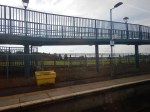
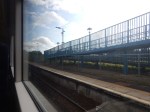
I took these pictures yesterday at the new Cameron Bridge station yesterday on the Levenmouth Rail Link.
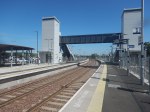
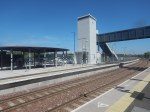
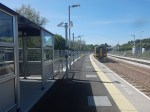
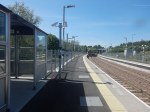
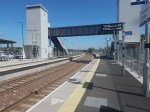
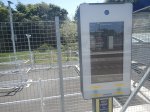
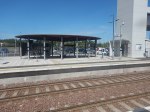
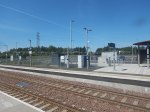
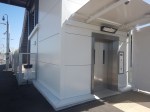
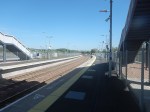
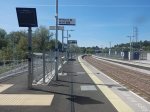
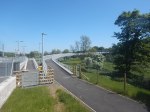
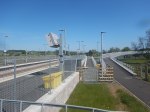
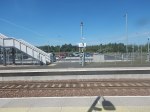
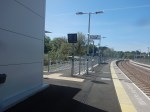
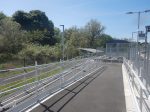
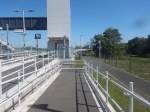
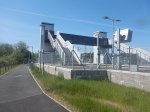
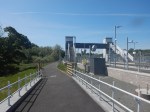
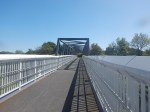

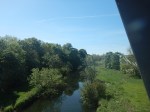

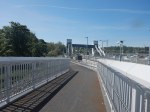
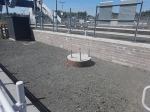
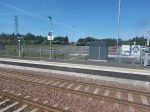
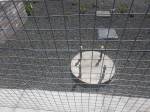
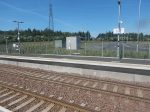

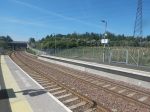
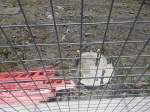
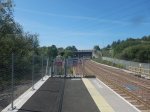
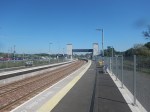
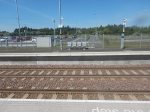
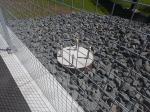
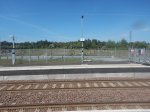
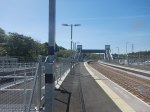
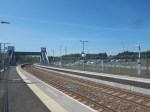
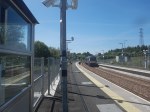
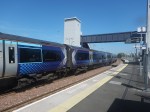
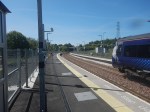
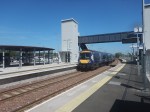
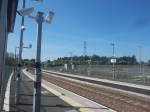
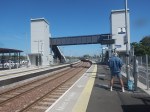
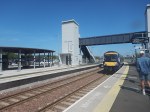
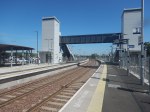
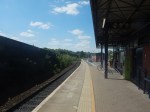
Note.
- The station has a car-park on the coming-home-from Edinburgh platform.
- There is a bridge over the River Leven, that appears to lead to new housing.
- The step-free bridge appears to be used by local residents to cross the railway.
- There appears to be a walking route for the nearby factory, which distills Scotland’s national spirit.
But as the pictures show the station has some unusual features for a small station with one train per hour (tph).
Parking
This extract from the Internet describes the parking.
A car park is available for customers with 125 spaces, including Electric Vehicle (EV) charging and blue badge spaces, as well as a drop off/pick up area and motorcycle parking.
They certainly seem to be expecting lots of commuters to Edinburgh, which is 34.5 miles away over the river.
Long Platforms
As the pictures with the three-car Class 170 train show the platforms are long.
I estimate that the platforms could take a pair of four-car Class 385 trains and almost take a nine-car Class 800 or 802 train.
Is this wishful thinking or prudent future-proofing as extending platforms can be a much more difficult exercise, than building them in the first place.
Perhaps, plans include a lot of housing, a major educational establishment, a sports stadium or some large factories to add to the distillery and long trains will be needed to serve the station.
Electrification Foundations
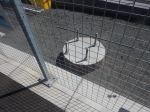
What surprised me, is that the station has been fitted out with the foundations for electrification gantries. There are five pairs all with four strong bolts to support the gantries over the track. This gallery shows some of the foundations.
But what also surprised me was that at no other place on the route between Edinburgh and Leven, were any electrification works visible, except where the electrification is completed between Edinburgh and Edinburgh Gateway.
I estimate that the distance between Cameron Bridge and Edinburgh Gateway is about thirty-seven miles as the train travels, which should be in range of one of ScotRail’s Hitachi Class 385 trains, that had been fitted with batteries.
- The trains would charge their batteries on the run between Edinburgh Waverley and Edinburgh Gateway stations.
- The trains would run between Edinburgh Gateway and Cameron Bridge stations on battery power. The eight intermediate stations would not have to suffer diesel trains.
- The trains would put up the pantograph at Cameron Bridge station and charge the batteries on a short length of overhead wires that will be erected there on both platforms.
- The train would run to Leven station on battery power, where it would reverse, as it does now and then return to Cameron Bridge station.
- At Cameron Bridge station, it could even pick up more charge if needed.
Note.
- The only new electrification needed would be to electrify both lines in Cameron Bridge station.
- Supposedly, Hitachi do a nice line in short lengths of electrification and all the electrical gubbins that support them.
- Because of the large distillery, Cameron Bridge is not short of electricity, with a large grid connection visible at the Edinburgh end of the station.
- No electrification will be needed over the Forth Rail Bridge, to the delight of the Heritage Taliban.
Whoever gets the contract to supply the battery-electric trains and the partial electrification, will be supplying trains that will cross one of most famous railway bridges in the world.
I also predict, that this short rail link between Edinburgh Waverley and Leven will become a tourist attraction and bring prosperity to the area.
Electrifying The Fife Circle
This OpenRailwayMap shows the whole Fife Circle Line.
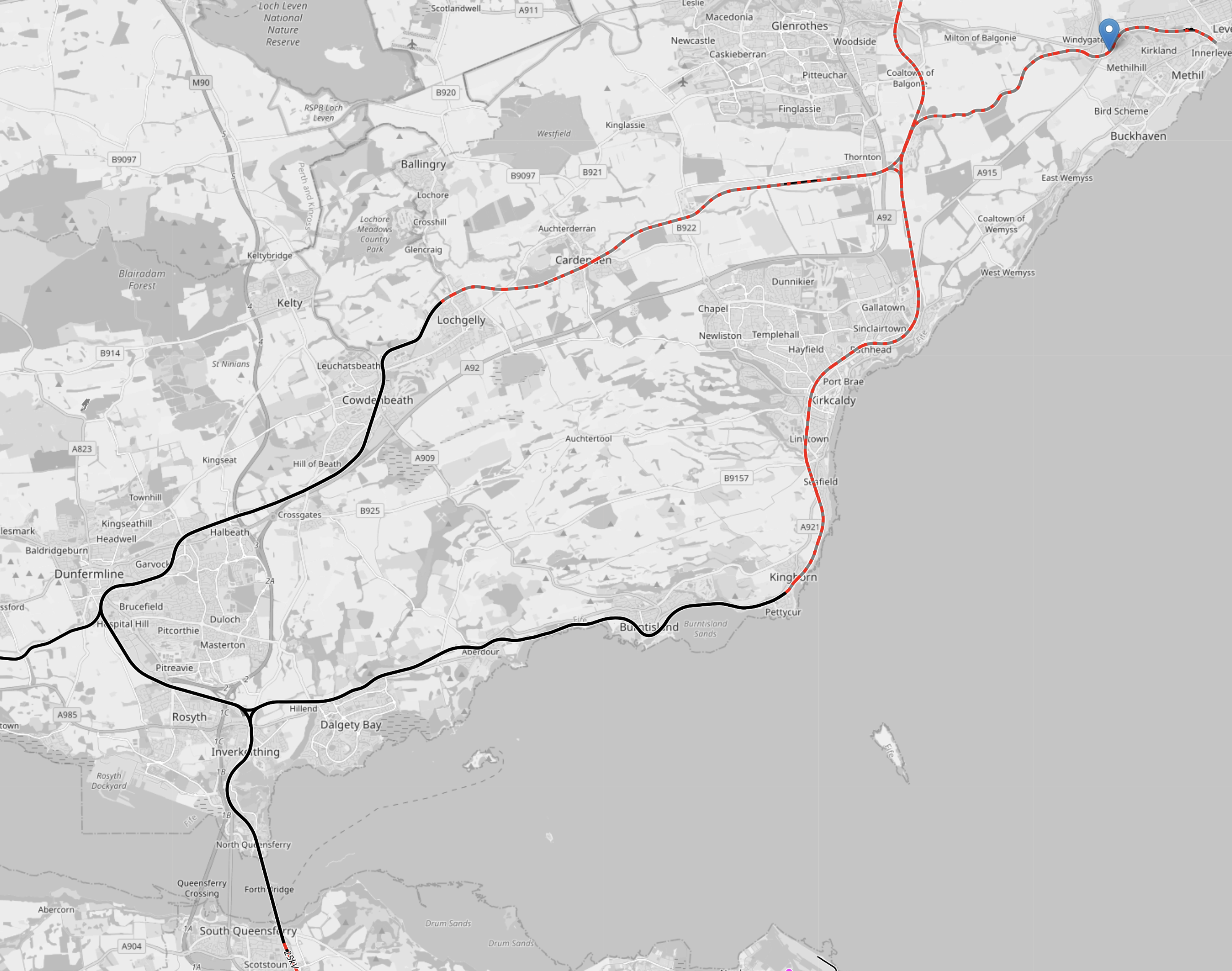
Note.
- Lines shown in red are electrifield, whilst those shown in black are not and lines shown in dotted red-and-black are to be electrified.
- Cameron Bridge is marked by the blue arrow, with Leven to its East on the coast.
- The Forth Rail Bridge over the Forth of Forth is at the bottom of the map.
- To the North of the bridge, the line splits and connects to the large circular railway, which is the Fife Circle Line.
- Some trains after crossing the Forth Rail Bridge,come up the East coast via Kirkcaldy to terminate at Leven or Glenrothes with Thornton.
- Other trains from Edinburgh take the Western side of the Fife Circle via Rosyth and Cowdenbeath to Glenrothes with Thornton.
This second Open RailwayMap shows the Fife Circle Line between Cameron Bridge and Glenrothes with Thornton.
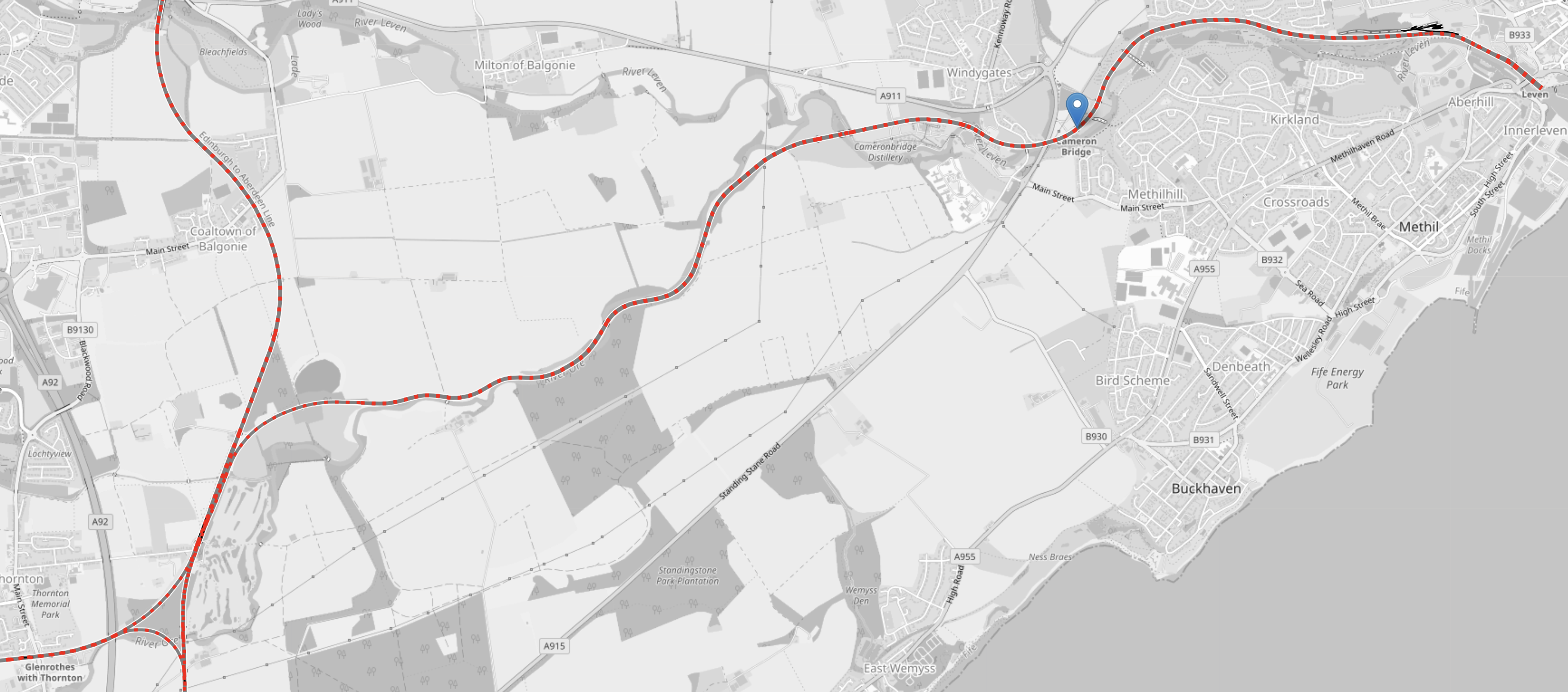
Note.
- As before, lines shown in red are electrifield, whilst those shown in black are not and lines shown in dotted red-and-black are to be electrified.
- Cameron Bridge is marked by the blue arrow, with Leven to its East on the coast.
- Glenrothes with Thornton station is in the South-Western corner of the map.
- It might even be possible for all trains to terminate on the Levenmouth Rail Link as Leven station has two platforms.
- If that is the case, the four tph would make full use of the two long platforms at Leven and Cameron Bridge stations, with the only electrification on the Fife Circle Line at Cameron Bridge station.
This is partial electrification with none of the complexity of full electrication, but with all the power it needs from the electrical connection of a large distillery.
The Wikipedia entry for the Fife Circle Line says this about the electrification.
The £55 million first phase, to electrify 65 miles (104 km) of Fife Circle track, between Haymarket and Dalmeny, for use by battery electric multiple units, was begun by Scottish Powerlines in June 2022 and is due to be completed by December 2024, although this project has been delayed and is expected to completed by December 2025. Further phases will electrify the lines between Kinghorn, Thornton, Ladybank and Lochgelly. This will allow the Fife Circle services to be operated by battery electric multiple units whilst minimising capital expenditure on infrastructure, in particular avoiding the major expense of electrifying the Forth Bridge. Complete electrification would be possible at some future date. The partial electrification was due to be completed by December 2025 but there has been some slippage in these target dates.
This OpenRailwayMap shows Kinghorn, Thornton, Ladybank and Lochgelly.
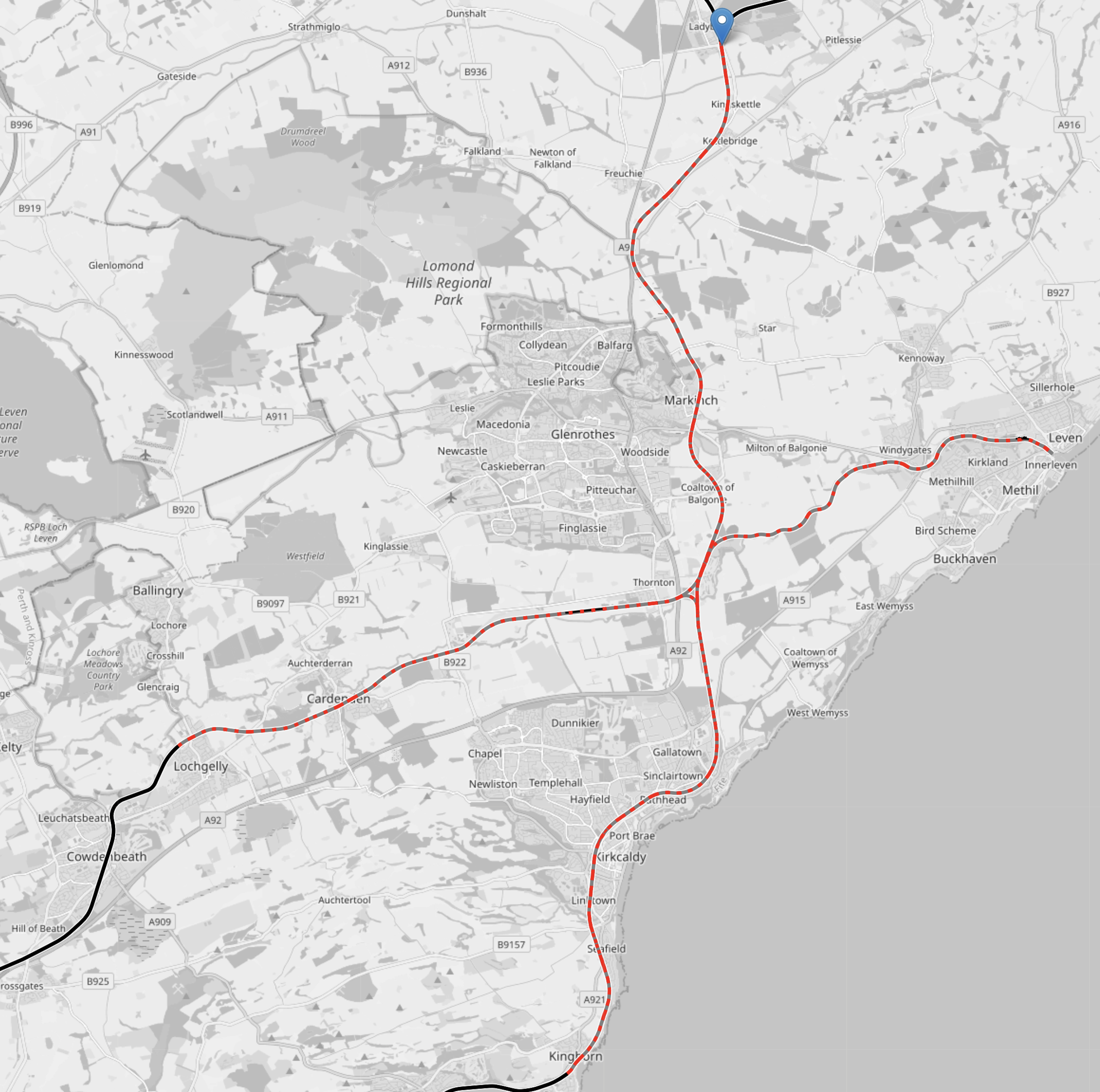
Note.
- Lines shown in red are electrifield, whilst those shown in black are not and lines shown in dotted red-and-black are to be electrified.
- Ladybank is at the top of the map indicated by a blue arrow.
- Kinghorn is at the bottom of the map on the coast.
- Ladybank and Kinghorn are connected by a section of the Aberdeen and Edinburgh Line.
- Glenrothes and Thornton are to the West of this line.
- The Levenmouth Rail Link runs to the East.
- Lochgelly and Cowdenbeath are on the West side of the map.
From what I saw yesterday, I wouldn’t be surprised if the amount of electrification to be performed has been cut back and more reliance is to be placed on on-board batteries.
Class 385 Battery-Electric Trains
The Wikipedia entry for Class 385 trains, says this about battery-electric versions.
During early 2019, Hitachi held a series of discussions with the Scottish Government on the development of a variant of the Class 385, a battery electric multiple unit (BEMU) that would be capable of running on unelectrified sections of line along a route. The installation of batteries was reportedly described as being a relatively straightforward alteration to make; an underfloor battery unit, dependent upon size, would be able to power a trainset over distances of 20 to 60 miles (30 to 100 km). The proposal drew upon Hitachi’s existing experience with battery trains operated in Japan, and had been motivated by a recommendation from the rail decarbonisation task force which advocated that such measures be implemented.
A range on batteries of sixty miles would cover the less than forty miles between Edinburgh Gateway and Ladybank.
I suspect that a range of sixty miles would bridge the gap between Edinburgh Gateway and Perth or Dundee.
Does this mean, that I think it could?
If Hitachi’s testing of their battery-electric Class 802 trains have shown phenomenal distances, then this would fit with the distances shown by Stadler’s Class 777 trains in New Merseyrail Train Runs 135km On Battery.
This leads me to believe that battery-equipped ScotRail Class 385 trains and LNER Class 800 trains are able to electrify the North of Scotland, with a few strategic charging stations like the one at Cameron Bridge station.
Are Scotrail Going To Replace The Inter7City Trains With Hydrogen-Powered Trains?
This article in The Times is entitled The Caley Is Ready To Roll With New Venture Building Trains.
I feel that this is one of the most significant paragraphs in the article.
ScotRail has indicated that it wants to replace nearly two thirds of its fleet with new, low-carbon rolling stock between 2027 and 2035, comprising about 675 carriages in total, with an initial core order of 64 four and five-car units. A spokesman confirmed: “We are working on a business case that will go to the Scottish government for the procurement of a new suburban train fleet.”
The current Scotrail fleet includes.
- 25 Inter7City trains which comprise 52 Class 43 power cars and 120 Mark 3 carriages – Diesel – 120 cars – 1975
- 5 Class 153 trains – Diesel – 5 cars – 1987
- 42 Class 156 trains – Diesel – 84 cars – 1987
- 40 Class 158 trains – Diesel – 80 cars – 1987
- 30 Class 170 trains – Diesel – 90 cars – 1998
- 21 Class 318 trains – Electric – 63 cars – 1985
- 34 Class 320 trains – Electric – 66 cars – 1990
- 40 Class 334 trains – Electric – 120 cars – 1999
- 38 Class 380 trains – Electric – 140 cars – 2009
- 70 Class 385 trains – Electric – 234 cars – 2015
Note the last three fields are the traction type, total number of cars and the build year of the first train.
I will split these trains into four groups.
- Inter7City – Diesel – 25 trains – 120 cars
- BR Diesel – Diesel – 117 trains – 259 cars
- BR Electric – Electric – 55 trains – 129 cars
- Modern Electric – Electric – 148 trains – 494 cars
Note.
- This is a grand total of 345 trains and 1002 cars.
- Ignoring the modern electric trains and the total is 197 trains and 508 cars.
- The total for diesel trains is 142 trains and 359 cars.
- As Great Western Railway have withdrawn their similar GWR Castles, there must be reasons for Scotrail to do the same.
I will now look at replacement strategies, based on this statement from Scotrail.
ScotRail has indicated that it wants to replace nearly two thirds of its fleet with new, low-carbon rolling stock between 2027 and 2035, comprising about 675 carriages in total, with an initial core order of 64 four and five-car units.
I would expect 675 carriages would be about 232 trains, if the current average train length of just under three cars is carried over.
The Effect Of 675 New Carriages
Assuming that no modern electric trains were replaced, this would create a fleet size of at least 1169 carriages.
This would be a sixteen percent increase in carriages, which would be welcome news for some rail users.
The Initial Core Order Of 64 Four And Five-Car Units
All we know of this order, is the number of trains and that they will be new and low-carbon, according to indications from Scotrail.
Low-carbon would mean one of these traction options.
- Electric trains with full electrification.
- Battery-electric trains with partial-electrification.
- Hydrogen-powered trains.
Note.
- The heritage Taliban would object violently to full electrification of some historic routes.
- UNESCO would probably remove the World Heritable Site status to the Forth Bridge if it were to be electrified.
- Scotland is developing a hydrogen infrastructure.
- Hydrogen-powered trains have long ranges in the order of a thousand kilometres.
- Hydrogen-powered trains are essentially electric trains with a hydrogen fuel-cell to provide electricity as needed.
- Hydrogen-powered trains would need very little new infrastructure, except for a network of refuelling points across Scotland.
- Well-designed battery-electric and hydrogen-electric trains, should be very quiet and comfortable for passengers.
As an engineer, I would choose hydrogen-power for the initial core order.
Where would the initial core order be deployed?
Twenty-five would be used to replace the carbon-emitting elderly Inter7City trains.
These routes could probably handle the other forty.
- Aberdeen and Inverness
- Edinburgh/Glasgow and Aberdeen.
- Edinburgh/Glasgow and Inverness.
- Glasgow and South Western Line
- West Highland Line.
Note.
- A lot of diesel trains would be retired.
- Trains could be designed, for tourists with proper cycle spaces.
- The West Highland Line would get the five-car trains it needs.
This would be a good start.
Conclusion
It looks to me, that the Inter7City trains will be going and will be replaced by new trains.
But will Scotland take the great leap forward and power the new trains by Scottish hydrogen?
Centrica To Build Largest Battery Storage Project To Date
The title of this post, is the same as that of this news item from Centrica.
These three paragraphs outline the news.
Centrica Business Solutions has secured the development rights to a 65MW two-hour battery storage plant in Perthshire, Scotland, its largest battery storage acquisition to date.
The site in Abernethy is located near a connection for North Sea offshore wind farms and will help manage grid capacity by charging when demand for power is low, and discharging when demand is at its highest.
Once connected to the grid in 2028, the 65MW two-hour battery will be able to store enough electricity to power 130,000 homes for an hour – the equivalent to a town the size of Aberdeen. The discharge could happen up to four times a day.
This map shows the site of the substation at Abernethy.
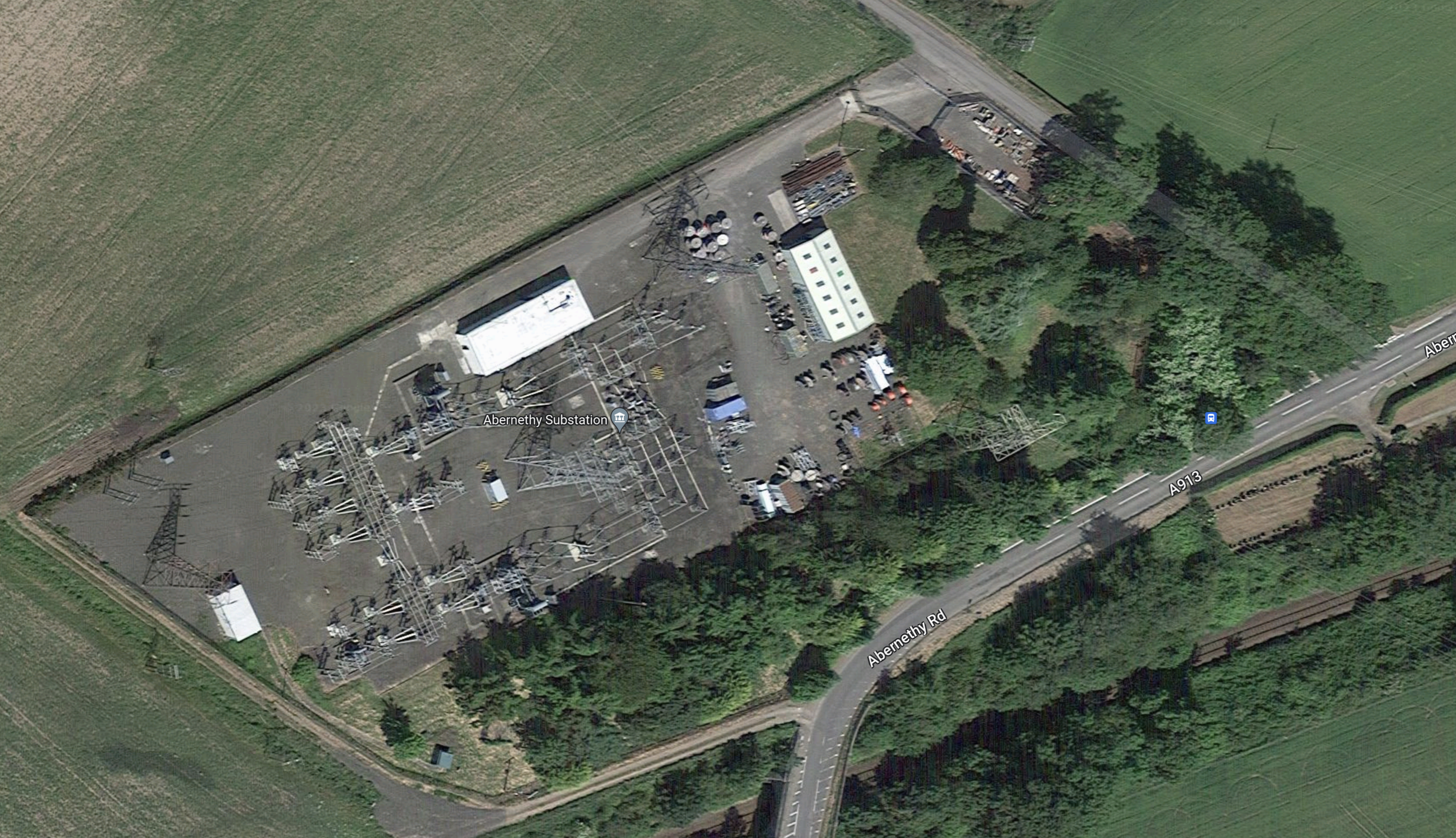
It seems a site with enough space for a 65 MW/130 MWh battery.
But is that a railway running past the site in the South-East corner of the map?
Yes! It is the single-track unelectrified railway that is used by trains to go between Edinburgh and Perth.
- There are stations at both ends of the single-track section at Ladybank and Perth.
- Abernethy substation looks like it is about halfway between the two end stations.
This page on Scotland’s Railway is entitled Fife Electrification and lists these four phases.
- Haymarket and Dalmeny
- Kinghorn and Thornton North
- Thornton and Lochgelly
- Thorton and Ladybank
The page also says that the electrification will support BEMUs (Battery Electric Multiple Units)
I feel that the electrification to Ladybank and Centrica’s battery could be linked.
- If the electrification was extended a few miles to Abernethy substation, this would surely be a reliable way to power the electrification.
- It would also be ideally placed, if Perth and Ladybank were to be electrified.
- The new battery would surely smooth out any deviations in the power supply.
I certainly don’t expect that Centrica will object to a new customer.
Electrification Between Edinburgh And Ladybank
Consider.
- Edinburgh and Ladybank is 39 miles and takes a couple of minutes over an hour.
- Once, the four phases of the electrification are complete, only the 13.6 miles between Dalmeny and Kinghorn, will be without electrification.
- I doubt that Dalmeny and Kinghorn will ever be electrified, as it includes the Forth Rail Bridge.
- Dalmeny and Kinghorn is 13.6 miles and takes around twenty-four minutes.
It looks like the BEMUs will be under wires for 25.4 miles and nearly forty minutes, which will be more than enough to charge the trains.
Edinburgh And Aberdeen
In Thoughts On Batteries On A Hitachi Intercity Tri-Mode Battery Train, I said this about services between Edinburgh and Aberdeen.
Consider.
-
- The gap in the electrification is 130 miles between Edinburgh Haymarket and Aberdeen.
- There could be an intermediate charging station at Dundee.
- Charging would be needed at Aberdeen.
I think Hitachi could design a train for this route.
The 25.4 miles of new Fife electrification between Haymarket and Ladybank will reduce gap in the electrification to 105 miles and ensure trains leaving Ladybank for Aberdeen had a full battery.
Around The Fife Circle Line
Although, I’ve been to Scotland many times, I’d never knowingly been over the Forth Bridge in good light.
So I went all the way round the Fife Circle Line and took these pictures.


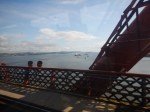
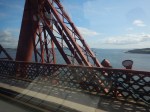
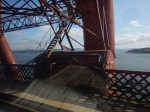
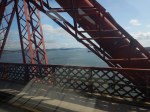
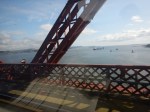
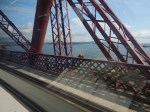
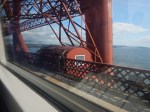
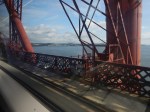
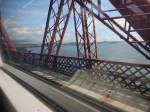
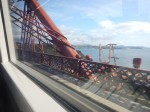


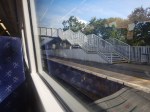
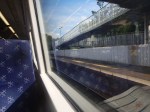
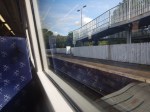
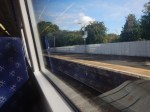
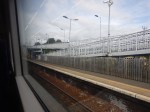
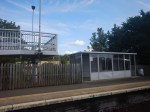
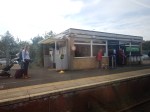
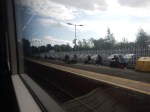
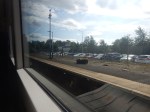
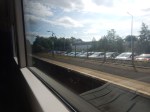
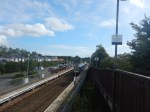
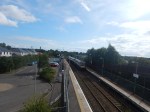
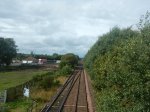
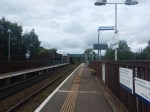
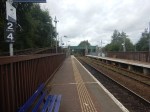
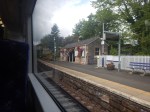
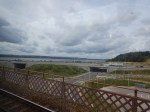
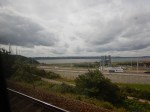
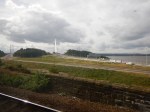
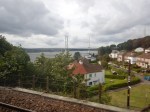
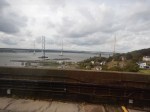
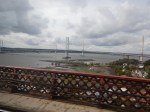
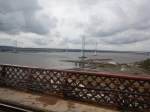
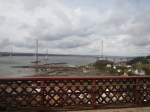


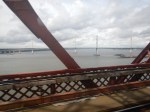
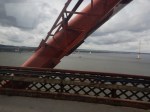
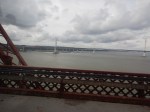

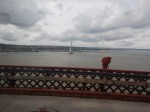
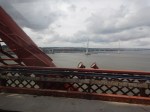
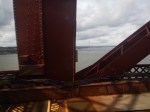
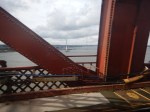
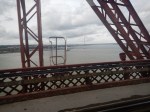
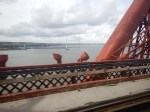
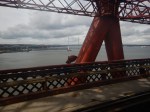
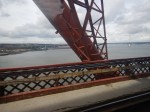
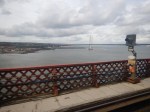
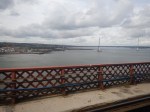
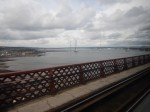
The route was fairly busy and I very much feel that the three-car Class 170 train could at times be rather small for the route.
The Fife Circle Line
This map from Wikipedia shows the stations on the Fife Circle Line.
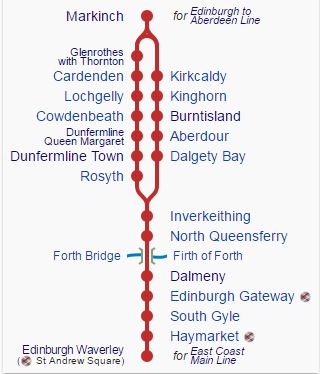
Consider.
The route is double-track.
- The distance from Dalmeny to Glenrothes with Thornton station via Comdenbeath is 22.3 miles
- The distance from Dalmeny to Glenrothes with Thornton station via Kirkcaldy is 21.4 miles
- The train I was on waited a couple of minutes at Glenrothes with Thornton station before turning to Edinburgh.
In addition my pictures show the following.
- Many of the bridges are high- enough to allow electrification.
- On the East side of the Circle, there are some old stone bridges that would need to be raised for electrification.
- Some of the stations are step-free with ramps.
Overall, it is a typically-Scottish neat-and-tidy line, that needs some improvement, like longer electric trains and some improved stations with step-free access.
Electrification Of The Fife Circle Line
In my view, there are two major obstacles to full-electrification of the Fife Circle Line.
The Forth Rail Bridge
I feel that engineers could electrify the Forth Rail Bridge without too much difficulty.
But that is not the problem.
- The bridge is on the main route between Edinburgh and Aberdeen and North East Scotland and electrification would cause major disruption during the installation.
- There is also the Heritage Lobby, who would probably be totally against major changes to a World Heritage Site.
For these reasons, I don’t think that the Forth Bridge will be electrified.
The Stone Bridges On The Eastern Side Of The Circle
There are nearly a dozen stone arch bridges on the route through Kirkcaldy and raising these for electrification would cause major disruption to one of Scorland’s main rail routes.
Third-Rail Electrification Of The Fife Circle Line
In my view, this would be an option to get round the problems of disruption and the Forth Rail Bridge.
But, third-rail electrifrication is still-considered a method non-grata, despite being used successfully for over a hundred years in Merseyside and South of London.
I do wonder, if Brexit will make it easier to install third-rail systems.
Certainly, Hitachi who would probably make most of the electric trains that would use the Forth Rail Bridge and the Fife Circle Line have the technology for third-rail trains, which they used on the Class 395 trains for HighSpeed commuter services to Kent.
I do wonder, if Brexit will make it easier to install third-rail systems.
Battery-Electric Trains On The Fife Circle Line
In Hitachi Plans To Run ScotRail Class 385 EMUs Beyond The Wires, I discussed Hitachi’s plan to fit batteries to Class 385 trains, so they could run on unelectrified lines.
The Fife Circle Line would be an ideal route for battery-electric trains.
This map shows the rail lines to the South of the Forth Rail Bridge.
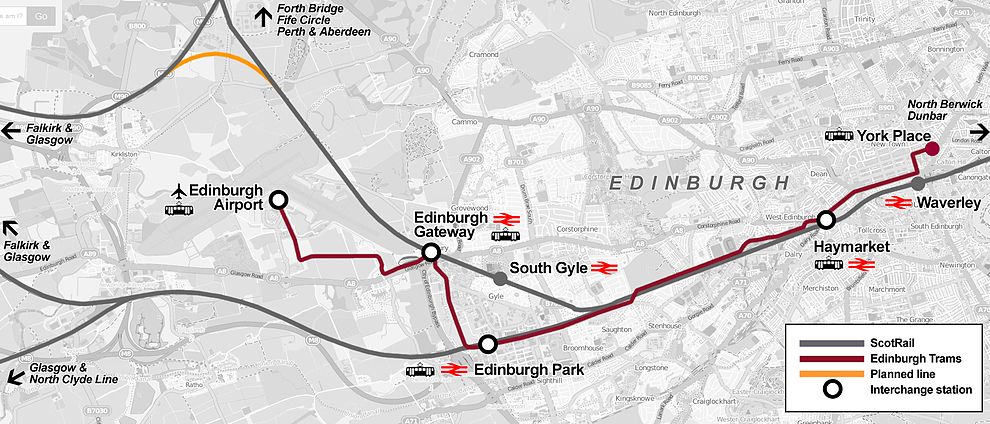
Note.
- An unelectrified line, through South Gyle and Edinburgh Gateway stations, connects the Forth Bridge to the main electrifield Edinburgh and Glasgow Line through Edinburgh Park station.
- There is also another unelectrified line, that connects the Forth Rail Bridge to Linlithgow, Falkirk and Glasgow.
- Shown in yellow is a proposed chord, which would create another route between Edinburgh and Glasgow.
Electrification as far as Dalmeny station, which is between the Forth Bridge and the proposed chord would enable LNER’s bi-mode Class 800 trains to use electric power for a few extra miles.
As I said earlier, the distance between Dalmeny and Glenrothes with Thorntonh station is under twenty-five miles using either the Western or Eastern side of the Fife Circle Line.
- Twenty-five miles is well within range of a battery-electric train, that has charged the battery using the electrification between Edinburgh and Dalmeny.
- Most quoted ranges for battery-electric trains are in the order of sixty miles, so a well-designed train could probably do a complete round trip from Dalmeny station.
- A charging point could be provided at Glenrothes with Thorton station to top up the batteries, whilst the train waits to return, if that were deemed necessary.
In my view, the Fife Circle Line is an ideal route for battery-electric trains. Especially, as the only new infrastructure required is as follows.
- Electrification to Dalmeny station, which may be under consideration anyway.
- Provision of a charging station at Glenrothes with Thornton station.
It is undoubtedly, the lowest cost way to provide new electric trains on the Fife Circle Line.
How Big Would The Batteries Need To Be?
I use a figure of three kWh per vehicle mile for the energy consumption of an electric multiple unit running on a typical route. My reasoning for this figure is given in How Much Power Is Needed To Run A Train At 125 mph?.
On that basis a three-car Class 385 train would need a battery capacity of 3x3x50 or 450 kWh to do a complete trip around the Fife Circle Line.
Note that Vivarail are talking about putting 424 kWh in a three-car Class 230 train.
This page on the Vivarail web site is entitled Battery Train Update.
This is a paragraph.
Battery trains are not new but battery technology is – and Vivarail is leading the way in new and innovative ways to bring them into service. 230002 has a total of 4 battery rafts each with a capacity of 106 kWh and requires an 8 minute charge at each end of the journey. With a 10 minute charge this range is extended to 50 miles and battery technology is developing all the time so these distances will increase.
So it looks like Vivarail manage to put 212 kWh under each car of their two-car train.
Surely, Hitachi have the technology to put 450 kWh in a three-car Class 385 train.
Trains On The Levenmouth Rail Link
In Scottish Government Approve £75m Levenmouth Rail Link, I talked about using Class 385 trains with batteries on the Levenmouth Rail Link.
The same Class 385 trains with batteies could do both routes.
Extension To The Borders Railway
There has been suggestions, that Borders Railway and Fife Circle Line trains run back-to-back across Edinburgh.
It is just over thirty miles between Newcraighall, where the electrification from Edinburgh ends, and Tweedbank.
With a charging station at Tweedbank, Class 385 trains with batteries could run both routes.
Conclusion
It appears that running battery-electric Class 385 trains on the Fife Circle Line and the Levenmouth Rail Link is a feasible option.
It would also be superb publicity for the company, who supplied the trains, if videos were shown of the trains on the Forth Rail Bridge.
Scottish Government Approve £75m Levenmouth Rail Link
The title of this post is the same as that of this article on Rail Technology Magazine.
The plan seems to have been well-received by politicians and the media.
I’ve always thought this line to be a good candidate for reopening.
- It is only five miles long.
- It would serve Scotland’s largest town without a rail station.
- There must be freight opportunities for freight, as the line could serve Scotland’s largest distillery.
There is more here on the Wikipedia entry for the Levenmouth Rail Link under Cost, Feasibility And Services.
Could The Levenmouth Rail Link Be Part Of A Bigger Picture?
The Fife Circle Line is an important route into Edinburgh for commuters, shoppers and visitors.
This map from Wikipedia shows the stations on the Fife Circle Line.
Consider.
- The route is not electrified.
- A train starting in Edinburgh and going rund the loop would cover about sixty miles.
- Trains have a frequency of four trains per hour (tph)
It would appear that it would be the sort of service that would be ideal for electric trains, like ScotRail’s Class 385 trains, where a fleet of perhaps eight trains could provide the current service.
But there is a big obstacle to electrification; the Forth Rail Bridge.
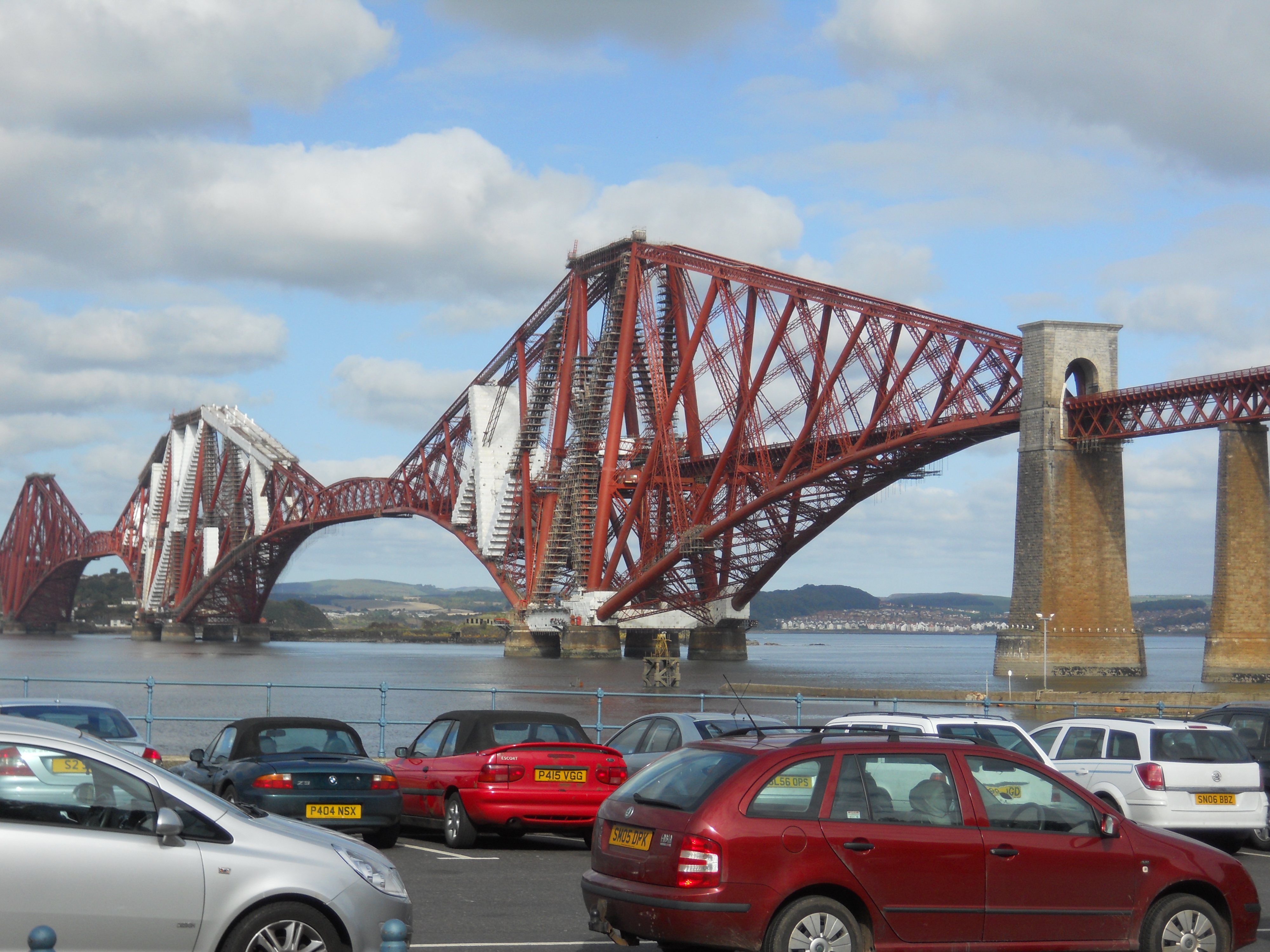
It would be a difficult engineering project, that would cause massive disruption and one that would probably be strongly opposed by the Heritage lobby.
This map from Wikipedia shows the proposed Levenmouth Rail Link.
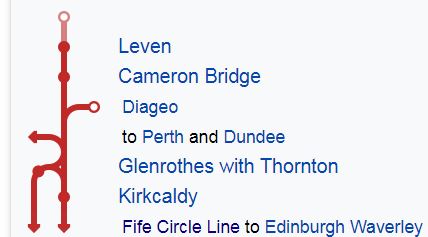
Note how it connects to the Fife Circle Line at Glenrothes with Thorton and Kirkcaldy stations.
I estimate that the distance between Leven and Edinburgh stations would be about 31 miles.
Could Battery-Electric Trains Work To Glenrothes with Thorton And Leven?
Consider these facts abut battery-electric trains.
- Bombardier ran a battery-electric train on the 11.5 mile Mayflower Line in public service for three months, without a hitch in 2015.
- Hitachi, Siemens, Stadler and Vivarail have sold battery-electric trains.
- Hitachi are running battery-electric trains in Japan.
- Ranges of upwards of fifty miles are being claimed.
- Battery-electric trains are a quality experience for passengers.
.As the Edinburgh and Leven and dinburgh and Glenrothes with Thorton routes are about thirty miles, I believe it is now possible to run battery-electric trains on these two routes.
- They would be charged at the Edinburgh end using the existing electrification.
- Charging stations would be needed at Leven and Glenrothes with Thornton.
- Electrification could also be erected as far as Dalmeny station at the Edinburgh end, which would reduce the range on batteries by about seven miles.
There would be no difficult engineering and the Forth Rail Bridge would look the same as the day it was built!
Hitachi Plans To Run ScotRail Class 385 EMUs Beyond The Wires
I covered this in more detail in Hitachi Plans To Run ScotRail Class 385 EMUs Beyond The Wires.
Hitachi appear to be serious according to this article of the same name on Rail Engineer.
The article concludes with this paragraph.
Hitachi’s proposal to operate battery trains in Scotland is at an early stage. However, with their use being recommended by the rail decarbonisation task force and the Scottish Government about to pass new climate change legislation, it may not be long before battery trains are operating in Scotland.
Hitachi aren’t stupid and I doubt they could want for a better portfolio of launch routes, than some of those in Scotland.
- Edinburgh and Leven over the Forth Rail Bridge.
- Edinburgh and Grenrothes with Thornton over the Forth Rail Bridge.
- The Borders Railway.
I also show in the related article, that Glasgow to Oban and Mallaig may be possible.
The Rail Network And Electrification To The West Of Edinburgh
This map shows the rail system to the West of Edinburgh.
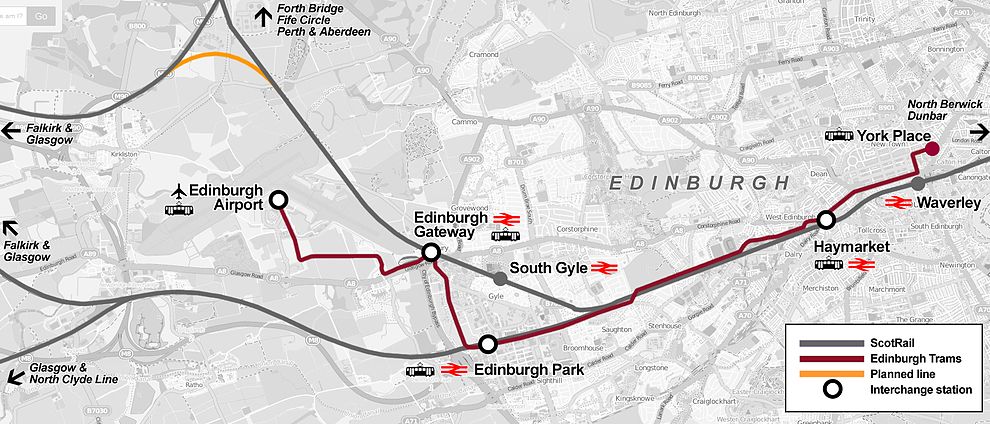
All lines except for the route through South Gyle and Edinburgh Gateway stations are electrified.
Electrification as far as Dalmeny station, the addition of the new chord (shown in yellow) and fill in electrification to join the chord to the Glosgow wires would open up the possibilities of more routes between Edinburgh and Glasgow and a connection between Glasgow and the Fife Circle.
But battery-electric trains would be needed.
ScotRail has Options For More Class 385 Trains
This is said in the Wikipedia entry for the Class 385 trains.
10 unit optional follow up order after 2020.
So ScotRail seem to have a gateway to the future.
Will Battery-Electric Trains Be Good For Tourism?
I very much doubt, that they’ll be bad for it!
Conclusion
The announcement of the reinstatement of the Levenmouth Rail Link, could be be a collateral benefit of a decision to trial or even order some battery-electric Hitachi Class 385 trains.
Running Electric Trains Across The Forth Bridge
Search for something like Electrification of the Forth Bridge and you find a lot of speculation and no one who.believes it can be done easily.
A ScotRail conductor said very firmly that it wouldn’t be done.
I think that in addition to the engineering problems of electrifying the Forth railway bridge, there will probably be a lot of opposition from the heritage lobby!
I also think, that if you could solve the engineering oroblems, they will.cost a lot and mean closing the bridge for at least several.months.
Bi-Mode Trains
Virgin are proposing to use Class 800 trains, which are bi-mode and will use diesel power on the bridge. These trains will have no problems crossing the bridge.
They will probably even be quieter than the current InterCity 125s, that will be continued to be used by ScotRail.
Trains With Energy Storage
The bridge is not very long at 2.5 km. and an electric train with onboard energy storage could prossibly cross the bridge, if the tracks were electrified as far as the approaches.
So do I think it is possible that a train with onboard energy storage could cross the Forth Bridge?
The Energy Storage Could Be Full Before Crossing
If the overhead electrification reached to perhaps five hundred metres from the bridge, then the onboard storage would be full.
The train would lower the pantograph and then raise it again, when under the wires on the other side.
The Maximum Speed On The Bridge Is 50 mph
This must help.
The Bridge Deck Appears Level
This must help.
Any Train Manufacturer Who Creates A Train With Onboard Energy Storage Will Gain A Worldwide Reputation
There is a lot of scepticism about trains with onboard energy storage or batteries and this would dismiss it for ever, once the crossing was shown on world-wide television with headlines like.
Battery Train Crosses Forth Rail Bridge Carrying Three Hundred Passengers
I believe that any train manufacturer, who felt they could achieve this feat would be willing to have a go, as the rewards would be immense!
Scotland Would Have A Unique Tourist Attraction
Although, I wouldn’t think it would be unique for long, as other countries would do the same to solve transport problems.
But nothing would ever be as iconic as the Forth Bridge!
I also doubt Scotland and ScoRail would say No!
Could A Class 385 Train Cross The Bridge On Stored Power?
In Hitachi Class 385 Trains, Batteries And Charging Stations, I discussed whether batteries or energy storage could be put into a Class 385 train.
I said this after giving details of Hitachi’s battery trains in Japan.
So will Scotrail’s new Class 385 trains have a battery capability?
Probably not initially!
But Hitachi have obviously been doing a lot of research into battery trains and the JR Kyushu is the first practical application.
Scotland’s rail system outside Edinburgh and Glasgow is not electrified, but it is well-known that Scotland’s Government would like more electrified services and also links to places like Leven and St. Andrews.
Both of these places, and there are probably others as well, are a few miles from a main line, that is very likely to be electrified.
So could we see a battery train charged as the JR Kyushu train on a main line, serving these branch lines on battery power?
I feel that the chance of this happening is very high.
So I feel it is highly likely, that if some form of stored power was fitted to Class 385 trains, that they would be able to bridge the gap between electrification systems North and South of the Forth Bridge.
Electrification Of The Fife Circle Line
Electrification of the Fife Circle Line would be the simplest way to improve the local rail service from North of the Forth Bridge to Edinburgh.
This shows a map of the line North from Edinburgh Gateway station.
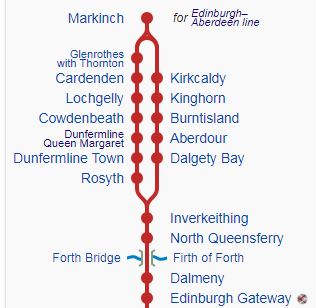
It would need the electrification from Haymarket station through Edinburgh Gateway station to be completed South of the Bridge to an appropriate point on the bridge approach.
North of the Bridge, the circle could be electrified from an appropriate point on the bridge approach, all round the circle to Markinch station.
Running The Fife Circle Service With Class 385 Trains With Onboard Energy Storage
A belt and braces approach might see North Queensferry and Dalmeny stations being the changeover point from overhead to onboard power, so that with any problems, the train is safely in a station, rather than stuck on the bridge.
Currently, the two routes between Glenrothes With Thornton and Edinburgh stations take the following times.
- Via Kirkaldy – 59 minutes with ten stops.
- Via Dunfermline – 62 minutes with eleven stops.
This means a train doing a round trip from Edinburgh takes just over two hours with twenty-one stops.
The Class 385 trains will have the following characteristics compared to the current diesel trains on the route.
- They will be faster.
- They will accelerate better and have smoother regenerative braking.
- They will have a much shorter dwell time at stations.
It would not be unreasonable to assume that the new electric trains could be several minutes under two hours for the round trip.
Trains that didn’t reverse could also go straight round the circle with the driver only changing ends at Edinburgh.
Currently, the route has three trains per hour (tph), so to run this level of service would require six trains.
Running four tph would need an extra two trains and if two tph used each direction, all stations would have a two tph service.
The trains would only need the ability to run between Dalmeny and North Queensferry stations on onboard storage.
Bi-Mode Trains Between Edinburgh And Aberdeen
Virgin Trains East Coast and possibly other operators wlll be running bi-mode Class 800 trains between Edinburgh and Markinch stations.
They will have to use diesel power where there is no electrification, but if the Fife Circle Line were to be electrified, they could use it, to run the trains more efficiently.
Onward From The Fife Circle
The Fife Circle Line could be a bridgehead to extend electrified services to the North.
Consider these distances.
- Markinch to St. Andrews – 20.7 miles
- Markinch to Dundee – 25.1 miles
- Markinch to Perth – 22.7 miles
- Glenrothes to Leven – 7.1 miles
All of these destinations could be reached by a combination of short lengths of electrification and trains with onboard energy storage.
Scotrail’s Extra Ten Class 385 Trains
Scotrail have an extra ten Class 385 trains on option, if the franchise is extended by 7 to 10 years and the trains would enter service in 2023.
Could these trains be to run an electrified Fife Circle Line service and perhaps running to Leven?
Conclusion
Scotrail have some ambitious plans for Scotland’s railways and I wonder, if they include using Class 385 trains with onboard energy storage to get electric trains across the Forth Bridge.
 The Anonymous Widower