Meet The British Inventor Who Came Up With A Green Way Of Generating Electricity From Air – In His Shed
The title of this post, is the same as that of this article on inews, which is written by the respected BBC journalist; Tom Heap.
This is the first two paragraphs.
In 25 years of reporting on the environment, I’ve become unshakably convinced in the seriousness and urgency of tackling climate change, but also rather dismayed that our successes in reducing greenhouse gases and promising scientific breakthroughs go largely unreported.
I’ve seen super plants that improve photo-synthesis, cows that belch less methane and next-gen solar panels. But there is one individual who deserves to be as famous in green-tech as Elon Musk for how his invention could help stop global warming.
The man is Peter Dearman from Bishop’s Stortford and his invention is the technology behind Highview Power, that is building a 250 MWh liquid air battery at Carrington, near Manchester.
Work Begins On New Substation For World’s Longest Electricity Cable Between Denmark and Lincolnshire
The title of this post, is the same as that, of this article on Lincolnshire Live.
This is the sub-title.
Britain and Denmark will be able to share enough clean energy to power 1.5 million homes.
The Viking Link is a 1400 MW at 525 KV electricity interconnector between Bicker Fen in Lincolnshire and Revsing in Jutland, Denmark.
This Google Map, shows the location of Bicker Fen, about halfway between Boston and Sleaford.

This second map shows an enlarged view of the Bicker Fen area.
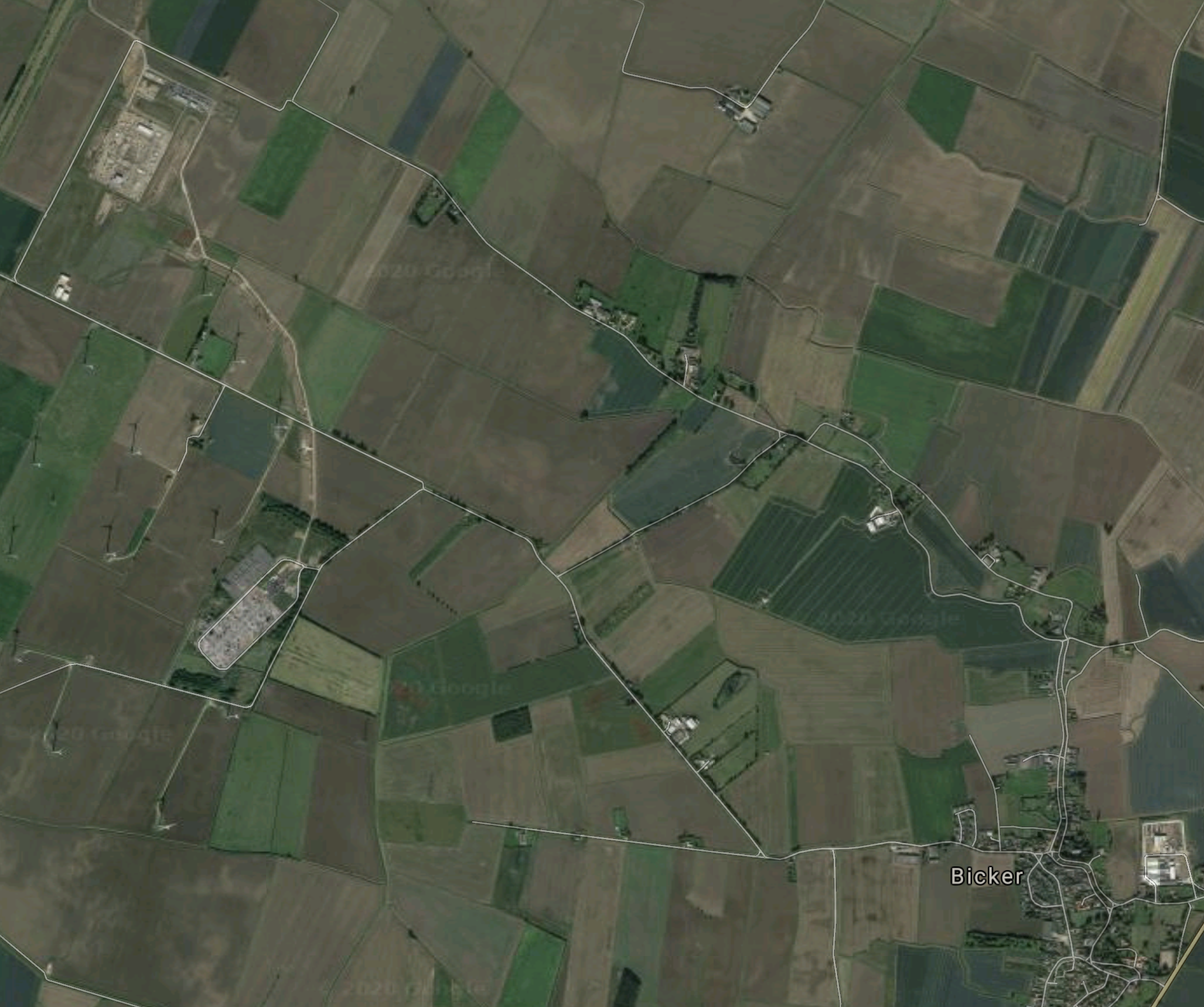
Note.
- The village of Bicker in the South-East corner of the map.
- In the North-West corner of the map is Bicker Fen Wind Farm.
This third map shows the wind farm.
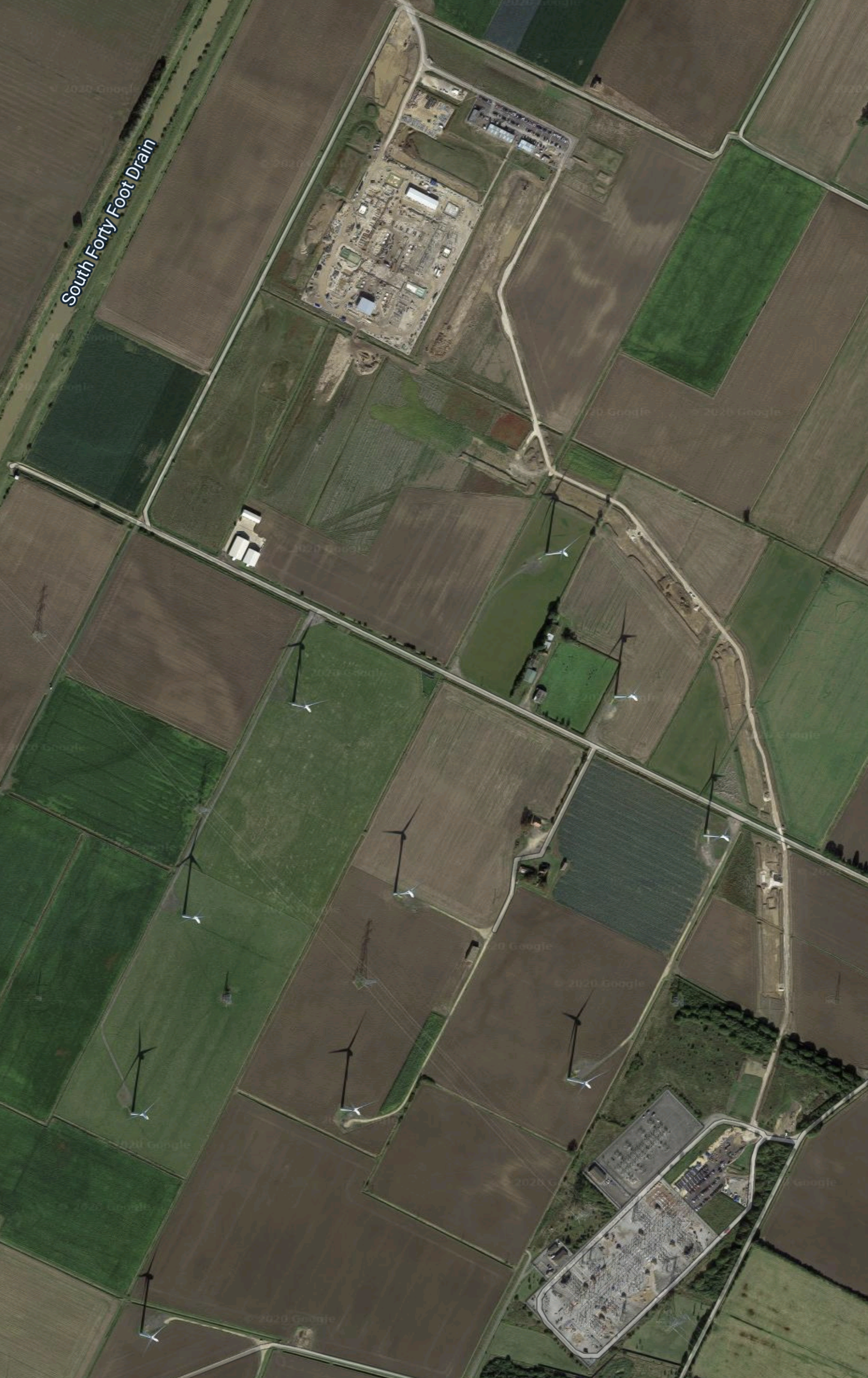
Note the thirteen wind turbines between the two sub-stations full of wo electrical gubbins.
This sentence from the Wikipedia entry for Bicker, gives more details of the wind farm and the future plans for the area.
North of the main line of 400 kV pylons is the Bicker Fen windfarm consisting of 13 turbines producing 26 MW (2 MW each), enough for 14,000 homes. The construction of the windfarm met some local objection. The windmills sit north from Poplartree Farm and were built in June 2008 by Wind Prospect for EdF. They are of the type REpower MM82, made in Hamburg. Bicker Fen substation is also the proposed landing site for a 1,400 MW power cable from Denmark called Viking Link, as well as the proposed offshore wind farm Triton Knoll.
Triton Knoll is a big wind farm, with a planned capacity of 857 MW and should start producing electricity in the next couple of years.
Conclusion
The Viking Link and Triton Knoll are obviously a good fit, as the UK will be able to exchange energy as required.
But it would appear that there’s one thing missing from this setup – energy storage.
I wouldn’t be surprised to see a large battery built at Bicker Fen. Something, like one of Highview Power‘s CRYOBatteries might be ideal.
Holy Grail Of Energy Storage Receives Two Grants
The title of this post, is the same as that of this article on Off Grid Energy Independence.
This is the introductory paragraph.
RheEnergise is one of only a select handful of businesses to have been awarded grants under both the Sustainable Innovation Fund & the Small Business Research Initiative.
So what have RheEnergise developed?
The home page of their web site, is surprisingly detailed, unlike those of some other companies with new ideas, and not just energy storage companies!
This is the first paragraph on their home page.
RheEnergise is bringing innovation to pumped hydro storage. We call our new solution High-Density Hydro ™.
I think that is a good start, as although pumped hydro storage is well proven and the UK has the 1,728 MW Dinorwig Power Station, which has a storage capacity of 9.1 GWh, building new large pumped storage systems is fraught with difficulties and the technology has seen only modest innovation in the last few decades.
The next paragraph on their home page describes their innovation.
HD Hydro ™ uses our proprietary HD Fluid R-19 ™, which has 2.5x the density of water. R-19 gives RheEnergise projects 2.5x the power and 2.5x the energy when compared to water.
This means that for the same size of pumped hydro storage power station, you get 2.5 times the amount of energy storage.
Alongside a diagram of the system, the advantages of their systems is stated.
Projects can be installed on hills 2.5x lower than a project using water and still achieve the same power – for example, there are so many more hills at 150m than at 375m.
2.5x smaller, by volume, meaning dramatically lower construction costs, faster build times, easier reinstatement and easier landscaping – projects can be entirely hidden.
A very simple innovation has greatly increased the possibilities of pumped hydro storage.
The home page also gives a typical capacity.
RheEnergise projects provide 10MW to 50MW power and 2 to 10 hours of storage capacity.
These systems are in the same range as those of Highview Power, who are building a 50 MW system, with a five hour capacity at Carrington near Manchester, that I wrote about in Highview Power Breaks Ground on 250MWh CRYOBattery Long Duration Energy Storage Facility.
Both have the advantage, that they are easily scalable.
With RheEnergise’s HD Hydro ™, the size of the upper reservoir would need to be increased and with Highview Power’s CRYOBattery, more tanks for the liquid air would need to be added.
The Technology
I certainly agree with the principle behind ReEnergise, both mathematically and practically.
My interest scientifically, is what is the fluid they use?
- Pure water has a specific gravity of one and everything else is measured with respect to this.
- So aluminium, which has a specific gravity of 2.7, is 2.7 times as heavy as water.
- Many of us will be familiar with mercury, which is a metal, that is liquid at room temperature.
- Mercury has a specific gravity of 13.56.
It puzzles me, how someone has created a liquid, almost as heavy as aluminium, that can be pumped and handled like water, as it would need to be, to make a pumped storage system work.
Highview Power Breaks Ground on 250MWh CRYOBattery Long Duration Energy Storage Facility
The title of this post, is the same as that of this News page on the Highview web site.
The page shows this picture of diggers doing, what they do.
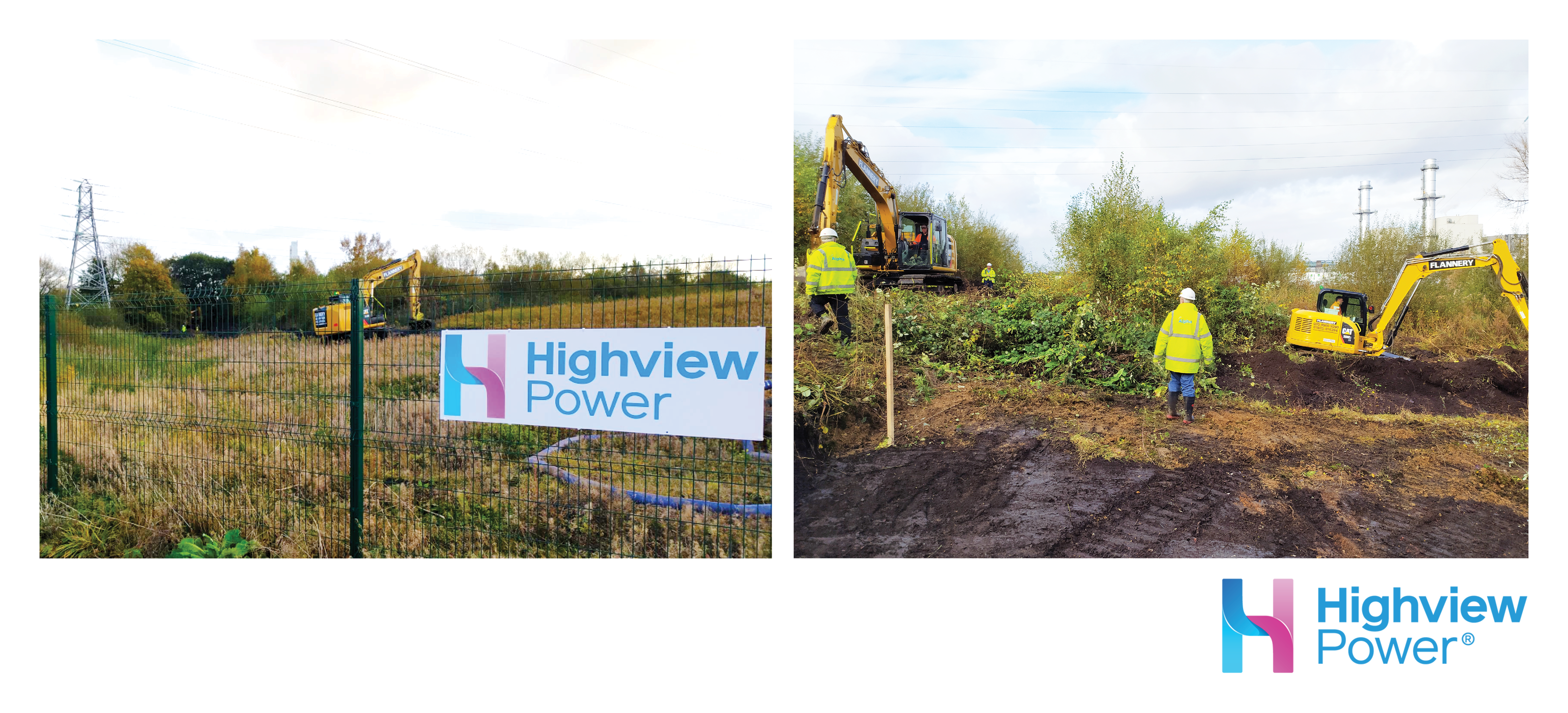
Note the two towers in the background of the image on the right. They look like the towers of Carrington power station, which are shown on this page on the FK Group web site, who built the 884 MW CCGT power station.
This Google Map shows the site of the power station.
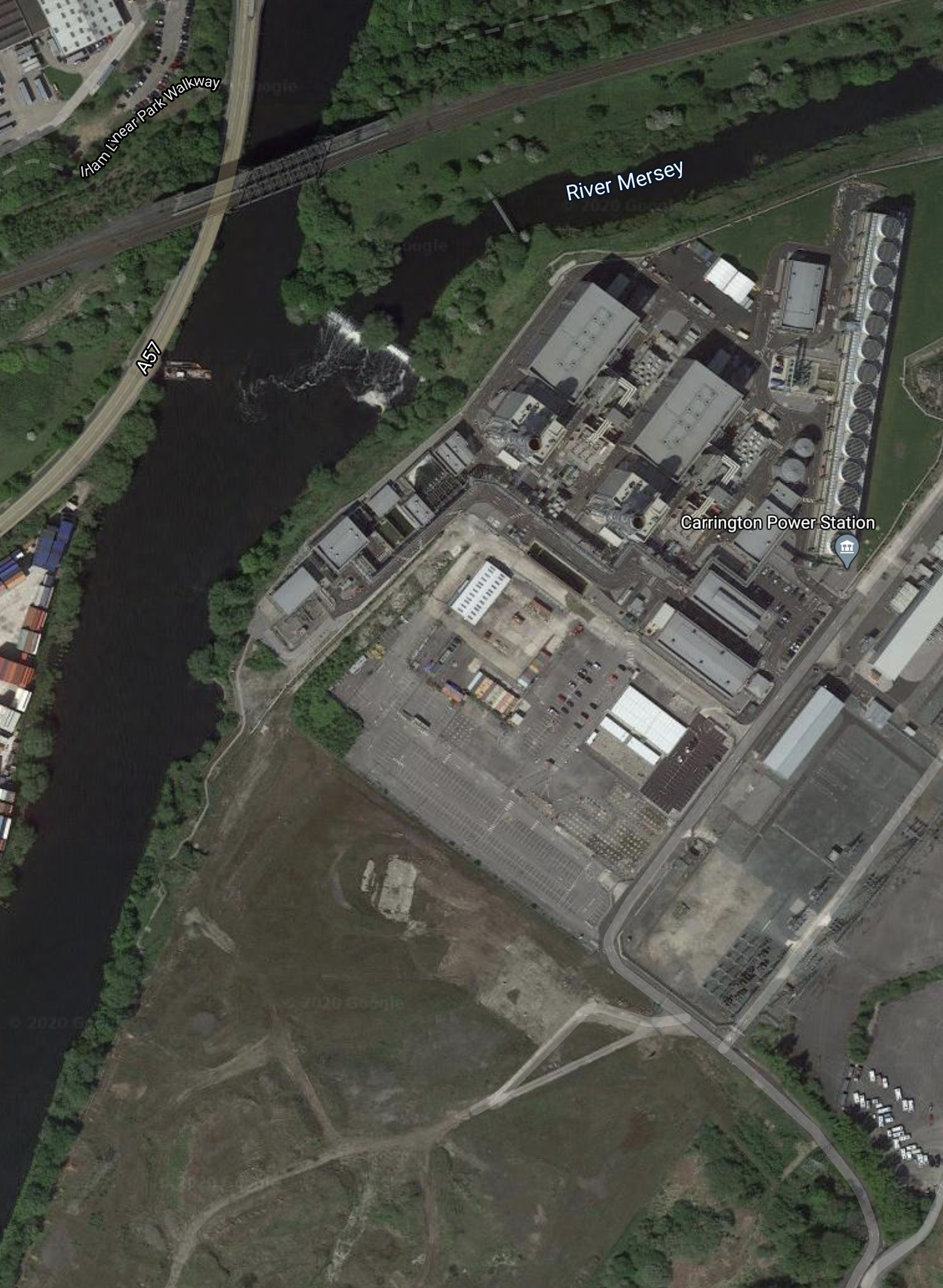
On a larger scale map, you can pick out the towers from their shadows and it looks to me, that Highview’s 250MWh CRYOBattery is being built on the vacant site to the South of the power station.
Consider.
- The vacant site looks large.
- I’ve read somewhere that Highview’s CRYOBatteries are expandable by adding more tanks.
- They certainly have space to add lots of extra tanks and a 884 MW power station on the doorstep to fill them.
- All the heavy equipment and components to build Carrington power station were brought in by barge using the River Mersey and the Manchester Ship Canal. Will this method be used again?
This seems to be a site that would be ideal for a very large battery.
UK Energy Plant To Use Liquid Air
The title of this post, is the same as that of this article on the BBC.
This article about the technique is different, as it details some of the human back-story in these three paragraphs.
The system was devised by Peter Dearman, a self-taught backyard inventor from Hertfordshire, and it has been taken to commercial scale with a £10m grant from the UK government.
“It’s very exciting,” he told BBC News. “We need many different forms of energy storage – and I’m confident liquid air will be one of them.”
Mr Dearman said his invention was 60-70% efficient, depending how it is used.
Mr. Dearman is now a passive shareholder in Highview Power, who are building the plant.
The Most Important News Of The Day
It has nothing to do with that soon-to-be-ex President across the Pond, except that he would brand it a waste of money and a fantasy.
If he did call it a fantasy, he’d at least know something about fantasy.
This article on Recharge is entitled Work Starts To Build World’s First Commercial Liquid-Air Energy Storage Plant.
These are the first two paragraphs.
Work has started to build the world’s first commercial liquid-air energy storage facility near Manchester, northern England, along with a visitor centre that aims to turn the pioneering project into a tourist attraction.
A joint venture between UK-based Highview Power and independent solar/natural-gas plant developer Carlton Power will build and operate the 50MW/250MWh “CRYObattery” — which may later be expanded to add more storage — in the village of Carrington, close to Manchester United’s training ground.
The visitor centre will open in the first quarter of 2021, with the plant planned to start operation in 2023.
- That seems to me to be an ambitious time-scale.
- On the other hand, the plant appears to be composed of well-proven readily-available components, so it will not be too challenging.
Whether Trummkopf likes it or not, construction of the second plant in the Democratic-voting state of Vermont, will surely be starting in the near future.
- He would like the fact that at 50MW400 MWh, the American battery is larger.
- He wouldn’t like the fact, that it is replacing a coal-fired power station.
- It will give eight hours of full-power as opposed to Manchester’s five.
- As both plants are rated at 50 MW, I suspect the two plants are identical on the energy generation side.
- Vermont would just have more tanks to store the liquid air.
It is my view, that these two, will be the first of many.
So, What Exactly Is Long-Duration Energy Storage?
The title of this post is the same as that of this article on Greentech Media.
This is the sub-title.
Everyone’s talking about it, and Californians are buying in. Here’s what you need to know about this emerging grid sector.
It describes what California is doing and the sector, with particular reference to Hydrostor, Form Energy and Highview Power.
The article finishes with a section entitled What’s The Catch?
This is the first two paragraphs.
The obvious barrier to a thriving long-duration storage industry is convincing generally conservative power plant customers that emerging technologies quite unlike anything the grid currently uses are safe bets for decades of operation.
Lab tests can reduce the risk, but nothing beats operational, megawatt-scale installations for proving that something works. That’s why the Form deal with Great River Energy is so crucial, as are early projects by Highview Power and Hydrostor. The big exception to technology risk is pumped hydro, which has been used at scale for decades. Those projects grapple instead with high capital expense and environmental concerns.
The article is a must-read and hopefully, this and more articles like it, will convince conservative energy company owners, regulators and governments, that long duration energy storage is the missing link between renewable power and electricity consumers.
At least, the current UK Government has backed two of the most promising British long duration energy storage companies; Gravitricity and Highview Power.
Highview Power, Enlasa Form JV To Bring Cryogenic Storage To LatAm
The title of this post, is the same as that of this article on Renewables Now.
This is the opening paragraph.
UK’s Highview Power has formed a joint venture (JV) with Chilean backup power supplier Energia Latina SA (Enlasa) to co-develop giga-scale cryogenic energy storage projects in Chile and across Latin America, it was announced on Wednesday.
Highview has designed the CRYOBattery, its proprietary cryogenic energy storage system that uses liquid air as the storage medium and is capable of delivering from 20 MW/100 MWh to more than 200 MW/2 GWh. The company says that its system is comparable to thermal and nuclear in baseload power delivery.
I’ve always liked Highview Power‘s simple idea of storing energy as liquid air.
- The technology is simple.
- No nasty or envionmentally-unfriendly substances are used.
- There must be few countries in the world, who don’t have the expertise to run these plants safely and to the designed performance.
- As the extract says, the systems can store gigawatts of power.
Not bad, when you consider that cryogenic energy storage was invented by a garage inventor in Hertfordshire.
Work Underway On Gravitricity Storage Demo
The title of this post, is the same as that of this article on renews.biz.
This is the introductory paragraph.
Winch specialists Huisman have begun on the fabrication of Gravitricity’s €1.1m energy storage demonstrator, which is due for trial in Edinburgh early next year.
The article also gives a few details of the system.
- It uses a 16 metre lattice tower.
- Two twenty-five tonne weights are raised and lowered.
- An output of 250 kW is quoted.
Unless they are using a deep hole to increase the height, Omni’s Potential Energy Calculator says that the stored energy is only 2.18 kWh.
So it will only supply 250 kW for about half a minute.
But as it’s a demo, that is probably enough to validate the concept.
Coal mines with shafts around a thousand metres deep are not unknown in the UK and a system with two twenty-five tonne weights would be able to store a very useful 136 kWh.
But that is still very small compared to Highview Power‘s liquid air battery being build in Manchester, that I wrote about in Climate Emission Killer: Construction Begins On World’s Biggest Liquid Air Battery. That battery has these characteristics.
- The size of the battery is 250 MWh.
- It can delivery up to 50 MW of power. which translates to five hours at full power, if the battery is full.
- If it was already working, it would be the ninth biggest battery of all types, except for pumped storage, in the world.
- It will be double the size of the largest chemical battery, which was built by Tesla in South Australia.
Both Gravitricity and Highview Power technologies are being backed by the UK government.
Conclusion
I don’t believe that the two battery systems will compete directly.
In terms of size in Explaining Gravitricity, I state that in the UK, 2.2 MWh of storage might be possible for Gravitricity. This is very small compared with Highview Power’s 250 MWh in Manchester.
I suspect though, that capital and running costs may well be in Gravitricity’s favour and the system will be ideal for some applications, where space is limited.
Gravitricity’s systems may also be an innovative way of capping dangerous mine shafts.
Gore Street Energy Welcomes Green Light For Larger Battery Projects In England And Wales
The title of this post, is the same as that of this article on Proactive Investors.
These are the introductory paragraphs..
Gore Street Energy Fund has welcomed legal changes to allow battery projects larger than 50MW in England and 350MW in Wales.
The new legislation removes energy storage, except pumped hydro, from the Nationally Significant Infrastructure Projects regime in England and Wales, said the fund.
This will allow larger projects to receive planning permission without government approval.
I can see why they are pleased, as it removes a level of bureaucracy.
I suspect companies like Highview Power will also be pleased as 50 MW is at the lower end of their battery range.
 The Anonymous Widower