An Innovative Scheme For A Rail Link To Glasgow Airport
This article on Renfrewshire 24 is entitled New Option Could See Glasgow Airport Rail Link Run From Relocated Glasgow St. James Station.
The new option, which is proposed by Junction 29 (Scotland) Ltd, would relocate Paisley St. James Street station nearer to the airport and it would be connected to the airport using a PRT system similar to that used at Terminal 5 at Heathrow.
This Google Map shows the area.
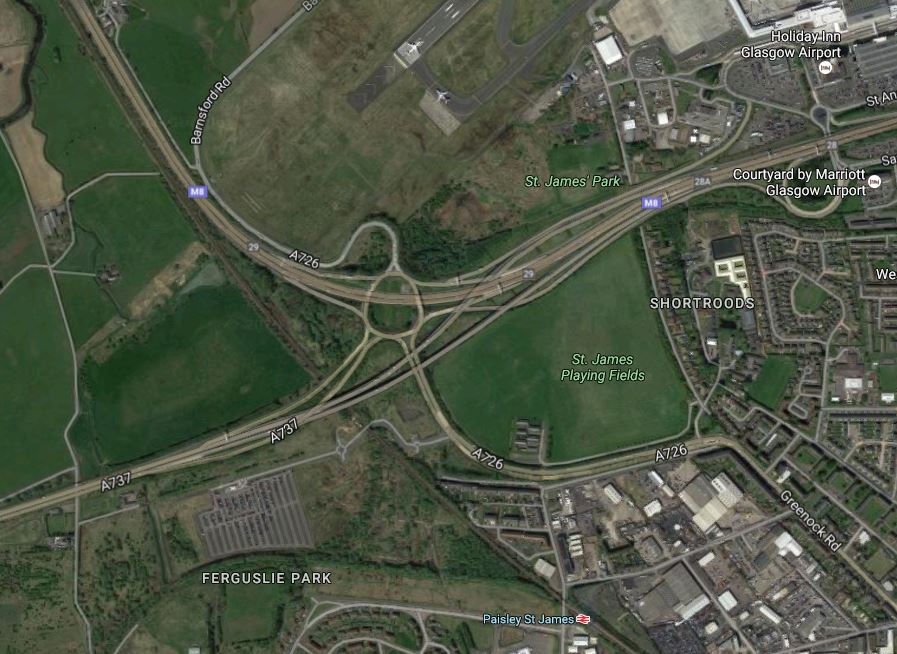
Note.
- Junction 29 of the M8 is the mass of spaghetti in the upper middle of the map, with the Inverclyde Line passing to the South-west of the junction.
- Paisley St. James station is towards the bottom of the map.
- Junction 29 (Scotland) Ltd. own the block of land to the West of the railway and the new station would be built in this area, where the PRT system would connect to the Airport.
I think it could be a feasible plan and these are my thoughts.
A Proven System
Wikipedia says this about the PRT System at Heathrow.
Construction of the guideway was completed in October 2008. The line is largely elevated, but includes a ground level section where the route passes under the approach to the airport’s northern runway. Following various trials, including some using airport staff as test passengers, the line opened to the public in May 2011 as a passenger trial. Subsequently it was made fully operational and the bus service between the business car park and Terminal 5 was discontinued. The pods use 50% less energy than a bus. They run 22 hours a day. Unlike all UK road and rail traffic, which drives on the left, the PRT system drives on the right. As of May 2013 the system passed the 600,000th passenger milestone.
The interesting thing, is that it runs under the runway approach, so it must have a fairly small footprint.
I actually think that using this system has other advantages.
- It could go on a roundabout route between the station and the Airport, serving car parks and other important places.
- It could serve the car parks, which are also proposed for the site.
- It could bring those with movement difficulties to the station for the Park-and-Ride to Paisley and Glasgow.
- It is very much a proven system.
- The tram-train alternative works in many places in the world, but the concept seems to cause Network Rail indegestion.
- The PRT System is independent of the railway.
But in my view the system’s biggest advantage is that it could have a serious wow factor for children of all ages.
Cost
The cost of the PRT option is quoted at £70-£80m, as opposed to £144m for the tram-train alternative.
Journey Times
Journey times to the airport will certainly be competitive, but I think the wow factor will encourage passengers to use it, whether they come by train or car to the station.
Why Would You Want To Close The Existing Station?
I would not close the existing Paisley St. James station for these reasons.
- It serves Paisley Town centre and St. Mirren Football Club.
- Closing it could be a hassle.
- Extra stations are never a bad thing.
- Modern trains stop and start again at a station very quickly.
- The new station could be called Glasgow Airport to avoid confusion.
But then there may be better reasons to close it.
Train Frequency
There needs to be at least four trains per hour (tph) to Paisley Gilmour Street and Glasgow.
If not more, as the frequency of the PRT system will annoy passengers waiting for the trains.
I also think that a turnback facility should be provided, so that a posh Airport shuttle train could work a 2 tph limited-stop service to Glasgow Central.
If Glasgow got its act together, the posh train could also serve Edinburgh.
Construction
It is stated in the Renfrewshire 24 article, that the new station and the PRT system could be built in twelve months alongside the existing network.
As all the land is owned by the Airport, Junction 29 and Network Rail, this must help, unless they find newts.
They could even lift a lot of the design of some of the other new stations like Kirkstall Forge.
Future Development
I’m sure Junction 29 (Scotland) Ltd. have got some good plans for the rest of their site.
Conclusion
Go for it! Glasgow has been procrastinating for far too long!
I think we’ll see a lot of systems like this around the world!
The system is described here in Wikipedia.
It’s British by the way and was developed in Cardiff and Bristol.
German Trains With Batteries
One of my Google alerts found this article on Rail Journal, which is entitled DB to convert DMUs to bi-mode hybrid trains.
This is said.
GERMAN Rail (DB) has announced it is working with technical universities in Chemnitz and Dresden to develop bi-mode (diesel and electric) trains with lithium-ion battery storage. Between 2017 and 2021 DB intends to convert 13 existing Siemens class 642 Desiro Classic DMUs to hybrid bi-mode configuration.
It seems the Germans share my belief that trains with batteries are the future.
Needham Market Station
Needham Market Station is a Grade 2 Listed Building.
I was passing through on a sunny day and took these pictures.



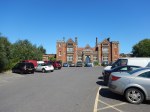
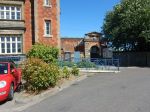
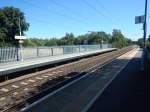
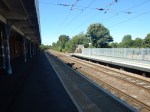
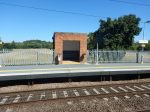

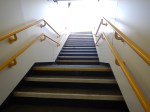
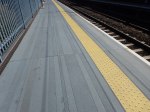
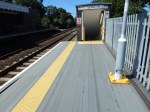
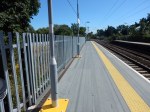
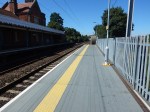
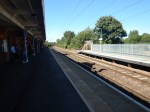
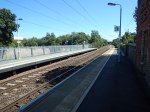
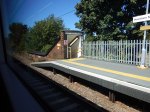
In some ways now, one of the most remarkable features of the station, is that the Ipswich-bound platform has now been rebuilt using a new plastic platform. I wrote about the develoopment in The Platform For The Future, when it won a Railway Industry Innovation Awards for 2016.
Note.
- It is an incredible station for a small town.
- The platform by the station building is traditional.
- The builders have done a good job on creating an acceptable subway.
- The plastic platform has a very smooth and safe surface.
After having visited, I think we’ll see a lot more of these platforms.
The Composite Platform 1 At Tulse Hill Station
Tulse Hill station is a typical South London station, that has been upgraded several times and probably if money was no object, would be knocked down and rebuilt.
But that would be expensive, so they have replaced Platform 1 with a composite one.

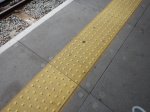
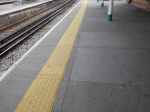

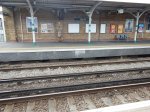
This page from the Dura Composites web site, says more about the installation. Reading about the platforms, the following advantages are mentioned.
- The platform doesn’t suffer from compaction issues.
- The surface is very passenger-friendly, with less likelihood of slips and falls.
- The yellow edge line is build into the platform.
- The stepping distance can be reduced.
- Installation of the platform is faster and needs less line closures.
- There are plans to install LED lights in the these platforms for safety reasons.
Overall the platform has a lower lifetime cost.
This to me is a classic innovation, that makes life easier and better for passengers, train companies and station builders.
Reinventing Victorian Engineering
Just because something has been used for centuries, it doesn’t mean that modern engineers, technologists and designers can’t come up with something better.
Take the humble points or to the Americans, railroad switch, which are seen all over the world’s railways and tram systems.
According to Wikipedia, points were patented by Charles Fox in 1832.
So as the two-hundredth anniversary of the invention approaches, you’d think that points had reached their ultimate form.
But you could be wrong!
This article in Global Rail News is entitled Full-size prototype for innovative track switch and describes work at Loughborough University to create something better.
It would appear that the design could be more affordable to build and maintain, safer and much faster to operate.
I also feel, it could simplify trackwork and save a lot of space in places like terminal stations and depots, where there are a mass of points, so that trains can access the correct platform or siding.
You can read the full details on the Loughborough University web site. There’s also a video.
I also feel, it could simplify trackwork and save a lot of space in places like terminal stations and depots, where there are a mass of points, so that trains can access the correct platform or siding.
D-Train Prototype Takes Big Step Forward
This is title of an article in Rail Magazine, which shows a picture of a two-car Class 230 train.
I have a feeling that because of all the other developments in the UK rail industry, that sadly for the project’s backers, that this will be a project filed under Heroic Failures.
If Arriva Rail North can find ways to buy a new fleet of CAF Civity trains and IPEMU technology breaks through as expected, the market in the UK for the D-Train must be getting a lot smaller.
It could be getting to the point, where the train is totally unsaleable in the UK.
The LaMiLo Project
Few have heard of the LaMiLo Project, which is an EU funded project to reduce truck traffic and the consequent air pollution in cities.
I hadn’t until half-an-hour ago, although I knew there were experiments going on at Euston.
This page on the London Councils web site, gives more details about the pilot project in London.
In this pilot a freight train was brought into Euston station in the middle of the night and pallets of goods were unloaded on to smaller trucks for onward delivery in Central London.
This is said on the London Councils web site about the pilot.
The pilot has provided outstanding results; it has seen 50,000 items delivered to over 250 councils building, leading to a 46% reduction in the number of vehicle trips and a 45% reduction in kilometres travelled.
It sounds like an idea worth pursuing. Although Nigel Farage would object to the EU involvement.
Every Problem Has An Invention To Help
This article with video on the BBC entitled Migrant crisis: Inventor creates inflatable tube to save lives, is a heart-warming story about an invention, that has come out of the migrant crisis in the Mediterranean.
I can’t believe that it doesn’t have other live-saving applications.
How To Catch Polluting Vehicles
I’ve just read about the EDAR pollution sensor in the Sunday Times.
Read more above the device on this page of the Hager Environmental and Atmospheric Technoogies web site.
I think they’ll sell a lot of these and in some ways it’s the best way to cut pollution caused by vehicles in cities.
Most drivers will make sure they;re legal!
Have We Got Enough Trains?
In Who Will Be First To Order Vivarail D-Trains?, I came to the conclusion that as the various Pacers need to be replaced, that we’re going to have to work hard to fill the enormous gap.
If you summarise possible requirements for D-Trains to replace Pacers and perhaps sort out the Class 153 trains, you get the following.
East Anglia – 3 to replace inadequate Class 153s
London Midland – 4 to replace inadequate Class 153s, 2 for the Coventry Arena shuttle
East Midlands – 8 to replace inadequate Class 153s, 2 for Robin Hood
Great Western Railway – 8 to replace Class 143 Pacers
Wales – 30 to replace inadequate Class 142 and Class 143 Pacers, 2 for Heart of Wales Line
Northern Rail – 50 to replace inadequate Class 142 Pacers
That totals up to a hundred and three and it assumes that all of the Class 144 Pacers can be upgraded to Class 144e trains and that North Western electrification releases a few good diesel trains to replace Pacers.
There is only a maximum of seventy-five D-Trains. So without any other sources of new trains, we’re definitely in the doo-dah.
So what other sources of good quality diesel or other self-powered trains are there, that we could use to solve this crisis, that will happen, when the inadequate trains hit the brick wall of access and disability regulations in 2019/2020.
The Aventra IPEMU
The Aventra is Bombardier’s successor train to the ubiquitos Electrostar and it has already been ordered for Crossrail and the London Overground.
Bombardier have told me, that all Aventras can be delivered with provision for a battery to allow them to run for up to 60 miles independently of the power supply. This is all based on the technology demonstrated in a BEMU trial with a Class 379 train.
These trains are now called Independently Powered Electric Multiple Units or IPEMUs
The Aventra IPEMU has lots of advantages.
- It is a modern four-coach electric train with everything passengers and train companies expect, that can bring the benefits of electrification to many places without putting up any wires or laying any third rails.
- It is normally an 100 mph train, but some Electrostar versions are faster than this. If it was a 110 mph train, it could mix it up something like the West Coast , East Coast or Great Western Main Lines and then go to an important place just a few miles from the main route, like Chester, Middlesbrough or Oxford.
- The low-speed performance on batteries is the same as the standard train, but with a range of only sixty miles.
- The train has sufficient performance to handle cross-country lines like Newcastle to Carlisle with electrification at both ends, that might be difficult to electrify.
- In some places using an Aventra IPEMU might be more affordable and much quicker to implement than full electrification.
- The trains will probably be available from 2018 or so, when current orders are completed.
- If we end up with too many of the IPEMU variant, the batteries are just removed and probably with a change of software, we have the standard train.
We’ll be hearing a lot about IPEMUs in the future.
There are already rumours that Great Western Railway are going to order some IPEMU trains.
I suspect the biggest problem with these trains, other than demonstrating that trains powered by batteries are not some Mickey-Mouse idea, is that producing enough of them will be challenging for Bombardier.
As the Crossrail order can’t be delayed, I do wonder whether if the pace of delivery of the forty-five Aventras for London Overground will be slowed., after perhaps the eight for Gospel Oak to Barking are delivered, to allow other routes to have Aventra IPEMUs.
Vivarail D-Train, Class 144e Train Or Aventra IPEMU
There are three possible new or refurbished trains that can help to fill the gap of a lack of independently powered trains and help to replace all the trains that will have to be retired in 2020.
So how do they compare?
- The Vivarail D-train is a rebuilt London Underground D78 Stock train powered by a number of Ford Transit engines. It may turn out to be successful train, but the politicians are against it. I see it no more than providing some short term capacity or fulfilling unusual needs in particular places.
- The Class 144e Train is a Class 144 Train that has been rebuilt by Porterbrook. But it is obviously a Pacer! They may be produced as an affordable stop-gap.
- The Aventra IPEMU is a serious train built to the highest and most acceptable standards, whose one disadvantage is that it needs to have access to overhead electrification at times, to charge the batteries! Stop-gap they are not and if the batteries are removed, it becomes the standard Aventra.
My choice as a passenger would be the Aventra, although I would ride in the others out of curiosity.
Electrification
Electrification will be the major source of good quality diesel trains, as these are often no longer needed after a line is electrified.
As a simple example consider the Gospel Oak to Barking Line, which on electrification will release eight rather nice and fairly new Class 172 diesel trains.
North Western Electrification
The North Western Electrification between Manchester and Preston and Preston to Blackpool is in trouble, but if this can be brought on track, so that Manchester to Preston is completed in December 2016 and Preston to Blackpool is completed in 2017, these lines can be run by refurbished Class 319 trains and a number of Pacers will not be needed and some Class 150 and Class 156 trains will be released for service elsewhere.
Everybody blames Network Rail, but it seems the problem is the same one faced by George Stephenson and his fellow engineers in Victorian times – the nature of the land. This is a recent report from the Manchester Evening News about more problems in the Farnworth Tunnel, which is being enlarged. This extract sums up the problems.
Engineers have been hindered by ‘large swathes of sand’, which are proving difficult to bore through.
The sand means it is no longer possible to safely excavate at the same time as grouting sections of the tunnel, as the sand pours down.
The problem first reared its head on August 14, when running sand created a hole which required 35 tonnes of grout to fill it.
Then on August 27, a collapse meant engineers had to remove 100 tonnes of sand by hand.
Let’s hope that the engineers are getting the overhead line equipment up on time.
But I do think some very experienced engineers are wondering, why they didn’t order trains, that could run on the existing infrastructure. On the other hand the Farnworth Tunnel was probably a problem, that could have bit the railway in half at any time.
I think it is essential that other lines in the North West are electrified as soon as possible, so that more Class 319s can replace Pacers and release Class 15X trains (A mixture of 150 and 156 trains!).
This is a map of the proposed electrification in the North.
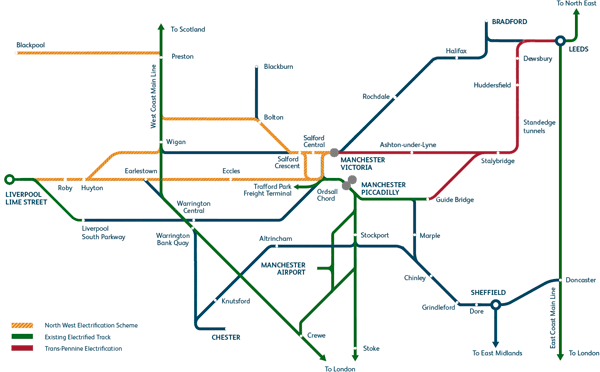
Northern Electrification Map
There are various connecting lines around Liverpool, Manchester and Preston, on which electrification works have not yet started, but have certainly been talked about.
- Salford Crescent to Southport via Wigan Wallgate
- Liverpool to Manchester via Warrington Central
- Preston to Ormskirk
Electrifying these lines would certainly get rid of a few Pacers and release some Class 15X trains for refurshment and use elsewhere.
However, as there is established electrification at Liverpool, Manchester and Preston, it might be more affordable and quicker to use a few Aventra IPEMUs on these lines until the electrification is completed.
Manchester To Leeds Electrification
The Manchester to Leeds electrification has now been paused and it is likely that it will not be completed in the next ten years.
The line has its problems as the three-car Class 185 trains, that work the line, are totally inadequate for the route.
The distance by rail between Manchester and Leeds is 43 miles. When I saw this, I didn’t believe it, but it’s all in this article in the Guardian.
So this means that if you want to run an electric train between Liverpool and Manchester to Leeds, York and Newcastle, the Aventra IPEMU would bridge the gap with ease. The test version of the Aventra IPEMU was a modified Class 379 Train. Similar versions of these like the Class 387 Train are 110 mph trains, so could we see an Aventra IPEMU with such a top speed?
In other words the North Transpennine route could be electrified using four-car 110 mph Aventra IPEMUs. They would certainly be able to serve Newcastle and Middlesbrough, but Scarborough and Hull might still need to be operated by diesel trains.
It would also appear that Aventra IPEMUs could also bridge the gap between Leeds and Manchester Victoria on the Caldervale Line.
This would mean that all stations between Leeds and Manchester on both routes could be served by electric Aventra IPEMUs, if the line was not electrified.
Great Western Electrification
The electrification of the Great Western Main Line is important in solving the train crisis for several reasons.
- If the electrification of the Great Western can be completed as far as Swindon and Newbury, this might release some of the 36, two- and three-car Class 165 trains or the 21, three-car Class 166 trains. These are in good condition and every train company will want a few to provide modern services.
- Once electrification is completed to Bristol and Cardiff and Class 800 and Class 801 trains are running on the route, will release a number of InterCity 125s. Some are ear-marked for Scotland to provide flagship services and I’m sure that train companies will find uses for the rest.
- Electrification to Cardiff will enable electrification of the Cardiff Valleys Lines. But the Valleys electrification needs the new trains to be delivered for Crossrail and/or the London Overground, so that the Class 315 trains can be refurbished and cascaded.
This report in Construction News entitled Crossrail, Thameslink, Great Western and North-west identified as priorities in Network Rail report says this.
The report into the planning of Network Rail’s £38.5bn improvement plan is expected to be released next month.
Sir Peter has identified Crossrail, Thameslink, Great Western and the North-west electrification as the four key “priority projects” for Network Rail, according to sources close to the report.
So it looks like the Great Western and North Western projects might get the resources to finish in time to allow cascades to release trains to help solve the shortage of train problems everywhere.
Scottish Electrification
Although the train shortage is more pronounced in England and Wales, Scottish electrification could give the rest of the UK a helping hand.
In the Wikipedia entry for Abellio ScotRail there is a section entitled Future. This is said.
Abellio ScotRail will introduce a fleet of 46 three car and 24 four car Hitachi AT200 electric trains from December 2017, to operate services on the lines being electrified as part of the Edinburgh to Glasgow Improvement Programme, if it granted a three-year optional franchise extension, it will order a further 10 three car units.
Abellio ScotRail will also introduce 14 four-carriage and 13 five-carriage refurbished High Speed Trains by December 2018 on longer-distance services between Edinburgh, Glasgow, Aberdeen and Inverness. This is contingent on the rolling stock being released by First Great Western, with suggestions in July 2015 that the electrification of the Great Western Main Line was running 12 months late.
This new rolling stock will result in 10 Class 156, eight Class 158 and 34 Class 170s returning to their leasing companies.
So when the new Hitachi trains are delivered by the end of 2018, there could be around fifty diesel trains available to help out in England and Wales.
It is also another reason why electrification of the Great Western must be completed, as without it, Scotland won’t get the High Speed Trains.
Gospel Oak To Barking Electrification
The eight Class 172 trains on the Gospel Oak to Barking Line will be released when that line is electrified.
But who knows when, that will happen?
As the services on the line could be provided by Aventra IPEMUs charging from the electrification at Barking, I do wonder if this should be done to release the Class 172 trains as early as possible. The electrification of the line would then be done at a more relaxed pace, whilst a full service was provided by the Aventras.
Pushing The Train Operating Companies To Help Themselves
In the last few months, some of the franchises have been extended or advertised for new franchisees. And I think it is true to say, that the Department for Transport, is expecting that the train companies do something about improving the service.
- Great Western Railway have taken a pragmatic view on obtaining new trains.
- Chiltern Railways and c2c, the two franchisees with most control over their tracks, are pushing forward with developments.
- East Midlands Trains have got an extension to 2018 with strings. Will we see a rolling stock announcement?
- The just advertised East Anglian franchise, seems to put a lot of pressure on the operator, to sort out the trains and improve customer service.
Perhaps this paragraph from Transforming The North’s Railways is the most significant.
We are looking for a complete modernisation of the Northern rolling stock fleet, which will involve replacing Pacer trains completely by 2020 and delivering high quality modern trains for passengers. Bidders’ rolling stock plans must include at least 120 new-build carriages for use on non-electrified routes. The new carriages that will be introduced on the Northern network, along with the release of diesel units following the introduction of electric trains on newly-electrified routes, will enable the replacement of the Pacer units. Existing electric and diesel trains on Northern will receive a complete modernisation to make them ‘as new’ as soon as practicable after franchise start, with the emphasis that the design of new and existing interiors should feel thoroughly modern and focus on passenger comfort.
One hundred and twenty new build carriages for non-electrified routes either means something like sixty two-car diesel multiple units, thirty four-car Aventra IPEMUs or perhaps a mixture of the two. I don’t thin it means D-Trains or Class 144e Trains.
With Jeremy Corbyn threatening to nationalise the railways, it does seem the train companies are being told to sharpen up their acts significantly.
I think we’ll see more innovation and better services offered in the next few years.
Class Is Permanent
When Chiltern Railways wanted trains to run a high standard of service between London and Birmingham, they turned to locomotive-hauled Mark 3 coaches.
The coaches were refurbished to a very high standard, where every passenger can look out of the window, as shown in Hauled By A Diesel Locomotive To Birmingham. They even have sliding doors and modern toilets that meet all current and known future regulations.
And of course, they still have one of the finest ride qualities of any train in the world.
This is said on the Wikipedia entry for Abellio ScotRail.
Abellio ScotRail will also introduce 14 four-carriage and 13 five-carriage refurbished High Speed Trains by December 2018 on longer-distance services between Edinburgh, Glasgow, Aberdeen and Inverness. This is contingent on the rolling stock being released by First Great Western, with suggestions in July 2015 that the electrification of the Great Western Main Line was running 12 months late.
High Speed Trains are formed of two Class 43 locomotives and an appropriate number of Mark 3 coaches.
I would assume the coaches will be refurbished very much like the Chiltern examples with a high class interior, sliding doors and modern toilets, so they meet all current and known future access, disability and environmental regulations.
Terry Miller’s magnificent design, that was built between 1975 and 1988, just seems to keep putting off the inevitable. I wouldn’t bet against some Mark 3 coaches still being in regular service for a hundred years.
Despite their age, there are still a lot of Mark 3 coaches in regular service. I’m not sure how many, but there are over 800 in InterCity 125 sets.
In addition to the superb Chiltern Class 68 locomotive-hauled sets, there are also several sets used by Abellio Greater Anglia on Liverpool Street to Ipswich and Norwich services, where they are hauled by Class 90 locomotives.
These Greater Anglia sets need upgrading with sliding doors and modern toilets, if they are to stay in service past 2020.
The next operator for this franchise is being given tough conditions, which include putting modern trains on the flagship route and running some services in ninety minutes from Norwich to London and sixty from Ipswich. The question has to be asked if this would be possible with a modern locomotive and refurbished Mark 3 coaches!
I think there is a high chance that the winning bidder for the next Greater Anglia franchise will still be using refurbished Mark 3 coaches between Liverpool Street, Ipswich and Norwich.
The new franchisee will have to offer lots of new services and three possibilities have been run in my lifetime.
- Liverpool Street and Great Yarmouth, via Cambridge, the new Cambridge Science Park station and Norwich.
- Liverpool Street and Peterborough via Colchester, Ipswich, Bury St. Edmunds and Ely.
- Liverpool Street to Lowestoft via Colchester and Ipswich.
They have a problem, in that sections of these routes are not electrified. There are four possible solutions.
- Run the routes in such a way that an Aventra IPEMU can service it. A possibility!
- Buy a few Class 800 electro-diesel trains, which would probably be made in Japan by Hitachi. Expensive but possible!
- Get a few more sets of refurbished Mark 3 coaches and haul them with a Class 88 electro-diesel locomotive. No problem and in style!
- Use InterCity 125s. Possibly, but 100% diesel!
The only options that could be done quickly would be to use the Class 88 or InterCity 125s.
The latter would work, but surely a mainly electric modern solution is probably better and more acceptable to politicians.
I would also never rule out more sets of Mark 3 coaches being used around the country after refurbishment. The only problem is something environmentally-friendly to haul them!
The Scottish solution of shortened High Speed Trains could also be used.
Aventra IPEMUs Running From Or Between Electrified Hubs Or Lines
Many branch lines or secondary routes meet the following conditions.
- They are electrified at one or both ends.
- The electrification is sufficient to charge an Aventra IPEMU’s battery, as it waits to return or passes along the line.
- The non-electrified sections of the line are short enough to be handled by an Aventra IPEMU.
Examples of lines suitable for an IPEMU include.
- Newcastle to Carlisle
- Manchester to Leeds
- Cambridge to Ipswich
- Coventry to Nuneaton
- Carnforth to Barrow-in-Furness
- Norwich to Yarmouth
I think that once the Aventra IPEMU concept is proven, then we’ll see them increasingly used around electrified lines.
There is a long list of places, where branch and secondary routes meet main electrified lines.
- Birmingham
- Carlisle
- Coventry
- Crewe
- Darlington
- Doncaster
- Ely
- Ipswich
- Leeds
- Liverpool
- Manchester Piccadilly
- Manchester Victoria
- Newcastle
- Norwich
- Peterborough
- Preston
- Wolverhampton
- York
This list will hopefully be increased, when the Great Western Main Line is electrified.
- Bristol
- Cardiff
- Reading
- Swansea
I have written An Alternative Approach To Provide A Local Metro Network, which investigates how Aventra IPEMUs can be used to provide electric trains on lines without full electrification.
The only area of the country that will lack electrified hubs in a few years will be the East Midlands Main Line and the far South West and the Northern parts of Scotland and Wales.
So surely, it is important that we electrify the Midland Main Line to bring electrification to the important hubs of Derby, Nottingham and Sheffield, so we can use Aventra IPEMUs to provide electric trains on their local lines.
Conclusions
It’s tight, but I think it’ll be alright in 2020, but there are certain things we must do.
- Use no more than a handful of Vivarail D-Trains to provide services on some far-flung lines.
- The Great Western, North Western and Scottish electrifications must be completed on time.
- Use the Mark 3 coaches intelligently
- Use new Aventra IPEMUs to side-step electrification in places like, the electrification gap between Manchester and Leeds and the Cardiff Valleys Lines.
- Use new Aventra IPEMUs to provide services around electrified hubs.
- Scrap all the Pacers except possibly upgraded Class 144e trains.
- Upgrade the Class 150, Class 153 and Class 156 trains.
I think it’ll be interesting to see how the companies jump.
 The Anonymous Widower