Stadler Comes Up With A New Take And A Big Order For Hybrid And Battery Trains
This article on Global Rail News is entitled Vegetable Oil Fuel Trains To Run In The Netherlands Ahead Of Battery Conversion.
This is said.
- Arriva has ordered eighteen hybrid diesel trains from Stadler to operate its Northern Lines services in the Netherlands.
- The trains will initially be powered by Hydrotreated Vegetable Oil (HVO).
- The trains will have regenerative braking.
- Stadler have called the trains Flirtinos.
- The trains are capable of conversion to battery trains, when there is sufficient electrification.
- The first HVO trains will enter service in 2020.
- Arriva has committed to putting batteries into all of its fleet of fifty-one trains.
This a very strong environmental statement from Stadler and Arriva.
In July 2017, I wrote Battery EMUs For Merseyrail.
These trains are also being built by Stadler.
Conclusion
Have Stadler found the secret for better battery trains?
Certainly, the amount of money that Arriva is paying Stadler and the fact that Arriva are creating sixty-nine trains with batteries, indicates that they have confidence in the product!
You can’t fault Stadler’s marketing either!
What’s The Weather Like In Africa?
This is a difficult question to answer, as Africa only has a limited number of weather stations.
So along comes Kukua, which has designed a low-cost, mobile network-connected, solar-powered weather station.
There’s a report in the latest edition of BBC Click.
It shows how the devices are helping small farmers in Africa.
Out Of Thin Air
This article on Global Rail News is entitled Could Building Above London’s Railways Solve The Capital’s Housing Crisis?.
This is said.
Around a quarter of a million homes could be built in London by developing above the capital’s railways, a new report has claimed.
A report published by engineering consultants WSP suggests that building apartments above open London Underground and Overground lines could provide much-needed housing capacity in the city.
WSP Global is one of the world’s leading consultancy companies, with probably their best known project in the UK, being The Shard.
They call the concept Rail Overbuild and the full report is at this document on the WSP web site.
This is a picture from the report.

The report is an informative read and the techniques don’t apply just to London, but could be used over many City Centre rail lines throughout the world.
One section of the report is entitled the Twelve Benefits of Rail Overbuild.
- Building over existing infrastructure requires no new land.
- Overbuilds in inner city locations are ideally located for residents: the ultra-close proximity to transport facilities provides greater mobility options and could tempt homeowners to either forego car ownership altogether or else reduce multi-car ownership, thereby increasing notional disposable income.
- Overbuilds can increase public transport ridership. In turn this will mean lower greenhouse gas emissions and require less carparking space.
- Rail overbuilds can better integrate a station into its surroundings; the station development becomes a connector within the urban realm. And by incorporating adjacent site development, rail overbuilds spread their communal benefit over a wider area.
- Mixed-use rail overbuild environments contribute to public safety, particularly for pedestrians, given they foster activities throughout the day and much of the evening.
- Rail overbuilds provide opportunities to create new pedestrian-friendly environments, creating social value and forming attractive places where people want to live.
- Rail overbuilds offer financial incentives for rail asset owners who may gain commercial benefit from the development and from which they
can reinvest the proceeds into improving city infrastructure. - Uplift can be created in the value of the mmediate surrounding area and generate household and business rates, as well as other revenue for the local authority.
- Rail overbuild schemes can fulfil local authorities’ preference for higher densification and be used as tools of economic development.
- Provide a sustainable solution to urban development
- In resolving rail-bridging issues – e.g. structural, acoustic, air quality, vibration,
utilities, economy – the overbuild provides precedents for future developments. - The station/transport hub becomes a destination in itself thanks to the resulting retail and commercial development in and around it.
They also give some substantial examples of where the proposed methods have been or will be used.
- Earl’s Court Regeneration
- Principal Place, Shoreditch
- Royal Mint Gardens, Tower Hill
- Stamford Bridge, Chelsea
- Riverside, New York
This is said about the rebuilding of Stamford Bridge.
Rail overbuild doesn’t just have to facilitate housing. Chelsea Football Club’s proposed new stadium is a fine example of how a site constrained by adjacent rail lines can be successfully built over to maximise development potential.
I recommend that you read the WSP report.
Will the Government and the Mayor of London do what the report suggests?
A Heritage Class 315 Train For The Romford-Upminster Line
The Romford To Upminster Line is slated to get a brand-new Class 710 train to work the two trains per hour shuttle.
This article in London Reconnections, which is entitled More Trains for London Overground: A Bargain Never to be Repeated, says that it is possible that this line could be served by a Class 315 train, held back from the scrapyard.
This would mean a new Class 710 train could be deployed elsewhere, where its performance and comfort levels would be more needed.
Surely, a single Class 315 train, would be enough capacity for the line and a lot cheaper than a new Class 710 train! Provided of course, that it was reliable, comfortable and could maintain the current service.
A Heritage Unit
Why not market the train, as an updated heritage unit?
- It could be painted in British Rail livery from the 1980s.
- It would have wi-fi!
- It might have an information car, describing the history of the line and the area.
- It might even have a coffee kiosk!
It would be very much a quirky train to asttract regular passengers and even tourists.
But of course, it would be run as professionally as any other train on the network.
An Educational Purpose
I feel strongly, as do many in education, that not enough people are choosing subjects like engineering as a career.
Could it be used to show that engineering and particularly rail engineering could be a worthwhile career move?
Surely, it could also be used for training staff!
A Technology Or Capability Demonstrator
Eversholt Rail Group own sixty-one of these Class 315 trains, which although they are nearly forty-years old, don’t seem to feature much on BBC London’s travel reports.
They are reportedly destined for the scrapyard, but if they were to show they could still perform after a refurbishment, they might find a paying application somewhere.
Research
Regularly, innovations are suggested for the railway, but often finding somewhere to test them can be difficult.
However, as the Romford to Upminster Line is an electrified single-track line without signalling, the line is about as simple as you can get.
So supposing a company wanted to test how a sensitive electronic instrument behaved on a moving vehicle, this could be done without any difficulty.
Conclusion
If it is decided that a Class 315 train is to be used on the Romford to Upminster Line, I believe that the service could be marketed as a quirky heritage unit, that in conjunction with its main purpose of providing a public service, could also be used for other education, training, marketing, innovation and research purposes.
Eversholt Rail Group might even shift a few redundant Class 315 trains!
Is Hydrogen A Viable Fuel For Rail Applications?
Perhaps a good place to start is this article on Global Rail News, which is entitled In depth: What you need to know about Alstom’s hydrogen-powered Coradia iLint.
The article starts with this summary of where we are at present.
The global rail industry’s major players are competing to establish an affordable and green alternative to diesel.
Electric traction has been rolled out extensively but electrification can be very expensive – as the UK has learned – and a large part of Europe’s network remains unelectrified. In countries where the provision of electric services is patchy, bi-mode trains are a popular alternative.
I certainly believe that all trains should be powered by electricity, but then we have had diesel-electric locomotives in regular use pn the UK network since the 1950s.
The article mentions two alternatives to diesel.
Bombardier’s modified Class 379 train, which is now called an IPEMU, which I rode in public service in early 2015 is mentioned. I found this train impressive, as I reported in Is The Battery Electric Multiple Unit (BEMU) A Big Innovation In Train Design?. This was my conclusion.
Who’d have thought that such a rather unusual concept of a battery electric multiple unit would have so many possibilities.
I think I’ve seen the future and it just might work!
I still agree with that conclusion.
The second alternative has just arrived in the shape of the Alstom Coradia iLint, which is powered by hydrogen and just emits little more than steam and condensed water.
The Coradia LINT is a family of one and two car diesel trains.
Wikipedia has a section on the Coradia iLint and this is said.
The Coradia iLint is a version of the Coradia Lint 54 powered by a hydrogen fuel cell.[6] Announced at InnoTrans 2016, the new model will be the world’s first production hydrogen-powered trainset. The Coradia iLint will be able to reach 140 kilometres per hour (87 mph) and travel 600–800 kilometres (370–500 mi) on a full tank of hydrogen. The first Coradia iLint is expected to enter service in December 2017 on the Buxtehude-Bremervörde-Bremerhaven-Cuxhaven line in Lower Saxony, Germany. It will be assembled at Alstom’s Salzgitter plant. It began rolling tests at 80km/h in March 2017.
That sounds impressive.
The Global Rail News article gives a bit more detail, including the following.
- The train has no need for overhead catenary.
- The train has lithium-ion batteries to store generated energy.
- The train has a intelligent energy management system.
- Alstom propose to use wind energy to generate hydrogen in the future.
It also includes this promotional video for the Caradio iLint.
Some points from the video.
- The train has similar performance to comparable regional trains. Do they mean the Lint 54 on which it is based?
- The train captures regenerative braking energy.
- The train has been developed in co-operation with a Canadian company! Do they mean Ballard?
So what are my views about trains hydrogen power?
Hydrogen Power In Road Transport
London bus route RV1 has been run by hydrogen-powered buses since 2010.
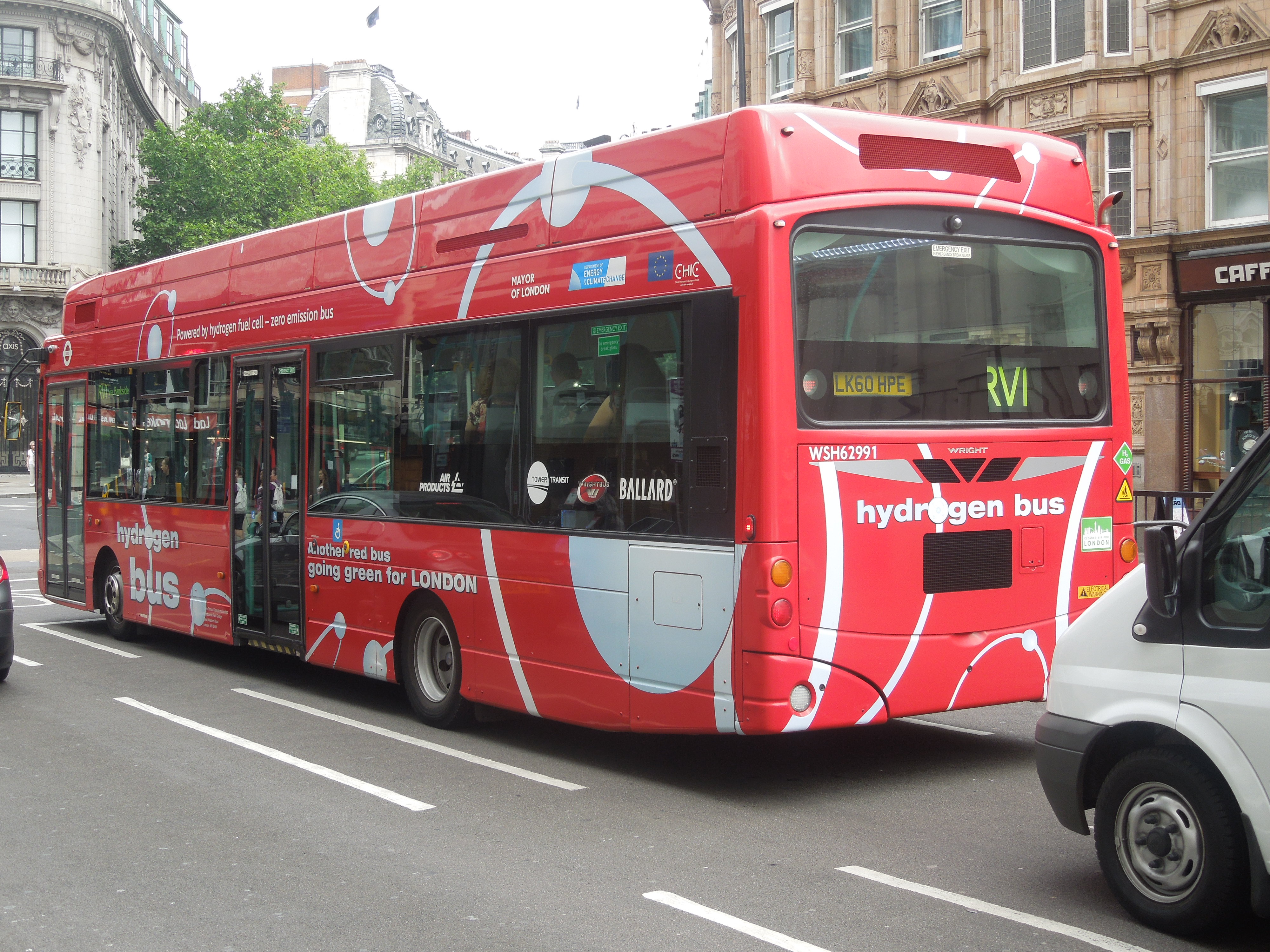
Note Ballard on the side of the bus!
There are also a number of hydrogen-powered cars including the Honda Clarity.
The latest Clarity has these characteristics.
- 4-door saloon.
- 366 mile range.
- 130 kW electric motor.
That seems very reasonable. But the car is only available in California, costs a lot and refuelling points are not everywhere.
The competition for the Honda and other hydrogen-powered cars is the electric car powered by batteries, where charging is getting much faster and easier and the price is getting more competitive.
I think that on the current technology, you’d have to be a very special individual to invest in a hydrogen fuel-cell car.
But use of hydrogen on a city-centre bus is more suitable.
- Pollution is often a problem in city-centres.
- Politicians like to show off their green credentials.
- Buses run fixed routes.
- Bus working schedules can be arranged, such that after a number of trips, they can return to a nearby garage for refuelling.
According to this fuel-cell bus entry in Wikipedia, there have been several trials with varying degrees of success.
My view is that with the current technology, there may be a niche market for hydrogen fuel-cell buses in city centres and environmentally-sensitive areas on defined routes, but that practically and economically, hydrogen fuel-cell cars are a non-starter.
There will be, improvements in current technology in the following areas.
- Vehicle design will result in lighter-weight vehicles and better aerodtnamics.
- Charging systems for electric vehicles will get more numerous and innovative.
- Batteries or energy storage systems will get smaller, lighter and will hold more energy.
Although these developments will also help hydrogen fuel-cell vehicles like buses, they will also help battery-powered vehicles a lot more.
So I would not be surprised to see hydrogen fuel-cell buses not being very successful.
The Advantage Of Rail Over Road
You can’t disagree with the laws of physics, although you can use them to advantage.
Rolling resistance is well described in Wikipedia. This statement starts the third paragraph.
Any coasting wheeled vehicle will gradually slow down due to rolling resistance including that of the bearings, but a train car with steel wheels running on steel rails will roll farther than a bus of the same mass with rubber tires running on tarmac. Factors that contribute to rolling resistance are the (amount of deformation of the wheels, the deformation of the roadbed surface, and movement below the surface. Additional contributing factors include wheel diameter, speed, load on wheel, surface adhesion, sliding, and relative micro-sliding between the surfaces of contact.
Also, as a tram or train system has control of the design of both the vehicle and the rail, it is much easier to reduce the rolling resistance and improve the efficiency of a rail-based system.
One factor; wheel load, is very important. Increasing the load on steel wheels running on steel rails can actually reduce the rolling resistance. So this means that a rail vehicle can better handle heavy components like perhaps a diesel engine, transformer, battery or hydrogen fuel-cell and tanks.
Hydrogen Power In Rail Transport
As Alstom appear to have shown, hydrogen fuel-cells would appear to be able to power a train at 140 kph. Although, there are no reports, that they have actually done it yet! But there has been an order!
The Coradia iLint
I will attempt to answer a few questions about this train.
How Much Power Will The Train Need?
The train is based on a Lint 54.
This document on the Alstom web site, is the brochure for the Coradia Lint.
This is said about the Lint 54.
Ideal for regional or suburban service: The two-car diesel multiple unit with four entrances per side combines all the advantages of its smaller brothers while offering space for up to 170 seats. The vehicle measures 54 m in length. Thanks to its powerful engines, the Lint 54 reaches a maximum speed of up to 140 km/h. With its three powerpacks, the vehicle has a performance of about 1 MW.
Does the iLint have a similar power of about 1 MW?
Could Ballard Power The Train?
If Ballard are Alstom’s Canadian partner could they power the train?
Searching the Ballard web site, I found a product called FCveloCity-HD, for which this document is the data sheet.
The data sheet shows that a 100 kW version is available.
I also found this press release on the Ballard web site, which is entitled Ballard Signs LOI to Power First-Ever Fuel Cell Tram-Buses With Van Hool in Pau, France.
The press release says that 100 kW versions of the FCveloCity-HD, designated FCveloCity-HD100, are used on the tram-buses.
All these applications lead me to believe that Ballard could meet the requirements of enough power for the train.
The video appears to show, that the fuel-cell charges the battery, which then drives the train.
This is not surprising, as most diesel-powered hybrid buses work the same way.
How Big Is The Fuel-Cell?
A Ballard FCveloCity-HD100 is 1200 x 869 x 506 mm. in size and it weighs 285 Kg.
The hydrogen tanks are probably bigger.
Would The Fuel-Cell Provide Enough Power For The Train?
Not on its own it wouldn’t, but adding in the lithium-ion battery and intelligent power management and I believe it would.
- The fuel-cell would generate a constant 100 kW assuming it’s a FCveloCity-HD100.
- The generated electricity would either power the train or be stored in the battery.
- The battery would handle the regenerative braking.
- Air-conditioning and other hotel functions for the train would probably be powered from the battery
The intelligent power management system would take the driver’s instructions and sort out how the various parts of the system operated.
- Moving away from a station with a full train would mean that the train used fuel-cell and battery power to accelerate up to line speed.
- Stopping at a station and the regenerative energy from braking would be stored in the battery.
- Running at 140 kph would need an appropriate power input to combat wind and rolling resistance.
- Any excess energy from the fuel-cell would go into the battery.
- Whilst waiting in a station, the fuel-cell would charge the battery, if it was necessary.
That looks to be very efficient.
How Big Would The Lithium-Ion Battery Need To Be?
I don’t know, but given the appropriate figures, I could calculate it. So Alstom have probably calculated the optimum battery size, based on the routes the train will serve.
Is The Coradia iLint A Battery Train With A Hydrogen-Powered Battery Charger?
I think it is!
But then many hybrid buses are battery buses with a diesel-powered charger.
In Arriva London Engineering Assists In Trial To Turn Older Diesel Engine Powered Buses Green, I wrote about a diesel-hybrid bus, that with the use of geo-fencing, turns itself into a battery bus in sensitive or low-emission areas.
How Would The Train Be Refuelled With Hydrogen?
The video shows a maintenance depot, where the train is topped up with hydrogen, probably after a day’s or a shift’s work.
The first iLint trains have been ordered for the Bremerhaven area, which is on the North Sea coast. So will the depot make its own hydrogen by electrolysis using local onshore or offshore wind power?
Some of that wind power could be used to charge the battery overnight in the depot.
It’s an excellent green concept.
What About The Hindenberg?
But then the very explosive use of hydrogen in the Space Shuttle External Tank never gave any trouble.
Does Alstom Have Any Plans For The UK?
This article on the Engineer web site is entitled Alstom Eyes Liverpool Hydrogen Train Trials.
It would appear to be a good chjoice for the following reasons.
Location
Alstom’s UK base is at Widnes, which is in the South-East of the Liverpool City Region.
Test Partner
Merseyrail have shown in recent years, that they can think out of the box, about using trains and would be a very able partner.
Test Route
The article suggests that Liverpool to Chester via the Halton Curve could be the test route.
- The route is partly electrified from Runcorn to Liverpool.
- The route passes close to Alstom’s base.
- The section without electrification from Runcorn to Chester is probably about twenty miles long, which is a good test, but not a very difficult one.
There would also be good opportunities for publicity and photographs.
Availability Of Hydrogen
Hydrogen is available locally from the various petro-chemical industries along the Mersey.
Incidentally, I used to work in a chlorine plant at Runcorn, where brine was split into hydrogen and chlorine by electrolysis. There were hydrogen tankers going everywhere! Does the industry still exist?
Where’s The Train?
Are Alstom going to build a new train as the Coradia iLint is not built for the British network? Or are they going to modify an existing train, they manufactured a few years ago?
Conclusion
Hydrogen would appear to be a viable fuel for rail applications.
The Intelligent Multi-Mode Train And Affordable Electrification
Some would say we are at a crisis point in electrification, but I would prefer to call it a crossroads, where new techniques and clever automation will bring the benefits of electric traction to many more rail lines in the UK.
Lines That Need Electric Passenger Services
I could have said lines that need to be electrified, but that is probably a different question, as some lines like the Felixstowe Branch Line need to be electrified for freight purposes, but electric passenger services can be provided without full electrification.
Lines include.
- Ashford to Hastings.
- Borderlands Line.
- Caldervale Line from Preston to Leeds
- Camp Hill Line across Birmingham.
- Huddersfield Line from Manchester to Leeds via Huddersfield.
- Midland Main Line from Kettering to Derby, Nottingham and Sheffield.
- Uckfield Branch Line
There are many others, too numerous to mention.
What Is A Multi-Mode Train?
If a bi-mode train is both electric and diesel-powered, a multi-mode train will have at least three ways of moving.
The Intelligent Multi-Mode Train
The intelligent multi-mode train in its simplest form would be an electric train with these characteristics.
- Electric drive with regenerative braking.
- Diesel or hydrogen power-pack.
- Onboard energy storage to handle the energy generated by braking.
- 25 KVAC and/or 750 VDC operation.
- Automatic pantograph and third-rail shoe deployment.
- Automatic power source selection.
- The train would be designed for low energy use.
- Driver assistance system, so the train was driven safely, economically and to the timetable.
Note the amount of automation to ease the workload for the driver and run the train efficiently.
Onboard Energy Storage
I am sure that both the current Hitachi and Bombardier trains have been designed around energy storage. Certainly, there are several quotes from Bombardier executives that say so.
The first application will be to handle regenerative braking, so that energy can be stored on the train, rather than returned to the electrification.
Onboard energy storage is also important in modern electric trains for other reasons.
- Features like remote train wake-up can be enabled.
- Moving the train short distances in case of power failure.
- When Bombardier started developing the use of onboard energy storage, they stated that one reason was to reduce electrification in depots for reasons of safety.
Onboard energy storage will improve in several ways.
- The energy density will get higher, meaning lighter and smaller storage.
- The energy storage capacity will get higher, meaning greater range.
- The cost of energy storage will become more affordable.
- Energy storage will last longer before needing replacement.
- CAF use a supercapacitor to get fast response and a lithium-ion battery for good capacity.
We underestimate how energy storage will improve over the next few years at our peril.
Automatic Onboard Storage Management
The use of the energy storage will also be optimised for route, passenger load, performance and battery life by the trains automatic power source selection system.
Diesel Power Pack
A conventional diesel power pack to drive the train on lines without electrification.
As the train is electrically-driven, when running under diesel, regenerative braking can still be used, with the generated energy being stored onboard the train.
Hydrogen Power Pack
I believe that hydrogen could be used to generate the electricity required, as it is in some buses.
Operation Of The Multi-Mode Train
I’ve read somewhere that Greater Anglia intend to run their Class 755 trains using electricity, where electrification is available, even if it only for a short distance. This is enabled, by the ability of the train to be able to raise and lower the pantograph quickly and at line speed.
The train’s automatic power source selection will choose the most appropriate power source, from perhaps electrification, stored energy and diesel, based on route, load and the timetable.
Do Any Multi-Mode Trains Exist?
The nearest is probably the Class 800 train, which I believe uses onboard energy storage to handle regenerative braking, as I outlined in Do Class 800/801/802 Trains Use Batteries For Regenerative Braking?.
This article in RailNews is entitled Greater Anglia unveils the future with Stadler mock-up and says this.
The bi-mode Class 755s will offer three or four passenger vehicles, but will also include a short ‘power pack’ car to generate electricity when the trains are not under the wires. This vehicle will include a central aisle so that the cars on either side are not isolated. Greater Anglia said there are no plans to include batteries as a secondary back-up.
So does that mean that Class 755 trains don’t use onboard energy storage to handle regenerative braking?
At the present time, there is no bi-mode Bombardier Aventra.
But in Is A Bi-Mode Aventra A Silly Idea?, I link to an article on Christian Wolmar’s web site, which says that Bombardier are looking into a 125 mph bi-mode Aventra.
My technical brochure for the new Class 769 train, states that onboard energy storage is a possibility for that rebuild of a Class 319 train.
I don’t think it is a wild claim to say that within the next few years, a train will be launched that can run on electric, diesel and onboard stored power.
The Pause Of Electrification
Obviously, for many reasons, electrification of all railway lines is an ideal.
But there are problems.
- Some object to electrification gantries marching across the countryside and through historic stations.
- Network Rail seem to have a knack of delivering electrification late and over budget.
- The cost of raising bridges and other structures can make electrification very bad value for money.
It is for these and other reasons, that the Government is having second thoughts about the direction of electrification.
Is There A Plan?
I ask this question deliberately, as nothing has been disclosed.
But I suspect that not for the first time, the rolling stock engineers and designers seem to be getting the permanent way and electrification engineers out of trouble.
As far as anybody knows, the plan seems to be to do no more electrification and use bi-mode trains that can run under both electrification and diesel-power to provide new and improved services.
Use Of Bi-Mode Trains
Taking a Liverpool to Newcastle service, this would use the electrification to Manchester, around Leeds and on the East Coast Main Line, with diesel power on the unelectrified sections.
If we take a modern bi-mode train like a Class 800 train, some features of the train will help on this route.
- The pantograph can raise or lower as required at line speed.
- It is probably efficient to use the pantograph for short sections of electrification.
- Whether to use the pantograph is probably or certainly should be controlled automatically.
On this route the bi-mode will also be a great help on the fragile East Coast Main Line electrification.
Improving Bi-Mode Train Efficiency
Bi-mode trains may seem to be a solution.
However, as an electrical engineer, I believe that what we have at the moment is rather primitive compared to how the current crop of trains will develop.
Onboard Energy Storage
I said this earlier.
- I am sure that both the current Hitachi and Bombardier trains have been designed to use energy storage.
- CAF use a supercapacitor to get fast response and a lithium-ion battery for good capacity.
This is an extract from the the Wikipedia entry for supercapacitor.
They typically store 10 to 100 times more energy per unit volume or mass than electrolytic capacitors, can accept and deliver charge much faster than batteries, and tolerate many more charge and discharge cycles than rechargeable batteries.
Supercapacitors are used in applications requiring many rapid charge/discharge cycles rather than long term compact energy storage: within cars, buses, trains, cranes and elevators, where they are used for regenerative braking.
Pairing them with a traditional lithium-ion battery seems to be good engineering.
The most common large lithium-ion batteries in public transport use are those in hybrid buses. In London, there are a thousand New Routemaster buses each with a 75 kWh battery.
In the past, there has have been problems with the batteries on New Routemasters and other hybrid buses, but things have improved and I suspect there is a mountain of knowledge both in the UK and worldwide on how to build a reliable, affordable and safe lithium-ion battery in the 75-100 kWh range.
As on the New Routemaster the battery is squeezed under the stairs, these batteries are not massive and I suspect one or more could easily be fitted underneath the average passenger train.
Look at this picture of a Class 321 train.
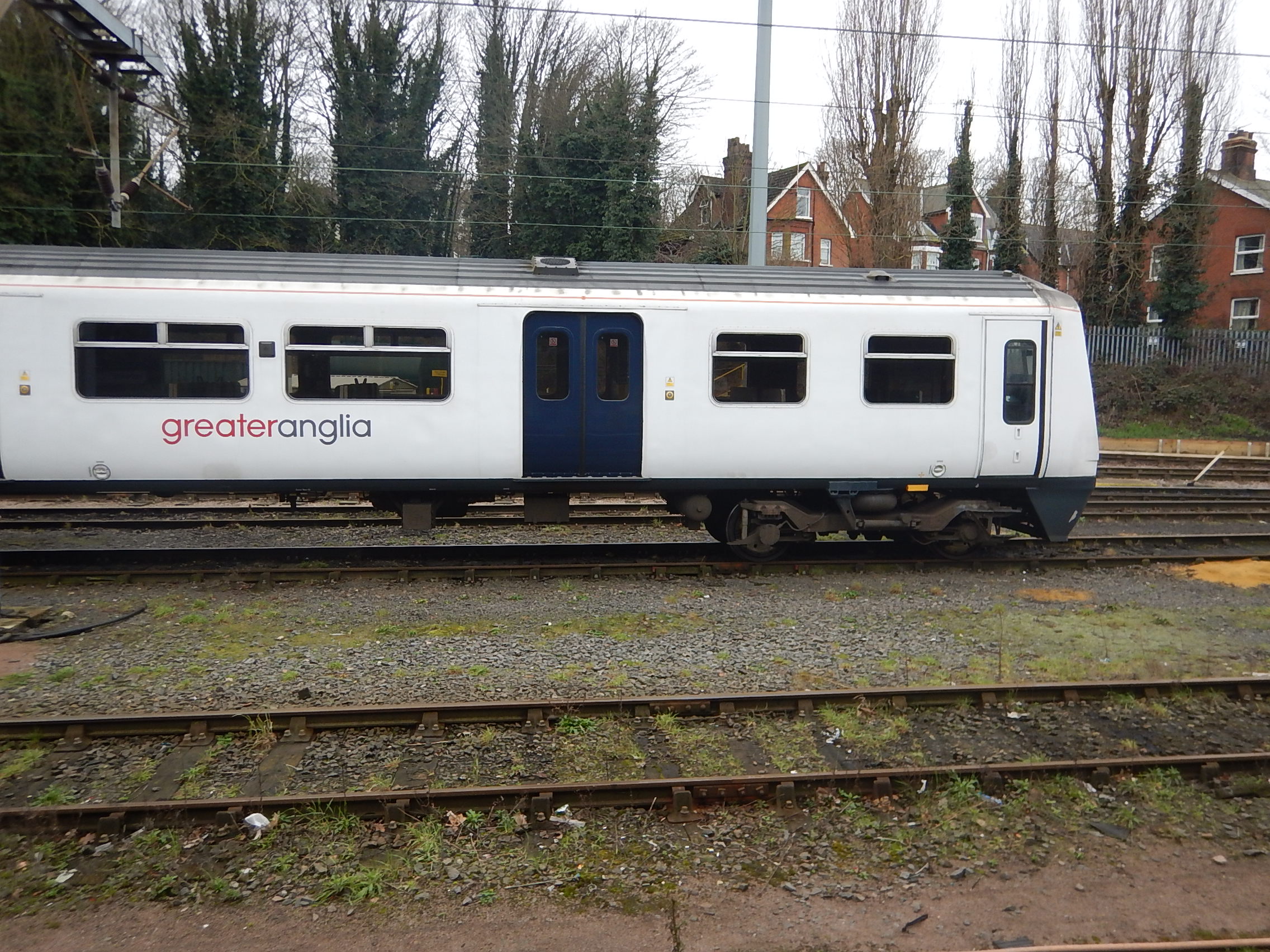
The space underneath is typical of many electrical multiple units.
How Far Could A Train Travel On Stored Energy?
In an article in the October 2017 Edition of Modern Railways, which is entitled Celling England By The Pound, Ian Walmsley says this in relation to trains running on the Uckfield Branch.
A modern EMU needs between 3 and 5 kWh per vehicle mile for this sort of service.
So if we take a battery from a New Routemaster bus, which is rated at 75 kWh, this would propel a five-car electric multiple unit between three and five miles.
Suppose though you put a battery of this size in every car of the train. This may seem expensive, but a typical car in a multiple unit and a double-deck bus carry about the same number of passengers.
A battery in each car would give advantages, especially in a Bombardier Aventra.
- Most cars in an appear to be powered, so each traction motor would be close to a battery, which must reduce electrical transmission losses and ease regenerative braking.
- Each car would have its own power supply, in case the main supply failed.
- The weight of the batteries is spread along the train.
If you take any Aventra, with a 75 kWh battery in each car, using Ian’s figures, they would be able to run between fifteen and twenty-five miles on battery power alone.
Quotes by Bombardier executives of a fifty mile range don’t look so fanciful.
What Onboard Energy Storage Capacity Would Be Needed For Fifty Miles?
This article in Rail Engineer, which is entitled An Exciting New Aventra, quotes Jon Shaw of Bombardier on onboard energy storage.
As part of these discussions, another need was identified. Aventra will be an electric train, but how would it serve stations set off the electrified network? Would a diesel version be needed as well?
So plans were made for an Aventra that could run away from the wires, using batteries or other forms of energy storage. “We call it an independently powered EMU, but it’s effectively an EMU that you could put the pantograph down and it will run on the energy storage to a point say 50 miles away. There it can recharge by putting the pantograph back up briefly in a terminus before it comes back.
What onboard energy storage capacity would be needed for the quoted fifty miles?
I will use these parameters.
- Ian Walmsley said a modern EMU consumes between 3 and 5 kWh for each vehicle mile.
- All vehicles are powered and there is one battery per vehicle.
This will result in the following battery sizes for different EMU consumption rates.
- 3 kWh/vehicle-mile – 150 kWh
- 4 kWh/vehicle-mile – 200 kWh
- 5 kWh/vehicle-mile – 250 kWh
These figures show that to get a smaller size of battery, you need a very energy-efficient train. At least lighting, air-conditioning and other electrical equipment is getting more efficient.
The 379 IPEMU Experiment On The Mayflower Line
In 2015, I rode the battery-powered Class 379 train on the 11.2 mile long Mayflower Line.
I was told by the engineer monitoring the train on a laptop, that they generally went to Harwich using the overhead electrification, charging the battery and then returned on battery power.
Ian Walmsley in his Modern Railways article says that the batteries on that train had a capacity of 500 kWh.
This works out at just over 11 kWh per vehicle per mile.
Considering this was an experiment conducted on a scheduled passenger service, it fits well with the conssumption quoted in Ian Walmsley’s article.
Crossrail’s Emergency Power
If you look at Crossrail’s Class 345 trains, they are nine cars, with a formation of
DMSO+PMSO+MSO+MSO+TSO+MSO+MSO+PMSO+DMSO
All the Ms mean that eight cars are motored.
Suppose each of the motored cars have a battery of 75 kWh.
- This means a total installed battery size of 600 kWh.
- Suppose the nine-car train needs Ian’s Walmsley’s high value of 5 kWh per vehicle mile to proceed through Crossrail.
- Thus 45 kWh will be needed to move the train for a mile.
- Dividing this into the battery capacity gives the range of 13.3 miles.
If this were Crossrail’s emergency range on stored energy, it would be more than enough to move the train to the next station or place of safety in case of a complete power failure.
Trains Suitable For Onboard Energy Storage
I have a feeling that for any train to run efficiently with batteries, there needs to be a lot of powered axles and batteries distributed along the train.
Aventras certainly have a lot of powered axles and I think Hitachi trains are similar.
Perhaps this explains, why after the successful trial of battery technology on a Class 379 train, it has not been retrofitted to any other Electrostars.
There might not be enough powered axles!
Topping Up The Onboard Energy Storage
There are three main ways to top up the onboard energy storage.
- From regenerative braking.
- From the diesel or hydrogen powerpack.
- From the electrification, where it is available.
The latter is probably the most efficient and is ideal, where a route is partly electrified.
Affordable Electrification
Although the Government has said that there will be no more electrification, I think there will be selective affordable electrification to improve the efficiency of multi-mode trains.
Why Is Electrification Often Late And Over Budget?
The reasons I have found or been told are varied.
- Electrification seems regularly to hit unexpected infrastructure like sewers and cables on older routes.
- There have been examples of poor engineering.
- There is a large amount of Victorian infrastructure like bridges and stations that need to be rebuilt.
- There is a certain amount of opposition from the Heritage lobby.
- Connecting the electrification to the National Grid can be a large cost.
My experience in Project Management, also leads me to believe that although Network Rail seems to plan large station and track projects well, they tend to get in rather a mess with large electrification projects.
Electrification Of New Track
It may only be a personal feeling, but where new track has been laid and it is electrified Network Rail don’t seem to have the same level of problems.
These projects are generally smaller, but also I suspect the track-bed has been well-surveyed and well-built, to give a good foundation for the electrification.
It was interesting to note a few weeks ago at Blackpool, where they are electrifying the line, that Network Rail appeared to be relaying all of the track as well.
I know they were also re-signalling the area, but have Network Rail decided that the best way to electrify the line was a complete rebuild?
Short Lengths Of New Electrification
Short lengths of new electrification could make all the difference on routes using multi-mode trains with onboard energy storage.
As a simple example, I’ll take the Felixstowe Branch Line, that I know well. Ipswwich to Felixstowe is about sixteen miles, which is probably too far for a train running on onboard energy storage. But there are places, where short lengths of electrification would be beneficial to both the Class 755 trains and trains with onboard energy storage.
- Ipswich to Westerfield
- On the section of double-track to be built in 2019.
- Felixstowe station
There is also the large number of diesel-hauled freight trains passing through the area, quite a few of which change to and from electric haulage at Ipswich.
So would some selective short lengths of electrification enable the route to be run by trains using onboard energy storage?
Electrification Of Tunnels
Over the last few years, there has been some very successful electrification of tunnels like the seven kilometre long Severn Tunnel. This is said about the problems of electrification in Wikipedia.
As part of the 21st-century modernisation of the Great Western Main Line, the tunnel was prepared for electrification. It has good clearances and was relatively easy to electrify, although due to its age, the seepage of water from above in some areas provided an engineering challenge. The options of using either normal tunnel electrification equipment or a covered solid beam technology were considered and the decision was made to use a solid beam. Over the length of the tunnel, an aluminium conductor rail holds the copper cable, which is not under tension. A six-week closure of the tunnel started on 12 September 2016. During that time, alternative means of travel were either a longer train journey via Gloucester, or a bus service between Severn Tunnel Junction and Bristol Parkway stations. Also during that time, and possibly later, there were direct flights between Cardiff and London City Airport. The tunnel was reopened on 22 October 2016.
It appears to have been a challenging but successful project.
This type of solid beam electrification has been used successfully by Crossrail and Chris Gibb has suggested using overhead beam to electrify the three tunnels on the Uckfield Branch Line.
In the North of England, there are quite a few long tunnels.
Could these become islands of electrification to both speed the trains and charge the onbosrd energy storage?
Third-Rail Electrification Of Stations
Ian Walmsley in his Modern Railways article proposes using third rail electrification at Uckfield station to charge the onboard energy storage of the trains. He also says this.
This would need only one substation and the third rail could energise only when there is a train on it, like a Bordeaux tram, hence minimal safety risk.
There needs to be some serious thought about how you create a safe, affordable installation for a station.
I also feel there is no need to limit the use of short lengths of third-rail electrification to terminal stations. On the Uckfield Branch, some stations are very rural, but others are in centres of population and/or industry, where electricity to power a short length of third-rail might be available.
Overhead Beams In Stations
This picture shows the Seville trams, which use an overhead beam at stops to charge their onboard energy storage.
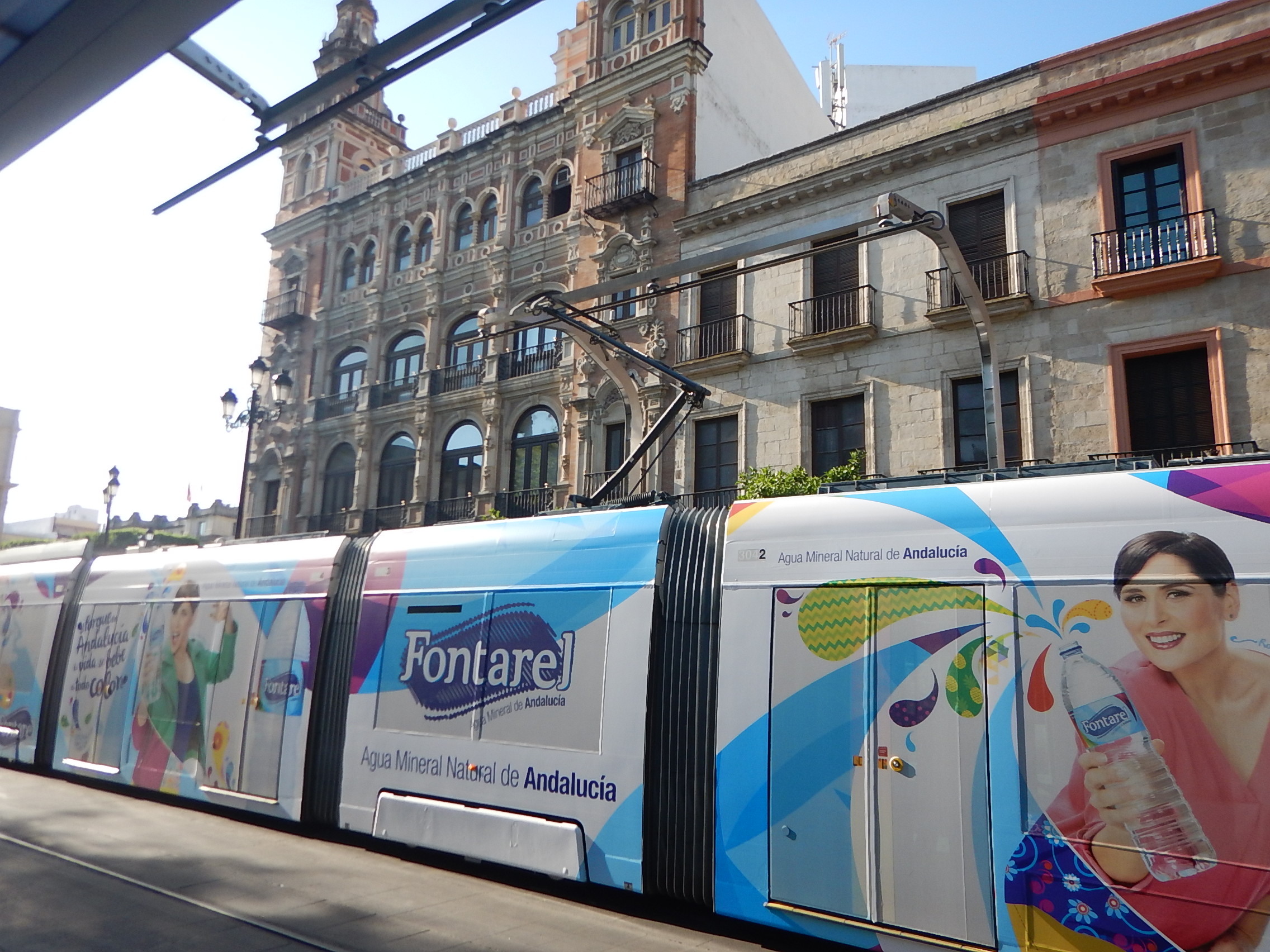
Surely devices like these can be used in selective stations, like Hull, Scarborough and Uckfield.
Third-Rail Electrification On Bridges And Viaducts
Some bridges and high rail viaducts like the Chappel Viaduct on the Gainsborough Line, present unique electrification problems.
- It is Grade II Listed.
- Would overhead electrification gantries be welcomed by the heritage lobby?
- It is 23 metres high.
- Would this height present severe Health and Safety problems for work on the line?
- The viaduct is 320 metres long.
Could structures like this be electrified using third-rail methods?
- The technology is proven.
- As in stations, it could only be switched on when needed.
- The electrification would not be generally visible.
The only minor disadvantage is that dual-voltage trains would be needed. But most trains destined for the UK market are designed to work on both systems.
Getting Power To Short Lengths Of Electrification
One thing that is probably needed is innovation in powering these short sections of electrification.
Conclusion
There are a very large number of techniques that can enable a multi-mode train to roam freely over large parts of the UK.
It is also a team effort, with every design element of the train, track, signalling and stations contributing to an efficient low-energy train, that is not too heavy.
?
How To 3D-Print Using Concrete!
All the 3D-printing I’ve seen has involved plastic, but Crossrail’s builders are using the technique to create complex shapes in concrete.
It’s all explained in this post on IanVisits, which is entitled How Crossrail Is Using 3D-Printing To Build Its Stations.
They don’t actually 3D-print the concrete, but a wax mould, that is then used to cast the actual piece required.
According to the post, the FreeFAB process has been used to create 1,400 unique moulds, which have then been used to create 36,000 different shaped concrete panels.
Ian’s post is a fascinating read and the mind boggles as to what will eventually produced using this technique.
Please Do Not Wait In The Green Lanes
These pictures show an experiment in Kings Cross St. Pancras tube station, on the Southbound Victoria Line platform, which aims to make boarding and unloading of trains faster.


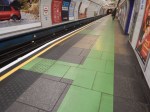

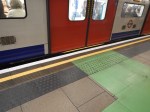
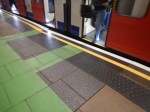
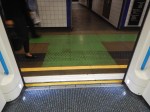
The idea is you don’t wait on the green lines, which are reserved for those getting on and off the trains.
The pictures were taken at ten in the morning, so I’ll go back one day in the Peak, to see how it works at a busy time.
But I do think it could be a good idea and a bit like platform edge doors, without the expense of the doors.
Note how the train stops precisely as indicated by the green lines. But then the stopping position of the train is determined automatically and has been since the Victoria Lie opened in 1967.
My Japanese Wallet
These pictures show my Japanese wallet.
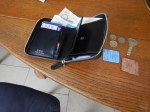



Note.
- The pocket on the outside to hold one credit card. Unfortunately, you can’t do contactless in the pocket.
- The inside purse to hold a few coins, my door key and a few Warfarin tablets.
- Plenty of space for cards.
- The usual folder for notes.
- The zip that closes it shut.
I haven’t shown the miniature Samurai sword, that pokes out if someone, who doesn’t look like me tries to open the wallet.

