Will The Broadgate Reconstruction Remove The Smoking Shelter?
Broadgate is reconstructing the building on the South side, which will face the new piazza in front of Liverpool Street station.
This visualisation shows what the entrance to Crossrail will look like in front of Broadgate.
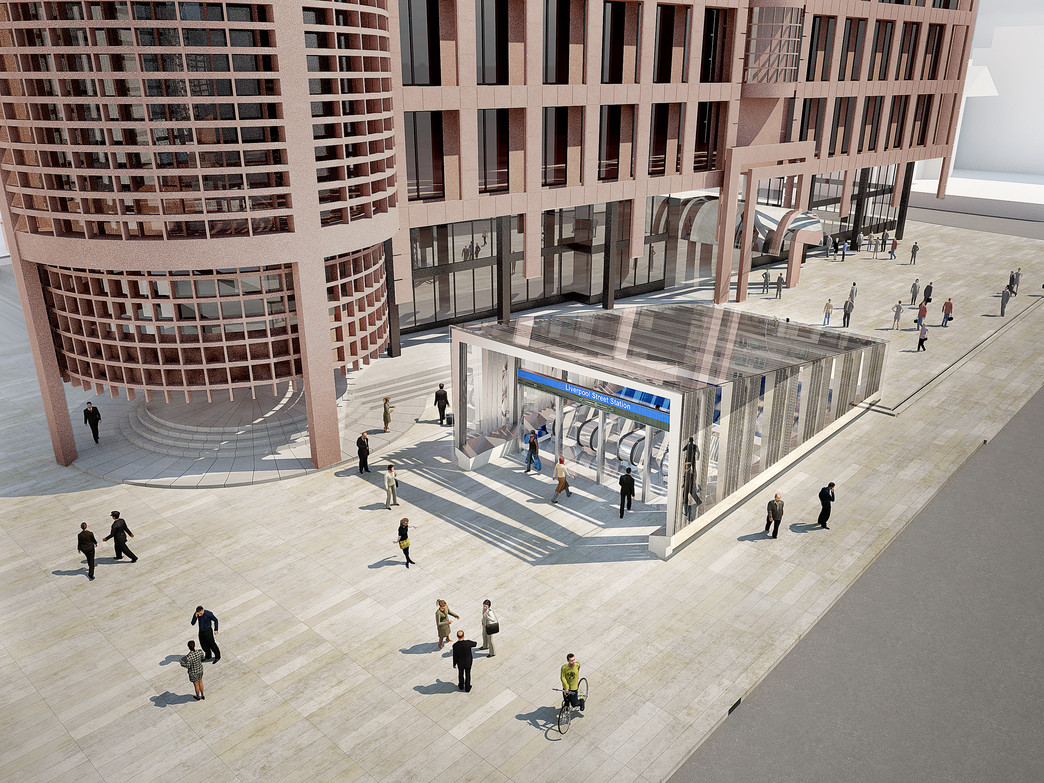
But what are they going to do with the smoking shelter, that sits in the entrance to the main-line station?


The shelter would be shown on the left of the visualisation, if the image had a wider format.
Greater Anglia’s Ten Point Wish List
This article in Rail Technology Magazine is entitled Greater Anglia to lobby government for investment in 10-point upgrade plea.
So what do they want?
- Haughley Junction upgrade.
- Ely area upgrade.
- Ely to Soham track doubling
- Trowse swing bridge replacement with a double track fixed link.
- Long loops at Colchester and Witham to allow fast trains to pass slow ones.
- Digital re-signalling between Colchester and London.
- Capacity upgrade to allow four trains between Angel Road and Stratford.
- Four-tracking between Coppermill Junction and Broxbourne.
- Wider level-crossing upgrade program.
- Platform and concourse upgrade at Liverspool Street station.
Should we call it ambitious, greedy or sensible?
1. Haughley Junction Upgrade
This has been requested for years, so I suspect it has been thought about for a long time.
But the new East Anglia Franchise has plans that will affect the traffic through Haughley Junction.
- Three express trains per hour (tph) between Ipswich and Norwich – Up from 2 tph.
- Two tph between Ipswich and Bury St. Edmunds – Up from three trains per two hours.
To make matters worse, an increasing number of freight trains between Felixstowe and Peterborough will be going through the junction.
This Google Map shows the junction.
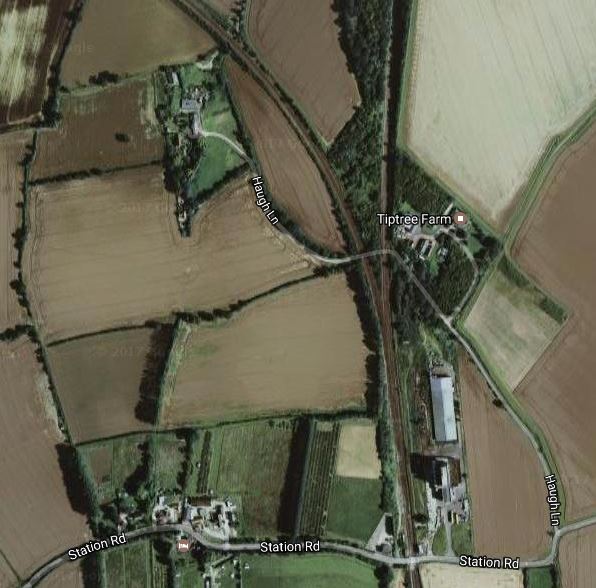
Note.
- Stowmarket, Felixstowe and Ipswich are to the South.
- There is a handy level crossing where station road crosses the tracks.
- Diss and Norwich is to the North.
- Bury St. Edmunds, Cambridge and Peterborough are to the North West.
You could naively think, that around the junction is nothing but farmland and a few trees, but the owners of |Tiptree Fram probably have lived three for decades.
You are the driver of one of Greater Anglia’s new crack Stadler express electric multiple units scheduled to reach Norwich in ninety minutes from London
Going North, you have just stopped at Stowmarket station. But you can’t leave as Haughley Junction is blocked by one of the many long freight trains crossing the flat junction from the line to Peterborough to go South to Felixstowe.
So bang goes your schedule!
Going South, you have a similar problem, in that freight trains could delay progress, whilst they cross from the Peterborough Line.
Freight trains and passenger trains joining the Peterborough line from the South, would appear to not cause such a large problem, as they just turn left without crossing any lines.
In an ideal world, there probably needs to be a single-track flyover, so that trains from Peterborough to Stowmarket can cross the Norwich lines without delaying trains. A similar flyover at Hitchin cost £47million.
So it wouldn’t be cheap and would the locals fight the construction of such a structure in the midst of Suffolk countryside to benefit commuters from Norfolk?
A complete scheme would also add a loop line just to the West of Haugthley Junction, so that long freight trains could wait without getting in the way, until there was a suitable time to cross.
I suspect, that to keep costs down and avoid annoying the natives, all that will happen at Haughley Junction is a limited scheme so that trains can wait before crossing.
Over the last few years, Network Rail have developed some innovative junctions and crossings, so let’s hope that they come up with a scheme that’s efficient, affordable and can be built without closing either of the important routes through the area.
But whatever is done here will certainlt help Greater Anglia achieve their objective of three tph between London and Norwich in ninety minutes.
Knowing the area well, I suspect that there will also be an enormous fight over if Network Rail decided to close the level crossing shown on the map.
2. Ely Area Upgrade
I looked at this in Are The Trains In Ely Finally To Be Sorted?
Whatever is proposed here will not be just a few millions and probably very disruptive to implement, but it is essential to acommodate the planned extra services through the area.
3. Ely To Soham Track Doubling
Upgrading this six miles of single track might appear to be easy across the flat lands of Cambridgeshire, but the line does include a couple of level crossings and a couple of bridges.
This Google Map shows the ely end of the route at Ely Dock Junction.
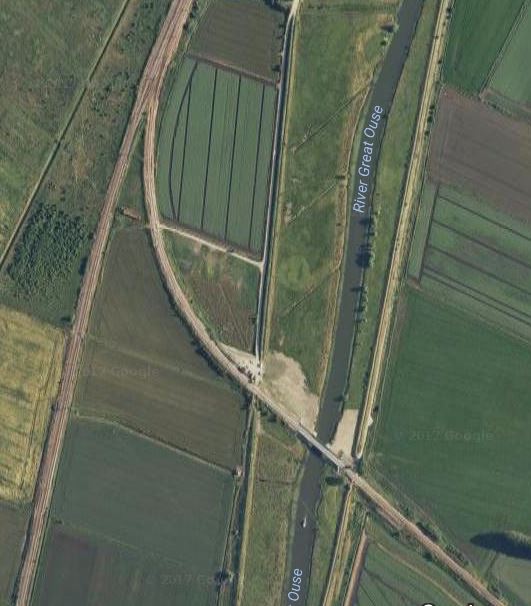
Ely Dock Junction And Hawk Bridge
Note the single-track Hawk Bridge over the Great Ouse.
Luckily, a freight train derailed on the original single-track bridge and virtually demolished it. The new bridge may be only single-track, but provision was made for a second track.
A few times, I’ve passed Ely Dock Junction on a train or stood on the platform at Ely and seen a freight train waiting at the Dock Junction to pass through the spaghetti at Ely.
Double-tracking would mean waiting freight trains wouldn’t delay Eastbound services on the Ipswich to Ely Line.
But will a chord be built so services can go directly between Cambridge North station and the Ipswich line?
This could enable Colchester Peterborough services to take a route of Bury St. Edmunds-Cambridge North
The Google Map shows the site of the original Soham station.

The Site Of The Former Soham Station
Note that the line reverts back to double-track, just South of the former station site.
So will doubling of line include provision for building a new station at Soham, as Cambridgeshire Council have proposed?
You can certainly see, why Greater Anglia want this section of line to be doubled.
4. Trowse Swing Bridge Replacement
The Trowse Swing Bridge is a major bottleneck on the Great vEastern Main Line, as not only does it restrict operations into Norwich station, but it makes access to Crown Point Depot difficult.
It’s definitely the railway equivalent of having a single-lane section for both directions on a motorway.
In Is This The Worst Bottleneck On The UK Rail Network?, I proposed the following under An Affordable Alternative.
It has to be said, that perhaps the most affordable solution would be to build a stylish fixed link, probably with a double-track railway and foot and cycle bridges.
As to the boat users, all boats that need to go under the bridge regularly would be modified so their masts could be lowered at no cost to their owners.
Other bribes could be given to occasional users.
There will be many bridges to cross, before Trowse bridge is replaced with a modern structure, more suited to a modern railway.
Unless of course, the rusting and decrepit bridge decides to do the honourable thing and falls down of its own volition.
It’s probably too much to hope, that a freight train derails on the bridge, as one fortunately did on the Hawk Bridge at Ely.
5. Long Loops At Colchester And Witham
Colchester station is not a station that would win awards for efficiency.
This description of the platforms is from Wikipedia.
The “up” (London-bound) side comprises two platforms, numbers 3 and 4, which have an unusual layout: 3 is on the up main line and is served by intercity trains from Norwich, while 4 is on the up branch line which merges with the up main line where the two platforms join end-to-end. The junction is protected by a trap leading to friction buffer stops. There are also bay platforms at both ends of the up main platform. The London-end bay (platform 6) is used for peak trains to and from London. Previously this platform was used for frequent services for the Sudbury Branch Line. However, most of these services were truncated to terminate at Marks Tey from the mid-1990s. The other bay platform (platform 5) is used for services to Colchester Town and Walton-on-the-Naze. The “down” side platform is an island platform with two faces, one on the down main, and one on the down branch line. Platform 1 is mainly used for Clacton-on-Sea trains and occasionally for Norwich trains.
The new franchise has plans, that should make the station more efficient, but much busier.
- Norwich to London trains will have a frequency of three tph.
- A new one tph service will link Colchester and Peterborough, which would mean that Colchester to Stowmarket via Manningree and Ipswich would have a frequency of four tph.
But the interesting idea is to extend the service between Sudbury and Marks Tey stations to Colchester Town station via Colchester.
The service between Sudbury and Colchester Town could be two tph, as the trains could pass each other between Colchester and Marks Tey, if the track allowed.
This Press Release from Network Rail is entitled More Reliable Railway For Essex As £100M+ Upgrade Is Completed.
This is said.
The last piece of the jigsaw included the commissioning of new ‘bi-directional’ signalling on the Great Eastern main line between Colchester and Marks Tey – meaning trains can now travel in both directions on both lines. This allows them to bypass problems should they occur and will improve flexibility and help reduce delays.
I have just flown my helicopter over the junction at Marks Tey and it looks like there is a short loop line of about a kilometre on the South side of the main line, which is connected by a series of crossovers to the \Gainsborough Line. On the other side of the main line, there would also appear to be a connection between the two lines.
So a train from Colchester Town could do the following.
- Travel to Colchester station on the Sunshine Coast Line.
- Stop in Platform 4 at Colchester station.
- Travel on the main line towards Marks Tey.
- Switch to the loop North of Marks Tey.
- Cross over the main lines and enter the Gainsborough Line to stop in Marks Tey station.
- Travel to Sudbury and back.
- After stopping at Marks Tey station return via the main line to Colchester and then on to Colchester Town.
Currently, a train is scheduled to go from Colchester Town to Marks Tey in 13 minutes, with the round trip from Marks Tey to Sudbury taking about 45 minutes.
If the service between Colchester Town and Sudbury was to be two tph, the Marks Tey to Sudbury round trip must be under thirty minutes, so that only one train is on the branch line at a time.
The service is currently run using various trains like a Class 153 train, which have a top speed of 75 mph and acceleration to match, whereas the mosdern Class 170 train has a 100 mph capability. The Gainsborough Line also has a speed limit of just 50 mph.
So I suspect, that with some judicious engineering on the branch and modern trains, that a thirty minute round trip is possible, thus making two tph on the Gainsborough Line a distinct possibility.
All these service changes could simplify the pattern of trains through Colchester station.
- Most trains stop in the station and continue on their journey.
- Peterborough trains could use the bay platform 5 or a reversing siding to turn back.
- The bay platform 6 could be used as a terminus for trains from London as now.
So will the tracks be arranged so that there is an avoiding line between the platforms just as there is at Ipswich station and used to be at Chelmsford station?
The certainly would appear to be enough space.
This picture illustrates the problems at Witham station.
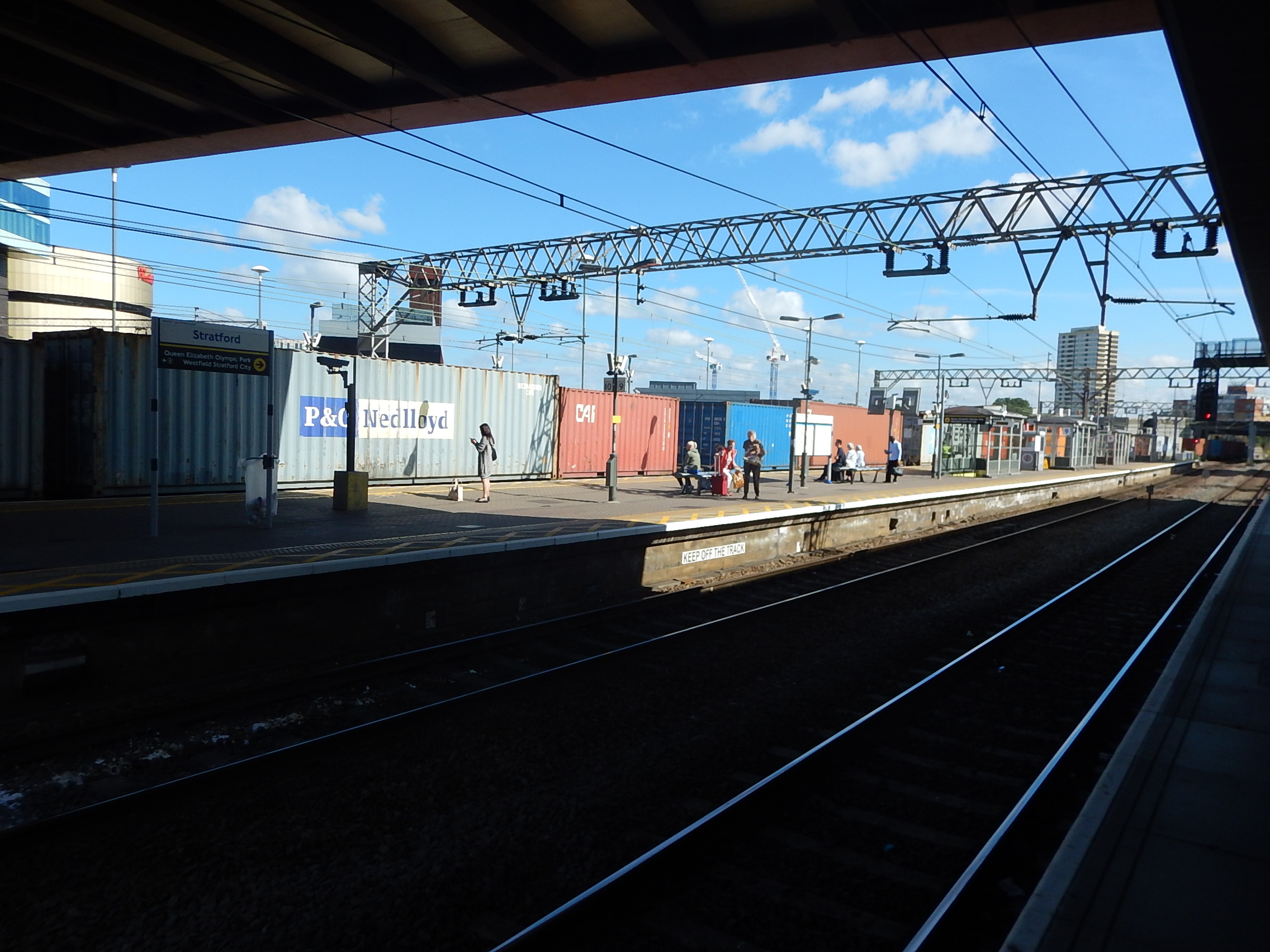
Note.
- The freight train was going towards London and was slowly going through the station.
- The two lines in the middle are the two main lines, where trains generally stop.
- When the new Stadler and Aventra trains enter service in a couple of years, there will be more trains going through the station.
- At times, trains could be separated by just a few minutes.
- As these trains are designed expedite stops, I wouldn’t be surprised to see more trains doing a Touch-and-Go.
This article on the EssexLive web site is entitled Witham loop could happen by 2024 with added faster trains to Liverpool Street.
It says that the loop will be built North of Witham station and would allow faster trains to pass slower ones by 2024, but that Simon Burns MP will be pushing to have it built sooner.
This Google Map shows Witham station and the line to the North.

Note the Braintree Branch Line going off to the North-West.
It does appear that there would be space for the necessary extra tracks to create passing loops North of Witham station.
These would mean that passing wouldn’t have to be dome with the slower train blocking a slow platform.
It certainly looks as if that both loops will be beneficial to all train operators and passengers.
6. Digital re-signalling between Colchester and London
Given the following on the Great Eastern Main Line South of Colchester.
- Increased numbers of trains.
- Speeds of 100 mph and possibly more.
- The need to do very fast stops and maintain headway of a few minutes.
- The trains will be new.
I suspect that digital signalling will be a necessity to maintain the required service frequency.
7. Capacity upgrade to allow four trains between Angel Road and Stratford
There is certainly pressure for this service from the local Councils in the area.
Would it include the preliminary works from the upgrade of Angel Road station?
8. Four-tracking between Coppermill Junction and Broxbourne
This is important both for Greater Anglia services to Stansted Airport and Cambridge and Crossrail 2.
I wrote about this in Crossrail 2 ‘Cannot Go Ahead’ Without Four-Tracking Of West Anglia Line.
But it will be a large and very disruptive project.
9. Wider level-crossing upgrade program
I have been held up so many times by level crossing incidents, this can’t happen to soon.
10. Platform and concourse upgrade at Liverpool Street station
I thought that this was going to happen, as soon as the Crossrail trains go into the tunnels.
Conclusion
Greater Anglia are not asking for the stars and it is a generally sensible wish list.
Possibly the most expensive projects are the following.
- Ely area upgrade.
- Trowse swing bridge replacement with a double track fixed link.
- Digital re-signalling between Colchester and London.
- Four-tracking between Coppermill Junction and Broxbourne.
But some like the four-tracking of the West Anglia Main Line are not urgent, until Crossrail 2 gets an opening date.
BT Gets Tough With Flying Rats
Flying rats or pigeons to the RSPB, are a problem in Liverpool Street station.
So BT has got tough!
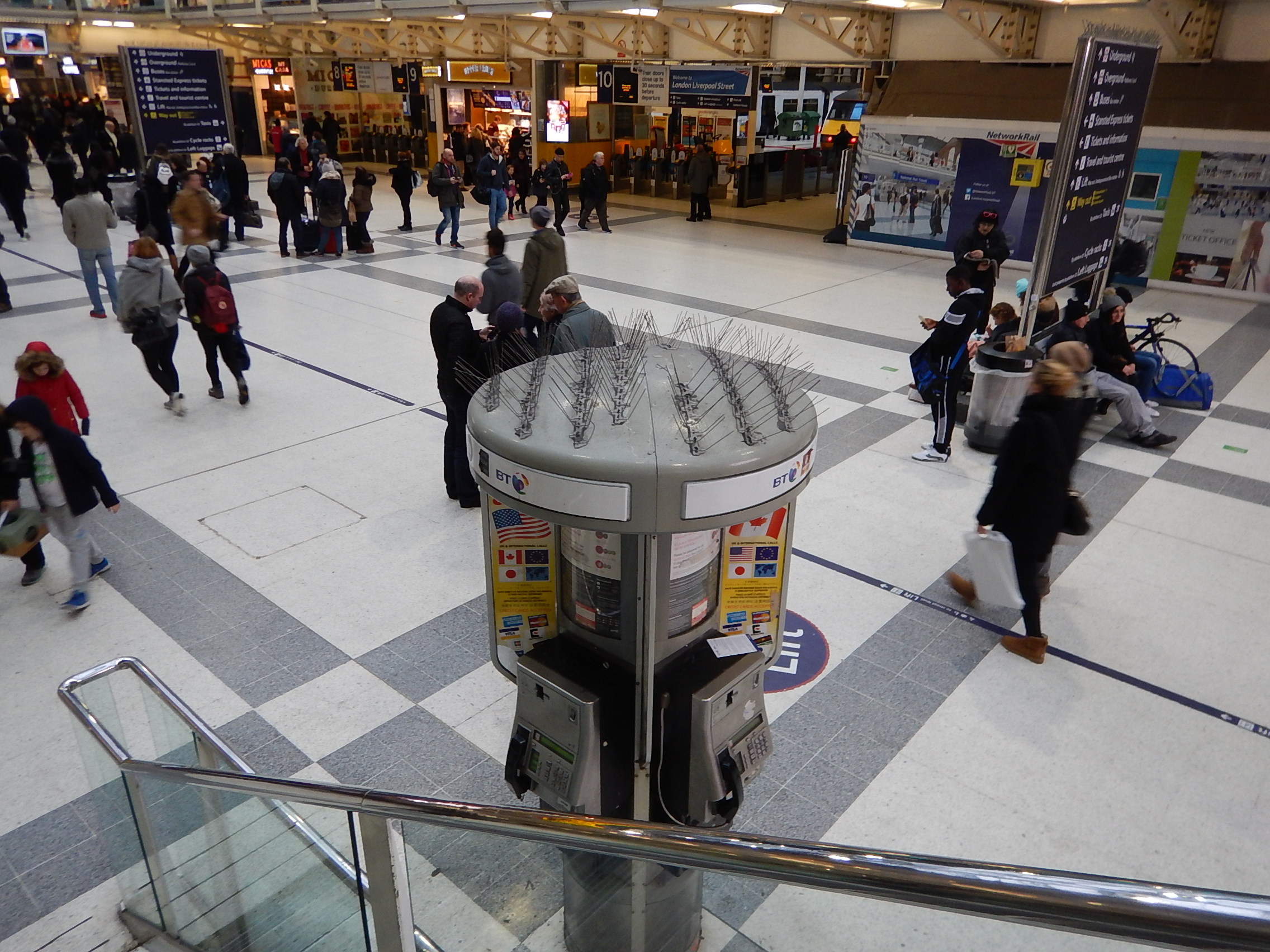
BT Gets Tough With Flying Rats
It would probably help, if everybody dropping littler got sentence to sit on top of the phone-box for an hour.
Crossrail Will Be Making Noise On Moorgate
I received an e-mail from Crossrail today entitled Access Passage Under Moorgate.
This is said.
We are making progress with the tunnel connections between the Crossrail Moorgate ticket hall and the station platforms.
From the evening of Wednesday 9 November until Saturday 12 November 2016, we will break out the connection between the top of the escalator shaft and the access passage to Moorgate.
As we are breaking out concrete, there is likely to be some audible ground borne noise and vibration for occupants of nearby buildings and we apologise in advance for any inconvenience caused.
Hopefully, I won’t hear it a couple of miles to the North.
Seriously, though, I don’t think you can get fairer than that, especially, as the works at Moorgate so far, don’t seem to have been particularly disruptive.
The e-mail also pointed me to this cross-section of the station and the works.
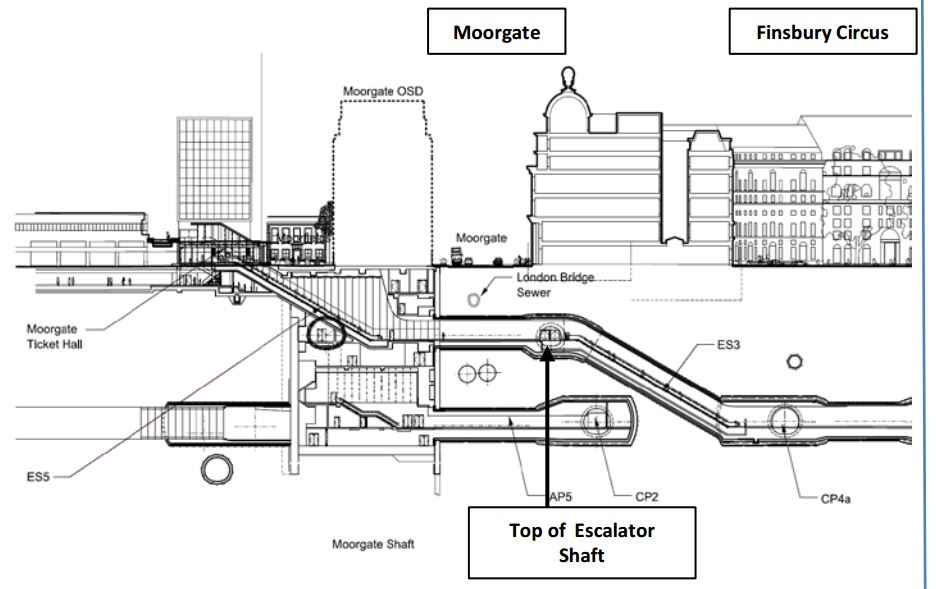
East-West Cross-Section Of Moorgate Crossrail Station
Note.
- Two banks of escalators are used to descend to Crossrail at Moorgate station.
- It is a similar arrangement at Liverpool Street station.
- If you’re walking between the two stations, a good proportion ofthe journet wil be on escalators.
- I think that the two smaller tunnels running under Moorgate and below the lower bank of escalators are the Northern Line tunnels.
It looks like the design has followed the rule of trying to keep to using only North-South and East-West routes for the tunnels.
Will c2c Push For Access To Stratford And Liverpool Street?
On Sunday in An Excursion To Shoeburyness, I indicated how instead of coming back the way I came via West Ham, I got off at Stratford and did some shopping at Eastfield.
But would c2c like to serve Stratford and Liverpool Street more?
The Current Weekend Service From Shoeburyness To Stratford And Liverpool Street
Currently two trains per hour (tph) run from Shoeburyness to Stratford and Liverpool Street at weekends, when there is no conflicting engineering work.
Incidentally, with my excursion, I think that I had to come back by c2c as the Great Eastern Main Line was closed for Crossrail work.
If nothing this engineering disruption shows the value of Southend being served by two independent rail lines.
The Stratford Effect
The Queen Elizabeth Olympic Park and the Shopping Centre at Stratford will have a porofound effect on the operation of c2c’s trains.
This page on the c2c web site is entitled Christmas shoppers get direct c2c trains to Stratford.
This is said.
c2c will run two trains an hour on both Saturdays and Sundays that divert to Liverpool Street instead of Fenchurch Street. These will provide direct access to the Westfield Stratford City shopping centre plus easy access to London’s West End. This is in addition to the two trains an hour that run to Chafford Hundred, for the Lakeside shopping centre, as part of c2c’s existing service.
I think the news item dates from 2014, but it does show a level of intent.
There is also this article in the Southend Echo, which is entitled Extra trains planned as West Ham’s stadium move puts added pressure on c2c network.
This is said.
TRAIN operator c2c are running extra and longer trains for fans travelling to West Ham matches at the club’s new stadium in Stratford.
This won’t be a problem for weekend matches, but what about matches on weekday evenings?
c2c’s spokesman went into more detail.
When asked about direct trains running from Southend to Stratford to make the journey as quick and simple as possible for fans, c2c said they already run direct trains to Stratford from Southend and Basildon,but not Grays, and there will be two trains per hour direct to Stratford most weekends – and two more trains per hour to West Ham.
From Grays, all four trains an hour go to West Ham.
For weeknight games and during weekend engineering work, all trains run to West Ham.
At present, the weekend trains between Shoeburyness and Stratford, satisfy the weekend sopping and football, but what about other events at the Olympic Park? The Queen Elizabeth Olympic Park is only going to get busier.
So are the current services really what c2c and its customers want and need?
Car parking is fairly comprehensive at the outer stations according to this page on the c2c web site.
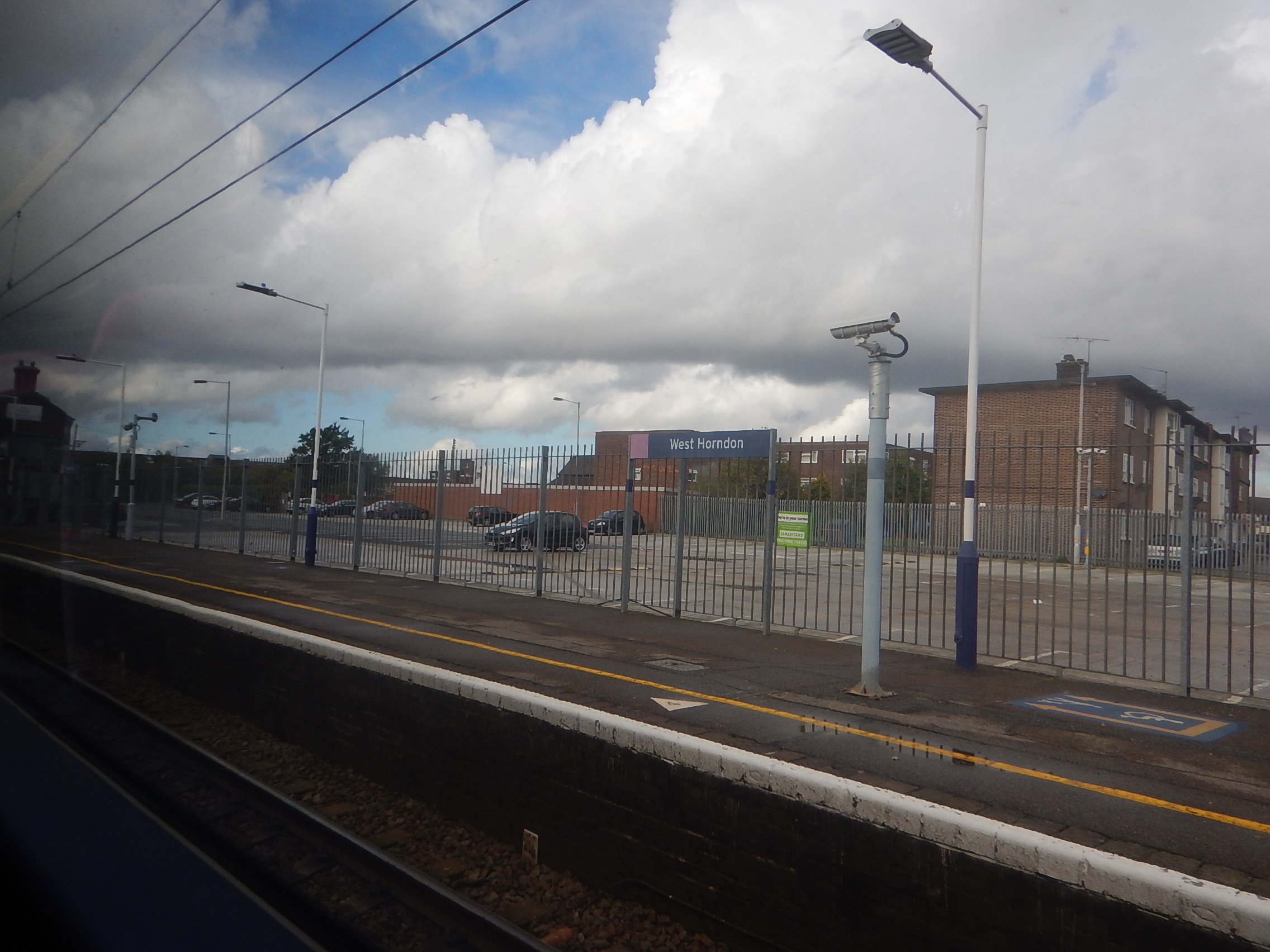
It wasn’t very busy on the Sunday I took this picture at West Horndon station, but for encouraging weekend leisure trips, the availability of car parking must be an asset.
I would imagine that c2c are pushing the authorities for permission to run evening services into Liverpool Street via Stratford.
The Crossrail Effect
When you talk about any of London’s railways, this herd of elephants, with its 1,500 passenger capacity Class 345 trains, always bursts into the room.
For c2c trains to get to Stratford, they need to take the Gospel Oak to Barking Line (GOBlin) between Barking and Woodgrange Park, where they join the slow lines into London.
This map from carto.metro.free.fr shows the lines around Woodgrange Park station.
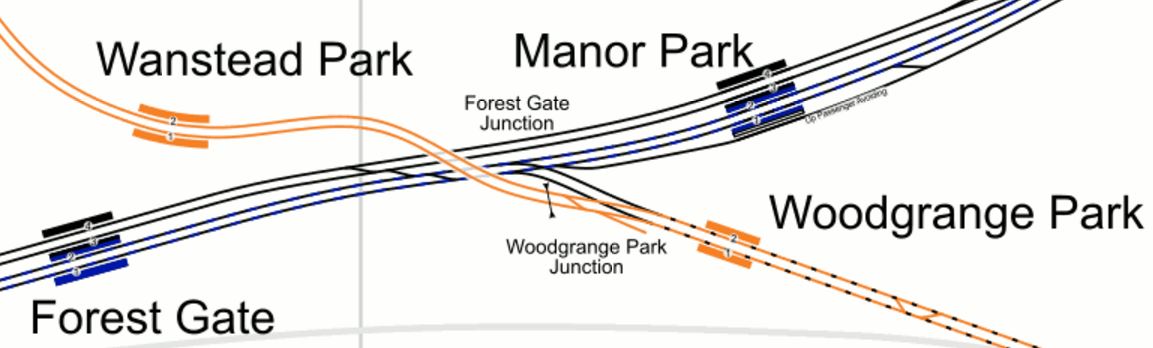
As the GOBlin is currently being electrified and improved, I suspect that there will be no operational problems on the short stretch of shared line.
Will there be problems though, after Crossrail opens and there are increased frequencies of trains to and from London?
In the Peak, Crossrail will be running 16 tph to and from Shenfield, so as they are only running 8 tph in the Off Peak, I suspect that at weekends, there will be capacity for c2c’s 2 tph to Stratford.
It is interesting to look at Crossrail’s proposed Peak service on the Shenfield branch.
- 8 tph between Shenfield and Paddington
- 2 tph between Shenfield and Reading
- 2 tph between Shenfield and Maidenhead
- 4 tph between Gidea Park and Liverpool Street
This says to me, that there are probably paths in the timetable to squeeze 4 tph in the Off Peak into Liverpool Street, as the Gidea Park service is Peak-only.
Access To Liverpool Street
Liverppool Street station has two problems.
- There are not enough platforms – This is a difficult one to solve, although Crossrail might only need a single platform to handle the limited number of services not going through the core tunnel. London Overground regularly turns 4 tph in a single platform.
- The platforms are too short – This will be remedied once Crossrail trains are using the core tunnel.
I’m certain, that in a few years Liverpool Street in the Off Peak, will be able to handle 2 tph with a length of 12-cars for c2c.
It is interesting to note, that my train on Sunday was only eight-cars. Was this because of limitations at Liverpool Street?
Should c2c Stop At Woodgrange Park?
Currently, they don’t, but after the GOBlin is reopened would it be a good idea to create a step-free change to get to and from a lot of stations across North London.
The change at Barking between the two lines is not easy and the alternative is to improve it.
c2c Needs Access To Crossrail
c2c’s current route structure has no connection to Crossrail.
As an example to go from West Horndon to Heathrow Airport, you’d need to change twice.
- At West Ham onto the Jubilee Line.
- At Stratford onto Crossrail.
Neither change is a short walk, but both are step-free in busy stations.
If however, it’s a Saturday or Sunday, you could take a train to Stratford and I suspect when Crossrail opens, just wait on the same platform until a Heathrow train arrives.
It should be remembered, that c2c runs an all-Electrostar fleet and I suspect that these are Crossrail compatible with respect to platform height, so the change at Stratford would be easy with heavy cases, buggy or even a week-chair.
What Will The Future Hold?
From what I have written, it would certainly be possible for there to be two 12-car trains every hour in the Off Peak between Shoeburyness and Liverpool Street calling at Basildon, Upminster and Stratford.
But this would have limitations and possible problems.
- Passengers from stations like Grays would want the Crossrail connection too!
- If it is needed in the Off Peak, is it needed in the Peak?
- Would passengers changing at Stratford cause congestion?
There would also be the mother of all battles between the train companies involved, to make sure they kept market share.
My ideal world scenario would be something like.
- 4 tph all day go into Liverpool Street.
- 2 tph on both c2c routes through Basildon and Grays go into Liverpool Street.
- Chafford Hundred is served from Liverpool Street
- Ticketing is such, that Stratford to Southend can use either route and either Southend station.
- c2c trains to and from Liverpool Street, call at Woodgrange Park for the GOBlin.
My wish list may not be possible, but there is certainly tremendous scope for improvement.
We could even see, a station like Grays, Pitsea or Southend becoming a Crossrail terminus.
Who knows? I don’t!
A Walk From Moorgate To Liverpool Street Station
This morning, I walked from Moorgate to Liverpool Street station, when it was quiet.
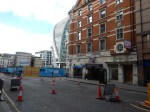
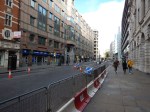
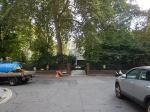

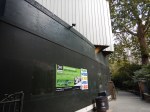

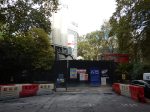
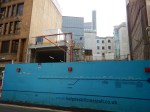
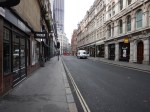
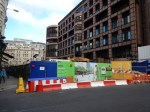
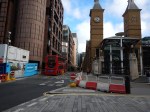
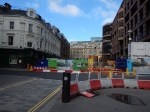
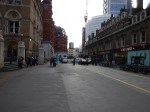

I took a route through Finsbury Circus, and was thus able to look at the various Crossrail works in the area.
These are some comments about the area, often based on this page on the Crossrail web site, which details the urban realm around Crossrail stations in the City of London.
Moorgate
Moorgate station will be much changed from the current station.
Reading the Crossrail web site, gives the impression that the majority of passengers will generally walk to the station from perhaps their office, a bus or a taxi. This is said.
- Reducing carriageway width in Moorgate and increasing footway space.
- Introduction of a central pedestrian median in Moorgate to improve crossing at a key pedestrian crossing point and improve accessibility for all users.
- A new pedestrianised public space will be created on Moorfields between New Union Street and London Wall, with access limited to emergency and service vehicles only.
- Moorfields south of Moor Place will act as a ‘secure zone’ outside the new station entrance in which vehicles access will be controlled via station controlled retractable bollards.
- Away from the raised carriageway areas regular kerb heights are retained in close proximity to the station entrance in Moorfields, Moorgate and Fore Street which allow for comfortable boarding of taxis via wheel chair ramps. The closest regular height kerbs to the station are located approximately 30m from the station entrance on Moorfields and Moorgate.
All is part of a wider plan in the City of London, which will probably result in a more pedestrian- and cyclist-friendly city.
Buses On Moorgate
Nothing is said about buses on Moorgate, which are important to me, as they stop at the end of my road, with Northbound and Southbound stops within a hundred metres of my house.
I have two main bus routes, that will take me to and from Moorgate; the 21 and the 141.
I can remember as a child the London trolleybuses, one of which was the 641, which was replaced by the 141 bus.
This link shows where the Balls Pond Road and Mildmay Park cross about sixty years ago and the present day, perhaps seventy metres from my house.
I find it very convenient.
Moorgate is served by four main bus routes; the 21, 43, 76 and 141, all of which except the 76 go between Bank and Old Street stations.
I don’t know how the buses will be reorganised after Crossrail, but I suspect that the current stops will be used initially and only changed, when a new pattern of use emerges.
Crossrail and the Moorgate rebuild could effect the buses in several ways.
- Many new passengers will get a bus to and from Moorgate.
- I would suspect that Crossrail could cut the number of private cars in the centre of London.
- The better walking route to Liverpool Street station in the dry, might mean more bus passengers.
- The improved Great Northern Metro might increase or reduce passengers using the buses at Moorgate.
- Moorgate’s taxi-friendly design, may mean the station get choked by back-cabs and Uber.
\the rebuilding of Bank and London Bridge stations will also have an effect.
I suspect Transport for London, suspect what is going to happen, but the reality will only be found, when all the new lines, stations and walking routes are open.
Finsbury Circus
Finsbury Circus is an oasis in the City and Crossrail will hand it back after completion, with a hopefully-tasteful ventilation shaft in the middle.
Black Redstarts
Black Redstarts are quite a rare bird in the UK, but it appears that London has a population.
A notice in Finsbury Circus Gardens gave more details.
The Central Line
The Central Line isn’t built deep under buildings in central London, but it goes under the roads. At Liverpool Street station, I get the impression that it ran between the station and the next door Broad Street station (now Broadgate), before going South under Old Broad Street and then curving to the West under Throgmorton Street to go to Bank station.
You can get an impression of the depth of the Central Line from the length of the escalators at Liverpool Street station.
This extract taken from the Wikipedia entry for the Central London Railway, which was the predecessor of the Central Line, describes the construction of the tunnels.
To minimise the risk of subsidence, the routing of the tunnels followed the roads on the surface and avoided passing under buildings. Usually the tunnels were bored side by side 60–110 feet (18–34 m) below the surface, but where a road was too narrow to allow this, the tunnels were aligned one above the other, so that a number of stations have platforms at different levels. To assist with the deceleration of trains arriving at stations and the acceleration of trains leaving, station tunnels were located at the tops of slight inclines.
So you have a stack of lines and tunnels at Liverpool Street station.
- Close to the surface is the Metropolitan and Circle Lines going across the front of the station, roughly East-West
- 18-34 metres down the Central Line runs perpendicularly to the sub-surface lines.
- Crossrail is the deepest line in an East-West direction.
Crossrail is also building a pedestrian walkway in an East-West direction, that goes under the Central Line and above the level of the Crossrail running tunnels.
Liverpool Street Crossrail Station Disentangled
Liverpool Street station on Crossrail is a massive double-ended beast that stretches as far as Moorgate station, where it has a second entrance.
At the Liverpool Street end, it will connect to the following in addition the the Main Line services out of the station.
- Central Line
- Circle Line
- Hammersmith and City Line
- Metropolitan Line
At the Moorgate end, it will connect to the following lines.
- Circle Line
- Hammersmith and City Line
- Metropolitan Line
- Northern Line
- Northern City Line
This is a visualisation of how Moorgate station will look after it has been rebuilt for Crossrail, that I found on this web page from May 2009, so it may be out-of-date and wrong.
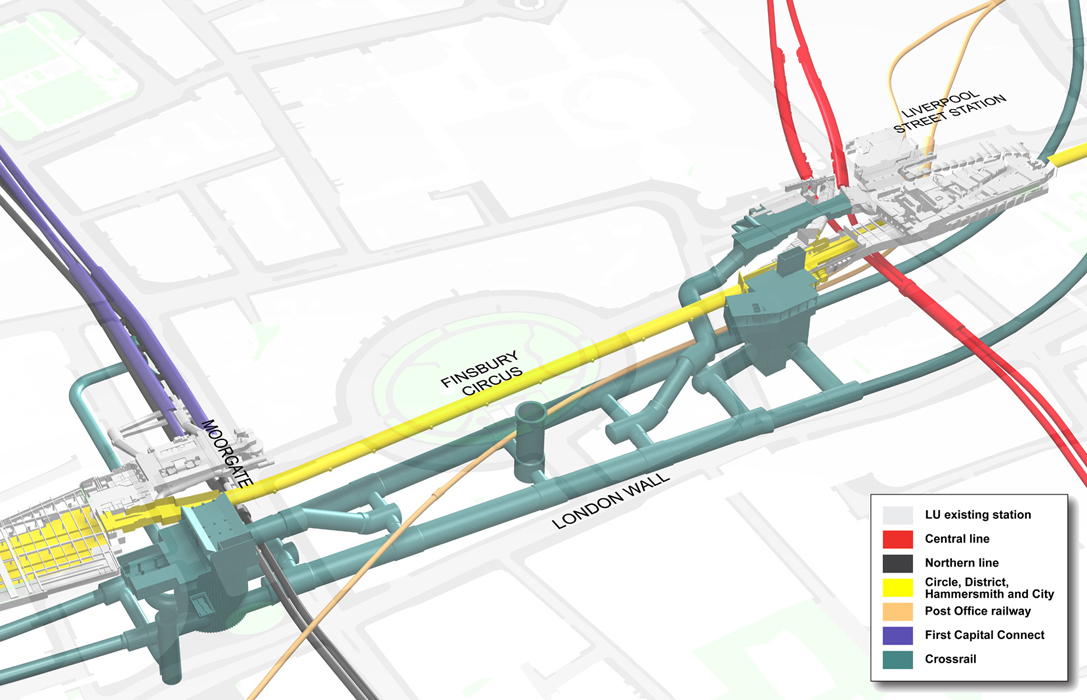
Liverpool Street-Moorgate Station Schematic
Note.
- The royal blue line is labelled at First Capital Connect, for which I use the term Northern City Line.
- Turquoise is used for new Crossrail work, with red and yellow for the Central and sub-surface lines.
- If you enlarge the image by clicking on it, you can clearly see the escalators, that currently connect the Northern City and Northern Lines to the ticket hall.
- Crossrail appears to have an escalator connection to an enlarged Moorgate ticket hall
- The deep level Northern Line, which is shown in black, passes over Crossrail, but underneath the escalators that lead down.
I have since seen a cross-section of the station from Liverpool Street to Moorgate and it would appear that a few improvements have been made.
- A pedestrian tunnel is now planned to run between the Crossrail platforms, which will effectively link the escalators at both ends, which connect into the station entrances and ticket halls upstairs.
- It could be possible that the entrance to the station has been moved towards the East.
The interchanges possible at the combined station are best described as comprehensive.
Changing Between Crossrail And The Northern Line
The Northern Line crosses the Moorgate end of the Crossrail platforms at a right angle and it would appear to have a short escalator or step connection to a cross-passage between the two Crossrail platforms.
The only problem, is that you’ll have to make sure, you’re at the Western end of the Crossrail train.
Changing Between Crossrail And The Northern City Line
It would appear that Crossrail and the Northern City Lines are at roughly the same level and are very well connected.
- Passengers would appear to be able to take an escalator or lift from one set of platforms to the ticket hall and then take another set down to the other line.
- There also appears to be another independent passage, which starts midway down the Northern City Line platforms and takes a circuitous route to the Crossrail platforms.
- There may be another convenient route, where you go via the Northern Line and reappear on the other set of platforms.
It certainly won’t be a difficult interchange for passengers, although you’ll have to remember to position yourself at the Western end of the Crossrail train.
Changing Between Crossrail And The Central Line
The Central Line crosses the Liverpool Street end of the Crossrail platforms at a right angle and it would appear to have a short escalator or step connection to a cross-passage between the two Crossrail platforms.
The connection is not as neat as the Northern Line one at the other end of the Crossrail platforms
The only problem, is that you’ll have to make sure, you’re at the Eastern end of the Crossrail train.
Changing Between Liverpool Street And Moorgate
I’ve read somewhere, that the double-ended station is designed so that passengers can walk easily between the two ends of the station.
My view of the cross-section of the station from Liverpool Street to Moorgate confirms it is a feasble route.
- Passengers at Liverpool Street will descend to an intermediate level, from where the Central Line can be accessed.
- A walk of perhaps fifty metres will take you under the Central Line tunnels and to an escalator, that will descend to a wide passage between the Crossrail platforms.
- A walk of perhaps a hundred metres will give several entrances to the Crossrail platforms and take you to an escalator, which takes you to the intermediate level at Moorgate station.
- A level walk of perhaps thirty metres or so, will take you over the Northern Line tunnels and to an escalator, that gives direct access to the booking hall at Moorgate.
So a passenger from perhaps Ipswich to Hatfield on a very wet day, will dive on arrival at Liverpool Street into the Crossrail station and use it as a dry walking route to the Northern City platforms at Moorgate.
I suspect that an Oyster card or a contactless bank card will give free access to the route.
The same route will give Moorgate passengers access to the Central Line and Liverpool Street passengers access to the Northern Line.
Related Posts
A Numerical Analysis Of Great Northern’s Class 717 Trains
Could A Reversing Siding Be Built At Alexandra Palace?
Could A Reversing Siding Be Built At Alexandra Palace?
Could Passenger Services Be Run On The Canonbury Curve?
I’m All For More Of This!
This article from Global Rail News is entitled Toronto park plan for downtown railway.
The article describes how Toronto wants to purchase the air rights over a 21-acre railway through the City Centre and put a park on the top.
There are certainly places in the UK, where this approach can be used to create parts, housing or commercial buildings over the railway.
Especially in Londom, where land is so expensive.
Look at this Google Map of the rail lines into Liverpool Street as they pass Shoreditch High Street station on the East London Line.
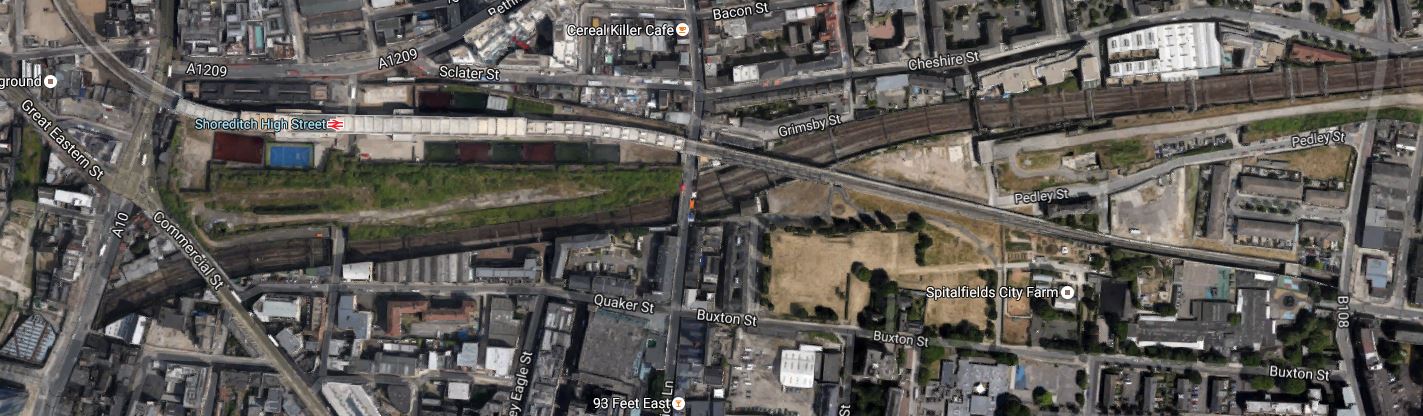
Lines Through Shoreditch
Surely, a better use could be found for the space above this railway. I estimate this space must be about ten hectares and if properly developed could contain lots of buildings and a green walkway connecting Shoreditch High Street station to Liverpool Street station.
And what about the waste of space that is Euston station?
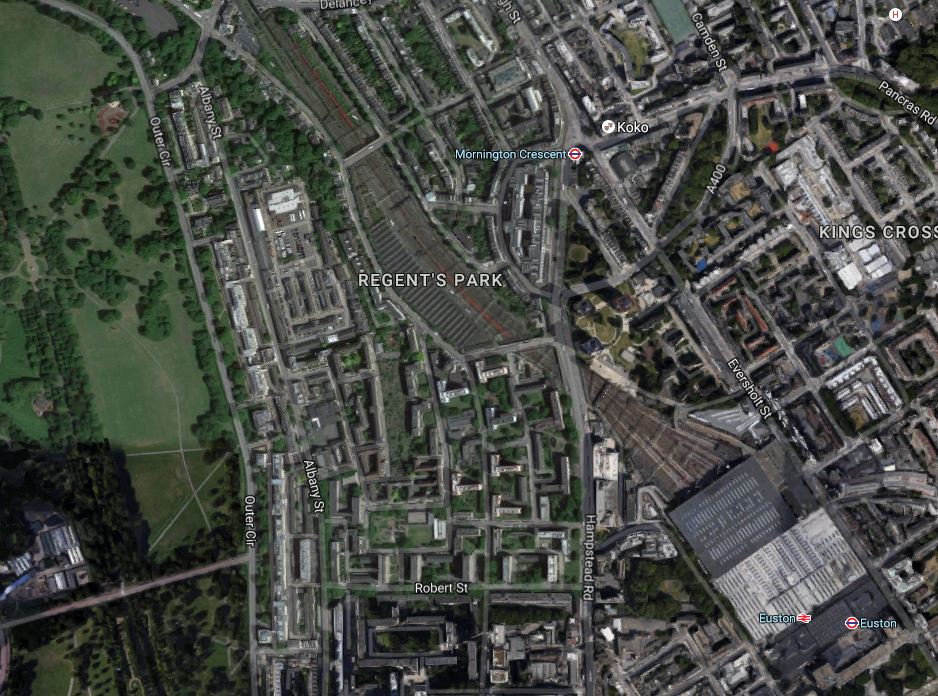
Euston Station And The Approach Lines
Hopefully adding HS2 to the station will improve things.
Will Shoreditch High Street Be Connected To The Central Line?
Every Londoner has their own personal pet hates about the Underground.
One of mine is the lack of an interchange between the East London Line and the Central line at Shoreditch High Street station. The Central line passes under the East London Line and some web sites say that provision was left in the new station for the connection.
This map from carto.metro.free.fr shows the lines around Shoreditch High Street station.
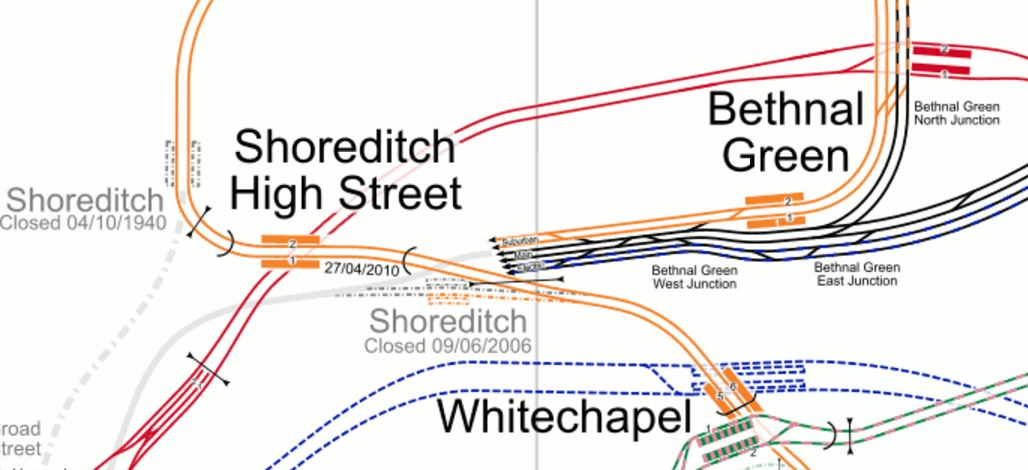
Shoreditch High Street Station
Note how the Central Line platforms at Liverpool Street are in the South West corner of the map.
Some sites also say that the reason for not building the connection, is that the Central line is too crowded and a decision will not be taken until after Crosrail opens. This is the comment on an article about the connection in London Connections.
Don’t expect an interchange with the Central Line until Crossrail 1 is fully operational. The Central Line in its present, heavily overcrowded, state could not possible cope with even more stations.
Perhaps in about 10 years…
It does sound sensible.
Getting West on the Central Line can be difficult from where I live.
I can take a bus to either Bank or St. Paul’s stations, but coming back is a problem, as the bus stops aren’t well placed.
After Crossrail opens, I might take the same bus to Moorgate for the new line or I could get to Crossrail using the East London Line connection at Whitechapel.
It shows how Crossrail is going to add masses of possible new routes to everybody’s travel in London.
Crossrail links with the Central line at Stratford with a cross-platform interchange and more conventionally at Liverpool Street, Tottenham Court Road, Bond Street and Ealing Broadway.
As the East London Line links to Crossrail at Whitechapel, will passengers going from say Anerley to Epping, be happy with a double change at Whitechapel and Stratford? Especially, as the second one would be just a walk across the platform.
I think they will.
But obviously Transport for London will have all the traffic statistics and would know when creating the Interchange at Shoreditch High Street will be worthwhile.
But looking at the map of the lines at Shoreditch High Street station, leads me to wonder if it would be possible to put in an escalator connection to the Eastern end of the Central Line platforms at Liverpool Street station. This map from carto.metro.free.fr shows the Central Line through both stations in detail.

Liverpool Street And Shoreditch High Street Stations
As all of the office blocks on both sides of Bishopsgate, were planned and designed before Crossrail and the London Overground, I do wonder that if they were being designed now, they would build a travelator connection between Shoreditch High Street and Liverpool Street stations, which incorporated another set of escalators to the Central Line.
Transport for London’s Visitor Centre At Liverpool Street
One of the things that Transport for London said it would do, when it closed Ticket Offices, was to open Visitor Centres at major stations.
This one at Liverpool Street station has been rebranded. It is one of several at main line stations and airports.
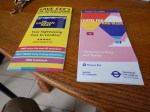
I know it was early on a Saturday, but I was the only person looking at what was on offer.
Looking at the London Pass, I think it could be something that a serious visitor would buy.
I can’t help feeling though, that as time progresses, the Visitor Centres in Central London will see fewer and fewer visitors, as London’s contactless ticketing system, will make travel advice something that can be handled easily by the station staff.
I may be wrong, but I think only Liverpool and Edinburgh have proper Visitor Centres. The one in Liverpool is placed on the platform where Virgins arrive from London and the one in Edinburgh is on Princes Street at the top of the escalators from the station.
Every large destination should have a comprehensive Visitor Centre, especially if they are a major interchange to other trains, trams and buses. The oferinmgs in some places is certainly not good enough.
 The Anonymous Widower