The Refurbishment Of Holland Park Tube Station
I stopped off at Holland Park tube station this morning, to take a look at the refurbishment.
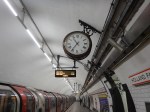
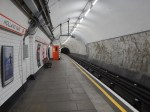
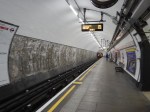
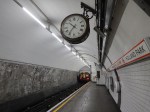
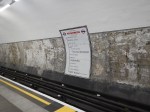
The clocks would also seem to have had a makeover.
But there still seems some work to do!
The Refurbished Tottenham Court Road Tube Station
I took these pictures of the Central Line platforms at Tottenham Court Road tube station.
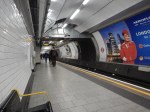
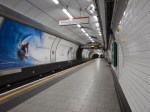
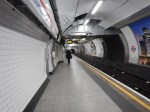
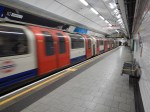
It does seem to me that it’s wider than it used to be.
Thoughts On The Train Strikes
These strikes have all the qualities of an irresistible force meeting an immovable object.
The latest headline on an article on the BBC is Southern rail strike enters second day as Acas talks start.
I doubt the talks will be very productive.
Here are my thoughts about various issues.
London
I have been running around in driver-only-operated (DOO) trains for quite a few decades now. Especially, as I have always travelled frequently on the London Underground.
Wikipedia has a comprehensive section on One Man Operation in London.
This is said about the Underground.
All trains on the London Underground are single-manned.Conversion to one-man operation began in 1984 and was completed in 2000.
In some ways though the Underground, is not full DOO, in that on nearly all stations, there are staff on the station, who assist the driver to safely dispatch the trains.
Assistance From Staff
The staff on the platform are also there to assist passengers, who need help. This page on the Transport for London web site describes the role of staff.
This is said under Assistance To And From Trains.
On the Tube, TfL Rail and Overground, station staff will also accompany you to the train and help you on board and, if needed, can arrange for you to be met at your destination. Anyone can use this service, but it is particularly used by blind and visually impaired passengers and people using boarding ramps onto trains.
If you would like to use this service, ask a member of staff when you arrive at the station.
That is very much turn-up-and-go for everybody!
So what happens on Southern?
This page on the Southern web site gives full details of what they offer.
This is said.
When should I ask for help?
If you want to book ‘help’ try to call us at least one day before you travel.
That is not acceptable.
So there’s one job for the redundant guards on Southern – They could help on the platform, as they do on the London Underground and Overground.
The Gospel Oak To Barking Line
London hasn’t been without trouble though, as this from Wikipedia shows.
TFL now operates 100% of its overground network as driver-only trains. The latest conversion was announced in July 2013 on the Gospel Oak to Barking Line. The National Union of Rail, Maritime and Transport Workers (RMT) challenged the move, claiming passenger safety would be compromised. Transport for London replied that at the time the East London Line, already one-man operated, has one door-related incident for every 7 million passengers, while the section of the network which currently uses conductors has one door-related incident for every 4 million passengers.[10] On 16 August 2013, the RMT called a 48-hour strike over the August Bank holiday weekend. According to the RMT, the proposal set forth by Transport for London would imply Driver Only Operations on the whole of the London Overground network and make 130 guards redundant London Overground Rail Operations stated in response that they had given “the RMT assurances on employing conductors in alternative customer service roles and offering a generous voluntary redundancy package to those who want it.” According to RMT, the proposals to implement driver only operations are in response to the 12.5% reduction in Transport for London’s funding announced in Chancellor of the Exchequer George Osborne’s Comprehensive Spending Review
I certainly don’t remember that strike. So it must have been really significant!
Overground And Underground
You should always remember that when the Overground started, every train had a second man, but gradually they have been moved to the platforms.
The Overground works a different system to the Underground on doors in that the driver enables the doors for opening and they are actually opened by the passengers individually. On the Underground, the driver just opens and closes all doors.
Crossrail
It will be interesting to see, what system the new Class 345 trains for Crossrail use.
It’s an Overground train in the outer reaches and an Underground train in the centre.
The Class 345 trains also appear to be very hi-tech with various innovative features.
Automatic Train Operation
The Victoria Line in London has always run with automatic train operation (ATO). The Wikipedia entry has two entries about London.
On the London Underground, the Central, Northern, Jubilee, and Victoria lines run with ATO.
ATO was introduced on the London Underground’s Northern line in 2013 and will be introduced on the Circle, District, Hammersmith & City, and Metropolitan lines by 2022. Although ATO will be used on Crossrail and Thameslink, it has not yet been implemented on UK mainline railways
Lines like the Victoria Line, Crossrail and Thameslink, will not be completely automatic, but the driver will be an intelligent monitor to what the train is doing. It could be compared to auto-land on an aircraft, where the plane is actually controlled, by the autopilot and the pilots monitor.
As a Control Engineer, I believe we’ll be seeing large increases in the use of ATO in the UK in the next few years. Many intensively used lines could probably handle more trains, with a controlling ATO system.
Will the Unions object to ATO?
They haven’t seemed to yet, as ATO generally seems to see an increase in the number of trains, which means more staff.
More Automation On Trains
This is happening, but then this is only following the lead of more automation in planes and road vehicles.
Crossrail trains will set a new standard in automation.
This is a snippet from the an article in the Derby Telegraph
Unlike today’s commuter trains, Aventra can shut down fully at night and can be “woken up” by remote control before the driver arrives for the first shift.
I described this to a driver for Northern and a big smile came over his face.
Perhaps more contentious is the autoreverse system fitted to Crossrail trains, that I wrote about and explained fully in Crossrail Trains Will Have Auto-Reverse.
The system will work at a Crossrail terminal like Paddington or Abbey Wood.
- The driver selects auto-reverse in the terminal platform.
- The train then drives itself into the reversing siding.
- The driver starts to walk back through the train towards the other cab.
- When the train reaches the end of the reversing siding, it reverses back into the return platform.
- By the time the driver has walked the length of the train and installed himself in the cab, the train will have arrived in the platform and will be ready to depart.
I suspect that there will be a high-level of safety systems, with the driver probably carrying a dead man’s handle, that connects to the train by radio.
It will be interesting to see how the Unions react to such a system.
- One of the reasons for the auto-reverse is that it is needed to get 30 trains per hour, through the tunnel.
- Drivers will avoid a 200 metre walk.
- No passengers will be on the train, when the driver is out of the cab.
But it will mean more staff being employed, to drive and service the extra trains and handle the extra passengers.
Conclusion
I am drawn to the conclusion, that lots of automation and driver aids are coming to the railways.
DOO is the first of many issues, where there will be a fight.
If the Unions don’t like it, they will reap the wrath of the passengers, train companies and most politicians.
Platform Height Issues On The Watford DC Line
At Queen’s Park station, the Bakerloo and Watford DC Lines join as they go towards Watford Junction station.
This map from carto.metro.free.fr shows the lines at Queen’s Park station.
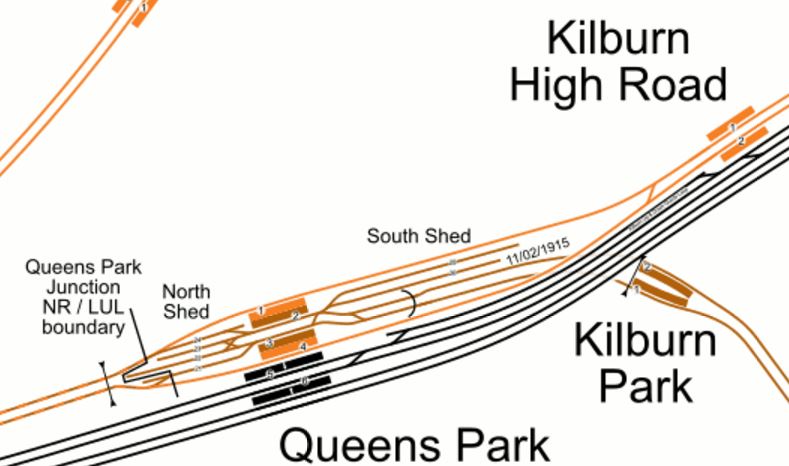
Lines Through Queen’s Park Station
Note how there is a cross-platform interchange between the two pairs of lines.
Northwards from Queen’s Park station, the platform height is a compromise, with a step down into an Underground 1972 Stock train and a step up into Class 378 train.
- It is not level access by any means and very difficult for wheel-chair users or those pushing buggies or heavy wheeled cases.
- I suspect that at some point it could even be illegal under disability regulations.
- With a more intense service, loading and unloading trains may become a seriouscause of delay.
It is not just a would-like, but a must-have.
Queens Park station though, is totally level.
The current five-car Class 378 trains are 100 metres long, which compares with the 113 metre length of the 1972 Stock train.
One way to solve the platform height issue, would be to have a dual height platform with one end of the platform level access for the 1972 Stock and the other for the Class 378 train.
This would probably need a platform of the order of 215 metres.
But London Overground have ordered a set of four-car Class 710 trains for the Watford DC Line. These trains will be perhaps 80 metres long, as the type will be shared with the shorter platforms of the Gospel Oak to Barking Line.
This shorter length train should make the design of a dual-height platform acceptable to all users a lot easier.
Currently Off Peak services through Willesden Junction are as follows.
- 3 trains per hour (tph) from Euston to Watford Junction – London Overground
- 9 tph on the Bakerloo Line.
Some sources mention that there are ambitions to run 27 tph on the Bakerloo Line. So even if all the trains went through to Watford Junction, that would only mean 30 tph stopping at stations on the line.
Currently, 2 tph on the Bakerloo Line turnback at Queen’s Park station, so it looks like with good deual-height platform design, the current schedule of three tph on the Overground, stopping at South Hampstead and Kilburn High Road can be continued and supplemented with perhaps 18-20 tph on the Bakerloo Line North of Queen’s Park station.
Platforms could be about 180-200 metres long, with a height to fit the Bakerloo Line trains. At one end they would have an 80 metre section of platform to suit the Class 710 trains.
The Class 710 trains would obviously be wheelchair friendly, like the current Class 378 trains, but they would be designed to fit a typical station on the Watford DC and Gospel Oak to Barking Lines.
If Class 378 trains were also providing services on the line, they would use their selective door opening to use the four-car raised section of the platform.
So, if the stations were to be given lifts to fit the new dual-height platforms, the service would have the following characteristics.
- Totally step-free and level access at all stations for all trains.
- South Hampstead and Kilburn High Road stations would keep their current service.
- Most stations would have an increased service.
- 27 tph through the central section of the Bakerloo Line would be enabled.
The biggest problem would be walking or pushing to the right end of the platform for your train, at stations served by both size of train.
Why the Piccadilly Line is Struggling
Many Londoners and quite a few visitors have found problems with the servcice on the Piccadilly Line recently.
This article in the Standard is entitled Piccadilly line ‘should be shut down and Night Tube launch delayed until train shortage fixed’.
This is the first paragraph.
Rail union bosses have called for the Piccadilly line to be temporarily shut down and its Night Tube launch delayed until an ongoing “shortage of trains” is resolved.
That is drastic.
I have just found this article on the London Reconnections web site, which is entitled Wear and Lathing in Northfields: Why the Piccadilly Line is Struggling.
The article may not offer a solution, but it does offer the reasons for the shortage of trains.
Read it!
Redbridge Station
Whilst visiting Newbury Park station, I took the opportunity to visit the below-grounmd parts of Redbridge station.
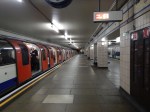
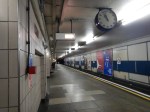
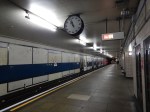
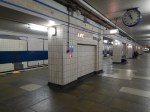
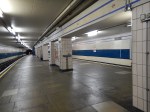
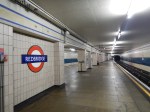
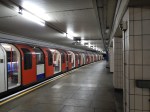
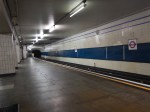
The station is unusual for the Underground in that there is effectively a very wide island platform between the two tracks.
Many stations, like those on the Northern reaches of the Piccadilly Line, that I know so well, do have this layout, but this must be a station with some of the widest platforms.
Wikipedia says this about the station.
Redbridge is often described as the shallowest deep level (as opposed to cut and cover) station on the network, as it is only 5.2 metres (17 ft) beneath the surface. However, this is misleading as the station tunnel was constructed by the cut and cover method, with the running lines descending into genuine tube tunnels at either end of the platforms – similar to the Central line platforms at Mile End.
I also get the impression, that the station could be designed, so that as at Stratford, trains rise up into the station, thus turning kinetic energy into potential energy to slow the train. This energy is released to accelerate the train out of the station.
Newbury Park Station
According to this article in the Ilford Recorder, Newbury Park station is going to be one of the first in the latest batch of stations to be given step-free access.
So I went for a look.
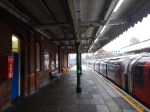
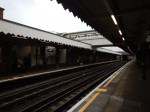


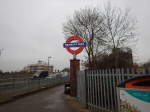
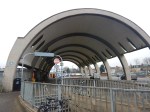



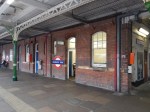
Note.
- Lifts can probably be added easily to the existing bridge.
- Lifts are certainly needed, ss I saw a couple of mothers struggling with buggies.
- The station buildings on the platforms have potential for making really nice.
- The barrel roof is not to my taste, and I would rejoice if it had to be demolished for health and safety reasons.
- The station is a Grade II Listed building.
It is certainly an unusual station.
Looking For Bond Street Station’s New Northern Entrance
Bond Street station is going to get a new Northern entrance on the North side of Oxford Street.
So I went for a walk in the area and took these pictures.





As you come out of the current entrances of the station on Oxford Street a building is rising on the opposite side of the road. Its Eastern end is on Marylebone Lane, where a new entrance is being built.
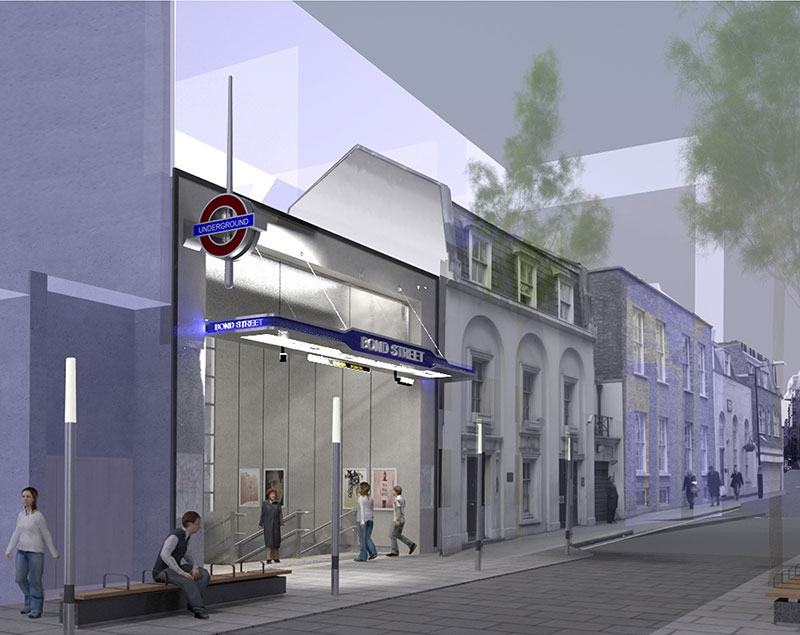
The New Marylebone Lane Entrance To Bond Street Station
Transport for London have produced a video called Bond Street station redevelopment for 2017 – virtual tour walk-through – Tube improvements.
It illustrates several features of the enlarged station.
But I can’t wait to experience the reality.
A Walk Between Kennington And Oval Tube Stations
I walked this morning between Kennington and Oval tube stations.





Note.
- The aim was to see if I could find any sign of the construction of the Northern Line Extension.
- I walked along Kennington Park Road and then cut into Kennington Park.
The work site at Kenngton Park, was not difficult to spot on the Kennington Park Place side of Kennington Park.
- Many of the sites for Crossrail are very cramped, but at least this one seems to surrounded by grass, that can be very easily restored.
- All the noise-generating equipment is encased in a large acoustic enclosure, as twenty-four hour working is envisaged.
The park also contains the Prince Consort Lodge, which looks to be an interesting Victorian architectural experiment.
This Google Map shows the two stations and Kennington Park.
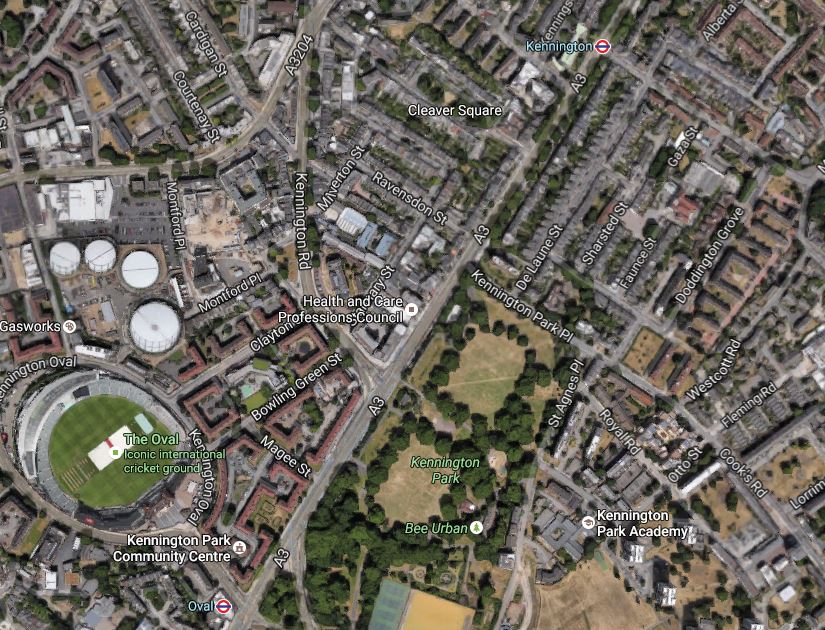
Kennington And Oval Tube Stations And Kennington Park
This Google Map is an enlarged one showing both the work sites at Kennington Park and Kennington Green.
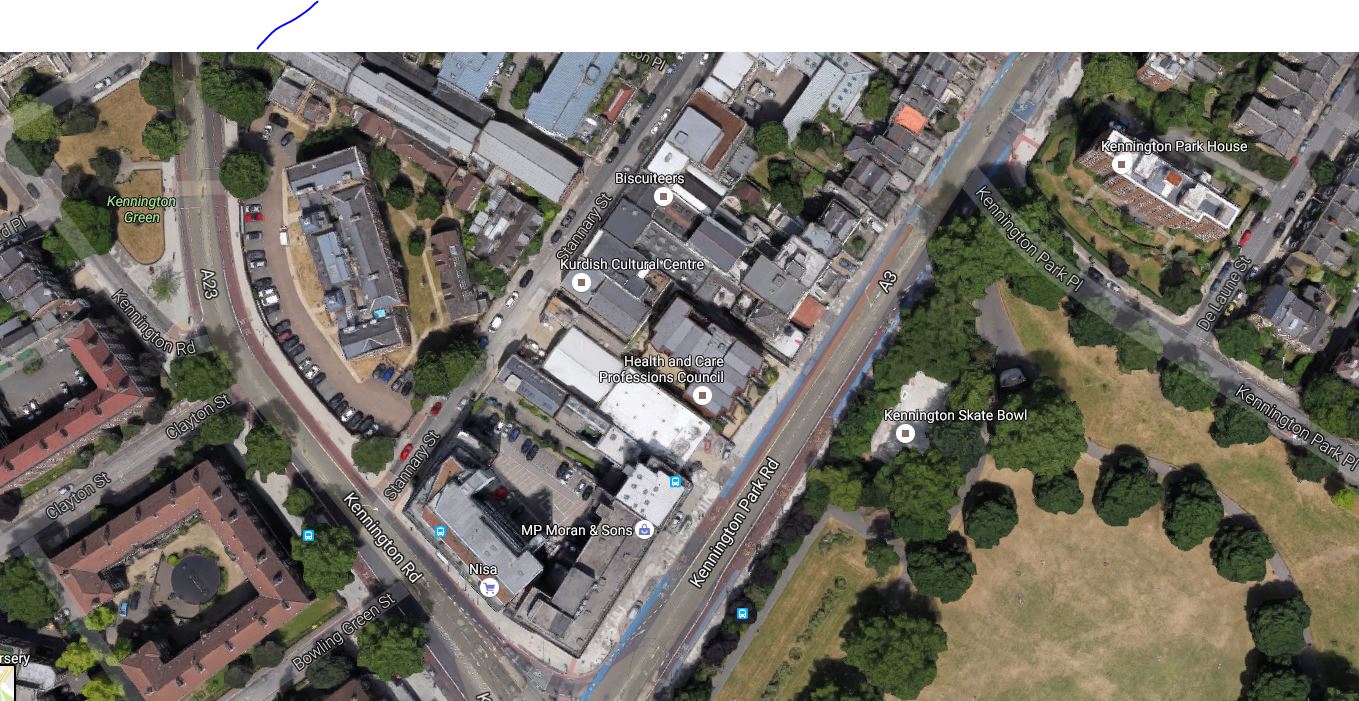
Kennington Green And Kennington Park Work Sites
This map from carto.metro.free.fr, shows the Northern Line through the area.

Lines Through Kennington And Oval Tube Stations
Note.
- The Northern Line was probably dug under Kennington Park Road, which is labelled as the A3.
- Kennington Park is on the Eastern side of Kennington Park Road.
- It looks like the Kennington Loop crosses Kennington Park Road very close to Kennington Park Place.
- Extrapolating being the two maps and reality, should give you the position of the shaft, with respect yo Kennington station.
- There’s more on what is happening here on this web page on the TfL web site.
Reading the documents on the TfL web site, it is now clear how the tunnels will be dug.
- Tunneling will start from Battersea and the tunnel boring machines will be lifted out at the two work sites; Kennington Green and Kennington Park.
- The running tunnel between the Kennington Green shaft will be 211 m. long and should be complete in December 2016.
- The running tunnel between the Kennington Park shaft will be 75 m. long and should be complete in October 2016.
- Both these short tunnels will be dug by traditional methods and lined with sprayed concrete.
At least Google doesn’t seem to be able to find any recent complaints.
Pictures Of The Kennington Green Site
A couple of days later, I went to the Kennington Green site and took these pictures.



It’s just an anonymous and very professional large green acoustic screen.
Could Old Oak Common Be London’s Super Hub Station?
Old Oak Common station is going to be a very important rail hub in the future, with all the services that various companies and organisations would like to see serving the proposed station.
This map shows some of the existing and proposed rail lines in the area.
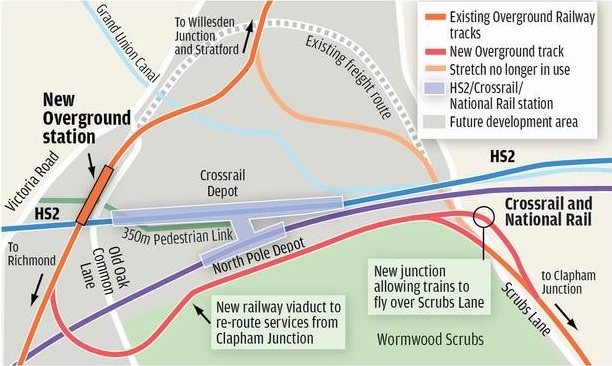
Rail Lines At Old Oak Common
Current Plans
I’ll now list the lines shown in the map or that go through the area. and are listed in Wikipedia, as having connections at the proposed Old Oak Common station.
1. Bakerloo Line
The Bakerloo Line will call
2. Central Line
The Central Line will call.
The Central Line acts as a loop from Crossrail through Central London, serving stations not on the direct route, in Central London between Stratford and Bond Street.
I wrote about the relationship between Crossrail and the Central Line in Ducking And Diving Between Crossrail And The Central Line.
3. Crossrail
Crossrail goes through the area and development of a station has been proposed.
4. Great Western Main Line
The Great Western Main Line goes through the area and local and other services may call.
5. HS2
HS2 will be building a station at Old Oak Common.
6. North London Line
The North London Line is consulting on a new station as I wrote about in Should An Overground Station Be Built At Hythe Road?
The North London Line acts as another East-West line across London and will probably have a frequency of upwards of the current 4 trains per hour (tph) between Richmond and its Eastern connection to Crossrail at Stratford.
7. West Coast Main Line
The West Coast Main Line goes through the area and local and other services may call.
8. West London Line
The West London Line will call and this line gives an easy route to Balham, Clapham Junction and East Croydon stations, which by-passes Central London.
I suspect that the frequency of trains on this route will be increased.
Eight lines is an large amount of connectivity.
Other Possibilities
If that isn’t enough connectivity, there are also these extra possibilities.
1. Chiltern Railways
Chiltern Railways have ambitions to use Old Oak Common station as another London terminus, with perhaps 2 tph.
I wrote about it in Linking Chiltern To Crossrail.
2. Dudding Hill Line
The Dudding Hill Line, runs to the West of Old Oak Common station. It could be electrified and have a station that is connected to Old Oak Common station.
For various reasons, both the Brent and Cricklewood \curves would be electrified, thus giving fully electrified access to and from North and South on the Midland Main Line.
3. Gospel Oak To Barking Line
Transport for London have published ideas to extend the Gospel Oak to Barking Line along an electrified Dudding Hill Line.
Suggestions have talked about 4 tph between Hounslow and Gospel Oak stations.
4. Heathrow Express
Heathrow Express uses the Crossrail route, so it could call.
5. Midland Main Line
If Chiltern can justify using Old Oak Common station, I suspect that services on the Midland Main Line can make the same arguments for using Old Oak Common station as a terminal.
Consider.
- Electrification of the Dudding Hill Line makes this possible.
- St. Pancras which is very much A Fur Coat And No Knickers Station, is short of capacity.
It would give passengers from the East Midlands much better access to London and the South East.
6. Thameslink
There are no plans to link Thameslink to Old Oak Common station, but why not?
I proposed this in Will The Third Runway At Heathrow Be Actually Built In The Near Future?
Under Integration With Both HS1 And HS2, I said this.
It would be possible to do the following.
- Arrange for Heathrow Express and/or Crossrail to call at Old Oak Common for HS2.
- Terminate some Thameslink services at Old Oak Common, thus linking HS1 and HS2.
- Build an easy entrance at St. Pancras to Thameslink close to Eurostar.
- It goes without saying, that Old Oak |Common will make interchange easy between the umpteen lines meeting there.
The Dudding Hill Line would be electrified.
This proposal and the related electrification of the Dudding Hill Line would do the following.
- Give Chiltern, Crossrail, GWR and Heathrow Express a connection to HS1.
- Give Thameslink a better connection to HS2 and the West Coast Main Line
- Create a fast ink between HS1 and HS2.
What could a Thameslink service to Old Oak Common station look like?
- I would terminate 4 tph trains at Old Oak Common to give an adequate level of service.
- It might be advantageous to use eight-car Class 700 trains on this route, so that all trains North of Cricklewood could be twelve-car trains.
- Could the trains going to Old Oak Common be the Wimbledon Loop trains?
- There could be advantages in having 2 tph between Old Oak Common and London Bridge.
Obviously, passenger statistics would determine the services required.
Old Oak Common As An Airport Hub
If all or some of these plans come to pass, Old Oak Common station will be well-connected to the following airports.
- Birmingham – Under 50 minutes by HS2.
- City – Under 20 minutes by Crossrail
- Gatwick – Under 50 minutes by Thameslink
- Heathrow – Around 20 minutes by Crossrail and around 15 minutes by Heathrow Express
- Luton – Under 30 minutes by Midland Main Line.
- Manchester – Around an hour by HS2.
- Southend – Around 80 minutes by Crossrail and Greater Anglia.
- Stansted – Around 55 minutes by Crossrail and Stansted Express.
The figures are very much my best estimates, as the Thameslink and HS2 web sites don’t have simple journey time calculators as does the Crossrail web site.
But these timings do show some interesting facts, that will effect the developments of airports in Southern England.
- Birmingham Airport is a practical alternative for those living with easy access to the HS2 stations at Euston or Old Oak Common.
- Gatwick access needs to be faster to compete with Heathrow and Luton.
- When HS2 reaches Manchester Aiorport, it will be a practical alternative for Middle England.
- Southend Airport will be good for those East of London, but the journey time needs to be cut, by running faster trains to London.
- Stansted Airport needs a faster connection to London and they will push for the four-tracking of the West Anglia Main Line.
There will be a massive battle for passengers and Network Rail will be under tremendous pressure to perform.
Rail Companies, Lines And Terminals, Without A Direct Connection To Old Oak Common Station
There is quite a few, even if you cut out train operators like Arriva Trains Wales, Scotrail, Northern and TransPennine, that don’t serve London.
1. Caledonian Sleeper
With all its connectivity, would Old Oak Common be the logical destination for the Caledonian Sleeper?
Could Old Oak Common, be London’s hub for all sleeper trains?
2. Circle, District And Metropolitan Lines
There are various ways to get on the Circle, District and Metropolitan Lines depending on where you want to go.
Just as the Central Line acts as a loop from Crossrail, the Sub-Surface Lines have various loops running parallel to Crossrail through Central London.
- Circle and Metropolitan Lines, running North of Crossrail, from Paddington to Whitechapel.
- Circle and District Lines, running South of Crossrail, from Paddington to Whitechapel.
- District Line, running, South of Crossrail, from Ealing Broadway to Whitechapel.
My prediction in Is Whitechapel Station Going To Be A Jewel In The East?, seems to becoming true.
3. c2c
As I said in Will c2c Push For Access To Stratford And Liverpool Street?, c2c needs a connection to a station on Crossrail.
With some reorganisation of services, I believe that it might possible to have a 4 tph service to Stratford and Liverpool Street stations, which would give passengers in the c2c area, access to Crossrail
4. East Coast Main Line
These are routes between Old Oak Common and Kings Cross station for the East Coast Main Line.
- Crossrail to Farringdon and then the Metropolitan Line
- North London Line to Highbury and Islington and then the Victoria Line.
- Bakerloo Line to Oxford Circus and then the Victoria Line.
- Crossrail to Tottenham Court Road and then a 10, 73 or 390 bus.
- Narrow boat on the canals.
- If Thameslink should in the future serve Old Oak Common, that can be taken to St. Pancras Thameslink, followed by a walk.
None of the routes are of the best.
If you had plenty of time, Tottenham Court Road station and then a bus would be a good route, as the bus drops you in the front of Kings Cross station, with totally flat access to the trains. If you’re early and it’s sunny, you can sit in the best Waiting Room at a London station.
For local services on the East Coast Main Line, there are two slower alternatives.
- Crossrail to Moorgate and then use the Great Northern Metro.
- Thameslink to St. Pancras Thameslink, cross to the other platform and take Thameslink to Cambridge or Peterborough.
The second route, would be much easier, if St. Psncras had an island platform for Thameslink. At least it’s only escalators and lifts.
There is one development, that might happen, that could improve journeys to and from Kings Cross station. That is the reopening of Maiden Lane station.
5. Jubilee Line
The Jubilee Line has interchanges with Crossrail at Bond Street, Canary Wharf and Stratford stations, with an interchange with Thameslink at London Bridge station.
It also has a step-free interchange with the Bakerloo Line at Baker Street station.
The Jubilee Line also acts as a loop from Crossrail serving stations away from the main route through Central London between Stratford and Bond Street.
6. London Bridge, Cannon Street And Charing Cross
I have grouped all these three stations together as the rebuilding of London Bridge station and the Thameslink Programme have connected these three stations in a way that will change passenger patterns dramatically for users of these three stations.
For myself, it will mean that to access any trains from Cannon Street and Charing Cross or on Thameslink going South, I will probably use a bus to the superb London Bridge station with all its escalators and lifts, rather than fight my way through Central London.
Others will also choose to go direct to London Bridge, possibly by using the Jubilee or Northern Linse. It will be interesting to see how passenger usage changes at Cannon Street and Charing Cross stations.
London Bridge shows what could have been done, if they’d spent the money wisely at the dreadful St. Pancras.
There are four main routes between London Bridge and Old Oak Common stations.
- Bakerloo Line to Waterloo and then the Jubilee Line.
- Crossrail to Bond Street and then the loop of the Jubilee Line.
- Crossrail to Farringdon and then Thmeslink
- If Thameslink serves Old Oak Common, there could even be a direct train.
I suspect there are other routes and it will all be down to personal preference and where you catch your next train in London Bridge.
Cannon Street station could almost be considered a London Bridge North station.
- It has seven terminal platforms. Try fitting more into London Bridge.
- It is within easy walking distance of much of the City of London.
- On a nice day, many might even walk from Cannon Street to Moorgate for Crossrail, as this route could be pedestrianised.
- It has access to the Circle and District Lines, which with a change at Paddington give access to Crossrail and Old Oak Common station.
- In a few years time, it will have good access to the Northern and Central Lines at Bank station.
Cannon Street station will become more important, as Network Rail and the various operators learn how to use the new infrstructure.
Sometimes, I struggle to see the point of Charing Cross station, but as it’s a very busy station others certainly see the station’s purpose.
It’s on the Bakerloo, Circle, District and Northern Lines, so getting to Old Oak Common won’t be a problem.
Transport for London are looking to take over South London inner suburban routes, so I think we’ll see changes in the management of Cannon Street and Charing Cross stations if this happens.
7. Northern Line
Both branches of the Northern Line are directly connected to Crossrail.
- Tottenham Court Road station connects to the Charing Cross Branch.
- Moorgate station connects to the Bank Branch.
Connections to the Northern Line might improve, if two separate lines are created
8. Piccadilly And Victoria Lines
The Piccadilly and Victoria Lines share three interchanges, but unfortunately they have no interfaces with Crossrail and only one poor one with Thameslink.
The best bet is to get on the Bakerloo Line and change at either Oxford or Picadilly Circus.
9. Victoria
Victoria station is another tricky station from which to get to and from Old Oak Common.
- Bakerloo Line to Oxford Circus and then Victoria Line.
- Crossrail to Paddington and then Circle or District Line.
As some services out of Victoria stop at stations served by the West London Line, it is possible to use that line to by-pass Central London.
10. Waterloo
Like London Bridge, Waterloo station is very well connected to Crossrail and the Old Oak Common hub.
- Bakerloo Line direct.
- Crossrail to Bond Street and then the loop of the Jubilee Line.
- Crossrail to Tottenham Court Road and then the Northern Line.
As some services out of Waterloo stop at stations served by the West London Line, it is possible to use that line to by-pass Central London.
Conclusions
I have come to the following conclusions.
Everybody will want to be connected to Old Oak Common station.
Groups of lines across London are emerging.
- East to West – Crossrail, Central, District, Metropolitan, North London, Gospel Oak To Barking, Dudding Hill.
- North to South – Thameslink, West London,East London, Northern.
- North-East to South-West – Crossrail 2, Piccadilly, Victoria.
- North-West to South-East – Bakerloo, Jubilee
A very strong grid with good interchanges is probably the main objective.
Looking at these groups, makes me think, that actions are suggested, that would strengthen the network.
- Build Crossrail 2
- Increase the capacity on the Bakerloo Line
- Split the Northern Line into Charing Cross and Bank branches.
London will quickly fill the extra capacity.
 The Anonymous Widower