Aura Power Secures £10 Million Funding From Novuna
The title of this post, is the same as that of this article on Solar Power Portal.
These two paragraphs introduce the deal.
Aura Power has announced the successful closing of a £10 million debt facility with Novuna Business Finance. Novuna is a part of Mitsubishi HC Capital UK PLC, designed to support projects from early development through to the operational phase.
Bristol-based Aura Power is developing an active pipeline of utility-scale solar PV and battery energy storage of about 12GW in the UK, Europe and North America. The funding will help progress global development for Aura, covering expenditures like grid payments, planning fees and legal land costs.
These two paragraphs describe some of Aura’s projects.
In December 2023, Aura was granted planning permission for a 100MW/400MWh battery energy storage (BESS) project in Capenhurst, Cheshire. It was the third UK project to receive planning permission last year, alongside Aura’s 49.9MW Horton Solar Farm located in East Devon and its 49.9MW Hawthorn Pit Solar Farm in Durham.
Aura has been active within the solar and battery industries, with a pipeline in development in excess of 20GW. Last week (2 May), following an appeal, the developer secured planning permission for an Essex solar farm that will have an export capacity of 30 MW.
Nearly, forty years ago, I started a finance company in Ipswich with a friend. Our financing was mainly directed towards truck leasing for companies moving containers to and from the Port of Felixstowe.
Before, I committed my money to that venture, I built a large mathematical model of the proposed business. I found, that there were some unique financial properties to leasing quality trucks, that meant losing large sums of money were difficult.
I wouldn’t be surprised that leasing battery energy storage (BESS) systems have a lot of things going for them, if you have the right contract.
This may explain, why there a large number of companies in the market of providing grid batteries.
- At the top end; Centrica, Rolls-Royce and SSE will supply you with one.
- Funds like Gore Street and Gresham House and others allow you to invest in batteries.
- At the other end of the market are companies like Aura Power.
I suspect, that as with truck-leasing company, the financial flows are very stable and investor-friendly, if you get the model right.
Rolls-Royce To Be A Partner In Zero-Carbon Gas-Fired Power Station In Rhodesia
This press release from Rolls-Royce is entitled Rolls-Royce, Landmark And ASCO Collaborate On CO2 Recovery Power Generation Solutions.
These three bullet points serve as sub-headings.
- Cooperation plans to develop solutions for clean power generation with carbon capture from gas reciprocating engines
- Captured CO2 will be available for use in industries such as food, Efuels, sustainable aviation fuels (SAF), cement and plastic production
- First of-its-kind flexible power generation and carbon capture plant currently under construction in Nottinghamshire, UK
This image shows a Rolls-Royce mtu Series 4000 gas genset.
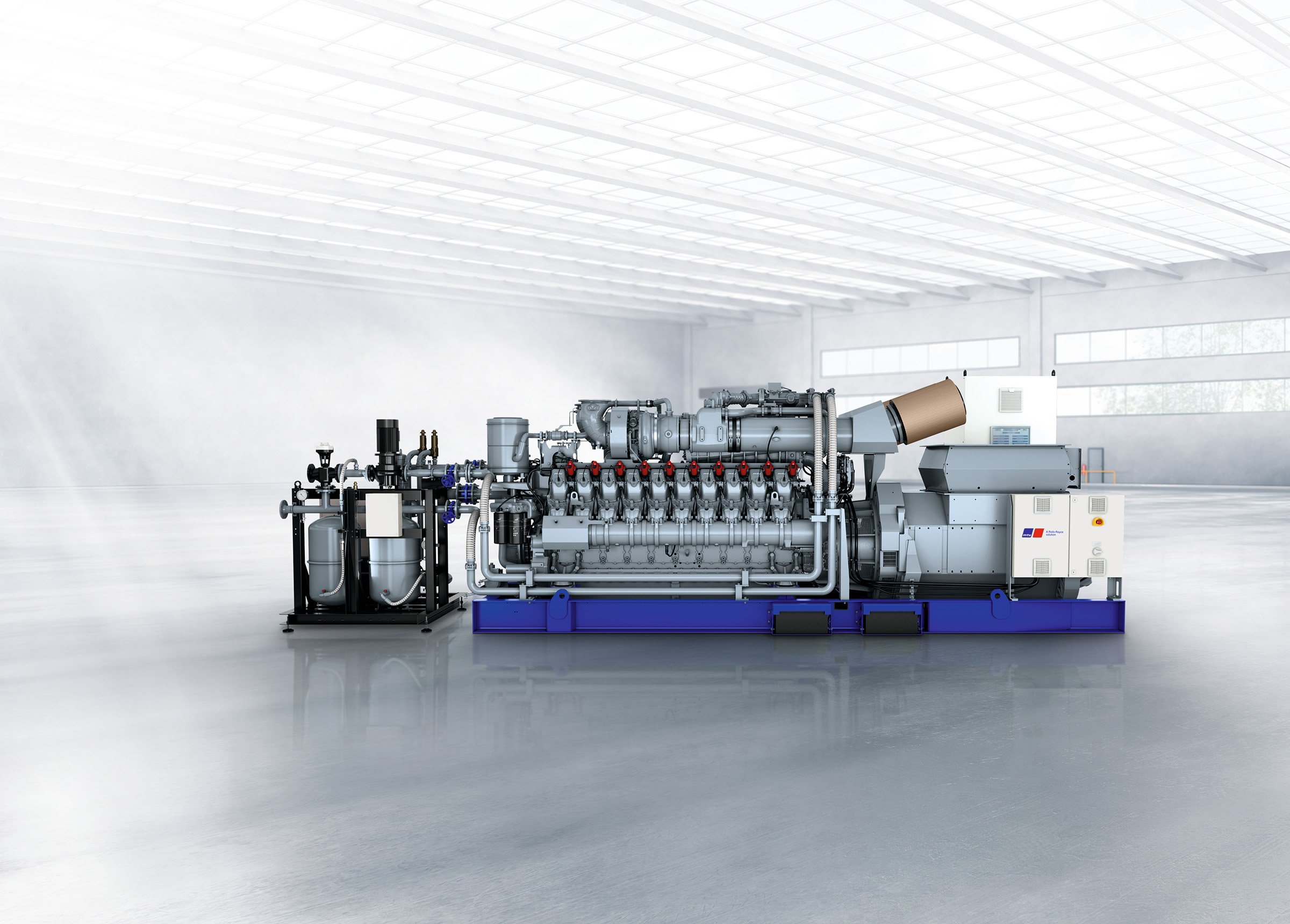
Note.
- Power is up to 2.5 MW.
- The engine is labelled H2-ready on its web page.
These two paragraphs add some detail to the project.
Rolls-Royce, ASCO Carbon Dioxide Ltd (ASCO), and Landmark Power Holdings Limited (LMPH), have signed a Memorandum of Understanding (MoU) aimed at developing scalable solutions for clean power generation with carbon capture from mtu gas reciprocating engines. This strategic partnership will help enable power generation customers to achieve their net zero ambitions and marks a significant step towards addressing climate change.
“Power generation is a highly attractive, growing market segment and an area of strategic focus for Rolls-Royce, where partnerships can help further grow market position and broaden its power generation offering, as set out at last November’s Capital Markets Day”, said Tobias Ostermaier, President Stationary Power Solutions at Rolls-Royce Power Systems. Rolls-Royce is committed to becoming a net zero company by 2050 and supporting customers to do the same.
These are my thoughts.
Uses Of Carbon Dioxide
The press release from Rolls-Royce lists a few uses of carbon dioxide.
The plan is to make the captured CO2 available (utilisation) for use in various industries such as food production, Efuels, sustainable aviation fuel (SAF), cement and plastic production (utilisation). The captured CO2 will also be ready for transportation should permanent sequestration be preferred (storage).
Carbon dioxide can also be added to the air in greenhouses, that are producing flowers, herbs, salad vegetables, soft fruit and tomatoes.
ASCO Carbon Dioxide
ASCO Carbon Dioxide is a subsidiary of French company; Schneider Electric.
The home page on their web site, describes ASCO Carbon Dioxide like this.
The Swiss ASCO CARBON DIOXIDE LTD is a globally operating company that offers complete solutions for CO2 and dry ice. The range of services includes carbon capture plants, CO2 recovery systems, ASCOJET dry ice blasting machines, dry ice production machines, CO2 cylinder filling systems, CO2 vaporisers, CO2 storage tanks, CO2 dosing systems for water neutralization and various other CO2 and dry ice equipment.
Thanks to this broad product range and more than 130 years of practical experience in the comprehensive CO2 and dry ice sector, the customer benefits from individual, complete CO2 solutions from a single source. ASCO has been part of the international industrial gases company Messer Group since 2007 and is its centre of competence for CO2.
In other words, the world and especially the climate change activists may hate carbon dioxide with a vengeance, but ASCO Carbon Dioxide see it as a way to make money and something that needs love.
It also seems, that if you want to do something with or to carbon dioxide, then ASCO Carbon Dioxide could be one of the first companies that you call.
Landmark Power Holdings Limited
The About page on their web site, describes the mission of Landmark Power Holdings Limited like this.
LMPH was established in 2019 with the purpose to help to build a circular economy, by applying new methodologies to proven technologies in energy production.
We support the transition to net zero by supplying dispatchable, low carbon energy that enables more renewable energy production while contributing to a circular economy, by eliminating inefficiencies in production, ensuring that every input is used to its maximum potential and treating all production waste as a profitable resource.
This Solutions page on their web site, describes their FlexPower Plus system.
These are the two introductory paragraphs.
FLEXPOWER PLUS® is LMPH’s modular approach to optimising the generation of clean flexible power. It is a combination of High Efficiency Flexible Power Generation modules and Carbon Capture Utilisation (CCU) modules.
Each of the modules can be added to the production processes depending on the site and production needs.
This last paragraph describes the result.
When you combine the the High Efficiency Flexible Power Generation modules with the Carbon Capture Utilisation (CCU) modules, the power generation is classified as low carbon and considered to be as clean as wind power but with the capacity to provide baseload power.
They certainly sound like my kind of company, as I was simulating processes like this for ICI in the 1970s.
ICI taught me that only four things should leave a chemical or other process plant.
- Product, that is sold at an advantageous price.
- Pure water
- Clean air
- Everybody who worked there.
It appears a FlexPower Plus system produces three valuable products; electricity, heat and pure food-grade carbon-dioxide.
The Rhodesia Project
The Rhodesia project has its own page on the Landmark Power Holdings web site, where these four paragraphs describe the project.
The Rhodesia project is a joint venture with Victory Hill, a specialist investment firm targeting direct investments in global energy infrastructure that support the UN Sustainable Development Goals.
The Rhodesia project is located in north Nottinghamshire near Worksop and has an electrical capacity of 10MW.
Additional capacity is to be sold through a private wire power supply for local businesses with the intent to facilitate vehicle charging stations.
Construction started in March 2022 and the start of power production is projected for Q3 2024 with the full CO2 capture from Q4 2024.
There is also this paragraph, that lists the partners in the Rhodesia project.
For the development of the Rhodesia project LMPH and Victory Hill have partnered with global industrial groups such as Mitsubishi Turboden S.p.A., MTU Rolls-Royce Solutions UK, ASCO CARBON DIOXIDE LTD, Climeon.
With three of the world’s largest companies amongst the partners, this partnership must have a high chance of success.
Victory Hill Capital Hill Partners
Victory Hill Capital Partners are partners in the Rhodesia project.
Their joint philosophy with Landmark Power Holdings is summed up on this video.
Working Together
The press release from Rolls-Royce says this about the partnership.
Rolls-Royce is contributing its extensive experience and global network in the field of decentralized power generation to the cooperation through its Power Systems division with the mtu product portfolio. The contribution of LMPH, a developer of high-efficiency Combined Heat and Power (CHP) projects, is its patented FLEXPOWER PLUS® concept, combined with technical expertise and patented technologies. ASCO has over 50 years of experience in developing and building carbon capture (or CO2-Recovery) plants and will be providing valuable insights and solutions from the carbon capture industry.
There is also this diagram of the system.

Note.
- The 4000 gas genset is in the bottom-left corner.
- The HT PRC and LT ORC are two Mitsubishi turbo-generators generating electricity from waste heat.
- The ASCO carbon capture system is in the top-left corner.
- Carbon dioxide can either be stored or used.
This system should be zero-carbon, once the design is fully tested.
A View From The Top
This paragraph from the Rolls-Royce press release gives the view of the President Stationary Power Solutions at Rolls-Royce Power Systems.
Tobias Ostermaier, President Stationary Power Solutions at Rolls-Royce Power Systems, said: “We are convinced that CO2 capture and storage systems in combination with our mtu gas gensets are an important building block on the way to Net Zero. As a complement to renewable energy sources, internal combustion engines can already provide clean, cost-effective and extremely reliable power generation.”
I suspect he’s rather pleased.
Centrica Energy, Bord Gáis Energy And Mitsubishi Power Announce Development Of Europe’s First Ammonia Fired Power Generation Facility
The title of this post, is the same as that of this press release from Centrica.
This is the sub-heading.
Centrica plc and Mitsubishi Power Europe Limited “Mitsubishi Power Europe” have signed a Memorandum of Understanding (MOU) to explore the development, construction, and operation of Europe’s first-ever ammonia-fired power generation facility at Bord Gáis Energy’s Whitegate Combined Cycle Gas Turbine (CCGT) power station in Cork, Ireland.
These four paragraphs outline the project.
The project is being led by Centrica through its Bord Gáis Energy and Centrica Energy businesses and Mitsubishi Power Europe and would become Europe’s inaugural ammonia-fired power generation facility and one of only two such facilities in the world.
The utilisation of low carbon ammonia as a clean and sustainable fuel source for power generation has the potential to provide security of supply while reducing greenhouse gas emissions. Low carbon ammonia has a higher volumetric density than hydrogen, enabling the utilisation of low carbon hydrogen in a form which is easy to transport and store, resulting in a fuel that can be combusted with no carbon emissions at point of use. Its use as a fuel is a promising long-term energy solution for the transition to a low-carbon energy value chain.
Bord Gáis Energy’s facility at Whitegate CCGT power station would serve as a global demonstration site for ammonia-fired power generation technology, providing insight into the feasibility and scalability of low carbon ammonia as a green fuel and shaping the future of power generation worldwide, with low carbon ammonia being sourced through Centrica Energy’s global trading network.
Following the signing of the MOU, the project team is being established to commence project feasibility assessments. Upon the successful outcome of this assessment, extensive local stakeholder engagement will commence.
Note.
- No mention of the size of the new power station is given in the press release.
- Whitegate power station is a 445 MW combined cycle gas turbine (CCGT), that was built in 2010.
- It can meet ten percent of Ireland’s electricity demand.
I have a few thoughts.
Will The Existing Power Station Be Converted To Ammonia Or Will A New Ammonia-Fired Power Station Be Built Alongside?
Consider.
- If the second station doesn’t work, there’s no reduction in power.
- If a replacement station doesn’t work, ten percent of Ireland will be in the dark.
- Ireland will be needing more power in the next few years.
- A second power station can be appropriately-sized.
- Japanese don’t like to lose face!
Prudence probably says that building a second station alongside is the least risky route.
Wind Power In Ireland
This Wikipedia entry is entitled Wind Power In Ireland.
This is the first paragraph.
As of 2021 the island of Ireland has 5,585 megawatt and the Republic of Ireland has 4,309 MW of installed wind power nameplate capacity, the third highest per capita in the world. In 2020 wind turbines generated 36.3% of Ireland’s electrical demand, one of the highest wind power penetrations in the world.
There is also one 500 MW interconnector between the islands of Great Britain and Ireland, with another similar-sized one under construction.
As the wind doesn’t blow all the time, the island of Ireland will need some low-carbon backup.
Why Ammonia?
This paragraph from the press release gives several reasons.
The utilisation of low carbon ammonia as a clean and sustainable fuel source for power generation has the potential to provide security of supply while reducing greenhouse gas emissions. Low carbon ammonia has a higher volumetric density than hydrogen, enabling the utilisation of low carbon hydrogen in a form which is easy to transport and store, resulting in a fuel that can be combusted with no carbon emissions at point of use. Its use as a fuel is a promising long-term energy solution for the transition to a low-carbon energy value chain.
There may also be secondary issues here.
If you read the Applications section in the Wikipedia entry for ammonia, you will realise, what a useful chemical ammonia is.
As Ireland has a lot of agriculture, a fertiliser plant could be located close to the power station.
If the ammonia was green ammonia, then this will help to decarbonise the island of Ireland.
Where Will The Green Ammonia Come From?
These posts deal with the production and distribution of green ammonia.
- Could West Africa Become A Green Energy Powerhouse?
- H2U Eyre Peninsula Gateway Hydrogen Project Begins Largest Green Ammonia Plant
- KEPSA Signs Large-Scale Green Energy Projects MoU In Kenya
- Namibia Is Building A Reputation For The Cheapest Green Hydrogen
- Uniper To Make Wilhelmshaven German Hub For Green Hydrogen; Green Ammonia Import Terminal
Note.
- A continent with a lot of renewable energy like Africa or Australia can create lots of green ammonia.
- As the press release says, ammonia is easier to transport and store compared to hydrogen.
- The press release says that low carbon ammonia will be sourced through Centrica Energy’s global trading network.
- Fortescue Future Industries is mentioned in several posts, as producers of green hydrogen and green ammonia.
- Centrica is big enough to stand up to Andrew “Twiggy” Forrest and Fortescue Future Industries.
As in a few years, we will have many GWs of renewable energy, could we be making green ammonia for the Irish?
This news story on the UK Research and Innovation web site is entitled Designs For Green Ammonia Plant Become Reality.
This is the sub-heading.
Science and Technology Facilities Council (STFC) researchers are building a small-scale plant to generate ammonia using only renewable energy sources.
These two paragraphs outline the story.
Ammonia is a promising carbon-free fuel source of the future and so if successful, the plant has the potential to considerably advance the UK’s net zero ambitions.
It marks the second phase of the Ammonia Synthesis Plant from Intermittent Renewable Energy (ASPIRE) initiative which will be led by STFC in conjunction with the University of Bath, Johnson Matthey, and Frazer-Nash Consultancy.
The UK Research and Innovation news story has this description of the ASPIRE technology.
Current commercial ammonia synthesis is optimised for near steady production requiring constant power.
The first phase of ASPIRE however saw the design of a patented modular reactor and thermal management system that should enable operation from an intermittent renewable power supply.
The new plant will have three core elements:
- a pressure swing adsorption system which extracts nitrogen from air
- a modular electrolyser which splits hydrogen from water
- a synthesis loop that uses the modular reactor and a thermal management system to combine hydrogen and nitrogen to make ammonia
This will enable the entire production process to operate autonomously, powered by a small wind turbine and series of solar canopies with an ammonia generation rate proportional to the available renewable power.
There is even this quote from a Dr. Alan Partridge.
Thanks to the incredible work on this initiative by the team at Rutherford Appleton Laboratory as well as the University of Bath and private sector partners, we are closer than ever to producing industry-scale green ammonia for the UK and the world.
Perhaps, this technology will allow the island of Ireland to make all the green ammonia it needs.
Will Centrica Be Going Into The Green Ammonia Business?
The Centrica press release says they will be dealing in green ammonia for the benefit of Ireland. So Yes!
Conclusion
The news story on the UK Research and Innovation web site is a must-read.
As we have so much renewable energy in the UK, some company will build an ASPIRE-based green ammonia plant in the UK.
Mitsubishi Takes 20% Stake In Ovo Energy
The title of this post is the same as that of this article on Newscabal.
A few points from the article.
- The stake values Ovo at around a billion pounds.
- £216million will be injected to help fund international expansion.
- Ovo is now the seventh largest energy supplier in the UK.
- Ovo will be investing more in software to reduce domestic energy bills.
- Mitsuibishi are already involved in wind power in the UK and own Artemis Intelligent Power, who are devekloping their hydraulic technology for wind turbines.
The article is very much one that should be read.
 The Anonymous Widower