Progress On The Sheffield-Rotherham Tram-Train
I took these pictures in Sheffield and Rotherham, whilst trying to take pictures of Class 399 tram-trains.
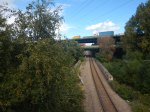
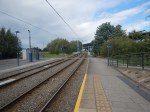
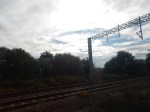


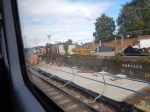
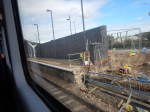
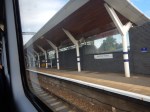
Note.
- The heavy-weight gantries for the electrification, which I suspect would support 25 KVAC electrification.
- It appears simple bi-level platforms are being built at Rotherham Central station.
- Could a stop being put at the New York stadium?
It certainly doesn’t seem to be an expensive system.
Single Or Double Track Electrified At 25 KVAC
The heavy rail route which is both single and double-track is electrified using standard 25 KVAC electrification.
Simple Voltage Changeover
In Karlsruhe, a ceramic rod is used to connect the overhead wires of different voltages. The pantograph of the tram-train runs on this rod, as the vehicle passes between the two voltages.
The different voltages would be handled automatically on the tram-train.
Kinetic energy or a battery will take the tram-train over the very short dead section.
I didn’t see it, but I suspect a similar system is used on the Tinsley Chord in Sheffield, where the two voltage systems meet.
The advantage of this simple system, is that voltage changeover can be completely automatic, with the driver only monitoring the changeover.
Simple Bi-Level Platform Extensions
This technique is used in Karlsruhe, where they have myriad problems due to various classes of tram-trains and conventional trains.
Modern construction methods will certainly help here.
How Did Network Rail Manage To Spend So Much Money?
The only feasible positive explanation is that this tram-train trial is being very comprehensive and covers all possible UK operations.
- The tram-trains are tested on 25 KVAC at Rotherham.
- Single and double-track.
- The tram-trains are tested on 750 VDC all over Sheffield.
- The tram-trains are tested on sharp curves and climbing hills on the Sheffield Supertram network.
- The voltage changeover is thoroughly tested on the Tinsley Chord.
- Platform designs get a rigorous test.
If the tram-train passes these tests and the regulators and operators like it, it’ll be passed for the UK network.
Is The Rotherham Trial A Tram-Train Or A Train-Tram?
When going from Sheffield to Rotherham, the Class 399 train, starts as a tram and changes to a train on the Tinsley Chord.
But when going from Rotherham to Sheffield, the vehicle starts as a train and changes to a tram.
So I suppose it’s both and it changes over where the voltage changes on the Tinsley Chord.
But just as in the Rotherham trial, provided there is an overhead wire with an acceptable voltage, the Class 399 tram-trains can run on any track, be it for trams or trains.
On What Routes Could A Class 399 Train Run?
There are several possibilities.
Extending An Existing Tram Network On A Heavy Rail Line
The tram-train runs normally on a standard tram line and then the route is extended on a heavy rail line, which is electrified with 25 KVAC overhead wires.
This is what is being done at Rotherham.
More possibilities exist in Sheffield and probably on other systems like Birmingham, Blackpool, Edinburgh, Manchester and Nottingham.
Creating A Tram Link Across A Town Or City
Suppose a town or city has two electrified stations on opposite sides. Perhaps one handles trains from the West and the other handles trains from the East.
If a tram route can be created between the two stations, which is connected to the lines at the station, then tram-trains can run across the town or city.
This has been done in Karlsruhe and other European cities, but I doubt we’ll see a cross-city link like this in the UK for a decade or two.
Creating A Tram Link Between Two Electrified Lines
This is similar to the previous application, except that the tram route might be in a rural area.
One possibility might be from Cambridge to Marks Tey along a rebuilt Stour Valley Railway.
Running A Branch On A Heavy Rail Line As A Tram
Creating a branch line to tram standards should be cheaper than creating it to heavy rail standards.
The proposed Glasgow Airport Tram-Train could be built this way, by building a tram track from the Inverclyde Line to the Airport.
The branch would have the following characteristics.
- Segregated single-track from the Inverclyde Line
- 750 VDC overhead electrification.
- Low floor tram-trains.
- Simple stations.
The tram-trains could run as normal electric trains from Glasgow Central station to West of Paisley St. James station, where they would take to the branch line and run as trams to the Airport.
As the performance of a Class 399 tram-train is not much slower than the current Class 314 trains that work some services on the Inverclyde Line, I feel that fitting the tram-train service into the service pattern on the line would be possible.
I estimate that a round trip from Glasgow Central to the Airport could be done within an hour, which would mean that to provide an adequate four tram-trains per hour, would require four vehicles.
Two other airports could be served in this way; Leeds and Liverpool
- Leeds Airport would require electrifying as far as Horsforth station, where a tram track would lead to the Airport.
- I suspect that the tram-trains could not only connect Leeds to the Airport, but Bradford as well.
- Liverpool Airport from Liverpool Lime Street services would change to a tram at Liverpool South Parkway station.
I think we’ll be seeing tram-trains used for services like these.
Consider these points.
- A suitable station on the electrified network is needed as a terminus.
- A suitable junction must be possible between the branch and the electrified network.
- Any number of stops could be built on the branch.
- Simple tram-style 750 VDC overhead wires can be used, which would be less visually intrusive.
Some schemes will be simple like perhaps the Slough to Windsor and Eton Line and others would be more complicated.
Conclusion
In a year or so’s time, we’ll know if tram-trains are another method of expanding and improving the UK’s rail network.
The Halton Curve: Small Piece Of Track, Big Rail Ambitions
The title of this post is the same as that of an article on the Rail Technology Magazine web site.
The Halton Curve will create a link between Liverpool and North Wales. This page on the Network Rail web site gives more details.
Work has started on the 1.5 miles of rail track, known as the ‘Halton Curve,’ that will unlock leisure and business opportunities between the Liverpool City Region, its airport, Cheshire and North Wales.
Vital upgrades to signalling and track will enable new services between Liverpool and Chester, serving Liverpool Lime Street, Liverpool South Parkway (for Liverpool John Lennon Airport) Runcorn, Frodsham and Helsby.
The existing line, which currently only runs a one-way passenger service once a week in the summer, will be upgraded to provide an hourly service in each direction from December 2018 with the potential for connections to North Wales in the future.
Restoring the Halton Curve is similar to a number of smaller projects that have been executed in the last few years, to improve connectivity and efficiency in the UK rail network.
- Allington Chord – A short section of track removed a bottleneck at Grantham on the East Coast Main Line.
- Bacon Factory Curve – A 1,415 metre link at Ipswich, that improves the operation of freight trains to and from the Port of Felixstowe and speeds up services on the Great Eastern Main Line.
- Hitchin Flyover – A flyover at Cambridge Junction on the East Coast Main Line, that cut delays to expresses on the East Coast Main Line.
- North Doncaster Chord – A flyover to take freight trains between Immingham and Drax over the East Coast Main Line.
- Todmorden Curve – Four hundred metres of reinstated railway, that now allows direct services between Burnley Manchester Road and Manchester Victoria stations.
Most seem to have been worthwhile. But look back a couple of decades and it was unlikely that some of these projects would ever be needed.
As the economy grows, freight moves from road to rail and more people travel a lot more by rail, it is very difficult to predict what will happen in the future. I feel we should address the following.
If we remove a railway line, we should not destroy the ability to reinstate the line. Rebuilding the Waverley Route and the Varsity Line would be a lot easier, if this rule had been followed.
Network Rail appear to have a tendency to kick smaller projects into the future. A simple example is the creation of a bay platform at Stevenage station to turn back services on the Hertford Loop Line which seems to have been pushed back until after the new Class 717 trains arrive.
Waterloo Upgrade August 2017 – Waterloo To Sevenoaks
During this week Network Rail are working on the OverJubilee or the lines between London Bridge, Waterloo East and Charing Cross, so capacity from places like Sevenoaks station is reduced.
To compensate Southeastern are running a two trains per hour (tph) service between Sevenoaks and Platform 22 at Waterloo station.
- One train goes to Dover Priory station and the other goes to Ramsgate station.
- The trains take the old Eurostar route into Waterloo station over the Waterloo Curve or the Nine Elms Flyover.
So I thought I’d have a look, hoping to perhaps have a lunch in Sevenoaks.
These are a few pictures I took.

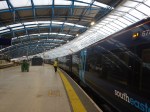












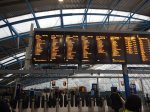
There would have been more, but it was chucking it down and the ones I took were terrible.
The Linford Street Junction And The Waterloo Curve
This map from carto.metro.free.fr shows the Linford Street Junction and the Waterloo Curve.
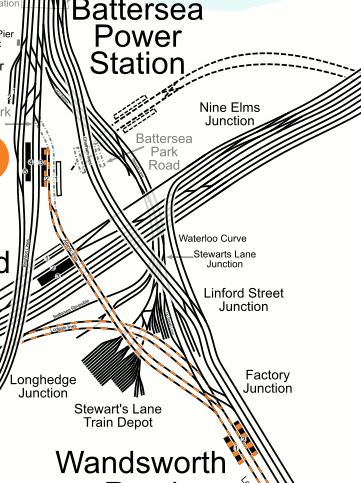
The Junction and the Curve are used by trains to connect from Waterloo in the North East, to the lines from Victoria that go across South London via Denmark Hill and Peckham Rye stations.
Note how the train going into Waterloo and the train coming out passed on the flyover. I assume this was for safety so that trains could leave and join the lines to Victoria at Linford Street Junction.
These pictures of the flyover were taken on another journey to Clapham Junction station.


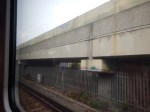

The flyover is recent and was built for Eurostar and completed in May 1993. There’s a page called Nine Elms Flyover on the Kent Rail website, which gives a detailed history of the flyover.
The Route Between Waterloo And Sevenoaks
The journey between Waterloo And Sevenoaks passed through the following stations without stopping.
- Vauxhall
- Wandsworth Road
- Clapham High Street
- Denmark Hill
- Peckham Rye
- Nunhead
- Lewisham
- Hither Green
- Grove Park
- Elmstead Woods
- Chislehurst
- Petts Wood
- Orpington
- Chelsfield
- Knockholt
- Dunton Green
From Lewisham station onwards the route is on the South Eastern Main Line.
Overall Impressions
The route seemed to work well, although between Waterloo and Lewisham, the train was rather slow, with a slight delay joining the lines out of Victoria.
The journey was timed at 47 minutes, with the fastest normal services between London and Sevenoaks being around ten minutes faster.
It certainly seems to be providing an extra two tph between London and Sevenoaks. In Eurostar days, it handled up to six tph.
I also suspect it could handle twelve-car trains, although my journey was in an eight-car train.
Future Developments Along The Route
There are going to be more developments to rail services along the route and also into Kent. Many will be driven, by the bidding for the new Southeastern Franchise.
Ashford International Station
In Kent On The Cusp Of Change – Ashford Spurs, I talked about the completed upgrading of Ashford International station, so that more Eurostar and other Continental services can call.
As the station is going to get more Highspeed services, I can envisage some innovative ways to make more and better use of this station.
Bakerloo Line Extension To Lewisham
The Bakerloo Line Extension will provide passengers with the option of using the Underground from Lewisham to access Central and North London.
Brockley Lane Station
The Lewisham Line runs between Peckham Rye and Lewisham stations and is used by Southeastern trains from both Victoria and Waterloo.
There used to be a Brockley Lane station, where the route crosses the current London Overground’s East London Line, close to Brockley station.
This is said under Future in the Wikipedia entry for the station.
According to the Department for Transport and the Transport for London rail prospectus report released in 2016, it has been listed as one of the Southeastern franchise planned improvements in the document entitled “New interchange at Brockley”, suggesting that there might be a case to reopen the station.
Creating an interchange here would certainly open up lots of travel opportunities.
It should be noted that Brockley station will from 2020, have a ten tph service to Canada Water and Whitechapel stations, with all their Crossrail and Underground connections.
Charing Cross Station
Charing Cross station is bursting at the seams, with typically fourteen and more trains in each hour.
This extract comes from Network’s Kent Route Study.
Charing Cross has just six 12-car platforms and Platforms 4, 5 and 6 are very narrow, leading to operational restrictions.
Class 465 units cannot operate in 12-car into these platforms and selective door operation is used on Class 375 units.
A major rebuild of the station could allow it to be extended south over the river, like Blackfriars, providing compliant platforms and greater passenger circulation.
At concept level, a new link to Waterloo from a southern entrance to Charing Cross may supersede Waterloo East allowing the station area to be used for additional track capacity, but there are likely to be many issues with a project on this scale.
One of the many issues would be how to keep services running during the rebuild of the station.
I suspect that Waterloo could have a role to play in handling some of the services.
Fawkham Junction Link
In Kent On The Cusp Of Change – Fawkham Junction Link, I talked about the proposal to reopen the Fawkham Junction Link, which was originally used to allow Eurostar trains to get to Waterloo station.
If this link were to be reopened, coupled with what has been happening between Waterloo and Sevenoaks, this would enable extra Southeastern HighSpeed services to Thanet to be run to either Victoria or Waterloo.
Victoria Station
Victoria station will periodically need work and might even be subject to a major upgrade project.
As with Charing Cross, I’m sure Waterloo could be used as an alternative terminus for a few trains.
Could Southeastern Services Into Waterloo Become Permanent?
I suspect that as has been successfully shown this week, that it is a feasible proposition.
But whether it actually happens would be up to the train operators.
Consider.
- Eurostar used to run a 6 tph service on this route.
- A single well-designed platform can handle 4 tph.
- The new platforms can handle twelve-car trains.
But most importantly, the train operators will have all the passenger data!
Conclusion
Southeastern and Network Rail have certainly shown it is possible to run a two tph service successfully between Sevenoaks and Waterloo.
If nothing else, it could prove to be a useful alternative route during engineering works or other diversions.
Electrification ‘Very Unlikely’ To Come Back Into EWR Scheme
The title of this post is the same as this article on Rail Technology Magazine.
This is a quote from Andy Free, who is head of engineering of the alliance that is building the East West Rail Link.
The steer from the DfT is that wherever the Alliance is building a new structure it needs to be clear and suitable for electrification, “and we must do nothing that hinders future electrification, but it is not on the short- or medium-term horizon.
Given the developments in bi-mode trains in recent years, I suspect this is a sensible policy.
Electrification is probably cheaper to fit to a train in a nice warm factory in Derby or Newton Aycliffe, than at a remote location in the pouring rain and the howling wind.
In the case of the East West Rail Link, where sections of the route are well defined, as they are existing rail alignments, building the route would involve.
- Raising any over-bridges to be clear of future electrification.
- Building any bridges or flyovers, where the new railway crosses over roads and other railways.
- Preparing the track bed.
- Laying the track.
- Building or rebuilding the stations.
Note I have ignored signalling, as ideally that will be in-cab by radio.
Building the line without electrification must give advantages.
- Network Rail seem to find it impossible to do electrification projects to time and budget.
- Stations without electrification are safer places and easier to design and build.
- There is less visual intrusion for Nimbys to complain about.
- The cost of connecting the electrification to the National Grid is zero.
- There is less copper cable to steal.
In Is A Bi-Mode Aventra A Silly Idea?, I outlined what I believe the ultimate bi-mode train will be like.
A bi-mode Aventra would be a sophisticated train with the following characteristics.
- Electric drive
- Regenerative braking.
- 25 KVAC overhead and 750 VDC third rail capability.
- Automatic pantograph deployment.
- Onboard energy storage.
- Automatic power source selection.
- Diesel or hydrogen power-pack
The first four are probably already in service in the Class 345 train.
A train going from between Reading and Bedford on the East West Rail Link, would charge its energy storage at the terminals and then use this power along the route. If the train detected that the stored energy was running low, the diesel or hydrogen power-pack would cut in and charge the energy storage.
Conclusion
It is my view, that if you are building a new rail line that is not high speed or high frequency, that there is no need to electrify the line, as intelligent bi-mode trains will be able to work the route economically and without the noise, pollution and vibration problems of their diesel engines working all the time.
The West Midlands And Chilterns Route Study
This document on the Internet is the West Midlands And Chilterns Route Study.
Waterloo Upgrade August 2017 – Timelapse Video Of Platforms 1-4 At Waterloo Station
This video dates from the 14th August 2017.
The story seems to have gone rather quiet.
There are these possible explanations.
- Everybody is getting through the station without any trouble.
- It was so bad on the first day, everybody has given up.
- The upgrade has finished and everything is running normally.
Or it could just be that it’s all going well and good news doesn’t sell newspapers!
Waterloo Upgrade August 2017 – Was It Alright On The Day?
This article in the Standard had a headline of Waterloo station upgrade: Furious commuters hit out at ‘shambolic’ queues on first weekday of major works.
This article on the BBC had a headline of Waterloo station: Stations quiet after upgrade warnings.
This article on the Independent had a headline of Waterloo station upgrade: Passengers report trains better than normal despite predictions of ‘month of chaos’.
There certainly isn’t lots of interviews on the BBC this morning with irate passengers.
This was the first paragraph from the Independent.
Commuters reported easier journeys than normal on train lines into London Waterloo on Monday morning as some passengers apparently took alternative routes or worked from home to avoid a predicted “month of chaos”.
But I think that Network Rail and South West Trains must have got it more or less right.
London thought they would have a problem during the 2012 Olympics and Transport for London flooded the streets and stations with extra staff to help passengers.
And it worked!
Network Rail and South West Trains have done the same, at least at Waterloo.
And it seems to be working!
Has Network Rail Opened The Door To A New Railway Age?
The title of this post is the same as this article on Construction News.
It is a good read!
Innovation In Railway Projects
This article in Rail Technology Magazine is entitled NR routes to publish ‘pipeline’ of third party opportunities by year end. It lays out a new philosophy of how rail infrastructure projects could be handled in the future. I suggest you give the article a careful read.
Some politicians will say it is privatisation by another name. But to me it is just a way of getting a project built faster in a safe manner.
This is a paragraph.
By the end of this year, NR’s routes will publish ‘pipelines’ of projects that they want to put out to market. The infrastructure owner will also be working with government on producing a list of third-party opportunities. Initially these opportunities may be at the smaller end of the spectrum such as new stations, depots and car parks.
Take the simple example of a depot. These days fleets of new trains often mean a large increase in depot capacity as trains are longer and fleets are larger. As fleets are often bundled in with maintenance, there is a specialised multi-million pound asset that needs to be created. Big investors create office blocks, sporting venues and shopping centres and lease them to other businesses, so why shouldn’t they build the infrastructure that the railway needs?
This article in the EADT is entitled New rail depot unveiled by Greater Anglia at Brantham on Suffolk/Essex border.
The article dates from February 2017 and says that design is starting and the depot will be open by the end of 2018.
Not a bad timescale for a depot covering 22 acres with fifteen electrified tracks, two of which are under cover.
Why should the taxpayer get involved in a project like this?
Network Rail’s only involvement should be to ensure that the depot interfaces with the railway correctly.
This article on the BBC is entitled Crossrail stations in west London delayed until 2019.
I took this picture at one of the of the five stations; West Ealing, yesterday.
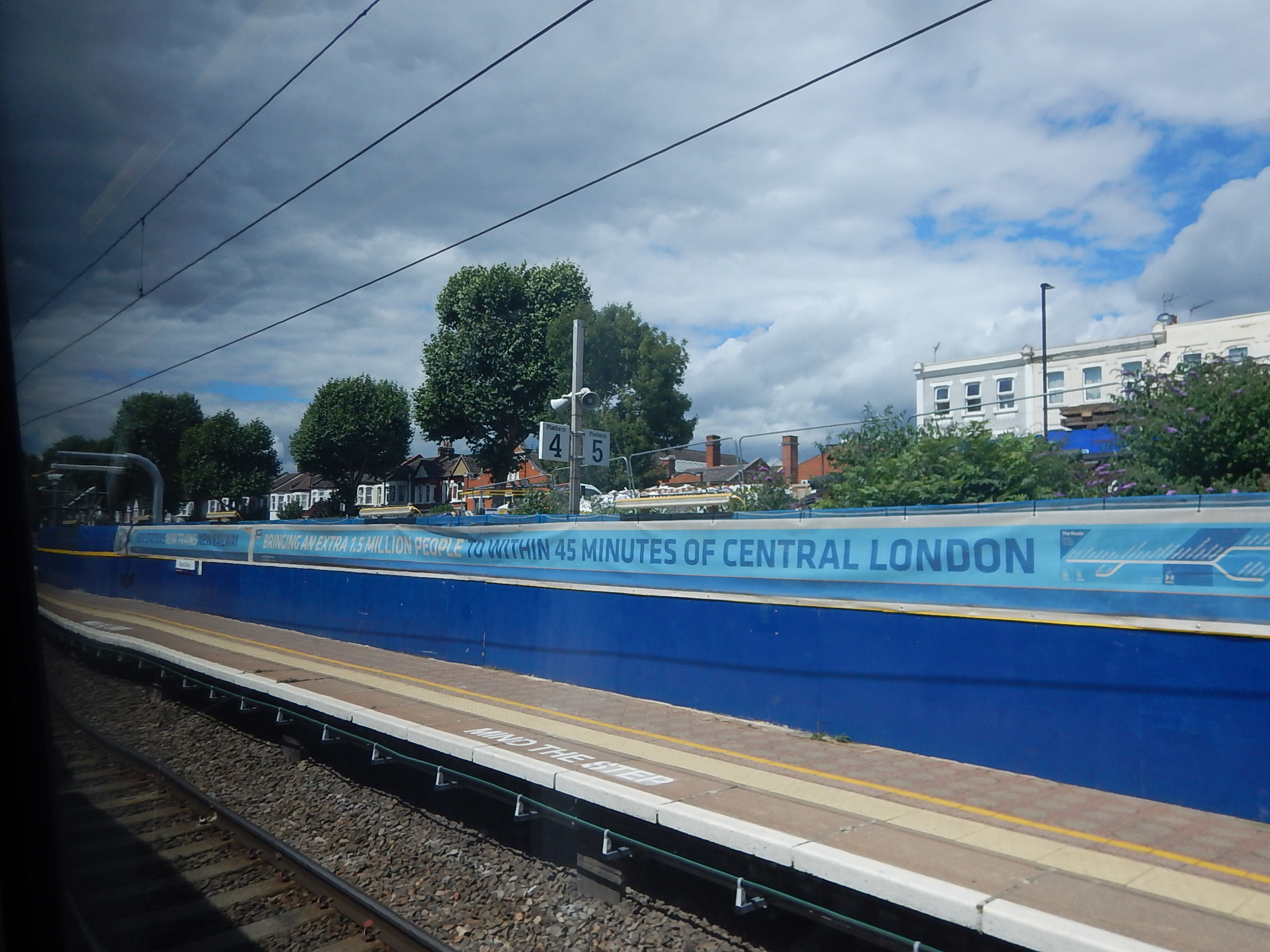
Nothing appeared to be going on, despite the fact that much of the construction is well to the side of the railway. Compare this with the situation at Abbey Wood station, that I saw a few days ago.
I suspect Crossrail wish they had taken control of the Project Management of the five West London stations themselves.
Network Rail seem to have a culture that if assets are built a few years late, it is totally acceptable.
This culture must stop!
Gibb Report – Hoo Junction Depot
The Gibb Report, looks in detail at GTR’s depot capacity and especially the stabling for Thameslink.
This is a paragraph, which suggests creating a new depot at Hoo Junction.
I recommend a different approach: I think a dedicated GTR Thameslink stabling facility should be built at Hoo Junction, near Gravesend. There is a large former freight yard there, on both sides of the railway, which now stables engineering trains for Network Rail. This should be rationalised and space created for stabling all the North Kent Thameslink Class 700s, in sidings with newly created servicing facilities.
The Wikipedia entry for Crossrail has a section entitled To Gravesend And Hoo Junction, where the following is said.
The route to Gravesend has been safeguarded by the Department for Transport, although it was made clear that as at February 2008 there was no plan to extend Crossrail beyond the then-current scheme. The following stations are on the protected route extension to Gravesend: Belvedere, Erith, Slade Green, Dartford, Stone Crossing, Greenhithe for Bluewater, Swanscombe, Northfleet, and Gravesend.
This area around Hoo Junction has also been suggested as a possible depot for Crossrail.
In addition, Southeastern are running short of space in Slade Green Depot.
This Google Map shows the Hoo Junction area, with the North Kent Line passing through from Gravesend station in the West to Higham station in the South East.
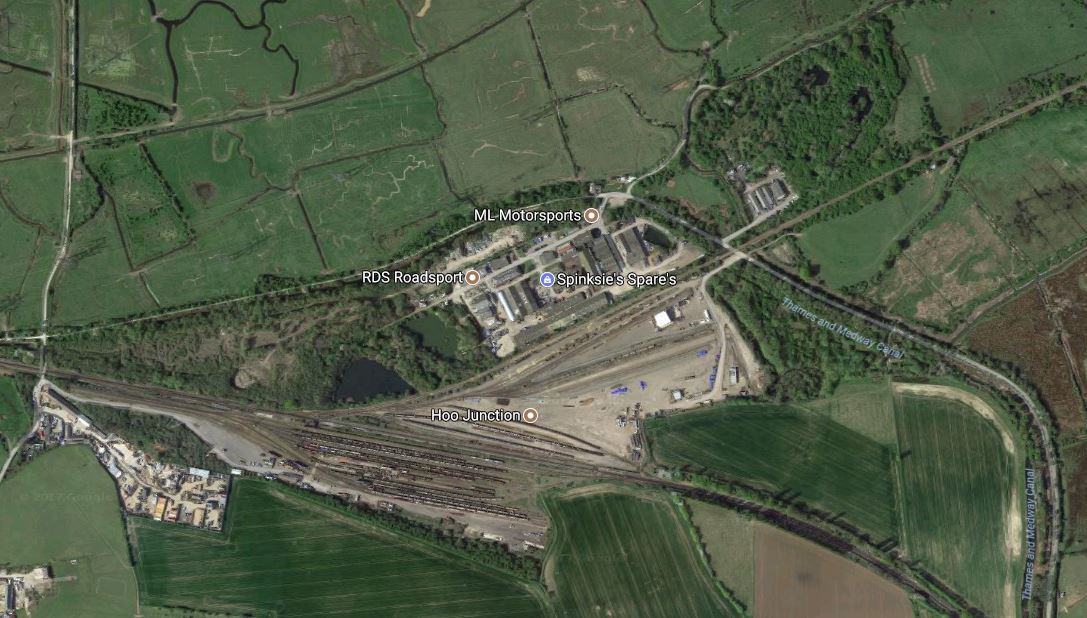
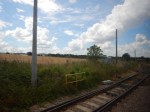
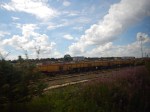
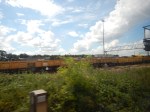
There looks to be space for multiple depots with a large number of sidings at Hoo Junction.
These pictures show the apace to the North of the North Kent Line.



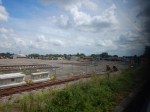
And these show the space to the South.




There even used to be a Staff Halt at Hoo Junction.
But that’s just the railways.
This report on the BBC indicates that the new Lower Thames Crossing will cross North-South between Gravesend and Hoo Junction.
Perhaps the developments at Hoo Junction, should incorporate a Park-and-Ride station.
Conclusion
This is a good idea and I would go further than Chris Gibbs does in his report, which is mainly into the problems of GTR.
Crossrail, the Department of Transport, Kent County Council, Network Rail, Southeastern, Thameslink and all other stakeholders and residents should sit round a large table and agree a common long-term philosophy that is in all their best interests for the future.

