Why Are These Containers On the London Overground?
The North London Line of the London Overground is not only a passenger route, but a main freight artery.
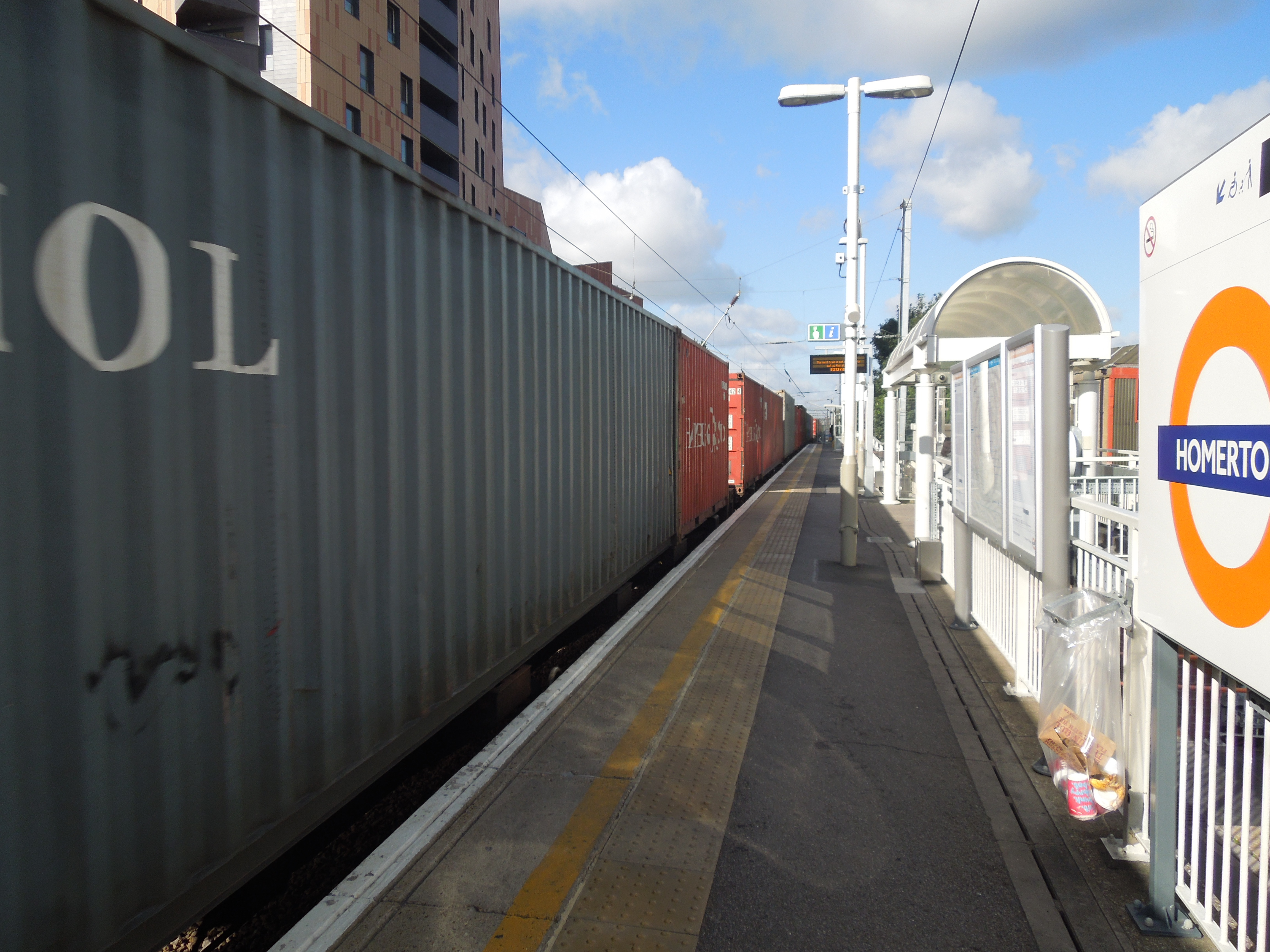
Why Are These Containers On the London Overground?
As I waited at Homerton station today, this long train of boxes passed through.
Many of these trains are going to and from the Port of Felixstowe and the West Coast Main line. As the North London line, is the only electrified route between the Great Eastern Main line and the West Coast Main line, there is virtually nowhere else the trains can go.
The main new route will be a more direct line from Felixstowe to Nuneaton. But this route is not complete yet and there are no plans to electrify it, so it may need an engine change or two. It also requires reversing at Ipswich, due to the nature of the track layout, where the Felixstowe branch joins the main line.
There is also an alternative route via the Gospel Oak and Barking line of the London Overground. This takes four freight trains an hour and by-passes eight stations on the North London line. But unlike the North London line, it is not electrified.
This problem is going to get worse when London Gateway, a new port on the Thames east of London starts operating in late 2013. Trains to and from London Gateway will probably feed in directly to the Gospel Oak and Barking line, via the London, Tilbury and Southend Railway.
As to the size and number of trains, read this press release from DB Schenker, who will be handling the rail traffic. Here’s an extract.
The agreement will see DB Schenker Rail introduce at least four rail freight services a day (four in, four out), subject to volumes, and will serve a range of inland terminals including potential new UK locations. Additional rail freight services will be introduced in the future.
DB Schenker Rail will also pursue the development of rail freight services from London Gateway to mainland Europe using the Channel Tunnel.
Something most certainly needs to be done! In the meantime, I certainly wouldn’t buy a house that backed on to either the North London or Gospel Oak to Barking Lines.
Talking up Defiencies
They’ve just had a very one-sided phone-in on BBC Radio 5, with virtually an hour of the dismal Jimmies and Jennies complaining about all the inadequacies.
We’ve just had a volunteer complaining, that they are not being given car parking on the Olympic Park. It sounds to me, that they should have been turned down as a volunteer.
Let’s face it, if you don’t like the conditions, don’t volunteer.
We should be celebrating what we got right.
My field is project management and we should be celebrating the fact that all of the venues and transport links have been constructed on time and generally on budget.
Remember the Olympic Park is built in a marsh and with all the bad weather we’ve been having lately, that has not only caused construction problems, but made the design of the park difficult. Luckily, the main site of the Games is by the River Lea and Joseph Bazalette‘s massive Northern Outfall Sewer, so hopefully we’ll cope, with water and sewage.
I’ve watched the plans unfold and East London has improved beyond all expectations.
When we won the bid the London Overground from New Cross to Dalston and from Stratford to Richmond only partly existed as a set of travelling urinals. now it is a modern railway with new trains, signalling and completely renewed track. The East London Line deserves five stars in its own right, as it was built through Brunel’s Thames Tunnel of 1840 and under the Kingsland Road, without breaking anything.
As the icing, London has now got its magnificent cable-car, which will be the fun legacy of the games.
And now the phone-in is talking about the failure of the O2 mobile phone network. My Nokia 6310i works well on O2 at the moment.
Camden Road: A Destination Station on the North London Line
Obviously stations like Stratford and Richmond are destination stations on the North London line, where there is a lot to do and are ideal places to meet a friend or someone on business. Hampstead Heath station is probably another, but it is not really an interchange.
Today, I went to buy a new jacket and found myself at Camden Road station, which is being updated by the addition of lifts. I got the jacket and then proceeded to have a coffee in the restaurant under the station called the Meribel Brasserie & Coffee House. The coffee was very good and although they didn’t specifically do gluten-free, there were a few items on the menu, that were. For instance, their breakfast menu included scrambled eggs and smoked salmon at a reasonable £7, to include some accompaniments like tomatoes and a bit of salad. I checked the dinner menu with the Russian chef and I certainly wouldn’t starve there. He knew his stuff and even knew that skate were not kosher fish.
You certainly have a better choice of gluten-free food at Camden Road station, than in the whole of Eastfield.
I also drank my coffee on a pleasant terrace in the sun watching the traffic. Unfortunately,that unusual clothes shop, Swanky Modes, which used to be opposite has now gone. C always wondered, whether they actually sold any of their way out designs.
Where Are All The Containers Going?
On the North London line of the Overground, every so often a freight train comes through taking full boxes from the East Coast ports to the West Coast Main Line or empty boxes back again. Some may also be flows between Southampton and the East.
A few years ago rail freight was almost dead, but it has bounced back with a vengeance, despite the recession. It was always felt that rail freight traffic was strongly linked to GDP, but it appears the link is now broken and the figures show it. In the last five years, total freight has dropped by 10% and truck hauled traffic has dropped by 13%. So how many truck drivers have been made redundant? But in the same period rail-freight has risen by 2%. The number of containers handled at the ports in 2010 was the same as in 2005, but those that were handled by rail has risen by 29%. In the future, rail freight-traffic is expected to double between 2010 and 2030.
The reason for the growth is obviously cost and even a long train of 30 containers or so is more cost effective than 30 trucks.
But also various improvements to the rail network have been added to speed the traffic on its way. I reported on one here. There are more improvements in the pipeline too.
Some trains too, are now running through the Channel Tunnel, as far as Wroclaw in Poland.
So we’ll be seeing lots more freight trains on the rail network in the UK.
And this will mean less CO2 emissions, especially where the trains are hauled by electric locomotives.
It will also remove a lot of trucks from the major roads in the UK. Every time I travel on the A14, I seem to think that there are less trucks.
I also come to the conclusion, that we may be seeing a few green shoots of recovery.
Missing Links on the Overground
Late this year, the extension of the East London line of the London Overground to Clapham Junction station will be opened. I say “will be opened” as given Transport for London‘s record, they usually hit their own targets.
You will then be able to do all sort of circular journeys around London, but there will still be a couple of missing links in the complete circle or if you include Stratford, the circle and stub. But it’s never been intended that you get on one train and go all the way round.
Here are the missing links.
Passing through Clapham Junction from east to north
Passing through Clapham Junction from north to east
These two have been solved by an elegant solution, where the northbound trains use one end of the platform and the eastbound the other. So passengers just walk a few metres to their next train or where it is expected.
East London line stations to Stratford
The standard way is to change from the East London line to the North London line at Canonbury or Highbury and Islington, which involves a lift-assisted bridge crossing. But you can always go to Canada Water and then take the Jubilee line to Stratford. They might rebuild the Eastern Curve at Dalston, but I think that will only happen, if they need to send significant traffic from Stratford to South London.
Stratford to East London line stations
The standard way is to change from the North London line to the Line London line at Canonbury or Highbury and Islington, which involves just a walk across the platform.
East London line stations to Richmond
Richmond to East London line stations
These two will again need a lift assisted walk over the tracks at Canonbury or Highbury and Islington. I’d take the second as you have a bigger choice of direct stations without changing when travelling from Richmond.
To show how I use it, I’ll give a simple example. Say, I’ve been to the Eastfield John Lewis at Stratford and I’m bringing home a heavy parcel, I’ll get off at Canonbury and take the first train to Dalston Junction, where I’ll often take the first bus home, to avoid carrying the parcel. It’s also step-free all the way.
The reinstatement of the Dalston Eastern Curve would save a few minutes, but then you’d probably have to wait a couple for a suitable train at Stratford. So from a passenger point of view, it’s probably not worth building, especially, as you can use the Jubilee line as a by-pass to South London. In fact the Jubilee is very much circular tube through South London.
Looking For Maiden Lane Station
After reaching York Way, I carried on going north, with the intention of seeing, if I could find any trace of the old Maiden Lane station on the North London line.
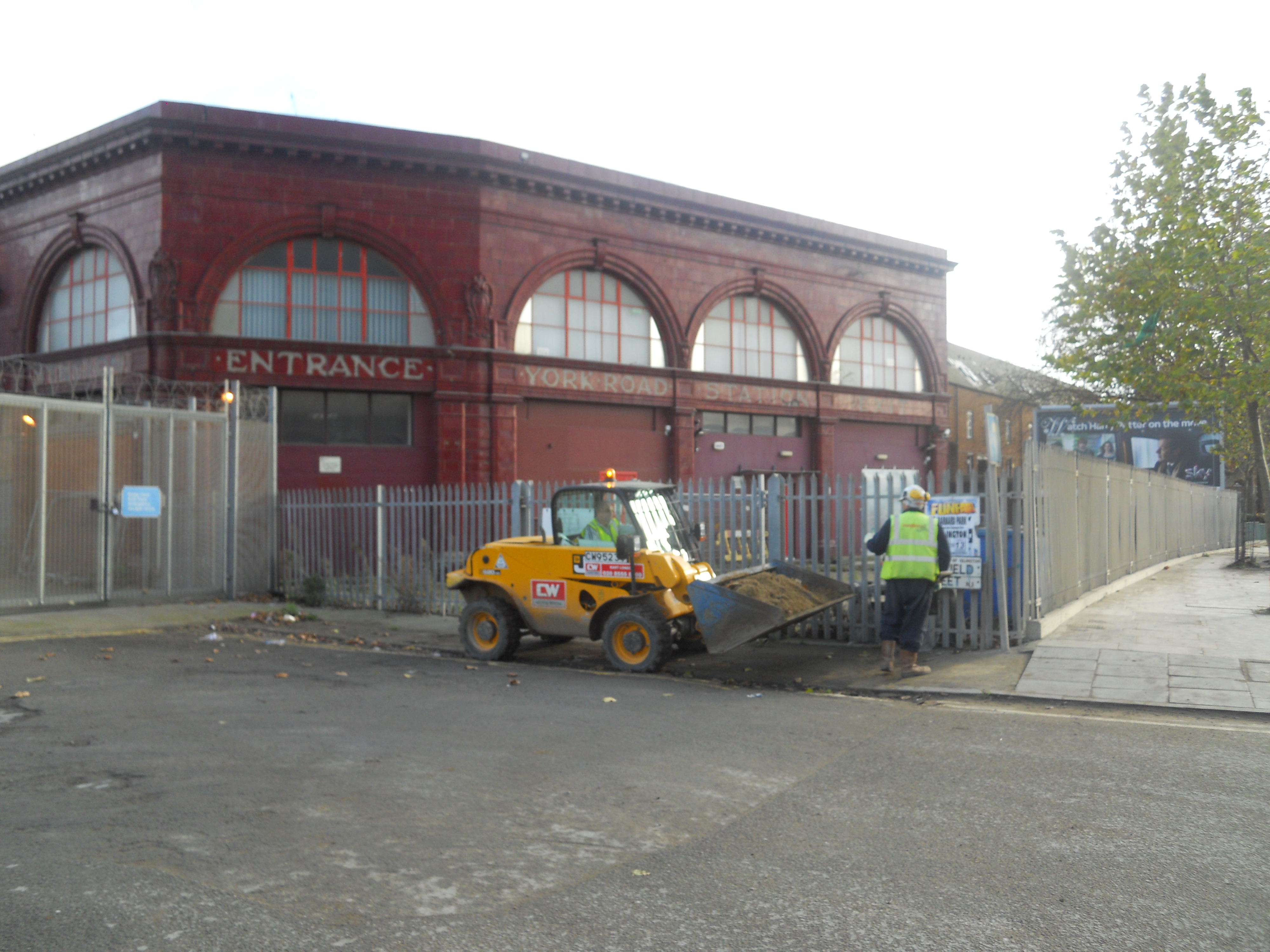
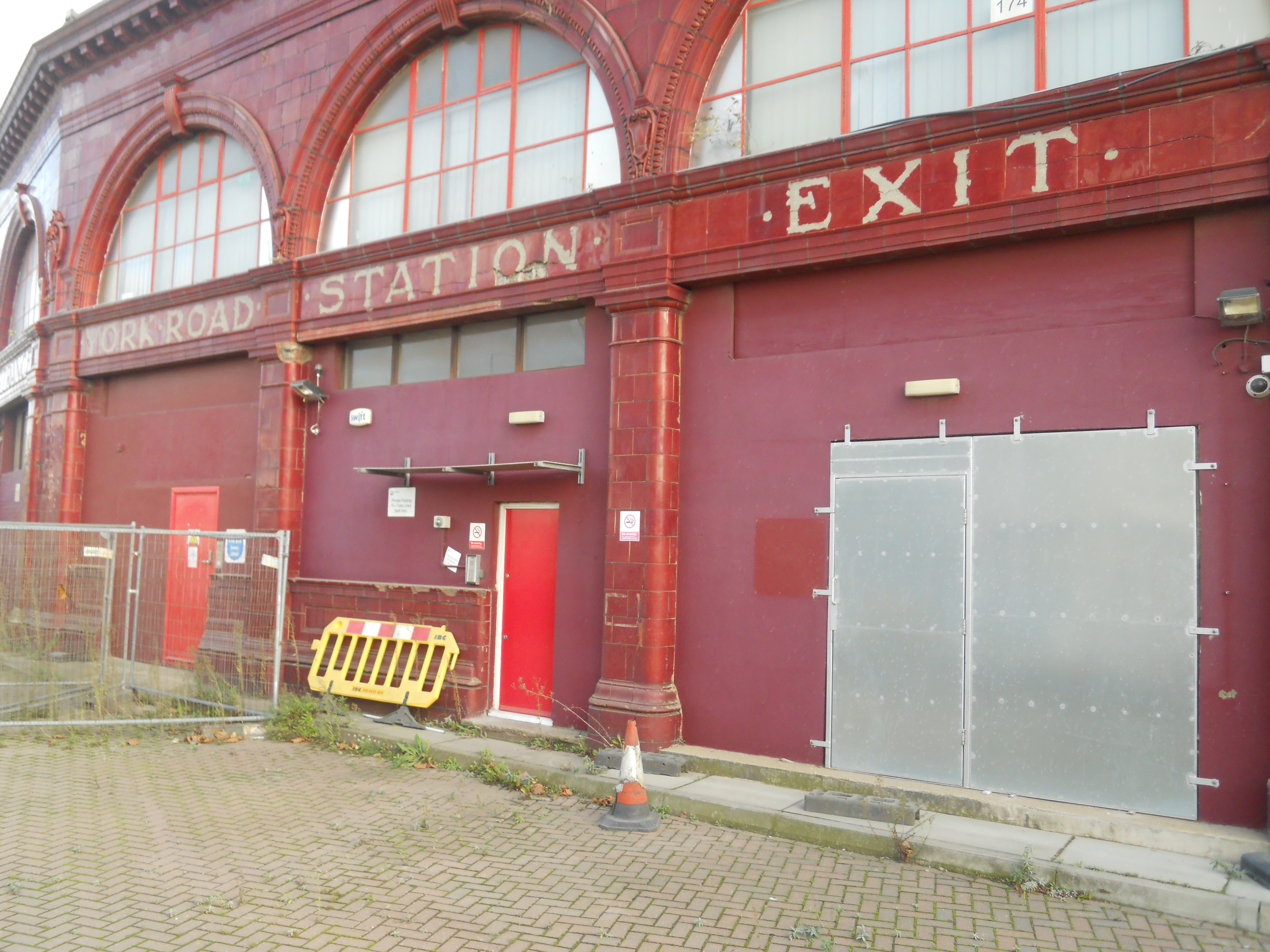
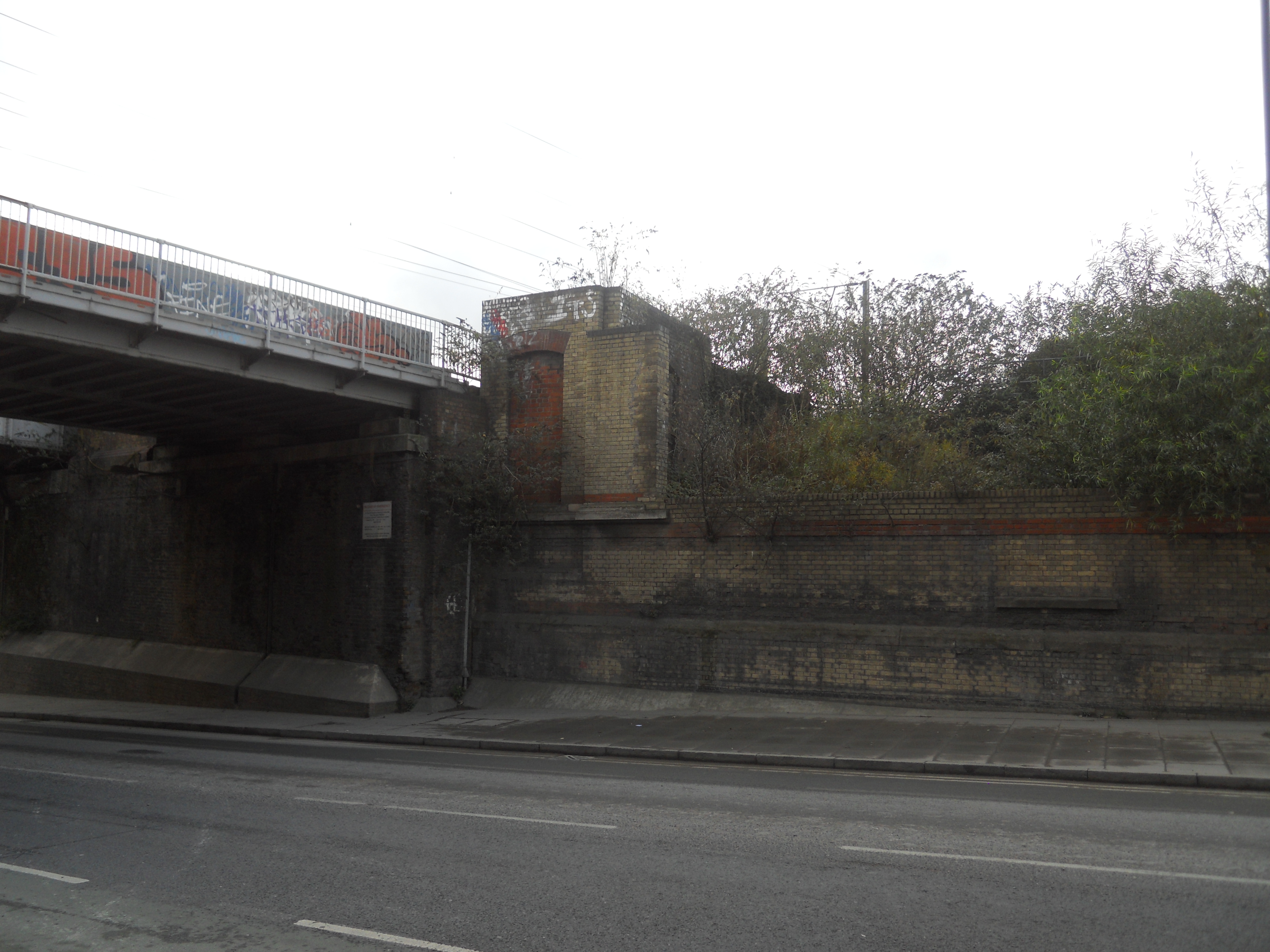
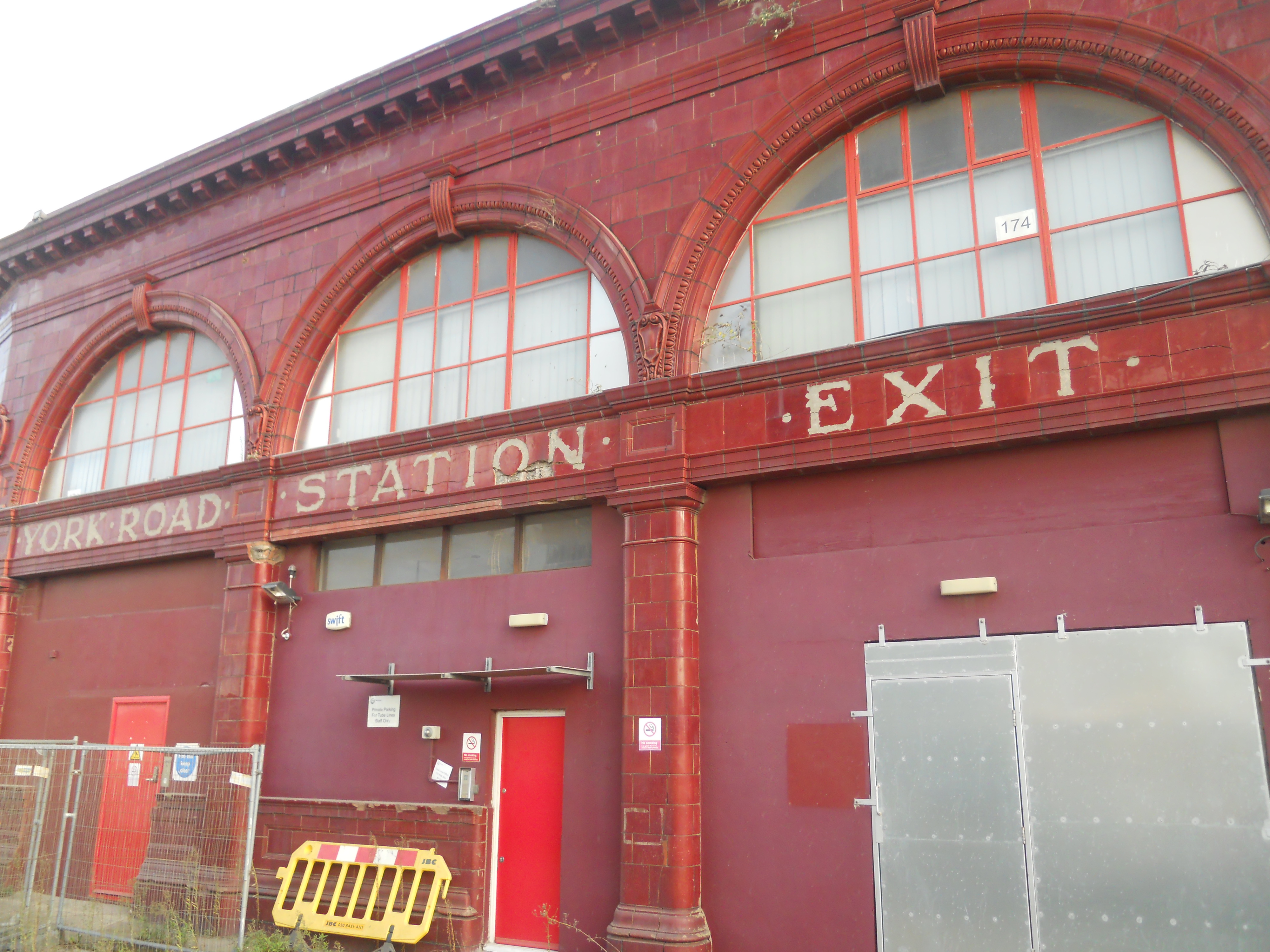
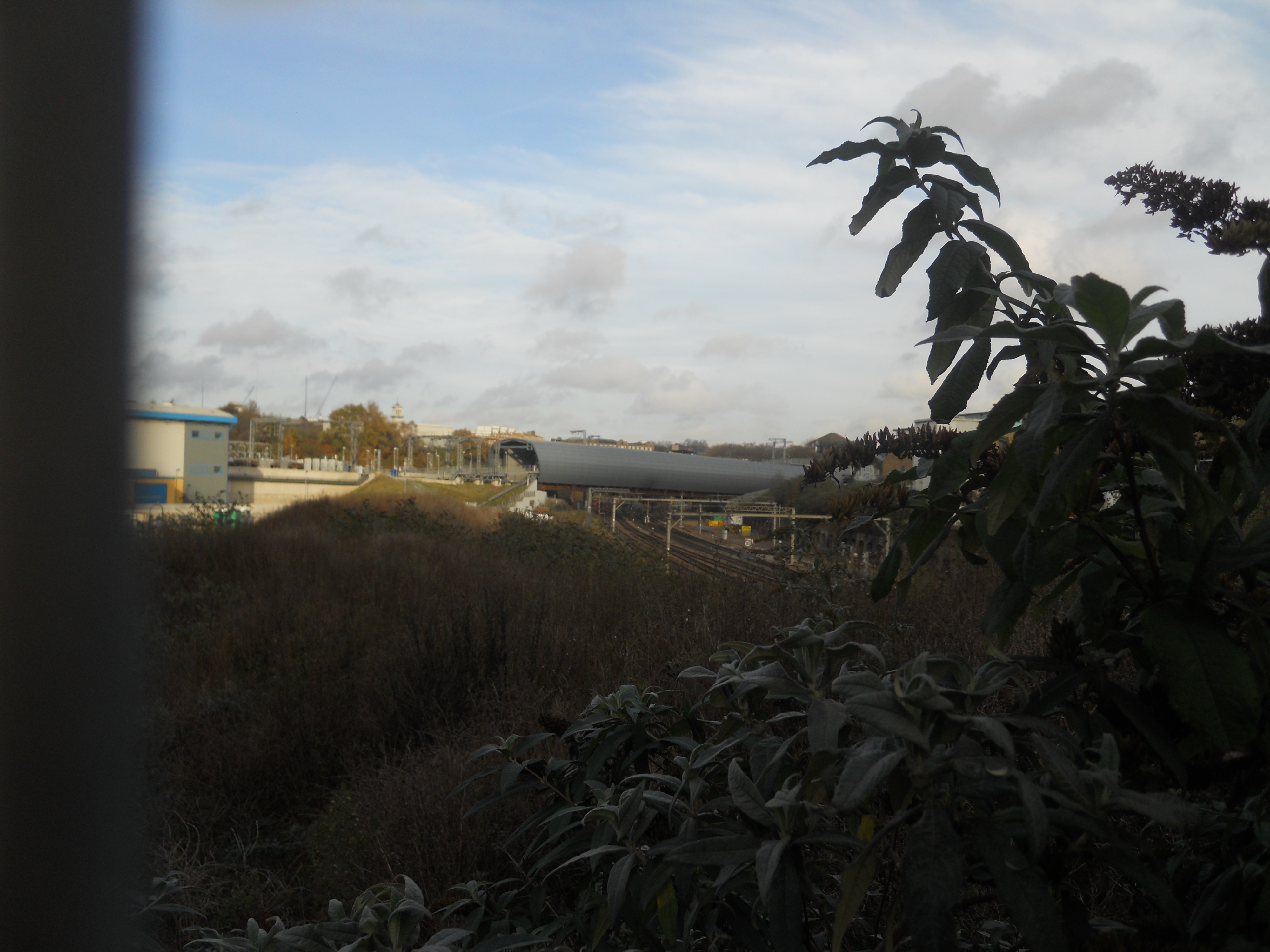
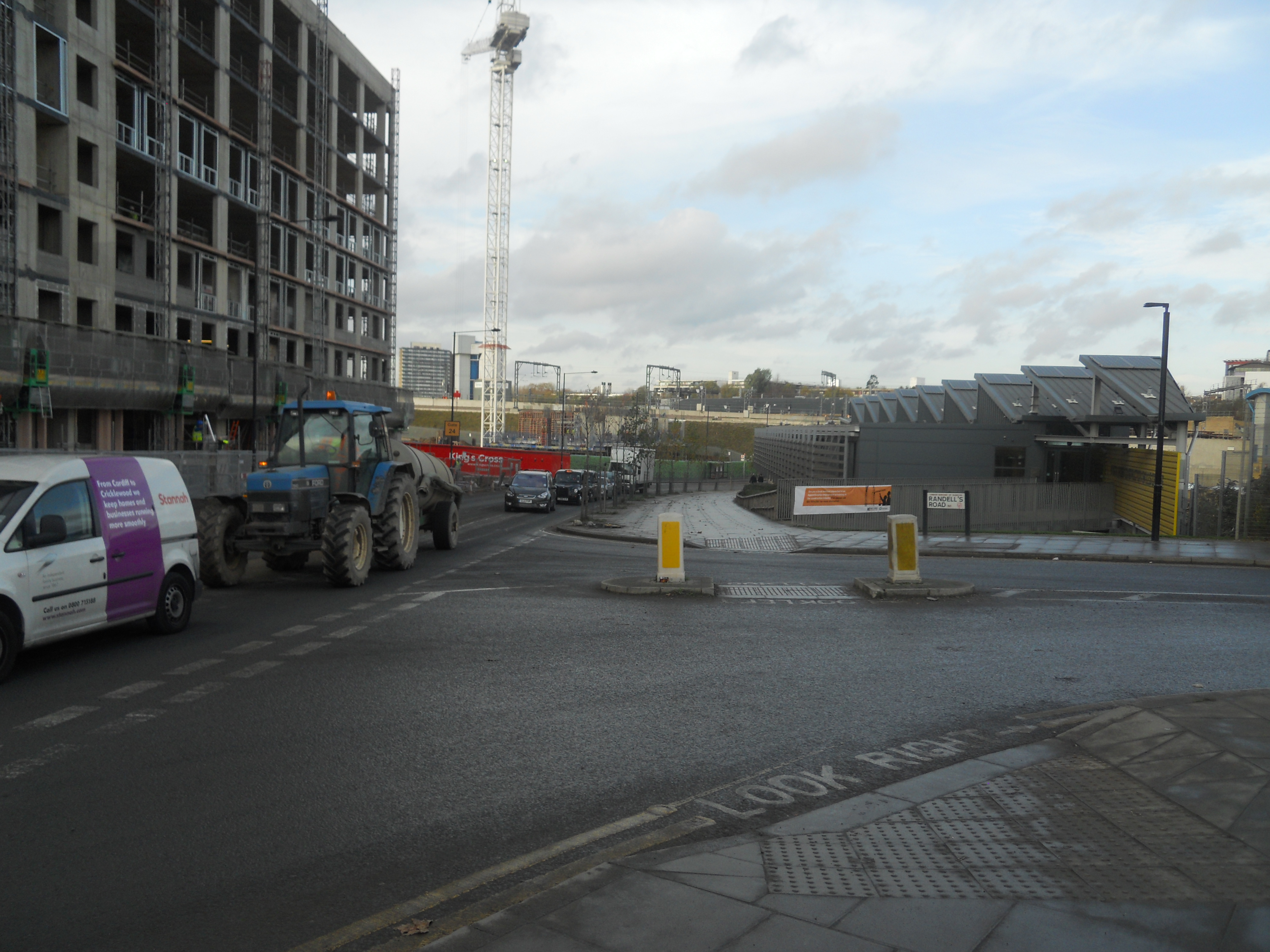
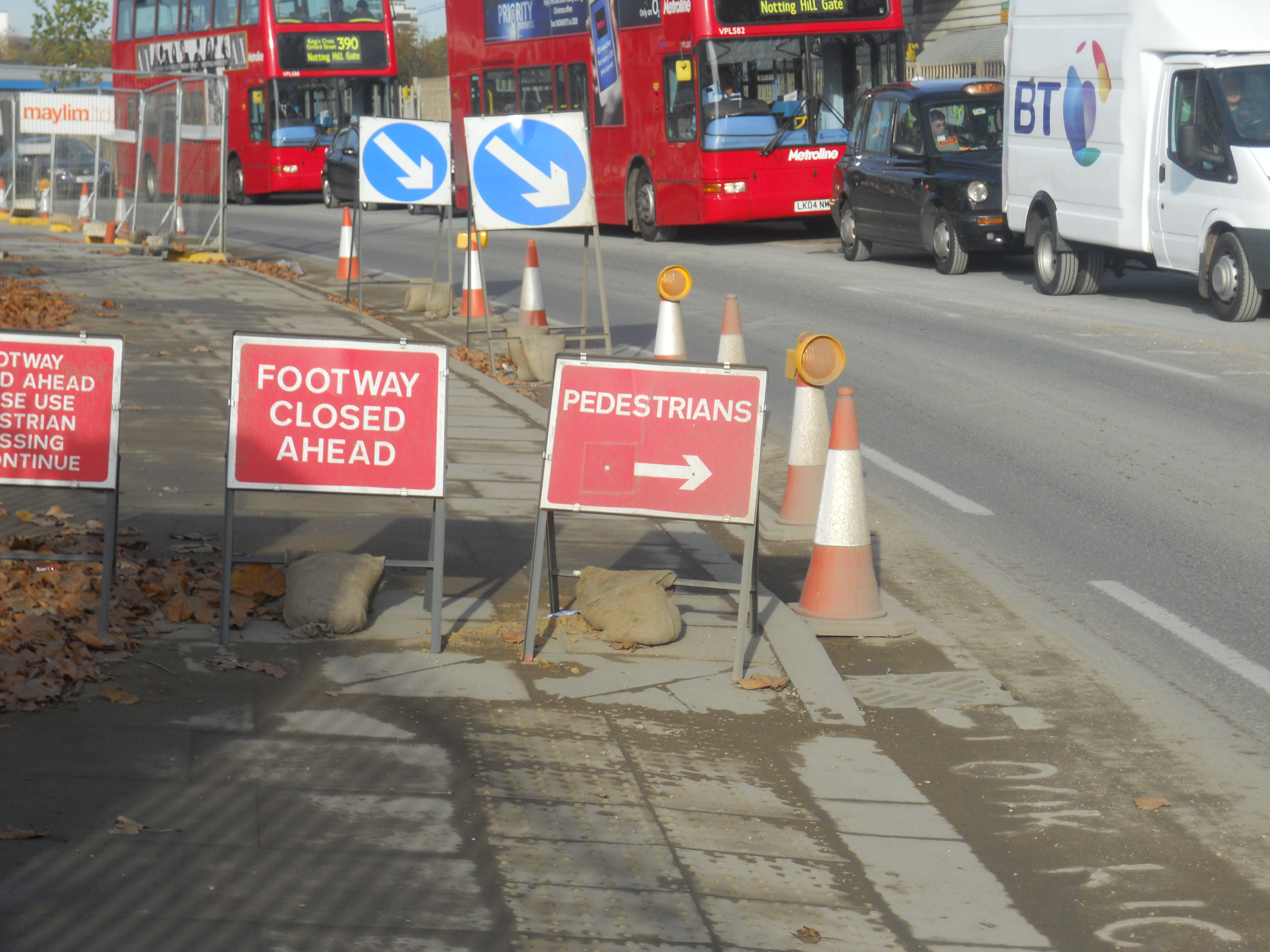
It was quite a walk and I think those who are proposing that the station be reopened to serve Kings Cross Central are mistaken. On the other hand reopening York Road Underground station, shown in the pictures, might be a possibility.
So did I find any trace of Maiden Lane station? There’s just a little of it left by a railway bridge. After I took these pictures, I took the North London line past the spot and couldn’t see anything by the track-side.
The Crush at Westfield Stratford City
It was a waste of time taking the train to the new shopping centre.
I walked out of the Overground station up the stairs and after walking past the masses of smokers, lined up outside the centre, I entered the centre, avoiding one of the doors, which was constantly being opened by a four or five-year-old constantly pressing the disabled door-opening button. He was having great fun smashing the door into people standing outside.
I did at least know where I was going and attempted to walk through to Waitrose at the other end. I don’t think, I’ve been in a crush like that for some years and that was probably at Wembley for the play-off final against Barnsley in 2000. But the football crowd was better behaved and I should say better controlled and it didn’t contain lots of children, buggies and especially aggressive youths, who were determined to get through at any cost.
Eventually, I did get to Waitrose, but decided that I didn’t really want to go through that crush again with my shopping, so I decided to just have a look round John Lewis.
I was astounded to see, two children on scooters in the shop. Some people must be mad.
I then gave up and decided that the best bet would be to get to Stratford International and take the DLR from there. It was a very wet walk around the outside of the centre. as there was no shelter.
At the station, I met a policeman and told him how dangerous it had been in there. He whole-heartedly agreed.
I must admit I did get a train to the main station at Stratford from where I took the Central Line back to Liverpool Street. After a walk, I did get a bus, but then this was delayed due to an accident on the New North Road.
This must be regarded as the least successful shopping trip, I’ve ever done.
A Very Wet Hackney Central
I decided yesterday to go to Eastfield, as I needed some food from the Waitrose there. I also wanted to check the availability of some other goods in the shopping centre.
As I do, I took the 38 bus and changed to the North London Line at Hackney Central. This picture taken from the top deck of the bus shows the closeness of Hackney Downs and Central stations.
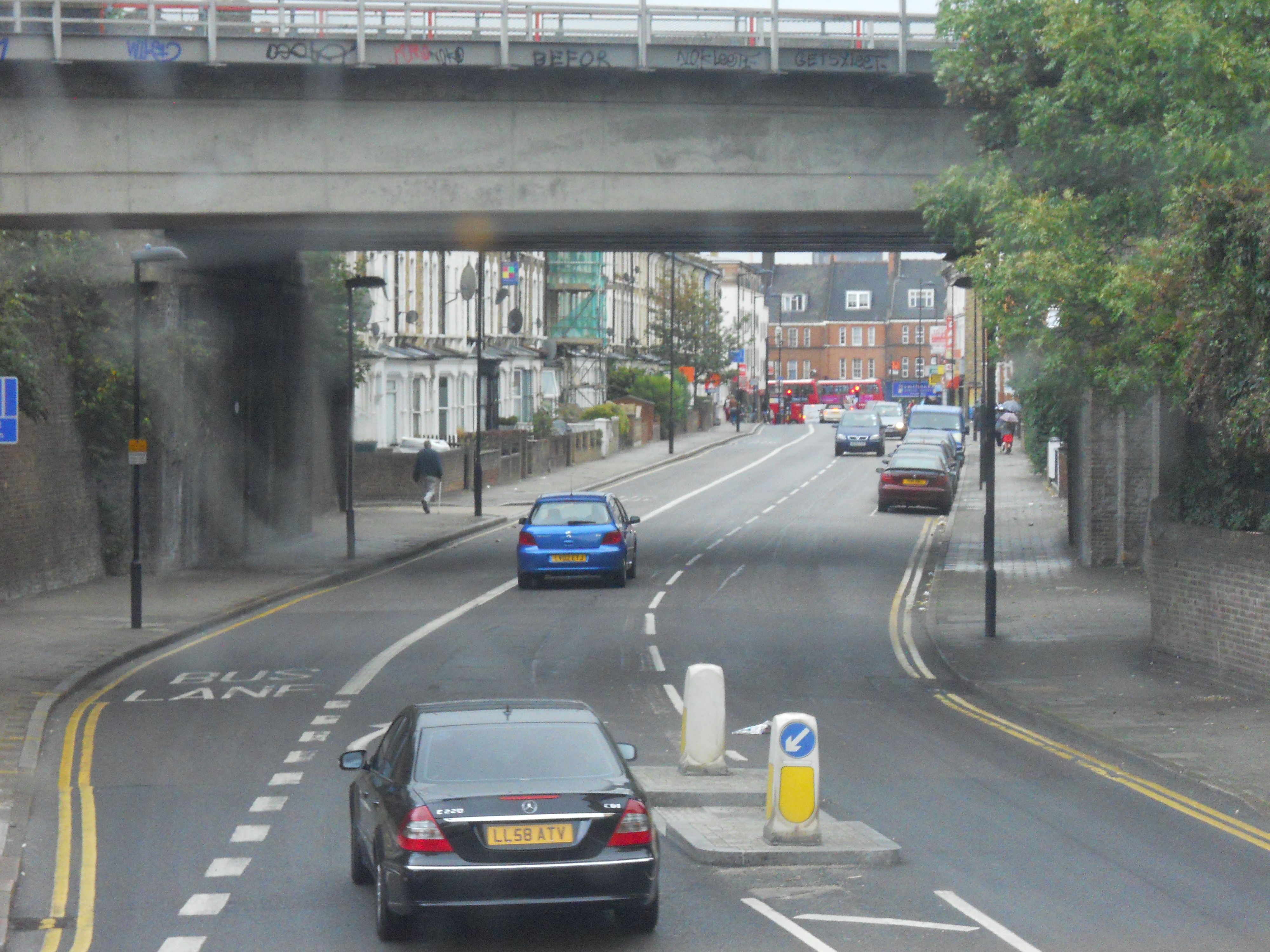
Looking Towards Hackney Central Station
The bridge in front is the line into Hackney Downs and you can just see Mare Street, where the entrance to Hackney Central is located in the distance about fifty metres to the left of the traffic lights.
In the sort of weather we were having yesterday, the station is inadequate, as this picture shows.
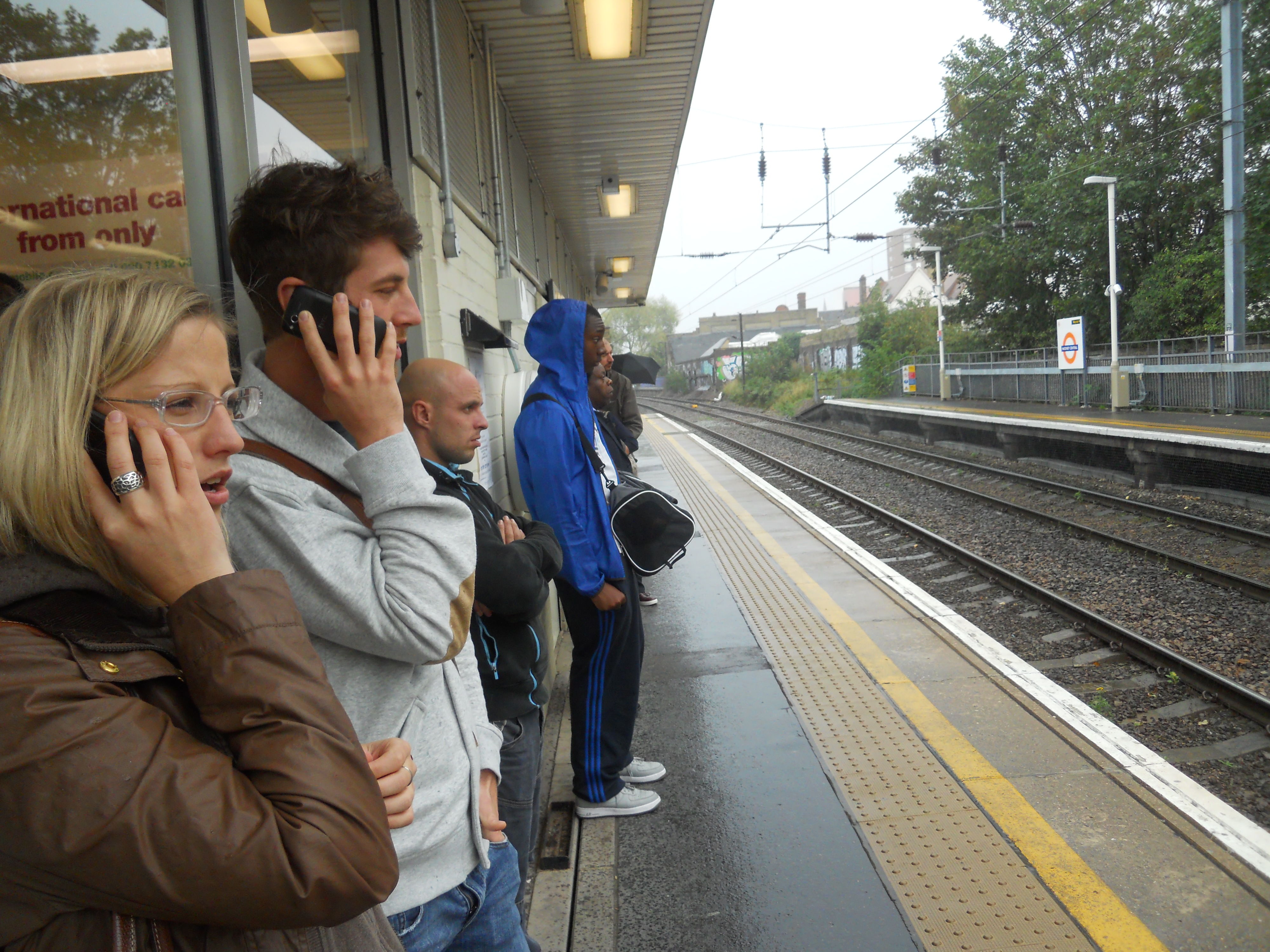
Hackney Central In The Wet
There really does need to be more shelter on the platform.
I think these two pictures illustrate how a properly built Hackney Junction would be of real benefit to the community.
The DLR Reaches Stratford International
Today the DLR was opened to Stratford International station. So I went for a ride and took a few pictures.
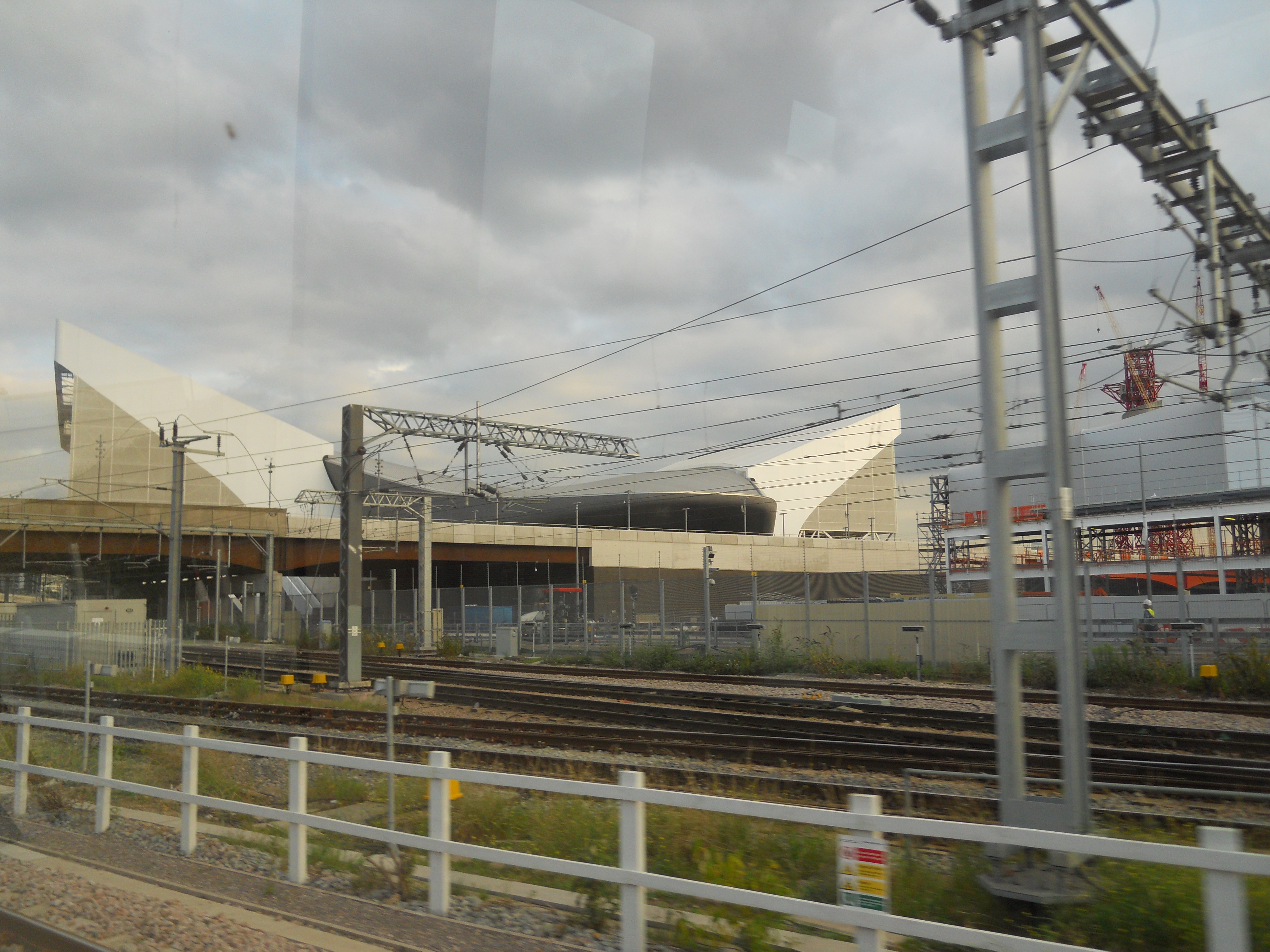


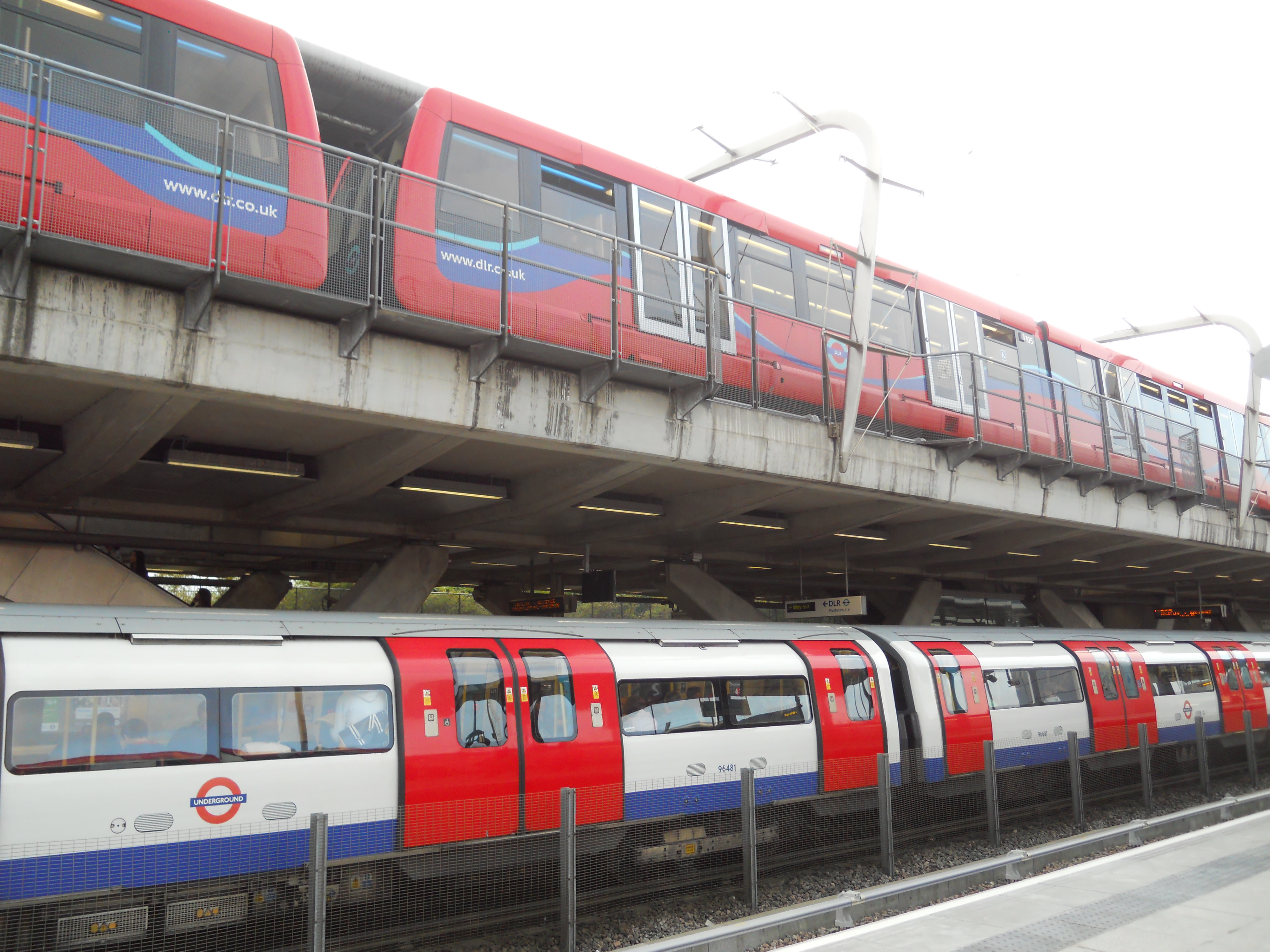
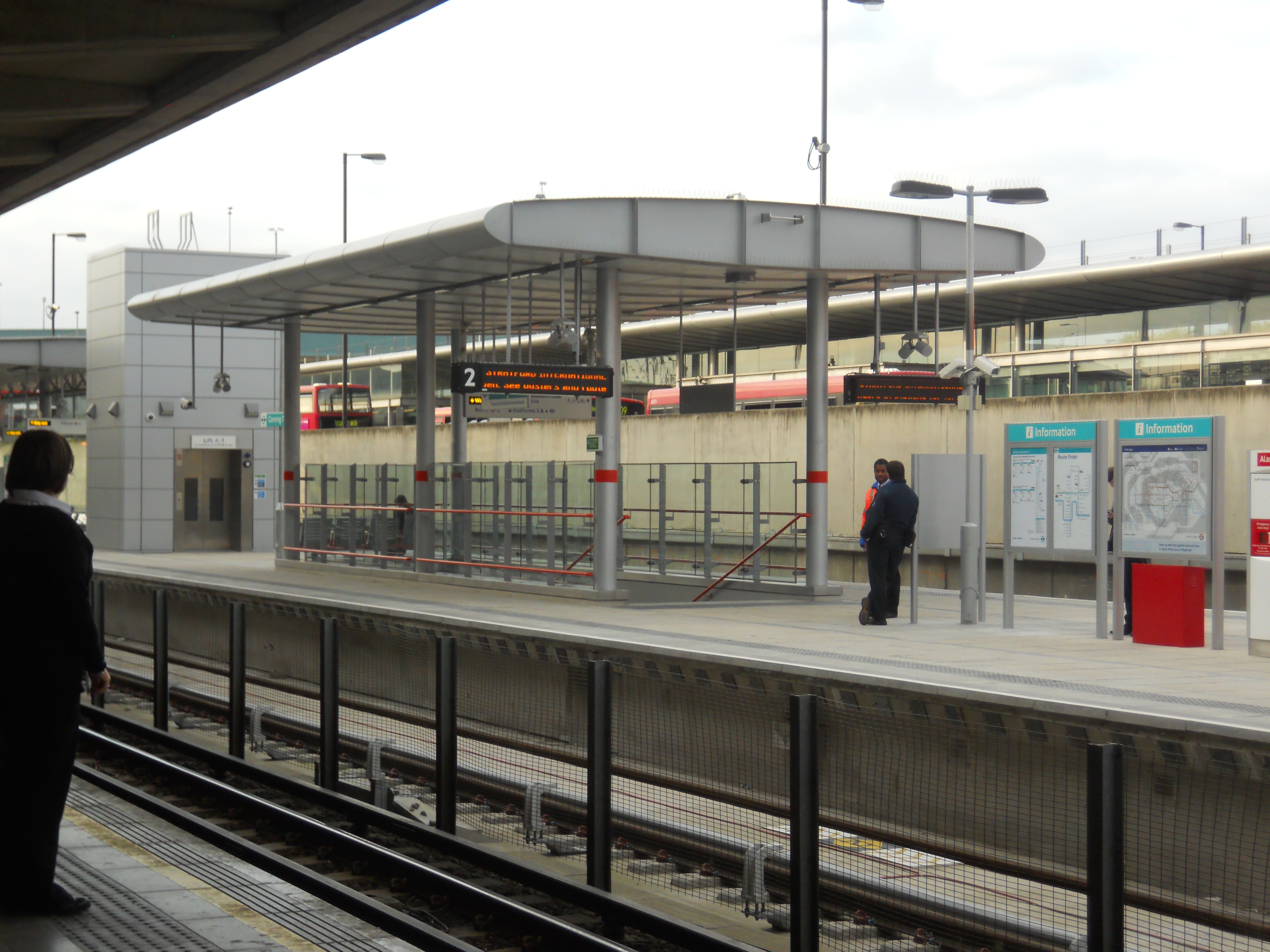
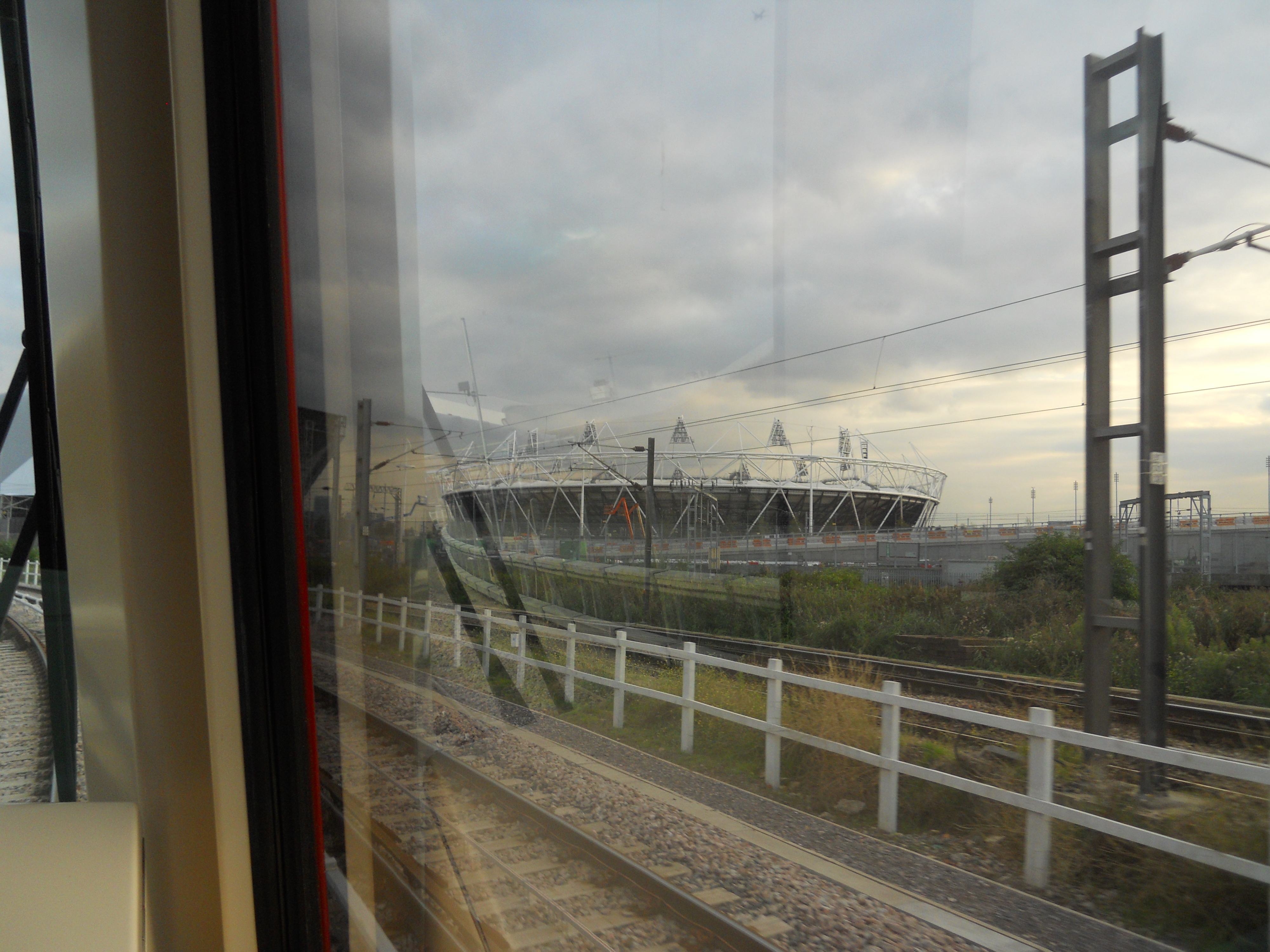

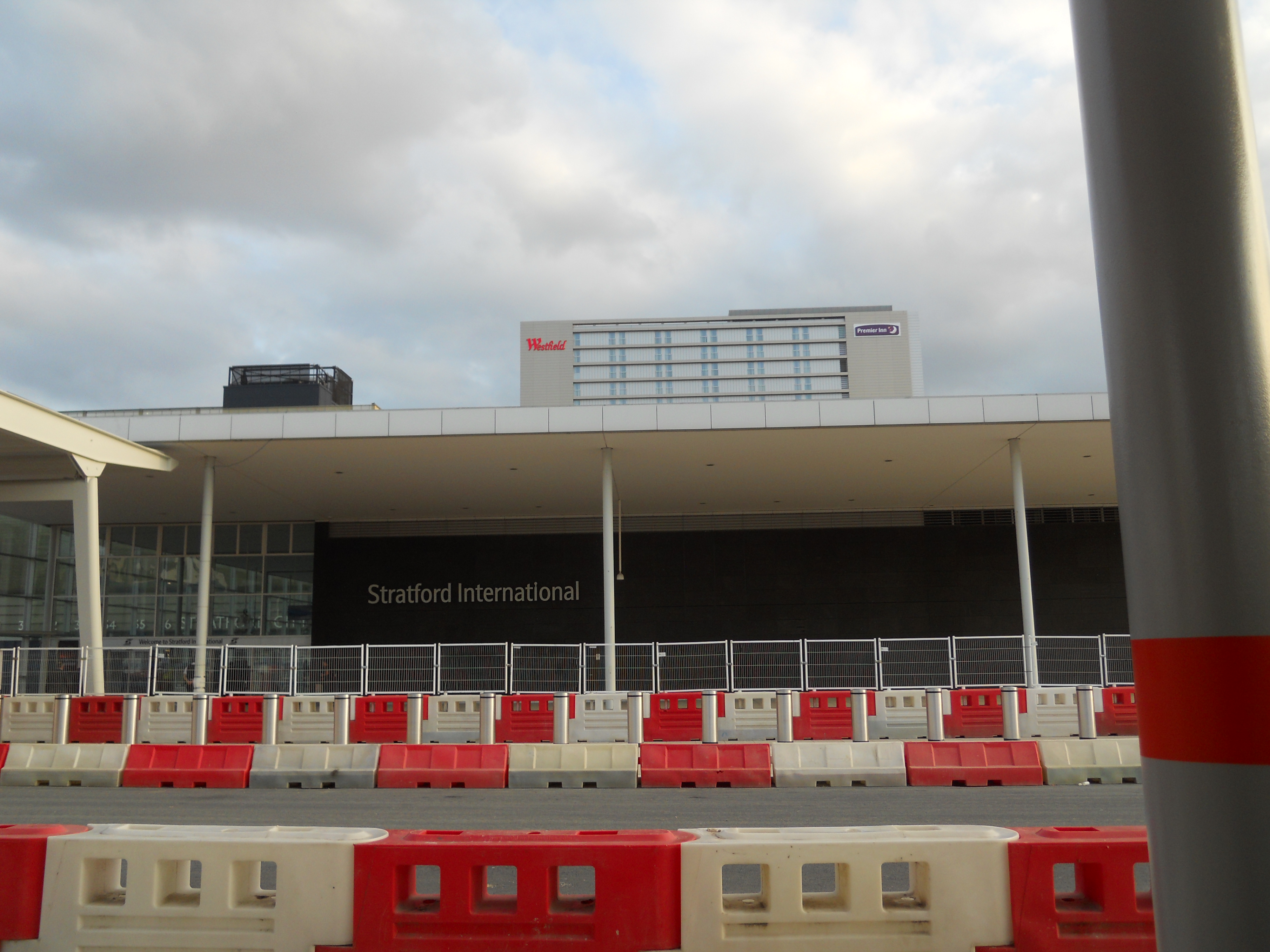

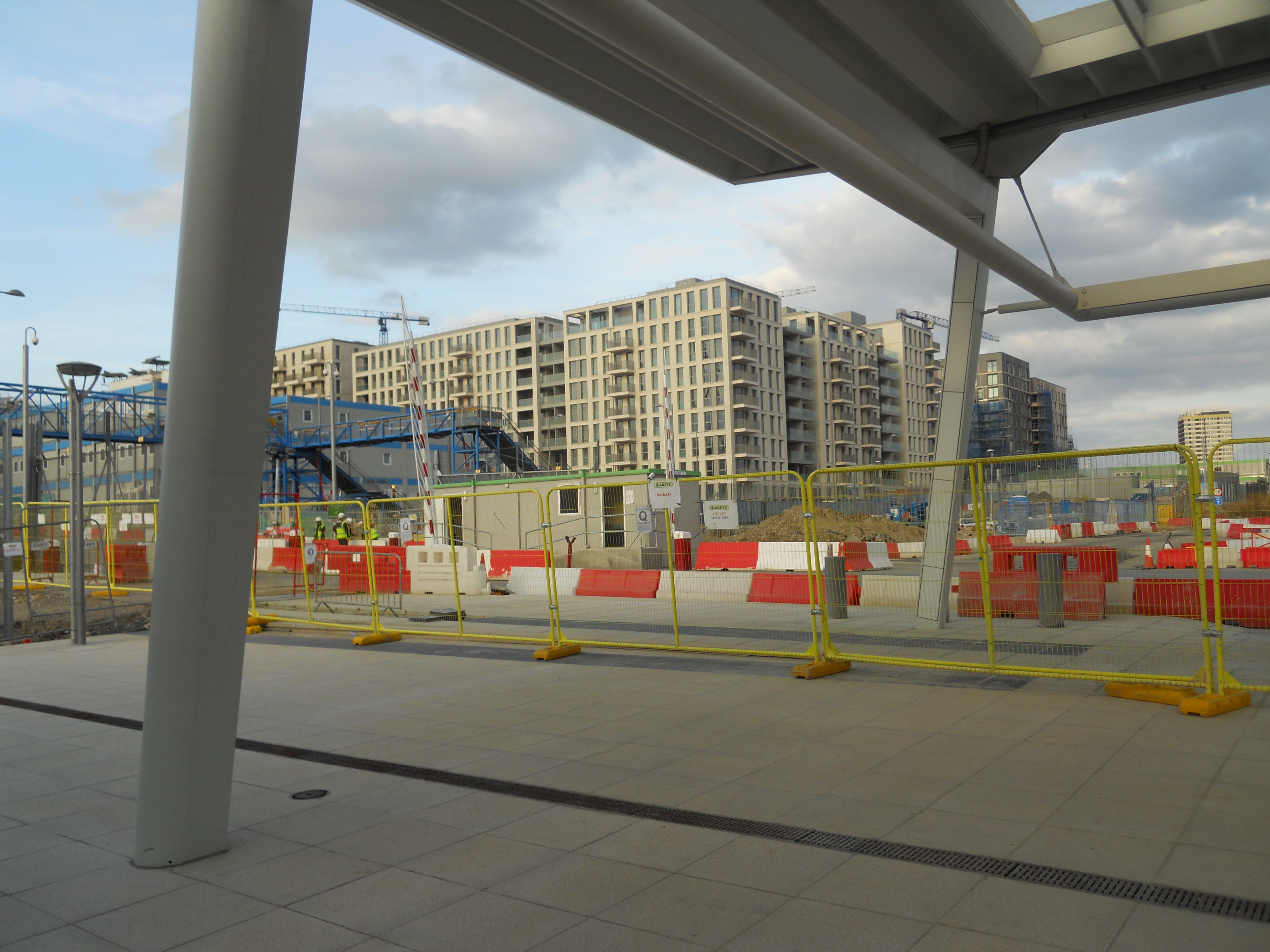
It is an impressive line.
One thing that it does is to create a step-free route from stations on the North London line to the London City Airport, with a single change at Stratford.
I also joked with one of the staff about tourists coming to Abbey Road station to see the crossing. Nothing surprises her!
Could A Hackney Junction Station Be Created?
Today, I was returning from Stratford station and did what I often do now and that is get off the Overground at Hackney Central station and get a 38 bus to just round the corner from my house. Ideally, I would like to take the disused Eastern Curve to walk from Dalston Junction station. But this would be a difficult route to reinstate. It would also be expensive, with not much change left from a million pounds.
The change at Hackney Central only takes a few minutes, but it involves using an overbridge to cross the North London line and a U-shaped walk to get to the bus stop on Graham Road.
The other problem at Hackney is getting between the two stations of Hackney Central and Hackney Downs. I walked it at ground level and it doesn’t take too long. There are some pictrures here.
But I wouldn’t like to do it in a few years or with a child in a buggy or in a wheelchair. There used to be a walkway at track level, but this was demolished, when the North London line was truncated to Dalston in 1944.
So could anything be done to improve the station? Let’s start by looking at an aerial view of the two stations and the surrounding roads coutesy of Google.
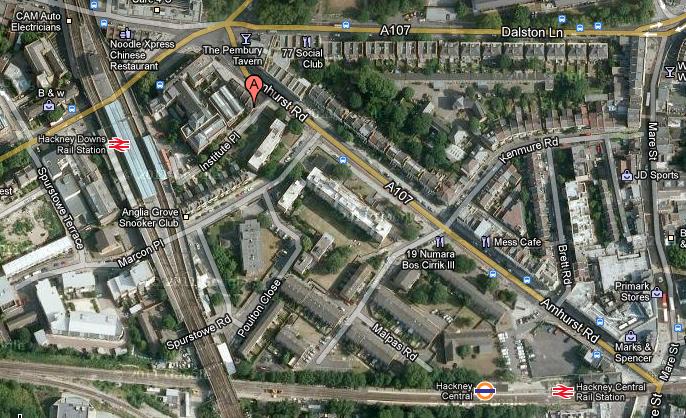
Map of Hackney Central and Downs Stations
The first thing you will notice is that there is a surprising amount of greenery and trees, especially along the line running westwards from Hackney Central station.
There is also car parking to the north of Hackney Central on Amhurst Road, which could be developed for something more worthwhile.
Returning to ground level, I took this picture of the old station building for Hackney Central, which sits on the corner of Mare Street and Graham Road.

The Old Hackney Central Station
This is surely worth preserving and using for something better than as a prop for the railway. Note the alleyway that leads to the new station buildings at the side.
This station is very similar to Camden Road station, also on the North London line, and like that station, I suspect Hackney Central also featured an underpass to get to the line on the other side. If this could be reinstated, this would remove one of the main problems of the station and that is having to use the overbridge to get to and from the westbound platform. I can manage it OK after a stroke, but I couldn’t if I was a young mother with twins in a double buggy.
I’m no architect, but I feel that a good one, with an understanding of structures could create an imposing station at the Hackney Central end of the combined station. As I said before there is space to the north of the station, which could be used as either a bus interchange, a square with cafes and other meeting places or niche retail. Or perhaps all three to create somewhere you might go to meet someone before walking the Lea Valley, going shopping at Eastfield or to the football at White Hart Lane.
The Hackney Downs end on the other hand doesn’t offer such a good collection of buildings on which to create a statement as you could at Central. So perhaps you just do something with the staircases and give it a good or as I said earlier, a wild coat of paint.
To connect the two stations you have three options.
- The simplest would probably be to signpost a preferred route, perhaps cutting the current distance slightly by sneaking in at the back of Hackney Downs.
- You could also put controlled crossing in at the two stations, so that the bus routes that served both stations could be used to bridge the gap.
- Or you could create a Hackney Skywalk alongside the two railways, above the streets below. Whether this could be done meeting all of the safety regulations, I do not know, but it would be a statement of intent of two rail lines and one station.
Finally, the buses in the area need a bit of reorganisation, especially if the North London Line continues to carry more and more passengers and the stations get full step-free access.
- Some buses for instance, like the 30 and the 277 almost parallel the line from Hackney Wick to Highbury and Islington, so perhaps some simplification could be envisaged.
- The 38 goes all the way to Victoria from Hackney, as does the 73 from Stoke Newington, so perhaps if Hackney had better connections to the Victoria line, some passengers might take that route.
- The new North London Line has shown that if you provide good east-west links in North London, they’ll get used. So perhaps, there is a need for a bus from somewhere like Archway to Walthamstow.
If nothing with this ramble, I’ve proved one thing. There are endless possibilities about what can be done to improve public transport in Hackney and up the Lea Valley.
To be fair to, to the Council, they have a lot of useful information and alternative plans on their web site.
 The Anonymous Widower