A Class 93 Locomotive Hauling A 1500 Tonne Train Between The Port Of Felixstowe And Nuneaton
I am writing this post to show how I believe the new Class 93 locomotive would haul a freight train between the Port of Felixstowe and Nuneaton, where it would join the West Coast Main Line for Liverpool, Manchester mor Scotland.
Why 1500 Tonnes?
This article on Rail Engineer, which is entitled, Re-Engineering Rail Freight, gives a few more details about the operation of the Class 93 locomotives.
This is said about performance.
As a result, the 86-tonne Class 93 is capable of hauling 1,500 tonnes on non-electrified routes and 2,500 tonnes on electrified routes. With a route availability (RA) of seven, it can be used on most of the rail network.
So as I’m talking about non-electrified routes, I’ll use 1500 tonnes.
Sections Of The Route
The route can be divided into these sections.
- Port of Felixstowe and Trimley – 2.3 miles – 7 minutes – 19.7 mph – Not Electrified
- Trimley and Ipswich Europa Junction – 13.5 miles – 43 minutes -18.8 mph – Not Electrified
- Ipswich Europa Junction and Haughley Junction – 12.1 miles – 24 minutes -30.2 mph – Electrified
- Haughley Junction and Ely – 38.3 miles – 77 minutes -29.8 mph – Not Electrified
- Ely and Peterborough – 30.5 miles – 58 minutes -31.6 mph – Not Electrified
- Peterborough and Werrington Junction – 3.1 miles – 5 minutes -37.2 mph – Electrified
- Werrington Junction and Leicester – 49.1 miles – 97 minutes -30.4 mph – Not Electrified
- Leicester and Nuneaton – 18.8 miles – 27 minutes -41.8 mph – Not Electrified
Note.
- The train only averages around 40 mph on two sections.
- There is electrification at between Europa Junction and Haughley Junction, at Ely and Peterborough, that could be used to fully charge the batteries.
- In Trimode Class 93 Locomotives Ordered By Rail Operations (UK), I calculated that the 80 kWh batteries in a Class 93 locomotive hauling a 1500 tonne load can accelerate the train to 40 mph.
I can see some innovative junctions being created, where electrification starts and finishes, so that batteries are fully charged as the trains pass through.
- There must be tremendous possibilities at Ely, Haughley and Werrington to take trains smartly through the junctions and send, them on their way with full batteries.
- All have modern electrification, hopefully with a strong power supply, so how far could the electrification be continued on the lines without electrification?
- Given that the pantographs on the Class 93 locomotives, will have all the alacrity and speed to go up and down like a whore’s drawers, I’m sure there will be many places on the UK rail network to top up the batteries.
Consider going between Ely and Peterborough.
- Leaving Ely, the train will have a battery containing enough energy to get them to forty mph.
- Once rolling along at forty, the Cat would take them to the East Coast Main Line, where they would arrive with an almost flat battery.
- It would then be a case of pan up and on to Peterborough.
These are my ideas for how the various sections would be handled.
Port of Felixstowe And Trimley
As I stated in Rail Access To The Port Of Felixstowe, I would electrify the short section between the Port of Felixstowe And Trimley. This would do the following.
- Charge the batteries on trains entering the Port, so they could operate in the Port without using diesel.
- Charge batteries on trains leaving the Port, so that they could have a power boost to Ipswich.
- The trains could be accelerated to operating speed using the electrification.
There would also be no use of diesel to the East of Trimley, which I’m sure the residents of Felixstowe would like.
Trimley and Ipswich Europa Junction
This section would be on diesel, with any energy left in the battery used to cut diesel running through Ipswich.
Ipswich Europa Junction and Haughley Junction
Consider.
- This is a 100 mph line.
- It is fully-electrified.
- All the passenger trains will be running at this speed.
If the freight ran at that speed, up to 17 minutes could be saved.
Haughley Junction And Ely
This section would be diesel hauled, with help from the batteries, which could be fully charged when entering the section.
There are also plans to improve Haughley Junction, which I wrote about in Haughley Junction Improvements.
One possibility would be to extend the electrification from Haughley Junction a few miles to the West, to cut down diesel use in both Greater Anglia’s Class 755 trains and any freight trains hauled by Class 93 locomotives.
As there are plans for an A14 Parkway station at Chippenham Junction, which is 25 miles to the West of Haughley Junction, it might be sensible to electrify around Chippenham Junction.
Ely and Peterborough
This section would be diesel hauled, with help from the batteries, which could be fully charged when entering the section.
It should also be noted that the tracks at Ely are to be remodelled.
- Would it not be sensible to have sufficient electrification at the station, so that a Class 93 locomotive leaves the area with full batteries?
- Acceleration to operating speed would be on battery power, thus further reducing diesel use.
It probably wouldn’t be the most difficult of projects at Peterborough to electrify between Peterborough East Junction and Werrington Junction on the Stamford Lines used by the freight trains.
On the other hand, I strongly believe that the route between Ely and Peterborough should be an early electrification project.
- It would give a second electrified route between London and Peterborough, which could be a valuable diversion route.
- It would allow bi-mode trains to work easier to and from Peterborough.
- It would be a great help to Class 93 locomotives hauling freight out of Felixstowe.
As the Ely-Peterborough Line has a 75 mph operating speed, it would Class 73 locomotive-hauled freights would save around thirty ,inutes.
Peterborough and Werrington Junction
This section looks to be being electrified during the building of the Werrington Dive Under.
Werrington Junction and Leicester
This section would be diesel hauled, with help from the batteries, which could be fully charged when entering the section.
Leicester and Nuneaton
This section would be diesel hauled, with help from the batteries,
As there is full electrification at Nuneaton, this electrification could be extended for a few miles towards Leicester.
Conclusion
This has only been a rough analysis, but it does show that Class 93 locomotives can offer advantages in running freight trains between Felixstowe and Nuneaton.
But selective lengths of electrification would bring time and diesel savings.
A Trip Around The West Midlands
Today, I did a trip around the West Midlands, using five different trains.
Tain 1 – 19:10 – Chiltern – London Marylebone To Leamington Spa
This was one of Chiltern’s rakes of Mark 3 coaches hauled by a Class 68 locomotive.
I like these trains.
- They are comfortable.
- Everybody gets a table and half sit by a big window.
- There is more space than Virgin Train’s Class 390 trains.
- They may be slower, but they are fast enough for most journeys I make.
The train arrived seven minutes late at Leamington Spa at 11:32.
Train 2 – 12:02 – West Midlands Trains – Leamington Spa To Nuneaton
This is a new West Midlands Trains service, via the new station at Kenilworth and Coventry.
The trains are Class 172 trains, that used to run on the Gospel Oak to Barking Line.
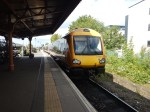


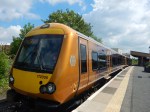


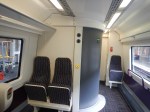


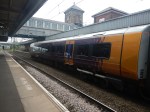

Note.
- The have been repainted and refreshed.
- The seat cover on the driver’s seat is a relic of the London Overground.
- The train now has a toilet.
The train was about half-full and I got the impression, that the new service had been well-received.
The train arrived on time at Nuneaton at 12:38.
Train 3 – 12:54 – West Midlands Trains – Nuneaton to Rugeley Trent Valley
The train was a Class 350 train and it arrived eight minutes late at 13:29.
These pictures show Rugeley Trent Valley station.

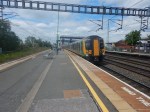
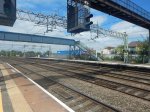
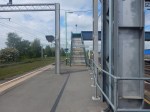
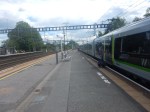
It is very minimal with just a shelter, a basic footbridge and no information on how or where to buy a ticket.
Passengers deserve better than this!
Train 4 – 13:43 – West Midlands Trains – Rugeley Trent Valley to Birmingham New Street
This is a new West Midlands Trains electric service.
Compared to the Leamington Spa to Nuneaton service, passengers were spread rather thinly in the train.
The train was a Class 350 train and it arrived five minutes late at 14:44.
Train 5 – 15:55 – Chiltern – Birmingham Moor Street to London Marylebone
Another comfortable Chiltern Railways train back to London, which arrived four minutes late at 17:47.
Customer Service
Customer service and especially that from West Midlands Trains was rather patchy.
- Leamington Spa station was rebuilding the entrance, but staff were around.
- Nuneaton station was very quiet.
- Rugeley Trent Valley station needs a lot of improvement.
- The two Birmingham City Centre stations were much better.
I actually had to travel ticketless from Rugeley Trent Valley to Birmingham New Street, as the Conductor on the train didn’t check the tickets.
But Virgin Trains were very professional at Birmingham New Street.
Service Pattern
I have some observations on the service patterns.
- For comfort reasons, I would prefer that Chiltern ran Mark 3 coaches and Class 68 locomotives on all Birmingham services.
- In the future, it looks like Leamington Spa and Nuneaton needs at least a half-hourly service.
- There definitely needs to be more services on the Chase Line.
There also is a serious need for staff and better facilities at Rugeley Trent Valley station.
No-one even a hardened member of the SAS would want to spend thirty minutes changing trains there on a blustery and cold winter’s day.
Conclusion
I tried two new services today, that started on the May 2019 timetable change.
- A diesel service between Leamington Spa and Nuneaton via Kenilworth and Coventry.
- An electrified service between Rugeley Trent Valley and Birmingham New Street.
The first would appear to be what passengers want, but the second needs a bit of promoting.
A Potential Leicester To Coventry Rail Link
This article on Rail Technology Magazine is entitled Potential Leicester To Coventry Rail lLnk Mulled Over In Updated Leicestershire Transport Vision.
This is the first two paragraphs.
The potential of a Leicester to Coventry rail link has been revived again as one of the key highlights of a new transport masterplan outlined by Leicestershire County Council.
In the council’s revamped Prospectus for Growth handed out to Leicestershire County Council members this week, the document noted that there are currently no direct rail services between Leicester and Coventry, meaning a journey of just 25 miles takes an average of one hour and eight minutes.
The route would use these two lines.
- Birmingham-Peterborough Line between Leicester and Nuneaton stations.
- Coventry to Nuneaton Line between Nuneaton and Coventry stations.
This sounds easy. So what’s wrong with using two trains and changing at Nuneaton station?
- Driving along the M69 between the two cities will take around 43 minutes.
- The fastest rail services take 48 minutes, and run hourly.
- Most other rail services take over an hour and a quarter, with a long wait at Nuneaton station.
- Leicester and Coventry services serve opposite sides of Nuneaton station.
I suspect regular travellers have got the rail journey sorted, but occasional travellers will always take the car.
This Google Map shows Nuneaton station.
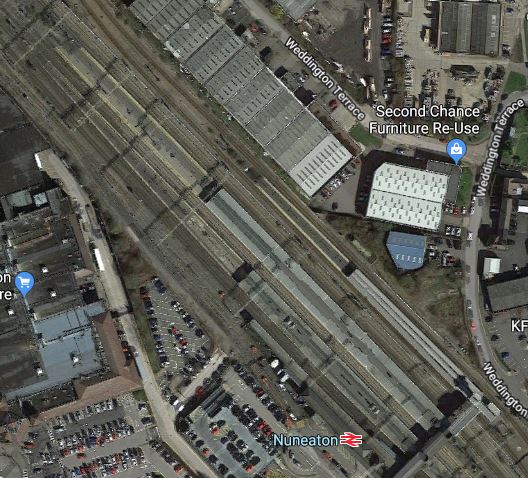
Note.
- The West Coast Main Line going NW-SE through the station.
- Coventry services terminate in Platform 2, which is on the West side of the station.
- Birmingham-Leicester services stop on the other side of the station.
The station has lifts, but it wouldn’t be a good one for a fast change of trains.
This Google Map shows the West Coast Main Line to the South of Nuneaton station.
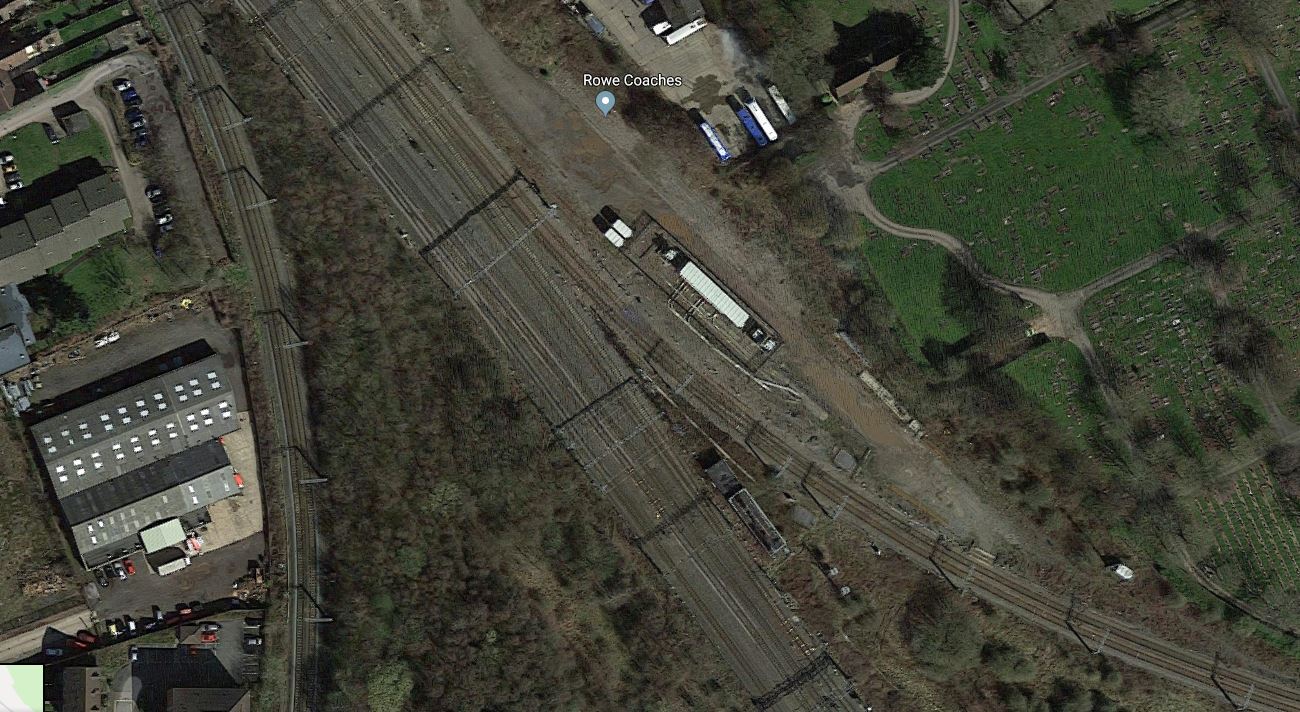
Note how the West Coast Main Line splits into three.
- The Coventry to Nuneaton Line goes South.
- The electrified West Coast Main Line goes South-East.
- The Nuneaton to Leicester breaks away to the East.
It would appear that a train going from Leicester to Coventry would need to cross the West Coast Main Line.
This would be very difficult without a flyover or a tunnel.
It would be even more difficult if the train had to call at Nuneaton station.
But it might be possible for trains between Leicester and Coventry to do the following.
- Call at Platform 2 in Nuneaton station.
- All trains would reverse at Nuneaton station.
- A single-track flyover or dive-under would link the Eastern track of the Coventry to Nuneaton Line to the Nuneaton to Leicester Line.
It would be a tricky piece of engineering.
The Possible Route
If the train did the same station stops as the current services, it could stop at the following intermediate stations.
- South Wigston
- Narborough
- Hinckley
- Nuneaton
- Bermuda Park
- Bedworth
- Coventry Arena
The total time would appear to be around fifty minutes, with 28 minutes for Leicester to Nuneaton and 22 minutes from Nuneaton to Coventry.
I think if the route were to be run using a modern 100 mph bi-mode or diesel train, that saved time at each stop, that a round trip could be done within two hours.
If this were possible then two trains would be needed for an hourly service.
The article talks of extending the services to Nottingham and The Thames Valley.
It would be likely, that a route length would be chosen, that was convenient to timetable.
Conclusion
The plan to run a Leicester to Coventry service looks feasible.
The New Bromsgrove Station
This is the new Bromsgrove station, which opened this week.

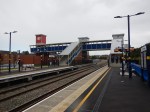


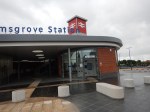
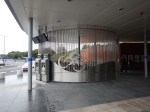
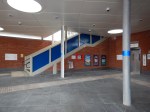
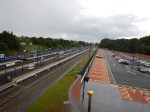
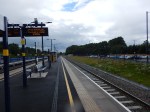
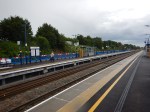
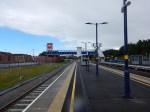

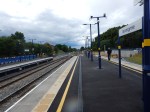
It is not what you’d call a spectacular station, but it certainly fulfils the objectives of the design.
- Act as a second Southern terminus for three trains per hour on Birmingham’s Cross-City Line.
- Be able to accept trains up to nine cars on the Cross-Country route from Gloucester, Worcester and Hereford through Birmingham and onto the East Midlands and Yorkshire.
- Provide a step-free interchange, between trains, buses, cars and cycles.
- Provide a Park-and-Ride station for Birmingham.
But as it has four platforms, will soon be electrified and have connections across the City, will it after the timetable has settled, become an important interchange that takes the pressure from Birmingham New Street? I think it will, as Reading does for Paddington, Stratford does for Liverpool Street and Clapham Junction, does for ictoria and Waterloo, in London.
It is also not finished and needs a shop and coffee stalls. In some ways it has a similar aura to the new Lea Bridge station in East London. Both stations shout that they are open for business, so please send us some trains and we’ll make the passengers happy.
It could turn out to be a masterstroke.
The electric trains on the line that will work the electrified service are Class 323 trains. There are forty-three, three-car units of which London Midland have twenty-six units, or just thirteen six-car trains, which is the train-length, the line obviously needs.
Will they get the other seventeen units from Northern, as that company gets new rolling stock, to create a fleet that could serve the line adequately?
They could also be looking at new trains. Something like four-car Class 710 trains, which are being built for similar urban routes on the London Overground, would be ideal. And in these Brexit times, they are built in Derby.
If Class 710 trains were to be used, they open up the intriguing possibility of fitting some or all of them with on-board energy storage.
This would enable the following routes.
- Bromsgrove to Worcester is only a dozen miles, and doesn’t include the notorious Lickey Incline, which will soon be electrified. So it would be possible to run a frequent Birmingham to Worcester service using onboard energy, which would also serve Droitwich Spa and the new Worcestershire Parkway station.
- The Camp Hill Line provides an alternative route across Birmingham City Centre. It is not electrified, but as it is short, it would be well within onboard energy storage range.
- On the other side of Birmingham, it is only about twenty-five miles or so from the electrified Cross-City Line to the electrified West Coast Main Line at Nuneaton.
So could we see a second Cross-City Line in Birmingham from Worcester to Nuneaton via Bromsgrove, Camp Hill, Water Orton and Coleshill Parkway?
It would need no new electrification and just appropriate track and station improvements.
A Ride From Nuneaton To Coventry In A London Midland Class 306 Train
I went to Nuneaton station and then took the Coventry to Nuneaton Line to see the new stations at Bermuda Park and Coventry Arena before changing at Coventry for Birmingham. I took these pictures from the train.
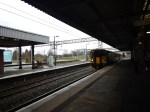


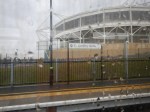

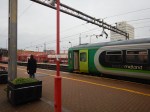
Both new stations have two similar platforms, so I only photographed one at each station.
All platforms seem to be able to take at least a three car train, but the Coventry-facing platform at Coventry Arena station can take six card to handle events. I also suspect that selective door opening on modern trains like Electrostars can allow longer trains to call.
The train was actually two Class 153 trains, which explains the Class 306 train.
The line may be electrified in future, as it is used by freight trains, but if Network Rail get their act together, I can see the passenger service on this line using IPEMUs. Especially, when Kenilworth station is reopened on the Coventry to Leamington Line.
Unless the two lines are electrified, freight would still be diesel-hauled. A Class 88 locomotive could be used, so that where there is electrification.freight trains could be electric-hauled. But they seem to be taking a long time to arrive!
Freight Through Nuneaton
Nuneaton is where freight trains between Felixstowe and the North West and the West of Scotland, join and leave the West Coast Main Line (WCML).
This Google Map shows the rail lines through Nuneaton station.

Freight Through Nuneaton
Note how the WCML runs diagonally North-West to South-East, though Nuneaton station.
Freight trains from Felixstowe arrive and turn North alongside the WCML before crossing the WCML on a flyover.
Trains can either go straight on to Birmingham and the West Midlands or turn North using the 2012-built single-track Nuneaton North Chord to proceed up the WCML.
This Google Map shows the flyover and the Nuneaton North Chord.

Nuneaton Flyover And North Chord
Trains from the West Midlands to Felixstowe take the flyover in the other direction, but trains from the WCML proceed through Nuneaton station and then turn off to Felixstowe.
This Google Map shows the WCML to the South of Nuneaton station, with the line to Coventry turning off to the West and the line to Felixstowe turning off to the East.

Lines South Of Nuneaton Station
As I came through the area today from North to South, I took these pictures.
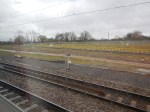
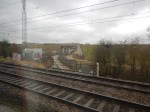



I didn’t take any south of the station, as I was sitting on the wrong side to show the line going East.
The Nuneaton North Chord was a one-mile chord and cost £25.6million, which in terms of railway projects isn’t a lot of money.
But it is one of a pattern of short railway lines that have been built or planned in recent years to unlock the potential of the UK’s railways.
- Bicester Chord was opened in 2015 as part of a £130million project to extend Chiltern services to Oxford.
- Hitchin Flyover was opened in 2013 at a cost of £47million.
- Ipswich Chord was opened in 2014 at a cost of £59million.
- North Doncaster Chord was opened in 2014 vat a cost of £45million.
- Tinsley Chord is being built to enable tram-trains to run between Sheffield and Rotherham at a cost of £2million.
- Todmorden Chord was opened in 2015 at a cost of £9million.
But iit is not all plain sailing, as the saga to create the Ordsall Chord in Manchester shows. Plans show it should be finished in December 2016 at a cost of £95million, but a determined local protester has stuck the development in the Courts with the local Councils, Network Rail, the train companies and the Government on the other side.
I do wonder how many of these short railway lines and chords can and should be built.

