East Midlands Railway To Leeds
This news story from the Department of Transport is entitled Yorkshire And The Humber To Benefit From £19.8 billion Transport Investment.
This is said about Leeds and Sheffield services.
The line between Sheffield and Leeds will be electrified and upgraded, giving passengers a choice of 3 to 4 fast trains an hour, instead of 1, with journey times of 40 minutes. A new mainline station for Rotherham will also be added to the route, which could give the town its first direct service to London since the 1980s, boosting capacity by 300%.
These are my thoughts.
A New Mainline Station For Rotherham
This page on Rotherham Business News, says this about the location of the Rotherham mainline station.
South Yorkshire Mayoral Combined Authority (SYMCA) and Rotherham Council have been developing a scheme to return mainline train services to the borough for the first time since the 1980s. A site at Parkgate is the frontrunner for a regeneration project described by experts as “a relatively straightforward scheme for delivery within three to four years.”
Various posts and comments on the Internet back the councils preference for a new station at Rotherham Parkgate.
- It would be at Rotherham Parkgate shopping centre.
- It connects to the tram-trains, which run half-hourly to Cathedral in Sheffield city centre via Rotherham Central.
- There appears to be plenty of space.
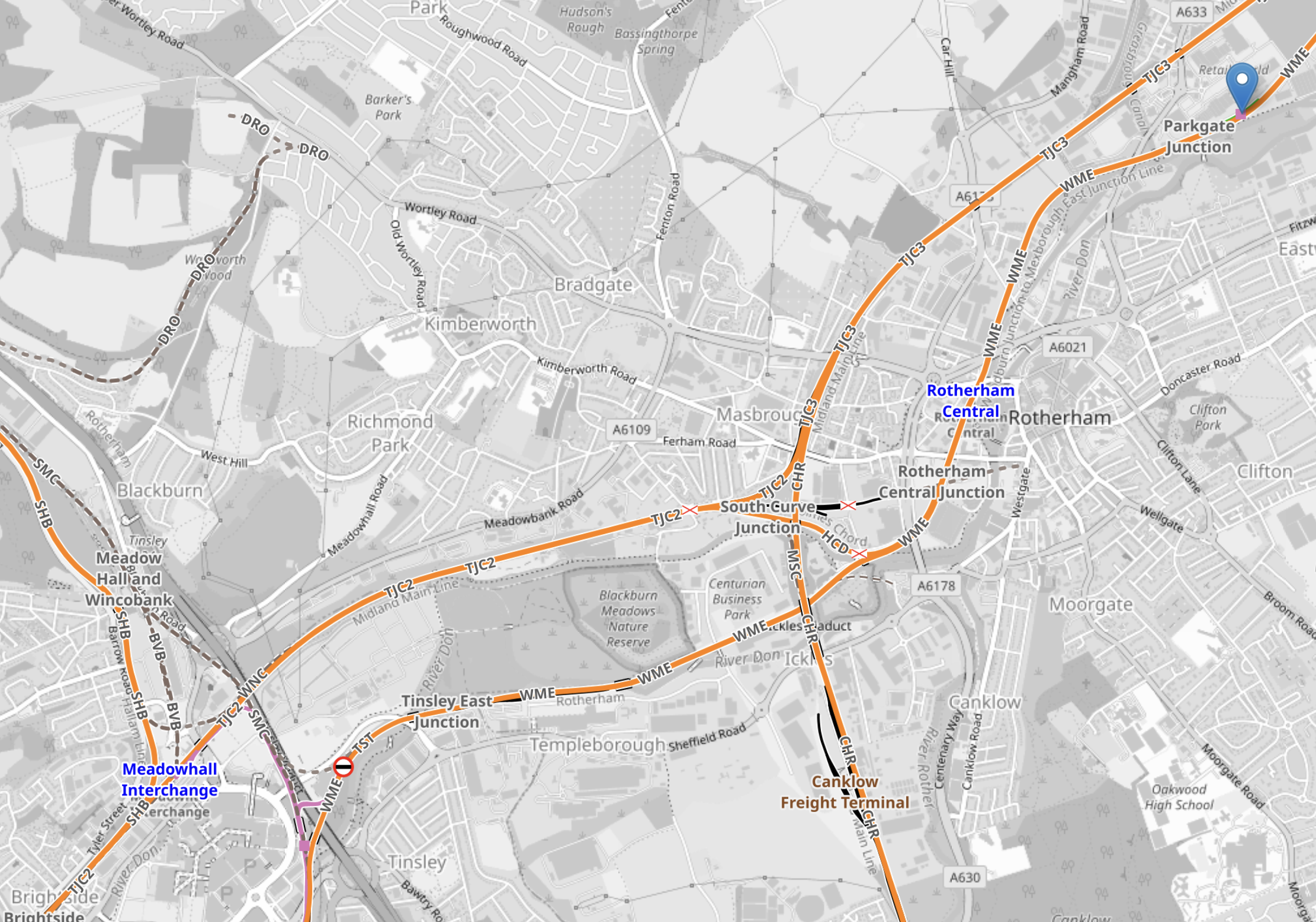
This OpenRailwayMap shows the tracks at the current Rotherham Parkgate tram stop.
Note.
- The orange lines are the main railway tracks.
- Rotherham Parkgate is indicated by the blue arrow in the North-East corner of the map.
- Trains would run between Sheffield and Rotherham Parkgate via Meadowhall Interchange and Rotherham Central.
- Trains and tram-trains would share tracks through Rotherham Central.
After passing Rotherham Parkgate trains would go to Swinton, and then on to Doncaster or Leeds.
Sheffield And Leeds Via Rotherham Parkgate
Currently, there is an hourly service between Leeds and Sheffield, that goes through the Rotherham Parkgate site.
- It calls at Outwood, Wakefield Westgate, Sandal & Agbrigg, Fitzwilliam, Moorthorpe, Thurnscoe, Goldthorpe, Bolton-upon-Dearne, Swinton, Rotherham Central, Meadowhall.
- The service takes one hour and thirteen minutes, but there are eleven stops.
- As the distance is 38.9 miles, that works out at an average speed of 32 mph.
I suspect this schedule was written for Pacers.
The Department of Transport is aiming for a forty minute journey, which is an average speed of 58.4 mph.
Consider.
- If you look at the maximum speeds of the route from Rotherham Parkgate to Wakefield Westgate, it is 21.8 miles of 100 mph track.
- About twenty miles to the South of Wakefield Westgate is electrified.
- Leeds and Wakefield Westgate is 10.1 miles of 75-85 mph track.
- LNER’s expresses leave Wakefield Westgate, eleven minutes after leaving Leeds.
- I can find a TransPennine Express that takes thirteen minutes to go between Sheffield and Rotherham Parkgate late at night on the way to the depot.
The eleven and thirteen minutes mean that leaves 16 minutes for Rotherham Parkgate to Wakefield Westgate, if Sheffield and Leeds are to be timed at forty minutes, which would be an average speed of 82 mph between Rotherham Parkgate and Wakefield Westgate.
I feel that for a forty minute journey between Leeds and Sheffield, the following conditions would need to be met.
- Very few stops. Perhaps only Meadowhall, Rotherham Parkgate and Wakefield Westgate.
- 100 mph running where possible.
- 100 mph trains
- Electric trains would help, as acceleration is faster. Battery-electric trains would probably be sufficient.
- Some track improvements might help.
But forty minutes would certainly be possible.
At present there are five trains per hour (tph) between Leeds and Sheffield.
- Northern – 2 tph – via Wakefield Kirkgate, Barnsley and Meadowhall – 58 minutes
- Northern – 1 tph – via Outwood, Wakefield Westgate, Sandal & Agbrigg, Fitzwilliam, Moorthorpe, Thurnscoe, Goldthorpe, Bolton-upon-Dearne, Swinton, Rotherham Central and Meadowhall – One hour and 13 minutes
- Northern – 1 tph – via Woodlesford, Castleford, Normanton, Wakefield Kirkgate, Darton, Barnsley, Wombwell, Elsecar, Chapeltown and Meadowhall – One hour and 19 minutes.
- CrossCountry – 1 tph – via Wakefield Westgate – 44 minutes
Note.
- Only the second service will go through Rotherham Parkgate.
- The CrossCountry service takes the more direct route avoiding Rotherham Parkgate.
- All trains go via Meadowhall, although the CrossCountry service doesn’t stop.
- If the CrossCountry service was run by electric trains, it might be able to shave a few minutes as part of the route is electrified.
The CrossCountry service indicates to me, that 40 minutes between Leeds and Sheffield will be possible, but a stop at Meadowhall could be dropped to save time.
Extending East Midlands Railway’s Sheffield Service To Leeds
Consider
- Sheffield station has two tph to London all day.
- The CrossCountry service looks like it could be timed to run between Leeds and Sheffield in forty minutes.
- An East Midlands Railway Class 810 train could probably be timed at 40 minutes between Leeds and Sheffield via Meadowhall, Rotherham Parkgate and Wakefield Westgate.
- The current Northern services could continue to provide connectivity for stations between Leeds and Sheffield.
Extending one tph of East Midlands Railway’s trains to Leeds would probably be sufficient to give two fast trains per hour between Leeds and Sheffield.
- The East Midlands Railway and CrossCountry services could provide a fast service between Leeds and Sheffield in forty minutes.
- If they were electric or battery-electric trains, I suspect that they could call at Meadowhall, Rotherham Parkgate and Wakefield Westgate.
- They could be backed up by the two tph through Barnsley, which could probably be speeded up to around fifty minutes by electrification or using battery-electric trains.
The East Midlands Railway service between London and Leeds would be under three hours.
- Rotherham would get an hourly train to London.
- ,London and Leeds in under three hours, would be slower than Leeds and King’s Cross.
- But the electrification of the Midland Main Line would speed it up a bit.
A fast Leeds and Derby service might compensate for the loss of the Eastern leg of High Speed Two.
Sheffield And Doncaster Via Rotherham Parkgate
At present there are three tph between Sheffield and Doncaster.
- Northern – 1 tph – via Meadowhall, Rotherham Central, Swinton, Mexborough and Conisbrough – 42 minutes
- Northern – 1 tph – via Meadowhall – 28 minutes
- TransPennine Express – 1 tph – via Meadowhall – 27 minutes
Note.
- The first Northern train continues calling at all stations to Adwick.
- The second Northern train continues calling at all stations to Scarborough.
- Both Northern services go through Rotherham Parkgate.
- The TransPennine Express service takes the more direct route avoiding Rotherham Parkgate.
- All trains go via Meadowhall.
These services would give good connectivity for a London train, with a change at Rotherham Parkgate.
Improving Tracks Between Doncaster, Leeds and Sheffield
Consider.
- About 65 % of the main routes between Doncaster, Leeds and Sheffield have a maximum operating speed of 100 mph.
- Doncaster and Leeds is electrified.
- Only 35 miles is without electrification.
- The Midland Main Line is in the process of being electrified to Sheffield.
- There are plans to extend the Sheffield tram-trains to Doncaster Sheffield Airport, that I wrote about in Sheffield Region Transport Plan 2019 – Doncaster Sheffield Airport.
There is also heavyweight electrification infrastructure through Rotherham Central for the Sheffield tram-trains.


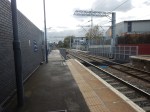
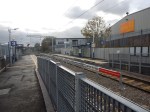
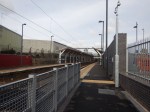

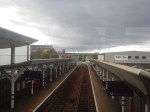


As it is only used by the tram-trains it may be only 750 VDC. But it can probably handle 25 KVAC.
- Could these routes be improved to allow faster running?
- Would it be cost-effective to electrify between Sheffield and the East Coast Main Line and the Doncaster and Leeds Line?
- Alternatively battery-electric trains could be run on the routes between Doncaster, Leeds and Sheffield, charging at all three main stations.
Any form of electric train should be faster, as acceleration and deceleration is faster in any electric train, be it powered by electrification, batteries, hydrogen or a hybrid diesel-battery-electric powertrain.
Conclusion
Pacers To Continue Into 2020, Operators Confirm
The title of this post is the same as that of this article on Railway Gazette.
This is the introductory paragraph.
Operators have confirmed that their Pacer diesel multiple-units will remain in service into early 2020, in spite of previous announcements that the unpopular four-wheeled vehicles dating from the 1980s would be withdrawn before enhanced PRM accessibility requirements come into force on January 1 2020.
The article then summarises the situation in the three operators running Pacers.
Northern
Some Pacers used by Northern will continue in service into 2020, because of late delivery of new Class 195 diesel trains and Class 331 electric trains.
They are also still awaiting delivery of eight Class 769 trains, which are very late into service.
Great Western
Great Western has said, that some Pacers will continue in service around Exeter.
No reason is given, but it does appear that because of non-delivery of electrification to Oxford and the late arrival of Crossrail, Great Western they still need Class 165 and Class 166 trains to work services for London commuters.
They are also still awaiting delivery of nineteen Class 769 trains.
Transport For Wales
Transport for Wales are in the same position as Great Western, in that the Class 769 trains, they ordered have still not been delivered.
The Operator Will Get The Blame!
Obviously, the operator will get the blame, but I would argue that all three have at least tried hard to avoid this crisis, as they knew the Pacers would have to be on their way to the scrapyard at the end of 2019.
- If CAF had delivered their trains for Northern on time, things would be much better in the North.
- If Porterbrook and their engineers had delivered the Class 769 trains on time, all three operators would be in a better position.
Hopefully, in a few months, the new trains will have been delivered and the Class 769 trains will have been created and in service.
Northern Retires First Pacer Train
The title of this post is the same as that of this article on Rochdale Online.
You’d think they’d be missed by everybody!
On Monday, I talked to the driver of a Pacer at Manchester Piccadilly station and he gave the impression, that he will miss the trains.
Steaming Up To Treforest In A Class 143 Train
On my trip to Treforest, I was in a Class 143 train or one of the dreaded Pacers.
It was performing well on the challenging route and I wondered how the power compared with that of the proposed tram-trains, that will be used in a couple of years.
Class 143 Train
- Speed – 75 mph
- Sections – 2
- Weight – 48.5 tonnes
- Length 31 metres
- Power – 336 kW
- Capacity – 122 seats
- Gross Weight (90 Kg per passenger) – 49.6 tonnes
- Kinetic Energy At Operating Speed – 7.7 kWh
- Time to Operating Speed At Full Power – 1.5 minutes
The train I was on was pretty smooth! Or for a Pacer anyway!
Class 399 Tram-Train
- Speed – 62 mph
- Sections – 3
- Weight -66.15 tonnes
- Length – 37.2 metres
- Power – 870 kW
- Capacity – 88 seats and 150 standing.
- Gross Weight (90 Kg per passenger) – 87.6 tonnes
- Kinetic Energy At Operating Speed – 9.3 kWh
- Time to Operating Speed At Full Power – 6 minutes
These figures are taken from details of the tram-trains in Sheffield.
The two trains are very similar in some respects, but the tram-train is heavier with a full load of passengers.
I certainly can see no reason, why the Class 399 tram-train won’t perform as well as the lass 143 train, but with a bigger and heavier load of passengers.
But one important factor should be born in mind.
The German cousins of the Class 399 tram-trains are used in Karlsruhe, where they easily climb out of the city into the surrounding hills.
A trip up the valleys to Aberdate, Merthyr Tydfil or Treherbert could be no more difficult, once the electrification is in place.
Conclusion
I can see other cities and tram networks around the UK, Europe and the wider world developing urban transport networks around these Stadler tram-trains.
UK cities for their deployment must include Manchester and Sheffield.
42 Technology To Showcase Adaptable Carriage On Innovation Hub Train
The title of this post is the same as that of this article on Cambridge Network,
This page on the 42 Technology web site, is the original press release.
These are the first two paragraphs.
42 Technology has installed its innovative Adaptable Carriage seating system into a real train carriage for the first time as part of its Innovate UK ‘First of a Kind’ project.
The system has been installed on Porterbrook’s Innovation Hub which will be launched next week at Rail Live 2019 (19-20 June) at Quinton Rail Technology Centre, the dedicated rail testing and trialling site near Stratford-upon-Avon.
Porterbrook’s Innovation Hub is a Class 319 train, that is made available for innovators.
Like 42 Technology, an innovator might have ideas for how to design the inside of a train, or someone might want to run an innovative freight service and wants to design the containers.
At the lowest level, the Innovation Hub, gives innovators, the chance to see inside a real train.
This article on the BBC is entitled Pacer trains ‘could be used as village halls’.
Surely, the leasing companies, who own these trains should park one at a convenient site and allow interested parties and the wider public to look at it.
Who knows what will happen? There are some crazy people with even crazier ideas out there! But successful innovation is liberally sprinkled with people, who were three-quarters of the way to the funny farm.
A Side-Effect Of Northern’s Plan To Use Class 769 Trains Across Manchester
It would appear that Northern will use some Class 769 trains on routes across Manchester’s electrified core to connect two lines without electrification.
I think that one route could be to connect Clitheroe on the Ribble Valley Line to Buxton on the Buxton Line.
These two branches could be connected by an electrified line between Hazel Grove and Bolton stations, outside of which they’d generate their own power using on-board diesel alternators.
Pacers, Class 150 trains or Class 156 trains currently work the two lines without electrification, but if it was designed to create a North-South cross-Manchester service, Class 769 trains could easily handle the extended route.
Northern have around a hundred Pacers and have pledged to remove all of them from service. Probably, most will go to the scrapyard, but some might end up with enthusiasts or masochists, or in strange export markets.
- A 75 mph two-car train like a Class 150/156 train or a Pacer would be replaced with a 90 mph four-car train. Which must speed up and improve the service.
- Capacity would be increased by at least one car in each replacement train.
- If a Pacer is replaced on the route, it goes out of service.
- If a Class 156 train is replaced it goes elsewhere to kick a Pacer out of service.
- If a Class 150 train is replaced, it probably gets a good refurbishment to kick a Pacer out of service.
So as each new Class 769 train enters service, it can push a Pacer out of service and replace it with a better train.
The same probably occurs when a Class 319 train enters service on the Northern network, if it directly replaces another train.
Passengers on their local line, might not see a new electric train, but their Pacers will gradually be replaced with better stock.
Then as the brand-new trains from CAF get introduced in a couple of years, everybody will see better trains.
In some businesses, you might think it a way to con the customers. But here, they’ll just see a process of continuous improvement of the rolling stock on their regular journeys.
Increasing Capacity Across The Pennines
I’m not sure, if this is what Northern said they would do to increase the capacity across the Pennines.
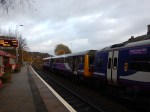
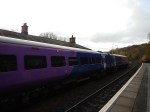
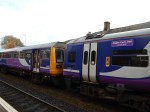
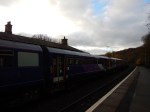
The Class 168 train is towing a Pacer to nearly double capacity.
I saw this approach three times between Todmorden and Leeds.
This gallery shows the Class 150 train pulling a Pacer, I used between Todmodern and Halifax.
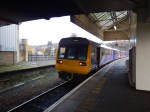
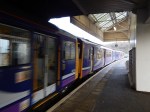
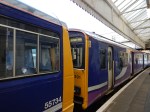
Do you get a discount for travelling in inferior accommodation?
From Leeds To Rotherham
This was not what you would call a quality journey.
By train it took 56 minutes, which is about nine minutes longer than it would take in the average car according to various web sites.
There are also nine stops in another Cook’s Tour of Yorkshire.
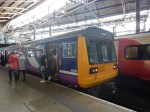
It was also in a Class 142 train or Pacer.
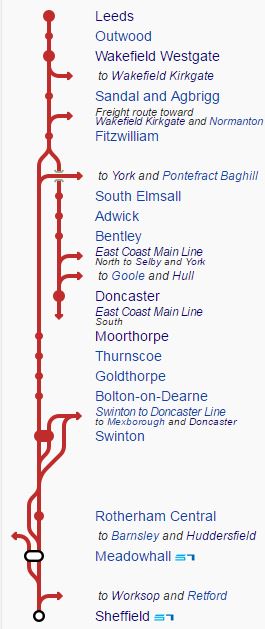
The map clipped from Wikipedia shows the Wakefield Line, which is the route the train took.
These pictures were taken on the journey.


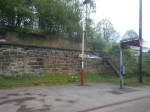
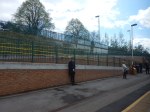
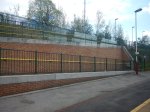
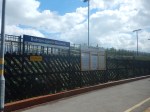
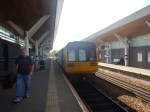
In this day and age for a journey of an hour a better train is needed, especially as the two end points are Leeds and Sheffield,where the two cities have a joint population of about 1.3 million.
The fastest trains between Leeds and Sheffield are run by CrossCountry and take forty minutes using the Wakefield Line.
As the fastest Rotherham Central to Sheffield trains take 14 minutes, I think it is reasonable to assume, that the right train could do Leeds to Rotherham Central in 26 minutes.
This route could become a Northern Connect route, run by new Class 195 trains.
As the route is electrified between Leeds and Fitzwilliam station, I wonder if this could be a route for a Class 319 Flex train.
Both trains are 100 mph units, as against the 75 mph of the Class 142 train, which probably defines the timetable.
From my observations, the route is not particularly arduous and I suspect that either train could do the journey in just over forty minutes, even with all the stops.
Certainly, the current service is truly dreadful and inadequate.
It appears that the overhead wires are going up for the tram-train to Sheffield. Or at least the gantries!
 The Anonymous Widower