The Massive Taxi Queues At Paddington
I took this picture at Paddington in the late morning.
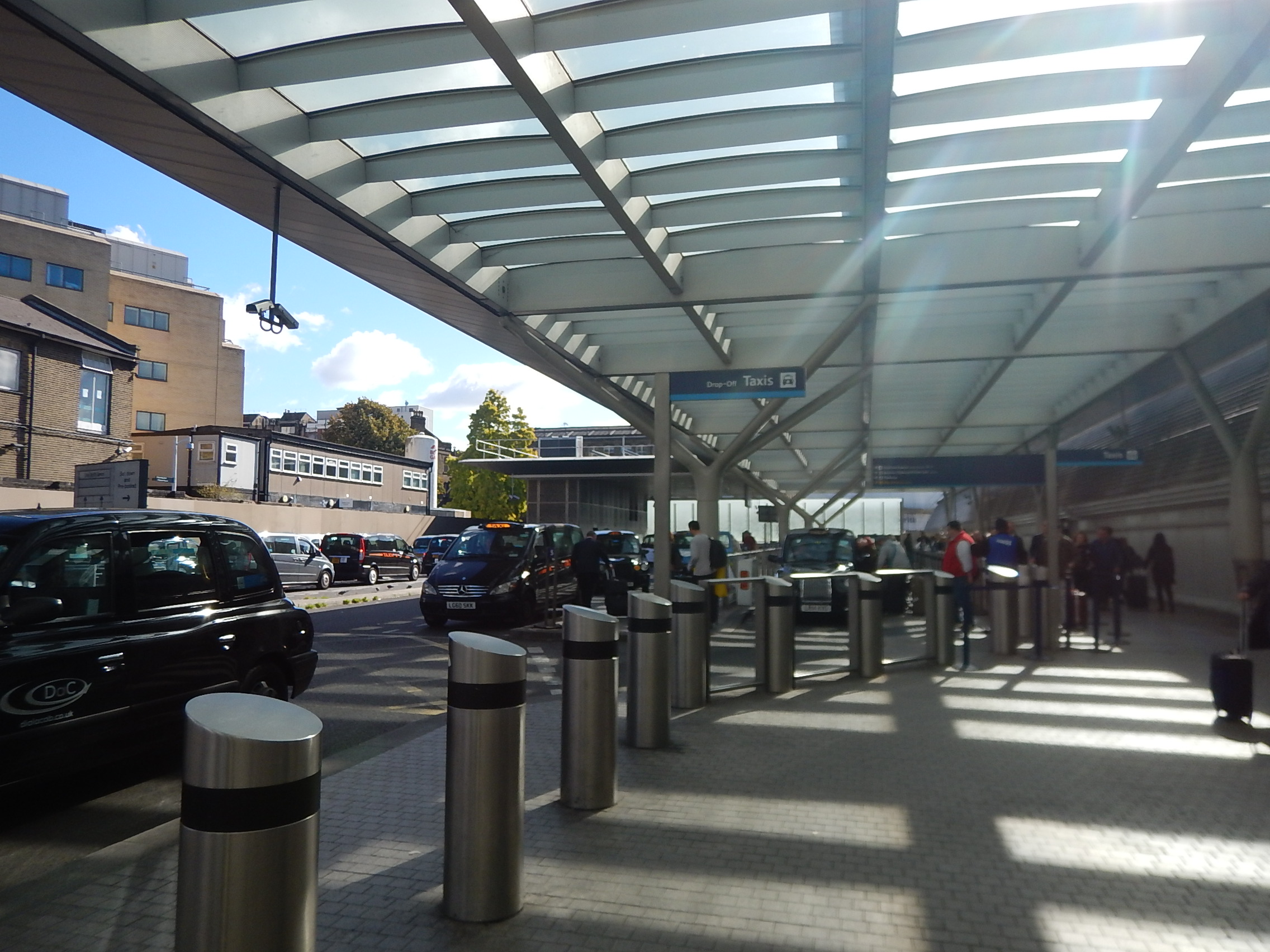
There were masses of passengers with heavy cases queuing for the taxis.
I suspect all had been conned into coming into London on the overpriced Heathrow Express.
Roll on, Crossrail!
A First Ride In A Nine-Car Class 345 Train
This morning, I had a first ride in a nine-car or full length Class 345 train.

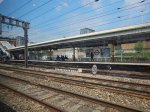

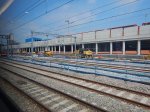
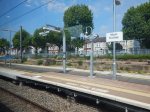

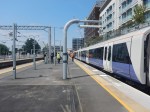
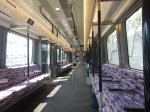
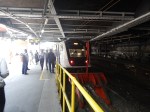
I just took it between Paddington and Hayes & Harlington stations and back again.
The overall impression, is how much longer they seem, than the seven-car version currently working between Liverpool Street and Shenfield.
Transport for London’s New Rail Line
Today, Transport for London have taken over Heathrow Connect, in preparation for the full Crossrail.
The service is now run by TfL Rail, just like the Liverpool Street to Shenfield service in the East of London.
It’s even shown on some of the new Underground maps.
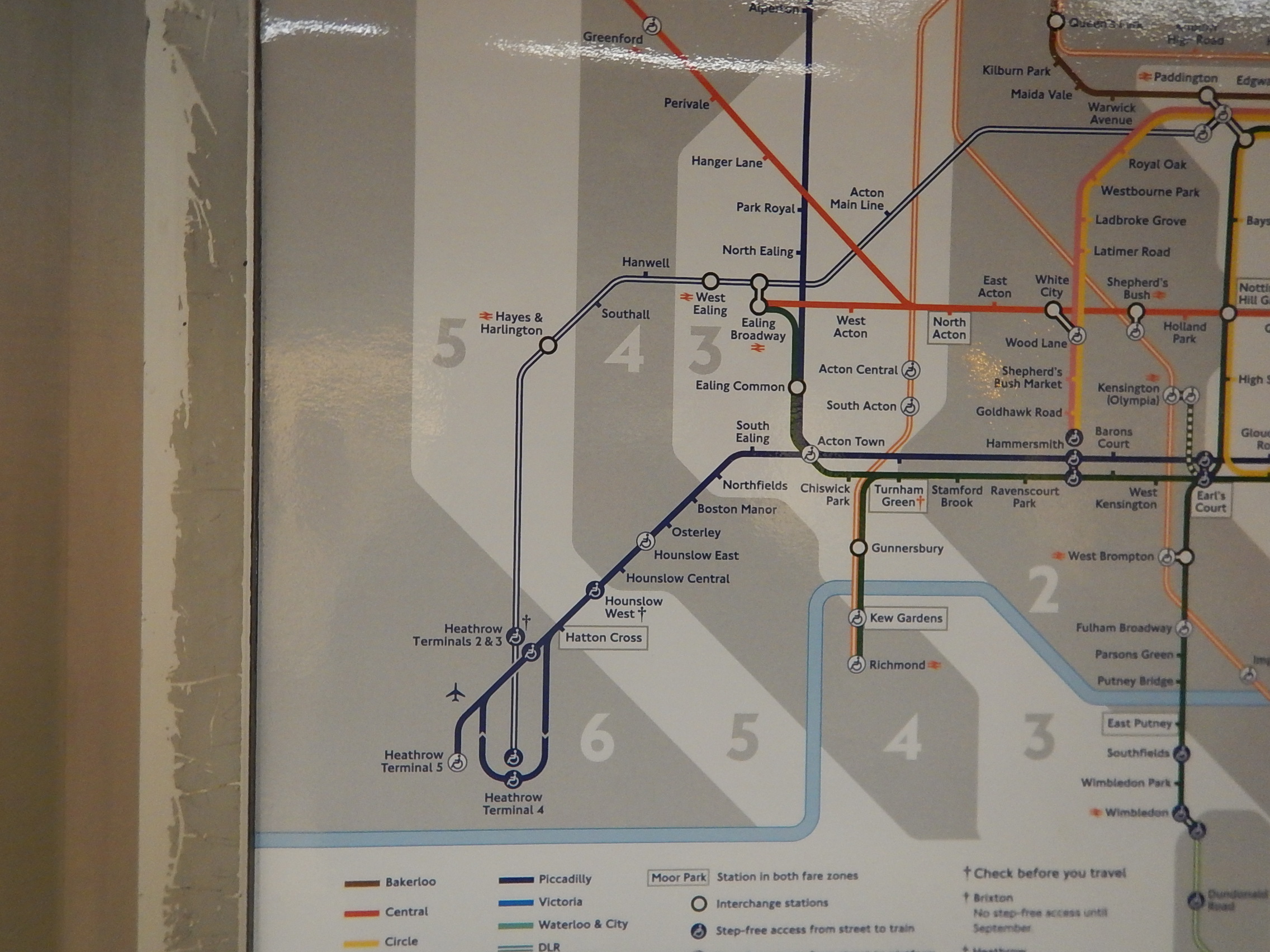
I photographed this map at Kings Cross St. Pancras.
Note the double blue line, which indicates the new route of the former Heathrow Connect, running from Paddington in the top-right corner of the map to Heathrow Terminal 4 towards the bottom-left.
The intermediate stations shown are.
- Acton Main Line
- Ealing Broadway – Change for Central and District Lines.
- West Ealing
- Hanwell
- Southall
- Hayes and Harlington
- Heathrow Terminal 2 & 3 (Heathrow Central) – Change for Piccadilly Line.
Note that TfL use Heathrow Terminal 2 & 3 for the main railway station at Heathrow and Wikipedia uses Heathrow Central.
A Trip To Heathrow From Paddington
This morning, I checked into the new TfL Rail service at Paddington, using my Freedom Pass and took the 09:11 service to Heathrow Airport.
I got out at Heathrow Terminal 2 & 3 station before returning later on another TfL Rail service to Paddington.
I took these pictures on the route.
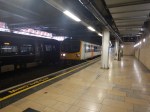

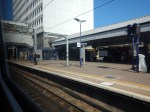

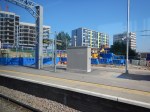
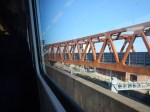

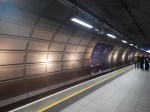
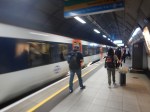

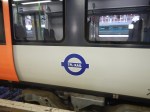
Note that the Class 360 trains are still running on the route, as there are operational issues with Crossrail’s new Class 345 trains in the tunnel to Heathrow.
Contactless Card/Oyster To Heathrow
TfL Rail also accepts contactless card or Oyster on this route.
According to TfL’s Single Fare Finder, the single fare is £10.20 in the Peak and £10.10 in the Off-Peak.
But,I’m not sure about railcards, the affect of capping or the price if you buy the ticket on line.
Freedom Passes To Heathrow
As I’d used my Freedom Pass, the two journeys cost me a big fat nothing!
It won’t be long before the many Freedom Pass holders, will realise, that Heathrow will be in their free travel area by a comfortable train and they will possibly use it more often, than the Piccadilly Line.
TfL Rail Service Frequency
Currently, the frequency between Paddington and Heathrow is two trains per hour (tph).
Provisional service details are shown under Services in the Wikipedia entry for Crossrail, when the line opens fully in December 2019.
- Four tph between Abbey Wood and Heathrow Terminal 4 stations
- Two tph between Abbey Wood and Heathrow Terminal 5 stations
All services will call at the following stations.
- All stations between Abbey Wood and Paddington stations.
- Ealing Broadway station
- Heathrow Terminal 2 & 3 station.
Plans for stopping at Acton Main Line, West Ealing, Hanwell, Southall and Hayes & Harlington stations are yet to be decided.
I suspect that TfL would like all Heathrow trains to stop at all intermediate stations, just as services do between Liverpool Street and Shenfield, in the East of London.
But Great Western Railway may have other ideas!
Speaking for myself, I’d like to see four tph on the TfL Rail route between Paddington and Heathrow, as soon as possible.
The Future Of The Class 360 Trains
When Crossrail sort out the Class 345 trains, the five sets of five-car Class 360 trains will be surplus to requirements.
They will also be joined in the sidings in a couple of years, by twenty-one similar four car trains, that are being replaced with new Class 720 trains, by Greater Anglia.
As they are modern 100 mph trains, they should find a home somewhere!
They could even be exported to Thailand, where a similar fleet operates.
Hitachi Battery Trains On The Great Western Railway
The slow pace of the electrification on the Great Western Main Line has become a big stick with which to beat Network Rail.
But are rolling stock engineers going to pull Network Rail out of their hole?
On page 79 of the January 2018 Edition of Modern Railways, Nick Hughes, who is the Sales Director of Hitachi Rail Europe outlines how the manufacturer is embracing the development of battery technology.
He is remarkably open.
I discuss what he says in detail in Hitachi’s Thoughts On Battery Trains.
But here’s an extract.
Nick Hughes follows his description of the DENCHA; a Japanese battery train, with this prediction.
I can picture a future when these sorts of trains are carrying out similar types of journeys in the UK, perhaps by installing battery technology in our Class 395s to connect to Hastings via the non-electrified Marshlink Line from Ashford for example.
This would massively slice the journey time and heklp overcome the issue of electrification and infrastructure cases not stacking up. There are a large number of similar routes like this all across the country.
It is a prediction, with which I could agree.
I conclude the post with this conclusion.
It is the most positive article about battery trains, that I have read so far!
As it comes direct from one of the train manufacturers in a respected journal, I would rate it high on quality reporting.
Hitachi Battery Train Technology And Their UK-Built Trains
The section without electrification on the Marshlink Line between Ashford International and Ore stations has the following characteristics.
- It is under twenty-five miles long.
- It is a mixture of double and single-track railway.
- It has nine stations.
- It has a sixty mph operating speed.
As the line is across the flat terrain of Romney Marsh, I don’t think that the power requirements would be excessive.
In the Modern Railway article, Nick Hughes suggests that battery technology could be installed in Class 395 trains.
The Class 395 train is part of a family of trains, Hitachi calls A-trains. The family includes.
- Class 800 trains as ordered by GWR and Virgin Trains East Coast.
- Class 801 trains as ordered by GWR and Virgin Trains East Coast
- Class 802 trains as ordered by GWR, Hull Trains and TransPennine Express
- Class 385 trains as ordered by ScotRail.
In Japan, another member of the family is the BEC819, which is the DENCHA, that is mentioned in the Modern Railways article.
As a time-expired electrical engineer, I would think, that if Hitachi’s engineers have done their jobs to a reasonable standard, that it would not be impossible to fit batteries to all of the A-train family of trains, which would include all train types, built at Newton Aycliffe for the UK.
In Japan the DENCHAs run on the Chikuhō Main Line, which has three sections.
- Wakamatsu Line – Wakamatsu–Orio, 10.8 km
- Fukuhoku Yutaka Line – Orio–Keisen, 34.5 km
- Haruda Line – Keisen–Haruda, 20.8 km
Only the middle section is electrified.
It looks to me, that the Japanese have chosen a very simple route, where they can run on electrification for a lot of the way and just use batteries at each end.
Bombardier used a similar low-risk test in their BEMU Trial with a Class 379 train in 2015.
So How Will Battery Trains Be used On the Great Western?
On the Great Western Main Line, all long distance trains and some shorter-distance ones will be Class 80x trains.
The size of battery in the DENCHA can be estimated using a rule, given by Ian Walmsley.
In an article in the October 2017 Edition of Modern Railways, which is entitled Celling England By The Pound, Ian Walmsley says this in relation to trains running on the Uckfield Branch.
A modern EMU needs between 3 and 5 kWh per vehicle mile for this sort of service.
So the energy needed to power the DENCHA, which is a two-car battery train on the just under twenty miles without electrification of the Chikuhō Main Line in a one way trip would be between 112 and 187 kWh.
A Battery-Powered Class 801 Train
The Class 801 train is Hitachi’s all-electric train, of which Great Western Railway have ordered thirty-six of the closely-related five-car Class 800 train and twenty-one of the nine-car units.
The difference between the two classes of train, is only the number of generator units fitted.
- Trains can be converted from Class 800 to Class 801 by removing generator units.
- Bi-mode Class 800 trains have a generator unit for each powered car.
- The all-electric Class 801 train has a single generator unit, in case of electrical power failure.
- When trains couple and uncouple, the train’s computer system determines the formation of the new train and drives and manages the train accordingly.
If I was designing the train, I would design a battery module, that replaced a generator unit
This leads me to think, that a five-car Class 801 train, could have one generator unit and up to four battery modules.
- The computer would decide what it’s got and control the train accordingly.
- The generator unit and battery power could be used together to accelerate the train or at other times where high power is needed.
- If the batteries failed, the generator unit would limp the train to a safe place.
- The number of battery units would depend on the needs of the route.
It would be a true tri-mode train; electric, diesel and battery.
I will now look at some routes, that could see possible applications of a battery version of Class 80x trains.
Cardiff To Swansea
I’ll start with the most controversial and political of the cutbacks in electrification.
At present plans exist to take the electrification on the Great Western as far as Cardiff Central station, by the end of 2018.
The distance between Cardiff Central and Swansea stations is forty-six miles, so applying the Ian Walmsley formula and assuming the train is five-cars, we have an energy usage for a one-way trip between the two cities of between 690 and 1150 kWh.
As the Class 80x trains are a modern efficient design, I suspect that a figure towards the lower end of the range will apply.
But various techniques can be used to stretch the range of the train on battery power.
- From London to Cardiff, the line will be fully-electrified, so on arrival in the Welsh capital, the batteries could be fully charged.
- The electrification can be continued for a few miles past Cardiff Central station, so that acceleration to line speed can be achieved using overhead wires.
- Electrification could also be installed on the short stretch of track between Swansea station and the South Wales Main Line.
- There are three stops between Cardiff and Swansea and regenerative braking can be used to charge the batteries.
- The single generator unit could be used to help accelerate the train if necessary.
- There are only two tph on the route, so efficient driving and signalling could probably smooth the path and save energy.
- Less necessary equipment can be switched off, when running on batteries.
Note. that the power/weight and power/size ratios of batteries will also increase, as engineers find better ways to build batteries.
The trains would need to be charged at Swansea, but Hitachi are building a depot in the city, which is shown in these pictures.


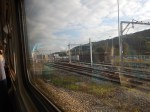
It looks like they are electrifying the depot.
Surely, enough electrification can be put up at Swansea to charge the trains and help them back to the South Wales Main Line..
The mathematics show what is possible.
Suppose the following.
- Hitachi can reduce the train’s average energy consumption to 2 kWh per carriage-mile, when running on battery power.
- Electrification at Cardiff and Swansea reduces the length of battery use to forty miles.
This would reduce the battery size needed to 400 kWh, which could mean that on a five-car train with four battery modules, each battery module would be just 100 kWh. This compares well with the 75 kWh battery in a New Routemaster bus.
Will it happen?
We are probably not talking about any serious risk to passengers, as the worst that can happen to any train, is that it breaks down or runs out of power in the middle of nowhere. But then using the single generator unit, the train will limp to the nearest station.
But think of all the wonderful publicity for Hitachi and everybody involved, if the world’s first battery high speed train, runs twice an hour between Paddington and Swansea.
Surely, that is an example of the Can-Do attitude of Isambard Kingdom Brunel?
Paddington To Oxford
The route between Paddington and Oxford stations is electrified as far as Didcot Parkway station.
The distance between Didcot Parkway and Oxford stations is about ten miles, so applying the Ian Walmsley formula and assuming the train is five-cars, we have an energy usage for the return trip to Oxford from Didcot of between 300 and 500 kWh.
If the five-car train has one generator unit,four battery modules and has an energy usage to the low end, then each battery module would need to handle under 100 kWh.
There are plans to develop a South-facing bay platform at Oxford station and to save wasting energy reversing the train by running up and down to sidings North of the station, I suspect that this platform must be built before battery trains can be introduced to Oxford.
If it’s not, the train could use the diesel generator to change platforms.
The platform could also be fitted with a system to charge the battery during turnround.
Paddington To Bedwyn
The route between Paddington and Bedwyn is electrified as far as Reading station, but there are plans to electrify as far as Newbury station.
The distance between Newbury and Bedwyn stations is about thirteen miles, so applying the Ian Walmsley formula and assuming the train is five-cars, we have an energy usage for the return trip to Bedwyn from Newbury of between 390 and 520 kWh.
As with Paddington to Oxford, the required battery size wouldn’t be excessive.
Paddington To Henley-on-Thames
The route between Paddington and Henley-on-Thames station is probably one of those routes, where electric trains must be run for political reasons.
The Henley Branch Line is only four miles long.
It would probably only require one battery module and would be a superb test route for the new train.
Paddington To Weston-super-Mare
Some Paddington to Bristol trains extend to Weston-super-Mare station.
Weston-super-Mare to the soon-to-be-electrified Bristol Temple Meads station is less than twenty miles, so if Swansea can be reached on battery power, then I’m certain that Weston can be reached in a similar way.
Other Routes
Most of the other routes don’t have enough electrification to benefit from trains with a battery capability.
One possibility though is Paddington to Cheltenham and Gloucester along the Golden Valley Line. The length of the section without electrification is forty-two miles, but unless a means to charge the train quickly at Cheltenham station is found, it is probably not feasible.
It could be possible though to create a real tri-mode train with a mix of diesel generator units and battery modules.
This train might have the following characteristics.
- Five cars.
- A mix of generator units and battery modules.
- Enough generator units to power the train on the stiffest lines without electrification.
- Ability to collect power from 25 KVAC overhead electrification
- Ability to collect power from 750 VDC third-rail electrification.
Note.
- The battery modules would be used for regenerative braking in all power modes.
- The ability to use third rail electrification would be useful when running to Brighton, Exeter, Portsmouth and Weymouth.
The train could also have a sophisticated computer system, that would choose power source according to route,timetable, train loading, traffic conditions and battery energy level.
The objective would be to run routes like Paddington to Cheltenham, Gloucester to Weymouth and Cardiff to Portsmouth Harbour, as efficiently as possible.
Collateral Advantages
Several of the routes out of Paddington could easily be worked using bi-mode Class 800 trains.
- But using battery trains to places like Bedwyn, Henley, Oxford and Weston-super-Mare is obviously better for the environment and probably for ticket sales too!
- If places like Bedwyn, Henley and Oxford are served by Class 801 trains with a battery option, it could mean that they could just join the throng of 125 mph trains going in and out of London.
- Battery trains would save money on electrification.
I also suspect, that the running costs of a battery train are less than those of using a bi-mode or diesel trains.
Conclusion
Hitachi seem to have the technology, whereby their A-train family can be fitted with batteries, as they have done it in Japan and their Sales Director in the UK, has said it can be done on a Class 395 train to use the Marshlink Line.
We may not see Hitachi trains using batteries for a couple of years, but it certainly isn’t fantasy.
Great Western Railway certainly need them!
Crossrail Gets A Convenient Hotel
This article on The Urban Developer is entitled London’s Newest Skyscraper Gets Green Light.
This is the first two paragraphs.
London’s Paddington will soon be home to a new 20-storey hotel tower, dubbed The Gateway Building, after planning permission was granted by Westminster council planners.
The Sheldon Square site will house the 113-metre-high hotel designed by architects Carmody Groarke for developer British Land. The hotel will provide access to the area’s new Crossrail station, with the third basement level expected to provide access to the Elizabeth Line — connecting Reading with London and Heathrow.
As they say, location is everything!
- Crossrail will whisk you to and from Heathrow.
- There’s not many hotels with direct access to the station underneath.
- For the businessman who has everything, Bond Street is only one stop away for the trophy wife to spend your hard-earned money.
- The City and Canary Wharf are just a few stops further.
I doubt the hotel will be a Premier Inn.
How many other skyscraper hotels will sprout up along Crossrail?
Each one will be another nail in the coffin of Heathrow Express.
Paddington Is Operational Again
Paddington Underground station on the Bakerloo Line has now got its escalators back and getting to the station for me, is now so much easier.
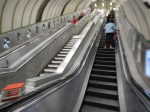
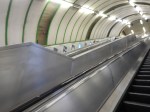
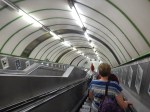


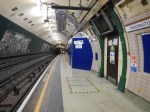
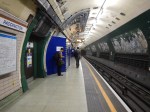
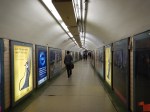


As the pictures show there seem to be quite a few new blue hoardings at platform level.
This map from carto.metro.free.fr shows the layout of the Bakerloo Line and Crossrail at Paddington.

Bakerloo Line And Crossrail At Paddington Station
Note.
- The Bakerloo Line runs roughly South-East to North-West through Paddington.
- The platform labelled 4 is the Southbound Bakerloo Line platform.
- The platform labelled 3 is the Nouthbound Bakerloo Line platform.
- The escalators run down to the platforms from the South-East
- Crossrail would appear to have an island platform between the two tracks.
There would appear to be two places on the platforms where blue hoarding have been put up to protect the works behind.
- The most obvious is the big blue wall that greets you as you come down the escalator, where some artistic tiling used to be.
- There are also blue hoardings at the London (South East) end of the platforms.
There is a pedestrian tunnel to Crossrail called the Bakerloo Line Link (BLL). A memeber of staff also told me that lifts will be installed to the Bakerloo Line.
This document on the TFL web site gives a bit more information.
Engineers will also carefully dig a new 165m tunnel underneath the station to enable passengers to interchange between the Bakerloo line and new Crossrail platforms, which will become operational from 2018. The new pedestrian link will incorporate escalators, lifts, stairs and new passageways in order to make interchanging between the Tube and Crossrail as easy as possible for passengers.
So it looks like the tunnel will go under the lines and come up between the two Bakerloo tracks. The length of one hundred and sixty-five metres would easily reach the Crossrail platforms.
I found this image on the web.
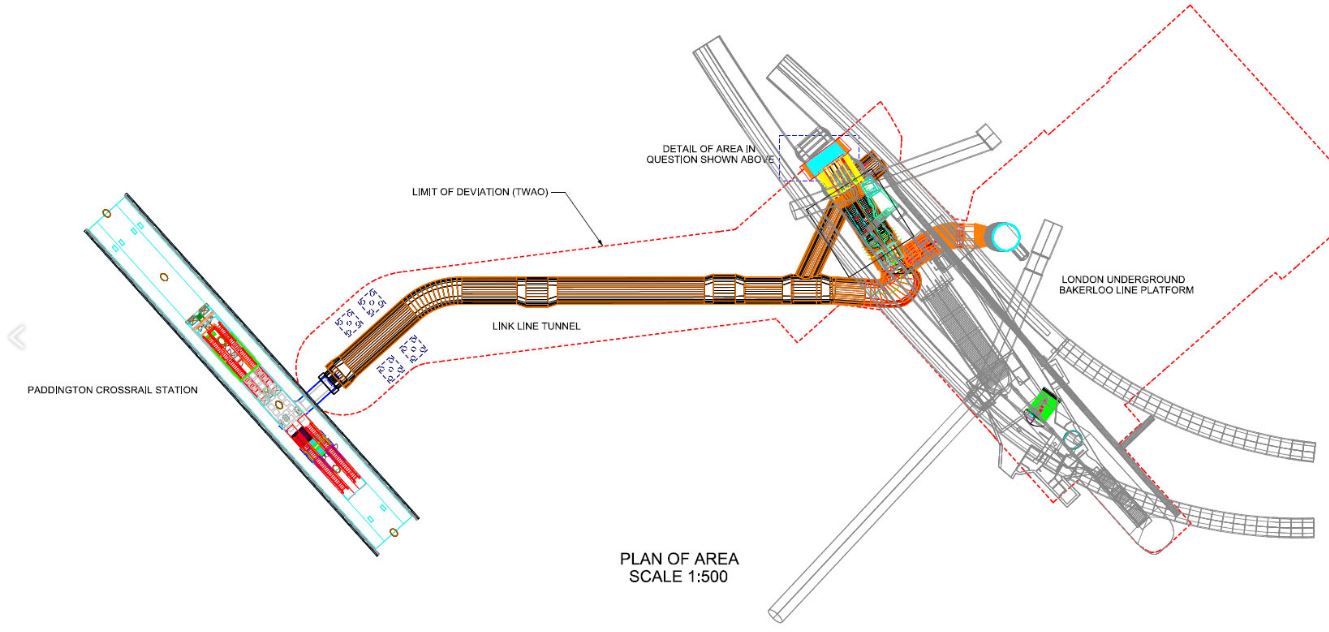
The Bakerloo Line Link At Paddington
It looks to be a very well thought out link.
- It is connected to the Crossrail station by escalators and lifts in the middle of the island platform at that station.
- The connection at the Bakerloo Line end, would appear to have lifts, stairs and escalators.
- Wll the lifts go direct to the surface as well?
- All routes seem to be direct to the central landing in the Bakerloo Line platforms.
- It may be a hundred and sixty five metres, but the design probably means most passengers will do it fairly fast.But I’m only speculating.
It will certainly be a very powerful interchange, as it will give a much needed connection to London’s least-developed Underground Line.
One good thing from the TFL document, is that it says this.
TfL will re-open the platforms in time for the Notting Hill Carnival on Sunday 28 and Monday 29 August.
So they beat their deadline by four weeks.
It certainly looks like a job well done!
Certainly, it makes my journey to the station easier.
The next thing needed is to get the Marks and Spencer reopened at the station.
Electrification At Paddington Station
I took this picture looking across the lines at Paddington station.
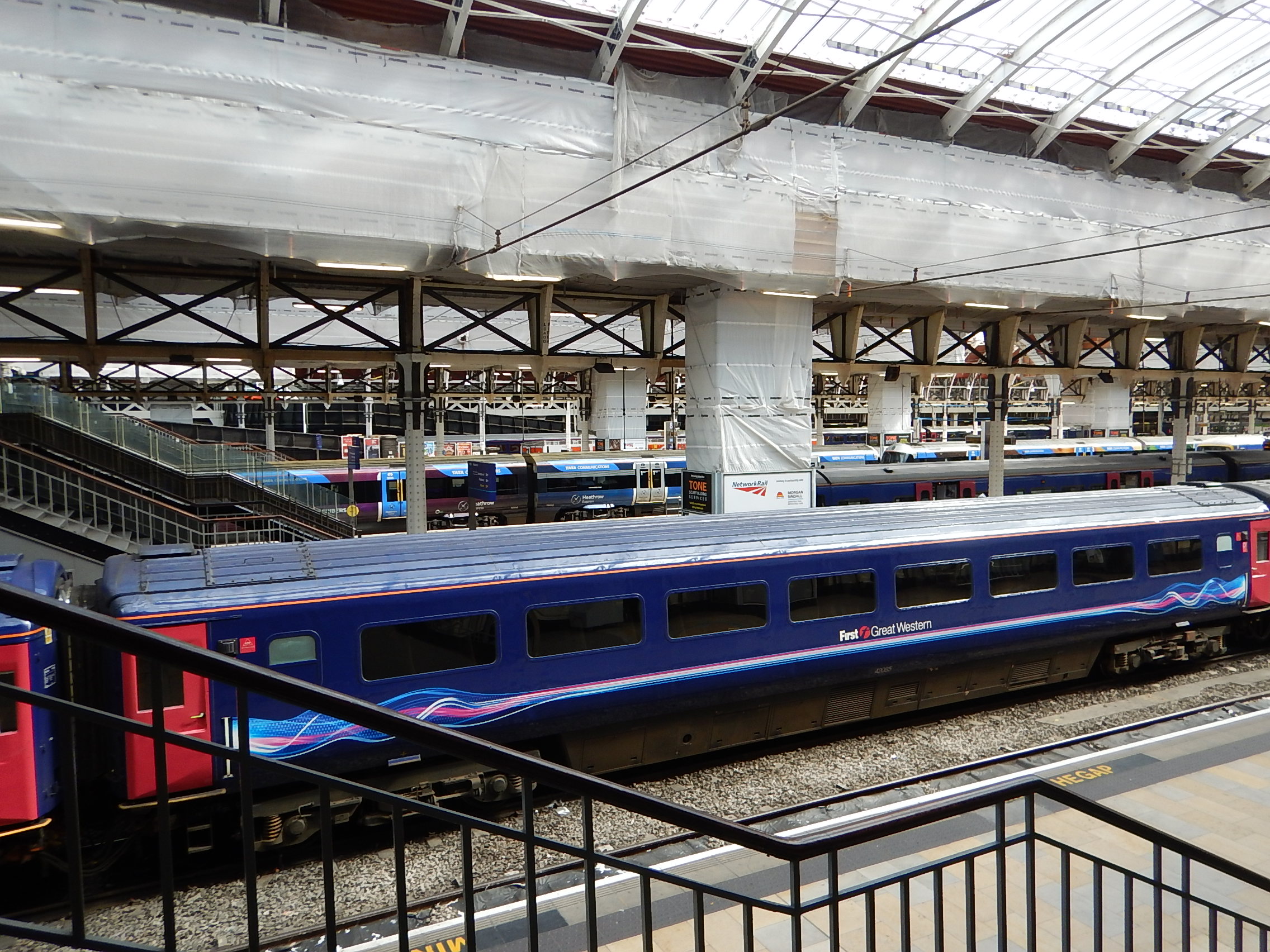
Electrification At Paddington
The nearest platform, which is number one, is not electrified yet. note the bar across the tracks which is used to support the wires.
This picture shows wires installed over platforms four and five.
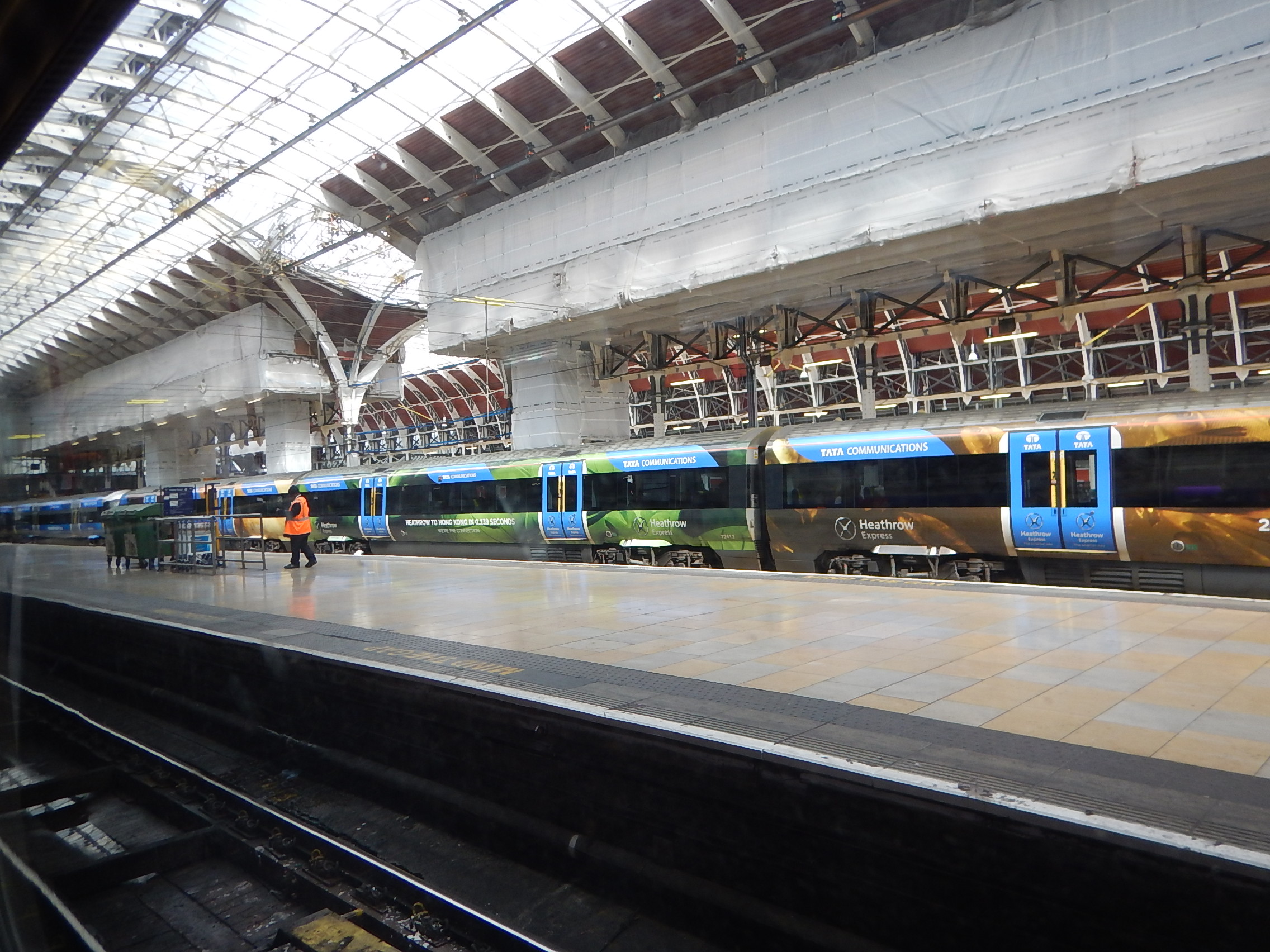
Electrification At Paddington
Note where the support is yellow, that you can just see a slim vertical support for the overhead wire.
It certainly seems to be more of a sympathetic design than the gantries I discussed in Aesthetic Problems With Overhead Wires On The Great Western
Underground Humour
This sign was displayed at Paddington Underground station today.
The staff do try to lighten the journey.
Getting To Paddington Station
Over the last couple of weeks, as I’ve been taking my Before Crossrail pictures and going to St. Ives, I’ve been going to Paddington station, rather a lot.
If I haven’t got tickets and I’m going to say Reading or Slough, I always go via Dalston Junction to get the tickets in the machine there, as I get the best price that is otherwise only available with the hassle of queuing up at a Ticket Office.
Transport for London’s recommended route says get to Highbury and Islington station and use the Victoria and Bakerloo lines to get to Paddington. It suggests a time of just over thirty minutes.
But there are some problems with this route, especially if I get a bus to Highbury and Islington.
- There is as much walking, as going to Dalston Junction.
- The ticket machines at Highbury and Islington don’t issue tickets from the Zone 6 Boundary, so I have to pay for an unneeded journey from Paddington to West Drayton.
- In the rush hour or at busy times, this route is horrendous, due to the inadequate Victoria line.
- Sometimes, buses to the station are hard to find, due to heavy traffic on the Balls Pond Road.
It may be the quickest at times, but it is never the easiest.
I tend to go one of two routes.
- I often use the Overground to Whitechapel and then the Hammersmith and City line to Paddington. This route has the advantage that it is air-conditioned all the way, but it takes about a dozen minutes longer, than the recommended route.
- If I take a bus to Kings Cross and then take the Hammersmith and City line, this can be around forty minutes.
But if I want to go on a main line train out of Paddington, it puts me at the wrong end of the station, unless I have a booked train.
Today, I’m going to Cardiff on the 13:45 train out of Paddington. As I’m taking my own gluten-free sandwiches and I won’t have to buy a drink, I shall use the Whitechapel route, leaving before 12:30.
Crossrail will change all this in that I’ll still get to Whitechapel in eight minutes and then it’ll be thirteen minutes to Paddington. So it should be under half-an-hour between the two stations and we’ll all probably be delivered to the convenient end of Paddington.
It is interesting to apply my mother’s rule of two minutes a station and five minutes for an interchange to the before and after Crossrail routes via Whitechapel.
Before Crossrail – 35 minutes
After Crossrail – 23 minutes
It’ll be fascinating to see whether the twenty-three minute figure is regularly beaten. Hopefully as the interchange at Whitechapel will be quicker, Paddington station will be much easier and the trains on Crossrail will be very frequent, this will be the case.
Another Talking Statue
I took this picture of the war memorial on platform one at Paddington station.
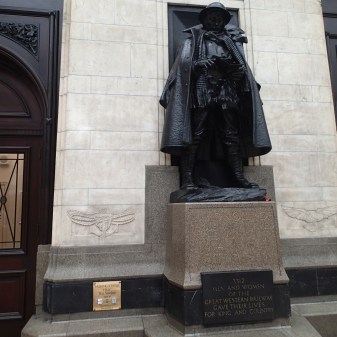
Another Talking Statue
A voice track has now been added.
 The Anonymous Widower