More Thameslink Trains Serving The East Coast Main Line From May 20th 2018
The National Rail timetable is now showing the following new Thameslink trains serving the East Coast Main Line.
There will be two trains per hour (tph) between Peterborough and Horsham.
- XX:26 and XX:56 – Peterborough
- XX:08 and XX;38 – Finsbury Park
- XX:00 and XX:30 – London Bridge
- XX:08 and XX:38 – Horsham
Note.
- Trains take two hours and 45 minutes.
- Stops include Huntingdon, St. Neots, Hitchin, Steveange and Finsbury Park, to the North of the Thames.
- The trains call at St. Pancras Thameslink, Farringdon, City Thameslink and London Bridge in the core.
- Stops include East Croydon, Gatwick Airport, Three Bridges and Crawley to the South of the Thames.
- The first train is 05:24 from Peterborough.
Trains generally leave Horsham at XX:25 and XX:55.
There will be one tph between Cambridge and Brighton.
- XX:54 at Cambridge
- XX:52 – Finsbury Park
- XX:15 – London Bridge
- XX:19 – Brighton
Note.
- Trains take two hours and 25 minutes.
- Stops include Royston, Hitchin, Steveange and Finsbury Park, to the North of the Thames.
- The trains call at St. Pancras Thameslink, Farringdon, City Thameslink and London Bridge in the core.
- Stops include East Croydon, Gatwick Airport, Three Bridges and Haywards Heath to the South of the Thames.
- The first train is 05:54 from Cambridge.
Trains generally leave Horsham at XX:07.
But going to Gatwick, I might go to Finsbury Park, where I can now get three trains per hour to the Airport.
- XX:08 taking around 70 minutes
- XX:38 taking around 70 minutes
- XX:52 taking around 52 minutes
But coming back, I would take the first train to London Bridge, from where I’d get a 141 bus to just outside my door.
Are The Trains Acceptable?
For my journey of an hour to Gatwick, the trains are just about acceptable.
But, in some ways, I think that passengers from Cambridge and Peterborough will only use Thameslink to South of East Croydon occasionally, as over two hours in a Class 700 train, is an experience, passengers will be reluctant to repeat.
I would do the following.
- Add wi-fi and power sockets.
- Add a few tables to make some groups of four seats, suitable for families.
- Add seat-back tables.
- Make the seats more comfortable.
I’d love to have five minutes with the idiot who signed off the order for these trains, which must be the worst new trains on the UK network. Perhaps, that’s not being harsh enough. I suspect they could be the worst new trains in the world!
I’ve had better passenger comfort in a Pacer, that I wrote about in Is This Really A Pacer In A New Outfit?.
But that journey was only between Rotherham and Sheffield, not say Cambridge and Gatwick.
Thameslink Is Now Serving Peterborough And Cambridge
This article in the Standard is entitled First Direct Trains From Cambridge To Brighton Via Central London Launch.
This is said about the initial service.
There will be one return service from Brighton to Cambridge, departing at 11.32am from Brighton and 2.14pm from Cambridge, and two between Horsham and Peterborough. These will depart at 10am and 1.30pm from Horsham and 9.46am and 1.17pm from Peterborough.
Do it looks like things are getting started.
Unfortunately, they’re not running on Saturday, when Greater Anglia is employing the dreaded buses.
Improving Services To Lincoln
Lincoln is one of those places, where, companies have promised better train services for years and they’ve never appeared.
The Wikipedia entry for Lincoln station under Future Services reads like a catalogue of broken promises and very little progress.
I think that it is time to think out of the box to provide a better service for the City.
Sorting Out Newark
Newark is an important interchange to get good services to and from Lincoln.
Because of the notorious Newark Flat Crossing, the railways around the town need improving.
Currently there are two fast trains to and between Lincoln and London a day in both directions, an hourly service to Newark and various other random services.
To make matters worse, the change at Newark Northgate station is often fifteen minutes or so.
These pictures were taken as I changed trains at the station for Lincoln on a fine day.
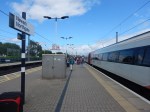
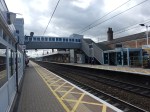
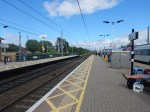
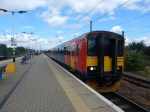
Is an hourly single coach Class 153 train between Lincoln and Newark Northgate an adequate service?
There are other services to Newark Castle station, but the two stations are separated by the notorious flat junction at Newark, which slows services on the East Coast Main Line.
I think in a well-thought out solution, the following will be achieved.
- Trains on the Nottingham to Lincoln Line will pass Newark without inconveniencing trains on the East Coast Main Line, possibly by means of a flyover or a dive-under.
- These trains would ideally call at both Newark stations.
- Hopefully lifts and stairs will make the changebetween the two lines step-free.
I wouldn’t be surprised to see a very unconventional solution to the problem.
Newark Northgate station could be closed and a flyover could take the Nottingham to Lincoln Line over the East Coast Main Line to the North of the town, where a new out-of-town station could be built, which had platforms on all lines and they were connected by lifts. I have called this arrangement A Four-Poster Station in the past.
The new station could also be a transport hub, with lots of car parking.
I changed twice at Newark Northgate today and in both instances I waited nearly fifteen minutes.
So why not just build a simple single-track flyover or dive-under and provide a comfortable electric shuttle bus between Northgate and Castle stations, that meets all trains and does the journey in less time, than the current wait?
Remember that Castle station is closer to the town centre.
It would be a cheaper flyover and the money saved might purchase some bigger new trains.
The service from Nottingham could even be run by tram-trains or like in Zwickau by diesel multiple units, which left the Nottingham to Lincoln Line at Castle station and then went walkabout in Newark.
The only certainty about the sorting of Newark, is that there are innumerable ways to do it and some could be unusual.
I doubt though, that we’ll see much improvement at Newark until after 2020.
The Great Northern And Great Eastern Joint Line
In Project Managers Having Fun In The East, I talked about hoe the Great Northern And Great Eastern Joint Line (GNGE) has been upgraded to be a valuable diversion route for freight trains travelling up and down the East Coast Main Line.
£230million has been spent to create a high-quality railway from Werrington Junction just North of Peterborough to Doncaster via Spalding, Sleaford and Lincoln.
Given the increasing traffic on the East Coast Main Line and the long wait for any relief in the shape of HS2 to Leeds, the North East and Scotland, I think we will see further development of the GNGE.
- I reported in To Dive Or Fly At Werrington, how plans are ongoing to improve the Southern connection of the line to the East Coast Main Line.
- The latest details on Werrington Junction are here on the Network Rail web site and talk about a 2020 completion.
- Could a new Lincoln Avoiding Line be built, so that freight trains avoid going through Lincoln Central station and the level crossings?
- The GNGE has lots of closed stations and some have been reopened in the last few years. Could more be reopened?
All these developments lead me to the conclusion, that there will be improved passenger services on the Peterborough to Doncaster route via Lincoln.
As the GNGE is now a high-class modern route, the single coach Class 153 train will be replaced by something like a two-car Class 158 train or Class 170 train.
The speeds of the three trains are.
- Class 153 – 120 kph
- Class 158 – 140 kph
- Class 170 – 160 mph
As Inter-City 125s are released by the arrival of new Class 800 trains, could we even see shortened versions running between Kings Cross and Yorkshire via Peterborough, Lincoln and Doncaster? These magnificent trains certainly perform well on secondary routes, as anybody, who has ridden in the cab between Edinburgh and Inversion can testify.
I wonder what times a well-driven Class 170 train could achieve. Currently Peterborough to Lincoln takes eighty minutes and Lincoln to Doncaster takes two hours.
I estimate that a Class 170 train could do the journey between Lincoln and Peterborough in about an hour, which is about the fastest time that can be achieved changing at Newark.
An estimate for the time between Lincoln and Doncaster could be about ninety minutes.
All of this speed improvement could probably be obtained without any major infrastructure improvements, but updating Werrington Junction and creating a new Lincoln Avoiding Line would improve things further.
Faster connections to Doncaster and Peterborough would bring various benefits.
- At Doncaster, it would give access to the East Coast Main Line services to the North East and Scotland.
- From 2018, at Doncaster, it would give access to the the improved TransPennine services to Leeds, Liverpool, Manchester and Manchester Airport.
- At Peterborough, it would give access to services to London, East Anglia and the South Midlands.
- From 2018, at Peterborough, there will be a connection to Thameslink, to take passengers all over London and the South East.
Surely these connections will benefit Lincoln most, but a fast service to Peterborough would also do something to improve connectivity at places like Sleaford and Spalding.
I suspect that when the new East Midlands Franchise is announced next year or when suitable trains are procured, we will see significant speed, frequency and comfort improvements on this route.
Reinstating The Complete Great Northern And Great Eastern Joint Line
With the next East Anglian Franchise, it is rumoured that there will be a marked improvement in train services in the region with new and refurbished trains everywhere, running many more services.
One possibility, is that the Bramley Line to Wisbech will be served by passenger trains, as a network of local services are improved and created around Cambridge with expansion and development needs and its soon-to-be-two stations.
I think that the possibility exists that the line between March and Sleaford might be reinstated to give freight trains to and from Felixstowe, direct access to the GNGE to get to Doncaster, avoiding Peterborough and the East Coast Main Line South of Yorkshire.
If you look at Google Maps, then the old rail line is clearly visible for most of the way between March and Sleaford. However, Whitemoor Prison has been build over the route.
If this Southern part of the GNGE were to be reinstated, could we see passenger services between Cambridge and Lincoln?
I think we would, as the engine of growth that is Cambridge, would then be directly connected by train to all the cities and larger towns of East Anglia and Lincolnshire.
I should say, that just as London dominates the South East, I believe that Cambridge with all its skills, ambition and success will dominate the East of England.
Lincoln to Cambridge could be about ninety minutes using a fully developed GNGE, as opposed to two hours now.
Conclusions
I have come to the following occlusions.
- The record of train companies in getting more direct services to Lincoln says a lot and I’d be very surprised if Lincoln sees more direct services to London.
- Newark is a basket case and sorting it will be difficult and probably expensive
- The best bet for improved services is to put faster trains on the upgraded Great Northern And Great Eastern Joint Line between Peterborough and Doncaster, which could mean Peterborough in an hour and Doncaster in ninety minutes from Lincoln.
- The trains for this should be available in 2018.
In the long term, I can see benefits in connecting March and Sleaford.
Ironically, the GNGE was built to bring coal to East Anglia from Yorkshire and it could be used to bring freight between Felixstowe and the North, in an efficient ,manner.
The Victorians seem to have got the route of the GNGE correct.
Just as they did the Varsity Line and the Borders Railway.
Will The Hertford Loop Line Be Upgraded?
In All Change On Thameslink, I said this about the Hertford Loop Line.
In the future, don’t discount improvements to the Hertford Loop Line, to get more trains through the area.
The Current Hertford Loop Line
So what are the characteristics of the Hertford Loop Line? Wikipedia introduces it like this.
The Hertford Line (also known colloquially as the Hertford Loop) is a branch of the East Coast Main Line, providing a commuter route to London for Hertford and other Hertfordshire towns and an occasional diversion route for the main line. The line is part of the Network Rail Strategic Route 8, SRS 08.03 and is classified as a London and South East Commuter line.
Riding on the line is an experience like many of the commuter lines in North London, that were electrified in the thirty years after the Second World War.
- It is double track throughout.
- It is electrified at 25 KVAC using overhead wires.
- It has a speed limit of 121 kph.
- It has eleven intermediate stations, most of which have two platforms.
- Hertford North station has two through platforms and a bay platform.
- The trains are elderly Class 313 trains, which usually run in six-car formations along the Northern City Line into Moorgate.
- It is connected to the East Coast Main Line using grade-separated junctions at both ends.
- According to the History in the Wikipedia entry for the Line, it was built to relieve pressure on the Digswell Viaduct.
I don’t know the condition of the line, the electrification and the signalling, but the line was used for the testing of ERTMS, so it can’t be too bad.
New Class 717 Trains
But changes are happening in that the Class 313 trains are being replaced with new six-car Class 717 trains, which are cousins of the Class 700 trains used by Thameslink.
Yesterday I was at Stevenage station and there were problems on the fast line North of the station, which meant that my train directly into Kings Cross was swapped from the slow to the fast line to get it out of the way and into Kings Cross as soon as possible
Obviously, this is probably not an unusual action, but you wouldn’t be wanting to put 121 kph trains like the Class 313 trains onto the fast lines, as they’d slow everything down.
The speeds of the various local and Cambridge trains that use the East Coast Main Line are.
- Class 365 trains – 160 kph (100 mph)
- Class 387 trains – 175 kph (110 mph)
- Class 700 trains – 160 kph
- Class 717 trains – To Be Confirmed
I would suspect that because of the need to occasionally run on the fast lines, that the Class 717 trains may well be 160 kph units. This would also mean that all the trains running on the Cambridge Line would be 160 kph trains or faster.
There is a factor about the order for the Class 717 trains, that doesn’t seem to have been noticed. At present there are effectively twenty-two six-car elderly Class 313 trains working the suburban services. These are being replaced with a fleet of twenty-five six-car modern Class 717 trains.
Consider.
- The Class 717 trains could be substantially faster, than the Class 313 trains.
- The Class 717 trains will handle stops faster.
- The Class 717 trains will be more passenger-friendly, probably like the Class 700 train, I wrote about in A First Ride In A Class 700 train.
- The Class 717 trains will have lots of gizmos and automation to aid staff and to inform and entertain passengers.
- Wi-fi could even be fast and free on the Class 717 trains.
Add all of these factors together and I believe that there is going to be a massive increase in capacity on the services out of Moorgate. Unless of course, they park some of the extra new trains in sidings.
I suspect too, that Govia Thameslink Railway are hoping thast new trains on the Northern City and Hertford Loop ines will increase ridership and poach customers from rival services.
Voltage Changeover At Drayton Park
In the previous section, I noted that automation on the new Class 717 trains will assist staff.
One problem is the AC/DC changeover at Drayton Park. This may not be exactly the same as the similar voltage changeover at Farringdon on Thameslink, that will be performed hundreds of times a day by Class 700 trains. But it surely won’t be much different.
As a Control Engineer, who has experience in industrial automation, I can’t believe that a modern train won’t change power pick-up automatically, much faster and in a more reliable way, than a forty year old train.
As the electrical systems on the two trains must be virtually identical, by the time the Class 717 trains enter service, any power change on the Class 700 trains, will surely be fully debugged.
I’m sure Siemens will get this changeover to work smoothly, but on the Northern City Line, I’ve felt since I rode the of Bombardier’s Class 379 IPEMU prototype at Manningtree, that the line should be run using onboard energy storage, so that the tunnels are electrically dead.
The other alternative would be to use an overhead rail at 25 KVAC, which is what the Germans or Swiss would do.
Local And Cambridge Branch Trains On The East Coast Main Line
What local and Cambridge Branch trains will be running on the East Coast Main Line, between Hitchin and Kings Cross?
- Thameslink – 2 tph Peterborough to Horsham – |Stopping Pattern Unknown
- Thameslink – 2 tph Cambridge North to Brighton – Stopping Pattern Unknown
- Thameslink – 2 tph Cambridge to Maidstone East – Stopping Pattern Unknown
- Great Northern – 1 tph Peterborough to Kings Cross – Semi-Fast including stop at Welwyn North
- Great Northern – 1 tph Peterborough to Kings Cross – Stopping including stop at Welwyn North
- Great Northern – 2 tph Cambridge to Kings Cross – Non-Stop
- Great Northern – 1 tph Cambridge to Kings Cross – Semi-Fast
- Great Northern – 1 tph Cambridge to Kings Cross – Stopping
- Northern City – 3 tph Moorgate to Welwyn Garden City – Stopping
- Northern City – 2 tph Moorgate to Hertford North – Stopping via Hertford Loop
- Northern City – 1 tph Moorgate to Letchworth Garden City – Stopping via Hertford Loop
So we get the following totals.
- 6 tph between St. Pancras and Finsbury Park
- 6 tph between Kings Cross and Finsbury Park
- 6 tph between Moorgate and Finsbury Park
- 18 tph between Finsbury Park and Alexandra Palace
- 3 tph between Alexandra Palace and Hertford North via Hertford Loop
- 15 tph between Alexandra Palace and Welwyn Garden City
- 12 tph between Welwyn Garden City and Stevenage – 2 stop at Welwyn North
- 1 tph between Hertford North and Stevenage via Hertfood Loop
- 13 tph between Stevenage and Hitchin
- 4 tph bertween Hitchin and Peterborough
- 9 tph bertween Hitchin and Letchworth Garden City
- 8 tph between Letchworth Garden City and Cambridge
Obviously on the East Coast Main Line, there is a mixture of fast, semi-fast and stopping trains, but as the whole route is quadruple track between Finsbury Park and Hitchin, this service pattern could probably be easily handled.
Simple Cross-Platform And Same-Platform interchanges
There are three different London end destinations for local services on the Southern section the East Coast Main Line.
- St. Pancras and the South, through the Canal Tunnels.
- Kings Cross, using the East Coast Main Line.
- Moorgate using the Northern City Line.
Passengers to and from these stations, will need to get to and from any station on the following routes.
- The East Coast Main Line to Peterborough.
- The Cambridge Line to Cambridge
- The Hertford Loop Line
Quite a number of stations will be ideal places to change if you can’t get a direct train. These stations and some others might become recommended interchanges.
- Finsbury Park
- Alexandra Palace
- Potters Bar
- Welwyn Garden City
- Stevenage
- Hitchin
Will these stations be given a platform layout, where interchange between different services entails just getting off one train and then getting another train from the same platform face or one at the other side of the platform?
Some stations like Finsbury Park, Alexandra Palace and Stevenage already have this layout or it has been substantially implemented.
But I think it essential, that all recommended interchange stations have simple step-free changes.
Passengers Will Duck And Dive
In a few years time, passengers will be very savvy and armed to the teeth with apps, cards and electronic devices to use the network in the fastest and most cost efficient way possible.
So the passenger wanting to go from say Ashwell and Morden to say Gillingham will be guided through the Thameslink network according to how the trains are running, by their large number of intelligent friends.
I do this now, often using National Rail’s information web site from my phone, to check routes and make sure, I don’t get stuck in Croydon, Scunthorpe or Manchester.
This passenger freedom and flexibility, will not be bad for train companies, as how long before an app is developed, that sends passengers on less crowded routes.
looking at the Hertford Loop Line, no passenger is going to mind being recommended to take a Hertford Loop Line train one day and a main line train another, provided the cost is acceptable for both journeys.
Could More Trains Run On The Hertford Loop Line?
It is interesting to compare the 15 tph between Alexandra Palace and Welwyn Garden City and the 3 tph between Alexandra Palace and Hertford North on the Hertford Loop.
As the line is self-contained with grade-separated junctions at both ends and a bay platform at Hertford North and Gordon Hill stations, running 3 tph on the line, must be way under the maximum capacity, when there are double track electrified lines with lots of stations, like the East London Line that can handle 16-20 tph.
I think we’ll see the line improved in the following way.
- An upgraded speed limit of perhaps 120 kph.
- Longer platforms if needed
- Perhaps a couple of reopened or new stations.
- Better interchange at Alexandra Palace and Stevenage stations.
I am certain, this would enable some extra trains to serve the line to perhaps Stevenage, Peterborough or Cambridge.
Before I look at the train services on the Hertford Loop Line in detail, I’ll look at other issues for local and Cambridge Line trains on the two Northern branches of the Thameslink Great Northern network.
Upgrade Of The Slow Lines Between Finsbury Park and Alexandra Palace Stations
I found this statement in a Network Rail document posted on the web.
The section is entitled Upgrade to down slow 2 and creation of up slow 2 line between Finsbury Park and Alexandra Palace.
This is said.
Up slow 2 and down slow 2 lines available for passenger use with increased linespeeds with a new platform provided at Finsbury Park in the up direction. No platform faces are provided at Harringay and Hornsey. The scheme allows some Hertford North/Gordon Hill to Moorgate inner suburban services to operate independently of outer suburban services and long distance high speed (LDHS) services, which removes a timetable constraint.
I would assume it means that there are two slow lines in both directions, one of which leads directly to the Hertford Loop Line. This is also said.
Due to the focus on the off peak timetable, the line upgrades between Finsbury Park and Alexandra Palace have a smaller impact, as the majority of services call at intermediate stations on this section. However, provision of platform faces on the upgraded lines has the potential to ease timetabling constraints on the busy Alexandra Palace – Welwyn section.
The only stations without platform faces on the upgraded lines in this section are Harringay and Hornsey.
It would appear to me, that this could be a half-finished job.
The ability to separate Hertford Loop Line services from those on the East Coast Main Line has been enabled, but no provision has been made to allow separated Hertford Loop Line services at Harringay and Hornsey stations. It’s not that the two intermediate stations are lightly used, as these are the usage statistics for 2014-2015.
- Bowes Park – 0.96 million
- New Southgate – 0.69 million
- Alexandra Palace – 1.42 million
- Hornsey – 1.35 million
- Harringay – 1.26 million
- Finsbury Park – 6.26 million
It’s not as though Hornsey and Harringay hardly see any passengers.
So for the present time, all passenger services must share the same slow lines between Finsbury Park and Alexandra Palace.
Have Network Rail got the planning of this section right?
Finsbury Park Station
Three routes come together at Finsbury Park station.
- Thameslink – 6 tph between St. Pancras and Finsbury Park
- Great Northern – 6 tph between Kings Cross and Finsbury Park
- Northern City – 6 tph between Moorgate and Finsbury Park
I wonder if we’ll see a simple cross- and same-platform interchange, so that Northbound passengers can get off their train from Kings Cross, Moorgate or St. Pancras at Finsbury Park and without changing platforms get a train to any station towards Cambridge or Peterborough, either up the East Coast Main Line or the Hertford Loop Line. Obviously going South, passengers will need to reverse the process.
To complicate matters, Finsbury Park station will be one of the main interchanges between the Thameslink Great Northern network and the Piccadilly and Victoria Lines.
This map from carto.metro.free.fr, shows the lines at Finsbury Park station.
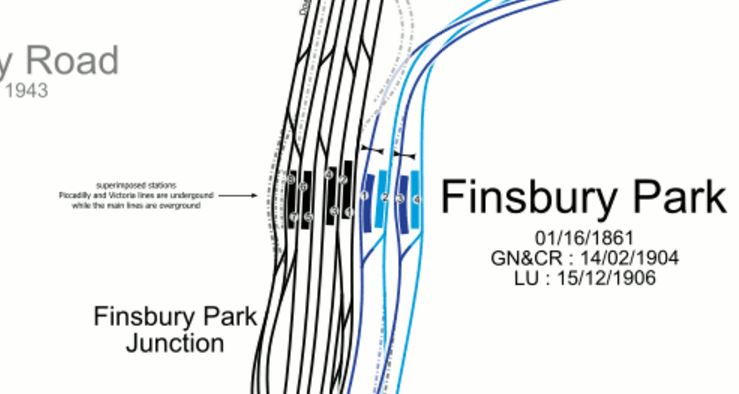
Lines At Finsbury Park Station
Finsbury Park station certainly has a lot of platforms and crossovers and it strikes me that given the current work at the station, that Network Rail has an acceptable solution.
I took these pictures at the station.



There is plenty of work to do and questions to answer before the station is ready for Thameslink.
- Will Northern City Line services to use platforms 1 and 8?
- Will Kings Cross services continue to use platforms 2 and 7?
- Platforms 2 and 3 and Platforms 6 and 7 are either side of a single track, although Platforms 3 and 6 don’t seem to be currently used.
- Is the work outside of platform 8, creating two new platforms 9 and 10?
- Will the spiral staircases to the Underground be adequate?
There has been no indication as to which platforms Thameslink will use, although all platforms at the stations are probably long enough for the two-hundred metre long Thameslink trains.
But our French friends at carto.metro.free.fr have a map, which shows the routes between the Canal Tunnels, that take Thameslink trains between St. Pancras and the East Coast Main Line.
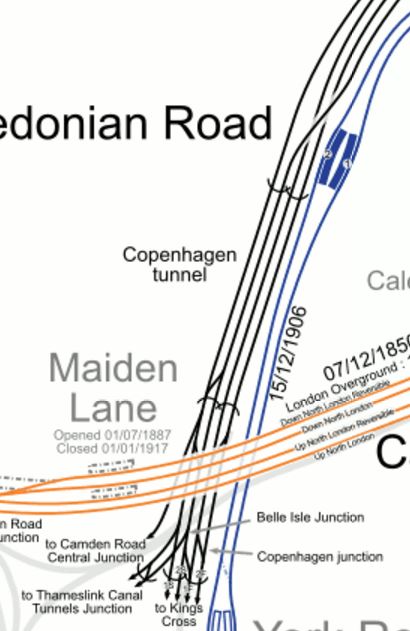
It would appear that the lines through the Canal Tunnels connect directly to the slow lines, that go through Finsbury Park.
- The Canal Tunnel lines are shown at the bottom left of the map.
- There is even a convenient flyover taking the up slow lines to the correct side of the main lines for Thameslink.
So it would appear that the Thameslink lines South of Finsbury Park will take the same route as local services out of Kings Cross do now.
Remember that between Finsbury Park and Alexandra Palace stations, there are two slow lines both ways, which will have to accommodate 18 tph, empty stock movements and some freight trains.
I feel this means that at Finsbury Park, there is sufficient capacity to adopt a logical strategy, that will be easily understood and remembered by passengers.
I suspect that the platform allocations will be as follows.
- Platform 1 – Services to Moorgate – 6 tph
- Platform 2 – Services to Kings Cross and Thameslink – 12 tph
- Platform 7 – Services up the East Coast Main Line – 15 tph
- Platform 8 – Services on the Hertford Loop Line – 3 tph
Given all the advanced signalling in the area and on the trains, I don’t think these frequencies are unreasonable.
Could we also see Thameslink trains on Platforms 2 and 7 opening doors on both sides?
Possibly, as there may be advantages in this!
Whilst at Finsbury Park this morning, I saw an outer suburban train stop in Platform 4 and quite a few passengers got off to continue their journey on the Underground. After Thameslink opens, would there be any value in having a cross platform interchange to Platform 3, where Thameslink trains would open their doors on both sides, so giving extra connections?
Obviously, if it would work going into London, it would work going out of the capital.
But these are only my speculation.
Moorgate Station
Moorgate station is one of those outposts of the UK rail network, that has had a sorry and tragic history.
At Moorgate, the Northern City Line tunnels are above those of the Northern Line, in an unusual double-decker station design.
This map from carto.metro.free.fr shows the two lines.
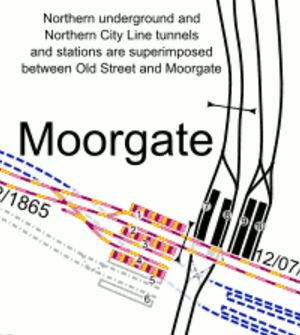
Lines At Moorgate Station
The caption says this.
Northern Underground and Northern City Line tunnels and stations are superimposed between Old Street and Moorgate.
These are pictures that I took of the Northern City Line station.

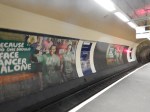

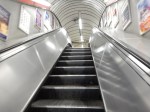
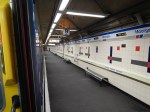
Note.
- The two platforms are not spacious by modern standards.
- Two escalators connect the Northern City Line platforms to the ticket hall.
- Two fairly long escalators lead between the Northern City Line and Northern Line platforms.
- The platforms could do with a well-designed makeover.
In addition, the two Northern Line platforms have a pair of escalators connecting them to the booking hall.
The four platforms are certainly well connected to each other and to the surface by escalators. The only thing lacking is a lift for step-free access to connect the booking hall to both levels of platforms.
The current Underground ticket hall will be extended and become the new Western ticket hall for the double-ended Liverpool Street Crossrail station.
On this page of the Crossrail web site, this is said.
The Moorgate worksite also incorporates a 42m deep shaft that provides ventilation and emergency access to the new ticket hall. The Moorgate shaft is currently being used by our station tunnelling contractor to build an access passage linking the Crossrail platforms to the Northern line. Later this year our Eastern Running Tunnels contractor will use the shaft to carry out out concrete works to form the foundation slab that will support the trackwork in the tunnels.
I have to ask if this access passage linking the Crossrail platforms to the Northern Line, will link to the Northern City Line as well. If it does it will probably be step-free and have a high-capacity as well.
But even if it doesn’t, access to and from the Northern City Line, will still be by two escalators from the ticket hall and two from the Northern Line platforms.
I suspect that as the Northern City and Northern Lines are superimposed on each other, I do wonder if a large enough corner has been identified, where a lift can serve all levels of the station.
If we have Crossrail going through a short distance away, where forty-eight (2 x 24) massive trains per hour will be stopping, even if only a small proportion of passengers, wanted to use the Northern City services out of Moorgate to explore the delights of North London and Hertfordshire, the current 6 tph out of Moorgate will be seriously inadequate.
But the Northern City Line is getting new Class 717 trains and as I said earlier, these trains will bring in a large increase in capacity.
So how many trains per hour could work the lines into the two-platform terminus at Moorgate?
At present Moorgate handles 6 tph most of the day, but during the peaks the line handles at least 9 tph.
But even 9 tph is very small compared to the upwards of thirty tph handled at both the two-platform Brixton and Walthamstow Central termini on the Victoria Line.
Given that the Class 717 trains are versions of the Class 700 Thameslink trains, that are planned to run at 24 tph under London, with a voltage change at Farringdon, I suspect that the theoretical limit for the number of trains per hour into Moorgate is higher than the 9 tph achieved by the scrapyard specials in the peak.
So is London going to get a new high-capacity route from the City to North London and Hertfordshire, that links to both Crossrail and Thameslink?
You bet it is!
Consider.
- Moorgate can probably handle up to fifteen to twenty Class 717 trains per hour, with signalling and operational improvements.
- The Class 717 trains will hold more passengers than the Class 313 trains.
- The greater performance of the Class 717 trains will probably speed up the services.
- Finsbury Park station should be ready to accept the higher frequency and give same platform interchange to Thameslink.
- The doubling and improvement to the slow lines between Finsbury Park and Alexandra Palace will allow the increased frequency to be handled.
If twelve trains per hour ran into Moorgate and they split equally between Welwyn Garden City and the Hertford Loop Line as they do now, that would give a ten minute interval on both routes, which is twice as many trains as the current time.
I think the biggest problem will be to persuade the RMT, that running say twelve trains or more per hour into Moorgate, is safe.
Harringay Station
Harringay station has two platforms, with one for each direction.
This Google Map shows Harringay station.
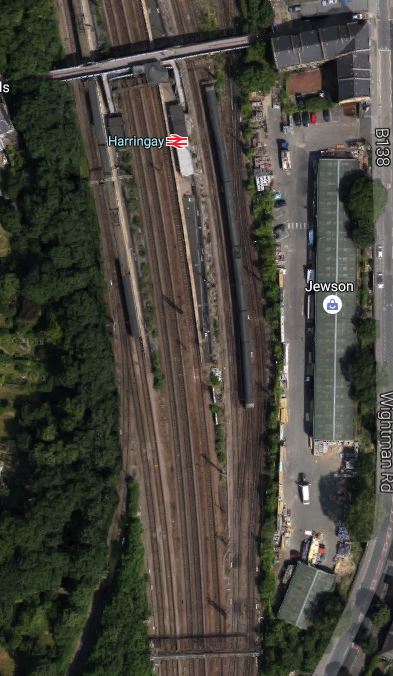
Harringay Station
Note.
- The bridge across the tracks with steps leading down to the two platforms.
- The station is not step-free, with steep staircases.
- There is no platform faces on the newly-created second pair of slow lines.
To be fair, Harringay is a dump and one of the worst stations on the line, but an architect with flair could make it work, with cross platform interchange between trains on both pairs of slow lines.
These pictures show Haringay station.

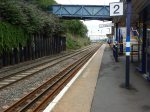

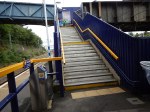


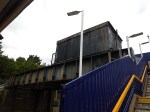
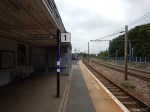
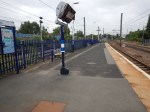
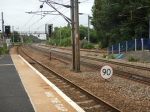
Note.
- The station certainly is a dump.
- The two down slow lines lie between platform 2 and the retaining wall.
- In a couple of pictures, you can see the Harringay Curve that connects the Gospel Oak to Barking and East Coast Main Lines.
- Platform 1 actually lies between the two slow lines.
The station obviously needs a rebuild.
- This would incorporate acceptable passenger access and customer services.
- There appears to be space to create a double-sided up platform 1.
- Platform 2 is probably easier to move between the two slow lines.
But rebuilding would probably mean complete closure of the lines through the station and a large degree of inconvenience.
I doubt we’ll see little more than a general tidying up in the near future, with the station handling all of the stopping traffic and all other services, like freight and empty stock movements using the two lines without platform faces.
One advantage of the current layout, is that non-passenger services are kept away from the platforms.
Hornsey Station
Hornsey station has two platforms, with one for each direction.
This Google Map shows Hornsey station.
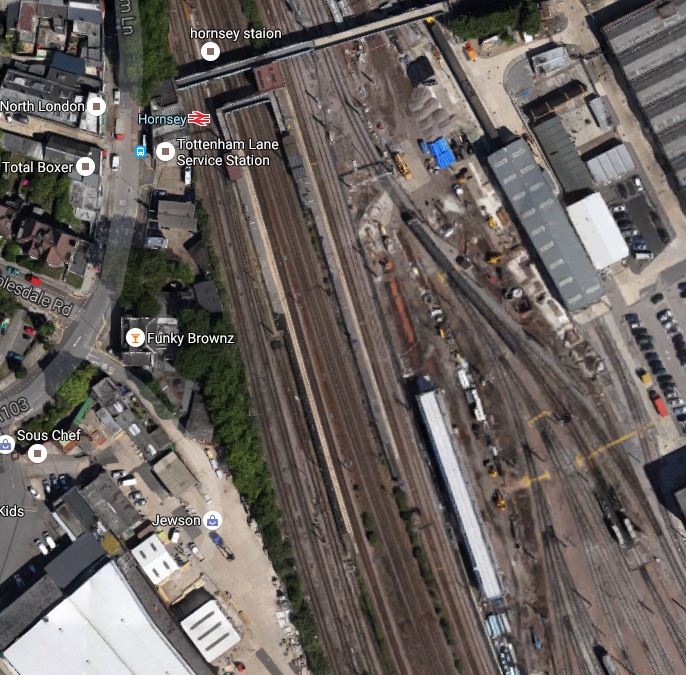
Hornsey Station
These pictures show Hornsey station.
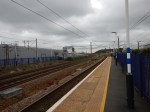
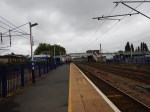
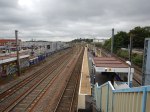
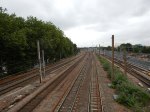
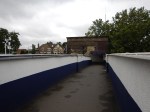



Note.
- The two fast lines go between the two platforms.
- The current down platform is on the inner of the two slow lines and is actually between the two slow lines.
Like Harringay, Hornsey can be improved with respect to passenger access and customer services.
Building an island down platform looks possible, but as at Harringay, the current layout works safely.
Alexandra Palace Station
Alexandra Palace station has four platforms, but the station has the air of a work-in-progress as although there is some easy interchange between services, it’s not perfect or step-free.
This Google Map shows the station.
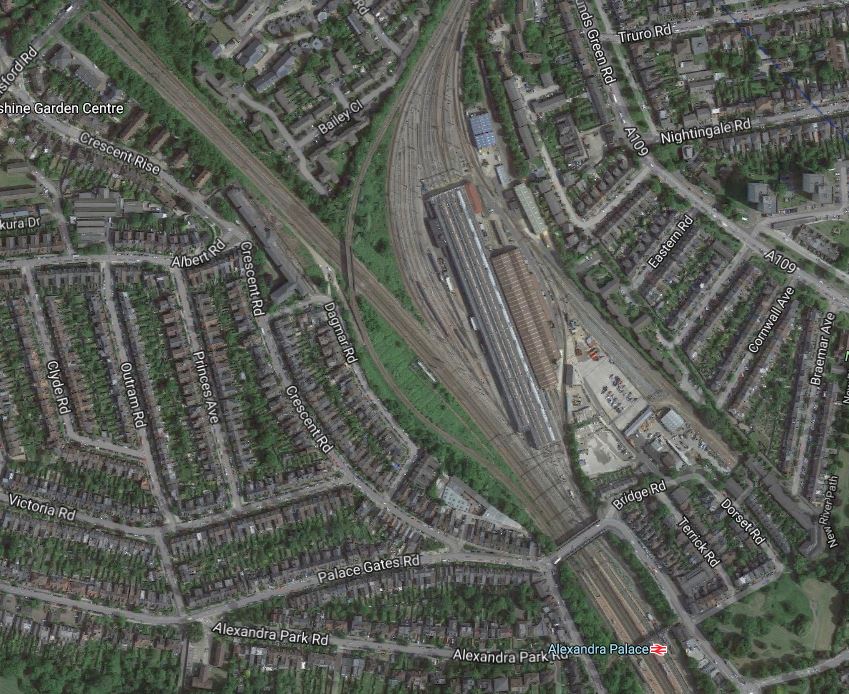
Alexandra Palace Station
Note.
- The Hertford Loop Line curves across the East Coast Main Line.
- Train stabling for the East Coast Main Line sits to the North of the station.
- Hertford Loop Line services have to stop at the two outer platforms in the station.
- Crossrail 2 might serve this station.
Knowing the station well, I feel that a good station can be created here, where Thameslink, Great Northern to Cambridge and Peterborough, and Hertford Loop Line services have a simple cross- or same-platform interchange in the Northerly direction.
These are pictures of the station.

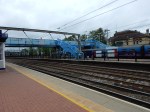
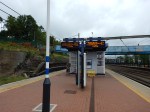
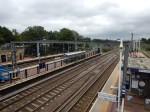
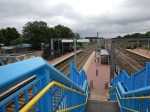
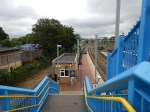


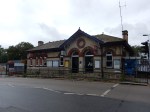
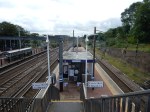
Note.
- If you are going North and you’re on the wrong train, you have a cross-platform interchange on Platforms 2 and 4 at Alexandra Palace station.
- Trains for the South can stop at either platforms 1 or 2.
- The station is not step-free, but lifts could probably be added to the existing bridge.
- The Yard cafe at the station is excellent and I had a very good gluten-free frittata.
I never would have thought when I used to use the station in the 1950s and 1960s, that it would grow up to be a very capable station.
Other Stations Between Alexandra Palace And Welwyn Garden City
The stations on the Main Line are a bit of a mixed bunch.
- Some have four platforms and some have just two.
- Some are step-free and some are not.
- Some are modern and some are fairly old and need updating.
These pictures give a flavour of the stations.
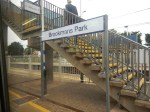
Welwyn Garden City station is unique, as it is one corner of a shopping centre, called the Howard Centre
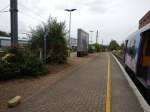

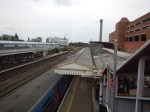
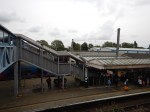
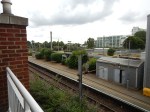




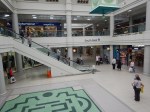
Is it the only station in the UK, with a Boots, a large proper Marks and Spencer, a Next and a Monsoon, with John Lewis not far away?
Trains terminating at Welwyn Grden City seem to use platforms 3 and 4 by the Howard Centre, using the sidings to the North of the station if required. On leaving the station, the trains cross the main lines and get to the up slow line using a flyover.
Welwyn Garden City is certainly a well-designed station to return trains to London.
Gordon Hill Station
Gordon Hill station must be the only station with the same name as a footballer.
I’d never been until I visited a few days ago and I’d rather expected a typical bog-standard, rather poor two-platform suburban station.
This Google Map of the station gives a few clues about the station.
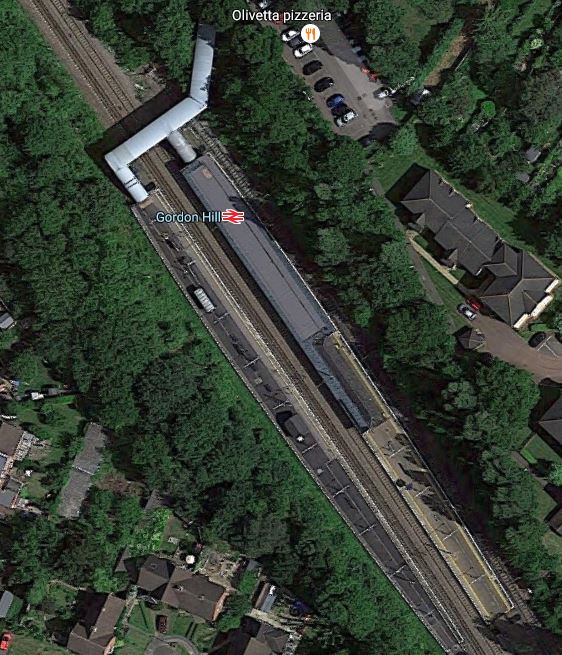
Note that it appears that the station could have once had four platform faces and these could easily be long enough for eight car trains.
What I did find was a charming early twentieth-century station as these pictures show.
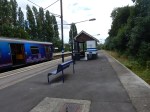
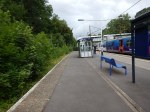
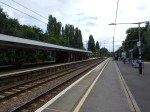
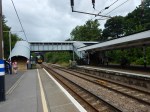
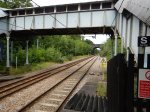
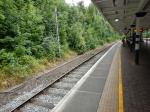
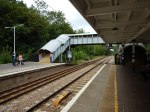

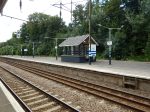
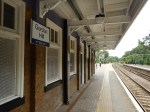
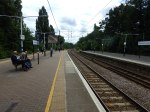
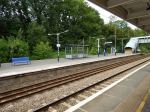
Note.
- The station has three working platform faces; two through and a bay one on the Eastern side.
- There would appear to be space on the Western side to create a fourth platform.
- The bridge is of no architectural merit and probably should be replaced by one giving full step free access.
I believe that the station could play a major port in an upgraded Hertford Loop Line, in that if the station was to be converted to a full four-through platform station, then it would create a passing loop that the line needs to increase capacity.
In some ways Gordon Hill station, shows how truly bad our planning was in the first half of the twentieth century. The station opened in 1910, so was well established when Chase Farm Hospital opened just after the Second World War, just a short distance to the North. Hopefully, these days, it would be hoped that when a new hospital is built, that it is connected properly to the local transport network. Since it was built the hospital has had a chequered history and with the way healthcare is changing and perhaps requiring smaller and more specialised hospitals, I can see a time, when the hospital site becomes housing, which to increase its green credentials could be connected by a footpath and cycleway to Gordon Hill station.
If the hospital stays operational, it should surely have a sensible modern connection to the station and not just the odd bus every hour or so.
This Google Map shows the hospital and the station.

Chase Farm Hospital And Gordon Hill Station
We should think more holistically and not assume that everybody has a car.
Hertford North Station
Hertford North station is one of the busiest stations on the Hertford Loop Line and one of only two stations with more than two platforms.
This Google Map shows the station.
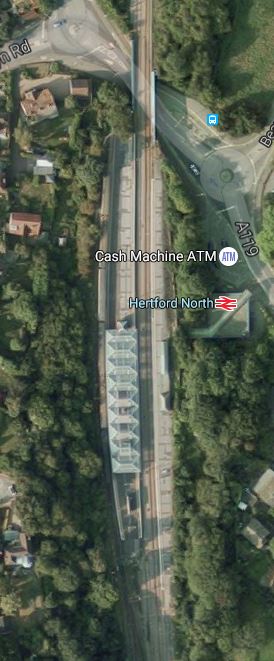
Hertford North Station
These are some pictures of the station.
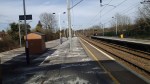

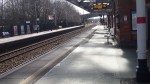
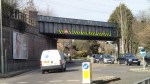
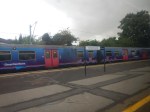
I feel that with some clever engineering that Hertford North station can be upgraded into a four-platform station with two passing loops.
Other Stations On The Hertford Loop Line
All the other stations seem to be two platform stations, with minimal facilities and little or no parking.
With more and better trains, increased links to the stations and perhaps some better parking, I wouldn’t think it unfeasible to increase the passengers using the stations on the loop.
There might possibly be a case for reopening Stapleford station.
The Digswell Viaduct And Welwyn North Station
The two-track section over the Digswell Viaduct and through Welwyn North station is a major bottleneck on the East Coast Main Line.
The Wikipedia entry for the viaduct says this.
The viaduct carries the East Coast Main Line, which has to narrow from four tracks to two to cross the viaduct, making it a bottleneck restraining capacity over this strategic transport route.. This problem is exacerbated by Welwyn North railway station situated at the northern end of the viaduct, which blocks the line while trains are stationary and two tunnels to the north. Several ideas to overcome the limitations of the viaduct and station without damaging the viaduct’s essential historic character and rhythmic design are periodically discussed.
In some ways, the station is more of a problem than the viaduct. Every stop at the station and there are just two trains per hour in both directions, effectively blocks the main line for a few minutes. It’s a bit like having a level crossing on a motorway.
If the viaduct were to be rebuilt to four tracks, which these days with modern construction methods is probably a very expensive possibility, this would still leave the problem of the station, which is on a very restricted site. Wikipedia also says this about the station.
The station is a rare survival of architecture from the early days of the GNR and this is now recognised with listed building status. The main station building, the footbridge, the tunnel portal to the north and Digswell Viaduct to the south are all Grade 2 listed.
This leads me to a very extreme solution to the problem.
Welwyn North station should lose most or all of its train services.
This Google Map shows the station and the viaduct.
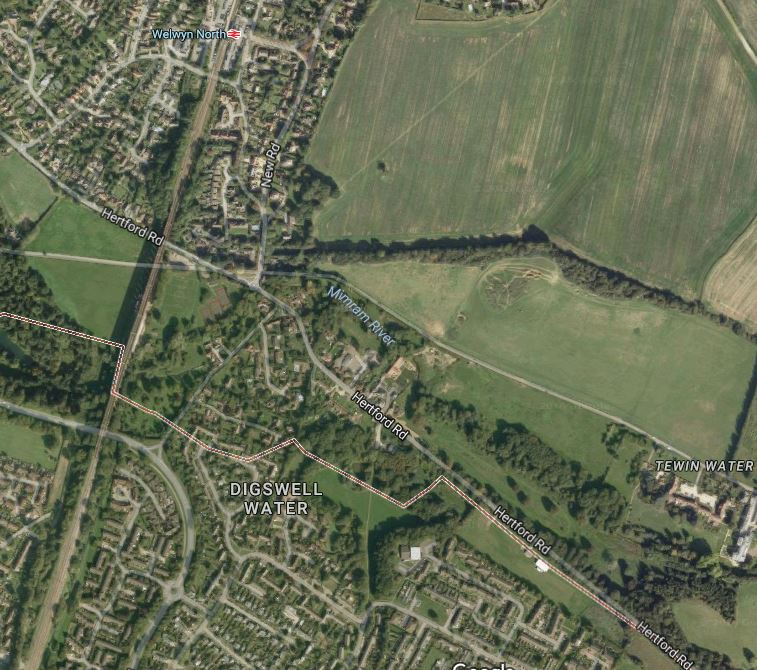
Digswell Viaduct And Welwyn North Station
Perhaps, a better solution would be a mixture of road and rail improvements .
- Improve the traffic routes from the area to other stations at Knebworth and Welwyn Garden City.
- Provide more car parking at Welwyn Garden City and Stevenage stations.
- Provide a free and frequent shuttle bus between Stevenage and Welwyn Garden City stations calling at Welwyn North and Knebworth stations.
- Build a new station at Stapleford on the Hertford Loop Line.
Perhaps a parkway station could be built in the South of Stevenage on the Hertford Loop Line.
Elimination of the stopping of trains at Welwyn North would lead to the following.
- Extra paths in both directions through the station.
- Services like Thameslink and the Great Northern services to Cambridge would save a few minutes.
- The expresses to and from the North would be able to provide a faster and more reliable service.
In my view, we should go the whole way and close Welwyn North station.
A South Stevenage Parkway Station
This Google Map shows the area between Stevenage and Watton-At-Stone stations.
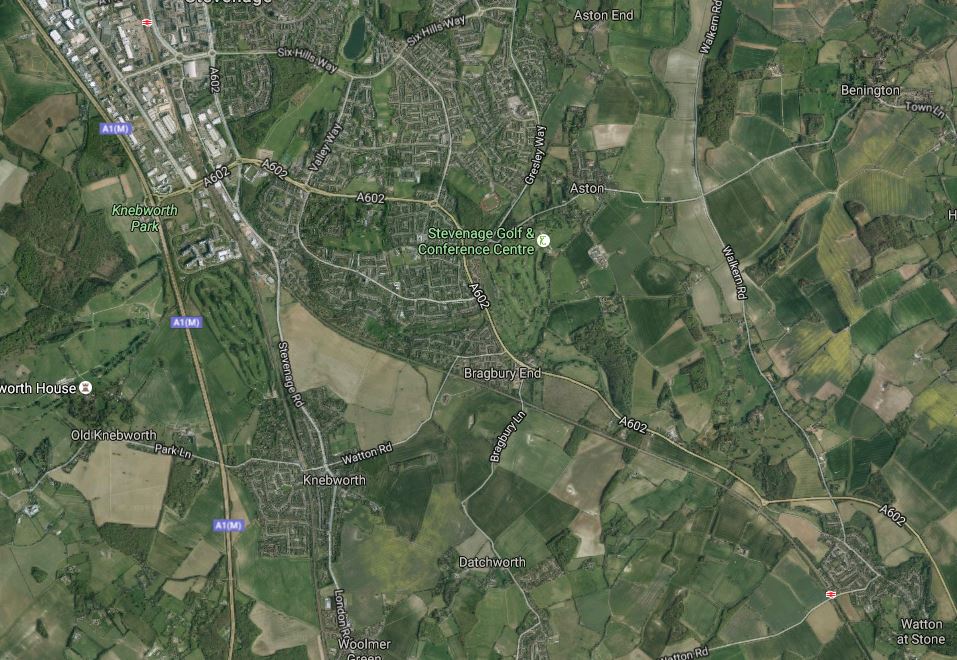
South Stevenage
If Stevenage expands southwards, I wonder if a South Stevenage Parkway station could be built on the Hertford Loop Line with good connections to the A1M and lots of parking.
I would estimate the station would be around six kilometres from Welwyn North station.
It would be another carrot for the closure of Welwyn North station.
Stevenage Station
Stevenage station is a modern station, but it could probably be extended and improved.
- The station has four platforms and is step-free.
- Some long-distance services to the North and Scotland stop at the station.
- The station is the only one between Kings Cross and Peterborough, where long distance trains stop.
- It is first station, North of where the Northern end of the Hertford Loop Line joins the East Coast Main Line in grade-separated junction.
- There are also plans to upgrade the station with extra platforms.
I think it is true to say, that the station is not a bottleneck on the East Coast Main Line, but that an improved Stevenage station could do the following.
- Improve the flow of fast expresses, by ending the practice of trains stopping on the fast lines.
- Give better services to the North and Scotland for passengers living between Stevenage and Kings Cross.
- The station will probably be served by six Thameslink trains per hour.
- Provide a better interchange for those coming South needing to go on the Hertford Loop Line.
- The station could turnback some trains on the Hertford Loop Line.
- Note that Hertford North to Stevenage takes just 13 minutes in the current Class 313 trains.
The question has to be asked if Stevenage would be a better terminus for the Hertford Loop line, than Hertford North?
Operationally, this would probably be easier than turning the trains at Hertford North, especially, if other fast services were to be diverted to the Hertford Loop Line.
Assuming 12 trains per hour, were going into Moorgate and these split equally between the main line and Hertford Loop routes, turning trains at Stevenage wsould give a service with a ten minute interval to Moorgate.
As this is the same as the Thameslink frequency I believe a pattern of trains could be developed
At present one-in-three trains on the Hertford Loop Line, go on to Letchworth Garden City, so if the current policy prevailed Letchworth would get 2 tph to Moorgate.
There are certainly lots of ways to use an upgraded Stevenage station.
Hitchin To Peterborough
This is a line with capacity problems as there is sections of twin and triple track in the mainly quadruple track, between Huntingdon and Peterborough.
The trains on this section are.
- Thameslink – 2 tph Peterborough to Horsham – Stopping Pattern Unknown
- Great Northern – 1 tph Peterborough to Kings Cross – Semi-Fast – London King’s Cross and Peterborough calling at Finsbury Park, Stevenage and then all stations.
- Great Northern – 1 tph Peterborough to Kings Cross – Stopping – London King’s Cross and Peterborough calling at Finsbury Park, Potters Bar, Hatfield, Welwyn Garden City and then all stations.
If there were continuous slow lines, then you could have an optimised stopping pattern, but as trains have to use the fast lines to progress in places, you can’t interfere with speeding Virgins.
I suspect that there’s a very unusual pattern of trains, as they sneak through.
The line definitely needs quadrupling where there are only two and three tracks.
You could probably argue that between Stevenage and Peterborough, there needs to be a service with a pattern like this.
- 2-4 tph stopping at all stations.
- 2-4 tph stopping at important stations with four platforms.
I wouldn’t be surprised that Network Rail and Thameslink have a plan to remove this bottleneck.
Htchin To Cambridge
The trains on this section are.
- Thameslink – 2 tph Cambridge North to Brighton – Stopping Pattern Unknown
- Thameslink – 2 tph Cambridge to Maidstone East – Stopping Pattern Unknown
- Great Northern – 2 tph Cambridge to Kings Cross – Non-Stop
- Great Northern – 1 tph Cambridge to Kings Cross – Semi-Fast -London King’s Cross and Cambridge calling at Finsbury Park, Stevenage, Hitchin, Letchworth, Baldock and Royston.
- Great Northern – 1 tph Cambridge to Kings Cross – Stopping – London King’s Cross and Cambridge calling at Finsbury Park, Potters Bar, Hatfield, Welwyn Garden City and then all stations
- Northern City – 1 tph Moorgate to Letchworth Garden City – Stopping via Hertford Loop
So this gives 8 tph to Cambridge and an extra one to Letchworth Garden City. All are currently run by various parts of Govia Thameslink Railway.
Wikipedia says this about the infrastructure of the Cambridge Line.
The line is double track throughout. Traction current is supplied at 25 kV AC using overhead line equipment overseen by York Electrical Control Room, with Neutral Sections at Cambridge junction, Litlington and Shepreth Branch junction. It has a loading gauge of W8 and a maximum line speed of 90 mph
Note
- If after all the new 160 kph trains are delivered, it could be an efficient line to run, possibly even at a slightly higher speed.
- At present, stations like Shepreth and Meldreth often only get an hourly service.
- In a few years time, a new station will possibly be built for the East West Rail Link near Addenbrookes Hospital.
The big problem on the Cambridge Line was solved by the Hitchin Flyover, which allowed trains for Cambridge to leave the East Coast Main Line without delaying fast trains.
I think extending the Letchworth Garden City service to Cambridge North would give a lot of benefits.
- Cambridge would now have three destinations in London; Kings Cross, Liverpool Street and Moorgate.
- It would connect with the Kings Cross stopping train, a 2 tph, high class local service into both Cambridge stations.
- A Cambridge North to Moorgate service would connect the Cambridge Science Park to Silicon Rundabout.
- If the service connected to a 2 tph service across Suffolk to Bury St. Edmunds, it would greatly improve Suffolk’s links to London.
I suspect there are other factors and they will lead to an improved service pattern on this line and the other ones radiating from Cambridge.
The Kings Cross To Peterborough Fast Lines
If as I believe, you can do the following.
- Eliminate stopping at Welwyn North station, by enticing passengers to use other means.
- Remodel Stevenage station, so that trains do not stop on the fast lines.
- Create a four-track railway between Huntingdon and Peterborough.
You would then create an unbroken pair of fast lines from between Kings Cross and Peterborough, with slow lines on either side and two slow lines as far as Alexandra Palace.
The limiting factor of the number of trains on the line would probably be determined, by the number of platforms at Kings Cross.
It would be some railway for one mostly built in the mid-nineteenth century.
The Thameslink Trains To Cambridge And Peterborough
There are of four of these to Cambridge and two to Peterborough in each hour.
The stopping pattern has not been announced, except that they will be semi-fast.
So could they have a pattern similar to the current semi-fast trains of only stops at Finsbury Park, Stevenage and Hitchin, South of where the Cambridge Line joins at Hitchin?
The other major stations, where they might stop are Alexandra Palace, Potters Bar, Hstfield and Welwyn Garden City.
They would probably swap between fast and slow lines as they progressed, as there are restrictions, due to the platform and track layout.
- The trains would be on the slow lines at Finsbury Park to access the Canal Tunnels.
- Alexandra Palace station has no fast line platform.
- Over the Digswell Viaduct and through Welwyn North station, trains would be on the fast lines.
- Hitchin station has no fast line platform.
- Trains need to be on the slow line through Hitchin, to access the Cambridge Line.
If it was desired, that there was no fast line stopping, this would mean trains would be on the slow lines, except through Digswell and Welwyn North.
Surely, that would be one preferred scenario, as it has advantages.
- Stopping trains fit in well and would deliver extra passengers to Finsbury Park, Welwyn Garden City and Stevenage.
- Stops at other stations with slow line platforms could be easily added.
It should be noted, that step-free access at some of the important stations isn’t perfect.
The Non-Stop Kings Cross To Cambridge Trains
If they continue after Thameslink starts, these would probably be run by 175 kph Class 387 trains, so they would be totally capable of running with the expresses, which would use the fast lines between Kings Cross and Hitchin.
As the new trains are generally faster than those currently on the line past Hitchin, we may even see a few seconds off the current forty-five minutes.
So it looks like these services would require two paths in every hour on the fast lines.
The Semi-Fast Trains To Cambridge And Peterborough
These trains, which would probably be run using 175 kph Class 387 trains, seem to stop at only Finsbury Park, Stevenage and Hitchin, South of where the Cambridge Line joins at Hitchin.
Although the Cambridge Line is only double-track, as all trains will be capable of at least 160 kmh, if the line was upgraded to run at this speed, with perhaps the removal of the level crossings, I suspect an efficient and fast service could be run to Cambridge.
On the route to Peterborough, it would be much better, if the line were to be four-tracked.
Again, it looks like these services would require two paths in every hour on the fast lines.
But after Thameslink opens, would these services be needed?
The Stopping Trains To Cambridge And Peterborough
Both services have similar patterns calling at Finsbury Park, Potters Bar, Hatfield, Welwyn Garden City and then all stations.
These trains are the two troublemakers that currently call at Welwyn North.
If the decision is made to stop most services at Welwyn North, then there are various possibilities.
- The stopping train could just use the fast lines between the Southern end of the Digswell Viaduct and Knebworth station.
- The stopping trains go via the Hertford Loop and rejoin their current route at Stevenage.
- The stopping trains are replaced by another semi-fast service.
- The stopping trains are discontinued South of Stevenage.
There might even be a case to put these stopping trains into Moorgate rather than Kings Cross, thus separating Thameslink, fast and slow services.
It should also be born in mind that there will be six Thameslink services on the route, which will probably stop at Finsbury Park, Potters Bar, Hatfield, Welwyn Garden City, Stevenage and Hitchin, so the stopping train won’t be as important as it is now, unless you want to go to an intermediate station.
How Would Times On The Hertford Loop Line Compare With The Main Line?
Currently the fastest Finsbury Park to Stevenage trains take eighteen minutes without a stop on the main line and fifty minutes on the Hertford Loop Line.
That is quite a difference.
I wouldn’t speculate on how much a Class 717 train would knock off the current time, but.
- They are faster than the Class 313 trains.
- There are eleven stations on the loop and modern trains are good at stopping and getting going again.
- We must assume the line is improved.
I also think that increasing the number of trains on the Hertford Loop Line, would not be a bad thing, for passengers, the areas served by the line and train operators.
Conclusions
As I write this I’m getting more and more convinced, that the best solution to the problem of the two track section of the East Coast Main Line over the Digswell Viaduct and through Welwyn North station, is the following.
- Close Welwyn North station to nost if not all trains.
- Improve road connections in the Welwyn North area, as a more affordable and easier alternative to rebuilding the viaduct and station.
- Improve the Hertford Loop Line with higher speeds and passing loops at Gordon Hill and Hertford North.
- Possibly build a parkway station on the Hertford Loop Line, South of Stevenage.
Other improvements are also likely and would help services.
- Improvements to Stevenage station.
- Four-tracking between Hitchin and Peterborough.
- Upgrading the Cambridge Line to a 160 kph line.
- Full step-free access at all stations. Or at least where Thameslink calls.
This would give the operator a railway that could provide the services passengers want.
I can see a Thameslink Great Northern network that looks like this.
- Thameslink services from St. Pancras and the South serving destinations of Cambridge, Peterborough and possibly Welwyn Garden City.
- A possible fast Kings Cross to Cambridge/Kings Lynn service.
- Suburban services from Moorgate serving the Hertford Loop Line and Welwyn Garden City, with possible extensions to Cambridge, Peterborough and Stevenage.
This would certainly free up platforms at Kings Cross and high speed paths on the fast line.
What Will Be The Service On The Great Northern Lines After Thameslink Opens?
When I did the short trip from Essex Road station on the Northern City Line, that I wrote about in Never On Sunday, I was surprised to see that the frequency of the service was Transport for London’s turn-up-and-go frequency of 4 trains per hour (tph), with 2 tph to going to Hertford North, with 1 tph extended to Stevenage and 2 tph to Welwyn Garden City.
The services at Essex Road station in the Off Peak include these trains.
- 6tph to London Moorgate
- 3tph to Welwyn Garden City via Potters Bar
- 3tph to Hertford North (1tph extended to Letchworth Garden City)
It is interesting to note that between 0800 and 0900 on a weekday morning, thirteen trains arrive at Moorgate.
From 2018, the new Class 717 trains will start to run on the Northern City Line. The number of passengers on this line will surely grow as the Southern terminus of Moorgate station will be on Crossrail from December 2018.
Assuming these six-car Class 717 trains can carry about half that of a 12-car Class 700 train, then in that hour they could bring 4,329 passengers into Moorgate station.
Will the low-level platforms at Moorgate station be able to cope?
Probably easily, if there is a direct tunnel and escalator access to Crossrail.
This map from carto.metro.free.fr shows the various lines at Moorgate.
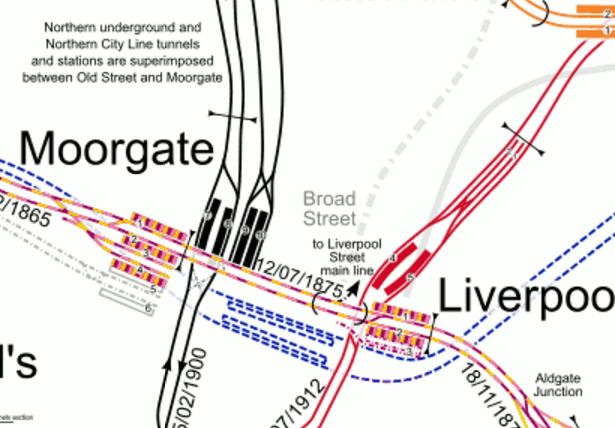
Note.
- The Northern City Line is superimposed on top of the Northern Line at Moorgate station.
- The 200 m. long Crossrail platforms almost stretch between Moorgate and Liverpool Street stations.
- Interchange between the Northern Line at Moorgate and the Central Line will probably be a three hundred metre walk.
- Crossrail should mean that all Liverpool Street to Moorgate interchanges will be desert dry in the wettest weather.
If this massive interchange doesn’t create a need for more capacity on the Northern City Line, I’ll be very surprised.
As there have been improvements to the lines on the Great Northern Route, between Finsbury Park and Alexandra Palace stations, I wouldn’t be surprised that when Crossrail opens, this Cinderella line, that nobody wanted is running eight, ten or even more tph between Moorgate and Finsbury Park stations and further up the route.
The services on the Great Northern Route are intense, but despite that, the route has some of the most crowded trains in the UK..
Thameslink is coming and that will change everything dramatically.
At present Cambridge has 4 tph to Kings Cross in the Off Peak, of which two tph are non-stop Cambridge Cruisers.
When Thameslink connects to Cambridge, the provisional timetable says it will add 4 tph semi-fast trains between St. Pancras Thameslink and Cambridge.
Thameslink haven’t said what services they will retain between Kings Cross and Cambridge, but I did read somewhere that they want to hold on to the Class 387 trains to run the Cambridge Cruisers.
At present, Peterborough has 2 tph Great Northern services to Kings Cross, in addition to several non-stop expresses.
As with Cambridge, Peterborough will get an additional 4 tph, when Thameslink opens.
I think the outcome will be lots of direct services between Cambridge or Peterborough in the North and Kings Cross or St. Pancras Thameslink in the South.
If you are prepared to change just once, you’ll be able to travel between any station North of Finsbury Park to any of the three London terminals; Kings Cross, Moorgate and St. Pancras Thameslink.
I believe that because Thameslink has such a large number of stations and connections, that many passengers will have a wide choice of route.
There is also the performance and quality of the various trains on the routes to consider.
- The current Class 365 trains are 100 mph trains built in the 1990s. They are starting to look dated as I wrote in The Class 365 Trains Are Looking Dated.
- The Class 387 trains are 110 mph trains built in the last few years. They are a quality long-distance commuter train.
- The Class 700 trains are 100 mph trains, that are being delivered at the present time.
- The Class 717 trains could have a similar performance to the Class 700 trains. I will be very surprised if they are not 100 mph trains.
A succession of 100 mph plus trains speeding up and down the Great Northern Route won’t be a slower service than is currently offered.
There would probably be four semi-fast trains to and from both Northern destinsations, stopping at all major stations, with well-connected stopping trains serving the intermediate stations.
There might even be service patterns like say four tph between Moorgate and Welwyn Garden City stopping at all stations, which have a same platform interchange with four tph stopping services to Cambridge and Peterborough. So from say Foxton to New Barnet, you’d always change at Welwyn Garden City.
As an example of how the new improved Thanmeslink will help passengers, look at the routes from my home to Cambridge.
I could.
- Take a 277 bus to Highbury and Islington station and get a Victoria Line train to St. Pancras for a Thameslink train to Cambridge.
- Take a 38 bus or walk to Essex Road station and get a Northern City Line train to Finsbury Park for a Thameslink train to Cambridge.
- Take a 141 bus to Moorgate station and get a Northern City Line train to Finsbury Park for a Thameslink train to Cambridge.
- Take a 277 bus or walk to Highbury and Islington station and get a Northern City Line train to Finsbury Park for a Thameslink train to Cambridge.
- Take a 30 bus to Kings Cross station and get a Cambridge Cruiser to Cambridge.
The possibilities will be endless.
I wouldn’t take the first option, as St. Pancras is A Fur Coat And No Knicker Station, with a long walk between the Victoria Line and Thameslink.
My choice of route, will probably be decided by the first bus that arrives and the quality of the smile on the driver’s face.
From Nottingham To Peterborough
I took an East Midlands Trains service to Norwich to get to Peterborough. I wanted to look at the Allington Chord. Wikipedia says this about the chord under its entry for the East Coast Main Line.
The Allington Chord was constructed near Grantham in 2006, allowing services between Nottingham and Skegness to call at Grantham without having to use the ECML, trains now passing under the line. This provided sufficient extra capacity for 12 additional services between Leeds and London each day.
This certainly illustrates the improvements gained, when these crossings of the East Coast Main Line are sorted. Could similar improvements be gained when the Newark Crossing is eliminated.
I took these pictures on the journey.













My problems then started as I reported here in The Curse of the Coeliac Traveller.
From Peterborough To Lincoln
The Peterborough to Lincoln Line is part of the Great Northern and Great Eastern Joint Railway, from Doncaster to Peterborough, which is increasingly used as a by-pass for freight and other trains from the East Coast Main Line.
The line leaves the East Coast Main Line at Werrington Junction and then runs through the flat Lincolnshire countyside to Lincoln via Spalding and Sleaford.
These pictures show the character of the line.

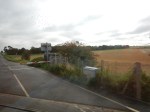

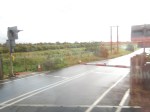
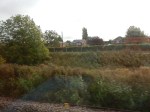
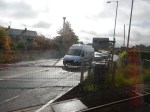
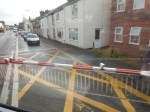

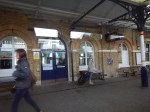
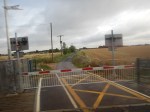
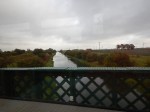

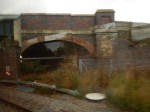
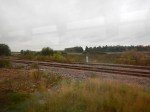
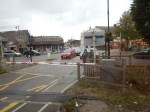
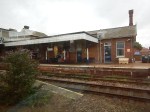
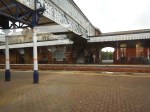

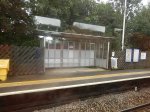
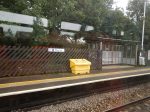

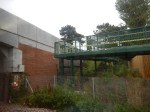
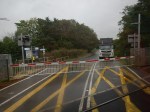

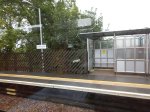




I’ve never seen so many level crossings and so much featureless countryside.
Surprisingly, I only saw one other train which was another single carriage Class 153 train going the other way.
It would appear that the line generally has an hourly service between Peterbrough and Lincoln and the Nottingham to Skegness Line has an hourly service through Sleaford.
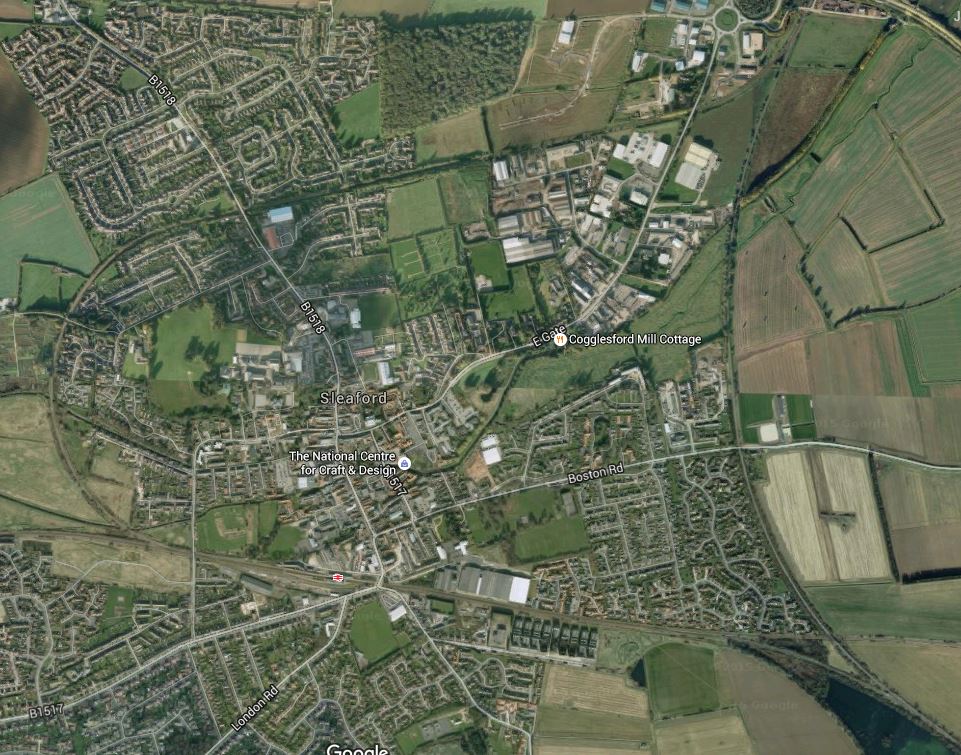
This Google Map shows the lines around Sleaford.
Sleaford
The line from Peterborough comes in at the South East corner with Lincoln to the North and Grantham and Nottingham to the West. The map clearly show the avoiding line connecting Lincoln to Peterborough, so that freight trains can by-pass the town.
The Route Utilisation Strategy (RUS) for the East Midlands felt that services could be improved by joining services together in Lincoln to free up platform space. Perhaps too the trains on the two lines should be more co-ordinated so that changing trains at Sleaford was easier. If you want to go from Skegness to Lincoln by train, some trains have only a few minutes wait, whilst changing at Sleaford, but others the wait is half an hour. I don’t know Sleaford station, but it may be a nice place to wait for a train!
This report on the BBC is entitled Cornwall rail network to get £146m investment.
So could the railways of Lincolnshire be improved, by giving more local control to the county?
To Dive Or Fly At Werrington
Network Rail are doing their bit to speed up trains on the East Coast Main Line. Over the last few years they have upgraded the Great Northern Great Eastern Joint Line from Werrington Junction, just north of Peterborough, to Doncaster via Spalding, Sleaford and Lincoln, so that the number of freight trains on the East Coast Main Line can be reduced and the passenger services can be speeded up. This page on Network Rail’s website describes the work.
But all these freight trains have started to get up the locals noses. This article in the Peterborough Telegraph is entitled Werrington And Peakirk Residents’ Plea On Rail Plans. It starts like this.
Two petitions signed by 752 people in Peterborough opposed to plans to increase freight services on the railway have been presented to Parliament.
Householders in Werrington and Peakirk have signed the petitions calling on the Government to start talks with rail operator Network Rail about the proposals.
The line is also noted for its numerous level crossings and proposals to shut them and according to this article in the Lincolnshire Echo, there is opposition to the closure of at least one crossing.
So now Network Rail want to create a flyover or a dive-under at Werrington Junction to speed northbound freight trains turning on to the line through Lincoln. This map from Network Rail, shows the two options.

Werrington Junction
The dive-under is shown in red and the flyover in blue.
I have a feeling that the decision for this much-needed junction and its construction will be a long-time coming.
I also think that it is complicated, by the fact that Peterborough is very much a city, where most people don’t use public transport, as they have their own cars, so any local vote would not be in favour of improving public transport or the railway, unless perhaps it improved commuting to London.
Perhaps the solution to these problems, could be a bit of bribery in the form of some strategically-located new stations and a very much improved rail service between Peterborough and Doncaster via Lincoln.
Who’d Want To Live In Peterborough, Colchester, Milton Keynes Or Swindon?
This BBC article describes best and worst places to get around without a car. The four places in the heading are the four worst places.
I do know that as regards getting to the football ground, Colchester and Milton Keynes are pretty difficult, although Peterborough and Milton Keynes aren’t too bad.
This is the top ten worst and my thoughts.
Peterborough – I’ve been to the city several times by train and just walk into the town centre to see the magnificent cathedral or have a meal with a friend. I have never seen a bus there at all or any signs to a central bus station. But there are lots of taxis.
Colchester – It’s years since I’ve been there and it has a station, that is away from the town centre, the hospital and football ground, the only places I would ever be likely to go. As I don’t drive or take unnecessary taxis, I doubt, I’ll ever go to the town again.
Milton Keynes – I have no fond memories of the capital of roundabouts, but I was mugged there by the street furniture. I shall not be sad, if I never go to the town again.
Swindon – When I went to Swindon, the road in front of the station was being dig up, but I don’t have any fond memories of my walk to the football ground.
Wigan – I suppose it’s got a public transport system, that suits the character of the town. It hasn’t even signposted a decent walking route from the rail station to the football ground.
Bradford – I remember Bradford, as one of the worst places I went to, when I visited all 92 football grounds.
Derby – I go to Derby regularly to see Ipswich play at Pride Park, which is close to the station. There is nothing at the station, that might draw me into the city to perhaps have a meal. Is Derby’s passenger-unfriendly public transport system summed up, by the fact that there are no late trains back to London, after an evening football match? It treats those without cars and especially visitors as losers, who should be ignored.
Dudley – No comment. But I don’t think I’d ever want to go!
Northampton – A strong contender for the capital of roundabouts, where I would definitely think twice about going.
Gateshead – See Dudley
If I look at the best places, London is top, with Manchester second and Liverpool third. My big argument with most of them in the top ten except London, is that the information and maps aren’t good enough for someone, who doesn’t know the city well.
One big difference between the top and bottom tens, is that Derby is amongst the worst and Nottingham is in with the best. Surely, as the cities are so close together, the comparison between them should be examined in detail.
The full details of the Better Transport 2014 Car Dependency Scorecard, should be read by everyone.
Beefing Up The Wires
The overhead lines on the East Coast Main have a reputation for not being of the most robust design.
So it was pleasing to see that they have been upgraded at Peterborough.
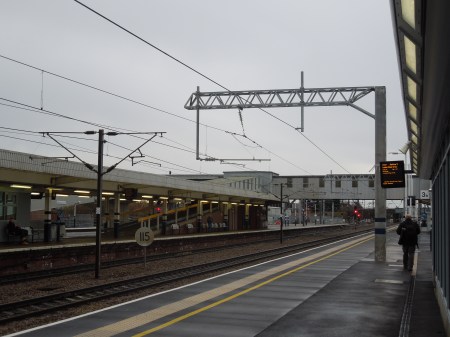
Old And New Overhead Wires
The new overhead lines at Eccles are to a similar robust design.
So are we going to see less disruption from wind, trains or vandals pulling the wires down?
 The Anonymous Widower