Gravitricity Celebrates Success Of 250kW Energy Storage Demonstrator
The title of this post, is the same as that of this article on the Solar Power Portal.
I have already posted about this success in Gravitricity Battery Generates First Power At Edinburgh Site.
But the news story has now been mentioned in several respected publications and web sites.
So this idea, based on traditional Scottish products of heavy weights and girders seems to be getting valuable publicity.
The demonstrator is only small and uses two 25 tonne weights and a fifteen metre tower.
This is only a storage capacity of only 2.04 kWh, but the company is talking of weights totalling up to a massive 12,000 tonnes.
With a fifteen metre tower, that would be 490 kWh.
Note.
- The shafts at Kellingley Colliery in Yorkshire are 800 metres deep.
- The TauTona mine in South Africa is 3.9 kilometres deep
- In this article in The Engineer, Gravitricity talk about weights of up to 12,000 tonnes.
These are typical storage capacities.
- Kellingley – 50 tonnes – 109 kWh
- Kellingley – 12,000 tonnes – 26.15 MWh
- TauTona – 50 tonnes – 531 kWh
- TuaqTona = 12,000 – 127.5 MWh
Accountants before they invest in a company look at the financial figures. As an engineer, I look at the numbers in the science behind their claims.
If the engineering can be made to work, these figures are to say the least; very promising.
They are also beautifully scalable.
If say your application needed a 2 MWh battery and you had a 400 metre shaft available, you can calculate the weight needed. It’s around 1836 tonnes.
The Solar Power Portal article finishes with these two paragraphs.
The company will now look to rollout the technology in a series of full-scale 4-8MW projects, with conversations already underway with mine owners in the UK, Scandinavia, Poland and the Czech Republic, it said. Additionally, in South Africa Gravitricity is working closely with mine operator United Mining Services as part of a programme funded by an Innovate UK Energy Catalyst programme to identify potential schemes.
“A key feature of our full-scale projects will be their long life” added Blair. “Once built, our system can last for over 25 years, with no loss in output or degradation over time. This makes gravity storage cost-effective. And unlike batteries, we have no reliance on rare metals such as cobalt and nickel which are becoming increasingly scarce in the global drive to electrification.”
Note.
- I assume that they are 4-8 MWh projects.
- Charlie Blair is the Managing Director of Gravitricity.
- A weight of 1836 tonnes would give 4 MWh in the 800 metre shaft at Kellingley.
I wouldn’t be surprised that those owning a deep empty hole in the ground will be starting conversations with Gravitricity!
Conclusion
I am not worried, that I bought a few shares in Gravitricity in the crowd-funding last year!
All this good publicity from the BBC, Good News Network, Science, The Engineer, The Times and other media sites won’t harm my investment.
Warszawa – Vilnius Passenger Service To Launch Next Year
The title of this post, is the same as that of this article on Railway Gazette.
This paragraph describes the proposed service.
The service is expected to start in late 2021, offering a journey time between the two capitals of 8 h including a change of trains at the break-of-gauge in Kaunas. Initial ridership is estimated at 35 000 passengers/year. The need to change trains would be removed once the 1 435 mm gauge tracks are extended to Vilnius as part of the Rail Baltica project.
I intend to ride this train, as soon as it starts.
Pesa And PKN Orlen To Develop Hydrogen Fuel Cell Trains
The title of this post is the same as that of this article on Railway Gazette.
This is the introductory paragraph.
Rolling stock manufacturer Pesa and energy company PKN Orlen signed a letter of intent to develop hydrogen fuel cell trains on December 12.
I am pleased that Poland appears to be turning to trains that emit less carbon, but I do worry about how the hydrogen is produced.
It appears the Dutch are moving towards green hydrogen, which is produced by the electrolysis of water using electricity produced by offshore wind farms.
But how are the Poles producing their hydrogen?
I did find this article on biznewsalert.com, which is entitled Poland Wants To Be A Hydrogen Kuwait. P2G Can Help.
This is the introductory sentence.
Hydrogen could drive low-carbon transport and also help reduce CO2 emissions. Although it is a distant perspective for now, the production of the element could support onshore wind farms.
It does appear that the Poles are thinking along lines, that will reduce carbon emissions.
What is P2G?
P2G or Power-to-Gas has an informative Wikipedia entry.
This is the first paragraph, which outlines the process.
Power-to-gas (often abbreviated P2G) is a technology that converts electrical power to a gas fuel. When using surplus power from wind generation, the concept is sometimes called windgas. There are currently three methods in use; all use electricity to split water into hydrogen and oxygen by means of electrolysis.
There certainly a lot of activity in the sector.
My Experience Of Polish Transport
Poland is a large country with an extensive rail system. I have travelled long distances across the country and many of the passenger trains are electric.
I can’t remember seeing a freight train, but I do remember large numbers of diesel trucks moving freight across the country.
Conclusion
Hydrogen could be a very important fuel for transport in Poland.
Poland Investigates Use Of Hydrogen Fuel For Rail Freight
The title of this post is the same as that of this article in the International Railway Journal.
This first paragraph, outlines the project.
Polish coal mining company JSW and national rail freight operator PKP Cargo have agreed to cooperate to research, analyse and possibly produce new types of hydrogen-powered freight wagons and shunting locomotives.
Note that one of the collaborating companies is a coal company.
Statements later in the article indicate that JSW can create commercial quantities of hydrogen, as a by-product of making coke.
Some of us of a certain age, still remember coal gas, which was replaced by natural gas from the North Sea in the 1970s.
It looks like Poland are still using the same process to obtain coke and probably other products like coal tar, sulphur and ammonia.
According to Wikipedia, UK coal gas had the following composition.
- Hydrogen 50%
- Methane 35%
- Carbon monoxide 10%
- Ethylene 5%
It was one of the suicide methods of choice for the unhappily married. I don’t miss the foul stuff, with its poisonous carbon monoxide.
But as you can see, it does have a high percentage of hydrogen!
Conclusion
I’m not a fan of using coal gas, but these two Polish companies are another group investigating the use of hydrogen as a method of powering trains and other rail vehicles.
A Big Step For Rail Baltica
This article on Railway Gazette is entitled Rail Baltica procurement agreement signed.
Rail Baltica is a large project to create a standard gauge railway from Tallinn in Estonia to Bialiystok in Poland via Riga in Latvia and Kaunus in Lithuania.
One extra part of the plan is to build a rail tunnel between Helsinki and Tallinn, to connect Finland to the European railway network.
This Google Map shows the Gulf of Finland.

The Gulf Of Finland
Helsinki and Taillinn are in the West on the North and South coasts respectively, with St. Petersburg in the East.
I would think, that a Taillinn to Helsinki Tunnel, would be feasible, but at probably sixty kilometres it would be the longest undersea tunnel in the world.
Now that the various parties have agreed to proceed, we might see some progress on building the main route from Tailinn to Bialystok, which hopefully will be finished in 2025.
Railways In North East Poland
Look at this Google Map of the Polish town of Goldap, where we stopped for supplies on our holiday.

Goldap
Just to the North of the main road, it appears that there is the recognisable scar of a multiple-track railway.
Our Polish guide confirmed that Goldap had a large station with several platforms, and that it is still there.
Until the end of the Second World War, this area was East Prussia and was part of Germany. The railways were connected to the Prussian Eastern Railway, which connected Berlin to the major East Prussian city of Koningsberg. The Prussian Eastern Railway still exists as far as Braniewo on the Polish side of the Border, but there doesn’t appear to be a rail connection onward to Kaliningrad as Koningsberg is now called. This Google Map shows the area from Braniewo in Poland to Mamonova in Russia.
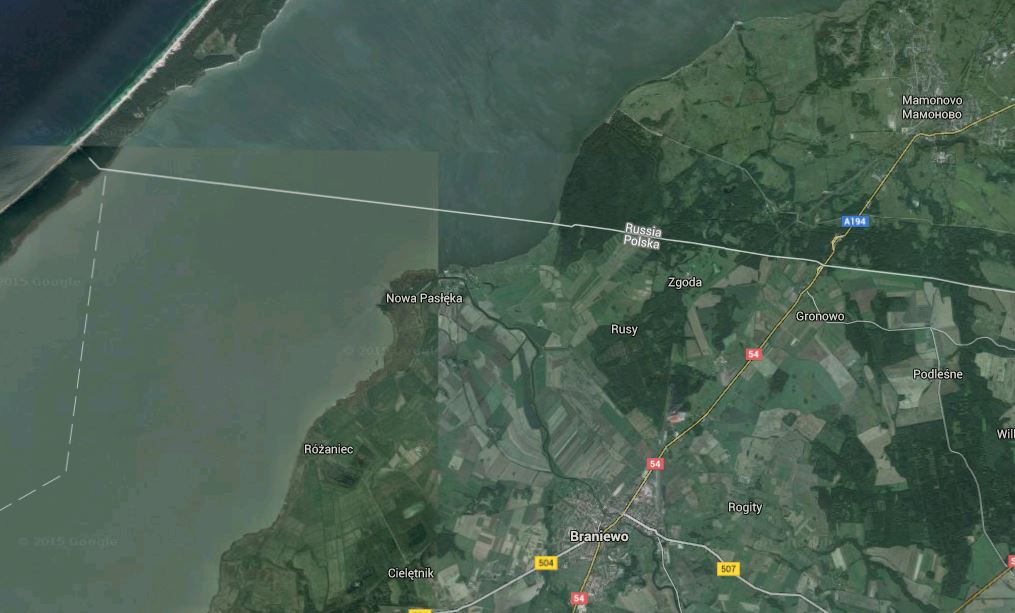
Braniewo To Mamonova
The white line across the map is the border.
You can pick out the old railway from Braniewo to Mamonova.
If we lived in a sane and reasonable world, which I’m afraid that President Putin doesn’t, it would appear that some form of direct rail connection could be created, which would connect Russia and the Baltic States to Poland.
There is the problem of gauge as like Spain, Ireland and India, Russian railways don’t use the same gauge as everybody else. At one time the platforms in Kaliningrad-Passazhirsky station, were arranged so that those facing Poland were standard gauge and the others were Russian gauge.
As a train enthusiast, wouldn’t it be nice to travel from Berlin to Kaliningrad by luxury train, spend some hours in the city, before taking a train on to St. Petersburg.
It would sadly appear that Putin doesn’t have the commercial nous to run the Russian equivalent of a whelk stall.
It is a long term ambition of the European Union to connect the Baltic States and Finland to the rest of the European Union by rail, they have funded the creation of Rail Baltica. This map shows the route.
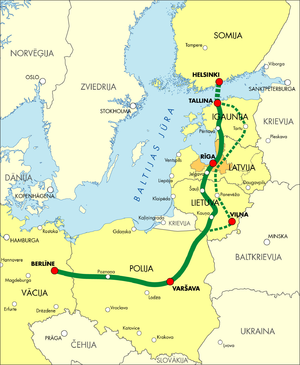
Rail Baltica
The objectives are broadly as follows.
- Build a 200 kph double-track standard gauge railway all the way.
- By-pass Russia and Belarus.
- Put a lot of the extensive freight traffic in the area on the railway rather than the roads.
The overall aim is to finish by 2025, although rumours persist that the section from Warsaw to Kaunas in Lithuania could open this year.
An interesting take on the project is given by this article on the Latvia Public Broadcasting web site, which is entitled Rail Baltica hits buffers at Polish border. This is said.
Even though Poland has allotted €16 billion to modernizing its railroads by 2023, not a single zloty has been earmarked to be spent on developing the connection to Rail Baltica at the Polish side of the border with Lithuania. Without this 200-kilometer section, the planned high-speed European gauge rail from Tallinn through Rīga through Kaunas won’t be connected with the rest of Europe, reported LSM’s Russian-language site on Friday.
It does appear that the section between Bialystok and Trakiszki isn’t up to scratch.
There is an interesting take on Rail Baltica in this article on a blog, which is entitled Rail Baltica Project Directed against Russia’s Security, Pavlovsky Says. This is said.
The Rail Baltica project, eventually intended to link Berlin with Helsinki via Poland and the three Baltic countries is “extremely doubtful from an economic point of view” but has obvious security implications for the region and Russia’s interests there, according to Moscow commentator Igor Pavlovsky.
The project, which will allow trains to pass from one end of the line to the other without changing from Western to Russian gage track, may never carry as many passengers or as much freight as its boosters claim, he writes on Regnum.ru; but it can carry troops and materiel from the West to the border of Russia.
Ever since I first heard of Rail Baltica, I’ve been rather surprised on the silence from Putin and his merry thugs!
Did The Tailor Of Bexley Come From Koningsberg?
My paternal great-great-great grandfather; Robert, was a tailor from Bexley, who I wrote about in The Tailor Of Bexley. I said this in that post.
My father once told me, that his grandfather, who must have been William, once told him, of a first hand account of Robert the tailor of Bexley, who was his grandfather.
He said that he was German and that he didn’t speak any English. Because of my coeliac disease, which is quite common in East European Jews and his profession, we can probably assume that Robert; the tailor of Bexley was Jewish. My father also told me that the family name was Müller, which had been Anglicised.
I know little more of him and his place of birth is not known to me. All I know is that he had a son; Edward in 1816, so that would put his birth in the late eighteenth century.
My trip to North-East Poland got me thinking, as I saw the branches of the Prussian Eastern Railway and discussed the history of the area with Piotr; our excellent Polish guide from Gdansk.
I also searched the Internet for Koningsberg and learned more details of its history in the late eighteenth century, with the Napoleonic Wars and the various partitions of Poland. I also read how Koningsberg was a large and cultured city. Wikipedia says this.
A university city, home of the Albertina University (founded in 1544), Königsberg developed into an important German intellectual and cultural centre, being the residence of Simon Dach, Immanuel Kant, Käthe Kollwitz, E. T. A. Hoffmann, David Hilbert, Agnes Miegel, Hannah Arendt, Michael Wieck and others.
But with the Second World War, the elimination of Jews from the city by the Nazis and the eventual takeover of the area by the Russians, the recent history has been less than a happy one.
Knowing myself, it sounds like the sort of city that I like, as my three favourite cities are Hong Kong, Liverpool and of course London.
Hence the question that is the title of this post!
My family is very ambitious and opportunistic and as Koningsberg was a major port, exporting goods from the area all over Northern Europe, I can imagine Robert deciding in his twenties to get out of the city to avoid yet another war or partition and taking a ship to London to find fame and fortune. He might even just have finished his apprenticeship as a tailor.
From arriving in the London Docks, he didn’t need to go far to end up in Bexley. A few years later he moved to Shoreditch, just a mile or so from where I live now!
I think Robert could have given me two characteristics, other than the ambition and the coeliac disease.
- His Jewish religion, but not its philosophy and values, seems to have been abandoned. I am very much a confirmed atheist with what I think, are fairly sound moral values, shared with most mainstream religions.
- He also endowed me with genes that enable me to endure the cold.
It may not be a correct tale, but even so, isn’t it a reflection down the centuries of today’s streams of refugees from Syria, Afghanistan, Eritrea and other places.
Nothing changes!
Except the religion!
Warsaw In The Snow
I took these pictures of Warsaw, as we wandered around the Old City.


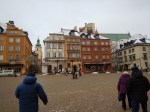
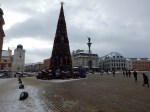
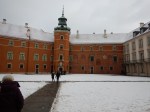
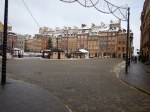
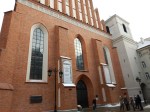
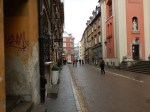
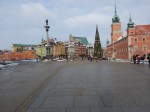

I visited this area in April 2014 and wrote about it in Walking Around Warsaw.
Along The Tsar’s Road
I took these pictures as we drove along the Tsar’s Road to return from the far North-East of Poland towards Warsaw.




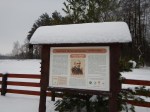






A few points.
- There is no Wikipedia entry to the Tsar’s Road, but as I understand it, it was built through the marshy land, so that Russia could move their troops easily.
- The memorial is to Kazimierz Glinka – Janczewski. I think this page gives more details in English.
- The lunch stop was excellent and is called Dwor Dobarz.
- The only wildlife we saw was a few shy moose.
- As ever in Poland, there was quite a bit of information.
We visited in winter, where conditions are challenging and different, but if you’re thinking about a summer visit to the area, start planning.
A Barbecue In The Snow
I’m not generally a lover of barbecues, as I’m not a lover of burned underdone meat. But in my time, I’ve had a few good ones, where a whole animal has been properly spit-roasted.
- At University in Liverpool, during Panto Week, a team roasted an ox on the steps of St. George’s Hall. It had one of those tastes that you’ll remember for ever.
- A farmer, once roasted a pig for members of Ipswich Flying Club.
- Once, we were driving back from Crete to London through Yugoslavia and when we stopped for petrol, found that a sheep was being roasted in a service station. It gave a whole new meaning to motorway food.
When it was suggested there would be a barbecue in the snow, it was something I could take or leave, but my heart rose, when I saw that a wild boar was going to be spit roasted.
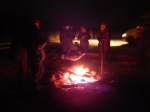
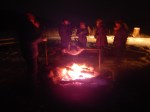
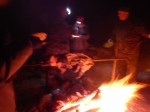
I’ve had wild boar in the past and on most occasions, it would have been better, if it had gone through a food processor first, but this method of cooking brought the meat to the same sort of tenderness and quality of previous experiences of spit roasting.
So don’t ask me to a barbecue unless you’re spit roasting a whole animal.
 The Anonymous Widower