Why Artemis Was Fast
Some of you will know, that I wrote Artemis; the project management software system in the 1970s.
It was generally accepted, that Artemis could do project management calculations, quicker than other software and this obviously helped it gain a high market share.
Here’s why!
In the 1950s and 1960s, computers were much smaller and very efficient algorithms were developed to handle large amounts of information in a small amount of memory.
Nowadays, I suspect obvious and very inefficient algorithms are used because programmers are very lazy.
When I was writing Artemis; the project management system in the 1970s, I spent many hours finding these old algorithms in IBM’s library, so consequently the software was faster, than its competitors.
Modern Data Centres
I wouldn’t be surprised to find, that data centres use so much electricity and get so hot, because they use stupid algorithms, that would have been rejected by IBM in the 1950s.
Mammoet Launches ‘World’s Strongest’ Land-Based Crane That Can Handle Large Offshore Wind Turbine Components
The title of this post, is the same as that of this article on offshoreWIND.biz.
This is the sub-heading.
Mammoet has launched the SK6000 ring crane, said to be the world’s strongest land-based crane, at its Westdorpe facility in the Netherlands. According to the company, the new crane supports the continued constructability of next-generation offshore wind turbines and foundations.
This is the first paragraph.
The new crane has a maximum capacity of 6,000 tonnes and can lift components of up to 3,000 tonnes to a height of 220 metres, and builds on the design philosophy of Mammoet’s SK190 and SK350 series, which are proven in the market, the company said.
In the early decades of North Sea Oil and Gas, I remember a project management consultant telling me how larger cranes were improving productivity.
It appears history is repeating itself.
The crane can also be transported in standard shipping containers, as this sentence details.
The crane design uses containerization techniques for ease of deployment and can be transported using shipping containers to any location worldwide.
Let’s hope wind farms can be erected faster.
How Clean Energy Will Help Deliver UK Economic Growth
The title of this post, is the same as this press release from SSE.
This is the sub-heading.
How To Actually Deliver UK Economic Growth
This press release appears to have been written by Alistair Phillips-Davies, who is Chief Executive of SSE.
These three paragraphs introduce the press release.
Prior to the election Labour had committed to tackling the planning system head on in order to unlock economic growth and get Britain building again.
If Rachel Reeves’ first speech as Chancellor is anything to go by, winning a commanding majority has only galvanised that intent.
The challenge is for policymakers to deliver at pace across the whole of the UK, including in Scotland where reform is devolved but is also urgently needed.
Alistair Phillips-Davies seems impressed.
Why We Need Planning Reform Urgently
Under this heading, he says this.
Let me give you two examples of how planning acts as a drag on economic growth and jobs.
It currently takes around 12 years to deliver a large offshore wind farm in UK waters. But only two or three years of that is the construction phase.
And when it comes to electricity grids that span the country it only takes one local authority in Scotland to object to a project for it to go to a public inquiry, adding costs and years of delay.
No-one wants to avoid appropriate scrutiny and proper engagement with communities but allowing decision making to drag on for years suits nobody and setting a reasonable 12-month limit is surely sensible for everyone involved, as is giving ministers greater discretion where projects are clearly deemed to be in the national interest.
I very much agree with what he says.
I also suspect that what he says, applies to England, Wales and Northern Ireland, just as much as Scotland.
Declaring His Ambitions
The next two section declare Alistair Phillips-Davies’s ambitions.
- Making The UK The Easiest Place In The world To Invest And Actually Build Projects
- Creating Good Jobs Here In The UK
They are certainly sections that need a full read.
We Need To Get A Move On
This is his final section, which I’ll insert in full.
Having worked in the energy industry for almost 30 years I have never been more excited about the prospects for this country.
As one of the largest investors in the UK, SSE alone has a current investment programme of more than £20bn, but we are ready to go further and many others in the industry will join us.
Britain has no shortage of opportunities. But we need to make them happen. If we can deliver on the clean energy mission, the growth will come. There’s a long way to go, but unblocking the planning gridlock is the right place to start.
I was there at the start of North Sea Oil and Gas, writing project planning software in a Suffolk attic.
Hopefully, I’ll see North Sea Energy turn full circle to renewables.
Sunak’s Terrible Decision To Call The Election
As a control engineer and mathematical modeller, whose software planned many of the world’s major projects in the last thirty years of the last century, I feel that Rishi Sunak’s decision to call the election, when he did, was one of the worst political decisions of a UK Prime Minister in the last century.
Consider.
- Inflation was coming down and it was likely interest rates could fall soon.
- The Rwanda plan could have started to work.
- A new round of wind farm Contracts for Difference for wind farms are due to be announced soon and signs, that there could be a large amount of wind to add to the future pipeline could be a record. I wrote about it in UK Can Secure Record Number Of Offshore Wind Farms In This Year’s Auction For New Projects.
- There is 4 GW of new offshore wind to be commissioned in the next eighteen months.
When, he called the election, I believed Sunak had a very large rabbit to pull out of a hat. But there was none!
I wrote Where’s The Plan, Rishi?, because I felt these must be something more to come.
Conclusion
Now Starmer and the Labour Party, will reap all the benefits of selling Europe and principally, the Germans, the electricity and hydrogen they need.
Octopus Energy Invests In Floating Offshore Wind Tech Company
The title of this post, is the same as that of this article on offshoreWIND.biz.
This is the sub-heading.
Octopus Energy’s generation arm has invested in US-headquartered Ocergy to boost the development of floating offshore wind farms globally.
These are the first three paragraphs.
According to Octopus, Ocergy has an innovative approach to designing and manufacturing floating foundations, reducing the time and cost of building them.
Ocergy is pioneering a hyper-local supply chain approach, working with local manufacturers and creating green jobs in the areas where the wind turbines are installed, said the company.
Further efficiencies are unlocked through Ocergy’s lighter and modular designs which make the turbine foundations easy to transport and assemble at their final destination, according to the press release.
This page on the Ocergy web site contains the press release, mentioned in the article.
These are some sentences from the press release.
- Ocergy, which is headquartered in the US and has operations in France, is pioneering a hyper-local supply chain approach, working with local manufacturers and creating green jobs in the areas where the turbines are installed.
- Further efficiencies are unlocked through Ocergy’s lighter and modular designs which make the turbine foundations easy to transport and assemble at their final destination.
- Floating foundations are used in areas with coastlines that are too deep for foundations that are fixed to the seabed. Around 80% of global offshore wind resources are located in deep waters, underscoring this technology’s vast untapped potential.
- It comes as governments across the globe have set ambitious targets for floating offshore wind. The UK alone is targeting 5 GW of floating offshore wind capacity by 2030.
I certainly like their approach.
believe that innovative designs and streamlined manufacturing will play a large part in installing the large amount of floating wind, that is planned by governments worldwide.
I also believe that because of the repetitive nature of the building of these floating structures, innovative project management software and systems will be developed.
I certainly have my own ideas for that!
Jobs, Homes And The Economy: Bakerloo Line Upgrade And Extension To Be Transformational For London
The title of this post, is the same as that of this article on Rail Technology Magazine.
This is the sub-heading.
The government has been urged to use the upcoming spring budget to commit to upgrading and extending the Bakerloo line after a new impact assessment found its effects could be transformational.
These three paragraphs introduce the article.
The impact assessment – commissioned by Central London Forward, a partnership of 12 central London boroughs – finds that such a move would boost the economy, unlock new homes, create new jobs, and more.
The upgrade would centre around new trains and signalling, while the extension would take the terminus to Lewisham in the first phase, and eventually to Hayes – adding 14 new stations.
The impact assessment concludes that the extension and upgrade of the Bakerloo line would create 9,700 jobs, 190,000 square metres of commercial floorspace, as well as generate £1.5bn of GVA.
The article is a must-read and eloquently puts the case for the Bakerloo Line Extension.
I have a few thoughts.
A Loop At Brixton For The Victoria Line
This has been proposed and the Wikipedia entry for the Victoria Line has this paragraph.
Proposals have been made to extend the line one stop southwards from Brixton to Herne Hill, a significant interchange in south London providing access to Kent, Blackfriars, London Bridge and Sutton. The latter station would be on a large reversing loop with a single platform removing a critical capacity restriction eliminating the need for trains to reverse at Brixton and provide a more obvious route for passengers who look for the nearest tube station before any other transport options.
I like this idea.
- It will make it easier to run the full frequency of 33 trains per hour (tph) between Brixton and Walthamstow Central stations.
- Loops at Heathrow and Liverpool seem to work very well.
- A single-platform with platform-edge doors has a high level of safety.
- Only one tunnel boring machine (TBM) would be needed.
- Large lifts could be used between the surface and the platform.
- It is a more affordable option.
But perhaps most importantly, I am sure, the loop could be built whilst other services at Brixton and Herne Hill were running almost without disruption, as services did at Kennington, whilst the Battersea Extension of the Northern Line was built.
A Loop At Elephant And Castle For The Bakerloo Line
I have spent forty years involved in project management, writing software for project managers and generally listening to some of the thoughts and experiences of some of the best engineers from all over the world.
One common thread, which is best illustrated by how the size of lift possible increased in the North Sea in the 1970s, is that as time has progressed machines have got bigger and more capable, and the techniques of using them has improved immeasurably.
The Crossrail tunnel boring machines (TBM) make those used on the Jubilee Line extension or the Channel Tunnel look like toys. But not only are the TBMs bigger and faster, they have all the precision and control to go through the eye of the smallest needle.
If we look at the proposals for the Bakerloo Line Extension, there have been several differing ideas. Some envisage going under Camberwell and in others the trains terminate on the Hayes line.
Transport for London (TfL), obviously know the traffic patterns, but do we really want to take the chance of say connecting the Hayes line to the Bakerloo and then finding that it’s not the best solution?
What we should do is augment the services in the area, by providing a good alternative transport route, that links to some of the traditional rail lines to give even more flexibility. We certainly shouldn’t repeat the grave mistake that was made at Brixton in the 1960s by not connecting the Victoria line to the surface rail lines.
This is Transport for London’s indicative map of the extension.

I have reason to believe that the Northern Line Extension may be being built as an extension to the Kennington Loop.
So could we design the Bakerloo Line Extension as a loop starting and finishing at Elephant and Castle calling at important stations?
A possible route could be.
- Elephant and Castle – Interchange with Northern Line and National Rail including Thameslink
- Old Kent Road 1 – Proposed on Map
- Old Kent Road 2 – Proposed on Map
- New Cross Gate – Interchange with London Overground and National Rail
- Lewisham – Interchange with Docklands Light Railway and National Rail including Hayes Line
- Catford Bridge – Interchange with Catford station and National Rail including Hayes Line and Thameslink
- Peckham Rye – Interchange with London Overground and National Rail
- Camberwell – Interchange with National Rail including Thameslink
- Elephant and Castle
The advantages of this simple design are.
- The tunnel would be excavated in one pass by a single TBM.
- The line could be deep under any existing infrastructure.
- Most stations would be simple one-platform affairs, with perhaps only large lifts and emergency stairs, to give unrivalled step-free access for all from the street to the train. Surely lifts exist, that are large and fast enough to dispense with escalators.
- For safety, passenger convenience and flows, and other reasons, the stations could have two entrances, at opposite ends of the platform.
- The simple station entrances would be much easier to position on the surface, as they wouldn’t need to be much bigger than the area demanded by the lifts.
- A single loop would only need half the number of platform edge doors.
- At stations like New Cross Gate, Lewisham, Catford and Peckham Rye the lifts would surface within the confines of the existing surface stations.
- The route has interchanges with the Brighton Main Line, East London Line, Hayes Link, Thameslink and other services, so this would give lots of travel possibilities.
- Trains do not need a terminal platform, as they just keep going on back to Elephant and Castle.
- The loop would be operationally very simple, with no points to go wrong. TfL have aspirations to run twenty-seven trains per hour on the Bakerloo and a simple reversing loop , which would mean the driver didn’t have to change ends, must certainly help this. It would probably be a lot more difficult to get this capacity at the northern end of the line,where Harrow and Wealdstone doesn’t have the required capacity and the only possibility for a reversing loop would be north of Stonebridge Park.
- Elephant and Castle would need little or no modification. Although it would be nice to have lifts to the Bakerloo Line.
- Somewhere over two billion pounds has been quoted for the extension. A single loop with simple stations must be more affordable.
The main disadvantage is that the loop is only one-way.
But making even part of the loop two-way would create all the operational difficulties of scheduling the trains. It would probably be better, less costly and easier to make the trains go round the loop faster and more frequently.
But if a passenger went round the loop the wrong way and changed direction at Elephant and Castle that would probably only take a dozen minutes or so.
Alternatively, I’m sure some New Routemasters would step up to the plate and provide service in the other direction between the stations.
Future Rolling Stock For The Bakerloo Line
This has a section in the Wikipedia entry for the Bakerloo Line, where this is said.
In the mid 2010s, TfL began a process of ordering new rolling stock to replace trains on the Piccadilly, Central, Bakerloo and Waterloo & City lines. A feasibility study into the new trains showed that new generation trains and re-signalling could increase capacity on the Bakerloo line by 25%, with 27 trains per hour.
In June 2018, the Siemens Mobility Inspiro design was selected.[ These trains would have an open gangway design, wider doorways, air conditioning and the ability to run automatically with a new signalling system.[35] TfL could only afford to order Piccadilly line trains at a cost of £1.5bn. However, the contract with Siemens includes an option for 40 trains for the Bakerloo line in the future. This would take place after the delivery of the Piccadilly line trains in the late 2020s.
A loop from Elephant and Castle with a train every 2¼ minutes, is not going to be short of passengers.
The Catford Interchange
Catford and Catford Bridge stations are not far apart.
In An Opportunity At Catford, I talked about what could be done to create a full step-free interchange, which could be connected to the Bakerloo Line loop underneath.
Would It Be Possible For The Bakerloo And Watford DC Lines To Use The Same Trains?
I answered this question in a post with the same name and this was my conclusion.
A common fleet used by the Bakerloo and Watford DC Line would appear to give advantages and it has been done successfully before.
But what the Bakerloo Line, the Watford DC Line, the Abbey Line and the Bakerloo Line Extension need is a good dose of holistic design.
The current trains on the Watford DC Line would be moved to the London Overground. They could be ideal for the future West London Orbital Railway.
Would There Be Advantages In Creating The West London Orbital Railway And Extending The Bakerloo Line As One Project?
Consider.
- The two lines will have an interchange station at Harlesden, which will need to be rebuilt.
- The current trains on the Watford DC Line could be cascaded to the West London Orbital Railway.
- As new trains are delivered to the Piccadilly Line, some of the current trains could be cascaded to the Bakerloo Line.
- Major work for the Bakerloo Link Extension includes a new tunnel, updated signalling and at least seven underground stations.
- Major work for the West London Orbital probably includes track refurbishment, new signalling and updated stations.
I believe that with good project management, that if these two lines were to be created together, this would be advantageous.
Conclusion
I have only outlined how the two projects might be done together.
But I am absolutely certain, that someone with full knowledge of both projects could build the two at a very affordable cost.
Teesside Private SMR Nuclear Power Station To Be Built
The title of this post, is the same as that of this article on the BBC.
This is the sub-heading.
An agreement has been reached to build a privately financed nuclear power station in Teesside.
These are the first three paragraphs.
Community Nuclear Power (CNP) has announced plans to install four small modular reactors (SMRs) in North Tees.
CNP said it aims to be up and running in ten years’ time and will supply “roughly a gigawatt of energy”.
With other similar power stations planned, hundreds of jobs are expected to be created in the north-east of England.
A CNP spokesperson said the four North Tees reactors will generate clean, always-on energy which will be used to help develop a green energy and chemical hub, also within the North Tees Group Estate, on the north bank of the River Tees near Stockton.
These are my thoughts.
The Westinghouse AP300™ SMR
This SMR has its own web page.
This is the sub-heading.
Only SMR based on Licensed, Operating & Advanced Reactor Technology
These paragraphs introduce the reactor.
The Westinghouse AP300™ Small Modular Reactor is the most advanced, proven and readily deployable SMR solution. Westinghouse proudly brings 70+ years of experience developing and implementing new nuclear technologies that enable reliable, clean, safe and economical sources of energy for generations to come.
Our AP1000® reactor is already proving itself every day around the globe. Currently, four units utilizing AP1000 technology are operating in China, setting performance records. Six more are under construction in China and one AP1000 reactor is operating at Plant Vogtle in Georgia while a second nears completion.
Our AP300 SMR leverages that operating experience, as well as tens of millions of hours on AP1000 reactor development.
Gain the benefits of the record-setting Westinghouse AP1000 PWR technology in a smaller power output to augment the backbone of your community energy system.
The AP300 SMR complements the AP1000 reactor for a cleaner energy mix, energy security, and grid flexibility and stabilization.
Westinghouse seem to have taken a very professional and scientifically correct approach and downsized something that works well.
Where Will The Reactors Be Built?
This is a paragraph from the BBC article.
Small reactors, built in a factory by the American power giant Westinghouse, will be transported to Seal Sands near Billingham, coming on stream in the early 2030s and going some way to providing part of the big rise in nuclear capacity the UK government wants to see by 2050.
This Google Map shows the mouth of the River Tees.
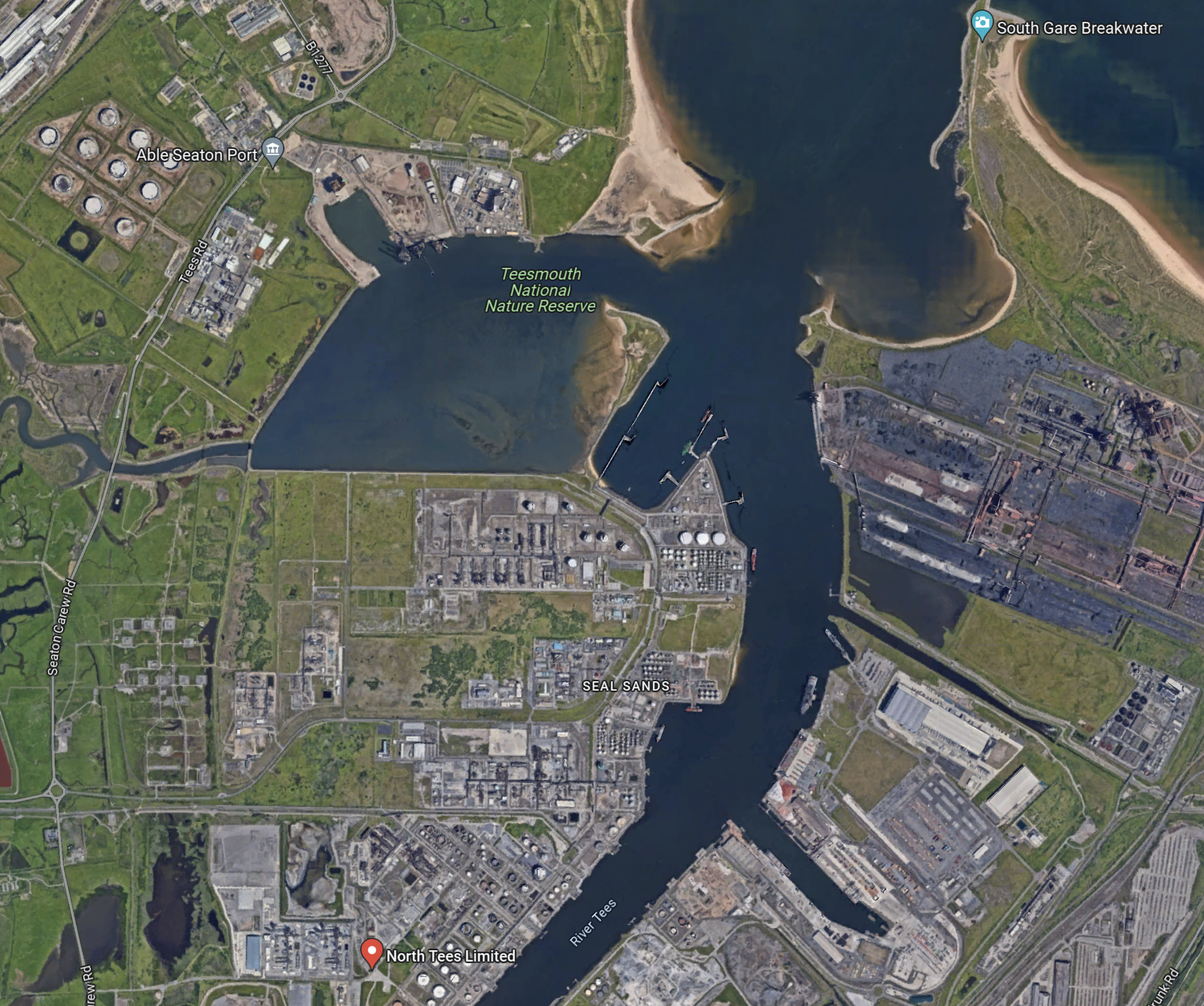
Note.
- The red arrow at the bottom of the map indicates the location of North Tees Group Estate.
- Follow the river to the North and a capitalised label indicating the position of Seal Sands can be seen.
This second Google Map shows the Seal Sands area in a larger scale.
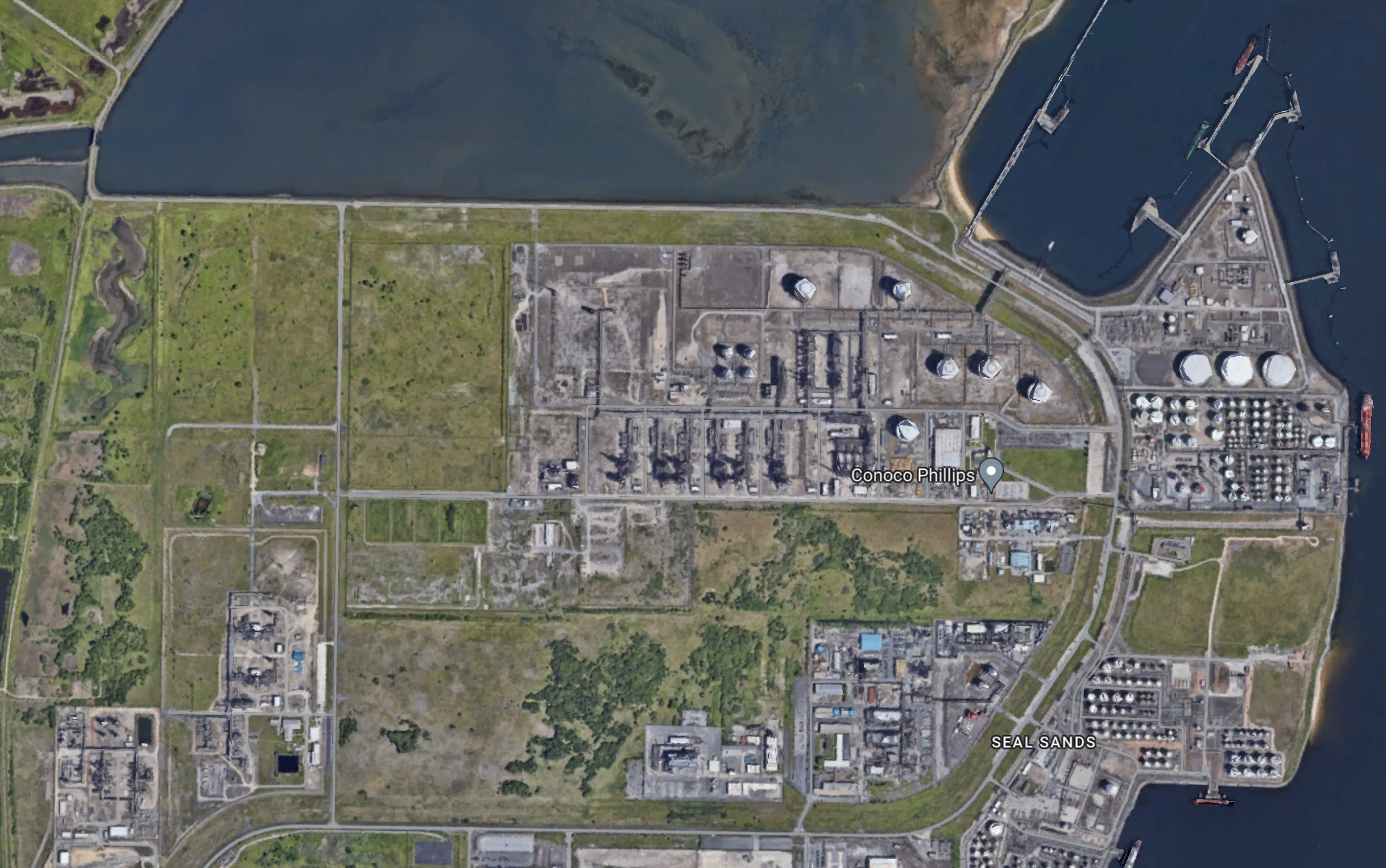
There seems to be several spaces, where the reactors could be located.
Would It Be Safe To Locate A Nuclear Reactor Or Reactors In a Cluster Of Oil Refineries And/Or Chemical Plants?
Consider.
- In the 1970s, when I worked at ICI, there were companies like Westinghouse advocating nuclear steelmaking.
- We did discuss the concept a couple of times over coffee but no one, I worked with, ever looked at it officially or seriously, as far as I know.
- In addition to requiring large amounts of electricity, oil refineries and chemical plants often use a lot of steam.
- Nuclear reactors generate steam to produce electricity, so some could be diverted to oil refineries or chemical plants
- To decarbonise some processes might switch to hydrogen.
- In Westinghouse And Bloom Energy To Team Up For Pink Hydrogen, I talk about how to use a nuclear reactor to efficiently produce pink hydrogen.
It looks like for efficiency, building the various plant close together could be a good thing.
But is it safe?
I suspect the level of safety will be that of the least safe plant.
So provided all plants are designed to the highest standards, it should be OK, as nuclear plants, oil refineries and chemical plant don’t regularly explode.
The Donald C Cook Nuclear Plant
The Donald C Cook Nuclear Plant in Michigan is a 2.2 GW nuclear plant, that was built by Westinghouse and commissioned in the mid-1970s.
They were clients for Artemis, the project management system that I wrote.
Soon after the Three Mile Island accident on March 28th, 1979, I visited the Donald C Cook Nuclear Plant to see how they were coping with the aftermath of the accident.
I remember being told by the operators of the plant, who were American Electric Power, that as it was their only nuclear plant, they were going to do everything by the book and Artemis was helping them to do that.
Reading about the plant, which is now licenced to operate until 2034 for one reactor and 2037 for the other, it seems to have performed impeccably so far for nearly fifty years.
It is a credit to both Westinghouse, who built it and American Electric Power who own it.
Now that is what I call high-class engineering and I’d be happy to have a cluster of SMRs to the same standard in my back yard.
Sizewell B
I used to live a few miles from Sizewell B, which is another Westinghouse reactor.
- This is the Wikipedia entry for the power station.
- Sizewell B was based on a proven Westinghouse design.
- It seems to have performed well since it was commissioned in 1995.
It looks like it will be operating until 2055, which will make its working life similar to those of the reactors at the Donald C Cook Nuclear Plant.
Westinghouse And Hinckley Point C Compared
Consider.
- Sizewell B was built in approximately seven years.
- This compares well with the two units at the Donald C Cook Nuclear Plant, which took six and nine years respectively
- It looks like Hinckley Point C will take between twelve and fourteen years to build.
- Sizewell B and the two units at Donald C Cook Nuclear Plant seem to be looking at a sixty year operating lifetime.
- Sizewell has a rail connection and Hinckley Point does not.
- Sizewell B seems to have been signed off, when John Major was Prime Minister.
- Hinckley Pont C seems to have resulted from a government white paper when Gordon Brown was Prime Minister.
Westinghouse seem to design nuclear power stations, that can operate for a long period and can be built within a decade.
Westinghouse And Rolls-Royce
Consider.
- Rolls-Royce also have an SMR design.
- Rolls-Royce and Westinghouse are both world-class companies.
- Rolls-Royce have the advantage they are British.
- I also suspect, that both Westinghouse and Rolls-Royce will use the same subcontractors and sub-assembly manufacturers.
- The Rolls-Royce SMR has a power output of 470 MW.
- The Westinghouse SMR has a power output of 300 MW.
I suspect the choice between the two, will be like choosing between top-of-the-range British and American products.
Conclusion
I wonder why we ended up with an unproven new French design at Hinckley Point, when sitting in Suffolk was a traditional Westinghouse design, that was performing to its design specification?
But for the SMR, we need to buy the reactors, which are financially best for Britain. If Westinghouse choose to manufacture large sections in the UK, they could be the better bet, as I suspect, if SMRs are successful, we’ll be seeing exports from the UK.
New £24m Platform To Boost City Train Services
The title of this post is the same as that of this article on the BBC.
These are the first three paragraphs.
Bradford’s Forster Square station is to get a new £24m platform to boost rail services in the city.
Rail Minister Huw Merriman said the government-funded scheme would futureproof the station for generations to come.
It could lead to five more trains to London each day, the Department for Transport said.
There are positive comments from Bradford Council leader Susan Hinchcliffe and LNER.
These are my thoughts.
Where Will The New Platform Be Built?
This OpenRailway Map sows the layout of the current three platforms at Bradford Forster Square station.
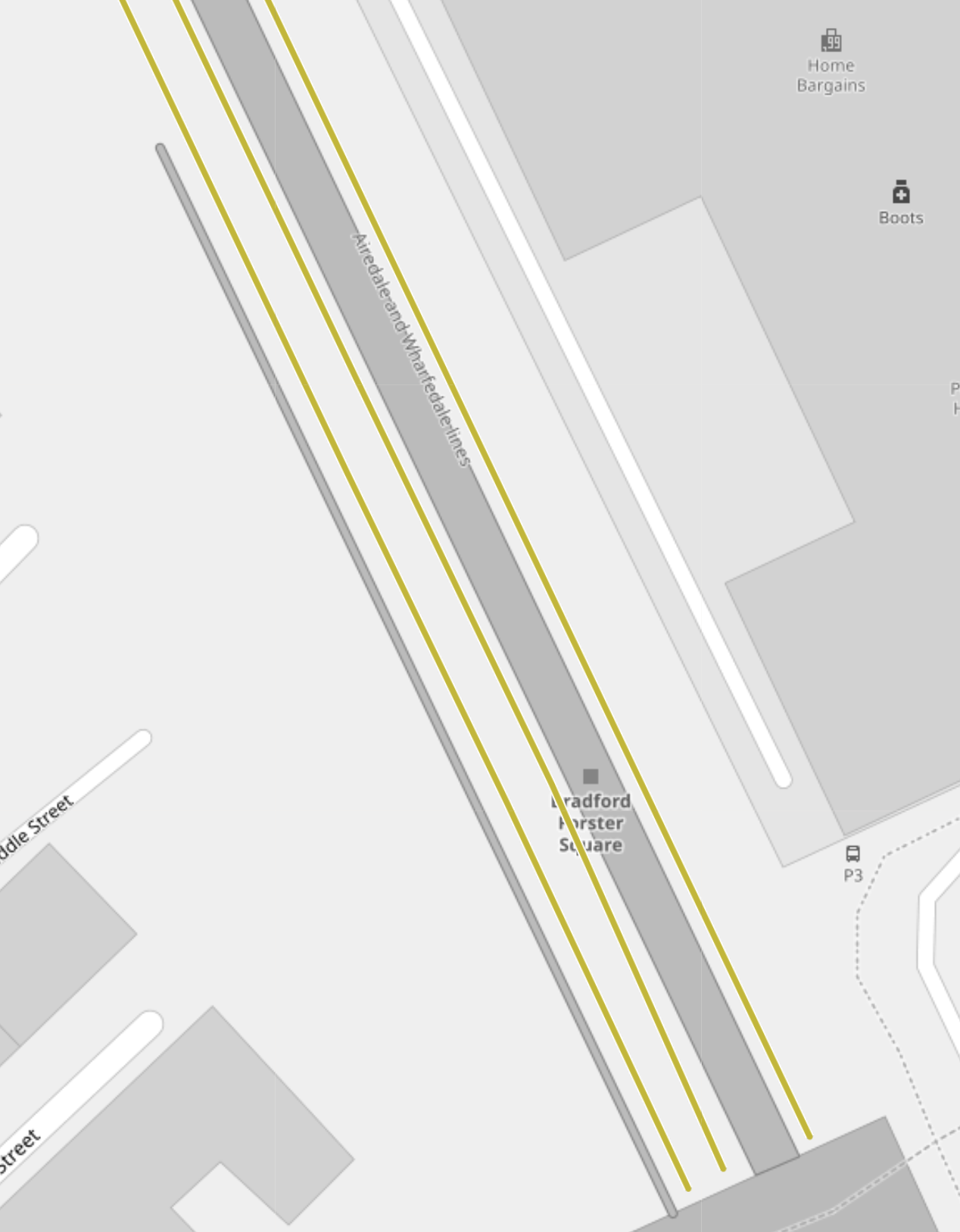
The Wikipedia entry for Bradford Forster Square station, says this about platform usage.
During off-peak hours most trains use platforms 1 (for Skipton) and 2 (Leeds and Ilkley) – platform 3 is mainly used during weekday peak periods and in the evening, though a spare set is usually stabled here between 09.00 and 16.00 each weekday.
This picture was taken on the only time I visited the station in 2017.

Note.
- The middle platform is numbered 2b.
- As Bradford Forster Square station is a terminal station, I must have taken this picture from the Southern end of the station.
- From Network Rail’s plan of the station, it looks like Platform 1 is on the right or East and Platform 3 is on the left or West.
This page on the EnglandRover web site confirms that Platform 3 is the Western platform.
This article on the Bradford Argus is entitled Work On New Platform To Begin In Spring After £24m Boost.
This is a paragraph.
The extra platform will be built at the side of the station closest to Forster Square Retail Park. It means the station will expand outwards by a few metres, and the platform construction will require Network Rail to purchase a strip of land from retail park owners British Land.
This Google Map shows where the platform will be placed.
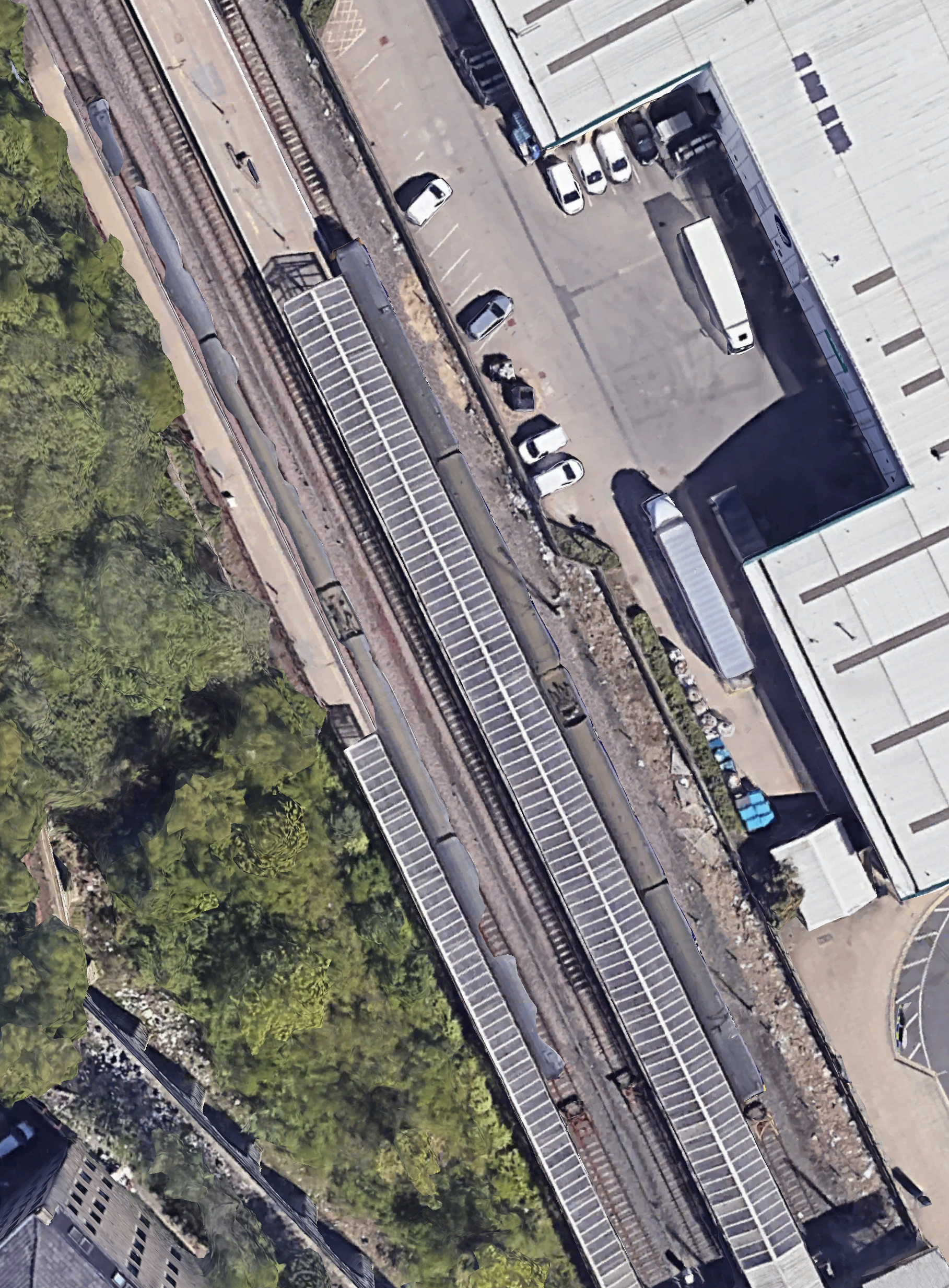
Note.
- The Forster Square Retail Park is in the North-East corner of the map.
- The glazed roof covers Platforms 1 and 2.
- There are trains in Platforms 1 and 3.
- Fitting in the new platform could be a bit tight.
Will the platforms be renumbered or will the new platform be called Platform 0?
Project Management Considerations
Consider.
- Bradford will be the UK City of Culture in 2025.
- British Land will want to have minimal disruption to the operation of their retail park.
For these reasons, all parties will want an early completion.
But as the site should have good access through the retail park, I could envisage that an early completion can be delivered by good project management.
How Many Platforms Will LNER Need?
Consider on the 1st of February 2024, four LNER trains visited the station.
- All trains were Class 801 trains.
- One train was a nine-car train and the others were a pair of five-car trains.
- Two trains used each of Platforms 1 and 2.
- LNER are planning to add five more trains per day (tpd), which will be a total of fourteen movements per day.
I suspect under normal operation, LNER could manage with one platform, as LNER’s movements are less than one per hour.
Conclusion
This new platform seems to be a good plan, that adds much-needed capacity for the short term and provides capacity for more services in the future.

