The Crews Bracing Themselves For A Rise In Electric Car Fires
The title of this post, is the same as that of this article on the BBC.
This is the sub-heading.
Each year, Essex Fire and Rescue Service focuses on one area of “top-up” training for its crews. In recent years, this has included sessions on firefighting at height and managing hazardous materials. This year, a new course is being introduced: How to deal with electric vehicle fires. Why?
These are the first three paragraphs.
Station manager Terry Maher has recently taken on a new role within the fire service.
A hazardous material expert, he is now the service’s lead officer on tackling lithium-ion battery fires.
His new responsibility comes as the number of electric vehicles (EVs) on UK roads hits more than 540,000. And the number is rising fast.
The article certainly worried me.
Most of the views expressed are by a fire officer, who is also a hazard materials expert.
It should be remembered that I have had serious fire training both as a Scout with the London Fire Brigade and a few years later at both Enfield Rolling Mills and at ICI.
These are a few points from the article.
- Dealing with a petrol or diesel car fire would normally take about 30 minutes. With an EV fire we’re looking at four or five hours or longer, if we’ve used water.
- As more and more people use electric vehicles we can expect more and more electric vehicle fires.
- The results of text searches show there were 59 electric vehicle fire references in 2022-23 across England – up from 30 the previous year.
We are dealing with dangerous vehicles and must handle with care.
These are my thoughts.
Car Insurance Rates For Electric Vehicles Will Rise
The worse the risk, the more you will have to pay.
A Full Safety Assessment Should Be Done Before Buying An Electric Vehicle
For instance, I have an integral garage in my house and wouldn’t feel safe at night, if an electric car or bicycle was in there on charge.
I certainly wouldn’t buy an electric car with a plastic body. Although I did own a Lotus Elan for over twenty years.
Conclusion
Everybody, who is thinking of buying an electric car or bicycle, should read the BBC article first.
Woking: Train Derailed On 90mph Line After Hitting Object On Track
The title of this post, is the same as that of this article on the BBC.
This is the sub-heading.
Disruption has hit a rail operator’s entire network after a train hit an object on a 90mph track in Surrey.
These three paragraphs describe the derailment.
The incident initially closed four tracks between Woking and Surbiton before disruption spread across the South Western Railway (SWR) network.
Network Rail said the train hit the object at about 05:50 GMT in a 90mph area near Walton-on-Thames in Surrey.
SWR said services were impacted between London, Exeter St David’s, Portsmouth Harbour and Weymouth.
It appears that no-one was hurt.
But derailments like this have happened before.
This article from The Mail is entitled Furness Passengers Able To Walk Away From Major Rail Accident.
These paragraphs detail the story.
Furness rail passengers were woken from their slumbers 50 years ago as the carriages of an express train heading for Barrow came off the rails at 80mph.
Half-dressed and dazed sleeper-car travellers from London were led to safety up a grass embankment near Warrington in 1967.
Amazingly, not one of the passengers was killed or badly injured in what could easily have been a major disaster
The Mail on Friday, September 15, in 1967 noted: “Furness and West Cumberland passengers hung on for their lives when 11 coaches of the London-Barrow express hurtled off the rails at 80mph near Warrington today.
“The coaches bounced and zig-zagged for nearly a quarter of a mile, tearing up the permanent way and completely blocking the main London-Glasgow line.
“Miraculously, only one of the 60 passengers, who included many people from Furness and West Cumberland, was injured.
“He was Rohan Kanhai, the West Indian test cricketer, who was on his way to Blackpool.
“He was taken to Warrington Infirmary with an arm injury. After receiving treatment he was allowed to continue his journey.
I remember the story for two reasons.
- Obviously, because a well-known sportsman was involved.
- But also because British Rail put the low injuries down to new couplings between the coaches, which kept the train together.
Could it be that over fifty years after the Warrington derailment, no injuries occurred because the improved design of the train kept it all in one piece and most of the damage was to the infrastructure?
Safety On The London Underground
This post has been inspired by this article on The Times, which is entitled Woman Who Lost Limbs In Tube Accident Seeks Sadiq Khan Meeting.
This is the sub-heading.
Sarah de Lagarde has launched legal action against Transport for London, which she says has not accepted responsibility and needs a comprehensive safety review.
These two paragraphs add a few details to the story.
A public relations executive who lost her right arm and leg after being hit by two Tube trains has called on Sadiq Khan, the London mayor, to meet her to discuss Transport for London’s “outdated” attitude to safety.
Sarah de Lagarde, 46, slipped on a wet and uneven platform at High Barnet station in north London in September 2022 and fell down the gap between the train and the platform. No one heard her cries for help after she broke her nose and two teeth in the fall. After being hit by two trains she was rushed to hospital, where her limbs were amputated.
These are my thoughts.
The Brave Paramedic
My late wife was a family barrister and one of her clients had been one of the brave specially-trained paramedics, who go under London Underground trains to rescue those who’ve tried to commit suicide or have just fallen, as this lady had.
He said that many don’t succeed in committing suicide, but lose a number of limbs and/or end up in a wheelchair for the rest of their lives. So professionally, he told my wife, he would never recommend it as a method to commit suicide.
Suicide Pits
It should also be noted, that large numbers of Underground stations have suicide pits, where if you fall you may avoid injury or survive. Wikipedia says that a pit halves the number of deaths.
These galleries show the lines at various platforms on the Northern Line.
Angel – Southbound
These pictures show the Southbound track at Angel station.


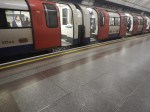
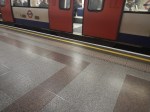
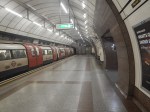
It should be noted that Angel station does not have platform edge doors.
The suicide pit was installed or rebuilt, when the station was rebuilt in 1992.
Bank – Northbound
These pictures show the Northbound track at Bank station.
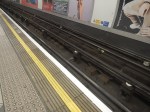
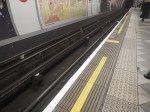
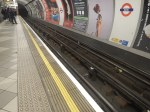
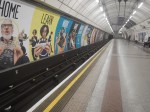

It should be noted that Bank station does not have platform edge doors.
The track was rebuilt in the last three years.
Bank -Southbound
These pictures show the Northbound track at Bank station.
It should be noted that Bank station does not have platform edge doors.
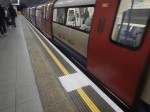
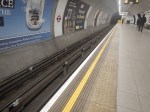
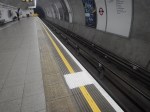
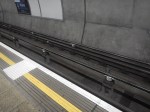
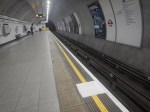
The track was built in the last three years.
High Barnet
These pictures show the tracks at High Barnet station.
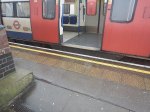
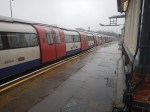
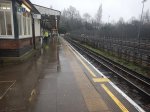
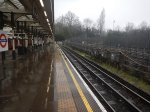
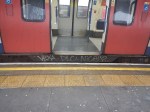
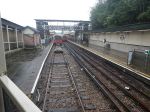
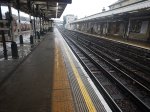
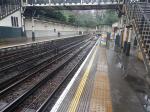
It should be noted that High Barnet station does not have suicide pits or platform edge doors.
Woodside Park
These pictures show the tracks at Woodside Park station.
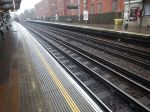
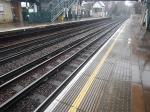
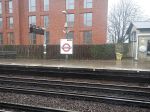
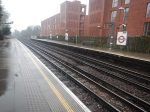
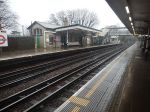
It should be noted that Woodside Park station does not have suicide pits or platform edge doors.
These are a few final thoughts.
I don’t like being on the platform, when a train goes past or comes in. Would platforms be safer, if there were shelters or recesses, where passengers could stand back and hold on away from the platform edge?
As an instrument engineer, I wouldn’t be surprised that a specialist camera system couldn’t be developed that could detect bodies on the track.
I have a feeling that some judges might say that London Underground were not doing enough to stop injuries to those falling onto the tracks.
London Underground: Safety Checks Cause Metropolitan Line Disruption
The title of this post, is the same as that of this article on the BBC.
These are the first three paragraphs.
Urgent safety checks are being carried out on trains running on the Metropolitan line section of the Tube, Transport for London (TfL) has said.
TfL is warning of severe disruption as engineers check over the entire fleet of trains – which also run on the Circle and Hammersmith & City lines.
The trains were only introduced in 2010, but TfL said a fault had been identified on some of their wheels.
Obviously, safety is a priority and it will take some time to check all of the trains.
I have used these trains several times in the last few days and there are extended intervals between services.
Could Crossrail Come To The Rescue?
Consider.
- Crossrail has interchanges with the Circle, District, Hammersmith & City and the Metropolitan Lines at Whitechapel, Liverpool Street, Moorgate, Farringdon, Paddington and Ealing Broadway.
- Crossrail trains have been running between Paddington and Abbey Wood for a few months.
- Crossrail has good connections to the Central and Jubilee Lines.
Perhaps, opening Crossrail at a lower frequency may take the pressure off the system?
Cycle Paths To Run Alongside HS2 For 200 Miles
The title of this post, is the same as that of this article on The Times.
This is the first paragraph.
The route of HS2, the high-speed railway line from London to Manchester, is to become an unlikely tourist and leisure destination, with a trail for cyclists and walkers that will eventually run for 200 miles.
The article says this about the design of the proposed trail.
- The cycle path is expected to be 3m wide.
- The walkers path is expected to be 2.5m wide.
- The two paths would be separated by a grass verge.
I am pleased that the combined path will be set at some distance from the High Speed Two track, as I don’t like to be near speeding trains.
I have some thoughts.
Rest Areas
In some places, there should be rest areas. Some of these could be close to towns or villages, where there is a convenient cafe or pub.
In Burnley, there is even a Premier Inn on the banks of the Leeds and Liverpool Canal and the manager told me, that in the summer, they get cyclists staying the night, as it’s the mid-point between Leeds and Liverpool.
Mobility Scooters
Will rules for these to use the trail be developed?
Health And Safety
In Edinburgh to Inverness in the Cab of an HST, I talked about a memorable trip, that I made to Inverness.
The route to Inverness is for a long way alongside the A90 and driver told me how on one trip, there was a serious multiple car crash in heavy snow.
So he stopped the train, alerted the emergency services and even asked the passengers, if there were any medical staff on board.
Obviously, stopping a High Speed Two train from 225 mph is not as practical as stopping an InterCity 125 from perhaps 90 mph.
But the drivers’ eyes or the CCTV systems on the train would probably spot a minor accident on the path, so the appropriate assistance can be called.
Conclusion
I like this idea.
It should be fully developed.
Barriers And Planters On The London Overground Platforms At Clapham Junction Station
To get home from Feltham station, after my visit this morning to see the new bridge, which I wrote about in The Completed Bridge At Feltham Station, I changed trains at Clapham Junction station.
I noticed that a barrier has been put up between the current two Overground platforms; 1 and 2.
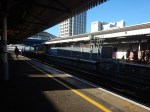
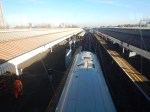
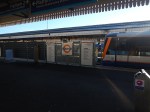
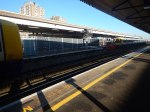
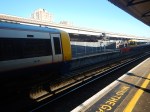
.I suspect it is for safety reasons, as it will certainly stop passengers falling off the platform.
I also noticed that planters had been placed where I suspect that the new Platform 0 will be built.
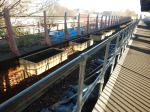
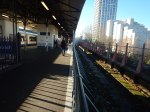
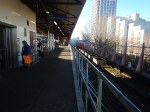
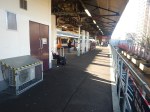
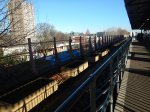
Note.
- If the track is to placed between the planters and the platform, the space could be a bit small.
- Or is the platform going to be rebuilt a bit narrower?
- It also looks like the platform won’t be long enough for the planned eight-car train.
I also took these pictures of what looks to be a Fire Exit.
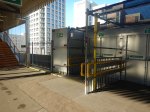
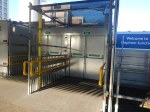
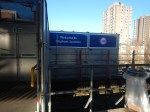
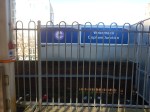
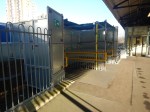
Could it be a temporary entrance, that will be used if there is a lot of work going on about the Grant Road entrance to create the new platform?
I also took these pictures of the Eastern end of the platform.
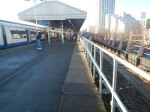
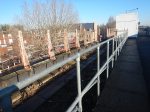
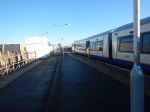
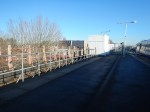

Considering, that the Class 378 train is five cars and an eight-car train would be sixty percent longer, it looks to me, that they will have to extend the platform, behind the temporary entrance or perhaps further towards the East.
Or could Network Rail have called up Baldrick, and asked him for one of his cunning plans?
Consider.
- Currently, there is a one train per hour (tph) between Milton Keynes and Clapham Junction stations, run by Southern.
- The service used to run between Milton Keynes and South Croydon stations.
- There surely is a need for a high-frequency service between the High Speed Two station at Old Oak Common and Clapham Junction station.
- Currently, there is no planned link between Crossrail and the West London Line.
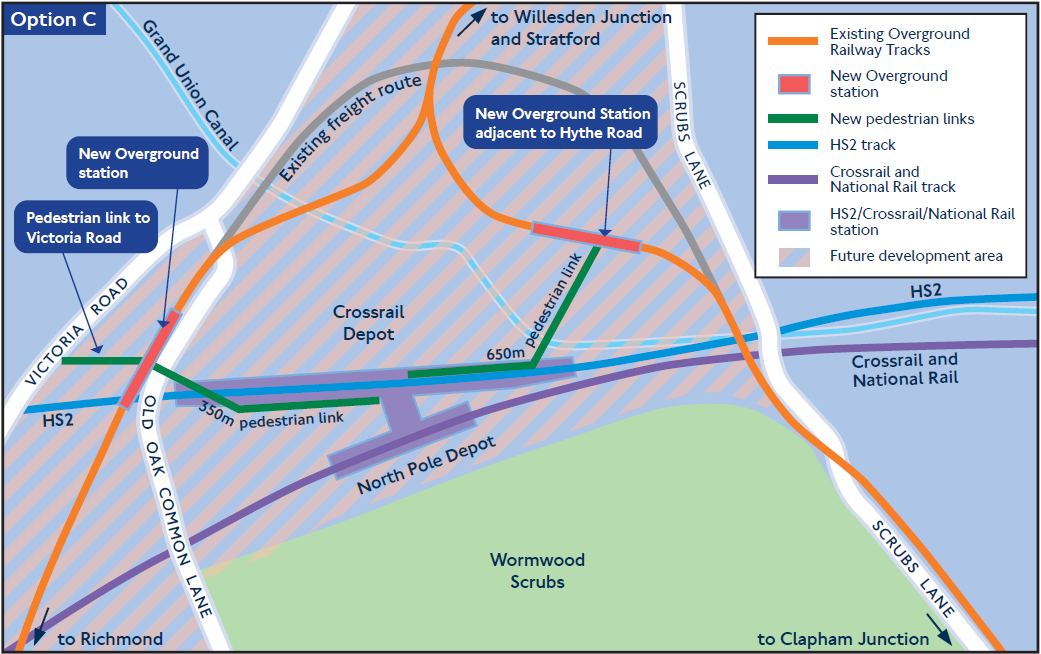
Hythe Road station is planned to be on the West London Line and will serve the High Speed Two station at Old Oak Common.
This Transport for London map, shows the position of the proposed Hythe Road station with respect to High Speed Two and Crossrail.
Note.
- The West London Line to and from Clapham Junction goes down the East of the map.
- The North London Line to and from Richmond goes down the West of the map.
- The current Milton Keynes and Clapham Junction service doesn’t go through the site of Hythe Road station, but somehow sneaks round on the freight line in the map.
Wikipedia describes the proposal for Hythe Road station like this.
Hythe Road railway station would be situated about 700 metres (770 yards) from the mainline Old Oak Common station. Construction work would involve re-aligning the track along a new railway embankment (built slightly to the north of the existing line) and demolishing industrial units along Salter Street, on land currently owned by a vehicle sales company (‘Car Giant’). The station structure will sit on a viaduct, with a bus interchange underneath. The station will incorporate 3 platforms, allowing through services between Stratford and Clapham Junction with an additional bay platform to accommodate terminating services from Clapham Junction.
I can envisage an eight tph service between Clapham Junction and Hythe Road stations, made up something like this.
- Four tph between Stratford and Clapham Junction stations
- One tph between Milton Keynes and Clapham Junction stations
- Three tph between Hythe Road and Clapham Junction stations
Note.
- Services would stop at Shepherd’s Bush, Kensington (Olympia), West Brompton and Imperial Wharf.
- Two platforms at Clapham Junction station could easily handle eight tph.
- The London Overground’s five car Class 378 trains would probably be long enough for the shuttle.
- There is even the possibility of running the Milton Keynes and Clapham Junction service with five car trains, to void the expense of creating an eight-car platform at Clapham Junction station.
It would be better if the Milton Keynes and Clapham Junction service could go through Hythe Road station. But this might be difficult to arrange.
Conclusion
An eight tph service through Old Oak Common could be a nice little add-on for both High Speed Two and Crossrail.
Foot Crossing Obstacle Detection Using AI
The title of this post, is the same as that as this article on the Railway Gazette.
This is the introductory paragraph.
Seibu Railway is to start testing a newly-developed AI-assisted warning system for detecting obstacles on foot crossings at two stations on the Ikebukuro Line in the suburbs of Tokyo.
The article is a detailed description of how the Japanese are using technology to make foot crossing a lot safer.
I can see applications for this technology not just on the rail system, but in other situations as well.
Heavy Fire Doors At Moorgate Stations – 6th December 2021
They’re certainly not stinting on safety in Moorgate station.
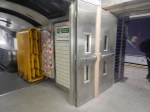

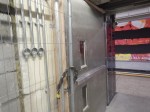
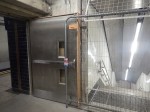
These doors will cut off the passages between Crossrail and the Northern Line.
Storm Arwen: Image Shows Severe Damage To Train Following Red Weather Warning
The title of this post, is the same as that of this article on the Scotsman.
It shows a dramatic picture of a Class 170 train, that was hit by a tree, that was blown onto the line.
The incident happened on the Borders Railway and luckily no-one was hurt.
Track Monitoring System To Be Tested On Chiltern Line
The title of this post, is the same as that of this article on Railway Gazette.
This is the first paragraph.
Network Rail is to undertake in-service trials with DB Systemtechnik’s CTM2·0 continuous track monitoring system on a Chiltern Railways MkIII driving van trailer operating in passenger service between London Marylebone and Birmingham.
This seems to me to be a good idea.
- The German system appears to be comprehensive and has been in service for seven years.
- There is a lot of space in the back of a driving van trailer.
- It probably can do much of the work of the New Measurement Train, but more often.
It could surely be applied to other routes.
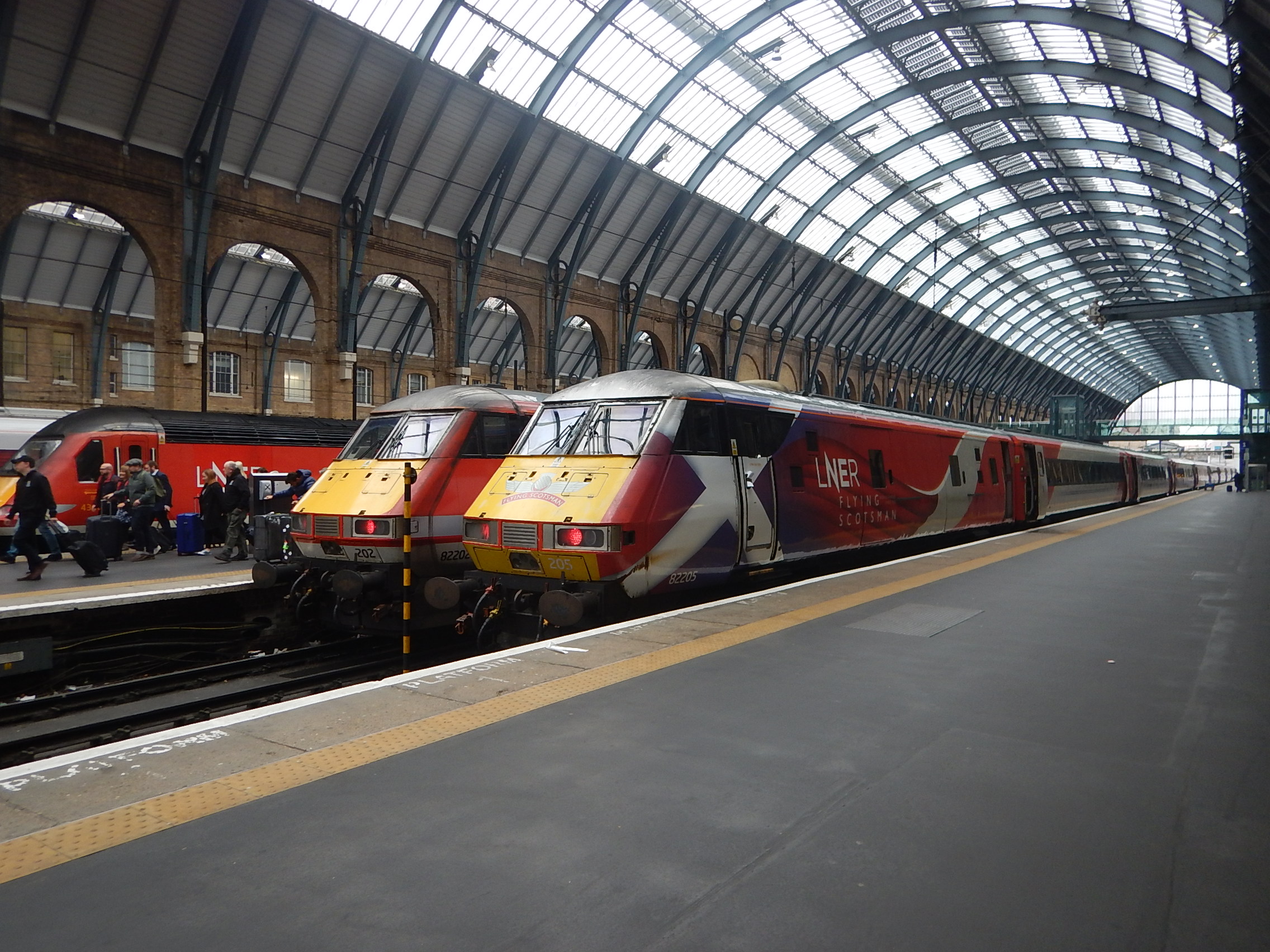
The picture shows the driving van trailers on the London-ends of a pair of InterCity 225s at King’s Cross.
Some Open Access Operators are also looking at the possibility of running short InterCity 225 sets.
It would also be possible to create extra Measurement Trains, by coupling an instrumented driving van trailer to an appropriate locomotive and a couple of coaches.
As a Control Engineer, who has analysed a lot of data in his working life, it could improve rail safety by testing rail lines more often.
 The Anonymous Widower