SaxaVord ‘A Real Spaceport Now’ After First Rocket Explosion
The title of this post, is the same as that of the title of this article on The Times.
This is the sub-heading.
Despite the disappointment of last Monday’s fire engineers remain confident that the Unst site is ready for launch
These are the first two paragraphs.
Nothing could look more ominous for the European space industry than the tower of flame lighting up the skies over Shetland’s SaxaVord spaceport when a prototype engine suddenly and spectacularly caught fire on the launchpad last week.
The blaze was certainly “a nightmare” for the engineers of Rocket Factory Augsburg (RFA), the German company that hoped to conduct its first vertical rocket launch this year.
These are my thoughts and some from the article.
- I can remember a headline of Ike’s Phutnik, in a tabloid, when the United States tried to launch their first satellite.
- The safety systems seem to have worked well and no-one was hurt.
- The Chief Operating Officer of Rocket Factory Augsburg, still seems to have the ambition to make the project succeed.
- The operators are confident that SaxaVord will be ready for the next trials, whenever they are required.
- There is interest from Malaysia, to launch earth observation satellites.
- Scotland also offers other opportunities to southeast Asian tech businesses, as there are no launch sites in the region.
But most importantly, SaxaVord is generating interest from a wide range of users, as this paragraph indicates.
Others have already decided. SaxaVord has struck launch agreements with Lockheed Martin, the US aerospace giant and the German company HyImpulse as well as the UK’s Skyrora. Another four deals with international satellite companies are said to be in the offing.
If an established company were to launch a successful satellite, it could make all the difference to SaxaVord.
Conclusion
These are the last two paragraphs of the article.
Interest on this global scale enables the Scottish space pioneers to shrug off Monday’s blaze and the bad publicity it entailed. For anyone thinking the fire was bad news, emails from colleagues in the US told an altogether different story.
“You’re a real spaceport now,” read one message to a Shetland engineer. “You can’t call yourself a spaceport until you’ve had a rocket blow up!”
I have been to a party at NASA in Houston and they wouldn’t have been as successful, as they have, if they gave up on a failure. They try, try and try again.
Meet The British ‘Space Inspectors’ Working For A Safe Blast-Off
The title of this post, is the same as that of this article on the Daily Telegraph.
This is the sub-heading.
A small band of professionals is keeping Britain’s £65 billion space economy in good working order
The article talks about how the Civil Aviation Authority will make sure we boldly go, with a high degree of safety, starting with these three paragraphs.
With Britain’s first vertical launch expected to lift off from Shetland this year, the UK could soon become the go-to European destination for space missions.
But behind the scenes, an army of ‘space inspectors’ is ensuring that, despite reaching for the stars, companies have their feet planted firmly on the ground.
It is the job of the Civil Aviation Authority (CAA) to make sure that things go off with a bang – but only at the right time.
Having lived through all the excitement of space exploration from Sputnik 1 in 1957 onwards.
A few decades ago, when I was in Florida, I saw a launch of the Space Shuttle.
Hopefully, I’ll be lucky enough to get to Shetland or Cornwall to see a space launch from the UK.
The Daily Telegraph article also has this paragraph.
There are more than 2,200 companies working in Britain’s £65 billion space economy from satellite manufacturers to spaceports, from software to observation. The industry has grown significantly in recent years, and is aiming to capture 10 per cent of the global space market by 2030.
I don’t think, the ten-year-old boy, that my father woke in 1957 to tell about Sputnik 1, really ever thought ever thought there would be a chance that he’d see a space launch from the UK.
But now it appears to be happening! Fingers crossed!
Three Shetland ScotWind Projects Announced
The title of this post, is the same as that of this press release on Crown Estate Scotland.
These three paragraphs outline how the leases were allocated.
Three projects will be offered seabed agreements for offshore wind projects following Crown Estate Scotland’s ScotWind clearing process.
The announcement comes as an offshore wind supply chain summit is held in Aberdeen today (22 August) with Sir Ian Wood, chaired by Michael Matheson MSP, Cabinet Secretary for Energy, and including a keynote address by First Minister Nicola Sturgeon MSP.
Clearing saw the ‘NE1’ area east of Shetland made available for ScotWind applicants who met the required standards but who did not secure their chosen location earlier in the leasing process.
I think it was good idea to offer these leases to those bidders that failed to get a lease, the first time around, despite meeting the standards.
- Would it encourage bidders, if they knew that after the expense of setting up a bid, that if they failed, they could have another chance?
- It must also save the Scottish Government time and money checking out bidders.
- How many times have you interviewed several applicants for a job and then found jobs for some of those, that you didn’t choose for the original job?
Let’s hope the philosophy has generated some good extra contracts.
This map from Cross Estate Scotland shows all the contracts.

Note the three new leases numbered 18, 19 and 20 to the East of Shetland, in the North-East corner of the map.
Their details are as follows.
- 18 – Ocean Winds – 500 MW
- 19 – Mainstream Renewable Power – 1800 MW
- 20 – ESB Asset Development – 500 MW
Note.
All are floating wind farms.
- Ocean Winds is a Spanish renewable energy company that is developing the Moray West and Moray East wind farms.
- Mainstream Renewable Power appear to be a well-financed and ambitious company, 75 % owned by Aker.
- ESB Energy appear to be an experienced energy company owned by the Irish state, who operate several wind farms and Carrington gas-fired power station in the UK.
2.8 GW would appear to be a generous second helping.
Ocean Winds and Mainstream Renewable Power
This web page on the Ocean Winds web site, is entitled Ocean Winds Designated Preferred Bidder For Seabed Leases For 2.3 GW Of Floating Projects East Of Shetland, Scotland, contains several snippets of useful information.
- Crown Estate Scotland announced the result of ScotWind Leasing round clearing process, awarding Ocean Winds with two seabed leases for floating offshore wind projects: a 1.8 GW capacity site with partner Mainstream Renewable Power, and another 500 MW capacity site, east of the Shetland Islands.
- Ocean Winds’ international portfolio of projects now reaches 14.5 GW of gross capacity, including 6.1 GW in Scotland.
- Floating wind turbines for the two adjacent sites are confirmed, because of the water depth.
- The partners are committed to developing floating offshore wind on an industrial scale in Scotland, generating local jobs and opportunities in Scotland and the Shetland Islands.
- From the picture on the web page, it looks like WindFloat technology will be used.
- Ocean Winds developed the WindFloat Atlantic project.
Ocean Winds appear to want to go places.
The Shetland HVDC Connection
The Shetland HVDC Connection will connect Shetland to Scotland.
- It will be 160 miles long.
- It will have a capacity of 600 MW.
- It is estimated that it will cost more than £600 million.
- It will allow the 66MW Lerwick power station to close.
- It will be completed in 2024.
I have a feeling that all these numbers don’t add up to a sensible answer.
Consider.
- The three offshore wind farms can generate up to 2800 MW of green electricity.
- With a capacity factor of 50 %, an average of 1400 MW of electricity will be generated.
- The Viking onshore wind farm on Shetland could generate up to 450 MW.
- More wind farms are likely in and around Shetland.
- Lerwick power station can probably power most of the Shetland’s needs.
- Lerwick power station is likely to be closed soon.
- Sullum Voe Terminal has its own 100 MW gas-turbine power station.
- Load is balanced on Shetland by 3MWh of advanced lead-acid batteries.
- Lerwick has a district heating scheme.
If we assume that Shetland’s energy needs are of the order of a few hundred MW, it looks like at times the wind farms will be generating more electricity, than Shetland and the Shetland HVDC Connection can handle.
Various plans have suggested building electrolysers on Shetland to create hydrogen.
Conversion of excess electricity to hydrogen, would have the following advantages.
- The hydrogen could be used for local heavy transport and to replace diesel.
- Hydrogen could be used to fuel a gas turbine back-up power station, when needed.
- Hydrogen could be used for rocket fuel, if use of Shetland as a Spaceport for launching satellites takes off.
Any excess hydrogen could be exported to the rest of the UK or Europe.
‘Spaceport In A Box’ To Launch UK’s First Rocket From Home Turf
The title of this post, is the same as that of this article on The Times.
This is the sub-heading.
A British company’s mobile spaceport can send satellites into orbit from anywhere in the world. Its initial blast-off point is Unst
These are some more points from the article and myself.
The UK Has Never Sent A Rocket Into Space From Home Turf
Our satellites have always been launched from French Guinea, Kazakhstan or the United States.
Spaceport In A Box
The mobile launch system which can be packed into a dozen shipping containers and taken anywhere in the world.
Launch From Unst
Unst is the most northerly of the Shetland Islands and is an ideal location for polar launches.
It Will Be Very Difficult To Compete With SpaceX On Price
This is because SpaceX launch up to a hundred satellites a time on a huge rocket.
Skyrora Can Provide Precise Launches
Skyrora claim to be able to launch a single satellite at great precision. As a Control Engineer, I think that is possible.
100,000 Satellites By 2030
This figure will include a large number of UK-built satellites.
So why shouldn’t we have our own launch technology.
Sixteen Launches Per Year
Skyrora are talking of this number of launches per year from Unst.
Conclusion
This is a well-thought out project.
Read the article in The Times.
Skyrora Creates Europe’s Largest 3D Printer In ‘Game-Changer’ For Cutting Rocket Building Time
The title of this post, is the same as that of this article on CityAM.
The title is a good summary of a must-read article.
Shetland Blasts Off Into Space Race As Britain’s First Rocket Launch Pad Skyrora
The title of this post, is the same as that of this article on The Times.
This second paragraph, explains what Skyrora are doing.
Skyrora, a technology company with its headquarters in Edinburgh, has agreed a deal for scores of rocket launches over the next decade from a site on Unst, the most northerly of the Shetland islands.
This Google Map shows the most Northerly part of Unst.
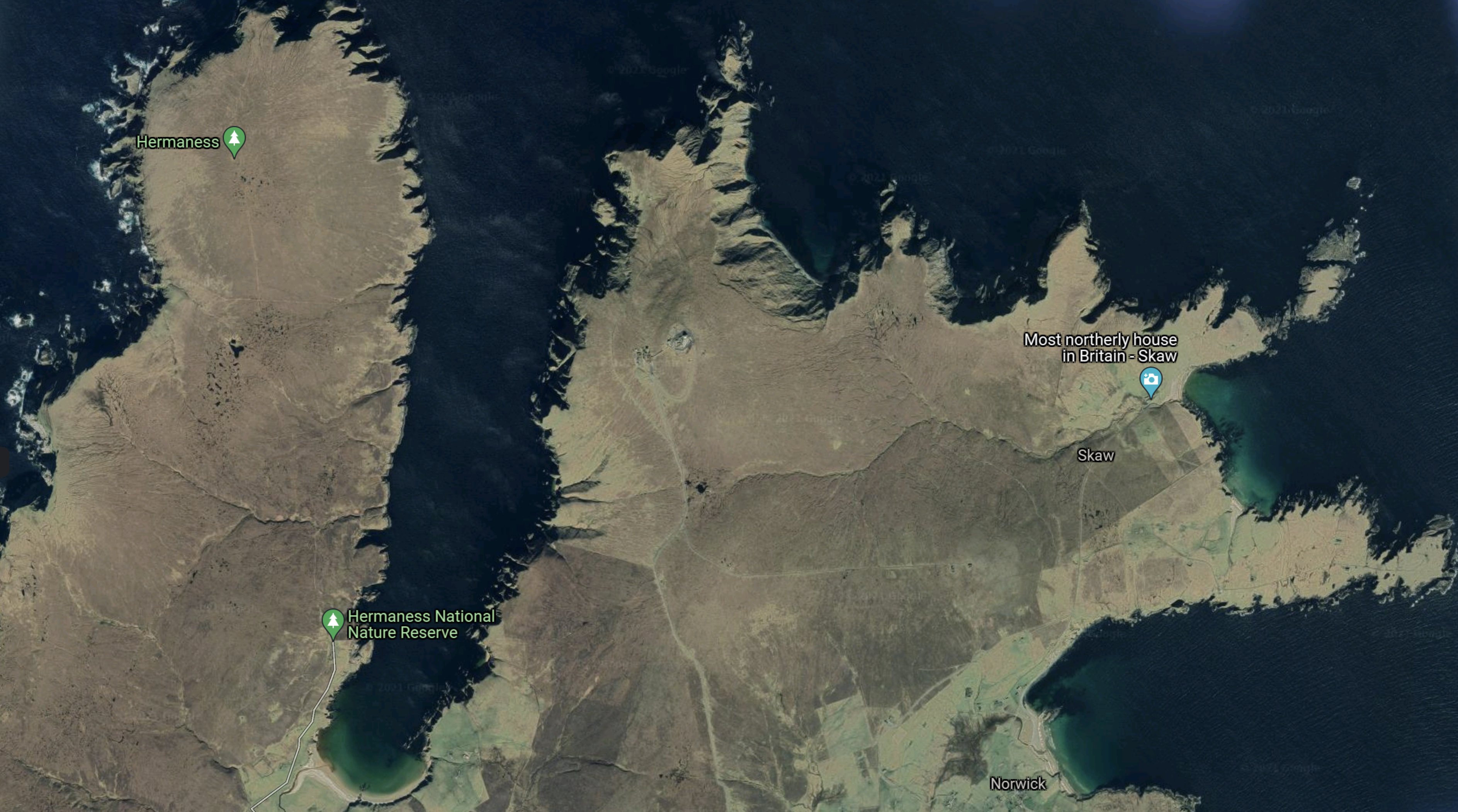
There’s not really much there, except birds, trees and the most northerly house in Britain.
Enlarging to the West of the house, gives this second Google Map.
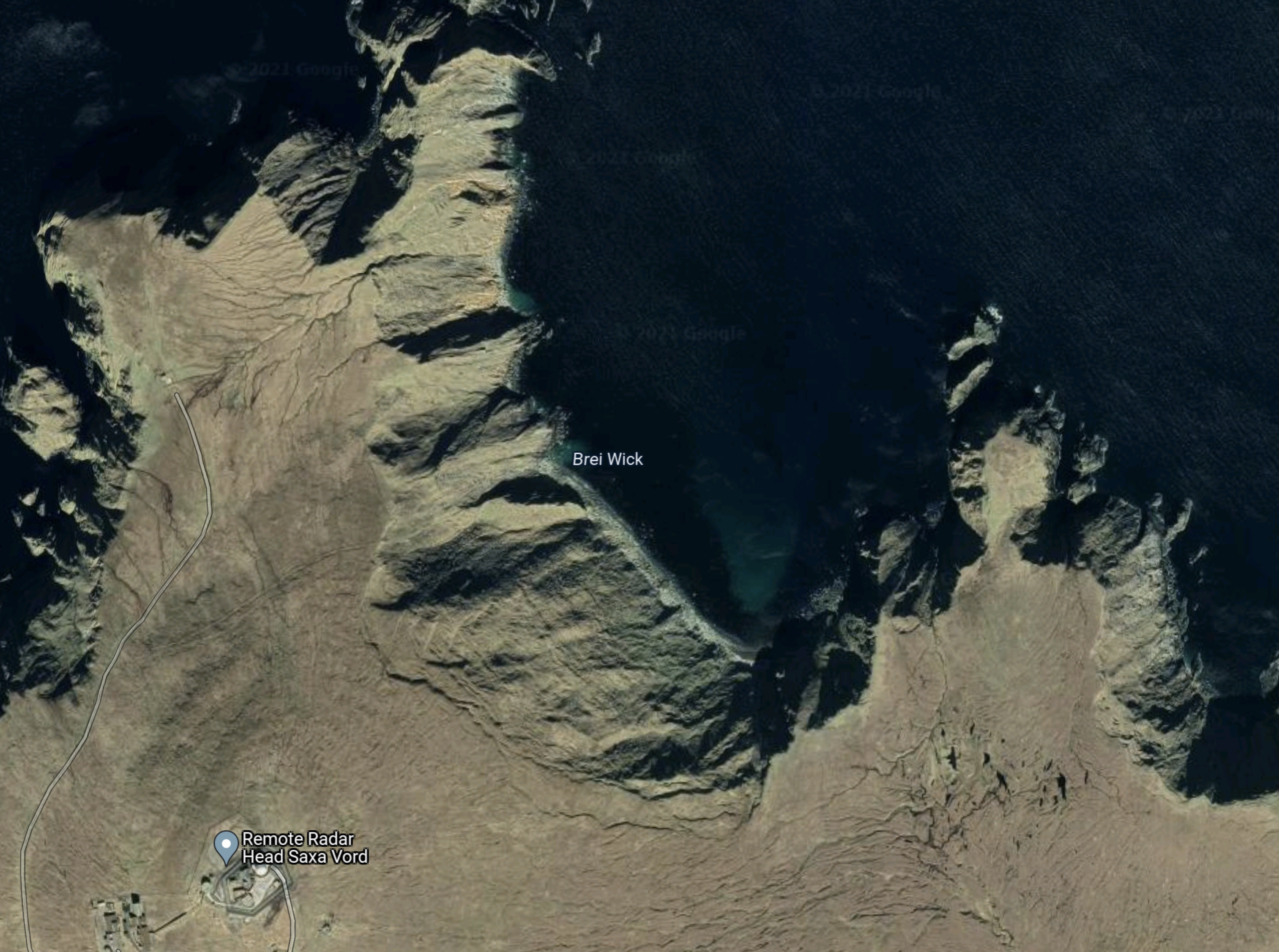
Note the Remote Radar Head Saxa Vord, which has a Wikipedia entry as RAF Saxa Voe.
- It is now a fully-operational radar station again, after closure in 2006.
- It is at the same latitude as St. Petersburg and Anchorage.
- In 1992, it measured a wind speed of 197 mph, before the equipment blew away.
The Wikipedia entry is worth a read, as it gives a deep insight into radar and its tracking of Russian intruders in the Cold War.
This third Google Map shows a 3D closeup of the radar.
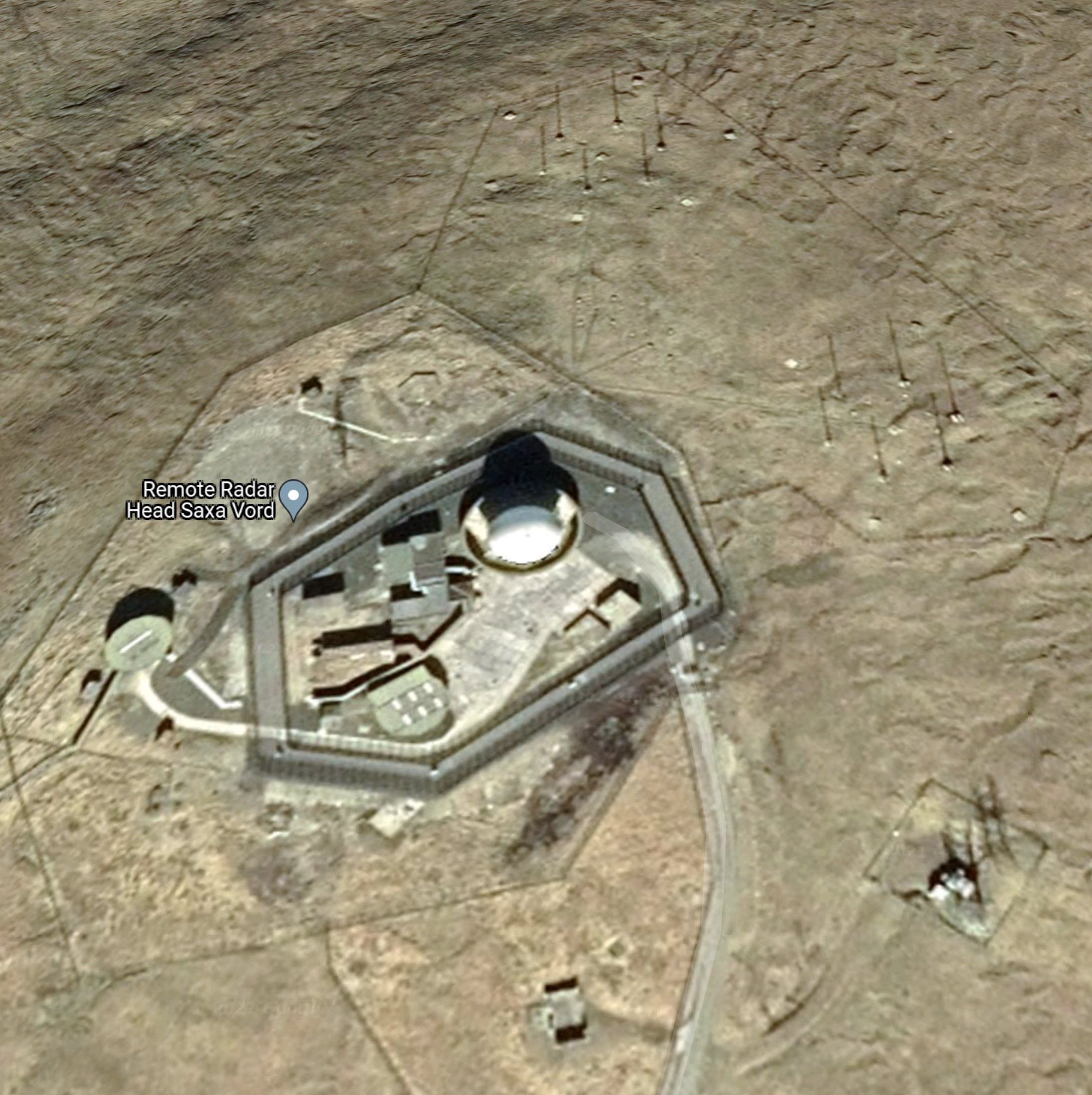
No staff are based at Saxa Vord, although maintenance staff do visit.
According to The Times, the space port will be at Lamba Ness, which is to the East of the most northerly house in Britain.
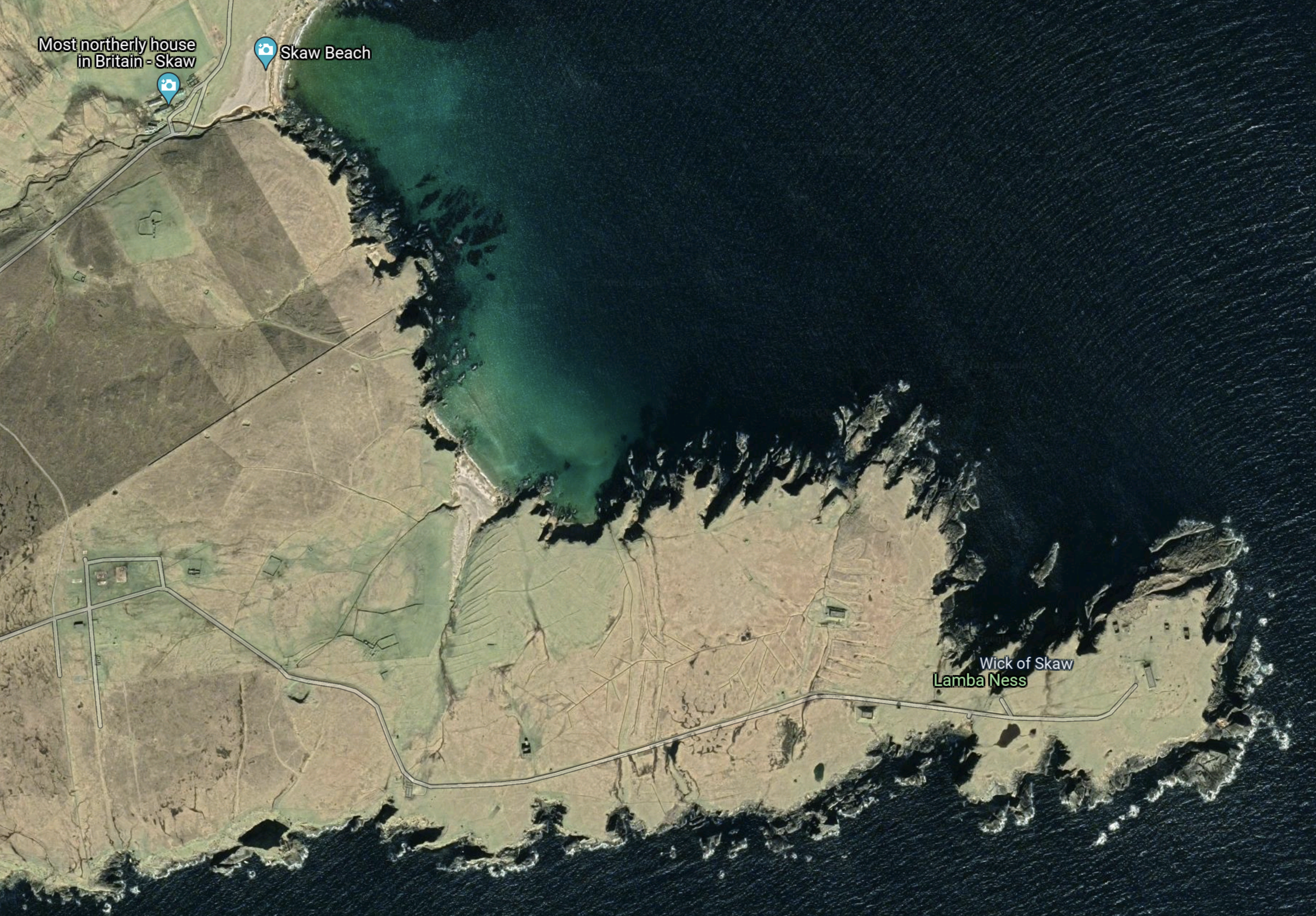
The peninsular in the South-East is marked Lamba Ness.
It may seem a very bleak place, but it could have one thing, that rocketry will need – rocket fuel!
In Do BP And The Germans Have A Cunning Plan For European Energy Domination?, I introduced Project Orion, which is an electrification and hydrogen hub and clean energy project in the Shetland Islands.
The project’s scope is described in this graphic.
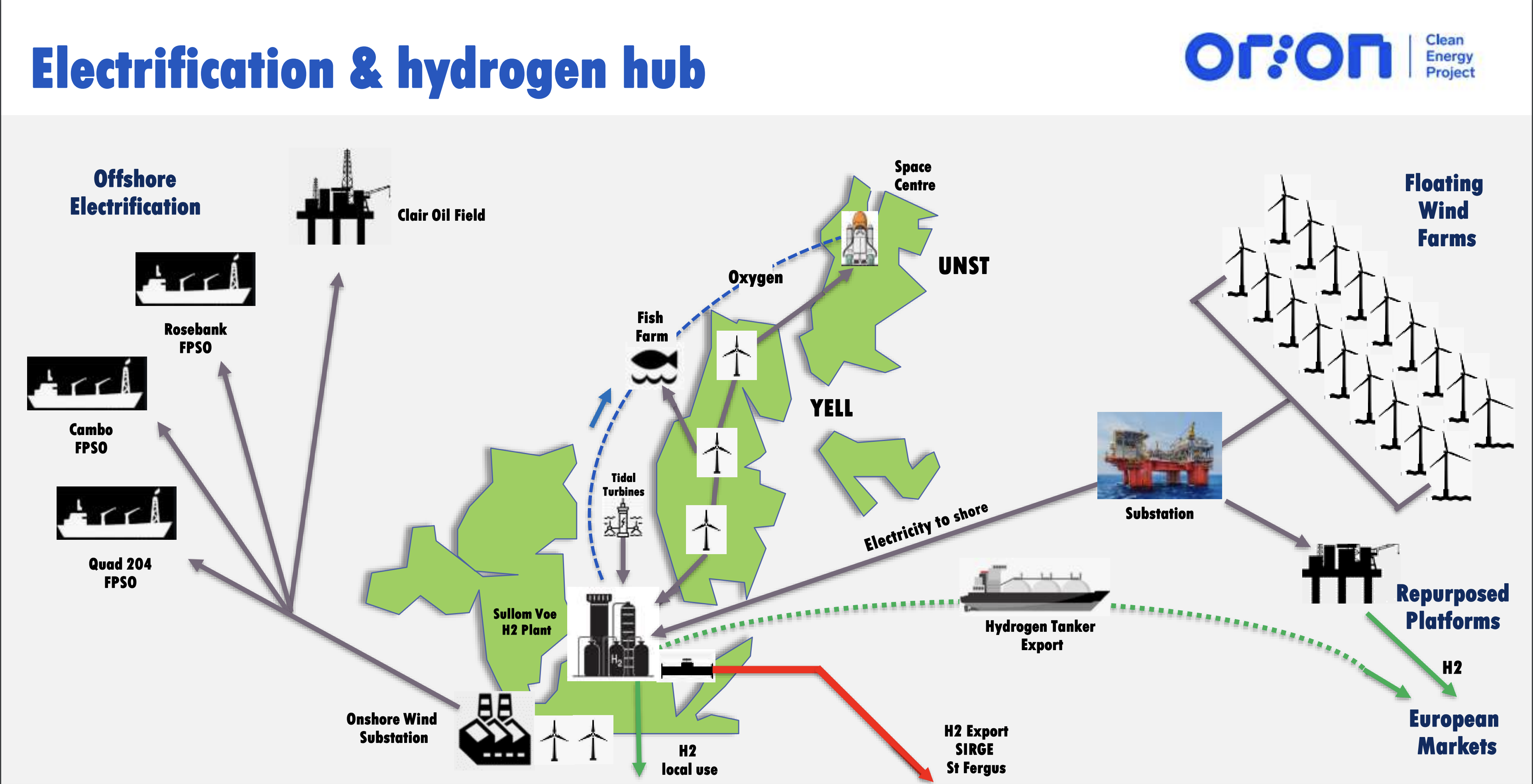
Note
- Project Orion now has its own web site.
- A Space Centre is shown on the Island of Unst.
- There is an oxygen pipeline shown dotted in blue from the proposed Sullom Voe H2 Plant to the Fish Farm and on to the Space Centre.
- I suspect if required, there could be a hydrogen pipeline.
The Space Centre on Unst could be fuelled by renewable energy.
Who Are Skyrora?
They have a web site, which displays this mission statement.
Represents a new breed of private rocket companies developing the next generation of launch vehicles for the burgeoning small satellite market.
The Times also has this paragraph.
At the end of last year, the company also completed trials of the third stage of its Skyrora XL rocket, including its orbital transfer vehicle which, once in orbit, can refire its engines 15 times to carry out tasks such as acting as a space tug, completing maintenance or removing defunct satellites.
The company seems to have big ambitions driven by innovation and a large range of ideas.
Conclusion
I shall be following this company.
If Microsoft Built Cars…
There are loads of jokes that start like this and you can find pages on the Internet like this.
But what if Microsoft built planes?
This article on the BBC shows the result.
The plan is to use the Stratolaunch plsne to launch satellites. More is here on Wikipedia.
The idea is not new, The North American X-15 of the 1950s, was a space plane that was launched from under the wing of a B-52 Stratofortress.
Wikipedia says this about the flights of the X-15
During the X-15 program, 13 flights by eight pilots met the Air Force spaceflight criterion by exceeding the altitude of 50 miles (80 km), thus qualifying these pilots as being astronauts.
Not bad for an conventional rocket-powered aeroplane built over half a century ago!
Does The Internet Lead Us To Strange Places?
This report on the BBC about the end of the GOCE satellite, was to me very much a must-read, as it covers a lot of my interests. It probably will make a lot of others think about the Falkland Islands too. But it was this paragraph that caught my eye.
American military data timed this event to have occurred at 00:16 GMT, or 21:16 local Falkland time – just as Bill, his wife Vicky, and dad, Tony Chater, were making their way home after spending the day with King Penguins.
I hadn’t realised that there were King Penguins on the islands. Looking them up in Wikipedia, it said that the biggest King Penguin colony is on Crozet Island, which is a French overseas territory.
There really are some amazing places in this world, some of which are virtually inaccessible.
Made In Stevenage and Congleton
The Times today has an article about how a large proportion of the satellites we need are made in Stevenage.
Our space presence may be small in media terms, but in the bits that matter like jobs, money and technology it’s rather large.
The paper also has an article about how a company called Senior is doing rather well, by selling high-tech bits and pieces to Boeing, Airbus and Rolls-Royce.
So don’t write-off the manufacturing sector of the economy. Find out the truth!
 The Anonymous Widower