Liberty Lines Commissions First High-Speed Ferry With mtu Hybrid System From Rolls-Royce
The title of this post, is the same as that of this press release from Rolls-Royce.
These two bullet points act as sub-headings.
- “Vittorio Morace” the world’s first hybrid high-speed ferry to IMO HSC standard with a length of almost 40 metres is fast at sea and emission-free in harbour
- A further 8 Liberty Lines ferries with mtu hybrid systems will enter into service in Italy, Slovenia and Croatia
This picture shows the first of the fleet.

This is the first paragraph.
On 27 June 2024, the Italian shipping company Liberty Lines ceremonially launched the world’s first hybrid fast ferry of this category and size in Trapani, Sicily, powered by an mtu hybrid propulsion system from Rolls-Royce. The 39.5 meter long ship has a capacity of 251 passengers, reaches a speed of over 30 knots and will significantly reduce the impact of ship operations on the environment. The “Vittorio Morace”, built by the Spanish shipyard Astilleros Armon and designed by Incat Crowther, is the world’s first IMO HSC (High-Speed Craft) hybrid fast ferry of this size and has been classified as a “Green Plus” ship by the Italian classification society RINA.
This ferry can truly be considered to be a Ship-of-the-World, with a design from an Australian-headquartered International company and German engines, that has been built in Spain.
This paragraph describes the power-train.
The battery-electric part of the drive is used for locally emission-free driving in the harbour area and as a booster. CO2 emissions are reduced by the particularly efficient mtu Series 4000 diesel engines which can also run on the renewable diesel (HVO, hydrotreated vegetable oil). Its use can lower the CO2 footprint by up to 90 per cent. Furthermore, the comparatively low overall weight of both the engines and the hybrid drive system contributes to high vessel propulsion efficiency, thereby reducing fuel consumption and emissions.
Over the last thirty years, I’ve been to several of the places served by Liberty Lines, so some excellent journeys, will be made faster, quieter and better.
Europe’s Mines Look To Gravity Energy Storage For Green Future
The title of this post, is the same as that of this article on Global Mining Review.
This is the sub-heading.
Mine owners across Europe are looking at a new form of underground energy storage to offer a low carbon future as operations wind down.
These are the first four paragraphs.
Active deep mine operators in Slovenia, Germany, The Czech Republic and Finland are all examining how underground gravity energy storage – provided by Edinburgh firm Gravitricity – could offer green opportunities to mining communities facing a downturn in employment.
Gravitricity has developed a unique energy storage system, known as GraviStore, which uses heavy weights – totalling up to 12 000 t – suspended in a deep shaft by cables attached to winches.
This offers a viable alternative future to end of life mine shafts, which otherwise face costly infilling and mine decommissioning costs.
They have teamed up with energy multinational and winch specialist ABB alongside worldwide lifting specialists Huisman to commercialise the technology for mine operators.
Note.
- Four projects are mentioned.
- It appears to be less costly, than infilling.
- Gravitricity have teamed with ABB and Huisman, who are two of Europe’s specialist in this field.
- You can’t have too much energy storage.
The article is worth a full read.
Conclusion
Gravitricity’s simple idea could be a big winner.
From Ljubljana To Villach
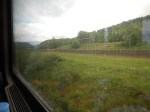
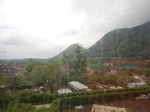
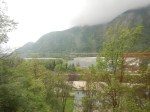
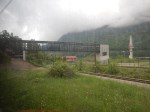
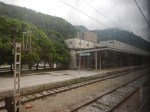
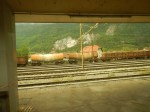
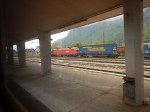
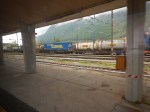
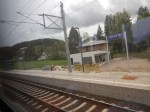
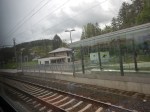
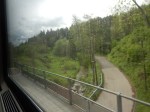
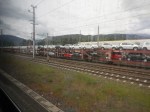
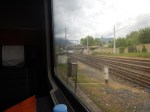
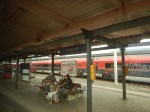
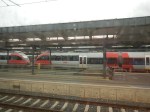
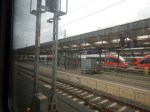
I took these pictures on the section of the journey from Ljubljana to Villach.
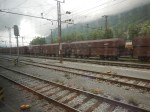

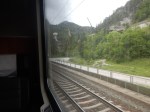



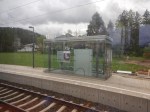
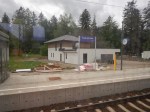
Note.
- The line is the Tarvisio-Ljubljana railway until Jesenice station effectively marks the border between Slovenia and Austria.
- After Jesenice, the line enters the nearly five mile long; Karawanks tunnel.
- There would appear to be a new station at Faak Am See or Lake Faak. Could it be a place to go camping or stay overnight?
- Long trains of cars are more common in Europe than in the UK.
At least the weather seemed to be getting a little bit better.
Onward To Ljubljana
This was an uneventful journey in a comfortable train, but the weather seemed even worse, so there was no serious photo opportunities.
At Ljubljana, I changed a few notes into Euros and got a taxi in the rain.
It might have been a memorable journey through beautiful countryside, but with the rain and the dark, I couldn’t tell!
By Ljubljana, I was hungry and as my comfortable hotel had no choice of food I fancied, I walked a few hundred metres in the rain to the city centre and bought some chips and an orange juice from McDonalds.
I don’t think that the journey from Split to Ljubljana had been successful, but then it isn’t supposed to rain in the Balkans, when I’m on holiday!
 The Anonymous Widower