More Thameslink Trains Serving The East Coast Main Line From May 20th 2018
The National Rail timetable is now showing the following new Thameslink trains serving the East Coast Main Line.
There will be two trains per hour (tph) between Peterborough and Horsham.
- XX:26 and XX:56 – Peterborough
- XX:08 and XX;38 – Finsbury Park
- XX:00 and XX:30 – London Bridge
- XX:08 and XX:38 – Horsham
Note.
- Trains take two hours and 45 minutes.
- Stops include Huntingdon, St. Neots, Hitchin, Steveange and Finsbury Park, to the North of the Thames.
- The trains call at St. Pancras Thameslink, Farringdon, City Thameslink and London Bridge in the core.
- Stops include East Croydon, Gatwick Airport, Three Bridges and Crawley to the South of the Thames.
- The first train is 05:24 from Peterborough.
Trains generally leave Horsham at XX:25 and XX:55.
There will be one tph between Cambridge and Brighton.
- XX:54 at Cambridge
- XX:52 – Finsbury Park
- XX:15 – London Bridge
- XX:19 – Brighton
Note.
- Trains take two hours and 25 minutes.
- Stops include Royston, Hitchin, Steveange and Finsbury Park, to the North of the Thames.
- The trains call at St. Pancras Thameslink, Farringdon, City Thameslink and London Bridge in the core.
- Stops include East Croydon, Gatwick Airport, Three Bridges and Haywards Heath to the South of the Thames.
- The first train is 05:54 from Cambridge.
Trains generally leave Horsham at XX:07.
But going to Gatwick, I might go to Finsbury Park, where I can now get three trains per hour to the Airport.
- XX:08 taking around 70 minutes
- XX:38 taking around 70 minutes
- XX:52 taking around 52 minutes
But coming back, I would take the first train to London Bridge, from where I’d get a 141 bus to just outside my door.
Are The Trains Acceptable?
For my journey of an hour to Gatwick, the trains are just about acceptable.
But, in some ways, I think that passengers from Cambridge and Peterborough will only use Thameslink to South of East Croydon occasionally, as over two hours in a Class 700 train, is an experience, passengers will be reluctant to repeat.
I would do the following.
- Add wi-fi and power sockets.
- Add a few tables to make some groups of four seats, suitable for families.
- Add seat-back tables.
- Make the seats more comfortable.
I’d love to have five minutes with the idiot who signed off the order for these trains, which must be the worst new trains on the UK network. Perhaps, that’s not being harsh enough. I suspect they could be the worst new trains in the world!
I’ve had better passenger comfort in a Pacer, that I wrote about in Is This Really A Pacer In A New Outfit?.
But that journey was only between Rotherham and Sheffield, not say Cambridge and Gatwick.
Noise From Trains Revisited
Nearly, two years ago, I wrote a post entitled Are You Annoyed By Noisy Trains At The Bottom Of Your Garden?.
A few days ago, the post had a comment from a lady saying this.
we live on top of thames link between st pancras and farringdon stations. We are used to the trains having lived here for nearly 30 years. But recently in the last 6 months 2017/2018 the noise and vibration from the trains has increased also the frequency. From before 6am until after 1am in the morning. These new trains make the house rattle and you can feel the vibration through the floor. You have to turn up the radio or TV and visitors always comment on how do you manage to live with it.
No one seems to know anything when I made enquiries to thameslink. Spoke to me as if i was completely mad.
I contacted the lady and the problem seems to be that the eight-car Class 700 trains are the problem.
Now if the twelve-car trains are quieter, it sounds to me, that there must be a peculiar resonance between eight-car trains and the track.
According to Wikipedia, the train formations are.
- Eight-car – Bo’Bo’+2’2’+Bo’Bo’+2’2’+2’2’+Bo’Bo’+2’2’+Bo’Bo’
- Twelve-car – Bo’Bo’+2’2’+Bo’Bo’+Bo’Bo’+2’2’+2’2’+ 2’2’+2’2’+Bo’Bo’+Bo’Bo’+2’2’+Bo’Bo’
Note.
- Bo’Bo’ is a powered-car.
- 2’2′ is a trailer car.
- The plus sign separates each car.
From my engineering knowledge, could it be something to do with the fact that the twelve-car train has four trailer cars in the middle of the train, whereas the eight-car train has only two.
I suspect that these trains were designed as twelve-car units and because of the problems of lengthening some platforms, Siemens were asked if they could build an eight-car version as well.
With the dynamics tuned to the twelve-car train, I’m not surprised that the eight-car trains create an annoying resonance.
I shall be using my Freedom Pass to investigate this phenomenon, by riding in the middle sections of these trains.
The Cranleigh Line
Looking for possible privately-funded rail projects, I have come across the Cranleigh Line on Wikipedia.
This is part of what is said on Wikipedia about Possible Reopening, in a eport by Buchanan and Partners in 1994.
The report estimated that around 500 car users could transfer to rail each day. The cost of reinstating the line between Guildford and Cranleigh was projected at £24 million which would include the base, civil, electrical, engineering and signalling works. It did not include land acquisition costs, legal costs and bridge works. The reinstatement of the bridge over the River Wey was costed at £750,000.
The report concluded that, based on a preliminary analysis of the line’s potential returns, re-opening would not be feasible. The line was, according to the report, likely to recoup only 3% of the capital investment in the first year of re-opening, and this without taking into account its operating costs. British Rail usually insisted on a figure of at least 8% before investing capital into re-opening a line. Nevertheless, the County Council decided to commission a detailed economic feasibility study by British Rail into the line’s potential for re-opening, and looked into the possibility of using a light railway or tramway substitute.
What would a report say now?
Given that the line runs between the busy stations at Guildford and Horsham, the latter of which has a Thameslink frequency of two trains per hour, I think that the answers would be very different.
The route would also be one, that could be run by a third-rail tram-train!
Consider.
- The tram-trains would use battery power, where there is no third-rail electrification.
- The route between Guildford and Peasmarsh Junction is electrified and has no stations.
- The route between Horsham and Stammerham Junction is electrified and has no stations.
- Between Peasmarsh Junction and Stammerham Junction, there were stations at Bramley & Wonersh, Cranleigh, Baynards, Rudgwick and Slinford.
- Stations could be rebuilt and added to as required.
- Between Peasmarsh Junction and Stammerham Junction, the new line would be without electrification.
Could the new line share the route with walkers and cyclists?
I think there is a chance here to create a new type of light rail link!
MK-Bedford New Line Mooted
The title of this post, is the same as the title of an article in the April 2018 Edition of Modern Railways.
This is the first paragraph.
A new railway between Milton Keynes and Bedford for the East West Rail project has been suggested as a way of avoiding problems with the Marston Vale Line, where the hourly stopping service and numerous level crossings limit capacity for through regional trains.
Another aim is that the next phase of the project should be completed by the end 2022, which is between a one and two years earlier than the existing target.The Chairman of the East West Rail Company, then said he’d like the the railway to open in 2027.
The article says a new route will be expensive, but innovative ways of doing things could help.
Consider these points about the Marston Vale Line
- The stations need development.
- There are at least thirteen level crossings.
- New houses are being built near some stations.
- The operating speed is just 50 mph.
- Finding a new route at Fenny Stratford, Woburn Sands, Aspley Guise, Ridgmont and Lidlington could be difficult.
- The railway passes under the M1 and the A421, so moving these crossing points could be difficult.
It’s all a complicated design problem.
East West Rail could borrow a trick from the Heathrow Southern Railway, which is planned to run alongside the M25 to get to Heathrow. The new railway could be routed alongside the A421 in the Bedford area.
This Google Map shows the A421 to the South of Bedford.
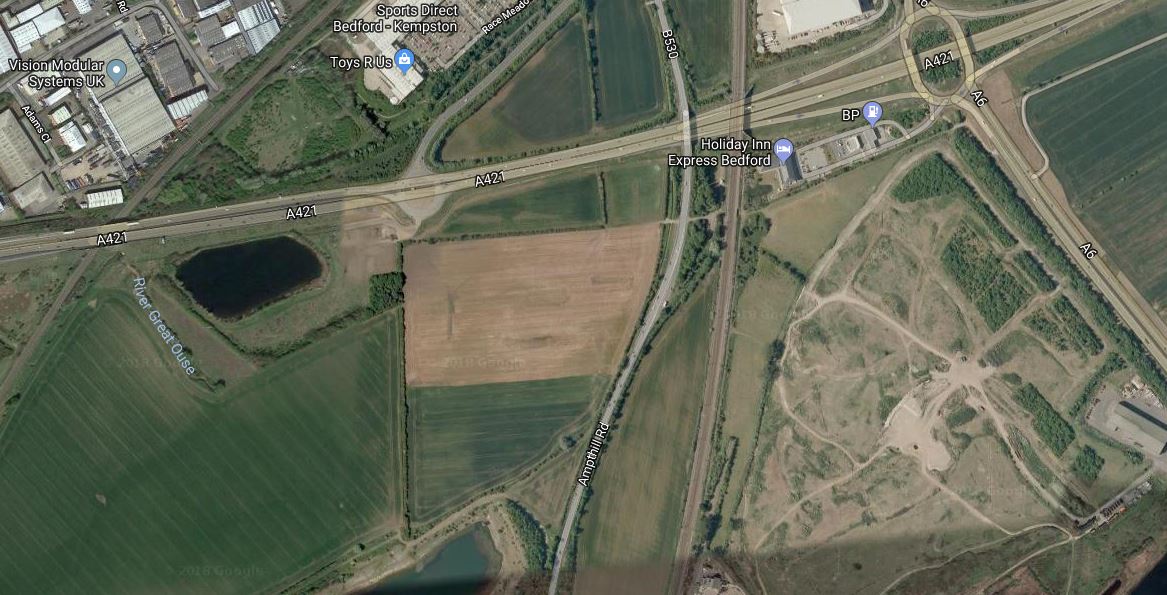
Note.
- The Marston Vale Line goes across the North West corner of the map.
- The Midland Main Line goes across the map in a North-South direction.
- The roundabout at the North East connects the A421 to the A6.
- The building by the roundabout is a hotel.
If the East West Rail Link was routed alongside the by-pass a station could be built where the two lines cross.
- The Midland Main Line and Thameslink would be linked to the East West Rail Link.
- Passengers for Bedford would be able to use the frequent Thameslink service to get to the town.
- A big Park-and-Ride could be built.
- Marston Vale Line services would take the same route as they do now, via Bedford St. Johns station.
If it was desired, chords could be built to enable services on the East West Rail Link to serve Bedford with a reverse in Bedford station.
Oxford has a Parkway station, Milton Keynes has a Milton Keynes South station at Bletchley, Cambridge will probably have a Cambridge South station, so why shouldn’t Bedford have a Bedford South station?
Thameslink Should Be On The Tube Map
Consider.
- Cambridge and Gatwick Airport are two of the most important destinations within an hour of Central London.
- The outer branches of Thameslink to East Croydon, St. Albans, Welwyn Garden City and Wimbledon act in a similar manner to Underground Lines.
- The central core of Thameslink will be used by many as just another Underground Line.
- The London Overground is on the Tube Map.
- Crossrail will be on the Tube Map.
For these and other reasons, the London sections of Thameslink should be on the Tube Map.
If Thameslink should be added, what about the Northern City Line?
A Connection Between City Thameslink Station And The Docklands Light Railway
In the Wikipedia entry for the Docklands Light Railway, there is a section describing a proposed Euston/St. Pancras Extension.
This is said.
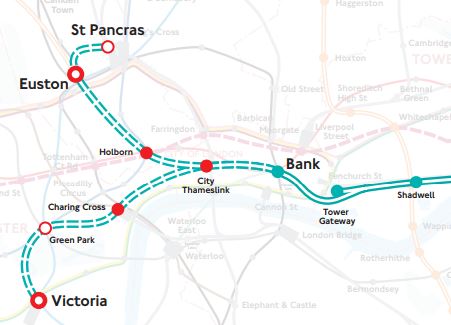
In 2011, strategy documents proposed a DLR extension to Euston and St Pancras. Transport for London have considered driving a line from City Thameslink via Holborn north to the rail termini. The main benefit of such an extension would be to broaden the available direct transport links to the Canary Wharf site. It would create a new artery in central London and help relieve the Northern and Circle lines and provide another metro line to serve the High Speed line into Euston.
This map from Transport for London, shows the possible Western extension of the DLR.
With all the problems of the funding of Crossrail 2, that I wrote about in Crossrail 2 Review Prompts Fresh Delays, could this extension of the DLR, be a good idea?
Consider,
- Victoria, Euston and St. Pancras are prosposed Crossrail 2 stations.
- It would link Canary Wharf and the City of London to Eurostar, Northern and Scottish services and High Speed 2.
- It would give all of the Docklands Light Railway network access to Thameslink.
- A pair of well-designed termini at Euston and St. Panras would probably increase frequency and capacity on the Bank branch of the system.
- The DLR is getting new higher capacity trains.
- Bank station is being upgraded with forty percent more passenger capacity.
- Holborn station is being upgraded and hopefully will be future-proofed for this extension.
- One big advantage at City Thameslink, is that Thameslink and the proposed DLR extension will cross at right-angles, thus probably making designing a good step-free interchange easier.
- The Bank Branch of the DLR currently handles 15 tph, but could probably handle more, if they went on to two terminal stations at St Pancras and Victoria..
- Waterloo and City Line can run at twenty-four tph.
Cinderella she may be, but then she always delivers, when there is a desperate need, just as she did magnificently at the 2012 Olympics.
The only problem with this extension of the DLR, is that compared to the rest of the system, the views will be terrible.
For myself and all the others living along the East London Line, with a step-free change at Shadwell, we would get excellent access to Euston, Saint Pancras and Victoria
But could the line still be called the Docklands Light Railway, as it spreads its tentacles further?
A Pedestrian Connection Between City Thameslink Station And St. Paul’s Tube Station
In the Wikipedia entry for City Thameslink station, there is a section called Future Proposals.
This is said.
An underground passageway linking City Thameslink to St Pauls tube station to provide an interchange between the London Underground Central line and National Rail services on the Thameslink (route) has been suggested by London TravelWatch in a report in 2014 which suggested it would benefit passengers travelling from the Central Line catchment to Gatwick and Luton Airports.
St. Paul’s tube station does not have the best access, with two sets of escalators to get to the Easttbound platform, which is underneath the Westbound one.
This picture shows the lobby at the bottom of the second set of escalators.
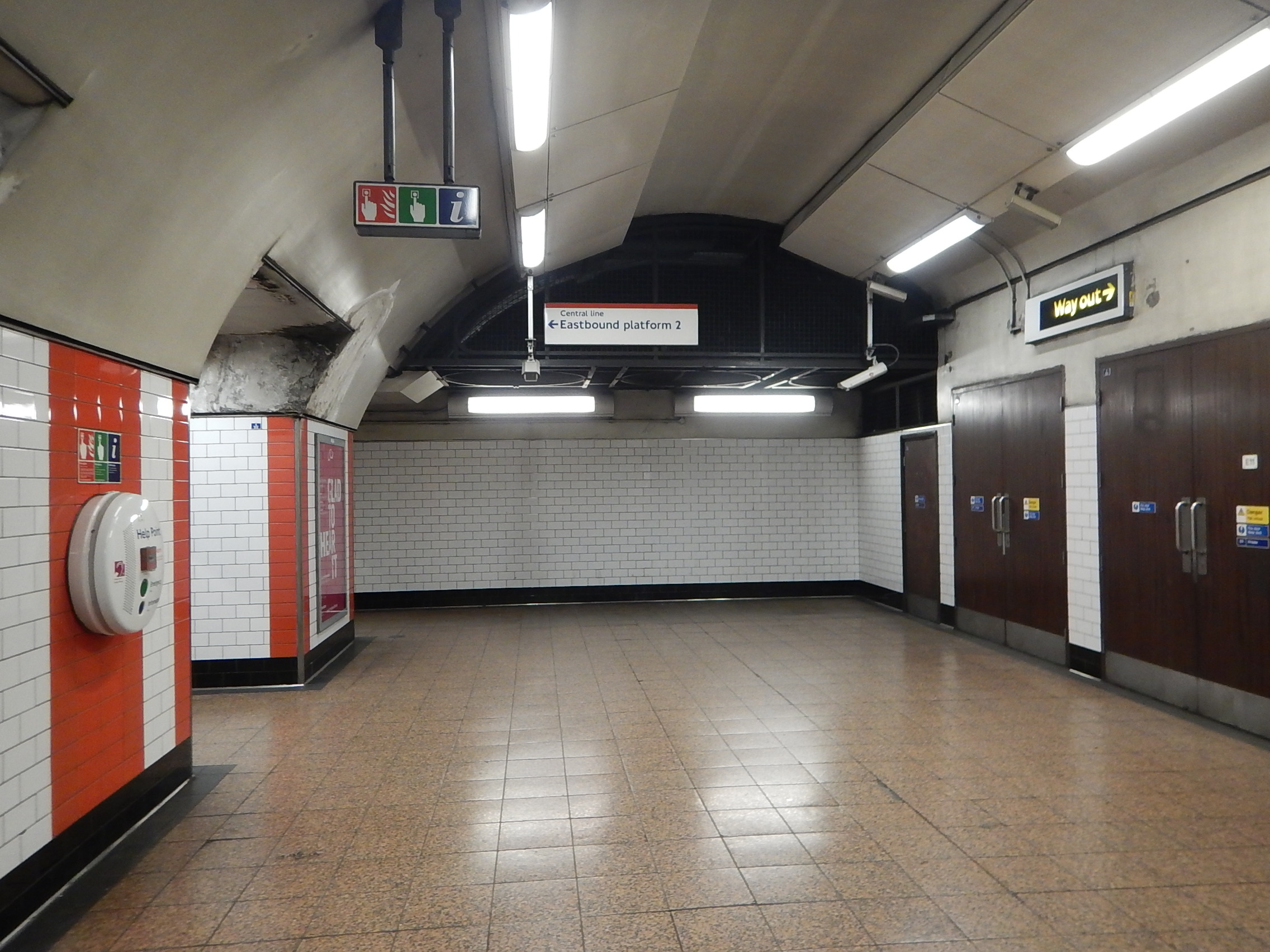
The Eastbound platform is through the opening on the left.
Could a tunnel to the West be built from this lobby?
This map from carto.metro.free.fr shows the layout of lines at City Thameslink and St. Paul’s.
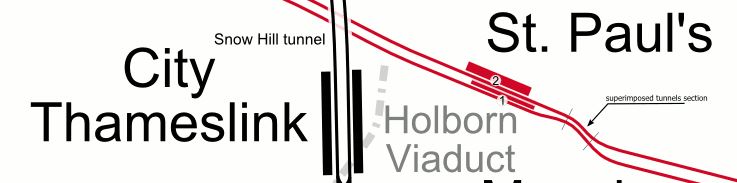
It would appear that a pedestrian tunnel could be bored from the Western end of the platforms at St. Paul’s to connect to the Northern end of City Thameslink.
- A travelator could be included.
- It would create an accessible route into St. Paul’s station.
- Intermediate entrances could be provided to give access to important sites like the Western end of St. Paul’s cathedral.
Property development between the two stations will probably be the catalyst to get this link built.
These pictures show Paternoster Square, which lies to the North of St. Paul’s cathedral.







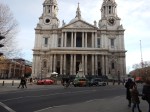
I wonder if provision was made for an entrance, when the area was redeveloped around twenty years ago.
It would surely be an ideal place for an intermediate step-free entrance to any pedestrian tunnel linking St. Paul’s and City Thameslink stations.
Conclusion
Done properly, it would do the following.
- Add step-free access at one of London’s most important stations for tourists.
- Create a link between Thameslink and the Central Line.
- Create a shared entrance to both stations in the Paternoster Square area.
Obviously, the figures would have to add up.
Thameslink’s Sutton Loop Services Appear To Be Starting From Luton
I just looked at Thameslink’s core traffic on nationalrail.co.uk and it appears that services on the Sutton Loop Line are now starting from Luton.
Are there operational issues or are Thameslink changing the timetable?
It was operational, as a passenger had been taken seriously ill!
Could The Waterloo And City Line Have An Intermediate Station At Blackfriars?
The Waterloo and City Line between Bank and Waterloo stations, is London’s shortest Underground Line.
In the Wikipedia entry for the line, there is a section entitled A Blackfriars Station Proposed. This is said.
In 1934 the LPTB, which now operated most of the London Underground system, proposed that the Waterloo & City should have a new intermediate station at Blackfriars, connecting with the District line station there. They further proposed that the Waterloo & City line should be extended to Liverpool Street station and Shoreditch, the trains there continuing over the East London Railway to New Cross and New Cross Gate. It is not clear whether the scheme had been costed, but nothing came of it.
So have things changed since 1934?
The Problem Of An Intermediate Station
The line is only a mile and a half long and trains take about three minutes to go from end-to-end.
Even allowing for the turn-round time at each end of the route, it must be very difficult with the current rolling stock to accommodate the time needed for an intermediate station.
Thameslink Has Been Built
Thameslink didn’t exist in the 1930s and when it is completed, there will be 24 trains per hour (tph) passing through Blackfriars station.
Consider.
- The Thameslink frequency could increase to 30 tph.
- How many Thameslink passengers want to go to Bank and Waterloo stations?
- Blackfriars station is fully step-free.
I certainly think, that a Blackfriars station on Thameslink would be used by passengers.
Trains Can Be Fully Automated
As a Control Engineer, I believe that with the right automation, that capacity on the line can be increased.
I know the Unions attitude to driverless trains, but if ever there was a line, that would benefit, it is the Waterloo and City Line.
Perhaps, the driving position should be in the middle of the train, so the driver wouldn’t have to change ends and drove the train using CCTV.
New Trains Are Coming
London Underground has a plan to renew a lot of the trains, starting with the Piccadilly Line.
These trains will have the following characteristics.
- Walk-through cars.
- Shorter stopping times at station.
- Improved performance.
- Air-conditioning and other improved passenger features.
Would these trains and improved signalling enable an intermediate stop at Blackfriars to be added to be added to the line?
Conclusion
I obviously haven’t seen Transport for London’s figures, but I’m sure, there will come a time, when an intermediate station at Blackfriars will be a project worth doing.
London Has A New Underground Line
On Friday, I went between Brighton and Cambridge stations on one of the first Thameslink services on the route.
I wrote about it in Observations On Thameslink Between Brighton And Cambridge.
That journey took me on London’s new Underground Line between London Bridge and Finsbury Park stations.
The following trains are going North from London Bridge to Finsbury Park.
- 11:29 – Horsham to Peterborough – Arrives at Finsbury Park at 11:52
- 12:49 – Brighton to Cambridge – Arrives at Finsbury Park at 13:13
- 15:04 – Horsham to Peterborough – Arrives at Finsbury Park at 15:27
- 15:34 – Brighton to Cambridge – Arrives at Finsbury Park at 15:57
And the following trains are going South from Finsbury Park to London Bridge.
- 10:59 – Peterborough to Horsham – Arrives at London Bridge at 11:24
- 12:09 -Cambridge to Brighton – Arrives at London Bridge at 12:37
- 14:29 – Peterborough to Horsham – Arrives at London Bridge at 14:55
- 15:11 – Cambridge to Brighton – Arrives at London Bridge at 15:37
All journeys take around 23-25 minutes, with stops at Blackfriars, City Thameslink, Farringdon and St. Pancras International stations.
It may officially be part of Thameslink, but it will function like a convewntional Underground Line, but with bigger trains.
The Underground Alternative
If you look at Transport for London’s Journey Planner, this give a time of twenty minutes for a journey between London Bridge and Finsbury Park, using the Northern and Victoria lines with a change at Euston.
That is also not a step-free or wheel-chair friendly route.
Obviously, at the moment, most passengers have no choice, as there is only four trains per day in each direction on the new Thameslink route.
But when a Full Service is running, with a train every ten minutes, things will be very different.
My Access To Thameslink
Timings to Thameslink stations from my house are as follows.
- Finsbury Park – 15 mins by 141 Bus and Piccadilly Line
- London Bridge – 25 mins by 21 or 141 Bus
- London Bridge – 31 mins using Transport for London’s Journey Planner’s recommended route via Dalston Junction and Canada Water.
The latter probably explains why Londoners are generally Grade 1 Duckers-And-Divers!
I suspect, when I go to Gatwick Airport, I’ll go via Finsbury Park, using the mini-cab from around the corner or a black cab, as both will be quicker.
I suspected right. Returning from Finsbury Park station to home this evening, took ten minutes and cost a tenner.
A Preview Service
Thameslink are only running a preview service between London Bridge and Finsbury Park at the current time.
On my Friday trip, it was particularly noticeable, that passengers were thin on the ground between the two stations.
- But then passengers probably didn’t know about the service and may have been confused seeing a train going to Cambridge.
- It’s also not shown on the Tube Map.
- I didn’t notice any advertising for the new route.
So how do you use something that you don’t know about?
The Full Service
This route will have the following characteristics, when Thameslink open it fully.
The Route Will Serve The City of London Well
These factors will help this section of Thameslink serve the City of London.
- Step-free stations at Farringdon, City Thameslink and London Bridge ring the South and West of the City of London.
- Crossrail with an interchange with Thameslink at Farringdon also gives a quick route to the East of the City of London and Canary Wharf.
- The City of London is also planning a lot of pedestrianisation.
Other developments like Crossrail and the expansion of Bank station and the Docklands Light Railway, will make London’s financial district, one of the best connected by public transport in the World.
The Route Will Have Tourist Attractions
The route could have been designed for tourists.
- London Bridge station has London and Tower Bridges, Southwark Cathedral, Borough Market, HMS Belfast and the Shard.
- But the most spectacular modern architecture at London Bridge, is the station itself, with its lifts, escalators, fifteen platforms and a shopping centre.
- Blackfriars is a unique station, as it spans the Thames with entrances on both banks, and it is the world’s largest solar-powered bridge.
- Blackfriars station is a short walk along the river from the Tate Modern and the Millennium Bridge.
- Many good walks along the river start from Blackfriars.
- City Thameslink station dates from 1990 and it shows, but it is close to St. Paul’s Cathedral, the Old Bailey, so it attracts visitors at both ends of the moral spectrum.
- Farringdon station will be a major interchange, where Crossrail and Thameslink connect, so don’t let unsuitable organisations build all the hotels this area will attract.
- Farringdon is close to two of London’s iconic markets; Smithfield meat market and the attached wife market.
- Saint Pancras International station is a fur coat and no knickers station, as although it looks good, it’s practicality is suspect.
- If they’d given the job to the architect, who updated Kings Cross station next door, they would have got a a more practical station.
- Finsbury Park station is a place, where you go and explore the local area, which is vibrant and full of history.
- You may even get as far as Alexandra Palace or Manor House, where I saw John Mayall and the Bluesbreakers with a very drunk Eric Clapton in the 1960s.
It is a line to explore London.
Six Trains Per Hour
There will be six trains per hour (tph), which will run All Day.
- Two tph – Peterborough to Horsham – twelve-car
- Two tph – Cambridge to Brighton – twelve-car
- Two tph – Cambridge to Maidstone East – eight-car
This gives a six tph service between Finsbury Park and London Bridge and also a four tph service to East Croydon and Gatwick Airport.
Two Additional Trains Per Hour In The Peak
In the Peak, there will be two tph, that run from Welwyn Garden City to Sevenoaks.
But they will go via Elephant and Castle rather than London Bridge.
Thameslink must have their reasoning behind this service, but I have some questions.
- Would commuters in the Peak prefer to go to London Bridge?
- Would passengers from Sevenoaks and Welwyn Garden City like an All Day service?
These questions and others will be answered in the next few years, as hameslink develops.
Full Step-Free Access At London Bridge Station
London Bridge station has full step-free access for all the following services.
- Thameslink
- Services to and from Cannon Street station
- Services to and from Waterloo East and Charing Cross stations.
- Jubilee and Northern Lines of the Underground
- Terminating services at London Bridge
- Several bus routes, including my bus home!
Note.
- Passengers will use the escalators to get to the right destination.
- Thameslink passengers will use the island platform to reverse direction.
- It took me just two minutes to change from Platforms 2/3 to Platforms 8/9.
- Going from Platform 6/7 to the bus station was under three minutes and a 141 Bus was just getting ready to leave.
- Passengers can walk across London Bridge to the City of London.
There are few stations better than London Bridge anywhere in the world!
Full Step-Free Access at Finsbury Park Station
Finsbury Park station is being updated to have full step-free access for the following services.
- Thameslink
- Great Northern Services to Cambridge, Kings Lynn and Peterborough
- Northern City Line services to and from Moorgate station
- Piccadilly and Victoria Lines. of the Underground.
There will also be same-platform interchange between Thameslink and Northern City Line services.
The Improved Northern City Line At Finsbury Park Station
The Northern City Line will be substantially improved.
- New Class 717 trains have been ordered.
- This could mean an increased All Day service of perhaps 10-12 tph.
- Moorgate station will be on Crossrail.
- There will be a same-platform interchange with Thameslink at Finsbury Park station.
- Hopefully, the terrible stations on the route will be improved.
This line will change from being a crowded, outdated backwater of the UK rail system to an important modern link to the City of London and Crossrail from large parts of North and North-East London.
The Link To Crossrail
The link between Thameslink and Crossrail at Farringdon station will probably be heavily used, if it is well-designed and fully-step free. Which I suspect it will be, until proven otherwise!
Don’t forget too, the link to the Metropolitan and Circle Lines at this key station, which is much better than the link at St. Pancras
Step-Free Access At All The Intermediate Stations Between London Bridge and Finsbury Park
Access at Blackfriars, City Thameslink, Farringdon and St. Pancras stations are all fully step-free.
The Fastest Way To Gatwick Airport And Brighton From North London
My friend lives in Walthamstow and always goes to Gatwick Airport by using the Victoria Line and Gatwick Express.
- This takes twenty-three minutes for the Victoria Line and thirty minutes for the train.
- The Thameslink route via Finsbury Park, takes nine minutes for the Victoria Line and an hour for the train.
Note.
- Both trains will run every fifteen minutes, when the full Thameslink service is running.
- The Thameslink timing is only the time of the Preview Service. Will the Full Service be faster?
- Finsbury Park and Victoria will both be fully step-free within a year or so.
- The trains on Gatwick Express will be more comfortable.
- The walk at Finsbury Park is shorter than at Victoria.
- The Thameslink route will be more affordable.
Everybody will have their own preference.
The biggest winners will be.
- Those living on the Northern reaches of the Piccadilly Line, who will have a full step-free interchange to Thameslink at Finsbury Park
- Those living on the Northern City Line, who will have a same-platform interchange to Thameslink at Finsbury Park.
- Those who walk, cycle or take a bus or cab to Finsbury Park.
Gatwick Airport could be a big winner, as a whole area of North London and Hertfordshire now has a new excellent direct connection to the Airport.
What Still Needs To Be Done?
It is a well-thought out route, but some things still need to be done.
Is Six Tph Enough Trains Between London Bridge And Finsbury Park?
I ask this question, with my scheduling hat on!
At the moment of the 24 tph through the Snow Hill Tunnel, two-thirds of the trains go up the Midland Main Line, with just a third on the East Coast Main Line.
I think that, when Thameslink increase the frequency through the central core, that they will increase the frequency through Finsbury Park.
Could Two Tph From The Sutton Loop Go To Welwyn Garden City?
Curremtly, four tph start at St. Albans City station, go through London, then round the Sutton Loop, before returning to St. Albans City.
Would it be desirable to start two of these services from Welwyn Garden City station?
It will all depend on operational issues and the routes passengers take.
City Thameslink And St. Paul’s Stations Need A Connection
I believe this is possible and I wrote about it in A Pedestrian Connection Between City Thameslink Station And St. Paul’s Tube Station.
Should The Docklands Light Railway Be Extended To City Thameslink, Euston And St. Pancras?
I wrote about this extension in detail in A Connection Between City Thameslink Station And The Docklands Light Railway.
Could Thameslink Connect To The Waterloo And City Line?
I wrote about this connection in Could The Waterloo And City Line Have An Intermediate Station At Blackfriars?
Development of new trains for the Underground, will make this link possible.
Should Thameslink Be On The Tube Map
I wrote about this in Thameslink Should Be On The Tube Map.
All Of Thameslink Should Be In The Oystercard Area
Gatwick Airport is already in the Oystercard area, but it is silly that Oyster cards and contsctless cards can’t be used on all Thameslink services.
Conclusion
The possibilities for Thameslink and the effects it will have will be enormous.
 The Anonymous Widower