Den Haag HS Station
This is the station from where I left The Hague
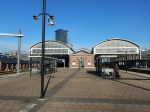
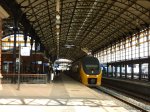
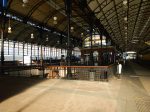
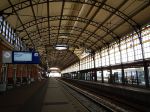

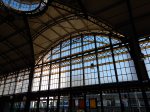

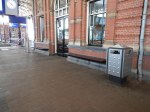
Over the years, I have used it, Den Haag HS station has been cleaned up, but in some ways it is a rather soulless place, except for some of the old details.
I had bought my ticket earlier, but at least there was a machine at the station, where I could get a ticket to Brussels.
Unlike at Brussels, where there were no machines selling tickets to The Netherlands that I could find.
Museum de Cruquius
The Museum de Cruquius is just up the road from The Hague near Haarlem, although our journey up wasn’t the easiest, because the motorway was closed.
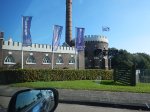

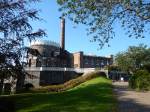
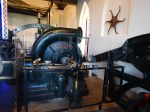
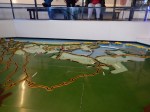
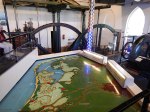
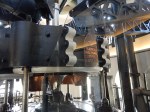
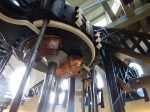
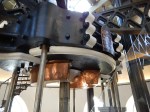
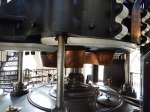
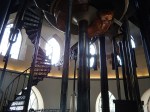
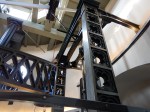
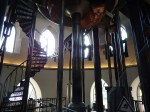
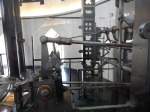
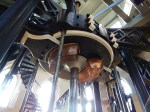
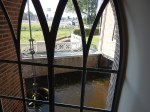
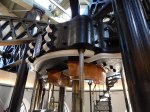

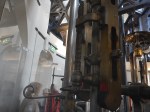
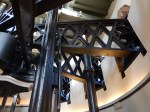
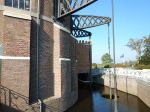
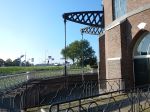
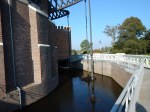
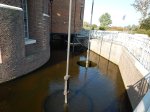
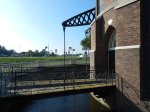

It is well worth a visit as it shows a tremendous amount about how the Dutch have kept water at bay.
The enormous steam engine, which sadly doesn’t work, was actually built in Cornwall.
When I see a museum and engine like this, I do think it sad that London’s massive sewage engines at Crossness were just filled with sand and abandoned in the 1960s.
Both sites incidentally, are about the same age!
The Kröller-Müller Museum
The Kröller-Müller Museum contains an art collection. It is set in The National Park de Hoge Veluwe, near Arnhem.




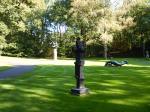

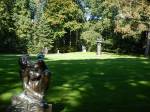










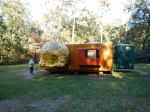
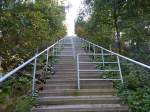











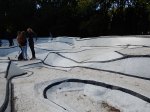


The gallery contains examples of many great painters and is surrounded by sculpture displayed in a wooded landscape.
I’m Off To The Hague Today
Is there any other train journey between two capitals in the world, that is more difficult now than it was six or seven years ago?
When I first did this trip, I was able to buy a Eurostar ticket from London to Any Dutch Station, as many visitors to The Netherlands did.
But when Fyra; the high-speed train started, this was not possible any more. I couldn’t even get to the Dutch capital without a second change.
Today, I’ve bought a Eurostar ticket to any Belgian Station and will go to Antwerp for a spot of lunch, before I buy a ticket to Den Haag Laan van Nieuwe Oost Indie, so that I avoid all the hassle of using Dutch local ticketing, which will mean buying an Oyster-style card.
I will then use Shanks’s Pony to get to my final destination.
If that is progress, you can stick it up your backside.
Suppose to go between London and Edinburgh, you had to change trains at Newcastle or Berwick! Even the most rabid of Scottish Independence advocates, would never want a service like that between Scotland and England!
Also, if I was going to most important stations in Switzerland, I can buy one ticket from London.
Surely, this should apply to all major cities in Europe, that are within say five or six hours from London.
Going the other way, I could buy a ticket from say Paris direct to virtually anywhere in the UK.
Abellio Greater Anglia Make Football At Ipswich And Norwich Difficult
A couple of seasons ago, my getting to Portman Road for the football was made very difficult, as virtually every match was difficult because of works on the line and it meant getting on a bus for most of the day.
So now Network Rail is sorting out the ballast on the track and from the 31st of January until the 22nd of March there will be no direct trains between London, Ipswich and Norwich at weekends.
A typical journey will now take nearly two hours, as opposed to the just over one it normally does. As that is twice, I really must get a lift up and back from somewhere.
Luckily it would appear to only be three matches; Wigan (31st Jan), Reading (21st Feb) and Brentford (7th Mar), as most in the period seem to be on Tuesday evening or we’re away at easier places to get to like Rotherham or Middlesbrough.
Tuesday night matches seem to be OK at the moment. Although, if we have extra time and penalties in the FA Cup replay on Wednesday, getting home might be tricky. As I write this there is a lot of anger on the forums complaining about no late trains after the match to Cambridge, Lowestoft and Felixstowe.
For the Norwich match on the first of March, which thankfully has a 14:05 start, it looks more feasible to go via Kings Cross and change at Cambridge.
Obviously, the ballast cleaning has to be done, but Abellio Greater Anglia could have used this disruption to fans getting to and from matches as a vehicle to show how well they can deal with adversity, instead of getting the old tired solutions out of the box.
For example, Abellio Greater Anglia have several rakes of Mark 3 coaches that run the services up the East Anglian Main Line. Could they not use a diesel locomotive to on match days run a football special either via or from Cambridge? Properly done, it might retrieve their battered reputation and encourage more people to travel by train.
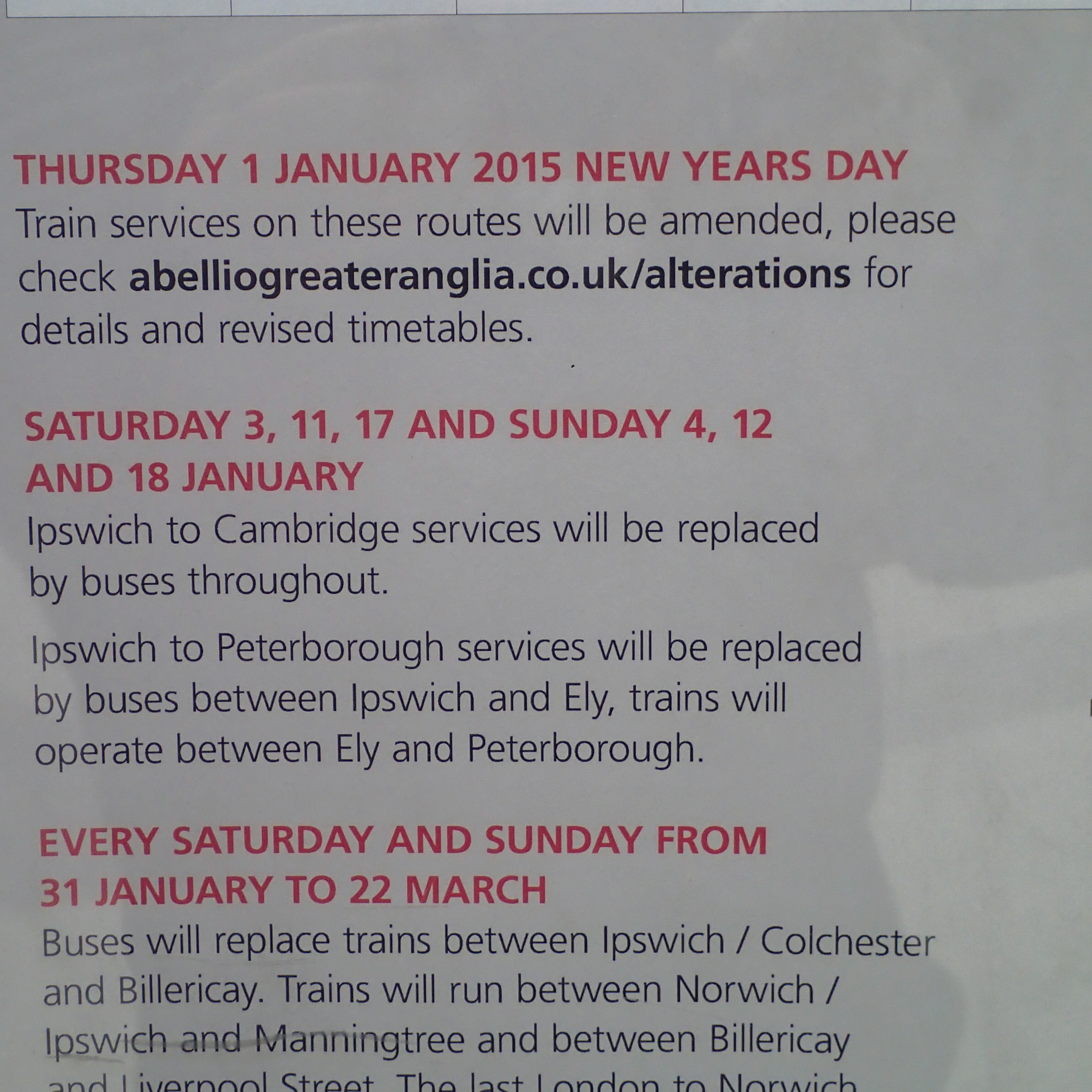
But they can’t even get their information right. This was a poster at Liverpool Street on Saturday the 10th.
Greater Anglia Gets The Dates Wrong
That is unless it’s me who’s got the wrong dates. At least they said the first of January was New Year’s Day. Although, it was a Thursday not a Wednesday.
It would be interesting to know how Norwich fans are coping during this period, as I think quite a few are dependent on using the long-distance trains to get to both home and away matches. Surely, during this interruption, they should seriously think about running direct diesel-hauled services from London to Norwich via Cambridge for all passengers. Does granny visiting Norwich really want to spend hours on a coach, when she booked a comfortable train? Especially, if it’s crammed full with angry football fans worried about missing the match or getting their onward connection in London.
Yet again, Abellio Greater Anglia have shown all the conservatism and arrogance of their Dutch masters, who managed the Fyra fiasco and introduced one of Europe’s worst ticketing systems to piss off foreign visitors.
Roll On 2016
I saw this article in Global Rail News, about Eurostar starting services between London and Amsterdam in 2016.
About time too!
How Not To Plan A High Speed Railway
The farce that is Fyra might have got a bit better as there are now going to be some extra Thalys trains on the line soon, as is reported here.
But this will only partially compensate for the loss of the Fyra V250 trains and capacity will be nowhere near that needed.
It will also do nothing to get round one of the major design faults of the line; the lack of a branch to the Dutch capital, The Hague. A city incidentally, which doesn’t have an airport well-connected to the city centre, unless you count Schipol.
In some ways the design of the line, would be like the UK, creating a high speed line to Scotland, that bypassed Birmingham, Manchester and Leeds.
The Dutch also have a problem in that their tracks aren’t to the European standard of trains on the left, electrified to 25,000 volts AC, so it makes it difficult for high speed trains to run on secondary lines, as they do in most other European countries, The suburban Class 395 run in rural Kent and on HS1. Like the Thalys, they have a multi-voltage capability.
Another problem is that there aren’t enough Thalys trains and you can’t just rustle up some new ones quickly. In fact I suspect there is a large shortage of rolling stock across Europe and I suppose the real problem, is that because every country seems to work to different standards and local politics, manufacturers rely too much on living on the scraps politicians give them. So say if we need say some extra stock on the East Coast Main Line, we can’t generally borrow from the Germans. Saying that though, but for a few years Regional Eurostar trains did run to Leeds. But then that train was designed to run in the UK, France and Belgium.
We also complain in this country about orders for trains going to foreign manufacturers, but this is a Europe wide problem.
What we need is standards for railways that apply across most of Europe. When you have travelled on trains as much as I have you realise what a disconnected design it all is.
Slow High Speed Rail
The Dutch and the Belgians have abandoned their new Fyra high-speed trains and are replacing them with coaches hauled by TRAXX locomotives as is reported here.
The Fyra was supposed to run at 250 kph, but they have proved to be very unreliable. On the other hand the TRAXX-hauled coaches are probably limited to about 200 kph. So they will have a high-speed line called HSL-Zuid, which has been designed for up to 300 kph, with trains on it running at well below that speed.
It’s a bit like putting the the Class 90s and the Mk 3 coaches you get between London and Norwich, on the East or West Coast Main Line. Some of course, used to work there twenty years ago, so they are a bit clapped, but they are generally more reliable than Fyra, which has been nicknamed the ALDI-trein
In fact here’s an idea!
I’m sure we’ve got some old Class 90s and a few rakes of coaches, we could lend to the Dutch and the Belgians. But there are various problems in that Continental trains are bigger than ours and I don’t think they’d fit the platforms. They also wouldn’t be able to work all the high-speed line as some parts and the rest of the Netherlands doesn’t use 25kV like the UK and most of Europe.
It would appear the Dutch and the Belgians, with the help of a basket case of an Italian train maker, have dug themselves an enormous hole. Now they are going to get themselves out of trouble, using an engine built in Germany by a Canadian company.
I wonder how many civil servants and politicians have been fired because of this fiasco?
We may have done a few things wrong with the trains in the last fifty or so years, but we’ve never created anything as bad as this!
A Train Builder With Form
I have been following the farce of the Fyra trains between Brussels and Amsterdam with interest. Modern Railways this month, gives a very full account of the problems and the big row between the Dutch and the Belgians and the Italian company; AnsaldoBreda who built the V250 trains. These trains were incidentally called Albatross by the makers.
I’ve just been reading about AnsaldoBreda on Wikipedia. It says this about the problems the company has had with an order for IC4 trains for Denmark.
Delivery of 83 IC4 trainsets for the Danish State Railways DSB was originally planned for 2003-2006. As of March 2013, 22 trainsets have still not been delivered,[52] On 2 July 2012, the DSB announced that the Transportation Authority had approved Denmark’s railway operator to put back into operation the fleet of 37 IC4s which had been withdrawn from service in November 2011. In December 2011, it was reported that one of the missing IC4 trainsets planned for delivery in Denmark was found in Libya. Reportedly, AnsaldoBreda and then Italian prime minister Silvio Berlusconi gave Libyan dictator Muammar Gaddafi the trainset as a present on the occasion of the 40th anniversary of Gaddafi’s revolution in 2009.
I suppose now, it doesn’t work, as there is sand in the bogies!
No wonder the Dutch and the Belgians bought a load of dud trains, that go bunga bunga!
Incidentally, I was led to look up AnsaldoBreda by looking at the progress of the Midland Metro extension to Birmingham New Street station. I found that the same Italian company had sold a load of dodgy trams to the Brummies. The details are here.

