The South Wales Mountain Railway
South Wales might not have the reputation of beautiful mountains, of say Snowdonian, the Cairngorms or Switzerland, but some of the Valley Lines that go up to places like Merthyr Tydfil and Ebbw Vale Town stations have spectacular views.
I was looking for a possible station at a village called Nelson and found a single-track railway passing to the North of the village.
I followed the track with my helicopter up the mountain and this is a Google Map of what I found.
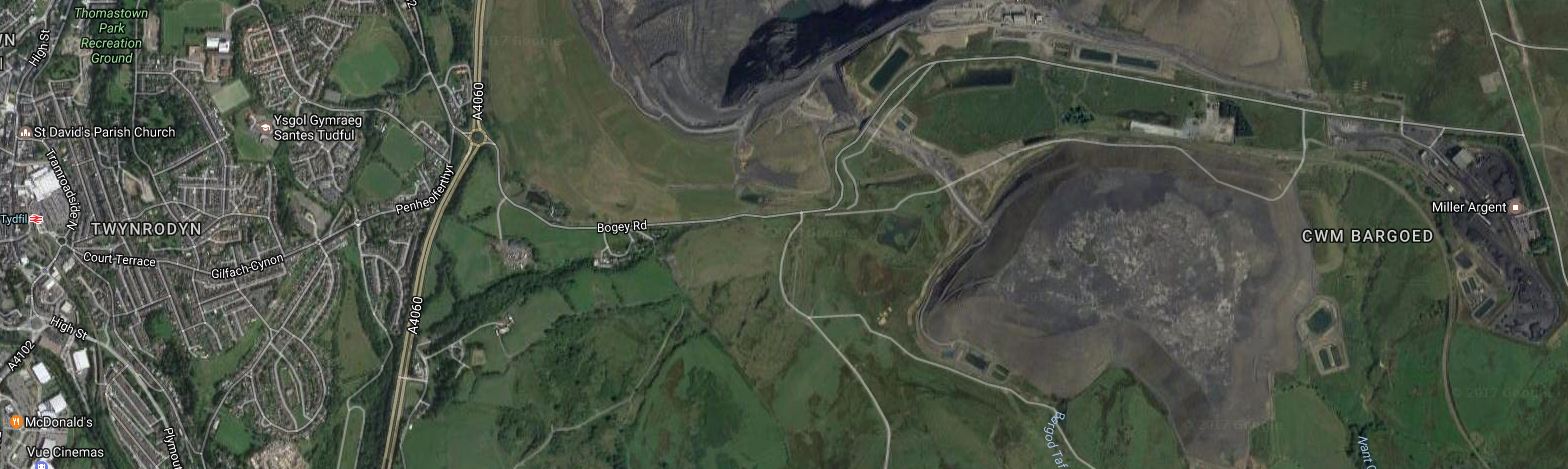
Merthyr Tydfil And The Ffos-y-fran Land Reclamation Scheme
The station on the left is Merthyr Tydfil and on the right is the massive Ffos-y-fran Land Reclamation Scheme. This is opening paragraph in the Wikipedia entry.
The Ffos-y-fran Land Reclamation Scheme is a major opencast coaling operation to the north-east of Merthyr Tydfil in South Wales. Miller Argent is owned by Gwent Investments Limited, which is based in South Wales and is a privately owned family business. The scheme development is the last part of the East Merthyr Reclamation scheme, and will extract 10 million tonnes of coal over 15 years, the revenues from which will redevelop the current former industrial workings into residential and recreational use.
It is a controversial scheme and I am usually against using coal for combustion purposes, but some of these Welsh landscapes are dotted with dangerous mine workings and slag heaps, so they certainly need cleaning up.
There is a Transport section in the Wikipedia entry for the scheme. This is said.
Under agreed planning rules, the site is not allowed to transport coal from the site via road. All extract is therefore moved to the rear (East) of the site where the coal is separated and washed at the Cwmbargoed Washery. Built in 1959 on land to the north and east of the railway connection to Fochriw Colliery, the coal washery was refurbished by Celtic Energy in 1992. DB Schenker trains then move the washed coal from site to Aberthaw Power Station, along the former route of the Rhymney Railway. Joining the modern Rhymney Line just south of Ystrad Mynach railway station, the trains then travel onwards via Cardiff and the Vale of Glamorgan Line to Aberthaw, enabling Ffos-y-fran to supply 40% of the coal to Aberthaw power station.
It must be challenging driving a Class 66 locomotive with a train of full coal wagons down the mountain.
It was this railway I had followed up the mountain.
Before I leave Merthyr Tydfil, look at this Google Map of the town.
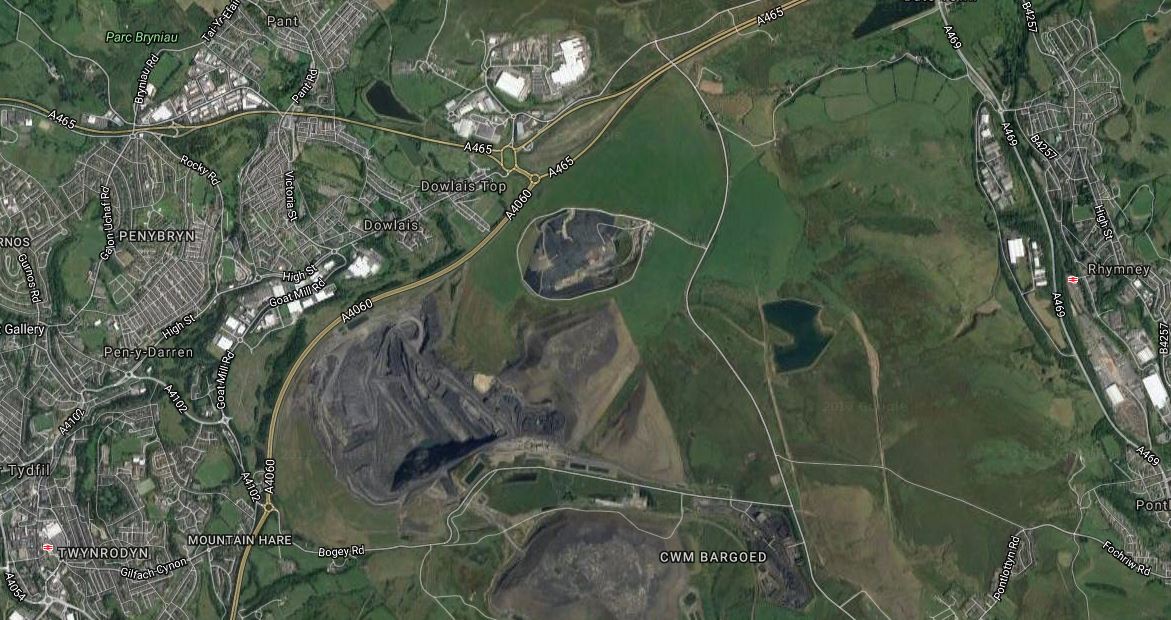
Merthyr Tydfil And Rhymney
The East Merthyr Reclamation Scheme is in the middle, flanked by Merthyr Tydfil in the West and Rhymney in the East.
So if the Authorities in South Wales are thinking of building a station on this line at Nelson, are they thinking of reopening this line after the scheme has finished extracting coal, as a second rail route to Merthyr Tydfil?
Coming back down the mountain from Merthyr, the first possible station from my list of possible stations is Bedlinog.
This Google Map shows the rail line going through the village.
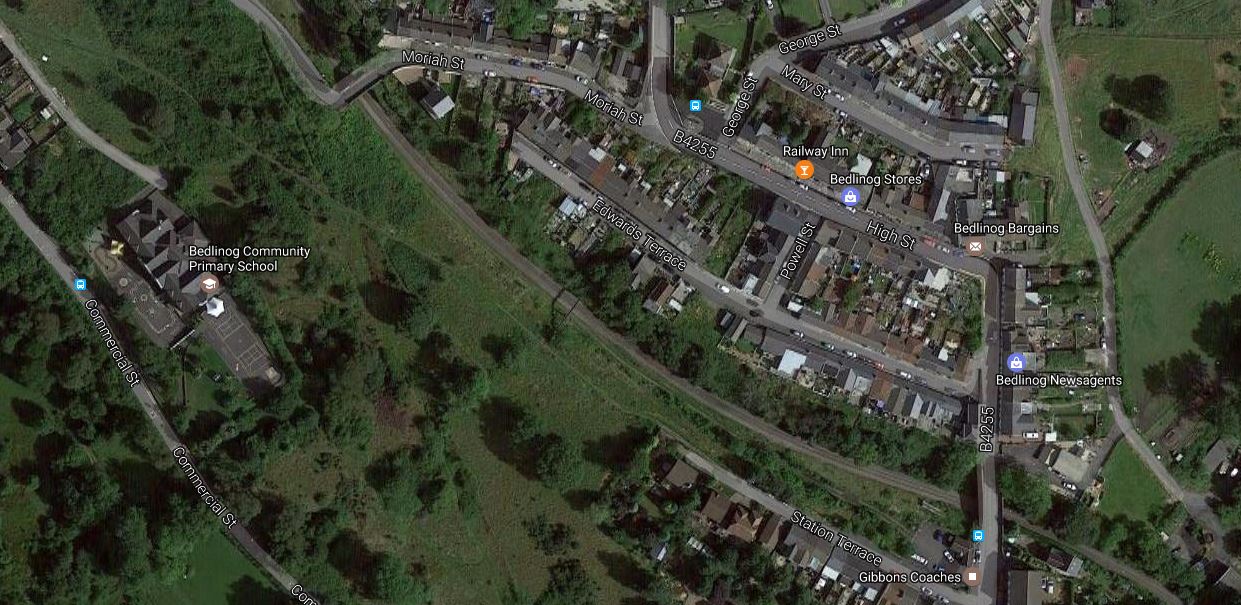
Bedlinog And The Railway
Note that Bedlinog already has a Railway Inn.
After Bedlinog, the next one on the list is Trelewis. This is the Google Map
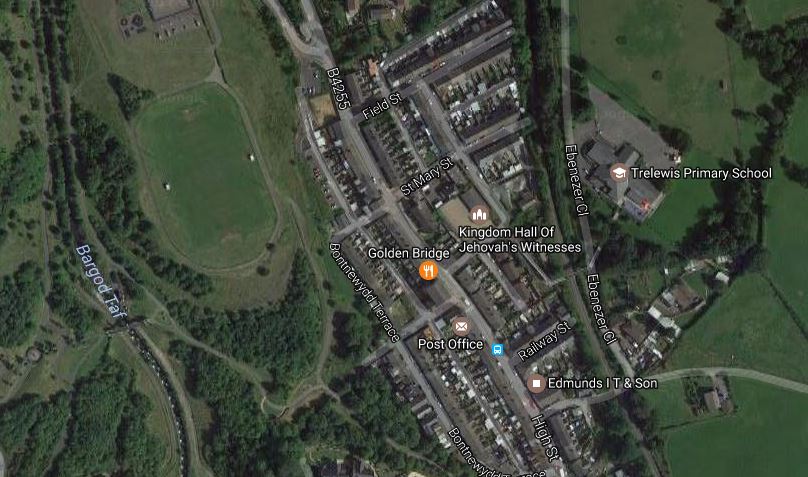
Trelewis And The Railway
The railway goes between the Primary School and the Kigdom Hall.
And then it’s back to where I started this quest at Nelson, of which this is the Google Map.
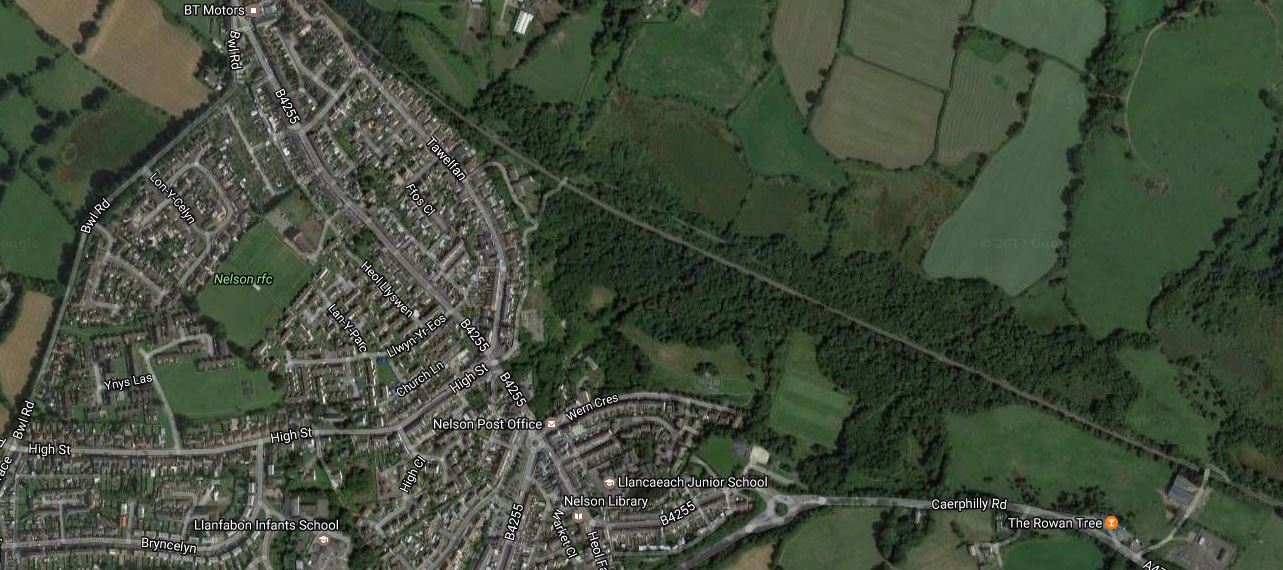
Nelson And The Railway
The railway then goes South-East to join the Rymney Line at Ystrad Mynach station.
Trains For The Route
The task of hauling empty wagons up the mountain is not to much for a Class 66 locomotive, so I suspect that a multiple unit could be designed to handle a route like this, of which there are several in the Cardiff Valley Lines.
Either electric or diesel multiple units could probably manage the climbs, if they were designed for it, but would electreifying these routes be a feasible undertaking, given the difficulties of working on these busy lines.
But train technology is moving on and with the Class 319 Flex, we are getting close to having a true tri-mode train, with diesel, electric and battery power.
The Welsh Government have said they want new trains for these routes and I suspect engineers are working on a product tailored to run these routes efficiently.
So could we see a quad-mode train for the Valleys?
- Four-car electrical multiple unit.
- Onboard energy storage.
- Perhaps even a small diesel generator for the difficult bits.
- Gravity power, which the lines have in abundance, to use with regenerative braking to charge the batteries on the descent.
- As modern trains can deploy pantographs automatically, some selective electrification could be added as the project develops.
I would also commit the ultimate heresy and use third-rail electrification on the steep parts at the heads of the valleys.
Consider.
- Bombardier, Siemens and others make reliable dual-voltage trains.
- Both electrification systems have their good and bad points.
- It must be less intrusive and disruptive to install third-rail electrification.
- Is overhead electrification more prone to weather damage?
- Network Rail seem to be terribly accident-prone when it comes to overhead electrification.
In the end costs and overall reliability will decide.
But I do think sometimes, that Network Rail always chooses overhead electrification, even if third rail will be more reliable, less intrusive and more affordable.
But I’m sure that all the technology has now been proven to create a very efficient modern electric train to work the Valley Lines, which have been electrified using a great deal of innovation and common sense.
A Station For Morriston Hospital
Morriston Hospital is in Swansea or to be more precise it appears to be up the hill and a fair way from Swansea station. I could probably just walk it.
It would appear that there are plans to reopen Cockett station, which would only be ten minutes by train from the main station and close enough to Morriston Hospital for a shuttle bus.
It would also mean that to get between the Hospital and East Wales, you wouldn’t have to go into Swansea and change trains.
It looks like the Welsh are finally getting access to the hospital acceptable, but so many hospitals don’t have a decent transport connection.
At too many places in the UK, the only reliable way to get from the main station to the local hospital is by hiring a taxi.
Is that acceptable?
Derby To Manchester The Midland Way
I was trying to find out about two stations; Miler’s Dale and Monsal Dale, which are both on the Manchester, Buxton, Matlock and Midland Junction Railway.
I found this article in the Derby Telegraph, which is entitled 50 years on, as passengers return to railways, in a few quiet corners, Beeching’s cuts are being reversed.
It says a lot about the Midland’s spectacular route from Derby to Manchester.
As a result, some of the lines and stations axed in the Beeching Report are being brought back to life. One of these is the Midland Railway, a route which once linked Derby and Manchester.
It is regarded as one of the most spectacular lines ever built. Cutting through the Peak District, numerous tunnels and other impressive civil engineering features, including magnificent viaducts at Millers Dale and Monsal Dale, had to be constructed because of the terrain.
In 1967, the Beeching Report brought about the end of passenger services on the line with the closure of stations at Millers Dale, Bakewell, Rowsley, Darley Dale and Matlock Bath. Now a three-and-a-half-mile section of the line has since been reopened and brought back into use by Peak Rail.
Today, the company operates both a steam and heritage diesel service for tourists and visitors to both the Peak District and the Derbyshire Dales. The preserved railway line operates trains from Matlock station via Matlock Riverside and Darley Dale to Rowsley South.
Peak Rail has ambitions to reopen more of the line in the future. The first stage would be to relay track to the site of Rowsley station, extending to a total of 4.25 miles. There are also plans to extend the line all the way to Bakewell, which would involve the restoration of both the Haddon tunnel and Coombs Road viaduct as well as the reinstatement of numerous bridges along the way.
It certainly seems to be worth a visit.
It sounds to me though to get trains running all the way will need a friendly billionaire.
A Station For Marlborough
Marlborough once had a pair of stations, as this map of the railways in the town shows.

Note the various stations in an area, where Marlborough the largest town has a population of 8,395.
This railway map shows the important Reading to Taunton Line that passes to the South of Marlborough. This Google Map shows that line as it crosses the A346 road.
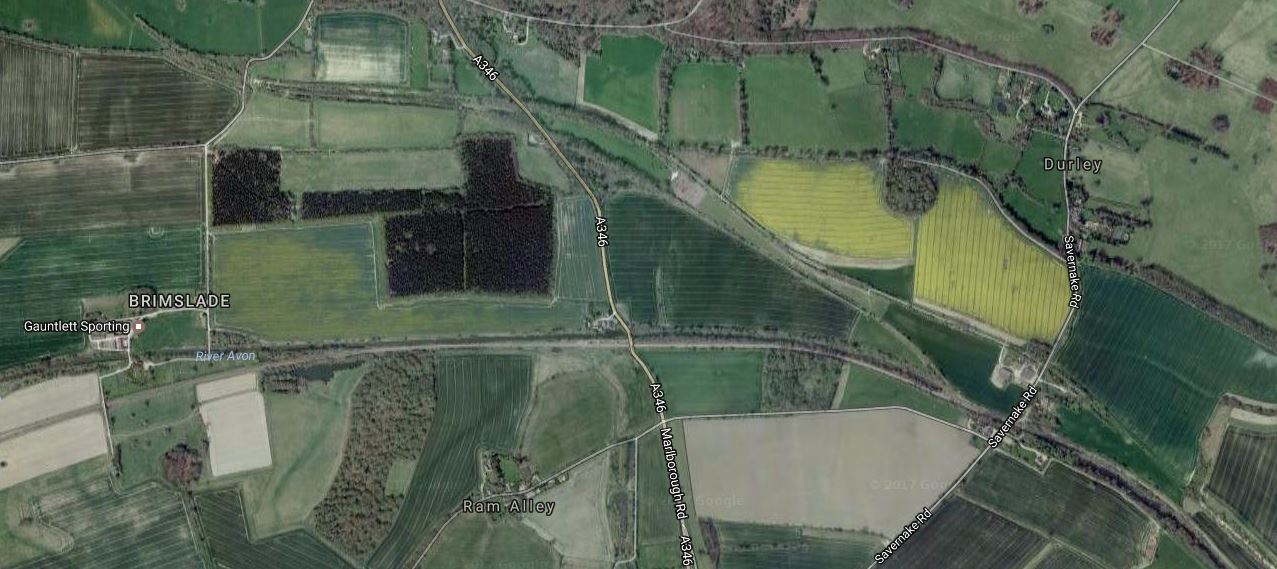
The Reading to Raunton Line South Of Marlborough
Note.
- The Reading to Taunton Line crossing the map in an East-West direction, generally following the Kennett and Avon Canal.
- Marlborough is to the North
- Pewsey station is to the West.
- Bedwyn station is to the East.
- Savenake Low Level station used to be somewhere to the South of what look like yellow field of Rape.
- The small town of Biurbage is to the South.
There would also appear to be tracks of disused railways leading North-Westerly from Bedwyn towards Marlborough.
If Marlborough and the surrounding area were to be given a better rail connection, I would think that a possible solution would be a parkway station, perhaps where the A346 crosses the railway and the canal.
It should be born in mind, that modern trains are designed to perform fast stops at stations, so the extra station at Marlborough would not be the time penalty, it was a few years ago.
Transition Marlborough’s Proposal
But a local action group called Transition Marlborough have their own plans for a Marlborough Rail Link, which as this graphic shows are more ambitious.
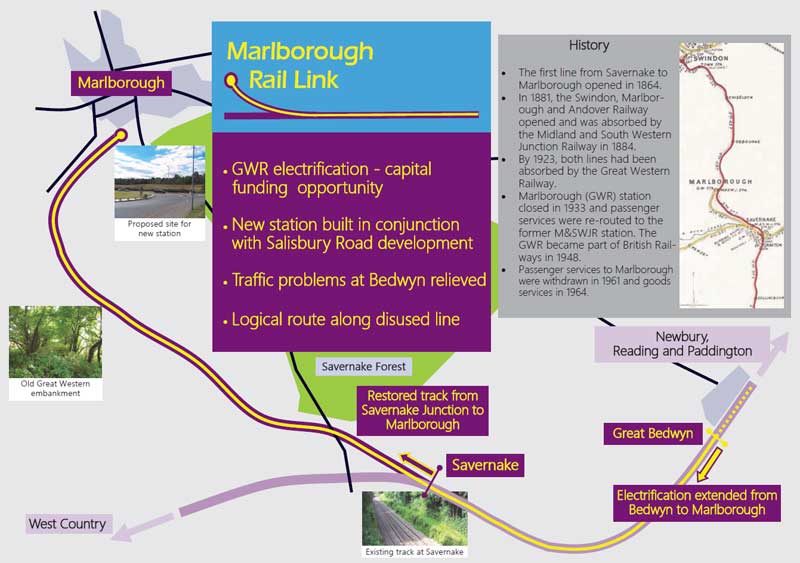
Their plans would involve restoring and electrifying the line to Marlborough, where a well-positioned station will be built.
These are my initial thoughts.
- The route of the line appears feasible.
- Electrification may be a problem given Network Rail’s expertise in this area.
- Bedwyn would not appear to be the best terminus for a line to London.
- I’ve not been to Bedwyn station, but I suspect it could be a bleak place in some kinds of weather.
After I wrote this list, a kind soul in the area sent me this message.
You’ll find that Bedwyn station is a pretty bleak place, especially in Winter. To reach it by road from Marlborough involves a 7.5 mile road trip, at least 3 miles of which is on an unmarked road through a forest. Bedwyn station is almost inaccessible for people without cars, as the connecting bus service is poor and unreliable.
My Version Of The Proposal
I think the best solution could be to create a single-track railway without electrification to a simple station with adequate parking at the proposed Salisbury Road Business Park location.
I would put the station in the car park of the Tesco supermarket in this Business Park.
The distance between Reading and Marlborough by train would be about 37 miles. Network Rail’s plans to electrify the line between Reading and Bedwyn are probably best described as fluid, but I suspect that electrification to Newbury could be possible, which would mean that only twenty miles between Paddington and Marlborough would be unwired.
So this would mean that when inevitably an electric train with onboard energy storage has a range of forty miles, Marlborough could get a modern electric service to and from Paddington.
The advantages of this strategy are as follows.
- No ugly overhead catenary marching across the country.
- Work would only include restoring a single track railway and building a simple no-frills station at Marlborough.
- Marlborough station would not have any electrification and could be designed like a tram stop.
- Fast Environmentally-friendly electric trains to and from Reading and Paddington.
- The route would be designed for six-car trains in case Marlborough College put on a free concert featuring the Rolling Stones.
- The route could be designed to allow two trains per hour (tph), as opposed to the current one tph service to and from Bedwyn.
- Marlborough to Paddington would have a maximum time of around 80 minutes.
But the biggest advantage is that the scheme is that it could be affordable.
This article on the BBC is entitled Marlborough £30m railway line restoration plan.
If this branch line is developed as I believe Network Rail are now thinking, there could be money left over for a good launch party!
Conclusion
With the next generation of electric train with onboard energy storage or IPEMUs, a Marlborough station on a new Marlborough Branch Line can be used to create a two tph service to and from Paddington to replace the current one tph service from Bedwyn.
So a new Marlborough station would be a win for all those using stations on the Reading to Taunton Line to the East of Pewsey.
I also wonder how many other similar services can be developed by extending a service past a main line terminal to a new or reopened branch line, which is built without electrification and run using trains with onboard energy storage.
Reopening The Fawley Branch Line
The Fawley Branch Line is a freight-only branch line alongside Southampton Water in Hampshire.
Under Future in the Wikipedia entry for the Line, this is said.
On 16 June 2009 the Association of Train Operating Companies announced it was looking into the reopening of the railway as far as Hythe, with a possibility of a further extension to Fawley if agreement could be reached with Esso, which owns the land where Fawley railway station once stood.
A lot more detail is also given, which has these major points.
- Reopening of all former stations along the line.
- A new station in Totton called Totton West, sited just west of the junction with the main line.
- A new train service from Fawley or Hythe to Totton and on via Southampton Central, Southampton Airport Parkway, Eastleigh, Chandlers Ford and Romsey before returning to Southampton Central, Totton and Fawley or Hythe, also serving other intermediate stations.
- Hourly train service.
- Possible future electrification
The section to be reopened would be about seven miles in length.
This Google Map shows the area of the branch line.
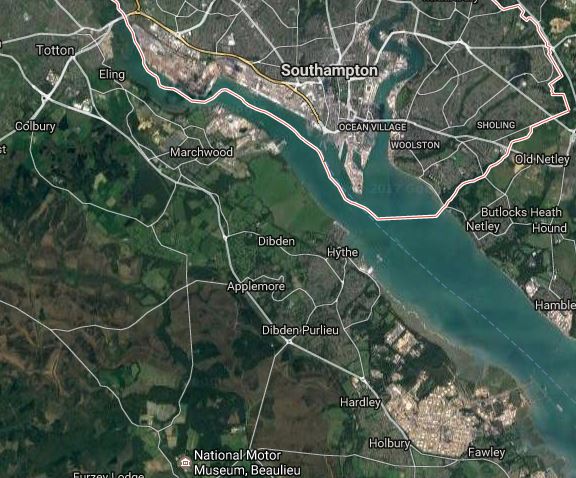
Fawley Branch Line
It starts at Totton and there used to be stations at Marchwood, Hythe, Hsardley and Fawley.
Rolling Stock
The current proposals talk about using diesel trains, which would probably be Class 158 or Class 159 trains.
Given that Totton station is on the electrified South Western Main Line, other trains that can work on partly electrified lines may be able to work services on the Fawley Branch Line.
A Class 319 Flex train could use electric power on the main line and diesel power on the branch.
Battery trains like an Aventra with onboard energy storage, could use electric power on the main line, where they would also charge the batteries. Batteries would then be used on the branch, with a possible top-up charge from something like a Railbaar at Hythe station.
A Trip To Hythe
To look at the Fawley Branch Line, whilst I was in Southampton, I took a trip on the ferry to Hythe and had a look round.
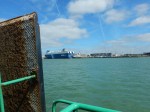
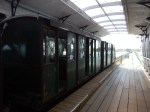
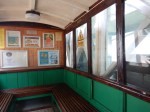
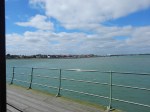
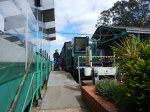
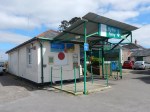
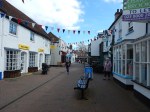
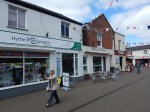
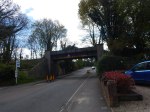

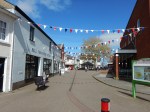
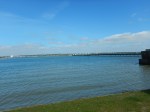
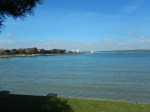
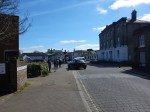
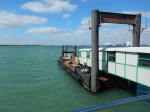
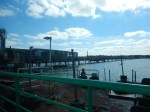
The Fawley Branch Line passes through Hythe about two hundred metres from the water.
This Google Map shows Hythe.
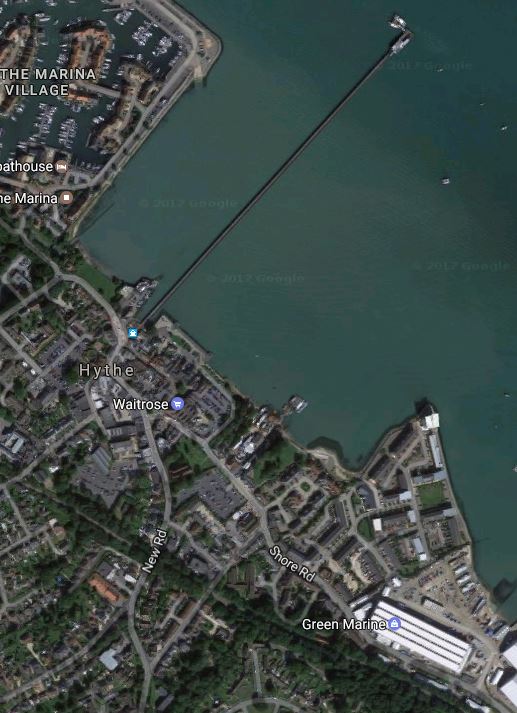
The railway can be picked out as the green scar going across the bottom of the map.
I’m not sure, where the new Hythe station would go.
The Design Of The Line
This picture shows where the Fawley Branch Line joins the main line.
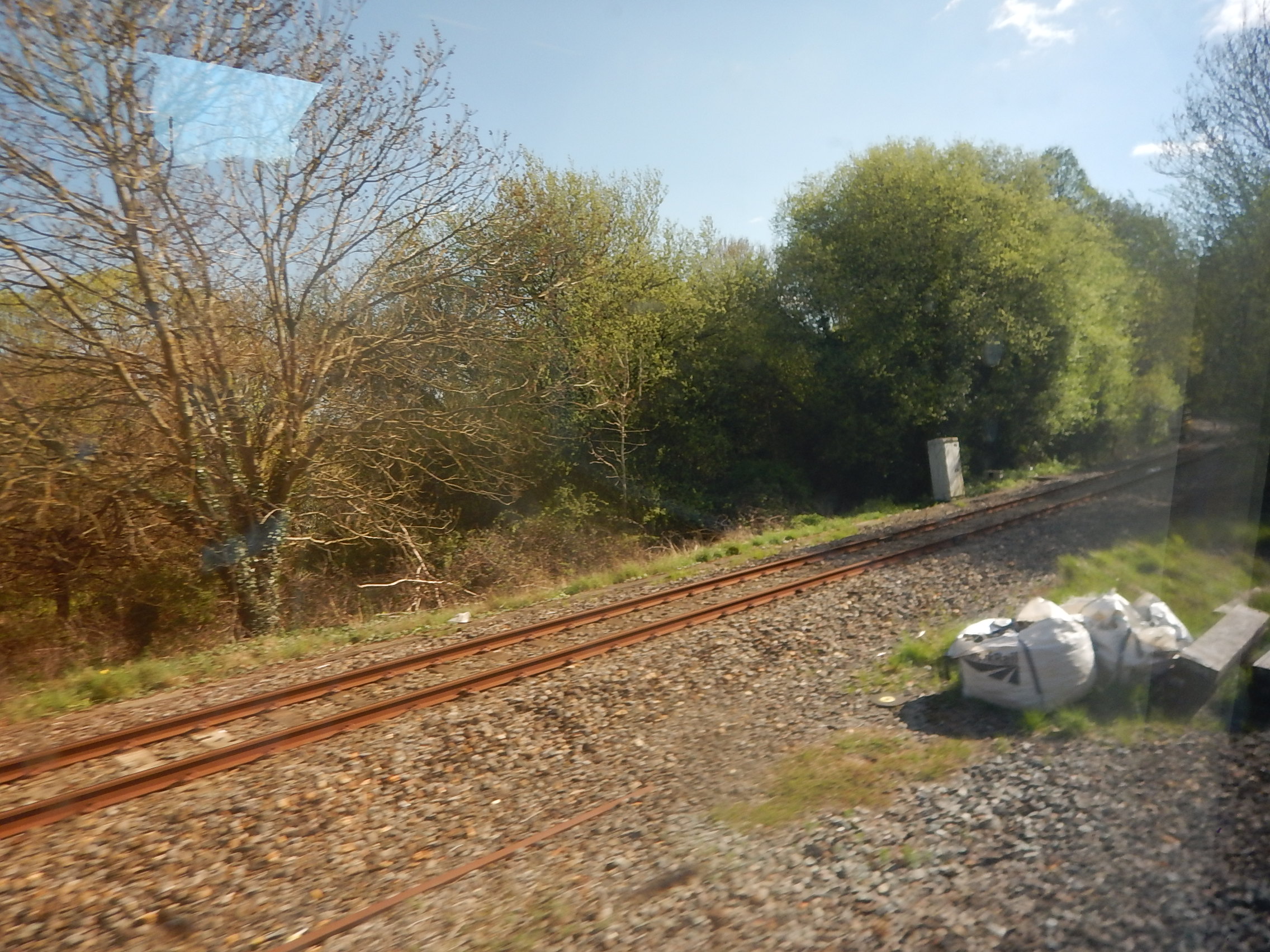
It all looks pretty tidy and in good condition, so making the connection to the main line wouldn’t be too difficult.
The quoted route from Fawley or Hythe via Totton, Southampton Central, Southampton Airport Parkway, Eastleigh, Chandlers Ford to Romsey is only electrified between Totton and Eastleigh, as the Fawley Branch Line and the Eastleigh to Romsey Line are not electrified.
But it is an interesting route, as one of its effects will be to double the frequency of services between Eastleigh and Romsey, where it is probably needed to serve new housing.
I reckon that it would take about forty-five minutes to go from Fawley to Romsey or vice-versa.
It would also be a route for using some form of train with new technology.
- A bi-mode train able to use third-rail electrification would be a possibility.
- A Class 319 Flex train would manage the route with ease.
- Perhaps, a battery train based on a third-rail multiple unit could make the route.
The battery train could be very suitable for the route, as an hourly service would need two trains, which would have around fifteen minutes to charge their batteries at either end of the route.
Current Status
Currently, the project is on hold, but given the location, where some very nice waterfront housing might be built, circumstances could change.
A Design Crime – Stratford International Station
I went to Canterbury today and took the Highspeed service from Stratford International station.
These are pictures I took at the station.

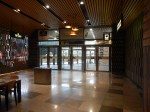
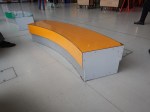
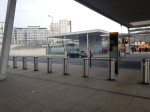

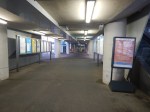
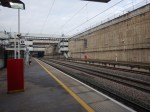
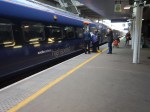
Most stations have the odd design issue, but Stratford International has a whole warehouse that’s full of them.
International In Name, But Not Trains
Stratford International station must be the only station in the world, which is billed as an International station, where all trains are domestic.
That to me is fraud!
Should I report the station to the Police?
Connecting With Stratford Station
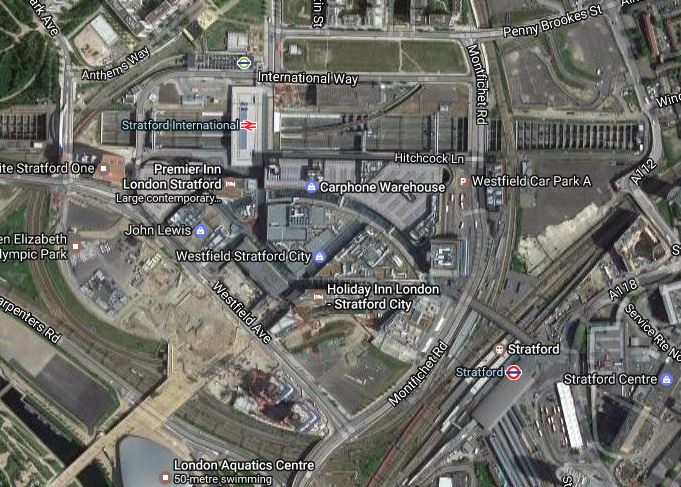
I travelled to the station via the domestic Stratford station, which meant I had to walk the best part of a mile through the Eastfield Shopping Centre, which was mainly closed as it was earl;y in the morning.
Surely the connection could have been designed to be a shorter walk.
It’s not even straight through the Shopping Centre, but you have to double back after going right through almost to John Lewis.
It’s just designed so you pass as many shops as possible. I was wanting to use a train, not buy something.
This Google Map shows the two Stratford stations.
Topsy could have designed it better. Even when she was about five!
Surely something better can be done.
The Link To The Docklands Light Railway
You could use the Docklands Light Railway, but then that introduces more changes into to your journey.It is the route recommended by the National Rail Journey Planner.
But the DLR station is on the other side of a road, rather than inside Stratford International station.
The Link To Crossrail
It’s only going to get worse when Crossrail opens, as passengers wanting to go to between say Paddington and East Kent will be drawn to Stratford, only to discover the struggle through Eastfield to Stratford International.
The alternative route via Abbey Wood will be slower and will probably mean extra changes.
There will be one better route available from Crossrail to Stratford International, when the new line opens and that will be to go to Canary Wharf station and, take the short walk to Poplar DLR station. A trip on London’s unique Docklands Light Railway will take you direct to Stratford International station. The DLR always delivers when the chips are down, just as it did in the 2012 Olympics.
No Place To Wait Before The Platforms
Except for a few uncomfortable seats designed by a sadist and what looks to be a comfortable cafe, there is no place to wait on the station concourse before going to the platforms.
A few comfortable seats would be welcome.
The Bleakest Platforms In The UK
That is being charitable, as in all my traels across Europe, even in say a very cold Eastern Europe, any set of platforms as unwelcoming.
Perhaps I should try Siberia!
Appalling Train Access For The Disabled
Considering that the Class 395 trains are the only ones to use the platforms, the disabled acess using a ramp is so nineteenth century.
I joked about the quality of this to a member of staff and they said that in the rush hour, they are sometimes assisting as many as four passengers.
It’s probably lucky that the HighSpeed service is not an intense one, as with this level of disabled access, there would be train delays.
Conclusion
The station and line is a disgrace and especially for the disabled.
Considering it was only built a few years ago, everybody concerned should hang their heads in shame.
What would I do?
- Where the DLR goes under the main line platforms at Stratford station, between the two subways, I’d extend the DLR platforms underneath and provide direct access between the two levels. This must be possible and would enable passengers to change between main line, Crossrail and Central Line services with the DLR between Canary Wharf and Stratford International.
- Try and improve the connection to the DLR at Stratford International
- Replace or modify the Class 395 trains/pltform interface with something fit for purpose, that had level access to the platforms, so wheelchair passengers could just roll in.
- Do something about the bleakness of the station.
I’d also increase the number of Highspeed services through the station, so that all destinations got at least two direct trains per hour from Stratford.
I would also add some extra new destinations like Eastbourne and Hastings.
No-Frills Mini Trains Offer Route To Reopening Lines That Beeching Shut
That long title appeared in The Times today above a picture of a stylish single-carriage lightweight train.
This page on the Warwick University web site is entitled Revolution Very Light Rail Project, describes the project on which the Times article is based.
This is said.
The main objective of the project is to reduce the weight and cost of a railcar by half in order to facilitate low cost connectivity of suburban and rural areas. The Radical Train will demonstrate unique self-powered bogies (with integral hybrid propulsion and kinetic energy recovery system) combined with a modular, lightweight body-shell utilising advanced materials. WMG will be transferring expertise in lightweighting technology from the automotive sector into this project. Automotive lightweighting solutions are already employing advanced materials including ultra-high strength steels and fibre-reinforced polymer composites.
Other points from The Times include.
- 18m. long, but could be 12m. or 9m.
- 3.8 litre Cummins diesel hybrid engines. Routemaster buses have 4.5 litre Cummins engines
- Speed of up to 70 mph.
- Lithium-titanate battery similar to a Routemaster bus.
- Target price of £500,000
The Times also says that the prototype could be running in 18 months.
So how feasible is what the article says?
The Short Branch Or Connecting Line
The most obvious application is the short branch or connecting line, which is worked by either a single train or perhaps a small number of small trains.
On their web site, Warwick University have an image of the train at St. Erth station, ready to depart on the St. Ives Branch. I wrote about this branch in St. Erth Station And The St. Ives Branch.

You have to admire the group in picking a station of character for their web site.
But it would also make a good test site for the train.
- St. Erth station has two platforms.
- The line is single track throughout.
- There is a two trains per hour (tph) service run by a single Class 150 train.
- The route has a high level of baggage.
- The Class 150 train takes 14-15 minutes for each journey.
- A well-designed modern train could save a few minutes.
But above all Cornwall has better weather than many places.
This line probably gets very busy in the Summer and I also suspect that Great Western Railway would like to run four tph on the branch.
They could probably do this with a passing loop around halfway and two trains with a better station calling performance than the Class 150 train. ERTMS, which would probably be fitted to the trains, would ease the problems of signalling on the line.
There are several branch lines in the UK, which are currently run by a single train and perhaps 1-2 tph, that could benefit with a 4 tph service, which these trains could provide.
In A Look At New Station Projects and also in The Times article, there are some branch line projects that may be suitable.
- The reopened Anglesey Central Railway.
- The reopened Brentford Branch Line.
- The reopened Cheadle Branch Line.
- The reopened Fawley Branch Line.
- The reopened Cockermouth, Keswick and Penrith Line.
- The reopened Bramley Line.
- The reopened Aldeburgh Branch Line.
Most of these lines are reopened lines that were closed in the Beeching era.
Are The Trains Big Enough?
At eighteen metres long, I reckon that the capacity of a single unit is slightly less than a twenty-three metre long Class 153 train. An estimate gives somewhere between 50-55 passengers.
But pictures in The Times and on the Warwick University web site show a standard railway coupling, which can be used for the following.
- Creating longer trains of two or more units working together.
- Allowing one train to rescue another.
- Allowing a train to be rescued by a compatible train.
So it would seem that creation of a train with a capacity of around 100 passengers by linking two units together is probably in the specification.
Working With Other Trains
The Times article says that the lightweight design means they can probably only run on captive lines with no other heavy trains.
But it also says that this will change with ultra-safe digital signalling, that enforced separation between trains.
By the time, these trains enter service, ERTMS will have been proven to be safe on UK railways.
I also suspect that the trains will use the most modern automotive industry structures. Pacers they are not!
The Longer Distance Service
A typical longer distance service would be one shown in The Times, which is to run a service between Newcastle station and a new Ashington station in the North East.
- Most if not all of the track is intact.
- Stations would need to be rebuilt or built from scratch.
- To work the desired frequency of two tph would probably need two units.
- Digital signalling would be needed, as there are freight trains on the same lines.
More details of the route are given on the South East Northumberland Rail User Group web site.
Running Under The Zwickau Model Into A Town Centre
These trains could almost have been designed to run as trams, as the diesel multiple units of the Vogtlansbahn do in Zwickau town centre.
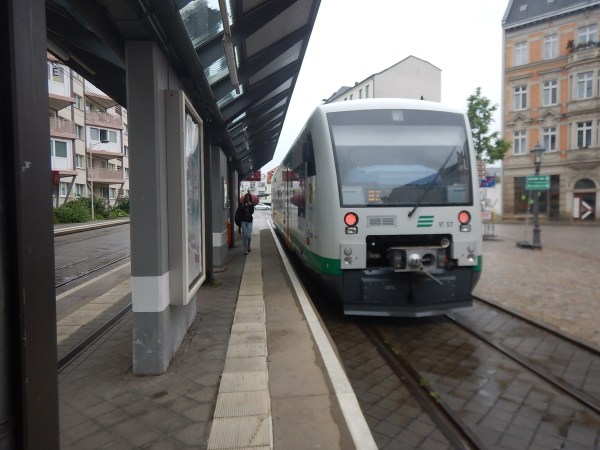
The picture shows one of the trains at the terminus of Zwickau Zentrum, after arriving at the town centre terminus from the Hauptbahnhof over a tram-style track under tram tram-style rules.
- Note the tram-style infrastucture with a simple stop and track laid into the roadway.
- The driver has large windows to keep a good look-out.
- Horns and other warning devices are fitted.
- Note the orange warning lights.
- The train travels at a slow safe speed.
- The stations or are they stops have no footbridges. Pedestrians and cyclists can cross the track, as they need.
I think that Warwick’s vehicles could travel like this to provide route extensions into a city or town centre of perhaps to an attraction like a theme park.
Have track! Will travel!
Conclusion
I think that Warwick have come up with a fresh design, that shows a lot of innovation and flexibility.
Not only is it affordable to build, but also probably can work with lower-cost infrastructure.
I look forward to seeing the prototype in action.
Crossrail 2 is a ‘threat to Soho’s soul’ says Stephen Fry
This is the title of an article on the BBC.
This is the sort of attitude displayed by Victorians who thought that railways would upset their grouse or disturb their dinner psarties.
Stephen Fry should stick to comedy!
Or is he being ironic?
A Station For Maltby And Other Villages
Maltby in South Yorkshire is a village of around 17,000 people, with transport links, based on buses and private cars.
This Google Map shows the village, which shares a mini-connurbation with Hellaby and Bramley, as you go West.
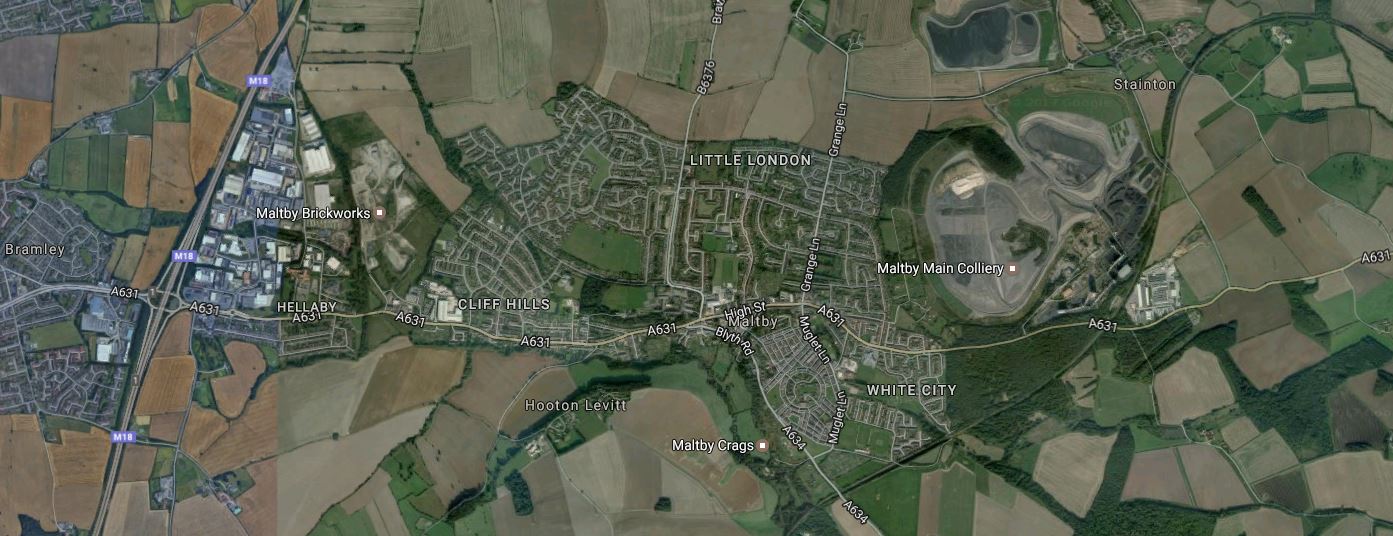
Bramley, Hellaby And Maltby
Note the massive Maltby Main Colliery, which thankfully closed in 2013. Curving round this scar on the face of Yorkshire is a railway, which starts in the North East corner and disappears South-Westerly out of the bottom of the map.
This railway is the South Yorkshire Joint Railway, which is described in this page in Grace’s Guide.
The line ran from Kirk Sandall Junction on the Great Central’s Doncaster-Cleethorpes line to a junction with the Great Central and Midland Joint Railway, just south of Dinnington. The N.E.R. had access over the G.C.R. from Hull, the M.R. had access from the Nottingham-Worksop line, over G.C.R. metals from Shireoaks, the L&Y joined at St. Catherine’s Junction from their Dearne Valley Railway and the G.N.R. had connections to the south of Doncaster. As opened the S.Y.J.R. was 21.25 miles (34km) in length, including its colliery branch lines and connections to the several lines it crossed in its path. It opened to freight on 1 January 1909, and to passengers on 1 December 1910.
Wikipedia says this about services on the line.
Passenger trains on the line ended in 1929; freight work continued on the line, with eight collieries served at peak. Most of the collieries closed by the 1990s; as of 2011, the line remains an important freight line for coal transportation both north and southwards to the Trent and Aire Valley power stations.
So now that coal is virtually in the dustbin of history, except in Trummkopf’s mind, perhaps it is time to do something positive with this railway.
The route between Doncaster and the Sheffield-Lincoln Line would appear to have the following characteristics.
- It is single-track and looks intact.
- There is no trace of any station.
- The line passes through several large villages including Anston and Dinnington.
- The line passes through the town of Doncaster and even goes close to the racecourse.
- The Northern end joins the South Humberside Main Line just to the West of Hatfield and Stainforth station.
- The Southern end joins the Sheffield-Lincoln Line at a partially-closed triangular junction between Kiveton Park and Shireoaks stations.
But the biggest factor in developing the line is that the South Yorkshire Joint Railway goes straight through the site of the proposed Doncaster Inland Port or Doncaster iPort. This is Wikipedia’s introduction for the iPort.
Doncaster iPort or Doncaster Inland Port is an intermodal rail terminal; a Strategic Rail Freight Interchange,[note 1] under construction west of Rossington and south of Doncaster at junction 3 of the M18 motorway in England. It is to be connected to the rail network via the line of the former South Yorkshire Joint Railway, and from an extension of the former Rossington Colliery branch from the East Coast Main Line.
The development includes a 171 hectares (420 acres) intermodal rail terminal to be built on green belt land, of which over 50 hectares (120 acres) was to be developed into warehousing, making it the largest rail terminal in Yorkshire; the development also included over 150 hectares (370 acres) of countryside, the majority of which was to remain in agricultural use, with other parts used for landscaping, and habitat creation as part of environment mitigation measures.
This Google Map shows the location of the Doncaster iPort.
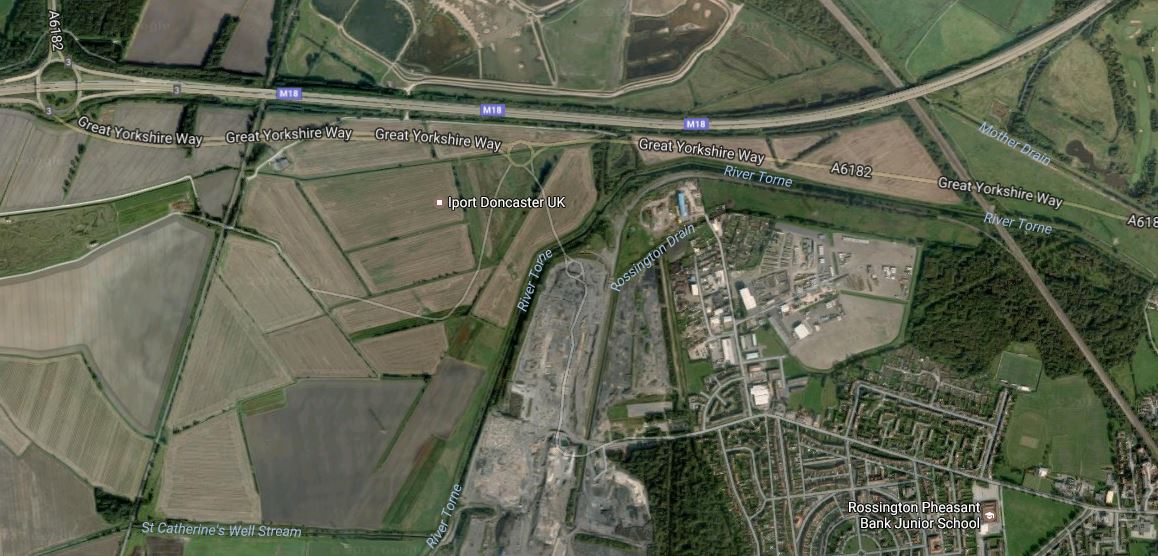
Note.
- Junction 3 of the M18 in the North-West corner of the map.
- The South Yorkshire Joint Railway crossing the site from North to South.
- The under-construction A6182 or Great Yorkshire Way, which is described in this news article on the BBC, with a headline of New £56m Robin Hood Airport to M18 link road opens.
- The scar of Rossington colliery, to the North of the village of Rossington.
- The East Coast Main Line to the East of the village.
The only thing that missing is a way to get large container ships to the iPort. Air freight will be sorted, as I wrote in A Station At Doncaster Sheffield Airport, with a choice of road or rail links between the iPort and Doncaster Sheffield Airport.
Some questions come to mind.
- Will the Rossington Colliery Branch, when extended to the iPort have a junction with the East Coast Main Line that enables traffic to arrive at and leave from the iPort in both directions?
- Will the Rossington Branch have a connection to the Joint Railway to give a route for passenger trains between Doncaster and the Joint Railway?
- How will freight trains get from the iPort to the Great Northern Great Eastern Joint Line to go South for Felixstowe?
But it does seem that Maltby and all those villages will be getting a busy railway through their midst.
It would surely be sensible to add in a few passenger services, that connect Maltby and all the other villages to perhaps Doncaster, Sheffield and Worksop.
.
Exeter To Plymouth Via Okehampton
\since the 2014 Sea Wall Breach at Dawlish station, Network Rail have looked at various routes that can bypass Dawlish, should a sea wall breach happen again.
One route is the old Exeter to Plymouth railway of the LSWR, which is best described as partly open.
- Exeter St. David station to Crediton station using the Tarka Line.
- Crediton station to Okehampton station using the Dartmoor Railway.
- Bere Alston station from Plymouth station using the Tamar Valley Line.
There is a just over twenty mile gap between Okehampton and Bere Alston stations.
The original route between those two stations included several stations, with the most important being Lydford and Tavistock.
It will be interesting to see if the trains ever run again between Okehampton and Bere Alston stations.
Even if the link was reinstated as a 55 mph line like the Tamar Valley Line, it would surely be valuable as a local line for residents and tourists.
 The Anonymous Widower