Anybody Want To Buy A Fleet Of Electric Trains Going Purr?
When I wrote Southend In The Sun, I went to the Essex town in one of c2c‘s Class 357 trains.
These trains were the first of Derby’s Electrostars to hit the tracks in 1999.
Consider.
The last Electrostars are currently being built at Derby.
The 357s don’t seem much different to the latest Class 387 trains.
The 357s have air-conditioning, regenerative braking and lots of modern features.
There are 74 of the trains and to a passenger they look and feel pretty good.
c2c has a few problems.
- It needs more capacity.
- Competition on the Southend Route will be fierce, when Greater Anglia start running faster Aventra trains into Liverpool Street.
- c2c has no direct link to Crossrail.
- The Class 357 trains lack certain features that passengers demand like wi-fi.
To ease the capacity problem, they are adding six Class 387 trains to the fleet.
Wikipedia also says this about new trains.
As part of its new franchise, c2c has committed to leasing new trains to cope with rising passenger numbers, which were boosted especially by the opening of the DLR station at West Ham in 2011 and the rise of Canary Wharf as a financial centre. 9 new four-car trains will be introduced by 2019, followed by 4 more by 2022 and 4 more by 2024.
But could c2c do something more radical, to combat the lure of the new Aventras running between Liverpool Street and Southend Victoria stations?
Gradually, over the next few years, there one class fleet of Class 357 trains will become mixed with the new trains.
So could c2c, start a roiling replacement program, so they migrate to a brand new and much better homogeneous fleet?
If it happens, a large fleet of 74 Class 357 trains will be released at a rate of perhaps one or two a month.
They will be very desirable trains to provide services in Birmingham, Lancashire, Leeds or Scotland to replace older fleets.
But they would be even more desirable if Bombardier’s parts bin could be raided to create a bi-mode Electrostar on the lines of the Class 319 Flex!
The specification could be as follows.
- Modern interior with everything passengers demand.
- 100 mph capability.
- Regenerative braking handled by onboard energy storage.
- Diesel or even hydrogen power-pack.
- Independent operation on lines without electrification.
The size of the onboard energy storage would be determined by the nature of the routes to be operated and the extra costs of the required storage.
Were The New Merseyrail Trains Designed In A South London Pub?
In Thoughts On Merseyrail’s New Trains, I postulated that the new Stadler trains could work as trams on appropriate infrastructure.
I looked at the pictures in The Design Of Tram Or Tram-Train Stations, which I wrote in March 2015 and came to the conclusion, that Merseyrail’s new trains might be able to run on the London Tramlink with some modifications.
- The ability to run on 750 V DC overhead electrification.
- Precise adjustment to the platform height.
- Tram lights and signalling to make the vehicles comply with regulations.
So why do I say that the new Merseyrail trains were designed in a London Pub?
- Both Merseyrail and South London have networks with third-rail electrification.
- Merseyrail need a train to match their tunnels and platform heights, which are sized to the current Class 508 trains.
- South London has the London Tramlink, which runs Stadler Variobahn trams.
- The London Tramlink has strange infrastructure between Birkbeck and Beckham Junction stops, which could be improved if trams and trains could share lines and platforms.
- The London Tramlink would like to extend to Bromley South station.
- Merseyrail have been talking about running a tram-train to Liverpool Airport.
- Stadler have experience of trams, trains and the very special experience of Zwickau, where Stadler DMUs share tracks with electric trams.
- Stadler builds the tram-trains for Karlsruhe, Chemnitz and Sheffield.
- Karlsruhe has a problem of two different sized tram-trains, which has been solved, by clever design of the vehicles and the platforms.
- Every Stadler train seems to be different, with different car dimensions to fit the customers tracks and different power systems to give them the required performance.
I think that a Stadler engineer or perhaps more came over to look at both London and Liverpool’s problems and after riding round South London, they ended up in a local hostelry and lots of alcohol was added to the mix to see what would happen.
The result was a concept, which I think of as a train-tram with the following features.
- The ability to run as a speedy commuter EMU train on either 750 VDC third-rail, 750 VDC overhead or 25 kVAC overhead electrification.
- The ability to run as a tram on 750 VDC overhead electrification.
- The ability to run on energy stored in an onboard energy storage device.
- It could be built to fit any of the tram gauges and platform sizes in the UK and quite a few around the world.
- Level access to the vehicle from platforms of the correct height at all times.
- Signalling would either be using traditional signals or in-cab displays. The second would be preferable, as it could display the same format at all times.
- The ability to run the Glasgow Airport Rail Link, in a city where Stadler are providing trains for the Subway.
- The ability to run on the other tram lines in the UK, if the vehicle were to be built to the correct size.
- The ability to run on standard heavy rail infrastructure.
If you see the Zwickau DMU in a train station, you think it’s a train, if you see it at the stops in the centre of Zwickau, you think it’s a tram.
Get the dimensions and the look of the vehicle right and no passengers will bother that it’s a train, when running in tram mode.
The big advantages come with certification.
- As it’s a train, certification for heavy rail and lines without electrification is the same for any new train.
- Adding the vehicles to a tram network, would be like adding any new tram type to any existing tram network.
Merseyrail have got in first with an order, but I wouldn’t rule out something similar used to extend the London Tramlink or vehicles for the Glasgow Airport Rail Link.
Where could you run a train-tram with onboard energy storage on London’s third-rail network?
- Extend Ttranlink from Beckenham Junction to Bromley South
- Abbey Wood to Thamesmead
- Grove Park to Bromley South via Bromley North and Bromley town centre.
- Greenehithe to Bluewater.
- Chessington South to Chessington World of Adventure.
These are just for starters.
I also didn’t include short branch lines and routes without electrification, but close to 25 KVAC overhead electrification.
Crossrail Has Power To Maidenhead
This article on Rail Technology Magazine is entitled Crossrail minister rides train as electrification and testing milestones passed.
This is said.
Meanwhile, Crossrail confirmed that electricity is now running on 12 miles of railway between Maidenhead and Heathrow junction (pictured). Over 80% of the wiring programme has now been completed, with 800 workers installing over 1,400 piled foundations and 834 overhead line structures.
So that means, that Crossrail is now live all the way from the main line station at Paddington to Maidenhead.
Will we be seeing GWR’s Class 387 trains to Maidenhead from Paddington in the near future?
Can Mark 3 Coaches Come To The Rescue?
The Mark 3 coach is one of the mainstays of UK railways.
- Chiltern Railways use thirty one coaches on Birmingham and Oxford services from Marylebone.
- CrossCountry have thirty-eight coaches as part of InterCity 125s.
- East Midlands Trains have over a hundred as part of InterCity 125s
- Greater Anglia use one hundred and thirty coaches between Liverpool Street and Norwich.
- Great Western Railway have over four-hundred and fifty coaches as past of InterCity 125s.
- Virgin Trains East Coast have over a hundred coaches as part of InterCity 125s.
It should be said, that some are in better condition than others and very few meet the latest access regulations.
But even the table hides a few strength and problems.
Chiltern Trains
Chiltern Trains run their Mark 3 sets with a driving van trailer (DVT) and a Class 68 locomotive on some Birmingham and Oxford services.
- Marylebone to Birmingham Moor Street is a two trains per hour (tph) service and the journey takes ten minutes under two hours.
- Marylebone to Oxford is a two tph service and the journey takes a few minutes over an hour.
The Birmingham service needs eight trains for a 2 tph service.
The Oxford service would need six trains for a 2 tph service, but if the journey could be under the hour, there could be a reduction in the number of trains needed.
If Chiltern decided to run a 2 tph service between Oxford and Birmingham, as I suggested in Where Next For Chiltern?, this would need another four trains.
This leads me to say.
- As Chiltern only have six sets of Mark 3 coaches, they will have to use Class 168 trains for some of the services.
- Probably by clever timetabling, they would need at least a dozen trains to run a quality two tph service on both routes.
- They would probably like all their services to Birmingham and Oxford to share a common train type, for operational and marketing reasons.
So where do Chiltern find another probably ten trains?
- The Class 68 locomotives would have to be hired.
- There are up to a dozen DVTs in storage at Long Marston according to Wikipedia, so creating some for the trains, might be a reasonably predictable refurbishment.
But where do they find the sixty coaches needed?
This article from Rail Magazine in June 2012, is entitled Making the Mk 3s even better, describes Chiltern’s methods.
This is an extract.
Economics dictate that it is cheaper to rebuild the Mk 3s than to order brand new DMUs. Indeed, because of track access and fuel costs, if a LHCS formation is more than five coaches (as they are in Chiltern’s case), then the costs favour locomotive-hauled trains.
The freedom to be able to do this is also a factor for Chiltern. The franchise is owned by Deutsche Bahn, which also owns the coaches. This means that vehicles can be tailored to exactly what the operator wants, rather than thinking about the re-sale value. No expensive engineering will be needed, again because this is what Chiltern wants.
Note the trains are in the same ownership as Chiltern; Deutsche Bahn.
As a passenger, the proof of the pudding is in the eating.
The product looks, feels and tastes good!
Greater Anglia
Greater Anglia could be a good source of quality Mark 3 coaches.
- Greater Anglia have 130 of them, which are leased from Porterbrook.
- The trainsare due to be replaced by new Flirt electric multiple units during 2019/2020.
- The trains have recently been refurbished and have been fitted with wi-fi and retention toilets.
The problem is that they are still slam-door stock and don’t meet the latest access regulations.
But this is not a great problem, as Chiltern have form in updating Mark 3 coaches to meet the latest standards.
Greater Anglia are also replacing fifteen sets of carriages with just 10 electric multiple units, which will provide Norwich in ninety minutes at 3 tph, as opposed to the current service of Norwich in two hours at just 2 tph.
Incidentally, just eight trains are needed to provide the current service, so Greater Anglia could have a few spares.
So it looks to me, that immediately each Flirt is in service, there will be a Mark 3 set sitting in Crown Point ready to go on its next task.
But as just ten Flirts will be replacing fifteen Mark 3 sets, it looks to me, Chiltern might be able to raid Greater Anglia’s stock of spare trains earlier than has so far been thought.
Suppose three trains could be released, this would release twenty-four refurbished coaches and three DVTs.
If another DVT could be sources from Long Marston, then there would be another four rakes of coaches for refurbishment to Chiltern’s standards.
One of the great advantages of modifying the Greater Anglia coaches, is that they have all been refurbished to a high standard, so I suspect that all the mechanicals and structure of the coaches are in virtually in as-new condition.
This page on the Greater Anglia web site, gives full details of the refurbishment.
This is said.
The significant refresh will see all of the train operator’s MkIII fleet enhanced, with improvements throughout for both First Class and Standard carriages including, plug points; new LED lighting; new carpets; new tables; new seat covers; upgraded environmentally-friendly controlled emission toilets with new floors and new taps; re-painting of the carriage interior saloon and vestibule panels, walls and ceilings.
It also appears that Greater Anglia set up a special work-shop in Crown Point TMD to do the update.
Could Greater Anglia have stolen a copy of Chiltern’s rule-book? More likely, they used the same consultant.
After a recent trip in one of these coaches with a friend, I wrote The Power Of Three! To say she was impressed, could be an understatement!
Chiltern just need to fit the new doors and their own interiors.
The Various InterCity 125 Coaches.
There are several ideas as to what to do with the various High Speed Trains formed from two Class 43 locomotives and an appropriate number of Mark 3 coaches.
This according to Wikipedia is Abellio’s Scotrail’s plan.
Abellio ScotRail will also introduce 9 four-car (2+4) and 17 five-car (2+5) refurbished High Speed Trains by December 2018 on longer-distance services between Edinburgh, Glasgow, Aberdeen and Inverness. Scotrail will receive the first locomotives and carriages late 2017, with the refurbishment program taking place at Brush Loughborough (power cars) and Wabtec Doncaster (carriages) between late 2017 and May 2019.
There have been rumours that Great Western Railway will do something similar with a few more trains.
As the InterCity 125s will each be shortened by a few coaches this will release more coaches for use by other operators.
Lots Of Mark 3 Rakes Of Coaches
There are probably enough Mark 3 coaches in excellent condition and DVTs, that can be refurbished, to create perhaps another twenty-five rakes of between five-car and eight-car Mark 3 coaches, tailored to an individual customer’s need.
All of the design work has been done and proven by Chiltern or their contractors.
Obviously, you wouldn’t fit the doors and do the final parts of the refurbishment, until you actually had a customer, but it looks to me, that Porterbrook, who own the Greater Anglia Mark 3 coaches, seem to be doing a bit of speculation. Obviously, they have a plan in there to make money, as ROSCOs don’t do charity!
There is also this article from Rail Magazine, which is entitled Refurbished Mk 3s for Tornado.
It describes how, a rake of Greater Anglia’s Mark 3 coaches, will be acquired to be used with the new-build steam locomotive 60163 Tornado. One would even be fitted with a water tank to extend the range of the engine. Surely, a Mark 3 can handle that sort of weight.
Porterbrook have done well in the last few months out of a speculative order for Class 387 trains, that helped tide some train companies through rolling-stock shortages.
So have they seen a market niche to create an affordable train for longer routes based on Mark 3 coaches hauled by a Class 68 locomotive or perhaps a Class 88 electro-diesel locomotive.
Consider.
- It would meet all the access and environmental regulations.
- It would probably be quieter than a shortened InterCity 125.
- According to the Rail Magazine article, track access charges are affordable.
- As Chiltern and Greater Anglia are showing, it would deliver a superb customer experience.
- Chiltern like the package and could be a customer or do something similar themselves.
- It would be ideal for some of CrossCountry’s long routes like Aberdeen to Plymouth.
- It would be ideal for an open-access operator, developing a new route.
- Virgin West Coast might like it for Euston to Holyhead.
- With a faster version of the Class 88 locomotive, it might have a maximum speed in excess of 100 mph.
It would do anything a Class 800 train can do, at probably a more affordable purchase price, lower track access charges and an earlier delivery date.
Conclusion
Their is something behind Porterbrook’s decision to refurbish Greater Anglia’s Mark 3 coaches, when they knew there was a good chance they would be replaced by new trains, as the clapped Class 90 locomotives certainly couldn’t do London to Norwich in ninety minutes, as mandated in the new East Anglian franchise.
I suppose that Abellio could have been keen to upgrade the coaches, as the interiors were very much on the tatty side and the upgraded coaches would hold the fort until the Flirts arrived, without too much grief.
On the other hand, if the Great Western Electrification gets later and Abellio ScotRail lose their source of shortened InterCity 125s, locomotive-hauled Mark 3s to a high standard would be a very acceptable and affordable alternative.
I must also ask this question.
Could Greater Anglia’s Mark 3 coaches have been refurbished, so that to fulfil Scotrail’s requirements, all that needs to be done is the following?
- Fit doors that are compliant with the access regulations.
- Shuffle the coaches to the length and First and Standard Class capacities required.
- Give the rake of coaches a Scotrail livery.
- Couple a Class 68 or Class 88 locomotive on one requisite end.
I suspect the negotiation would be quite convivial, as both Greater Anglia and Scotrail are owned by Abellio.
The only problem would be that Scotrail need 9 four-car and 17 five-car trains and there may not be enough DVTs. However, some sets could be to the original plan of shortened InterCity 125s.
Scotrail certainly have a Plan B, if the Great Western Electrification gets even more pear-shaped.
Appendix – Posted on December 24th, 2016
In the January 2017 Edition of Modern Railways, under a heading of Pennine Pretendolino, there is a picture of a Class 68 locomotive hauling, the jokily named spare rake of Mark 3 coaches to Laira depot for attention, so that it can be used for driver training purposes by TransPennine Express, prior to the arrival pg the new Mark 5A coaches from CAF.
The Pretendolino is described under rolling stock on the Virgin Trains entry in Wikipedia. This is said.
Following the loss of a Class 390 Pendolino in the Grayrigg derailment, a Mark 3 set with a Driving Van Trailer was leased with a Class 90 hired from English Welsh & Scottish as required. In 2008 Virgin looked at leasing two Class 180[49] but decided to retain the Mark 3 set. Nicknamed the Pretendolino, this received re-upholstered seating, power points, wi-fi and a full external re-paint at Wabtec, Doncaster in 2009.[50] Virgin used this set with a Class 90 locomotive hired from Freightliner on a Euston to Crewe (via Birmingham) service on Fridays only until December 2012. From 9 December 2013 it was utilised to operate a London Euston -Birmingham New Street train on Thursdays and Fridays only, until its withdrawal in October 2014. The Mk.III set was also occasionally hired out as a private charter train. It was used in the filming of Harry Potter and the Deathly Hallows and can be seen at King’s Cross station at the end of the film. It is currently in use as a ‘hot spare’ with Abellio Greater Anglia
Like most of its siblings, it is showing a very strong survival instinct and keeping well away from the scrapyard.
Over the last year or so, I’ve ridden to and from Ipswich in the train several times, as it has been filling in whilst, the operator was updating their own Msrk 3 coaches.
Where Next For Chiltern?
Chiltern Railways have now got their Marylebone to Oxford service up and running.
Wikipedia gives a list of their future plans. Included are the following.
- Platform lengthening.
- Restoration of former tracks.
- Remodelling Banbury, which has already been done.
- Building of the West Hampstead Interchange.
- Development of services between Aylesbury and Milton Keynes.
- Creation of a Chiltern Metro.
- Reopening various branch lies.
In addition there has been talk of electrification and opening a route along the New North Line to Old Oak Common.
Building On Oxford
As of yesterday, as I wrote in Oxford To Marylebone Opens For Business, they now have a two-platform terminus at Oxford station.
I can’t believe they have made this investment there, without other plans to use it. Wikipedia says this about the platforms at Oxford station.
The scheme also includes two new platforms at Oxford station, to be built on the site of the disused parcels depot. The new platforms will initially be five carriages in length, but provision will be made for them to be extended southwards to eight carriages.
A two platform terminus like this, will have a large capacity, when fully developed.
- Two of Chiltern’s Class 68 locomotive hauled sets of Mark 3 coaches could be accommodated at the same time.
- Two shorter trains could be handled in one platform at the same time.
- Rebuilding plans for Oxford station would improve passenger handling.
- The two-platform underround terminus at Moorgate handles 12 tph.
It could probable handle the proposed two trains per hour (tph) for the East West Rail Link with ease.
I can’t believe that these two platforms, won’t become a vibrant mini-station within Oxford station.
But where will trains and passengers go?
Expansion At Birmingham Moor Street
Birmingham Moor Street station is one of those stations, that spent decades in the wildeness and has now become an important alternative station.
Wikipedia says this about Proposed Future Developments concerning expansion of the station.
The currently disused third bay platform would be reopened, and an additional new fourth bay platform would be opened to accommodate the new services.
This is also said about HS2.
The High Speed 2 terminus in Birmingham is planned to be built on an adjacent site and will likely be linked to Moor Street, though have a separate name (either Fazeley Street or Curzon Street). The station and high-speed line is proposed to be completed by the mid-2020s.
So it looks as if Moor Street will become a more important Birmingham station for commuters and a gateway to high speed vservices from the city.
Services Between Oxford And Birmingham
Currently around two tph run between Oxford and Birmingham.
- Typically, they call at places like Banbury, Leamington Spa, Coventry and Birmingham International.
- Services are run by Cross-Country.
- Services take between sixty and seventy minutes.
- Services continue to places like Bournemouth, Manchester Piccadilly and Newcastle.
I’ve travelled on the route several times.
- It tends to be overcrowded.
- Service quality is not of the quality, you get with Chiltern, London Midland or TransPennine Express.
I think there could be a niche for an extra service between Oxford and Birmingham,, just as Chiltern hope and probably know, there’s room for one between London and Oxford.
- Services would go between the bay platforms at Oxford and Birmingham Moor Street.
- The Banbury remodelling must have helped the timetabling of the service.
- A Chiltern quality service would be provided.
- Two tph would leave at the same minutes past the half-hour.
- Services could call at Banbury, Leamington Spa, Warwick, Warwick Parkway and Solihull, or whatever was appropriate.
- Journey time could be sixty minutes or just under.
- 2 tph on an hourly service would need four trains to run a service all day.
- The Oxford Birmingham route would get four tph.
The only loser would be Cross-Country, who might lose passengers to the new service.
But then like Chiltern, they are ultimately owned by Deutche Bahn.
But, you can’t run a service without trains.
From 2019, Greater Anglia will start to receive new twelve-car Flirts for Liverpool Street to Norwich services. Currently, to run this service Greater Anglia uses 15 sets of eight Mark 3 carriages, with Class 90 locomotives and driving van trailers. In the last couple of years, all have been superbly refurbished with the addition of wi-fi and retention toilets. All the trains need is to fit sliding doors, as Chiltern have done for their Mark 3 coaches and replace the Class 90 with a Class 68 locomotive.
This would enable, Chiltern to offer a Mark 3 -only service between Marylebone and Birmingham and Oxford and the release of other trains for the Oxford to Birmingham service.
As every operator is short of trains and delivery timescales slip, it might be worth looking at the availability of suitable trains.
- According to Wikipedia, as many as twelve driving van trailers could be in store at Long Marston. How many could be brought back into service?
- Greater Anglia are replacing fifteen sets of Mark 3 carriages and a DVT, with ten electric Flirts, that will increase the frequency from 2 tph to 3 tph. Could this mean that one or two sets could be released before the Flirts enter service?
- Hopefully, InterCity 125s will start to be available, as they are replaced with Class 800 trains from Summer 2017.
There are also other possibilities if events go to plan.
This is certainly a development to file under Watch This Space.
European Rules On Platforms Threaten To Slow Down HS2
This is the headline on an article in today’s Sunday Times.
It’s all about people in wheel-chairs having level access to the trains. This is possible on many trains in the UK, but on the Continent, it is generally impossible.
It is probably, yet more fall-out from the different ways the UK and everybody else built their railways.
We went for a small loading gauge, which was probably logical to the engineers at the time, except for Brunel, who wanted a broader track gauge and bigger tunnels and bridges.
Everybody else coming several years later went for their own gauges, many of which were larger.
We even built larger gauge railways in Ireland and India.
So everywhere you are getting problems to create a standard that is acceptable to all.
In the December 2016 Edition of Modern Railways, there is an article by Roger Ford entitled Electrical Clearances: The Plot Thickens. This would appear to be another manifestation of the same problem.
We will have to find a solution, as otherwise places like Liverpool, which will not have a dedicated high speed station, will not get a high speed service, as the high speed trains will always have to stop at high speed platforms.
In my view, this is a problem, where politicians should be banned from having an opinion. We need to have platform heights at x, y and z and be xx away from any electrical wires.
Give a simple standard to the train building companies and the engineers and see what they come up with!
Why Grayling’s Proposal For The East-West Rail Link Could Be Right?
I’m not saying it’s right that one company will build the line and then operate it, but I do think it could have advantages.
Track
With the exception of a few short lengths of existing track, most of the construction is a green field site or one where there is just rusty worthless track from decades ago.
This must give opportunities to design a future-proofed route, that in say the 203os or 2040s could run trains much faster, frequent, heavier and longer, than envisaged today.
The route can also be optimised for what is mow believed to be the likely scheduled service.
Stations
This line could have stations optimised for the modern level of working, that the line will.use.
Nothing should be ruled out in station design, if it makes for a more efficient railway.
I would also hope that stations could be modular, so that improvements and new stations could be added by the operator as ttaffic changes.
Get the design right and the company, passengers and staff will benefit.
It would be easier to get the design right, if all stakeholders are in the same team.
Electrification
Parts of the route are electrified and it will have connections to existing electrified lines at Bedford, Cambridge, Milton Keynes, Oxford and Reading.
I believe that there could be considerable savings to be made, by designing the electrification so that it is integrated with the trains bought for the line.
For instance, I believe in a few years time that all new trains will have on-board energy storage, so could this be taken advantage of to perhaps?
- Enable regenerative braking on trains, rather than trackside
- Not put overhead wires in stations.
It could be difficult for freight trains and other electric trains, but there could be scope to simplify the electrification.
Signalling
Go digital to save money.
Operation
I have sat in the cab of a High Speed Train as it went between Edinburgh and Inverness. You see a lot and surely some that drivers see could be safety related.
Surely, if the same company is responsible for both trains and track, reporting and fixing problems must be much more direct.
Conclusion
Good design could really.make the railway cheaper to build and operate.
So if it’s one company, with everybody working to the same objectives, it must benefit that company, if someone has a good idea at any point.
If they have a bad idea, then hopefully it will.be ignored.
A Good Idea For The Railways?
I’ve just read this article on the BBC, which is entitled Trains and Track Come Together In Rail Management.
It could be a good idea.
If I take the railway I know best, the London Overground, the track and stations, may still be owned by Network Rail but TfL work strongly with NR in deciding what gets done and when it gets done. You could almost say that LO is the tenant and NR is the landlord, but that both bofies sit together on the same management structure. It seems to work well however they do it. But it’s mainly good management and probably good people too.
You might ask, why doesn’t LO own the tracks and have their own maintenance teams! But do you do all the work on your house yourself or call in a specialist?
But as with a block of flats having a central.focus gives all owners and tenants a central point to get something fixed.
As the BBC article says, Network Rail has split itself into the various routes. So in East Anglia, NR’s local team are responsible for tracks and Greater Anglia for trains.
I can see interesting possibilities opening up. Say you are a developer and you have obtained planning permission to build a large industrial park or thousands of houses on an old military site, that lies alongside the railway.
As the joint management now has all the assets and permissions to fit a new station into their network, the developer might get the new station they need to make their development very successful.
Some will argue that trains and track should be in one enormous nationalised industry, but how would the little man on the Felixstowe Class 153 get a handle on that?
Exploring The Great Western Branches – 29th November 2016
On this morning, I explored the three branches of the Great Western Main Line, that are closest to London, to look at the progress of electrifying their connecting stations on the main line.
I then repeated the trip to add in two more branches.
I was also looking to see how services could be run with say four-car Class 387 trains, that had been fitted with on-board energy storage, as I wrote about in Rumours Of Battery-Powered Trains.
All the branches are described in order from London.
Electrification At West Ealing Station And On The Greenford Branch
These pictures show the electrification at West Ealing station, where the Greenford Branch Line connects to the main line.
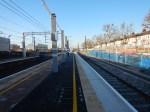




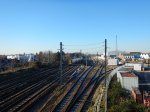
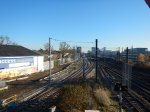
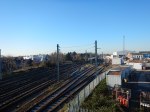
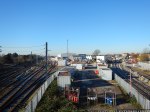
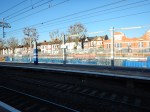

This map from carto.metro.free.fr shows the area in the photographs, at the Southern end of the Greenford Branch Line.
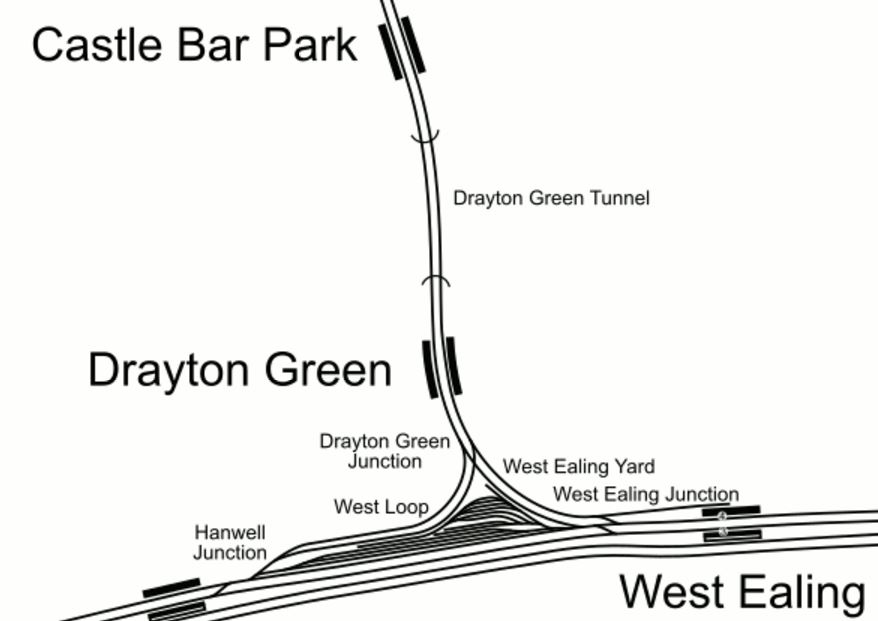
The Southern End Of The Greenford Branch
Notes and queries.
- The pictures of the lines were taken from a footbridge over the line, behind the Access Self Storage.
- The lines in the map show an older layout.
- The track in the bay platform 5 has access to both tracks on the Greenford Branch, which means that two trains could work the line to provide a four trains per hour (tph) service.
- The Up Slow line has access to both tracks on the Greenford Branch and to the new West Ealing sidings.
- The island for Platforms 4 and 5 appears to be more or less complete.
- Platform 3 needs to be lengthened.
- There are signs of foundations for the footbridge, past the end of the current Platform 3 and in the construction works beyond Platform 5.
- Will the Bay Platform 5 be double-sided? There’s no foundations for a bridge on the Platform 4/5 island.
- Will Platforms 1 and 2 be reconstructed or removed?
I suspect that the station is ready for a four tph diesel shuttle to Greenford, but the Bay Platform 5 can’t be wired until the bridge is in place.
Could Electric Trains With On-Board Energy Storage Work The Greenford Branch?
A few facts and thoughts.
- The service is not possible at present, as there are no wires in the Bay Platform 5 at West Ealing station, where the trains would need to charge their storage between trips.
- Trains would probably wait between three and five minutes at West Ealing station, which would be more than enough to top up the batteries.
- The bay platform at Greenford station and platforms at the other stations will probably need lengthening, but there would probably be little other infrastructure work.
- Incidentally, there is a tunnel on the branch, where blocks of housing have been built over the line, so electrification of the line could be difficult, unless provision was made, when the housing was built.
- Without doubt, the track layout at West Ealing has been designed, so that two trains could provide a four tph service.
- Two four-car trains could probably be parked in the bay platform. This could give operational flexibility.
Passenger routes between main line and Greenford Branch services would be as follows.
- With Eastbound services on the main line, the change would a very easy walk of a few metres across the island platform.
- With Westbound services on the main line, use of the bridge would be needed. But it looks like the footbridge has been positioned at the optimal position for both services and passengers joining or leaving the railway at West Ealing station.
As there will be frequencies of at least 8 tph on the main line and 4 tph on the branch, waiting will be a maximum of fifteen minutes.
The West Ealing Sidings
The pictures show the Orange Army swarming all over the new West Ealing Sidings, which will provide stabling for the new Class 387 trains.
I also took these pictures of the sidings as I returned to London.


Incidentally, as I passed through Old Oak Common on the way back to London, there were upwards of six of the new trains squatting in Hitachi’s new depot for the Class 800 trains.
If in the future, there is a variant of these trains with on-board energy storage, these sidings are certainly conveniently placed for the Greenford Branch.
Traffic On The Brentford Branch Line
These pictures were taken from Southall station of a train going onto the Brentford Branch Line.

I’d never seen any traffic here before and I only included the pictures, as Hounslow Council have aspirations for a passenger service on this line, that I wrote about in Could The Golden Mile In Houslow Get A Station?
If it was decided to open the Brentford Branch Line to passenger trains, then Class 387 trains with on-board energy storage would be a possibility to provide services.
A Heathrow Connect Class 360 Train in Platform 5 At Hayes and Harlington Station
I didn’t expect to see this.
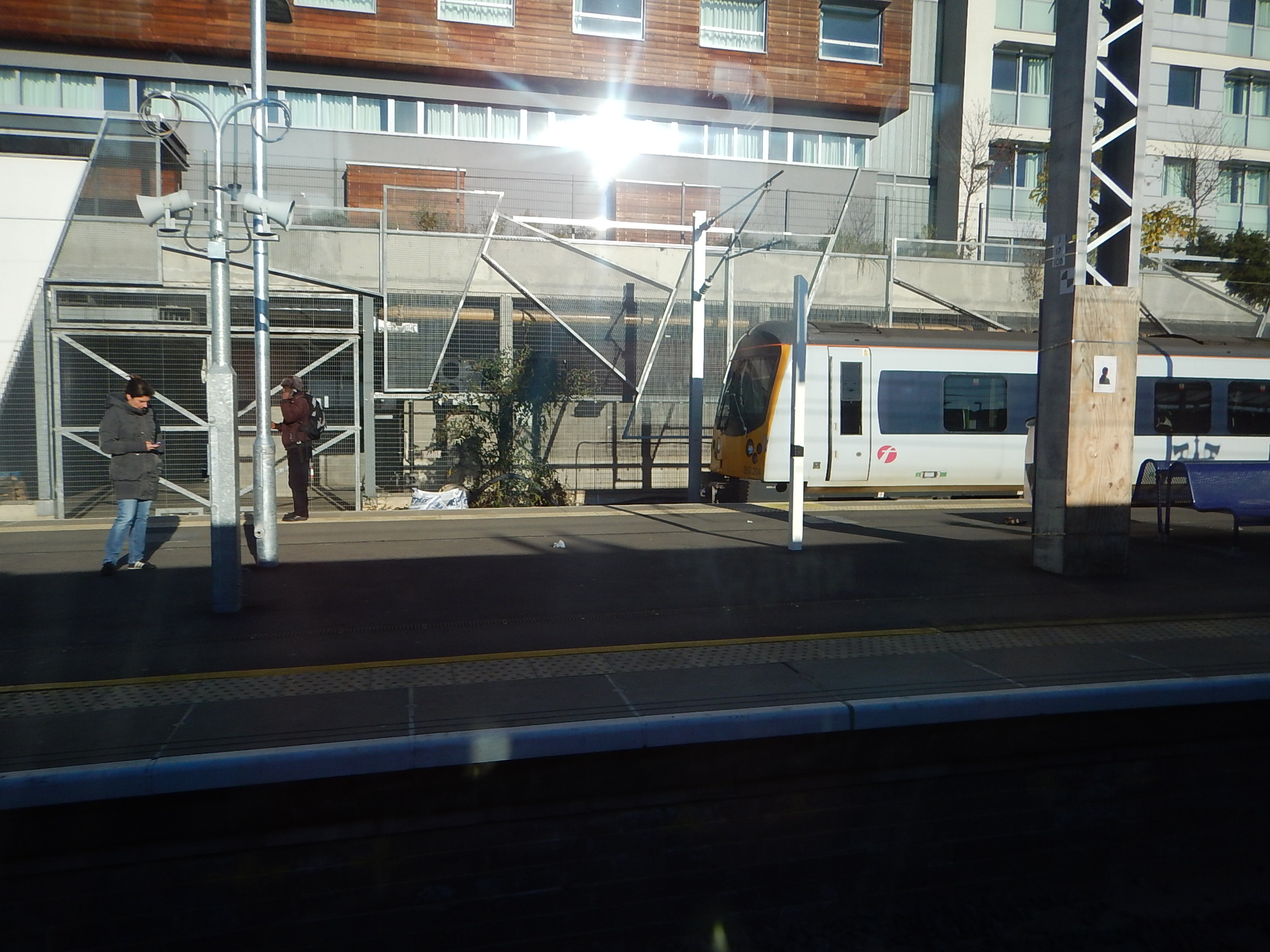
A Heathrow Connect Class 360 Train in Platform 5 At Hayes and Harlington Station
But there were signalling issues, so they appeared to be using the Class 360 train as a shuttle to Heathrow.
Electrification At Slough Station And On The Windsor Branch
These pictures show the electrification at Slough station, where the Windsor Branch Line or more correct, the Slough to Windsor and Eton Line connects to the main line.




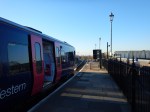


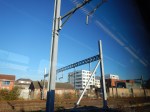

Note.
- There are overhead gantries over Platform 1 at Slough station, which is the bay platform for the Windsor Branch Line.
- There is a line of overhead line gantries on the outside of the curve, as the Windsor Branch Line leaves Slough.
- The gantries on the branch are lighter than those on the main line.
- The Class 166 train in the picture had three-cars, so the platform could probably be lengthened for a four-car Class 387 train.
As there appears to be no work anywhere else on the branch, I have to assume, that the electrification doesn’t go very far along the Windsor Branch Line.
This Google Map shows the lines at the start of the Windsor Branch Line.
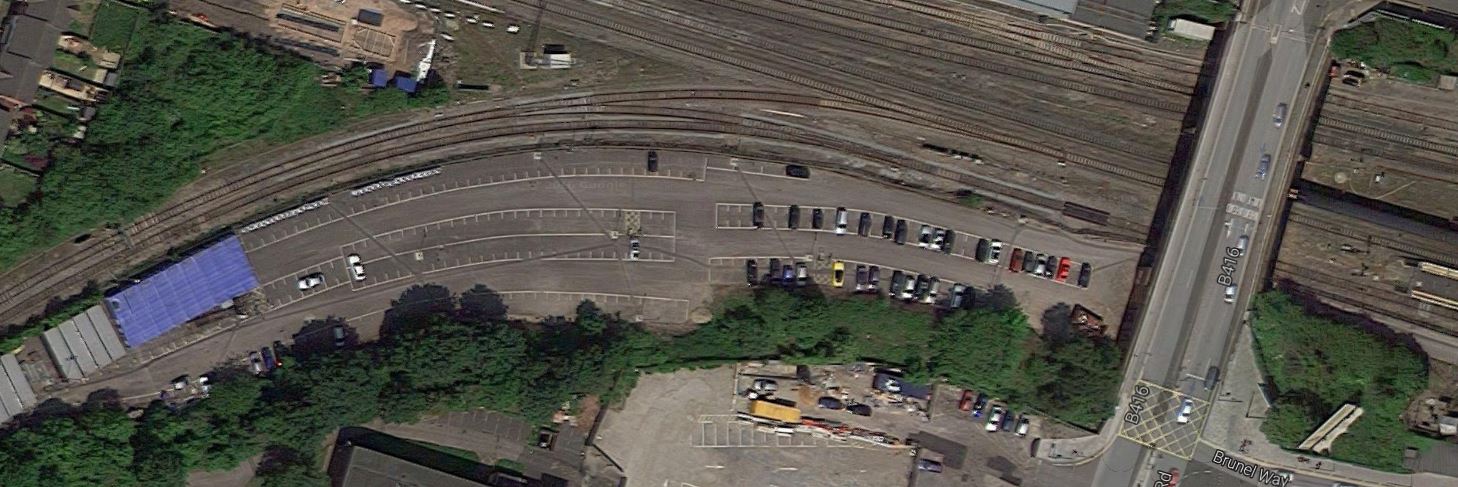
There are two main tracks at the start of the Windsor Branch.
The track closest to the blue building, is the actual branch.
- It is a single track that goes between Windsor and Eton Central station and the Bay Platform 1 at Slough station.
- Trains take six minutes for the journey.
- The current frequency is three tph.
- The bay platform 1 and a short length of the branch could be electrified.
The track furthest from the blue building is a long spur off the Down Main, that allows trains to be moved to and from the Windsor Branch Line.
- It appears to be long enough for train to be parked on the spur.
- It appears that the spur is being electrified for about a couple of hundred metres.
- The spur could be extended or reconfigured to become a passing loop.
There also appears that there is a crossing that allows trains to move to and from the bay platform 1.
Could Electric Trains With On-Board Energy Storage Work The Windsor Branch?
Operation of the Windsor Branch would be as follow with a train fitted with on-board energy storages.
- Trains enter the branch by going to the end of the spur and reversing into the bay platform 1.
- Trains charge their on-board energy storage in Platform 1.
- Trains run to and from Windsor using on-board energy, charging after each trip.
- Trains leave the branch by going to the end of the spur and reversing onto the Down Main.
I have a feeling that if needed, that with small modifications, four tph might be possible, using two trains.
One of the possibilities unlocked by four tph could be to use the train to get passengers to the town from a Park-and-Ride site, beside Junction
Windsor And Eton Central Station
I took these pictures of Windsor and Eton Central station.
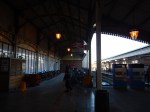
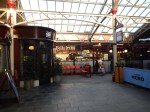
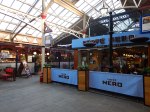
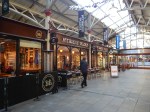
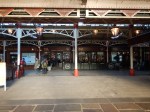
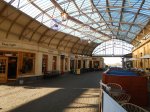


It certainly has several quality food outlets.
Electrification At Maidenhead Station And On The Marlow Branch
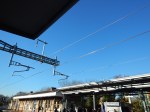
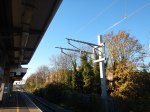
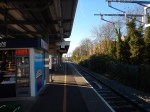
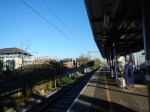
These pictures show the electrification at Maidenhead station, where the Marlow Branch Line connects to the main line.

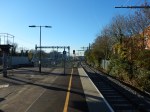
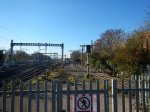
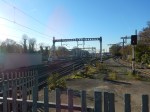
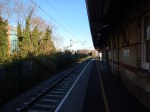
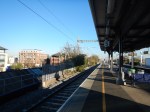
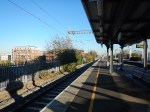

Note.
- Platform 5 is almost fully-electrified and the wires curve away onto the Marlow Branch.
- Platform 4 and its connection to the Marlow Branch appears to be fully electrified.
- There is a reversing siding to the West of the station in there somewhere.
- There is an unfinished gap in the electrification of all lines to the East of Maidenhead station.
I wouldn’t think it would be long before all the electrification work is finished at Maidenhead station.
Could Electric Trains With On-Board Energy Storage Work The Marlow Branch?
So how will the various services to and from Maidenhead and on the Marlow Branch be handled, if Class 387 trains with on-board storage were available?
- Between London and Maidenhead services would be worked using overhead power.
- Between Maidenhead and Bourne End, services would be worked using on-board energy storage, that would be charged in Platform 5 at Maidenhead or on the main line to and from London.
- Between Bourne End and Marlow, the trains couldn’t run as they are too long and a two-car Class 166 would work the service and connect at Bourne End.
From the layout of the overhead wiring, I suspect that which of Platforms 4 or 5 is used at Maidenhead is flexible and which is actually used by a particular service would depend on many factors.
Electrification At Twyford Station And On The Henley Branch
These pictures show the lack of electrification work at Twyford station, where the Henley Branch Line connects to the main line.

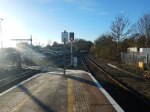
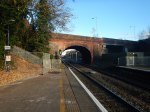
The two slow platforms 3 and 4 at Twyford station, which will be used by Crossrail and Platform 5 which is used by the Henley Branch trains, show no signs of electrification, although work has been done on the fast platforms 1 and 2.
In the December 2016 Edition of Modern Railways, there is an article by Roger Ford entitled Electrical Clearances: The Plot Thickens.
As the stations either side of Twyford, which are Maidenhead and Reading, are both almost fully wired, there must be a serious reason why there isn’t any work started on Platforms 3, 4 and 5 at Twyford. Could it be that without either rebuilding the bridge or lowering the track and rebuilding the platforms, the new regulations can’t be met?
However, there could be a possible solution.
These trains will be using the station in a few years.
- Class 800 trains, which are bi-mode.
- Class 345 trains, which I believe could be fitted with on-board energy storage for other reasons, like tunnel emergencies.
- Class 387 trains, which I believe could be fitted with on-board energy storage.
So could we see Platforms 3 and 4 at Twyfrord station without wires?
I’ve no idea!
But it does seem strange that no electrification work has been started at Twyford station, except on the fast lines, through Platforms 1 and 2.
Could Electric Trains With On-Board Energy Storage Work The Henley Branch?
So how will the various services on the Henley Branch be handled, if Class 387 trains with on-board storage were available?
Consider.
- The branch is only a short one with a total length of 4.5 miles.
- There are one tph on the branch, with extras to Paddington in the Peak.
- Trains turn round in about four minutes.
- From 2018, Twyford station will be served by 2 tph from Crossrail and 4 tph from GWR in each direction.
- Platforms at all stations seem long enough for at least four-car trains.
- There used to be a passing loop at Shiplake station.
- Trains going to and from Paddington could charge their energy storage on the main line.
Two trains working a reconfigured branch could possibly create a 4 tph service.
Creating a four tph service on the Henley Branch, is the sort of problem, that engineers solve in the traditional way. – In a suitable hostelry!
I think that spending the money on a passing loop, some means of charging the trains and possibly a rebuilt Shiplake station, will be much better value, than electrifying the branch and the Crossrail platforms at Twyford station.
Electrification At Reading
In the December 2016 Edition of Modern Railways, there is an article entitled Loco-Hauled EMUs On GWR.
The article starts by saying.
GWR’s new Class 387 trains will be loco-hauled to and from their depot at Reading, until electrification between Maidenhead and Reading is completed.
Could this all be because, Network Rail don’t have a plan to electrify Twyford?
At least the depot seems electrified.

I didn’t see a Class 387 in their depot, but there were at least half-a-dozen parked at Hitachi’s depot at North Pole.
Electrification From Didcot To Oxford
The Cherwell Valley Line between Didcot and Oxford can be described as follows.
- It is a double-track hemmed in on both sides.
- The two stations at Radley and Culham are on narrow strips of land and could be difficult to electrify.
- There is a tail of electrification gantries from Didcot Parkway onto the branch, which is typical of some other branches like Windsor and Marlow.
- There were electrification piles in several places, either in the ground or just lying around.
- The track could have be reconfigured to incorporate a new South-facing bay Platform at Oxford station.
These are some pictures.

One of Chiltern’s Class 168 trains was also hanging around, training drivers.
Could Electric Trains With On-Board Energy Storage Work Didcot To Oxford?
Didcot to Oxford is about 10.5 miles, so I suspect range is not a problem, especially if the new Southern Bay Platform is built, which would mean trains would not have to cross the lines wasting energy North of the station.
What would drive this, is not technology, but if Chiltern are running a service at their usual standard from Oxford to Marylebone, it could be take passengers from the GWR.
New Class 387 trains with on board energy storage could be a good weapon with which to fight back!
But then so would Class 800 trains!
Oxford Station
I took these pictures at Oxford station on the 1st of December.


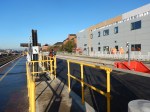
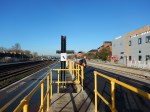
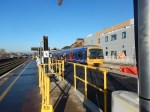
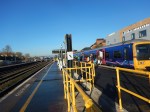
Note GWR’s 13:01 arrival from Banbury into the new bay Platform 2.
Was I watching the first scheduled train into the new platform?
There certainly wasn’t any dignitaries!
National Rail’s Arrival and Departure details on the Internet certainly showed that Banbury services were using the new Platform 2 later in the day.
Conclusions
From my explorations I have come to the following conclusions.
- There is a large gap in the electrification works at Twyford station.
- It looks to my untrained eye, that the Greenford, Windsor and Marlow branches are being wired, so the branches could be served by electric trains with on-board energy storage.
- The Orange Army is furiously at work creating new sidings at West Ealing for the Class 387 trains.
- It is possible for trains to use the new bay Platform 2 at Oxford station.
It will be interesting to take a Chiltern service to Oxford, when the service opens on the 11th of December.
It certainly was a good day to take photographs.
Along The Felixstowe Branch
In the December Edition of Modern Railways magazine there is an article entitled Loop Planned For Felixstowe Branch.
The Proposal
To allow an increase in the numbers of freight trains on the line from 33 to 47 every day, Network Rail propose to do the following.
- Create a 1.4 km loop at Trimley. Note that 775 metres is the maximum train length in the UK.
- Close six level crossings
- Create a bridge for a bridleway.
Network Rail hope that this will be sufficient for a few years, but in the future the aspiration is for double-tracking and electrification all the way between Felixstowe and Nuneaton.
I have flown my helicopter along the route and it is single track all the way between Westerfield and Trimley stations, with the exception of a passing loop East of the Spring Road Viaduct, which is centred on Derby Road station.
This Google Map shows the Branch Line East of Trimley station.
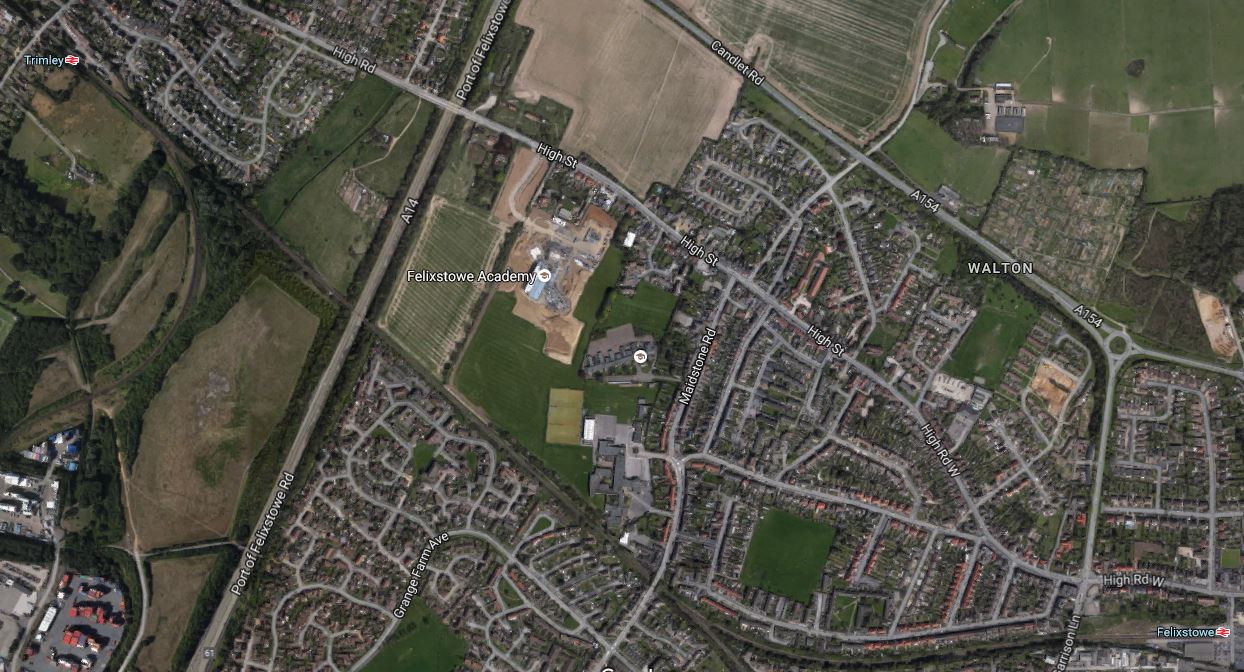
The Eastern End Of The Felixstowe Branch Line
Trimley station is in the North West corner of the map, whilst Felixstowe station is in the South East corner.
Just before the level crossing at Trimley, the line splits into two and the two tracks run together for a time, before the Southern track branches off to the North Terminal at the Port of Felixstowe.
The other track then continues East and splits with one branch going straight into Felixstowe station and the other going to the South Terminal at the Port.
All tracks are single track, except between Trimley station and the first junction.
The Intermediate Stations
I think it is probably true to say, that Westerfield, Derby Road and Trimley stations are one the worst run of three stations in the country.
In James Cook Station – The Reinvention Of The Halt, I talked about the new James Cook station, that serves Middlesborough Hospital. This station had 23,000 passengers in 2014/15, as against the 30,000 average for these three Suffolk stations in the same year.
I’m sure if they were of the same standard as James Cook station, they would see an increase in passengers.
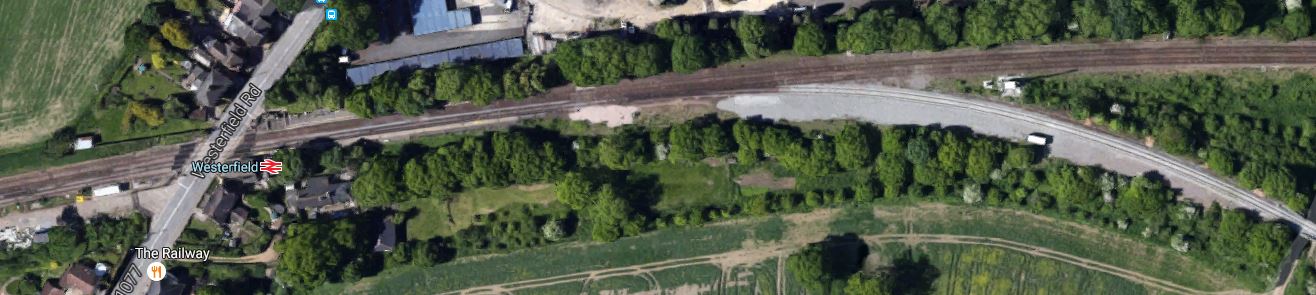
This Google Map shows Westerfield station.
Westerfield Station
Note how the single-track Felixstowe Branch leaves the double-track East Suffolk Line to the East of the station.
A large housing development called Henley Gate, which is part of the Ipswich Garden Suburb could be built to the West of the station. This might be an opportunity to improve the station and the level crossing. This web page on the Ipswich Borough Council web site, shows a map and a few details.
If the thousand houses promised for the site are built, I’m sure Westerfield station could be one that attracted a few more passengers, who cycled to the station.
According to Wikpedia, this Derby Road station used to be a lot busier. This is said.
People living on the eastern side of the town generally preferred to use Derby Road when travelling to Felixstowe and the station could be very busy on sunny weekends with day trippers to Felixstowe Beach and Felixstowe Pier stations. They could reach the station on the Ipswich Tramway which terminated outside the station entrance.
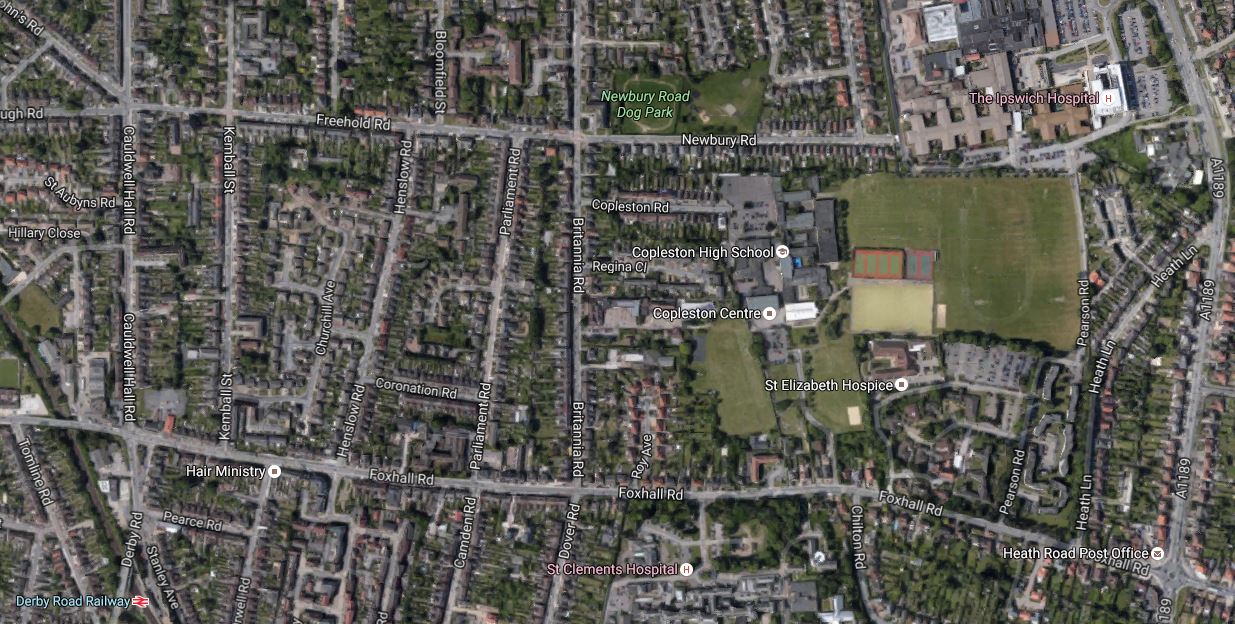
But this Google Map, of the area round the station show that it surrounded by housing.
Around Derby Road Station
The station is at the South West corner of the map, with The Ipswich Hospital is at the North East corner of this map. I ask these questions.
- Is there a shuttle bus between the station and the hospital?
- Is there secure bicycle parking at Derby Road station?
- Could it be that if a decent train with greater capacity and perhaps better provision for bicycles and buggies ran through the station, that there could be an increase in passengers?
From what I’ve seen of the station, it’s suffering from Abellio’s Managed-from-Norwich Syndrome, which a lot of stations in East London did, until placed under the control of Transport for London.
The next station after Derby Road used to be Orwell station, which served the villages of Orwell and Nacton.
At some point in the future, I wouldn’t be surprised to see a station between Derby Road and Trimley, either inside or outside of the A14.
Trimley station is virtually derelict, but there are plans to convert it for community use.
I believe, all the intermediate stations on this line could have a future. Factors involved could be.
- Nearby housing and/or commercial development.
- Cycle-and-Ride passengers.
- A decent train to Ipswich and Felixstowe, with plenty of space for bicycles and buggies.
- A reliable clock-face hourly service.
- Easy connection to Long distance trains at Ipswich station.
- A cafe or coffee kiosk
Passengers, who are going to work, need a service that is totally reliable, and this service has suffered in the past few years.
Dualling The Line
If my virtual helicopter ride, showed one thing, it was that there are wide margins around the current single track from Derby Road to Trimley, which hopefully would make installation of a second track reasonably straghtforward.
However, I did count six level crossings with barriers and what looked like five crossing points without. All will have to be upgraded for the second track or removed.
It is interesting to see, that Network Rail are proposing to close six crossings in their current plan, so is this to get rid of one of the major problems of the dualling early?
Perhaps, they have decided that removing six level crossings and dualling the line at the same time, would raise too many simultaneous problems for their legal department. But doing the level crossings first with a less ambitious dualling is less likely to be challenged.
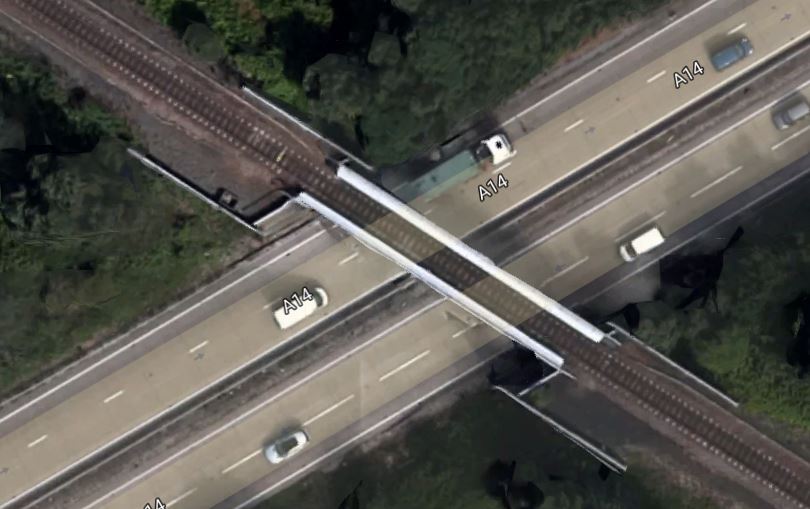
The other big problem could be widening the bridge over the A14 dual-carriageway.
This Google Map shows the bridge.
The Felixstowe Branch Line Crosses The A14
But it looks to me, that everything is there to just slip in a second span.
So that could be at least future-proofed!
Where Is The Proposed Dualling?
According to the article in Modern Railways, the loop at Trimley is 1.4 km. long.
My estimate is that the distance between the two junctions, where the two branches go off to the Port of Felixstowe, is about this distance.
So could it be, that the loop is not for freight trains, but to allow the passenger trains to access Felixstowe station?
- The Northern track would be bi-directional and connect Trimley and Felixstowe stations and would be for exclusive use of passenger trains.
- The Southern track would be bi-directional and connect Trimley station to both the lines to the Port of Felixstowe and would be for exclusive use of trains to and from the Port.
- At night, the track could be configured, so that two bi-directional tracks, that joined just to the West of Trimley station, went to each freight terminal The Northern track would serve the South Terminal and the Southern Track would serve the North Terminal.
The Port of Felixstowe has argued at times, that the Felixstowe Branch Line should be freight-only. Is this Network Rail’s proposal to create two separate freight and passenger lines using the same track?
From my observations at Ipswich that I wrote about in Curious Rail Construction At Ipswich Station, I am convinced that they have simplified track layout around Ipswich Freight Yard, so that freight and passenger trains, don’t conflict with each other at Ipswich.
So does this proposal remove conflicts at Felixstowe?
I think it does.
After the proposed loop is built, the line will be effectively in three sections.
- A core line between Westerfield and Trimley stations with the existing passing loop at Derby Road.
- At the Felixstowe end, there will effectively be separate lines into Felixstowe station, and the North and South Freight Terninals.
- At the Ipswich end, there will be separate lines into Platforms 0 and 1 at Ipswich station, Ipswich Freight Yard and to both directions on the Great Eastern Main Line.
- All of the connecting end lines would work with the simple rule of only allowing one train on the line at any one time.
At Felixstowe, freight trains might even be paired with one going into the North Terminal at the same time as one came out of the South Terminal. And vice-versa!
The train coming out, would wait at a signal before the junction for its branch and then when the other train had cleared the other junction going into the Port, it would be allowed to proceed through Trimley.
At night, trains could also be assembled as flights, so that several trains came in and out of the port in a stream. The reorganised Ipswich Yard must help in this.
As the new passenger trains will be somewhat faster than the current Class 153 trains and will be able to get away from stations quicker, I wonder if the timings will be such that two trains per hour might be possible.
These are current timings between Westerfield and Trimley in the core section.
- Passenger train – 14 minutes
- Freight train – 16 minutes
As trains don’t conflict on the double-track outer sections and have their own separate routes, it should be possible to have one 14 minute passenger and one 16 minute freight cycle in every half-hour, provided the trains pass at Derby Road.
With faster trains, fitting in two passenger trains and two freight trains in both directions in every hour might well be possible.
But you also have to content with other services on the East Suffolk Line and other constraints, so I suspect that by being extremely thorough and downright devious, that the published figure of 47 trains a day is very feasible. And feasible when running two tph between Ipswich and Felixstowe!
Two passenger trains would be needed for the service.
Higher Speed Between Westerfield And Trimley
Once all the improvements at the two ends of the line are complete, the major constraint on capacity on the line is the time a train takes between Westerfield and Trimley.
The line is configured for 75 mph, but I wonder what sort of speed could be reached could be attained safely on the line between Westerfield and Trimley, with the following.
- Removal of level crossings
- Improved signalling.
- Some minor track improvements.
It should be born in mind that there are no junctions from where the Felixstowe Branch leaves the East Suffolk Line at Westerfield and Trimley.
The speed limit would then probably be set by the maximum speed over the Spring Road Viaduct.
The distance between Westerfield and Trimley is almost exactly 10.5 miles.
This means that the freight train averages about 40 mph and the passenger train a miserly 45 mph.
So what sort of speeds can the various trains achieve.
- Class 153 – 75 mph
- Class 170 – 100 mph
- Class 66 – 65/75 mph
- Class 67 – 125 mph
- Class 68 – 100 mph
- Class 70 – 75 mph
- Class 88 – 100 mph
It could be that the slow speed of the Class 66 locomotives are one of the constraints on the line, as timings must assume that locomotives could be the 65 mph variant.
If it were possible to raise the line speed to 90 mph, it could reduce timings on the line between Westerfield and Trimley.
These figures certainly show, why Network Rail are so keen to remove the level crossings on the line.
I suspect that suitable trains and locomotives could reduce times as follows if the line had a 90 mph limit.
- Freight – 13 from 16 minutes.
- Passenger – 12 from 14 minutes.
It might only save a couple of minutes with my crude estimate, but it certainly shows there are savings to be made by upgrading the line and using modern trains and locomotives.
Class 66 Locomotives
I don’t like Class 66 Locomotives and have believed for some time, that they have little place on the electrified lines in built-up areas. I wrote The Noisy Class 66 Locomotive on the subject a couple of years ago.
My crude analysis in the previous section shows that their slow speed actually cuts capacity.
Freightliner are one of the big operators of |Class 66 locomotives to and from the Port of Felixstowe. Wikipedia has a section on Class 66 Locomotives operated by Freightliner.
This is said.
Freightliner followed EWS by initially ordering five new Class 66/5 locomotives, and have continued to order in small batches. As of summer 2010, the 66/5 fleet had reached 98 examples; 66521 was withdrawn after the 2001 crash at Great Heck and later scrapped.
In 2000 a new Class 66/6 sub-class was built, with a lower gear ratio, enabling heavier trains to be hauled, albeit at slower speed. There are presently 25 examples of this class, numbered 66601-625. Some of these locomotives have since been exported for use with Freightliner Poland.
As freight trains are getting longer, it would appear that the slow 66/6 locomotives should be removed from this route as their 65 mph maximum speed is a constraint on maximising traffic between Westerfield and Trimley.
Electrification
Electrification is often talked about with respect to the Felixstowe Branch.
Reasons in favour include.
- Freight trains going to and from London could be electric hauled.
- Engine changes at Ipswich Yard would be minimised.
- Electric haulage is more environmentally friendly.
But there are powerful reasons not in favour.
- Cranes in a Port and 25kV overhead wires are bad bedfellows.
- If the Class 88 Locomotive and other electro-diesel types are a success, they are probably more affordable than electrification.
- Passenger services in the near future will be run by trains with an on-board power source; diesel, bi-mode or battery.
- The main route to the Midlands via Peterborough and Nuneaton is not electrified.
But above all we seem so bad at electrification, the risk in wiring the line is too great.
I don’t think it is likely that the Felixstowe Branch will be electrified until the whole route to the Midlands is wired.
 The Anonymous Widower