Is Community Rail A Good Thing?
This article from the BBC is entitled TransWilts rail service made permanent by government.
It would certainly appear that the revived fifty kilometre service across Wiltshire has been a success.
The line may not be as spectacular as Settle-Carlisle, but like that famous line, Transwilts seems to show that Community Rail lines work.
Bradford Low Moor Station
Bradford Low Moor station was scheduled to open in Sprint 2016.




At the moment it is just a building site sitting by the railway.
The opening date is now set at May 2017.
The station is already on this Google Map.

Bradford Low Moor Station
I hope people don’t travel there expecting to find a train, because they see the symbol on the map.
Southern Crossrail
I noticed that Southern Crossrail has appeared in the list of proposed UK rail projects on Wikipedia.
There is a Southern Crossrail web site.
An Outline From History
Basically through tracks at Waterloo station would go straight on and take over the lines from Charing Cross station, through Waterloo East station.
This is said in the Wikipedia entry for Waterloo East station.
Formerly a rail connection ran across the concourse of the main station. This saw little service, although H.G. Wells’s novel The War of the Worlds describes its use to convey troop trains to the Martian landing site. The bridge which carried the line over Waterloo Road subsequently accommodated the pedestrian walkway between the two stations until replaced by the current high level covered walkway. The old bridge remains and is now used for storage.
So it’s not science fiction courtesy of Mr. Wells.
Shutting Stations And Joining Up Services
Charing Cross station could be shut or reduced in size, Waterloo East could be moved over Southwark tube station and the services into Charing Cross would run back-to-back with some into Waterloo.
This Google Map shows the stations and the lines.
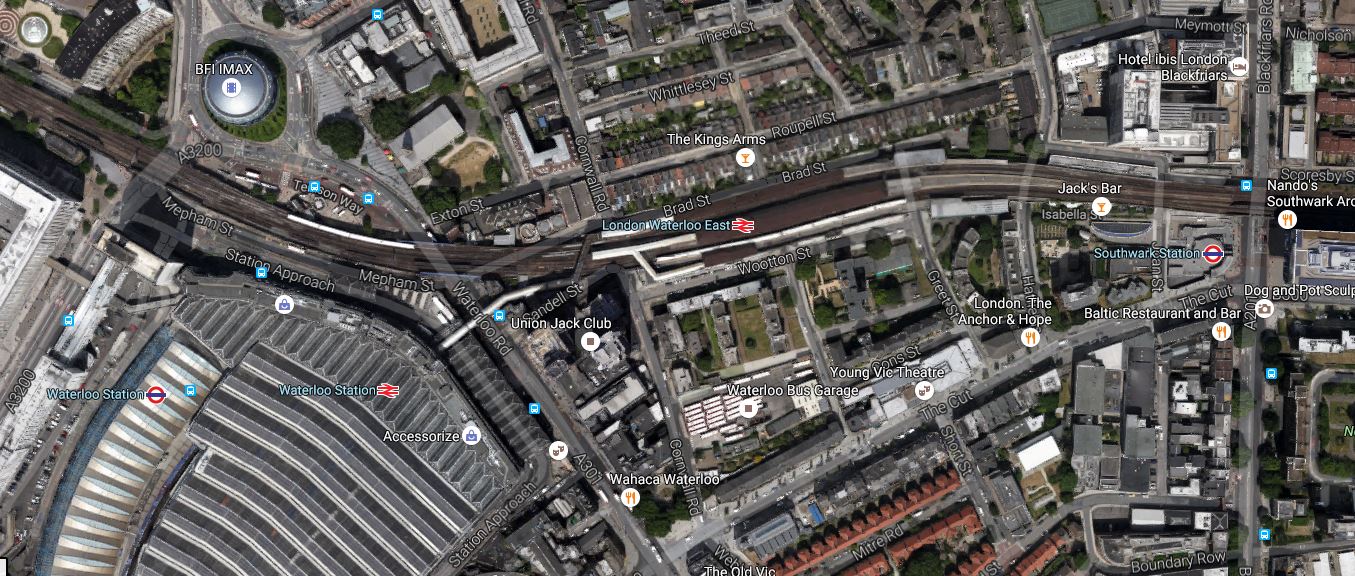
Southern Crossrail
Destinations Served
Destinations in the West could include.
With the following destinations in the East.
At least it does something useful with the Hayes Line.
Building Southern Crossrail
Southern Crossrail say this about the engineering required.
The minimum engineering requirement would be for the centre part of the concourse at Waterloo to rise up over four through tracks. There would need to be lifts and escalators.
A new bridge, alongside the old one, would be required to carry three new tracks over Waterloo Road.
The old bridge referred to is the one that is referred to in Wikipedia, as being used for storage.
The engineering involved is probably no more difficult than that used to update Thameslink at London Bridge, with the new viaducts over Borough Market.
But I can remember , that when that project was mooted, there was a lot of local opposition.
Given the farce of at times, when London Bridge station was being rebuilt, I think passenger groups will be against the changes.
Southern Crossrail give these additional changes on their web site.
- Signalling changes to increase the throughput
- Flyovers between Battersea and Waterloo thus allowing the local, suburban and express lines to be segregated on the approach to Waterloo, would increase throughput further
- Waterloo East Station would close releasing some land and a new station above the new Southwark station on the Jubilee line could be opened for interchange with Thameslink
- Closing the line up to Charing Cross would allow for greater throughput. Commuters travelling to the west end can change at London Bridge using the Jubilee line. This will have the added advantage of opening up the front of Waterloo through to the South Bank.
My views on these changes and other points follow.
Signalling And Flyovers
The signalling and flyovers probably need to be done anyway, whether Southern Crossrail is built or not.
Certainly, both Thameslink and Crossrail provoked a bit of a track sort-out on the approaches to London.
A sort-out of the lines into Waterloo would probably need to be done for Crossrail 2 anyway.
Rebuilding Waterloo East Station
I rarely use Waterloo East station, but it has a terrible connection to Southwark tube station and a tortuous walk to Waterloo station, unless you’re going to the balcony for lunch or to meet someone.
The map from carto.metro.free.fr shows the Undserground lines beneathe Waterloo East station.
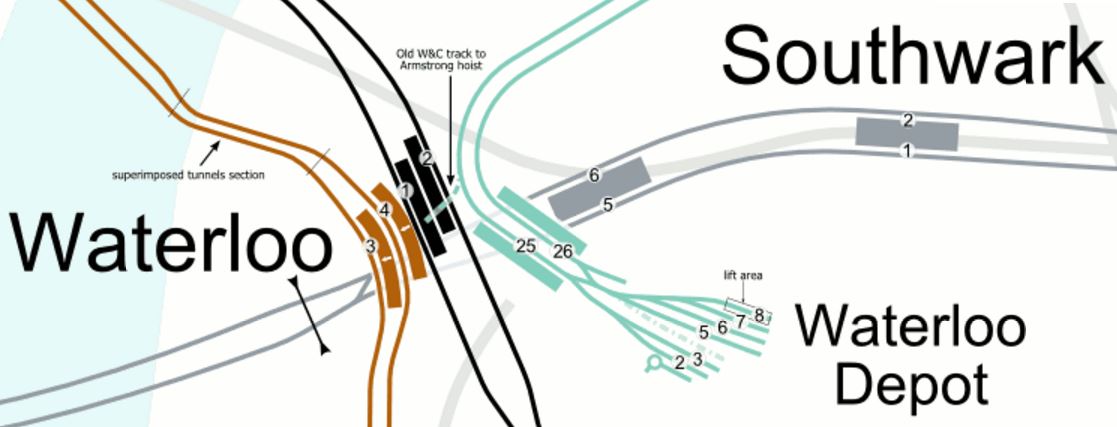
Lines Underneath Waterloo East Station
A new Waterloo East station could be built that had better connections to all of the Underground Lines in the area.
- Bakerloo Line – Very useful for the West End and Crossrail.
- Jubilee Line – Double-ended with connections to both Waterloo and Southwark stations.
- Northern Line (Charing Cross Branch)
- Waterloo and City Line
If rebuilding Waterloo East station would allow building on released land and above the station, together, then surely it is a project a quality developer would relish.
Decent pedestrian links could also be provided into Waterloo, as they should be anyway.
I think that there could be a strong case for the redevelopment of Waterloo East station, whether Southern Crossrail is built or not.
Improving The Waterloo And City Line
One of the side effects of rebuilding Waterloo East station would be improved access to the Waterloo and City Line.
A new entrance is being built at the Northern end and if the Southern end were sorted, London would have got a useful short new Unerground line, with a lot of the money provided by property development.
Serving Charing Cross Station
I believe that a rebuilt Waterloo East station would give better connections to the Underground, than does Charing Cross.
What Waterloo East lacks is connection to the District and Circle Lines and good walking routes to Whitehall. And you mustn’t annoy the Sir Humphries in their commute from Sevenoaks or Petts Wood!
Providing you didn’t close Charing Cross completely, there would be a same platform interchange at London Bridge.
But I suspect that an innovative solution could be found to get passengers from Waterloo East station to the North Bank of the Thames.
Properly done, it would enable passengers using the trains at Waterloo to get easily across the river .
Why are we wasting millions on the Garden Bridge, when a proper cross river connection further West would give benefit to millions of travellers?
At present these are the services that serve Charing Cross in the Off Peak.
- 2 trains per hour (tph) Dartford via Bexleyheath
- 2 tph Gravesend via Sidcup
- 2 tph Gillingham via Lewisham and Woolwich Arsenal
- 2 tph Hayes avoiding Lewisham
- 2 tph Sevenoaks via Orpington
- 2 tph Hastings via Tunbridge Wells
- 1 tph Dover via Ashford International
- 1 tph Ramsgate via Ashford International and Canterbury West
Obviously, there is a lot more in the Peak.
As it looks like the limit of trains through London Bridge to Waterloo East and Charing |Cross is somewhere around or above 20 tph, it could be that if Southern Crossrail is built, then there is a logical split.
- Suburban services go through to Waterloo and into the South West suburban network.
- Long distance services go to Charing Cross.
Platform arrangements at London Bridge and Waterloo East could be designed, so that if you’re on a train going to the wrong destination, you step off and step on the next one.
The Jubilee Line By-Pass
Now that we can see the new London Bridge station emerging and Charing Cross services are calling at the station again, I think we’ll see some interesting ducking-and-diving alomg the South Bank of the Thames.
Suppose you arrive at London Bridge on perhaps a train from Uckfield and need to go to Waterloo to get to Southampton. Until about a month ago, you would have to struggle across London on the Underground. Now you could take a frequent Charing Cross service to Waterloo East and just walk into Waterloo.
We mustn’t underestimate the effects that a fully rebuilt Thameslink and London Bridge station will have on passengers getting across South London.
If Southern Crossrail was built, it would be an alternative for the Jubilee Line between London Bridge and Waterloo.
Southern Crossrail might even lead to a rethink about how the Jubilee Line operates.
Positive Points
- Terminal platforms are released in Waterloo station, as services are joined up.
- No infrastructure changes would be required at London Bridge station.
- No tunnelling
- Southern Crossrail can be built before Crossrail 2.
- Southern Crossrail can be built to be compatible with Crossrail 2.
- The Tramlink connects Wimbledon in the West to Elmers End in the East.
But it will exceedingly difficult to convince the powers-that-be that it is a viable project.
Conclusion
I think it could be one of those projects that is so bizarre and wacky it might just be feasible.
But if it is built or not, London could benefit tremendously, by a quality rebuild of Waterloo East station.
In a phased building of Southern Crossrail, the order of construction could be.
- Rebuild Waterloo East station.
- Upgrade the lines into Waterloo with flyovers and signalling.
- Rebuild the concourse at Waterloo, so that the connecting tracks could go through to Waterloo East.
- Put in the bridges between Waterloo and Waterloo East.
- Connect up the services one-by-one.
It is the sort of project, that a good project management team, could push through with little disruption to services and passengers.
Will Chiltern Connect Oxford To London On December The 12th 2016?
This article on the Eailway Gazette web site is entitled Tracklaying completed for Chiltern to Oxford.
|So that’s another hurdle jumped and there are probably others like a platform at Oxford station.
But everybody seems hopeful!
I shall be there on the twelfth.
If it all works out fine, I think that Chiltern opening to Oxford on time and on budget, it could set a very worthwhile precedent.
So where will be the next smaller project to be set in motion?
- Camp Hill Line in Birmingham
- Coventry-Leamington Line
- Hall Farm Curve in Walthamstow
Who knows? But if the Chiltern extension gets loaded with passengers, there could be a lot of bandwagon jumping.
I
GTR’s 2018 Timetable Consultation
These are the various documents detailed on this page of their web site.
- Timetable Consultation Document
- Great Northern Metro
- Great Northern Mainline
- Central London to Bedford
- Southern Metro, Wimbledon Loop and West London Line
- Brighton Mainline, Arun Valley, West and East Coastway
- Redhill and Oxted
- Kent Thameslink
By the way, don’t try and fill in the survey, it’s a total waste of time.
My Links To Thameslink
Thameslink is a railway, I don’t use much these days, as getting to stations is not that easy, since London Bridge was taken off the route, by the rebuilding.
St. Pancras is an absolute pain of a station to use, as the station was designed by a sadist with long tunnels from the deep-level Underground lines.
Farringdon is a better interchange going South, as it is step-free from the Westbound Metropolitan Line, which I take from Whitechapel after using the East London Line from Dalston Junction. But going North coming home from Farringdon is not easy.
City Thameslink is a bit of a walk from the 56 bus, which stops by my house.
Blackfriars is not the easiest station to get to from my area.
These are my thoughts about using Thameslink after about 2018, when the Great Northern Metro is open with its new Class 717 trains.
My Link To Thameslink Going North
Living where I do approximately midway between Highbury and Islington, Dalston Junction and Essex Road stations, getting to some major rail termini can be difficult and if I was taking a case with me, I would have to use a bus or taxi.
I tend to avoid Highbury and Islington station going out, as the station and its environs is in desperate need of a rebuild and to get say to the Victoria Line for Kings Cross is a long and difficult walk from the bus stop and through the maze of roads and tunnels to the platform.
But with Essex Road station having a frequent bus service from the stop nearest my house and a 10 tph connection to Finsbury Park, that will be my route to get to Thameslink going North to Cambridge or Peterborough.
I don’t think I’ll be alone, in using the Great Northern Metro to get access to Thameslink to go North.
My Link To Thameslink Going South
I have a choice of routes to go South on Thameslink.
- I could take the same route as for going North, but the interchange at Finsbury Park is a dreaded down and upper.
- I can take a 141 or 21 bus to London Bridge station. I regularly use this route coming home, but going South is dreadfully slow through Bank.
- I can take a 38/56 bus to the Angel and get the Northern Line to London Bridge.
- I can take a 56 bus to St. Bartholomews Hospital and walk downhill to Farringdon station.
- I can take a train from Dalston Junction to Canada Water and then use the Jubilee Line.
- Don’t suggest the Victoria Line to St. Pancras as the walk in the depressing tunnel at Kings Cross is to be avoided at all costs.
- Don’t suggest a 30 bus to St. Pancras, as it requires a long walk through the busy Shopping Centre at St. Pancras because Thameslink doesn’t have a much needed Southern entrance.
- I could always go via Essex Road and Finsbury Park.
I actually would like to take a train from Dalston Junction to say New Cross Gate for East Croydon and get Thameslink or the myriad Southbound services from there.
But the new proposed timetable for 2018, would seem to make that an more difficult dream, unless I wanted to wait for a long time on say Norwood Junction station.
Conclusion
Going North is easy, but as they don’t serve the \greater East London, GTR treat us with contempt and make it difficult for us to use Thameslink easily, if we’re going South.
What Do You Do With A Problem Like Sheppey?
I enjoyed my trip yesterday to Sheerness, that I wrote about in A Trip To Sheppey.
It was a change to go to the island for a walk by the sea, as normally in the past, I’d gone for a funeral of some of my late wife’s relatives.
As someone, who partly grew up in Felixstowe, a lot of what I saw was all too familiar.
Sheerness station has some good points.
- It is a short walk from the sea front.
- It has two platforms, that can take eight-car trains.
- The service of two trains per hour (tph) to Sittingbourne station is adequate in terms of frequency, but possibly not capacity.
- The junction with the Chatham Main Line allows trains to go to Sittingbourne or the Medway Towns and London.
- There are a few direct trains to and from London in the Peak.
- The staff I met, were welcoming and competent.
But the station is pitifully short of facilities and if ever there was a station that needed an imaginative makeover it is Sheerness station.
Felixstowe station was a similar basket case and they converted it into a mini-shopping centre. At least Sheerness has a decent train service, which is twice the frequency and four times the capacity of the rail service between Ipswich and Felixstowe.
Sheerness itself has the air of a town that has seen better days, which I’ve seen in places like Blackpool, Felixstowe, Hastings, Redcar and Yasrmouth in the past and also in the last few years.
As a coeliac, I didn’t find anywhere that could sell me a gluten-free meal, so lunch was just a banana and the worst cup of tea, I’ve ever been served in the UK.
But is help at hand?
This article in Rail Magazine is entitled Maynard cites importance of rail links to coastal towns talks about how the new Rail Minister thinks good rail links to coastal towns are important.
When I was staying with my parents in Felixstowe in the early 1960s, because there were only a few trains a day, I felt trapped and usually stayed at our other house in London.
So I know how it feels to have poor rail links to coastal towns, which often lack the facilities people need.
Good rail links also attract visitors and visitors these days, often come with those two space-eaters on trains; buggies and bicycles.
But it’s not just coastal towns that have this problem, it’s also branch lines that go into scenic countryside too.
Improving The Train Service To The Coast And The Hills
Coastal and hill towns like Sheerness and others like Blackpool, Clitheroe, Colne, Cromer, Felixstowe, Harwich, Walton-on-the-Naze and Yarmouth, often have rail services with a variety of needs.
- Leisure traffic with lots of buggies and bicycles.
- Commuter traffic in the peaks.
- Daytime shoppers.
- Evening travellers going to and from the cinema, theatre and nightlife of the bigger towns.
As many coastal towns are in flat country, many travellers might be easily tempted to ride to the station.
I’ve not seen any figures, but I suspect that passenger numbers are strongly driven by the weather and events.
This leads me to the belief that coastal towns need a turn-up-and-go service to the local major town or city, using a train designed for the job.
The Leisure/Commuter Train
We need a properly-designed train, that caters for the needs of leisure and commuter traffic.
- Probably four-cars with the usual facilities.
- Lots of space for bicycles and buggies.
- Preferably with the capacity to travel perhaps fifty kilometres without electrification.
Something like most later Electrostars and the new Aventras could be suitably configured.
The current configuration of say a Class 375/377/379/397 Electrostar does not satisfy the need of the difficult mixed market, as it is geared to taking lots of commuters to and from work.
In the case of the Sheerness Line, which is electrified, a couple of Class 377 trains would be ideal for modification for the market. I suspect, that they may even be in Southeastern’s plans to run these trains on the line, when they receive a few more from GTR.
Designed properly, it would also be good for commuting to the nearer major towns.
Improving The Service To Sheerness
Although current figures probably show that two-car trains running with a frequency of 2 tph is sufficient and that if they were four-car trains, they certainly would be, I would think that if there were four tph serving Sheerness, that this would be a traffic magnet par excellence.
One of the problems is that I suspect many of the travellers from the Sheerness Line want to go to to Sittingbourne for work, leisure or family reasons.
As trains going direct to London or the Medway Towns from Sheerness can’t easily call at Sittingbourne, a train going from Sheerness to Rochester would have to reverse at Sittingbourne. This would not be ideal.
So perhaps the solution would be to keep the shuttle at 2 tph and add a second service from Sheerness that goes west on the Chatham Main Line.
The problem of going West is where do you turn the train.
The line from Sittingbourne to Gravesend carries about 8 tph and as none of the stations have an Eastward facing bay platform,, no-one is going to want a shuttle from Sheerness interrupting the long distance traffic.
In my view, there are two possibilities.
- Dartford serves as a terminus for trains from London and could probably accommodate some from the other direction.
- Ebbsfleet International could probably turn the required number of trains, in its current platforms 5 and 6.
Both have their advantages.
I would plump for Ebbsfleet International, as this would give 4 tph between the Medway Towns and Continental services.
I do wonder if direct services to London Victoria would continue if Sheerness had a connection to the Medway Towns.
Rochester will have the following connections to London.
- 3 tph to London Victoria.
- 2 tph to London Charing Cross and London Bridge, which will be 3 tph from 2018.
- 2 tph to London St. Pancras.
I think that someone with all the data and knowledge could create a very passenger-friendly service to Sheerness from all over London.
Related Posts
A Design Crime – Ebbsfleet International Station
Between Abbey Wood And Belvedere Stations
Connecting North Kent And The Medway Towns To Ebbsfleet International Station
Extending Crossrail To Gravesend
The Sheppey Crossing
The Sheppey Crossing is the bridge onto the island for road traffic.

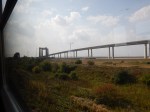
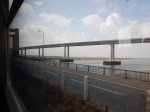
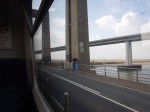

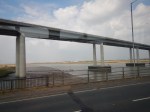


Note the towers of the older Kingsferry Bridge, which carries the railway across. It is a rare vertical-lift bridge that carries both road and railway.
One of the others of this type in the UK is the Newport Bridge on Teesside.
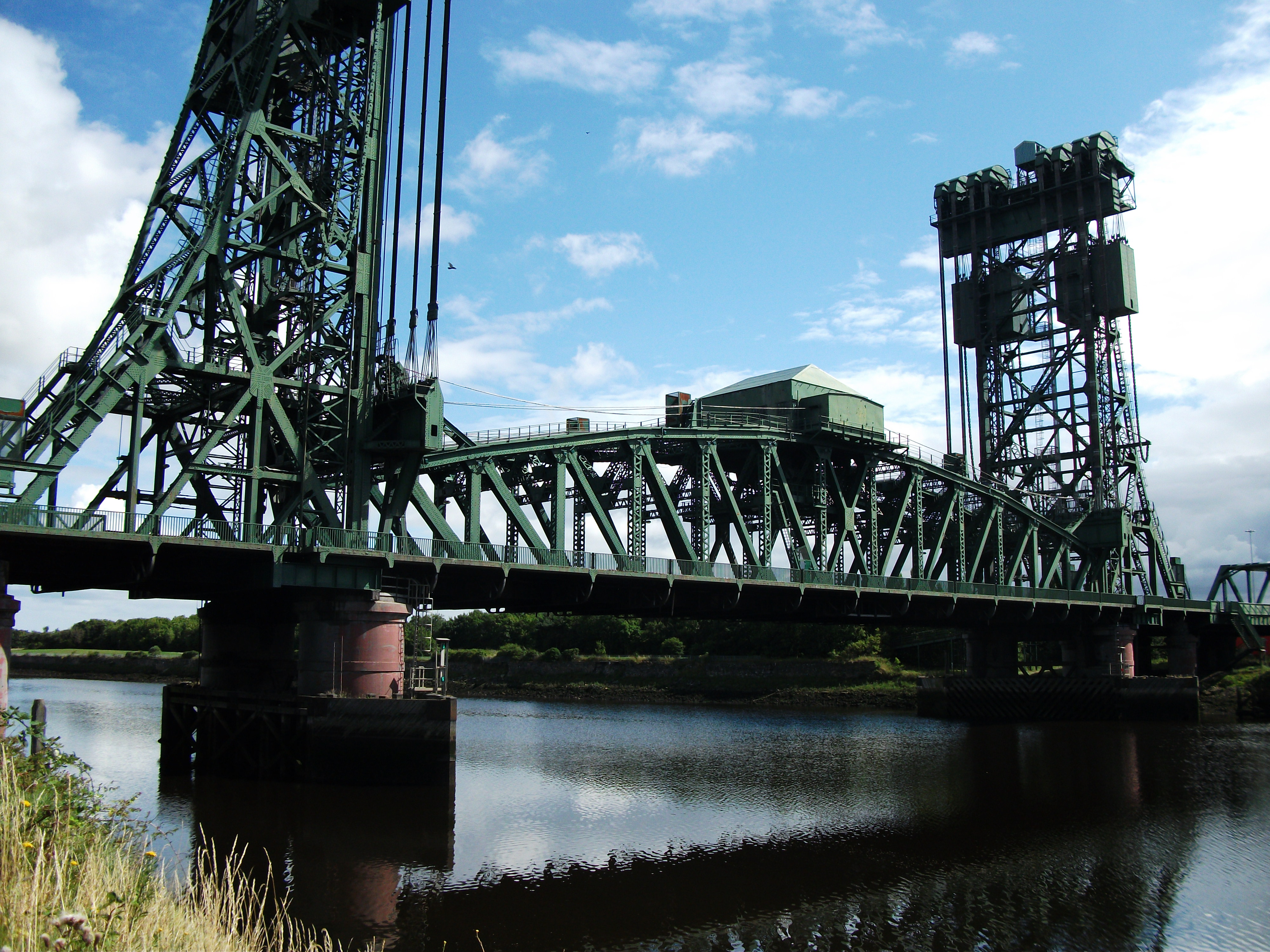
The Newport Lifting Bridge
I wrote about it in The Tees Bridges and Barrage in 2010.
Connecting North Kent And The Medway Towns To Ebbsfleet International Station
The only connection between Crossrail or Thameslink and Continental services is at St. Pancras, where Thameslink has a better connection to these services, than it does to any other of the several lines at that station.
- Ebbsfleet International station almost looks to me, that it was designed so that everybody catching a train there would have to drive to the station.
- The only stations connected to Ebbsfleet International by domestic services are those stations served by the Highspeed services into St. Pancras.
- So you might as well go into St. Pancras first! But then you’re faced with a very bad connection to Continental services.
- I have to assume, that the architect of St. Psncras station was not a serious user of trains with a heavy bag.
- At present all stations between Gravesend and Faversham have a two trains per hour (tph) service into Ebbsfleet International.
- I feel that in the future Ebbsfleet International may become more important for Continental services, as there must be a time when St. Pancras runs out of platform space.
This may be adequate if you live in the Medway Towns within walking distance of a station, but as a design for a passenger-friendly railway, it’s total crap.
As an example, I met someone a few weeks ago, whose daughter lives in Swanley and as she doesn’t drive, she has to take a mini-cab to Ebbsfleet.
I suspect that some of Network Rail’s finest have a solution using existing infrastructure that improves the link.
This is a Google Map that shows both Northfleet station and platforms 5 an 6 at Ebbsfleet International station.

Lines Between Ebbsfleet International And Northfleet Stations
Consider these points about the map.
- Northfleet station is at the top, with the North Kent Line running through it.
- Gravesend station is the next station in a South-East direction on the North Kent Line.
- There are a couple of freight lines or sidings running parallel and to the West of the North Kent Line.
- Freight lines curve away to the East and the river.
- Crossrail tunnel spoil was taken away from Northfleet.
- Platforms 5 and 6 at Ebbsfleet International station, are on the diagonal rail line going across to the North of the lake and the main station..
Consider these general points.
- Gravesend to Ebbsfleet International is scheduled to take four minutes.
- The East Kent Resignalling Project has recently been completed.
- Crossrail’s spoil trains probably don’t go to Northfleet any more.
Consider these about Gravesend station.
- There is a twelve-car bay platform facing towards London and Ebbsfleet International.
- The London-bound platform 1 at Gravesend has bi-directional signalling. Why?
- The station has a new step-free bridge.
- Crossrail may be extended to the station with a sophisticated, spacious reversing facility/depot at Hoo Junction, perhaps five minutes to the East.
And consider these about platforms 5 and 6 at Ebbsfleet Internal station, which are the platforms that serve Gravesend.
- There are very comprehensive crossovers at the Eastern end of the platforms, which can be seen on the map.
- The platforms appear to have both overhead and third-rail electrification.
- The platforms would probably be long enough to reverse a six-car train.
So are all the pieces of a jigsaw in place for an innovative solution?
There could possibly be shuttle train between Ebbsfleet International and Gravsend or the Medway Towns.
- The shuttle train would run in the thirty minute gaps between the current services between Gravesend and Ebbsfleet international.
- A shuttle train would probably take about 12-15 to do the round trip.
- Instead of Gravesend, it could run from Hoo Junction if Crossrail is extended or any station to the East, if it’s not.
- Any four-car Electrostar with the correct signalling could probably run the shuttle.
- No new infrastructure would be required.
The 2 tph Charing Cross to Gravesend service could also be extended to Ebbsfleet International.
- It would need a reverse at Gravesend.
- Platform 0 could obviously be used for the reverse, but as platform 1 has bi-directional signalling, I suspect this platform could be used as well.
- As there would be two reverses in about a dozen minutes, this might explain why platform 1 was made bi-directional.
- No new infrastructure would be required.
Both solutions would give at least four tph service between Gravesend and Ebbsfleet International.
If the shuttle were to run between Rainham and Ebbsfleet International it would add two extra trains to the service through the Medway Towns, raising that level to more than six tph.
Conclusion
I don’t know if either solution is possible, but I suspect there’s a man or woman who does know and they have their mind on a better solution!
I’ll admit, that I do like the shuttle or a 4 tph link between Gravesend and Ebbsfleet International.
When all the services like Thameslink and Crossrail are serving North Kent from all over London and the South East, it would mean that if there was a four tph service between Gravesend and Ebbsfleet International, getting to the isolated station would be a lot easier.
But the great thing about going up Ebbsfleet’s backside from Gravesend, is that no new infrastructure would be required.
Related Posts
A Design Crime – Ebbsfleet International Station
Between Abbey Wood And Belvedere Stations
Extending Crossrail To Gravesend
What Do You Do With A Problem Like Sheppey?
Through The Medway Towns
If you look at the services through the Medway Towns, you will have the following services in 2018.
- 2 trains per hour (tph) Highspeed services between St. Pancras and Faversham.
- 2 tph Thameslink services between Luton and Rainham.
- 3 tph services between Victoria and the Kent Coast.
- 2 tph services between Charing Cross and Gillingham
Note.
- It is a service with frequencies of between five and seven tph in both directions.
- The smallest trains serving the route are six-car Class 395 trains, with most at least eight-cars.
- The service reaches from Abbey Wood, Dartford, Greenhithe and Swanley in the West. to Sittingbourne, Faversham and the Kent Coast in the East.
- The fare supplement for Highspeed services is only paid West of Gravesend, so from that station to the East, normal fares are paid and the trains just contribute seats to the service.
Conclusion
It is a turn-up-and-go metro par excellence run with quality trains.
The possibilities for improvement are good too!
Related Posts
A Design Crime – Ebbsfleet International Station
Between Abbey Wood And Belvedere Stations
Connecting North Kent And The Medway Towns To Ebbsfleet International Station
Extending Crossrail To Gravesend
What Do You Do With A Problem Like Sheppey?
 The Anonymous Widower