What Would Tram-Trains With A Battery Capability Do For The Sheffield Supertram?
I asked this question in a slightly different form in Is The Sheffield Rotherham Tram-Train Showing Signs Of London Overground Syndrome?, where I said this.
Sheffield could do a lot worse, than replace the Siemens-Duewag trams with Class 399 tram-trains. Especially, as the South Wales Metro, will be buying thirty-six similar vehicles with batteries.
What would tram-trains with a battery capability do for Sheffield, Rotherham and the neighbouring towns?
We don’t know much about Stadler’s proposed tram-trains for the South Wales Metro.
- They look to be very similar externally to the Class 399 tram-trains.
- They will be able to work using 25 KVAC electrification on the South Wales Main Line.
- They will be able to work the two-mile long Butetown Branch Line on battery power.
- Whether they will have a 750 VDC capability has not been said.
A tram-train with batteries would certainly offer other possibilities.
On my trip to Rotherham, I met a guy of about my age, who was a resident of Sheffield. He was proud of the city’s trams and was trying out the tram-train for the first time.
He also suggested two possible extensions.
- Royal Hallamshire Hospital
- A tram-train to Doncaster.
There have also been plans at times to run tram-trains to Dore & Totley and Penistone stations.
So how would tram-trains with batteries help for these routes?
Royal Hallamshire Hospital
On this page of the Sheffield Teaching Hospitals web site, this is said about getting to the hospital by tram.
Supertram does not serve the Northern General Hospital. It can be used to reach the Royal Hallamshire, Jessop Wing, Charles Clifford and Weston Park Hospitals, although please be aware that there is still a 10-15 minute uphill walk from the nearest stop (University). We would recommend that anyone who experiences difficulty walking long distances choose some alternative means of travelling to hospital.
How many doctors, nurses and other hospital staff, would be put off by that paragraph and go and work elsewhere, where the public transport is better,
This Google Map shows the area.
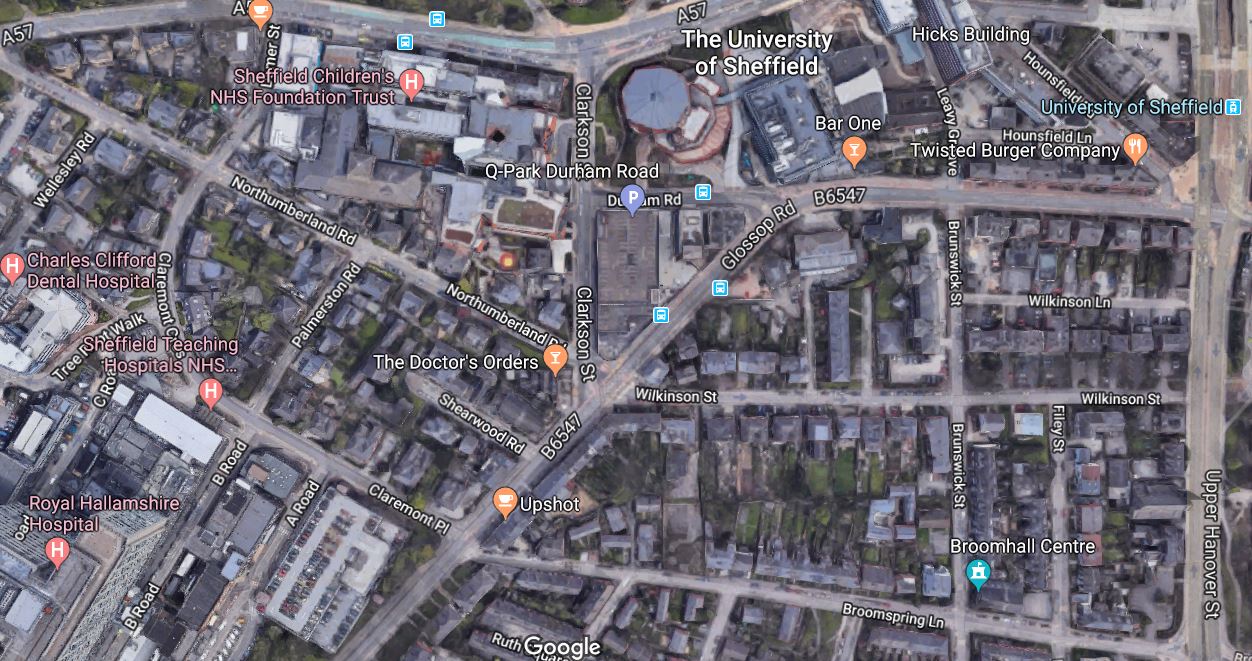
Note.
- The University tram stop is in the North-East corner of the map and is marked by a blue dot, marked with University of Sheffield.
- The Royal Hallamshire Hospital is in the South-West corner of the map.
This Google Map shows the University of Sheffield tram stop and how the tram route turns East to go to and from the city centre.
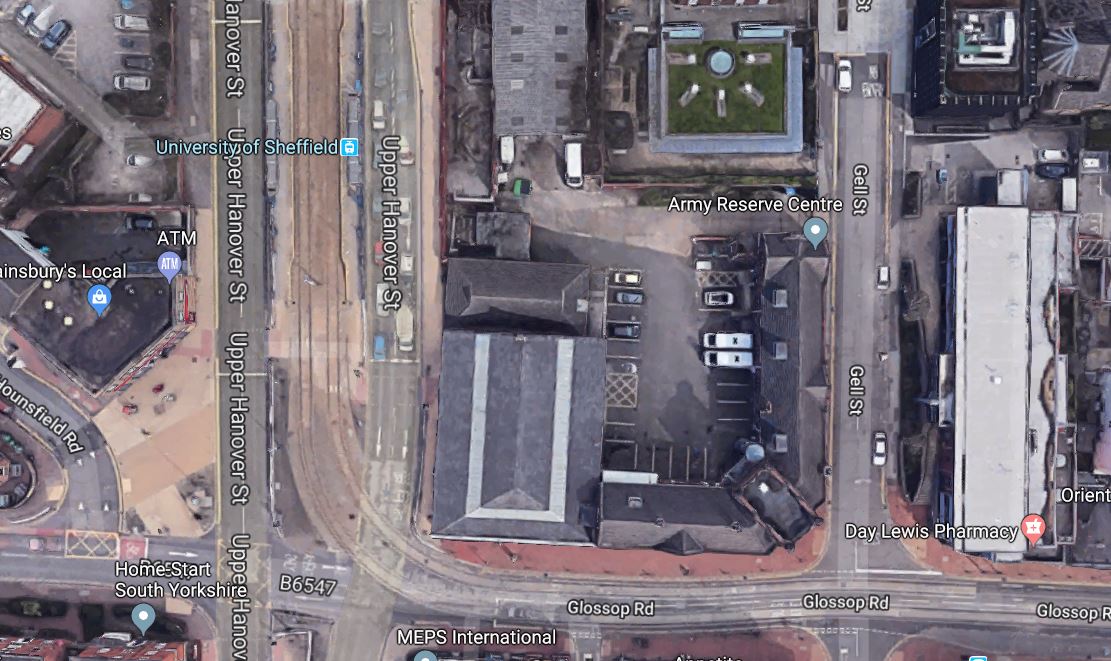
If the terrain allows it, a short extension might be possible to be built to the West along Glossop Road.
- As in Birmingham City Centre, the tram-trains could run on batteries, without any overhead wires.
- Charging could be provided at the terminal station which could be a few minutes walk to the hospital.
- The hospital and the university could be a good terminus for tram-trains from Rotherham and the East.
This is a typical extension, that is made easier and more affordable by the use of trams with a battery capability.
Connecting The Supertram To Heavy Rail
The Sheffield Supertram was designed before tram-trains existed, but even so there would seem to be several places, where the two systems could be connected.
The design of the Class 399 train-trams also makes the connections easier to design and build.
- The tram-trains can take tight turns.
- There are various innovative solutions, that allow the pantograph to ride from one electrification system to the other.
- If the tram-trains have batteries, this helps the electrification system changeover.
As more tram-train systems are installed, the library of solutions will get larger. As Electrification specialist ; Furrer and Frey have their UK subsidiary based in Nottingham, Sheffield could play a big part in the evolution of tram-train systems.
Tram-Train To Doncaster
There is a two trains per hour (tph) Northern service that goes between Sheffield and Doncaster, stopping at Meadowhall, Rotherham Central, Swinton, Mexborough and Conisbrough.
- One train continues to Hull and the other to Adwick.
- The service takes forty minutes from Doncaster to Sheffield.
- The service goes past the Rotherham Parkgate tram-train stop.
- The service takes about twenty minutes to go from Rotherham Parkgate to Doncaster, which is a distance of around 11.5 miles.
There is surely scope to extend the tram-train service to Doncaster to improve links between Sheffield, Rotherham and Doncaster.
This Google Map shows the Rotherham Parkgate tram-train stop.
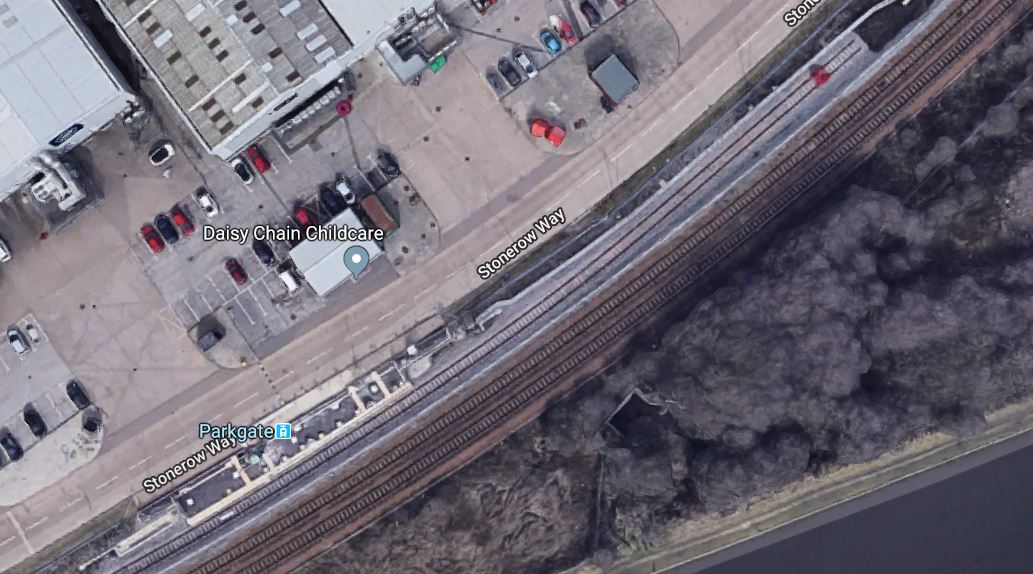
Note how the tram-train stop is effectively a siding alongside the double-track Dearne Valley Line, that links Rotherham Central with Leeds and York. It also has a link to Doncaster via the short Swinton-Doncaster Line.
Space would appear to have been left to convert the line through the tram-train stop to a loop. With an additional cross-over at the Eastern end of the stop, it would be possible to extend the tram-train service beyond its current terminal.
I have a map, which shows that the routes to Doncaster and along the Dearne Valley Line to where it crosses the Leeds-Doncaster Line could be electrified in the early 2020s.
If this electrification is carried out, then the tram-train service could easily be extended to Doncaster.
On the other hand, as Rochester Parkgate to Doncaster is around 11.5 miles and the route will have 25 KVAC overhead electrification at both ends, would it be possible for a tram-train with batteries to bridge the gap in the electrification?
Comparing a three-section Class 399 tram-train with a two-car battery/electric Class 230 train shows that the two vehicles have similar lengths, weight and passenger capacities.
As Vivarail have managed to fit 400 kWh of batteries under a Class 230 train, I wouldn’t be surprised to see at least 200 kWh of batteries squeezed under a Class 399 tram-train.
So would 200 kWh of battery power be sufficient to take a Class 399 tram-train between Rotherham Parkgate and Doncaster?
It should be noted that the total power of a Class 399 tram-train is 870 kW, so it wouldn’t be possible if the tram-train was on full power all the time.
But.
- The route is along the River Don and appears to be not very challenging.
- Regenerative braking can be used at the three stops and any other stops due to red signals.
- The initial acceleration at both ends could be accomplished under a short length of electrification.
- The tram-trains will probably have been designed to use the lowest level of energy possible.
- The tram-train could run in a low energy mode, when under battery power.
Stadler also know that handling a route like this on battery power would be an important sales feature all round the world.
Tram-Train To Dore & Totley
Running a tram-train service to Dore & Totley station in the South West of Sheffield seems to keep being mentioned.
When it was planned that HS2 was going to Meadowhall, this document was published. This was said about connecting Dore & Totley station to HS2.
Improved rail access to Meadowhall from south-west Sheffield could also be considered – for
example, a frequent service between Dore & Totley and Meadowhall could be included.Proposed future transport schemes include the tram-train project; if successful, this could be extended to allow further interchange possibilities at the HS2 station.
But HS2 is now going to the main Sheffield station.
This will probably mean.
- The route between Sheffield and Chesterfield will be upgraded and electrified, with I suspect extra tracks.
- The electrified lines will pass through Dore & Totley station.
- HS2 will need frequent connecting services from all over South Yorkshire into Sheffield station.
Dore & Totley and the stations on the Hope Valley service have a truly inadequate erratic hourly service to both Sheffield and Manchester.
There are two compatible solutions.
- A four tph regional solution of a train between perhaps Hull and Manchester stopping at Doncaster, Rotherham Central, Sheffield and a few stations on the Hope Valley Line.
- A higher frequency Sheffield solution of a train between perhaps Doncaster and the stations near to Sheffield on the Hope Valley Line.
The first service would be an advanced bi-mode train, whilst a tram-train with batteries could be ideal for the second
.Consider using a tram-train with batteries on the second service.
- It could use batteries on the Hope Valley Line to avoid electrification.
- It would serve Sheffield and Meadowhall stations.
- It could use heavy rail or tram routes in between the two major stations.
- It could provide a high frequency service between the two major stations.
There are a lot of possibilities and the transport planners will know the best things to do, with respect to traffic.
Tram-Train To Penistone
In Riding The Penistone Line, I described a trip on the Penistone Line.
This was my conclusion.
Tram-trains like the Class 399 tram-train could easily climb the hill to Penistone to provide a perhaps two trains per hour service to Sheffield.
But the line would need to be electrified or hybrid diesel tram-trains, as in Chemnitz will need to be used.
So perhaps Northern‘s plan for the Northern Connect service, which would use more powerful Class 195 diesel multiple units, might be better suited to the Penistone Line.
I think the heavy rail solution will be used.
Conclusion
I think that tram-trains with batteries will find a few worthwhile uses in the wider Sheffield area.
Is The Sheffield Rotherham Tram-Train Showing Signs Of London Overground Syndrome?
I went to Sheffield today and took a ride on a Class 399 tram-train on the Sheffield Supertram, between Sheffield and the new Rotherham Parkgate tram stop.
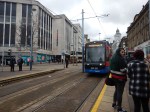
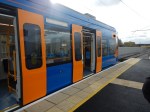
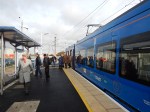
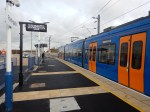
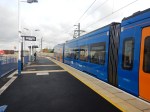
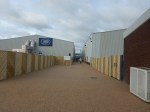
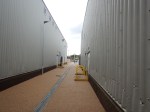
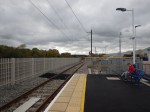
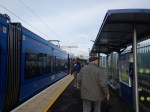
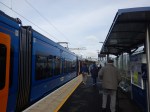
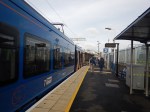
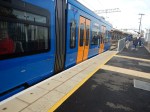
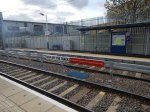

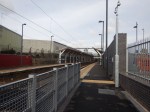
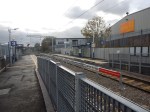
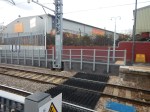
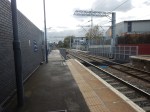
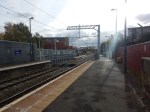

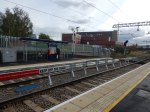

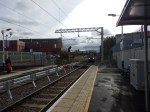
These are my observations.
Class 399 Tram-Trains And The Siemens-Duewag Supertram
On this brief excursion, I took three rides in Class 399 tram-trains and two in the original Siemens-Duewag Supertrams.
The existing supertrams are twenty-three years old and it shows.
Not in the state of the supertrams, which is very good, but in the design.
- As an example, the tram-trains have a much flatter floor, than the super trams.
- Drivers have also told me that they have more power and can get up Sheffield’s hills with a full load, easier than the supertrams.
- The tram-trains are also faster at 120 kph, as against to 80 kph for the supertrams.
I have seen reports, that Sheffield are thinking of replacing the supertrams with new rolling stock.
This is understandable, as the Sheffield supertrams must be the oldest light rail vehicles in the UK, without a plan to replace them with modern rolling stock.
Sheffield could do a lot worse, than replace the Siemens-Duewag trams with Class 399 tram-trains. Especially, as the South Wales Metro, will be buying thirty-six similar vehicles with batteries.
What would tram-trains with a battery capability do for Sheffield, Rotherham and the neighbouring towns?
After all geographically, South Yorkshire and South Wales aren’t that different with hills rising up from a flatter area.
Rotherham Central Tram Stop
This tram stop in a station is better than anything that I’ve seen in Germany, where tram-trains share platforms with ordinary trains.
The technique of a double-height platform, will be used in Karlsruhe to allow their versions of the Class 399 tram-trains to share platforms with their older tram-trains in the Karlsruhe tunnel, if it is ever finished.
The attention to detail at Rotherham Central station might go some way to explain the cost and time overrun on the project, but now there is a working example for other tram-train schemes to copy.
- The platform to tram-train access is absolutely level.
- There is a gentle slope, when changing between tram-trains and trains.
- There is a barrier to stop passengers walking across.
The only thing needed is an entrance directly to the Sheffield-bound platform, so that passengers walking along the river and from the football can get directly to the tram-train platform.
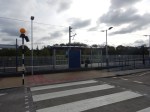
Rotherham Parkgate Tram-Train Stop
This tram-train stop follows the best practice of single platform stanations and tram-stops everywhere.
- The platform to tram-train access is absolutely level.
- There is a zebra crossing and a gentle ramp to get to the path to the shopping.
- There is a shelter and a few seats.
If it gets busier, it may need a few extra facilities.
Information
Information at stops and stations will need to be improved and some of the displays didn’t seem to be fully working.
There was also a lack of signage in Rotherham Parkgate, as to where the tram-train stop is located.
All of this will improve with time!
Ridership
What surprised me was that for a Tuesday morning, the tram-trains were busy with passengers going all the way between Sheffield and Rotherham Parkgate. The tram-trains were perhaps half-full.
But then several said to me, that they preferred Rotherham Parkgate to Meadowhall for shopping.
There also seemed to be a lot of older passengers with free passes.
In my view, it won’t be long before the route requires a service of four tram-trains per hour.
This would require an extra tram-train for the Cathedral to Rotherham Parkgate service.
Currently, about six-seven trains per hour go through Rotherham Central station in each direction, so squeezing in an extra train probably wouldn’t be a major job for the signalling.
Conclusion
I think it is a job well done, that has been well worth the wait.
I do have this feeling that the signs are already there for a break-out of London Overground Syndrome.
In the Supertram’s case, it could be cured by the purchase of an extra Class 399 tram-train.
Would Third-Rail Tram-Trains Affect The Design Of The Proposed Streatham Interchange Station?
Transport for London’s proposal for the Bakerloo Line Extension comes with a very nice map of the various projects that will be carried out to improve rail services in South London.
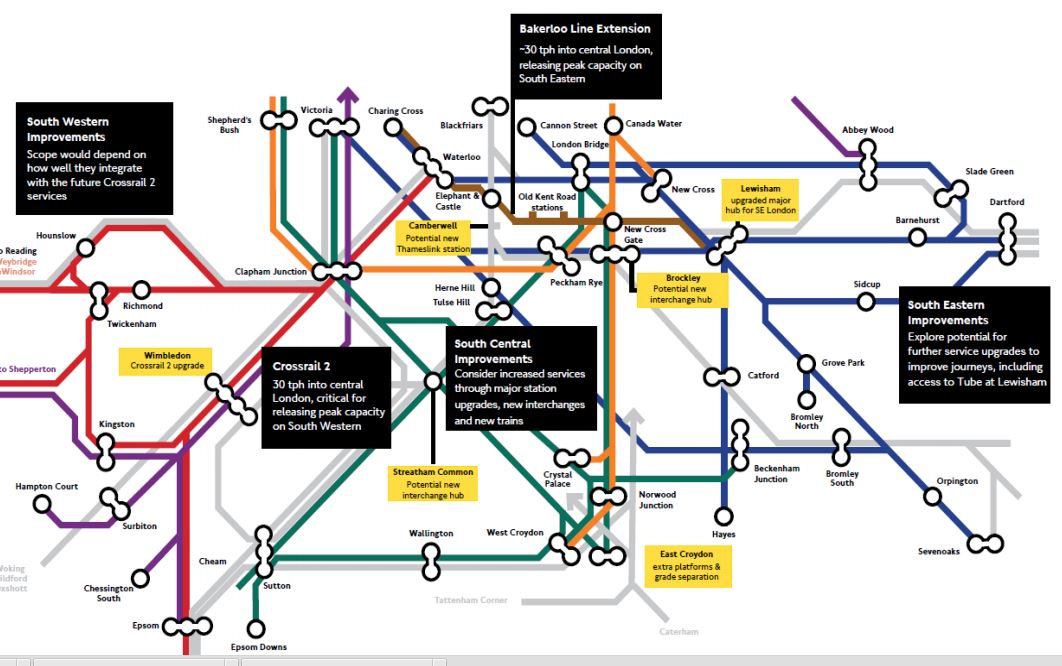
It is all good stuff and most is easily explained.
There is a little yellow box, which has a title of Streatham Common and contains the words.
Potential new interchange hub.
This map from carto.metro.free.fr shows the rail lines around Streatham and Streatham Common stations.
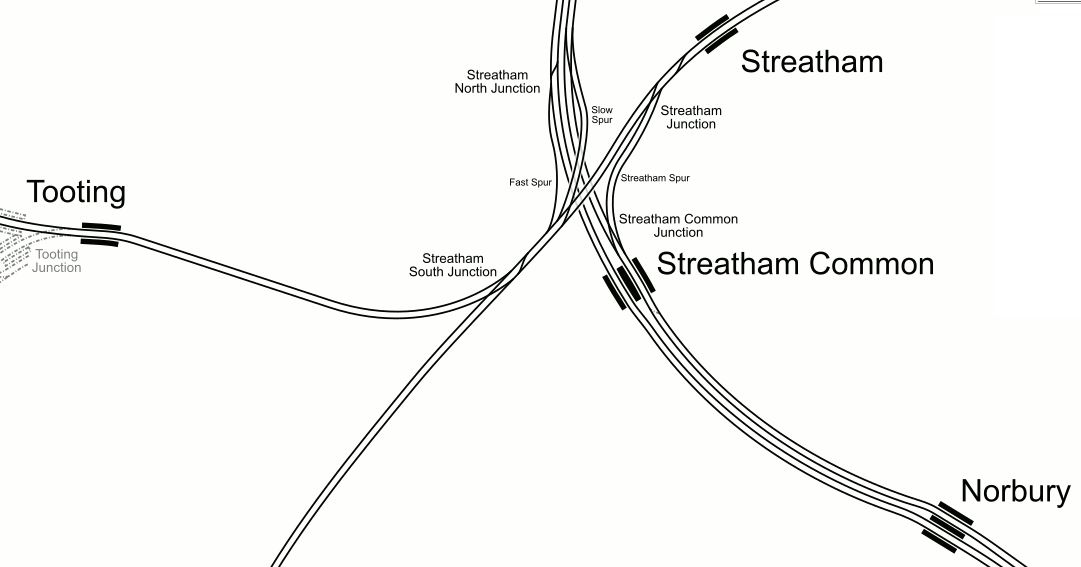
Streatham Interchange station has been proposed and could be at the major junction to the North of Streatham Common station.
Trains on the following routes could call.
- Thameslink services on the Sutton Loop Line, through Wimbledon and Sutton.
- Various Southern services between London Bridge and Victoria in the North and Caterham, Croydon, Epsom and Sutton in the South.
- Fast services between Victoria and the Brighton Main Line pass through.
I have also seen speculation on respected web sites, that the Overground will be extended to the new Streatham Common Interchange.
I suspect Transport for London’s plans will improve the lot of many travellers.
Third-Rail Tram-Trains To Streatham
If Streatham Interchange is going to be an important hub, then surely, it should be served by the Tramlink.
Third-Rail tram-trains would be able to run from any of these power sources.
- Overhead electrification on tramways.
- Third-rail electrification on rail tracks.
- Batteries on any tracks, including those without any electrification.
Most power changeovers would take place at tram-stops or stations. Although, I suspect that changing bertween battery and third-rail power would be automatic.
Third-rail tram-trains could run into Streatham Interchange on any standard third-rail track and could use any platform, be it a through platform or a bay one, that is used by standard trains.
These are the two obvious routes.
Use The Sutton Loop Line From Mitcham Junction Station
This map from carto.metro.free.fr shows the track layout at Mitcham Junction station and Tramlink between Mitcham and Beddington Lane tram stops.
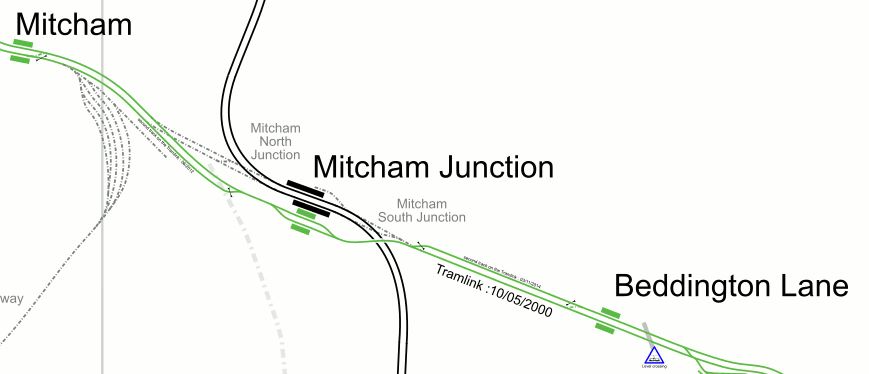
Note that the black tracks are the Sutton Loop Line with Mitcham Eastfields station to the North and Hackbridge station to the South.
I think it would be possible, from what I have seen on other tram-train systems, to link the Sutton Loop Line to Tramlink, so that tram-trains could go between Bedddington Lane and a proposed Streatham Interchange.
A tram-train going between Croydon and Streatham Interchange would do the following.
- Stop in Beddington Lane tram stop.
- Drop the pantograph and change to battery power.
- Proceed to Mitcham Junction station.
- Connect to third-rail electrification.
- Run as a train to Streatham Interchange.
In the opposite direction, the sequence would be reversed.
Use The Sutton Loop Line From Wimbledon Station
This map from carto.metro.free.fr shows the track layout at Wimbledon station.
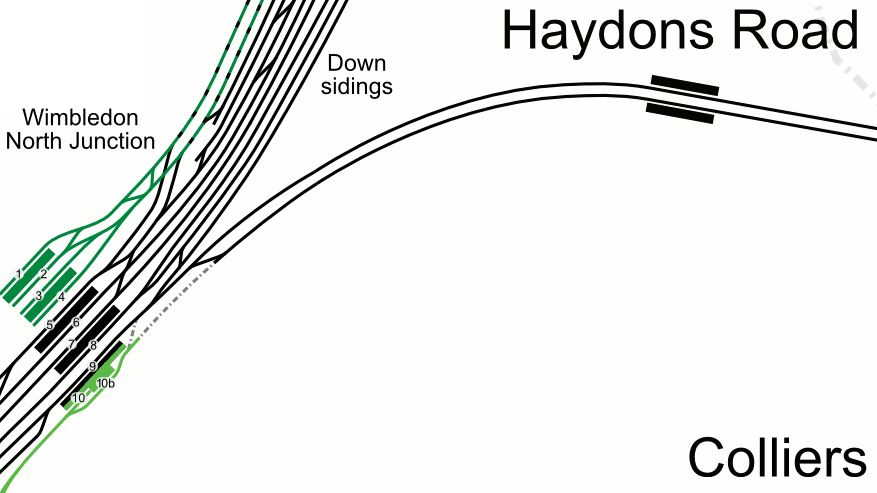
Haydons Road station is on the Sutton Loop Line going towards the proposed Streatham Interchange.
This picture shows a Thameslink train in Platform 9 and a tram in Platform 10b at Wimbledon station.
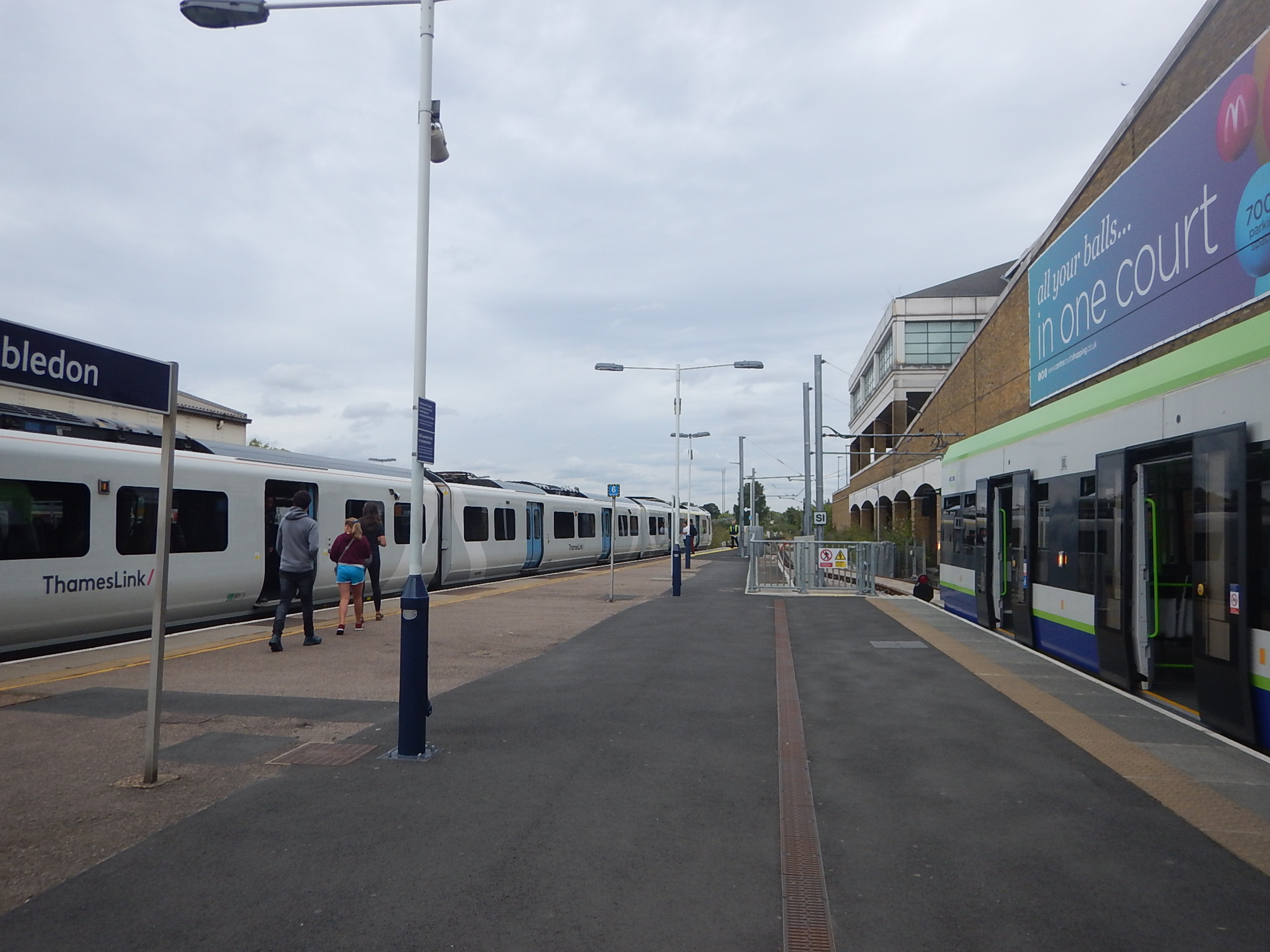
I think it could be possible to make Platform 10b into a bi-directional Tramlink platform to connect to Streatham Interchange.
Currently, twelve trams per hour turn at Wimbledon and I suspect that this needs two terminating platforms.
Conclusion
Connecting tram-trains at Wimbledon to the Sutton Loop Line may be tricky, but it should be easier at Mitcham Junction.
However, so long as Streatham Interchange has enough capacity for Tramlink services, there shouldn’t be a problem.
Architect Produces Longest Moving Walkway Alternative To Tram-Train Glasgow Airport Link
The title of this post is the same as that of this article in The Herald.
The world’s longest travelator would link a new station on the Inverclyde Line to the Airport.
This Google Map shows the Airport and the rail line.
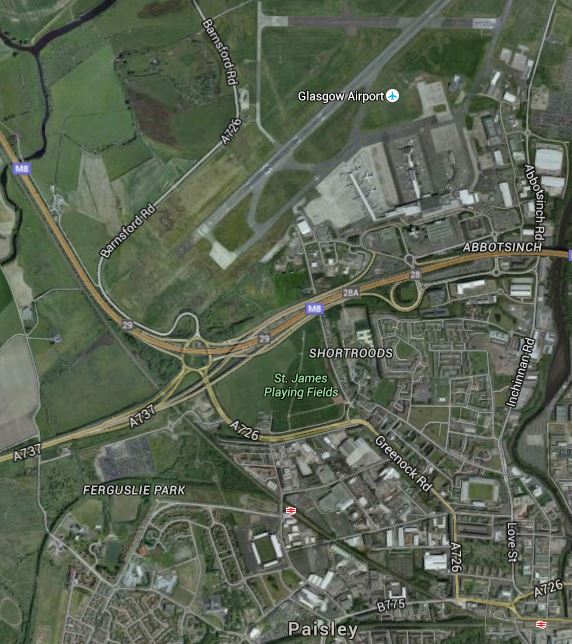
The railway runs at right-angles to the runway alongside the M8 motorway. The station in the middle of the map is Paisley St. James station.
The article says the station will be built near the Ferguslie Park housing estate in Paisley. It is marked on the map to the West of Paisley St. James station.
These are my thoughts on the plan.
Ferguslie Park Station
This enlarged map shows Ferguslie Park, the complicted motorway junction and Paisley St. James station.
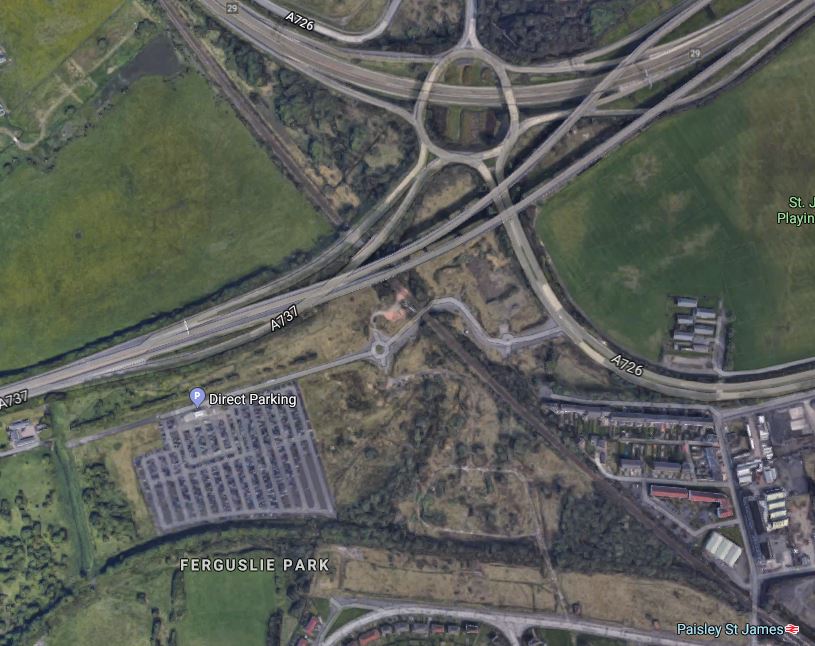
From the look of this map, it would appear that there used to be a triangular junction here. Where did that railway go?
The position will have to chosen with care, as it can’t be too near to Paisley St. James station and in a position that allowed an easy connection to a travelator to and from the Airport.
Frequency Of Trains
Airports around the UK have these numbers of trains in each hour.
- Birmingham has upwards of eight trains in both directions.
- Edinburgh has six trams.
- Gatwick has four Express services and will have ten Thameslink services in both directions.
- Heathrow has four Express services and will have at least four Crossrail service.
- Luton has seven trains in both directions.
- Manchester has nine trains and twelve trams.
- Newcastle has at least four Metro trains.
- Stansted has four Express services.
Surely, the service to Ferguslie Park must have a frequency of at least four trains per hour!
This would not be unobtainable, as the two termini of Gourock and Wemyss Bay stations have enough capacity.
The Long Travelator
I believe a long travelator would work, but I do think it would have to be designed carefully in sections for Health and Safety reasons.
My real reservations are that after my visit to Paisley St. James station, which I wrote about in Paisley St. James Station, I do wonder how passengers will like a travelator link.
- The area is fairly bleak, for a wait of up to fifteen minutes.
- Inside a tram would be more comfortable.
- There would need to be a step-free bridge at the new station.
In my view it would like a cheap option, that would be difficult to expand.
Using A Tram-Train
Since the travelator plan was published in the Herald, Stadler have launched tram-trains with a battery capability for the South Wales Metro.
These could do the following as a minimum.
- Run between Glasgow Central and Paisley Gilmour Street stations using the 25 KVAC overhead electrification.
- Run a frequency of four tram-trains per hour on a bi-directional single-track spur without electrification to a single platform at the Airport.
- Run between Paisley St. James station and the Airport on batteries, that would be charged between Glasgow Central and Paisley Gilmour Street stations.
- Stop at Paisley Gilmour Street station to change power source.
- Handle 230 passengers in each tram-train.
The system could also be expanded if needed.
- The tram-trains could work in pairs.
- The spur could be double track.
- A second platform could be built at the Airport.
This could handle up to eight tram-trains per hour.
Is Glasgow A World City?
Probably not yet!
Consider.
- Glasgow hosted the Commonwealth Games in 2014.
- Glasgow hosted the European Games in 2018.
- It has the facilities to handle World Championships in many sports.
- It has two football teams, that regularly play in European competitions.
- Hampden Park has hosted six European football finals.
At least on the wider sporting front, it can be considered an important city, that is on a par with Manchester in England.
And I think it will soon be recognised as a World City!
For this reason alone, the Airport needs a proper rail service, rather than a travelator to a bleak station.
Other Airports
The following Airports in the UK need a decent rail link.
- Bristol
- East Midlands
- Leeds
- Liverpool
A similar tram-train link could be provided in a similar manner at these airports and probably many others around Europe and the rest of the World.
Conclusion
I will be very surprised, if Glasgow Airport doesn’t get a tram-train link, that uses batteries.
The Tram-Train Platforms At Rotherham Central Station
When I passed through Rotherham Central station, I took these pictures of the tram-train platform extensions.
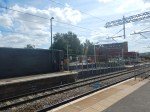
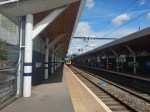


I do wonder, if the design is right.
- I was going to the New York stadium and if I’d arrived on a tram-train from Sheffield city centre, I would have walked a long way down the full platform to cross the line using the stairs or lift.
- Going back to Sheffield, will I be able to avoid walking to the station entrance.
- Passengers expect to be able to walk directly to a tram platform without any barriers.
- Tram passengers also expect to be able to walk across the lines to get to the other platform.
I shall be interested to see how bad the design is when it’s finished.
Could Modern Technology And Developments Improve the Abbey Line?
The Abbey Line runs between Watford Junction and St. Albans Abbey stations.
It has a few problems.
Frequency
The track layout means that trains generally run every forty-five minutes, which is not very passenger friendly.
The line needs at least a half-hourly service and it would appear from Wikipedia and other sources, that this could be achieved by re-instating the passing loop at Bricket Wood station.
Elderly Trains
West Midlands Trains have promised new trains for the line, to replace the current Class 319 train.
Although, these Class 319 trains are much better than their arge, as I said in A Very Smart Class 319 Train.
As West Midlands Trains, use these trains for services on the West Coast Main Line, it probably helps with staffing and maintenance.
But these trains are being replaced by five-car Class 730 trains. Will the shittle train be replaced by another Aventra?
Reliability
Search the Internet for “Abbey Line St. Albans” and you find news stories with headlines like these.
- No Abbey Flyer Trains Between St. Albans And Watford
- Abbey Line Breaks Down Again
- St. Albans Abbey Flyer Users Fund Raising To Improve Train Line
- No Trains On St Albans Abbey Flyer Line After Fault With Shut
It would appear that the Abbey Line has a reliability problem.
A Simple Solution
The simplest possible solution to improve the line with a half-hourly service would be as follows.
- Reinstate the passing loop at Bricket Wood station.
- Acquire a fleet of three Class 730 trains of an appropriate length.
This Google Map shows Bricket Wood station.
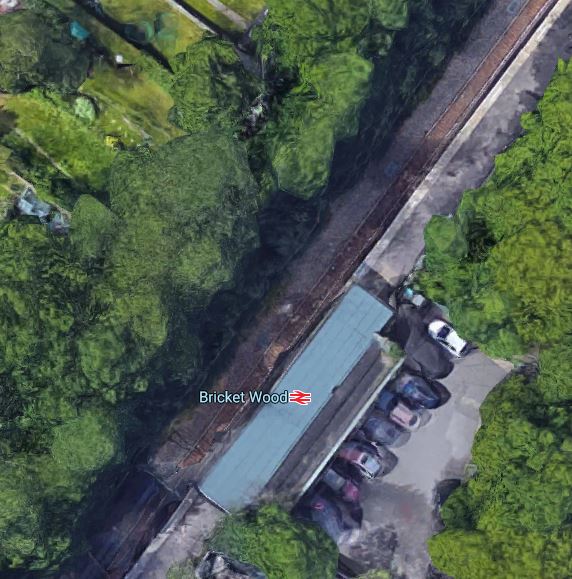
Note the single platform with a single track.
There would appear to be plenty of space for a passing loop on the opposite side to the platform..
The Class 730 trains are Bombardier Aventras and I believe strongly, that all Aventras have batteries. So surely this is just the place to be innovative, with the use of battery technology?
The loop would be built without electrification and the track layout would be such that two trains could easily pass using battery power. Pantographs would be raised and lowered as required.
Suppose the loop started in the middle of the platform and perhaps extended for two hundred metres in the Watford direction..
- The two trains would arrive at the station, with one on each side of the entry to the loop.
- The Watford-bound train, would switch to battery power in the station and use the loop to pass the other train to continue towards Watford.
- The Watford-bound train could either switch back to overhead power as soon as it regained the electrified track or wait until it is safely in the next station.
- When the line is clear, the St. Albans-bound train would continue on its way, using overhead power.
It might also be possible for trains to go towards St. Albans using the overhead power and towards Watford on battery power, with all changeovers of power source taking place at the terminal stations, where turn-round time will be several minutes.
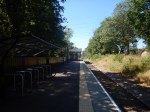
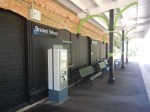
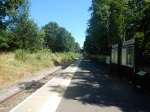
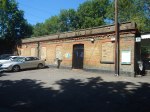
These are some pictures of Bricket Wood station.
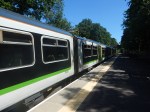
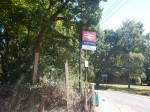
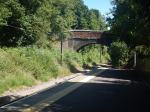
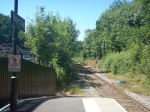
My only worry is that the platforms may only be big enough for six-car trains.
Perhaps, to avoid lengthening the platforms at Bricket Wood station, two three-car Class 730 trains could be used?
Use of the five-car trains would probably require electrification of the loop, a second platform and a footbridge, which would be a much more expensive solution.
A Class 769 Train Solution
The Class 769 train is a bi-mode version of the Class 319 train. So could these work the simple passing loop without electrification?
At four-cars, they may be short enough to work the route without building a second platform at Bricket Wood station.
But the solution would probably need the current platform to be extended to accommodate two trains.
They would use diesel power to go through the passing loop.
Passengers would effectively get a twice as frequent service, using similar trains to the current ones.
A Class 230 Train Solution
As West Midlands Trains are also using Class 230 trains on the Marston Vale Line, which can work on electric, diesel and battery power, I can’t see any reason, why these trains couldn’t be used on the Abbey Line.
They would use diesel or battery power to navigate the loop without electrification.
These trains are affordable, short in length and are designed for remote servicing, but is capacity and speed sufficient?
A Tram-Train Solution
The same Stadler tram-trains with batteries, that are being used on the South Wales Metro could also be used on the Abbey Line.
They would operate as trains, in the same ways as the Aventras, using batteries to navigate a passing loop without electrification.
This solution would have the disadvantage of West Midlands Trains introducing another type of train, but the tram-trains could go walkabout in Watford and/or St. Albans at the two ends of the route.
Under Past Proposals in the Wikipedia entry for the Abbey Line, this is said about a possible conversion to light rail.
In October 2009 Secretary of State for Transport Lord Adonis announced a plan to increase frequency on the line by allowing Hertfordshire County Council to lease the line from Network Rail and converting it to light rail from 2011. It was hoped that this would be possible for the same amount of subsidy the line received, as the new infrastructure required, such as a passing loop would be cheaper for light rail than heavy rail. Longer-term proposals envisaged extensions into Watford town centre via Clarendon Road and High Street, and St Albans city centre, possibly as far as St Albans City railway station, and possible re-instatement of the line to Hatfield.
This Google Map shows Watford Junction station
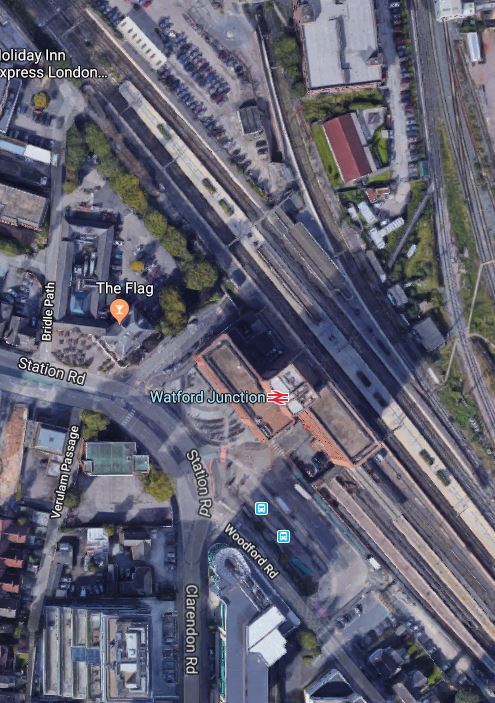
Note.
- The Abbey Line leaves the map in the North East corner.
- Clarendon Road runs South from the middle of the map.
I think it would be possible to build a bridge to take the trams over the railway.
There could even be a high-level platform for the tram-trains above the station with connections to the current heavy rail platforms.
What I have outlined here, is a classic use of a tram-train to allow trains on a heavy rail route, to extend to a town or city centre, by operating as trams.
Could Thr Abbey Line Be Linked To The Troubled Croxley Rail Link?
This map from carto.metro.free.fr shows the lines at Watford Junction.
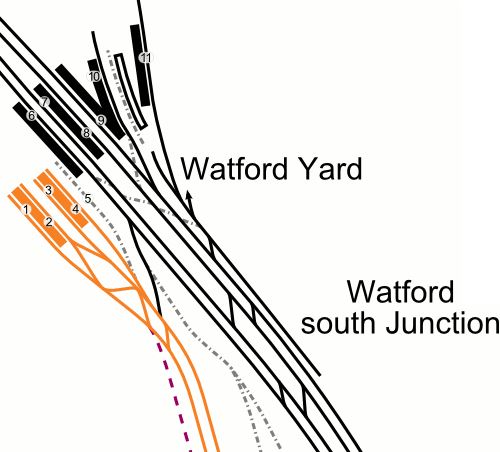
Note.
- The Abbey Line goes North from Platform 11.
- The lines shown in orange are the Watford DC Line of the London Overground, that go to London via Watford High Street station.
- The dotted purple line is the proposed route of the Croxley Rail Link.
I can’t find any references on the Internet to the possibility of a connection between the Abbey Line and the Croxley Rail Link.
I doubt that Metropolitan Line trains could go to St. Albans.
- They are too long at 133 metres.
- Extensive modifications to the track and platforms would be needed.
- They lack the batteries to navigate the proposed passing loop.
But Stadler’s tram-trains might be able to go to Croxley station.
- They are under forty metres long.
- They weigh under seventy tonnes, which could help in the bridge design.
- They could work the Abbey Line using the overhead power.
- Batteries would enable using the proposed passing loop at Bricket Wood station.
- I’m sure that Stadler’s innovative engineers could make their tram-trains run on third and London Underground rail electrification.
- Battery power could be used on some of the route between Watford High Street and Croxley stations.
I’m sure that after sorting out Cardiff Bay, Stadler’s engineers will welcome the challenge of Watford Junction.
Developments At Watford Junction Station
Over the last few years, there have been various plans about improving train services through Watford Junction station.
- It has been proposed that Crossrail is extended through the station.
- The Bakerloo Line will be extended and it has been proposed that it terminate at Watford Junction.
- West Midlands Trains will add extra services.
- How will HS2 affect services on the West Coast Main Line?
In addition there are plans for more car parking and other developments at the station.
It strkes me that there is a possibility that an innovative architect will come up with a striking scheme, that could enable bridges for trams across the West Coast Main Line.
Conclusion
There are various possibilities to improve the Abbey Line, brought about by recent innovations in the use of batteries on trains and tram-trains.
In all cases, the line gets a half-hourly frequency from new trains.
On the other hand, as with the Croxley Rail Link, there seems to be a lot of ideas and plans in Watford, but no real leadership to get anything built at an affordable cost!
A Reason Why The UK Is Fertile Territory For Tram Trains
The UK has several modern tram systems. If you look at the cross section of trams you get the following figures.
- Blackpool Tramway – Width 2.65 metres – Height 3.42 metres
- Edinburgh Trams – Width 2.65 metres – Height 3.4 metres
- Manchester Metrolink – Width 2.65 metres – Height 3.67 metres
- Midland Metro – Width 2.65 metres – Height 3.4 metres
- Nottingham Express Transit – Width 2.40 metres – Height N/A
- Sheffield Supertram – Width 2.65 metres – Height 3.65 metres
- Tramlink – Width 2.65 metres – Height 3.67 metres
I wonder why Nottingham is twenty-five centimetres narrower!
If you look at the Class 399 tram-train, it has a width of 2.65 metres and a height of 3.67 metres.
So no wonder, there has been no problems with Class 399 tram-trains running on the Sheffield Supertram as trams!
Various trains that run local rail networks include.
- Class 142 – Width 2..8 metres – Height 3.86 metres
- Class 150 – Width 2.8 metres – Height 3.8 metres
- Class 222 – Width 2.73 metres
- Class 319 – Width 2.82 metres – Height – 3.58 metres
- Class 345 – Width 2.78 metres – Height N/A
- Class 378 – Width 2.80 metres – Height 3.78 metres
- Class 700 – Width 2.80 metres – Height N/A
- Class 769 – Width 2.82 metres – Height 3.58 metres
- Mark 4 Coach – Width 2.73 metres – Height 2.79 metres
These are some figures from German trains.
- DBAG 641 – Width 2.90 metres – Height 3.7 metres
- BD Class 420 – With 3.08 metres
- ICE 3 – Width 2.95 metres – Height 3.89 metres
I’ll look at various issues.
Tram And Train Height
I think this is not a big issue.
If a tram or electric train can run on a particular track, then there should be no height problems running a tram-train over the route, providing overhead wires can be erected.
UK Tram And Train Width
It would appear that the maximum width of UK trains is 2.82 metres. In some stations, where there is only one class of train, level access is possible.
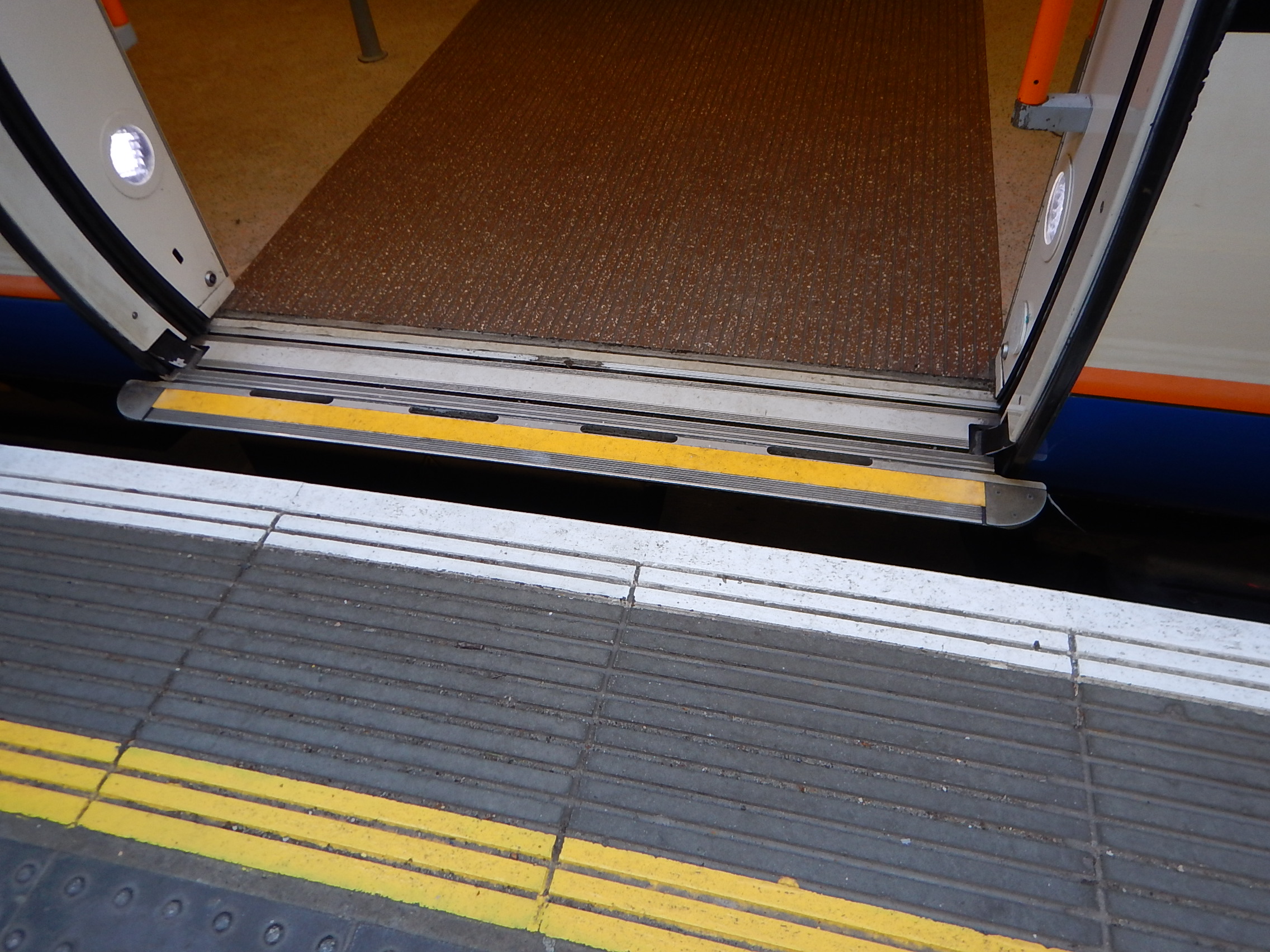
The picture shows a Class 378 train on the London Overground.
This is not one of the best I’ve seen, but there is no reason, why someone in a wheelchair shouldn’t be able to wheel themselves into every train at every station.
This is in the train operating company’s interest, as one of the things that delays trains, is getting someone in a wheelchair on and off the train with a portable ramp.
If we take the UK train width of 2.82 metres and compare that to the width of a Class 399 tram-train, which is 2.65 metres, that means that there is seventeen centimetres difference or eight and a half centimetres on each side of the train.
If the platform can be arranged to be level, that is not a large gap. It’s probably about the same size as this gap in this picture.
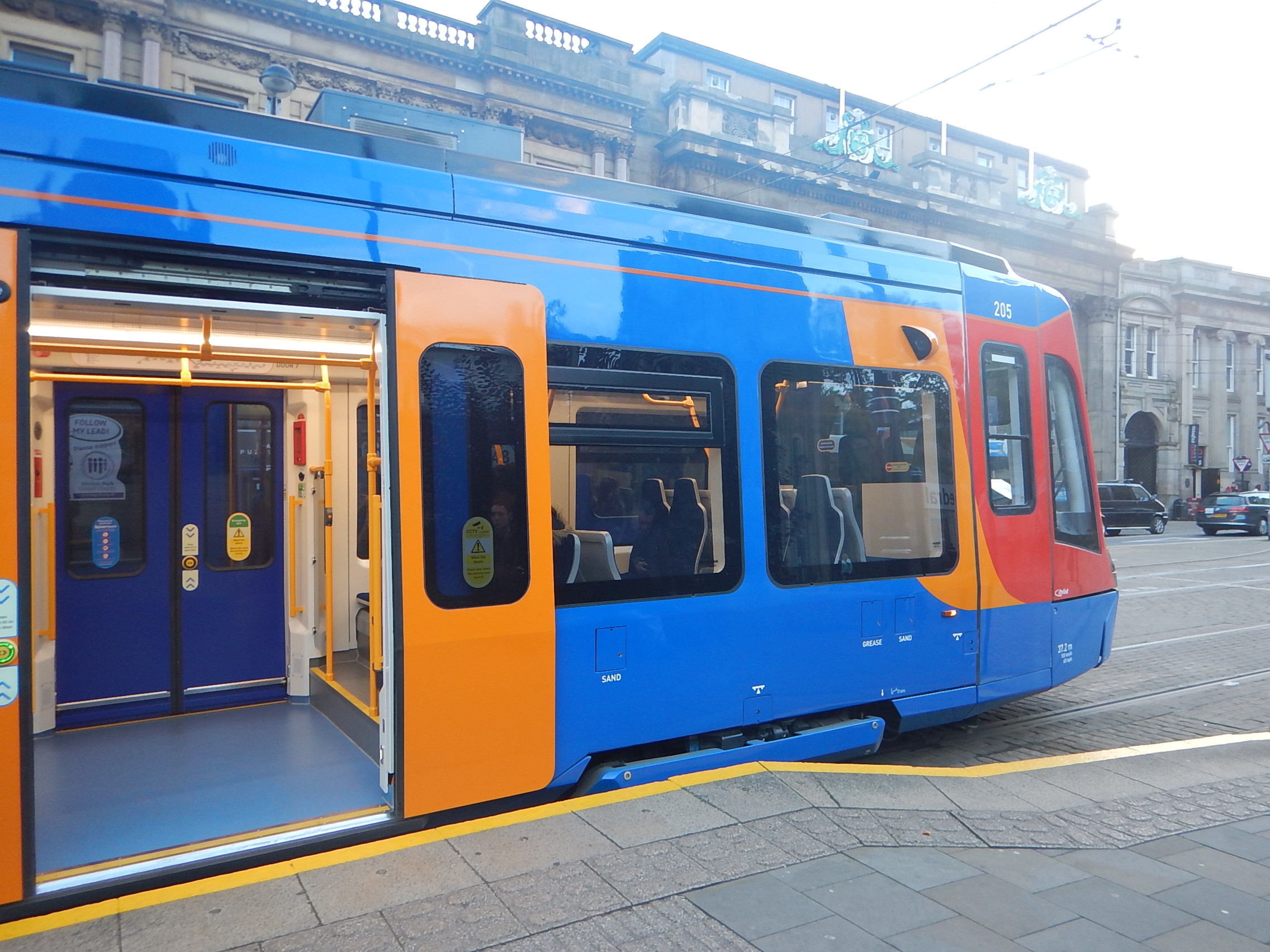
Shown is a Class 399 tram-train at a tram stop on the Sheffield Supertram.
Continental Tram And Train Width
But on the Continent, where the trains are wider and the loading gauge is bigger, the gap will be larger.
Trains on the Continent also often have a significant step up as this picture shows.
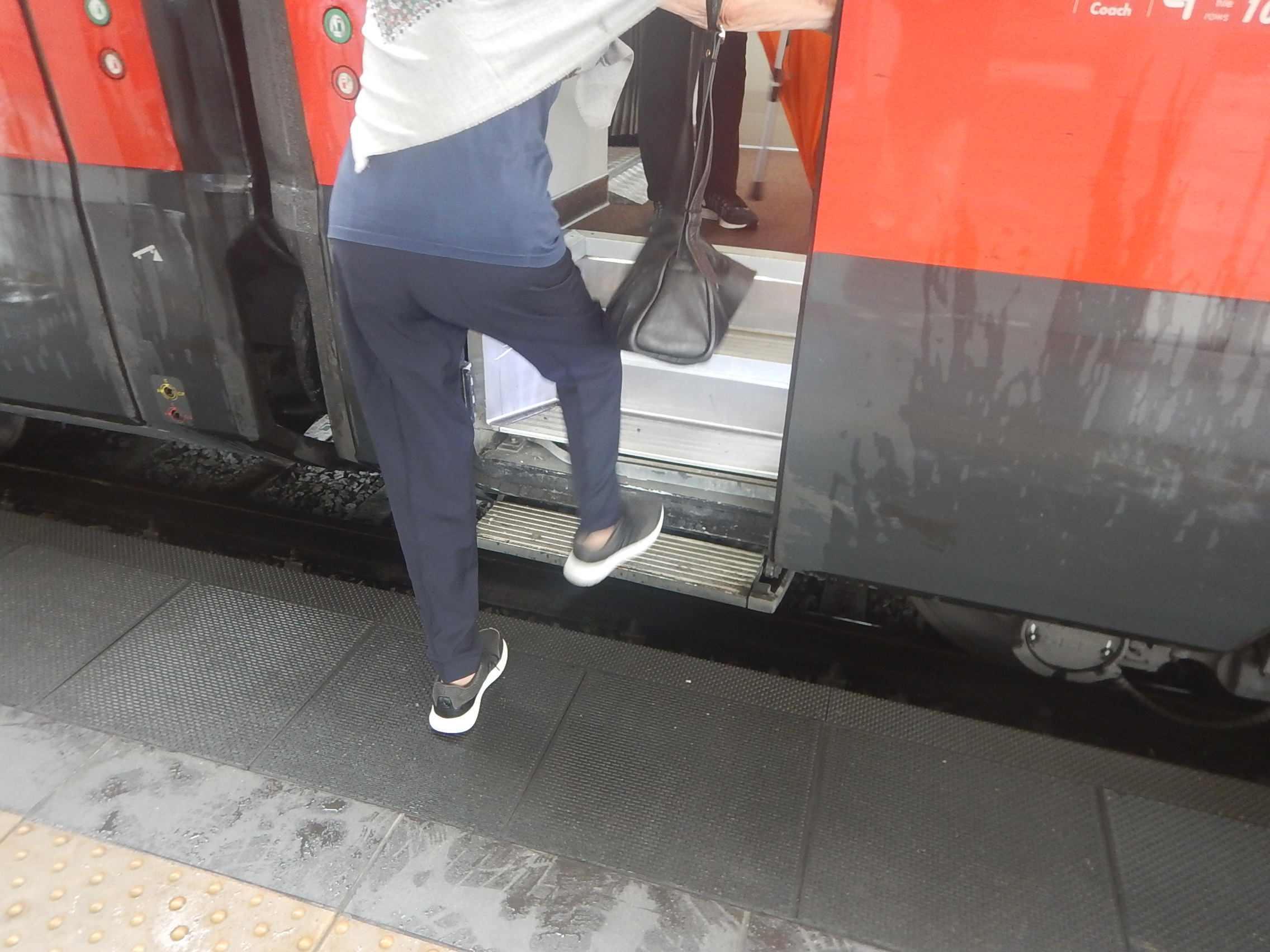
Shown is an Italian High Speed train.
If the EU wanted to improve train travel for the disabled, those in wheelchairs, those with buggies and the elderly, they should make it compulsory for all trains to have level access from the platform.
It’s very rare to find level access on the Continent and not that easy in parts of the UK.
Gap Fillers
But things are getting better, as this picture shows.
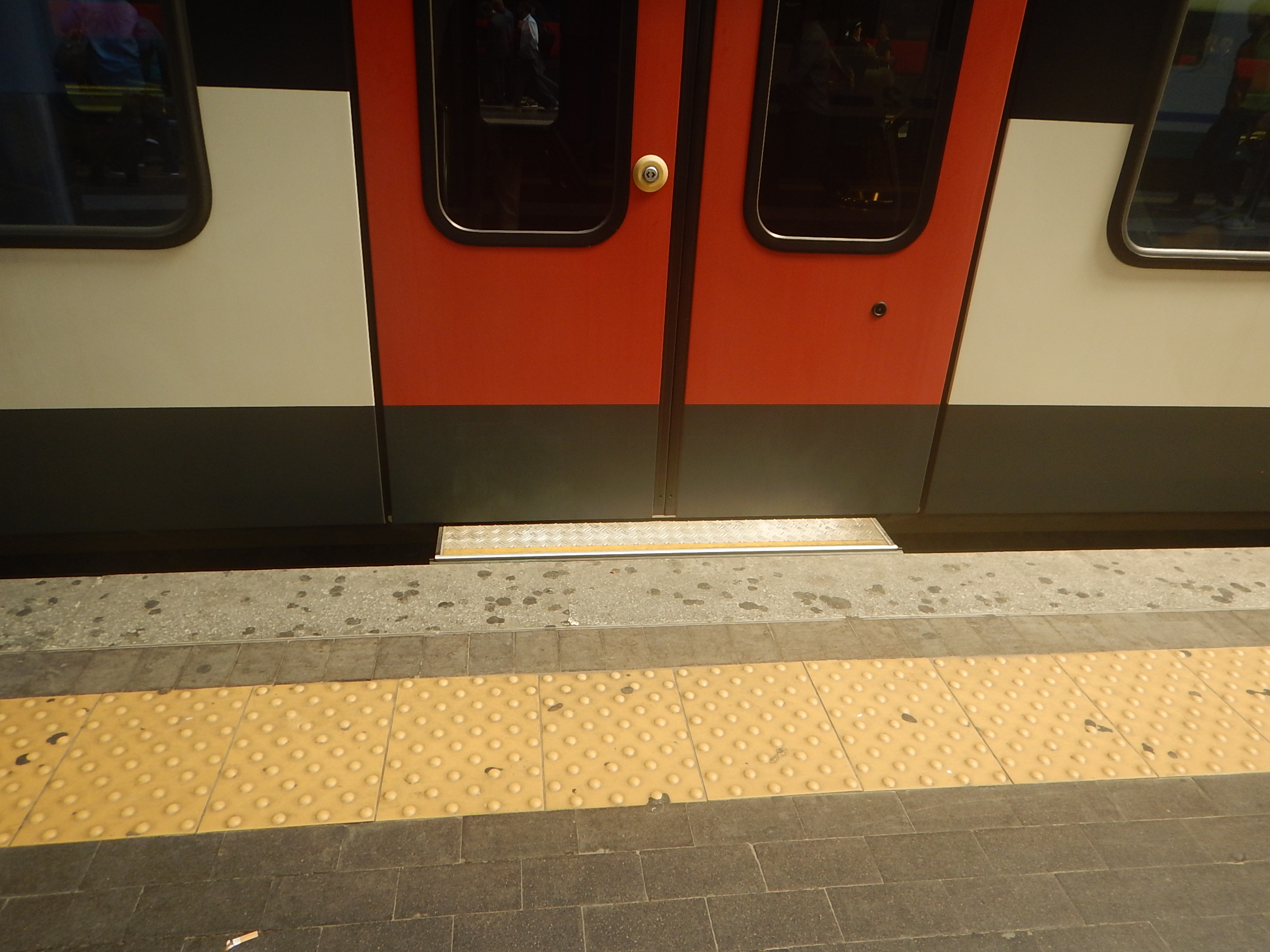
Shown is a Stadler Flirt with a rather nifty automatic gap filler.
Merseyrail’s New Class 777 Trains
Gap fillers will be fitted to Merseyrail‘s new Class 777 trains, which are being built by Stadler.
The Class 777 trains and the current Class 507 trains have the same width of 2.82 metres, but the new Stadler trains have an eighteen centimetre lower floor.
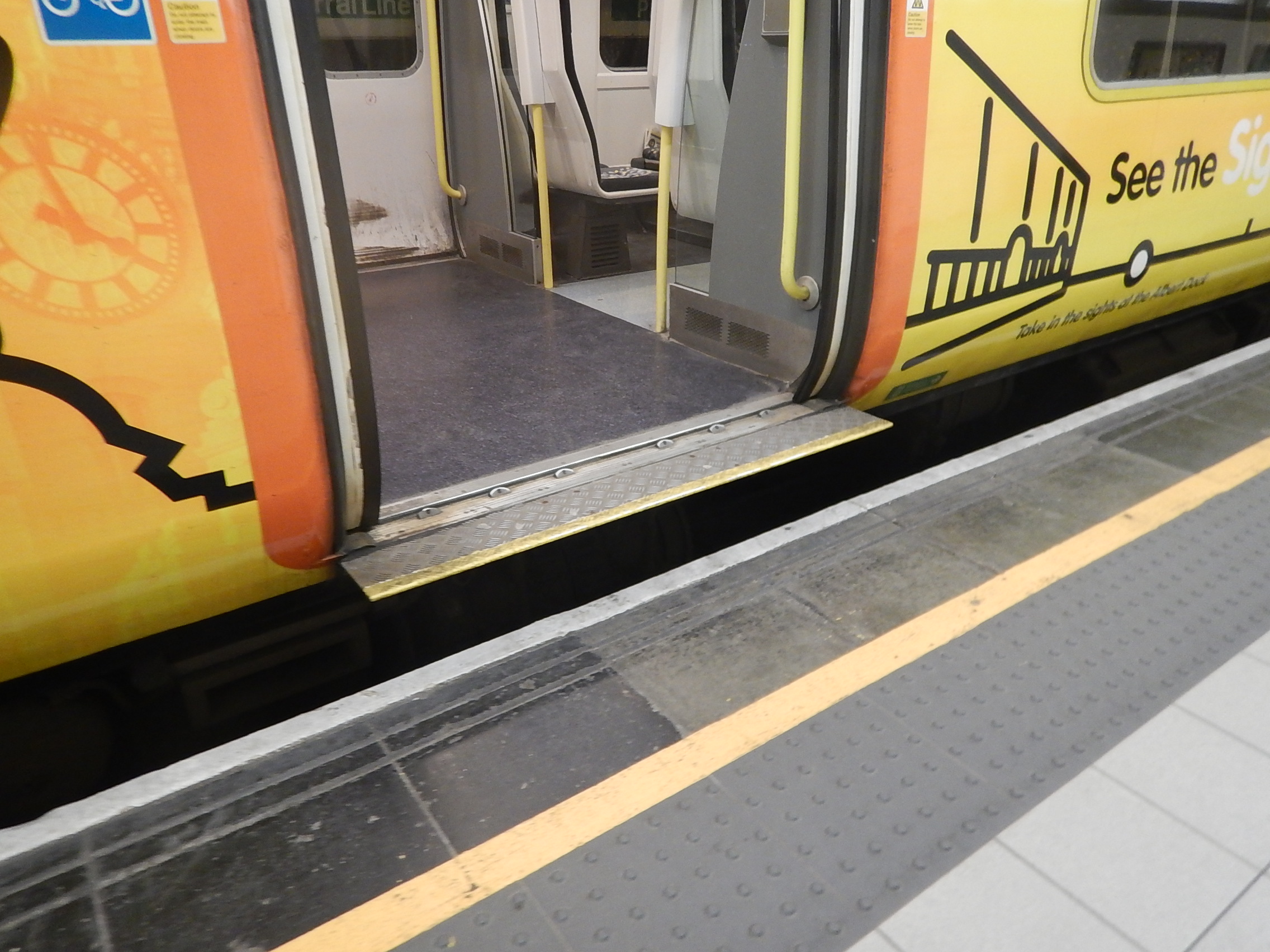
The picture shows a Class 507 train at one of Liverpool’s underground stations.
Eighteen centimetres wouldn’t be far away from the height of the step in the picture.
The design must also allow both classes of trains to be in service at the same time, to ease introduction of the new Class 777 trains.
Talk about Swiss precision!
South Wales Metro
This document on the KeolisAmey web site details their plans for the new Wales and Borders Franchise.
For services around Cardiff and on the Cardiff Valley Lines, KeolisAmey Wales intend to acquire the following fleet.
- 11 – four-car Stadler Flirt DEMU
- 7 – three-car Stadler Flirt Tri-mode MU
- 17 – four-car Stadler Flirt Tri-mode MU
- 36 – three-car Stadler Citylink Metro Vehicles
Note.
- The Stadler Flirts look very similar to Greater Anglia‘s Class 755 trains, that by the time of delivery of these trains for Wales, will have proven themselves on the mountains of East Anglia.
- The tri-mode multiple units will be able to run on electric, diesel or battery power.
- The Stadler Citylink Metro Vehicles look very similar to Sheffield Supertram‘s Class 399 tram-trains, that are providing a tram service in Sheffield and will soon be running on the rail network to Rotherham.
- It is an all-Stadler fleet.
This is a clip from the KeolisAmey document.

This looks like a visualisation of one of the Flirts, as the Citylink tram-trains have flat sides.
I will be very surprised if Stadler don’t provide the Cardiff area, with one of the best step-free networks in the world.
Conclusion
The UK’s standard tram width of 2.65 metres and our small loading gauge must make it easier to design tram-train systems for the UK.
.
Thoughts On Belgium’s Coastal Tram
I enjoyed riding Belgium’s Coastal Tram, which I wrote about in Riding The Coast Tram.
The Belgians appear to be upgrading it, with rebuilt stops, track replacement and new low-floor trams, so it must have a solid future.
The nearest we have in the UK to the Belgian tram is the Blackpool Tramway. But that is very different.
- The Blackpool Tramway is just eleven miles long, as opposed to the Belgian Coast Tram’s forty-two miles.
- Frequencies are roughly similar, but the Blackpool Tramway carries five million passenger per year, as opposed to about three million for the Belgian Coast Tram.
- The Belgian tram uses metre gauge track, whereas Blackpool is standard gauge.
- The Belgian Coast Tram connects to four railway stations, whereas the Blackpool Tramway is only getting a connection to Blackpool North station in 2019.
So could we see other coastal tramways developed around the world?
The Advance Of Technology
Both tramways are embracing modern low-floor trams, but also still run heritage tram services, so tram manufacturers seem to be able to update the ride experience to modern standards, without losing all the charm of heritage trams.
The next tramway technology will be the use of tram-train technology, which is currently being trialled between Sheffield and Rotherham on the Sheffield Supertram.
This can’t be used in Belgium, as the tram and railways have different gauges, but the technology could be used in Blackpool.
I have not seen the designs for the tramway stop at Blackpool North station, but with the right track layout, it would be possible for a tram-train like the Class 399 tram-train being trialled at Sheffield, to go between Preston and Blackpool North as a train and then take to the tramway to go North to Fleetwood or South to Starr Gate as a tram.
This technology is very applicable to extend railways through a terminal station, where there is convenient geography, as at Blackpool.
There must be many places around the world, where electric trains run to a coastal station, where an extension is possible with a tramway.
And then there is battery technology, which will be used in Birmingham with trams in a couple of years.
Extensions At Blackpool
Blackpool Tramway has various possibilities for extension.
- Along the coast to Lytham St. Annes
- Reinstating the Fleetwood Branch Line from Poulton-le-Fylde as a tramway.
Tram-trains and battery power could feature to save construction costs.
Along The North Norfolk Coast
This is a route, that could be developed, to ease the traffic problems in the area.
It could connect Kings Lynn and Sheringham stations.
Conclusion
There will be other coastal tram lines built.
Sheffield Tram-Train Runs Onto Network Rail Infrastructure
The title of this post is the same as that of this article on Metro International.
This is the first paragraph.
One of Stagecoach Supertram’s Vossloh Class 399 Tramlink tram-train vehicles operated on the national railway network for the first time during the early hours of May 10.
It would appear that the tram-train is getting there.
Discontinuous Electrification For Valley Lines?
The title of this post, is the same as that of an article in the May 2018 Edition of Modern Railways.
The Valley Lines in question are the Cardiff Valley Lines, that fan out from Cardiff Central and Cardiff Queen Street stations in various directions.
- Some of the lines into the valleys are quite steep.
- The lines in the Cardiff area seem to be typical coastal lines and fairly flat.
- The lines are a mixture of single and double track.
- There are various plans to extend some of the branches.
According to the article, it would appear that the current diesel system would be replaced with a system, with these characteristics.
- Light rail vehicles
- Discontinuous electrification
- Use of stored energy.
- Street running is expected to be in the specification for the vehicles to be used, to allow extension in the Cardiff Bay area and perhaps other places.
The proposal would save costs against full electrification and heavy rail.
My observations follow.
Batteries
Batteries will be an integral part of the design of the new rail vehicles.
Powering The Trains
The article states that battery power will be used to power the trains on sections that are difficult to electrify, like the mile-long Caerphilly Tunnel.
Battery power could also be used on level and downhill sections of track up to a few miles, but I suspect on steep uphill sections, electrification will be needed.
Handling Regenerative Braking
I believe that regenerative braking will be employed on the rail vehicles and the energy generated will be stored in the batteries.
The main advantage of this is that it simplifies the power supply to the electrification, as it only has to handle power going to the train.
This less complex electrical system, saves construction costs.
Recovering The Train’s Potential Energy
A train travelling from Cardiff to one of the terminal stations at the heads of the valleys, will need to acquire an amount of potential energy, based on the train’s mass and the height involved. This will be provided by the train’s traction system powered by the electrification and the energy in the batteries.
Coming down the hill, the regenerative braking will control the speed of the train and store any energy generated in the batteries.
This will save on the cost of energy to operate the system.
Charging The Batteries
The batteries will be charged from both the overhead electrification and the regenerative braking.
Extensive simulations of the route on computers would be able to calculate the following, for a wide range of scenarios.
- The size of the batteries.
- The power of the traction motors.
- Where the electrification needs to be installed.
- The maximum power output of the electrification system.
These calculations could also lead to an energy-saving operating philosophy, that could be programmed into the train’s computer system.
I suspect the worst case scenario, would be a train full of the heaviest Welshmen after an important rugby match at the Millennium Stadium.
Electrification
My thoughts on how various sections of track would be electrified follow.
Tracks With A Significant Uphill Gradient
These would need to be electrified, as I doubt battery power on the steepest gradients, would be enough to take a fully-loaded train to the top of the hill.
Electrification would be lighter-weight 750 VDC overhead wires.
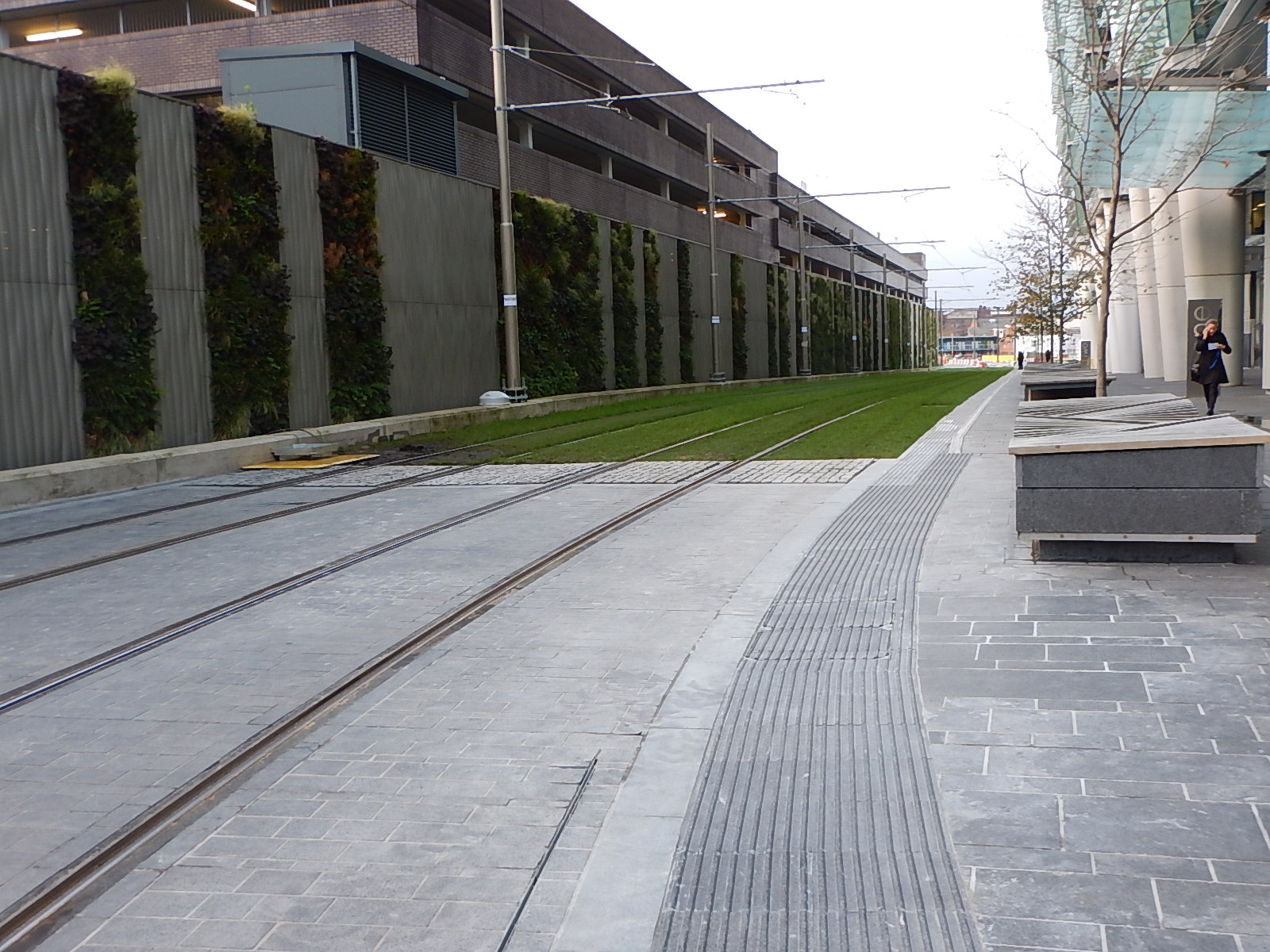
The picture shows some of the overhead wires in Birmingham, that are used by the Midland Metro’s Urbos 3 trams.
Tracks With A Downhill Gradient
These would not need to be electrified, as Newton’s friend gravity would do most of the work.
However, as batteries will be fitted, these can have three important functions on downhill stretches of track.
- Give the tram a nudge if needed.
- Restart the train after a stop at a station.
- Store any energy created by regenerative braking.
Note that we could have the unusual situation on a double-track section of line, where the uphill track was electrified and the downhill track was left without electrification.
Level Tracks
These would not need to be electrified, as battery power would be used to propel the train.
Selected Stations
Some stations could need to be electrified to ensure that the service was reliable. These might include terminal stations or those with tricky gradients on either side.
Tracks With 25 KVAC Electrification
Some of the tracks used by the trains on the Cardiff Valley Lines should be electrified with 25 KVAC, by the end of December 2018.
Class 399 tram-trains, that are used in Sheffield can use either 750 VDC and 25 KVAC overhead electrification.
it would probably be a good idea, if the new vehicles on the Cardiff Valley Lines could also use both voltages.
Automatic Pantographs
The pantographs on the vehicles would be raised and lowered automatically to access the electrification. This could even be GPS-controlled and able to be carried out at line speed.
Tram-Trains?
I very much feel, that tram-trains could be used to advantage.
- Some of the Valley Lines are also used by freight trains, so couldn’t be converted to trams-only.
- Tram-trains like the Class 399 tram-train, under test in Sheffield can work on both 750 VDC and 25 KVAC overhead wires.
- Tram-trains can use conventional railway signalling.
- Tram-trains could work on the South Wales Main Line to Newport.
- Modern tram-trains like the Class 399 tram-train have performance, that is about the same as a Class 142 train, which is a Pacer, that works the Cardiff Valley Lines, in large numbers.
- Tram-trains could run on the streets as trams, as they do in Sheffield.
Several manufacturers make tram-trains, which I believe could be suitablefor the Cardiff Valley Lines.
Stadler’s Class 399 Tram-Trains
Nothing is said about the vehicles, that would be used, but I think they need the following characteristics.
- Ability to climb the steepest section of the routes using 750 VDC overhead electrification.
- Ability to store energy.
- Regenerative braking to charge the batteries coming down the hills into Cardiff.
- A similar capacity to a Class 150 train, which is around 150 seats.
- It would be a bonus if they could use 25 KVAC overhead electrification, which will be available on part of some of the routes.
- Ability to raise and lower the pantograph quickly and automatically.
- Ability to run on the National Rail network.
- Ability to run on the street.
This specification is virtually the same as a Class 399 tram-train with the following additions.
- More seats and possibly an extra car.
- Batteries.
Class 399 tram-trains are a UK version of the Stadler Citylink tram-train. The German version is used in Karlsruhe to climb into the hills surrounding the city, on routes that are as challenging as the Cardiff Valley Lines.
So I have no worries about a version of the Class 399 train handling the Cardiff Valley Lines.
I certainly believe after my experience in Karlsruhe, and looking at other Citylink variants, that Stadler can come up with a tram-train for Cardiff based on the Class 399 tram-train.
And Then There’s CAF!
CAF have provided the Urbos 3 trams for Edinburgh Trams and the Midland Metro.
These are modern trams, that will be doing the following in a few years in the Midlands.
- Running on stored energy in the centre of Birmingham and to Wolverhampton station.
- Sharing the South Staffordshire Line with heavy freight on a new route to Merry Hill Shopping Centre.
This sounds like a tram-train with stored energy.
Wikipedia also lists a version of the Urbos family, called an Urbos TT, which is described like this.
The Urbos TT series is built with tram-train technology, connecting existing heavy rail infrastructure directly to urban tramway systems.
This document on the CAF web site, gives more details of Urbos variants, including the Urbos TT.
Looking at the modular nature of the design, you could have a custom-built tram-train tailored to the rail network.
But surely, the major factor with CAF, is that they have recently opened a factory at Newport.
If CAF get the order for the Cardiff Valley Lines, they could do a substantial part of the train building in a factory connected directly to the lines.
Converting The Valley Lines
I think that there are advantages and cost savings to be had, by good design in this area.
Could The Rail Vehicles Be Designed To Fit The Existing Platforms?
The first thing to do would be to design, build and fully test the rail vehicles.
Could the tram-trains be built, so that they fitted all the existing platforms?
- Class 150 trains are 2.82 metres wide.
- Urbos 3 trams on the Midland Metro are 2.65 wide.
If the tram-trains could run without platform modifications, this would be a big cost saving and still allow diesel units to use the lines, at the same time.
Testing The Trains
If the tram-trains were being given a 25 KVAC capability, they could even be tested on the quadruple-track the South Wales Main Line after the line is electrified through Newport.
Electrifying The Lines
It could be that the only sections of the valley lines that will need electrification, are the steep lines into the hills, as all other sections could use stored power or the 25 KVAC, where it exists.
- It would probably be possible to put up the simpler 750 VDC overhead lines during weekend and perhaps longer possessions.
- The electrification could be designed so that it doesn’t interfere with existing services.
- The lines would be converted one at a time.
- ,Note that tram-trains could share track and platform with the current diesel trains working the lines.
If CAF were to get the order surely the Ebbw Valley Line, which could be connected easily to the factory would be the first to be converted.
Conclusion
Obviously, the devil will be in the detail, but it does look like a viable plan will emerge.
I think that if CAF get the order, that they could be big winners.
The Cardiff Valley Lines could demonstrate the following.
- Running on main lines with 25 KVAC electrification.
- Running on 750 VDC electrification.
- Running on batteries.
- Running on lines with steep hills.
- Street running.
- Sharing tracks with freight trains and other passenger services.
- The tram-trains could also connect to Cardiff Airport.
It is a world-class demonstration and test track for innovative tram-trains, designed to cope with challenging rail networks.
With a factory close by at Newport, the selling of the tram-trains to other operators would be a salesman’s dream.
I think there’s more to CAF coming to Newport, than was apparent, when the deal for the factory was signed.
 The Anonymous Widower