‘Cut-Off For 58 Years’ Town To Get Railway Station
The title of this post, is the same as that of this article on the BBC.
This is the sub-heading.
Plans to build Greater Manchester’s first new railway station for a quarter of a century have been approved for a town cut off from the rail network since 1967.
These two introductory paragraphs give more details.
The £32m station in Golborne, near Wigan, was proposed by Transport for Greater Manchester (TfGM) after a residents’ campaign.
Since trains stopped calling at Golborne 58 years ago, the town has been left without any direct transport links to and from Manchester.
This Google Map shows the location of Golborne.
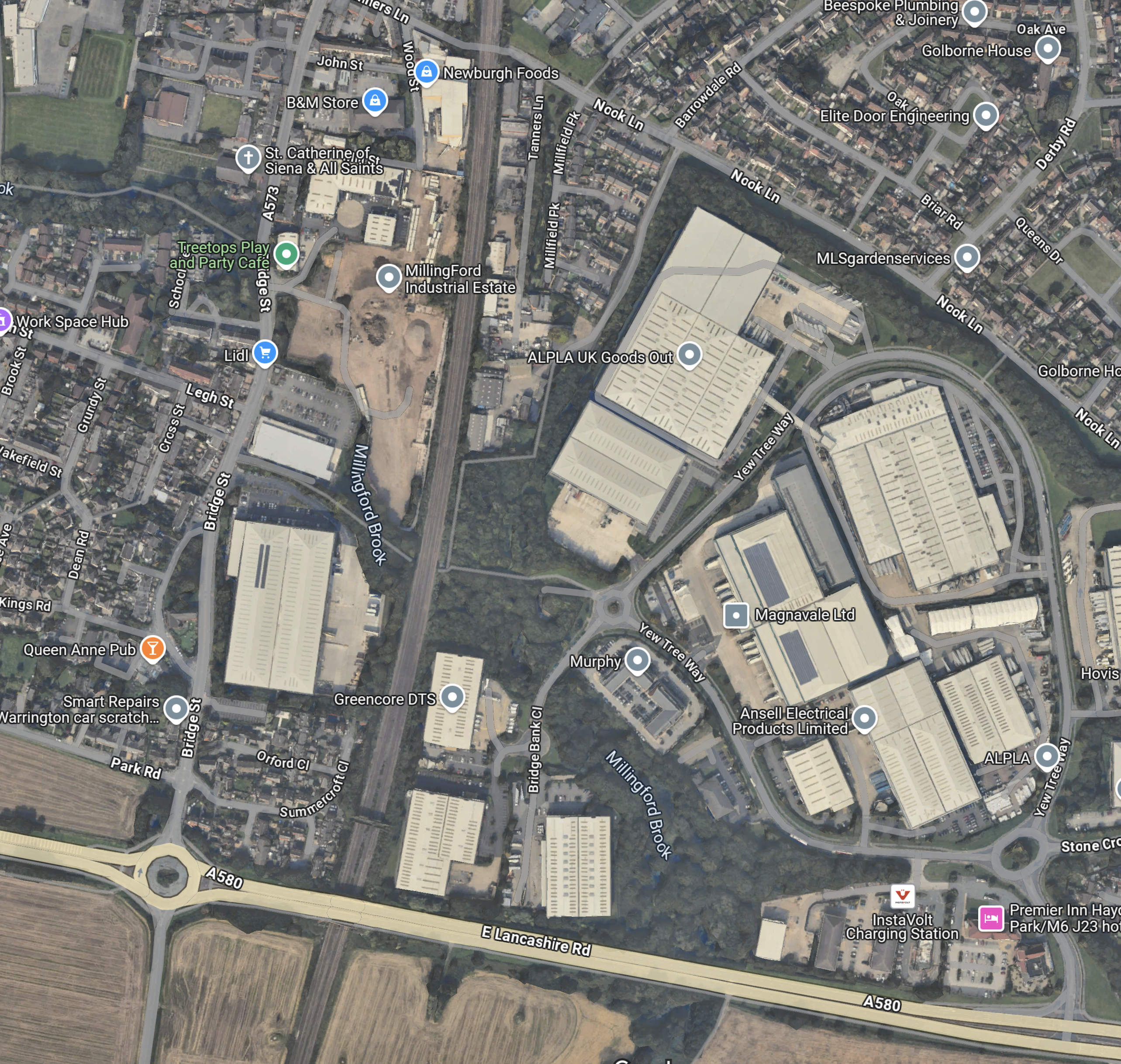
Note.
- The A 580, which is one of main Liverpool and Manchester roads going across the bottom of the map.
- If you drive West along the A 580 from here, you connect to the M6 at Junction 23 ; Haydock Island.
- Continuing West takes you to Liverpool.
- Going East along the A 580 takes you to the M60 and Manchester.
- Running North-South up the map is the West Coast Main Line and currently, it appears to be four electrified tracks all the way to Wigan North Western station.
- Nook Lane crosses the West Coast Main Line at the top of the map.
This second Google Map shows the West Coast Main Line through Golborne.
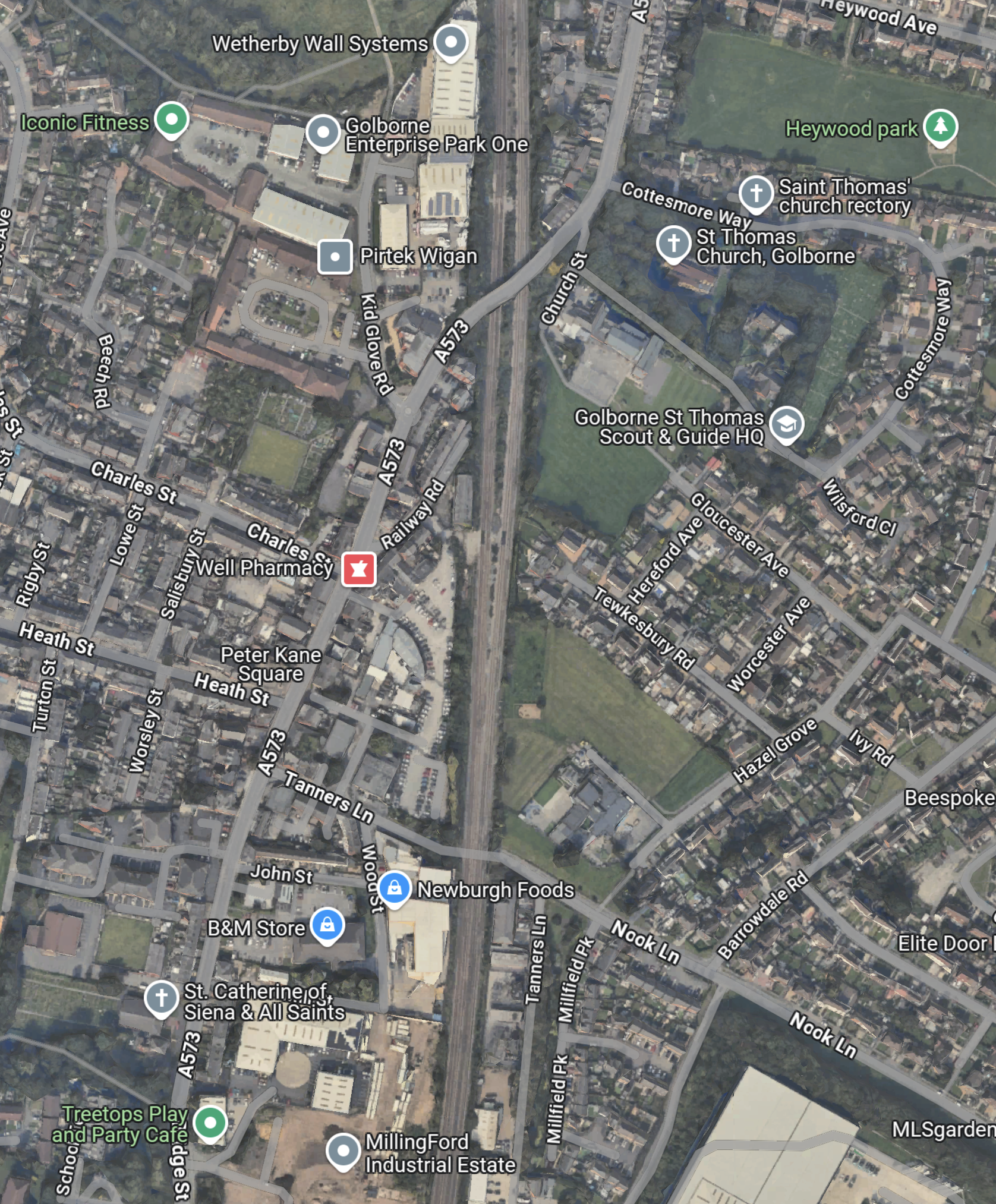
Note.
- The four tracks of the West Coast Main Line run North-South up the centre of the map.
- Nook Lane can be clearly seen.
My best guess is that the station will be built to the South of where the A 573 crosses the West Coast Main Line.
- A picture in the BBC article shows four platforms, with three lifts to give full step-free access.
- It looks like there is a brownfield site to the South of this location, where parking could be provided.
The new Golborne station could be a bit more than a simple station serving a small town.
I have a few thoughts.
How Many High Speed Two trains Will Go Through Golborne Station?
This graphic shows High Speed Two services, as proposed by HS2 after Phase 2b opens.
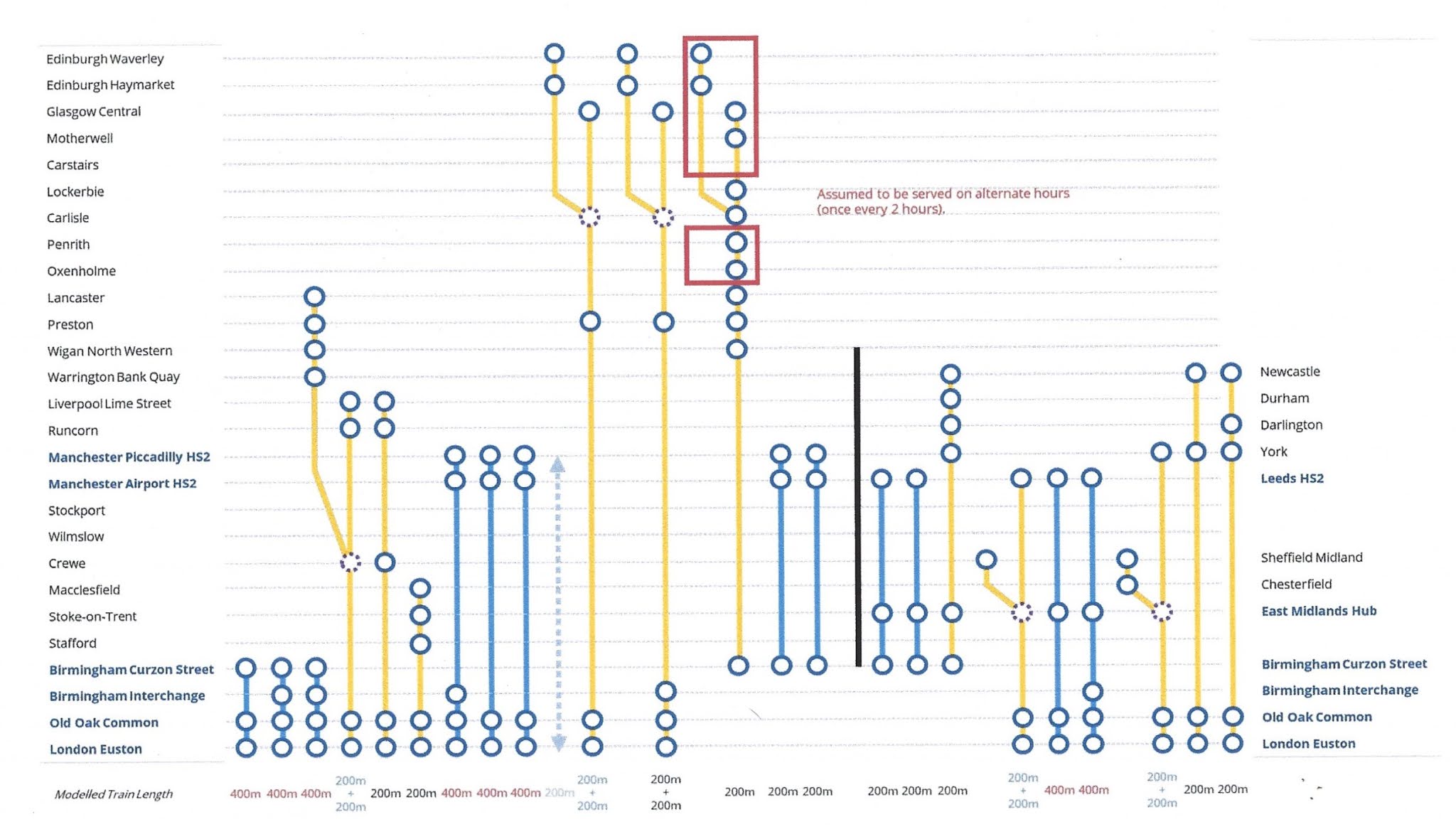
Note.
- Services shown in blue are run by High Speed Two Full Size trains.
- Services shown in yellow are run by High Speed Two Classic-Compatible trains.
- Each service will run once an hour.
- The nine services to the right of the vertical black line have been scrapped.
- There are elevenservices that terminate at Euston in every hour.
- Eight are High Speed Two Full Size trains, which are 400 metres long.
- Two are single High Speed Two Classic-Compatible trains, which are 200 metres long.
- Three are pairs of High Speed Two Classic-Compatible trains, which are 400 metres long.
How Many High Speed Two trains Will Go Through Golborne Station?
This will be the same as the number of trains going through Wigan North Western station.
These are.
- London Euston and Lancaster – 200 m.
- London Euston and Glasgow/Edinburgh – 400 m.
- London Euston and Glasgow/Edinburgh – 400 m.
- Birmingham and Glasgow/Edinburgh – 200 m.
Note.
- That is only four trains per hour (tph).
- As High Speed Two will be digitally signalled, I suspect that four fast tph and four slow tph could be accommodated between Wigan North Western and Golborne.
- The problem could be eased by running 125 mph or even 140 mph trains on local services on the West Coast Main Line.
- But the major problem will be North of Wigan North Western station, where there are only two tracks.
I also wonder, if increasing the number of high speed paths to five, would mean that no 400 m. trains would need to run North of Crewe, so there would be less need for platforms to be lengthened.
Is Wigan North Western Station Ready For High Speed Two?
I answered this question in 2019 in Is Wigan North Western Station Ready For High Speed Two? and felt, it was getting close.
I shall visit this summer and see if it is getting closer to being ready.
Adding Southport And Stalybridge Via Atherton To The Bee Network
This article on the Railway Gazette has a list of the lines, that will be transferred between Northern Rail and the Bee Network.
Included in the list is this line.
Southport And Stalybridge Via Atherton.
I think this route could be the following.
- The Eastern terminal would be Stalybridge.
- The Northern terminal would be Southport.
- Intermediate stations would be Meols Cop, Bescar Lane, New Lane, Burscough Bridge, Parbold, Appley Bridge, Gathurst, Wigan Wallgate, Hindley, Daisy Hill, Hag Fold, Atherton, Walkden, Swinton, Salford Crescent, Salford Central, Manchester Victoria and Ashton-under-Lyne
- The route is partly electrified with 25 KVAC overhead.
- Mich of the route has a 75 mph operating speed.
Currently, this service runs hourly, by a slightly different route to that proposed.
This is my thought.
Battery-Electric Trains
Consider.
- The route could be ideal for battery-electric trains.
- Central Manchester and Stalybridge will soon be electrified.
- A charging station could be added at Southport station.
Merseyrail’s Class 777 trains or something similar would surely do nicely.
Manchester Buzzing To Put Rail Into Its Bee Network
The title of this post, is the same as that of this article on the Railway Gazette.
These two paragraphs introduce the article.
Locally branded stations and integrated ticketing are among the improvements to Greater Manchester’s local rail services envisaged from 2025 under a landmark devolution deal.
The deal agreed with the government on March 15 brings GM Mayor Andy Burnham and local council leaders significant additional powers in several policy areas, including transport. The single funding settlement is similar to those in place covering Scotland and Wales, but this and a similar deal for the West Midlands is the first time such a flexible grant has been granted to English regions.
Included in the deal are the following.
A London-Style Network
It is described in this paragraph.
Greater Manchester has set itself a target of rolling out so-called ‘London style’ transport across modes by 2030. While Transport for Greater Manchester already directly manages the Metrolink light rail network, buses are now being brought under tighter regulation through a franchising model, and TfGM aspires to introduce integrated smart ticketing across the city-region. Today, while paper travelcards can be bought covering buses, Metrolink trams and trains, these are poorly marketed and often more expensive than the fares offered by individual bus operators; there is also no ability for daily or weekly price capping to be introduced.
I hope that Manchester follows London’s rules.
- One card and any bank or credit card gives full access to buses, trains and trams.
- Daily, weekly and monthly caps.
- Freedom Pass or equivalent for those that need them.
- Comprehensive transport mapping.
- Visitor-oriented travel information offices in major stations.
I feel very strongly about the last two, as measures like these encourage visitors to return.
Trials of the ticketing should start by the end of the year.
The Bee Network
This is outlined in this sentence.
Together, the local transport network is to be branded ‘the Bee Network’, reflecting an enduring emblem of the area’s industrial heritage.
I like the name.
- The bee is one of the symbols of the city according to this Wikipedia entry.
- Bees are on the coat of arms of the City of Manchester.
- Bee symbols are used by Manchester and local businesses.
But perhaps most importantly, the bees were a symbol of recovery of the city after the May 2017 Manchester Arena bombing.
The Addition Of Twenty Percent Of the Local Rail Network
This is outlined in this sentence.
Under the agreement announced on March 15, around 20% of local rail services, currently operated by Northern Trains and managed under contract with the Department for Transport, will be brought into the Bee Network.
These rail services are to be added.
- Wigan – Manchester Victoria via the West Coast Main Line and a proposed station at Golborne, which could open from 2025.
- Stalybridge – Southport via Atherton
- Glossop – Hadfield – Manchester Piccadilly
- Rose Hill Marple – Manchester Piccadilly
- Buxton – Manchester Piccadilly
- Alderley Edge – Manchester Piccadilly
I shall discuss each route in detail separately.
New Trains?
Consider.
- The Wigan and Alderley Edge routes are shared with 125 mph trains.
- The diesel trains on the Buxton and Rose Hill Marple routes will need to be replaced.
- The Buxton route is a very stiff climb.
- Do the Class 323 trains to Glossop and Hadfield need to be replaced?
- The Buxton, Southport and Rose Hill Marple routes are not fully-electrified.
I would have two separate fleets.
A small number of 110 mph electric trains for the Wigan and Alderley Edge routes. Class 350, 360, 379 and 386 trains would be possibilities.
An appropriate number of electric for the other routes. Some would have a battery capability to handle the partially-electrified routes. Merseyrail’s Class 777 could be ideal.
Note.
I am fairly certain, that the Class 777 trains can run as tram-trains, which would be useful for Manchester.
A rough calculation indicates that the ideal battery sizes for Southport and Buxton, could be similar.
The battery for the Rose Hill Marple route would be smaller.
There could be advantages if Merseyrail and Manchester had similar high quality trains.
Integration Of The Various Modes Of Transport
This is outlined in this paragraph.
Meanwhile, the Greater Manchester Combined Authority is to establish a North West Regional Business Unit and GM Rail Board to improve local scrutiny of rail service performance and shape the integration with other modes in the Bee Network.
This is critical to the successful development of the Bee Network.
Conclusion
It’s now up to Manchester to first make it work and then develop it for the benefit of the people and businesses of the City, and not forgetting the visitors.
Integration Of The Various Modes Of Transport
This is outlined in this paragraph.
Meanwhile, the Greater Manchester Combined Authority is to establish a North West Regional Business Unit and GM Rail Board to improve local scrutiny of rail service performance and shape the integration with other modes in the Bee Network.
This is critical to the successful development of the Bee Network.
Huge Step Taken As Greater Manchester Takes Over First Rail Station
The title of this post, is the same as that of this article on Rail Technology Magazine.
This is the introductory paragraph.
Today (1 Feb) marks a significant moment for Manchester’s long-term vision for rail as Transport for Greater Manchester takes over operation of Horwich Parkway Station.
These are some pictures of the station.
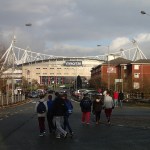
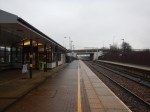
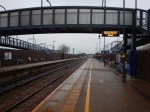
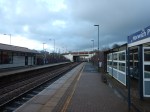
Horwich Parkway station is a fairly typical parkway station, that is also a destination in its own right, as Bolton Wanderers stadium, a shopping centre, a very much bog-standard Premier Inn and a University campus are nearby.
Services At Horwich Parkway Station
Currently, these services call at the station.
- Hazel Grove and Blackpool North
- Manchester Airport and Blackpool North
- Manchester Victoria and Preston
Note.
- All services are electric and run by Northern.
- All services are one train per hour (tph)
Some TransPennine Services also pass through on their way between Manchester Airport and Scotland.
My Thoughts
These are a few thoughts.
Local Authority Or Remote Management?
I like the concept of stations being managed by local authorities.
When I moved back to London from Suffolk nearly a dozen years ago, the stations in North East and East London were managed by Greater Anglia from Norwich.
- Many of these stations were very shabby.
- Many of these stations have now been taken over by Transport for London.
- Stations are now managed by either the London Overground or Tfl Rail.
- Stations seem to have improved and they are in many cases, a lot cleaner.
Perhaps, the shorter communication links to Senior Management mean, that problems get solved. Or does the local councillor know the right person to kick?
Hopefully, we’ll see a more efficient station at Horwich Parkway.
Facilities
Consider.
- There are ramps to the footbridge.
- There is a booking office.
- Previously, this station was managed by Northern
It is one of those stations that on a cold winter’s day can be a bit bleak.
Hopefully, Transport for Greater Manchester will be improving the station.
Four Trains Per Hour?
Birmingham, Liverpool and London seem to like the concept of Turn-Up-And-Go stations with a frequency of four tph.
Would Horwich Parkway station benefit from this frequency?
Two Trains Per Hour To And From Manchester Airport?
This may be beneficial,
Perhaps some of the TransPennine Express service between the Airport and Scotland could call?
Certainly, a sort out of train services at Horwich Parkway, led by Transport for Greater Manchester could be beneficial for passengers and train operating companies.
Conclusion
I shall be interested to see, if the station is improved.
Tyne And Wear Metro: Swiss Firm Stadler To Build New Fleet
The title of this post is the same as that of this article on the BBC.
This is the introductory paragraph.
Swiss firm Stadler has won a £362m contract to build a new fleet of trains for the Tyne and Wear Metro.
And this is one of Stadler’s visualisations of the trains for the Tyne and Wear Metro (T & W).
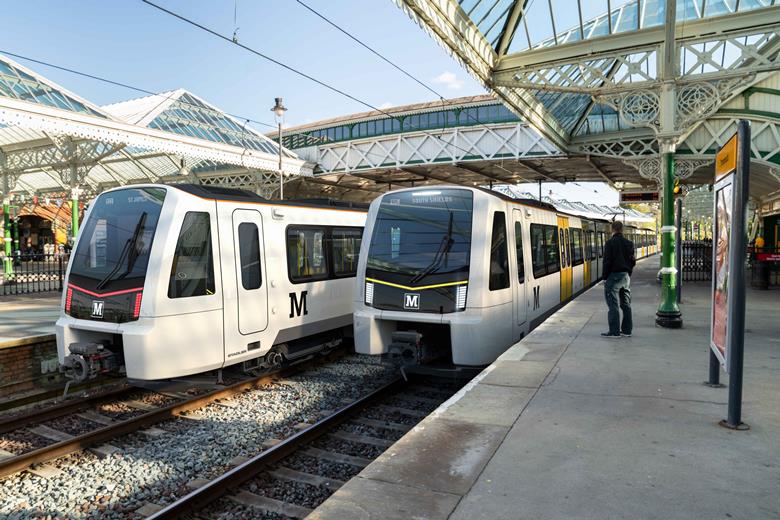
Compare this with a Stadler picture of a Class 777 train, that will soon be appearing on Merseyrail in Liverpool.
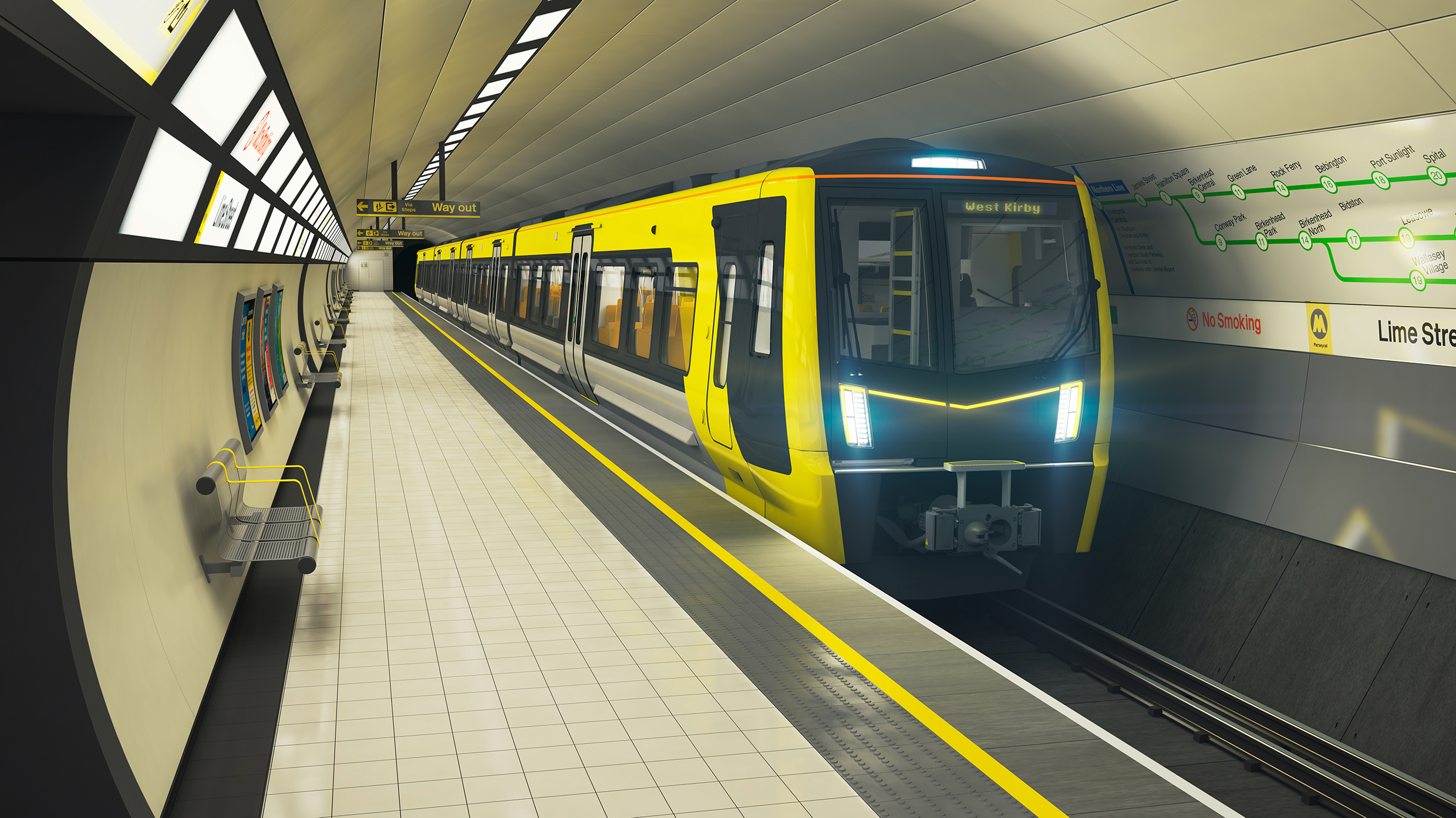
They would appear to be two very similar trains.
- The same headlights and stylised M on the front.
- One pair of double passenger doors in the first car.
- Both new trains are articulated with four sections.
- Train widths are Merseyrail Old – 2.82 metres, T & W Old – 2.65 metres and Merseyrail New – 2.82 metres.
- The Merseyrail trains have a 75 mph operating speed and the T & W trains have one of only 50 mph.
The T & W trains have a pantograph and overhead electrification and the Merseyrail trains use third-rail electrification.
More Details On The Tyne And Wear Trains
This page on the NEXUS web site is entitled Nexus Unveils £362m New Tyne And Wear Metro Trains.
This is two paragraphs.
The new trains will cut Metro’s high voltage power consumption by 30% while providing 15 times better reliability than the current fleet. Metro’s 36 million passengers will benefit from modern features including wifi, charging points, air conditioning and a step-change in accessibility.
Among new features will be an automatic sliding step at every door of the new trains, making travel easier for Metro’s 50,000 wheelchair passengers as well as people with children’s buggies, luggage or bicycles.
The size of the energy saving, indicates that the trains will probably be using regenerative braking.
As it has been disclosed that the new Merseyrail trains will have a small battery for depot movements, will this also be used to handle the regenerative braking.
More details of the trains will be disclosed in the coming months.
Merseyrail And The Tyne And Wear Metro Are Similar
I have ridden Merseyrail many times and the Tyne and Wear Metro perhaps five times and it is surprising how similar the two systems are.
- They are partly in tunnel.
- There are a range of stations, including both ancient and modern, simple and complex.
- Merseyrail is powered by 750 VDC third rail electrification and T & W by 1500 VDC overhead electrification. The power electronics on the two fleets, won’t be that different.
- Both operators have ambitions to use 25 KVAC overhead electrification to extend services.
- Both operators have ambitions to extend services on lines, that currently have no electrification. Merseyrail want to go to Preston, Skelmersdale, Warrington and Wrexham and T & W want to go to Blyth and Ashington along the Northumberland Line.
It is no surprise to me, that Merseyrail and T & W have chosen to use two versions of the same Stadler train.
Expansion Of The Networks
Both networks are ambitious and it appears to me, that they have ordered a train, that could be used to expand their networks.
Merseyrail
Merseyrail have proposed these expansions at various times.
- Extension of the Northern Line from Ormskirk to Preston
- Extension of the Northern Line from Hunts Cross to Warrington
- Incorporation of the Borderlands Line from Bidston to Wrexham into the Wirral Line as a new branch.
- A new branch of the Northern Line to Skelmersdale via the new station at Headbolt Lane.
- Passenger services on the Canada Dock Branch.
Merseyrail now have the trains to handle this expansion.
- They may need to purchase a few extra trains.
- Some charging points or electrification may be needed.
Note that Bidston and Wrexham is less than thirty miles of unelectrified line, so I suspect that the new trains can handle this range.
Other places within a similar range include.
- Preston from Ormskirk
- Wigan Wallgate from Kirkby
- Manchester Oxford Road from Hunts Cross, via Warrington Central.
- Chester from Liverpool Lime Street via Runcorn, Frodsham and Helsby.
The four terminal stations all have existing bay platforms.
Tyne And Wear Metro
The Tyne And Wear Metro have proposed these expansions at various times.
- Sunderland city centre to Doxford Park
- South Shields to Sunderland
- Washington, either via the disused Leamside line or a new route
But as the Government is funding a study into linking Blyth and Ashington to Newcastle, which I wrote about in £500m Fund To Restore Beeching Rail Cuts Goes Ahead Amid Criticism, I wouldn’t be surprised that this route is developed.
A lot of my comments about expanding the Merseyrail network, can be applied to the T & W.
- They may need to purchase a few extra trains.
- Some charging points or electrification may be needed.
None of the proposed extensions seem particularly long and places like Blyth, Ashington and Washington should be able to be reached on battery power.
Tram-Train Operation
The Wikipedia entry for Merseyrail has a section called tram-trains.
Two possible routes are indicated.
- Liverpool Lime Street to John Lennon Airport, using street-running from Liverpool South Parkway.
- Kings Dock to Edge Hill
I have heard others mentioned.
The Wikipedia entry for the Tyne and Wear Metro also mentions street-running.
Stadler have extensive experience of trams and tram-trains and built the Class 399 tram-trains for the Sheffield Supertram.
Stadler also provided the trains for the unique tram-train system in the German town of Zwickau, where diesel multiples units share the tram tracks to access the town centre.
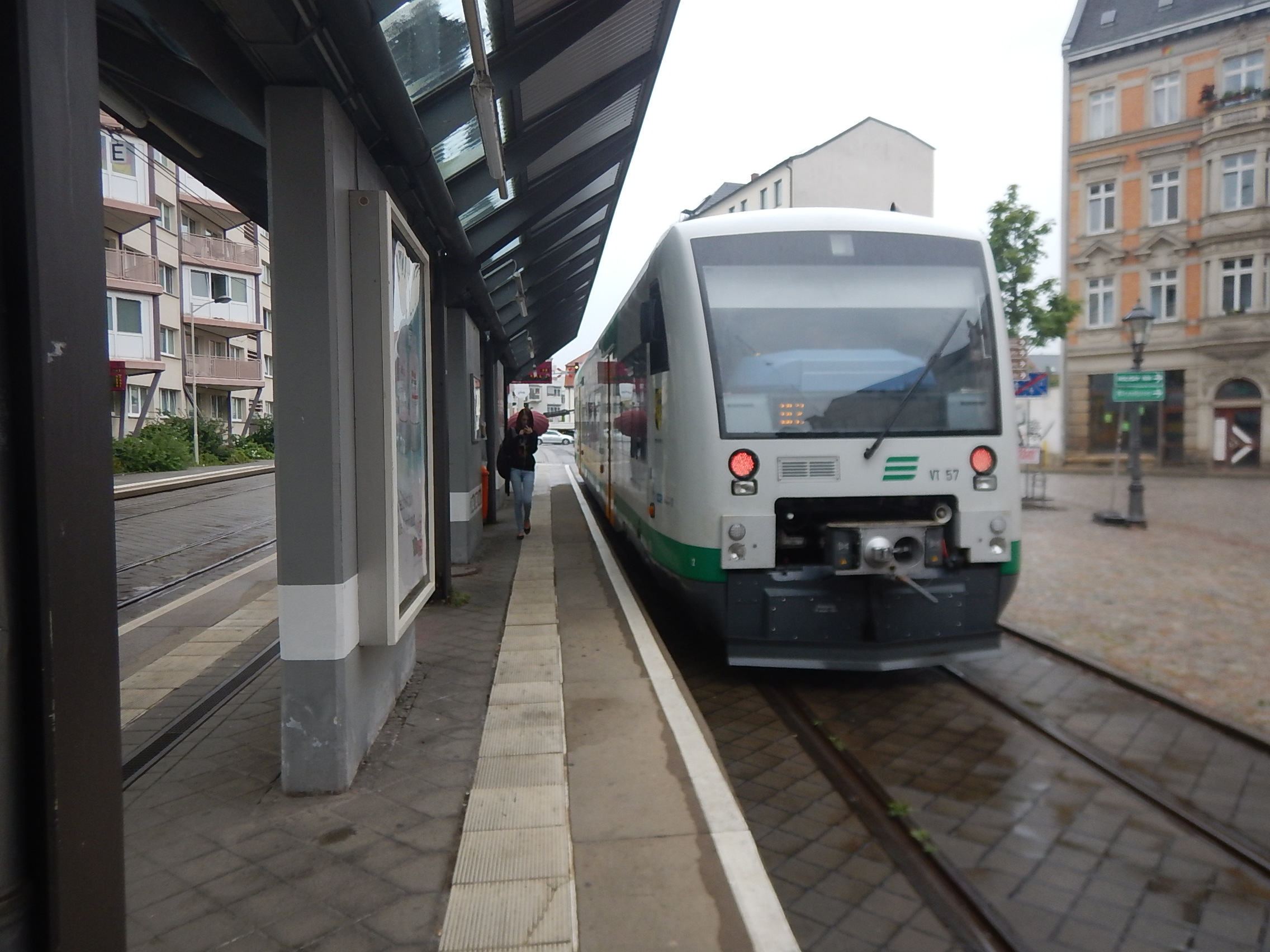
The picture shows the train at its stop in the centre.
I’m sure Stadler know how to enable street-running with the UK’s smaller trains.
Stadler’s trains, trams and tram trains also seem to have a high degree of articulation and seem to be able to take tight corners with ease.
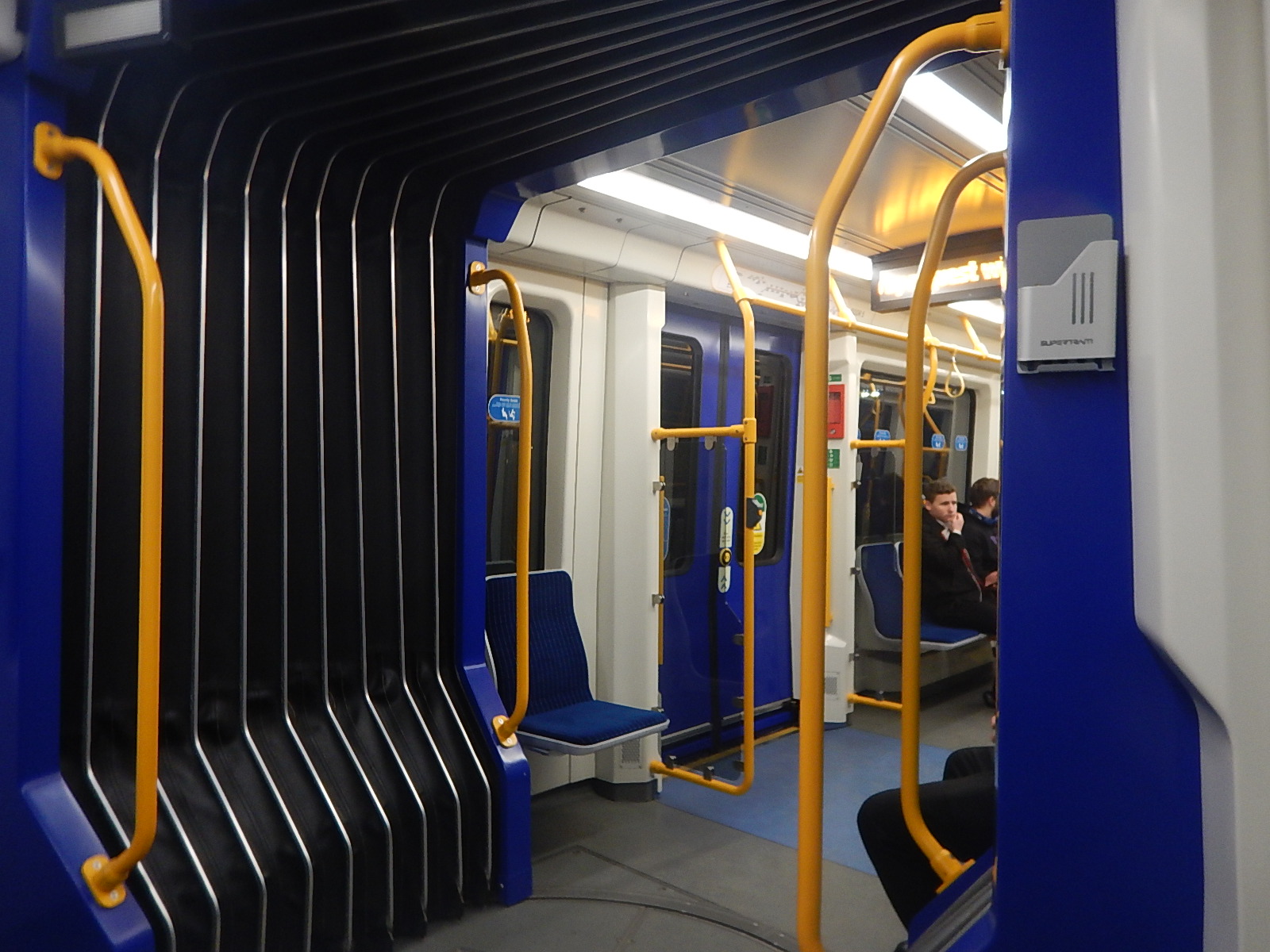
The picture was taken inside a Class 399 tram-train, as it traversed the tight curve under the M1 motorway, where the tram and the train sections of the route to Rotherham join.
Looking at the pictures of the Class 777 trains, I feel they could be able to take tighter curves than most trains.
The Dead Elephant In The Room
Several local services on Merseyside and in the North East are run by Northern, which is now being taken over the Government.
The Department for Transport, hasn’t disclosed any plans yet, but it is likely that some routes could be handed to Merseyrail and the T & W.
There is a loose precedent for this happening. In North-East London the poorly performing Lea Valley Lines from Liverpool Street to Chingford, Cheshunt and Enfield Town were moved from Greater Anglia to London Overground in 2015. No-one feels they should be returned and there are rumours that more services in the area will move to the London Overground.
So what services could be moved?
Merseyrail
These diesel services could surely be moved to Merseyrail.
- Omrskirk and Preston – 16 miles
- Liverpool Lime Street and Manchester Oxford Road via Warrington Central – 27 miles
The distances are the length of track without electrification.
It could also be argued that Greater Manchester would get its share of the Northern routes, but I can envisage Class 777 trains or similar running the following routes.
- Southport and Manchester Victoria – 27 miles
- Kirkby and Manchester Victoria – 28 miles
As before, the distances are the length of track without electrification, but these could be reduced considerably with electrification from Salford Crescent to Wigan Wallgate.
It should be noted that Greater Manchester has ambitions to run tram-trains to Wigan Wallgate via various routes.
The demise of Northern probably allows these routes to be taken over by Greater Manchester.
- Manchester Piccadilly and Buxton – 16 miles
- Manchester Piccadilly and Hadfield/Glossop – Electrified
- Manchester Victoria and Blackburn – 14 miles
- Manchester Victoria and Clitheroe – 24 miles
- Manchester Victoria and Rochdale – 11 miles
- Manchester Victoria and Stalybridge – 8 miles
- Manchester Victoria and Wigan Wallgate – 10 miles
Again, the distances are the length of track without electrification.
Buxton and Clitheroe could be difficult because of the gradients involved, but as in South Wales, bi-modes might be the solution if the routes were run back-to-back.
This simple analysis shows how Northern’s demise will ask questions all over the North.
Tyne And Wear Metro
These diesel services could surely be moved to the T & W.
- Newcastle and Morpeth – Electrified
- Newcastle and Chathill- Electrified
I also think, that these services could be restructured, if the Blyth and Ashington routes are developed for the T & W.
The trains could also reach to Hexham, which is just 22 miles from electrification.
Middlesbrough is probably too far, as the station is thirty five miles from the electrification at Sunderland.
But electrification of the Durham Coast Line would allow the T & W Metro to serve the new station at Howden and reach Middlesbrough and possibly Nunthorpe.
Conclusion
I can see both Merseyrail and the Tyne and Wear Metro significantly extending their networks in the next few years.
The new trains, with their batteries and dual-voltage capability are built for expansion.
Tram-train or street running will help.
Several important new areas are within battery range.
I can also see other cities using similar Stadler technology to create local Metros.
Manchester, Middlesbrough, Preston and Sheffield come to mind.
Using similar technology would surely allow joint services and sharing of knowledge and designs to enable cost savings.
TfGM Announces Contactless Payments On Metrolink Trams
The title of this post, is the same as that of this article on Rail Technology Magazine.
This is the first paragraph.
Passengers will be able to ‘touch-in’ using their contactless cards on Manchester Metrolink trams from July 15, Transport for Greater Manchester (TfGM) announced today.
I shall be there with my contactless credit card on Monday week, to check that this is not fake news.
I look forward to the day, when Liverpool, Manchester, Sheffield and Leeds are all one contactless card area for trams, trains and buses.
When you consider that the combined area will be smaller than Greater London’s contactless area and that the distance between Lime Street and Leeds or Sheffield, is less than Reading to Shenfield, which will be contactless when Crossrail opens, the problems can’t be technological.
If the leaders of the four major Northern cities can agree this advance in ticketing, they will do more for the North, than any other short-term transport development will achieve.
 The Anonymous Widower