Crowded Roads In West London
Today, I tried to get to West Drayton station to have a lunchtime drink with an old mate from Cambridge, who had called me up yesterday, as he might have needed a second person to help him with one of his robotic machines.
But it all went pear-shaped at Paddington, where trains to West Drayton were very much delayed and I was advised to take the Underground to Greenford station and then use a bus.
But at Greenford, there wasn’t a bus map or anybody to ask, so in the end I took a bus to Ealing Hospital, where I thought I knew I could get a bus to West Drayton. But there wasn’t! So I thought about giving up and instead, I got a bus to Ealing Broadway station, to get back to Paddington. But I arrived at Ealing Broadway station, just before a train to West Drayton arrived. I caught that, had a drink with my friend and then caught a train back to Paddington. He didn’t need me to help, as all he needed was a pair of eyes to tell him what was happening at the sharp end of his machine and the client had turned up with his glasses.
So I achieved my objective and also had a wander round the Boroughs of Ealing and Hillingdon on buses and trains.
I trundle round North and East London most of the time and sometimes I even cross the River and go to the Deep South.
But I do find West London the most crowded, with buses slowed by all the traffic on the roads and infrequent very busy trains.
The West of London needs improvement in public transport.
I sometimes think, the traffic has got worse over the forty-six years, I had a driving licence.
Rail And Underground Lines
There are several lines going West from Central London, which include.
- The Chiltern Line from Marylebone to West Ruislip
- The Central Line to West Ruislip
- The Metroplitan Line to Uxbridge
- The Piccadilly Line to Uxbridge
- The Great Western Main Line tfrom Paddington to Reading and Heathrow
- The Piccadilly Line to Heathrow
Going further round, there are several lines from Waterloo going to the South West.
Only one line; the West London Line goes North South, although there used to be others.
The network is probably more sparse than some other directions from London.
Reliance on Cars And Buses
I think this rather thin coverage, puts a heavy radiance on cars and buses, which might explain the crowded roads.
Crossrail
Crossrail will bring improvement with the following Off Peak services in trains per hour (tph), along the slow lines of the Great Western Main Line.
- 4 tph to Heathrow Terminal 4
- 2 tph to Reading
- 2 tph to Maidenhead
Note.
- The central core tunnel probably has a limit of 24 tph.
- The service has a good balance between the various destinations.
- There will also be Great Western Railway services.
- Looking at the Crossrail schedule, there is scope to adjust the schedule on each branch.
I think that as Crossrail develops and the line and its passengers learn more about each other, the service pattern of Crossrail will change.
If I have a worry about Crossrail, it is that few of the stations towards Central London have many parking spaces, so will walking, cycling and the buses be adequate for Crossrail to tap its full potential?
The West London Tram
The West London Tram was proposed by Ken Livingstone in 2002.
These paragraphs from Wikipedia describes the tram and its route.
The West London Tram was a proposed on-street light rail line that was to run along the Uxbridge Road (A4020) corridor in West London, England. The scheme is promoted by Transport for London (TfL) but opposed by the councils of all three London Boroughs through which it would run. It was postponed indefinitely on 2 August 2007
The tram route was planned to run between Uxbridge and Shepherd’s Bush, serving Hillingdon, Southall, Hanwell, West Ealing, Ealing and Acton en route and would have completely replaced a number of equivalent London Bus routes.
If it had been built it would have had good connectivity to Crossrail and the Central Line. But the view of those against the project prevailed.
In my trip today, you could see why probably every car driver in the area, would be against a scheme like the tram. Only at places on the route, where there was a wide island of grass dividing the carriageways, would the tram not have increased congestion.
It looks like the thirty million pounds spent was wasted.
Crossrail And/Or West London Tram?
This Google Map shows the area around the three stations of Hanwell, West Ealing And Ealing Broadway.
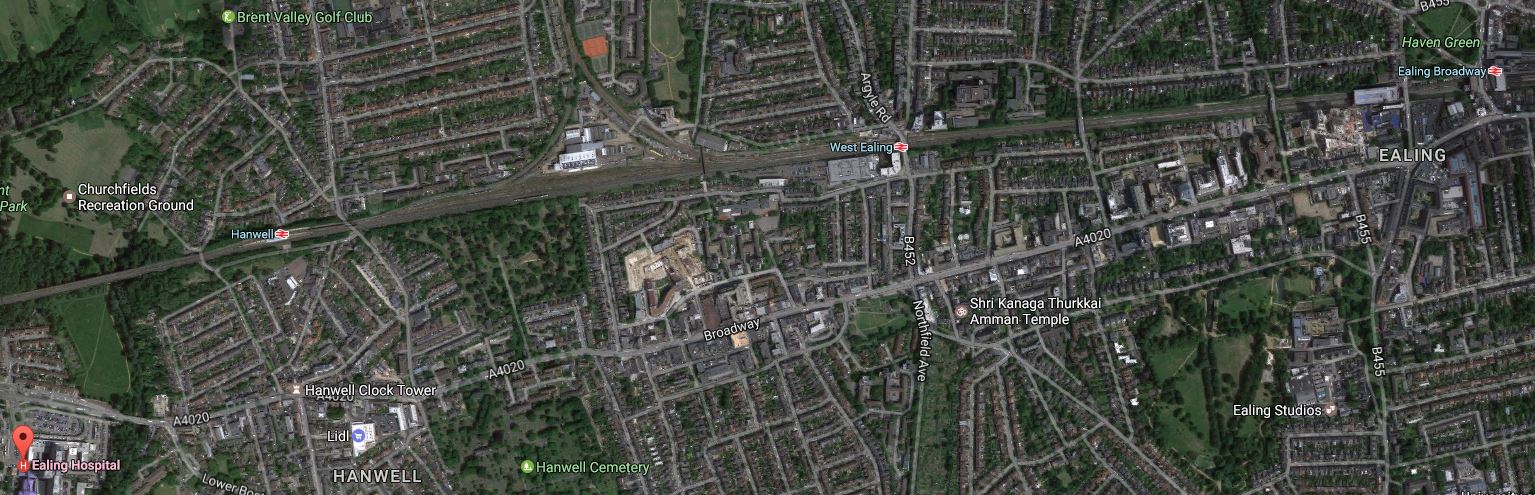
Great Western Main Line And The A4020 Through Ealing
Note.
- The Great Western Main Line across the middle.
- The A 4020 runs South of and parallel to the railway.
- Ealing Hospital is marked by the red arrow in the bottom left of the map.
I asked in the Header to this section if it should be And/Or between the projects.
Undoubtedly, it should be Or! Taxpayers can’t afford both!
In comparing the two, I believe the following points are valid.
- Trams stop about three or four more times than trains.
- The train is faster.
- The tram doesn’t serve Old Oak Common station or Heathrow.
- Trams annoy drivers in the same way that bendy buses do.
- Crossrail has a rich connection pattern compared to the tram.
- Pedestrians probably prefer trams, whilst drivers prefer trains.
The politicians decided and chose the trains.
Making More Of The Railways
If the streets are crowded can we use the existing railways to inject greater capacity into the existing railways in West London?
The key to this, as it sits in the middle of so many lines is the creation of a new station at Old Oak Common.
I will now summarise the possible rail projects that can be developed in West London
Chiltern Railways To Old Oak Common
Chiltern Railways have a capacity problem at Marylebone and one way to alleviate it would be for Chiltern to create a second terminal at Old Oak Common station, which could be accessed using an improved New North Main Line.
There is a real possibility of this project going forward and it could have many worthwhile features.
It would add another East-West route across West London, but with the comprehensive connectivity of Old Oak Common.
Chiltern Metro Creation
Wikipedia says this about a Chiltern Metro.
New Chiltern Metro Service that would operate 4+tph for Wembley Stadium, Sudbury & Harrow Road, Sudbury Hill Harrow, Northolt Park, South Ruislip and West Ruislip. This would require a reversing facility at West Ruislip, passing loops at Sudbury Hill Harrow, and a passing loop at Wembley Stadium (part of the old down fast line is in use as a central reversing siding, for stock movements and additionally for 8-car football shuttles to convey passengers to the stadium for events).[73] This ‘Chiltern Metro’ service was not programmed into the last round of franchising agreements.
When I wrote Could A Chiltern Metro Be Created? and came to the conclusion, that it might be possible, I got several positive responses.
Greenford Branch Improvements
The Greenford Branch Line connects the Great Western Main Line and the New North Line.
This map from carto.metro.free.fr shows the Northern end of the branch, where it joins the New North Line.
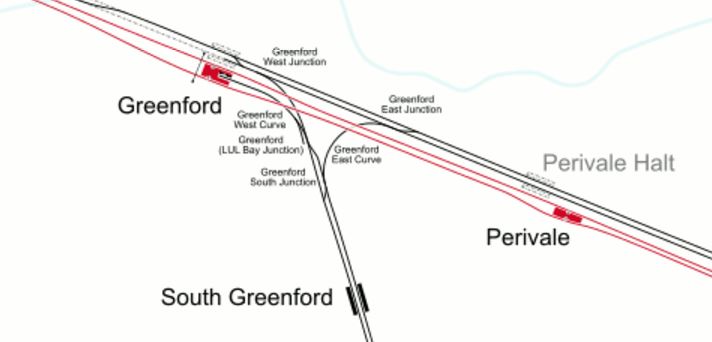
Northern End Of The Greenford Branch
Whilst this map from carto.metro.free.fr shows the Southern end of the branch, where it joins the Great Western Main Line.
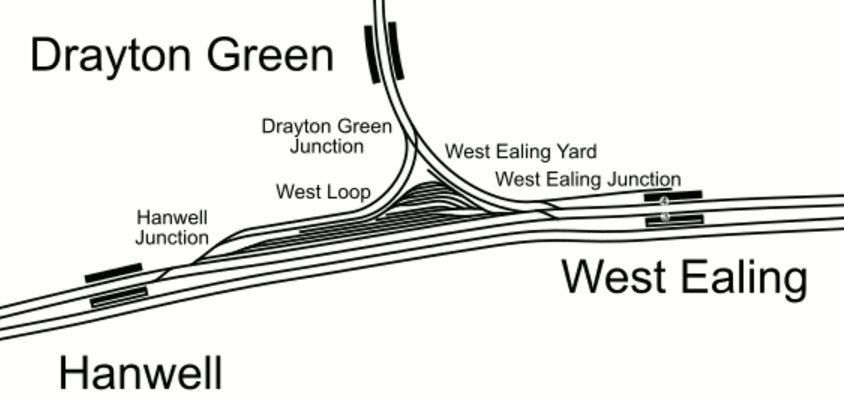
Southern End Of The Greenford Branch
What service the line will get after Crossrail opens has still to be decided,
- 4 tph between West Ealing and Greenford stations is certainly possible.
- There are those, including Ealing Council, who don’t like Greenford losing its direct connection to Paddington.
- A rebuilt Greenford station could incorporate Chiltern services.
As the connections at both ends of the branch allow trains to go in either an East or West direction, could this be useful in creating services between the two main lines?
Brentford Branch Reopening
I wrote about this in Could The Golden Mile In Houslow Get A Station?
The Brentford Branch could be a useful branch, worked by a shuttle train!
Hounslow Loop Line Improvements
The Hounslow Loop Line, which has a strong presence on both sides of the river and takes passengers to and from Waterloo, is being improved to increase capacity.
Could we see the Overground opening new services along the North London Line to perhaps Brentford, Hounslow and Feltham stations?
The route is used by freight trains, and Transport have suggested using the route to create an orbital Overground route.
Conclusions
The railways will take the strain in West London, after the abandonment of the West London Tram.
Improving Imperial Wharf Station
In the June 2016 Edition of Modern Railways, there was an article entitled Turning South London Orange.
One of the proposals is to create a walkway across Battersea Railway Bridge to give access to Imperial Wharf station from the South Bank of the River Thames.
This Google Map shows the station, the river and the South Bank.
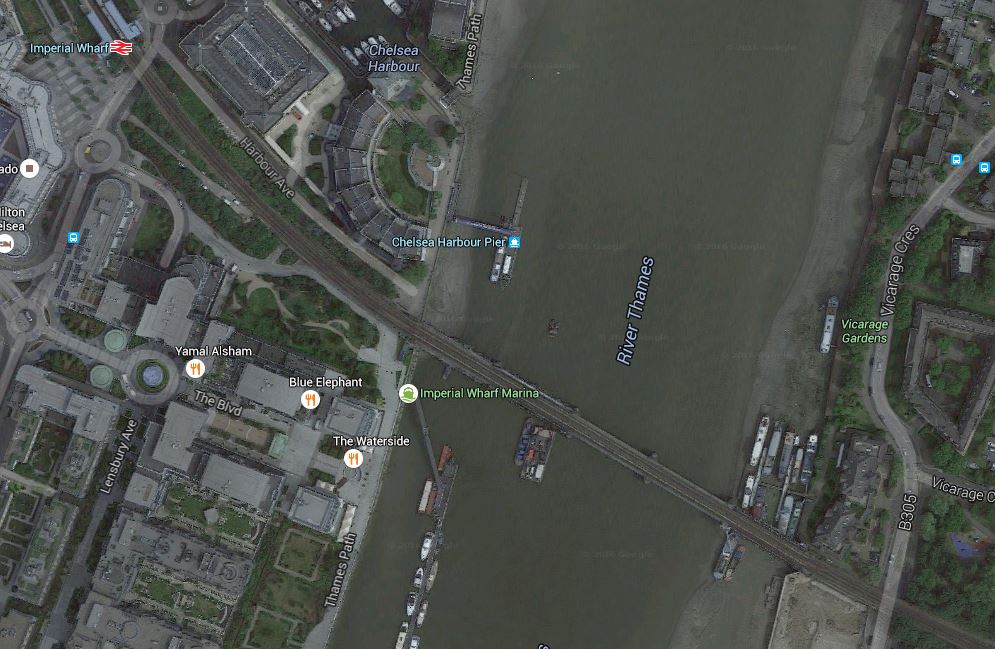
Just to look at this map, shows that the scheme has potential.
- I estimate that the distance is probably about five hundred metres.
- The walkway would also give access to the Thames Clippers at Chelsea Harbour Pier.
- The walkway would give better walking routes in the area and across the river.
Unfortunately, the design of the station is possibly not one, that could accept passengers walking in and out at track level, so without a lot of work at the station, passengers might have to climb down and up to get between the walkway and the platforms.
Battersea Railway Bridge is also a Listed structure and it may be difficult to add a walkway.
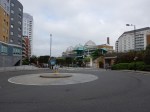
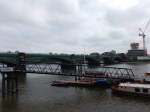
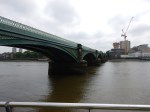
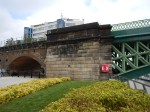
These pictures show the station and the bridge.
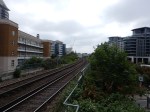
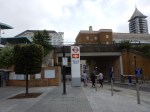
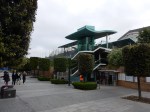
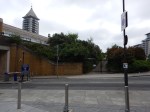

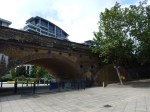
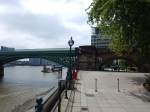
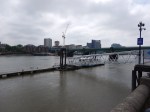
However, it would appear that help is at hand. There are plans for a new footbride called the Diamond Jubilee Footbridge, which will be directly upstream of the railway bridge. This page from the Diamond Jubilee Footbridge web site has a picture and the reasons, why it should be built.
Incidentally, there used to be a Battersea station on the South bank of the River, in the area of Battersea High Street.
This Google Map shows the area.
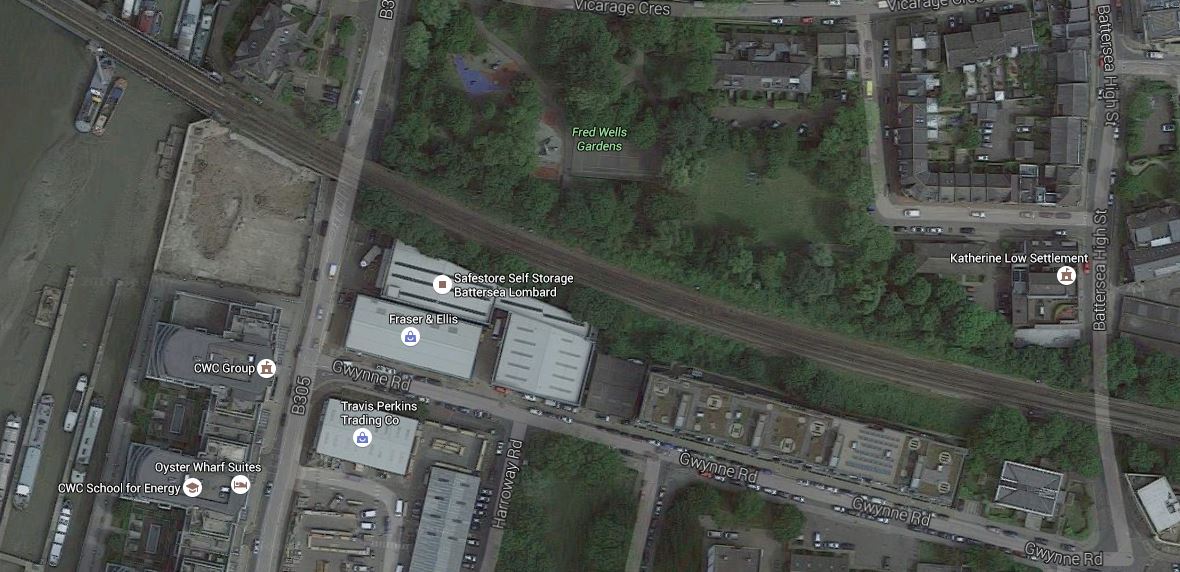
The Location Of Battersea Station
Although, it looks like the station, which was destroyed in 1940s by German bombing, could be rebuilt, I feel that the Diamond Jubilee Footbridge, is a much better way to spend the money.
Does London Need To Get A Grip On Rail Connectivity?
This article in the Standard has a title of Old Oak Common regeneration scheme ‘risks being London’s worst cock-up in 50 years’. This is the first three paragraphs.
Boris Johnson’s flagship regeneration scheme at Old Oak Common is in danger of turning into London’s “worst cock-up in 50 years”, a leading government adviser warned today.
Urban planner Sir Terry Farrell said the £10 billion development, the biggest in Britain, is heading for disaster because of the rush to finish Crossrail.
He blamed politicians for ducking key decisions and said the Mayor was partly responsible for a shortsighted “pass the parcel” approach. Sir Terry said: “If a tenth of the energy he put into the Boris island airport idea had gone into Old Oak Common I feel sure it would have happened without a problem.”
Old Oak Common is going to be a major development of 25,000 homes and 55,000 jobs created over the next fifteen years. A major transport hub will be created at Old Oak Common station will be created, linking some or all of the following lines together.
- Bakerloo Line
- Central Line
- Crossrail
- Dudding Hill Line
- Great Western Main Line
- HS2
- North London Line
- Watford DC Line
- West Coast Main Line
- West London Line
This map shows the plans for Option C of TRfL’s Old Oak Common proposals.
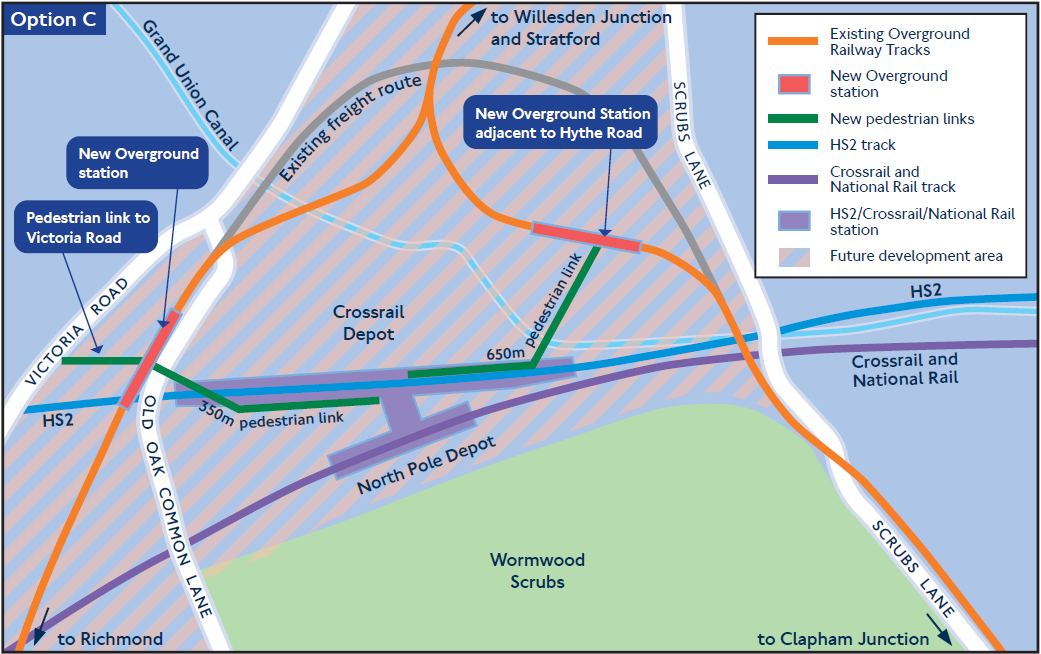
Option C Proposal At Old Oak Common
I wrote about this option in Should An Overground Station Be Built At Hythe Road?
Terry Farrell has said that there is no space between the rail lines to put the piling to support the homes, offices and other developments that will built over the top.
I also believe that the walking routes between the various stations will be far to long and tortuous.
The developers, Transport for London and the rail companies involved all seem to be planning their own parts in isolation.
It seems to echo what I documented in Searching For What Is Going To Happen On The East London Line After The Thameslink Programme Opens, where I was trying to find out how Thameslink will improve my journeys from Dalston Junction using the East London Line.
My correspondence on that issue, would seem to indicate that Thameslink and Transport for London don’t talk to each other and calmly go their own ways.
Someone needs to get a grip on all these big projects at a high level.
Westfield Gets Its Own Overground Station
Shepherd’s Bush, Kensington Olympia, West Brompton and Imperial Wharf stations are the four stations on the West London Line of the Overground, that also served by services between Clapham Junction and Milton Keynes.
Shepherds Bush station has just been updated with longer platforms and a second entrance.
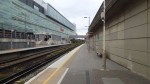
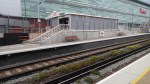
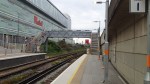

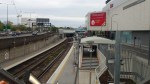
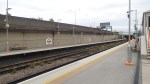


As the pictures show, the new new entrance is by the Westfield shopping centre and there is a light-controlled crossing across the road.
It will be interesting to see how customers take to the new entrance. I go to Westfield occasionally and it is usually because I’m coming back from somewhere in West London and need to buy some food or have lunch. As the centre has a Waitrose and a Carluccio’s in the corner near the station, I would probably use the new entrance to get a train home, as it would be a shorter walk. I doubt I’d use the Overground to go to Westfield, as going by the Central Line is quicker. But for those south of Shepherd’s Bush, it would probably be the exit of choice.
The main reason for the station upgrade would appear to have been a need to accommodate the longer trains on the Milton Keynes services, but I do think that we might see new entrances created at the other end of other Overground stations. I’ve felt for a long time, that Highbury and Islington station could benefit from a second entrance.
I also wonder, if this updating is part of a bigger plan to make more use of the West London Line.
The current Milton Keynes service terminates at its southern end at Clapham Junction, but it used to go through to South Croydon. In fact in November 2014, I used the link to go from Wembley Central to East Croydon. From Clapham Junction, the route was by Wandsworth Common, Balham, Streatham Common, Norbury, Thornton Heath and Selhurst, I would assume the service has been cut back because of Thameslink work, but I do feel that quite a few people could have been inconvenienced by this. I have a friend, who lives in South London, who uses the West London Line to get to matches at Wembley. So he might not be amused by this cutback.
As Clapham Junction is such an important station in South London, perhaps if there was a better connection to Willesden Junction, then the service might find quite a few passengers come out of the woodwork.
If Crossrail builds the threatened station at Old Oak Common, to link to HS2, the current service will be totally inadequate for the demand I’d expect. This is a map of the favoured option at Old Oak Common.
Option C Proposal At Old Oak Common
One of the problems is the number of freight trains that currently use the West London Line. But surely with a good sorting out and after electrification is complete in the area, their level can be reduced.
Could The West London Line Be Another Important North-South Link In London?
I took the Southern service from Wembley Central to East Croydon. It is an hourly service that goes between Milton Keynes and South Croydon stations using a Class 377 train. These pictures show some view of the route.
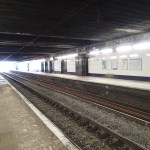
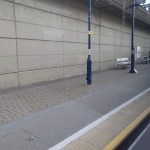
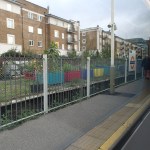
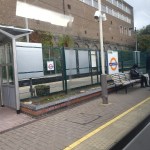
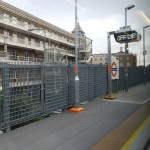

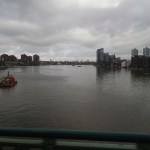

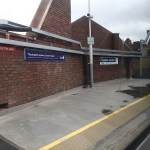
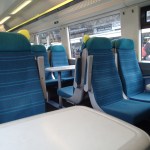

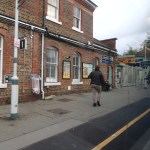
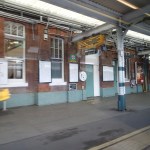

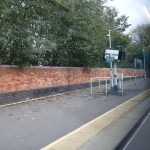
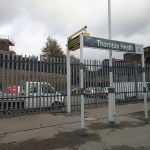
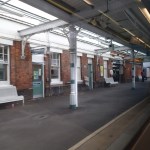
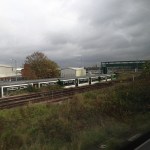
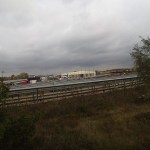
It is not a high-speed service, and it took about an hour. It does go by a bit of a roundabout route calling at the following stations.
Shepherd’s Bush – For the Westfield shopping centre.
Kensington Olympia – For the exhibition centre.
West Brompton – For Earl’s Court, which is being redeveloiped as housing
Imperial Wharf -For Chelsea and all the smart housing
Clapham Junction – For trains to just about anywhere in the South West and South
Wandsworth Common
Balham – The Gateway to the South
Streatham Common
Norbury
Thornton Heath
Selhurst
East Croydon – For Tramlink, Thameslink and trains to Brighton, Gatwick and many places on the Sussex Coast.
I think we can assume that if a station is built at Old Oak Common to link Crossrail and the Overground, then the West London Line will be linked into this station with a modern step-free interchange.
London has two high capacity North-South routes that cross the central part of the City; Thameslink and the East London Line.
So could the West London Line be upgraded as a third high capacity North South link?
There are several reasons why this might be done.
1. Waterloo is a difficult station to go to, to get trains for the South West. If I’m going to Portsmouth or Southampton, I generally pick up my long-distance train at Clapham Junction, after using the Overground to get there. An upgraded West London Line would give a route to avoid Waterloo to many travellers.
2. The line would also act as a route to avoid going to Euston in the same way.
3. As the line should be linked to Crossrail and HS2 at Old Oak Common, an upgraded line will improve access to Heathrow and the North for South and South West London.
4. In my view, the massive development at Earl’s Court needs a good rail link and possibly another station to the North, as it already has West Brompton to the South.
I think that in ten years time, when plans for HS2 and Old Oak Common are being put into concrete, we’ll see the West London Line upgraded to act as a high-capacity route.
The one thing we mustn’t do is build developments such as at Earl’s Court, so that they compromise what we might want to do on the West London Line.
We should make sure that any developments are done in a similar manner to Wembley Central, which has just enclosed the four rail lines underneath in a step-free concrete box.

