Seville’s Elegant Trams
Seville’s tramway; the MetroCentro, by the cathedral is powered without using traditional overhead catenary.



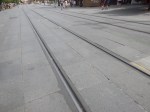

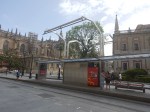





Each double-sided stop has a high electrified rail on each side.
When the tram stops, it puts up a pantograph and then for a minute or so, it charges the batteries.
Seville’s Urbos trams are the same as in Birmingham, so will the Midland Metro be using the same elegant system to charge the batteries, that are now been fitted, so trams can run to Centenary Square in Birmingham and the railway station in Wolverhampton?
|Edinburgh also has another version of Urbos trams, so if Birmingham battery trams are successful, will we be seeing them North of the Border?
There’s only one thing wrong with Seville’s trams. Every one is wrapped in advertising, which makes it difficult to see out and look at the outstanding buildings.
How Does The Battery System Work?
CAF , who built the Urbos trams, have this page on their web site, which is entitled Greentech Tram.
The system uses two methods of storing electricity.
Supercapacitor Modules
A supercapacitor has the advantage that it can be quickly charged and discharged.
So as a tram only takes perhaps fifteen seconds to stop from full speed, the fast charging allows the regenerative braking energy to be stored.
On starting again, this energy can be discharged quickly from the supercapacitor to accelerate the tram.
This charging/discharging cycle does degrade the supercapacitor and they would have to be replaced periodically.
Lithium-Ion Batteries
Lithium-ion batteries can hold greater amounts of electricity, but their charge and discharge rate is slower.
They can provide smaller amounts of power to keep the tram going at a constant speed after it has been accelerated.
A Sophisticated Control System
The page talks about a sophisticated control system that optimised the driving of the tram and the minimisation of energy.
The System Can Be Licenced From CAF
It should be noted that CAF will licence the system to other manufacturers.
Conclusion
By using two different storage systems with different characteristics, CAF are able to drive the tram along its 1.4 km route, charging at each stop.
Tram 18, Where Are You?
This article in Rail echnology Magazine is entitled Midland Metro tram shipped to Spain for battery fit-out ahead of OLE-free operation.
It describe how Tram 18 is on its way to Zaragoza to be fitted with lithium-ion batteries, so that the UK’s first battery tram can start running in 2019, after the track is laid to Victoria Square in Birmingham and the railway station in Wolverhampton.
Exploring The Route Of The Midland Metro Extension To Victoria Square
The extensions at both ends of the Midland Metro in Birmingham and Wolverhampton City Centres will be a first for the UK, in that they will be catenary-free and the trams will run on battery power.
This Google Map shows the area, where the initial extension will go in Birmingham City Centre.
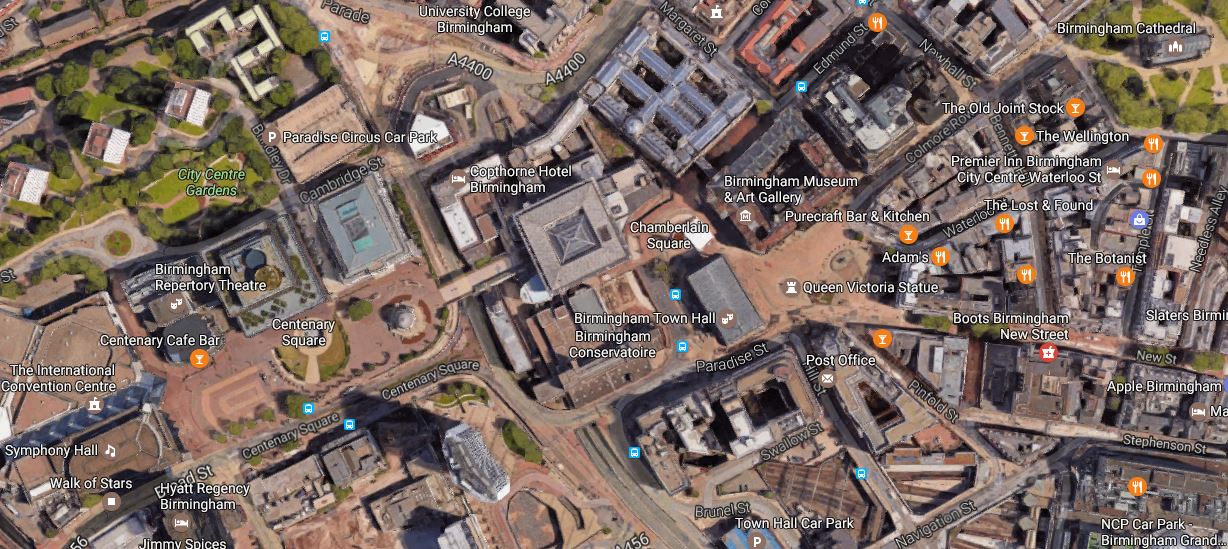
Places of interest are.
- The cathedral is in the North-East corner.
- New Street station is in the South-East corner.
- Victoria Square and the Town Hall are just to the East of the middle.
- Centenary Square is towards the West side.
This description comes from this page on the Metro Alliance web site.
840m of twin track from Birmingham Grand Central at Stephenson Street, up Pinfold Street through Victoria Square, Paradise St, past Paradise Circus into Centenary Square at Broad St.There will be an intermediate stop outside the Town Hall in Victoria Square, and we will interface with the Navigation Street link.
One of the problems at the moment, is that the development of Paradise Birmingham, seems to sit in the middle of the route.
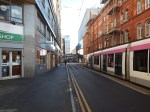
These pictures show the area of Victoria Square and the route up from New Street station.















Note.
- The steep hill of Pinfold Street.
- The route seemed to have been prepared ready for the track to be fitted into the road surface.
- Utilities seemed to have been moved.
- When I took the pictures, the Midland Metro had parked a tram at the limit of the current track at the bottom of Pinfold Street.
Climbing The Hill
You can’t accuse Birmingham of lacking ambition, as Pinfold Street is a proper hill.
But then!
- It is the only steep hill on the route to Centenary Square.
- The tram will start the ascent with full batteries.
- There will be no problems coming down.
- This extension is only 840 metres in length.
- The MetroCentro in Seville has used similar technology on a 1.4 km. route since 2007.
- CAF have technology that charges batteries fast.
- Battery technology has moved on in the last ten years.
If in practice, it does prove a difficult climb, overhead wires could be put on sufficient of the lower part of the up-track on Pinfold Street.
These wires wouldn’t be visible from Victoria Square, so wouldn’t effect the architectural integrity pf the area.
Onward to Edgbaston
According to this article in Rail Technology Magazine, the further four kilometre extension to Egbaston, is also intended to be catenary-free.
As the trams could be charged at Edgbaston, I think this could be possible.
But I doubt CAF would propose the use of batteries, if they hadn’t already proven the range, which is not outrageous.
The Next Step
I looked at a lot of the route of the first section to Victoria Square today, and it would appear that the roadway has been prepared for fitting the track.
So could we see an accelerated development of the first part of the extension?
It would be a good test of the technology, with little risk to the Midland Metrolink!
If the trams can’t make the hill on baqtteries, it would need to be wired, but you could always blame Spanish engineering.
Conclusion
It is a very well-designed scheme.
I wonder, if we’ll see Edinburgh batteries on their CAF trams?
The Cost Of Tram Batteries
This article in Rail Technology Magazine is entitled Midland Metro tram shipped to Spain for battery fit-out ahead of OLE-free operation.
One Midland Metro tram has been sent back to the factory in Zaragoza to be fitted with two roof-mounted lithium-ion cells and after testing it will be returned to the West Midlands in the Autumn, where more testing will be performed, prior to starting running on the catenary-free streets of Birmingham and Wolverhampton.
After a successful completion of testing on the first tram, the other twenty trams will be converted.
This is said in the article about costs.
The total cost to the WMCA of fitting out the fleet will be £15.5m, but the authority says that it will save £9.24m on infrastructure costs on the first four extensions to the Metro network alone, with further infrastructure savings planned as future extensions take place.
So the savings can go a long way to help pay for the trams to run on the four extensions.
The cost of the modifications to each tram is £738,000, but if the infrastructure savings are factored in, the modifications cost just £298,000 per tram.
I also wonder if the layout of the Midland Metro, with a fairly long wired central section and a catenary-free section at either end is ideal for battery operation, as the trams will have a long section to fully charge the batteries.
But it looks like trams will reach Victoria Square and Wolverhampton station in 2019, Edgbaston in 2021 and the Eastside extension to Curzon Street will be completed in 2023.
Perhaps, the most interesting section in the article is this paragraph.
The WMCA is also evaluating a proposed Wednesbury to Brierley Hill extension to identify the viability of catenary-free sections.
Could this mean that the South Staffordshire Line, which will be used for the extension will be without catenary? As the tram does small detours into Dudley and at the Merry Hill Shopping Centre, then these sections could be wired to charge the batteries, leaving the South Staffordshire Line without any wires. I estimate that the distance the tram would travel would be about seven miles each way.
As Network Rail want to run both trams and freight trains on the South Staffordshire Line, this might allow both to share an unelectrified line, if they have the right wheel and track profiles.
There certainly seems to be some very innovative ideas around, when it comes to using trains and trams in City Centres.
Two Tram Routes Start Construction In A Week
On The 14th of January I wrote Work Start’s On Extending Manchester Metrolink To The Trafford Centre, about a new line on the Manchester Metrolink.
Today, this article on Global Rail News, which is entitled Midland Metro begins prepping route of extension to Brierley Hill, has been published.
So it would appear, that what’s good for Manchester, is also good for Birmingham.
Admittedly, all Birmingham is doing at the moment is clearing the South Staffordshire Line of vegetation to assess the route, prior to the start of construction in 2019 for opening in 2023, which is probably a couple of years behind the Trafford Line.
Out Of The Mouths Of Brummies
The December 2016 Edition of Modern Railways has a special report on railways and trams in the West Midlands.
There are some choice quotes from those involved in planning the future of the rail network in the area.
On HS2
“It’ll be half an hour from Birmingham Interchange station to the Crossrail interchange at Old Oak Common. That means Birmingham Airport will be in London Zone 4, timewise.”
On Stations
“Nobody looks at their strategic value to the community”
On New Street Station
“The Birmingham New Street Gateway rebuilding has quadrupled the passenger circulation area in the station, but it hasn’t addressed the key issue of lack of track capacity”`
On Battery Power For Trams
“Since then there has been lots of work and we’re now comfortable that battery technology has advanced sufficiently for it to be viable.”
“Under test conditions with plain straight track a tram could travel 20 km catenary-free. In practice, this would be rather less for a fully laden tram ascending the 9% gradient on Penfold Street. The longest catenary-free run we’ve envisaged is around 2 km, and we’re comfortable we can achieve that”
On More Trams
“They will have to be bespoke to a degree in order to operate catenary-free, but the rail sector is embracing alternative technology and on-board energy store so we may be looking at something more advanced afain.”
Conclusion
It’s all upbeat and it looks like Birmingham is looking forward to the battery trams.
No-one mentioned the B-word!
After The Northern Hub, Is Network Rail Planning A Midland Rail Hub?
The study on Network Rail’s web site is entitled West Midlands and Chilterns Route Study, proposes a concept of a Midland Rail Hub.
By adding the following infrastructure.
- Bordesley Chords and new platforms at Moor Street
- More tracks through Water Orton
- Kings Norton upgrade
- Snow Hill Platform 4
- Begin rollout of Digital Railway
Network Rail feel, it will bring the following benefits.
- Up to 10 extra trains every hour
- More freight trains
- New journey opportunities between East and West Midlands
- Unlocking new jobs
- Maximising benefits of HS2.
It doesn’t appear to be as radical as the Northern Hub.
These are my notes and thoughts on the various proposals.
Bordesley Chords
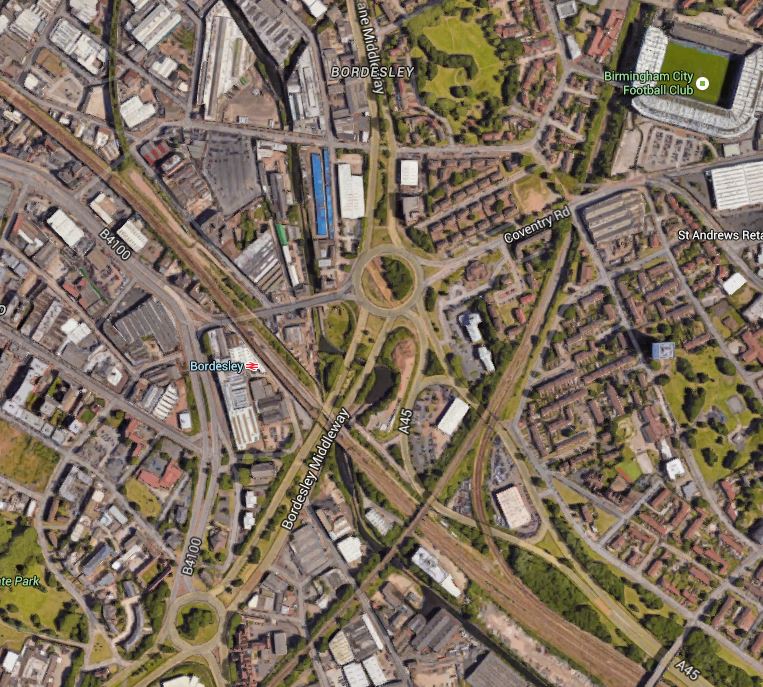
This Google Map shows the Bordesley area of Birmingham.
Bordesley Chords
In the top-right or north-eastern corner of the map is Birmingham City Football Ground.
In the middle of the map is Bordesley Circus, which is a roundabout, that is one of the most dangerous for pedestrians in the country. When I was last there, it was being improved and I wrote My Least Favourite Roundabout Gets Pedestrian Lights. I hope they’re working on Tuesday, 13th December, when I’ll be going to see Ipswich play.
Bordesley station, which is one of the worst stations in the UK, lies to the South-West of this roundabout and is on the Chiltern Main Line into Birmingham Moor Street station, although services don’t stop.
Running almost North-South across the map is the Camp Hill Line, which incidentally passes behind the stands at the football ground.
Where it crosses the Chiltern Main Line, there is a chord allowing limited connection between North and East.
I would assume that as the report says Bordesley Chords, that there will be some extra connectivity between these two lines.
Under the future of the Camp Hill Line on Wikipedia, this is said.
The reinstatement of local rail services to the former Camp Hill Line has been a long term aspiration of the City, and during 2007, Birmingham City Council announced that they were looking into the possibility of reopening the line between Kings Norton and Birmingham Moor Street via the construction of a railway viaduct from Sparkbrook to Bordesley, where trains would be taken into the “old” Birmingham Moor Street station. In October 2007, a 1500-name petition was handed in to the council asking for the line to be re-opened. In 2013 the proposal was shelved indefinitely.
As Kings Norton is to the South, this would need a West to South connection at Bordesley.
These pictures show the area from a Chiltern Train going into Moor Street.


Salubrious it is not! There is certainly a lot of space on the North side, but there might be less on the South. This Google Map shows the area between the station and where the two lines cross.
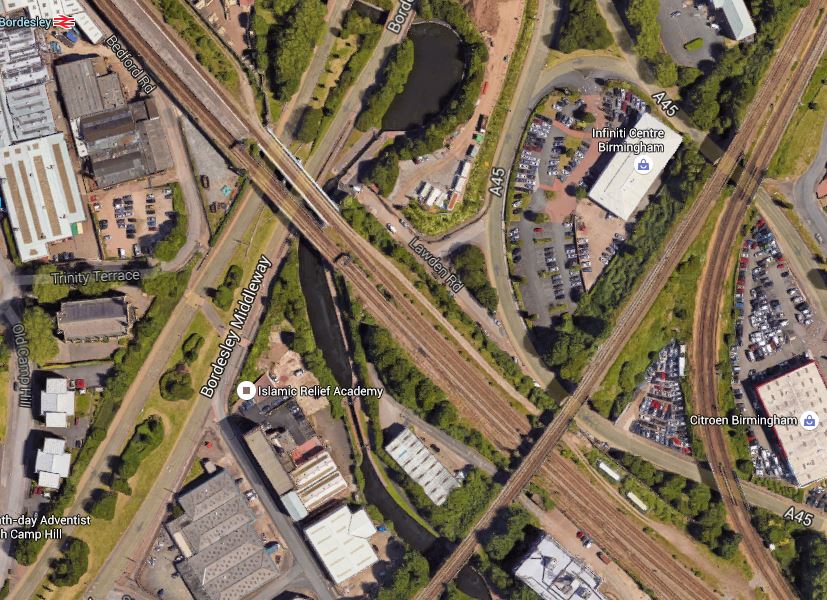
Bordesley Station And Chords
Note the double-track chord between the Camp Hill Line to the North and the Chiltern Main Line to the East. This chord gives services from the Chiltern Main Line to access Birmingham New Street station. If you take a train from Oxford to Birmingham New Street, it will take this chord, if it doesn’t go via Coventry.
From what I have seen in Manchester and some parts of London, the area could surely be put to a better purpose, perhaps driven by a rebuilt Bordesley station, with regular services to Moor Street, Kings Noton and Solihull. The area does have the added factor of water in the shape of one of Birmingham’s numerous canals.
Hopefully, the first piece of development in a very run-down area, the sorting of a decent walking route between Bordesley station and Birmingham City Football Ground has been completed.
New Platforms At Birmingham Moor Street Station
This Google Map shows Birmingham Moor Street station.
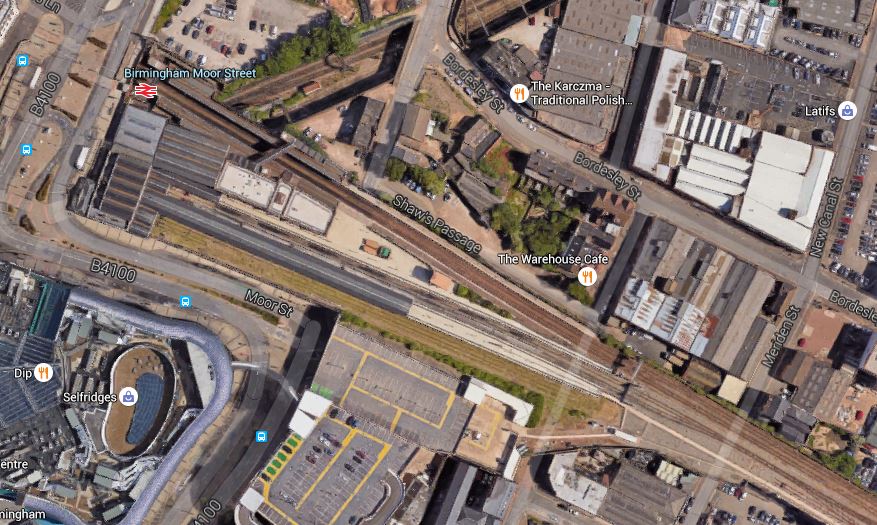
Birmingham Moor Street Station
The most northerly pair of platforms in the station are numbered 1 and 2 and are for the through lines to Birmingham Snow Hill station.
Over the last few years, work has opened the next pair of bay platforms 3 and 4. On my last trip to Birmingham in June, I arrived in Platform 4.
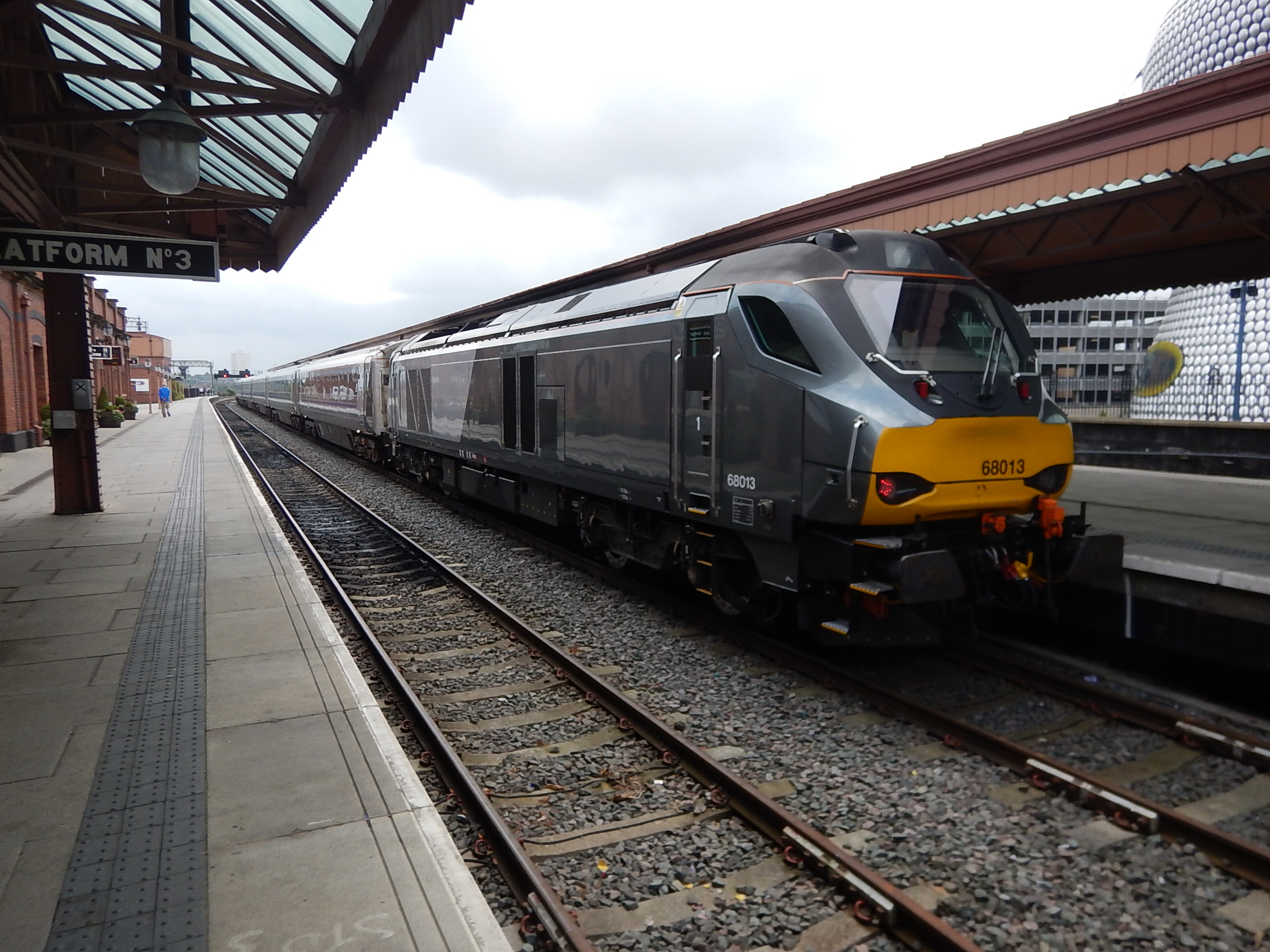
A Chiltern Main Line Train In Platform 4 At Birmingham Moor Street Station
Platform 5 on the other side of Platform 4 may have been reinstated, but there doesn’t seem to be any trains using it, as yet!
The map shows that there would appear to be space to open Platforms 3, 4 and 5, but could a clever architect squeeze in a Platform 6?
These pictures show the space for a possible Platform 5 and 6.

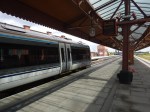
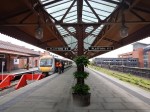
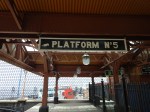

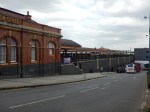

There would certainly appear to be space to shoe-horn two tracks and a new Platform 6 between the current Platform 5 and the retaining wall.
As the pictures show, Platform 5 is a platform that is long enough for any train currently envisaged that might call at Moor Street station.
Looking at the map of the station, it might even be possible to make Platform 6 even longer, if this were thought to be needed.
More Tracks Through Water Orton
This Google Map shows Water Orton station and the lines through it.

Lines Through Water Orton Station
If you look up services from Water Orton and Coleshill Parkway stations, they are certainly of the turn-up-and-wait-forever variety.
Water Orton has one train every two hours to Birmingham, but at least Coleshill Parkway has a train every half-hour.
Perhaps more lines through Water Orton will enable more trains through the area.
Looking at the rail map of Birmingham, it would be possible to go from Water Orton via the Camp Hill Line to Kings Norton and if the North to West chord was built at Bordesley to Moor Street.
It would certainly be the view of many, including myself, that a Parkway station needs a train or tram every fifteen minutes.
Kings Norton Upgrade
If the Camp Hill Line is reopened to passenger trains, then Kings North station will be the terminus.
This Google Map shows the station.
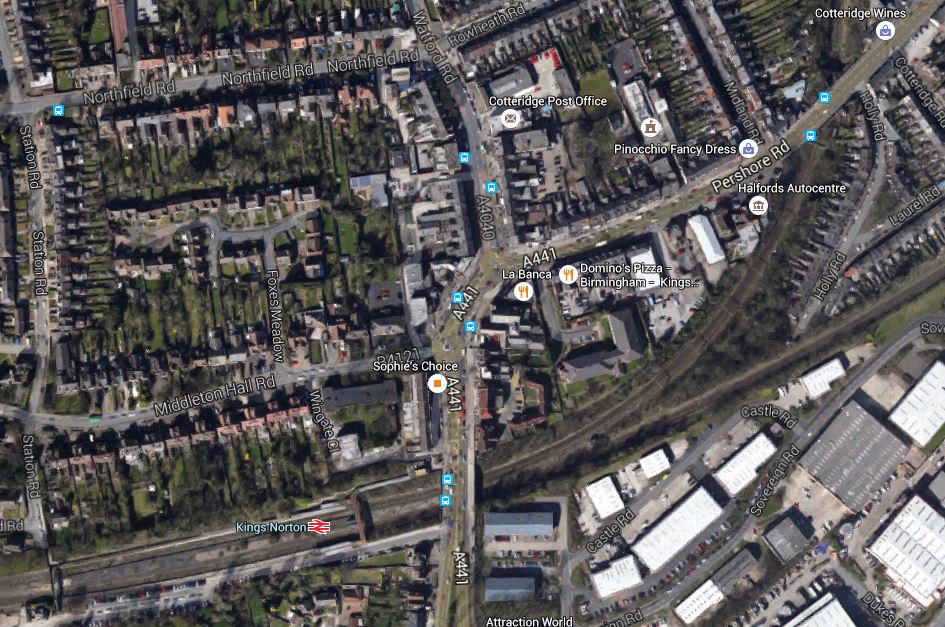
Kings Norton Station
It is a large station with an unused island platform in the middle.
These pictures show Kings Norton station.
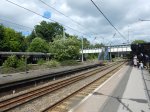
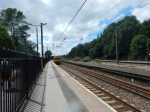
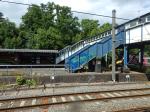
There is certainly work to be done.
But the station also has a lot of potential and space that can be utilised. It might even be possible to fit in a bay platform to turn trains back to Moor Street and New Street.
Birmingham Snow Hill Platform 4
Wikipedia says this about platforms at Birmingham Snow Hill station,
The present Snow Hill station has three platforms for National Rail trains. When it was originally reopened in 1987 it had four, but one was later converted in 1999 for use as a terminus by Midland Metro trams. The original tram terminus closed in November 2015, in order for the extension of the Midland Metro through Birmingham city centre to be connected. This includes a dedicated embankment for trams alongside the station, and will also include a new through stop serving Snow Hill. This will eventually allow the fourth platform to be returned to main-line use.
As the Midland Metro now has its own new platform outside the station, the fourth platform can soon be converted back to heavy rail use.
These pictures show the current state of the closed tram platform.


I don’t think that converting it back to heavy rail will be the most difficult of jobs.
Birmingham Station Connectivity
Although, not on the Network Rail infrastructure list, I feel that to gain the full benefits of HS2, then the line must be properly connected to Moor Street and New Street stations.
I can easily walk between Moor Street and New Street stations, but I do feel that Birmingham’s solution of using the Midland Metro as a link and to the Curzon Street HS2 station, is not the way to do it.
It needs some form of people mover. Perhaps a travelator would be better.
City Centre Ticketing
In Liverpool, a ticket to Liverpool stations, allows you to use the Underground to any of the other stations in the City Centre.
In London, many visitors by rail, add a Travelcard to their rail ticket.
Perhaps, in Birmingham, a ticket to Birmingham stations, should include the Midland Metro in the City Centre? Or a simple add-on for the Metro between Jewellery Quarter and Five Ways could be added for a few pounds.
At present, you have to buy a separate ticket. How visitor-friendly is that? At least a short journey is only a pound
If Birmingham is to make the most out of the opportunity of HS2, then they must use easy and understandable ticketing.
Chiltern’s Superb Trains
My trip down to Birmingham was in a Class 168 train, which although was a good experience for a diesel multiple unit, was spoilt as one engine went AWOL and we were late in to Moor Street.
But going home to London, I rode in what I think are one of the best long distance trains anywhere in Europe; Chiltern’s rakes of Mark 3 coaches pulled and pushed by a modern Class 68 locomotive.
- Nearly every seat gets a table and a window aligned to it.
- The seats are spcious and comfortable.
- The ride is the superb one, you always get from a Mark 3 coach.
- Trolley-service of drinks and a buffet on most services.
- Free wi-fi.
- London to Birmingham return for £19.20 with a Railcard.
- I’ve never travelled on Chiltern’s Mark 3 coaches and been unable to read my paper flat in front of me on the table.
The experience may be slower than Virgin’s, but give me Standard Class on Chiltern against First on Virgin every time between London and Birmingham.
The only problem, is that Marylebone station, isn’t as accessible as Euston from where I live. However, when Crossrail opens, times will be within a few minutes.
I can’t help feeling that Transpennine’s decision to use Class 68 locomotives and rakes of new CAF Mark 5 coaches across the Pennines, was influenced by the success of Chiltern’s flagship service and its superb rolling stock.
I’m looking forward to riding the CAF coaches in a few years, to see how they stand up to an almost forty year old British Rail coach.
I wonder how many Spanish engineers have ridden Chiltern’s trains?
I also feel that the Class 68 locomotive is an asset to a passenger service, in that so many diesel locomotives look dirty and smelly, but Class 68s seemed to have been designed to keep clean and also look how a locomotive should; powerful, purposeful and sleek.
For those, who don’t like that the trains are still diesel-hauled, there is even a Spanish solution for that, if the lines ever get electrified, in the shape of the new Class 88 electro-diesel locomotive, which is a sister of the Class 68 locomotive.
And of course, if Chiltern need some more trains and can’t find the Mark 3 coaches, they can always buy some new coaches from CAF.
Conclusions
It’s a very sensible plan and it will open up all sorts of possibilities for Birmingham.
The chords at Bordesley and the extra tracks through Water Orton would seem to open up a new route for trains across the city from Moor Street band Kings Norton to Water Orton and Nuneaton.
- New subsurban services could link Nuneaton and Kings Norton to Moor Street.
- Cross-country services might use Moor Street with a reverse, rather than New Street.
- Extra services from Moor Street to Nuneaton might take pressure off the heavily-loaded New Street to Birmingham route.
- How would the new station at Kenilworth station fit in?
But there are railways all over this area and I’m sure that the Bordesley and Water Orton improvements, will not be the last.
Already there is talk of reopening, the Sutton Park Line and the Stonebridge Railway.
I asked about Kenilworth station. I don’t know, but after Bordesley and Water vOrton are upgraded, there would be the possibility of a Warwickshire Circle, starting and finishing at Moor Street.
- Moor Street
- Solihull
- Warwick Parkway
- Warwick
- Leamington Spa with a reverse.
- Kenilworth
- Coventry
- Coventry Arena
- Bedworth
- Bermuda Park
- Nuneaton
- Coleshill Parkway
- Water Orton
- Moor Street
It would be a route, where several stations could be reopened or built from scratch. Leamington Spar incidentally already has a bay platform for the reverse.
I also think, that one of the biggest beneficiaries of all this will be Chiltern Railways.
Consider.
- Their two Birmingham termini of Show Hill and Moor Street are getting extra capacity.
- Moor Street will become a big terminal with two through and four bay platforms, all of which will be able to handle the longest Chiltern trains.
- Birmingham New Street station lacks capacity.
- The Birmingham New Street to Coventry route is seriously crowded.
- In Will Chiltern Railways Get A Second London Terminal At Old Oak Common?, I talked about Network Rail’s ideas to link the Chiltern route to the new station.
- Banbury station has been upgraded for more traffic.
- Chiltern will be running to Oxford station by the end of this year.
- Chiltern have plans in hand to run to Milton Keynes station.
We’ll certainly see extra services from London to Birmingham and possibly beyond, but will we see a triangular route going between London – Oxford – Birmingham – London?
It will depend on whether the passengers want it, but from Chiltern’s point of view, it might mean that their platforms in London, Oxford and Birmingham, and their trains, saw higher utilisation.
I suspect too, that the Oxford -Birmingham leg has more paths available and that Chiltern’s capacity problems are mainly at the London end of the Chiltern Main Line, especially now, that Banbury has been remodelled.
Chiltern Railways are an ambitious company and if they get a second terminal in London at Old Oak Common, they will certainly use it profitably.
I think that the Network Rail report shows that a few simple improvements, when thought through and executed with care can produce improvements not suspected in the original plans.
But all rail planning has to discount the London Overground Syndrome, where new stations, routes and trains, attract more passengers than originally expected.
Edinburgh Tram’s Elaborate Catenary
When I’m in Edinburgh, I always think that the overhead wires for the trams are over-elaborate and intrusive.

The picture was taken as I arrived. Compare that picture, with this one in the centre of Birmingham.
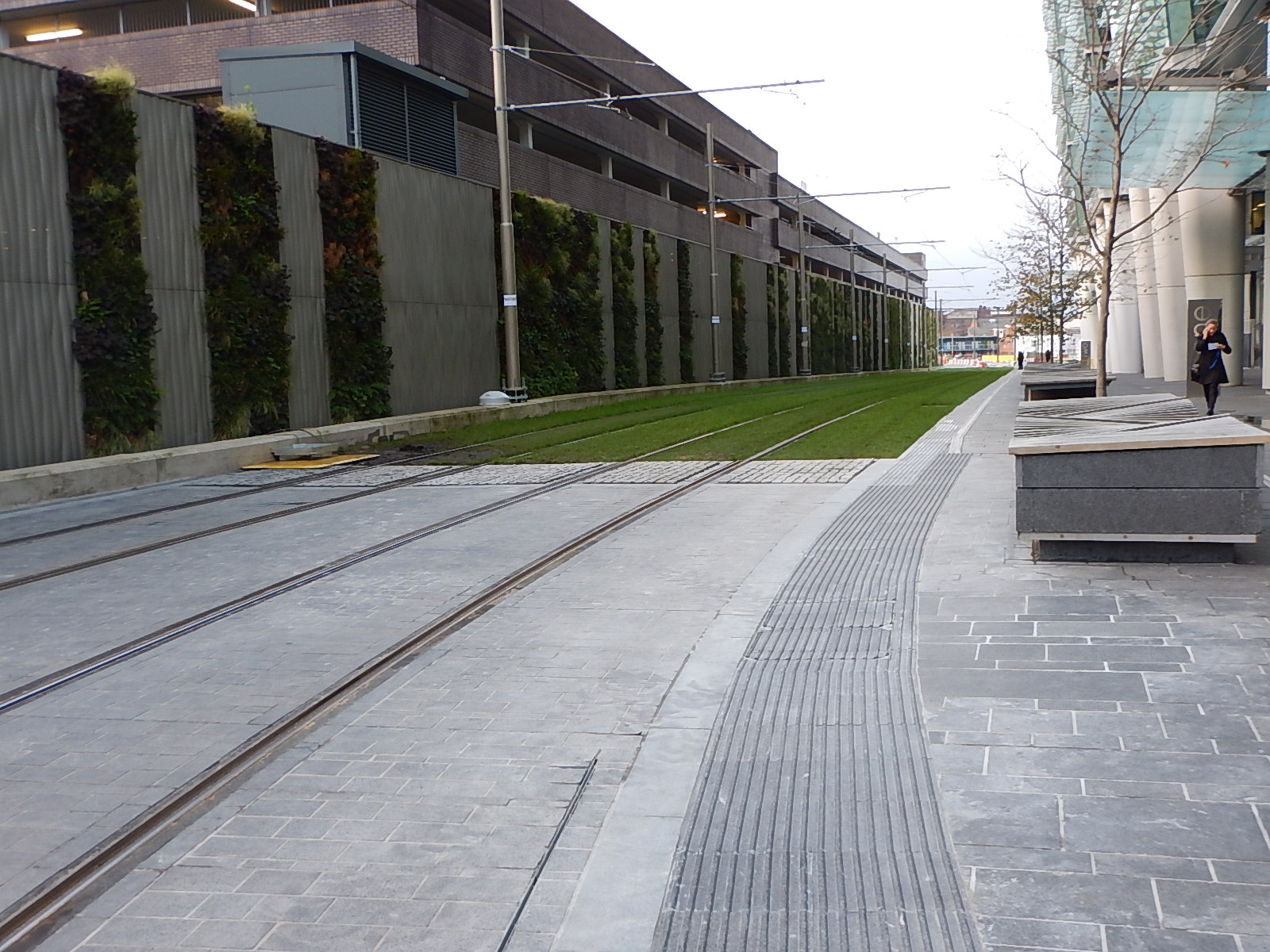
The Birmingham design is a lot simpler and as the trams are both from the same builder, you can’t say that the Midland Metro is designed to easier rules. This system could surely have been used on Princes Street, where I took this picture.
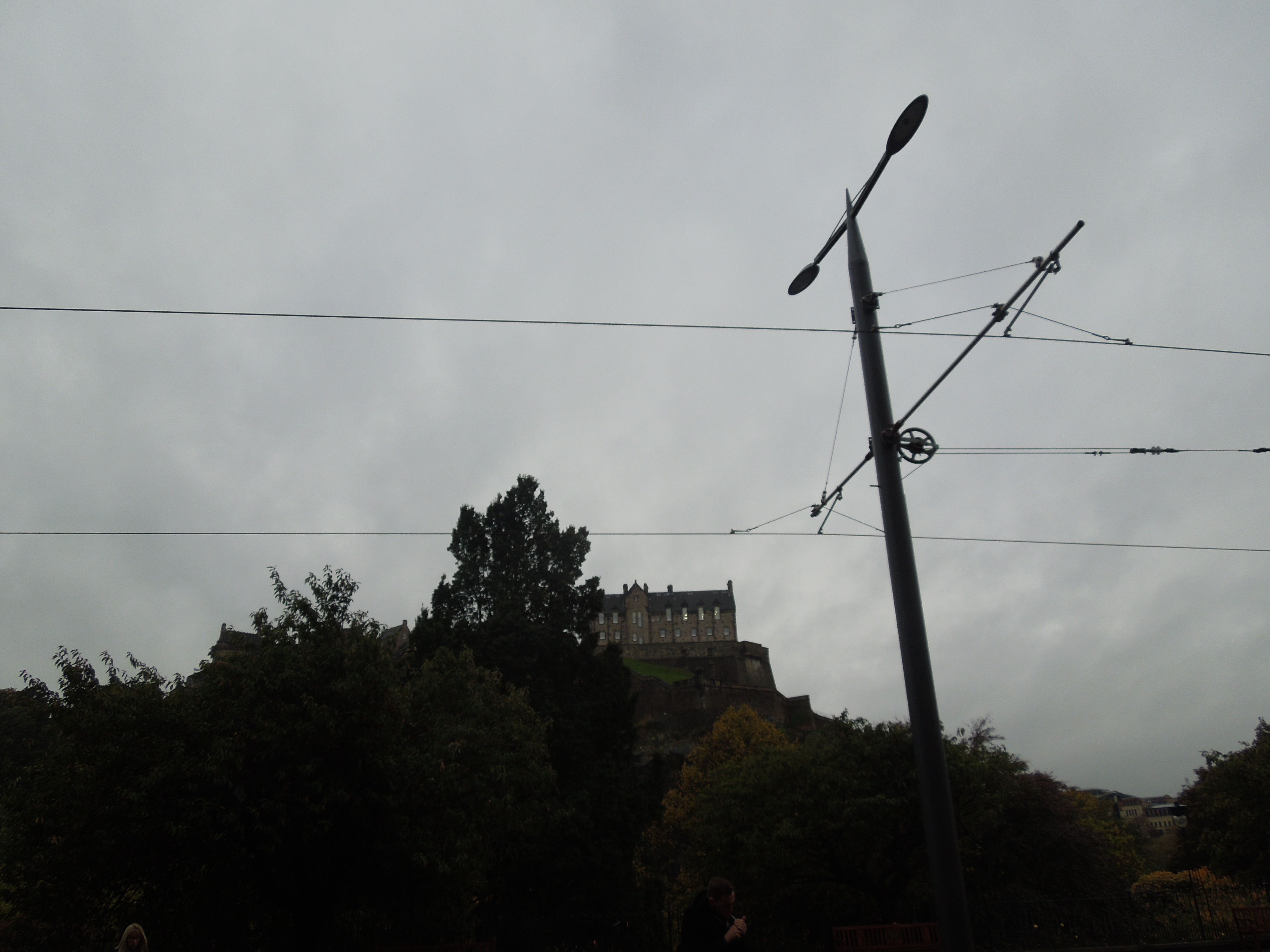
There is no excuse for bad design.
The Midland Metro is also showing the way for its extension, by using battery power through the historic centre.
Midland Metro Arrives In New Street
These pictures show the Midland Metro and its new extension to Birmingham
New Street station.
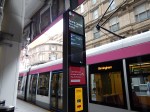

I’d taken a train to Birmingham Snow Hill station and my only criticism, is that the signage at Snow Hill didn’t indicate how to get to the new tram stop.
The Midland Metro Stop At New Street Station
The picture shows the Birmingham New Street tram stop on the Midland Metro.
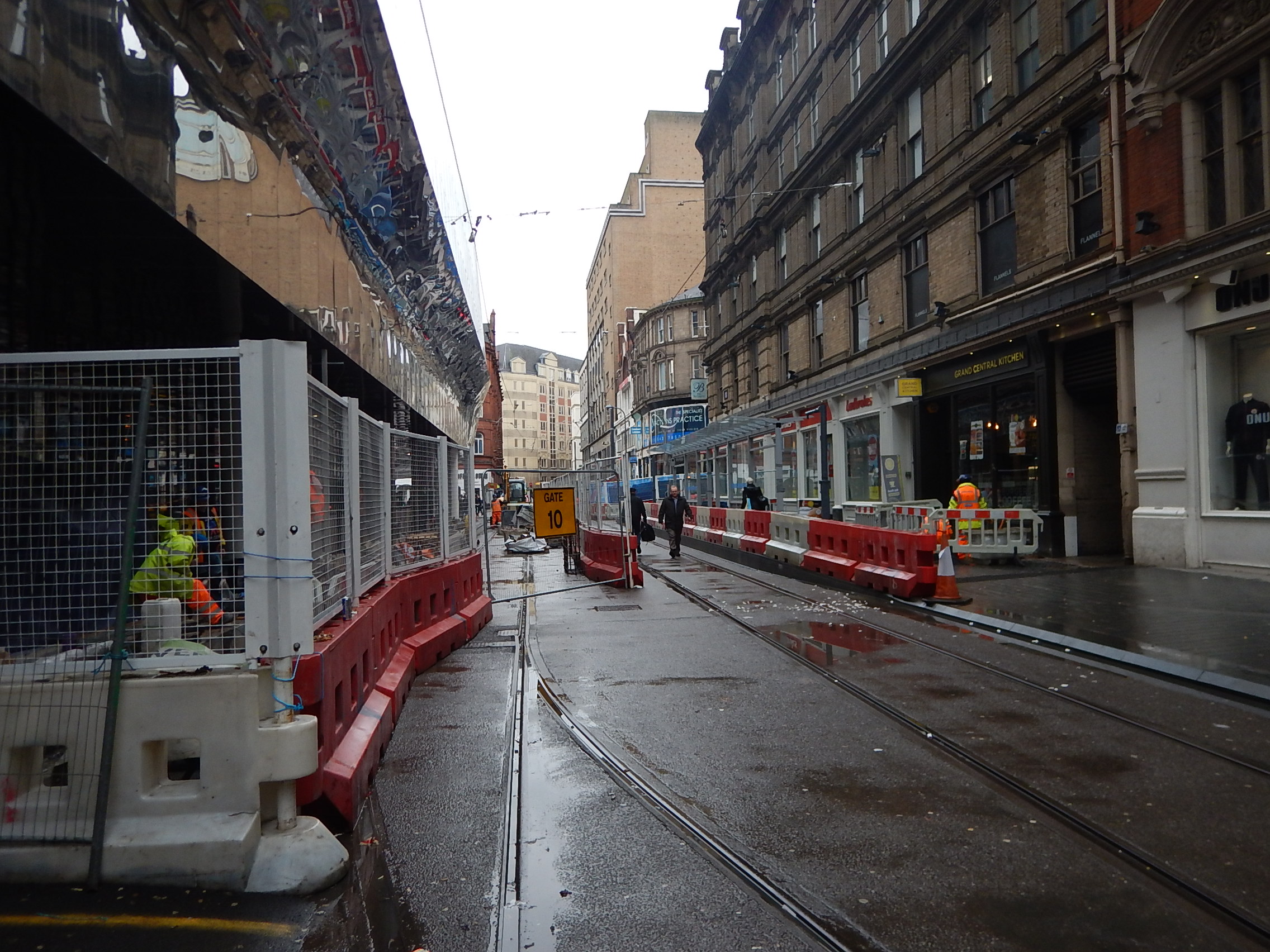
The Midland Metro Stop At New Street Station
Note the cross-over to reverse the trams, when they start running in a few weeks.
 The Anonymous Widower