How To Cook Gluten-Free Fish
As a coeliac, I get fed up with restaurants, who can’t cook fish in a simple gluten-free way.
On my trip to Sufbury, which I wrote about in Marks Tey Station And The Sudbury Branch, I needed to eat something.
I did find my usual stand-by of a Pizza Express, but felt that I might be better to wait until I got back to London and buy a gluten-free wrap or sandwich in Liverpool Street station.
I then came across the Codfather, which had a sign saying they did gluten-free fish and chips on Sunday.
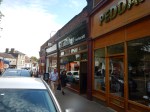


The waitress said they could do me a plain grilled fish with new potatoes and vegetables, which I had.
It was excellent and I can heartily recommend the Codfather in Sudbury.
I can’t understand, why more restaurants, don’t use this simple method to satisfy, those like me, who need gluten-free food.
On BBC Breakfast this morning, there is a story about problems in our seaside resorts.
How many of them have a restaurant that sells gluten-free fish lunches and inners to the standard of the Codfather or Kubicki in Gdansk?
A quick search has found decent places in Brighton, Hastings and Blackpool, but others places don’t seem so well served.
Only In Frinton
A common target of East Anglian humour is Frinton, as over the years the town has acquired a dubious reputation about being anti-fun.
In The First Off Licence In Frinton, I told the story of how C got the town its first Off Licence. Her version of the tale, always ended with Frinton were not amused.
Rumour has it, for years, the sign on Manningtree station, which said something like Harwich For The Continent had been annotated with And Frinton For The Incontinent.
Tonight I found this under Recent Developments in the Wikipedia entry for The Sunshine Coast Line, which is the branch line that serves Clacton and Frinton.
A £104 million engineering project known as the Colchester to Clacton Resignalling Project took place on the line between December 2006 and July 2009. Life-expired signalling equipment was replaced and a new control system was installed; 170 modern LED signals were installed and eight manual level crossings were upgraded to full barrier crossings with security cameras. The line was closed every weekend and on public holidays, with bus replacement services provided.
There was opposition from the town of Frinton to keep the manual gates, which were reportedly removed “under cover of darkness”. Folklore has it that townspeople used to lock the gates to keep out coach-loads of tourists.
It is a typical Frinton story. I have no idea, if it’s true!
A Stray Class 68 Locomotive At Stratford Station
I took these pictures of a Class 68 locomotive.
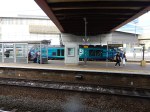
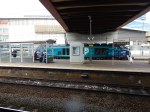
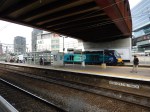
You don’t see them very often at Stratford station.
But when you see them in a station, as I did here, you realise how much less noisy and smelly they are than the ubiquitous Class 66 locomotive.
This blog post from Reading University entitled EU Emission limits bite for new freight locomotives, gives a few details.
- The Class 66 meets the Stage 3A emission regulations, but the author does not know of any plans to meet Stage 3B.
- The Class 68 meets the Stage 3A regulations, and can be easily modified to meet Stage 3B.
- The Class 70 meets the Stage 3A regulations, but not Stage 3B, although that could be a future option.
You certainly don’t see anything other than a Class 68 pulling a passenger train.
Marks Tey Station And The Sudbury Branch
The Sudbury Branch or the Gainsborough Line, is one of those lines that abound all over the UK, to serve a major town stranded from the main line.
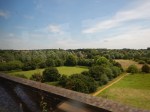
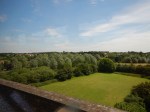
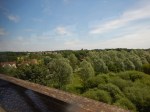
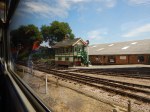
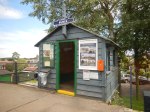
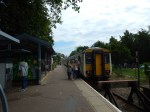
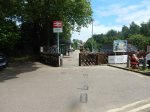
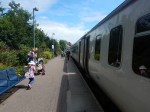
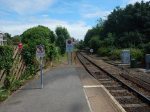
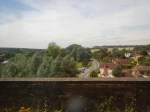
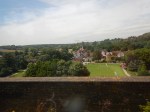
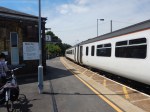
These pictures show my visit.










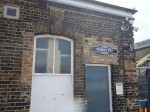
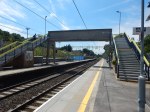
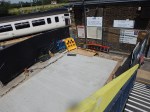
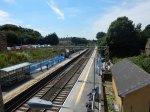
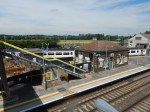
Note.
- The line is certainly rural.
- The Chappel Viaduct is large and gives good views.
- Bures station is rather quaint.
- Sudbury station is an easy walk to the Town Centre
- Chappel and Wakes Colne station has a railway museum.
- Marks Tey station seems to be being upgraded.
Incidentally, I was able to get to Sudbury from London for just £11.70, using my Freedom Pass to Shenfield and a ticket from there to Sudbury with my Senior Railcard.
The Future Of The Sudbury Branch
With the new franchise being awarded within a few weeks, I wonder what the plans are for Marks Tey station and the Sudbury Branch.
- I can’t find anything about the building works at Marks Tey station.
- The station certainly needs a proper bridge with lifts.
- Marks Tey only has two trains per hour in each direction. Is that enough?
- Trains are hourly between Marks Tey and Sudbury and for a weekday were fairly busy.
- In an ideal world, trains would be twice an hour on the Sudbury Branch and would synchronise with trains on the Great Eastern Main Line.
- The journey takes nineteen minutes between Sudbury and Marks Tey, which probably means that two trains are needed for a doubled frequency.
There is certainly a lot of potential for an improved service.
Two Trains Per Hour To Sudbury
The obvious way to achieve a two trains per hour service on the Sudbury Branch would be to use two trains. Although, this could be expensive as the line probably works currently under rules called One Train Working.
It would also need a passing loop on the single-track branch, two trains and two crews, so I think it could be discounted.
The line has a speed limit of 50 mph and it is not electrified. If the line was upgraded to increase this speed limit, it might be possible for a single train to shuttle twice between Marks Tey and Sudbury in an hour. Time could be saved, by using two drivers and changing them at Marks Tey. But the current time of nineteen minutes for the journey makes four trips in an hour impossible. It probably needs a time in the order of ten to thirteen minutes, which might be possible with a faster train after the track was upgraded to say 75 mph.
Electric trains accelerate faster and generally have shorter station dwell times, than the current Class 156 diesel trains.
So perhaps to electrify the line is an option, that would allow the desired service. But electrification of the line will be expensive and there will be a lot of opposition to having overhead gantries marching through the Suffolk countryside and on top of the Grade II Listed Chappel Viaduct.
An Aventra IPEMU To Sudbury
One solution that would work is to use something like a four-car Class 710 train, that are being built for the London Overground.
It would need to be an IPEMU, fitted with energy storage and there would probably need to be a short length of electrification in Platform 3 at Marks Tey station to charge the train after each trip to Sudbury.
A Suffolk Metro From Sudbury To Felixstowe
An alternative strategy may also be possible, which would require no new track, platforms or electrification.
The Felixstowe branch also needs new trains and could be run using a similar Aventra IPEMU from Ipswich.
So why not link the two services back-to-back to create a half-hourly service from Sudbury to Felixstowe, which called at the following stations?
- Bures
- Chappel and Wakes Colne
- Marks Tey
- Colchester
- Manningtree
- Ipswich
- Westerfield
- Derby Road
- Trimley
The trains would charge their energy storage on the main line and the Felixstowe branch would not need a bay platform at Ipswich station.
The Sudbury and Felixstowe Branches are eleven and twelve miles long respectively, which means that if the trains charged their energy storage on the main line between Ipswich and Marks Tey, they would need to be able to do about twenty-five miles on their on-board energy storage, which is well within all estimates of the train’s range.
Currently, using three trains that would take 72 minutes of train time, but I suspect that time saved on the branches by an Aventra could make the trip in around an hour.
In Could Class 387 Trains Do Norwich In Ninety And Ipswich In Sixty?, I postulated that to achieve the Norwich in Ninety and Ipswich in Sixty targets, all trains North of Colchester, must be capable of running at 110 mph, so they don’t slow the crack East Anglian Expresses down.
This rule would probably have to apply to the Felixstowe to Sudbury trains.
This would be one of those train services where most are winners.
- Passengers on the two branch lines get a two trains per hour direct service to Ipswich, Manningtree and Colchester, run using modern four-car electric trains.
- Passengers using stations between Marks Tey and Ipswich would have extra trains to Ipswich and Colchester.
- The train operator replaces two ageing diesel multiple units, with two brand-new electric multiple units with an IPEMU-capability.
- Network Rail would have no electrification to install and only minimal changes to make to infrastructure, such as some general track improvement and platform lengthening.
- It would probably help time-keeping, if the long-promised dualling of part of the Felixstowe Branch were to be done.
- There might even be a case for reopening disused stations at Bentley, Ardleigh and Orwell and perhaps creating a couple of new ones.
What I have proposed is pure speculation, but it could be the first line of the Suffolk Metro.
Incidentally, I wouldn’t be surprised to see four-car Aventra IPEMUs working the following routes for the new East Anglian Franchise.
- Cambridge to Norwich.
- Ipswich to Bury St. Edmunds, Cambridge, Ely and Peterborough
- March to Wisbech
- Norwich to Cromer, Lowestoft, Sheringham and Yarmouth.
The only line, which would be outside their capability would be Ipswich to Lowestoft, which is just a bit long. But the Aventras would release Class 170 trains to provide a high quality service on this line.
There are several reasons, why I think that IPEMUs might be used in East Anglia.
- The tests of the IPEMU technology were carried out by Abellio Greater Anglia on the Harwich branch. The drivers must know how good the IPEMU technology really is.
- East Anglia has several branch lines for which using IPEMU technology, is an affordable way of introducing electric trains.
- Network Rail have an appalling record, when it comes to electrification.
- What is the state of the electrification on the Braintree, Southminster and Harwich branches? It might be more affordable instead of replacing dodgy wiring to use a train with IPEMU technology.
- Quite a few of these branches have capacity problems, which a four-car electric train would solve.
- The invitation to tender for the franchise included the following – “extra points will be awarded to bidders who include plans to trial new technologies in rolling stock”
- Providing free wi-fi across the franchise is mandated. Does anybody fancy doing this in a Class 153 or Class 156 train?
The new franchise is supposed to be awarded before the 21st of July, this year.
It will be interesting to hear the winner’s plans.
Onward To Cambridge
It is just a pity, that the Stour Valley Railway from Sudbury to Cambridge via Haverhill was closed in the 1960s.
In Sudbury To Cambridge – D-Train, IPEMU Or Tram-Train?, I looked at the various options for reopening the whole line to create a new route from Ipswich and Colchester to Cambridge via Marks Tey, Sudbury and Haverhill.
As trains from Sudbury to Felixstowe will probably be Aventra IPEMUs with a main line capability, these trains would be used through to Cambridge, which is about fifty miles from Marks Tey.
I think this line will eventually be rebuilt.
- This is the sort of project a devolved East Anglian Authority would back.
- It creates alternative routes to London and Cambridge.
- It joins up well with the East West Rail Link and the prtoposed station at Addenbrookes Hospital.
- It provides another commuting route for Cambridge.
- It puts Haverhill back on the rail map.
- It would complete rail links from Suffolk’s County Town of Ipswich to all parts of the county
Who knows what routes will be unlocked by the reopening of the Stour Valley Railway?
I’m Rather Pleased We’ve Now Got Fixed Term Parliaments
On Sunday morning, I usually watch the Andrew Marr Show and then listen to Pienaar’s Politics on the radio.
- Jeremy Corbyn didn’t give the sort of performance one would expect from a future Prime Minister.
- Aaron Banks, who supports UKIP, frightened me, with his support for the party of neck-enders.
- I didn’t like the treatment Angela Eagle says she is getting from Corbyn supporters.
The only sane voices were the two women, who reviewed the papers on the Andrew Marr Show.
One was so disillusioned with the Labour Party, she has decided to be a stand-up comedian. She certainly got plenty of material.
At least because we should wait to 2020 for the next General Election, there is time for everything to calm down.
Whitechapel’s Overground Platform Extensions Are Taking Shape
Whitechapel station has short Overground platforms and it was always said they’d be extended after Crossrail opens.
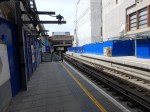
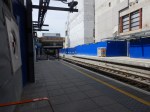

Judging by these pictures, it would appear that there isn’t much work to do.
Would High-Speed Trains With Onboard Energy Storage Enable Environmentally-Friendly High-Speed Lines?
If you stand on the platform at Stratford International station, when a Eurostar Class 373 train comes through, it is a very noisy experience.
For this and other reasons high-speed trains usually have their own fenced-off tracks, well away from centres of population.
High-speed trains like Eurostar tend to have a journey profile, where they accelerate to line speed and then run at this speed, until they stop at the next station.
High speed lines are also designed, so that trains don’t lose energy on gradients and curves for energy efficiency.
I’d love to see an energy use profile for a modern high-speed train like a Class 374 train, as it goes from London to Paris.
Onboard energy storage is rather primitive today, but who’s to know how far the next generation of battery technology will take a train in say ten years time.
Say a high speed train has to go through an area that is highly-sensitive with respect to visual and/or audio intrusion!
If the section was not electrified, which would cut the visual intrusion to just the trains passing through and reduce the pantograph noise to zero, how far would a mix of battery power and the kinetic energy of the train power it until it could get electric power on the other side of the electrification gap?
We could be closer than anybody thinks to the use of batteries on high-speed trains.
The Midland Main Line is being electrified and Ian Walmsley in Modern Railways has speculated that 125 mph Aventras could be used between London and Sheffield. I wrote about this in A High-Speed Train With An IPEMU-Capability.
Could we see sections of the fast lines deliberately built without wires, so that noise is reduced?
Leicester station is a serious bottleneck, so could track be arranged there with two quiet fast lines without wires, through the centre of the city and the station?
It’s an interesting possibility to both reduce the effects on the environment and cut the cost of electrification.
I also think there are other reasons why trains will increasingly have on-board energy storage or in the case of electric locomotives, a small diesel engine.
- A get-to-the-next-station capability for when electric power to the line fails.
- Depots could be without electrification.
- Complicated stations could be electrically-dead.
It is a technology, that will have a large number of positive effects in the coming years.
I Get Struck By The DOO Lurgy
The DOO (Driver Only Operation) Lurgy has generally been limited to Southern, Gatwick Express and ScotRail trains.
But today, when coming back from IKEA, I was unable to get a train on the Great Northern Route at Highbury and Islington to Essex Road, as the train was cancelled.
The station-man upstairs said it the DOO Lurgy and I walked off to catch a bus.
This row over DOO has gone on long enough and from what I wrote about in Design For Safety In A New Station, I would suspect that the solution I saw at Lea Bridge station, is as good as its going to get!
Design For Safety In A New Station
I took these pictures at the new Lea Bridge station

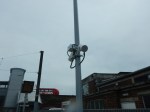
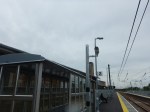


Note.
- There is a series of cameras, that display images of the complete train on the screens for the driver.
- Speakers and CCTV cameras are everywhere along the platforms.
- Very little seems to have been left to chance.
I doubt, even a driver, who was in the midst of some unfortunate personal emergency would miss anything untoward happening on the platform.
But even if they collapsed, it would be hoped that other safety systems on the train, would cut the power.
As a passenger and engineer, the setup of the platform, certainly reassured me.
Should we make sure, that the safety systems at all stations are as comprehensive as this?
Are You Annoyed By Noisy Trains At The Bottom Of Your Garden?
I have just found this document on the European Parliament web site, which is entitled Reducing Railway Noise Pollution.
It is a fascinating document and this is the abstract.
12 million EU inhabitants are affected by railway noise during the day and 9 million during the night. This study lists measures, funding and regulations to reduce it. The introduction of modern rolling stock will lower noise most significantly. In the short run, the replacement of cast iron by composite brake blocks on rail freight cars is most important. Developing a regulation scheme for a staged process towards low-noise rolling stock is the heart of a rail noise abatement strategy.
Many of us in the UK, would think that we suffer badly from the noise of trains, but it would appear that Germany and other Central European countries suffer badly from all freight trains passing through. The Rhine Valley which has over 400 freighs trains a day, suffers badly from noise.
So how can we reduce noise?
- As the abstract says new rolling stock is the best way to reduce noise and many of our trains have been replaced with new or refurbished ones in the last few years.
- The report says that most (approximately 75%) of UK freight wagons have disc brakes or composite brake blocks. So that is good.
- In my view one of things that gets most complaints is noisy and smelly diesel locomotives, like the dreaded Class 66 locomotives. They may be liked by the freight companies, but they are not favourites of drivers and those living by the railway. More friendly types of diesel locomotives like the Class 68 are starting to appear and it can’t be too soon.
- Surprisingly, with electric trains, pantograph noise is a problem. I’d hand that and any other aerodynamic problems over to the engineers in Formula One and aircraft design. I have read that Bombardier’s new Aventra will be very clean aeodynamically, which must make for a reduction in noise.
Let’s hope that these small improvements continue to reduce the noise by trains.
The report also says this about physical noise barriers.
Noise barriers are a visual intrusion, particularly since they are a target for graffiti; they have a high cost, and cause problems for track access. Their effectiveness depends on their absorption properties, their height, and the proximity of the barrier to the noise source and/or to the receiver.
I am not a fan, as they ruin my taking of photographs.
 The Anonymous Widower