Putting Right Norfolk’s £150m Rail Mistake
The title of this post is the same as that of an article in Issue 849 Of Rail Magazine.
The article discusses reopening the the former branch line between King’s Lynn station and Hunstanton, which in the author’s view, was a a mistake on British Rail’s part and nothing to do with Beeching.
This video shows the line just before closing.
Note that John Betjeman was the Michael Portillo of his day, but he had a more traditional dress sense and wrote better poetry.
- It would be a fifteen mile railway to one of the UK’s top-quality coastal resorts.
- The track-bed is more or less intact, although it is blocked in places.
- The branch used to have intermediate stations at North Wootton, Wolferton, Dershingham, Snettisham and Heacham.
- Wolferton station used to serve the Royal residence of Sandringham.
- A parkway station at Hunstanton is suggested to replace the former Hunstanton station.
These reasons are given for reopening the line.
- The number of people over sixty in North West Norfolk is a third over the National average.
- King’s Lynn is the local centre, with a good shopping centre, hospital and rail and bus connections to all over Norfolk and to Cambridge and London.
- Young people leave the area to get skilled jobs, when they leave school.
- Day visitors from places like Cambridge would be encouraged to come by train.
- The roads are overcrowded.
But possibly, the biggest reason could be to create a rail link to the vast silica sand deposits near Dershingham.
- Rail would be an ideal way to transport the silica sand, as the roads are crowded now!
- The quarry near Middleton Towers uses trains to Barnsley, Doncaster and Goole.
- The development would probably mean more local jobs.
It is also stated, that Norfolk County Council are supportive of rail developments.
These are my thoughts on the proposals.
Kings Lynn Station
King’s Lynn has a quirky Grade II Listed station, as I described in King’s Lynn Station.
- The station has three platforms and plenty of spare capacity
- The station is within walking distance of the town centre and bus station.
- It is likely in future that the train service to Ely, ambridge and London will be at least two trains per hour (tph)
The station could certainly handle passenger trains to and from Hunstanton.
The Fen Line
I believe that any serious increase in the number of trains on the Fen Line, will result in the redoubling of the line.
A double-track line Fen Line, coupled with the sorting of Ely North junction, would probably be able to handle up to twelve tph. which would be more than enough to handle extra passenger and freight trains to Hunstanton.
Tracks Between King’s Lynn and Hunstanton
The line would probably be in two parts.
- King’s Lynn to Dershingham, where passenger and freight services would operate.
- Dershingham to Hunstanton, where only passenger services would operate.
The line could even be built as a double -track to Dershingham and then single track to Hunstanton.
Electrification would depend on the trains.
Passenger Trains Between King’s Lynn and Hunstanton
Passenger trains could serve the branch in one of two ways.
- The branch could have a shuttle train, that was timetabled to work well with London trains.
- London trains could go on to Hunstanton with a reverse at King’s Lynn.
The branch would be about the same length as the Felixstowe Branch Line, which has an hourly shuttle to Ipswich.
This simple service should be possible between King’s Lynn and Hunstanton, working on the principle of ome-train on branch.
But it would probably make it easy to timetable an extended service as well.
As it is proposed that services between King’s Lynn and Kings Cross are going to be doubled in frequency, there are a lot of decisions to take.
What Type Of Trains Would Run Between King’s Lynn and Hunstanton?
Technology is moving on apace and this will drive the choice.
In a few years time, trains could be 125 mph capable on the Kings Cross and King’s Lynn route, as I wrote about in Call For ETCS On King’s Lynn Route.
The 125 mph would not be needed, but technology like batteries or bi-mode would be available to trundle the train along the route to m Hunstanton.
Independently powered trains, would not require any electrification of the branch, which would reduce the cost of both building and operating the line.
I also think, that we’ll see a high degree of automation to both handle the reverse at king’s Lynn and running along the branch.
Hunstanton Station
The article suggests that Hunstanton station could be a parkway station to the East of the town.
- The original station site is mainly a car park in the centre of the town.
- There is space outside the town.
Putting the station to the East would make it easier to extend the railway.
Onward From Hunstanton
On a map in the article, a line to Wells and Fakenham is shown.
Could the author be thinking that the King’s Lynn to Hunstanton line eventually ends up as a coastal railway?
He’s certainly not ruling it out.
- It could go all the way to Sheringham, where it would link up with the service to Norwich?
- You can see a lot of the old track-bed on Google Map.
But such a line would restore a rail link between King’s Lynn and Norwich.
Conclusion
Reopening the line between King’s Lynn and Hunstanton, would appear to be not onoy feaiblre, but also something that could be very financially worthwhile.
Caledonian Sleeper’s New Mark 5 Carriages Tested In UK For First Time
The title of this post is the same as that of this article on Global Rail News.
It appears from the article, that the project is on track, as the new Mark 5A carriages for the Caledonian Sleeper being tested on the West Highland Line, have spent time doing mandatory testing in the Czech Republic.
Two pictures in the article, show the carriages being hauled on test, by a Class 73 locomotive.
We must be only country in the world, where a flagship service, that runs virtually the whole length of the country , is hauled part of the way by a locomotive over fifty years old.
On the other hand, the Class 73 locomotives were built for the narrow tunnels and limited clearances of the Hastings Line, so they could work any of the third-rail electrified lines in the South of England.
The Highlands of Scotland may not have any electrification, but there are routes with limited clearances, where the Caledonian Sleeper will go.
So the Class 73 locomotive is an ideal choice for motive power.
Novichok Used In Spy Poisoning, Chemical Weapons Watchdog Confirms
The title of this post is the same as the title of this article in the Guardian.
This is the first three paragraphs.
The international chemical weapons watchdog has backed Britain’s findings on the identity of the chemical used in the Salisbury nerve agent attack.
The Organisation for the Prohibition of Chemical Weapons said an analysis of samples taken from the Russian former spy Sergei Skripal, his daughter Yulia, and Det Sgt Nick Bailey confirmed the UK’s assessment that the three were affected by novichok, a military grade nerve agent developed by Russia.
The executive summary released by the OPCW does not mention novichok by name, but states: “The results of the analysis by the OPCW designated laboratories of environmental and biomedical samples collected by the OPCW team confirms the findings of the United Kingdom relating to the identity of the toxic chemical that was used in Salisbury and severely injured three people.”
Let’s hope that the Skripals continue to improve and make a full recovery.
What fairy tale will the Russians invent this time?
More Thameslink Trains Serving The East Coast Main Line From May 20th 2018
The National Rail timetable is now showing the following new Thameslink trains serving the East Coast Main Line.
There will be two trains per hour (tph) between Peterborough and Horsham.
- XX:26 and XX:56 – Peterborough
- XX:08 and XX;38 – Finsbury Park
- XX:00 and XX:30 – London Bridge
- XX:08 and XX:38 – Horsham
Note.
- Trains take two hours and 45 minutes.
- Stops include Huntingdon, St. Neots, Hitchin, Steveange and Finsbury Park, to the North of the Thames.
- The trains call at St. Pancras Thameslink, Farringdon, City Thameslink and London Bridge in the core.
- Stops include East Croydon, Gatwick Airport, Three Bridges and Crawley to the South of the Thames.
- The first train is 05:24 from Peterborough.
Trains generally leave Horsham at XX:25 and XX:55.
There will be one tph between Cambridge and Brighton.
- XX:54 at Cambridge
- XX:52 – Finsbury Park
- XX:15 – London Bridge
- XX:19 – Brighton
Note.
- Trains take two hours and 25 minutes.
- Stops include Royston, Hitchin, Steveange and Finsbury Park, to the North of the Thames.
- The trains call at St. Pancras Thameslink, Farringdon, City Thameslink and London Bridge in the core.
- Stops include East Croydon, Gatwick Airport, Three Bridges and Haywards Heath to the South of the Thames.
- The first train is 05:54 from Cambridge.
Trains generally leave Horsham at XX:07.
But going to Gatwick, I might go to Finsbury Park, where I can now get three trains per hour to the Airport.
- XX:08 taking around 70 minutes
- XX:38 taking around 70 minutes
- XX:52 taking around 52 minutes
But coming back, I would take the first train to London Bridge, from where I’d get a 141 bus to just outside my door.
Are The Trains Acceptable?
For my journey of an hour to Gatwick, the trains are just about acceptable.
But, in some ways, I think that passengers from Cambridge and Peterborough will only use Thameslink to South of East Croydon occasionally, as over two hours in a Class 700 train, is an experience, passengers will be reluctant to repeat.
I would do the following.
- Add wi-fi and power sockets.
- Add a few tables to make some groups of four seats, suitable for families.
- Add seat-back tables.
- Make the seats more comfortable.
I’d love to have five minutes with the idiot who signed off the order for these trains, which must be the worst new trains on the UK network. Perhaps, that’s not being harsh enough. I suspect they could be the worst new trains in the world!
I’ve had better passenger comfort in a Pacer, that I wrote about in Is This Really A Pacer In A New Outfit?.
But that journey was only between Rotherham and Sheffield, not say Cambridge and Gatwick.
King’s Lynn
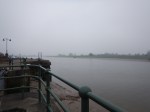
I went to King’s Lynn today, because I had written about the Fen Line and I’d never been there before.
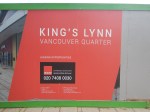

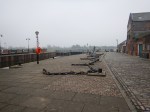
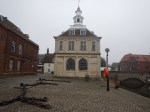


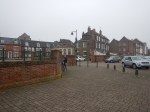
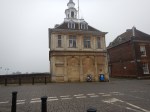

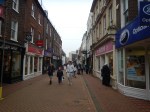
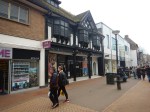
Note the references to George Vancouver.
I wonder how many Canadians visit! After all it only cost me about twenty pounds with a railcard to come up from Kings Cross.
The weather could have been better! But I can remember a day, when we took the dogs to North Norfolk for a walk, on a sunny day. Celia was wearing a summer dress over a bikini, but by the time we got to the beach, it was so dreich, we went straight back home. That’s North Norfolk for you!
King’s Lynn Station
These pictures show King’s Lynn Station, which is Grade II Listed.
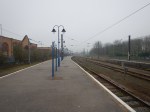
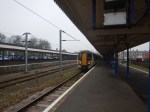
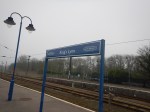
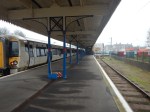
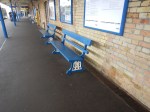
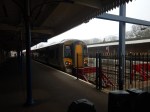

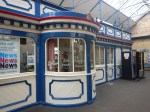
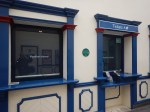
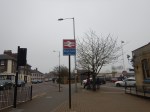
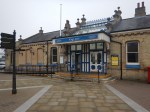
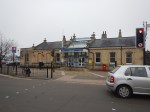
Note.
- It is not the normal design for a station in the UK.
- The station has two platforms, but could have add another.
- The facilities are at a high level for a station of this size, with a booking office, toilets and a cafe.
- The station was reopened by Michael Portillo. Who else?
Perhaps we should see more station designs, not in a standard corporate mould. Others include Birmingham Moor Street, Hanwell and Hebden Bridge.
The only problems with the station are that there aren’t enough trains and the information and signage for visitors could be better.
In an ideal world this would be the train service
- At least two trains per hour in both directions.
- Running between King’s Lynn and Cambridge, stopping at Watlington, Downham Market, Littleport, Ely, Waterbeach and Cambridge North.
- Good interchange with services to Bury St. Edmunds, Ipswich, Peterborough and Stansted Airport at either Ely or Cambridge.
King’s Lynn station certainly has the capacity for more frequent trains.
Cambridge Station Has Changed
Cambridge station is a Grade II Listed building, that over the last few years has been extended with a new pair of platforms capable of handling the longest trains and a step-free footbridge to access them.
But I haven’t been to the station for a couple of years and was surprised to see how the buildings outside have changed.
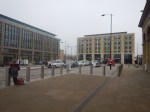


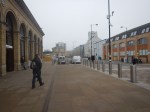

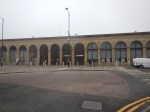
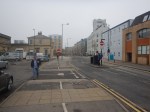

It used to be cluttered outside with taxis, buses, cycles and cars queuing for the car park everywhere.
Now, it’s a big pedestrianised square.
Greater Anglia, The Fen Line And Class 755 Trains
Greater Anglia currently operates two trains per day between King’s Lynn and Liverpool Street stations, in the Morning Peak
- 05:17 – 07:25 – 2 hr. 8 min.
- 06:17 – 08:25 – 2 hr. 8 min.
This is matched by three trains a day between Liverpool Street and King’s Lynn, in the Evening Peak.
- 17:07 – 19:08 – 2 hr. 1 min.
- 18:-07 – 20:10 – 2 hr. 3 min.
- 19:07 – 21:05 – 1 hr 58 min.
Note.
- The two Morning Peak trains stop at Watlington, Downham Market, Littleport, Ely, Cambridge North, Cambridge, Whittesford Parkway, Audley End, Bishops Stortford and Tottenham Hale.
- The three Evening Peak trains call similarly, but miss out Cambridge North.
- Services are run by Class 317 or Class 379 trains.
All the passenger trains on the Fen Line including Great Northern’s Class 387 trains, are four x twenty metre cars, which can run as four, eight or twelve cars.
Maximum Length Of Trains On The Fen Line
This article in the Eastern Daily Press is entitled Plans For Longer Trains Between King’s Lynn And London Could Be Delayed.
Reading it, I get the following impressions.
- The Fen Line can currently accept four-car trains.
- Eight-car trains are needed.
- Plans have been or are being developed to lengthen all platforms to accept eight car trains.
- Network Rail are quoted as saying “The King’s Lynn eight car scheme is amongst the CP5 projects that have funding.”
Extending further might well be out of the question, on grounds of cost and inconvenience to passengers, whilst the work is carried out.
Greater Anglia’s Trains And The Fen Line
There is a problem for Greater Anglia, as both the Class 317 and Class 379 trains are being moved on.
Class 745 Trains
The thirty x four-car Class 379 trains, that work the express West Anglia Main Line services are being replaced with ten x twelve-car Stadler Class 745 trains.
These trains will be too long for the Fen Line.
Class 720 Trains
Five-car Class 720 trains would fit the Fen line and as they are 100 mph trains, like the Class 317 and Class 379 trains, they could handle the current service.
Class 755 Trains
Greater Anglia currently have the equivalent of twenty-eight assorted diesel trains in different lengths, which they are replacing with thirty-eight bi-mode Class 755 trains.
These are.
- 100 mph trains.
- Bi-mode trains with the ability to run on electric or diesel.
- Compatible with the Class 745 trains.
Fourteen will be three-car trains and twenty-four will be four-car trains.
Greater Anglia, have already said they will run services to and from Liverpool Street from Lowestoft, so will they use the extra trains to run services to and from Liverpool Street to important East Anglian towns?
It is worth looking at the capacity of the various trains.
- Class 379 train – four-car – 189 2nd/20 1st
- Class 755 train – three-car – 166 2nd
- Class 755 train – four-car – 224 2nd
- Class 720 train – five-car – 430 2nd
Would a four-car Class 755 train have sufficient capacity for a service between Kings Lynn and Liverpool Street?
I think the answer is probably in the affirmative, but a six or seven car train couple be created, by joining two trains together, if required.
So if the Class 755 trains can provide direct Liverpool Street services for Kings Lynn and Lowestoft, what other towns could get a direct service to London?
- Bury St. Edmunds – Either via Newmarket and Cambridge or Stowmarket and Ipswich
- Cromer/Sheringham via Norwich and Ipswich
- Norwich via Wymondham, Attleborough, Thetford, Ely and Cambridge
- Peterborough via March and Cambridge
- Yarmouth via Via Norwich and either Ipswich or Cambridge.
I can remember, when some of these towns had services to Liverpool Street.
Trains could also split and join at Cambridge and Ipswich to save paths on the main lines to London.
Could trains go up to London in the Morning Peak and return in the Evening Peak?
If there was sufficient demand, they could return in mid-morning and come back to Liverpool Street in mid-afternoon, in time for the Evening Peak.
If so, how many trains would be needed?
- Bury St. Edmunds (35k) – 1
- Cromer (7k)/Sheringham (7k) – 1
- King’s Lynn (43k) – 3
- Lowestoft (70k) – 1
- Norwich via Cambridge – 2
- Peterborough – 1
- Yarmouth (47k) – 1
The figures in brackets are the population
Considering, that my rough calculation, showed there were ten spare trains, these numbers seem feasible.
I have some questions.
- How many Class 755 trains will be able to link together?
- Will platforms needed to be extended at Liverpool Street
- Could Lincoln be reached from London, via a reopened March to Spalding Line via Wisbech?
- Could a Yarmouth and Lowestoft service to London be created by reopening the chord at Reedham?
- Would it be a good idea to have a dozen First Class seats in the Class 755 trains doing the London commute.
I feel that Greater Anglia have ambitious plans.
Conclusion
From this rather crude analysis, it appears that Greater Anglia will be using the Class 755 trains as three and four car electric trains on the electrified lines to Cambridge, Ipswich and Norwich and then using their diesel power to create new direct routes to the capital.
I also suspect, trains will split and join at Cambridge, Ipswich and Norwich to reduce the number of paths needed to and from London. After all one twelve-car train is cheaper to run than three four-car trains!
Could Greater Anglia be bringing forward a timetable, where any town in East Anglia, with a population of over say 10,000, gets at least one fast train to London in the morning and back in the evening?
As the tracks, signals and stations are already there, away from the main lines, there may be little that needs doing.
If not, Greater Anglia have bought too many trains.
Two Trains Per Hour Between Manchester Piccadilly And Buxton Stations From May 21st
If you are going between Manchester Piccadilly and Buxton stations tomorrow, just after ten in the morning, the trains are as follows.
- 10:49 – 11:58 – 59 minutes
- 11:49 – 12:58 – 59 minutes
But do the journey on May 21st and the trains will be as follows.
- 10:11 – 11:06 – 55 minutes
- 10:47 – 11:49 – 62 minutes
- 11:11 – 12:06 – 55 minutes
- 11:47 – 12:49 – 62 minutes
Returning on or after May 21st, the trains will be as follows.
- 10:02 – 10:56 – 54 minutes
- 10:34 – 11:36 – 62 minutes
- 11:02 – 11:56 – 54 minutes
- 11:34 – 12:36 – 62 minutes
Note.
- Two extra trains have been added to the service, to give two trains per hour (tph)
- The faster trains stop at Stockport, Davenport, Woodsmoor, Hazel Grove, Disley, New Mills NewTown, Whaley Bridge and Chapel-en-le-Frith.
- The slower trains have additional stops at Levenshulme, Heaton Chapel, Furnace Vale and Dove Holes.
As the times aren’t that different to the current ones, I suspect that the timings could be achieved by the current Class 156 trains, that work the route.
I have seen an early copy of Porterbrook’s brochure for the Class 319 Flex train, which is now the Class 769 train.
This is an extract.
Porterbrook determined that the most arduous route would be Manchester Piccadilly to Buxton, which has a steep gradient and multiple stops along its 25 mile route 9(8 miles of which is electrified). This anlysis was included to give confidence that the Class 319 Flex would be comparable to existing Diesel Multiple Unit (DMU) technology across a range of different routes, stopping patterns and gradients.
Take a quick look at the Buxton Line on Wikipedia.
This is said.
Due to steep gradients on this line, Class 142 and Class 153 DMUs are banned from the section of line between Hazel Grove and Buxton. Therefore, services to Buxton are worked by Class 150 and Class 156 DMUs. Also Class 158 DMUs were once blocked from operating on the line to Buxton due to the possibility of the large roof-mounted air vents striking low bridges on the route.
Note the two extracts both say “to Buxton”, as obviously, the trains can use the free power boost of gravity on the way down.
If Class 769 trains were to be used on the Manchester Piccadilly to Buxton service, the following would apply.
- Between Manchester Piccadilly and Hazel Grove, the trains could use the electrification.
- They are four-car trains as opposed to the two-car Class 156 trains that currently run the service.
- The service could be extended on the other side of Manchester, when the electrification is finally complete.
I think there’s every chance that Northern are preparing to run Class 769 trains, on the route for which they were designed.
Instead of just one two-car tph, as at present, Buxton could be getting two four-car tph.
Capacity could be increased by four times.
Does A New Service Start Between Wigan North Western And Alderley Edge Stations Using Class 769 Trains On May 20th?
On the Wikipedia entry for Class 769 trains, this is said about the introduction into service of the trains by Northern.
Scheduled to begin entering service in May 2018, Northern plans to deploy its Class 769 units on the Windermere branch line and also their Manchester Airport to Windermere, Wigan North Western to Alderley Edge and Wigan North Western to Stalybridge services
I have looked at the National Rail timetable for the 19th of May and looked up getting between Wigan North Western and Alderley Edge station involves a change at Manchester Piccadilly station.
But look at the journey on the 21st of May and there is an hourly direct train.
- First train – 08:50
- Last train – 19:50
- Journey time – 78 minutes
The train will stop at Hindley, Westhoughton, Bolton, Salford Crescent, Deansgate, Manchester Oxford Road, Manchester Piccadilly, Levenshulme, Heaton Chapel, Stockport, Cheadle Hulme, Handforth and Wilmslow.
In the other direction, the service is as follows.
- Hourly
- First train – 06:49
- Last train – 19:48
- Journey time – 70 minutes
It is an ideal route for a Class 769 train.
- Between Wigan North Western and Bolton is not electrified.
- I also suspect that Bolton and Salford Crescent won’t have the wires completed by the 20th of May.
Manchester will be getting another cross-city service courtesy of a thirty-year-old electric train, with a couple of diesel engines slung underneath.
Wigan North Western And Stalybridge
An hourly service from Wigan North Western to Stalybridge also appears to be in the timetable from the 21st of May.
- First train – 08:08
- Last train – 22:50
- Journey time – 59 minutes
The trains will stop at Hindley, Westhoughton, Bolton, Moses Gate, Farnworth, Kearsley (Manchester), Salford Crescent, Salford Central, Manchester Victoria and Ashton-under-Lyne.
In the other direction, the service is as follows.
- First train – 06:30
- Last train – 21:29
- Journey time – 63-66 minutes
It is another ideal route for a Class 769 train.
- Between Wigan North Western and Salford Central not fully electrified.
As the current service between Wigan Wallgate and Stalybridge seems to have been discontinued, it looks like Pacers and elderly diesels are being replaced by electric trains.
Conclusion
It looks to me, that as the electrification through Bolton and Salford Crescent, that Northern are doing the best they can with what they have available.
I estimate that Northern will need around six trains to run these two services, one of which is new and the other a change of terminus from Wallgate to North Western at Wigan.
 The Anonymous Widower