Could A Modular Family Of Freight Locomotives Be Created?
In Thoughts On A Battery/Electric Replacement For A Class 66 Locomotive, I looked at the possibility of creating a battery/electric locomotive with the performance of a Class 66 locomotive.
- I felt that the locomotive would need to be able to provide 2,500 kW for two hours on battery, to bridge the gaps in the UK electrification.
- This would need a 5,000 kWh battery which would weigh about fifty tonnes.
- It would be able to use both 25 KVAC overhead and 750 VDC third-rail electrification.
- It would have a power of 4,000 kW, when working on electrification.
- Ideally, the locomotive would have a 110 mph operating speed.
It would be a tough ask to design a battery/electric locomotive with this specification.
The Stadler Class 88 Locomotive
Suppose I start with a Stadler Class 88 locomotive.
- It is a Bo-Bo locomotive with a weight of 86.1 tonnes and an axle loading of 21.5 tonnes.
- It has a rating on electricity of 4,000 kW.
- It is a genuine 100 mph locomotive when working from 25 KVAC overhead electrification.
- The locomotive has regenerative braking, when working using electrification.
- It would appear the weight of the diesel engine is around seven tonnes
- The closely-related Class 68 locomotive has a 5,600 litre fuel tank and full of diesel would weight nearly five tonnes.
In Thoughts On A Battery Electric Class 88 Locomotive On TransPennine Routes, I said this about replacing the diesel-engine with a battery.
Supposing the seven tonne diesel engine of the Class 88 locomotive were to be replaced by a battery of a similar total weight.
Traction batteries seem to have an energy/weight ratio of about 0.1kWh/Kg, which is increasing with time, as battery technology improves.
A crude estimate based on this energy/weight ratio would mean that at least a 700 kWh battery could be fitted into a Class 88 train and not make the locomotive any heavier. Given that lots of equipment like the alternator and the fuel tank would not be needed, I suspect that a 1,000 kWh battery could be fitted into a Class 88 locomotive, provided it just wasn’t too big.
This would be a 4,000 kWh electric locomotive with perhaps a twenty minute running time at a Class 66 rating on battery power.
The Stadler Class 68 Locomotive
The Stadler Class 68 locomotive shares a lot of components with the Class 88 locomotive.
- It is a Bo-Bo locomotive with a weight of 85 tonnes and an axle loading of 21.2 tonnes.
- It has a rating on diesel of 2,800 kW.
- It is a genuine 100 mph locomotive.
- The locomotive has regenerative braking to a rheostat.
- It has a 5,600 litre fuel tank and full of diesel would weight nearly five tonnes.
They are a locomotive with a growing reputation.
A Double Bo-Bo Locomotive
My devious engineering mind, thinks about what sort of locomotive would be created if a Class 68 and a Class-88-based battery/electric locomotive were integrated together.
- It would be a double Bo-Bo locomotive with an axle loading of 21.5 tonnes.
- It has a rating on electricity of 4,000 kW.
- It has a rating on diesel of 2,800 kW.
- Battery power can be used to boost the power on diesel as in the Stadler Class 93 locomotive.
- It would be nice to see regenerative braking to the batteries.
Effectively, it would be a diesel and a battery/electric locomotive working together.
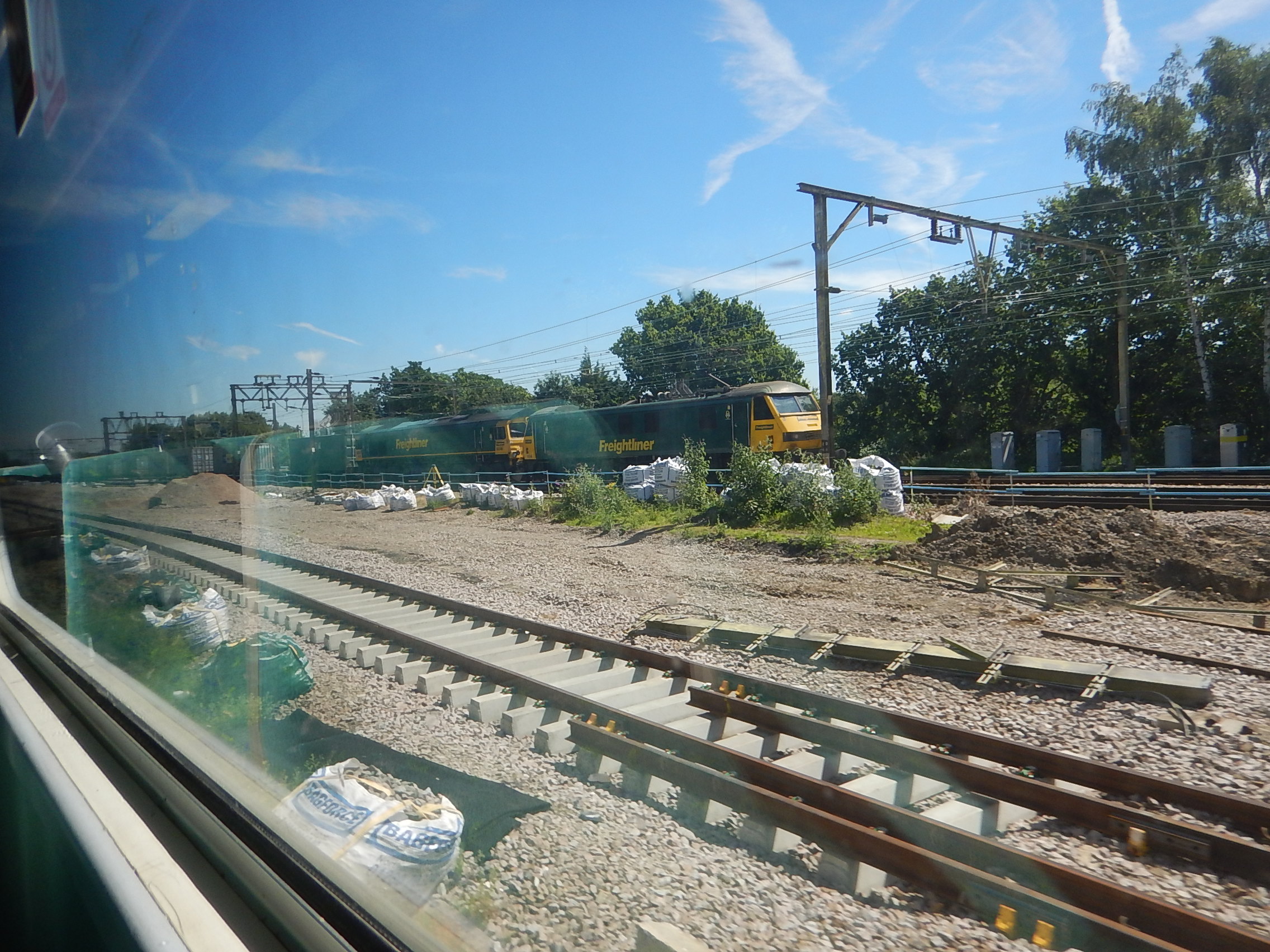
This picture shows a Class 90 electric locomotive and a Class 66 diesel locomotive pulling a heavy freight train at Shenfield.
If this can be done with a diesel and an electric locomotive, surely a company like Stadler have the expertise to create a double locomotive, where one half is a diesel locomotive and the other is a battery/electric locomotive.
A Control Engineer’s Dream
I am a life-expired Control Engineer, but I can still see the possibilities of creating an sdvanced control system to use the optimal power strategy, that blends electric, battery and diesel power, depending on what is available.
I feel that at most times, the locomotive could have a power of up to 4,000 kW.
The Ultimate Family Of Locomotives
I have used a diesel Class 68 and a Class 88-based battery/electric locomotive,, to create this example locomotive.
In the ultimate family, each half would be able to work independently.
In time, other members of the family would be created.
A hydrogen-powered locomotive is surely a possibility.
The Control System on the master locomotive, would determine what locomotives were coupled together and allocate power accordingly.
Conclusion
I have used Stadler’s locomotives to create this example locomotive.
I suspect they are working on concepts to create more powerful environmentally-friendly locomotives.
As are probably, all the other locomotive manufacturers.
Someone will revolutionise haulage of heavy freight trains and we’ll all benefit.
Step-Free Access At Brough Station
On my last trip North, I changed trains at Brough station.
The station appears to have been recently rebuilt and has full step-free access using ramps, as these pictures show.





This Google Map shows the station.
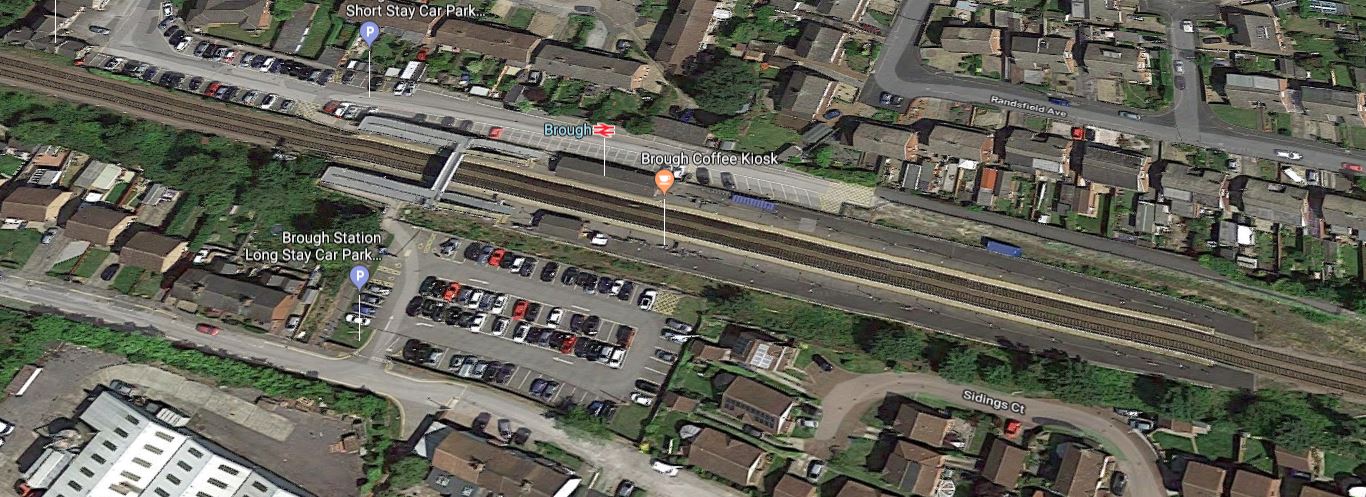
It may work, but those ramps could take some time, if you’re pushing a heavy buggy or wheelchair.
In Winner Announced In The Network Rail Footbridge Design Ideas Competition, I wrote how the competition was won by this bridge.
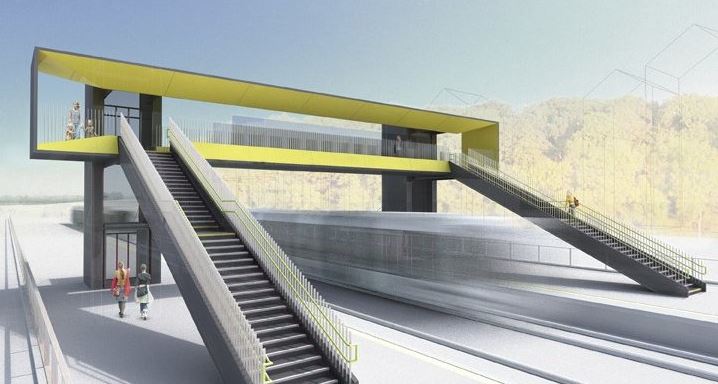
So would a factory-built bridge like this be installed be installed today, if Brough or a similar simple station was being rebuilt or built from scratch?
- Concrete bases to support the bridge, would be built in the appropriate position on both platforms.
- An electrical supply would be provided.
- A special train would then arrive with the bridge and an crane to lift the bridge into place.
- A couple of hours later, the bridge would have been erected.
If the system is designed designed, it should be no more difficult than installing a new ticket machine.
Conclusion
How much would be saved in the design and building of new stations, if they were designed around a step-free bridge like this?
But the biggest saving is surely in the time needed to build the station?

