Big Step Forward’ For Colne To Skipton Rail Link Dream
The title of this post is the same as that of this article in the Lancashire Telegraph.
This is the introductory paragraph.
THE inclusion of the re-opening of the Colne to Skipton rail link in a government planning document has been hailed as ‘a big step forward’ by Pendle MP Andrew Stephenson.
Some points from the article.
- The project is included in Department for Transport’s Rail Network Enhancements Pipeline for 2019 to 2024.
- There is also a load of cynicism from other politicians.
However, this document from the South-East Lancashire Rail Action Partnership is more encouraging.
Road Toll Proposal To Plug Electric Car Tax Shortfall
The title of this post is the same as an article in today’s copy of The Times.
Last year, tax on petrol and diesel raised £27.9 billion. As the Committee on Climate Change (CCC) is saying that all new cars and vans should be electric by 2030 or 2035 at the latest, it seems very likely that there will be a tax shortfall, as electric cars don’t pay fuel tax.
So the CCC is suggesting that road pricing be introduced
I predict that whichever government introduces it, they will lose the next election.
Fresh Calls For ‘Missing Link’ Buxton To Matlock Railway Line To Be Reopened
The title of this post is the same as that of an article in the Buxton Advertiser.
I wrote in full about this route in Connecting The Powerhouses, after an article was published in the June 2017 Edition of Modern Railways.
This was my conclusion.
It’s very difficult to find a reason not to reopen the Peak Main Line.
I think in the last two years the case for reopening the Peak Main Line between Buxton and Matlock may have become even stronger.
MEMRAP
A group called the Manchester and East Midlands Rail Action Partnership or MEMRAP has been setup to promote the case for reopening.
A web site has been created.
New Lower-Carbon And Quieter Passenger Trains
Rolling stock has improved and trains like tri-mode Class 755 trains and possible battery electric trains, should be able to handle the route in a more environmentally-friendly way.
Transport Of Building Materials
This is a paragraph from the Buxton Advertiser article.
Funding for the project, according to Mr Greenwood, would come from working in partnership with local quarries which are supplying materials for the new Heathrow Airport runway and are involved with the HS2 project.
Network Rail has already have spent a lot of money to improve freight access to the quarries, as I reported in £14m Peak District Rail Freight Extension Unveiled. So the demand for building materials must be there and going via Matlock would remove some heavy freight trains from the Hope Valley Line.
Heavy freight trains might not be welcomed by all stakeholders.
Possible High Speed Two Cutbacks
As I wrote in Rumours Grow Over Future Of HS2, The Eastern leg of High Speed Two might be axed.
This may or may not change the case for reopening the Peak Main Line.
There Will Be Opposition
This is two paragraphs from the Buxton Advertiser article.
Peak Rail has long campaigned to re-open the line for heritage trains to run between Buxton and Matlock. However, director Paul Tomlinson said he was not in favour of the new plans.
He said: “I’m all in favour raising the profile of the line to get it re-opened but we can’t support this new idea.
Others will also object.
Conclusion
There will be various opposing pressures on both sides of reopening the Peak MNain Line.
In favour will be.
- The quarries.
- Cities like Derby and Nottingham and passengers wanting better links to and from Manchester and its Airport.
- Transport for the North, as opening could increase capacity on the Hope Valley Line between Manchester and Sheffield.
Local interests will want to maintain the status quo.
‘Flying Taxi’ Made In Britain Takes Off On Maiden Flight
The title of this post, is the same as that of this article on The Times.
There is a video of the plane, which can carry a 250 Kg payload.
I don’t think we’ll see practical aircraft of this type in large numbers for some years yet, but the technology is getting there with scores of projects starting up all over the world.
This project is funded by Stephen Fitzpatrict, who founded OVO Energy.
How To Return A Wallet Or Purse
There’s an interesting little tale in The Times today, which is entitled Penny Trail Leads To Missing Wallet.
A guy fpund a wallet. In it were some valuable cards, so the finder sent a penny to the account on the debit card he found.
He did this four times in total and used the reference field to say he’d got the wallet and give his mobile number.
The owner got in contact and all was sorted out.
What Will Happen To Great Western Railway’s Class 387 Trains?
I have been looking at the services that Great Western Railway run using Class 387 trains.
Current services run by these trains are.
London Paddington And Didcot Parkway
This service has the following characteristics.
- The frequency is two trains per hour (tph)
- Services are run by two trains working as a pair.
- Intermediate stops are Ealing Broadway, Southall, Hayes and Harlington, West Drayton, Iver, Langley, Slough, Maidenhead, Twyford, Reading, Tilehurst, Pangbourne, Goring and Streatley and Cholsey.
- Journey time is one hour twenty-three minutes, giving a three hour round trip.
I estimate that twelve trains are needed to run this service.
From the 15th December 2019, this service appears to run to a similar timetable.
London Paddington And Reading
This service has the following characteristics.
- The frequency is two tph.
- Services are run by two trains working as a pair.
- Intermediate stops are Ealing Broadway, Southall, Hayes and Harlington, West Drayton, Slough, Burnham, Maidenhead and Twyford
- Journey time is fifty-seven minutes, giving a two and a half hour round trip.
I estimate that ten trains are needed to run this service.
From the 15th December 2019, this service will be run by TfL Rail using Class 345 trains.
Reading And Newbury
This service has the following characteristics.
- The frequency is one tph.
- Services are run by two trains working as a pair.
- Intermediate stops are Reading West, Theale, Aldermaston, Midgham, Thatcham and Newbury Racecourse.
- Journey time is twenty-nine minutes, giving an hour round trip.
I estimate that two trains are needed to run this service.
From the 15th December 2019, this service appears to run to a similar timetable.
Current Trains Needed
Summarising the trains needed gives the following.
- London Paddington and Didcot Parkway – twelve trains
- London Paddington and Reading – ten trains
- Reading and Newbury – two trains.
This gives a total of twenty-four trains.
Trains Needed After 15th December 2019
Summarising the trains needed gives the following.
- London Paddington and Didcot Parkway – twelve trains
- London Paddington and Reading – no trains
- Reading and Newbury – two trains.
This gives a total of fourteen trains.
Heathrow Express
Heathrow Express will use twelve Class 387 trains in the near future.
Great Western Railway’s Future Need For Class 387 Trains
Summarising the trains needed gives the following.
- London Paddington and Didcot Parkway – twelve trains
- Reading and Newbury – two trains.
- Heathrow Express – twelve trains.
This gives a total of twenty-six trains.
Great Western Railway have a total of forty-five Class 387 trains. Wikipedia is a bit confusing on this point, but I’m fairly certain this is a correct figure.
This means that Great Western Railway have nineteen trains available for expansion of services.
Great Western Railway’s Class 769 Trains
Great Western Railway have also ordered nineteen dual-voltage bi-mode Class 769 trains.
These are for the following routes.
- Reading – Redhill or Gatwick Airport
- London Paddington – Reading and Oxford
As the spare number of Class 387 trains is the same as that of the bi-mode trains, was it originally intended, that these routes could be run by the Class 387 trains, after Network Rail had joined the electrification together.
But the extra electrification never happened.
So Great Western Railway ordered the bi-modes trains.
Great Western Railway’s Dilemma
The Class 769 trains appear to be running late, so Great Western Railway are running the Gatwick and Oxford services with diesel multiple units, that they’d like to send to the West Country.
Bombardier appear to have moved on with their battery technology, that was successfully trialled using a similar Class 379 train in 2015. I wrote about the possibility of battery Electrostars on the Uckfield Branch last month in Battery Electrostars And The Uckfield Branch.
I believe that both routes would be within range of a battery-electric Class 387 train.
Reading – Redhill or Gatwick Airport
The various sections of the route are as follows.
Reading and Wokingham – Electrified with 750 VDC third-rail.
Wokingham and Aldershot South Junction – Not electrified – 12 miles
Aldershot South Junction and Shalford Junction – Electrified with 750 VDC third-rail.
Shalford Junction and Reigate – Not electrified – 17 miles
Reigate and Redhill/Gatwick – Electrified with 750 VDC third-rail.
To my mind, this is a classic route for a battery-electric train, as it is mainly electrified and both gaps are less than twenty miles long.
Some or all of the Class 387 trains are dual-voltage.
London Paddington – Reading and Oxford
The distance between Didcot Parkway and Oxford is under twelve miles, so a return trip should be well within range of a battery-electric Class 387 train.
There are also plans at Oxford station to put a new bay platform on the London-bould side of the station. This could be fitted with a charging station to avoid any range anxiety.
A Gatwick And Oxford Service
Could the Oxford and Gatwick services be joined together to make a direct Oxford and Gatwick service via Reading?
- I estimate that the service would take around two hours.
- Assuming a fifteen minute turnround at both ends, a round trip would be four and a half hours.
Running a half-hourly service would need just nine trains.
Or eighteen, if they were to run as eight-car trains!
Could this explain the order for nineteen trains, as it’s always a good idea to have a spare?
Conclusion
Great Western Railway can dig themselves elegantly out of a hole of Network Rail’s making by converting the spare Class 387 trains to battery-electric trains.
I’m sure Bombardier have the design available and would be happy to oblige after they have finished conversion of the Heathrow Express units.
There might also be an argument for fitting all Class 387 trains with batteries.
- A more unified fleet.
- Train recovery in the event of electrification failure.
- Better safety in depots.
- Direct services between Paddington and Henley and Bourne End.
- Would it allow Class 387 trains to run between Paddington and Bedwyn?
- Reduced electricity consumption.
It’ll be a decision for the accountants.
One collateral benefit of a successful conversion program for the Great Western Railway, is that it would enable Great Northern’s twenty-eight trains and c2c’s six trains to be easily converted to battery-electric versions.
- Great Northern’s coulde be used by sister company; Southern on the Uckfield Branch and the Marshlink Line.
- c2c trains are soon to be replaced by new trains.
I’m sure that quality four-car battery-electric trains won’t wait long for an operator.
A Stray TransPennine Express Class 802 Train In London
I took these pictures of a TransPennine Express Class 802 train running around London.
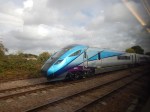

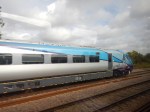
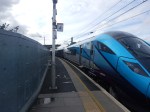
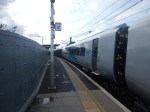

In the first three pictures, it was parked in the sidings to the East of Southall station.
The rest were taken at Willesden Junction station.
Looking at Real Time Trains it appeared to be going between the Hitachi depots at North Pole and Doncaster.
Is This The Longest Bus Stop Repair in London’s History?
This picture shows the bus stop outside Dalston Junction station.
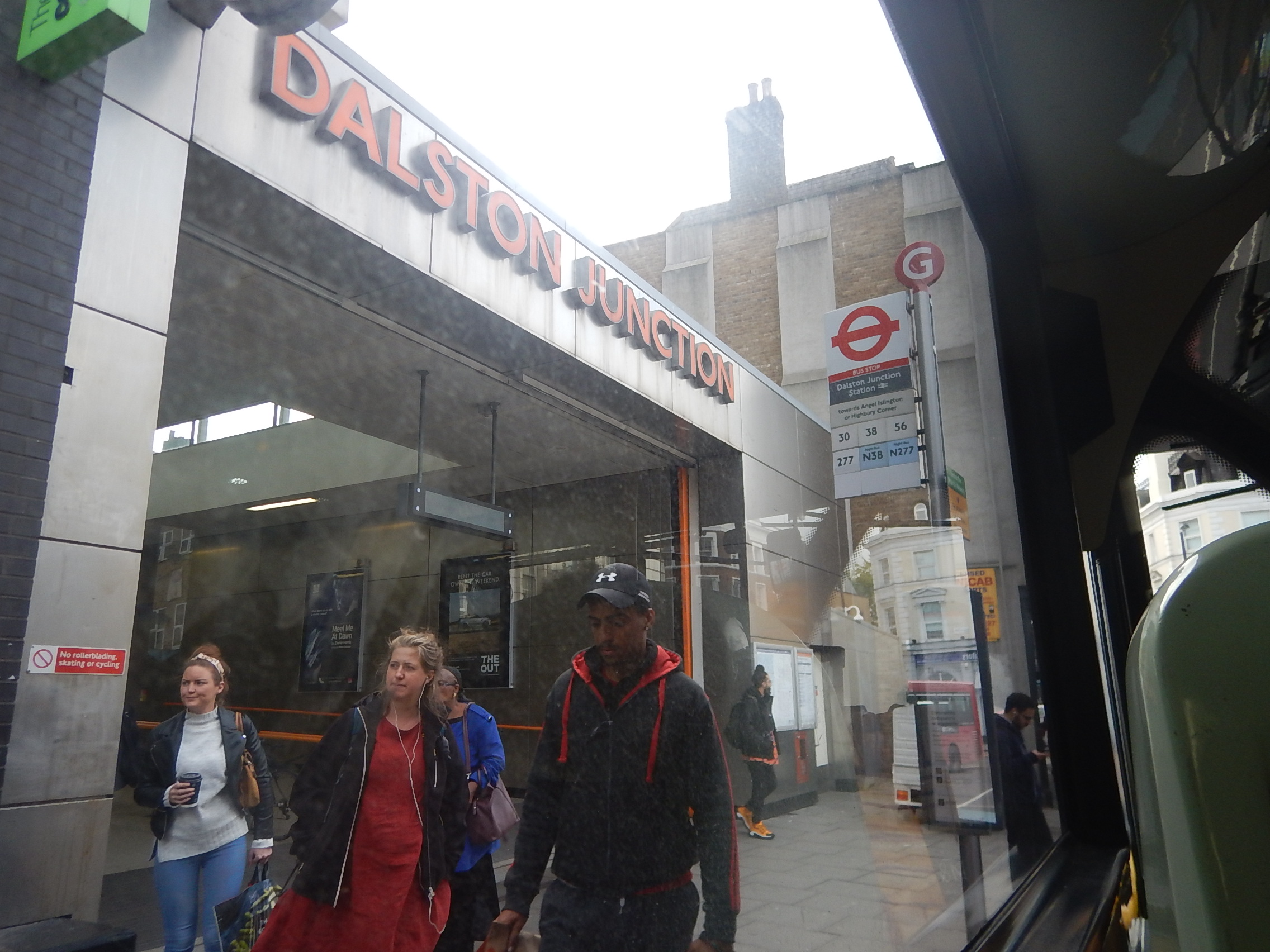
I use this bus stop regularly and since about 2012, the top bit above the information has been missing.
But not any more!
Crossrail’s Paddington Service Plans Revealed
The title of this post is the same as that of this article on Rail Magazine.
This is the first paragraph.
Trains from London Paddington Crossrail station to Shenfield will begin six months after trains start serving the low-level station from other destinations.
In Crossrail Ltd Outlines Plan To Complete The Elizabeth Line,, which I wrote in April 2019, I quoted these points from a statement on the Crossrail web site.
- Crossrail Ltd has identified a six-month delivery window with a midpoint at the end of 2020.
- Bond Street station will open later.
- Service will be initially twelve trains per hour (tph) between Paddington and Abbey Wood stations.
- Services between Paddington and Reading will commence in December 2019 with a frequency of 4 tph in the peak.
None of these promises from six months ago appear to have been changed.
So my comment at the time still stands.
Twelve trains per hour (tph) gives a capacity of 18,000 passengers per hour, which compares with the 36 tph and 31,500 passengers per hour of the Victoria Line.
Practically, this means that a twelve tph Crossrail could be carrying sixty percent of the number of passengers of the Victoria Line. It’s better than a kick in the teeth!
But then Dear Old Vicky is the Platinum Standard with lots of encrusted diamonds!
There is also other information in the Rail Magazine article.
- Paddington to Shenfield services will start six months after the start of Paddington to Abbey Wood services.
- Services will initially use the two-platform Crossrail station under Paddington as a terminus.
- Through services are expected to start a year later.
It looks like Crossraill should be fully open by the May 2022 timetable change.
This map from carto.metro.free.fr shows the layout of the lines at Paddington station.

Note that if you go pass the Crossrail tunnel portal on a train, there are generally several of Crossrail’s Class 345 trains to be seen, lined up in front of Westbourne Park bus garage.



These pictures were taken in July 2019.
Fracking Hell…Is It The End?
The title of this post, is the same as that of this article in yesterday’s Sunday Times.
The article is an interesting read.
These two paragraphs are key.
Activism by Extinction Rebellion and growing public concern about climate change have weakened the chances of an industry once expected to create 64,500 jobs ever getting off the ground.
Cuadrilla Resources, the fracking company most active in Britain, has in recent days been removing equipment from its sole operating site in Lancashire. Petrochemicals tycoon Sir Jim Ratcliffe has vowed to pursue shale gas exploration overseas because of “archaic” and “unworkable” regulations at home.
But I think it’s more complicated than that!
I sometimes go to lectures at the Geological Society of London and two stand were about fracking.
Two were about fracking.
Fracked or fiction: so what are the risks associated with shale gas exploitation?- Click for more.
This is a video of the lecture.
What Coal Mining Hydrogeology Tells us about the Real Risks of Fracking – Click for more.
This is a video of the lecture.
This is a must-watch video from a good speaker.
I have also written several posts about fracking, with some of the earliest being in 2012-2013.
I have just re-read all of my posts.
- In the posts I have tried to give information and at times, I have said we should start fracking.
- But we should only start if we know what we’re doing.
- In several places I ask for more research.
However, there are some interesting facts and inconvenient truths about fracking and natural gas in general.
- Russia earns about €300billion a year or twenty percent of its GDP from gas exports to Europe. See Should We Nuke Russia?.
- Putin backs the anti-fracking movement. See Russia ‘secretly working with environmentalists to oppose fracking’.
- Fracking techniques is used in the Scottish Highlands to obtain clean water from deep underground. See the second Geological Society of London video.
- About forty per cent of gas usage is to heat housing. See the second video.
- The eighteen percent of the UK population, who don’t have a gas supply are more likely to be in fuel poverty. See the second video.
- Scotland has more need for energy to provide heat. See the second video.
- Natural gas with carbon capture and storage has a similar carbon footprint to solar power. See the second video.
- Cowboy fracking, as practised in the United States, would not be allowed in the UK or the EU. See the second video.
- We have no historic earthquake database of the UK, which would help in regulation and research of fracking. See the second video.
- Fracking has brought down the price of gas in North America.
- In the United States fracked gas is cutting the need to burn coal, which produces more pollution and carbon dioxide to generate the same amount of energy. See A Benefit Of Fracking.
The article in the Sunday Times says pressure against fracking has started the shutdown of the industry in the UK.
But there is another big pressure at work.replacement of natural gas with hydrogen.
- This would reduce carbon emissions.
- It can be used as a chemical feedstock.
- It could be delivered using the existing gas network.
- The gas network could be changed from natural gas to hydrogen on a phased basis, just as the change from town to natural gas was organised around fifty years ago.
But it would mean that all gas users would need to change their boilers and other equipment.
Put yourself in the position of Jim Ratcliffe; the major owner and driving force behind INEOS.
INEOS needs feedstocks for chemical plants all over the world and affordable natural gas is one that is very suitable, as it contains two of the major elements needed in hydrocarbons and many useful chemicals; carbon and hydrogen.
If local sources are not available, then liquefied natural gas can be shipped in.
The Hydrogen Economy
It is possible to replace natural gas in many applications and processes with hydrogen.
- It can be used for heating and cooking.
- Important chemicals like ammonia can be made from hydrogen.
- It can be transported in existing natural gas etworks.
- Hydrogen can also replace diesel in heating and transport applications.
There is also a possibility of measures like carbon taxes being introduced, which using hydrogen would reduce.
There’s more in the Wikipedia entry for Hydrogen economy.
Have Jim Ratcliffe and others done their predicting and decided that the demand for locally sourced natural gas will decline and that the hydrogen economy will take over?
But there will need to be a readily available source of large amounts of hydrogen.
I used to work in a hydrogen factory at Runcorn, which was part of ICI, that created hydrogen and chlorine, by the electrolysis of brine. In some ways, the hydrogen was an unwanted by-product, back in the late 1960s, but similar and more efficient processes can be used to convert electricity into hydrogen.
The latest idea, is to cluster offshore wind farms around gas rigs in the seas around the UK. The electricity produced would be used to electrolyse water to extract the hydrogen, which would then be piped to the shore using existing gas pipelines.
It would be a way of reusing infrastructure associated with gas fields, that have no gas left to extract.
There would be no need to build an expensive electricity cable to the shore.
The Dutch, Danes and the Germans are proposing to build the North Sea Wind Power Hub, which is described like this in Wikipedia.
North Sea Wind Power Hub is a proposed energy island complex to be built in the middle of the North Sea as part of a European system for sustainable electricity. One or more “Power Link” artificial islands will be created at the northeast end of the Dogger Bank, a relatively shallow area in the North Sea, just outside the continental shelf of the United Kingdom and near the point where the borders between the territorial waters of Netherlands, Germany, and Denmark come together. Dutch, German, and Danish electrical grid operators are cooperating in this project to help develop a cluster of offshore wind parks with a capacity of several gigawatts, with interconnections to the North Sea countries. Undersea cables will make international trade in electricity possible.
Later, Wikipedia says that ultimately 110 GW of electricity capacity could be developed.
So could these planned developments create enough hydrogen to replace a sizeable amount of the natural gas used in Western Europe?
I suspect a lot of engineers, company bosses and financiers are working on it.
Conclusion
I have come to the following conclusions.
- Fracking for hydrocarbons is a technique that could be past its sell-by date.
- The use of natural gas will decline.
- INEOS could see hydrogen as a way of reducing their carbon footprint.
- The heating on all new buildings should be zero carbon, which could include using hydrogen from a zero-carbon source.
There are reasons to think, that electricity from wind-farms creating hydrogen by electrolysis could replace some of our natural gas usage.
 The Anonymous Widower