Should Coeliacs On A Long-Term Gluten-Free Diet Have The Pfizer Or AstraZeneca Vaccine?
This is an interesting question.
I believe that coeliacs on a long-term gluten-free diet have a strong immune system and this is responsible for the group, to which I belong, having a 25 % less risk of suffering from cancer, according to Joe West at Nottingham University.
This strong immune system may react to and attack a two-dose viral-vector vaccine like the AstraZeneca, so would I be better off with the Pfizer?
I wrote about why this could happen in Coronavirus: Why Combining The Oxford Vaccine With Russia’s Sputnik V Vaccine Could Make It More Effective.
This is an extract from that post.
A Possible Problem With Viral-Vector Vaccines
This is a paragraph from the article on the Conversation, which talks of a problem with viral-vector vaccines.
When a person is given a viral-vector vaccine, as well as generating an immune response against the coronavirus’s spike protein, the immune system will also mount a response against the viral vector itself. This immune response may then destroy some of the booster dose when it is subsequently delivered, before it can have an effect. This has long been recognised as a problem.
It looks like a case of shoot the messenger to me.
The Russian solution is to use different viral-vectors in the two doses.
Conclusion
As I believe, I already have a degree of natural protection from my diagnosed coeliac disease and long-term gluten-free diet and the resulting strong immune system, I think on balance, I’d personally choose the Pfizer vaccine.
But the choice of vaccine will probably not be down to me!
French Pharma Giant Sanofi To Produce Rivals’ Covid Vaccines
The title of this post, isthe same as that of this article on The Times.
This is the introductory paragraph.
A growing sense of national failure in France over the inability to produce a viable Covid-19 vaccine has been compounded by the decision of its largest pharmaceutical company to produce doses developed by its rivals, Pfizer and Biontech.
France doesn’t seem to have backed the right horse!
But at least producing doses of the Pfizer vaccine will help to solve Europe’s severe vaccine shortage.
Consultation Opens On Extending The Elizabeth Line Into Kent
The title of this post, is the same as that of this article on Ian Visits.
This is the introduction to Ian’s post.
A consultation has opened on proposals for improving public transport services connecting Ebbsfleet, Dartford, Slade Green, Erith and Belvedere with Abbey Wood.
The consultation is being run by the C2E Partnership, which was formed in 2016 to promote extending the Elizabeth line into Kent, although the new consultation does look at alternatives to the Lizzie line as well.
The early plans for Crossrail included running the line out towards Gravesend, but this was cut back in the 1990s, and in 2008 when Crossrail got approval, it was difficult to support the extended line. However, some passive provision was included in the station design at Abbey Wood to permit an extension to be added on later.
There are five options being looked at by the C2E Partnership.
Three of them are extensions of the Elizabeth line, one is improved services from Kent to Abbey Wood, and the final is a Rapid Bus Transit service.
There are maps of the various options.
At the moment, I doubt there is much that will happen, with low levels of commuting due to the pandemic and a near-bankrupt Transport for London.
Well! That Was Painless!
I checked the post before I went to bed and there was an NHS envelop on the mat.
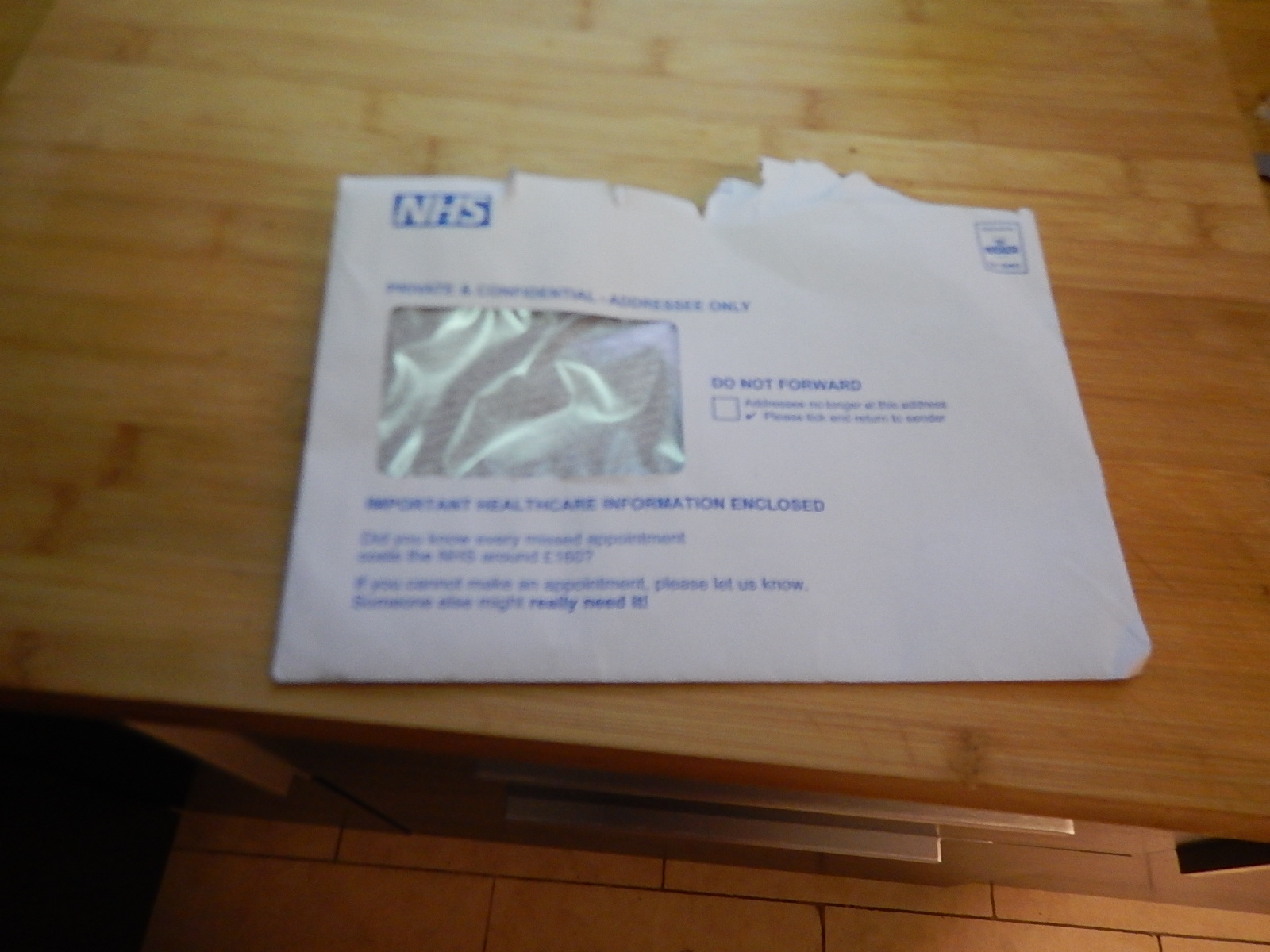
It was my call to be jabbed!
I have just booked and I’ll have my first dose tomorrow, at the Francis Crick Institute.
I booked using my computer and it was a well designed system, that worked without a hitch.
Cummins Provides 20MW PEM Electrolyzer To Air Liquide For Green Hydrogen Production
The title of this post, is the same as that of this article on Green Car Congress.
It will produce 3,000 tonnes of green hydrogen annually from renewable energy.
Ovo To Launch ‘Half-Price’ Electric Vehicle Charging Tariff
The title of this post, is the same as that of this article on the Guardian.https://www.theguardian.com/money/2021/jan/26/ovo-to-launch-half-price-electric-vehicle-charging-tariff
This is the sub-title.
New Drive Anytime rate bids to mirror rivals’ off-peak tariff with savings of 60% a year, supplier claims.
If I had a car, it might be a good deal.
Trains: £34m For Revival Of 50-Year-Old North-East Railway Line
The title of this post, is the same as that of this article on the Northern Echo.
These are the introductory paragraphs.
A £34 million investment to reopen a North-East rail route that closed more than 50 years ago has been announced by Transport Secretary Grant Shapps.
The funding, announced today, January 23, is to progress plans to reopen the Northumberland Line between Newcastle and Ashington, which closed to passengers in 1964 as part of the Beeching cuts.
The money will fund preparatory works, including land acquisition, detailed design work and early site works.
The general tone of the article and the tone of comments from interested parties is welcoming and generally positive.
The Northumberland Line
In the Wikipedia entry for the Blyth And Tyne Railway, there is a section, which is entitled 2019-Present: Revised Plans And The Northumberland Line Project, where this is said about the design of the Northumberland Line.
The revised proposals, released in July 2019, are reduced in scope from the plan considered in the 2016 GRIP 2 study and propose a four-phase project allowing a reduction in the initial cost of the scheme; the initial phase, at an estimated £90 million, would see the creation of new or reopened stations at Northumberland Park, Newsham, Bedlington and Ashington as well as some line-speed upgrades, extension of the double track section further to the south of Newsham, creation of turn-back facilities at Ashington and some level crossing upgrades or closures Two further stations, at Seaton Delaval and Blyth Bebside (formerly Blyth Park & Ride), and additional line-speed improvements are suggested for Phase 2 while Phases 3 and 4 would deliver further line-speed improvements (including signalling upgrades) and an additional passing-loop at Seaton Delaval respectively. Previously proposed stations at Seghill and Woodhorn appear to have been dropped from the scheme.
There is also a lot more detail in this article on Rail Engineer, which is entitled Beeching Reversed: Reopening Of The Northumberland Line.
These are a few of my thoughts, based on Wikiiedia, Google Maps and the Rail Engineer article.
The Current Tracks Between Newcastle and Ashington
I will now follow the route of the Northumberland Line in a series of maps from where it leaves the East Coast Main Line to Ashington.
Benton Junction
Benton Junction is where the Northumberland Line joins the East Coast Main Line.
This Google Map shows Benton Junction
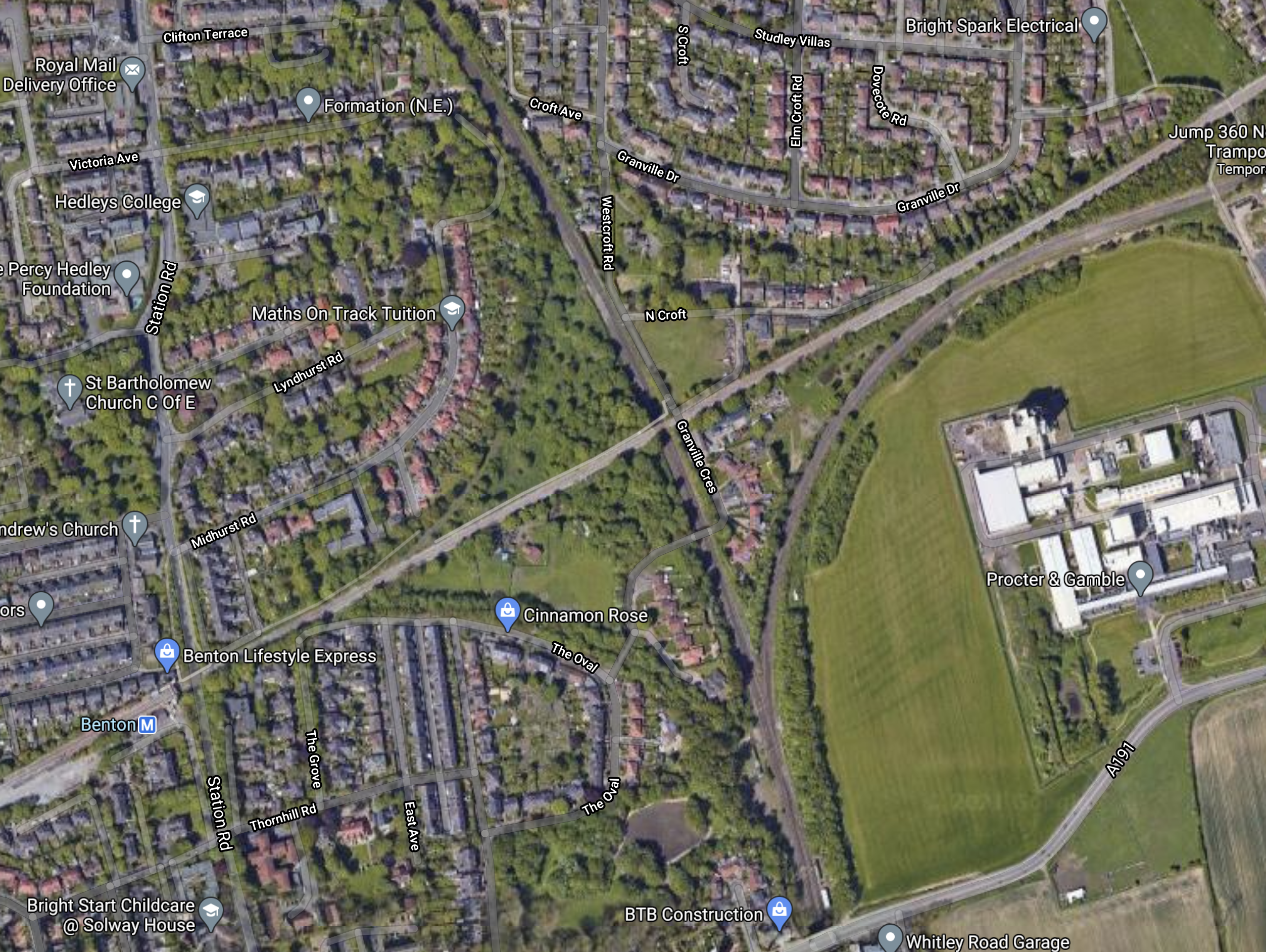
Note.
- The Tyne and Wear Metro (Metro) running East-West across the map.
- Benton Metro station towards the West of the map
- The fully-electrified East Coast Main Line (ECML) running North-South down the map.
- The bridge at the bottom of the map, where the A191 crosses over the ECML, would need to be rebuilt to fit in any extra tracks.
- Manors station is the next station to the South on the ECML.
- Newcastle Central station is 4.3 miles to the South.
- Proctor and Gamble’s site to the East of the Junction.
- The Northumberland Line curves round the Proctor and Gamble site, connecting East and South.
This second Google Map shows the junction at the Southern point of the junction.
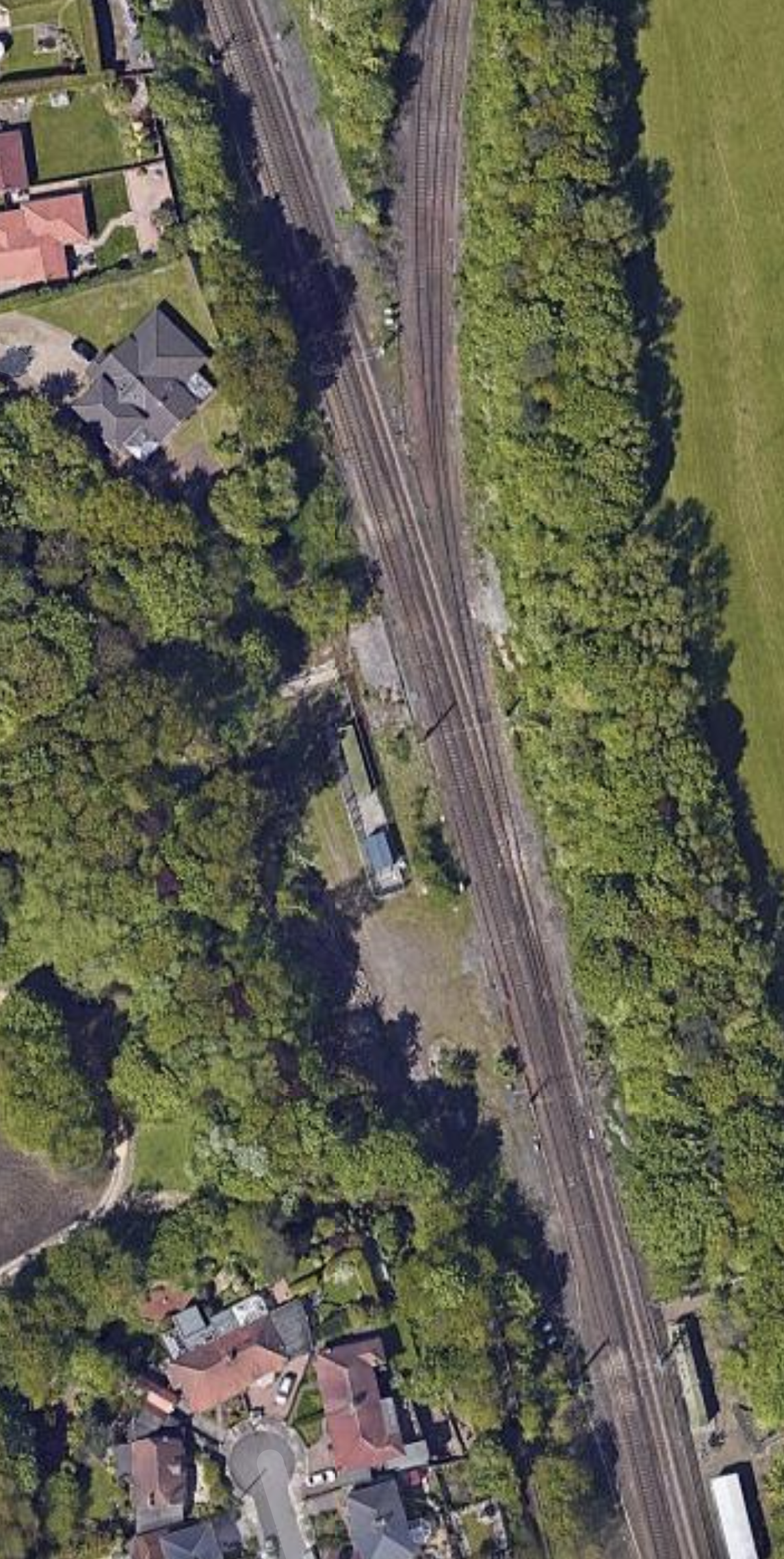
When the Northumberland Line closed to passenger trains in 1964, there were perhaps a dozen trains per day through this junction.
There are now 49, most of which are expresses on the ECML, so I suspect improvements are needed.
If the junction is remodelled, the single track section could be removed and perhaps Proctor & Gamble would like a station for their large workforce.
Single Track Alongside The Metro
After turning East after passing Proctor and Gamble, the Northumberland Line becomes single track and runs along the North side of the Metro.
This Google Map shows a section of the tracks.
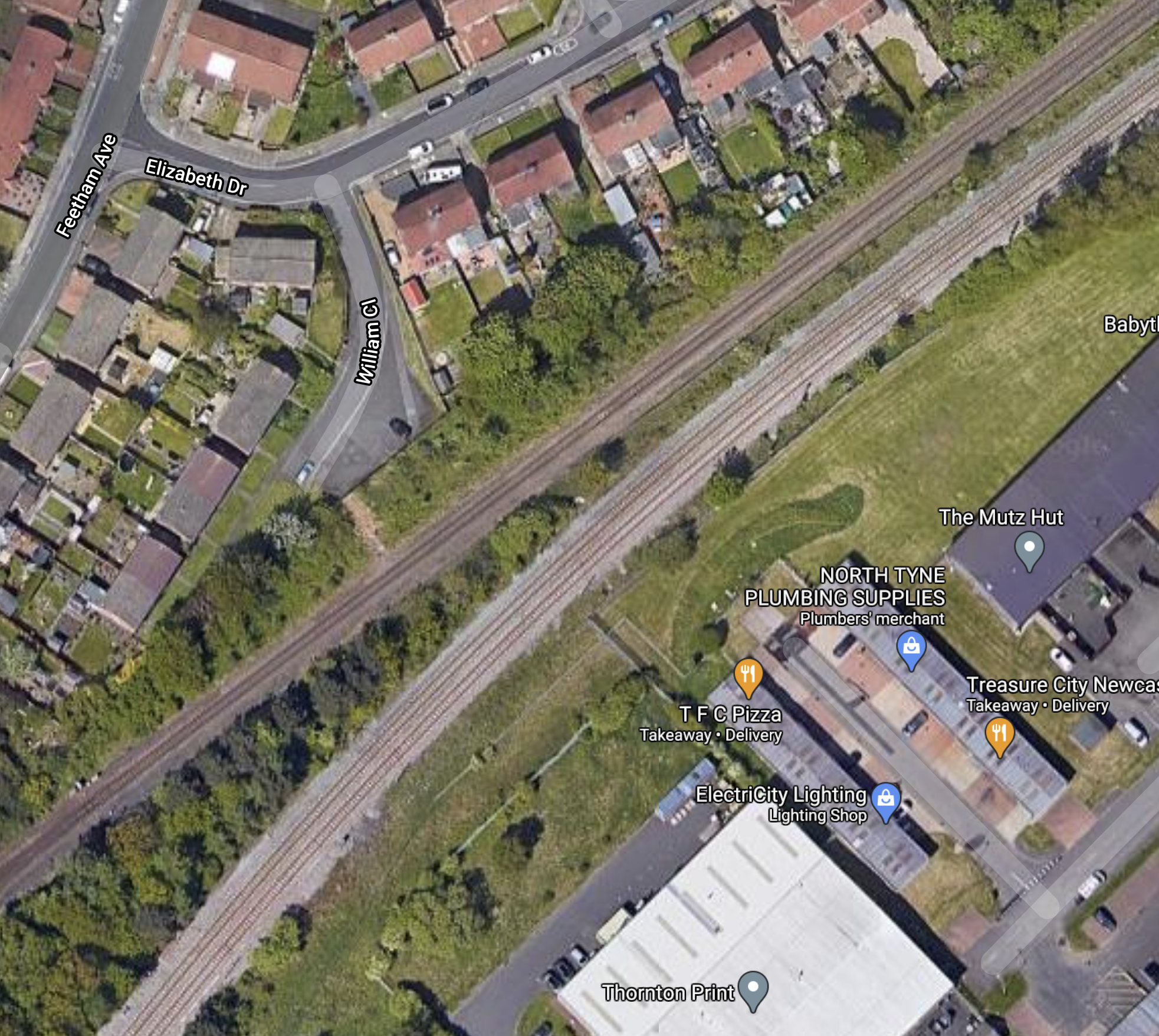
It would appear that if required, there could be space to add an extra track.
Palmersville Station
The Northumberland Line then passes to the North of Palmersville Metro station, as this Google Map shows.
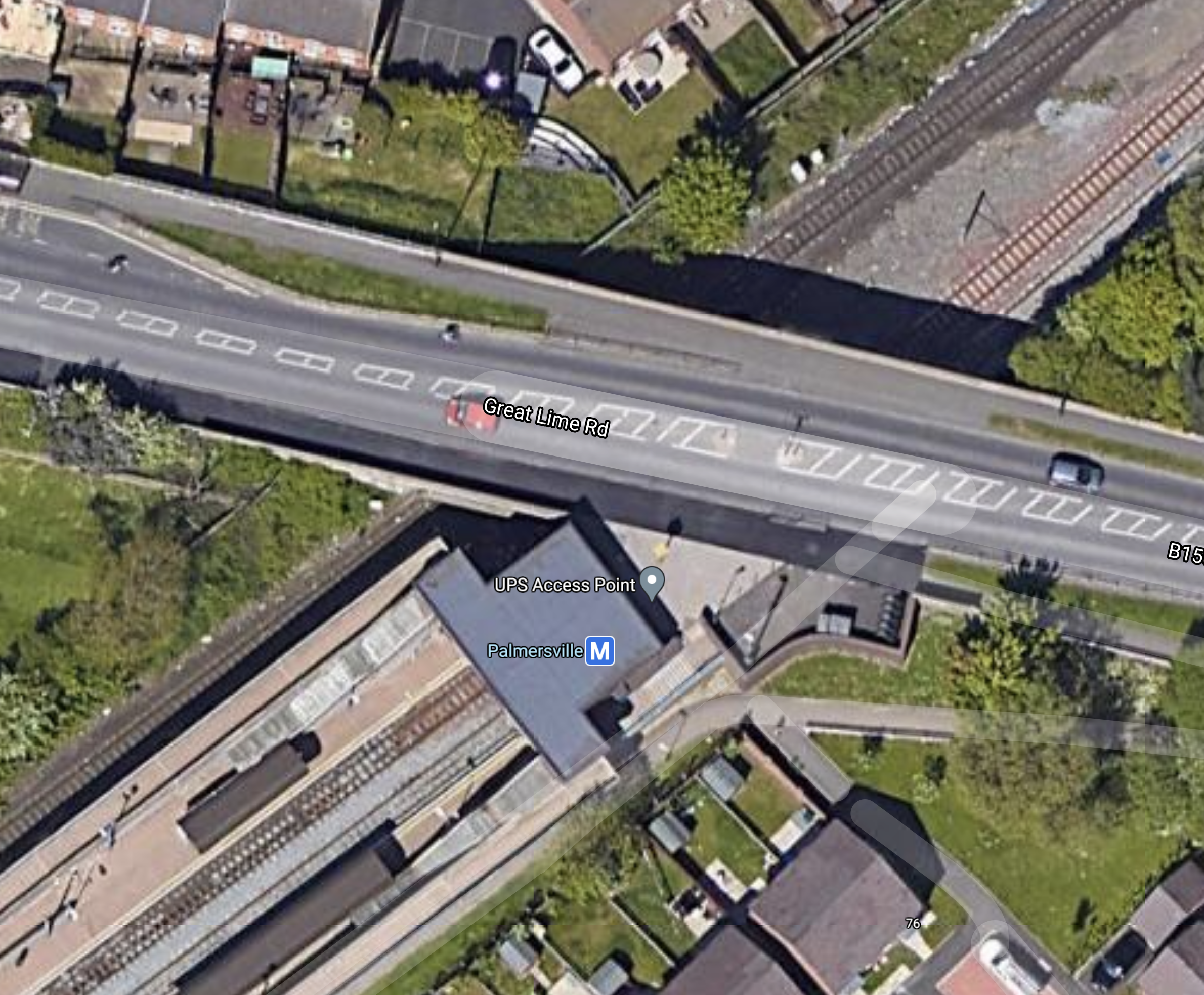
This extract from the Wikipedia entry for the station, indicates plans for connection between the Northumberland Line and the Metro.
Heading east from Palmersville, the route runs alongside a single-track line, which is used by freight services to and from North Blyth and Lynemouth. As of May 2020, proposals exist for the reinstatement of a passenger service over this route, as far as Ashington, as part of the Northumberland Line project. It is expected that additional platforms would be constructed at the nearby Northumberland Park station, in order to accommodate the new rail service, with a predicted September 2023 opening.
My only thought, is that a bi-directional platform could be created at this station, as a simple connection between the two Northumberland Line and the Metro.
Northumberland Park Station
Northumberland Park station is planned to be an interchange between the Northumberland Line and the Metro.
This Google Map shows the station.
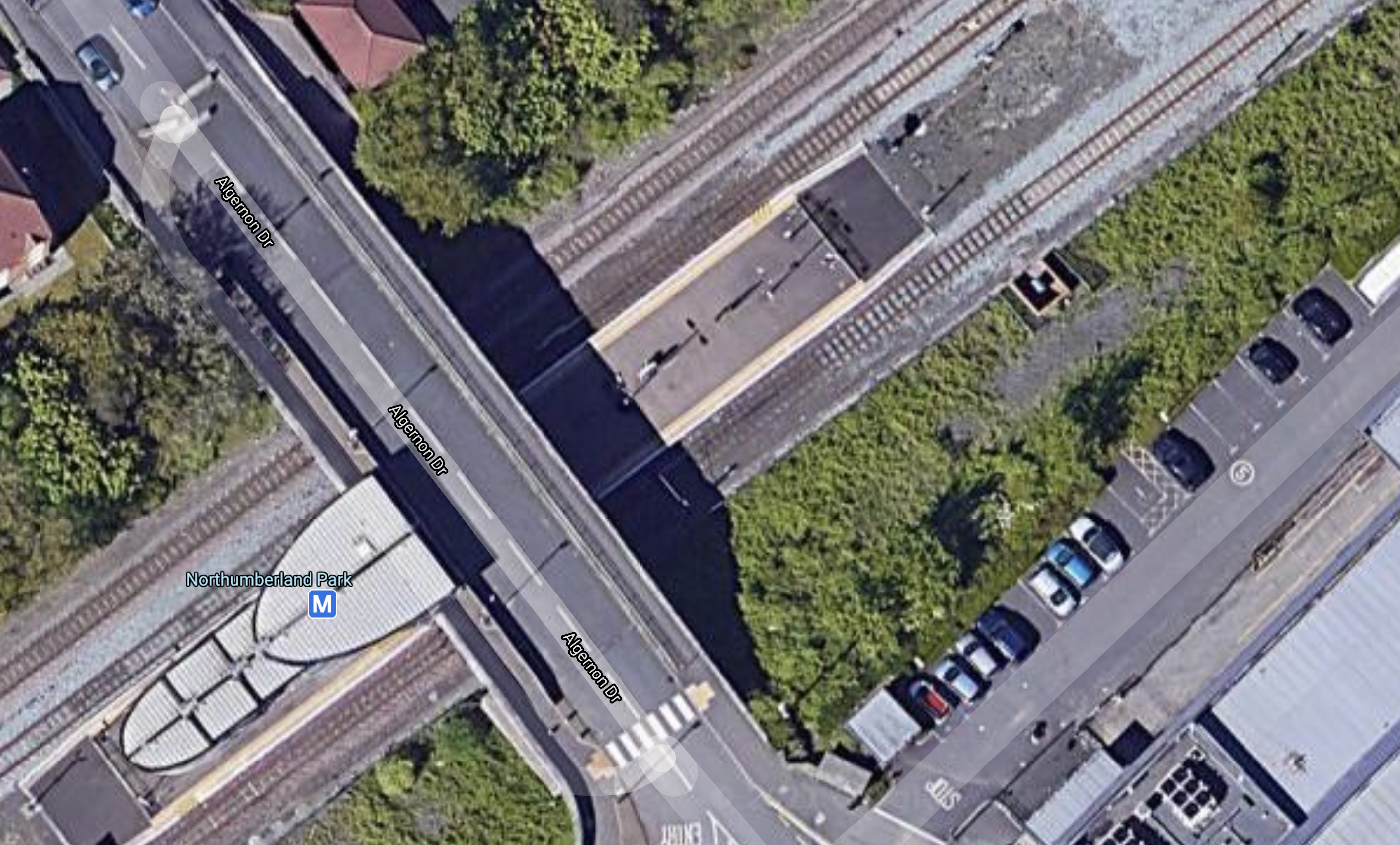
Note.
- The two Metro tracks either side of an island platform.
- The single track of the Northumberland Line alongside.
There would appear to be space to the North of the Metro tracks to squeeze in two tracks, each with a platform for each.
But if the frequency on the Northumberland Line were only two trains per hour (tph), would the simplicity of a single Northumberland Line platform be worthwhile?
North From Northumberland Park
This Google Map shows the track layout to the North East of Northumberland Park station.
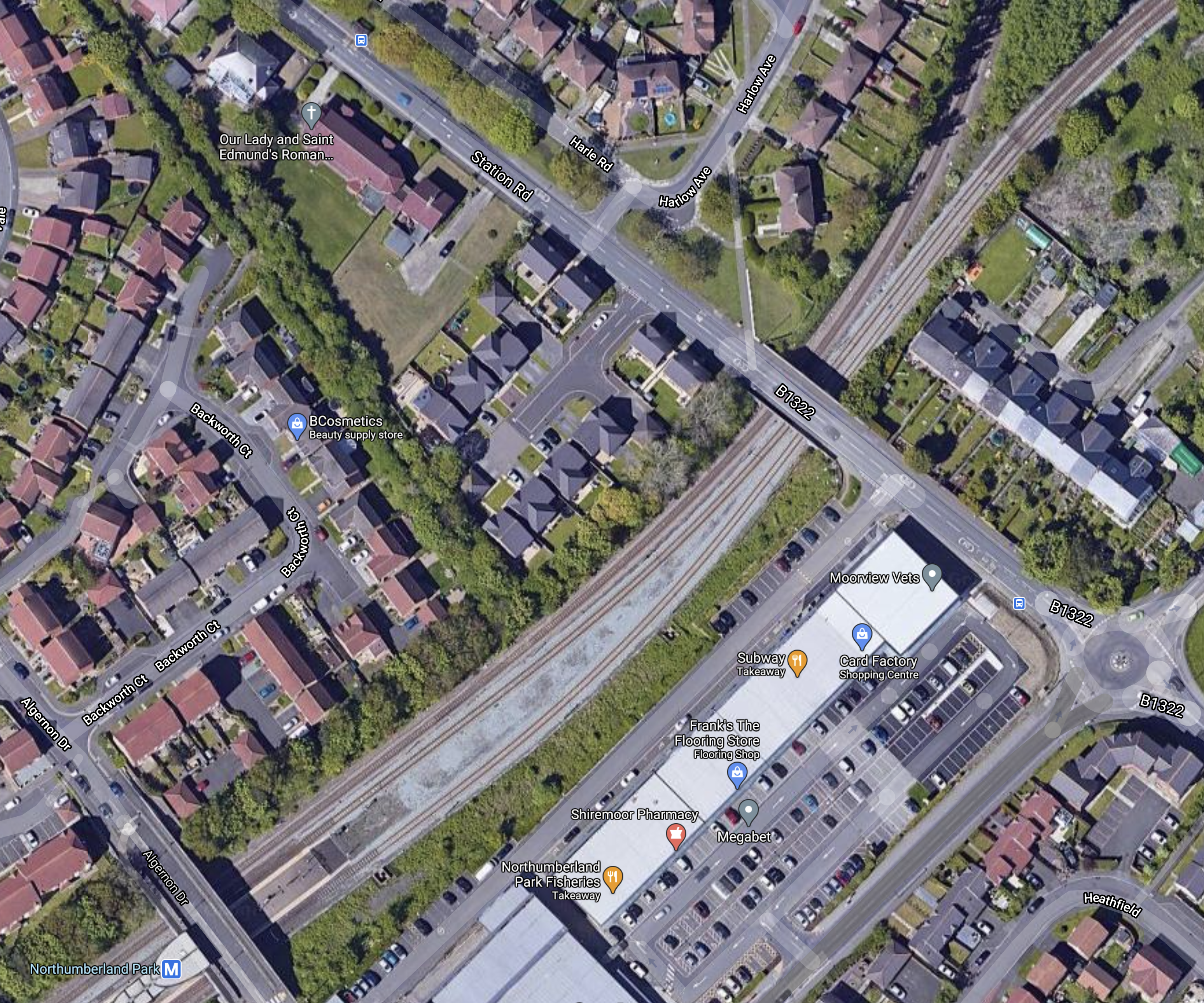
Note.
- Northumberland Park station is in the South West corner of the map.
- The double-tack of the Metro goes diagonally across the map to the North-East corner of the map.
- The Northumberland Line is a single-track line that breaks away to the North.
Would there be enough space to double-track the Northumberland Line through this area?
This 3D image from my virtual helicopter shows the bridge towards the top of the previous map.
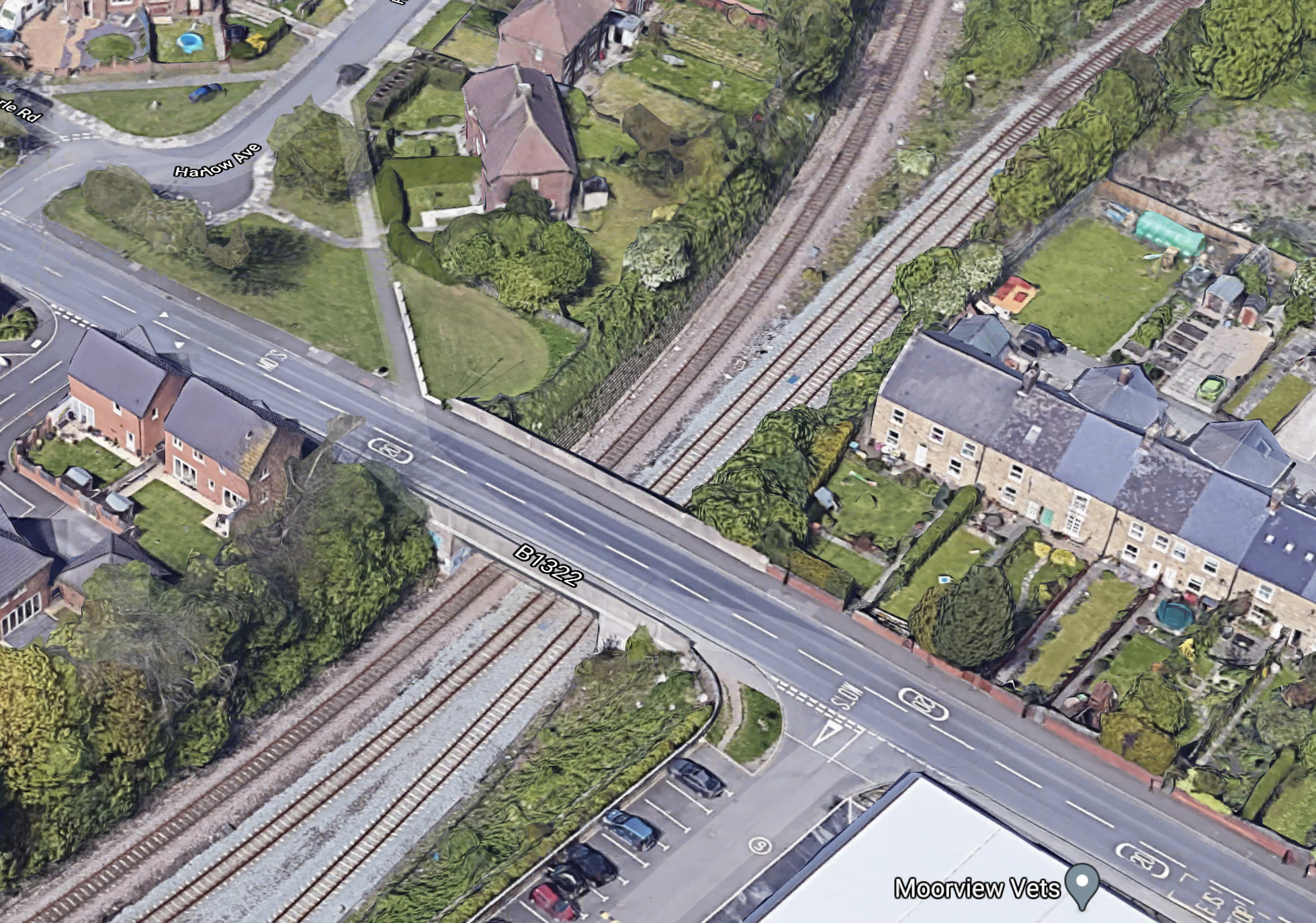
It looks it would be a tight fit to put four tracks through this bridge or an expensive and disruptive rebuild.
As the Northumberland Line goes North from here, the engineering needed to add a second track would appear to get less challenging.
This image from my virtual helicopter, shows the Northumberland Line going under the A186.
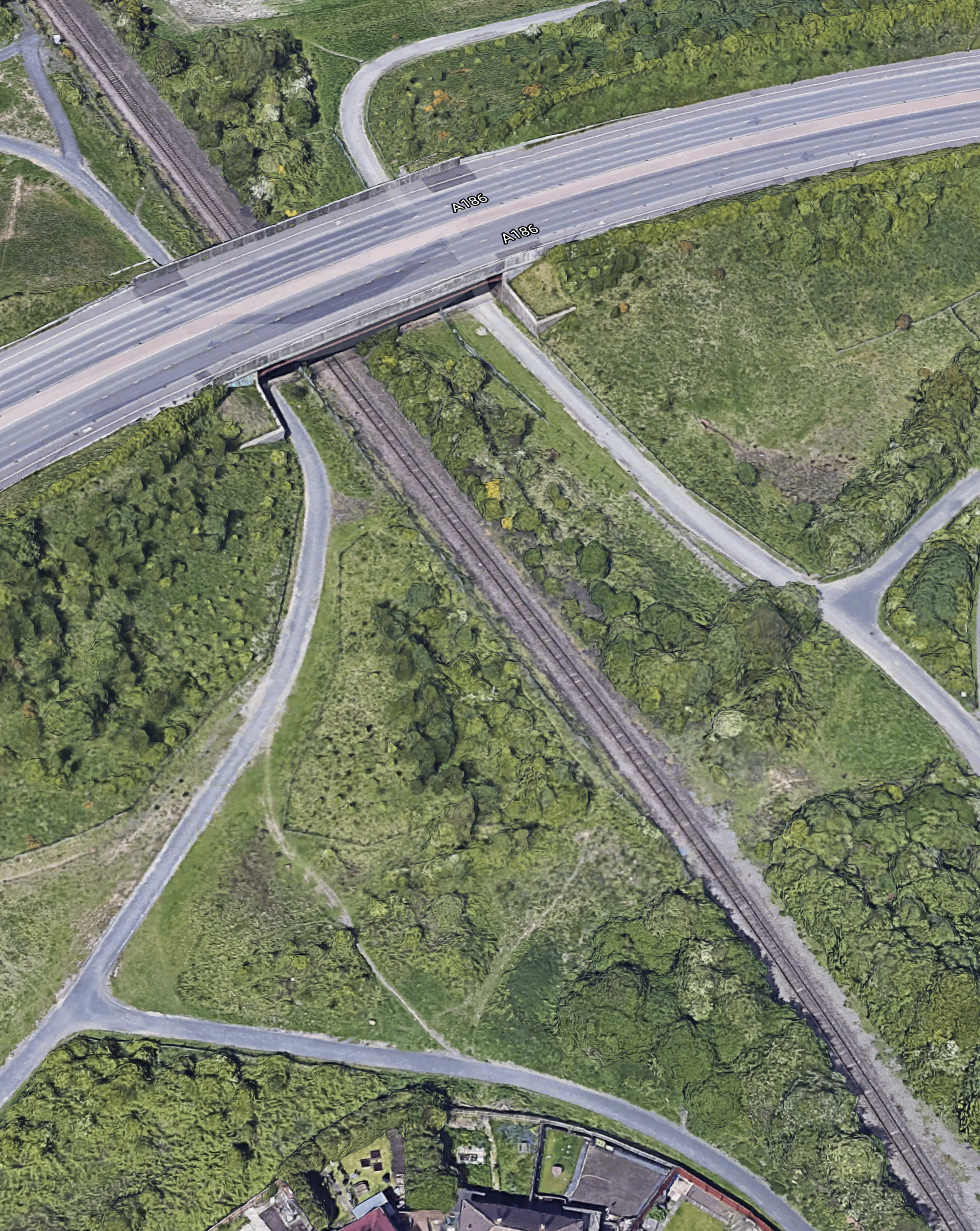
At least this bridge seems to have been built large enough for all future options.
There would even be space for full double-tracking and a passing loop, where freight trains could wait for their slot to pass through.
Seghill Station
The line is single track until the site of the former Seghill station, which is shown in this Google Map.
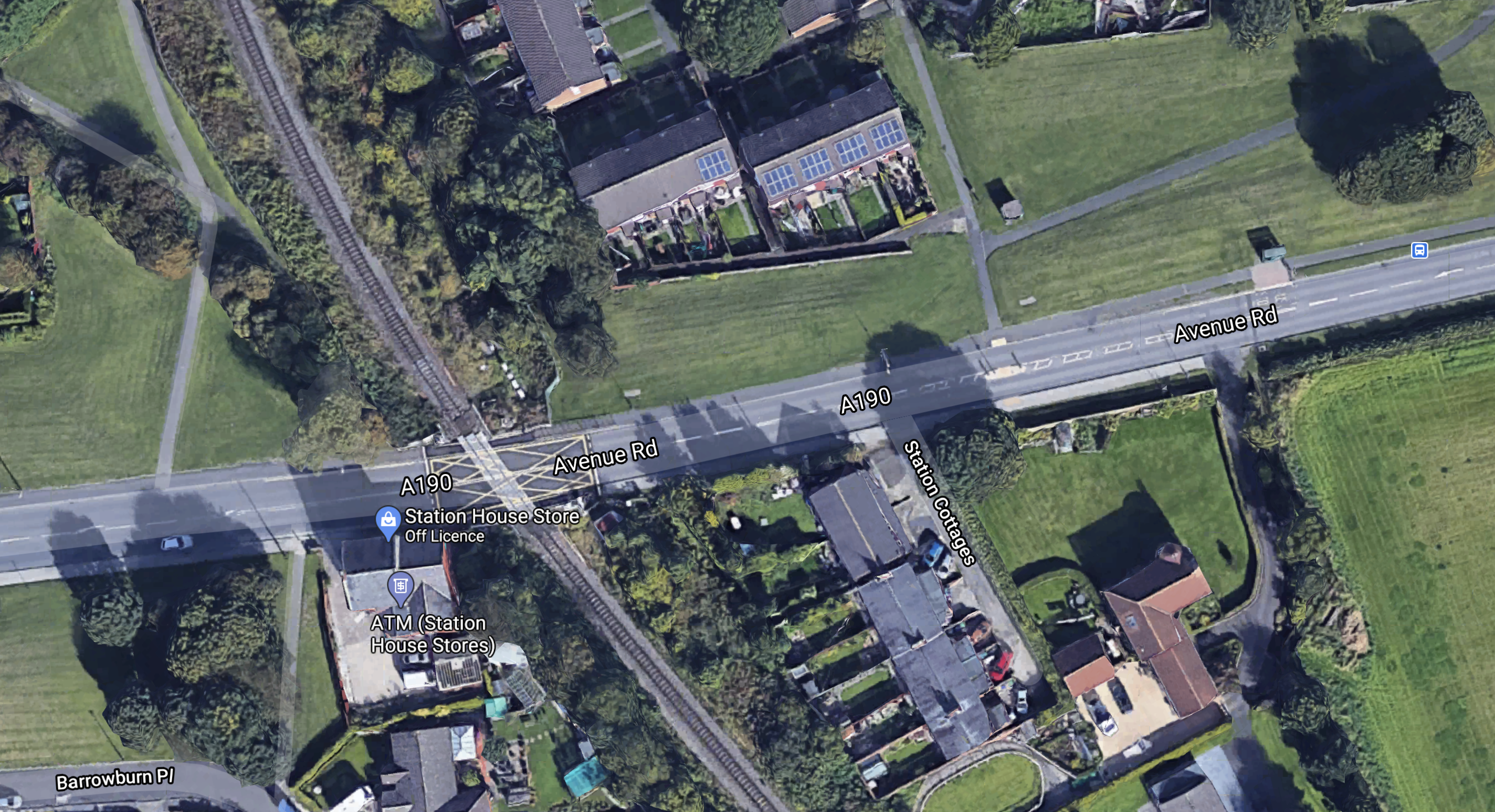
The number of references to a station in the names are a bit of a giveaway.
- According to Wikipedia, a new Seghill station was in the original plans.
- It has since been dropped.
But there is still the problem of the level crossing.
As the original station was only a single platform, I do feel that following the example of some of the single platform stations like Newcourt in Devon, a single-platform station at Seghill could be a possibility in the future.
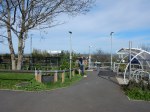

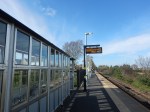
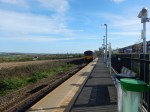
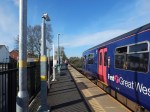
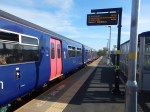
The current service at Newcourt station is two tph in both directions.
Onwards To Seaton Delaval Station
Seaton Delaval station is the first station proposed for reopening after Northumberland Park station and is shown in this image from my virtual helicopter.
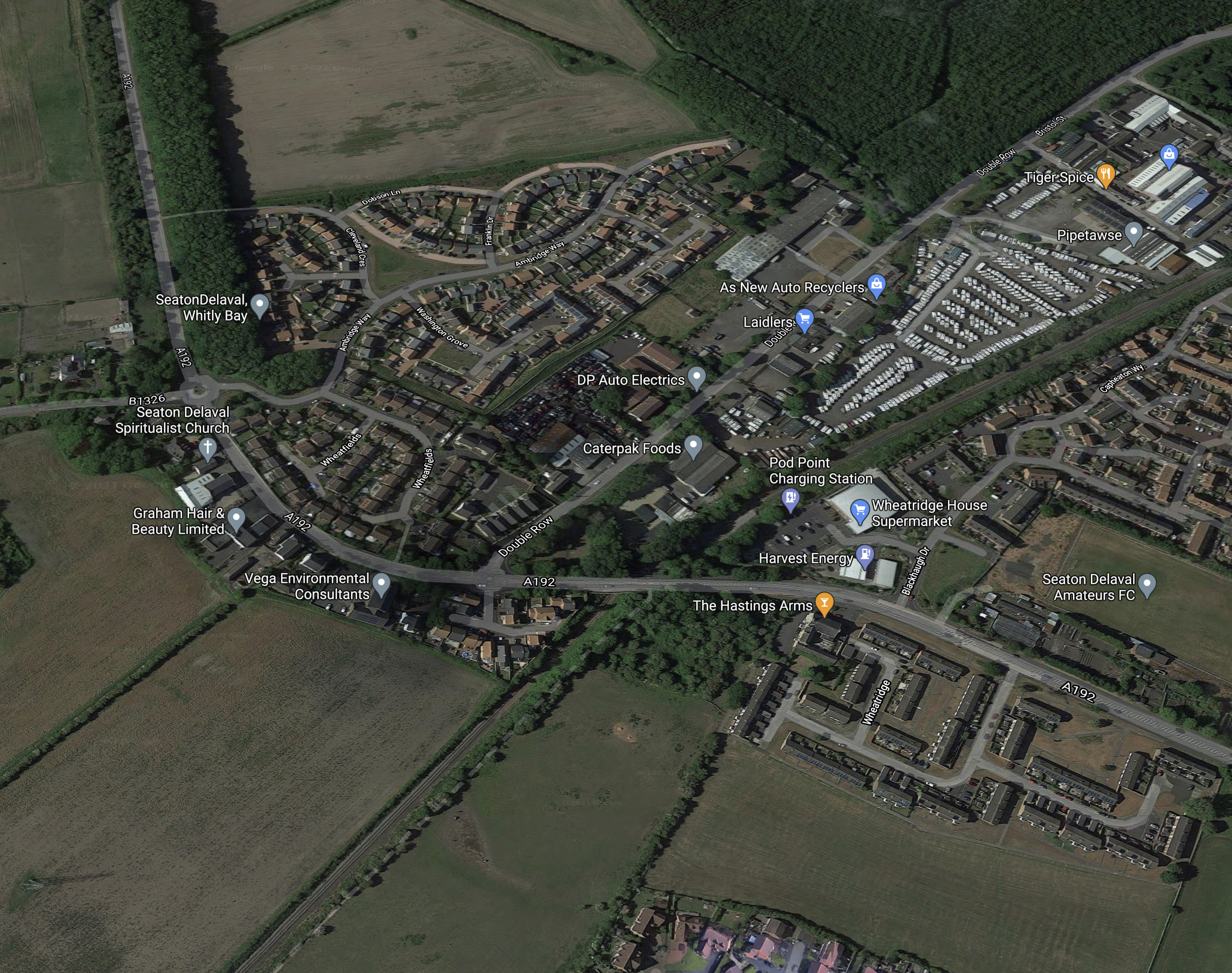
Note that there is already a bridge over the railway line.
According to Wikipedia, the plans for Seaton Delaval station include.
- Not building the station in the initial phase of the project.
- Building the station at a later date.
- Adding a passing loop.
Note that the original station had two platforms.
Newsham South Level Crossing
This Google Map shows the Newsham South level crossing, which still has a signal box.
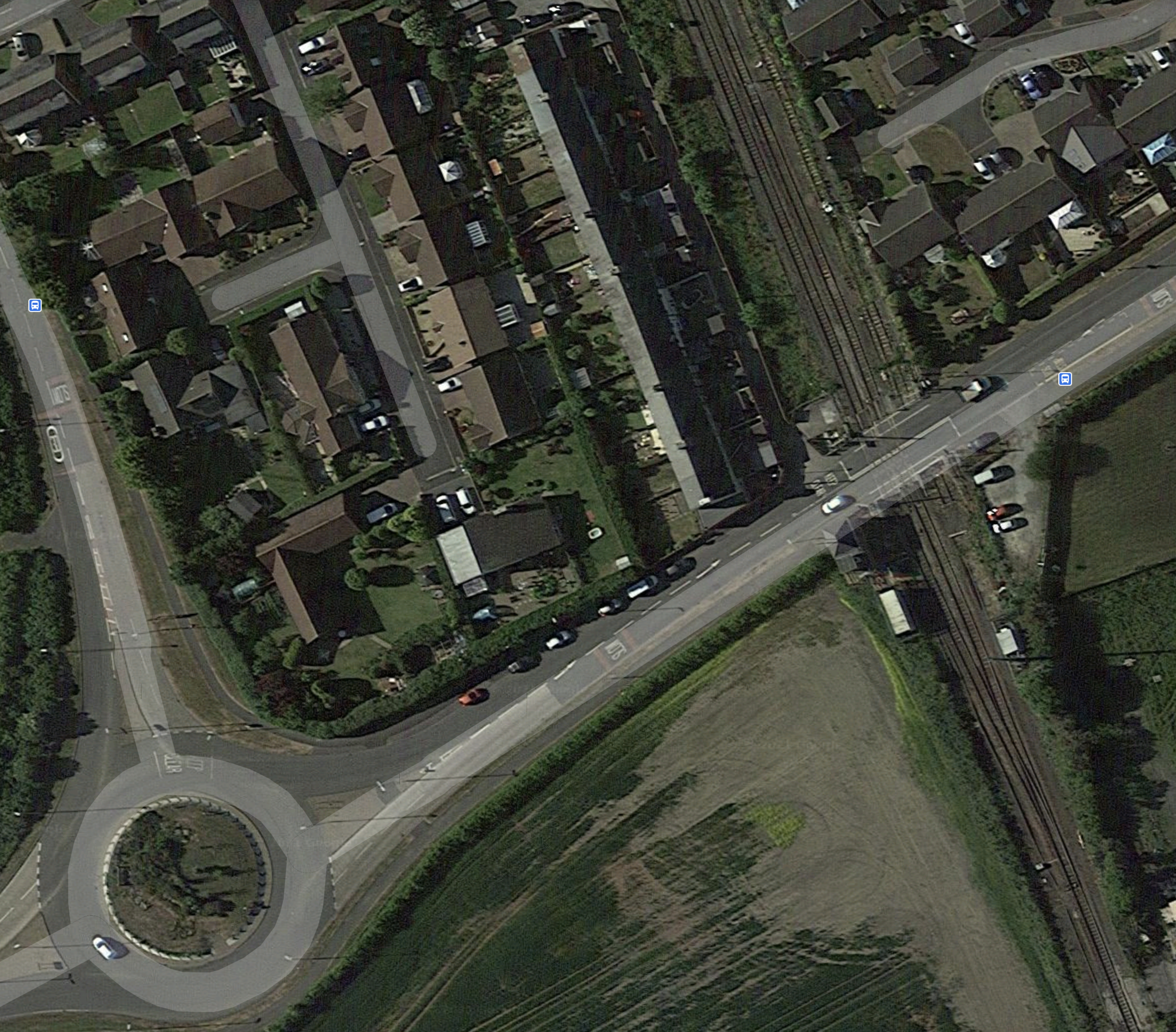
Note that just to the South of this crossing the track goes from single to double-track.
Newsham North Level Crossing
This Google Map shows the Newsham North level crossing, which is a very complicated affair.
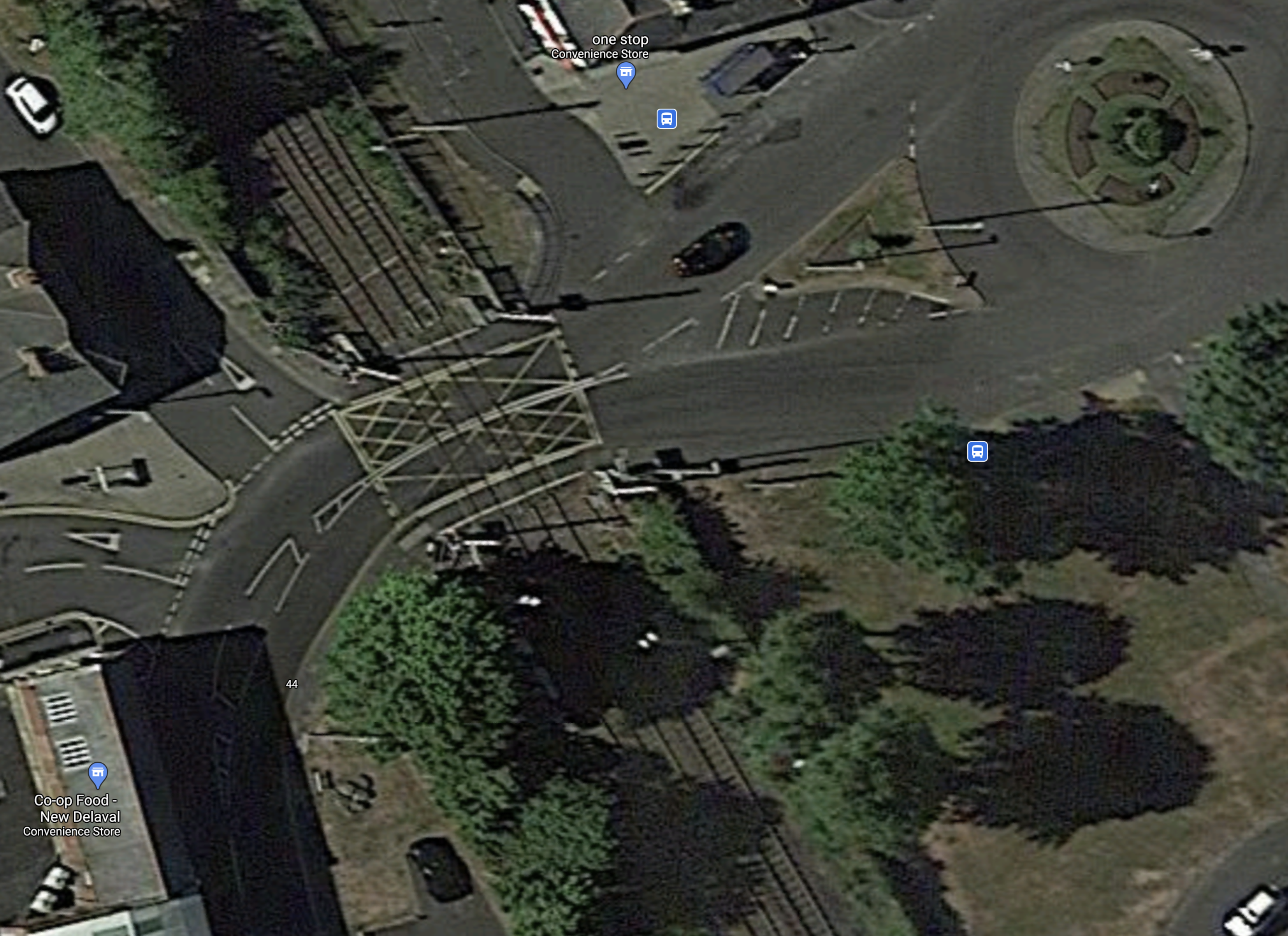
At least the railway is double-track all the way through Newsham.
Newsham Station
Wikipedia says this about the location of the former Newsham station.
It was situated at the end of Seaton Avenue and Carlton Road, off South Newsham Road on the B1523. There was an extensive system of sidings at the station and The Railway Clearing House Handbook indicated that the station handled goods and livestock.
Wikipedia also says it was a junction station.
This Google Map shows Newsham and its two level crossings on the Northumberland Line.
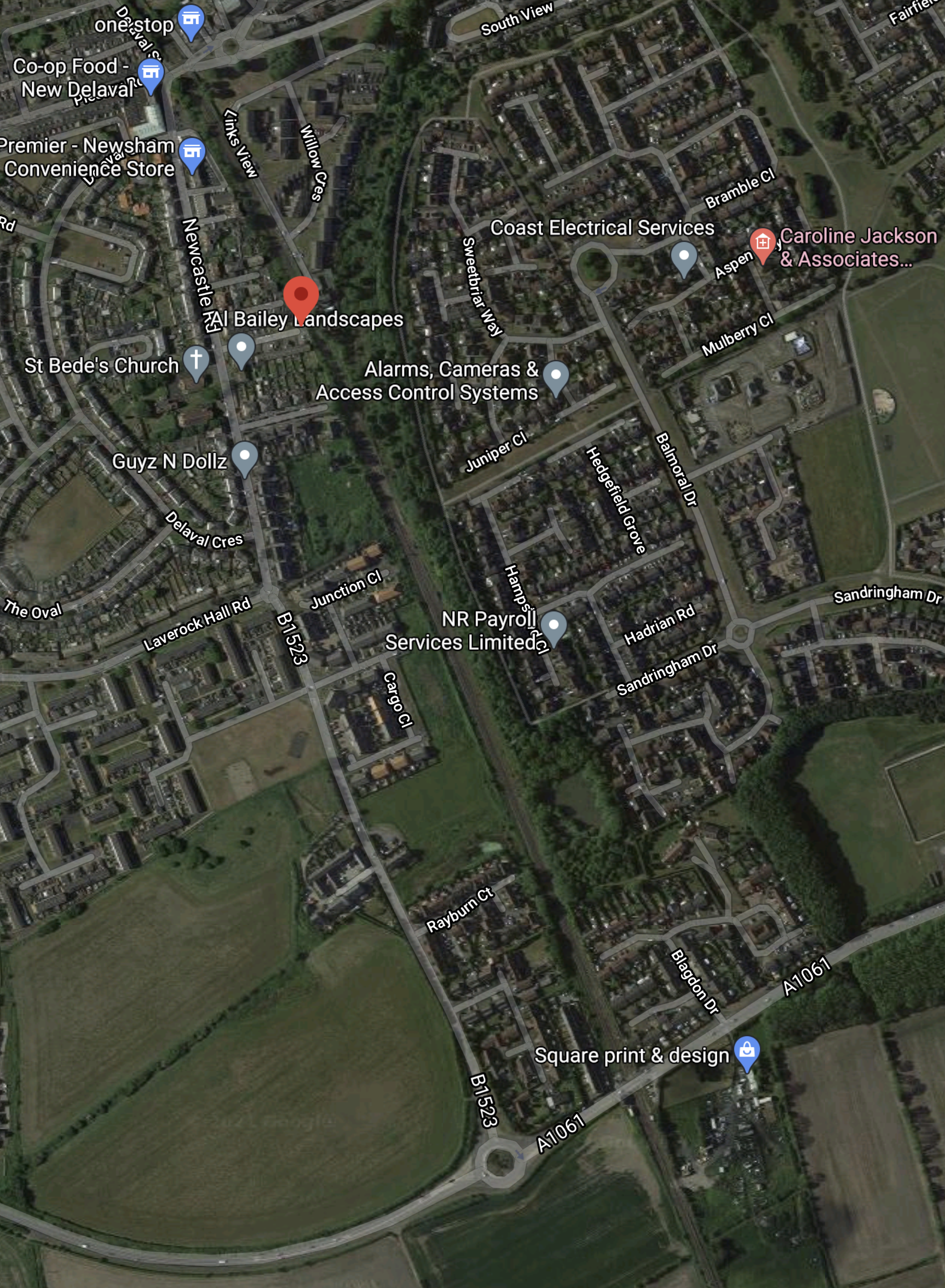
Note.
- Newsham North level crossing is in the North-West corner of the map
- Newsham South level crossing is to the East of the roundabout in the South of the map.
- The red arrow indicates Seaton Avenue, which was close to the station.
- There appears to be green space to the North-East of the red arrow, which could have been the extensive system of sidings mentioned in Wikipedia.
This Google Map shows Seaton Avenue and Carlton Road linking the B1523 to the old station site.
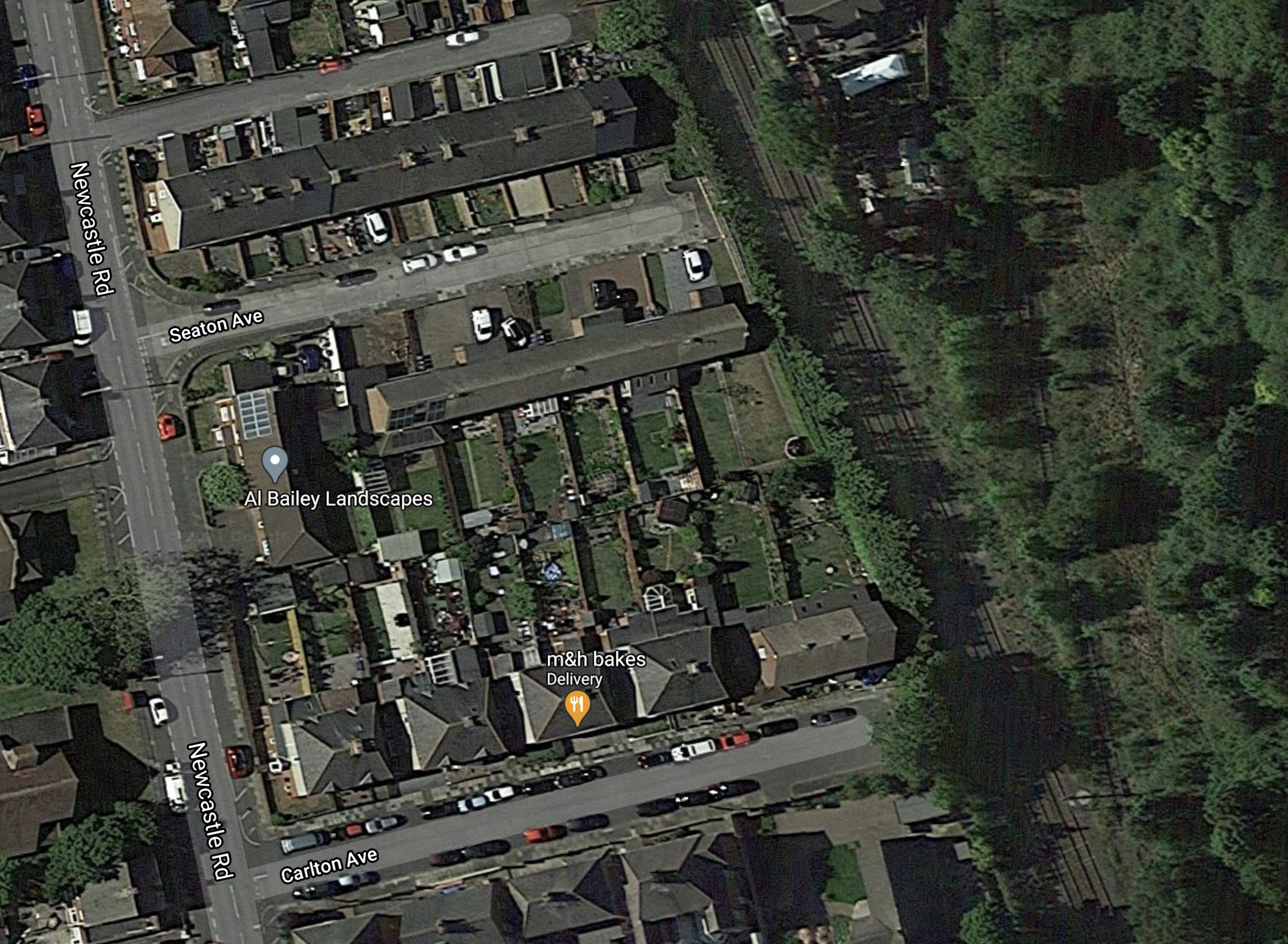
It looks to me, that the original station location would have very difficult access for buses, cars, taxis and pedestrians.
Perhaps, the rebuilt station would be better placed by one of the level crossings.
I obviously don’t know the area, but is the Southern level crossing in the wrong place.
One of the most interesting train systems, that I have seen is in Zwickau in the former East Germany, where instead of buying more trams to connect to other towns and cities, they devised a train-tram system using standard diesel multiple units.
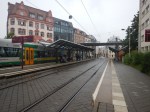
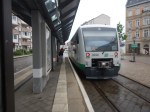
The Zwickau system is as step-free as anything you’ll find in Germany, but I’m sure Stadler, who are the masters of step-free access and a few innovative Geordies could do much better
Would it be possible to build two tram-style platforms, South of the Northern level crossings and run the trains through at a safe speed?
The electric trains would probably be battery-powered through the area.
Bebside Station
Wikipedia says this about the location of Bebside station.
The station was situated on the south side of Front Street on the A19. The goods shed was north of the level crossing and east of the running lines.
This Google Map shows the location of Bebside station.
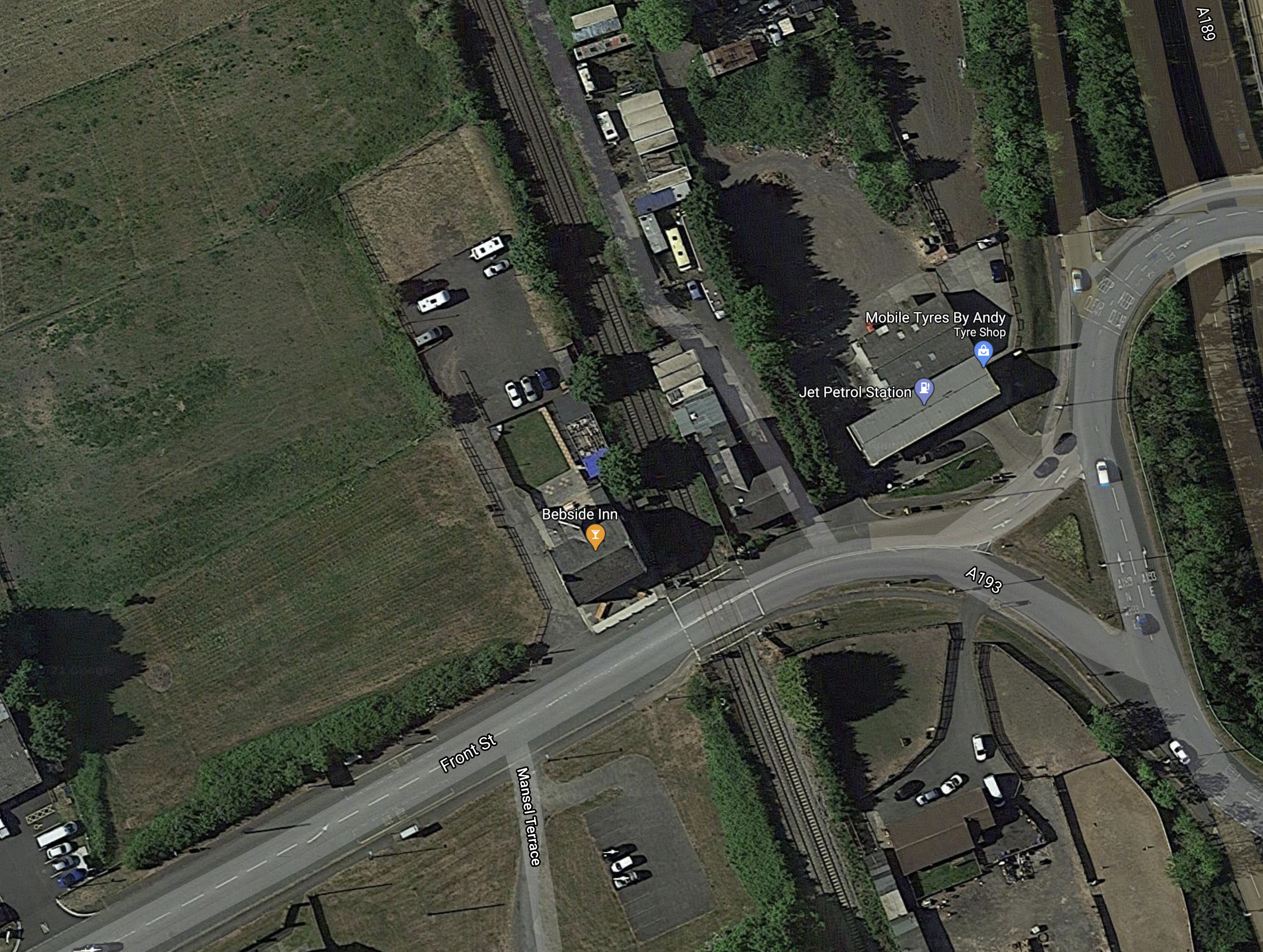
Note.
- This map fits with Wikipedia.
- The double-track through Bebside station, appears to run between Newsham South level crossing and Ashington.
Wikipedia says this about a reopened station at Bebside.
The GRIP 2 study, which NCC received in October 2016, confirmed that the reintroduction of a frequent seven-day a week passenger service between Newcastle and Ashington was feasible and could provide economic benefits of £70 million with more than 380,000 people using the line each year by 2034. The study suggested that a new Blyth Park & Ride station should be constructed close to the site of Bebside station to serve Blyth due to its close proximity to the A189 dual carriageway.
There certainly appears to be space for the Park-and-Ride.
Could this station be one of the busiest and most profitable of the route?
If surveys show, that could be the case, would it be worthwhile to build this station first and possibly run a preview service to perhaps Northumberland Park station?
Over The River Blyth
Between Bebside and Bedlington, there is the Bedlington Railway Viaduct.
This Google Map shows the viaduct.

Note the amazing shadow.
This image was taken from my virtual helicopter looking from the East.
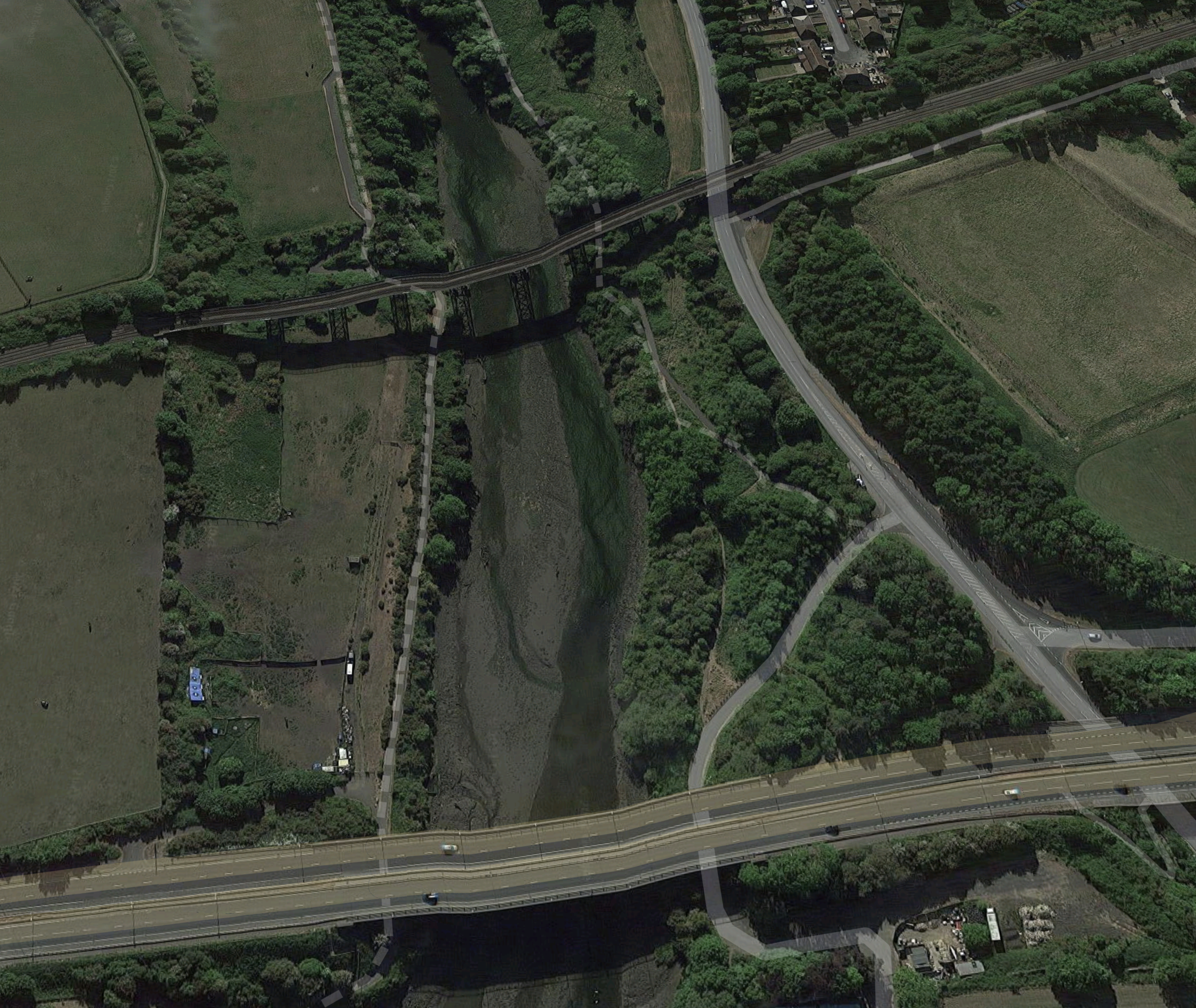
Note that the road in the foreground is the A189.
Bedlington Station
Wikipedia says this about the location of Bedlington station.
The station was situated on the north side of the level crossing on Station Road, west of the junction with Palace Road. Nearby was Bedlington Colliery.
This Google Map shows the location of Bedlington station.
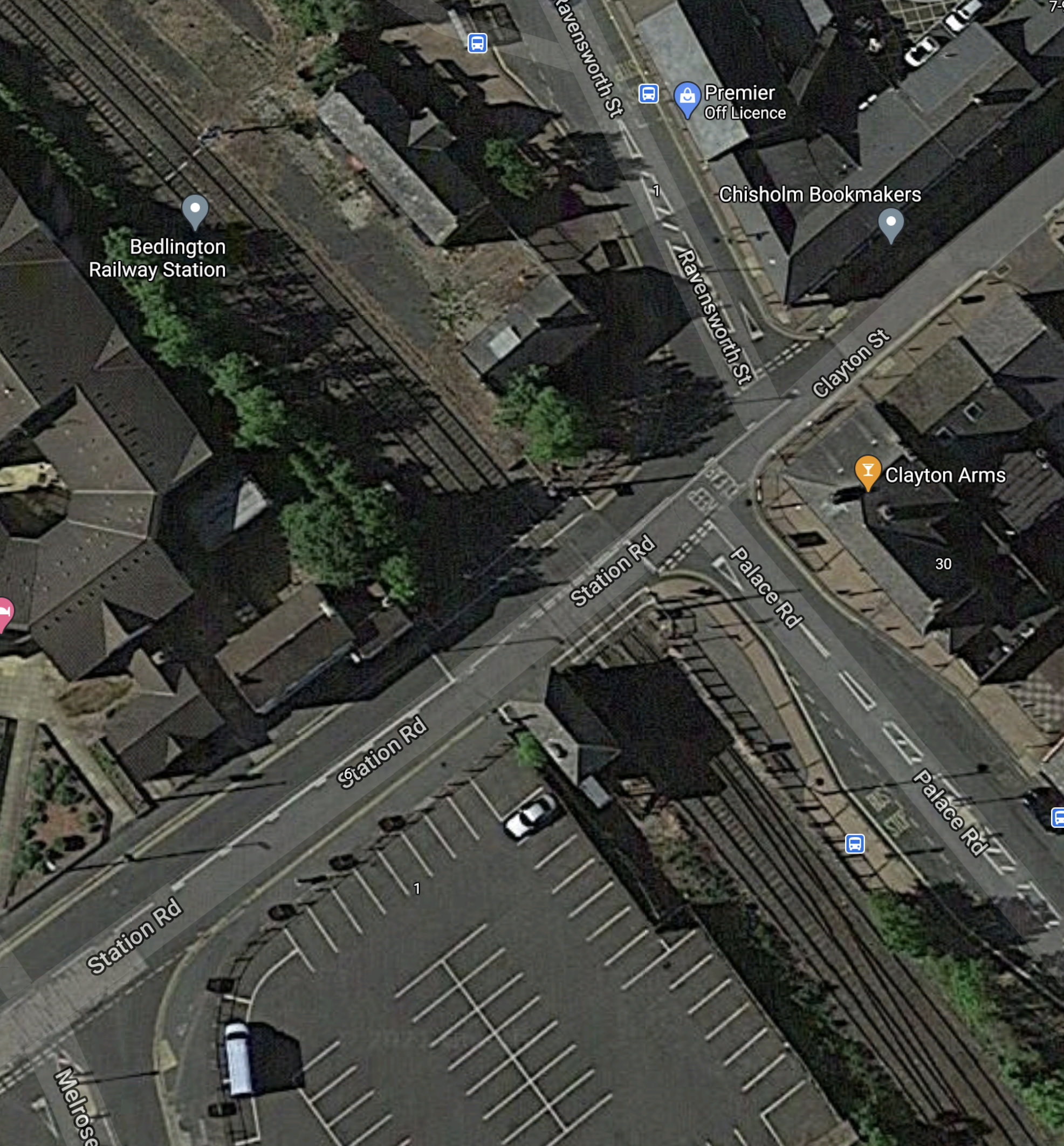
Note.
- Some of the old station still exists.
- The route is double-track through the station.
- Although the original station only had one platform, there would appear to be space for a second.
On the other hand good design as at Galashiels, which has a slightly smaller population than Bedlington, has created a new station with only a single platform.
These pictures show Galashiels station on the recently opened Borders Railway.
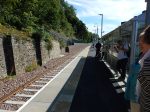


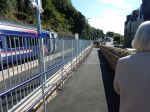
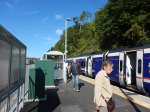
Galashiels is an interesting solution, as there is a single-platform step-free railway station on one side of the road and a comprehensive bus interchange on the other with seats, cafes, shops and warm shelter.
Galashiels station is designed to handle two tph in both directions.
Bedlington North Junction
This Google Map shows Bedlington North Junction.
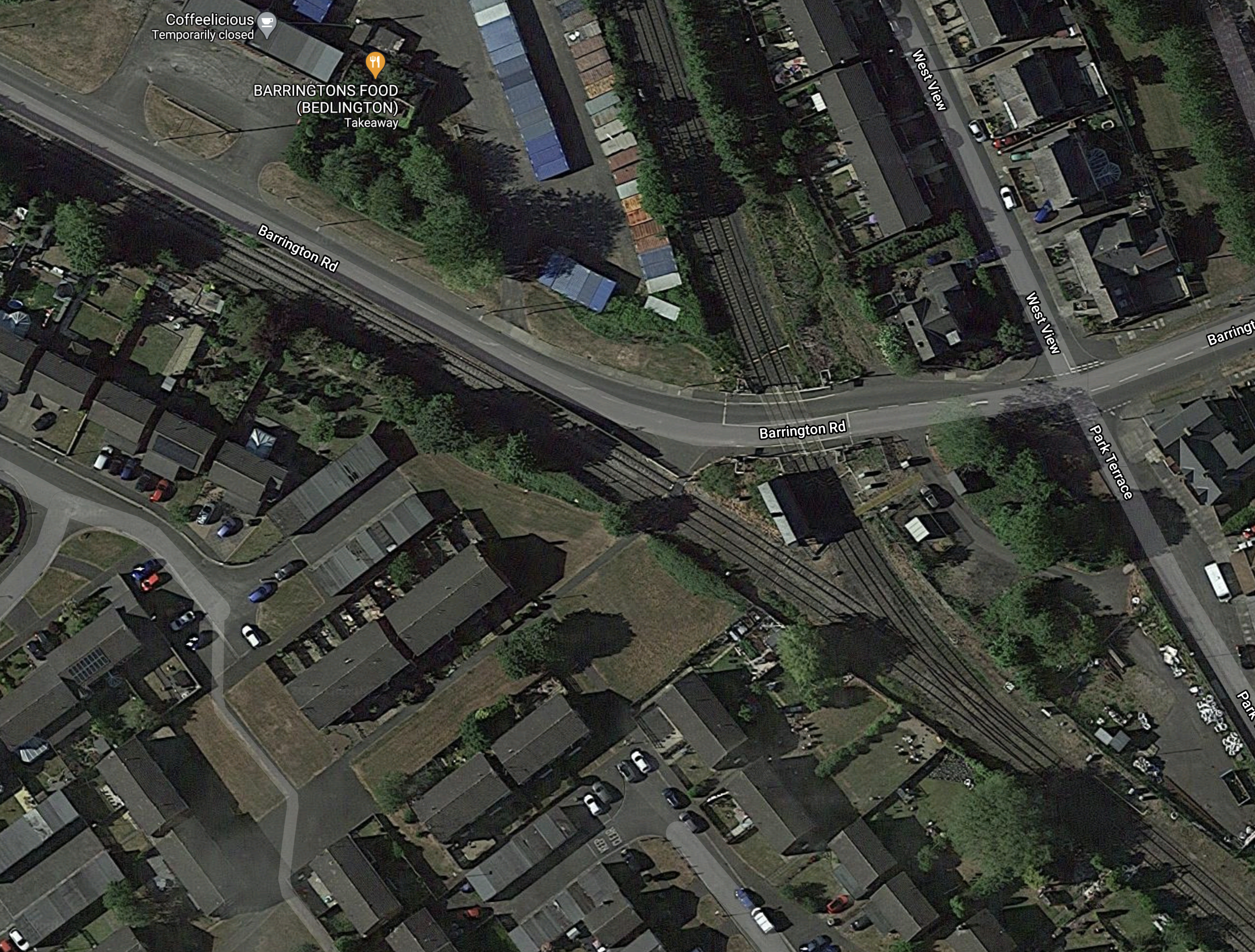
Note.
- The double-track railway going West, quickly becomes a single track, which connects Bedlington to Morpeth.
- There is a full triangular junction at Morpeth, so that trains can go North or South on the East Coast Main Line.
- The double-track railway going North connects to Ashington.
There is also another level crossing, just to the North of the junction.
Connecting To North Blyth
About a mile North of Bedlington, there is a branch to North Blyth and the Port of Blyth.
This Google Map shows the junction.
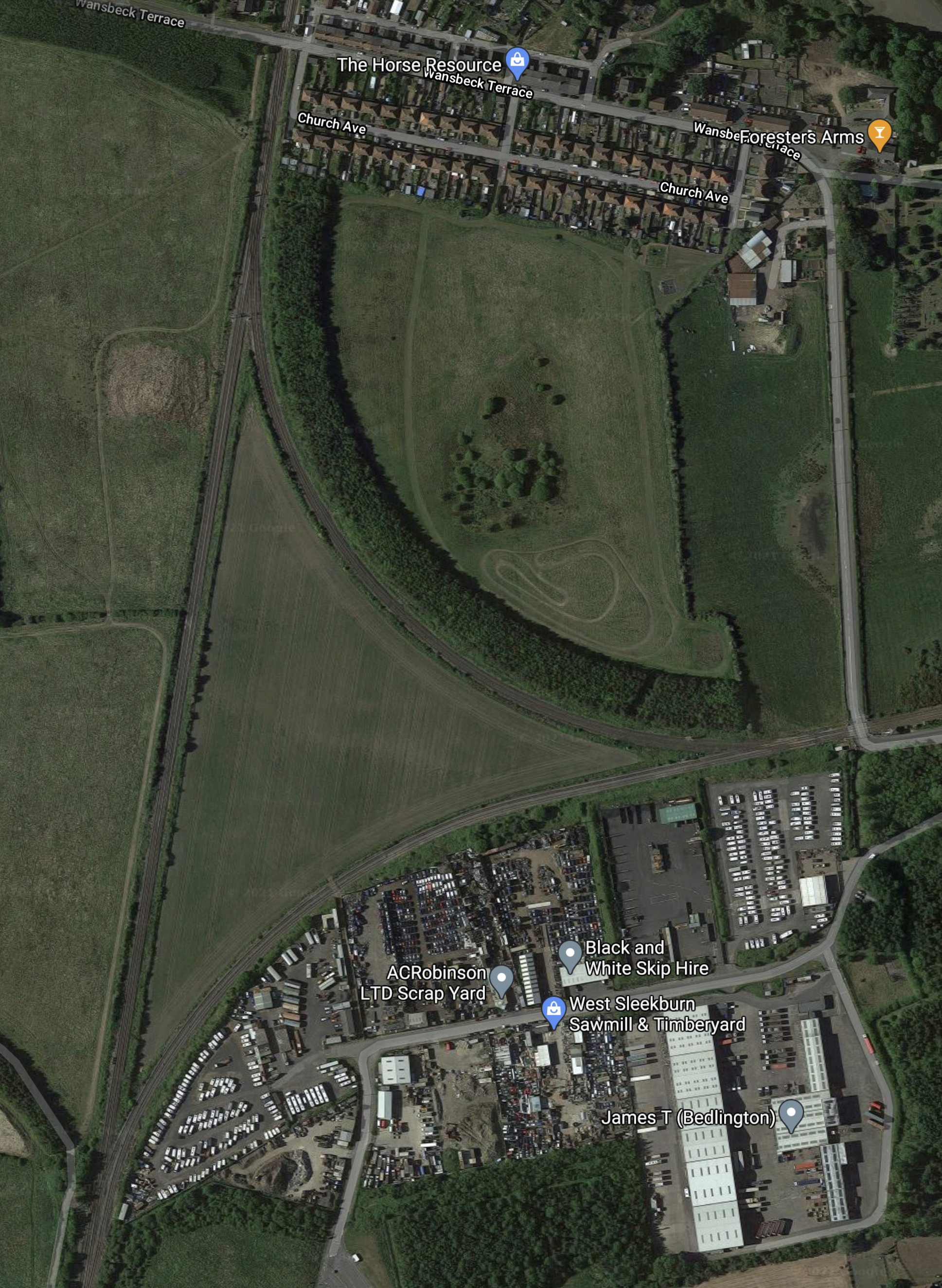
Note.
- West Sleekburn junction is at the South.
- Marcheys House junction is at the North.
- Winning junction is at the East.
This Google Map shows the mouth of the River Blyth.
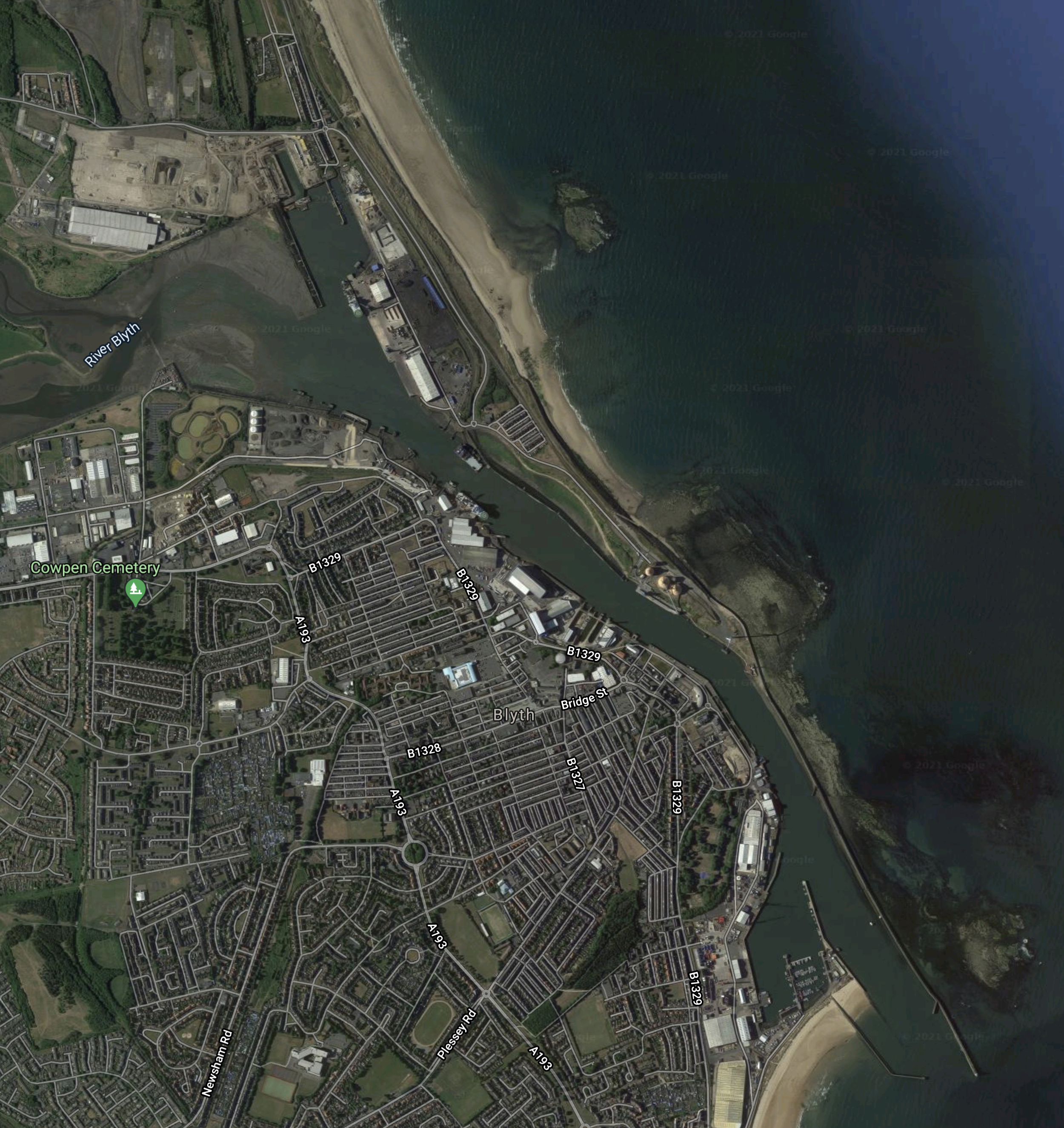
I can see some would find reasons to extend passenger services along the branch.
Over The River Wansbeck
I hadn’t expected what comes next.
This Google Map shows the crossing of the River Wansbeck, by the North Seaton Rail Viaduct.
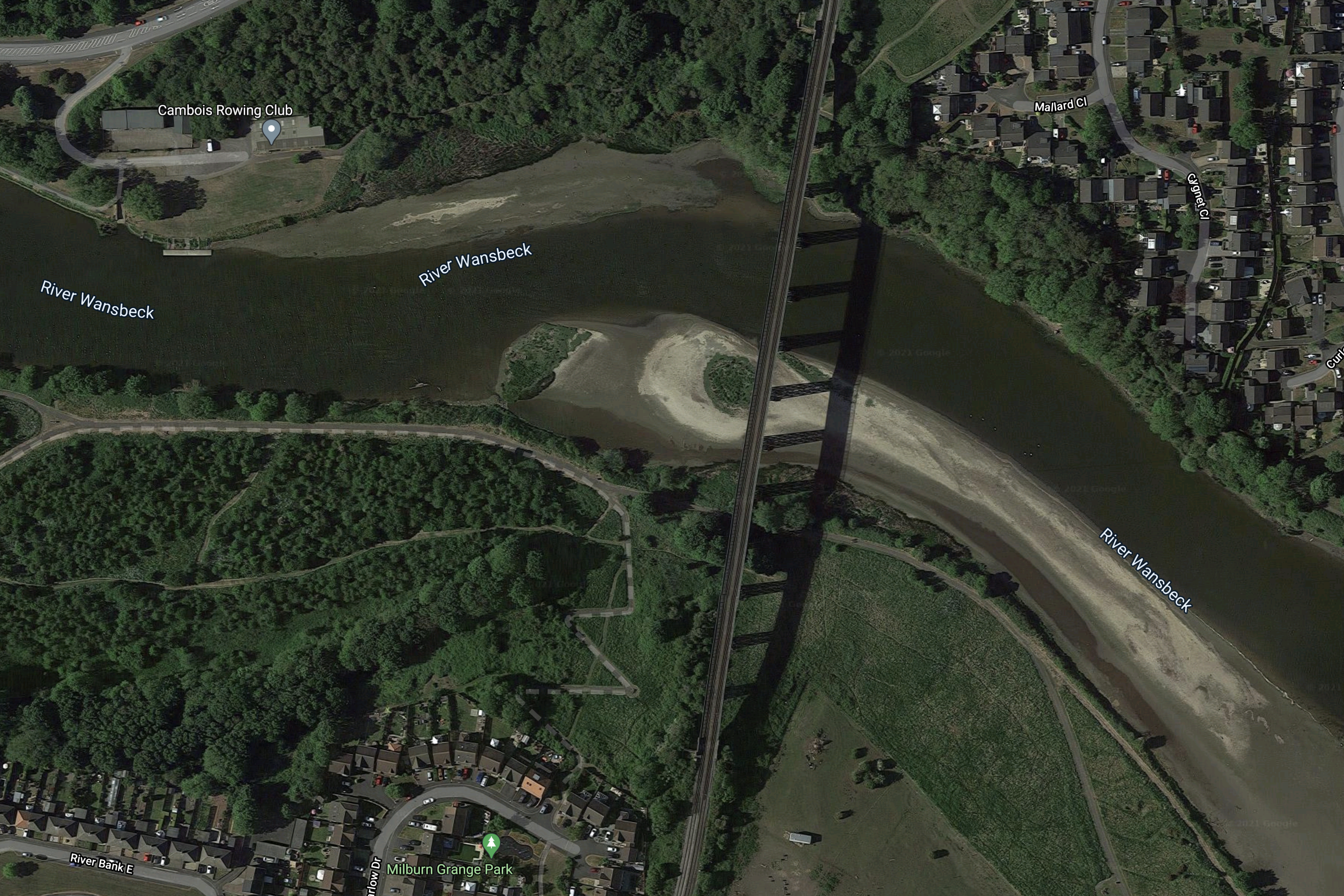
This second image was taken from the East from my virtual helicopter.
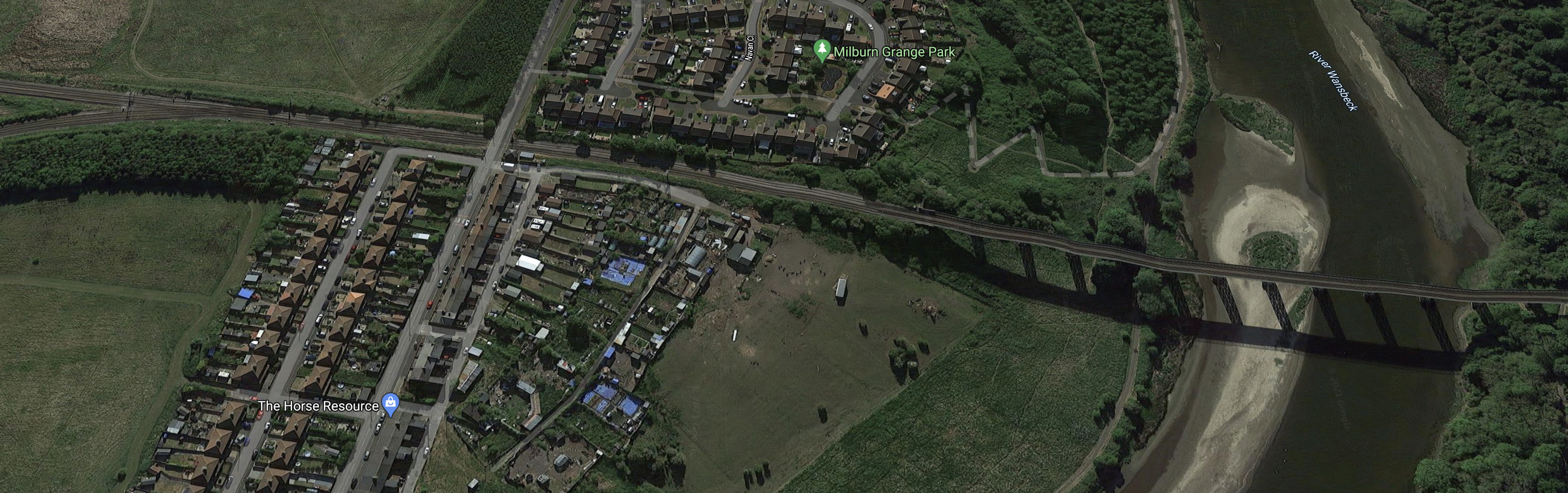
Note.
- Marcheys House junction can be seen in the left of the second image.
- The bridge is double track.
- It is known as The Black Bridge.
As the viaduct will celebrate, its centenary sometime later in this decade, what better way to mark it, than reinstate the passenger service over the viaduct.
Through The Houses Into Ashington
This Google Map shows the route North from the bridge over the River Wansbeck into Ashington.
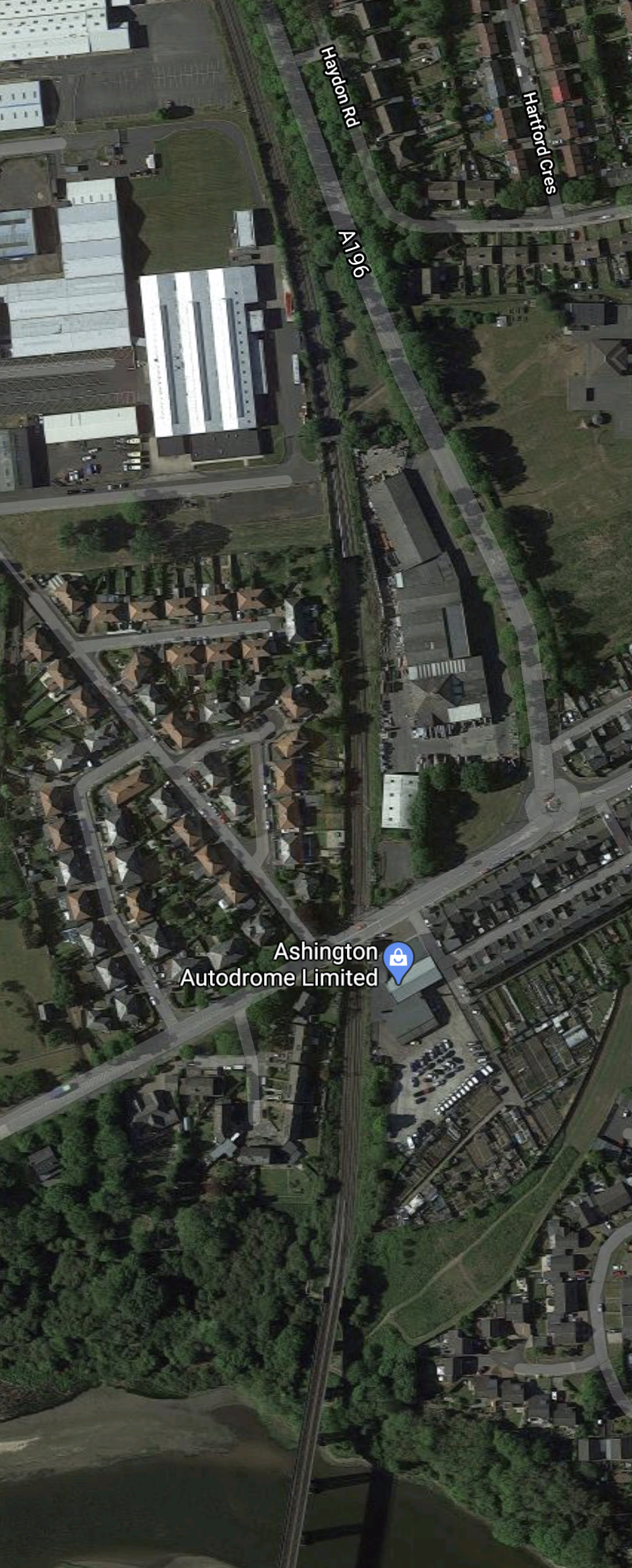
Note.
- The River Wansbeck is at the South of the Map.
- The railway is double track through the town.
- North Seaton station used to be about a third of the way up the map, where the A196 road crosses the railway.
This enlarged Google Map shows the site of station.
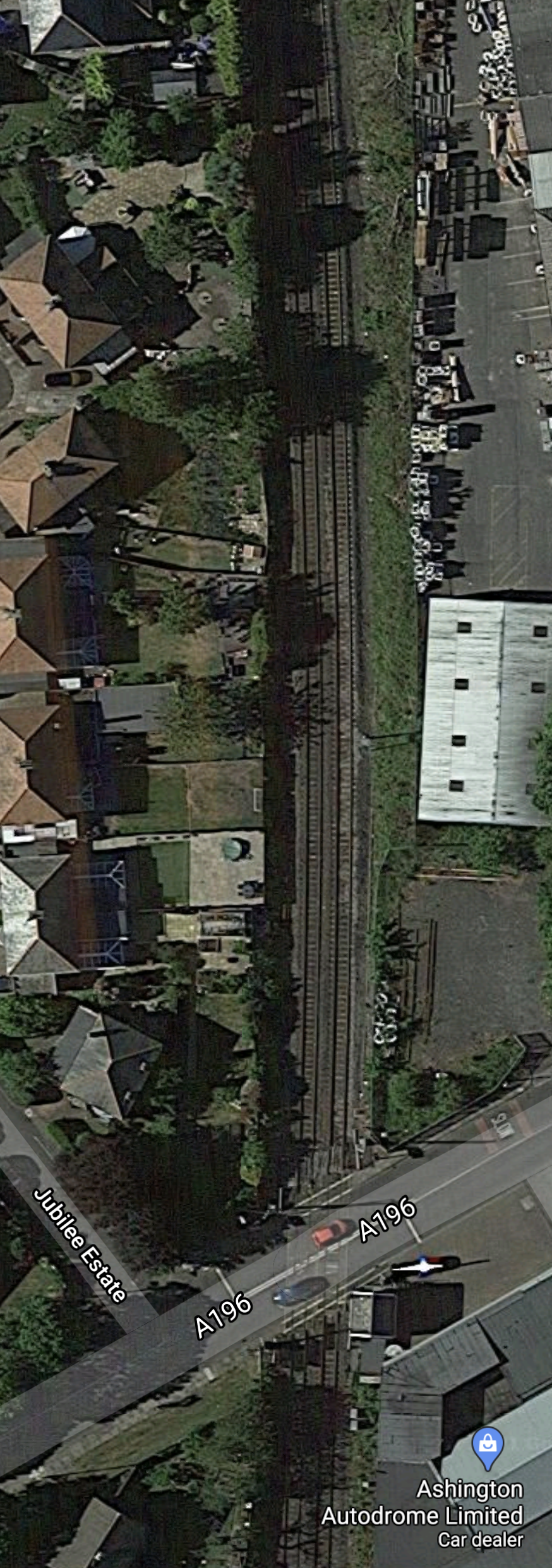
Note.
- The original station had two platforms.
- There is a level crossing where the railway crosses the road.
There doesn’t appear to be any plans to re-open North Seaton station.
There is another level crossing between the bridge and the original site of Ashington station.

Will these level crossings be a problem?
Ashington Station
This Google Map shows the original site of Ashington station.
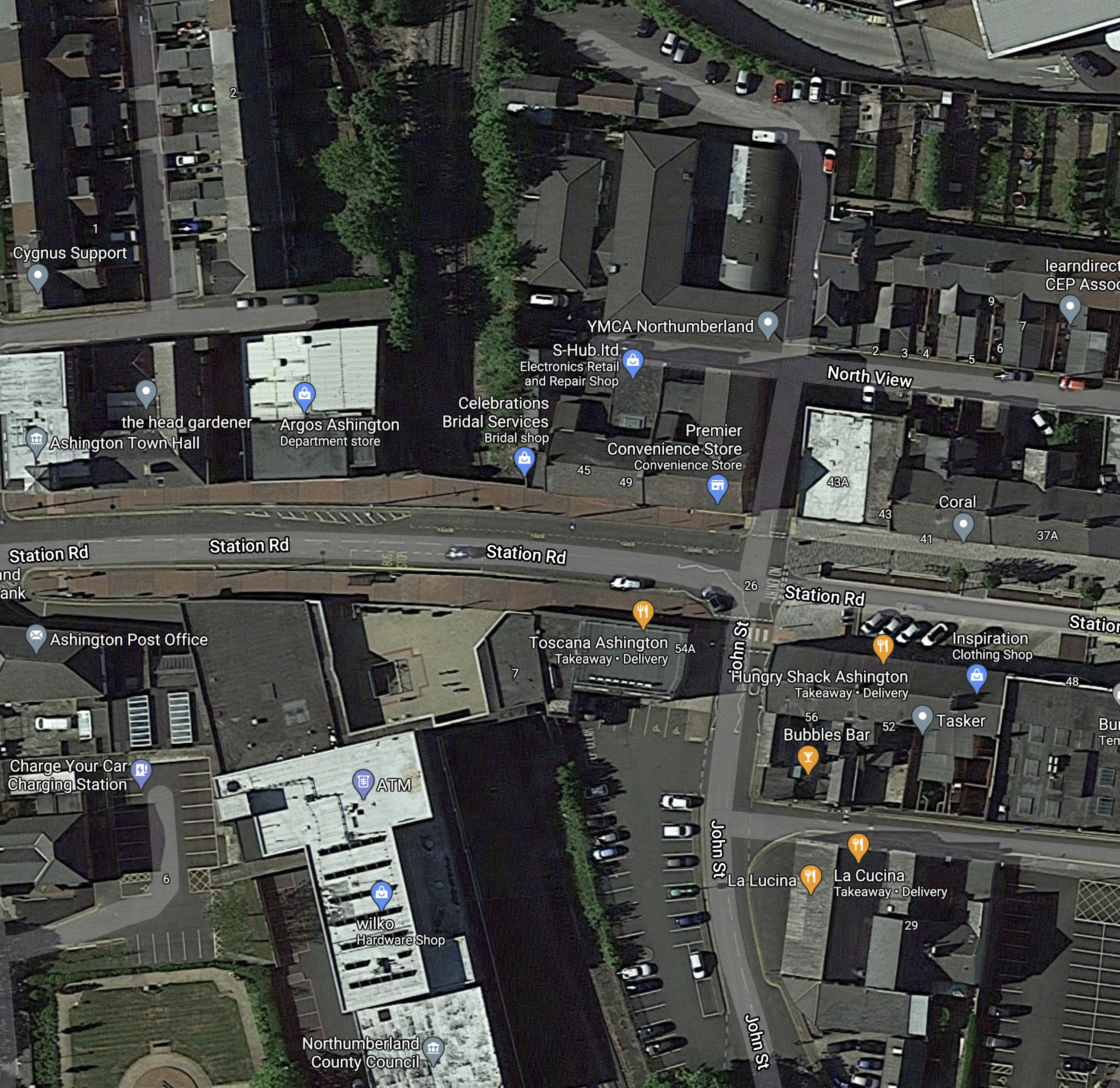
Note.
- Station Road is a bit of a giveaway as to the location.
- The station would appear to have been in a cutting in a busy part of the town.
- Little of the original station seems to have survived.
It would appear that a station could be built here with a small amount of demolition.
But would it be big enough for all the possible plans for services to the North of Ashington.
This Google Map shows where the railway line when it emerges to the North of Station Road.
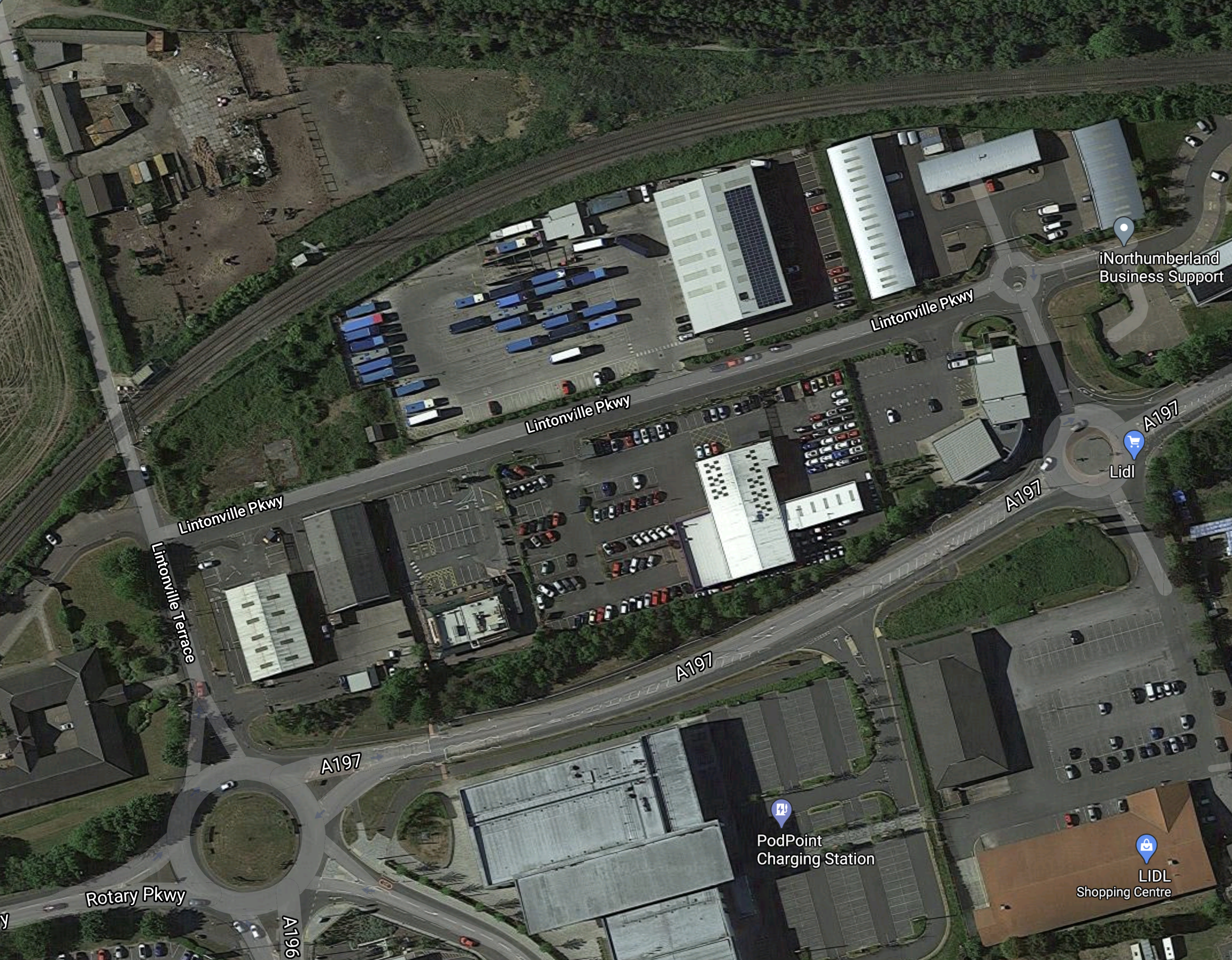
Note.
- The Northumberland Line curves round to the East to go to Lynemouth.
- It originally continued to Newbiggin-by-the-Sea.
- The area close to the line is a bus depot.
- There are several retail premises in the area.
Would it eventually be better to have an integrated transport interchange here?
Ashington To The Coast
This Google Map shows Ashington to the coast.
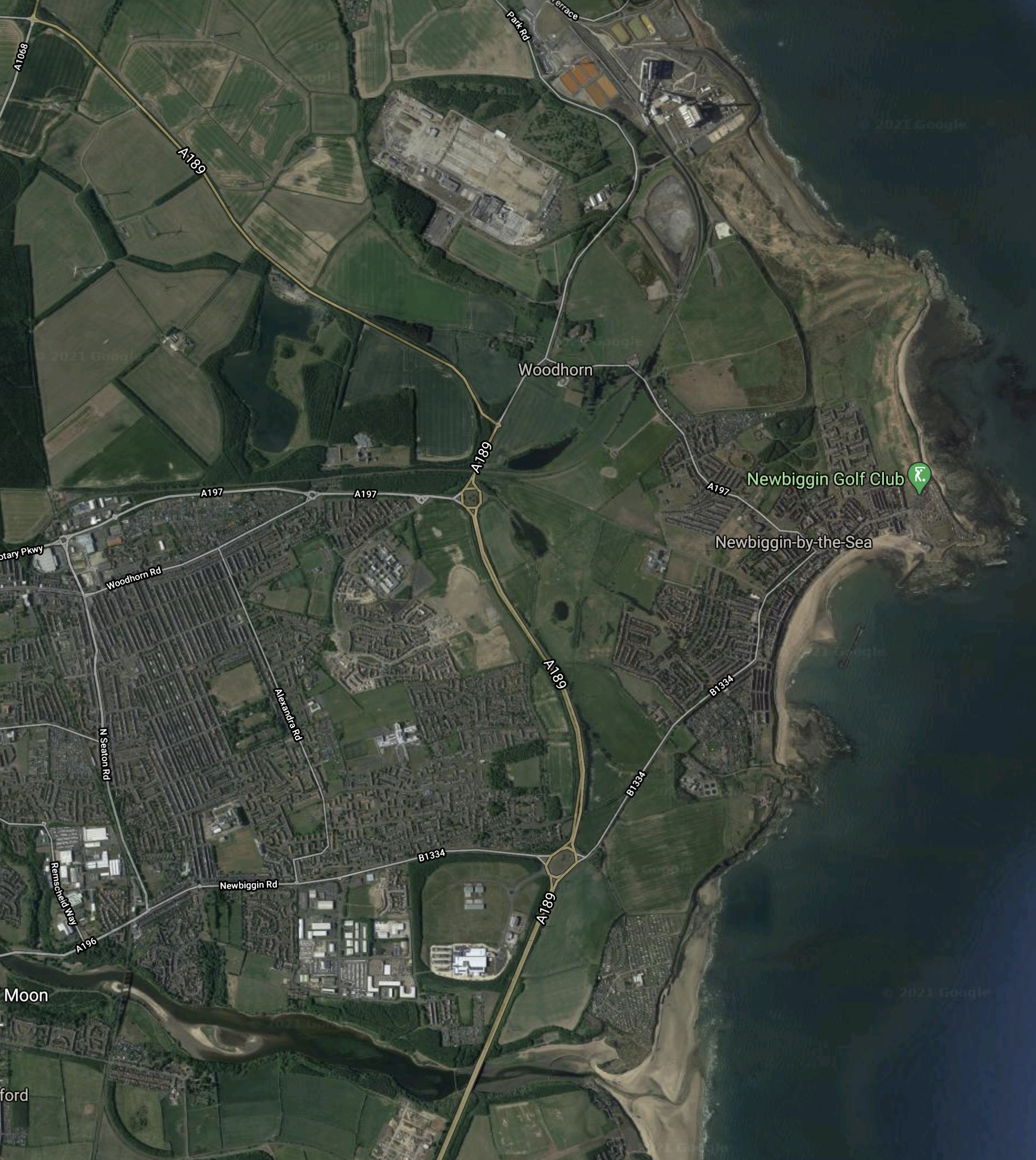
Note.
- The mothballed Alcan Smelter and Lynemouth power station are at the top of the map.
- The smelter and the power station are served by an extension of the Northumberland Line from Ashington, that is double-track for about half the way.
- Newbiggin-by-the-Sea on the coast and used to be served by a branch line from Ashington.
The route of the branch line can be picked out on this Google Map.
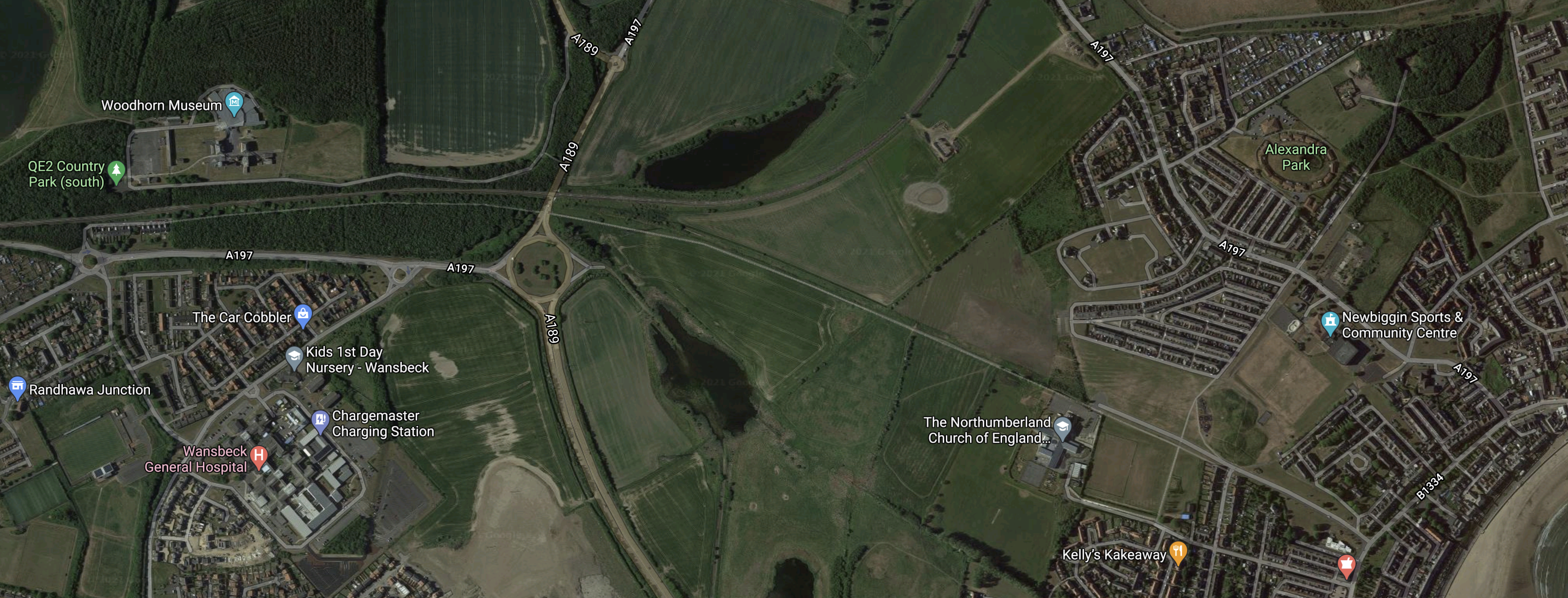
Note.
- The two branches used to divide by the Woodhorn Museum.
- Could a simple station be built to serve the museum and Wansbeck General Hospital.
- The branch to the smelter and the power station curves to the North.
The branch to Newbiggin-by-the-Sea station, takes a direct route to the coast.
I do think, that this extension from Ashington has possibilities.
I’ve even found this video of a freight train going to the smelter from the Port of Blyth.
You don’t often see Class 55 locomotives or Deltics in action like this.
The State Of The Infrastructure
I’ve also found this video, which shows a cab ride from Blyth to the East Coast Main Line.
I can make the following observations. from the video.
- There are wide margins in a lot of places so double-tracking could be possible.
- The signalling is a mixture of semaphore and colour light signals.
- There is work to do on some of the level crossings to make them safer.
- The old platform is still visible at Bedlington station.
- The bridge at Seaton Delaval is modern, but a double track, would be a tight fit.
- The bridge where the B1322 crosses the tracks to the East of Northumberland Park station, looks like it would be little space for a fourth track.
- The bridge taking the A186 over the Northumberland Line to the North of Northumberland Park station has been built with masses of space for extra tracks.
- It would be difficult to fully double-track from Northumberland Park station to the East Coast Main Line.
Everything appears to be in generally good condition.
Length And Operating Speed Of The Route
Consider.
- I estimate that the distance between Benton North Junction and Ashington is around nineteen miles. A round trip would therefore be under forty miles.
- The Rail Engineer article says that the operating speed on the line will be increased to 65 mph.
- I have found a freight train, that recently took 37 minutes to go between Benton North Junction and Ashington, which is an average speed of 31 mph.
I also estimate that the halfway point between Benton North Junction and Ashington is not far from the site of the possible Seaton Delaval station. Could this be why a passing loop has been proposed for the station?
The Frequency Of The Trains
Various sources like Wikipedia and media reports talk about the basic service being two tph or half-hourly.
Various average speeds Benton North Junction and Ashington give the following times for the journey.
- 30 mph – 38 minutes
- 40 mph – 28.5 minutes
- 45 mph – 25 minutes
- 50 mph – 22.8 minutes
- 60 mph – 19 minutes
From these figures it looks to me, that a half-hourly service would certainly be possible with trains passing in a two-platform station with a passing loop at Seaton Delaval.
- They would need to run at an average speed of 45 mph including stops.
- This is a similar average speed to Ipswich and Cambridge, which has seven stops.
- Modern step-free trains, as Stadler are building for the Metro, are designed for fast stops.
- If the trains passed at Seaton Delaval at halfway, only one train would be North and South of that station at any time.
If only one train is on any section of the route at any one time, then single platform stations can be used, except at Seaton Delaval and Ashington.
There are a lot of people, who feel that train services like this should be four tph, as this gives a genuine Turn-Up-And-Go service.
Birmingham, London Overground, Merseyrail and other services use this frequency.
The Metro uses five tph, where possible.
Four tph would probably be possible with the passing loop at Seaton Delaval, as North of Newsham, the Northumberland Line is double-track, all the way to Ashington.
If the line is a success, I suspect there will be pressure to extend the passenger service to new stations at Lynemouth, Newbiggin-by-the-Sea and perhaps other places.
Extra Northern destinations would help to create a viable four tph service between Newcastle and Ahington.
Rolling Stock
Consider.
- As the trains will be running on a 65 mph route, trains capable of at least 90 mph would probably be needed.
- The trains would run a short distance on the ECML, so perhaps electric trains, with at least a 100 mph capability would be needed, so they didn’t get in the way of the Azumas.
- Pedicting ridership on a line like the Northumberland Line would be very much a Black Art and initial ideas will be wrong, so perhaps the initial trains should be three cars, with the capability of being easily lengthened to four cars. They must also be capable of working in pairs.
- Electric traction is desirable, as it is zero-carbon at point of use, gives better acceleration and regenerative braking enables energy saving.
- Ability to use a pantograph to access 25 KVAC overhead electrification would be useful.
Some would feel, that the same trains as the Metro should be used, but I can see services connecting across Newcastle using the 25 KVAC overhead electrification of the ECML.
The slower Metro trains would reduce the capacity of the ECML.
I’m drawn inextricably to the conclusion, that the trains should be 100 mph battery-electric trains.
Hitachi, who have a factory in the North-East, have announced their Regional Battery Train in July 2020, which is described in this Hitachi infographic.

These trains can be based on Class 385 trains.
- They are 100 mph trains.
- They come in three- and four-cars lengths.
- The three-car trains have 206 seats.
- They can work in pairs.
- They can use 25 KVAC overhead electrification.
- They have a range of 90 kilometres or 56 miles on battery power.
- The batteries would be charged on the ECML between Benton North junction and Newcastle station.
- The battery packs will be designed and manufactured by Hyperdrive Innovation in Sunderland.
- They have big windows for the views.
I’m sure Hitachi and Hyperdrive would like a fleet in service, just up the road from their factories.
These pictures show a ScotRail Class 385 train.
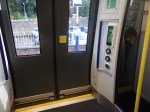

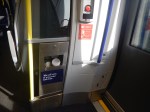


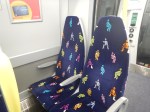

I think trains like these fitted with batteries, would do nicely.
There might need to be a charging station at Ashington to make sure the trains can get back to Benton North junction and the electrification.
Collateral Benefits Of Battery Electric Trains
I am one of a very small group of the general public, who have ridden in two different battery-electric trains in the UK.
It is my belief, that they have collateral benefits compared to other trains powered by electricity or diesel.
When I rode Bombardier’s Class 379 BEMU, six years ago, between Manningtree and Harwich, afterwards I wrote Is The Battery Electric Multiple Unit (BEMU) A Big Innovation In Train Design?.
I must admit, that on that day as I travelled to Manningtree, I had my doubts, that the train would perform, to a sufficient level to be able to replace an electric or diesel train in regular passenger service.
But this was a paragraph I wrote.
It was an impressive demonstration, of how a full-size train could be run in normal service without connection to a power supply. I also suspect that the partners in the project must be very confident about the train and its technology to allow paying passengers to travel on their only test train.
This was my conclusion to the post.
Who’d have thought that such a rather unusual concept of a battery electric multiple unit would have so many possibilities?
I think I’ve seen the future and it just might work!
I think now, I might substitute will for might in the last sentence, with several manufacturers now offering battery-electric trains.
I very much feel my doubts before riding the train, were commonplace.
A year or so, after my ride, I met a lady on a train to Ipswich. She had been sceptical the train would work, but she had used the train to go to work every day for three months and was sorry, that it hadn’t been kept in service for longer.
I believe this scepticism and a natural human curiosity could lead to a serious increase in usage of the service, when compared to the predictions.
Did this mixture or curiosity and skepticism lead to the large turnout in Scotland to ride Vivarail’s battery-electric Class 230 train prototype, that I wrote about in Battery Class 230 Train Demonstration At Bo’ness And Kinneil Railway?
I will not be surprised, if in a couple of years, after battery-electric trains have been introduced on several routes, that train operators are reporting, unexpected increases in passenger numbers.
As I said, I have ridden in two battery electric train; a Class 379 and a Class 230.
One characteristic of both that is exceptional, is their low noise levels.
Even as an Electrical Engineer, I can’t explain it, but then all electric vehicles, I’ve ridden in are quieter than I would have expected.
Could it be, that the electrics don’t contain any mechanical components, that clank away? Or are pantographs noisier than I think they actually are?
Will these low noise levels, drive more people to travel on the trains?
Other factors like zero pollution, reliability and lack of unsightly wires could all be further collateral benefits.
I seriously believe, that battery electric trains could be a dream for a Marketing Man or Woman.
Signalling
Earlier I included a video of a train going from Blyth to Benton North junction.
One thing you notice in the video, is that much of the signalling is still outdated semaphore signalling and there are lots of signal boxes.
Network Rail have two main methods to modernise the signalling.
- In Norfolk, they have used modular colour light signals.
- On the Cambrian Line in Wales, they have used full digital in-cab ERTMS signalling.
As there will only be a limited amount of trains using the line and the ECML will be fitted with the digital signalling, I wouldn’t be surprised to see the full digital signalling installed on the Northumberland Line.
Extra Northern Destinations
The obvious extra Northern destinations are Newbiggin-by-the-Sea and possibly Lynemouth.
- The track for the latter is already in place and extension would probably be dependent on some form of housing, industrial or energy development in the area.
- Blyth Offshore Demonstrator Wind Farm is a test site for new and emerging technology.
- There is also the small Blyth Harbour Wind Farm.
- Newbiggin-by-the-Sea is a town of 6300 people.
- New track would need to be lid to Newbiggin-by-the-Sea.
It could all lead to a need for a passenger service to Newcastle via Ashington.
The other destination that could be served by a train on the Northumberland Line would be Morpeth station.
- The track exists between Bedlington and Morpeth.
- There used to be two intermediate stations between Bedlington and Morpeth, at Choppington and Hepscott.
- There is an hourly service between Newcastle and Morpeth calling at Manors and Cramlington.
- Manors station could be served by trains on the Northumberland Line, which pass through the station.
If Morpeth were to be served by the Northumberland Line, the problem would be that Cramlington would lose its service to and from Newcastle.
The Wikipedia entry for Cramlington station, says this about the station.
Northumberland County Council and the local rail users group SENRUG is campaigning to relocate the station to a new site 200 metres south of its present position, in order to better serve the town’s Manor Walks shopping centre, Westmorland Retail Park and main employment areas. The proposed site would also allow for the construction of a dedicated bus-rail interchange, a larger car park and serve several residential estates to the west built in the 1960s and 1970s.
That sounds a sensible, but cunning plan.
The simple way to give Cramlington an hourly service to Newcastle would be to have one tph of either CrossCountry, LNER or TransPennine Express stop at the station. But the companies might not want to introduce another stop.
Alternatively, the Morpeth train could continue South for a few minutes to a bay platform ar the new Cramlington station.
This Google Map shows Cramlington.
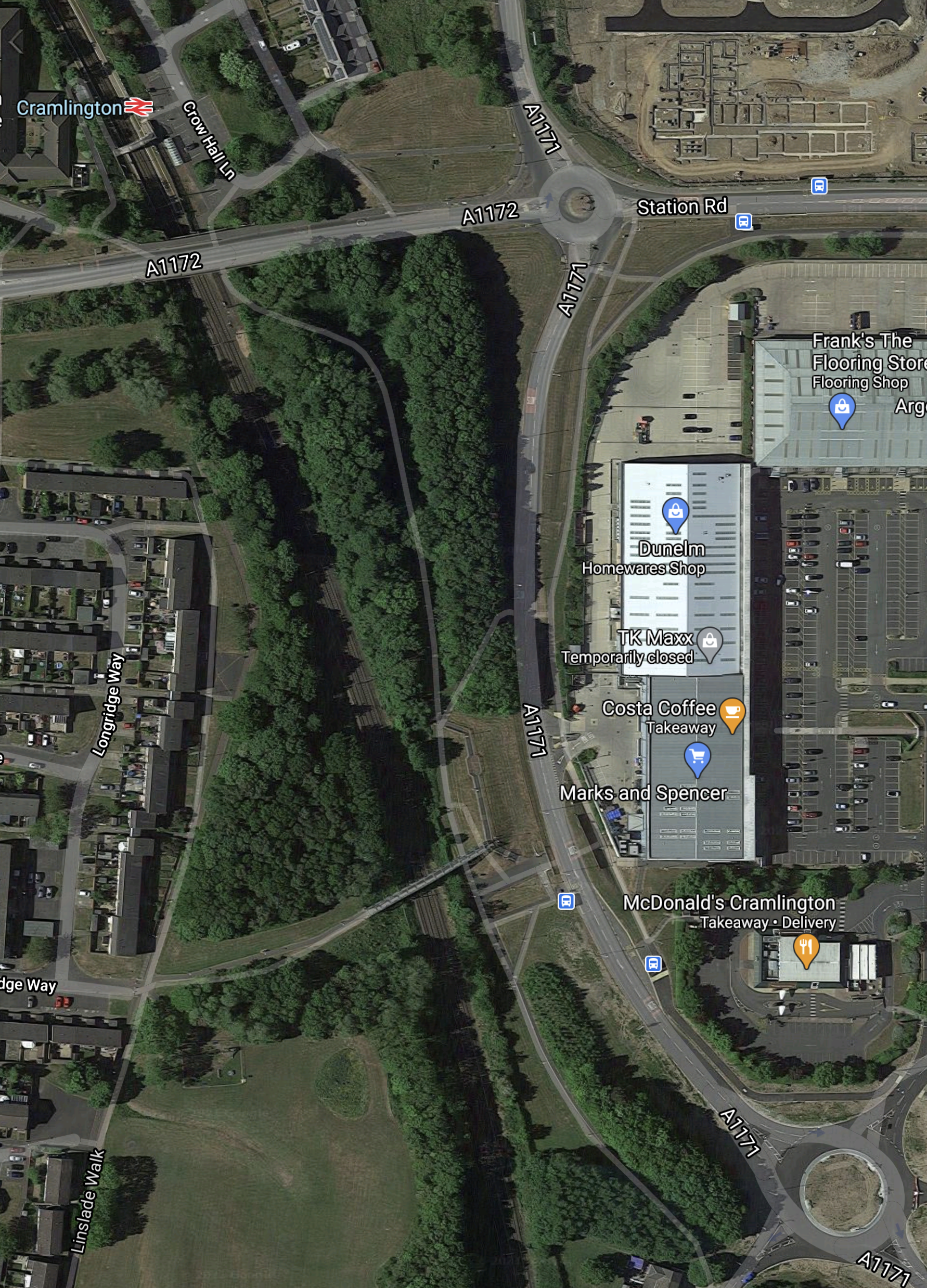
It looks like moving the station would be a good plan.
Future Traffic On The East Coast Main Line
The ECML between Newcastle and Berwick-on-Tweed is a very busy double-track railway.
Over the next few years, it is likely the following will happen.
- Digital in-cab ERTMS signalling will allow large sections of 140 mph running on the ECML.
- London Kings Cross and Edinburgh timings will drop to around three and a half hours. This timing was achieved by an InterCity 225 train in the 1980s.
- Under four-hour timings will mean, passengers will switch to train from plane on the route.
- Extra services will run between Newcastle and Edinburgh.
- There will certainly be three tph and possibly four tph between London Kings Cross and Edinburgh.
- Freight trains will be electric hauled at up to 120 mph.
It will be extremely difficult to fit the local services between Newcastle and Morpeth and Newcastle and Chathill into the traffic on the ECML.
The first improvement would be to run 110 mph battery electric trains between Carlisle and Morpeth and Chathill via Newcastle.
- Many Morpeth and Newcastle trains are extended to Carlisle.
- Carlisle and Newcastle id 61.5 miles, which with a small amount of electrification, would be within battery range.
- Several services from Newcastle would be decarbonised.
To reduce the traffic on the ECML, these services could be rerouted via the Northumberland Line.
I suspect to Network Rail’s train planners, the Northumberland Line, is seen as a secondary route that can take the pressure from the ECML
Reopening The Northumberland Line In Sequence
My background is project management and I believe this project can be improved by good class project management.
I would do the project in this order.
Order A Fleet Of New Battery Electric Trains
These would have the following specification.
- 100 mph or possible 110 mph on electrification on the ECML.
- 100 mph on batteries, where the route allows.
- 56 mile range on battery power.
- Three- or four-cars
- Ability to use digital in-cab ERTMS signalling.
As I said earlier, the Hitachi specification for their Regional Battery Train based on a Class 385 train would be ideal, but other manufacturers would be capable of providing a suitable train.
Introduce The Trains Into Service
The trains would be introduced into service on the following routes from Newcastle.
- Newcastle and Carlisle
- Newcastle and Morpeth
- Newcastle and Chathill
Note.
- There may need to be some extra electrification for the Newcastle and Carlisle service.
- Morpeth and Chathill would be served via the ECML.
Other routes from Newcastle could be possible.
Benefits would include.
- Carlisle and Morpeth get electric train services from Newcastle.
- Some services would be decarbonised.
- The TOC would get feedback about the use of battery electric trains, in terms of passenger numbers and their comments.
Hopefully, the TOC would get information, that will help them plan future phases.
Test The Trains On The Northumberland Line
This would be for the following reasons.
- To assess train performance.
- Ascertain whether any changing would be needed at Ashington.
- Determine if any electrification would be needed to run any of the proposed services.
The TOC would continue to learn more.
Add A Single Platform On The Northumberland Line At Northumberland Park Station
Initially, I would only add a single platform at Northumberland Park station,
- This would enable interchange between Northumberland Line and Metro services.
- A temporary lift could be provided, as they were during the rebuilding of Abbey Wood station.
- The extension to the station would be designed, so that all possible future scenarios could be added later.
I would expect that the rebuilding of this station is on the critical path, so this should probably be performed early or in parallel with the introduction of the trains.
Benefits would include, the ability to start a shuttle service from the station to perhaps Carlisle via Manors and Newcastle.
Build A Single Platform Park-And-Ride Station At Bebside
I said earlier, that this Park-And-Ride station is important and it should be built early.
- It is 6 miles from Ashington.
- It is 4.5 miles from Cramlington.
- It is proposed as a station for Blyth.
- It is close to the A 189 dual carriageway.
It should be built early as a one-platform station with a large car park.
It would need a cross-over to turn back trains or the existing one at Bedlington could be used.
Reinstate A Single Platform Station At Bedlington
Bedlington station has some interesting remains.
- There is a derelict platform on the Eastern (Up) track.
- There are cross-overs to turnback trains.
- There is a level crossing.
There is also a signal box with a signaller to keep order.
Start A Preview Service Between Newcastle and Bedlington
A preview service could be started once the following has been completed.
- The track and signalling has passed all necessary inspections.
- The trains have been certified for the route.
- The interchange with the Metro has been completed at Northumberland Park station.
- Either Bebside or Bedlington has been completed.
- Drivers and other staff have been trained.
Starting a preview service should enable the future extensions of the service to be designed using some real passenger numbers and feedback.
Covid: Hackney Railway Arch Rave Attended By ‘300 People’
The title of this post, is the same as that of this article on the BBC.
This is the introductory paragraphs.
Police have issued more than £15,000 in fines after 300 people attended an illegal rave in a railway arch.
Officers raided an unlicensed music event in Nursery Road, Hackney, at 01.30 GMT on Sunday.
Sounds to me, that the safest way to handle this number of ravers, is to use a water cannon, firing smart water, so they can be identified for a couple of weeks.
Coronavirus: Why Combining The Oxford Vaccine With Russia’s Sputnik V Vaccine Could Make It More Effective
The title of this post is the same as that of this article on The Conversation.
The Oxford–AstraZeneca COVID-19 Vaccine
This paragraph from the Wikipedia entry for the Oxford–AstraZeneca COVID-19 vaccine, gives the basic details of the vaccine.
The Oxford–AstraZeneca COVID-19 vaccine (codenamed AZD1222) is a COVID-19 vaccine developed by Oxford University and AstraZeneca given by intramuscular injection, using as a vector the modified chimpanzee adenovirus ChAdOx1. One dosing regimen showed 90% efficiency when a half-dose was followed by a full-dose after at least one month, based on mixed trials with no participants over 55 years old. Another dosing regimen showed 62% efficiency when given as two full doses separated by at least one month.
It puzzles me and I suspect it puzzles experts, that the two different vaccination regimes gave different answers.
The article on the Conversation says this.
This was intriguing. Why would giving people less of the vaccine lead to a more effective immune response? The answer to this may lie in the design of the vaccine, and could mean that there are ways to make this vaccine – and others that use the same design – more effective.
I will attempt to answer this question, in the rest of this post.
The Russian Sputnik V Vaccine
This paragraph from the Wikipedia entry for the Oxford–Russian Sputnik V vaccine, gives the basic details of the vaccine.
Gam-COVID-Vac, trade-named Sputnik V, is a COVID-19 vaccine developed by the Gamaleya Research Institute of Epidemiology and Microbiology, and registered on 11 August 2020 by the Russian Ministry of Health.
In most countries following guidelines of the World Health Organization, vaccine candidates are not approved for regular use until safety and efficacy data from Phase III trials are assessed and confirmed internationally by regulators. Gam-COVID-Vac was initially approved for distribution in Russia on the preliminary results of Phase I-II studies eventually published on 4 September 2020.
The quick approval of Gam-COVID-Vac was met with criticism in mass media and precipitated discussions in the scientific community whether this decision was justified in the absence of robust scientific research confirming the safety and efficacy of the vaccine.
In December 2020, interim analysis from 22,714 participants in a Phase III trial were published, claiming 91% efficacy with no unusual side effects.
Wikipedia says, that a medical citation is needed for the Phase III trial.
Both Vaccines Are Viral-Vector Vaccines
The Oxford vaccine is based around a modified chimpanzee adenovirus ChAdOx1, whilst the Russian vaccine is based on two human adenoviruses.
Adenoviruses are a family of viruses, that include the common cold.
The two shots of the Oxford vaccine are identical in composition, but the two shots of the Russian vaccine use a different adenovirus.
Both vaccines are what is known as viral vector vaccines.
Both vaccines would appear to deliver the same details of the spike protein of the virus to prime the body’s immune system to fight the real virus.
A Possible Problem With Viral-Vector Vaccines
This is a paragraph from the article on the Conversation, which talks of a problem with viral-vector vaccines.
When a person is given a viral-vector vaccine, as well as generating an immune response against the coronavirus’s spike protein, the immune system will also mount a response against the viral vector itself. This immune response may then destroy some of the booster dose when it is subsequently delivered, before it can have an effect. This has long been recognised as a problem.
It looks like a case of shoot the messenger to me.
The Russian Solution To The Problem
The Russian vaccine appears to get round the problem, by using two different adenoviruses in their two shots. There are fifty adenoviruses that affect humans, so they have a wide choice.
The first shot would only prime the immune system to the spike protein and one adenovirus, which could mean that the second and different adenovirus gets through without being attacked.
Co-Operation Between AstraZeneca And The Russians
This is the last sentence from the article on the Conversation.
This has now led to AstraZeneca testing a new hybrid vaccine schedule, comprising one dose of its vaccine and one of the Ad26-vector Sputnik V, to see if this makes the Oxford/AstraZeneca vaccine more effective.
I like the thinking behind this idea.
The priming for the immune system gets delivered by two totally unrelated delivery systems.
Conclusion
I wouldn’t be surprised to see this type of hybrid vaccine developed.
Surely, if we need to vaccinate every year against an ongoing Covid-19 threat, eventually, a succession of viral-vectors can be developed to fool the immune system.
The negotiation with the Russians could be tricky.
 The Anonymous Widower