First French Region Signs Hydrogen Train Contract
The title of this post, is the same as that of this article on the International Railway Journal.
This is the introductory paragraph.
The Bourgogne-Franche Comté region has signed a contract with Alstom, through operator French National Railways (SNCF), for the supply of three Coradia Polyvalent electro-hydrogen dual-mode multiple units.
These are some points from the article.
- The three trains are from an order for 14 from four French regions.
- The trains can use 1500 VDC and 25 KVAC electrification.
- They will be able to use hydrogen power, where there is no electrification.
- Range on hydrogen will be 400-600 km.
- Operating speed will be up to 160 kph.
- Trains will be four cars, with a capacity of 220 passengers.
- Trains will start test running in 2024 on the 19km non-electrified Auxerre – Laroche – Migennes line.
As with the Alstom Class 600 hydrogen trains for the UK, deliveries don’t seem to be fast.
I wrote Hydrogen Trains Ready To Steam Ahead in January 2019. This is the first few paragraphs.
The title of this post is the same as that of an article in today’s copy of The Times.
This is the first two paragraphs.
Hydrogen trains will be introduced in as little as two years under ambitious plans to phase out dirty diesel engines.
The trains, which are almost silent and have zero emissions, will operate at speeds of up to 90 mph and release steam only as a by-product. The new trains, which will be called “Breeze” will be employed on commuter and suburban lines by early 2021.
Wikipedia is now saying, that these trains will enter service in 2024.
As Alstom haven’t got any orders for the train, I will be very surprised if they achieve that date.
Is it Alstom, French project management or problems with hydrogen?
I don’t think it’s anything to do with hydrogen, as the Germans built the successful iLint for Alstom and Birmingham University put together a hydrogen demonstration train in double-quick time.
Given all the problems that the French are having with rolling out the Covid-19 vaccine could it be that the French have a Can’t Do! attitude, rather than most other countries, which seem to have a Can Do! attitude.
Honeywell Introduces Power Source For Hybrid-Electric Aircraft
The title of this post, is the same as that of this article on Flying Magazine.
Honeywell have created a power source for hybrid-electric aircraft, that will run on a wide range of fuels including jet fuel, diesel and sustainable aviation fuel.
The Flying Magazine article is a must-read, which is mainly based on this press release from Honeywell, which is entitled Honeywell’s Newest Turbogenerator Will Power Hybrid-Electric Aircraft, Run On Biofuel.
The turbogenerator has two main parts.
Small Turbofan Provides The Power
These are details of the turbo fan.
- The small turbo fan is the auxiliary power unit or APU from an Airbus A 350 XWB.
- The APU is identified as a Honeywell HGT1700.
- Over four hundred of these APU’s have been delivered in Airbus A350 XWBs.
- It can run on jet fuel, diesel and sustainable aviation fuel.
- It can also run on Honeywell Green Jet Fuel.
- I suspect in the future, it will be able to run on hydrogen.
The APU is obviously well-proven technology, from a company with a large share in the airliner market.
Generator To Provide Electricity
These are details of the generator.
- It weighs 127 Kg or about two of me.
- It can generate a megawatt of electricity.
The generator sounds powerful to me.
The first demonstration of this turbogenerator system will occur in the third quarter of 2021, with ongoing development and qualification to follow.
Honeywell says this about their collaboration with Faradair and other companies.
In December, Honeywell signed a memorandum of understanding with British startup Faradair Aerospace to collaborate on systems and a turbogeneration unit that will run on sustainable aviation fuel to power Faradair’s Bio Electric Hybrid Aircraft (BEHA). Faradair intends to deliver 300 hybrid-electric BEHAs into service by 2030, of which 150 will be in a firefighting configuration. Honeywell is in advanced discussions with several other potential turbogenerator customers, working to help define power requirements based on mission profiles required by various manufacturers.
I can see a lot of customers for this turbogenerator.
And not all will be in aviation!
The Proposal For Stonehenge And Wilton Junction Station
This article on the Salisbury Journal is entitled Wilton Railway Project On Track As Bid Submitted.
It starts with this paragraph.
An application to reopen the railway station in Wilton has reached the third round of the Restoring Your Railway Ideas Fund.
There are also more details in the February 2021 Edition of Modern Railways.
The following sections give more information and some of my thoughts.
Station Name
The station appears to be called Stonehenge and Wilton Junction in all the articles and reports.
Station Location
This page on the TransWilts web site, says this about the station.
Wilton is at the junction between the Salisbury to Bristol line and the Salisbury to Exeter line.
It is 7 miles to Stonehenge Visitor Centre. A consultants report by Atkins shows an economic case and a developer for housing at the site has been identified. Station cost is in the order of £15m.
This Google Map shows the area.
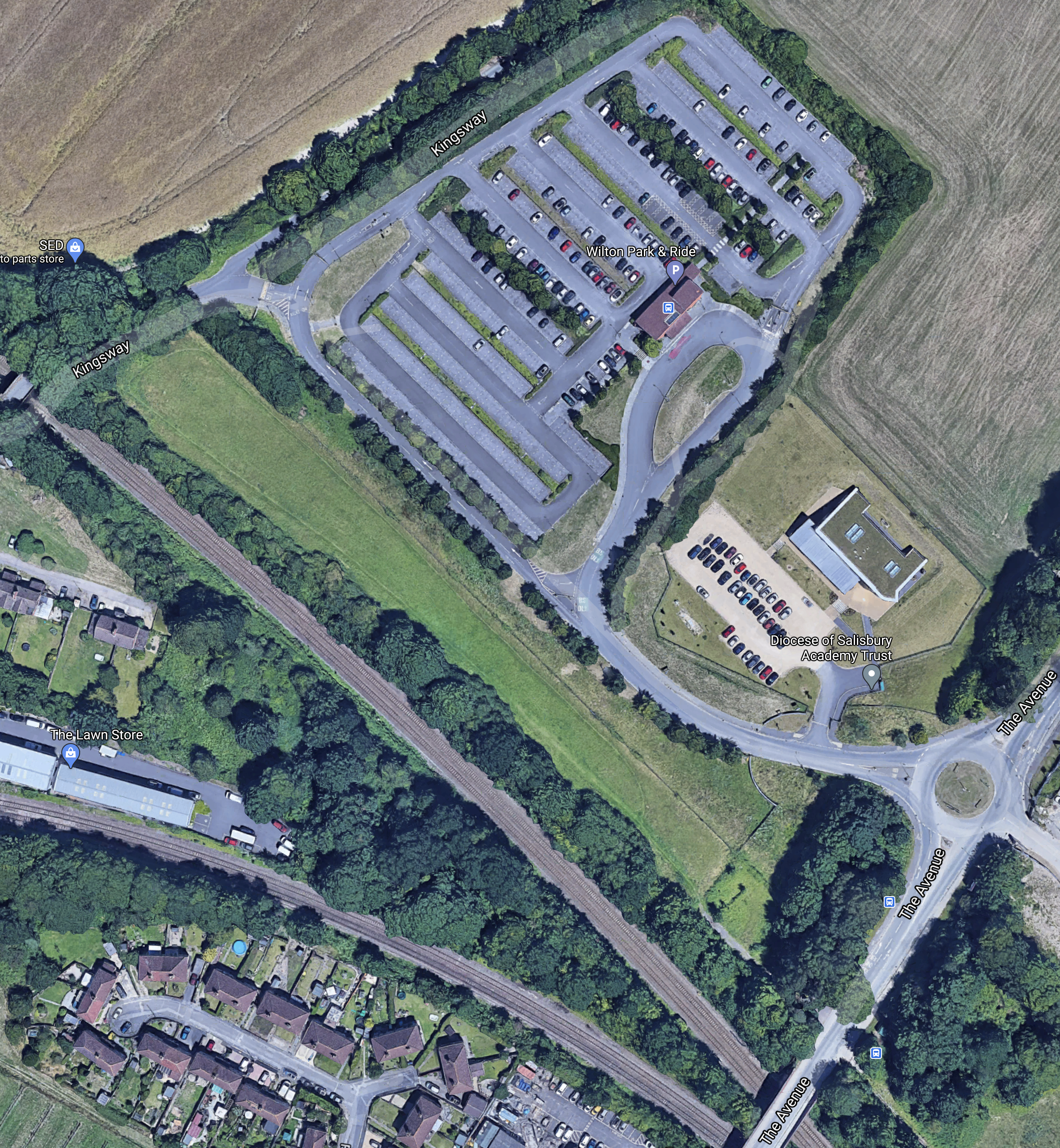
Note.
- The Wilton Park-and-Ride site at the top of the Map.
- The railway going South-East and North-West across the map is the Wessex Main Line, that links Salisbury and Bristol.
- The railway going South-East and West across the map is the West of England Main Line, that links Salisbury and Exeter.
- Both routes are double track.
It would appear that the new station would have platforms on both rail lines through the station.
Station Design
If Atkins reckon the station can be built for £15 million as I quoted earlier, it can’t be a very grand station.
The Modern Railways article says this about the station.
A park-and-ride facility at the station would reduce congestion in the centre of Salisbury. Improving London services in the proposal improves the cost-benefit ratio, so what is now envisaged is a four-platform station, with platforms on both the TransWilts and the Yeovil to London lines. The thinking is that the new station could work in tandem with the lengthening of the Tisbury loop and other proposals for possible expansion on the South Western route to Exeter that was floated in the latest Network Rail Continuous Modular Strategy.
My feelings are that a radical approach could yield an efficient station with a smaller number of platforms.
Train services through the station could include.
- GWR – Cardiff Central and Portsmouth Harbour – Hourly – Transwilts Lines – Also calls at Salisbury
- GWR – Great Malvern and Brighton or Southampton – Hourly – Transwilts Lines – Also calls at Salisbury
- SWR – London Wareloo and Exeter – Hourly – Yeovil and London Lines – Also calls at Salisbury
There is also talk of extending the Transwilts hourly service between Swindon and Westbury to Salisbury and then on to Southampton via Romsey.
This would do the following.
- Create a link to Southampton Airport.
- Give the new station a Turn-Up-And-Go service to Salisbury.
- The fourth service would mean that three services called on the Transwilts platforms and one service called on the Yeovil and London platforms.
So why not have one large platform between the two pairs of lines?
- It would have a tunnel connecting it to the buses and the car parking.
- One large lift would take passengers with limited mobility to the platform.
- The Southern face of the platform, would handle all trains running on the Yeovil and London line. A single platform can easily handle an hourly fast service in both directions.
- The Northern face of the platform, would handle all trains running on the Transwilts.
- Three trains per hour (tph) in both directions, could probably be handled with some innovation and a long platform.
Why complicate everything with four platforms?
Link To Stonehenge
I haven’t been to Stonehenge since the 1950s, although I have observed it from traffic jams on nearby roads many times.
Surely, there is a chance here to connect the new station and the World Heritage Site with a zero-carbon battery or hydrogen bus.
As the distance between the station and Stonehenge is only about seven miles, it would probably be the easiest way to get large number of visitors to the unique site.
We probably need more well-planned zero-carbon bus links to historic, tourist and other important sites.
Coal Plant Closures Loom Large As NSW Backs Hydrogen For The Hunter
The title of this post, is the same as that of this article on the Sydney Morning Herald.
This is the first paragraph.
The future of NSW’s coal-fired power plants is under increasing threat from cheap renewable energy, which this week forced Victoria’s Yallourn coal plant to bring forward its closure date as analysts warn the end may come even sooner.
The future for coal in Australia certainly doesn’t look good.
 The Anonymous Widower