New 775m-Long Freight Trains Begin Operating On UK’s Rail Network
The title of this post, is the same as that as this article on Global Railway Review.
This is the first paragraph.
DP World have announced that its two deep-water ports at Southampton and London Gateway have become the first in the UK capable of handling Freightliner’s new 775m-long intermodal container trains.
It appears from the article that Birmingham, Manchester and Leeds can also handle these longer trains.
Linde Commits To Green Hydrogen For Trucks And Becomes H2Accelerate Member
The title of this post, is the same as that of this article on Hydrogen Fuel News.
- Linde have already installed more than two hundred hydrogen filling stations around the world.
- Now, it appears they intend to install a lot more.
Could this give a big stimulus to more hydrogen trucks, buses and other road vehicles?
It should probably be noted that Linde are a shareholder in ITM Power and have ordered several large electrolysers from the Sheffield company.
Rolls-Royce To Re-Engine A Fleet Of Aircraft That Went Into Service In 1955 For $2.6 Billion
This sounds like good business if you can get it for Rolls-Royce.
It’s all described in this press release from Rolls-Royce, which is entitled Rolls-Royce North America Selected To Power The B-52 Commercial Engine Replacement Program.
These are the first two paragraphs.
Rolls-Royce North America has been selected to provide the powerplant for the B-52 Stratofortress under the Commercial Engine Replacement Program (CERP), further extending a long history of powering the United States Air Force.
The decision means the American-made Rolls-Royce F-130 engine will power the B-52 for the next 30 years. The Air Force made the announcement after a vigorous multi-year competition.
Note.
- It looks like the B-52s will stay in service until 2050.
- That is not bad for an aircraft that first flew in 1952, when I was five.
Wikipedia describes the deal like this.
The USAF intends to purchase 650 engines (608 direct replacements, 42 spare engines) for its fleet of 76 B-52H aircraft in a $2.6 billion deal.
I suspect the accountants are pleased at Rolls-Royce, as $2.6 million is good cash-flow.
- The F-130 engine is a military variant of the BR725 engine, which was developed by Rolls-Royce Deutschland, which although it started as a joint-venture between Rolls-Royce and BMW, is now part of Rolls-Royce.
- The engines will be built by Rolls-Royce North America in Indianapolis.
So I suspect development costs will not be too horrendous!
Construction Ramps Up At £260 Million Mossend International Railfreight Park In Scotland
The title of this post, is the same as that of this article on Rail Engineer.
This is the first paragraph.
The development of a major new low carbon, multi-modal rail freight facility located in the heart of Scotland has taken a significant step forward with the laying of a private rail track to facilitate construction. Once complete, Mossend International Railfreight Park (MIRP) will provide 2.2 million sq ft of logistics space and Scotland’s first 775-metre electric rail terminal.
This looks to be all good stuff.
But Glasgow has needed the capability to handle 775-metre electric freight trains for some time.
- 775 metres is the length of the longest freight trains in use in the UK, after an increase in length, that I wrote about in New 775m-Long Freight Trains Begin Operating On UK’s Rail Network.
- Electric locomotives will cut carbon emissions.
- Mossend International Railfreight Park (MIRP) has a fully electrified connection to the West Coast Main Line (WCML).
- From the WCML routes are electrified most of the way to major freight destinations in England and to the Channel Tunnel.
So what took politicians so long to decide to upgrade the MIRP, as surely the ability to handle the longest electric freight trains will surely encourage the following?
- The movement of freight from road to rail.
- A reduction in freight traffic on the roads of Scotland and to a lesser extend England.
- The ability to run electric freight trains between Glasgow and Continental Europe.
If freight ramps up after the MIRP is completed, there’ll probably be a need for the following.
Some new highly capable locomotives like the Class 93 locomotive.
More than the proposed 16 trains per day (tpd).
They will certainly need the planned 24/7 operation.
This Google Map shows the site of the MIRP at the current time.
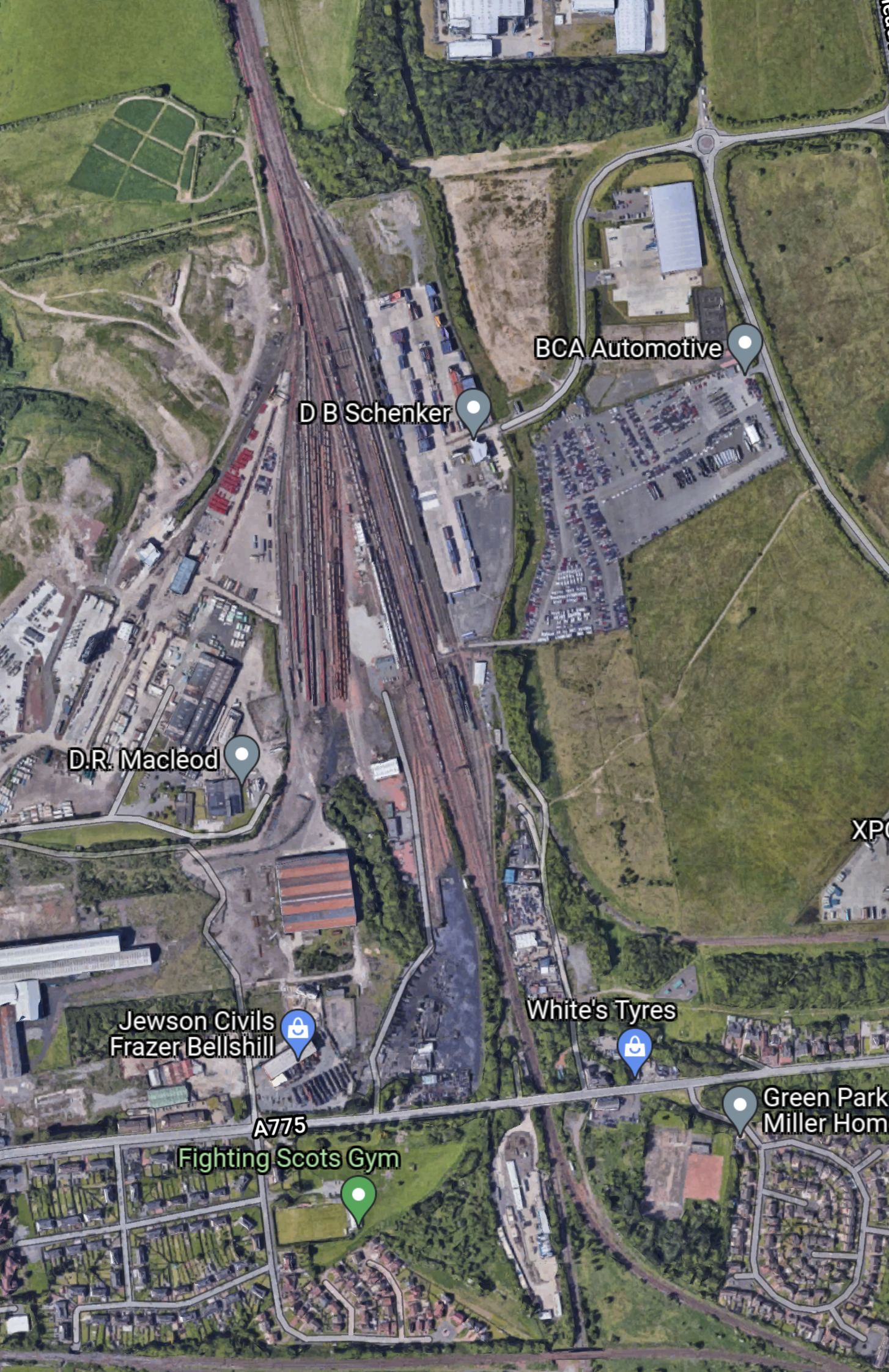
It will be interesting to see how the site grows.
Level Crossing Trouble On The Northumberland Line
There is an article on Chronicle Live, which is entitled Exodus Fears Over Northumberland Line Underpass Plans For Ashington.
There is also this sub-heading.
Opponents of a planned underpass in Ashington as part of work on the Northumberland Line rail project are being urged to have their say.
So what are some people protesting about?
This page on the ABC Railway Guide is entitled Hospital Crossing Level Crossing and gives details of the level crossing, that Network Rail want to replace with an underpass.
- The crossing is a public footpath crossing with whistleboards.
- Individual and collective risk rating is high.
- It is used by 110 pedestrians and cyclists per day.
- There don’t seem to have been many recent incidents.
I know of a similar crossing in a similar town to Ashington, where there have been several deaths and suicides.
As the Northumberland Line is likely to have a half-hourly service, which will mean four trains per hour (tph) over the crossing, I doubt any Health and Safety professional would sign off the Northumberland Line without separation of the trains from pedestrians and cyclists.
Admittedly, the main complaint of the residents is noise and drunken pedestrians, but aren’t the latter most likely to be run over by a train.
There is also suggestions that the crossing be moved further to the North.
This Google Map shows the crossing.
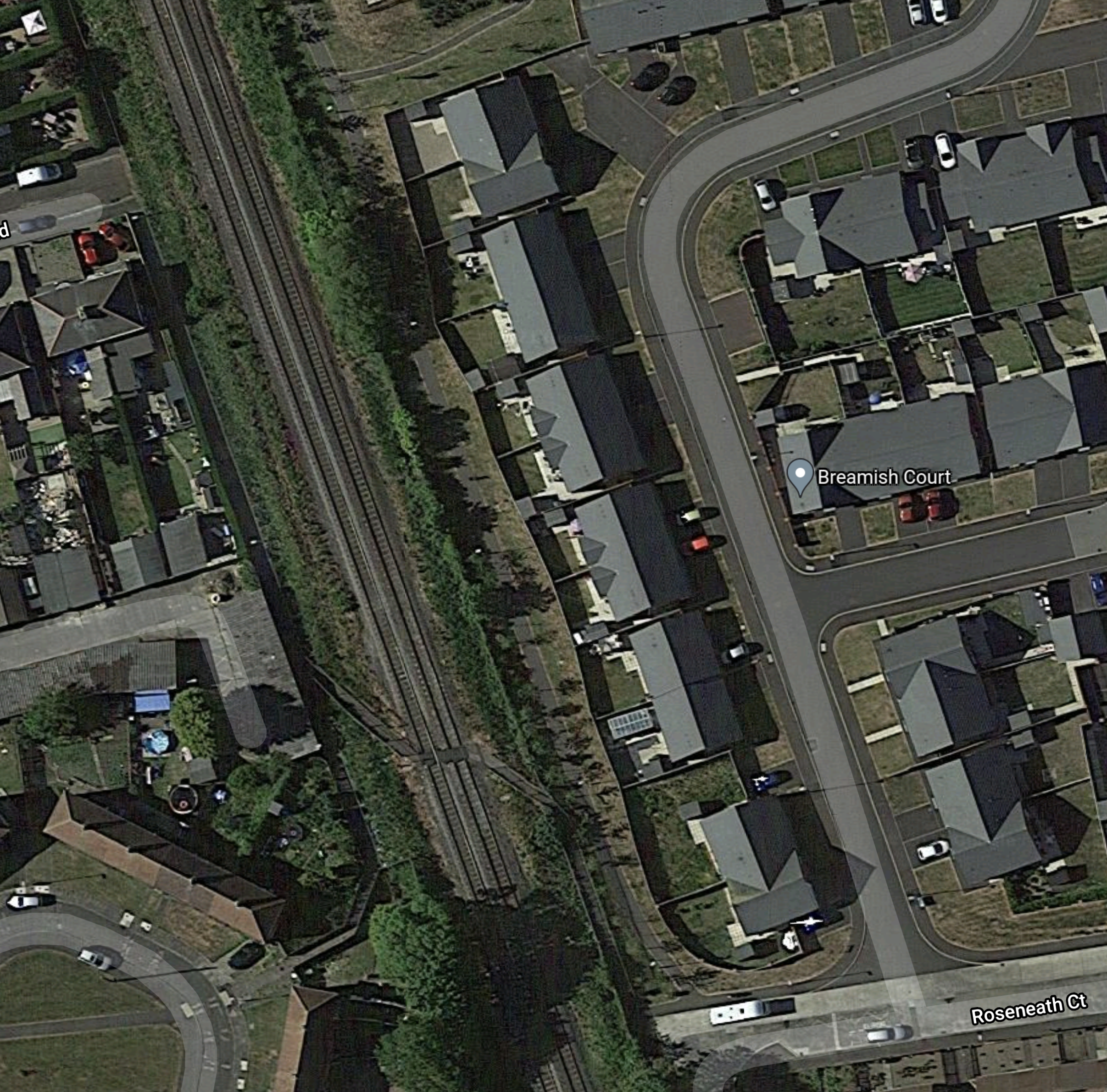
Note how the crossing zig-zags across the railway.
This second Google Map shows a 3D visualisation from the East.
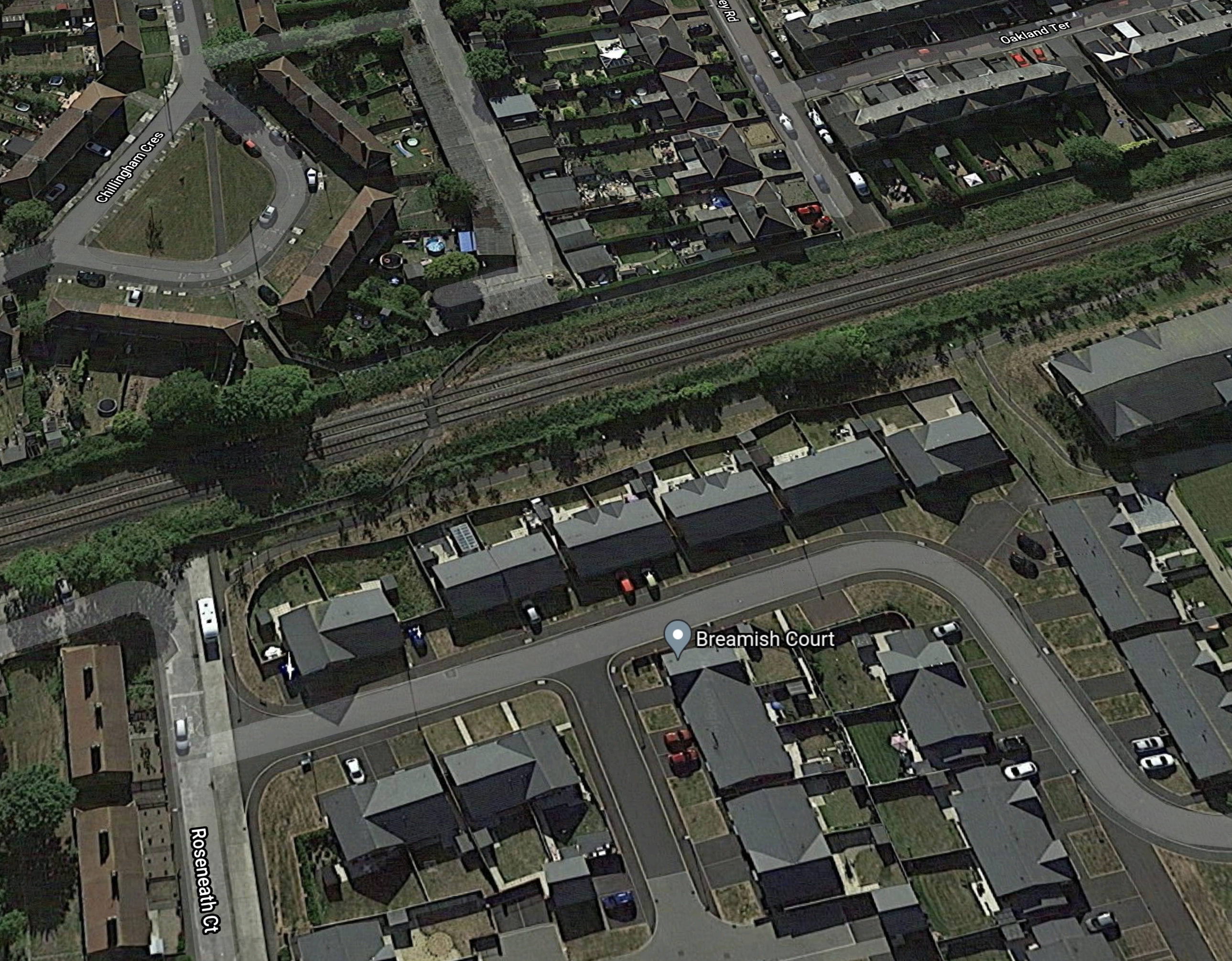
The proposed underpass would appear to connect Roseneath Court in the bottom-left and Darnley Road in the top-right.
- It does appear that the current route goes behind houses on both sides of the railway.
- I would suspect that underpasses could be built in line with both Roseneath Court and Darnley Road.
- But either route would mean that the noisy and the drunks would walk further in a parallel direction to the railway and would create more disturbance.
This level crossing argument will run and run, as many do.
The Effect Of Battery-Electric Trains
I think it is likely that services on this line could be run by battery-electric trains.
These trains could be new trains from CAF, Hitachi or Vivarail or modern electrical multiple units, that have been upgraded with batteries.
- They would be capable of 100 mph or more on the East Coast Main Line.
- They would run on battery power at an appropriate speed of perhaps 80 mph on the Northumberland Line, which is not planned to be electrified.
- I suspect the passenger trains will cruise up and down the Northumberland Line faster than the current freigtht trains.
- On battery power with no overhead wires, they will be very quiet trains.
Paradoxically, these new trains, although much better for passengers, could be more dangerous for the users of level crossings because of their faster speed and lower noise.
 The Anonymous Widower