The Biggest Strawberry In The World
I eat a lot of strawberries, either as fruit or as jam on a scone or bread.
- I always have done since I left home to go to Liverpool University.
- I do wonder, if it was a subconscious decision on my part, as my body reacted to all the alternatives like puddings with all their gluten.
- Certainly, by the time, I was married, I know that I always annoyed my mother-in-law by never eating her gluten-rich puddings.
- Strawberries were also my wife’s passion, when she was pregnant.
Have other coeliacs avoided gluten before diagnosis. I certainly did.
Today, I bought a punnet of strawberries in Marks & Spencer.

Note.
- They were Spanish strawberries.
- To say they were large would be an understatement.
- One weighed in at a massive 64 grammes.
But they all tasted fine with a good texture!
H2 Green Steel Raises More Than €4 billion In Debt Financing For The World’s First Large-Scale Green Steel Plant
The title of this post, is the same as that of this press release from H2 Green Steel.
This is the sub-heading.
H2 Green Steel signs definitive debt financing agreements for €4.2 billion in project financing and increases the previously announced equity raised by €300 million. Total equity funding to date amounts to €2.1 billion. The company has also been awarded a €250 million grant from the EU Innovation Fund. H2 Green Steel has now secured funding of close to €6.5 billion for the world’s first large-scale green steel plant in Northern Sweden.
These three paragraphs describe the company and outlines the financing.
H2 Green Steel is driving one of the largest climate impact initiatives globally. The company was founded in 2020 with the purpose to decarbonize hard-to-abate industries, starting by producing steel with up to 95% lower CO2 emissions than steel made with coke-fired blast furnaces. The construction of the flagship green steel plant in Boden, with integrated green hydrogen and green iron production, is well under way. The supply contracts for the hydrogen-, iron- and steel equipment are in place. A large portion of the electricity needed has been secured in long-term power purchase agreements, and half of the initial yearly volumes of 2.5 million tonnes of near zero steel have been sold in binding five- to seven-year customer agreements.
Today H2 Green Steel announces a massive milestone on its journey to accelerate the decarbonization of the steel industry, which is still one of the world’s dirtiest. The company has signed debt financing of €4.2 billion, added equity of close to €300 million and been awarded a €250 million grant from the Innovation Fund. Funding amounts to €6.5 billion in total.
H2 Green Steel has signed definitive financing documentation for €3.5 billion in senior debt and an up-to-€600 million junior debt facility:
Note.
- I first wrote about H2 Green Steel about three years ago in Green Hydrogen To Power First Zero Carbon Steel Plant.
- The Wikipedia entry for Boden in Northern Sweden, indicates it’s a coldish place to live.
- In that original post, H2 Green Steel said they needed €2.5 billion of investment, but now they’ve raised €4 billion, which is a 60 % increase in financing costs in just three years.
Is this Sweden’s HS2?
The Future Of Green Steelmaking
The finances of H2 Green Steel look distinctly marginal.
I have a feeling that green steel, as the technology now stands is an impossible dream.
But I do believe that perhaps in five or ten years, that an affordable zero carbon method of steel production will be developed.
You have to remember, Pilkington developed float glass in the 1950s and completely changed an industry. Today, we’d call that a classic example of disruptive innovation.
The same opportunity exists in steelmaking. And the rewards would be counted in billions.
The UK-Wide Need For Self-Powered Trains
How Many Diesel Trains Are In Service In The UK?
- Northern Trains – 73 x two-car and 6 x three-car.
- Great Western Railway – 20 x two-car.
- Transport for Wales – 36 x two-car.
- In Service – 129 x two-car and 6 x three-car.
These are 75 mph BR Second Generation trains.
- ScotRail – 5 x one-car.
- Transport for Wales – 31 x one-car.
- In Service – 36 x one-car.
- Stored – 27 x one-car.
These are 75 mph BR Second Generation trains.
- Northern Trains – 7 x two-car.
- In Service – 7 x two-car.
These are 75 mph BR Second Generation trains.
- Northern Trains – 58 x two-car.
- East Midlands Railway – 9 x two-car.
- ScotRail – 42 x two-car.
- In Service – 109 x two-car.
- Stored – 6 x two-car.
These are 75 mph BR Second Generation trains.
- ScotRail – 40 x two-car.
- Great Western Railway – 10 x two-car and 7 x three-car.
- East Midlands Railway – 26 x two-car.
- Northern Trains – 45 x two-car and 8 x three-car.
- Transport for Wales – 24 x two-car.
- South Western Railway – 10 x two-car.
- In Service – 155 x two-car and 15 x three-car.
These are 90 mph BR Second Generation trains.
- South Western Railway – 29 x three-car.
- In Service – 29 x three-car.
These are 90 mph BR Second Generation trains.
- Chiltern Railways – 39 x two-car.
- Great Western Railway – 20 x two-car and 16 x three-car.
- In Service – 59 x two-car and 16 x three-car.
These are 75 or 90 mph BR Second Generation trains.
- Great Western Railway – 21 x three-car.
- In Service – 21 x three-car.
These are 90 mph BR Second Generation trains.
- Chiltern Railways – 9 x two-car, 9 x three-car and 13 x four-car.
- In Service – 9 x two-car, 9 x three-car and 13 x four-car.
These are 100 mph Turbostar trains.
- CrossCountry – 7 x two-car and 22 x three-car.
- East Midlands Railway – 22 x two-car and 8 x three-car.
- Northern Trains – 16 x three-car.
- ScotRail – 17 x three-car.
- Transport for Wales – 8 x three-car.
- West Midlands Trains – 16 x three-car.
- In Service – 34 x two-car and 71 x three-car.
These are 100 mph Turbostar trains.
- Southern – 17 x three-car.
- In Service – 17 x three-car.
These are 100 mph Turbostar trains.
- West Midlands Trains – 24 x two-car and 15 x three-car.
- In Service – 24 x two-car and 15 x three-car.
These are 100 mph Turbostar trains.
- Transport for Wales – 9 x two-car and 15 x three-car.
- In Service – 9 x two-car and 15 x three-car.
- Stored – 2 x two-car and 1 x three-car.
These are 100 mph Coradia trains.
- Grand Central – 10 x five-car.
- East Midlands Railway – 1 x four-car and 2 x five-car.
- In Service – 1 x four-car and 12 x five-car.
These are 125 mph Coradia trains.
- TransPennine Express 51 three-car.
- In service – 51 three-car.
These are 100 mph Desiro trains.
- Northern Trains – 25 x two-car and 33 x three-car.
- In Service – 25 x two-car and 33 x three-car.
These are 100 mph CAF Civity trains.
- West Midlands Trains – 12 x two-car and 14 x four-car.
- In Service – 12 x two-car and 14 x four-car.
These are 100 mph CAF Civity trains.
- Northern Trains – 51 x two-car and 26 x three-car.
- In Service – 51 x two-car and 26 x three-car.
These are 100 mph CAF Civity trains.
- CrossCountry – 34 x four-car
- In Service – 34 x four-car
These are 125 mph Bombardier Voyager trains.
- Avanti West Coast -18 x five-cars
- CrossCountry – 24 x four-car.
- In Service – 24 x four-car and 18 x five-cars
- Stored – 2 x five-car
These are 125 mph Bombardier Voyager trains.
- CrossCountry – 23 x five-car and 4 x seven-car.
- In Service – 23 x five-car and 4 x seven-car.
These are 125 mph Bombardier Voyager trains.
- Transport for Wales – 11 x four-car.
- In Service – 11 x four-car.
These are 90 mph Stadler FLIRT bi-mode trains.
- Greater Anglia – 14 x three-car and 24 x four-car.
- In Service – 14 x three-car and 24 x four-car.
These are 100 mph Stadler FLIRT bi-mode trains.
- Transport for Wales – 7 x three-car and 17 x four-car.
- In Service – 7 x three-car and 17 x four-car.
These are 75 mph Stadler FLIRT bi-mode trains.
- Great Western Railway – 21 x five-car and 36 x nine-cars.
- LNER – 10 x five-car and 13 x nine-cars.
- In Service – 31 x five-car and 49 x nine-cars.
These are 125 mph Hitachi AT-300 trains.
- Great Western Railway – 22 x five-car and 14 x nine-cars.
- Hull Trains – 5 x five-car.
- TransPennine Express – 19 x five-car.
- In Service – 46 x five-car and 14 x nine-cars.
These are 125 mph Hitachi AT-300 trains.
- Avanti West Coast – 13 x five-car.
- In Service – 13 x five-car.
These are 125 mph Hitachi AT-300 trains.
- East Midlands Railways – 33 x five-car.
- In Service – 33 x five-car.
These are 125 mph Hitachi AT-300 trains.
These trains give totals as follows.
- One-car – 36
- Two-car – 601
- Three-car – 249
- Four-car – 135
- Five-car – 176
- Seven-car – 4
- Nine-car – 63
That is a total of 1254 trains that need to be decarbonised by either replacement or modification.
- Some trains are effectively double-counted, as both the current trains and their replacements are included.
- Some trains are planned to be replaced by electric trains.
- Some trains will be passed on.
But there are still a lot of trains to be decarbonised.
I will now look at each group in detail.
BR Second Generation Trains
- Class 150 – 129 x two-car and 6 x three-car.
- Class 153 – 36 x one-car.
- Class 155 – 7 x two-car.
- Class 156 – 109 x two-car.
- Class 158 – 155 x two-car and 15 x three-car.
- Class 159 – 29 x three-car.
- Class 165 – 59 x two-car and 16 x three-car.
- Class 166 – 21 x three-car.
Note.
- The trains have mostly Cummins engines, with some Perkins and a spattering of Rolls-Royce.
- Class 150,153, 155 and 156 trains are 75 mph trains and most of the others are capable of 90 mph.
- Condition of the interiors is variable, with some being excellent and others being terrible.
- There are 36 x one-car, 459 x two-car and 59 x three-car.
- There appears to be no plan to decarbonise these trains.
- Some will be replaced by new CAF diesel trains or new electric trains.
The best use of some of the better trains in this group would be to fill-in until zero-carbon trains are available.
Turbostar Trains
These trains are all Turbostars or their predecessor.
- Class 168 – 9 x two-car, 9 x three-car and 13 x four-car.
- Class 170 – 34 x two-car and 71 x three-car.
- Class 171 – 17 x three-car.
- Class 172 – 24 x two-car and 15 x three-car.
Note.
- The trains all have Rolls-Royce mtu engines.
- They are capable of 100 mph.
- Condition of the interiors is generally good.
- There are 67 x two-car, 112 x three-car and 13 x four-car.
- Rolls-Royce mtu engines may be able to run on sustainable fuel like Hydrotreated Vegetable Oil (HVO).
- 168329 has been converted into a diesel-hybrid, by Rolls-Royce mtu.
I feel that one way or another, the trains in this group should be capable of converting to net-zero operation.
Alstom Coradia, Bombardier Voyager and Siemens Desiro Trains
I am putting these trains together, as they are all 100-125 mph long-distance trains, that are not that old.
- Class 175 – 9 x two-car and 15 x three-car.
- Class 180 – 1 x four-car and 12 x five-car.
- Class 185 – 51 x three-car.
- Class 220 – 34 x four-car
- Class 221 – 24 x four-car and 18 x five-cars
- Class 222 – 23 x five-car and 4 x seven-car.
Note.
- The trains all have Cummins engines.
- They are capable of 100 mph or 125 mph.
- Condition of the interiors is generally good.
- There are 9 x two-car, 66 x three-car, 59 x four-car, 53 five-car and 4 x seven-car.
- Cummins engines may be able to run on sustainable fuel like Hydrotreated Vegetable Oil (HVO).
- In Grand Central DMU To Be Used For Dual-Fuel Trial, I described innovative fuel trails in a Class 180 train.
- I suspect Cummins will be taking an interest.
In Cummins And Leclanché S.A. To Collaborate On Lower-Emissions Solutions For Use In Marine And Rail Applications, I asked this question.
How many of these trains could be converted to hybrid operation, if Cummins and Leclanché were to create their version of the mtu Hybrid PowerPack?
I feel that one way or another, the trains in this group should be capable of converting to net-zero operation.
CAF Civity Trains
These three trains have all been recently introduced
- Class 195 – 25 x two-car and 33 x three-car.
- Class 196 – 12 x two-car and 14 x four-car.
- Class 197 – 51 x two-car and 26 x three-car.
Note.
- The trains all have Rolls-Royce mtu engines.
- They are capable of 100 mph.
- Condition of the interiors is probably as-new!
- There are 88 x two-car, 59 x three-car and 14 x four-car.
- All these trains were ordered between 2016 and 2018.
- Rolls-Royce mtu engines may be able to run on sustainable fuel like Hydrotreated Vegetable Oil (HVO).
I don’t believe that as these trains were only ordered a few years ago, that the trains were bought with the knowledge of a route which would convert these trains to net-zero operation.
I suspect the most likely route to net-zero operation, would involve the following.
- Replacing the Rolls-Royce mtu engines with mtu Hybrid PowerPacks.
- Running the trains on sustainable fuel.
The work needed would probably be the same for all trains.
Stadler FLIRT Bi-Mode Trains
- Class 231 – 11 x four-car.
- Class 755 – 14 x three-car and 24 x four-car.
- Class 756 – 7 x three-car and 17 x four-car.
Note.
- The trains all have Rolls-Royce mtu engines.
- They are capable of between 75 and 100 mph.
- Condition of the interiors is probably as-new!
- There are 21 x three-car and 52 x four-car.
- All these trains were ordered between 2016 and 2018.
- As with other recently ordered trains, I am fairly sure that the Deutz engines will be able to run on sustainable fuel like Hydrotreated Vegetable Oil (HVO).
Stadler have designed these trains, so that diesel engines can be replaced by battery packs.
I suspect the most likely route to net-zero operation, would involve the following.
- Replacing all or some the Deutz engines with battery packs.
- Running the trains on sustainable fuel.
The work needed would probably be the same for all trains.
Hitachi AT-300 Trains
Only the bi-mode trains are lists.
- Class 800 – 31 x five-car and 49 x nine-car.
- Class 802 – 46 x five-car and 14 x nine-car.
- Class 805 – 13 x five-car.
- Class 810 – 33 x five-car.
Note.
- The trains all have Rolls-Royce mtu engines.
- They are capable of 125 mph.
- Condition of the interiors is probably as-new!
- There are 123 x three-car and 63 x nine-car.
- Most were built after 2016.
- Rolls-Royce mtu engines may be able to run on sustainable fuel like Hydrotreated Vegetable Oil (HVO).
- Hitachi are developing battery packs for these trains.
I suspect the most likely route to net-zero operation, would involve the following.
- Replacing all or some the Rolls-Royce mtu engines with battery packs.
- Running the trains on sustainable fuel.
The work needed would probably be the same or similar for all trains.
SeAH Wind Goes On Recruitment Spree For UK Monopile Factory
The title of this post, is the same as that of this article on offshoreWIND.biz.
This is the sub-heading.
South Korea’s SeAH Wind has started its large-scale drive to recruit for positions including welders, platers, roll bending machine operatives, mechanical and electrical technicians, supervisors, and general operatives for its XXL monopile manufacturing facility on Teesworks, the UK.
These are the first two paragraphs.
Applications will be accepted via the company’s dedicated recruitment website where individuals can sign up for job alerts, register their expressions of interest, and apply directly for jobs.
SeAH Wind will hold events across multiple Teesside towns, including Middlesbrough, Redcar, Cleveland, and Hartlepool over the coming months where more details will be shared about vacancies and training opportunities at the South Bank site.
These three paragraphs talk about the education and training, and the number of jobs.
As part of the recruitment drive, the South Korean firm has also joined forces with Nordic Products and Services and Middlesbrough College to create two programmes under its SeAH Wind Academy programme.
During the 24-week training and development programme, 30 people will be trained to become welders for SeAH Wind.
Once fully operational, it is expected that a total of 750 direct jobs and 1,500 further supply chain jobs are set to come from the SeAH manufacturing facility.
I suspect, this the sort of investment that Teesside needs and will welcome.
Europe Installs Record-Breaking 4.2 GW Of Offshore Wind In 2023
The title of this post, is the same as that of this article on offshoreWIND.biz.
This is the sub-heading.
Europe’s offshore wind industry brought online a record 4.2 GW of new capacity in 2023 and is expected to build around 5 GW of offshore wind annually over the next three years, according to WindEurope data. However, this is still not enough to meet the continent’s 2030 climate and energy security targets, WindEurope added.
These are the first two paragraphs.
The overall offshore wind capacity installed in 2023 was 40 per cent higher than in 2022. Of the 4.2 GW of new capacity, 3 GW was in the EU, an increase of 2.1 GW year on year, WindEurope said.
The Netherlands, France, and the UK installed the most new capacity, including the 1.5 GW Hollandse Kust Zuid offshore wind project in the Netherlands, according to the organisation.
But where are the Germans?
They’ve got plenty of steel and sea, Siemens make a lot of wind turbines and they certainly need the electricity.
In 2023, Germany generated their electricity as follows.
- Brown coal (17.7%)
- Hard coal (8.3%)
- Natural gas (10.5%)
- Wind (32.0%)
- Solar (12.2%)
- Biomass (9.7%)
- Nuclear (1.5%)
- Hydro (4.5%)
- Oil (0.7%)
- Other (2.9%)
By comparison the UK’s figures were.
- Coal (1%)
- Natural gas (32%)
- Wind (29.4%)
- Solar (4.9%)
- Biomass (5%)
- Nuclear (14.2%)
- Hydro (1.8%)
- Storage (1%)
- Imports (10.7%)
Note.
- The Germans use a lot of coal.
- The UK uses a lot more natural gas.
- Despite the much-criticised Drax, the Germans use twice as much biomass as we do.
- The UK uses tens times more nuclear.
The Wikipedia entries for German and UK wind power make interesting reading.
Old Street Station – 22nd January 2024
I passed through Old Street station this morning and took these pictures.

























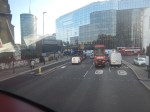




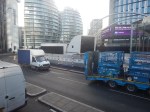





Note.
- I arrived at the station on a Great Northern train from Moorgate.
- I walked through the dingy tunnels of the old station and then used the escalator to get to the surface.
- I then walked around the centre of the roundabout, before walking to the Southbound bus stop.
- From there I took a 21 bus to take the last few pictures.
- I wrote the first post about construction at Silicon Roudabout; Silicon Roundabout Goes Two-Way, in May 2019.
This really has been a slow construction job.
 The Anonymous Widower