UK Gov’t Says Offshore Wind Backbone Of 2030 Clean Power System, Plans To Procure 12 GW More In Next Few Allocation Rounds
The title of this post, is the same as that of this article on offshoreWIND.biz.
This is the sub-heading.
Electricity generated by renewable sources and nuclear power will be the foundation of the UK’s electricity system by 2030, according to a new action plan the UK government issued in December 2024. Offshore wind, which now accounts for some 17 per cent of the country’s electricity generation, has “a particularly important role as the backbone of the clean power system”, the government said, revealing plans to make part of the path to building offshore wind farms easier as soon as before the Contract for Difference (CfD) round planned for the summer.
These two paragraphs add a few more details to the plan.
The action plan, issued by the Department for Energy Security and Net Zero (DESNZ), was presented by the UK Energy Secretary Ed Miliband on 13 December and is said to be a “major milestone to deliver on the Prime Minister’s Plan for Change which aims to drive economic growth and rebuild Britain with mission-driven government”.
Clean Power 2030 Action Plan is a roadmap to an (almost) fully clean power system in the UK by 2030, with clean sources making up 95 per cent of Great Britain’s electricity generation with gas being used for no more than 5 per cent of total generation.
This Wikipedia entry is a List of Operational Wind Farms in the UK.
Operational Offshore Wind Farms
In October 2023, there were offshore wind farms consisting of 2,695 turbines with a combined capacity of 14,703 megawatts. Strike price based on £/MWh at 2012 prices.
Wind Farms Under Construction
Offshore wind farms currently under construction (offshore), with a combined capacity in December 2024 of 7,792 MW. Strike price based on £/MWh at 2012 prices.
Pre-Construction Wind Farms
Wind farms that have started onshore construction and have been awarded contracts under the UK Government’s Contracts for Difference Round 3 (2019)/Round 4 (2022). Total capacity of 3,932 MW. Strike price based on £/MWh at 2012 prices. These projects re-bid some capacity in Round 6 (2024) with a higher strike price.
Proposed Wind Farms – Contracts For Difference Round 4
Wind farms proposed under the Round 4 (2022) CFD auction,[88] with a combined capacity of 1,428 MW . Strike price based on £/MWh at 2012 prices.
Proposed Wind Farms – Contracts For Difference Round 6
Wind farms proposed under the Round 6 (2024) CFD auction,[88] with a combined capacity of 3,763 MW . Strike price based on £/MWh at 2012 prices.
Proposed Wind Farms – Previously Awarded In The CfD Round 3
This wind farm was proposed under the UK Government’s Contracts for Difference Round 3 (2019), which it decided to withdraw from. It will likely bid in AR6 with a changed specification from the original submission
Proposed Wind Farms – Early Planning
Wind farms that are in an exploratory phase and have not yet secured a Contract for Difference at auction.
Total capacities: England: 18,423 MW – Wales: 700 MW – Scotland: 30,326 MW
Current Totals
- Operational Offshore Wind Farms – 14,703 MW
- Wind Farms Under Construction – 7,792 MW
- Pre-Construction Wind Farms – 3,932 MW
- Contracts For Difference Round 4 – 1,428 MW
- Contracts For Difference Round 6 – 3,763 MW
- Previously Awarded In The CfD Round 3 – 0 MW
- Earlp Planning – England: 18,423 MW
- Early Planning – Wales: 700 MW
- Early Planning – Scotland: 30,326 MW
Adding up these totals gives 81.067 MW
As I’m typing this, the UK is generating and importing a total of 29,330 MW of electricity.
Conclusion
Another 12 GW of new offshore wind will mean that we will have 81,067 + 12,000 – 29330 MW of electricity to put in store or sell to the Germans and other Europeans.
Perhaps we should be investing in industries, that use large quantities of electricity like hydrogen steel-making or zero-carbon cement making.
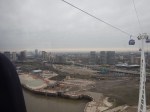
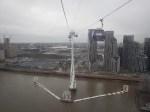
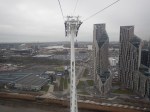
Silvertown Tunnel Works From The Cable Car – 8th January 2025
I took the pictures in Silvertown Tunnel Works – 1st January 2025 from the Docklands Light Railway.
I took these pictures from the Emirates Air Line or whatever it is called today.




























































Heights And Me
I find a ride on the Cable Car to be very refreshing.
I also used to like being at height in an unpressurised light aircraft.
Is this unusual? A doctor, who has appeared in mountaineering documentaries on the BBC thinks so, but then doctors have a good laugh about my skin, which doesn’t seem to need a plaster after a blood test or injection.
AI Putin Film Puts Russian President In Nappies
The title of this post, is the same as that of this article on The Times.
This is the sub-heading.
Patryk Vega has attracted the attention of Kremlin agents with his wild new ‘deepfake’ biopic that is set to be released in Britain
These first three paragraphs add more to the story.
When he is not plotting invasions or political terror, President Putin likes to watch old Soviet war films. Now he has the opportunity to watch himself in a starring role on the big screen, but it’s doubtful he will enjoy what he sees.
A new AI-assisted film that is released this month about Putin’s life features him wearing soiled adult nappies, working as a taxi driver after the collapse of the Soviet Union and cheating on his former wife.
The film, entitled Putin, is the work of Patryk Vega, a Polish director who is best known for his gory depictions of the criminal underworld. He has described it as the world’s “first deepfake” film.
If it is shown near me, I think I’ll go and see it.
There is a trailer on the internet, that looks professional.
When I was growing up in the 1960s, Polish films had an Art House following.
I particularly remember two.
Both films were by Roman Polanski.
Five-Car Class 710 Train On The North London Line
I had my first ride on a five-car Class 710 train on the North London Line, this week.








I just took the train from Stratford to Hackney Central stations, so I could get the 38 bus home.
Is FirstGroup’s Order For Fourteen Trains For Lumo And Hull Trains More Identical Than Is Generally Assumed?
Currently, Hull Trains operate Class 802 trains and Lumo operate Class 803 trains.
Both trains are five-car Hitachi A-Trains and appear to be similar in size, although there are other differences.
- Hull Trains have a two-class layout, whereas on Lumo everybody sits in the same class.
- Hull Trains are a true bi-mode with the 700 kW Rolls-Royce mtu diesel generators.
- Lumo only have a battery for emergency hotel power.
- Hull Trains currently operate a route, where up to a hundred miles in each round trip can be on diesel.
- Lumo’s current route is all electric.
However, the differences in train specification doesn’t stop the two operators using each other’s trains.
This is from an article in the November 2023 Edition of Modern Railways, that is entitled Extra Luggage Racks For Lumo.
The co-operation between sister East Coast mail line open access operators Lumo and Hull Trains continues, with one recent move, being the use of a Hull Trains ‘802’ on Lumo services to cover for a shortage of the dedicated ‘803s’ while one unit was out of action for repairs following a fatality. Although the two types are similar, there are notable differences, most obviously that the Hull Trains units are bi-modes while the Lumo sets are straight EMUs and a training conversion course is required for Lumo drivers on the ‘802s’. There are also challenges from a passenger-facing perspective – The Hull Trains units have around 20 % fewer seats and a First Class area.
A future Chief Executive of FirstGroup might at some future date decide to convert all trains to the same specification.
Drive Systems Of The Five-Car Class 80x Trains
I’m writing them down for all the five-car Class 80x trains to make it easier to understand.
- Class 800 train – DPTS–MS-MS-MC–DPTF – (LNER) 3 x 560 kW or (GWR) 3 x 700 kW diesel generators.
- Class 801 train – DPTS–MS-MS-MC–DPTF – 1 x 560 kW diesel generators
- Class 802 train – DPTS–MS-MS-MC–DPTF – (LNER) 3 x 700 kW diesel generators.
- Class 803 train – DPTS–MS-MS-MS–DPTF
- Class 805 train – DPTS–MS-MS-MC–DPTF – 3 x 700 kW diesel generators.
- Class 810 train – DPTS–MS-MS-MC–DPTF – 4 x 735 kW diesel generators.
Note.
- All these five-car trains have the same drive configuration.
- Traction motors are on cars 2 and 4.
- Trains with one diesel generators have them under car 3.
- Trains with three diesel generators have them under cars 2/3/4.
- Trains with four diesel generators have them under cars 1/2/4/5.
- The traction battery in the Class 802 battery-electric test train was 750 kW, according to The Data Sheet For Hitachi Battery Electric Trains.
It is all a very balanced design.
A Standard Basic Train For Hull Trains And Lumo
This may be possible and could be the following.
- A Class 802 or Class 803 train to the latest specification.
- Five cars.
- Interior to the customers specification.
- Ability to work in pairs.
- A standard size traction battery in car 3.
The battery could be changed according to route.
- Carmarthen – 75.3 miles – See Thoughts On Lumo’s Proposed Paddington And Carmarthen Service.
- Edinburgh – 100 miles – To cover the Lincolnshire Diversion.
- Hull – 100 miles – To cover the Lincolnshire Diversion.
- Paignton – 128.2 miles – See Thoughts On Lumo’s Proposed Paddington And Paignton Service.
- Rochdale – 100 miles to cover reverse at Rochdale.
- Sheffield – 100 miles – To cover Retford and Sheffield both ways.
- Stirling – Possibly no batteries required.
I can see a battery range of 100 miles covering most routes.
There could be two or three batteries close together in cars 2, 3 and 4, driving the traction motors in cars 2 and 4 and being charged by them.
These are my thoughts on individual Hull Trains and Lumo routes.
Beverley And Hull
In Could Hull Station Be Electrified?, I put forward my view that if Hull station were to be electrified, it opens up various possibilities of running battery-electric trains to Hull and Beverley.
Hull Trains services would charge the battery, every time they went through Hull station.
Distances needed on battery power to electrification would be.
- Beverley – 16.7 miles for return trip.
- Bridlington – 31.1 miles
- Doncaster – 40.8 miles
- Scarborough – 53.8 miles
- Temple Hirst – 36.1 miles
Except for Scarborough, a single battery would probably suffice.
Beverley and Hull are handled without a battery at present, but Hull Trains might like to carry sufficient power in batteries to be able to handle the Lincoln Diversion.
Carmarthen
Cardiff and Carmarthen via Gowerton is 75.3 miles, which probably means two batteries would be needed.
See Thoughts On Lumo’s Proposed Paddington And Carmarthen Service, for more details.
Edinburgh
Edinburgh is handled without a battery at present, but Lumo might like to carry sufficient power in batteries to be able to handle the Lincoln Diversion.
Paignton
Paignton is the longest route at 128.2 miles and I doubt, it would be talked about if it wasn’t technically possibly.
See Thoughts On Lumo’s Proposed Paddington And Paignton Service, for more details.
Rochdale
Sheffield
Stirling
Stirling could be handled without a battery, but Lumo might like to carry sufficient power in batteries to be able to handle a small diversion.
 The Anonymous Widower