Cammell Laird To Study Market Opportunities For UK-Built SOVs
The title of this post, is the same as that of this article on offshoreWIND.biz.
This is the sub-heading.
The Offshore Renewable Energy (ORE) Catapult, in partnership with the National Shipbuilding Office and The Crown Estate, has appointed Cammell Laird, part of APCL Group, to carry out a detailed analysis of the future market opportunity for UK-built service operation vessels (SOVs) for offshore wind.
These two paragraphs explain the plan.
According to an ORE Catapult analysis, hundreds of SOVs will likely be in operation worldwide in the coming years as global offshore wind capacity is expected to grow to over 850 GW by 2050. To support the capacity expansion, the global SOV fleet will need to grow as well, with an associated global market of nearly GBP 35 billion (approximately EUR 41.6 billion) expected between now and 2050.
The UK SOV Manufacturing Business Case Development study for which Cammell Laird has been commissioned will help to develop knowledge of how the UK can provide vessel manufacturing to support offshore wind, delivering jobs and economic investment to communities around the country, according to ORE Catapult.
These are my thoughts.
Cammell Laird Are Also To Build A New Mersey Ferry
I wrote about this in Sail Into The Future In Style With Super-Realistic Virtual Tour Of The New Mersey Ferry.
I wouldn’t put it past Liverpool, to use one of the City’s famous icons to sell UK-built service operation vessels (SOVs) for offshore wind.
Will Rolls-Royce Get Involved?
In Rolls-Royce Powers World’s Fastest Offshore Crew Transfer Vessels, I describe how Rolls-Royce mtu are providing powerful engines for Italian Crew Offshore Vessels.
Will Rolls-Royce mtu provide the power for Cammell Laird’s service operation vessels?
UK Government Sets 8-Hour Minimum For LDES Cap-And-Floor Scheme
The title of this post, is the same as that of this article on Energy Storage News.
This is the sub-heading.
The UK government has published a Technical Decision Document confirming crucial aspects of its long duration electricity storage (LDES) cap-and-floor scheme, which includes increasing the minimum duration required from six hours to eight.
These three paragraphs give more details.
The document, released by regulator Ofgem on 11 March, details the final overarching rules and requirements for the scheme as well as how it will be implemented, though significant detail still remains to be worked out.
The scheme will provide a cap-and-floor revenue protection for 20-25 years that will allow all capital costs to be recoverable, and is effectively a subsidy for LDES projects that may not be commercially viable without it. Most energy storage projects being deployed in the UK today are lithium-ion battery energy storage systems (BESS) of somewhere between 1-hour and 3-hour in duration (very occasionally higher).
One of the most significant new details of the scheme is that, following industry feedback, the minimum duration for projects to qualify has been increased from six hours to eight hours of continuous rated power.
As a control engineer, I believe this is all good stuff and is a good improvement on the previous regime.
The whole article is a must read and I believe that more investors, will invest heavily in energy storage.
But then the UK, with its massive potential for offshore wind, has the resources to create and fill many GW of energy storage.
Boris once said, that we would become the Saudi Arabia of wind!
Disused Oil Wells Could Enhance Compressed Air Storage
The title of this post, is the same as that of this article on The Engineer.
This is the sub-heading.
A new study has shown how geothermal energy in abandoned oil and gas wells can boost the efficiency of compressed air energy storage by nearly 10 per cent.
These are the first two paragraphs.
Developed by researchers at Penn State University, the geothermal-assisted compressed air energy storage (GA-CAES) system harnesses the existing infrastructure of abandoned oil and gas wells (AOGWs). Compressed air is pumped into the wells, where geothermal heat raises its temperature and compresses it further. Published in the Journal of Energy Storage, the study showed how geothermal energy could increase round-trip efficiency by 9.5 per cent.
“This improvement in efficiency can be a game changer to justify the economics of compressed-air energy storage projects,” said corresponding author Arash Dahi Taleghani, Professor of Petroleum and Natural Gas Engineering at Penn State.
The Professor also says it could be a “win win situation!”
Trump must have nightmares about stories like this, especially, when the scientists have a name, that labels them as an immigrant.
UK Government Sets 8-Hour Minimum For LDES Cap-And-Floor Sheme
The title of this post, is the sa,e as that of this article on Energy Storage News.
This is the sub-heading.
The UK government has published a Technical Decision Document confirming crucial aspects of its long duration electricity storage (LDES) cap-and-floor scheme, which includes increasing the minimum duration required from six hours to eight
These paragraphs give full details.
The document, released by regulator Ofgem on 11 March, details the final overarching rules and requirements for the scheme as well as how it will be implemented, though significant detail still remains to be worked out.
The scheme will provide a cap-and-floor revenue protection for 20-25 years that will allow all capital costs to be recoverable, and is effectively a subsidy for LDES projects that may not be commercially viable without it. Most energy storage projects being deployed in the UK today are lithium-ion battery energy storage systems (BESS) of somewhere between 1-hour and 3-hour in duration (very occasionally higher).
One of the most significant new details of the scheme is that, following industry feedback, the minimum duration for projects to qualify has been increased from six hours to eight hours of continuous rated power.
The ‘continuous rated power’ aspect prevents shorter duration projects from bidding in a smaller section of their MW capacity in order to act like an 8-hour system.
Another interesting detail pointed out by several commentators is that the cap is a ‘soft’ one, meaning it will allow extra revenue to be shared between developers and consumers. Exact details on the ratio are yet to be determined.
As a Graduate Control Engineer from Liverpool University in the 1960s, I hope that the move from a six to eight hours minimum duration is feasible.
I wasn’t dealing with power systems, but with multi-vessel chemical plants.
These are my thoughts.
The biggest project, I was dealing with a few years later in the 1970s, was the modeling of all the the reservoirs and pipelines by the Water Resoures Board.
As the supply side of the water industry hasn’t had too many issues with the volume of water supplied, I feel that the main modelers must have done a reasonable job.
Six To Eight Hours Of Continuous Operation
The article says this about uprating from six to eight hours of continuous operations.
All the systems that have been proposed for cap-and-floor operation, seem to have some form of physical storage.
- Energy Dome appears to have tents of carbon dioxide.
- Energy Vault uses stacks of heavy weights.
- Form Energy has tanks of rust.
- Gravitricity has huge weights in disued mine shafts.
- Highview Power has large tanks of liquid air.
- Pumped storage hydro has two lakes, that hold water.
- Rheenergise has two large tanks, of a water-based slurry.
So to go from six to eight hours will hopefully just need some more storage.
Highview Power appears to use similar gas tanks to those used to store natural gas or hydrogen.
This image clipped from Highview’s web site, shows large tanks for liquified gas storage.
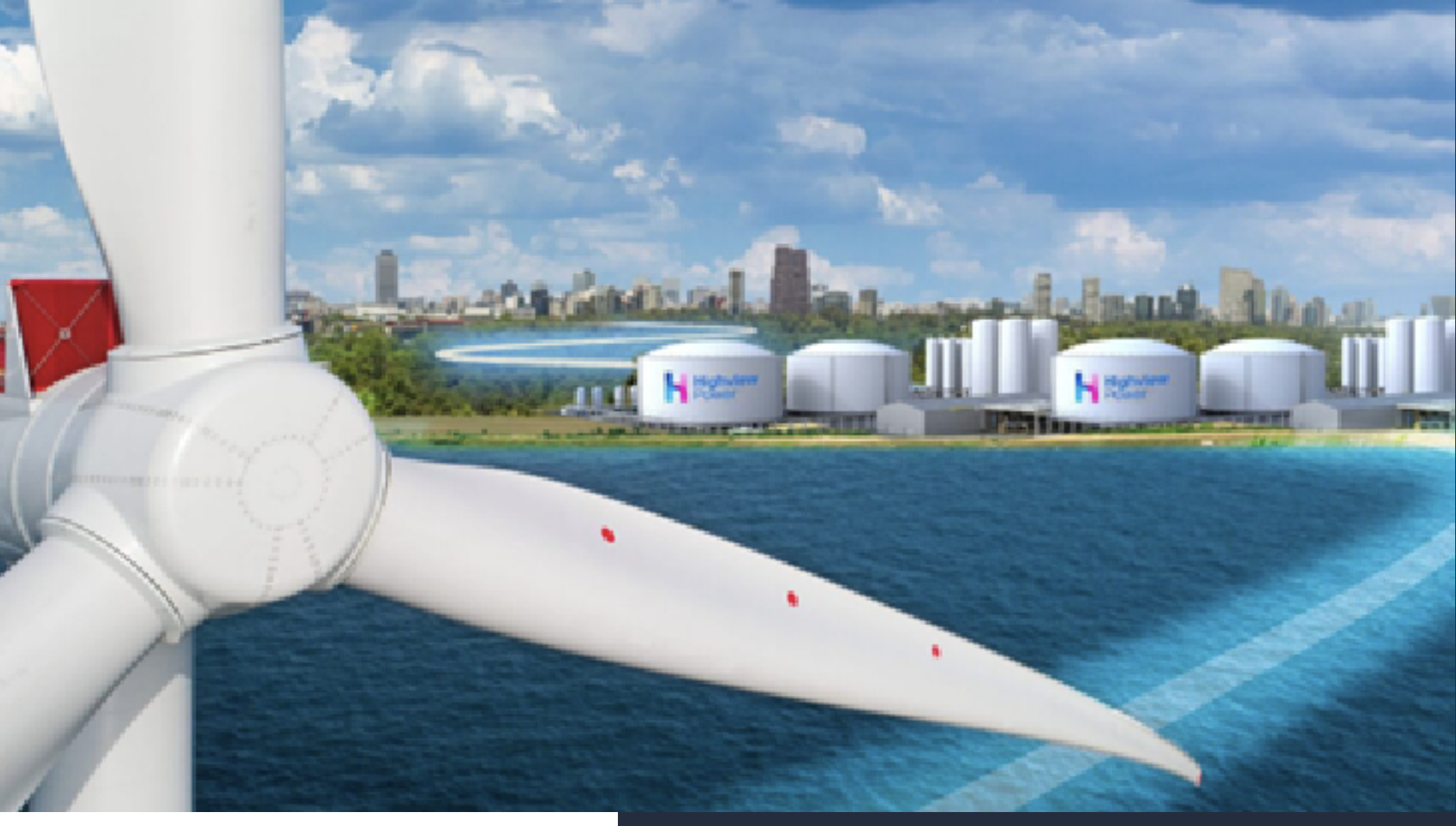
With tanks like these, which can hold GW-equivalents of liquid air, Highview could be building batteries with storage to rival the smaller pumped storage hydroelectric power stations. They are already talking of 200 MW/2.5 GWh systems, which would have a 12.5 hour continuous rating and would probably need two to three tanks.
Coire Glas Pumped Storage
I’ll use Coire Glas pumped storage hydro electric power station as an example.
As currently planned SSE’s Cioire Glas pumped storage hydroelectric power station is 1.5 GW/30 GWh, so it has a a 20 hour continuous rating.
In The UK’s Pumped Storage Hydroelectricity, I gave a rough estimate of the pumped storage hydroelectricity systems in operation or planed as nearly 11 GW/224GWh.
The Soft Cap
The article says this about a soft cap.
Another interesting detail pointed out by several commentators is that the cap is a ‘soft’ one, meaning it will allow extra revenue to be shared between developers and consumers. Exact details on the ratio are yet to be determined.
I seem to remember that when I was modeling a larger multi-vessel chemical plant at ICI, I was using sharing between vessels, to get the system to operate on a PACE-231R analog computer.
So I suspect a soft cap is possible.
Flytipping At King’s Cross Station
To Emphasise the problems of fly-tipping on the railway, they were showing an art installation at King’s Cross station.












It’s an idea, but will it stop fly-fipping on the eailway?
 The Anonymous Widower