Feeling Unwell On The Elizabeth Line
I have made several trips on the Elizabeth Line and sometimes, I feel slightly unwell, when I get off.
Nothing serious, but I do wonder if it could be due to the depth of the tunnels.
- The tunnels are up to 42 metres below ground.
- I felt similar when I visited the hundred metre-deep tunnels at CERN, that I wrote about in A Visit To CERN.
- To my knowledge, I never knew my father to take a deep level Underground train. So perhaps, we shared a genetic problem?
I also used to love flying in my aircraft at high altitudes.
Could it be the air pressure or is it psychological?
Does The Elizabeth Line Offer Similar Benefits To The Bakerloo Line Extension?
This map shows the proposed Bakerloo Line extension.
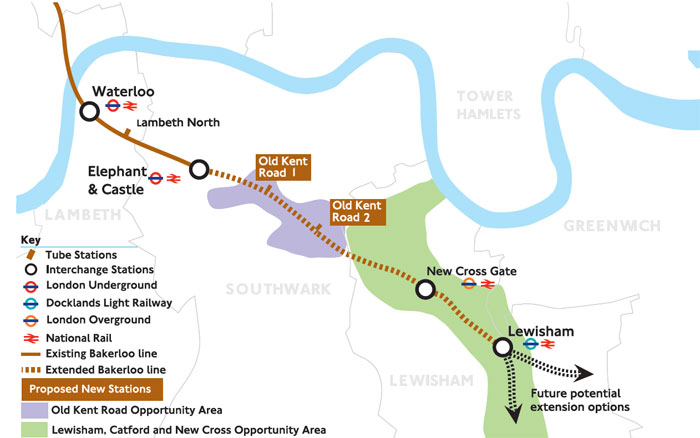
Note.
- There are new or improved stations at Old Kent Road 1, Old Kent Road 2, New Cross Gate and Lewisham.
- New Cross Gate station has Overground and Southern services.
- Lewisham station has Docklands Light Railway and Southern services.
- The future potential option going South is to take over the Hayes Line.
Could we provide improvements along the line of the Bakerloo Line Extension in a less disruptive and more affordable manner?
I will look at the various stations.
New Cross Gate
New Cross Gate station is a fully-accessible station, as these pictures show.
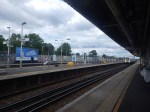
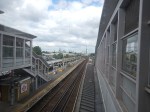
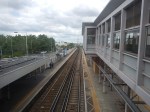
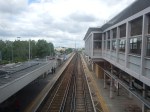
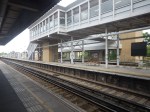
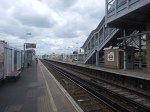
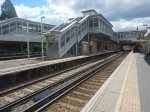
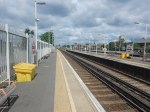
The station, currently has the following services.
- Overground – Highbury & Islington and Crystal Palace – 4 tph
- Overground – Highbury & Islington and West Croydon – 4 tph
- Southern – London Bridge and Victoria via Sydenham – 2 tph
- Southern – London Bridge and Coulsdon Town via Sydenham – 2 tph
Note.
- tph is trains per hour.
- The Overground services provide an 8 tph service to the Elizabeth Line at Whitechapel station.
- TfL may well increase the frequency of the two Overground services to 5 tph.
I suspect that the easiest way between New Cross Gate and Harrow & Wealdstone will be with changes at Whitechapel and Paddington.
- New Cross Gate and Whitechapel – Overground – 13 minutes.
- Whitechapel and Paddington – Elizabeth Line – 14 minutes.
- Paddington Interchange – 15 minutes
- Paddington and Harrow & Wealdstone – Bakerloo Line – 29 minutes
This gives a total time of 71 minutes.
As Bakerloo Line trains go between Elephant & Castle and Harrow & Wealdstone, which is 24 stations and the journey takes 48 minutes, this gives a figure of two minutes per station.
- This seems to fit Irene’s Law, which I wrote about in Irene’s Law – Estimating Tube Journey Times.
- So it looks like a direct train on the extension would take 54 minutes.
- That time fits well with the 71 minutes via the Elizabeth Line if fifteen minutes is allowed for the walk at Paddington.
I will do the trip for real today.
Lewisham
There are two ways to get between Lewisham and the Elizabeth Line.
- Take the Dockland’s Light Railway to Canary Wharf. Estimated at 15 minutes.
- Take a train to Whitechapel, which needs a change of train at New Cross station. Estimated at 17 minutes minimum.
Neither are perfect.
I will try out these two trips soon.
Hayes
The Hayes Line is often talked about as the final destination of the Bakerloo Line.
In More Frequent Trains And A New Station For The London Overground, I put forward a plan for connecting the Hayes Line to the New Cross branch of the London Overground.
This map from carto.metro.free.fr shows the lines at New Cross station.
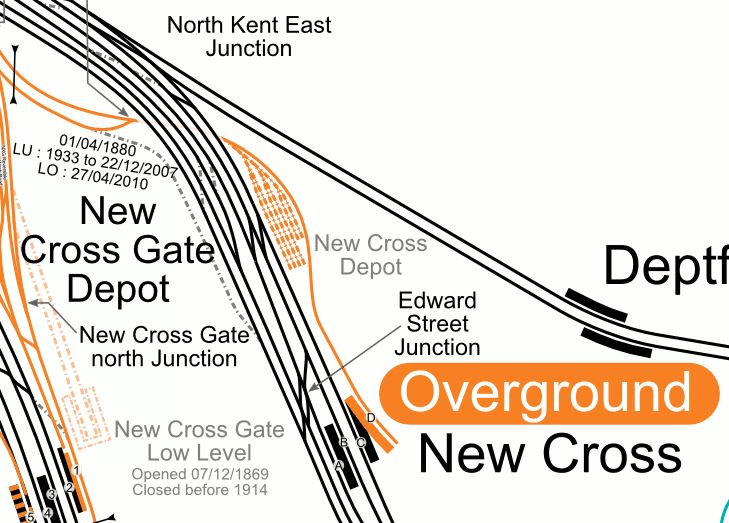
Note.
- The double-track East London Line, shown in orange, arrives from Surrey Quays station arrives in the North-Western corner of the map, becomes a single-track and then goes under the main lines before going into the bay platform D.
- Hayes Line services use Platform C going South and Platform A going North.
- Could the Overground going South divert into Platform C for Hayes?
- It would appear there used to be a line connecting Platform A to the East London Line of the Overground. Could this line be reinstated?
This Google Map shows the same area.
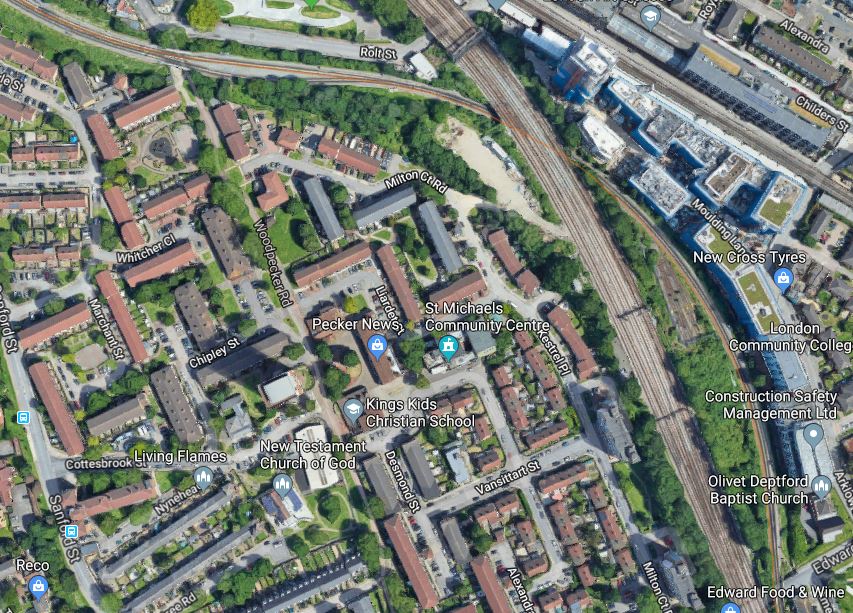
Note.
- The London Overground track is clearly visible.
- The needed connection certainly looks possible, without too much heroic engineering.
- Although, I suspect it could need digital signalling to get everything to work smoothly. But that will happen anyway!
The big advantage of this approach, is that all stations between Whitechapel and Hayes, would have a direct connection to the Elizabeth Line.
Hayes Line services would still continue to Victoria and Cannon Street, although the frequency might be reduced, depending on how many Overground services used the route.
Old Kent Road 1 And Old Kent Road 2
I think there are two ways to serve this important area.
- The first would be to run a high-frequency bus service between Elephant & Castle and the two stations at New Cross.
- I also suspect, it would be possible to have a short extension of the Bakerloo Line to a double-ended station at New Cross Gate and New Cross stations.
I went into the second way in More Frequent Trains And A New Station For The London Overground, where I came to these conclusions.
I am drawn to these two conclusions.
- The Bakerloo Line should be extended via two new Old Kent Road stations to a double-ended terminal station in New Cross with interchange to both New Cross Gate and New Cross stations.
- The New Cross branch of the London Overground should be extended through Lewisham to Orpington and/or Hayes.
My preferred destination for the London Overground service could be Hayes, as this would surely help to free up paths through Lewisham and London Bridge.
I also feel, that the scheme would be much more affordable if high-specification buses were used between Elephant & Castle and the two stations at New Cross.
Conclusion
There are certainly possibilities to create an alternative route, with the same objectives as the Bakerloo Line Extension.
Will The Elizabeth Line Have Wi-Fi And 4G?
This page on the TfL web site is entitled Everything You Need To Know About The Elizabeth Line, where this is said about Wi-Fi and 4G.
WiFi access within the tunnels will be introduced later in 2022. Customers on both trains and platforms will have access to 4G connectivity this year too.
Will passengers be more likely to take a route through London with Wi-Fi and 4G?
I very much feel they will and that this could draw more passengers to use the Elizabeth Line.
And once, they start to use it, they’ll keep with it, so long as they’re happy.
Elizabeth Line – A Convenient Bus Stop
One of my ways to get to the Elizabeth Line to go to the West, is to take a 73 bus to the Dean Street entrance of Tottenham Court Road station.
These pictures show the last part of the journey.
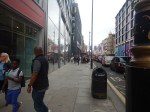
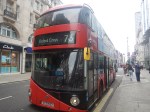
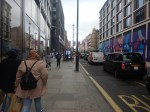


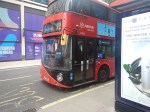

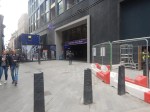

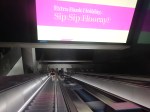

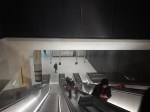
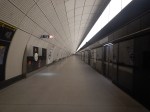
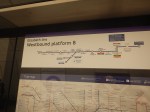
Note.
- The 73 bus is convenient for me, as it goes close to my house and through the Angel.
- The stop at Dean Street is only perhaps twenty metres from the entrance to the station.
- The escalators must have one of the largest advertising screens in London above them.
- It is probably only about a hundred metres from the bottom of the escalator to the platform screen doors for the trains.
Many people will have a bus route that is their best way to the Lizzie Line
Elizabeth Line – Moorgate Station – 27th May 2022
I took these pictures as I walked between the Northern Line and the Moorgate entrance to the Liverpool Street station on the Elizabeth Line.
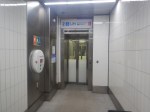

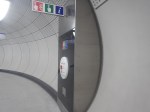
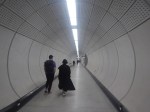
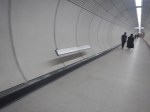
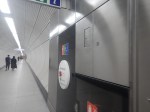
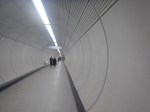
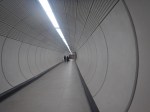
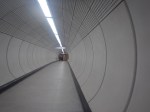
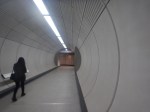
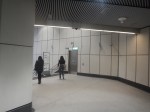
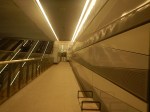
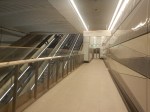
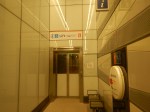
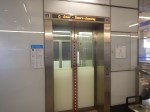

Note.
- There is a lift and stairs at the Northern Line end.
- I would estimate that the tunnel is about two hundred metres long.
- There are resting bars at intervals.
- There are two help points along the tunnel.
- There are two lifts to get to the Elizabeth Line ticket hall, at the other end.
I was able to walk it today, but when my damaged knee is playing up, I will not use this route.
However, the rat-up-the-drainpipe route to the surface, that I described in Up From The Depths At Moorgate Station is still available.
But this route is not wheel-chair and buggy friendly.
In this route, a single escalator is taken from the Northern Line platforms to the National Rail platforms, from where there is a double escalator to the ticket hall level.
Conclusion
The rat-up-the-drainpipe route is acceptable to me, but I don’t feel the step-free route via the long tunnel will be acceptable for all those, who need to use it.
It’s just too long to walk for many!
Perhaps the addition of seats for a rest would help.
Step-Free Access Between Train And Platform On The Elizabeth Line
Any new railway with new trains, should have step-free access train and platform.
I know that this has not always happened in the last few years, but how does the Elizabeth Line match up.
I’ve taken these pictures in the last couple of days.

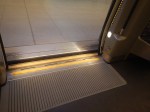
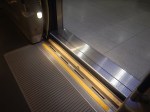
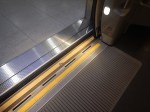
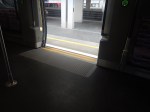
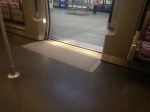
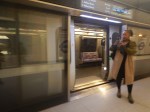
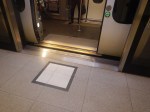
On this evidence, it certainly seems that the access between train and platform is step-free, between at least Woolwich and Paddington stations.
Offshore Wind Champion Appointed As £160m Floating Offshore Wind Fund Opens For Expressions Of Interest
The title of this post, is the same as that of this press release from Kwasi Kwarteng.
These three paragraphs describe the policy.
Ambitious plans to expand offshore wind around the United Kingdom to power homes and businesses with cheap, homegrown energy received a further boost today with the appointment of a new government champion and a multimillion-pound manufacturing fund opening for expressions of interest.
The appointment of Tim Pick as the first UK Offshore Wind Champion was confirmed by Prime Minister Boris Johnson and Business and Energy Secretary Kwasi Kwarteng today.
The Floating Offshore Wind Manufacturing Investment Scheme (FLOWMIS) will provide £160 million in government funding to boost floating offshore wind capability around the UK at sites in Scotland, Wales and elsewhere by supporting manufacturers and giving private investors the confidence to back this emerging sector which is expected to rapidly expand in the years ahead.
Floating offshore wind needs the following components.
- Wind turbines, which are the same as those used onshore.
- Floats, which are generally made from steel, but concrete can also be used. There are a few proven designs, like the Windfloat from Principle Power.
- Mooring systems for the turbines.
- Electrical substations and cables.
There is also a need for deep water docks, with large cranes to assemble the systems, prior to towing the turbines into position.
Floating offshore wind is a new industry and there will be new ideas coming through from innovators.
I feel that the strategy could help bring new ideas through.
The Story Behind The Concrete Panels On The Elizabeth Line
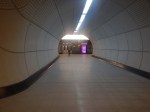
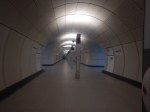
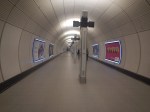
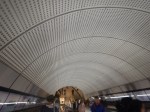
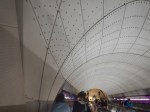
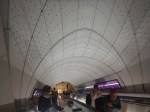
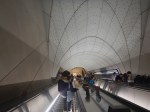
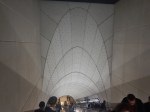
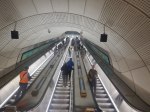
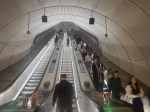
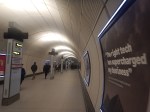
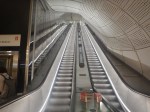
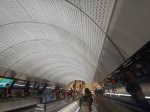
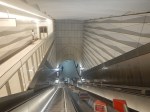
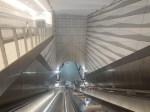
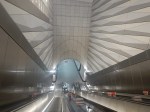
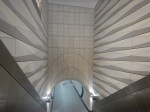
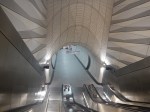
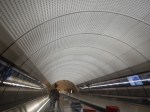
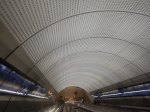
These are a selection of the pictures I took yesterday inside Elizabeth Line stations.
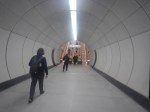










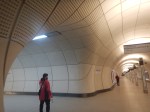

Note.
- The walls and ceilings appear to be covered in light grey panels with holes.
- The material appears to look like concrete.
- Every one is a totally different shape, so how were they manufactured?
This article on Ian Visits is entitled How Crossrail Is Using 3D-Printing To Build Its Stations.
This is the two opening paragraphs.
When you start to use the new Elizabeth line stations, among its many achievements will be the first large scale use of 3D-printing in concrete.
The use of 3D printing has made possible one of the more distinctive features of the future Elizabeth line stations — the curved concrete panels that will line the inside of the passenger tunnels and some stations, and sinuously glide around corners in a way never seen before in a tube station.
There will be a total of something like 36,000 of these panels and although printing each in concrete is possible, Crossrail would probably have been delivered in the 2040s or 2050s.
The contractors used an innovative process called FreeFAB, which had been invented by an Australian architect.
- The process creates a wax mould for each panel using 3D printing.
- This mould is then used to create the actual panel.
- After each panel is cast, the wax is melted off and recycled.
- The panels are made in a factory in Doncaster.
We will see a lot more of this technique used in the construction industry.
Elizabeth Line – Abbey Wood Station – 24th May 2022
I took these pictures at Abbey Wood station on the Elizabeth Line.


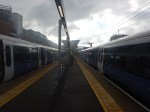
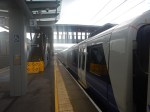


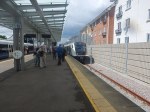
Note.
- Abbey Wood station has four platforms, three bridges and six lifts.
- In Abbey Wood Station Opens, there are pictures from when the station opened in October 2017.
- The interchange between the North Kent and Elizabeth Lines seemed to be working well.
It will be interesting to see how this station changes to accommodate more Elizabeth Line services to Kent.
Elizabeth Line – Custom House Station – 24th May 2022
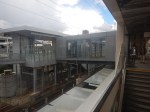
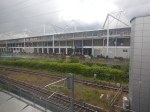
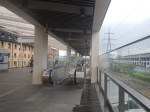
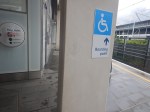
I took these pictures at Custom House station on the Elizabeth Line.
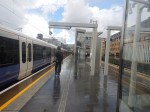
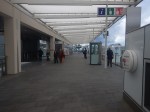

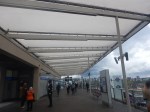


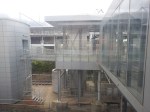




Note.
- The station was built in a factory and the concrete beams were assembled on-site. Traditionally, the concrete structure would have been poured on site.
- The quality of the columns is excellent and an engineer I spoke to a few years ago, said that the methods used at Custom House station ensure a high quality building. Look at the last two pictures.
- The two escalators are in-line, rather than side-by-side and it looks like this was done to squeeze in the station.
- There were signs up for toilets, that are visible in picture 4. Are they going to be installed?
The ideas used to create Custom House station, will be borrowed by architects and builders all over the world.
 The Anonymous Widower