EU, France Grant EUR 126 Million For BW Ideol’s Floating Foundation Factory
The title of this post, is the same as that of this article on offshoreWIND.biz.
This is the sub-heading.
BW Ideol has signed the final grant agreement for up to EUR 74 million from the EU Innovation Fund for a factory in Fos-sur-Mer, France, that will produce concrete floating wind foundations. The factory, dubbed Fos3F, has also secured up to EUR 52 million from the French State.
These three paragraphs add more detail.
The final agreement for the EU Innovation Fund grant was signed on 19 March, after BW Ideol revealed in November 2025 that the Fos3F was selected for up to EUR 74 million in funding by the European Commission.
The French government awarded support for the project at the end of 2025 through the C3IV tax credit scheme, dedicated to supporting leading French companies in the Green Industry. The funding from the French State will cover up to EUR 52 million to partially fund development and capital expenditures.
According to BW Ideol, if built, the Fos3F will be a first-of-its-kind factory dedicated to the serial production of concrete floating wind foundations based on the company’s patented Damping Pool.
The factory is stated to have a capacity of thirty foundations per year.
This Google Map shows the location of Fos-sur-Mer.
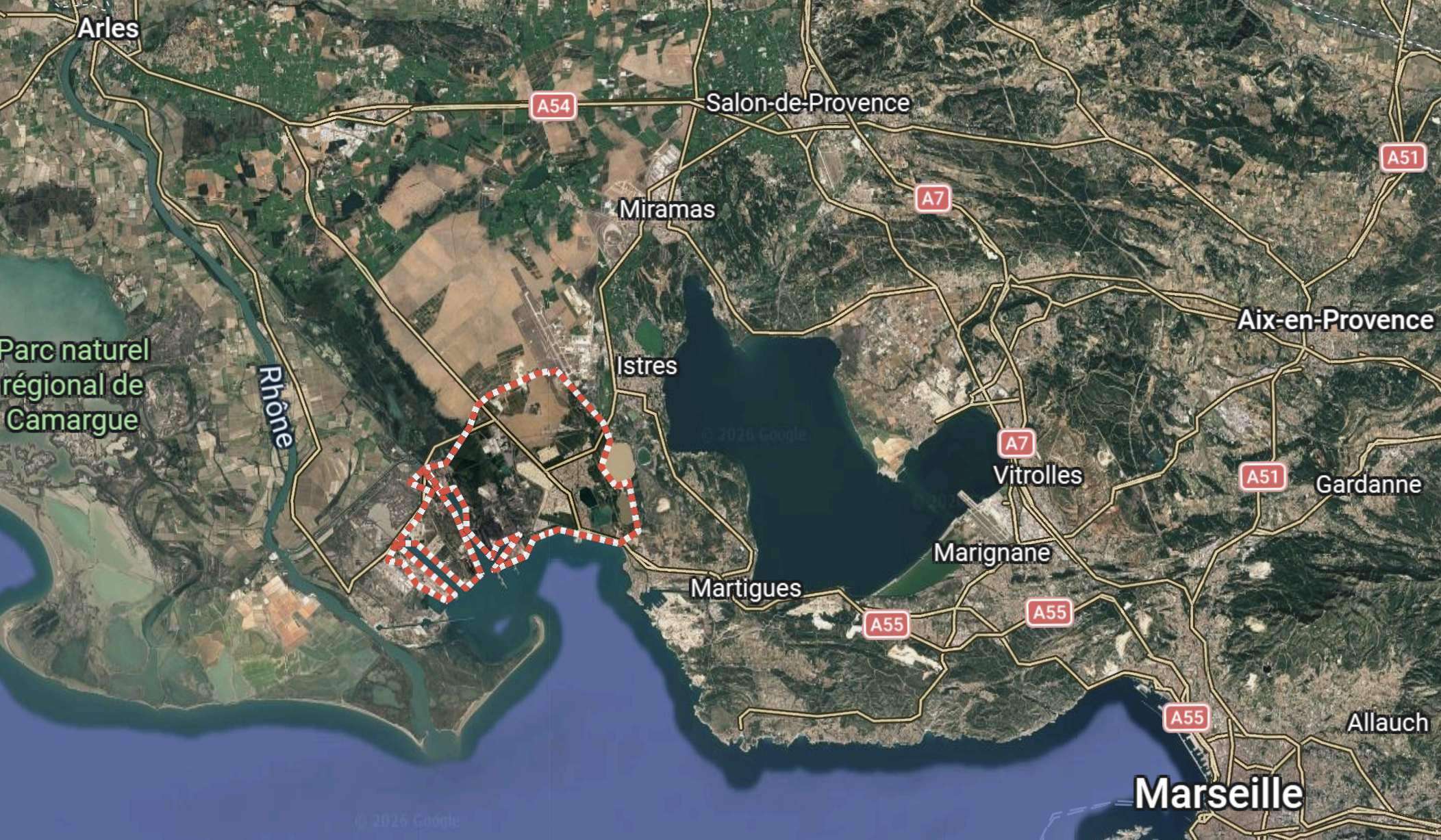
Note.
- Arles is in the North-West corner.
- Marseille is in the South-East corner.
- The mouth of the Rhône River is in between.
- Fos-sur-Mer is outlined by the red-and-white border.
Google AI says there is significant steel making at the mouth of the Rhône River.
I also asked Google AI, “What turbines will BW Ideol floating foundations support? and received this reply.
BW Ideol’s floating foundations are designed to be universal, supporting all major 15 MW+ offshore wind turbines currently on the market, with scalability to future 20 MW+ platforms. Their concrete barge-type technology—using the Damping Pool® design—is compatible with both existing and next-generation turbine manufacturers.
Key Compatibility Details:
15 MW+ and 20 MW+ Turbines: The foundations are engineered for current large-scale turbines (15 MW+) and are ready to accommodate upcoming 20 MW+ turbines, with designs already certified by DNV.
Proven Technology: The technology has been in operation since 2018 at the Floatgen site in France (using a Vestas V80 2 MW turbine) and in Japan, covering both shallow and deep-water applications.
Universal Application: The design is tailored for diverse metocean conditions and is designed to support the commercial deployment of large turbines in projects like the Buchan Offshore Wind project in Scotland.
Production Scalability: The concrete floating platforms are designed for mass production, capable of being manufactured quickly in a factory setting, such as the proposed Fos-sur-Mer site, to meet the schedules of major developers.
These foundations have received Design Certification from DNV, confirming their suitability for large-scale, commercial floating wind farms.
My Thoughts:
Concrete v. Steel: I used to work with someone, who was a big advocate of concrete yachts. Also check out the Wikipedia entry for the Troll A platform, which is a concrete Norwegian gas platform.
Zero-Carbon: I wouldn’t be surprised if concrete manufacture emits less carbon, than steel.
Port Talbot: Will BW Ideol build a similar factory at Port Talbot? I wrote about the Port Talbot factory in Port Talbot To Become Offshore Wind Hub For Celtic Sea. Both sites are next to a large bay, which would be ideal for parking completed floats and a world-class steelworks.
Buchan: Buchan’s web site says it will use seventy BW Ideol floats and generate I GW, 75 km. to the North-East of Fraserburgh. Google AI said the floats will be built at the Port of Ardersier.
Will A Mini-Steel Mill Be Built At The Port Of Ardersier?
I asked Google AI, the question in the title of this section and received this reply.
Yes, a £300 million green steel mill is planned for the Ardersier Port redevelopment as part of its transformation into a circular Energy Transition Facility. This facility aims to process scrap steel from decommissioned oil rigs into new materials to support offshore wind developments, alongside creating a concrete production plant.
Key details regarding the development:
Purpose: The mill is intended to process scrap from offshore decommissioning.
Technology: It is planned as a green steel plant.
Integration: It is aimed to be integrated into a new, fully circular “Energy Transition Facility”.
Context: While the facility aims for circular steel production, the port is primarily focused on becoming a hub for offshore wind and manufacturing.
Recent developments as of March 2026 suggest a focus on a “scaled back,” more achievable vision by new owners/managers, focusing on floating concrete wind turbine bases. Additionally, recent UK government intervention restricted a large Chinese-backed manufacturing plan at the site due to security concerns.
Port Talbot To Become Offshore Wind Hub For Celtic Sea
The title of this post, is the same as that of this article on the BBC.
This is the sub-heading.
Port Talbot will become the first dedicated hub for floating offshore wind in the Celtic Sea.
These four introductory paragraphs add some detail.
Associated British Ports (ABP) will begin detailed design and engineering work on new port infrastructure after securing grant funding of up to £64m from the UK government.
The project will support the assembly and deployment of floating turbines that will operate in deeper waters off the Welsh coast. ABP said the development could support thousands of jobs and attract hundreds of millions of pounds in further investment.
The UK government said the new port would help deliver clean, homegrown electricity, protect households from volatile fossil fuel markets and create up to 5,000 new jobs.
Redeveloping the port to handle the assembly of wind turbines could position Port Talbot at the centre of a fast-growing clean energy sector.
I have some thoughts.
How Much Wind Power Is Planned For The Western Approaches?
In Ocean Winds Enters Lease Agreement With Crown Estate For 1.5 GW Celtic Sea Floating Wind Project, I published this Google AI estimate of the wind power, that could be developed in the Western Approaches.
How Much Wind Power Is Planned For The Western Approaches?
I asked Google AI, the title of this section and received this answer.
The UK has a target of 50 GW of offshore wind by 2030, with significant projects planned for the Celtic Sea (part of the Western Approaches), which is a key area for 5 GW of floating wind. Total UK offshore wind pipeline capacity exceeds 93 GW, with major developments in this region focusing on floating technology.
Key details regarding wind power in the Western Approaches (specifically the Celtic Sea) include:
Celtic Sea Developments: The area is a primary focus for floating wind projects, designed to capitalize on deep-water potential, with 5 GW of floating wind expected to be deployed across the UK by 2030.
Pipeline and Capacity: The total UK pipeline for offshore wind, which includes the Western Approaches, is 93 GW, and the government is aiming for 43-50 GW of installed offshore capacity by 2030.
Project Status: The region is expected to benefit from the Crown Estate’s leasing rounds aimed at accelerating floating wind, with 15.4 GW of new projects submitted across the UK in 2024.
Wales/South West England Context: Wales has 1.4 GW of projects in the pre-application stage, with some potential for developments off the South West coast.
For more detailed information on specific projects and their development status, you can visit the RenewableUK website and RenewableUK website.
It looks like about 20 GW of offshore wind could be installed in the Western Approaches.
I would expect, a lot of work will be generated in the Port Talbot area.
A Lot Of Steel Will Be Needed
Earlier in the weeek, the UK Government backed the steel industry in Port Talbot, with a press release entitled UK Steel Industry Backed By Major New Trade Measure And Strategy.
Port Talbot Is A Comprehensive, Well-Connected Site
This Google Map shows the site.
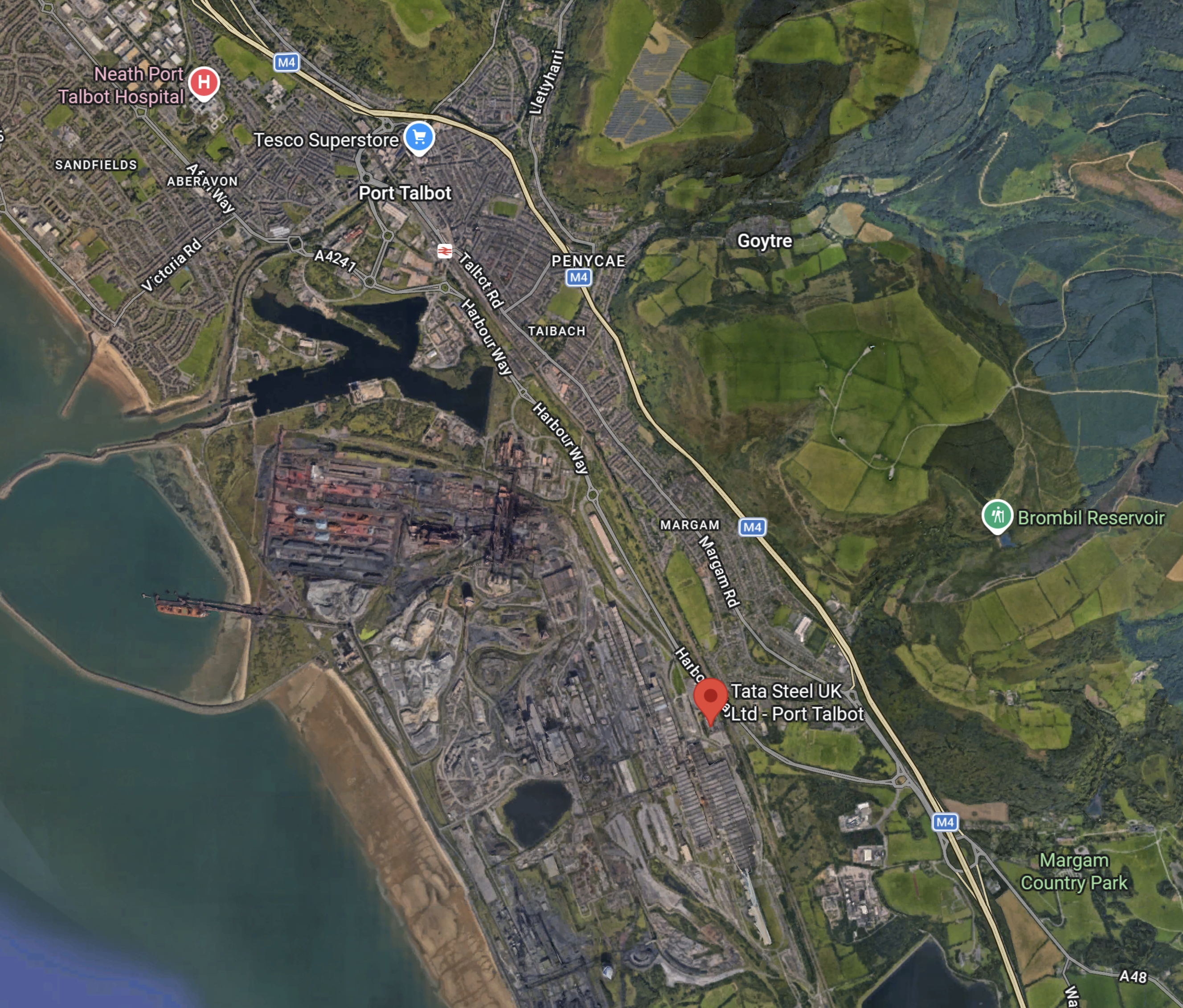
Note.
- The M4 running along the site.
- The South Wales Main Line running along the site, with Port Talbot Parkway serving the site.
- The harbour by the station.
- The Tata steelworks marked by the red arrow.
I hope the up to £64 million grant from the government is sufficient for Associated British Ports (ABP) to turn the harbour into a world-class floating wind facility and that the Treasury haven’t been too mean.
BW Ideol, ABP To Explore Serial Production Of Floating Wind Foundations At Port Talbot
I wrote a post with this name in December 2023, before the leases for the Celtic Sea windfarms had been awarded. As one has been awarded to EDf Renewables, BW Ideol seem to have made a good move.
BW Ideol have a web page, which describes their concrete floating wind foundations manufacturing line.
I hope South Wales has got enough concrete?
Earth Friendly Concrete Spotted On Moorgate
I’ve been hoping to spot one of Capital Concrete’s trucks before, but this is the first one, I’ve seen delivering Earth Friendly Concrete.




I said more about the product in Earth Friendly Concrete.
Building A New Concrete Revolution To Net Zero
he title of this post, is the same as that of this article on Pearls and Irritations.
The article is a good explanation of the contributions concrete makes to global warming and what we should do about it.
At least I can find entrepreneurs and scientists willing to develop concretes that will be friendlier to the planet.
- Low-Carbon Concrete: Separating Greenwash From Reality
- Earth Friendly Concrete
- Carbon-Neutral Concrete Prototype Wins €100k Architecture Prize For UK Scientists
- UK Breakthrough Could Slash Emissions From Cement
- HS2 Reveals Dramatic Carbon Saving With Ambitious Modular Design For Thame Valley Viaduct
I believe that this will be a problem that will be solved by technology.
BW Ideol And Holcim To Explore Use of Low-Carbon Concrete In Floating Offshore Wind
The title of this post, is the same as that of this article on offshoreWIND.biz.
This is the sub-heading.
BW Ideol and Holcim have signed a Memorandum of Understanding (MoU) for a feasibility study on supplying beneficial low-carbon concrete for the floating offshore wind industry, with particular reference to Scotland.
These are the first three paragraphs.
BW Ideol and Holcim aim to collaborate on optimising the supply of the innovative concrete needed for the intended mass production of BW Ideol’s floaters in the Port of Ardersier.
Low-carbon concrete’s advantages as a building material for offshore wind farms include its durability in marine environments, its local availability and its comparatively lower carbon emissions, the companies said.
The collaboration includes developing specific durable maritime low-carbon concrete mixes with enhanced mechanical performance perfectly suited to slipform application.
This is surely a good development.
BW Ideol, ABP To Explore Serial Production Of Floating Wind Foundations At Port Talbot
The title of this post, is the same as that of this article on offshoreWIND.biz.
This is the sub-heading.
BW Ideol and Associated British Ports (ABP) have signed a memorandum of understanding (MOU) that will see the manufacturer of concrete floating wind foundations and ABP investigating the feasibility of serial production at Port Talbot. The MOU has been signed in preparation for the Celtic Sea leasing round, BW Ideol said on Monday (11 December).
These two paragraphs outline the plans of BW Ideol and ABP have for Port Talbot.
According to the company, Port Talbot is the only Celtic Sea port with the scale and technical capabilities to fully maximise the Celtic Sea supply chain opportunity and is ideally located as a manufacturing base since it lies 120-140 kilometres from the floating offshore wind areas outlined by The Crown Estate for the upcoming leasing round.
The news on the MOU between ABP and BW Ideol comes shortly after ABP announced plans to invest around GBP 500 million (approximately EUR 573 million) to upgrade a site in Port Talbot and turn it into a major floating offshore wind hub.
This Google Map shows Port Talbot Port.

Note.
- It also looks like there is a Heidelberg Cement facility at the South side of the port.
- Port Talbot also has a Tata steelworks.
- The railway and the M4 Motorway are nearby.
- There’s certainly a lot of water.
The port appears well-placed for raw materials and there is quite a bit of free space to build and launch the concrete floaters.
This page on the BW Ideol web site describes their Floatgen demonstrator.
The first section is headed by BW Ideol’s First Floater In Operation, where this is said.
Built around a European consortium of 7 partners, Floatgen is a 2MW floating wind turbine demonstrator installed off the coast of Le Croisic on the offshore experimentation site of the Ecole Centrale de Nantes (SEM-REV). This project is being supported by the European Union as part of the FP7 programme. Floatgen is France’s first offshore wind turbine. 5 000 inhabitants are supplied with its electricity.
It looks like it is or almost is a proven system.
The page talks of two large benefits.
- Innovation at all levels.
- The highest local content of any floating wind turbine.
For the second, the following is said
In comparison to other steel floating foundations, which are imported from abroad, the use of concrete for BW Ideol’s floating foundation allows the construction to be located as close as possible to the deployment site. Construction at the Saint-Nazaire port was therefore a natural and optimal solution and has created a lot of local content. Additionally, the mooring system was manufactured by LeBéon Manufacturing in Brittany. For the majority of all other components or logistical activities, the Floatgen partners have also opted for suppliers within the Saint-Nazaire region.
Note.
- Will ABP and BW Ideol use a similar philosophy at Port Talbot?
- Will low-carbon concrete be used to construct the floaters?
I can certainly see the logic of BW Ideol and ABP getting together at Port Talbot.
First Massive ‘Lego Block’ Beams Lifted For HS2’s Pioneering Thame Valley Viaduct
The title of this post, is the same as that of this press release from High Speed Two.
HS2 has begun lifting the first of 72 huge beams that will support the deck of the Thame Valley Viaduct – the first of its kind in the UK to have all major elements manufactured off site.
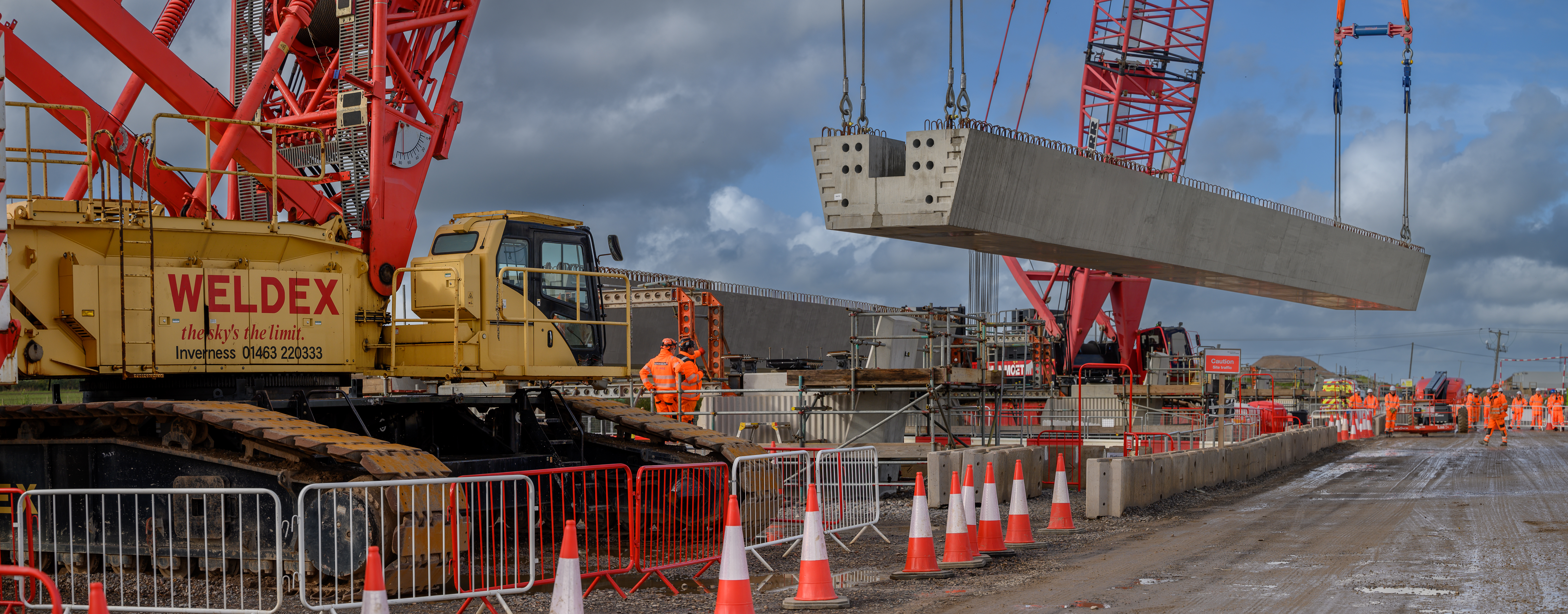
HS2 Bicester viaduct beam placement.
These paragraphs describe the building of the viaduct.
Engineers at the site near Aylesbury used two massive cranes to lift the beams – 25 metres long and weighing 90 tonnes each – into position on top of the viaduct piers, like giant Lego blocks.
Instead of using a more traditional approach, with multiple smaller beams for each span, the design team opted for a simple structural solution with just two larger hollow u-shaped beams per span, which allows for a lighter structure and simpler construction.
The lighter-weight design, inspired by viaducts on the Spanish high speed rail network, also reduces the amount of carbon-intensive concrete and steel in the structure – cutting its carbon footprint by around a third.
It doesn’t say, if they are using low-carbon concrete for the beams, but High Speed Two have used this material before.
Cummins Agrees To Integrate Its Hydrogen ICE Technology Into Terex® Advance Trucks
The title of this post, is the same as that of this article on H2 View.
These three paragraphs outline the deal.
Cummins and Terex® Advance have signed a Letter of Intent (LoI) to integrate hydrogen internal combustion engines (ICE) into Terex’s Commander Series.
The Commander Series trucks are currently powered by Cummins’ diesel engines, but the company will now provide its X15H hydrogen ICE when series production of the technology begins later this decade.
The X15H is based on familiar combustion engine technology, with integration into the truck chassis being straightforward and doesn’t require a major overhaul of vehicle design or business operations.
Note.
This page is the Terex Advance web site.
This page on the Terex web site shows the Terex Advance Commander series.
I think it is true to say to UK and European eyes, these trucks are an unusual design.
In Cummins Fuel-Agnostic X Series Platform, there is a link to a Cummins video, which explains Cummins multi-fuel technology.
This is a side view of the top-of-the-range monster.
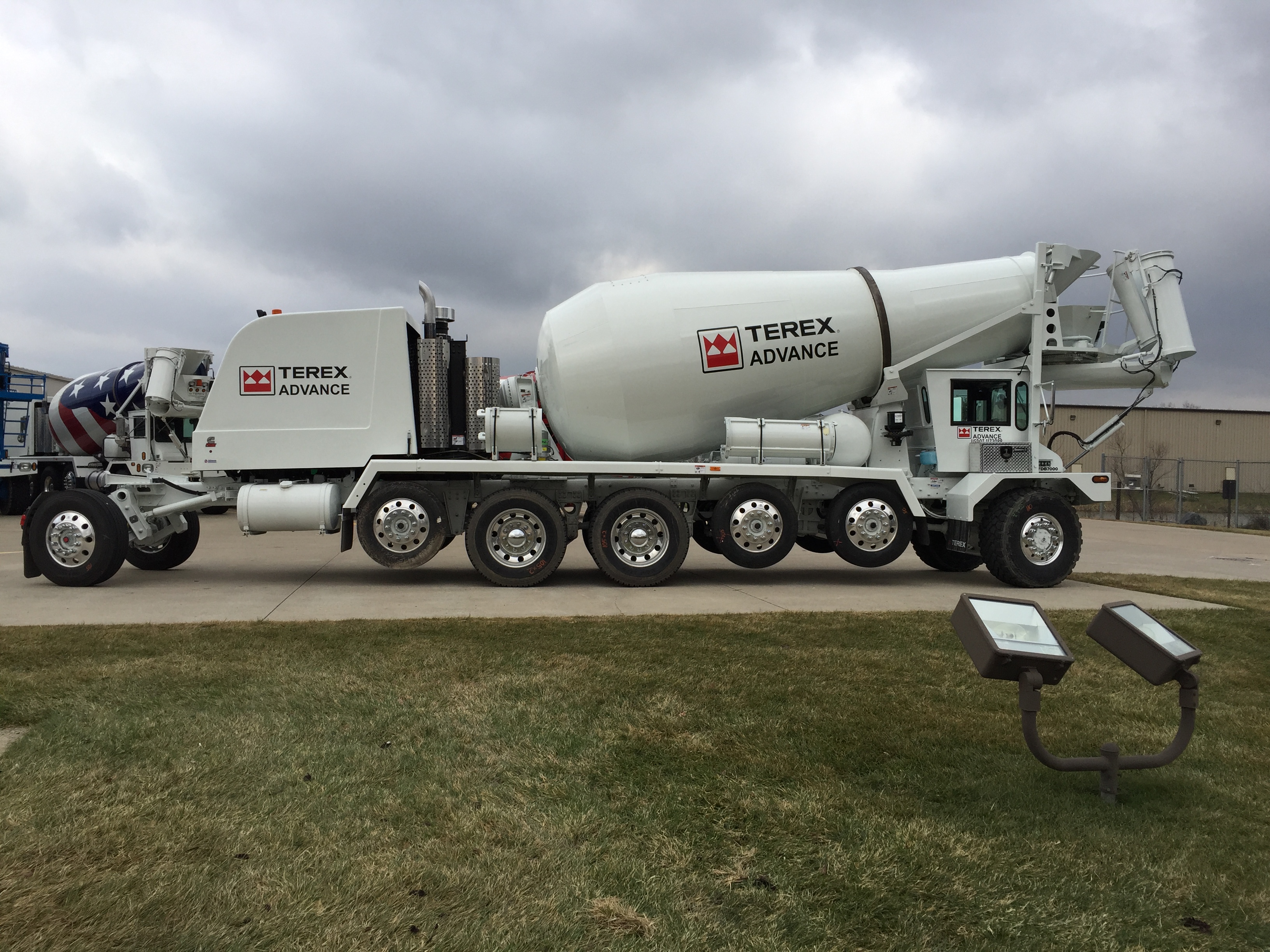
Note.
- Front is to the right.
- I suspect the driver doesn’t have to get out of the cab to discharge the concrete.
- The engine is at the rear with vertical exhausts.
- All axles are driven.
You’d certainly notice one of these if they were to be used in the City of London.
And this is the baby of the range.
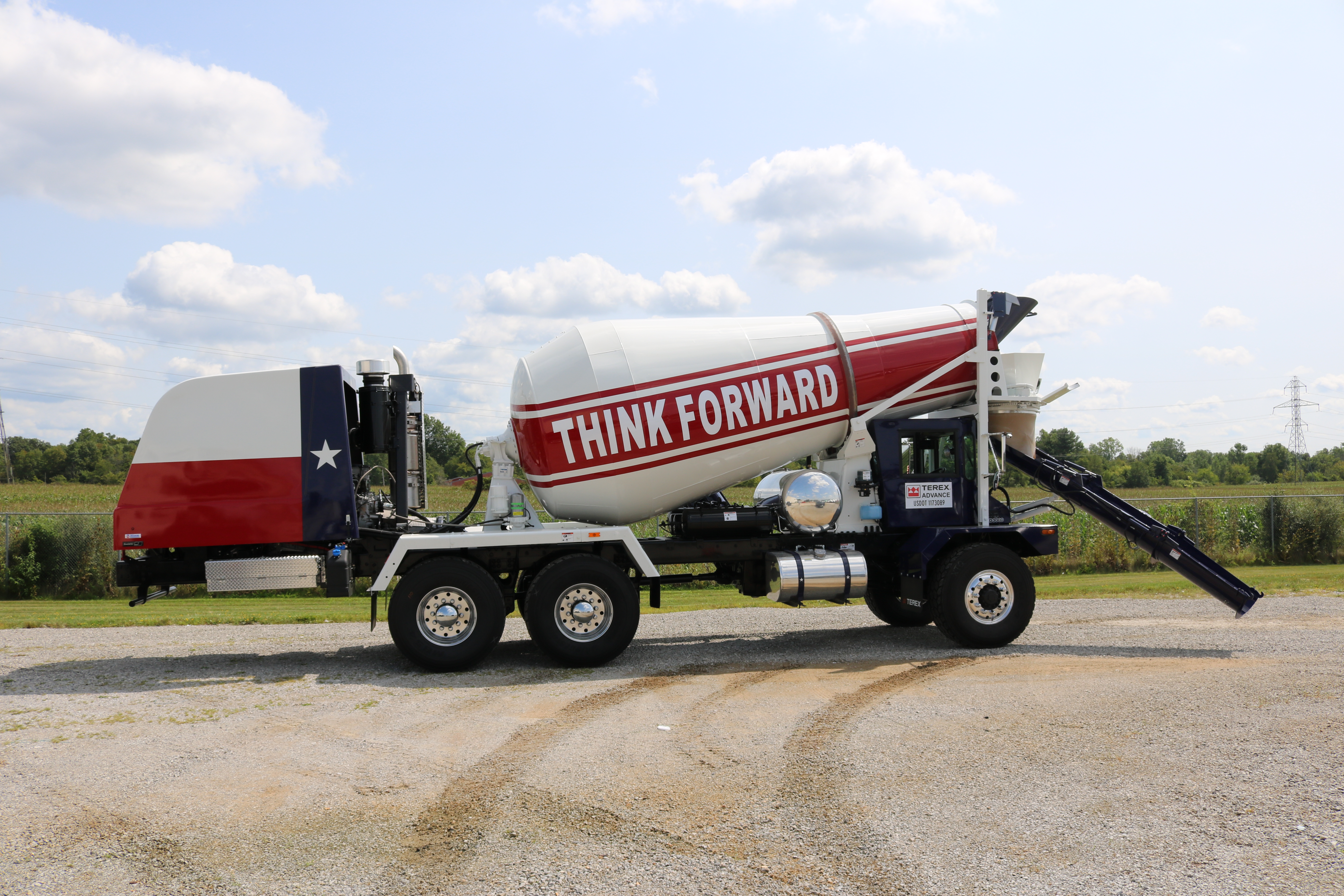
Three axles is normal for the UK. so I wonder if this machine will ever make it across the pond.
This last paragraph in the article describes the X15H hydrogen internal combustion engine.
The X15H was showcased at the Advanced Clean Transportation (ACT) Expo in May (2023), along with its hydrogen ICE-powered concept truck. The X15H features a 700-bar pressure 80kg capacity hydrogen storage system and a range of more than 500 miles, with up to 500 horsepower.
Could one of these trucks really deliver ready-mix concrete from London to Manchester and return?
Conclusion
The article says that integration of the hydrogen technology is straightforward and if you watch the Cummins video, the animation says it is.
But surely the big advantage on construction sites, is that all the workers will not get the dose of pollution, that they would currently get from a diesel cement mixer delivering a load of ready-mixed concrete, that had to be distributed and laid.
I think this could be a very neat application of hydrogen technology and Cummins will be looking for more applications of a similar nature.
Concretene Cements Its Future With £8m Funding
The title of this post, is the same as that of this article in The Times.
This is a precis. which explains what Concretene have done.
Concretene combines graphene with concrete to form a “stronger, more sustainable and more cost-effective alternative” to the world’s most-used building material.
The eight million funding is mainly to be used for more tests.
Is Concrete The New Wonder Material?
I once lived in a concrete apartment and although it is now fifty years old, it still looks the same, as it did the day it was built.
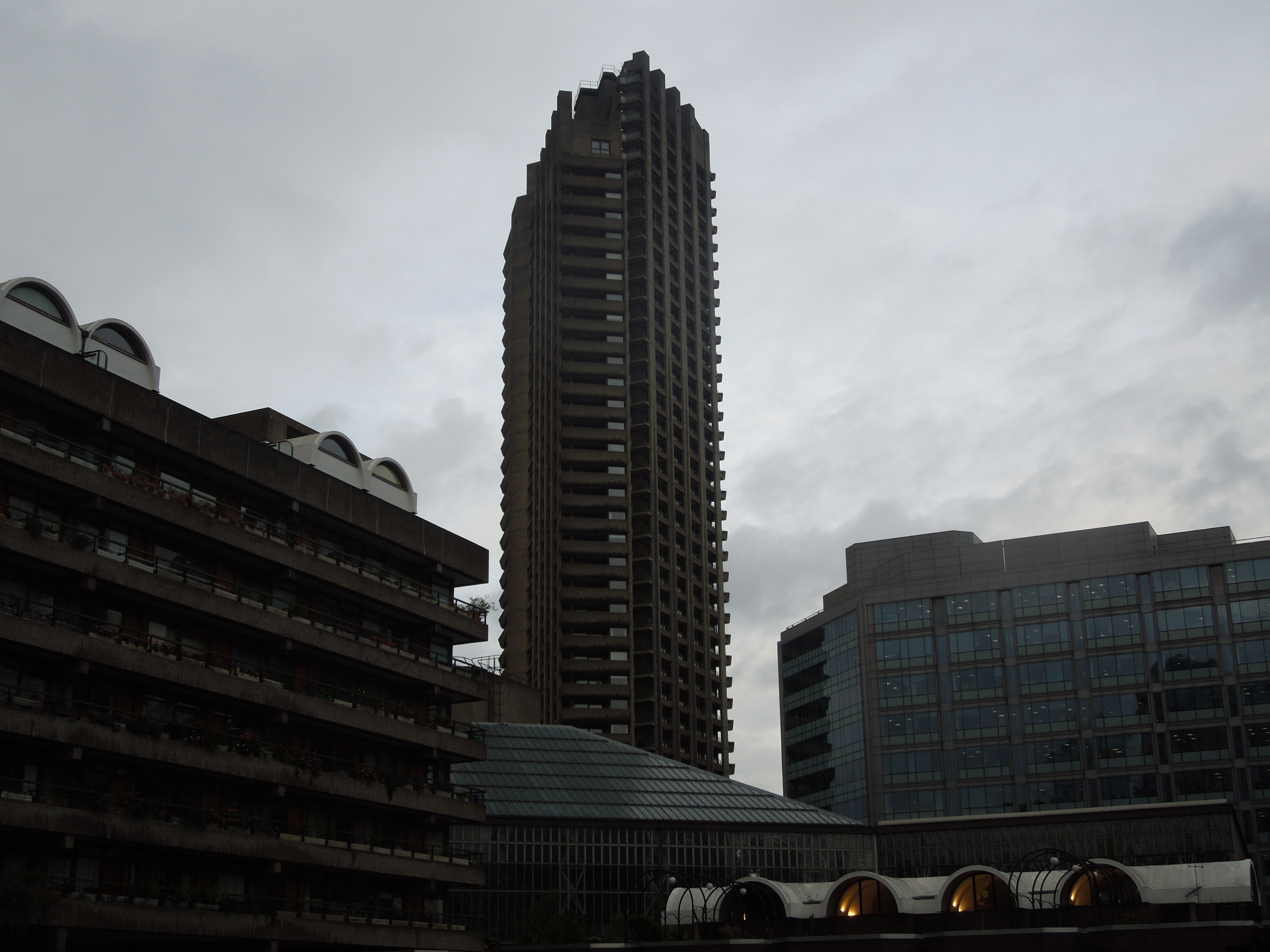
Cromwell Tower
Cromwell Tower in The Barbican may have been built to a high specification, but we don’t hear cancer, cladding, damp, fire or mould problems about the City of London’s flagship housing estate.
In the last few years, concrete has been able to be 3D-printed, so it can now be produced in different shapes.











All these wall and roof panels on the Elizabeth Line were made by 3D-printing of concrete.
The technique also seems to be being used on High Speed Two.
These innovative uses of concrete have led to research into the manufacture and use of concrete.
These posts are must-reads.
- Carbon-Neutral Concrete Prototype Wins €100k Architecture Prize For UK Scientists
- UK Cleantech Consortium Awarded Funding For Energy Storage Technology Integrated With Floating Wind
- New HS2 Pilot Project Swaps Steel For Retired Wind Turbine Blades To Reinforce Concrete
- Earth Friendly Concrete
- HS2 Utilising UK-First Pioneering 3D Concrete Printing On Project
- Carbon Capture From Cement Manufacturing Nears Market Readiness
- Mineral Carbonation International Win COP26 Clean Energy Pitch Battle
The number of these posts show how much research is going into cutting the massive amount of carbon dioxide emitted by the concrete industry.
I also feel that some could work together.
Earth Friendly Concrete is a replacement for normal concrete, so perhaps it could be enhanced with graphene, to create an Earth Friendly Concretene.
Carbon-Neutral Concrete Prototype Wins €100k Architecture Prize For UK Scientists
The title of this post, is the same as that of this article on the Architect’s Journal.
Under a picture of two white-coated scientists with their protective boots on concrete samples, the story and their invention is outlined.
A pair of PhD students at Imperial College London have won a global architecture prize for devising a groundbreaking method of creating carbon-neutral concrete
Material scientists Sam Draper and Barney Shanks landed the €100,000 2022 Obel Award with their ‘simple way’ to capture carbon from industrial production processes and create an end product that can eliminate the CO₂ footprint of concrete.
The prototype technology, dubbed Seratech, takes industrial CO₂ emissions directly from flues and produces a carbon-negative cement replacement material (silica). According to the scientists, when this is used in combination with Portland cement, the carbon capture associated with producing the silica means the concrete products can be zero carbon.
One of the products, we will need in the world is concrete and if we can make it in a carbon-neutral manner, then that will surely reduce worldwide carbon emissions.
The Technology Explained
This page on the Seratech website is entitled Our Technology.
It gives this description of the technology.
Seratech has developed a process that consumes olivine and waste CO₂ from flue gases and produces two products which both have significant value in construction.
Silica is produced which can be used as a supplementary cementitious material (SCM) in concrete meaning the amount of Portland cement in the concrete can be reduced by up to 40%. As the silica comes from a process that captures CO₂ it is “carbon negative” and the concrete can become carbon neutral.
Magnesium carbonate is produced that can be used to make a range of zero carbon construction materials and consumer products, including alternatives to building blocks and plasterboard.
The aim is for humanity to be able to continue building robust cities and infrastructure, but without the climate cost of traditional cement mixes and with the Seratech technology this goal is achievable!
Note that olivine in Europe is generally mined in Norway.
Replacement Of Steel By Concrete
Could we also replace steel in some applications with concrete?
In UK Cleantech Consortium Awarded Funding For Energy Storage Technology Integrated With Floating Wind, I talked about some of ground-breaking methods used by a company called RCAM Technologies to create infrastructure using 3D printing of concrete.
If Imperial’s concrete, which is called Seratech can be 3D printed, I can see lots of applications for the technology.
So you could kill two sources of large carbon emissions with one technology.
Conclusion
I have said on this blog before, that we will have to keep or even build more gas-fired power stations, as they can be an efficient source of pure carbon dioxide, that will be needed as a feedstock to create an increasing number of agricultural and building products.

